Decentralization and the Future World Order – Part I: The Revolution Is On

Bitcoin-Decentralized-World

Source: Thought Infection

A technological revolution is underway. An array of technologies are being developed that aim to do nothing less than disrupt the deepest fabric of the current world order. In a world where trust is power, decentralization steals the power from the hands of centralized institutions like corporations, banks, and even governments and puts it into the hands of the network. The revolution is beginning with a race to build the next generation of decentralized technologies that may soon replace internet giants like Dropbox or Facebook, but this is only the beginning of a transition to a future world order of decentralized power.

Lets start with a simple question: What is decentralization?

Many people equate decentralization with cryptographic networks like Bitcoin, which combine cryptography with decentralization, but decentralized applications do not inherently require encryption. The prototypical example of a modern decentralized technology would be Bittorrent, a technology with no inherent requirement for encryption. At its base, decentralization is the simple process of taking information and distributing copies among some sort of network so as to enhance data accessibility, security, redundancy, and congruence (consistency between parties).

The idea of decentralization is actually as old as communication itself. Cavemen would share their knowledge of hunting techniques and weapon technology among their tribe in order to be sure that the loss of no single individual would mean the loss of vital information. As humans created increasingly elaborate systems of exchange, organizations learned that keeping two or more copies of important documents was essential to ensuring their security.

The central problem of decentralization is that it also greatly increases the likelihood that information could fall into the hands of untrusted individuals. Thus, balancing the need for privacy and security meant finding a balance between centralized and decentralized structures for information sharing. To solve the age-old problem of privacy in shared information, cryptographic encoding or information was developed. Since at least Medieval times, people have been using simple ciphers to encode messages which they wished to share with only specific individuals.

In the 20th century, cryptography advanced greatly particularly during the world wars, when warring nations needed to be able to move around large amounts of information while preventing it from falling into the hands of the enemy. This spurned great innovations in both encryption and decryption, with both sides pouring resources into figuring out what their enemy was planning. It is widely believed, that the breaking of the Enigma code by British code-breakers which included one of the greatest minds of the 20th century, Alan Turing, was key to winning the war.

With the help of the universal computers Alan Turing helped invent, increasingly secure encryption algorithms were developed over the last half of the 20th century. Using these modern encryption algorithms, we can hide information well enough to confidently exchange sensitive financial information over a network which is essentially open (the internet). Thus, cryptography means that anyone eavesdropping on your web communications with your bank would have no way to understand the messages.

The Bitcoin blockchain is a distributed, encrypted ledger which stores the holdings of users of the network in individually encrypted data. This way, those using the network can be sure to agree on what amount of Bitcoin each user has, while only allowing those with the keys to be able to unlock their data and send some amount of Bitcoin to another user (see more here). Using the encrypted blockchain, Bitcoin is able to seamlessly transfer a limited supply of units of value between individuals in a way which does not rely on backing from any one central authority to provide value to the currency.

The core advance of the blockchain is that it allows the distribution of highly secure and highly congruent information throughout a network with no need for a centralizing authority.

As a side-thought, I would like to point out that although the software instantiation of the blockchain which underlies Bitcoin is totally dependent on digital computation, I see no reason a similar system based on mechanical encryption could not also be possible. Even if we never had invented computers I think we eventually would have come up with a sort of steam punk Bitcoin through which we could distribute value or congruent information using a cryptographic ledger system. 

Bittorrent was the first application to show that sharing of encrypted information over a decentralized network could be used to transfer value securely and efficiently, but there is no reason that decentralized technology could not be used to share any kind of information in a trustless network.

The MaidSafe and Storj projects have the ambitious goal of allowing anyone to share anything securely and efficiently over a decentralized network, something that could have deep consequences for the way that the internet works. If anyone can use the distributed network to share a website, then this could eliminate the needs for centralized servers which currently serve up websites when you visit them. Under these protocols, the cost of storing and sharing data with other users of the network who donate some part of their bandwidth and hard-drive space in exchange for the right to use the network. While some might worry that such a network would be used primarily for content piracy (as has been the case for Bittorrent), the integration of the Safecoin cryptocurrency with the MaidSafe network may actually make it easier than ever for content producers to monetize their content.

According to the project leader, both Maidsafe and Storj could be used to develop alternative, distributed versions of popular services such as Dropbox, Facebook, or even Google. Distributed versions of these centralized services could offer advantages for security and failure resistance. MaidSafe could also dramatically lower the barriers to entry for new players trying to compete such internet institutions as Facebook. While I have doubts whether the massive data-crunching necessary for Google could be pulled off on a decentralized network, a decentralized social network seems an obvious applications for MaidSafe.

Whereas MaidSafe, Storj and Bitcoin are specific applications of distributed technology, the Ethereum project aims to go much further and create a general distributed computer language on top of which anyone could easily develop an application like MaidSafe or Bitcoin. They are essentially trying to create a sort of decentralization operating system on top of which it would be possible to build any sort of program. By allowing the secure sharing of computer programs, Ethereum could allow the creation of advanced smart contracts with defined limits on how and when their funds could be disperse, or potentially even much more complex entities such a corporations.

2014 was a bit of a down year for Bitcoin, with coins falling from a value as high as $1000 to around $230 today. While this might be taken as a sign that the future of Bitcoin is in some danger, it is absolutely clear that it does not reflect at all on the wider cryptocurrency ecosystem. The ability to distribute trust through a network through the use of a Blockchain is a world changing technology, and the value of one currency does nothing to change its utility as a method of exchange. Saying that a drop in the price of bitcoin makes it irrelevant is like saying that the drop in the price of computer chips makes them irrelevant. Bitcoin is just the first in a series of decentralized applications that are already beginning to compete with centralized services.

Decentralization is becoming the gold standard for when you truly need to trust something, and in a world where trust is power it seems inevitable that decentralized technologies are destined to become the new nexus of power. In my next post I will discuss the past present and future of trust and power, and how that has been reshaped by decentralization.

————-

I would like to make a recommendation for a subreddit and a podcast that I think that those stimulated by this article might enjoy following, /r/Rad_Decentralization and the Decentralize Podcast

The Pro-GMO Lobby: Anti-science and a Politically Motivated Agenda

gmo_crops_genfood_735_350-400x190

By Colin Todhunter

Source: RINF

The pro-GMO lobby claims that there is a scientific consensus on the safety of GM food and therefore the GMO debate is over. It claims that GMOs guarantee higher yields and less pesticide/herbicide use. The claim is also made that GM agriculture has no adverse impact on soil, the nutritional value and health of crops or biodiversity. The industry and its supporters claim that the ‘scientific community’ believes GMOs can only have positive effects and point to research to back this up.

These claims are bogus. Many analyses have highlighted the inadequacies of the research cited by the pro-GMO lobby, not least in terms of methodology, the glossing over of the significance of certain findings and conclusions that do not necessarily fit the evidence provided [1-3]. Moreover, numerous studies demonstrate the often worrying physiological abnormalities derived from ingesting GMOs as well as poor/falling yields, increased pesticide use, lower nutritional values and degraded soil and plant health (etc) associated with GM agriculture [4].

When certain pro-GMO figures proclaim that the debate over GMOs is over, their proclamations are based on propaganda, not science. They say that people who challenge their views are anti-science, politically motivated and are mounting a ‘campaign’ against the industry. Like all good propagandists, this is doublespeak.

Given the existing scientific evidence that challenges the claims of the pro-GMO lobby, a rational and reasonable response would involve applying a precautionary approach to GMOs [5] because there is clearly no scientific consensus. Yet public safety concerns are regarded by the GMO lobby as a barrier to bringing its products to the commercial market and are to be sidelined by all means possible [6-9]. To justify this, it promotes the falsehood that GMOs are ‘substantially equivalent’ to non-GMO products, which is certainly not the case [10].

It is therefore with good reason that concerned people have organised to ensure the precautionary principle is adopted or strengthened and to challenge the industry and officials that are driving the GMO agenda.

It is the GMO sector itself that is politically motivated, anti-science and mounting a campaign in favour of its products. Its faulty science has been challenged, and as a result it is unable to produce the evidence that would convince us that GMOs are safe and provide the benefits claimed. Little wonder the industry hides behind the notion of ‘commercial confidentiality’ to maintain a veil of secrecy over its own research that regulators too often accept at face value [11].

Having failed to win the day with science, it resorts to placing restrictions on independent research into its products, censors findings, intimidates, smears, bribes, uses fakery and has successfully used its wealth and power to hijack regulatory bodies and co-opt bodies and officials who propagate lies on its behalf [12-15]. Yet it is those who highlight and challenge such tactics who are attacked for attempting to derail an industry which likes to portray itself as working for the public interest.

One of the main PR weapons used by the sector is that anti-GMO campaigners are taking food from the mouths of the hungry [16]. Let’s get one thing clear: GMOs are not the answer to feeding the world [17-22] and that type of emotional blackmail will only ever work on the ignorant, misinformed and those who believe the industry’s propaganda.

There is enough scientific evidence to warrant serious concern over GMOs. After all, evidence is mounting that some of these companies may have already been poisoning us for decades with their cocktail of agricultural inputs [23,24].

However, it is easy for the layperson to become confused by an endless parade of studies claiming to back up one or other side of the debate. For that reason, sometimes they have to look beyond science to sharpen their focus. They have to look at motives. They must ask who is controlling the GMO agenda? For what purpose? What is the track record of those involved? Should we ever in a million years trust certain players given their criminal record [25]?

Commercial concerns are driven by profit. Capitalism compels companies to capture and maintain market shares. However, cartels, price rigging, threats, cronyism and having politicians in your back pocket are a much better guarantee to seize and dominate markets than any economic model taught in textbooks and based on the ‘free’ market being determined by supply and demand. Such economic theory is the smokescreen that modern day neoliberalism tries (but fails) to hide behind [26]. As far as the GMO issue is concerned, however, there is much more to it than the need to make a fast buck.

There is a reason why well-known proponents (Rockefeller, Gates) of depopulation and eugenics are involved with the GMO sector; there is a reason why these very people have funded a giant seed bank on an island in the Arctic [27,28]. There is a sinister side to this industry, which points to a heady mix of US geopolitical hegemony based on the global control of agriculture, the hijack of the world’s seeds and food supply and depopulation [29].

If the science around GMOs is confusing to some, then ambiguity is what powerful corporations want: the tobacco industry was happy for the waters to be muddied for decades over the link to lung cancer. But if ambiguity over the efficacy of GMOs does indeed reign, the underlying politics is much clearer to grasp.

colintodhunter.com 

Notes

1] http://gmwatch.org/index.php/news/archive/2014/15669-why-jon-entine-s-trillion-meal-study-won-t-save-us-from-gmo-dangers

2] http://gmwatch.org/index.php/news/archive/2014/15618-biology-fortified-misleads-the-public-on-gmo-safety

3] http://rightbiotech.tumblr.com/post/103665842150/correlation-is-not-causation

4] http://gmomythsandtruths.earthopensource.org/

5] http://www.theguardian.com/science/political-science/2013/jul/08/precautionary-principle-science-policy

6] http://corporateeurope.org/pressreleases/2014/07/agribusiness-biggest-lobbyist-eu-us-trade-deal-new-research-reveals

7] http://corporateeurope.org/trade/2013/05/open-door-gmos-take-action-eu-us-free-trade-agreement

8] http://www.gmfreeze.org/actions/42/

9] http://corporateeurope.org/food-and-agriculture/2014/05/biotech-lobbys-fingerprints-over-new-eu-proposal-allow-national-gmo

10] http://www.i-sis.org.uk/Substantial_Non-Equivalence.php

11] http://gmwatch.org/index.php/news/archive/2014/15519-the-glyphosate-toxicity-studies-you-re-not-allowed-to-see

12]http://indiatoday.intoday.in/story/Monsanto+’faked’+data+for+approvals+claims+its+ex-chief/1/83093.html

13] http://www.globalresearch.ca/gmo-scandal-the-long-term-effects-of-genetically-modified-food-on-humans/14570

14] http://www.gmwatch.org/latest-listing/1-news-items/12715-seralini-vs-fellous-a-gmo-libel-case-over-independent-expertise-and-science

15] http://www.globalresearch.ca/gmo-researchers-attacked-evidence-denied-and-a-population-at-risk/5305324

16] http://www.globalresearch.ca/the-gmo-biotech-lobbys-emotional-blackmail-and-bogus-claims-monsantos-genetically-modified-crops-will-not-feed-the-world/5407080

17] http://www.cban.ca/Resources/Topics/Feeding-the-World

18]http://www.srfood.org/images/stories/pdf/officialreports/20110308_a-hrc-16-49_agroecology_en.pdf

19] http://vivakermani.blogspot.in/2014/07/gm-food-crops-why-india-must-say-no.html

20] http://www.globalresearch.ca/india-genetically-modified-seeds-agricultural-productivity-and-political-fraud/5328227

21] http://unctad.org/en/PublicationsLibrary/tdr2013_en.pdf

22]http://www.unep.org/dewa/agassessment/reports/IAASTD/EN/Agriculture%20at%20a%20Crossroads_Global%20Report%20(English).pdf

23] http://naturalsociety.com/americans-suffering-chronic-disease-due-glyphosate-herbicides-new-study/

24] http://www.tonu.org/2013/12/03/shivchopra_squamish/

25] http://www.wakingtimes.com/2014/06/20/complete-history-monsanto-worlds-evil-corporation/

26] http://www.washingtonsblog.com/2013/05/is-every-market-rigged.html

27] http://www.naturalnews.com/034468_doomsday_seed_vault_secrets.html#

28]http://www.naturalnews.com/035105_bill_gates_monsanto_eugenics.html

29] http://www.globalresearch.ca/menace-on-the-menu-development-and-the-globalization-of-servitude/5416488

The Rise of Empathic Consciousness

Collective-Consciousness-1

By Kingsley L. Dennis

Source: Reality Sandwich

For many of us we have been brought up within a social structure that demands we become a ‘productive member’ of our society; thus much emphasis is placed upon developing individual skills so that we can compete with each other for social betterment. Inherent in this is a residual fear that if we open ourselves too much to others we may lose our ‘competitive edge’ and defined sense of individuality. Much of mainstream media (aka propaganda) has exploited the mythological images, collective stereotypes, and subconscious signifiers that play on our collective vulnerabilities and social fears. Knowledge has more or less trickled down to the average person through heavily filtered channels, and most often has been doctored, amended, and/or edited. The end result has been not knowledge but consensus information, or ‘allowed’ information. It has served the elite power structure well that people in general have not awoken to the understanding that humanity possesses incredible capacity and inherent resources for creative expansion and evolutionary development.

Added to this is the fact that Western science, which has asserted itself as the dominant hegemony since the Renaissance, has been at pains to stress that matter is primary and that consciousness is a secondary by-product from our mental activity. The modern worldview which denies the primacy of consciousness is fostering forms of human alienation, both psychological and social. It is a great paradox that modern science, itself a result of human consciousness, has produced a view of the cosmos which has no room for consciousness. Yet human beings are in need of meaning and significance in their lives as much as they are in need of air to breathe and food to eat. This struggle over the conscious mind(s) of humanity, which has been going on in various forms for aeons, is coming to a crux in our present generation. We are in a transition period which sees the expanding awareness and connectivity between individuals worldwide clashing against the increasing authoritarian technocratic ‘surveillance machine.’ The result is that we have now collectively arrived at a critical moment in our evolution of human civilization. Yet any society or civilization which makes the material world its sole pursuit and object of concern cannot but devolve in the long run. It is now necessary to see our future potentials, not the daily news. As Professor Needleman so aptly remarked:

The esoteric is the heart of civilization. And should the outward forms of a human civilization become totally unable to contain and adapt the energies of great spiritual teachings, then that civilization has ceased to serve its function in the universe.[1]

It is therefore imperative that we begin to break-away from non-developmental social conditioning; this includes being conscious of the type of media impacts we are open to. Furthermore, during moments of cultural and social disorder/disequilibrium the human mind often works with an energy and intensity not manifested when social patterns are stable and monotone. At such dynamic periods there can be the realization that no individual is isolated; that each person is interwoven into a vibrant network and web of psychological, emotional, and spiritual interrelations. Such realizations can be heightened during periods, such as now, when it appears that human consciousness is moving through a time of critical transition.

Our self-awareness over the nature of human consciousness has been increasing greatly over the last several decades. The latest findings in the new sciences (especially quantum and neuroscience), in consciousness studies, in the popularity for inner and self-development, etc, all indicate a new awareness emerging within our collective consciousness. That is, energetic change will come through our social and cultural forms, and not by avoiding them. Developmental change on a large scale can occur by creating conscious change from within our daily lives and within our social systems, and not outside of them. By just walking on this planet, holding the focus and intention, we create incredible energy – energy that is shared. We are creating change by just being alive. That is why being without fear is so important. We need not create a black and white film in our heads when in reality we are creating colour. We can make use of the tools that are already available to us, and within us.

There is an exponentially increasing mass of individuals worldwide who are now awakening to the connected empowerment of empathic consciousness. Recent de-stabilizing social events, such as in our financial and political spheres, have drawn people’s focus to the dysfunction of many of the systems that we once gave our trust to. Even the focus on religious extremism in the media has drawn people’s attention not only to the deficit of spiritual values in our major religions but also to how religion is being used as a tool for furthering social, political, and emotional control. This trance-like grip on our collective consciousness is now being stripped away as people awaken to the knowing that there is so much more to our lives than that of a materialistic and consumer-based lifestyle. Yet don’t become frustrated if things don’t happen tomorrow, but trust that changes and shifts are happening over time. The necessity of inner knowing, intuition, self-trust, and integrity, is now critical. And let us remember that humans are biased for compassion and empathy. The awakening of our empathic mind is our natural inheritance.

The Awakening of a Planetary Consciousness

The accelerating changes occurring across our planet right now will have no alternative but to force a mind-change on a global and individual level. We are coming together as a global species like never before; despite what we have been shown and told by the mainstream media. We need to view this in both the immediate and the bigger picture. Due to our relatively short human life span we rarely reflect beyond a generation or two in front of us. We have evolved as a species that reacts to immediate concerns. This served us well in the past when we had survival needs in a restricted world of limited horizons. Yet now we need a perspective that is global at the very least – and even possibly beyond!

If we now look at the bigger picture we will see that a different type of consciousness has been emerging over the past 150 years. That is, since the dawn of the Second Industrial Revolution. The new technologies of the Second Industrial Revolution – the telephone, radar, cinema, automobile and airplane – called for a new reorientation of human perspective. A new perception of the dimensions of space and time began to birth a psychological consciousness – one that wanted to look beyond the borders and horizons of the physical frontier. The 3rd Industrial Revolution, if we wish to call it that, will be a convergence of digital communications combined with a young generation that is more globally aware. This has the potential to catalyze upon this planet a rising empathic, integral consciousness. Also, our global communications will encourage new relations in our extended connectivity. That is, increased multiple relations are likely to stimulate a connected, collaborative consciousness; rather than stepping back into an older consciousness of conflict and control. A planetary citizenry is likely to emerge that will exhibit greater empathy, and which will create a different planetary society within perhaps two generations. Humanity already contains the seeds of these momentous potentials.

Many social changes within the upcoming years will emerge from the creative engagement and innovation of individuals and collectives worldwide – a shift catalyzed within the hearts, spirit, and minds of the people. Externally we may seem like a vast, distant, and separate collection of individuals yet in truth the human family is an intimate, closely entwined species comprised of various cultures. Many of the younger generation now are waking up to this fact. Youngsters the world over are growing up accustomed to having networks of hundreds, perhaps even thousands, of friends across the planet; sharing intimacy and empathizing easily with an international social group of like-minded souls. This younger generation is manifesting, whether conscious of it or not, a non-local level of human relationships. This expanded connectivity is impacting and affecting a change in our psychology and consciousness. We are now being impelled to live in ways that enable all other people to live as well. We are also being compelled to live in ways that respect the lives of others and that respect the right to the economic and cultural development of all people; and to pursue personal fulfilment in harmony with the integrity of nature. These traits may constitute what I refer to as an integral-ecological consciousness: a person acting and behaving as both an individual and as a part of the greater connected whole. Such multiple relations form a more varied, rich and complex life; they also provide a more diverse range of impacts and opportunities to develop the self. As well as providing challenges for developing new skills and learning, our diverse networks can form new friendships and add extra meaning to our lives.

Many young people today are comfortable in expressing themselves with strangers; they explore and express their inner thoughts, feelings, emotions and ideas with hundreds of unknown persons online, from various cultural backgrounds. More and more daily interactions are empathic as we react and share news, stories, and emotional impacts from sources around the world. Empathy is one of the core values by which we create and sustain social life. Exposure to impacts outside of our own local and restrictive environments helps us to learn tolerance, and to live with experiences that are richer and more complex, full of ambiguities, and multiple perspectives. It is a mode of connecting that allows diverse people worldwide to construct a new form of planetary social capital. We have the resources to co-create a planetary human society where once again the focus is on social benefit rather than profit. We can see many examples of this today, such as in online collaborative tools and in the proliferation of local and global projects. The online global community is a model for the new paradigm that illustrates how sharing can work above the individual motive for profit. The values and ethics of communal sharing might seem odd or out-of-place to the old capitalist-consumerist mindset, yet these are the very values that will be on the rise within the coming generations.

The spectacular rise in global communication technologies (Internet and mobile phones especially) reflects a new form of participatory consciousness, especially among younger people. This new model is a distributed one; in other words, it connects people through networks rather than through hierarchical structures. It also represents a more feminine energy that seeks to nurture relationships, and to collaborate, rather than compete and conquer. It is this emerging feminine energy that underlies the rise in global empathy. Furthermore, since people are connecting amongst themselves in multiple relations it impels them to have an active engagement. For those individuals brought-up within the older generation of communication technologies (radio, television, fixed phones), the interaction was either two-way or, for the most part, one way. In this era people were passive receivers, targeted by information they could not engage with. This has now shifted so that the receiver of the communication can be both the user and the producer. Individuals today are shifting from being consumers to prosumers.

We have learnt to democratize our engagement and to activate choice through online social networks, phone messaging, video channels (e.g. You-Tube), and various other broadcast mediums. The younger generation is waking up quickly and learning how to set-up inexpensive, or free, radio sites (podcasts), home websites, newsletters, and are managing their own forms of self-expression. This new model is changing our thinking and behavior patterns. We are now getting used to dealing with multiple connections rather than single ones; and to becoming immersed in diverse relations and not just one-on-one dialogues. We are also being exposed to a myriad of viewpoints, beliefs, identities, and experiences. Within these new arrangements we are being asked to respond and engage with the outside world not in fear or with anxiety but with healthy, creative, and positive energies.

The Arrival of 3 Billion New Minds

We are going to witness a young generation expressing their desire for human betterment through intensified action for social, political, and ecological change. More and more young people are growing up experiencing social relations that transcend space and time, as well as cultures, national boundaries, and local ideologies. This may account for the increasing numbers of young people in developed nations becoming involved in community and social projects and NGOs; such as taking a year out to help in another culture abroad, to learn, experience, and to offer assistance. Volunteering among the young, despite what appears to be the contrary, is on the increase. Young people are even putting themselves into dangerous situations – in conflict zones – to stand up for values of peace, justice, equality, and human rights. Across the world young minds are demanding fair and equal access for all peoples to engage in open communication and free speech. And it appears that many more creative minds will be joining the global conversation as our current generation(s) increasingly ‘wake up.’

In 2012 the planetary population was around 7 billion and the number of registered internet users was 33%, a rise of over 500% from the previous decade. By 2020 world population is set to be 7.8 billion and internet users worldwide is estimated to be 66% – that’s a little under 3 billion new people plugging into the global conversation. In other words, nearly 3 billion new minds will be tapping into the information flows – and that’s many millions of new creative problem solvers, innovators, and visionaries. What is more, the majority of these new minds will be coming online from Asia, the Middle East, and what we refer to as the developing countries. These will be mostly young minds; and minds with necessities, with the urge for social betterment. Can we imagine the collective potential of these creative new minds; many of them thinking outside of the box, and outside of the old patterns?

It is significant that in times of relative social stability, human consciousness plays a lesser role in the behavior of society. However, when a society reaches the limits of its stability then social-cultural systems are sensitive and responsive to even the smallest fluctuations in the consciousness of its citizens. In such times, changes in values, belief sets, perceptions, etc, hold great sway over the future direction of the social situation. Human consciousness becomes a significant stimulus and catalyst for change during these times of social instability (see the history of social revolutions). That is why it is imperative humanity be collectively focused upon positive development and betterment rather than to be coerced, or conditioned, into a fear-based security that resists change. We should not underestimate the capacity for the human mind to adapt and evolve according to social and environmental impacts and influences.

Our modern sense of self-awareness has clearly evolved to root us in our social world: a world of extended relations and social networks. Humanity, it can be said, has been biologically hard-wired to tap into extended social connections and human communication networks. We are also hard-wired to adapt physically in response to experience – new neural processes in our brains can come into being with intentional effort, awareness, and different patterns of concentration. This capacity to create new neural connections, and thus new mental skill sets through experience, has been termed neuroplasticity. The human brain of today has to respond to the incredible amount of energy and information that is flowing through our environments and embedded in our cultural experiences. Thus, how we focus our attention and awareness greatly shapes the structure of our brains. Further, the ability to grow new neural connections is available throughout our lives and not only in our young formative years. This knowledge encourages us to nurture our mindfulness, our self-awareness, and our empathic relations with others. Neuroplasticity also encourages us to be more reflective over our human networks, and to develop those social skills that underlie empathy and compassion. These new ‘wired connections’ are exactly what are becoming activated as individuals increasingly ‘wake up’ to what is happening within our communities, our societies, and upon the planet. Such distributed connections breach cultural and national borders and force us to self-reflect on our identity, values and ethics.

The opportunity is here for change and betterment like never before in our recent history. This means that the responsibility is also here; and these two factors may never be present again at exactly the right moment when they are so badly needed. What the human species may now be witnessing during these years is the rise of intuition, empathy, greater connectivity to the world and to people, and a sense of ‘knowing’ what changes need to be made. Furthermore, within each person is a growing sense of the greater cosmic whole: the realization that humanity exists and evolves within a universe of great intelligence and meaning. This serves to impart within humanity a more profound spiritual impulse. As a new global empathic mind emerges, people worldwide will grow up with new expressions of mindfulness that are more caring, relational, and compassionate. The 21st century is likely to be the era that births and nurtures such an evolving consciousness.

Many of the younger people across the world do not accept the social conditioning of anger, fear, and insecurity of their past generations. They want to reach out for change and betterment. Around the world there are examples of young people rejecting the conflict mentality of their elder generations. In conflict zones especially, where young minds are conditioned into unconditional hatred of fixed enemies, there is a backlash against this old programming. Younger people are reaching out across artificial borders to engage with the so-called ‘enemy’ and to start a new dialogue of peace and reconciliation. Such minds realize that the conflict mentality has no future, and will be left behind if it cannot accept change. Whereas many of those from the older mindset thought that a future meant putting up borders, and viewing the ‘others’ with suspicious eyes; many of today’s young minds see differently. We can see this in youth movements worldwide as there is change emerging in the mindset of young people everywhere. This is especially so in Middle Eastern territories where restrictive regimes are now encountering rising youthful demographics who are not accepting the old mentalities and old ways. A lot of the young people today want the same thing – peace, justice, equality, freedom, etc. There is a new spring in the step of young, tech-savvy, energetic minds that are by-passing the old models. In these years ahead – at least for the next two decades – we will increasingly see the signs of the changing of the old guard (the dinosaurs!). And this time they will not be replaced by those with the same consciousness. With generational change we will see the gradual transition to an era of individuals who think differently, feel differently, connect differently, and who will want to work toward a different world.

Yet we also need to acknowledge that this transition may not be a smooth one – the shifting of one mindset to another rarely is. We have seen this play out many times; think of the scientific revolution as one example. The reaction of the status quo has always been to strengthen its ruling apparatus. In the case of today, this means increased physical and digital surveillance; increased militarization of the state; and violations of individual privacy. And the first wave response from people is generally to fight back – head on. I contest, however, that this form of response also constitutes the old mind. The newer consciousness does not seek conflict. Rather, it seeks to create ways around the current blockages. Or, in the words of Buckminster Fuller – “You never change things by fighting the existing reality. To change something, build a new model that makes the existing model obsolete.” Over time, the old models will fight their way into obsolescence. Those who express the ‘newer mind’ must be patient, positive, and incredibly creative.

In summary, a new narrative is emerging, one where each person is integral to the larger picture; the journey of each one of us being a part of the journey as a whole. This new story informs us that the possibilities are open for humanity to engage in consciously creating its way forward – with harmony, balance and respect to all. This new narrative is part of humanity’s evolving empathic mind and which compels us to seek greater connectivity and meaning in our lives. This most recent human story is one where we create the story of the future.

[1] Jacob Needleman, New Religions (New York: E P Dutton, 1977)

Kingsley L. Dennis, author of The Phoenix Generation: A New Era of Connection, Compassion, and Consciousness

Saturday Matinee: Tetsuo Trilogy

tetsuo-ironWith the underground film “Tetsuo: The Iron Man” (1989), writer/director/actor Shinya Tsukamoto broke out into the global cult cinema scene. Made on a shoestring budget and drawing influences from cyberpunk sci-fi and anime such as “Akira”, Tetsuo depicts a man’s transformation into a machine as his psychological state rapidly deteriorates. Two later “sequels”, “Tetsuo II: Body Hammer” (1992) and “Tetsuo: The Bullet Man” (2009) are variations of the same plot with progressively larger budgets and artistic ambition.

Tetsuo: The Iron Man

Tetsuo II: Body Hammer

Tetsuo: The Bullet Man

Genetically Modified Organisms (GMO): Profit, Power and Geopolitics

monsanto

By Colin Todhunter

Source: GlobalResearch.ca

Genetically modified organisms (GMOs) are not essential for feeding the world [1,2], but if they were to lead to increased productivity, did not harm the environment and did not negatively impact biodiversity and human health, would we be wise to embrace them anyhow?

The fact is that GMO technology would still be owned and controlled by certain very powerful interests. In their hands, this technology is first and foremost an instrument of corporate power, a tool to ensure profit. Beyond that, it is intended to serve US global geopolitical interests. Indeed, agriculture has for a long time been central to US foreign policy.

“American foreign policy has almost always been based on agricultural exports, not on industrial exports as people might think. It’s by agriculture and control of the food supply that American diplomacy has been able to control most of the Third World. The World Bank’s geopolitical lending strategy has been to turn countries into food deficit areas by convincing them to grow cash crops – plantation export crops – not to feed themselves with their own food crops.” Professor Michael Hudson [3].

The Project for a New American Century and the Wolfowitz Doctrine show that US foreign policy is about power, control and ensuring global supremacy at any cost [4,5]. Part of the plan for attaining world domination rests on the US controlling agriculture and hijacking food sovereignty and nations’ food security.

In his book ‘Seeds of Destruction’, William Engdahl traces how the oil-rich Rockefeller family translated its massive wealth into political clout and set out to capture agriculture in the US and then globally via the ‘green revolution’ [6]. Along with its big-dam, water-intensive infrastructure requirements, this form of agriculture made farmers dependent on corporate-controlled petroproducts and entrapped them and nations into dollar dependency and debt. GMOs represent more of the same due to the patenting and the increasing monopolization of seeds by a handful of mainly US companies, such as Monsanto, DuPont and Bayer.

In India, Monsanto has sucked millions from agriculture in recent years via royalties, and farmers have been compelled to spend beyond their means to purchase seeds and chemical inputs [7]. A combination of debt, economic liberalization and a shift to (GMO) cash crops (cotton) has caused hundreds of thousands of farmers to experience economic distress, while corporations have extracted huge profits [8]. Over 270,000 farmers in India have committed suicide since the mid to late nineties [9].

In South America, there are similar stories of farmers and indigenous peoples being forced from their lands and experiencing violent repression as GMOs and industrial-scale farming take hold [10]. It is similar in Africa, where Monsanto and The Gates Foundation are seeking to further transform small-scale farming into a corporate controlled model. They call it ‘investing’ in agriculture as if this were an act of benevolence.

Agriculture is the bedrock of many societies, yet it is being recast for the benefit of rich agritech, retail and food processing concerns. Small farms are under immense pressure and food security is being undermined, not least because the small farm produces most of the world’s food [11]. Whether through land grabs and takeovers, the production of (non-food) cash crops for export, greater chemical inputs or seed patenting and the eradication of seed sharing among farmers, profits are guaranteed for agritech corporations and institutional land investors.

The recasting of agriculture in the image of big agribusiness continues across the globe despite researchers saying that this chemical-intensive, high-energy consuming model means Britain only has 100 harvests left because of soil degradation [12]. In Punjab, the ‘green revolution’ model of industrial scale, corporate dominated agriculture has led to a crisis in terms of severe water shortages, increasing human cancers and falling productivity [13]. There is a global agrarian crisis. The increasingly dominant corporate-driven model is unsustainable.

More ecological forms of agriculture are being called for that, through intelligent crop management and decreased use of chemical inputs, would be able to not only feed the world but also work sustainably with the natural environment. Numerous official reports and scientific studies have suggested that such policies would be more appropriate, especially for poorer countries [14-16].

When on occasion the chemical-industrial model indicates that it does deliver better yields than more traditional methods (a generalization and often overstated [17]), even this is a misrepresentation. Better yields but only with massive chemical inputs from corporations and huge damage to health and the environment as well as ever more resource-driven conflicts to grab the oil that fuels this model. Like the erroneous belief that economic ‘growth’ (GDP) is stimulated just because there becomes greater levels of cash flows in an economy (and corporate profits are boosted), the notion of improved agricultural ‘productivity’ also stems from a set of narrowly defined criteria.

The dominant notions that underpin economic ‘growth’, modern agriculture and ‘development’ are based on a series of assumption that betray a mindset steeped in arrogance and contempt: the planet should be cast in an urban-centic, ethnocentric model whereby the rural is to be looked down on, nature must be dominated, farmers are a problem to be removed from the land and traditional ways are backward and in need of remedy.

“People are perceived as ‘poor’ if they eat food they have grown rather than commercially distributed junk foods sold by global agri-business. They are seen as poor if they live in self-built housing made from ecologically well-adapted materials like bamboo and mud rather than in cinder block or cement houses. They are seen as poor if they wear garments manufactured from handmade natural fibres rather than synthetics.” Vandana Shiva [18]

Western corporations are to implement the remedy by determining policies at the World Trade Organization, IMF and World Bank (with help from compliant politicians and officials) in order to  depopulate rural areas and drive folk to live in cities to then strive for a totally unsustainable, undeliverable, environment-destroying, conflict-driving, consumerist version of the American Dream [19,20].

It is interesting (and disturbing) to note that ‘developing’ nations account for more than 80% of world population, but consume only about a third of the world’s energy. US citizens constitute 5% of the world’s population, but consume 24% of the world’s energy. On average, one American consumes as much energy as two Japanese, six Mexicans, 13 Chinese, 31 Indians, 128 Bangladeshis, 307 Tanzanians and 370 Ethiopians [21].

Despite the environmental and social devastation caused, the outcome is regarded as successful just because business interests that benefit from this point to a growth in GDP. Chopping down an entire forest that people had made a living sustainably from for centuries and selling the timber, selling more poisons to spray on soil or selling pharmaceuticals to address the health impacts of the petrochemical food production model would indeed increase GDP, wouldn’t it? It’s all good for business. And what is good for business is good for everyone else, or so the lie goes.

“Corporations as the dominant institution shaped by capitalist patriarchy thrive on eco-apartheid. They thrive on the Cartesian legacy of dualism which puts nature against humans. It defines nature as female and passively subjugated. Corporatocentrism is thus also androcentric – a patriarchal construction. The false universalism of man as conqueror and owner of the Earth has led to the technological hubris of geo-engineering, genetic engineering, and nuclear energy. It has led to the ethical outrage of owning life forms through patents, water through privatization, the air through carbon trading. It is leading to appropriation of the biodiversity that serves the poor.” [22]

The ‘green revolution’ and now GMOs are ultimately not concerned with feeding the world, securing well-rounded nutritious diets or ensuring health and environmental safety. (In fact, India now imports foods that it used to grow but no longer does [23]; in Africa too, local diets are becoming less diverse and less healthy [24].) Such notions are based on propaganda or stem from well-meaning sentiments that have been pressed into the service of corporate interests.

Biotechnological innovations have always had a role to play in improving agriculture, but the post-1945 model of agriculture has been driven by powerful corporations like Monsanto, which are firmly linked to Pentagon and Wall Street interests [25]. Motivated by self-interest but wrapped up in trendy PR about ‘feeding the world’ or imposing austerity to ensure prosperity, the publicly stated intentions of the US state-corporate cabal should never be taken at face value [26,27].

In India, Monsanto and Walmart had a major role in drawing up the Knowledge Initiative on Agriculture [28]. Monsanto now funds research in public institutions and its presence and influence compromises what should in fact be independent decision and policy making bodies [29,30]. Monsanto is a driving force behind what could eventually lead to the  restructuring and subjugation of India by the US [31]. The IMF and Monsanto are also working to ensure Ukraine’s subservience to US geopolitical aims via the capture of land and agriculture [32]. The capture of agriculture (and societies) by rich interests is a global phenomenon.

Only the completely naive would believe that rich institutional investors in land and big agribusiness and its backers in the US State Department have humanity’s interests at heart. At the very least, their collective aim is profit. Beyond that and to facilitate it, the need to secure US global hegemony is paramount.

The science surrounding GMOs is becoming increasingly politicized and bogged down in detailed arguments about whose methodologies, results, conclusions and science show what and why. The bigger picture however is often in danger of being overlooked. GMO is not just about ‘science’. As an issue, GMO and the chemical-industrial model it is linked to is ultimately a geopolitical one driven by power and profit.

Notes

1] This report indicates the root causes for global food shortages:  http://www.cban.ca/Resources/Topics/Feeding-the-World/Will-GM-Crops-Feed-the-World

2] Citing official reports and data sources, references in this article indicate agricultural productivity in India was better in 1760 and 1890 and that India does not require chemical-industrial agriculture let alone GMOs: http://www.globalresearch.ca/india-genetically-modified-seeds-agricultural-productivity-and-political-fraud/5328227

3] http://michael-hudson.com/2014/10/think-tank-memories/

4] http://www.informationclearinghouse.info/article1665.htm

5] http://www.informationclearinghouse.info/article40093.htm

6] Arun Shrivastava reviews and summarizes Engdahl’s book here: http://www.globalresearch.ca/seeds-of-destruction-the-hidden-agenda-of-genetic-manipulation-2/9379

7] http://www.countercurrents.org/shiva180614.htm

8]  Based on the findings of a report by researchers at Cambridge University in the UK: http://www.cam.ac.uk/research/news/new-evidence-of-suicide-epidemic-among-indias-marginalised-farmers

9] Official figure quoted by the BBC as of 2013: http://www.bbc.co.uk/news/magazine-21077458

10]http://www.theecologist.org/News/news_analysis/2267255/gm_crops_are_driving_genocide_and_ecocide_keep_them_out_of_the_eu.html

11] Official report released by GRAIN: http://www.grain.org/article/entries/4929-hungry-for-land-small-farmers-feed-the-world-with-less-than-a-quarter-of-all-farmland

12] Farmers Weekly quotes a report by researchers at the University of Sheffield in the UK: http://www.fwi.co.uk/news/only-100-harvests-left-in-uk-farm-soils-scientists-warn.htm

13] Newspaper report quoting official statistics and research findings: http://www.deccanherald.com/content/337124/punjab-india039s-grain-bowl-now.html

14] Official UN report: http://unctad.org/en/PublicationsLibrary/tdr2013_en.pdf

15]http://www.srfood.org/en/official-reports# and http://www.plantpartners.org/agroecology-reports.html

16] http://www.tandfonline.com/doi/full/10.1080/14735903.2013.806408#tabModule

17] http://phys.org/news/2014-12-crops-industrial-agriculture.html

18] http://www.organicconsumers.org/btc/shiva112305.cfm

19] Food policy analyst Devinder Sharma outlines the motives of Western corporations in India: http://www.bhoomimagazine.org/article/cash-food-will-strike-very-foundation-economy

20] Arundhati Roy discusses the erroneous notion of ‘progress’ being applied in India and the conflict and violence that has followed: http://www.guernicamag.com/features/we-call-this-progress/

21] http://public.wsu.edu/~mreed/380American%20Consumption.htm

22] http://www.spaziofilosofico.it/numero-07/2959/economy-revisited-will-green-be-the-colour-of-money-or-life/

23] Vandana Shiva describes how the ‘green revolution’ and ‘free trade’ have turned India into a net importer of foods it used to be self sufficient in: http://www.aljazeera.com/indepth/opinion/2013/09/201398122228705617.html

24] Article describing the plight of agriculture in Africa: http://www.globalresearch.ca/behind-the-mask-of-altruism-imperialism-monsanto-and-the-gates-foundation-in-africa/5408242

25] http://www.globalresearch.ca/monsantos-gmo-food-and-its-dark-connections-to-the-military-industrial-complex/5389708

26] Article providing factual historical insight into Monsanto and its wrongdoings: http://www.globalresearch.ca/the-complete-history-of-monsanto-the-worlds-most-evil-corporation/5387964

27] Analysis of Wall Street’s fraudulent practices in recent times and the complicity of the entire political and economic system: http://www.wsws.org/en/articles/2012/03/pers-m15.html

28]http://www.democracynow.org/2006/12/13/vandana_shiva_on_farmer_suicides_the

29]  http://dissidentvoice.org/2009/07/monsanto-a-contemporary-east-india-company-and-corporate-knowledge-in-india/

30] http://www.thehindu.com/opinion/lead/nip-this-in-the-bud/article5012989.ece

31] http://www.countercurrents.org/todhunter031114.htm

32] http://www.oaklandinstitute.org/food-security-hostage-wall-street-and-us-global-hegemony

Saturday Matinee: Black Mirror

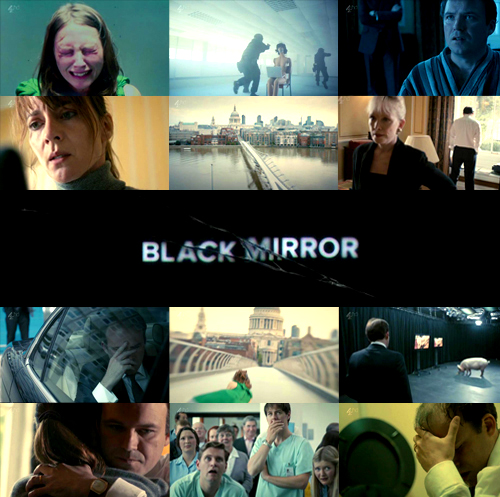
bm1

“Black Mirror” (2011 – ) is a British anthology series created by satirist Charlie Brooker exploring potential unintended social/psychological effects of technology. It’s sort of an updated and darker version of The Twilight Zone offering (often pessimistic) commentary on society, government, culture and relationships.

Season 1

The National Anthem

15 Million Merits
http://www.dailymotion.com/video/xyllhh_black-mirror-15-million-merits_shortfilms

The Entire History of You

Season 2

Be Right Back

White Bear

The Waldo Moment

White Christmas

Time and the Technological World

321e730d017aeaf2228d3217ae9abd77

Source: The Hipcrime Vocab

Check out this fascinating summary of  How We Got to Now: Six Innovations That Made the Modern World. This particular summary looks at the part of the book that documents how our perception of time has changed, and how that has affected the modern world.

The book talks about something called the “Hummingbird Effect,” which describes the way in which various inventions and technical discoveries change the world in unexpected ways. Some of you may recall James’ Burke’s excellent TV show Connections on BBC/PBS (These used to be available on YouTube, but JamesBurkeWeb appears to have disappeared. Still, some episodes can still be found) which covered the same ground:

Johnson points out that, much like the evolution of bees gave flowers their colors and the evolution of pollen altered the design of the hummingbird’s wings, the most remarkable thing about innovations is the way they precipitate unanticipated changes that reverberate far and wide beyond the field or discipline or problem at the epicenter of the particular innovation. Pointing to the Gutenberg press — itself already an example of the combinatorial nature of creative breakthroughs — Johnson writes:

    “Johannes Gutenberg’s printing press created a surge in demand for spectacles, as the new practice of reading made Europeans across the continent suddenly realize that they were farsighted; the market demand for spectacles encouraged a growing number of people to produce and experiment with lenses, which led to the invention of the microscope, which shortly thereafter enabled us to perceive that our bodies were made up of microscopic cells. You wouldn’t think that printing technology would have anything to do with the expansion of our vision down to the cellular scale, just as you wouldn’t have thought that the evolution of pollen would alter the design of a hummingbird’s wing. But that is the way change happens.”

It starts with Galileo’s observation that a pendulum always swings to-and-fro in a regular amount of time.

“But machines that could keep a reliable beat didn’t exist in Galileo’s age; the metronome wouldn’t be invented for another few centuries. So watching the altar lamp sway back and forth with such regularity planted the seed of an idea in Galileo’s young mind. As is so often the case, however, it would take decades before the seed would blossom into something useful.”

The ability to accurately measure time was a departure from before when:

    “Instead of fifteen minutes, time was described as how long it would take to milk the cow or nail soles to a new pair of shoes. Instead of being paid by the hour, craftsmen were conventionally paid by the piece produced — what was commonly called “taken-work” — and their daily schedules were almost comically unregulated.”

Once the regimentation of the clock was introduced, many things followed from that due to the Hummingbird Effect:

Over the century that followed, the pendulum clock, a hundred times more accurate than any preceding technology, became a staple of European life and forever changed our relationship with time. But the hummingbird’s wings continued to flap — accurate timekeeping became the imperceptible heartbeat beneath all technology of the Industrial Revolution, from scheduling the division of labor in factories to keeping steam-powered locomotives running on time. It was the invisible hand of the clock that first moved the market — a move toward unanticipated innovations in other fields. Without clocks, Johnson argues, the Industrial Revolution may have never taken off — or “at the very least, have taken much longer to reach escape velocity.” He explains:

    “Accurate clocks, thanks to their unrivaled ability to determine longitude at sea, greatly reduced the risks of global shipping networks, which gave the first industrialists a constant supply of raw materials and access to overseas markets. In the late 1600s and early 1700s, the most reliable watches in the world were manufactured in England, which created a pool of expertise with fine-tool manufacture that would prove to be incredibly handy when the demands of industrial innovation arrived, just as the glassmaking expertise producing spectacles opened the door for telescopes and microscopes. The watchmakers were the advance guard of what would become industrial engineering.”

Not mentioned is the introduction of public schools, designed to take farmers used to “cow milking time” and “discipline” them into a workforce able to sit still and obey and punch a clock, a system we are still living with today. Those of us who cannot or will not conform to this ruthless discipline are severely punished:

And yet, as with most innovations, the industrialization of time came with a dark side — one Bertrand Russell so eloquently lamented in the 1920s when he asked: “What will be the good of the conquest of leisure and health, if no one remembers how to use them?” Johnson writes:

    “The natural rhythms of tasks and leisure had to be forcibly replaced with an abstract grid. When you spend your whole life inside that grid, it seems like second nature, but when you are experiencing it for the first time, as the laborers of industrial England did in the second half of the eighteenth century, it arrives as a shock to the system. Timepieces were not just tools to help you coordinate the day’s events, but something more ominous: the “deadly statistical clock,” in Dickens’s Hard Times, “which measured every second with a beat like a rap upon a coffin lid.”

[…]

    “To be a Romantic at the turn of the nineteenth century was in part to break from the growing tyranny of clock time: to sleep late, ramble aimlessly through the city, refuse to live by the “statistical clocks” that governed economic life… The time discipline of the pendulum clock took the informal flow of experience and nailed it to a mathematical grid. If time is a river, the pendulum clock turned it into a canal of evenly spaced locks, engineered for the rhythms of industry.

And as clocks became ever more precise and ubiquitous, things flowed from that – more regimentation, more standardization (village clocks used to be set by the sun’s position, but this introduced inaccuracies in railroad timetables – thus two inventions, one steam-powered and one not, are bound up together), and entirely new scientific discoveries which led to new inventions such as the computers that now rule over our lives:

Johnson goes on to trace the hummingbird flutterings to the emergence of pocket watches, the democratization of time through the implementation of Standard Time, and the invention of the first quartz clock in 1928, which boasted the unprecedented accuracy of losing or gaining only one thousandth of a second per day…But the most groundbreaking effect of the quartz clock — the most unpredictable manifestation of the hummingbird effect in the story of time — was that it gave rise to modern computing and the Information Age. Johnson writes:

    “Computer chips are masters of time discipline… Instead of thousands of operations per minute, the microprocessor is executing billions of calculations per second, while shuffling information in and out of other microchips on the circuit board. Those operations are all coordinated by a master clock, now almost without exception made of quartz… A modern computer is the assemblage of many different technologies and modes of knowledge: the symbolic logic of programming languages, the electrical engineering of the circuit board, the visual language of interface design. But without the microsecond accuracy of a quartz clock, modern computers would be useless.”

And once the computer is invented – note that it becomes the new mega-metaphor taking over from the steam engine – the brain as “neural network” that can be simulated, the economy as a perfect “information processing machine” via the price mechanism and humans as “rational utility maximizers”of Neoliberal economics, and recasting the analog world as binary one of ones and zeros – art, music, literature, etc. that can be simulated through sufficiently complex algorithms. All this flows from our view of the world, which in turn is dictated by our technology.

The Hummingbird Effect: How Galileo Invented Time and Gave Rise to the Modern Tyranny of the Clock (Brain Pickings)

More at the link. It’s worth noting that this entire thesis was laid out by Lewis Mumford as far back in the 1930’s in Technics and Society, and this book looks like it covers much the same ground.

Mumford’s these is that the Industrial Revolution did not spring forth fully-formed from nowhere, but came forth from changes in the human perception of the world and man’s relationship to nature that had been occurring for centuries beforehand. He called this the Eotechnic period, and points out that it needs to be understood to see how the modern world emerged. He classified the subsequent periods as Paleotechnic (centered around the stream engine, iron and coal), and the Neotechnic (centered around electricity and the scientific method). He stressed how much our perception of the natural world and human nature dictate the nature of our science and social organization.

Several intellectual revolutions had to take place in order to get us to the Industrial Revolution. One, as noted above and emphasized by Mumford, was the accurate measurement of time. Another was the increasing control over motive forces exemplified by the windmill and watermill. Another was individual perception, as indicated by the use of perspective in painting. Another was the increasing standardization, political centralization and bureaucracy. Another was the discovery of the New World of which the ancients had no knowledge or precedent. Another was the increasing use of the abstraction of money for trade. But perhaps the biggest one of all was recasting the natural world as a machine that could be analyzed and understood. These changes were all formative to the Industrial Revolution, which could not have come about without them.

Mumford writes extensively about the Medieval period, and how that period increasingly used technology to control the environment but in a genuinely humane way, one designed to enhance human needs and desires rather than control or eliminate them. Think of the medieval clock-making guild as opposed to the deskilled factory worker for example. The decentralized and localized nature of the Medieval period is what allowed technology to be used in this way.

But, beginning in the seventeenth century with the rise of the nation-state and the consolation of Europe’s kingdoms into large, centralized states with standards and bureaucracy (much of it due to the emergence of gunpowder and artillery, against which castles and mounted knights were useless), all that began to to change. Technology became increasingly tyrannical, and man was more and more forced into the “logic of the machine.” Consider the armies that emerged identical uniforms, identical weapons with interchangeable parts and drilled, regimented training designed to turn men into interchangeable parts themselves. Military training was the precursor to the disciplined workforce of the Industrial Revolution, which is why the connection between business and military discipline remains to this day (corporations today are run on the top-down hierarchical military model). Since battles were won by sheer numbers of “citizens” with rifles rather than an aristocratic warrior class who owned horses, the social relations changed, and the common man emerged with more importance. Population growth equaled national strength in the new order. Man’s rationality became celebrated, all other values were discounted. Productivity and technological “progress” became goals in the themselves rather than means to an end. Pursuit of growth and profit became all-consuming, human needs be damned.

In contrast to the Medieval period, today’s technology is dehumanizing, submitting man to centralized control, and seeing him as nothing more than a machine. Mumford envisioned a society where human values could once again take center stage instead of the productivist logic of “the myth of the machine” Thus Mumford was not anti-technology; rather he wanted a world in which technology served profoundly different values than in our present time. The brutal regulation of time, rather than the human time of being in the world – the difference between chronos and kairos, or the subjective and the objective – is one of the best illustrations of this difference. Just because we can measure time down to the nanosecond does not mean we have to be enslaved to it. That is a social choice, as Mumford would quickly remind us.


Hawaii County Officials Will Appeal Monsanto Court Ruling

P1120628

Source: Inquisitr

In a 5 to 4 decision, Hawaii County Council voted yesterday to appeal the decision of a U.S. Magistrate Judge who has ruled to protect Monsanto and GMO’s testing and production on the Big Island and will continue their battle in a higher court.

Recently, an overwhelmingly popular vote of direct democracy in Hawaii County chose to ban the cultivation of GMO (genetically modified organisms) in their communities. However, genetic engineering giant Monsanto, refused to accept the law, or the will of the people, and sued Hawaii County over the new law.

U.S. Magistrate Judge Barry Kurren, ruled in favor of Monsanto and ordered the Hawaii County Council to stop any enforcement of the law. However, some questions have been raised about the judge who may have Monsanto ties through his wife. This, along with the type of political and financial pressure that Monsanto wields, has called into question whether or not Judge Kurren was able to be unbiased in this decision. Judge Kurren also has an established history of ruling in favor to protect Monsanto’s interest over that of the people. In August of this year, he also struck down Kaua’i’s Pesticide Reform Act claiming there that it was pre-empted by state law denying local government right to pass it’s own regulations; this is the same tactic that he used in this ruling as well. Regardless, the Hawaii County Officials will appeal in higher court to keep the Big Island GMO free.

Of course, this is not the first time that Monsanto has sought to over ride the will of the people and force GMO crops on those who clearly do not want them. Monsanto and its partner companies have spent millions to fight measures to label products containing GMO’s across the country including in Oregon, California, and now Vermont. Top Monsanto officials also end up serving in key governmental positions with the FDA, EPA, or other government posts including current Supreme Court Justice, Clarence Thomas who is the former legal council for Monsanto.

These heavy government ties further complicates matters for those trying to deal with the ecological fall out and health implications of GMO’s. In India there have been over 290,000 farmers who have committed suicide because of GMO’s crops leading most to call Monsanto (or Monsatan as many not so affectionately call it) “the most evil company in the world“.

Monsanto has done much to earn that title as well, beyond their “round up ready” seeds and massively polluting pesticides, Monsanto was also convicted in 2002 in Alabama for “knowingly contaminated their community for decades with PCBs, chemicals used as an insulating fluid in electrical capacitors and transformers.” In 2012 a French court ruled that Monsanto was guilty of chemical poisoning and in Brazil courts found Monsanto guilty of false advertising for claiming that their products were environmentally safe. And in Haiti, farmers there chose to burn the free GMO seeds from Monsanto rather than allow them to infect their nation even in the wake of disaster.

Monsanto and it’s company Dow Chemical were also responsible for Agent Orange which lead to the death of half a million civilians in Vietnam, left over 3 million people contaminated and was responsible for birth defects of half a million Vietnamese children. The U.S. Military did not escape the wrath of Ancient Orange either and many who survived continued to be ill for the rest of their lives.

Monsanto has not been at all shy about their agenda and have accepted no responsibility for any of the problems associated with their global lab experiment. In 1998, Monsanto’s director of corporate communications, Phil Angell made their views on safety clear.

“Monsanto should not have to vouchsafe the safety of biotech food. Our interest is in selling as much of it as possible.”

It is the that very lack of any safety testing and the havoc that GMO crops and accompanying Round Up pesticides may be causing to the food chain, natural plants, and the pollinator’s the keep it all working is one of the key reasons why so many nations, states, and activists are moving to have GMO’s labeled or out right banned all together. But this does not seem to phase the global giant; their spokesman for Britain who had this to say in 1999.

“People will have Roundup Ready soya whether they like it or not”

Many will be watching the battle in Hawaii very closely. It is of monumental importance because not only is it a part of American’s battle for safe food, to protect bees, and insure the survival of natural plants, but it is also critical in the abilities of local government to operate and if Hawaii County loses this battle it could cripple local law makers everywhere and give unprecedented power to those in the corporate world, like Monsanto, to operate above the law and the will of the people.