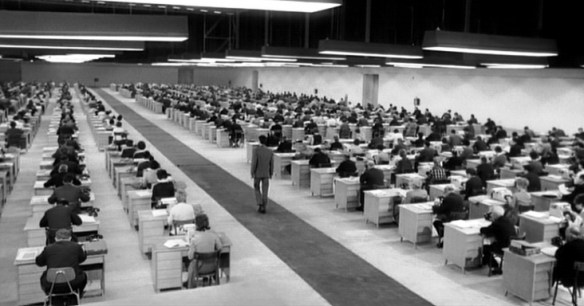
And empires die

Source: Intrepid Report

Nothing ever seems to last, everybody changes oh so fast,
promises made promises lost and pride is kept at any cost,
And flowers die, and children cry, and lonely people carry on.
—Palermo & Farruggio 1970

That was from the song And Flowers Die, by prolific composer Michael Palermo and this writer as lyricist. How appropriate to compare this song with the ‘death song’ of our Military-Industrial Amerikan Empire, now in only its 72nd year of prominence. How great and powerful our empire was for so long. We controlled the economies and governments of so many countries, even continents. Now it is the autumn of our status as Number One. The Asian rim, as many refer to it, being led by China and all those other nations in that region, will become the future economic powerhouse of this planet.

This writer will leave it to the many progressive scholars out there for the explanation of the how and why of this equation. Let me just say that we all, from grade school on, have been fed the pabulum of America as a democracy, benevolent to the entire world. Many sadly still believe that lie, and that strengthens the reason why this empire is in freefall.

Since we became the preeminent world empire at the end of WW2, two things held the greedy ones who run things in we’ll say half check: The progressive federal tax rate and the union movement. The top tax rate from 1953 to 1963 was 91%. Now, we know that the super rich did not pay at that rate, but even after their accountants sharpened a few pencils, many still had to pay at least 50%, for argument sake. Today’s top rate is 39.6%, meaning that folks like mega millionaire Mitt Romney pay at around 15%-20%. Do the math and see how much more went into the treasury then as opposed to now. The second factor that held this empire in half check was the stronger union movement in the ‘50s, ‘60s and ‘70s. In the 1950s, about 35% of American workers belonged to unions. In 1983, it went down to around 20%. Now, the percentage is around 12%. So, that means that three times more working stiffs in the recent past had the protection of a union, however weak or compliant that union may have been. Today, this empire can breathe easily as fewer and fewer working stiffs even have a union!

To this writer, with all the many factors that have contributed to the demise of our nation via this Military-Industrial Empire, the number one factor is our foreign policy. When over half of your spending goes for military reasons, how can a nation sustain itself at home? When you have over 1,000 military bases in over 100 countries, and you consistently are involved in these phony wars, the home front must feel the strain. Our myriad of domestic bleeding is so obvious . . . yet so few here will acknowledge it. Our infrastructure is crumbling, our health care is a mess, too many mediocre paying jobs (with too many being part time with NO benefits), our political system is controlled by Big Money, our media is controlled by the same Big Money . . . and the fools still fight amongst each other over the Two Party/One Party con job.

Let’s face it: All the major industrialized nations are controlled by their super rich. There are really few exceptions. Sadly, with over 99+ % of the populace in all these countries being just simple working stiffs, it is time for a change of mindset. The mindset must be simple: The super rich need to go back to paying their fair share, and government needs to become what Mark Twain prescribed: ‘To protect us from the crooks and scoundrels.’

As Babies are Prescribed Pharmaceuticals, Have We Reached Dystopia?

Tablets Pills Baby

By Joe Jarvis

Source: The Daily Bell

Would you let a five-year-old smoke a joint? I certainly hope not. Yet that would probably be less harmful than loading kids up on pharmaceuticals.

Currently, over a million American children UNDER SIX YEARS OLD are taking psychiatric drugs. Babies are literally being doped up by the pharmaceutical industry. Over 274,000 babies UNDER ONE-YEAR-OLD are given drugs, mostly for anxiety.

Anxiety drugs for babies. Have they tried motherly love? Or is that just an old fashioned, outdated concept?

You know, I like to mention society’s similarity to Orwell’s 1984. And surely the growing police state, war on drugs, and endless military campaigns–where the enemy seems to change daily–are reminiscent of the fictional dictatorship of Big Brother.

But it seems the powers that be are working tirelessly to blend together the dystopia of 1984, with that of Aldous Huxley’s Brave New World.

In that dystopia, there is no police state or war. Society has been perfectly designed by scientists, inspired by Ford’s assembly line. Babies are grown in the lab, cloned to all look alike, depending on their class. Parents are an embarrassing relic of the past. How silly to think a child needs family when they have the state!

The lower castes are deprived of oxygen as embryos to stunt their mental development. In America, they use fluoride in the drinking water instead.

In Brave New World, children listen to 24-hour propaganda in their cribs. Betas hear:

Alpha children wear grey. They work much harder than we do, because they’re so frightfully clever. I’m really awfully glad I’m a Beta, because I don’t work so hard. And then we are much better than the Gammas and Deltas. Gammas are stupid. They all wear green, and Delta children wear khaki. Oh no, I don’t want to play with Delta children. And Epsilons are still worse.

White pride, black pride, gay pride, national pride. Pride is not meant for accidents of birth. You should be proud of accomplishments and achievements, not genetics and geography. Perhaps someone has been whispering in these radicalized children’s ears.

And how jealous the Department of Education must be of the incubators of Brave New World! They have to sometimes wait years to indoctrinate children. But at least the government gets to drug them up at a young age! And if the TV is left on, most of the programming is done for them.

Of course, the adults are drugged up in Brave New World as well, just like in America. If anyone feels the least bit anxious, nervous, sad–or any other troublesome emotion–they get “soma.” It’s the perfect mix of drugs with only pleasant feelings and no ill side effects.

The 1 in 6 Americans on antidepressants, antipsychotics, and anti-anxiety medication still have to put up with side effects.

The 50 million plus Americans on psychiatric medication sometimes kill themselves, or go mad and kill others. I guess the government is still working out the kinks. Or it’s just another creative blending of 1984 and Brave New World. In the former, the proles must be properly terrified.

And there is one more thing I can remember from Brave New World that strikes eerily similar to modern America.

At what age does the public education system start teaching sex ed? Kindergarteners in some states receive “age appropriate”–according to the government–sexual education. Some studies suggest teen pregnancies rise in areas where sex ed is taught at younger ages.

How young is too young for a sex change? Kids can now choose between 43 genders, or make up a new one! It’s like Mr. Potato head, but with their own bodies. And they will be given corresponding drugs to enhance the “natural” changes.

In the classrooms of Brave New World:

“We had Elementary Sex for the first forty minutes,” she answered. “But now it’s switched over to Elementary Class Consciousness.”

The Director walked slowly down the long line of cots. Rosy and relaxed with sleep, eighty little boys and girls lay softly breathing…

He let out the amazing truth. For a very long period before the time of Our Ford, and even for some generations afterwards, erotic play between children had been regarded as abnormal (there was a roar of laughter); and not only abnormal, actually immoral (no!): and had therefore been rigorously suppressed.

Drugging the population, programming citizens with propaganda, sexualizing children, creating class divisions.

These dystopian novels were meant to be warnings, not instruction manuals.


Kafka Warned Us

By

Source: CounterPunch

Kafka’s The Trial can be read in retrospect as a prelude to the Twentieth/Twenty-First century. Although probably not written as prophecy, Kafka’s short unfinished book nevertheless provides a road map to the terrors of the current Surveillance State.

As readers of CounterPunch are all too familiar, modern man, as a single individual, is at the mercy of the modern state and those who, lurking in semi-secrecy, direct it.

Kafka’s The Trial superbly conveys the unease of our current existential situation.

Early one morning, The Trial’s main protagonist, Joseph K, awakes to find that, totally unexpectedly, he has been arrested. Throughout the book he endeavors to find the reason for his arrest without any definite success.

However, what he does discover is a vast semi-secret bureaucracy/organizaton whose inner workings and outward displays of power and decision making remain opaque at best.

Initally, Joseph K, believes that he lives in a “Rechtsstaat” (a state where the rule of law is respected) and thus where it is expected that all civilized norms and laws are upheld.

Yet, he soon comes to see that he has lived in a state of fundamental error and illusion about the true nature of his existence.

What appeared to him as a well ordered and just state is, all of a sudden, revealed to be a capricious omnipotent octopus capable of strangling (in this case literally) anyone deemed to be, for whatever reason, expendable.

All law is suspended or, at least, made a mockery of. All that remains are the inner, turgid demands of power.

Joseph K. is convinced of his innocence. But his conviction is no match for the monolithic power that stands against him. He is eventually crushed, if not by his enemy’s repetitive legal machinations, then by his fatalistic far-reaching administrative power.

In the end, the “Organization” which Joseph K has confronted is almighty and can be controlled by neither appeals to law, logic, or custom. In this, modern man is in a similar situation.

He stands, at any moment, beneath the mercy of a gigantic machinery that, if it wills, can almost casually set into motion his utter annihilation. The devastation and erasure of ones past, present, and future self is an ever-present possible function of the modern state. Advances in technology and organization make such a function all the more easier.

How to combat this greatest threat to humankind’s liberty will make the difference of whether or not future generations live in a world of securely grounded freedom or if they will succumb “like a dog” to the increasingly totalitarian powers of what we call today: the Surveillance State.

Ken Burns’ Vietnam War: An Object Lesson in the Failures of the Objective Lens

By Reed Richardson

Source: FAIR

If journalism resigns itself to being a “first draft of history,” Ken Burns’ popular PBS documentaries, written by Lynn Novick, have increasingly aspired to—and achieved—a coveted status as popular historical canon. This has, in part, been accomplished by Burns’ choice of cozily American subject matter—jazz, baseball, the Brooklyn Bridge—as well as the calming effect that time and distance provide when it comes to more difficult, inflammatory topics like the Civil War. His success is a rare, fraught feat.

But how would Burns’ earnest, middlebrow glosses on American history, forever panning slowly across sepia-tinted photos, treat a more contemporaneous, contentious event like the Vietnam War? The answer can be found in a 10-part, 18-hour opus that for the first time ventures outside Burns’ previous editorial and narrative comfort zones. The Cold War lead-up, decade-plus of intense air and ground combat, and subsequent years of national shame/guilt over the war affected the second half of our 20th century like nothing else.

Teasing out a coherent, honest through-line of such a momentous, highly charged topic is ambitious, to say the least, and Burns rises to the challenge in many ways. Most notable among them: a dedicated effort to include the voices and experiences of the Vietnamese who suffered and/or fought Americans, to create a much more complete, insightful portrait of the war. But in the striving to present all sides and simply lay out the facts for the viewer, Burns nonetheless pulls his punches when it comes to assigning blame and culpability for the disastrous war. As a result, he has produced a sometimes daring, sometimes schmaltzy, richly detailed yet ultimately flawed film about the tragedy and horrors that the United States brought upon itself and inflicted upon Southeast Asia.

As a Washington Post article (9/18/17) on all the behind-the-scenes detective work that went into the film makes clear, Burns and Novick did an incredible amount of research and original reporting. However, the narrative shortcomings of the documentary mirror many of the same journalistic sins one finds in the corporate media’s coverage of the far-off wars of today. Much like the mainstream press, Burns suffers from inherent biases about objectivity that affect his storytelling.

In an insightful New Yorker profile (9/4/17) of Burns by Ian Parker, one can see the tendrils of the filmmaker’s can’t-we-find-a-consensus editorial viewpoint that longs for inviolable truths sure to exist somewhere in between the ideological extremes:

Burns frequently—almost hourly—says, “Sometimes a thing and the opposite of a thing are true at the same time,” paraphrasing a remark made by Wynton Marsalis, in Jazz. Burns uses the line less to acknowledge historical uncertainty than to advertise inclusiveness: a desire to guide all but the most sectarian or jaded viewers through an obstacle course of their own biases. He is not disengaged from his material, but his sense of a subject, and his sense of an audience’s reaction to that subject, seem to be fused. He once said, “I want to bring everybody in.”

Later in that story, Burns betrays more of this tendency for false equivalence when he makes a prediction about the bifurcated political reaction his documentary would receive. Sounding very much like a put-upon, but archly centrist editorial page editor, he makes clear that he sees angering both the right and the left simultaneously as an occupational hazard, if not a proxy for having arrived closest to the truth:

After The Vietnam War, I’ll have to lie low. A lot of people will think I’m a Commie pinko, and a lot of people will think I’m a right-wing nutcase, and that’s sort of the way it goes.

While this suggests little capacity on the part of Burns to engage in past criticisms of his work—chief among them, his tendency to overindulge in hokey American splendor-ism—that’s not to say there aren’t stark departures from his oeuvre in The Vietnam War. In just the first few minutes of the first episode, “Deja Vu,” over a squawling original Trent Reznor score, Burns literally pushes the audience backwards by spooling iconic footage of the war—and protests of it—in reverse. It’s a disorienting, but shrewd gambit; a recognition of all the baggage the Vietnam War still carries in the American psyche.

Right after this jarring sequence, though, the old Burns reappears. We see languid, gauzy shots of the Vietnam Memorial in Washington, DC, overlaid with Bob Dylan’s “Hard Rain’s Gonna Fall” and former US senator and Vietnam veteran Max Cleland talking philosophically about the tragedy of suffering and surviving war. As presented, Cleland’s connection to the war is inexplicably vague—he’s only identified on-screen by his name and “Army”—and, though he is a triple amputee because of wounds suffered from a grenade blast in Vietnam, he is filmed only in close up, as if Burns still wants to ease his audience into the full violence wrought by the war. (Burns repeats this ambiguous decontextualization of his interview subjects throughout the documentary.) Then, the film’s narration, once again voiced by longtime actor Peter Coyote, offers up what journalism would call the “nut graf,” the defining leitmotif of the 17 hours and 55 minutes yet to come.

America’s involvement in Vietnam began in secrecy. It ended 30 years later in failure, witnessed by the entire world. It was begun in good faith by decent people out of fateful misunderstandings, American overconfidence and Cold War miscalculation. And it was prolonged because it seemed easier to muddle through than admit that it had been caused by tragic decisions made by five American presidents belonging to both political parties.

There is a lot to unpack in this short passage, but it is accurate in its summation of Burns’ narrative focus throughout his film: that is, long on personal perspectives and documentary evidence of the chronological evolution, but short on broader conclusions about American foreign policy, or any real condemnation of the indescribable cruelty and dishonesty among policymakers who orchestrated it. In one telling anecdote, Burns confided to the New Yorker that his team debated saying “ended in defeat” in this section, but nevertheless chose “failure” instead.

Likewise, the film’s “begun in good faith by decent people” line doesn’t merely land like a false note, it deafens like a discordant symphony. As Veterans for Peace pointed out, Burns’ own documentary refutes this claim. Nearly every episode in the film offers up myriad examples of our elected officials, the military, or CIA willfully lying to the public (or each other) about the US’s involvement in Vietnam, often for personal or political gain.

Nor can you overlook the passive construction of the language, which helps to strip agency from the war’s cheerleaders. Burns’ equivocations here represent stunning intellectual cop-outs, pure and simple, and throw doubt on all that follows.

Relevant to such a compromised take is how Burns and Novick get funding for their projects. Less than a quarter of their money is provided by government sources; the rest comes from charities and the private sector. So perhaps it’s foolish to believe any Ken Burns documentary—partly paid for by the likes of David Koch and Bank of America, among other sponsors—would offer up a polemicized indictment of US politicians and war policy.

By all accounts, Burns and Novick maintain full editorial independence, but their funding pipeline for future projects also greatly depends upon the continued generosity of those same nonprofit and corporate benefactors, who don’t ordinarily court highly controversial filmmakers. As a result of this ongoing relationship, there’s an unseen, but unmistakable gravitational pull that serves to keeps the pair from wandering too far afield from conventional wisdom. Just like Bank of America, in other words, Ken Burns has a brand to protect.

To stay safely within the bounds of convention, Burns and Novick spend a great deal of their time “in-country,” so to speak, on a simple, universal theme: War is hell. And their ability to convey the visceral fear and pathos of battle at the human level is remarkable and poignant: “In war, nobody wins or loses. There is only destruction. Only those who have never fought like to argue about who won or lost,” says Bao Ninh, a North Vietnamese soldier Burns interviews. (Bao is no random grunt—he is also the author of The Sorrow of War, a novel of a soldier’s anguish—but, again, Burns identifies him only as “North Vietnamese Army.”)

When paired with the blunt, chilling lessons that combat taught US Marine Karl Marlantes, the combination has a powerful effect. “One of the things I learned in the war is that we’re not the top species on the planet because we’re nice,” recounts Marlantes about a firefight from 1969. “People talk a lot about how well the military turns kids into killing machines and stuff, and I’ll always argue that it’s just finishing school.”

Feeding this seething killing machine on the American side was a wide-open, virulent streak of racism, which Burns, to his credit, delves into (finally) in the fifth episode. (A Washington Post podcast interview with Burns—9/22/17—delves further into this aspect of the war.) Still, the film can never quite make the leap between the countless tragedies on the tactical level and strategic policies that enabled them and then quickly metastasized.

The most famous battlefield atrocity, the 1968 My Lai massacre, which was mostly covered up and pinned on one Lt. William Calley, again shows Burns putting his directorial thumb on the scale. Rather than call the massacre “murder,” as it was originally described by Novick, Burns switched the script to read that “the killing of civilians has happened in every war.” While true, this statement is so banal that it is meaningless, and serves to inoculate My Lai and all the other atrocities committed in the war of their conscience-shocking power. In effect, the film’s stance is normalizing war crimes. And Burns all but confesses to this in a bizarre admission to the New Yorker: “‘Killing’ was the better word, [Burns] said, ‘even though My Lai ismurder.’”

These distinctions without differences betray a corrupted objectivity, one that can’t really reckon with the fact that the wanton destruction and unceasing, lawless violence seen at My Lai was more the rule than the exception. Perpetrating atrocities was, in fact, standard operating procedure for entire units on the US and Vietnamese sides throughout the war, not merely the work of a few deranged individuals. One academic who studies democide (murder by government) conservatively estimates North Vietnam killed 216,000 non-combatants between 1954 and 1975. (The Vietnamese government had been silent about the film until this week, when it issued a boilerplate response. But Vietnamese citizens have been able to watch a version of the documentary with Vietnamese subtitles on PBS online.)

To cite but one specific example of this lawless killing by the US military, the “Tiger Force” recon platoon of the 1/327th Infantry Regiment, 101st Airborne Division, committed a “wave of terror” in Vietnam’s Central Highlands in 1967. This bloodthirsty campaign was detailed in a 2003 series by the Toledo Blade (10/19/03). But for a more exhaustively comprehensive look at the tsunami of illegal killing by the US across the entire theater, you’re better off reading Nick Turse’s damning account: Kill Anything That Moves: The Real American War in Vietnam. As an American Conservative (7/30/13) book review of Turse’s book makes clear:

The relentless violence against civilians was more than the activity of a few sociopaths: It was policy. This was a war fought along Fordist principles—Robert McNamara had gone to the Department of Defense straight from the helm of the auto giant—and the slaughter was industrial in scale. Victory over the Viet Cong was to be achieved by quantifiable “kill ratios,” to reach that elusive tipping point where the insurgency could no longer replenish its troops. This approach hard-wired incentives to secure a high “body count” down the chain of command, with the result that US soldiers often shot civilians dead to pad their tallies and thereby move up the ranks.

Turse sent copies of his book to Burns’ team, and it is listed as a source in the show’s online bibliography. But while episodes two and three of Burns’ series do take time to cite McNamara’s chilling preference for quantifying enemy deaths as success (i.e., the infamous “body counts”), the film still fails to connect all the dots as to how this high-level political and military mindset—also propelled by racism—set the conditions for consistent, everyday atrocities, versus mere military operations, by combat units. (Thomas Bass’s highly critical essay covering the entire 18-hour documentary—Mekong Review, 8–10/17—discusses this.)

Ironically, Burns and Novick’s compromised framing also echoes much of the jingoistic reporting of the war as it was happening, which the film does an admirable job of debunking. Most TV media coverage of the early years of ever-expanding war, Burns notes, was almost willfully obtuse, invoking World War II newsreels that portrayed the war in terms that were “enthusiastic, unquestioning, good guys fighting and defeating bad guys.” At one point, Burns features a Marine, Roger Harris, telling his mother in 1967 that “she shouldn’t believe what she sees in the newspaper, what she sees on television, because we’re losing the war.”

There were a few, notable exceptions, however. While Vietnam was still fighting French colonial rule, on-the-ground reporters like Seymour Topping, the local Associated Press correspondent in Saigon, were warning that Western imperialist intentions in the country were doomed to fail. In 1951, Topping said as much to a young congressmember from Massachusetts, John F. Kennedy, who was visiting the nation for the first time.

Once the US began sending advisers, and then combat troops, in the early 1960s, Burns points to a handful of reporters—Neil Sheehan (who was an adviser to the documentary), the New York Times’ David Halberstam and Malcolm Browne of the AP—who dared to buck the party line. After spending time in the field, the film notes, they “were beginning to see that from the Vietnamese countryside, things looked very different than they did from the press offices in Washington or Saigon.”

But even intrepid reporters committed to telling the truth about the war were susceptible to creeping American bias. Sheehan, who had fought in Korea, acknowledges that he found riding along in US helicopters on an South Vietnamese Army air assault raid “absolutely thrilling.” Similarly, Joe Galloway, a UPI reporter who filed countless battlefield reports during the war, says in the film:

You can’t just be a neutral witness to something like war.… It’s not something you can stand back and be neutral and objective, and all of those things that we try to be as reporters, journalists and photographers. It doesn’t work that way.

Not coincidentally, when Galloway recounts a landmark 1965 battle in the Ia Drang Valley, where the Air Cavalry unit he was with faced a massive, frontal attack by the Viet Cong, he notably lapses into the first-person plural: “We had two things going for us. We had a great commander and great soldiers and we had air and artillery support out the yin-yang.” That Galloway later co-authored a New York Times bestselling book about the battle with its US commander, Lt. Gen. Hal Moore, and was later awarded a Bronze Star by the US Army for helping rescue a wounded soldier during that battle, goes unmentioned by Burns.

It’s this blindspot—the failure to see that one is adopting the point of view of one’s subjects—that ultimately dooms the film’s potential. Which is a tragedy, since the US is currently failing to learn the the same painful, sunk-costs lessons of Vietnam with its bipartisan, Groundhog Day war policy in Afghanistan. As Drake University political science professor, David Skidmore, noted in his review of the film (Military Times, 9/17/17):

Now Trump has also reneged from previous pledges to disengage from Afghanistan…the histories of US military involvements in Vietnam and Afghanistan should serve as warnings to future presidents who might be tempted to again jump onto the treadmill of perpetual war.

Burns has said he wants his film to act at as “some sort of vaccination” to war, to “get you immune to the disunion that it has sponsored.” But by denying the role and agency of the people who lied us into the Vietnam War, and then kept lying to keep us from leaving, his film misdiagnoses the real problem.

Looking for an invading sickness or outside cause for the mayhem and destruction our country unleashed upon Vietnam, and itself, is a dodge. In the end, the answer to the fundamental question about the Vietnam War, “Why?,” cannot be found in any clinical or objective analysis—no matter how many hours of documentary footage you have—that stubbornly avoids placing blame where it is so richly due.

The social pathology of the Las Vegas Massacre

By Patrick Martin

Source: WSWS.org

In yet another eruption of savage impersonal violence, at least 59 people were killed and 527 people wounded as an outdoor music festival on the Las Vegas Strip, attended by more than 20,000, was suddenly converted into a war zone.

The alleged gunman, Stephen Paddock, used multiple semi-automatic weapons that had been converted to fully automatic use, through an attachment known as a bump-stock device—available for a mere $40 per weapon—as he opened fire on the helpless crowd from his vantage point on the 32nd floor of the Mandalay Bay hotel and casino. He took his own life after the rampage.

Paddock could lay down a field of fire on a military scale, nearly 100 rounds per minute. He was found in possession of about 20 weapons, many of them high-powered semi-automatics, along with additional ammunition. The first minutes of gunfire triggered a smoke alarm that allowed police to locate Paddock far more quickly than through a search of the huge 3,300-room hotel, a fact that suggests that the toll of death and injury could have been much higher.

The gunman’s motives are unknown, and his identity sheds little light on what drove him on this murderous course. Paddock was 64 years old, shared a comfortable home with his female companion, and was, according to some reports, financially well-off. One of his brothers described Paddock as a real estate multi-millionaire. He had a pilot’s license and owned two small planes. He had no known associations with any political or religious group.

There is a family history of mental illness—Paddock’s father, Richard Hoskins Paddock, was a bank robber and diagnosed as a psychopath. He was on the FBI’s 10 Most Wanted List for nearly a decade. But Stephen Paddock had no contact with his father after he was seven years old, and there are no reports that he exhibited mental illness or received any treatment for it.

As in virtually all such shootings, the gunman knew none of the wounded and killed. They did not exist for him as individuals. Paddock saw the concert-goers packed below him in a parking lot not as fellow human beings, but as objects to be destroyed. The victims were the random targets of the uncontrolled and impersonal hatred of a gunman indifferent to their fate and the lifelong suffering that awaits their surviving family and friends.

Clearly, this was not the act of a normal person. Some form of mental illness, even if not previously diagnosed, must be involved in Paddock’s crime. But there is certainly a socially induced element in this terrible event. The frequency of these occurrences cannot be explained in purely individual and personal terms. The Las Vegas massacre is a peculiarly American crime, arising out of the social pathology of a deeply troubled society.

What is the social context of this latest episode of domestic mass killing? The United States has been at war more or less continuously for the past 27 years. The US government has treated tens of millions of people in the Middle East, Afghanistan, and Africa as targets for extermination through bombs, bullets, and drone-fired missiles. These wars have penetrated deeply into American culture, celebrated endlessly in film, television, music and even sport.

Social relations within the United States, characterized by the growth of economic inequality on a scale that exceeds any previous era in American history, fuel a culture of indifference, and even outright contempt for human life.

One telling detail: on the day that the media was filled with reports about the worst mass shooting in American history, the stock market continued its relentless march upwards, with new records for the Dow-Jones Industrial Average and other indexes. Wall Street is celebrating in anticipation of the Trump administration pushing through the biggest tax cut for corporate America and the super-rich in history.

The damage inflicted on American society by constant war and deepening social inequality has found expression in an endless series of events like the mass shooting in Las Vegas. With only 5 percent of the world’s population, the US accounts for 30 percent of the mass shootings. And the scale of such horrors is increasing: the four worst mass shootings, in terms of casualty toll, and six of the seven worst, have taken place since 2007.

Corporate media pundits and government officials are incapable of more than perfunctory expressions of shock and dismay over such atrocities, which recur with appalling frequency in the United States. Even uttering such rote statements seems to be too much to ask of President Trump, whose remarks Monday morning were both banal and palpably insincere. How can anyone take seriously a foul-mouthed misogynist and pathological liar as he begins a sentence with the words, “Scripture teaches us”?

As for his moronic statement that the killings in Las Vegas were “pure evil,” such a characterization explains nothing. It doesn’t even explain Trump himself, who gave a speech two weeks ago at the United Nations where he threatened to use nuclear weapons to incinerate the 27 million inhabitants of North Korea. Yet CNN, ever the sycophant, described his televised remarks on Las Vegas as “pitch perfect.”

Trump is to visit Las Vegas Wednesday, one day after an equally stage-managed and bogus display of compassion set for Puerto Rico. There he will view the devastation inflicted by Hurricane Maria, while pursuing his Twitter feud with local government officials who have dared to criticize the poorly executed federal response to the catastrophe.

During the 16 years since the 9/11 attacks, during which the US government has been supposedly engaged in a “war on terror,” an average of one American per year has been killed by a foreign terrorist. During the same period, at least 10,000 Americans have been killed every year by other Americans. Mass shootings like Virginia Tech, Newtown, Orlando and now Las Vegas have killed six times as many Americans as all the terrorist attacks in that period.

Further investigation into the circumstances of the Las Vegas tragedy is vital. But one conclusion can surely be drawn: what happened late Sunday night outside the Mandalay Bay hotel was a manifestation of a deep sickness in American society.

The Silencing of Dissent

By Chris Hedges

Source: Information Clearing House

The ruling elites, who grasp that the reigning ideology of global corporate capitalism and imperial expansion no longer has moral or intellectual credibility, have mounted a campaign to shut down the platforms given to their critics. The attacks within this campaign include blacklisting, censorship and slandering dissidents as foreign agents for Russia and purveyors of “fake news.”

No dominant class can long retain control when the credibility of the ideas that justify its existence evaporates. It is forced, at that point, to resort to crude forms of coercion, intimidation and censorship. This ideological collapse in the United States has transformed those of us who attack the corporate state into a potent threat, not because we reach large numbers of people, and certainly not because we spread Russian propaganda, but because the elites no longer have a plausible counterargument.

The elites face an unpleasant choice. They could impose harsh controls to protect the status quo or veer leftward toward socialism to ameliorate the mounting economic and political injustices endured by most of the population. But a move leftward, essentially reinstating and expanding the New Deal programs they have destroyed, would impede corporate power and corporate profits. So instead the elites, including the Democratic Party leadership, have decided to quash public debate. The tactic they are using is as old as the nation-state—smearing critics as traitors who are in the service of a hostile foreign power. Tens of thousands of people of conscience were blacklisted in this way during the Red Scares of the 1920s and 1950s. The current hyperbolic and relentless focus on Russia, embraced with gusto by “liberal” media outlets such as The New York Times and MSNBC, has unleashed what some have called a virulent “New McCarthyism.”

The corporate elites do not fear Russia. There is no publicly disclosed evidence that Russia swung the election to Donald Trump. Nor does Russia appear to be intent on a military confrontation with the United States. I am certain Russia tries to meddle in U.S. affairs to its advantage, as we do and did in Russia—including our clandestine bankrolling of Boris Yeltsin, whose successful 1996 campaign for re-election as president is estimated to have cost up to $2.5 billion, much of that money coming indirectly from the American government. In today’s media environment Russia is the foil. The corporate state is unnerved by the media outlets that give a voice to critics of corporate capitalism, the security and surveillance state and imperialism, including the network RT America.

My show on RT America, “On Contact,” like my columns at Truthdig, amplifies the voices of these dissidents—Tariq Ali, Kshama Sawant, Mumia Abu-Jamal, Medea Benjamin, Ajamu Baraka, Noam Chomsky, Dr. Margaret Flowers, Rania Khalek, Amira Hass, Miko Peled, Abby Martin, Glen Ford, Max Blumenthal, Pam Africa, Linh Dinh, Ben Norton, Eugene Puryear, Allan Nairn, Jill Stein, Kevin Zeese and others. These dissidents, if we had a functioning public broadcasting system or a commercial press free of corporate control, would be included in the mainstream discourse. They are not bought and paid for. They have integrity, courage and often brilliance. They are honest. For these reasons, in the eyes of the corporate state, they are very dangerous.

The first and deadliest salvo in the war on dissent came in 1971 when Lewis Powell, a corporate attorney and later a Supreme Court justice, wrote and circulated a memo among business leaders called “Attack on American Free Enterprise System.” It became the blueprint for the corporate coup d’état. Corporations, as Powell recommended in the document, poured hundreds of millions of dollars into the assault, financing pro-business political candidates, mounting campaigns against the liberal wing of the Democratic Party and the press and creating institutions such as the Business Roundtable, The Heritage Foundation, the Manhattan Institute, the Cato Institute, Citizens for a Sound Economy, the Federalist Society and Accuracy in Academia. The memo argued that corporations had to fund sustained campaigns to marginalize or silence those who in “the college campus, the pulpit, the media, and the intellectual and literary journals” were hostile to corporate interests.

Powell attacked Ralph Nader by name. Lobbyists flooded Washington and state capitals. Regulatory controls were abolished. Massive tax cuts for corporations and the wealthy were implemented, culminating in a de facto tax boycott. Trade barriers were lifted and the country’s manufacturing base was destroyed. Social programs were slashed and funds for infrastructure, from roads and bridges to public libraries and schools, were cut. Protections for workers were gutted. Wages declined or stagnated. The military budget, along with the organs of internal security, became ever more bloated. A de facto blacklist, especially in universities and the press, was used to discredit intellectuals, radicals and activists who decried the idea of the nation prostrating itself before the dictates of the marketplace and condemned the crimes of imperialism, some of the best known being Howard Zinn, Noam Chomsky, Sheldon Wolin, Ward Churchill, Nader, Angela Davis and Edward Said. These critics were permitted to exist only on the margins of society, often outside of institutions, and many had trouble making a living.

The financial meltdown of 2008 not only devastated the global economy, it exposed the lies propagated by those advocating globalization. Among these lies: that salaries of workers would rise, democracy would spread across the globe, the tech industry would replace manufacturing as a source of worker income, the middle class would flourish, and global communities would prosper. After 2008 it became clear that the “free market” is a scam, a zombie ideology by which workers and communities are ravaged by predatory capitalists and assets are funneled upward into the hands of the global 1 percent. The endless wars, fought largely to enrich the arms industry and swell the power of the military, are futile and counterproductive to national interests. Deindustrialization and austerity programs have impoverished the working class and fatally damaged the economy.

The establishment politicians in the two leading parties, each in service to corporate power and responsible for the assault on civil liberties and impoverishment of the country, are no longer able to use identity politics and the culture wars to whip up support. This led in the last presidential campaign to an insurgency by Bernie Sanders, which the Democratic Party crushed, and the election of Donald Trump.

Barack Obama rode a wave of bipartisan resentment into office in 2008, then spent eight years betraying the public. Obama’s assault on civil liberties, including his use of the Espionage Act to prosecute whistleblowers, was worse than those carried out by George W. Bush. He accelerated the war on public education by privatizing schools, expanded the wars in the Middle East, including the use of militarized drone attacks, provided little meaningful environmental reform, ignored the plight of the working class, deported more undocumented people than any other president, imposed a corporate-sponsored health care program that was the brainchild of the right-wing Heritage Foundation, and prohibited the Justice Department from prosecuting the bankers and financial firms that carried out derivatives scams and inflated the housing and real estate market, a condition that led to the 2008 financial meltdown. He epitomized, like Bill Clinton, the bankruptcy of the Democratic Party. Clinton, outdoing Obama’s later actions, gave us the North American Free Trade Agreement (NAFTA), the dismantling of the welfare system, the deregulation of the financial services industry and the huge expansion of mass incarceration. Clinton also oversaw deregulation of the Federal Communications Commission, a change that allowed a handful of corporations to buy up the airwaves.

The corporate state was in crisis at the end of the Obama presidency. It was widely hated. It became vulnerable to attacks by the critics it had pushed to the fringes. Most vulnerable was the Democratic Party establishment, which claims to defend the rights of working men and women and protect civil liberties. This is why the Democratic Party is so zealous in its efforts to discredit its critics as stooges for Moscow and to charge that Russian interference caused its election defeat.

In January there was a report on Russia by the Office of the Director of National Intelligence. The report devoted seven of its 25 pages to RT America and its influence on the presidential election. It claimed “Russian media made increasingly favorable comments about President-elect Trump as the 2016 US general and primary election campaigns progressed while consistently offering negative coverage of Secretary [Hillary] Clinton.” This might seem true if you did not watch my RT broadcasts, which relentlessly attacked Trump as well as Clinton, or watch Ed Schultz, who now has a program on RT after having been the host of an MSNBC commentary program. The report also attempted to present RT America as having a vast media footprint and influence it does not possess.

“In an effort to highlight the alleged ‘lack of democracy’ in the United States, RT broadcast, hosted, and advertised third party candidate debates and ran reporting supportive of the political agenda of these candidates,” the report read, correctly summing up themes on my show. “The RT hosts asserted that the US two-party system does not represent the views of at least one-third of the population and is a ‘sham.’ ”

It went on:

RT’s reports often characterize the United States as a ‘surveillance state’ and allege widespread infringements of civil liberties, police brutality, and drone use.

RT has also focused on criticism of the US economic system, US currency policy, alleged Wall Street greed, and the US national debt. Some of RT’s hosts have compared the United States to Imperial Rome and have predicted that government corruption and “corporate greed” will lead to US financial collapse.

Is the corporate state so obtuse it thinks the American public has not, on its own, reached these conclusions about the condition of the nation? Is this what it defines as “fake news”? But most important, isn’t this the truth that the courtiers in the mainstream press and public broadcasting, dependent on their funding from sources such as the Koch brothers, refuse to present? And isn’t it, in the end, the truth that frightens them the most? Abby Martin and Ben Norton ripped apart the mendacity of the report and the complicity of the corporate media in my “On Contact” show titled “Real purpose of intel report on Russian hacking with Abby Martin & Ben Norton.”

The blacklist published by the shadowy and anonymous site PropOrNot in November 2016 soon followed. The blacklist was composed of 199 sites PropOrNot alleged, with no evidence, “reliably echo Russian propaganda.” More than half of those sites were far-right, conspiracy-driven ones. But about 20 of the sites were major left-wing outlets including AlterNet, Black Agenda Report, Democracy Now!, Naked Capitalism, Truthdig, Truthout, CounterPunch and the World Socialist Web Site. The blacklist and the spurious accusations that these sites disseminated “fake news” on behalf of Russia were given prominent play in The Washington Post in a story headlined “Russian propaganda effort helped spread ‘fake news’ during the election, experts say.” The reporter, Craig Timberg, wrote that the goal of the Russian propaganda effort, according to “independent researchers who have tracked the operation,” was “punishing Democrat Hillary Clinton, helping Republican Donald Trump and undermining faith in American democracy.” Last December, Truthdig columnist Bill Boyarsky wrote a good piece about PropOrNot, which to this day remains essentially a secret organization.

The owner of The Washington Post, Jeff Bezos, also the founder and CEO of Amazon, has a $600 million contract with the CIA. Google, likewise, is deeply embedded within the security and surveillance state and aligned with the ruling elites. Amazon recently purged over 1,000 negative reviews of Hillary Clinton’s new book, “What Happened.” The effect was that the book’s Amazon rating jumped from 2 1/2 stars to five stars. Do corporations such as Google and Amazon carry out such censorship on behalf of the U.S. government? Or is this censorship their independent contribution to protect the corporate state?

In the name of combating Russia-inspired “fake news,” Google, Facebook, Twitter, The New York Times, The Washington Post, BuzzFeed News, Agence France-Presse and CNN in April imposed algorithms or filters, overseen by “evaluators,” that hunt for key words such as “U.S. military,” “inequality” and “socialism,” along with personal names such as Julian Assange and Laura Poitras, the filmmaker. Ben Gomes, Google’s vice president for search engineering, says Google has amassed some 10,000 “evaluators” to determine the “quality” and veracity of websites. Internet users doing searches on Google, since the algorithms were put in place, are diverted from sites such as Truthdig and directed to mainstream publications such as The New York Times. The news organizations and corporations that are imposing this censorship have strong links to the Democratic Party. They are cheerleaders for American imperial projects and global capitalism. Because they are struggling in the new media environment for profitability, they have an economic incentive to be part of the witch hunt.

The World Socialist Web Site reported in July that its aggregate volume, or “impressions”—links displayed by Google in response to search requests—fell dramatically over a short period after the new algorithms were imposed. It also wrote that a number of sites “declared to be ‘fake news’ by the Washington Post’s discredited [PropOrNot] blacklist … had their global ranking fall. The average decline of the global reach of all of these sites is 25 percent. …”

Another article, “Google rigs searches to block access to World Socialist Web Site,” by the same website that month said:

During the month of May, Google searches including the word “war” produced 61,795 WSWS impressions. In July, WSWS impressions fell by approximately 90 percent, to 6,613.

Searches for the term “Korean war” produced 20,392 impressions in May. In July, searches using the same words produced zero WSWS impressions. Searches for “North Korea war” produced 4,626 impressions in May. In July, the result of the same search produced zero WSWS impressions. “India Pakistan war” produced 4,394 impressions in May. In July, the result, again, was zero. And “Nuclear war 2017” produced 2,319 impressions in May, and zero in July.

To cite some other searches: “WikiLeaks,” fell from 6,576 impressions to zero, “Julian Assange” fell from 3,701 impressions to zero, and “Laura Poitras” fell from 4,499 impressions to zero. A search for “Michael Hastings”—the reporter who died in 2013 under suspicious circumstances—produced 33,464 impressions in May, but only 5,227 impressions in July.

In addition to geopolitics, the WSWS regularly covers a broad range of social issues, many of which have seen precipitous drops in search results. Searches for “food stamps,” “Ford layoffs,” “Amazon warehouse,” and “secretary of education” all went down from more than 5,000 impressions in May to zero impressions in July.

The accusation that left-wing sites collude with Russia has made them theoretically subject, along with those who write for them, to the Espionage Act and the Foreign Agent Registration Act, which requires Americans who work on behalf of a foreign party to register as foreign agents.

The latest salvo came last week. It is the most ominous. The Department of Justice called on RT America and its “associates”—which may mean people like me—to register under the Foreign Agent Registration Act. No doubt, the corporate state knows that most of us will not register as foreign agents, meaning we will be banished from the airwaves. This, I expect, is the intent. The government will not stop with RT. The FBI has been handed the authority to determine who is a “legitimate” journalist and who is not. It will use this authority to decimate the left.

This is a war of ideas. The corporate state cannot compete honestly in this contest. It will do what all despotic regimes do—govern through wholesale surveillance, lies, blacklists, false accusations of treason, heavy-handed censorship and, eventually, violence.


Chris Hedges, spent nearly two decades as a foreign correspondent in Central America, the Middle East, Africa and the Balkans. He has reported from more than 50 countries and has worked for The Christian Science Monitor, National Public Radio, The Dallas Morning News and The New York Times, for which he was a foreign correspondent for 15 years.

 

Are Facebook and Google the New Colonial Powers?

By Charles Hugh Smith

Source: Of Two Minds

To qualify as colonial powers, Facebook and Google must effectively limit the choices and power of users, and punish or coerce those who question or resist their power.

I was struck by a phrase from a recent essay on advertising and social media, You Are the Product: As Taplin points out, that remark ‘unwittingly revealed a previously unspoken truth: Facebook and Google are the new colonial powers.’

As you’ve no doubt noticed, the dominance of Facebook and Google in online advertising is now “in the news” for a variety of reasons: the possibility that agents of other governments influenced U.S. elections with media buys on Facebook; anti-trust concerns; the potential for these advert-tech giants to effectively silence legitimate online voices under the guise of limiting “fake news”, and of course, the ongoing issues of click fraud and the underperformance of digital ads.

The phrase that captures this broad narrative is: When an online service is free, you’re not the customer. You’re the product.

In other words, if you’re not paying for the service or content, then your information (harvested by Google, Facebook, et al.), your time online (i.e. your attention, a.k.a. eyeballs) and the content you create and post for free (videos of your cute cat, etc.) are the products being sold to advertisers at a premium.

The characterization of the two dominant digital-advert giants as new colonial powers is interesting on a number of fronts. To get a handle on a few of the issues, I recommend reading these two essays:

A Serf on Google’s Farm

Lost Context: How Did We End Up Here?

And watching this video on the archiving of digital information on individuals–including meta-data, that is, data about your behaviors, transactions, posts, etc. that have been scrubbed of your identity markers (name, account numbers, etc.)

Haunted by Data – Maciej Ceglowski (via GFB)

The key dynamics of colonialism for the residents are 1) a lack of choice and 2) a lack of power: the colonial power imposes a regime, either formally or informally, that limits the choices enjoyed by residents and limits their power to bypass or replace the colonial regime.

In the classic Plantation Economy of overt colonialism–a topic I’ve discussed numerous times here–residents are stripped of any options other than working on the plantation and buying their goods at the plantation store. This coercion need not be direct; the colonial regime can strip residents of choice and power by making it impossible to live without cash, for example, and then providing one source of paid work: the plantation.

Once cash is necessary to live, then credit is introduced–but only if you buy at the company store.

I’ve also written extensively about the Neo-Colonial Model in which corporations and banks bring the colonial model of exploitation to the home country, stripmining the domestic populace via dependence on credit.

Welcome to Neocolonialism, Exploited Peasants! (October 21, 2016)

Greece and the Endgame of the Neocolonial Model of Exploitation (February 19, 2015)

The E.U., Neofeudalism and the Neocolonial-Financialization Model (May 24, 2012)

This model is also used in the developing world, where it has replaced the old overt form of Colonialism with the new and improved credit-based version.

To qualify as colonial powers, Facebook and Google must effectively limit the choices and power of users, and punish or coerce those who question or resist their power. As the dominant corporations in search, social media and digital advertising, Facebook and Google limit the options of users simply by being essential due to their dominance.

As for punishing users–the potential to do so is what’s worrying observers. The cover for silencing or banning critics is opaque: non-compliance with guidelines. So who’s to say that users who criticized or questioned the policies of Facebook and Google aren’t silenced along with click-fraudsters, “fake news” purveyors, etc.? Who gets silenced is completely up to the companies, and there is no recourse to the corporation’s opaque judgment.

The Orwellian possibilities are real enough.

Here’s a look at the digital advert market:

And the dominance of Google/Facebook:

Freedom Is Not Necessarily The Absence Of Tyranny

By Brandon Smith

Source: Alt-Market

Is it true that freedom is an overly idealized concept? Perhaps, but it is one of the few concepts worthy of idealization. It is so worthy, that it is worth dying for.

Since the dawn of recorded history human beings have fought and sacrificed to attain freedom. It is an inherent psychological construct. It is a principle that is rooted not only in the mind of man, but his spirit or soul. Scientists in the realm of the mind have struggled for generations to understand where it comes from — others have sought to dismiss it as a fanciful notion or societal construct. Nihilists claim it doesn’t really exist, while other people center their entire lives on the proliferation of it. The concept of freedom, love it or hate it, is central to all cultures and all civilizations. The most common dismissal of the idea of freedom that I have seen is the argument that none of us is really free because “tyranny exists”. Tyranny is a constant, therefore, in the view of the nihilists, freedom cannot exist. I believe this dim way of thinking stems from a misconception of what freedom is and where it comes from.

Freedom, first and foremost, begins in the mind, or the heart; whatever you are inclined to put more stock in. To think critically or to imagine wildly is indeed to be free. Tyranny, by extension, rises from the mire and muck in the physical world around us and ends in the mind and the heart. If one is free of mind, then one is never truly enslaved.

I have heard so many times the ignorant accusation that freedom requires action before consequence. That is to say, if you have suffered the consequences of a tyrannical system, then you have already failed to prevent your own enslavement. This is not how freedom functions. It has never worked this way.

There is no such thing as a world without the consequences of tyranny. Tyrants are everywhere, always. There are little tyrants in our everyday lives, and big tyrants that pull strings from behind the curtains and from the darker places. There are people reading this article right now that think they are liberty-minded, but act like tyrants towards those around them. There are people who think they are slaves when one simple choice or action could easily make them free. There are people who see private property as tyranny and seek to supplant it….with an even greater tyranny of entitlement and socialism. And, there are people who think freedom means freedom for them, but not for others. Each tyrant takes time to understand and remove from our lives. Some we simply need to walk away from; others need to be destroyed.

The point is, we are forever dealing with tyranny, and many of us are forever working to topple it. As long as we are able to pursue that goal, we are still free. The true slaves are those that have given up completely out of laziness or fear. Tyranny is always present, after all; why take a bath today when you are just going to end up soiled again tomorrow?

The idea that one can do nothing in the face of the machine is an old idea proven wrong time and time again, yet, it is also a very easy and comfortable lie to live in. Struggle is difficult. Sacrifice is foreboding and ugly. There are a million-and-one excuses and rationalizations as to why it is better to “accept fate” or circumstances. There is always another excuse that can be used to paper over cowardice.

Tyrants can, in fact, win and keep winning for the length of an epoch, exactly because of the logical fallacy that they cannot be resisted or be beaten. It is the self-fulfilling prophecy of nihilism that makes tyranny possible. Without it, tyrants inevitably fail and fall.

The great monster of our time that must be slayed is the monster of organized conspiracy. Past generations have confronted and defeated appendages of this monster, but they never beheaded it, and this is why our particular brand of tyranny persists. It is not enough for us to fight the tentacles of the beast anymore — it is the job of the freedom fighters of our era to stab at the brains of the wretched thing.

I am of course speaking of the banking cabal, the cult of financiers and elites that make up the globalist hierarchy. They pervade the halls of numerous institutions and think tanks, from the Federal Reserve and the Council on Foreign Relations to the International Monetary Fund and the Bank for International Settlements. They sit in positions of great political influence and hold council (and some would say considerable sway) over world leaders. They write “theoretical” policies which are quickly adopted by governments and made into law. They are primary stockholders and owners of our mainstream media. Their slithering fingers are wrapped around academia and many scientific communities. They insinuate themselves into every foundation of thought, because thought is what they most wish to control.

They prefer to divide and conquer, to pit one group against another, or to give their ideological enemies enough rope to hang themselves with. If they can’t rule the psyche of a society or succeed in 4th generation warfare, they will fall back to the old standard of brute force. In fact, they might just do that anyway, because what tyrant doesn’t love instilling abject terror every once in a while?

And yet, these “elites” stand on a razor’s edge. Despite all their supposed power, despite all their wealth, despite the vast spiderwebs they weave, all of it can be turned to ash in an instant and they know it. Empires like this rely on anonymity, and they are anonymous no longer. The cabal is out in the open; they have to be.

To shift the world into true globalism and true centralization requires actions which can be masked from some people but not all people. They believe the intricate digital networks they have funded will buy them total information awareness, but these same networks also provide us with the tools to understand who they are and what they want. This double-edged sword of full spectrum data creates a Catch-22 timeline. The longer the globalists wait to implement the one world system they desire, the more time we have to educate millions of people. The faster they implement their one-world system, the more likely they are to make a mistake.

Time is running out. Time is working against them. Time is the master here, and the globalists are nothing but paper boats on a tidal wave.

This organized conspiracy increases its odds of success through psychological manipulation. There will come a time, perhaps sooner rather than later, when banking elites and their political allies can no longer stand outside the game unscathed. Risk is coming. So, they must encourage as much self-defeat in the minds of freedom champions as possible.

They will conjure crisis and catastrophe, they will conjure puppet enemy after puppet enemy, they will exploit useful idiots with collectivist views as cannon fodder, they will engineer conflicts between East and West. They will try to grind us down and break the legs of our resolve.

However, as long as there are people who know who the globalists are that are willing to hunt them down, the globalists cannot win. For what they desperately want is to stand out in the sun with criminal impunity, and without fear. They want to be untouchable. They want to be gods.

Real gods do not suffer consequences, and these people will suffer consequences.

The nihilists will cry, “When?! How?! Never!” But this is the nature of freedom. Freedom is in the fighting; winning is transitory. Tyranny can be subtle and it can be blunt, freedom is the same way. If you think because there is no shooting going on yet that a war is not happening, then you do not understand the nature of warfare.

Yes, it is possible that the fall of one globalist cabal might give rise to another, and another. But we are free to be there and to fight again. As long as we fight, we prevail. When we abandon the fight completely, that is when true slavery begins. Today, we fight using information versus propaganda, and we must be adept at this. We also must be adept at other forms of combat as the conflict escalates.

There will never be total absence of tyranny. The naysayers against the principle of freedom are delusional, or maybe they know such a standard is unattainable and this will make them forever “right.” When will the fight begin? It already has. It has been going on since time immemorial and we are merely here to continue it. This might seem like a task for Sisyphus – an endless circular nightmare. I look at it another way: We are a changing of the guard. We have inherited a responsibility beyond all responsibilities. In this age, we are the freedom fighters, and if we fail now then we pass an even more difficult horror on to some other generation down the line.

In my view this is unacceptable. The opportunity to end one longstanding tyranny is now. We must counter using information as long as is needed, and we must wake up as many people as possible, so when the time comes to storm the castle, the shared sacrifice is that much easier to bear. If you have taken up this fight in one form or another never let anyone tell you you are not free. Your ability to think and to act is concrete proof otherwise.