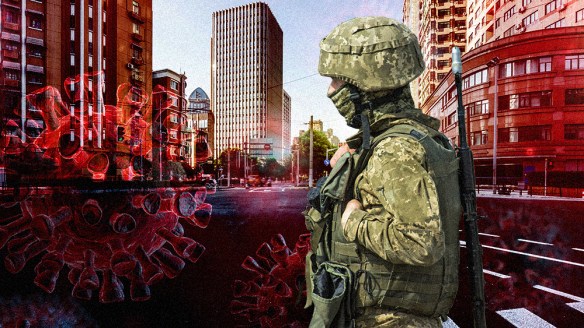
COVID-19’s Black Swan Timeline

Black swan events are characterized by their extreme rarity, their severe impact, and the widespread insistence that they were obvious in hindsight.”

By Steve Brown

Source: The Duran

According to Investopedia a Black Swan event “is an unpredictable event that is beyond what is normally expected of a situation and has potentially severe consequences. Black swan events are characterized by their extreme rarity, their severe impact, and the widespread insistence that they were obvious in hindsight.”

In the twentieth century, the financial market crash of 1929 was a black swan event. While Germany’s invasion of Poland in 1939 is sometimes attributed the same, World War 2 was partly the result of an existential power vacuum subsequent to the Great War and thus an extension of it.  911 looked like such an unpredictable surprise event but the imperial arrogance and hubris that afflicted the West for at least fifty years prior rendered the potential for 911 Blowback predictable and foretold.*

The “Great Recession” of 2008-2009 was spawned with reckless abandon by corrupt banks criminally endorsed by Congressional legislation. Pillars of financial debauchery like Goldman Sachs were shorting their own subprime products anticipating the crash. Based on such engineered systemic financial fraud the crash of ten years ago does not qualify as a black swan event.

Except for the financial collapse of 1929, all the foregoing resulted in some immediate plan of action to confront the particular crisis. This time the magnitude is exponentially greater when authorities have scant idea about how to respond and media scare tactics rule the day. The result is to place the global economy in a self-induced coma.  Searching for answers, the New World Order has none.

The great philosophers Epictetus, Socrates, and Aristotle viewed logic and science as the foundation for civilization in opposition to irrational belief systems, superstition, and religion.  The great philosophers believed that learning from humanity’s past mistakes and anticipating future events – with intent to avoid mistakes of the past — would greatly advance prospects for civilized societies.  One highly advanced civilization of the ancient world, the Etruscans, considered past cycles as indicative of future events.

Recognizing a singular relationship in years with regard to life and death, Etruscans defined their theory of Saeculum.  Saeculum posited that major cataclysmic events engendered by humans will follow a pattern of ninety-year cycles. So, people living through a catastrophe in one age will have fully died out by the next.  For example we have the crash of 1929 and the advent of Covid-19 in 2019…. precisely ninety years apart.

The Etruscan’s 90-year black swan cycle may be a bizarre coincidence, but defining COVID19 as such an event helps when confronting its ramifications.  We previously identified a unique confluence of geopolitical events threatening the western-led Warfare State.  And now a severe global health crisis – which promises to shut down the world economy — leverages this geopolitical mix to an even greater extent.  So, in what context may this current COVID cataclysm be viewed?

Putting aside the health factor for one moment this pandemic provides enormous cover for the far less than one percent along very broad lines:

  • Financial
  • Military
  • Socially
  • Politically

Essentially the political class now has carte blanche for:

  • Government bail-outs
  • Corporate bail-outs
  • Wall Street bail-outs
  • Control of a growing restive populace
  • Suppression of individual liberty
  • Increased militarization / powers for law enforcement
  • Political cover

As in 911, the Empire’s excuse is fear.  Perhaps not duct tape this time. But if Elites view this pandemic as an opportunity for draconian population control then the policy carries incredible risk… and not just for the people. Should this disease ease and the controls remain, an already highly stressed populace may lash out. Note that in the financial sector some passive investment firms have already failed. If oil markets cannot be stabilized then the world economy is at risk.

Meanwhile, it’s likely that $1200 monthly payments to the US populace will keep folks quiet. But what if the Fed, International Monetary Fund, and Bank of International Settlements can’t pay for the ponzi?  Perhaps China will bail – indications are that China already has. China is swapping for dollars, but not purchasing US Treasury debt.  That’s a big problem and a Big Risk for the US money masters.

Now there is no intent to make light of the serious health hazard posed by COVID19. Or to disrespect anyone who has become ill or died from the disease.  COVID19 is a deadly and serious illness. Of that there is no doubt.  The intent here is to heighten awareness that there may be a bigger picture for the too big to jail to exploit.  That picture is of a teetering New World Order mired in its own criminal system of usury and theft which hopes for a way out of the pickle it created (since 2009) at the expense of working people.  It’s just possible that those who wish to enslave us will attempt to do so using the prospect of their own demise to create an environment of escalating fear.

As this author has written for many years, when this system fails it will fail by its own hand and not by any fifth column or external enemy.  Until then, Elites may yet accomplish what Huxley and Orwell could not quite agree upon: that their vision of the future might ultimately coalesce and coexist.  So will this monetary system fail?  Probably not.  But if the pain is deep enough, it must reinvent itself.

Contrarily, in this crisis the law of unintended consequences may yet backfire on Elites. For now, they seem very confident.  But any hole in the COVID major media narrative or tear in the Elite’s agitprop universe will be carefully examined and amplified. If a COVID-analogous ‘Building 7’ scenario arises it will not be ignored this time.  That’s because we’ve known for far more than twenty years that those who rule us in the west are largely debauched liars, perverts, and thieves.  Under their control, we should expect nothing less.

*John O’Neill’s career history and death is a remarkable indictment of all US intelligence services.

Welcome to the New Communist Police State, blamed on a virus

By Scott Baker

Source: OpEdNews.com

The draconian measures being taken or certainly being talked about – food rationing?!– will end up killing more people than the virus.

How many elderly will die because their caregivers can’t get to them (bye bye meals on wheels)? How many people already on special diets won’t be able to maintain them and get sick as a result? (Me, I eat mostly fresh, unboxed/uncanned food, devoid of extra salt and sugar, instead of the cheap crap that only governments will pay for).

People will die from this too.

Think you can can substitute daily school lunches for actual school and not have the same infection rate? Forget it. It’ll slow it down for a couple of weeks at most. And in New York City, 74% of the children in public school are poor. Without school lunch they go hungry. With school lunch, and then a return to home, their parents – or parent, singular, since many come from single parent households – can’t work, they can’t staff our hospitals, clean our streets, or do any of the hundred things the Departments of Health say are necessary to contain the virus.

People will die from this too.

I’m not usually paranoid, but this seems to be a way of trapping people into a police state. Oh, and yeah, what happens to the actual police who have to enforce this regime of deprivation? Will they use force when someone wants to go for a jog? If they injure someone, who will treat them in the over-crowded hospitals? Supposedly, exercise is fine, but what if you want to go jogging or biking in a group? I am scheduled to lead a 50-person bike group around New York City the end of April. Is that against the laws now? Wait…what law? Expect court challenges…wait, what courts? They are all working remotely or not at all. Our Civil Rights are already gone but we just don’t know it yet. Where is the ACLU? They are silent. Rights for LGBT, for voting…wait, long lines at polling stations. That’s already forbidden. Ohio postponed its primary for today. A half dozen other states did as well.

And recessions kill. You can’t pay your bills. Evictions and utility shutoffs are supposedly illegal in our new communist state, but what happens when the landlord or utility can’t pay its bills? Yes I know, record profits for utilities in the last few years. But that went into buybacks. That wasn’t against the law and still isn’t. It SHOULD be but it wasn’t. And corporations are deep in debt now, and bankruptcies will follow in a week or so; it’s that close. The economy is being unraveled and government can’t, or won’t, even pass the first of dozens of mitigating bills in the New Communism. The New Communism includes tax breaks and bailouts for the largest corporations though, $850 billion worth, so the Administration has learned nothing. Worse, actually, the centerpiece of the proposal is to eliminate the payroll tax, which will save corporations many millions, might trickle down to the employee, unless the corporations pocket the extra, and won’t help those out of a job or working for tips at all. Even worse, it will gut Social Security and Medicare, already due to start running out of money in a few years, even during Trump’s next term – and yes, he will get another term unless Biden or Sanders can distinguish themselves by what they will do differently, AND we have a recession. But, getting back to Social Security and Medicare; Trump has already said he wants to rein in the costs (read: gut or eliminate the programs millions depend upon to survive). Trump wants a permanent underclass, not entitled to any entitlements, even those it earned. He wants the free-to-be-corrupt market to provide for your old age or illness, or to let you die if you don’t plan 40 years ahead, or anticipate cancer.

This is permanent. We are giving up our rights supposedly temporarily. But that’s what was said after 9/11, and we still have the Patriot Act and a permanent war footing. BTW, presidential candidate Tulsi Gabbard wants a $1,000/month guaranteed income for everyone. That would be much more in keeping with our Civil Rights and much more fair. But no one is listening to her in the MSM or debates,where she is excluded.

This is permanent. This will kill more people than the virus ever would.

So, again, more people will die from the measures to contain the virus – which will ultimately fail anyway – than from the virus itself.

Of Course Billionaires Shouldn’t Exist

By HipCrime Vocab

There’s apparently a row over whether billionaires should exist. That is, whether or not billionaires should be a thing in our society.

What a stupid question. Of course billionaires shouldn’t exist! But the reason has nothing to do with Socialism.

Rather, under a properly-functioning free-market capitalist system, billionaires shouldn’t exist. And that would have also been the opinion of the “Classical Liberals” so favored by the Right these days: Adam Smith, David Ricardo. Thomas Malthus, John Stuart Mill, and so on.

Billionaires are a sign of market failure.

Let me say that again: billionaires are a form of market failure! You cannot simultaneously be both pro-Market and pro-billionaire.

I’m amazed at how few people get this!

In a truly competitive market, excess profits would be competed away. Someone would come along and undercut outsize profits. That’s exactly how the Classical Liberals assumed free markets would work. In this, they saw markets as instruments of greater equality, not inequality, and certainly not as a way to construct a new and improved aristocracy even more powerful than the old one.

The Classical Liberals wrote in opposition to the main power centers of their day: aristocratic government and chartered monopolies like the East India Company. They didn’t see the purpose of their writings as defending privilege and power. One can dispute the end results, but that was not their goal. Quite the contrary. The idea that a single, solitary individuals would possess more wealth than the kings and pharaohs of old under a functioning free market system would have been unthinkable to them.

In their time, much of the national wealth was monopolized by a landed aristocracy who gained their wealth through disproportionate ownership of the country’s productive land. The other major source of wealth came from large joint-stock companies that were granted royal monopolies due to their political connections. Yet another source of unearned wealth came from the holders of bonds (gilts)—essentially loaning money to the state and getting the government’s tax revenues funneled to them via interest payments.

Classical English Liberals felt that competitive markets would do away with a good portion of the unearned and unproductive wealth common in Great Britain at the time. They believed that “free and open” markets would channel wealth and activity to more productive ends. That is, they would break up large pools of wealth and unproductive money. The kind of obscene fortunes that they saw in their day would no longer be possible thanks to competition, they assumed, and that British society would become more equal than it was under landed aristocracy, not less. We can dispute their logic (and I have issues with it), but I think we can safely say that this is what they believed, rightly or wrongly.

An inherent part of their conception of free markets is the possibility of failure. Unproductive or inefficient businesses would be competed away, they assumed, and the fortunes earned through such activities would disappear. But that is not the case today. Billionaires have so much money they can literally never lose it! That’s not capitalism, that’s aristocracy. I read recently that someone like Bill Gates literally cannot give away money to his pet causes fast enough to reduce his fortune even if he tried. In fact, he’s grown wealthier even while giving away billions.

The important point about [Adam] Smith’s system, on the other hand, is that it precluded steep inequalities not out of a normative concern with equality but by virtue of the design that aimed to maximize wealth. Once we put the building blocks of his system together, concentration of wealth simply cannot emerge.

In Smith, profits should be low and labor wages high, legislation in favor of the worker is “always just and equitable,” land should be distributed widely and evenly, inheritance laws should partition fortunes, taxation can be high if it is equitable, and the science of the legislator is necessary to thwart rentiers and manipulators.

Political theorists and economists have highlighted some of these points, but the counterfactual “what would the distribution of wealth be if all the building blocks were ever in place?” has not been posed. Doing so encourages us to question why steep inequality is accepted as a fact, instead of a pathology that the market economy was not supposed to generate in the first place.

Contrary to popular and academic belief, Adam Smith did not accept inequality as a necessary trade-off for a more prosperous economy (LSE Blogs)

Yet today the people who call themselves the heirs to “Classical English Liberals” emphatically defend the existence of billionaires and extreme inequality at every turn. Such people are not pro-market or pro-capitalism as they like to portray themselves; they are simply pro-wealth, or—to use a less complementary term—bootlickers. They are not defending capitalism or Markets; what they really are defending is oligarchy, power, privilege, and hierarchy. As Corey Robin opined, “The priority of conservative political argument has been the maintenance of private regimes of power,” with all the soaring rhetoric about markets and freedom being just a smokescreen and a cover for defending hierarchies and power imbalances. Their defense of billionaires is proof positive of this. This is true of presidential candidates as well.

The existence of obscene fortunes and extreme inequality are not a sign of capitalism’s success; they are a sign of capitalism’s failure.

This is pointed out by Chris Dillow:

“I don’t think anyone in this country should be a billionaire” said Labour’s Lloyd Russell-Moyle yesterday, at which the BBC’s Emma Barnett took umbrage. The exchange is curious, because from one perspective it should be conservative supporters of a free market who don’t want there to be billionaires.

I say so because in a healthy market economy there should be almost no extremely wealthy people simply because profits should be bid away by competition. In the textbook case of perfect competition there are no super-normal profits, and in the more realistic case of Schumpeterian creative destruction, high profits should be competed away quickly.

From this perspective, every billionaire is a market failure – a sign that competition has failed. The Duke of Westminster is rich because there’s a monopoly of prime land in central London. Would Ineos’ Jim Ratcliffe be so rich if pollution were properly priced, or if his firm faced more competition?

The Right’s Mega-Rich Problem (Stumbling and Mumbling)

How is this rectified? How do they square their supposed love of fair competition and free and open markets with the presence of outsize fortunes?

They don’t.

And the sad thing is how many people buy into their nonsense. Everyone seems to think that a defense of billionaires is a defense of capitalism.

It’s not. It’s the opposite.

What is a billionaire?

Billionaires are only made possible through monopolies and tollbooths. Period. And such monopolies are more possible than ever before thanks to technology.

This is argued by Matt Stoller, an expert on monopolies, in a post entitled, What Is A Billionaire?:

Most people think a billionaire is someone with a lot of money, a sort of Scrooge McDuck who goes swimming in a pool of gold coins. And why wouldn’t we? The name billionaire has the word billion contained within it, so clearly it means having a net worth of at least ten figures. And in a sense, that is technically true. But if you look at the top ranks of the Bloomberg billionaire index, you’ll notice that nearly all of the leaders are people who own a corporation with substantial amounts of market power in one or more markets.

Billionaires use market power to extract revenue the way that a tollbooth operator does.
 If you want to drive on a road, you have to pay for the privilege. It costs the tollbooth operator nothing, he/she just has a strategic chokepoint for extraction. Billionaire Warren Buffett, for instance, has such a ‘tollbooth’ strategy for investing, though he uses the term ‘moat’ because it sounds charming and quirky rather than rapacious.

Put another way, the Bloomberg billionaire index isn’t a list of the most important Scrooge McDuck’s, it’s a list of the biggest tollbooth operators in the world.

What he’s saying is that one becomes a billionaire only by short-circuiting the competitive market economy. Then their profits cannot be competed away. Only by gaming the system can one “earn” over a billion dollars. No one person is that valuable.

Stoller goes on to elucidate the operational tactics used by both Bill Gates and by his predecessor John D. Rockefeller, and finds that even though the industries are radically different, the techniques of short-circuiting and circumventing market competition are the same. Whether it’s horizontal and vertical integration, or using market influence to price out rivals, or exclusive contracts, the techniques are the same regardless of industry or time period:

In 1976 and 1980, Congress allowed the copyrighting of software. IBM had been under aggressive antitrust investigation and litigation since 1967, so when it built a personal computer, it outsourced the operating system – MS-DOS – to Gates’s company and allowed Gates to license it to other equipment makers. (Gates’s upbringing didn’t hurt; the CEO of IBM at the the time knew his mother.) Such a relationship with a vendor was a shocking change for IBM, which had traditionally made everything in-house or tightly controlled its suppliers. But IBM treated Microsoft differently, transferring large amounts of programming knowledge to the small corporation. IBM also did this with the microprocessor company Intel, which IBM protected from Japanese competition.

And yet, in 1982, the Department of Justice dropped the antitrust suit against IBM, signaling a new pro-concentration framework. Bill Baxter, Reagan’s antitrust chief, did not want to bring monopolization suits, and did not. The new fast-growing technology space of personal computers would be a monopolized industry. But it would not be monopolized by IBM, which had kept control of the computing industry since the 1950s, because IBM’s corporate structure was now skittish about the raw use of power. And it would not be monopolized by AT&T, which was kept out of the computing industry by a 1956 consent decree that lasted until 1984. Gates, in many ways, had a greenfield, an environment friendly to monopoly but one in which all the old monopolists had been cleared out by antitrust actions.

In the case of Amazon, even though it theoretically has competition, through vertical and horizontal integration it can effectively control online e-commerce to a large degree. The result is a fortune greater than that of entire nation-states controlled by a single individual. One hardly imagines that Adam Smith would approve.

I read an interesting concept, and I forget where it came from. It was that networks are natural monopolies. This explains things like Facebook, Apple, Amazon, etc. It’s entirely possible that the online world, due to features inherent in the technology, simply cannot be regulated by normal competition the way the market for goods and services can. Yet all our theories pretend that it can. It’s delusional.

Under these scenarios,’ profits’ are really a form of tribute (or perhaps plunder). In fact, we really shouldn’t even use the word ‘profits’ to describe them (just like we shouldn’t use ‘trade’ to describe global wage arbitrage).

And there are many more examples of competition being limited by deliberate legal policy. Much of Microsoft’s profits come from the fact that other people can’t copy their software—which they’ve arbitrarily labeled “piracy”—without facing legal repercussions enforced by the state and its legal system. In that sense, outsized fortunes are a consequence of laws, and not a feature inherent to technology:

…inequality is not in fact driven by technology, it is driven by our policy on technology, specifically patent and copyright monopolies. These forms of protection do not stem from the technology, they are policies created by a Congress which is disproportionately controlled by billionaires.

If the importance of these government granted monopolies is not clear, ask yourself how rich Bill Gates would be if any start-up computer manufacturer could produce millions of computers with Windows and other Microsoft software and not send the company a penny. The same story holds true with most other types of technology. The billionaires get rich from it, not because of the technology but because the government will arrest people who use it without the patent or copyright holder’s permission.

This point is central to the debate on the value of billionaires. If we could get the same or better technological progress without making some people ridiculously rich, then we certainly don’t need billionaires. But in any discussion of the merits of billionaires, it is important to understand that they got their wealth because we wrote rules that allowed it. Their immense wealth was not a natural result of the development of technology.

Farhad Manjoo promotes billionaire ideology in proposal to get rid of billionaires (Dean Baker, Real World Economic Review)

Baker has also pointed out that outsized salaries in many fields are determined by limiting competition though things like wildly expensive education and licensing requirements, which are ultimately determined by the government. Doctors and lawyers do not have compete against the wage rates in India or China thanks to the legal system, for example. Everyone else, however, is required to compete against the entire world for jobs.

On a global level, most billionaires are not the result of “hard work” or doing things beneficial for their society:

The vast majority of the world’s billionaires have not become rich through anything approaching ‘productive’ investment. Oxfam has showed that, approximately one third of global billionaire wealth comes from inheritance, whilst another third comes from ‘crony connections to government and monopoly’.

Why on Earth Shouldn’t People Be Able to Be Billionaires? (Novara Media)

And the monopolies that allow billionaires to exist are not good for the economy as a whole. In fact, they are highly detrimental, as Chris Dillow further points out:

What’s more, monopoly pricing is a form of tax – a tax which often falls upon other, smaller businesses…In this sense, not only are billionaires a symptom of an absence of a healthy competitive economy, but they are also a cause of it: their taxes on other firms restrict growth and entrepreneurship…

Tories are wrong, therefore, to portray attacks on the mega-rich as the politics of envy. It’s not. The existence of billionaires is a sign and cause of a dysfunctional economy…

In fact, logically, it is rightists who should be most concerned by the concentration of wealth. We lefties can point to it as evidence that the system is rigged. But Tories should worry that it undermines the legitimacy of the existing order not only because people don’t like inequality, but because it slows down economic growth and so encourages demands for change.

Furthermore, their existence is detrimental politically:

Controlling society’s wealth effectively gives the wealthy the right to plan economic activity. Billionaires – and the people who manage their money – determine which governments can access borrowing, which companies deserve to grow, and which ideas should be researched. This gives them an immense amount of political, as well as economic, power – allowing billionaires to provide favours to those politicians who helped them get rich in the first place.

Ultimately, the monopolisation of society’s resources by a tiny, closed-off elite means that most of society’s resources are used for dirty, unsustainable and unproductive speculation.

Why on Earth Shouldn’t People Be Able to Be Billionaires? (Novara Media)

In fact, the proliferation of billionaires in the developed world has accompanied a period of slow growth and stagnation, not rapid growth. As has been pointed out ad nauseum, yet still fails to sink in, America’s fastest period of growth came when there were fewer billionaires and tax rates ranged from 50 to 90 percent. There is no evidence that the proliferation of billionaires has benefited society as whole. And now, billionaires are attempting to buy political offices outright, making a joke of democracy.

People defending billionaires are only defending raw power, not capitalism, not democracy, and certainly not free markets.

Stoller concludes:

[Billionaires] are not people with a bunch of dollar bills stacked to the moon, they are (largely) men with a strategic position of power protected by public laws and rules. They aren’t better or smarter than anyone else, they are simply politically adept and in the right place at the right time. There’s no reason we have to enable such people to run our culture. At the end of the day, tollbooths are nothing but bottlenecks on a road on which we would otherwise travel faster and more freely.

What is a Billionaire? (Matt Stoller)

So, should there be billionaires? The answer is no. And you should believe that if you consider yourself a libertarian free marketeer or a democratic socialist. Anyone asserting anything else is just a bootlicker or a toady.

Addendum:

Here’s a good piece explaining how billionaires are basically mad kings:

…one of civilization’s great challenges stems from millionaire rhyming with billionaire. In holding them in the same linguistic corner of our minds, we conflate them, yet they’re so mathematically distinct as to be unrelated. A millionaire can, with some dedicated carelessness, lose those millions. Billionaires can be as profligate and eccentric as they wish, can acquire, without making a dent, all the homes and jets and islands and causes and thoroughbreds and Van Goghs and submarines and weird Beatles memorabilia they please. Unless they’re engaging in fraud or making extremely large and risky investments, they’re simply no match for the mathematical and economic forces—the compounding of interest, the long-term imperatives of markets—that make money beget more money. They can do pretty much whatever they want in this life, and therein lies the distinction. A millionaire enjoys a profoundly lucky economic condition. A billionaire is an existential state.

This helps explain the cosmic reverence draped over so many billionaires, their most banal notions about innovation and vision repackaged as inspirational memes, their insights on markets and customers spun into best sellers. Their extravagances are so over the top as to inspire legend more often than revolution…

The Gospel of Wealth According to Marc Benioff (Wired)

One of the most potent demonstrations that the modern-day rich are mad kings, comes form the story of Adam Neumann of WeWork. This is the impression I got from the Behind the Bastards podcast on Neumann: The Idiot Who Made, and Destoryed, WeWork (Podtail)

Coronavirus reminds us we are organisms in an environment

By Kurt Cobb

Source: Resilience

A close friend of mine, a professor of English literature, has been researching American philosopher John Dewey, whose book Quest for Certainty captivated me so much many years ago that I read it again right after I had finished it the first time. My friend has been reminding me why I found Dewey so profound while shedding new light on the philosopher’s thinking.

Dewey, it turns out, is one of the few thinkers in American life who absorbed the true import of the work of Charles Darwin. Dewey reminds us that, quite simply, Darwin posited that we humans are organisms in an environment just like every other organism. Dewey’s star faded after World War II.  American and world society have since lapsed into a narrative that puts humans above and outside nature, protected by technological advancements that supposedly shield us from nature’s demands and vicissitudes. The general narrative is that we are heading into a push-button, voice-activated technocratic paradise. (I think of the various Star Trek television series as popular cultural reflections of this view.)

But, the first pandemic in a century is forcefully and sadly reminding all of us that Darwin was right about our place in the natural world, more specifically, that we will never be outside of it.

That the world is “wildly unprepared” for this pandemic is in part a result of our belief the we are on a separate journey from the rest of the natural world, headed toward a perfected existence in which nature obeys all of our commands and bothers us not at all. Why prepare for something that is merely a product of nature? We have the technology to overcome it, don’t we? There must be a pill, right? Actually, wrong.

Those who understand human vulnerabilities have been sounding the alarm for years. But the idea that our entire way of life could be dramatically disrupted worldwide simultaneously simply was not on the radar of most governments—at least not enough to get them to stockpile even the most basic medical supplies; face masks come to mind.

There is much talk of creating a vaccine and doing it quickly. But such an endeavor can take more than a year and even more time to manufacture and distribute. There is less talk about the unhealthy lifestyles and chronic disease such as heart disease and diabetes that result from that lifestyle which might need to be addressed if we are going to cope better with the world of microorganisms we inhabit. There is even less talk that those at the bottom of the economic ladder are the most vulnerable and that the wealth gap and the gap in access to health care it implies are actually a huge public health problem for all of us.

The very way in which we live—constantly pressing on the edge of wilderness to develop it and exploit it—puts humans potentially in contact with millions of viruses from which will come the next pandemic. And, the next one will likely come much sooner than 100 years from now.

If we continue to think of health as the absence of illness, of illness as something that is prevented by a pill or a shot—and if not ultimately prevented, treated by a pill or a shot—we humans won’t make the necessary changes as a global society to better withstand more frequent pandemics.

Robust health, not techofixes, is the best way to confront the biological perils of the natural world in which we participate. Such a focus would, however, take a complete rethinking of who we humans are, namely, organisms in an environment. Will the coronavirus awaken any more of us to this fact?

A Shaky Foundation

By Michael Krieger

Source: Liberty Blitzkrieg

And so castles made of sand fall in the sea, eventually.
– Jimi Hendrix

There’s a widespread belief out there that the U.S. and the global economy in general is on much sounder footing ever since the financial crisis of a decade ago. Unfortunately, this false assumption has resulted in widespread complacency and elevated levels of systemic risk as we enter the early part of the 2020s.

All it takes is a cursory amount of research to discover nothing was “reset” or fixed by the government and central bank response to that crisis. Rather, the entire response was just a gigantic coverup of the crimes and irresponsible behavior that occurred, coupled with a bailout designed to enrich and empower those who needed and deserved it least.

Everything was papered over in order to resuscitate a failed paradigm without reforming anything. Since it was all about pretending nothing was structurally wrong with the system, the response was to build more castles of sand on top of old ones that had unceremoniously crumbled. The whole event was a huge warning sign and opportunity to change course, but it was completely ignored. Enter novel coronavirus.

I’ve been concerned about the coronavirus outbreak from the start, and have been tweeting about it consistently for well over a month.

This observation proved prescient within just a few weeks, as the U.S. Centers for Disease Control (CDC) screwed up its early response to the pandemic in the most sloppy and unimaginable way possible. For whatever reason, the CDC instituted ridiculously stringent guidelines for testing potential infections by limiting testing to only those who recently traveled from China or had contact with someone known to be infected. The CDC continued to stick to these insane guidelines as the disease began to spread rapidly all over the world, particularly in South Korea and Italy.

The event that finally prompted the CDC to change its guidelines was the emergence of the first confirmed incidence of community spread coronavirus in the U.S., which occurred in northern California. The health professionals caring for that patient had requested testing days earlier, but the CDC rejected the initial request, putting medical staff and others at risk for no good reason. On top of all that, the limited testing kits the CDC had sent out didn’t work properly. The level of incompetence and failure we’ve seen from the CDC is almost hard to fathom, but given how hollowed out and corrupt our society has become, shouldn’t be surprising.

At this point, nobody knows what the eventual impact of the coronavirus on the planet will be. Anyone who says they know for sure is lying, but I think we should be taking it very seriously given the potential tail risks. A global pandemic is an uncertain and dangerous thing in the most robust and healthy of systems, but the consequences within a fragile house of cards system such as ours can be devastating.

A month ago, stock market valuations were near the highest ever and interest rates were near the lowest they’ve been in recorded human history. A gigantic “everything bubble” of historic proportions had been blown and investors were flying too close to the sun. It was a balloon looking for a pin, and it found one in the coronavirus. Nobody knew what the pin would be, which is exactly why the stock market collapsed so rapidly the moment investors began to appreciate the gravity of the situation. The fragility of the financial markets should be taken as a warning sign with regard to the rest of the system.

Financial assets have been intentionally blown to nonsensical levels in order to coverup the massive rot underneath. They’ve been masking the fact that much of the underlying economy consists of little more than financial engineering scams and war-making enterprises. The imperial oligarchy we live under is an utterly rotten, corrupt, and fragile superstructure that’s been carefully hidden for ten years under a facade of euphoric markets and a mass of debt-based consumption slaves.

The coronavirus itself should be seen in this context. The global system as it exists is simply not prepared for anything like this, but the reality is things like this do occur from time to time. Maybe we’ll get lucky and avoid the worst case scenario with this virus, but that’s not the point. There will always be other pins, and when your entire superstructure is fundamentally fragile and led by mediocre, corrupt sociopaths, it doesn’t take much to bring it down faster than you can imagine.

We stand at a moment where the fragility of our Potemkin Village paradigm will increasingly confront the harsh realities of meatspace. Coronavirus is a warning. It’s exposing a lot already, and will likely expose far more as it continues to spread. It’s exposing our ridiculous financial bubbles, it’s exposing the fact the U.S. can’t even manufacture its own surgical masks or medicines, and it’s exposing the clownish ineptitude of our leaders and institutions.

It’s important we take this warning to heart and do something useful with it. It’s crucial we understand that the current paradigm is long past its useful life and likely won’t be hanging around much longer. Don’t cry or experience nostalgia for what was, rather, get your stuff together so you can help build and usher in the new world to come.

Those too attached to the way things have been will have a particularly hard time adjusting to the turbulent times ahead, so you want to do whatever you can in order to avoid being in that group. Change doesn’t have to be bad, but resistance to change can be deadly. Don’t allow yourself to be a casualty.

Slouching towards dystopia: the rise of surveillance capitalism and the death of privacy

Our lives and behaviour have been turned into profit for the Big Tech giants – and we meekly click “Accept”. How did we sleepwalk into a world without privacy?

By John Naughton

Source: New Statesman

Suppose you walk into a shop and the guard at the entrance records your name. Cameras on the ceiling track your every step in the store, log which items you looked at and which ones you ignored. After a while you notice that an employee is following you around, recording on a clipboard how much time you spend in each aisle. And after you’ve chosen an item and bring it to the cashier, she won’t complete the transaction until you reveal your identity, even if you’re paying cash.

Another scenario: a stranger is standing at the garden gate outside your house. You don’t know him or why he’s there. He could be a plain-clothes police officer, but there’s no way of knowing. He’s there 24/7 and behaves like a real busybody. He stops everybody who visits you and checks their identity. This includes taking their mobile phone and copying all its data on to a device he carries. He does the same for family members as they come and go. When the postman arrives, this stranger insists on opening your mail, or at any rate on noting down the names and addresses of your correspondents. He logs when you get up, how long it takes you to get dressed, when you have meals, when you leave for work and arrive at the office, when you get home and when you go to bed, as well as what you read. He is able to record all of your phone calls, texts, emails and the phone numbers of those with whom you exchange WhatsApp messages. And when you ask him what he thinks he’s doing, he just stares at you. If pressed, he says that if you have nothing to hide then you have nothing to fear. If really pressed, he may say that everything he does is for the protection of everyone.

A third scenario: you’re walking down the street when you’re accosted by a cheery, friendly guy. He runs a free photo-framing service – you just let him copy the images on your smartphone and he will tidy them up, frame them beautifully and put them into a gallery so that your friends and family can always see and admire them. And all for nothing! All you have to do is to agree to a simple contract. It’s 40 pages but it’s just typical legal boilerplate – the stuff that turns lawyers on. You can have a copy if you want. You make a quick scan of the contract. It says that of course you own your photographs but that, in exchange for the wonderful free framing service, you grant the chap “a non-exclusive, transferable, sub-licensable, royalty-free and worldwide licence to host, use, distribute, modify, copy, publicly perform or display, translate and create derivative works” of your photos. Oh, and also he can change, suspend, or discontinue the framing service at any time without notice, and may amend any of the agreement’s terms at his sole discretion by posting the revised terms on his website. Your continued use of the framing service after the effective date of the revised agreement constitutes your acceptance of its terms. And because you’re in a hurry and you need some pictures framed by this afternoon for your daughter’s birthday party, you sign on the dotted line.

All of these scenarios are conceivable in what we call real life. It doesn’t take a nanosecond’s reflection to conclude that if you found yourself in one of them you would deem it preposterous and intolerable. And yet they are all simple, if laboured, articulations of everyday occurrences in cyberspace. They describe accommodations that in real life would be totally unacceptable, but which in our digital lives we tolerate meekly and often without reflection.

The question is: how did we get here?

***

It’s a long story, but with hindsight the outlines are becoming clear. Technology comes into it, of course – but plays a smaller part than you might think. It’s more a story about human nature, about how capitalism has mutated to exploit digital technology, about the liberal democratic state and the social contract, and about governments that have been asleep at the wheel for several decades.

To start with the tech: digital is different from earlier general-purpose technologies in a number of significant ways. It has zero marginal costs, which means that once you have made the investment to create something it costs almost nothing to replicate it a billion times. It is subject to very powerful network effects – which mean that if your product becomes sufficiently popular then it becomes, effectively, impregnable. The original design axioms of the internet – no central ownership or control, and indifference to what it was used for so long as users conformed to its technical protocols – created an environment for what became known as “permissionless innovation”. And because every networked device had to be identified and logged, it was also a giant surveillance machine.

Since we humans are social animals, and the internet is a communications network, it is not surprising we adopted it so quickly once services such as email and web browsers had made it accessible to non-techies. But because providing those services involved expense – on servers, bandwidth, tech support, etc – people had to pay for them. (It may seem incredible now, but once upon a time having an email account cost money.) Then newspaper and magazine publishers began putting content on to web servers that could be freely accessed, and in 1996 Hotmail was launched (symbolically, on 4 July, Independence Day) – meaning that anyone could have email for free.

Hotmail quickly became ubiquitous. It became clear that if a business wanted to gain those powerful network effects, it had to Get Big Fast; and the best way to do that was to offer services that were free to use. The only thing that remained was finding a business model that could finance services growing at exponential rates and provide a decent return for investors.

That problem was still unsolved when Google launched its search engine in 1998. Usage of it grew exponentially because it was manifestly better than its competitors. One reason for its superiority was that it monitored very closely what users searched for and used this information to improve the algorithm. So the more that people used the engine, the better it got. But when the dot-com bubble burst in 2000, Google was still burning rather than making money and its two biggest venture capital investors, John Doerr of Kleiner Perkins and Michael Moritz of Sequoia Capital, started to lean on its founders, Larry Page and Sergey Brin, to find a business model.

Under that pressure they came up with one in 2001. They realised that the data created by their users’ searches could be used as raw material for algorithms that made informed guesses about what users might be interested in – predictions that could be useful to advertisers. In this way what was thought of as mere “data exhaust” became valuable “behavioural surplus” – information given by users that could be sold. Between that epiphany and Google’s initial public offering in 2004, the company’s revenues increased by over 3,000 per cent.

Thus was born a new business model that the American scholar Shoshana Zuboff later christened “surveillance capitalism”, which she defined as: “a new economic order that claims human experience as the raw material for hidden commercial practices of extraction, prediction and sales”. Having originated at Google, it was then conveyed to Facebook in 2008 when a senior Google executive, Sheryl Sandberg, joined the social media giant. So Sandberg became, as Zuboff puts it, the “Typhoid Mary” who helped disseminate surveillance capitalism.

***

The dynamic interactions between human nature and this toxic business model lie at the heart of what has happened with social media. The key commodity is data derived from close surveillance of everything that users do when they use these companies’ services. Therefore, the overwhelming priority for the algorithms that curate users’ social media feeds is to maximise “user engagement” – the time spent on them – and it turns out that misinformation, trolling, lies, hate-speech, extremism and other triggers of outrage seem to achieve that goal better than more innocuous stuff. Another engagement maximiser is clickbait – headlines that intrigue but leave out a key piece of information. (“She lied all her life. Guess what happened the one time she told the truth!”) In that sense, social media and many smartphone apps are essentially fuelled by dopamine – the chemical that ferries information between neurons in our brains, and is released when we do things that give us pleasure and satisfaction.

The bottom line is this: while social media users are essential for surveillance capitalism, they are not its paying customers: that role is reserved for advertisers. So the relationship of platform to user is essentially manipulative: he or she has to be encouraged to produce as much behavioural surplus as possible.

A key indicator of this asymmetry is the End User Licence Agreement (EULA) that users are required to accept before they can access the service. Most of these “contracts” consist of three coats of prime legal verbiage that no normal human being can understand, and so nobody reads them. To illustrate the point, in June 2014 the security firm F-Secure set up a free WiFi hotspot in the centre of London’s financial district. Buried in the EULA for this “free” service was a “Herod clause”: in exchange for the WiFi, “the recipient agreed to assign their first born child to us for the duration of eternity”. Six people accepted the terms.  In another experiment, a software firm put an offer of an award of $1,000 at the very end of its terms of service, just to see how many would read that far. Four months and 3,000 downloads later, just one person had claimed the offered sum.

Despite this, our legal systems accept the fact that most internet users click  “Accept” as confirmation of informed consent, which it clearly is not. It’s really passive acceptance of impotence. Such asymmetric contracts would be laughed out of court in real life but are still apparently sacrosanct in cyberspace.

According to the security guru Bruce Schneier of Harvard, “Surveillance is the business model of the internet.” But it’s also a central concern of modern states. When Edward Snowden broke cover in the summer of 2013 with his revelations of the extensiveness and scale of the surveillance capabilities and activities of the US and some other Western countries, the first question that came to mind was: is this a scandal or a crisis? Scandals happen all the time in democracies; they generate a great deal of heat and controversy, but after a while the media caravan moves on and nothing happens. Crises, on the other hand, do lead to substantive reform.

Snowden revealed that the US and its allies had been engaged in mass surveillance under inadequate democratic oversight. His disclosures provoked apparent soul-searching and anger in many Western democracies, but the degree of public concern varied from country to country. It was high in Germany, perhaps because so many Germans have recent memories of Stasi surveillance. In contrast, public opinion in Britain seemed relatively relaxed: opinion surveys at the time suggested that about two-thirds of the British public had confidence in the security services and were thus unruffled by Snowden. Nevertheless, there were three major inquiries into the revelations in the UK, and, ultimately, a new act of parliament – the Investigatory Powers Act 2016. This overhauled and in some ways strengthened judicial oversight of surveillance activities by the security services; but it also gave those services significant new powers  – for example in “equipment interference”  (legal cover to hack into targeted devices such as smartphones, domestic networks and “smart” devices such as thermostats). So, in the end, the impact of the Snowden revelations was that manifestly inadequate oversight provisions were replaced by slightly less inadequate ones. It was a scandal, not a crisis. Western states are still in the surveillance business; and their populations still seem comfortable with this.

There’s currently some concern about facial recognition, a genuinely intrusive surveillance technology. Machine-learning technology has become reasonably good at recognising faces in public places, and many state agencies and private companies are already deploying it. It means that people are being identified and tracked without their knowledge or consent. Protests against facial recognition are well-intentioned, but, as Harvard’s Bruce Schneier points out, banning it is the wrong way to oppose modern surveillance.

This is because facial recognition is just one identification tool among many enabled by digital technology. “People can be identified at a distance by their heartbeat or by their gait, using a laser-based system,” says Schneier. “Cameras are so good that they can read fingerprints and iris patterns from metres away. And even without any of these technologies, we can always be identified because our smartphones broadcast unique numbers called MAC addresses. Other things identify us as well: our phone numbers, our credit card numbers, the licence plates on our cars. China, for example, uses multiple identification technologies to support its surveillance state.”

The important point is that surveillance and our passive acceptance of it lies at the heart of the dystopia we are busily constructing. It doesn’t matter which technology is used to identify people: what matters is that we can be identified, and then correlated and tracked across everything we do. Mass surveillance is increasingly the norm. In countries such as China, a surveillance infrastructure is being built by the government for social control. In Western countries, led by the US, it’s being built by corporations in order to influence our buying behaviour, and is then used incidentally by governments.

What’s happened in the West, largely unnoticed by the citizenry, is a sea-change in the social contract between individuals and the state. Whereas once the deal was that we accepted some limitations on our freedom in exchange for security, now the state requires us to surrender most of our privacy in order to protect us. The (implicit and explicit) argument is that if we have nothing to hide there is nothing to fear. And people seem to accept that ludicrous trope. We have been slouching towards dystopia.

***

The most eerie thing about the last two decades is the quiescence with which people have accepted – and adapted to – revolutionary changes in their information environment and lives. We have seen half-educated tech titans proclaim mottos such as “Move fast and break things” – as Mark Zuckerberg did in the early years of Facebook – and then refuse to acknowledge responsibility when one of the things they may have helped to break is democracy.  (This is the same democracy, incidentally, that enforces the laws that protect their intellectual property, helped fund the technology that has enabled their fortunes and gives them immunity for the destructive nonsense that is disseminated by their platforms.) And we allow them to get away with it.

What can explain such indolent passivity? One obvious reason is that we really (and understandably) value some of the services that the tech industry has provided. There have been various attempts to attach a monetary value to them, but any conversation with a family that’s spread over different countries or continents is enough to convince one that being able to Skype or FaceTime a faraway loved one is a real boon. Or just think of the way that Google has become a memory prosthesis for humanity – or how educational non-profit organisations such as the Khan Academy can disseminate learning for free online.

We would really miss these services if they were one day to disappear, and this may be one reason why many politicians tip-toe round tech companies’ monopoly power. That the services are free at the point of use has undermined anti-trust thinking for decades: how do you prosecute a  monopoly that is not price-gouging its users? (The answer, in the case of social media, is that users are not customers;  the monopoly may well be extorting its actual customers – advertisers – but nobody seems to have inquired too deeply into that until recently.)

Another possible explanation is what one might call imaginative failure – most people simply cannot imagine the nature of the surveillance society that we are constructing, or the implications it might have for them and their grandchildren. There are only two cures for this failure: one is an existential crisis that brings home to people the catastrophic damage that technology could wreak. Imagine, for example, a more deadly strain of the coronavirus that rapidly causes a pandemic – but governments struggle to control it because official edicts are drowned out by malicious disinformation on social media. Would that make people think again about the legal immunity that social media companies enjoy from prosecution for content that they host on their servers?

The other antidote to imaginative failure is artistic creativity. It’s no accident that two of the most influential books of the last century were novels – Orwell’s Nineteen Eighty-Four (1949) and Aldous Huxley’s Brave New World (1932). The first imagined a world in which humans were controlled by fear engendered by comprehensive surveillance; the second portrayed one in which citizens were undone by addiction to pleasure – the dopamine strategy, if you like. The irony of digital technology is that it has given us both of these nightmares at once.

Whatever the explanation, everywhere at the moment one notices a feeling of impotence – a kind of learned helplessness. This is seen most vividly in the way people shrug their shoulders and click “Accept” on grotesquely skewed and manipulative  EULAs. They face a binary choice: accept the terms or go away. Hence what has become known as the “privacy paradox” – whenever researchers and opinion pollsters ask internet users if they value their privacy, they invariably respond with a  resounding “yes”. And yet they continue to use the services that undermine that beloved privacy.

It hasn’t helped that internet users have watched their governments do nothing about tech power for two decades. Surveillance capitalism was enabled because its practitioners operated in a lawless environment. It appropriated people’s data as a free resource and asserted its right to do so, much as previous variations of capitalism appropriated natural resources without legal restrictions. And now the industry claims as one of its prime proprietary assets the huge troves of that appropriated data that it possesses.

It is also relevant that tech companies have been free to acquire start-ups that threatened to become competitors without much, if any, scrutiny from competition authorities. In any rational universe, Google would not be permitted to own YouTube, and Facebook would have to divest itself of WhatsApp and Instagram. It’s even possible – as the French journalist  Frédéric Filloux has recently argued – that  Facebook believes its corporate interests are best served by the re-election of Donald Trump, which is why it’s not going to fact-check any political ads. As far as I can see, this state of affairs has not aroused even a squawk in the US.

When Benjamin Franklin emerged on the final day of deliberation from the Constitutional Convention of 1787, a woman asked him, “Well Doctor, what have we got, a republic or a monarchy?” To which Franklin replied, “A republic… if you can keep it.” The equivalent reply for our tech-dominated society would be: we have a democracy, if we can keep it.


Healing the Self, Healing The World – Ruminations About Humanity & Awakening

By Bernhard Guenther

Source: Veil of Reality

Introduction

Life is becoming increasingly more complex. With the rise of the internet, we have access to more information than at any other time in recorded history. The information keeps increasing in a world that has become more and more unstable through economic meltdown, climate change, loss of privacy, and the inevitable corruption of government and authoritarian institutions. Despite these incredible technological advancements, most people in our world still live in poverty – and even in ‘developed’ countries, life has become a struggle, with many individuals facing great uncertainties regarding their future. The evolution of consciousness has not yet caught up with our technological progress.

Most people are living on autopilot, just trying to get by and ‘survive’. Technological progress has provided many solutions, but created even more problems. Collectively, we seem to be at a breaking point. These are challenging times, but every challenge and struggle provides an opportunity to help awaken us from the collective slumber.

The resulting struggle and friction is pushing many of us into questioning our world and our habitual ways of living. We seek answers and solutions for the world’s problems on both a collective and individual level.

Some people are more focused on externalized social activism, protesting and fighting injustice, asking for (or suggesting) new social systems designed for the “common good of all” and striving towards the creation of sustainable conscious communities. Others suggest that the answers lie within us, and that an internal transformation – on an individual level – is necessary before the “outer” can change.

However, before we can provide solutions, we need to ask ourselves what the “problem” actually is, and what we are dealing with when it comes to fundamental realities. What I’ve noticed over the years is that many well-meaning people ask for (or provide solutions to) the world’s issues without actually understanding what the deeper “problem” is, and hence most often wind up focusing on cutting the branches of a tree, instead of tackling the issues at their roots. Like the characters in Plato’s allegory of the cave, who are transfixed with the shadows cast on the wall, those well-meaning individuals who offer solutions that are generated from the same level of conscious awareness that consented to the creation of the problems in the first place aren’t offering any viable alternative at all. Put succinctly: providing premature solutions are part of the problem.

To counteract this fundamental misapprehension, I’ll be briefly outlining three big topics which, in a nutshell, I feel are realities that need to be addressed and brought to  awareness in order to help us collectively understand what we are dealing with on both a macro (global/collective) and micro (individual) level, as well as from the perspective of the evolution of consciousness. These points are based on my work, which is, in turn, derived from over twenty years of research and personal experiences. As a disclaimer, I do not claim to “know it all”, nor have I “figured it all out”. Obviously, there is also more to the “story” than what I’m going to address here. Ultimately, it’s about Truth, but seeking truth is a process which eventually goes beyond intellectual understanding (and the limitations of the mind and thought processes). Under each summation point, I provide links to my articles and essays, which explore these subjects in more depth.

Some of what I’ll be sharing delves deeply into psychology, esotericism, the occult (which simply means “hidden), and what some people may call “conspiracy”. On that note, oftentimes the term “conspiracy theorist” is used in mainstream/official culture as an ad hominem attack (a logical fallacy). When somebody says “this is just conspiracy theory” with a negative, condescending tone, it usually indicates an attempt to dismiss topics that may challenge those peoples’ beliefs. The socially-constructed “fact” that they are taboo and off-limits solidifies into people’s minds, subconsciously cutting off comprehension and further inquiry. Nobody wants to be called a “conspiracy theorist.” It’s like calling somebody a “wacko.”

This dismissive programming reflex is due to the fact that many people simply don’t understand the true meaning of the word “conspiracy”, which represents “a secret plan by a group to do something unlawful or harmful.” As historian Richard Dolan wrote:

“The very label [conspiracy] serves as an automatic dismissal, as though no one ever acts in secret. Let us bring some perspective and common sense to this issue. The United States comprises large organizations – corporations, bureaucracies, “interest groups,” and the like – which are conspiratorial by nature. That is, they are hierarchical, their important decisions are made in secret by a few key decision-makers, and they are not above lying about their activities. Such is the nature of organizational behavior.

“Conspiracy,” in this key sense, is a way of life around the globeWithin the world’s military and intelligence apparatuses, this tendency is magnified to the greatest extreme. Anyone who has lived in a repressive society knows that official manipulation of the truth occurs daily. But societies have their many and their few. In all times and all places, it is the few who rule, and the few who exert dominant influence over what we may call official culture. All elites take care to manipulate public information to maintain existing structures of power. It’s an old game.”

Most of what we see on the word stage, the records of our official history, and what we have been taught (via ‘approved’ education channels) – as well as the information we get through government and the mainstream media about various topics and issues, present and past – is disinformation and a distortion of what is really going on, and that is by design. Whether it involves acts of terrorism (which are most often false flag attacks based on the Hegelian Dialect – ‘problem-reaction-solution’ – that’s designed to create a calculated reaction from the public), political subterfuge, and countless other atrocities, the ‘official narrative’ is a carefully constructed illusion.

We have been fed lies for thousands of years, conditioned and programed with beliefs about history, religion, science, and humanity itself (including our origins), which many of us don’t question. We have been conditioned to accept social and political systems of “order” and “control” which we gladly consent to without any hesitation, hypnotized and mind controlled like victims in a global Stockholm Syndrome set-up.

As an ironic example of this situation, the very term “conspiracy theory” was itself designed and unleashed onto the general public of the United States by the CIA in the late 1960s as a Psychological Operation initiative to malign, minimize, and discredit those researchers who were examining the many questions surrounding the Kennedy assassination (amongst other crimes and manipulations).

Before we can truly “heal” or “transform” the world, ourselves, or even just help others in their everyday lives, we need to take a deep look within ourselves and confront our own social/cultural (as well all religious/scientific) conditioning and de-program ourselves from those “official culture” beliefs which have been ingrained into many of us since birth. This process requires both inner and outer discipline, sincere self-work, and external study. This process can bring up a lot of unpleasant reactivity, especially when we realize that truth is oftentimes stranger than fiction, and the direct opposite of what we have been told and taught.

Hence, we need to watch out for the trap of “cognitive dissonance”, and act with humility and radical self-honesty when confronting the lies we have been telling ourselves…lies that we’ve been living with for most of our lives. Oftentimes, issues like self-importance, social status, career, public image concerns, and what others think of us (should we dare to acknowledge information that goes literally against the status quo and what the masses believe) can inhibit the process of questioning the world as we know it. Truth is usually not good for business. It can also isolate us from friends and family, and create all kinds of strident opposition and personal attacks, which I have experienced myself.

Having said all that, there is definitely an “awakening” happening. I witness more and more people starting to see through the illusion of “appearances”, engaging in sincere self-work, and questioning official culture/history and consensus reality. I’ve seen an exponential rise in awareness – especially within the past few years – of the topics I’m going to address.

1. Are “we” all the same?

There is often this talk about “we” and the “human family”. But who are “we”, really, and are we truly all the same inside? Externally, we all share the same human body (regardless of gender, ethnicity, or color). However, internally, an individual’s “inner wiring” – with regards to experiencing emotions, compassion, empathy, love, having a conscience – is vastly different, and is dependent upon that individual’s expression of Being (soul embodiment).

While most humans have access (in varying degrees) to these qualities, they all require engagement in order to be developed consciously, which includes the working through of false beliefs, wounds, trauma and shadow aspects…facets of personality that we all have. Without true love, compassion, and empathy on an embodied level (defined as feeling, experiencing and living it) – and not just as an intellectual acknowledgment – any head-centric “solution” we try to impose on the world will fail, no matter how well-meaning the intention (and lofty the ideal) may be.

To assume that we are all the same and that everyone has access to this higher love (or any form of love) is self-deceiving at best, and we can see those kinds of assumptions being expressed in the oversimplified idea that “we are all one!”. This assumption is one of the big reasons why virtually any external revolution in human history has failed to bring about any fundamentally-positive benefit to the human species as a whole…the changes have, in fact, been merely superficial and fleeting.

We are all one, but we are not all the same. There seems to be some major blind spots and oversimplifications around the metaphysical idea of “we”. This has nothing to do with an “us vs. them” binary position, but rather, it involves understanding how complex humanity actually is – what we choose to believe in and wish for, and what we avoid looking at and confronting, both within and without.

The biggest illusion many people seem to have is the assumption that we all have the potential to awaken in this lifetime and have access to love, empathy, conscience and higher values. It is assumed that because we’re collectively connected and look like “humans”, we are all are “equal” and the same. Another assumption is that everyone who is not “aware” is just misguided and can be “fixed” or “healed”. While this is true for the majority of humans, it can also result in projecting one’s own higher qualities (conscience, emotional intelligence) onto others who don’t possess these “humane” qualities, especially people who hold positions of power.

There exists a type of human who has no connection to the higher centers of universal love/awareness by nature of a birth ‘defect’. He/she is simply not genetically wired to embody empathic kindness; while not being able to access these qualities in this lifetime, he/she still possesses the ability to emulate and mimic these higher characteristics quite well, and can even distract us from our personal evolution by sapping our energy and feeding off them.

This type of “human” is the psychopath (comprising about 6 % of humanity, most often found in positions of power), who is hiding behind a mask of sanity, creating misery and chaos which he/she “feeds of off”. It goes way beyond mere greed and the pursuit of power. Psychopaths have no neuro-biological capability to experience anything close to love, compassion and empathy.

It’s not a psychological disposition but a genetic one. This is a very misunderstood and ignored topic, especially since most psychopaths can appear as “normal” through their “mask of sanity“ deception. They are not necessarily criminals housed in prisons (nor the Hollywood version of the “crazy serial killer”), but can be CEO’s, politicians, spiritual leaders, husbands, wives, or the child or the neighbor next door. They can tell you exactly what you want to hear, and appear compassionate, empathetic and understanding…without meaning or feeling one bit of it. They’re also pathological liars who never feel any guilt or remorse.

Becoming aware of the topic of psychopathy and educating oneself and others about it is one of the most crucial and important actions we can undertake to make this world a better place. It’s one of the underlying reasons why our world is in the state it’s in: our governing systems are being designed by – and run by – psychopaths. It affects everyone, since our society has become “ponerized” (meaning that normal people – and society as a whole – have taken on pathological traits that are then seen as normal)…in other words, it is pathology normalized.

It ties in with the general atrophy of critical thinking skills, and thus the failure to recognize pathological individuals as they are. I’m not just talking about average mainstream public awareness, but especially with regards to spiritually-inclined people and “social justice warriors” who deny/ignore this topic (usually without having done any sincere research into it). It’s of no use to envision solutions and create new social systems that focus on environmental issues if this topic is not acknowledged and addressed, for the virus of psychopathy will destroy any conscious communities and utopian visions eventually. I’m not saying to avoid focusing on such solutions, but the illusion that ‘all humans are equal and the same’ needs to be shattered in order for true change to happen.

“One phenomenon all ponerogenic groups and associations have in common is the fact that their members lose (or have already lost) the capacity to perceive pathological individuals as such, interpreting their behavior in fascinated, heroic, or melodramatic ways. When the habits of subconscious selection and substitution of thought-data spread to the macrosocial level, a society tends to develop contempt for factual criticism and to humiliate anyone sounding an alarm.”

– Andrew M. Lobaczewski, Political Ponerology

“Too many people hold the idea that psychopaths are essentially killers or convicts. The general public hasn’t been educated to see beyond the social stereotypes to understand that psychopaths can be entrepreneurs, politicians, CEOs and other successful individuals who may never see the inside of a prison….Psychopaths have what it takes to defraud and bilk others: They are fast-talking, charming, self-assured, at ease in social situations, cool under pressure, unfazed by the possibility of being found out, and totally ruthless. The psychopath can actually put themselves inside your skin intellectually, not emotionally. They can tell what you’re thinking, in a sense, they can look at your body language, they listen to what you’re saying, but what they don’t really do is feel what you feel. What this allows them to do is to use the words to manipulate and con and interact with you, without the baggage of this ‘I really feel your pain’ ”

– Dr. Robert Hare, Without Conscience

More on that topic here:

2. Government and Authoritarianism

Government is the most basic set up of what I call the Matrix Control System. It is entirely based on belief, no different than a religious belief. Government grants a few people rights and powers that the average person doesn’t have, and we gladly give our power away to authority in a blind show of faith that the powers that be will take care of us and make the best decisions for their citizens. For an overview of the dangers and illogical/illusory beliefs surrounding government/statism, I recommend watching this short video by Larken Rose: Statism: The Most Dangerous Religion .

The first step to truly heal the world (and the self) is to step into our own embodied sovereignty and stop giving our power away to authoritarian institutions, be they political, scientific, religious or spiritual in nature.

On the most basic level, you can only attain a personal expression of sovereign identity and true freedom if you don’t follow any external authority, nor let any external authority tell you what you should or shouldn’t do. By that definition, as long as we believe in government, we cannot be fully sovereign. In the final analysis, we are “citizens” of the earth, not of nations based on imaginary borders and illusory systems of government/national identification. No matter who is in charge or what system is being implemented, there has never been (nor will there ever be) a government that can bring true freedom to the individual/communities of individuals. Political systems and governments are not broken and don’t need “fixing” (as many people proclaim) – they are designed explicitly to be a means of social control/social engineering, and always have been.

It doesn’t matter what candidate or party or ‘system’ people support (left, right, middle, independent, Democrat, Republican, Libertarian, Green, Progressive, Liberal, Conservative…whatever). These are all labels of identification based on an illusory idea, creating more division and separation between us.

However, we’ve been living under these political systems and governments for so long that we don’t even question them anymore, but accept them like a franchised international Stockholm Syndrome network, idealizing them whilst not seeing reality for what it is. We are so conditioned and programmed that we don’t even question the need of having “government” to begin with. Most people are afraid of the “chaos” that they believe would ensue if there were no government or authority to ‘lead’ them/“maintain control”, which is ultimately rooted in the fear of true freedom, taking responsibility and claiming our individual power, creativity and sovereignty.

It also shows how removed people are from nature, the Divine and the feminine aspect of consciousness. The belief in government is based on the isolated male aspect of consciousness that needs to control through rules, regulations, and punishment (if you don’t obey); it is disconnected from – and (unconsciously) afraid of – the Feminine frequency. For example, when you vote, you are literally giving permission to be ruled/governed. From a metaphysical perspective, it also keeps you enslaved via a choice made of your own free will (trap of agreement), regardless of your good-hearted intentions. Voting is like changing the tapestry in a prison cell, without ever breaking out of the prison…or (for most voters) not even realizing that one is in a prison at all.

More on that topic here:

3. Hyperdimensional Realities

In my work, I write and talk extensively about the Hyperdimensional Matrix Control System (HMCS), i.e. the non-physical occult (hidden) hostile forces and their mechanisms which aim to keep us spiritually asleep. To recap this phenomenon in a nutshell: humanity is not on the top of the “food chain”, and humanity is not in control of its sovereign decisions on a ‘macro’ scale. The idea of “free will” is, in many aspects, an illusion. Most of what we see on the world stage is manipulated and designed to create this “food” frequency of scarcity-fueled fear and reactivity (suffering, drama, fear, chaos, externally projected negative emotions (hate, anger, anxiety), worship, idolizing, superstition, wars, conflict on a global scale and via interpersonal fighting)…to keep humanity in a frequency prison, governed by forces who operate outside of our five-sensory perception.

We’ve been cut off from our full DNA potential (original genetic blueprint before “the Fall”), locked into limited five-sensory perception, ego-consciousness, physical survival mode and habitual indulgences, keeping us on a lower fear-based frequency and disconnected from the deeper wisdom of our bodies (our inner “technology”) and our divinity within, our own inner authority and emancipated selves.

These forces work through us/others (including through the elite/controllers on a 3-D level, whom they use as portals/puppets to carry out their agenda) and distract us by projecting the shadows of separation consciousness onto the wall/world stage (divide & conquer) and official culture. “Government” (or any belief in external authority) is also an “archonic” creation; the perfect foundation to keep people stuck in an endless loop of conflict with each other, ensuring that we remain disempowered so as to produce all the “loosh” they require to keep well-fed.

“There are beings in the spiritual realms for whom anxiety and fear emanating from human beings offer welcome food. When humans have no anxiety and fear, then these creatures starve. People not yet sufficiently convinced of this statement could understand it to be meant comparatively only. But for those who are familiar with this phenomenon, it is a reality. If fear and anxiety radiates from people and they break out in panic, then these creatures find welcome nutrition and they become more and more powerful. These beings are hostile towards humanity.

Everything that feeds on negative feelings, on anxiety, fear and superstition, despair or doubt, are in reality hostile forces in supersensible worlds, launching cruel attacks on human beings, while they are being fed. Therefore, it is above all necessary to begin with that the person who enters the spiritual world overcomes fear, feelings of helplessness, despair and anxiety. But these are exactly the feelings that belong to contemporary culture and materialism; because it estranges people from the spiritual world, it is especially suited to evoke hopelessness and fear of the unknown in people, thereby calling up the above mentioned hostile forces against them.”

– Rudolf Steiner [Source (German): Rudolf Steiner – Die Erkenntnis der Seele und des Geistes – Berlin, 1907]

However, this is a “concept” that is really hard for most people to grasp and accept, and is most often ridiculed and laughed off as “sci-fi”, “conspiracy nonsense” or “mental/psychological delusion” because it’s so far out their conditioned beliefs and view of life (a perspective that is inserted into our minds by the same “force”).  And yet, despite the cynical skepticism, all of the ancient mystery schools, true shamanic insights, and esoteric teachings (much of which have been suppressed and/or distorted over thousands of years for obvious reasons) have conveyed this truth for ‘the ones with eyes to see and ears to hear’, using their own language and symbolism, be it “The General Law” (Esoteric Christianity), Archons (Gnostics), “Lords of Destiny” (Hermeticism), Predator/Fliers – “The topic of all topics” (Shamanism, Castaneda), “The Evil Magician” (Gurdjieff), The Shaitans (Sufism), The Jinn (Arabian mythology), Wetiko (Native American Spirituality), Occult Hostile Forces (Sri Aurobindo & The Mother, The Integral Yoga), etc.

It is not a “fairy tale” nor “superstition”. Our entire (modern) civilization is heavily influenced by this “force” – an “alien” construct, so to speak- which we have been led to accept as arising from “human nature”… a condition wherein pathology has become normalized.

This Knowledge won’t be brought to us via TED, Oprah, The NY Bestseller list, mainstream “science” – let alone any politician – anytime soon. This is a deep and complex topic that challenges virtually everything we’ve ever believed in with regards to our history and human origin. From personal experience, many people tend to ridicule/judge – or have an “opinion” about – this topic without ever having sincerely researched it …and have also avoided delving into the sincere esoteric self-work required in order to perceive these forces directly, to “see the unseen” beyond appearances.

“[Look] at what happened in 1914 – or for that matter at all that is and has been happening in human history – the eye of the Yogin sees not only the outward events and persons and causes, but the enormous forces which precipitate them into action. If the men who fought were instruments in the hands of rulers and financiers, these in turn were mere puppets in the clutch of those hidden [hyperdimensional] forces.

When one is habituated to see the things behind, one is no longer prone to be touched by the outward aspects – or to expect any remedy from political, institutional or social changes; the only way out is through the descent of an [embodied] consciousness which is not the puppet of these forces but is greater than they are.”

– Sri Aurobindo, The Hidden Forces of Life – The Integral Yoga

More on that topic here:

Embodiment, Individuality and Conscious Evolution 

As we wake up to the “horror of the situation” (as Gurdjieff described it) and realize the madness of the world – with sleeping people “dreaming to be awake”, as well as our own sleep state and conditioning – it can feel like we’re caught in a prison, and that analogy is correct in many ways. As a result of this “shock”, it can be natural at first to feel like a victim and blame the powers-that-be (the global elite on a 3D level, or their hyperdimensional puppeteers) for our situation. However, getting caught up in blame and victimhood is essentially a dis-empowering state that feeds the matrix. While the whole set-up feels like being in a prison, from a higher perspective, life on earth is a “school” for the evolution of consciousness, and all there is are essentially soul lessons.

The most important aspect to healing the world and the self is essentially about consciously engaging in the process of awakening and embodiment, establishing a conscious relationship to the Divine and our spiritual selves. The question of “God” and the Divine is a topic on its own, however, I’m not referring to any kind of religious “god” outside ourselves. I’m not a religious person and don’t follow any organized religion, nor am I an atheist, since I also don’t follow the church of scientism (which, in turn, doesn’t mean I dismiss science as a whole). The corruption of science – and how it has itself transformed into a dogmatic belief system – is also a topic unto itself.

When we talk about healing the world and healing the self, we are ultimately talking about awakening to our true nature (beyond the constructs of personality we identify ourselves with) and accessing the many layers of our conscious evolutionary design. This cannot be undertaken (or even understood) by the intellect alone. It is also a highly unique process that is different for each person, based upon his/her level of Being (soul embodiment) and the inherent lessons they are here to process on an individual level. There are over seven billion people on this planet, all of whom embody vast differences in terms (and levels) of consciousness, with wildly-dissimilar lessons to take on-board.

Hence, rather than trying to look for external solutions as a starting point, the work to be done starts first and foremost within ourselves.

In our disembodied society (where most people live in their heads, disconnected from their bodies, their Being, nature, and their own wholeness), people are fragmented inside. They approach the world (and their personal lives) in a “rationalized”, analytical, head-centric way, trying to “fix” the world while essentially projecting their own fragmentation onto their unbalanced surroundings, which is a mirror of their head-body split.

Hence, peoples’ “solutions” usually perpetuate this disconnection, as we fight “shadows on the wall” and create even more problems and fragmentations with our head-centric approach, despite our well-meaning intentions (whether they involve the world or our personal lives). This is the most basic set of the Matrix Control System, with occult forces (working through their human puppets in power) keeping us caught up in head-centric/fear-based ego-consciousness, disconnected from the intelligence and “technology” of our body as a conscious transducer/vessel for Divine Force.

This also ties into the compulsory need to “do” and “act”. Whether it be in our own daily lives, or whether it involves the role of “activists”, we have all been caught up at one time or another with this phenomenon. It usually involves a pressing need to “fight the system” / promote new “social solutions” / identify with a political party, movement/vote for someone who has the “answers” and can “fix the system”, all of which ties into the need for “authority” to save us which is a mirror of our own “supervisor/authority” in the head, telling us what we should/shouldn’t do.

We will not have any significant “positive” effect on the world as long as we approach the “problems” in the world from a disembodied fragmented place (a place which we are most often not even aware of because the head-body split has become so normalized within both ourselves and our society…a normalization that is heavily re-enforced with the rise of technology and all its distractions).

Having been disconnected from our body and the feminine aspect of Being (and essentially, from our own intuitive guidance system), we are being tricked into looking outside of ourselves for guidance, thus becoming followers rather than embodied sovereign individuals who remain connected to our guidance from within.

For example, a TRULY embodied politician would cease to be a politician, and would not attempt to run for office (the term “head of the state” says it all) or engage in this silly game of poly-tics. He/she would realize the madness of it all – the need to control with power, authority, rules, laws and regulations, borders, national identifications – all of which result in more and more fragmentation. All political “by-products” of the isolated head-centric male aspect (the “tyrant” within) are fundamentally disconnected from (and afraid of) the Feminine aspect of Being… they are divorced from the essential-ness of Nature and the Divine. There is no such thing as “conscious politics” or a “conscious politician”. It’s an oxymoron.

As long as we are not embodied (soul growth, connected to the Divine) – as long as we remain disconnected from Being (our own wholeness and divine nature) – our “solutions” and “doing” will come from the internal tyrant (which we project outwardly). This tyrant is the rampant male consciousness that is disconnected from the female within us all, regardless of gender. It is a fragment of the Self that needs to have fixed answers, needs to control, tries to predict the future (caught in linear time and 3-D thinking); it cannot surrender to “the flow”, nor even perceive the mystery, wholeness and perplexity of life and reality as it unfolds.

There is also spiritual sovereignty: this involves not giving away our power to a religious/spiritual “authority” – be it the church or any of the world religions, along with any priests, gurus or deities. Yes, there are benevolent spiritual forces (expressions of the One/Divine) “out there” that help and guide us, and we are not alone – but true positive higher forces know that we have to do the work ourselves in order for us to ignite our own spiritual evolutionary journey. We need to learn our lessons and become truly sovereign – to actualize our own unique expression of embodied soul potential in inter-relationship with all that is.

Spiritual sovereignty should not be mistaken for “independence” (which is the illusion of the male aspect of consciousness), but relates to being an individualized embodied soul who exists as a unique expression of the Divine (not identified with the personality of who we “think” we are), surrendering to the flow of Life (Tao) and letting go of the illusion of control.

In order to have a true shift in consciousness, we need to transcend (not to be mistaken with denial/avoidance/) these old systems of control, rather than attempting to fix them; to achieve this goal, we are called to do the inner work involved in becoming truly embodied sovereign human beings. On a metaphysical level, this self-work has powerful effects on reality, as our gradual process of embodied being (not just through thoughts and emotions, as is proclaimed in the many distorted/superficial versions of New Age-y “You Create Your Own Reality” concepts) “co-creates a new existence” through the complimentary/parallel shift in arising frequency.

The old needs to “die” before the “new” can emerge. This outer process is no different from our own inner process when it comes to spiritual evolution, and it is not an easy process! It entails disillusionment, facing our shadows, and working through our wounds (which are most often unconscious, and which we have buffered up with addictions and modern-life distractions). It also entails embracing discomforting realizations; hence, most people avoid this effort and look outside for someone to “lead the way”, “fix it” or “save us”.

In other words, Being first, then Doing. The more we heal ourselves and work on ourselves, the more we are becoming aligned with Divine Will and a much bigger process from the viewpoint of the evolution of consciousness (which we have no control over, but need to surrender to). Then, out of this state of holistic Being, the “right” action, doing and “solutions” emerge – ones that are uniquely tuned to who we truly are as embodied Individuals. We stop fighting shadows on the wall, and cease projecting our own inner fragmentation on to the world.

This is not a call to embrace ignorance, nor to resort to becoming a “passive couch potato” (that would be ‘black or white’ fallacious thinking, another product of the head-centric tyrant within); it isn’t about escaping the world and retreating into a “cave”. On the contrary, this process will result in fully embracing and engaging with life on all levels. This process does not involve a denunciation of the intellect; rather, it’s about understanding its limitations, using it as a “tool” but not making it the “master”.

Essentially, this is about the sacred alchemical marriage of the male and female within, grounded in Being; a place from which both “answers” and “actions” arise that are not a product of pure analytical thought, but are in fact aligned with “Divine Will” and our INDIVIDUAL role and purpose. In this sacred marriage, doing and being become one, as there is no separation.

More on that topic here:

We are in the midst of a very powerful “Time of Transition”, as both the dark and the light are becoming more readily apprehended so as to allow us to transmute and integrate their energies. It holds tremendous potential for the collective to truly rise to a higher level of consciousness, and to heal ourselves and the world. It’s like a re-birth into a new world. But any birth (as any mother can attest) is challenging, painful, and beautiful, all at the same time.


Data governance and the new frontiers of resistance

The 21st century corporation is using algorithmic-based intelligence to accumulate data on a massive scale. Social movements need to grasp this change quickly.

By Anita Gurumurthy and Nandini Chami

Source: ROAR

Four centuries after the East India Company set the trend for corporate resource extraction, most of the world is now in the grip of unbridled corporate power. But corporate power is on the cusp of achieving “quantum supremacy” and social movements in the digital age need to understand this in order to shift gears in their struggles. The quantum shift here comes from “network-data” power; the ingredients that make up capitalism’s digital age recipe.

Contemporary capitalism is characterized by the accumulation of data-as-capital. Big Tech, as digital companies are collectively known, use the “platform” business model. This model provides a framework for interactions in the marketplace by connecting its many “nodes” — consumers, advertisers, service providers, producers, suppliers and even objects — that comprise the platform ecosystem, constantly harvesting their data and using algorithms to optimize interactions among them as a means to maximize profit.

The platform model emerged as a business proposition in the early 2000s when internet companies offering digital communication services began extracting user data from networked social interactions to generate valuable information for targeted advertising. It is estimated that by 2025, over 30 percent of global economic activity will be mediated by platform companies, an indication of the growing “platformization” of the real economy. In every economic sector, from agriculture to predictive manufacturing, retail commerce and even paid care work, the platform model is now an essential infrastructural layer.

Control over data-based intelligence gives platform owners a unique vantage point — the power to shape the nature of interactions among member nodes. Practices such as Amazon’s segmenting and hyper-targeting of consumers through price manipulation, Uber’s panoptic disciplining of its partner drivers, and TripAdvisor’s popularity ranking algorithm of listed properties, restaurants and hotels are all examples of how such platforms mediate economic transactions. The accumulation of data that feeds algorithmic optimization enables more intensified data extraction, in a self-propelling cycle that culminates in the platform’s totalizing control of entire economic ecosystems.

Amazon for instance, is no longer an online book store, and was perhaps never intended to be. With intimate knowledge about how the market works, Amazon is a market leader in anticipatory logistics and business analytics, providing both fulfillment and on-demand cloud-based computing services to third parties. Not only has it displaced traditional container-freight stations in port cities, it has begun to look increasingly like a shipping company. The dynamics of an intelligence economy have led to large swathes of economic activity being controlled by a handful of platform monopolies.

Studies suggest that in a matter of a couple of decades, platform monopolies have overtaken oil, automobile and financial corporations in market capitalization. Today, platform-based business models account for seven of the world’s top eight companies ranked by market capitalization. The pan-global platform corporation, with its DNA of data-based intelligence, has replaced the trans-national industrial corporation as the Leviathan of our times.

Enter the intelligent corporation

As the dominant form of economic organization in the capitalist world order, the corporation has always wielded power, not just in the market but also in political and socio-cultural realms. The rise of the “intelligent corporation” defined by the political economy of data capital has produced qualitative shifts in the exercise of corporate power, including the following.

From dominating the market to becoming the market

Like its predecessor, the intelligent corporation also aims at complete market domination. In platform-based capitalism, local business models based on intimate contextual knowledge are completely displaced by the data-based intermediation of marketplace and social transactions. It is by eliminating these disparate pockets of capital accumulation that platform owners maximize their profits.

The intelligent corporation also goes a step further, moving beyond “dominating the market” to “becoming the market.” Integrating across business lines, these companies both operate a platform and promote their own goods and services on it. This places them in direct competition with the businesses that use their infrastructure, and creates a conflict of interest. For example, Amazon uses its product marketplace data to consolidate its private labels, launching high-demand products at prices that undercut third-party sellers.

In this new strategy for acquiring market power, long-term market monopolization is privileged over the ability to break-even in the short run. The ecosystem that a platform seeks to capture has room only for one winner with the wherewithal to forgo immediate profits and invest in business integration — through aggressive acquisition — and systematic data-layer development. Other competitors are destined to fall by the wayside.

From cheap labor to freedom from labor

In the capitalist economy, the key contradiction is between capital and labor. Capital is in a perennial quest for freedom from labor through labor-substituting technological advances and territories to shift production to reduce labor costs. In the intelligence economy, capital seems to have come very close to realizing its primordial pursuit.

Using 360° surveillance, the intelligent corporation creates a self-optimizing ecosystem, manipulating each node, expanding its captive network, accumulating data capital and entrenching its dominance. It is able to achieve a global operational footprint with few assets and a minuscule employee base. Think Uber. Uber drivers are not considered to be employees in most places where the company runs its business. With a god’s eye view of the city and its roads, the customers and the driver, Uber takes over city transport, often without owning a single taxi. Passing off the liability to the driver, who must take a high-interest loan to acquire a vehicle to become Uber’s coveted “partner,” the corporation extracts from the driver more than just labor time.

In traditional labor-intensive manufacturing and services sectors, data capital is slowly but surely affecting far-reaching transformation. Projections show that automation based on artificial intelligence (AI) will eventually displace labor. It is estimated that over 40 percent of the global workforce will lose their jobs in AI-led disruption of manufacturing over the next 15–25 years. A limited number of high-paying jobs may open up for individuals with advanced skills in the development of data and AI technologies. But most of the labor force will end up in low-paid, personalized service work.

For countries in the Global South, the challenge will be especially pernicious. As rising wages erode the comparative advantage of labor in these economies, the shift to AI technology is likely to trigger a re-shoring trend whereby factories are relocated to richer countries that offer more sophisticated infrastructural support for deployment of AI systems. According to the World Bank, over two-thirds of the workforce in developing countries are likely to lose jobs. It is not clear how these changes will shift gender-based segmentation and gender hierarchies in labor markets. However, going by current trends, women seem to be the first to lose their jobs in this transition, with a reversal of both pay and status gains.

Planetary-scale time-space enclosure

Capturing previously non-commodified time and place has always been a central strategy of capitalist expansion. In the intelligence economy, we are witnessing a new phase of such “primitive accumulation” – through “data dispossession.” The expropriation of data from everyday social exchanges through the platform business model is comparable to the expropriation of natural resources for capitalist production in a previous age. The pervasive data extraction by platform companies has transformed data-mined social interaction into a factor of production, just as invaluable a resource as land for the creation of goods and services. The centralization of wealth and power today, derives from an unprecedented quality and scale of dispossession.

The dynamic of data dispossession is self-propelling. It is now well understood that platforms aggressively pursue a strategy of locking-in users, offering instant gratification in exchange for data and making it costly for them to leave a platform. The Chinese “super-platforms” WeChat and Meituan-Dianping combine news, entertainment, restaurant reviews, food delivery and ride-hailing, along with cross-cutting applications such as payment systems and digital wallets, demonstrating a “stickiness” that is almost addictive.

When participation in the platform on the platform owner’s terms becomes de facto the only choice for economic actors, data extractivism is normalized. Similar to the predatory practices of historical colonialism, the platform tactics of the intelligent corporation function as a neo-colonial project. The difference is that this time around, rather than European companies, the US and Chinese platform companies are in the driving seat.

A profoundly unsustainable exploitation of the natural world accompanies the rapid inroads of the intelligent corporation. Take the case of the vast ecological footprint of the online food-delivery sector. According to a 2018 study published in the science journal Resources, Conservation and Recycling, door-to-door fast-food delivery in China accounted for a nearly eightfold jump in packaging waste between 2015 and 2017, from 0.2 to 1.5 million tonnes. This has coincided with the exponential growth of the sector in the country, where the number of customers using food-delivery platforms has gone up from zero in 2009 to 406 million by the end of 2018! The intelligence economy is a veritable resource guzzler whose network data devices are expected to be consuming about one-fifth of global electricity by 2030 just to keep going.

The loss of self-determination for individuals and communities in these new intelligence-based modes of production reflects an asymmetry in power that was previously impossible. This is the route through which the brand-new corporation colonizes bodies and nature, takes control of production and social reproduction, and intensifies accumulation on a global scale.

The “deep corporate” and the death of the social contract

It is no secret that in the digital era, the deep state has had a makeover. Edward Snowden’s revelations and witness testimonies from China’s Uighur-dominated Xinjiang have exposed the dark workings of the contemporary military–industrial complex, the unholy nexus between Big Tech and the state. Trade justice activists have constantly pointed to the “hidden hand” of Silicon Valley and Chinese corporations using their governments to bat for their interests, reducing policy decisions to executive fiats for entrenching their power.

But what is only recently coming to light is the rise of the “deep corporate” — the extension of the Kraken-like tentacles of intelligent corporations into the heart of public life. The subsuming of social life by platform capitalism has distorted the political space thanks to the echo chambers of the automated public sphere. The contagion of mispropaganda and informational warfare in political campaigning has become impossible to contain in a public sphere determined by algorithmic filters. In this scenario, deliberative democracy itself is under the threat of extinction.

The social credit system being developed by China in partnership with eight tech companies takes the “corporatization” of governance to a whole new level. Access to benefits and citizens’ guaranteed rights are now predicated on behavioral scoring on the basis of online purchase history, financial transactions and social media connections on the partnering platforms. With the archetypal “good consumer” becoming the deserving citizen, citizenship is thus dislocated from political claims. The “deep corporate” acquires the formal authority to mediate the social contract.

Living with the intelligent corporation

We are living through a phase in capitalism that is marked by extreme market concentration, unprecedented inequality in wealth and the declining share of labor in global income; a state of affairs that has led even the IMF to express caution. It is no coincidence that this period of intensified economic injustice has coincided with the rise of platform capitalism and its real-world vehicle, the intelligent corporation.

What does living with the intelligent corporation mean?

What is new about this phase of capitalism that has spawned the intelligence economy is a deeply qualitative shift. Datafication and data capital transform the way capitalist “accumulation by dispossession” happens. “Intelligencification” makes plausible a planetary-scale colonization and commodification of everyday life by the new corporation in ways previously impossible. Both nature and caring bodies are trapped in a planetary enclosure insofar as everything and everybody can be turned into data.

It also feeds off and emboldens the financialization apparatus that runs the neoliberal economy. Through the perverse confluence of data and finance, the intelligent corporation universalizes and naturalizes its authority, destroying the marketplace of things and ideas.

Through data extractivism, the intelligent corporation ravages sociality, taking the ideological project of neoliberalism all the way to the expropriation of the political. This is a deep take-over, an “ontological encroachment” of human subjectivity.

Where does all this leave us?

As UNCTAD has highlighted, the pace of concentration of market power is extremely worrying. Consider this: Amazon’s profits-to-sales ratio increased from 10 percent in 2005 to 23 percent in 2015, while that of Alibaba increased in just four years from 10 percent in 2011 to 32 percent in 2015.

Policymakers across the world are struggling to reform their legacy laws to rein in the intelligent corporation. Even the domestic governments of powerful US and Chinese platform corporations are struggling to contain their excesses. The US Federal Trade Commission (FTC) is currently investigating Amazon and Facebook for abuse of market dominance while the US Justice Department is probing Google. The state of California is facing massive resistance from Uber and Lyft to its new regulation for labor rights of “gig” workers, with the two companies currently leading a $60 billion ballot initiative to extricate themselves from employer’s liability. In November 2019, the state administration for market regulation in China had to hold a meeting with Alibaba and other online retail platforms about their strong-arming of third-party vendors, in violation of existing regulations to curb anti-competitive conduct.

The loopholes of pre-digital taxation laws based on a physical presence in a given country have been effectively exploited by platform companies to escape tax liability, through profit shifting to low-tax jurisdictions. Similarly, when faced with liability for unfair market practices in overseas markets, it is very easy for platform companies to shift liability to their parent company outside the jurisdiction. For instance, Uber in South Africa resorted to the defense that its partner drivers were employees of the parent company headquartered in the Netherlands and not the South African subsidiary, in order to evade its liabilities under existing labor laws. The lack of binding international regulations governing cross-border data flows has also aided rampant data extractivism,

More recently, in the wake of malpractice lawsuits brought against Big Tech by their own employees; exposes about founding CEOs who have enjoyed a godly status; and public disenchantment with multiple revelations of clandestine data mining and algorithmic gaming, the early sheen seems to be wearing off. Google’s parent company Alphabet can no longer use its “Do the right thing” motto without irony. Facebook has been forced to switch to the “too big to fail” defense from the “protector and defender of the freedoms of the global community” line. Alibaba may not be able to proclaim its commitment to the development of small and medium enterprises in Africa for much longer. The façade has crumbled. And this rupture in the discursive hegemony of the intelligent corporation in which we are currently situated is the right moment to mount a collective challenge.

So, resist we must, so that the wealth of data and of networks can be appropriated and used to create a just and humane society. This means taking the intelligent corporation by the horns, and forging a movement that is able to grapple with the ethical–political boundaries of digital intelligence.

Taming the Leviathan and reclaiming the planet

Given the enormous economic and political clout of the modern corporation in the age of data, unshackling people and the planet from corporate power is an urgent task. Struggles against the extreme unfairness of the global trade and intellectual property regime by transnational social movements have shown the necessary connection between the agenda for development justice and the dismantling of corporate power.

Building alliances among movements has become a vital strategy in halting TNCs’ inexorable plunder. The trade justice movement against corporate globalization, the environment movement’s quest for sustainable development, feminist struggles to reclaim the body and the sphere of social reproduction from capital and workers’ struggle against the intensified squeeze on labor and the dismantling of social protection in neoliberal globalization are inspiring examples in this regard. Transnational civil society has painstakingly built alliances and solidarities across these movements to expose corporate excess, bringing pressure on the UN for a global binding treaty on TNCs’ human rights obligations in the face of near-insurmountable odds.

In the digital age, as corporate power assumes indomitable proportions — with tech CEOs carving out data dominions that they rule over — current frameworks of power analysis and action may not go very far. A concerted and coherent strategy is urgently needed in order to enable a more equitable distribution of the gains of data-based intelligence. The Digital Justice Manifesto released in November 2019 by the Just Net Coalition — through a process of strategic and sustained dialogue between digital rights, trade justice, feminist, environmental, labor and human rights groups and activists — outlines such a roadmap. As the Manifesto underlines, we need immediate action along three broad fronts to reclaim digital power from the intelligent corporation:

(a) Wrestling back ownership of our personal and collective data and intelligence by instituting an economic rights framework for data resources.

(b) Governing critical platform infrastructures as public utilities.

(c) Enforcing a local-to-global governance model for digital and data infrastructure that supports local economies and democratic self-determination of collectivities, preventing the enclosure of entire market and social ecosystems by a centralized intelligence. In other words, the governance of tech infrastructure must enable the flourishing of disparate local economies and make room for multiple platform models to function — co-operatives, social enterprises, public etc. — challenging the totalizing impetus of global intelligence capitalism.

Neoliberal globalization and financialization have led to profoundly unequal societies. The impunity of the TNC has been central to this dynamic. Social movements have placed several creative proposals to counter this: mandating charter renewal every five years overturning the principle of corporations’ perpetual legal existence; taxing stock trade on the basis of the holding period to contain excessive financial speculation; placing a cap on the individual assets of founders/CEOs and so on.

“Intelligencification” demands a new frontier for resistance. The power of the intelligent corporation must be contained through tactics small and big in political and cultural realms. A new wisdom about the governance of data must be explored for a truly emancipatory future for all.