

By Eric Ducker
Source: The Believer
Killer Mike is always in command. The thirty-nine-year-old rapper and business owner is a forceful presence, and his dexterity and depth are further improved by the unexpected perspectives he often takes. In his verses, he’s mastered thickly detailed street narratives, big and beastly battle raps, hilarious punch lines, and fierce political exhortations.
It has been well over a decade since the MC left Morehouse College and gave up selling drugs to focus on his rap career. He was introduced to most listeners as a protégé of Outkast—particularly member Big Boi—the first Atlanta rap group to be shown respect by the national hip-hop audience. A member of their Dungeon Family crew, Killer Mike was given a showcase spot on “Snappin’ and Trappin’,” a song from Outkast’s Stankonia album, from 2000. Between that record and 2003’s Speakerboxxx/The Love Below, he had featured verses on the single “The Whole World” and “Land of a Million Drums,” from the live-action Scooby-Doo movie. His own 2003 album, Monster, and single “A.D.I.D.A.S.,” on Columbia Records, were moderate successes. After moving to Big Boi’s Purple Ribbon Records, the label’s issues with Sony Records prevented his follow-up, Ghetto Extraordinary, from receiving an official release. Between that album and his apparent resurrection these days, he kept developing his talents and his underground following with the street albums I Pledge Allegiance to the Grind, I Pledge Allegiance to the Grind II, and PL3DGE. From 2006 to 2008, he also worked on Frisky Dingo, an animated show cocreated by Archer’s Adam Reed, creating music and providing the voice for one of its characters, and beginning his relationship with Cartoon Network’s Adult Swim.
In 2012, Killer Mike released R.A.P. Music, a furious and emotionally raw record that paired the forceful Atlanta-based rapper with the malevolent beats of El-P, a longtime champion of New York City’s independent hip-hop. This on-the-surface odd couple teamed up again the next year for the Run the Jewels project, further united in an attempt to update the approach of late-’80s and early-’90s hip-hop artists like Ice Cube and EPMD. With these two impeccable releases, Killer Mike further established himself as a powerful and imposing voice in modern music.
Mike spoke to me on the phone from Graffitis SWAG Shop, the barbershop he owns in Atlanta, first from the main floor and then from somewhere much quieter. He had recently returned from a trip to New York, where he was working with El-P on Run the Jewels 2. Earlier, El-P had posted a list on Twitter of the amount of drugs that were consumed during those sessions: “2 ounces of sour, 1 ounce of shrooms and 4 grams of hash in 6 days…”
—Eric Ducker
THE BELIEVER: At what point in your life did you decide that being a rapper was going to be your life’s work?
KILLER MIKE: I decided that when I was nine years old; it just didn’t happen in a very linear way. I learned to fly planes at fifteen years old because one of my teachers thought I’d be a better pilot than rapper. I was in the arts program all through high school. I got a scholarship to Morehouse, where I went. My desire for higher learning has always been high, but I wanted to get out and really start chasing rap. I did some of the right things and some of the wrong things. Right when I had my first daughter, who is now seventeen years old, I said, I gotta do it, and I’ve gotta do it for real. I independently started pushing, Big Boi got wind of it, and he gave me an opportunity around 2000.
BLVR: At any stage between when you were nine years old and where you are now, did you think it might not work out?
KM: Yeah, you think that. Doubt has always fueled me. I get nervous before every show. To get onstage I have to fight through that doubt. When I was younger, because of the geography of where I lived, [being a rapper] wasn’t possible. I was in the South. And then later on it was less about geography and more about how I don’t make pop rap, I don’t make dance rap. That was the burden. I can’t tell you that I’m 100 percent sure that my career is totally on the path it should be and how everything is going to go after this. I know that a huge fear is going back to the place I was six, seven years ago, when I had “fallen off.” I don’t ever want to feel that again, so I work hard every day.
BLVR: When you were in that period when you had supposedly fallen off, were you thinking about cutting your losses?
KM: You think about cutting your losses, but I’ve lived my life fueled by a dream. What that time taught me was that even though I wasn’t going to give up rapping, I did have to figure out a financial way to support myself, which is why I’m sitting in the middle of a barbershop that I own, doing this interview.
BLVR: Tell me about that decision to start the barbershop. Was it a matter of having something to fall back on?
KM: You just need multiple sources of income. I like not having to depend on rap money, and the way I don’t have to depend on rap money is finding other endeavors, whether it’s merchandising T-shirts or merchandising the shop or developing a product to support, which we’re currently in the process of doing. For me, it’s always been about creating as many streams of revenue as I possibly can, so I can be free to rap the way I wanna rap.
If I wish to rap something like “Burn” or “That’s Life” or “Reagan,” I have to be more like Hosea Williams and less like other members of the civil rights movement. Hosea Williams was one of the most outspoken of Dr. King’s lieutenants. He was able to be defiant only because of who he was. I watched him my whole childhood; I went to see him speak in the seventh grade. I realized that he was able to be as outspoken as he was because he owned businesses. He was a chemistry major, and he owned businesses off of that. He owned property; he owned a bonding company in Atlanta. He was my example of what you should be as a leader. I knew that if I was ever given the opportunity to have lump sums of money again, I was going to invest directly in things that were accepted by the community and that didn’t have anything to do with music. The barbershop became one of those things.
BLVR: Do you think having multiple income streams legitimizes you in the eyes of others, so they will let you do what you want?
KM: The motivation to me is to make money and not be dependent upon the shallow pool called the entertainment world or the rap world or the hip-hop world. My value in hip-hop matters. My value in another field as a hip-hop guy matters more. Take Ted’s Montana Grill: Ted Turner is a hell of a guy. Ted Turner has a television station I grew up watching. Ted Turner is someone I may or may not ever meet, but I can go to his restaurant and get a piece of his vision for eating clean and being an outdoorsman, so I feel better connected to Ted Turner. The same works for the barbershop. I’m able to make money by brokering whatever celebrity I have into a shop. The shop looks beautiful. It’s more like a Hard Rock Cafe with haircuts than it is a regular barbershop, so I bring added value to the trade, but this is about creating a new stream of revenue. It’s revenue that sustains wealth, it sustains parts of our household, and I’m not dependent upon rapping and touring in the same capacity. I love rapping. I’m going to rap even if no one pays me to rap, but just in case people ever decide to stop paying me for rapping, I have to make sure that my four children and my wife are going to be well taken care of.
Another reason I wanted to open the barbershop is to provide jobs. I have six barbers working for me. I went and bought two new chairs today because two new barbers want to be hired. And I have two barbers moving in from out of town. So I’m capped off at ten barbers. Within the next few weeks, when those four chairs will be filled, we’re going to be looking for another location and opening another shop. First and foremost, I represent a group of men in this country who are doubly unemployed nationwide. Black men have double the unemployment rate [of white Americans], but no one seems to be alarmed by that.
BLVR: One of the things over the past couple years that has helped people connect with what you’re doing is that you’re rapping from the perspective of someone in their thirties rather than someone in their teens or twenties. Do you think that older perspective is missing or underrepresented in rap right now?
KM: I don’t know if it’s an age thing for me, but it is very much a class thing. The working class is underrepresented in rap. There is something valuable that the working class has to offer that doesn’t get honored in rap music in the way that it should be or could be. I don’t drink champagne that often; I drink whiskey every day I can. That’s the difference. So I tend not to rap about champagne-type things, I tend to rap about whiskey things, things that a workingman gets off his job and contemplates. Scarface was twenty-three years old when he wrote “I Seen a Man Die.” There are rappers who are forty-three years old who will never write anything with that type of depth.
BLVR: It seems like a lot of younger rappers feel the need to rap about the champagne-type things because they’re projecting a fantasy.
KM: Yeah, and I can’t criticize the fantasy; it’s just a fantasy, though. Kids have fantasies. Kids rap about Bentleys and diamonds because that’s what they want or that’s what they think you’re supposed to do to get rich. My job is to offer an alternative, because the people I saw who got rich, they did some diamond-y things, but they also did very practical things that I saw my grandparents do. When I think of rich rappers, I’m thinking less of the guys who I see on MTV every day and I’m thinking more of E-40, who independently became rich, got big checks from rap, then diverted that into community and businesses. It’s why I tell people that one of my favorite rappers is Rick Ross. The fact that he owns a Wingstop and is in negotiations to buy twenty-five more: when I hear that I go, Wow, he’s probably going to employ two hundred to two hundred and fifty people. That’s very significant to me. That’s a reason to congratulate and to support him.
BLVR: You’ve rapped about the culpability of rap artists in terms of the values and ideas that they spread and what they give back to the communities that they came from. When did this obligation begin? Did rappers always have this obligation, or was it when rap became a global and commercial force?
KM: It’s always been. I don’t place obligations on you because you’re a rapper; I place obligations on you because you’re a man. Most rappers are black men. If you’re a black man, you owe something to the community that you came from. If you’re rapping about the community that you came from, and you’re romanticizing parts of it for the entertainment of people who don’t look like you, you certainly owe something to the community. That’s why when people try to criticize a person like my good friend T.I., I remind them that all the shit you want to talk about him, one of the first things he ever did with his money was start a construction company, and they were building houses in the community. How many rappers have the gall to do that, to build a construction company to build houses in the inner city? To me that shows a lot of forethought.
I hold rappers just as accountable as I hold the 100 Black Men of Atlanta. I hold them just as accountable as I hold Herman Russell. I know they don’t have a hundred million dollars like Herman Russell, but you’ve got twenty-five thousand dollars to open a chicken-wing stand, and to make sure that the people working in that chicken-wing stand look like you, and to make sure you don’t have bulletproof glass and the people aren’t being served like animals in cages at the zoo. You can do that instead of buying a funky-ass gold chain.
BLVR: There’s an interesting dynamic in all music, but it’s particularly at the forefront in hip-hop, where the artist has to decide how much they want to differentiate between writing and rapping from the perspective of himself or from the perspective of a fictional character. How do you approach that issue? There are two interesting examples of storytelling raps on R.A.P. Music. On “JoJo’s Chillin’” you tell the story of a character you’ve created, but “Don’t Die” is a fictional story that incorporates actual autobiographical details, like your father being a cop.
KM: I sit down and think, I’m going to write a truth. Not, I’m going to write the truth. What I’m writing is going to be a real truth all across the board, or it’s going to be a truth that resonates with certain people for a certain reason. When I did “Don’t Die,” that certainly is a mesh of some autobiographical stuff, some historical stuff, and just some characterization. The autobiographical stuff is that my dad is a police officer. The historical stuff is Larry David and, in particular, Fred Hampton—Fred Hampton because he was a twenty-one-fucking-year-old man who was murdered by the Chicago police department, and the whole world now is like, “What do we do about Chicago?” We’re forgetting that Chicago and its establishment helped put us here by killing off the leaders of the community who were trying to make a radical change that revolved around poverty and violence. And it’s a characterization because I want to put people in a hyper-visualized violent place, to let them know what, at times, I feel this country is becoming. This country is becoming a place where police departments are being replaced by storm troopers. It’s a place where police departments are busting in on grandmothers and killing them because they assume they have a gun. It’s a way to give an audio movie to people to get them to think about their rights in a different way.
Now, with “JoJo’s Chillin’,” I just got to tell you, I’m a fan of the bad guy. I’ve always been enamored of villains in movies, because a lot of times villains have very noble causes. I wanted to tell a story that was like [Slick Rick’s] “Children’s Story,” but without the repercussions of people getting caught. JoJo is never really admittedly a criminal; JoJo just kind of got caught up in the mix. I thought it would be an entertaining story to do about a guy who doesn’t know if he’s on the run or not. JoJo is kind of crazy. You don’t know if it’s really his schizophrenia or paranoia. Nobody really knows why JoJo is running, as much as JoJo thinks the Feds are after him. Although I haven’t known that story to be true, bar for bar, I’ve known people who were like that in the neighborhood, slangin’, hustlin’. You meet all kinds of wild and weird people.
BLVR: “Don’t Die” is a good example of this, but how do you blend having a concept about a social issue you want to get across and telling a compelling story?
KM: I don’t feel the need to preach or dictate. Minister Farrakhan, the pope, the president—all those people do a great job at that. I mean that with no condescension. I’m trying to entertain you to think. I’m trying to “edutain” you, dare I say, like KRS-One did years ago. I want you to be entertained. I don’t want to prove a particular point as much as I want you to think about the point because I’ve forced you to come to the right conclusion. I trust that humans have the empathy to understand why police violence is wrong. The kids who are listening to “Don’t Die” are going to be graduating from college in two years. These children are going to work. Some of them are going to be police officers. I would like those children to have heard “Don’t Die.” My cousin, who is a police officer, listens to “Don’t Die.” I would like to think that he engages with the public in a different way than some of the officers I’ve known. I have empathy and sympathy, and, dare I say, love for men who put their lives on the line to serve our community, like my father and my two cousins. With that said, if you’re a police officer and you abuse that power, I feel that life imprisonment and the death penalty should be options, based on the fact that you’re abusing the public trust.
BLVR: Maybe it’s changing now with the greater availability of production software, but I’ve often found that when rappers are younger, they write out their rhymes without music, but as they get older and start getting into studios, they start writing to specific beats. At this point in your career, are you still writing first, or do you always write to the beat?
KM: I do both. I write without a beat, and some of those records you guys will never hear, because they’re all just thoughts. And then when I get into the studio, different beats tell me what to say. I don’t really pick up a pen anymore unless I’m at home, sort of practicing. In the studio I don’t use a pen or pad. I know a lot of people say that, and I don’t say that with any brag on it as much as I didn’t write R.A.P. Music, it just poured out of me. The beats will tell me what to do, or I’ll come in with thoughts and ideas, and the producers and I figure out the beat to give the emotion that I want.
BLVR: You have a point you want to get across or a feeling you want to get across?
KM: Sometimes. Sometimes it’s a whole concept. Sometimes it’s just an emotion. Like “Willie Burke Sherwood.” I always wanted to write a record that talked about the values that my grandfather had. A lot of times the values that are celebrated in some cultures, and are kind of looked down upon by others, are values that rappers have grown up with. We just haven’t had the freedom to express them. The only other rapper I’ve heard say “I fish,” besides me, is Young Buck. Both of us are from the South. My thing is, if you’re from the South, how could you grow up not fishing? If you grow up in Atlanta, maybe, but if you grow up anywhere else in Georgia, how could you grow up not being outdoors in some capacity? “Willie Burke Sherwood” is a song that gave me an opportunity to honor men like my grandfather. And I believe the vast majority of men in the South are like that. I used that opportunity to get that emotion across.
But I don’t always sit down, like: the concept is going to end here. I don’t know where it’s going to end when I start the record; I just start telling the story. I’m like everybody else: by the time I finish the last bar, I’m on the edge of my seat sometimes. I didn’t know I was going to end “Reagan” with “I’m glad Reagan’s dead.” Me and El were just in the studio and he was like, “It’s gotta be something like when Kris [KRS-One] said, ‘You know, I’m kind of glad Nixon died.’” It had to be a punch. It had to be an exclamation point at the end.
BLVR: Going into the business side of the music industry, we’re at this stage where no one knows what’s going to happen. R.A.P. Music was put out by Williams Street Records, which is the label of Cartoon Network’s Adult Swim, and Run the Jewels was originally put out as a free download through Fool’s Gold. By some measures, these are the two most successful releases of your career, and you didn’t put them out in traditional ways. Did those two models work because of the quality of the product, because of the following you already had, or because of the models themselves?
KM: I’ve been making quality records. I’m not one of those artists who doubts that they made dope-ass records. From the first record to now, each record has gotten better. I started dope, so I’ve just gotten doper and doper and dopest and super dope. The first record I did went to number ten on the Billboard chart and went gold and yada yada yada. That was cool, but I couldn’t tour that record, because at that time I was part of an industry machine that demanded that the lead guys were the main events and the side guys were satellites. So you have Nelly and the St. Lunatics, you have Jay Z and Roc-A-Fella. When I was getting on, Outkast was going through some differences in terms of where they were going. All the satellites around them had to figure other stuff out. In my figuring it out, Pledge 1, 2, and 3 really are the foundation that my current career is built on. Those are the advance ships and those are the supporters outside of the Outkast realm, outside of me tagging along, outside of “he came from the Dungeon Family.” These kids discovered Pledge 1, 2, and 3 on their own, and they trusted me to do R.A.P. Music, and when they got R.A.P. Music, they appreciated it. And they showed their appreciation by coming out and growing an audience.
I’m happy where I’ve ended up. There’s been hard days, I’ve been afraid some days that it wouldn’t work out, but I’m glad I kept my nose to the grindstone.
BLVR: Do you think hip-hop and the hip-hop community put too much stock in conspiracies?
KM: How can a black man not be paranoid? How can I look at any statistic that tells me that if you’re not an average reader by ten years old, you’re destined for prison? How can I say someone doesn’t have a vested interest in making sure the public-school systems stay fucked-up? How can I trust you when it was less than a hundred years ago that there was something called the Tuskegee experiment, which allowed black men to live with syphilis just to see the effects on the human body. As a rapper, how can I not believe in conspiracies?
That doesn’t mean I believe there’s some secret room of people who had a meeting about gangster rap, and that it was pushed. I’m talking about why public schools are truly fucked, why neighborhoods that never could get fixed, all of sudden when people start gentrifying them, we get public services like trash and regular police patrols. Why are churches getting money to shut up or push certain political campaigns through the community? Those are the real conspiracies I worry about, because those are things that are really affecting us.
I don’t have to think that there’s some grand satanic conspiracy for people to inject reptilian minds into mine; I don’t know about all that. But what I do know is that I don’t trust the church or the government, and anything the church or the government tells me I assume to be a lie or a conspiracy, until proven true.
BLVR: Are you optimistic about the future of America?
KM: Let me say that I am a very proud American. This is truly one of the greatest countries on Earth, and I think that we are severely off track with what we should be doing next. Honestly, my wife has already said that we’re going to retire out of the country. I don’t know where I’m going to end up, but I don’t think I’m going to end up here. I don’t like to see such a loss of power on behalf of people. I’m afraid that parts of the Civil Rights Act have been struck down. I’m very afraid of some of the justices who have been appointed in the last twenty to twenty-five years. I don’t have a lot of hope that individual rights are going to be the same in this country. As a person who represents a community of people who are only about fifty or sixty years into real freedom, if I can’t get it here, I’m definitely going to try to find it somewhere else.
BLVR: Is there anything in your life or any topic that you haven’t felt comfortable rapping about yet?
KM: Yeah, of course there is. Of course there are always dark parts of every writer that you’re afraid to expose. But the more personal I get, the more it seems to be therapeutic for me and the more it seems to be therapeutic for a greater community of people. I was going to do an album called 16 in the Kitchen that would be about the experiences of being a teenager growing up with a mom who was a major cocaine distributor and what that life was like. My mom asked me not to put that record out. It would have been a great album, but my mother didn’t want that out there. And who is going to go against their mother?
Source: Mickey Z.
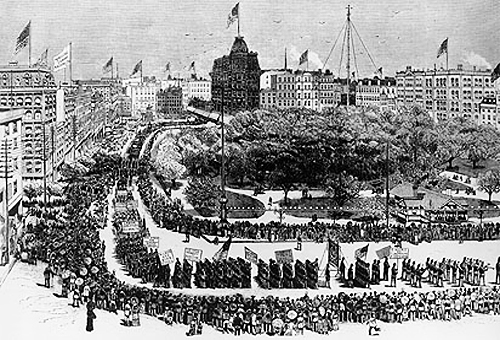
With the relentless, ongoing demonization of unions, it’s no surprise that labor history remains obscured and misrepresented and thus, not accessible as a lesson for today’s challenges.
With that in mind, we can choose to view Labor Day as nothing more than the symbolic end of summer and an excuse for more shopping…or we can use it as inspiration to reflect upon some of the brave souls who forged a path of justice and solidarity.
The Lowell Mill Girls
Lowell, Massachusetts was named after the wealthy Lowell family. They owned numerous textile mills, in which the workers were primarily the daughters of New England farmers. These young girls worked in the mills and lived in supervised dormitories. On average, a Lowell Mill Girl worked for three years before leaving to marry. Living and working together often forged a camaraderie that would later find an unexpected outlet.
What had the potential to become a relatively agreeable system for all involved was predictably exploited for mill owners’ gain. The young workers toiled under poor conditions for long hours only to return to dormitories that offered strict dress codes, lousy meals, and were ruled by matrons with an iron fist.
In response, the Lowell mill workers—some as young as eleven—did something revolutionary: the tight-knit group of girls and women organized a union. They marched and demonstrated against a 15 percent cut in their wages and for better conditions…including the institution of a ten-hour workday. They started newspapers. They proclaimed: “Union is power.” They went on strike.
As the movement spread through other Massachusetts mill towns, some 500 workers united to form the Lowell Female Labor Reform Association (LFLRA) in 1844—the first organization of American working women to bargain collectively for better conditions and higher pay.
Sarah Bagley was named the LFLRA’s first president and she promptly led a petition-drive that forced the Massachusetts legislature to investigate conditions in the mills. Bagley not only fought to improve physical conditions, she argued that the female workers “lacked sufficient time to improve their minds,” something she considered “essential for laborers in a republic.”
As with many revolutionary notions, the LFLRA met much opposition in their efforts. Despite their inability to secure the specific changes they demanded, the Lowell Mill Girls laid a foundation for female involvement and leadership in the soon-to-explode American labor movement and must continue to inspire those who stand against injustice today.
Eugene V. Debs
This September 14 marks 96 years since Eugene V. Debs was sentenced to ten years in prison for opposing U.S. entry into World War I. Debs was one of the most prominent labor organizers and political activists of his time. He was also nominated as the Socialist Party’s candidate for president five times. His voting tallies over his first four campaigns effectively illustrate the remarkable growth of the party during that volatile time period:
1900: 94,768
1904: 402,400
1908: 402,820
1912: 897,011
America’s entrance into World War I, however, provoked a tightening of civil liberties, culminating with the passage of the Espionage and Sedition Acts of 1917 and 1918. This totalitarian salvo read in part: “Whoever, when the United States is at war, shall willfully cause or attempt to cause insubordination, disloyalty, mutiny, or refusal of duty in the military or naval forces of the United States, shall be punished by a fine of not more than $10,000 or imprisonment of not more than 20 years, or both.”
Not long after the Espionage and Sedition Acts was voted into law, Debs was in Canton, Ohio for a Socialist Party convention. He was arrested for making a speech deemed “anti-war” by the Canton district attorney. In that speech, Debs declared:
“They have always taught and trained you to believe it to be your patriotic duty to go to war and to have yourselves slaughtered at their command. But in all the history of the world you, the people, have never had a voice in declaring war, and strange as it certainly appears, no war by any nation in any age has ever been declared by the people … Do not worry over the charge of treason to your masters, but be concerned about the treason that involves yourselves. Be true to yourself and you cannot be a traitor to any good cause on earth.”
These words lead to a 10-year prison sentence and the stripping of his US citizenship. While serving his sentence in the federal penitentiary, Debs was nominated for the fifth time, campaigned from his jail cell, and remarkably garnered 917,799 votes.
At his sentencing in 1918, Debs famously told the judge:
“Your honor, years ago, I recognized my kinship with all living beings, and I made up my mind that I was not one bit better than the meanest on earth. I said then, and I say now, that while there is a lower class, I am in it; while there is a criminal element, I am of it; while there is a soul in prison, I am not free.”
To give you an idea of how much work remains for us today, consider that parts of the Espionage Act are still on the books today—just ask Chelsea Manning.
Cesar Chavez
In the late 1960s—thanks to Cesar Chavez and the United Farm Workers (UFW)—deciding whether or not to buy grapes was a political act. Three years after its establishment in 1962, the UFW struck against grape growers around Delano, California…a long, bitter, and frustrating struggle that appeared impossible to resolve until Chavez promoted the idea of a national boycott.
Trusting in the average person’s ability to connect with those in need, Chavez and the UFW brought their plight—and a lesson in social justice—into homes from coast-to-coast and Americans responded. The boycott was an unqualified success as grape growers won signed union contracts and a more livable wage.
Through hunger strikes, imprisonment, abject poverty for himself and his large family, racist and corrupt judges, exposure to dangerous pesticides, and even assassination plots, Chavez remained true to the cause…even if meant, uh…stretching the non-violent methods he espoused.
In 1966, when Teamster goons began to rough up Chavez’s picketers, a bit of labor solidarity solved the problem. William Kircher, the AFL-CIO director of organization, called Paul Hall, president of the International Seafarers Union.
“Within hours,” writes author David Goodwin, “Hall sent a carload of the biggest sailors that had ever put to sea to march with the strikers on the picket lines…There followed afterward no further physical harassment.”
This simple man never owned a house or earned more than $6,000 a year. He left no money for his family when he died yet more than 40,000 people marched behind his casket at his funeral to honor four decades spent improving the lives of farm workers.
The roots of Chavez’ effectiveness lay in his ability to connect on a human level. When asked: “What accounts for all the affection and respect so many farm workers show you in public?” Cesar replied: “The feeling is mutual.”
Today, we face a desperate need to downsize the global culture and economy. It’s never been more important to contemplate the value of small farms and of eating what we grow. Cesar Chavez’ fearless challenges to the industrial status quo and his tireless commitment to the working class stand as inspiration example of the power of solidarity.
I share the above stories as a way of reclaiming our folk tales—the episodes that can inspire us. The conditions and the battles and the urgency have all shifted dramatically, but there is still value in remembering those who stood up to tyranny in the past.
In a society as heavily conditioned as ours, keeping the labor in Labor Day is virtually an act of revolution.
#shifthappens
(Occupy this Book: Mickey Z. on Activism can be ordered here.)

By Edward Curtin
Source: OpEdNews.com
What is the explanation for the brainwashing of so many Americans when it involves the nefarious, unspeakable deeds of their government? Why are so many so easily duped time and again? Why is there such a vast ignorance of the truth behind national and international affairs?
I would suggest that the answer lies not just with the specific issues themselves and the lies and propaganda used to befuddle the American people, but with the cultural and social background that frames Americans’ thinking. The latter serves to cut to the root people’s belief in their own power to think freely and clearly about the former. Invade people’s minds over many years with an ongoing series of interconnected memes, occupy their minds with alleged facts that induce a frenzied depression, and then fooling them on specific issues — e.g. Ukraine, Iraq, Syria, etc. – becomes much easier.
I am a sociology professor, and my students always laugh when during a discussion of memory, social and personal, I ask them about their forgetties (the actual word is forgetteries, but the shorter rhyme gets more laughs). They think I’m joking. Maybe you do, too. I’m not. But when I suggest that if they “possess” the faculty to remember, then they must “possess” the faculty to forget, they are astonished. You can’t forget, they reply, you just don’t remember; you can’t retrieve the memories that are stored in your brain. In other words, there are no forgottens, just temporarily unavailable memories. From there we are onto a discussion of retrieving (I think of dogs), processing (their word for thinking and mine for making American cheese), and all the computer lingo that has been the surround of their lives. Like fish in water, the mechanistic computer memes have been their environment since birth. They are shocked at the suggestion that there might be more outside the cultural water, and that they could go there.
And they have a lot of company.
This may sound flippant, but it’s crucial for understanding why so many Americans can’t comprehend and pay attention to the ways their minds are scrambled and confused about life and death issues, how their country has fallen victim to the military-industrial-intelligence apparatus that operates deep in the shadows, and oftentimes right in the open.
If we examine the social and cultural context of the last twenty-five years, we can see a number of issues that have dominated Americans’ “thinking.” These issues have been promulgated and repeated ad infinitum by the corporate media, professional classes, and schools at all levels. We have been swimming in these issues for years. I suggest the following five are key: the inability to concentrate or pay attention (ADD/ADHD), memory/forgetting (dementia, Alzheimer’s, technological memory devices), people’s lack of time and constant busyness (a recent email I received from a publisher read: “crazy-busy? use our power-point decks”), drugs legal or illegal as problems or solutions (over 4 billion prescriptions written in the U.S.A. yearly), and technology as our savior.
Together with shopping and the weather, these five topics have been the stuff of endless conversations and media chatter over the years.
When people are questioned about major issues of war and peace; political assassinations, such as those of JFK, MLK, or RFK; the alleged war on terror; the downing of Malaysian airlines; the overthrow of elected governments in the Ukraine or Egypt; the events of 9/11; government spying; economic robbery by the elites — the list is long, it’s common for people to echo the government/corporate media, or, if pressed, to say, I don’t know, I can’t remember, no one knows for sure, it’s impossible to know, we’ll never know, etc.. The confused responses are replete with an unacknowledged despair at ever arriving at clear and certain conclusions, not to say being able to do anything about them. On many issues they bounce between the twin absurdities of Democratic and Republican talking points, thinking they are being perceptive.
Why?
If we set aside the substantive issues, and examine the aforementioned cultural memes, the answers are not hard to find. Here most people speak as if they are certain. “Of course there isn’t a forgettery.” “Depression is caused by a chemical imbalance.” “Memories are all stored in the brain.” “I really am so busy all the time.” “Facts are just opinions.” Americans have internalized the ethos presented to them by the elites. At the core of this is the propaganda of scientific materialism and biological determinism that we are not free but are victims of our genes, neurotransmitters, brain/computers and chemicals, technology, etc. Having lost our minds and fixated on our brains, we have been taught to be determined to be determined, not free. And whether consciously or unconsciously, most have obliged. The linkages between memory, attention, distraction, drugs, technology all point to the brain and the obsessive cultural discussion of brain matters. We have been told interminably that our lives revolve around our brains (our bodies) and that the answers to our problems lie with more brain research, drugs, genetic testing, etc. It is not coincidental that the U. S. government declared the 1990s the decade of brain research, followed up with 2000-2010 as the decade of the behavior project, and our present decade being devoted to mapping the brain and artificial intelligence, organized by the Office of Science and Technology Project and the Defense Advanced Research Projects Agency. How convenient! George H. W. Bush, Clinton, George W. Bush, Obama — what a difference! But this is science and the welfare of the world.
For years we have been fed philosophical presuppositions smuggled in as fact. It’s an old trick, ever young. Tell people over and over and over again that life is in essence a mindless material/biological trap and over time they will believe it. Of course there are unspoken exceptions — those who are the masters of this con-game, the few, the elite, those who make and reinforce the case. And even some of them are too ignorant to comprehend their questionable presuppositions. They hoist themselves by their own petards while cashing in at the bank.
My students can’t forget because they don’t believe in it. But they can’t remember either. They don’t know why. So, like the older generation, they fall into the careless habit of inaccuracy, to turn Oscar Wilde on his head. They have downloaded their memories, uploaded their trifles, and been tranquilized by trivia.
As the great American sociologist C. Wright Mills wrote over fifty years ago, “Nowadays people often feel that their private lives are a series of traps.” That is truer today than then. A sense of entrapment and determinism pervades our culture. And it extends to public issues as well. We are told either to accept official explanations for public events or be dismissed as crazies.
I would suggest that for people to break through to a true understanding of the important public events of our time, they must also come to understand the false memes of their culture, the way they have been mindwashed to believe that at the most rudimentary level they are not free.
Maybe the first best step toward free thought and out of the propaganda trap would to accept that you “possess” a forgettery . Listen to the American philosopher Paul Simon sing, “When I think back to all the crap I learned in high school, it’s a wonder I can think at all.” Use your forgettery and forget the crap. Make haste slowly to question everything. Remember that the corporate media works hand in glove with the ruling elites on two levels of propaganda — cultural and political, and it is necessary to understand how they are intertwined. Freedom is indivisible.
That’s worth remembering.

“Panther” (1995) is an excellent yet underrated historical drama directed by Mario Van Peebles and written by his father Melvin Van Peebles. The film traces the founding of the organization and backlash from the FBI’s COINTELPRO program. Unlike many historical dramas, Panther is engaging, entertaining, and stays close to historical facts. It also features excellent performances from a great cast including Kadeem Hardison, Bokeem Woodbine, Marcus Chong, Angela Bassett, Chris Rock, Joe Don Baker and M. Emmet Walsh.

Inspired by the situation in Ferguson, satirists at The Onion have been on a roll with a series of posts which are simultaneously humorous, incisive and sadly true as commentary on the absurdity and psychopathy of what so many accept as normal and acceptable.
Source: The Onion
WASHINGTON—Shedding light on law enforcement practices across the country, a Department of Justice study released Friday revealed that more than three-fourths of minority suspects in police custody receive their Miranda rights while unconscious. “In 79 percent of arrests involving blacks or Latinos, suspects were administered their rights while prostrate on the concrete, collapsed against a police car, or blacking out in the midst of a chokehold,” stated the report, which examined 2,000 arrests made last year where minority suspects remained either conscious, unconscious, or slowly drifting in and out of consciousness. “The data also confirmed that among non-white arrests last year, most police officers made an effort to determine if the suspect had a pulse before reading from their warning card.” The report further concluded that 98 percent of African-American suspects had their Miranda rights administered in between blows of a police baton.
INDIANAPOLIS—Tired of being overlooked by everyone in his precinct, unpopular Indianapolis Police Department officer Kyle Norris told reporters Wednesday he was considering committing a racially motivated offense to generate a little support. “To be honest, I’m not the most well-known or looked-up-to guy around here, but I’m thinking that if I get caught up in a controversy after shooting a minority resident under questionable circumstances, things would really change for me,” said Norris, who added that having his coworkers immediately rally around him after the incident, watching consecutive nights of public demonstrations defending his actions, and finally receiving praise directly from the chief of police would be a nice change of pace from his day-to-day life as an ignored and unappreciated member of the force. “Obviously, I’d take some heat from some citizens, but I think it would be worth it when just as many people respond by openly speaking about my exemplary record as an officer and calling me a pillar of the community. No one’s ever said that about me before. If this thing gets big enough, I might even see some people on Twitter and TV calling me a hero—that would feel good.” Norris added that it would probably also be a nice little boost when the 12 members of his jury take less than an hour to declare him not guilty.
The ongoing clashes between residents of Ferguson, MO and heavily armed police forces—which are equipped with M16 rifles and armored vehicles—have drawn attention to the increasing militarization of police in the United States. Here are the cases for and against outfitting local law enforcement with military-grade weapons:
PROS
CONS
With riots raging in Ferguson, MO following the shooting death by police of an unarmed African-American youth, the nation has turned its eyes toward social injustice and the continuing crisis of race relations. Here are The Onion’s tips for being an unarmed black teen in America:
By Micah White
Source: OccupyWallSt.org
As righteous people, how can we live in a world that is poisonous to our souls, harmful to our minds and at odds with our ideals?
Common sense counsels us that we have only two options: either imitate or hate the world. But if we remain stuck within this binary opposition, we will lose ourselves: if we imitate the world we sacrifice our spirit; if we hate the world we succumb to being reactionary and lose the positive passion that grounds our affirmation. What then can we do? This is the question that Seneca, the great Stoic sage, posed nearly two millennia ago. And his answer speaks to today’s struggle of being true to oneself in a corporatist society.
Roman imperial culture was as ruinous to Seneca’s ideals as endgame corporatism is to ours. In a well-known letter to his friend Lucilius, Seneca writes that exposure to crowds and the entertainment they consume ought to be avoided because within the crowd we lose our inner resolve for living a good life. “To consort with the crowd is harmful,” Seneca writes in Letter VII of Epistulae morales ad Lucilium, “[because] there is no person who does not make some vice attractive to us, or stamp it upon us, or taint us unconsciously therewith. Certainly, the greater the mob with which we mingle, the greater the danger.” To prove his point, Seneca tells of his experience watching a gladiator death-match and returning home feeling “more greedy, more ambitious, more voluptuous and even more cruel and inhuman” than before.
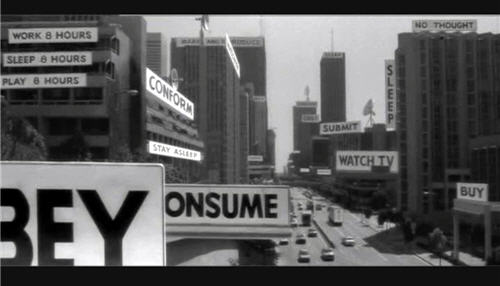
In our era, Seneca’s observation will often be rejected on the presumption that his critique of mass culture is based on an aristocratic or antidemocratic philosophy. Proponents of this position will argue that Seneca’s dislike of crowds is due only to a prejudice toward common people and that his position is therefore not worthy of consideration. But this argument misses the deep philosophical insight that Seneca opens for us—there is a correlation between the culture that surrounds us and our inner life. If Seneca is correct then each of us has a legitimate reason to be concerned about involuntary exposure to violence, pornography, and lies because these cultural forms are destructive to our spirit. In other words, Seneca’s stoic philosophy provides another way to understand spiritual insurrection.
The pressing concern is how to resist the dominant culture in such a way that our ideals remain intact and our will to fight stays strong. And it is on this question that Seneca is most articulate. For Seneca, we must be on our guard at all times. He writes: “much harm is done by a single case of indulgence or greed; the familiar friend, if he be luxurious, weakens and softens us imperceptibly; the neighbor, if he be rich, rouses our covetousness; the companion, if he be slanderous, rubs off some of his rust upon us, even though we be spotless and sincere. What then do you think the effect will be on character, when the world at large assaults it!” But Seneca refuses to accept that we ought to either imitate or loathe the world.
Instead, Seneca proposes that we develop a parallel culture in which we commune among ourselves to strengthen our opposition to the dominant culture. Seneca’s counsel is simple: “Withdraw into yourself, as far as you can. Associate with those who will make a better person of you. Welcome those whom you yourself can improve.” While this advice seems simple, it is actually the most difficult to accept because it foregoes the principles of mass participation and mass culture that underlie the majority of contemporary politics.
It would be a mistake to assume that what Seneca has in mind is a politics of neutral moderation. For a stoic, moderation fails to address the root cause of society’s ills. Instead, the art of stoicism is to live within the tension of two extremes without seeking the middle path of unprincipled moderation. Stoicism challenges us to live an affirmation amidst the world as it is, to maintain our inner resolve in the face of temptation and to teach resistance by way of personal example. It is a difficult task for which Seneca offers only one suggestion: decrease your desire.
Seneca writes that the key to attaining happiness, pleasure, riches and anything else of value is, paradoxically, to lower our desires. He relates the story of Epicurus who when asked by Idomeneus how to make his friend Pythocles rich replied, “If you wish to make Pythocles rich, do not add to his store of money, but subtract from his desires.” This wisdom does not only apply to wealth, Seneca argues, and he goes on to give further examples of what Epicurus could have said: “‘if you wish to make Pythocles honourable, do not add to his honours, but subtract from his desires’; ‘if you wish Pythocles to have pleasure for ever, do not add to his pleasures, but subtract from his desires’; ‘if you wish to make Pythocles an old man, filling his life to the full, do not add to his years, but subtract from his desires.’” And I think Seneca would agree if we were to add one of our own to the list and say that if you wish to make a spiritual insurrection, do not wait for many people to join, instead subtract from your desires.
Seneca challenges us to imagine a positive cultural movement that is built on the shared practice of a radical decrease in desire. He suggests that we first build small friendship networks of resistance that are impervious to the influences of mass culture because their highest ideal is a life without consumption. Seneca encourages us to be like the wise man, who when asked why he devotes his life to a philosophy that may reach only a handful of people replied, “I am content with few, content with one, content with none at all.”
— Micah White, PhD lives on the north coast of Oregon. Follow him at @BeingMicahWhite. A version of this article originally appeared in Adbusters

By Paul Craig Roberts
Source: Foreign Policy Journal
There are reports that American police kill 500 or more Americans every year. Few of these murdered Americans posed a threat to police. Police murder Americans for totally implausible reasons. For example, a few days before Michael Brown was gunned down in Ferguson, John Crawford picked up a toy gun from a WalMart shelf in the toy department and was shot and killed on the spot by police goons.
Less than four miles from Ferguson, goon thugs murdered another black man on August 19. The police claims of “threat” are disproved by the video of the murder released by the police.
Five hundred is more than one killing by police per day. Yet the reports of the shootings seldom get beyond the local news. Why then has the Ferguson, Missouri, police killing of Michael Brown gone international?
Probably the answer is the large multi-day protests of the black community in Ferguson that led to the state police being sent to Ferguson and now the National Guard. Also, domestic police in full military combat gear with armored personnel carriers and tanks pointing numerous rifles in the faces of unarmed civilians and arresting and threatening journalists make good video copy. The “land of the free” looks like a Gestapo Nazi state. To much of the world, which has grown to hate American bullying, the bullying of Americans by their own police is poetic justice.
For those who have long protested racial profiling and police brutality toward racial minorities, the police murder of Michael Brown in Ferguson is just another in a history of racists murders. Rob Urie is correct that blacks receive disproportionate punishment from the white criminal justice (sic) system. See, for example here.
Myself, former US Representative Dennis Kucinich, and others see Michael Brown’s murder as reflective of the militarization of the police and police training that creates a hostile police attitude toward the public. The police are taught to view the public as threats against whom the use of violence is the safest course for the police officers.
This doesn’t mean that racism is not also involved. Polls show that a majority of white Americans are content with the police justification for the killing. Police apologists are flooding the Internet with arguments against those of the opposite persuasion. Only those who regard the police excuse as unconvincing are accused of jumping to conclusions before the jury’s verdict is in. Those who jump to conclusions favorable to the police are regarded as proper Americans.
What I address in this article is non-evidential considerations that determine a jury’s verdict and the incompetence of Ferguson’s government that caused the riots and looting.
Unless the US Department of Justice makes Michael Brown’s killing a federal case, the black community in Ferguson is powerless to prevent a cover-up.
What usually happens in these cases is that the police concoct a story protective of the police officer(s) and the prosecutor does not bring an indictment. As Obama and his Attorney General, Eric Holder, are partially black (in skin color alone), the black majority community in Ferguson, Missouri, might have hopes from Holder’s visit. However, nothing could be more clear than the fact that Obama and Holder, along with the rest of “black leadership,” have been co-opted by the white power structure. How else would Obama and Holder be in office? Do you think that the white power structure puts in office people who want justice for minorities or for anyone other than the mega-rich?
The 1960s were a time of black leadership, but that leadership was assassinated (Martin Luther King) or co-opted. Black leaders sold out for prestige appointments and corporate board memberships. Today black leadership is marginalized and exists only at local levels if at all.
If the cop who killed Brown is indicted and he is tried in Ferguson, the jury will contain whites who live in Ferguson. Unless there is a huge change in white sentiment about the killing, no white juror can vote to convict the white cop and continue to live in Ferguson. The hostility of the white community toward white jurors who took the side of a “black hoodlum who stole cigars” against the white police officer would make life for the jurors impossible in Ferguson.
The trouble with purely racial explanations of police using excessive force is that cops don’t limit their excesses to racial minorities. White people suffer them also. Remember the recent case of Cecily McMillan, an Occupy protester who was brutalized by a white good thug with a record of using excessive force. McMillan is a young white woman.
Her breasts were seized from behind, and when she swung around her elbow reflexively and instinctively came up and hit the goon thug. She was arrested for assaulting a police officer and sentenced by a jury to a term in jail. The prosecutor and judge made certain that no evidence could be presented in her defense. Medical evidence of the bruises on her breast and the police officer’s record of police brutality were not allowed as evidence in her show trial, the purpose of which was to intimidate Occupy protesters.
In America white jurors are usually sheep who do whatever the prosecutor wants. As Cecily McMillan, a white woman, could not get justice, it is even less likely that the black family of Michael Brown will. Those who are awaiting a jury’s verdict to decide Michael Brown’s case are awaiting a cover-up and the complicity of the US criminal justice (sic) system in murder.
If there is a federal indictment of the police officer, and the trial is held in a distant jurisdiction, there is a better chance that a jury would consider the facts. But even these precautions would not eliminate the racist element in white jurors’ decisions.
The situation in Ferguson was so badly handled it almost seems like the police state, in responding to the shooting, intended to provoke violence so that the American public could become accustomed to military force being applied to unarmed civilian protests.
Ferguson brings to mind the Boston Marathon Bombing. Two brothers of foreign extraction allegedly set off a “pressure cooker bomb” left in a backpack that killed and injured race participants or observers. The two brothers were deemed, without any evidence, to be so dangerous that the entirety of Boston and its suburbs were “locked down” while 10,000 heavily armed police and military patrolled the streets in military vehicles conducting door-to-door searches forcing residents from their homes at gun point, while the police ransacked homes where it was totally obvious the brothers were not hiding. Not a single family evicted from their residences at gunpoint said: “Thank God you are here. The bombers are hiding in our home.”
The excessive display of force and warrantless police home intrusions is the reason that aware and thoughtful Americans do not believe one word of the official account of the Boston Marathon Bombing. Thoughtful people wonder why every American does not see the bombing as an orchestrated state act of terror in order to accustom Americans to the lock-down of a city and police intrusion into their homes. Logistically, it is impossible to assemble 10,000 armed troops so quickly. The obvious indication is that the readiness of the troops indicates pre-planning.
In Ferguson, all that was needed to prevent mass protests and looting was for the police chief, mayor or governor to immediately announce that there would be a full investigation by a civic committee independent of the police and that the black community should select the members it wished to serve on the investigative committee.
Instead, the name of the cop who killed Michael Brown was withheld for days, a video allegedly of Michael Brown taking cigars from a store was released as a justification for his murder by police. These responses and a variety of other stupid police and government responses convinced the black community, which already knew in its bones, that there would be a coverup.
It is entirely possible that the police chief, mayor, and governor lacked the intelligence and judgment to deal with the occasion. In other words, perhaps they are too stupid to be in public office. The incapacity of the American public to elect qualified representatives is world-renown. But it is also possible that Michael Brown’s killing provided another opportunity to accustom Americans to the need for military violence to be deployed against the civilian population in order to protect us from threats.
Occupy Wall Street was white, and these whites were overwhelmed by police violence.
This is why I conclude that more is involved in Ferguson than white racist attitudes toward blacks.
The founding fathers warned against allowing US military forces to be deployed against the American people, and the Posse Comitatus Act prevents the use of military forces against civilians. These restrictions designed to protect liberty have been subverted by the George W. Bush and Obama regimes.
Today Americans have no more protection against state violence than Germans had under National Socialism.
Far from being a “light unto the world,” America is descending into cold hard tyranny.
Who will liberate us?
INDIAN COUNTRY NEWS
"It is the duty of every man, as far as his ability extends, to detect and expose delusion and error"..Thomas Paine
Human in Algorithms
100% Accurate Google Sheets + KDP Book Formatting | 24hr Delivery
From the Roof Top
I See This
blog of the post capitalist transition.. Read or download the novel here + latest relevant posts
अध्ययन-अनुसन्धानको सार

