
Fighting Back Against Western Sanction

President Zuma meeting with BRICS in Mexico

By Ulson Gunnar

Source: NEO

While the impact of sanctions leveled against Russia is being debated, one fact is perfectly clear; the dangerous interdependence cultivated by the concept of “globalization” leaves nations vulnerable amid a global order dominated by hegemonic special interests that use such interdependence as a weapon.

Two rounds of sanctions have been leveled against Russia targeting Russian banking, arms manufacturing, and oil industries. Even as the sanctions are marketed to the world as Russia “paying a price” for its role in “destabilizing” Ukraine, Russia has been busy cultivating ties and expanding markets that are increasingly found outside the West’s spheres of influence and therefore, beyond the reach of these sanctions. Russia is also looking inward to diversify its markets and seek socioeconomic independence.

Instead of viewing the sanctions as an impassable obstacle requiring capitulation to Wall Street and London, Russia has viewed them as a challenge to sever reliance on unstable markets. More so, Russia’s quest for alternative markets is a means of applying its own form of pressure back upon the West. While the West attempts to portray the sanctions as “cutting off Russia,” the restrictions do at least as much to isolate the West itself.

Multipolar World Vs Western Hegemony

In a unipolar world, supranational geopolitical blocs like the EU (European Union), the African Union, ASEAN (Association of Southeast Asian Nations), and regional free trade agreements serve to consolidate and open up the collective socioeconomic potential of the planet to those at the top of this international order. Currently, this constitutes the special interests on Wall Street, in the city of London, and among the special interests converging in Brussels. Interdependence is intentionally cultivated among the various members of individual blocs and between supranational blocs themselves. This ensures that leverage is constantly maintained over each individual national entity, making individual nations incapable of sidestepping collective initiatives of the blocs they are a part of.

In the European Union, this can be clearly seen as individual nations benefiting from ties with Moscow are attempting with limited success to rebel against broader EU sanctions against Russian industries.

The use of sanctions across several supranational blocs, including North America, the EU, and to a lesser extent, the West’s proxies in nations like East Asia’s Japan, had at one point critically threatened those nations targeted by them. Nations like Iran or Cuba who have suffered under Western sanctions for decades are clearly behind because of them. Behind, but not out.

As technology enables each individual nation to procure wealth on its own it once depended on trade with other nations for, the impact of sanctions is diminishing. The impact of sanctions is also undermined by a growing alternative international order outside of the West’s unipolar paradigm. BRICS, the nations of Brazil, Russia, India, China, and South Africa, constitute the leading edge of the rise of the developing world. No longer satisfied with subservience to the Wall Street-London global order, nor eager to find themselves entangled beneath another global empire led by another global superpower, these nations are attempting to redefine international relations in more traditional, multilateral terms.

Becoming self-sufficient economically while redefining international ties in a less interdependent manner, appears to be the defining aspect of the emerging multipolar world BRICS is attempting to create. The creation of international trade outside the traditional framework of the IMF, the World Trade Organization, and other institutions created by the West, for the West, has gradually eroded the impact of sanctions, penalties, and monopolies empowered by Western domination over international finance and global trade.

More to Do

While Russia seems to be taking Western sanctions in stride, the fact that the United States and Europe are targeting Russia in the first place is a warning to all members of BRICS as well as to developing nations around the world. In the capitals of nations residing outside the Wall Street-London international order, the possibility that any one of them could be next should be at the center of economic planning and the future of their respective foreign policy.

Creating alternative markets outside this international order could be a short-term stop gap. In Russia’s case, growing ties with China in terms of energy exports ensures a lasting alternative market for Russian natural gas that is set only to grow in the future as the West attempts to cutoff and isolate both Moscow and Beijing.

Seeking to create economic opportunities and progress domestically could be a more long-term and lasting solution. Russia’s decision to ban the import of food products from nations targeting it with recent sanctions gives BRICS an opportunity to expand in the void left by European, American, and Australian agricultural industries. It also gives an opportunity for Russian producers to expand their operations domestically. In the immediate aftermath of Russia banning imports from the West, stocks in Russia’s agricultural industry soared. While such spikes are more due to speculation than an actual jump in value, the fact that these producers now have an incentive to expand may create long-term value to justify investor confidence today.

But rather than waiting for sanctions to begin disrupting the socioeconomic status quo of a nation residing outside Western hegemony, a disruption the sanctions are designed specifically to create, why shouldn’t BRICS and other developing nations begin the process of developing their domestic markets and alternative international trading regimes beforehand?

If Russia, the largest nation geographically, the ninth most populous, and with one of the most formidable conventional and nuclear military forces on Earth, can be targeted for sanctions aimed to cripple its economy, then any nation can be targeted. Russia, with its resources and leadership is able to cope and adapt to these sanctions and even perhaps come out stronger in spite of them. Other nations might not weather such adversity so gracefully. Across BRICS and other nations in the developing world, a concerted effort must be made to move away from the interdependence of globalization and back toward greater multilateral trade regimes and greater domestic economic self-sufficiency.

Ulson Gunnar is a New York-based geopolitical analyst and writer especially for the online magazine “New Eastern Outlook”

Raising Awareness: Why We Shouldn’t Take It For Granted

THINK_for_yourself_Question_Everything_Anonymous_raising_awareness__113654

By Tim Hjersted

Source: Films for Action


A dangerous thing can occur when you start learning about what’s really going on in the world. The problems start to seem so complex, and you’re just one person, doubts begin to creep in. You sincerely want to help change the world, but from all this knowledge you start to believe that the world is too out of control and too big to change, so you end up not doing anything.


What aspiring change-agents can easily forget is that there is a large amount of meaningful groundwork that still needs to be laid. Many conscious people may take it for granted, but there is still a lot of important information people aren’t aware of yet. A friend recently admitted, “I take for granted that the mainstream media implicitly neglects serious philosophical concerns about the crises we collectively face, as a species, as a unified human family. I apologize for my demeanor in assuming this was common knowledge.”


Yeah. It’s good to remember. All of us at one point in time were not aware of all the knowledge we’re aware of now. All of us were asleep at one point too, and remembering this builds our own empathy and humility when getting into discussions with people. It also helps us remember how important this first step is in the process of building the mass-movement necessary to realize our idealistic dreams.


Just imagine what would happen if an entire city had seen The Corporation. Just imagine what would be possible if everyone in the country was aware of how unhealthy the mainstream media was for our future and started turning to independent sources in droves.


It really does start with getting informed, and there’s lots of subject matter to cover. Our country has to come to terms with the true history of the United States. It has to learn about basic ecology. It needs to understand the basic truths about peak oil, the monetary system, the Federal Reserve, the truth about capitalism and governments. Our society needs a new story to belong to. The old story of empire and dominion over the earth has to be looked at in the full light of day – all of our ambient cultural stories and values that we take for granted and which remain invisible must become visible. And all of this knowledge and introspection, questioning, and discovery is essential for a cultural transformation that addresses root causes. This knowledge is vitally necessary. Taken together, this knowledge, which is documented throughout the 1000 videos on the Films For Action website, will lay the foundation on which the next paradigm will be built, post empire.


After becoming familiar with these understandings over the years, it may be easy to internalize, accept, and then be occasionally shocked at how crazy our culture still is. Lots of ‘givens’ that activists take for granted still need to go mainstream.


That’s where you come in. Don’t complain about the mainstream media failing to inform people. Become the media. Become a walking, talking distro of quality information that your friends can trust. Who needs FOX and CNN, after all, when you’ve got your friends?


Host film screenings, forward articles and videos, buy and burn copies of documentaries to give to your elected officials and school faculty, promote Films For Action. Get the information out in to your community and you will be laying the foundation for a local movement for mass societal, environmental and economic change.


All you have to do (the first easy thing) is plant the seeds. The community (as the seeds grow) will help with watering, weeding, expanding the garden, harvesting and so on. Social change is a social effort, after all, and you won’t be doing this alone. I’ve often said, why struggle working on these issues with a small group of 10 to 15, when we could be working with a collaboration of 15,000? If we lay the foundation, recruit an army of “culture gardeners,” things are going to start happening organically, both organized and spontaneously, all across the cities where we live.


People that are new to this culture of creative activism often ask me, “Yea, I’m on board. I get it. But what can I do?” If we’ve been involved in this work for some time, part of our responsibility is to offer people tangible ways they can plug in. But the second thing we have to convey is: no one can answer this question but you. Everyone is an expert on their own life. What’s your passion? You are the best one to decide the best use of your time and efforts. No one is going to know better than you what your unique gifts and skills are.


And hey, if it takes you some time to figure this out. That’s okay. Simmer on it for a minute. Let it stew. While you’re figuring things out you can always continue disseminating information. I spent about two years learning about this jigsaw puzzle called changing the world before I figured out a path of action that I could really commit myself to. Of all the issues I could work on, I decided that the problem of the media was the number one bottleneck impeding the progress of every other issue. Focus on education and raising awareness. Break this bottleneck and the rest will follow.

A lot of people knock raising awareness as being too abstract. But when you consider it as a strategic first step in the larger picture, taken concurrently with other actions, I don’t think we can underestimate its significance.


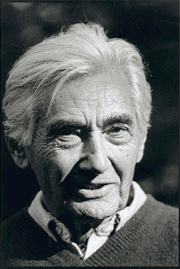
Howard Zinn on Optimism for Revolutionary Change

zinnportrait

Today marks the birthday of historian/author/playwright/activist Howard Zinn (8/24/1922 – 1/27/2010). He is best known for his groundbreaking and influential A People’s History of the United States but was also a tireless voice for the oppressed and disenfranchised across the globe for most of his life and beyond (through writings, recorded words and continuing efforts of those he inspired). In honor of his life and work, I’d like to share this inspiring excerpt from his book A Power Governments Cannot Suppress which remains as relevant as ever:

A Marvelous Victory

In this world of war and injustice, how does a person manage to stay socially engaged, committed to the struggle, and remain healthy without burning out or becoming resigned or cynical?

I am totally confident not that the world will get better, but that we should not give up the game before all the cards have been played. The metaphor is deliberate; life is a gamble. Not to play is to foreclose any chance of winning. To play, to act, is to create at least a possibility of changing the world.

There is a tendency to think that what we see in the present moment will continue. We forget how often we have been astonished by the sudden crumbling of institutions, by extraordinary changes in people’s thoughts, by unexpected eruptions of rebellion against tyrannies, by the quick collapse of systems of power that seemed invincible.

What leaps out from the history of the past hundred years is its utter unpredictability. A revolution to overthrow the czar of Russia in that most sluggish of semi feudal empires not only startled the most advanced imperial powers but took Lenin himself by surprise and sent him rushing by train to Petrograd. Who would have predicted the bizarre shifts of World War II-the Nazi-Soviet pact (those embarrassing photos of von Ribbentrop and Molotov shaking hands), and the German army rolling through Russia, apparently invincible, causing colossal casualties, being turned back at the gates of Leningrad, on the western edge of Moscow, in the streets of Stalingrad, followed by the defeat of the German army, with Hitler huddled in his Berlin bunker, waiting to die?

And then the postwar world, taking a shape no one could have drawn in advance: The Chinese Communist revolution, the tumultuous and violent Cultural Revolution, and then another turnabout, with post-Mao China renouncing its most fervently held ideas and institutions, making overtures to the West, cuddling up to capitalist enterprise, perplexing everyone.

No one foresaw the disintegration of the old Western empires happening so quickly after the war, or the odd array of societies that would be created in the newly independent nations, from the benign village socialism of Nyerere’s Tanzania to the madness of Idi Amin’s adjacent Uganda. Spain became an astonishment. I recall a veteran of the Abraham Lincoln Brigade telling me that he could not imagine Spanish Fascism being overthrown without another bloody war. But after Franco was gone, a parliamentary democracy came into being, open to Socialists, Communists, anarchists, everyone.

The end of World War II left two superpowers with their respective spheres of influence and control, vying for military and political power. Yet they were unable to control events, even in those parts of the world considered to be their respective spheres of influence. The failure of the Soviet Union to have its way in Afghanistan, its decision to withdraw after almost a decade of ugly intervention, was the most striking evidence that even the possession of thermonuclear  weapons does not guarantee domination over a determined population.

The United States has faced the same reality. It waged a full-scale war in Indochina, conducting the most brutal bombardment of a tiny peninsula in world history, and yet was forced to withdraw. In the headlines every day we see other instances of the failure of the presumably powerful over the presumably powerless, as in Bolivia and Brazil, where grassroots movements of workers and the poor have elected new presidents pledged to fight destructive corporate power.

Looking at this catalogue of huge surprises, it’s clear that the struggle for justice should never be abandoned because of the apparent overwhelming power of those who have the guns and the money and who seem invincible in their determination to hold on to it. That apparent power has, again and again, proved vulnerable to human qualities less measurable than bombs and dollars: moral fervor, determination, unity, organization, sacrifice, wit, ingenuity, courage, patience-whether by blacks in Alabama and South Africa, peasants in El Salvador, Nicaragua, and Vietnam, or workers and intellectuals in Poland, Hungary, and the Soviet Union itself. No cold calculation of the balance of power need deter people who are persuaded that their cause is just.

I have tried hard to match my friends in their pessimism about the world (is it just my friends?), but I keep encountering people who, in spite of all the evidence of terrible things happening everywhere, give me hope. Wherever I go, I find such people, especially young people, in whom the future rests. And beyond the handful of activists there seem to be hundreds, thousands, more who are open to unorthodox ideas. But they tend not to know of one another’s existence, and so, while they persist, they do so with the desperate patience of Sisyphus endlessly pushing the boulder up the mountain. I try to tell each group that they are not alone, and that the very people who are disheartened by the absence of a national movement are themselves proof of the potential for such a movement.

Revolutionary change does not come as one cataclysmic moment (beware of such moments!) but as an endless succession of surprises, moving zigzag toward a more decent society. We don’t have to engage in grand, heroic actions to participate in the process of change. Small acts, when multiplied by millions of people, can quietly become a power no government can suppress, a power that can transform the world.

Even when we don’t “win,” there is fun and fulfillment in the fact that we have been involved, with other good people, in something worthwhile. We need hope. An optimist isn’t necessarily a blithe, slightly sappy whistler in the dark of our time. To be hopeful in bad times is not being foolishly romantic. It is based on the fact that human history is a history not only of competition and cruelty but also of compassion, sacrifice, courage, kindness.

What we choose to emphasize in this complex history will determine our lives. If we see only the worst, it destroys our capacity to do something. If we remember those times and places-and there are so many-where people have behaved magnificently, it energizes us to act, and raises at least the possibility of sending this spinning top of a world in a different direction. And if we do act, in however small a way, we don’t have to wait for some grand utopian future. The future is an infinite succession of presents, and to live now as we think human beings should live, in defiance of all that is bad around us, is itself a marvelous victory.

Saturday Matinee: Twister

220px-Twister_1989_film

No, not the 1996 disaster flick, but a relatively little-known indie movie from 1989 directed by Michael Almereyda and based on the novel “Oh” by Mary Robison. The film explores the self-contained world of an eccentric family whose various escalating emotional issues coincides with an oncoming tornado.  What it may lack in comparison to a standard Hollywood budget and plot it more than makes up for in atmosphere, humor and unforgettable performances.

It features one of Harry Dean Stanton’s best performances (after “Paris, Texas” and Repo Man”), Crispin Glover’s most eccentric character (out of many he has portrayed), great supporting roles by Charlayne Woodard, Suzy Amis, Dylan McDermott, and cult actress Jenny Wright, and a cameo by William S. Burroughs.

Ice Buckets: NOT the Cure for ALS

ice-bucket-challenge-4917fd4aed73bb35

By Sayer Ji

Source: GreenMedInfo.com

Let’s stop pretending like pouring ice on ourselves means anything until we can acknowledge the research that some of the causes and cures for ALS already exist — none of them involving pharmaceutical intervention.

The ALS Association’s ‘Ice Bucket Challenge,’ as of the writing of this article, has grossed over 41 million dollars in donations, which “has driven hundreds of thousands to join the fight against ALS,” according to a recent Huffington Post blog written by Jose Costa.

The perpetual meme of ‘fighting’ idiopathic diseases — meaning, diseases ‘with no known cause’ — has become the most successful cause-marketing strategy of our time, with billions of dollars raised without appreciable yield for the ultimate outcome: saving lives.  Just look at Susan G. Komen, which raises billions for races and research into pharmaceutical and/or radiation-based treatments, but has yet to do anything to stem the overdiagnosis and overtreatment of healthy women (1.3 million women falsely diagnosed of breast cancer in the past 30 years), much less improve the survival times of those who actually do have a life threatening form of breast cancer.

For organizations that explicitly confess their ignorance about causes or cures of diseases they presumably intend to overcome, co-opting the good intentions of the mainstream with viral social media campaigns has become the flavor of the day.

In these monthly ‘Wars’ against disease, neither the combatants or victims stand to make much ground because no one is looking at root causes, the essential precondition to removing them and finding a real cure.

At Greenmedinfo.com we have spent years finding studies on about 3,000 ailments — obtained through the government’s own biomedical research database MEDLINE — that can clearly be identified to have unnatural/manmade causes and natural solutions.

Take a look at our ALS page now, and you will a wide range of published and peer-reviewed studies indicating that we shouldn’t be spending so much time raising capital, but rather awareness as to the already obvious ways we could reduce the morbidity and mortality associated with the disease. Some highlights include:

Some of the Actual ALS CAUSES:

These are a sampling of some of the full vetted, biomedically-confirmed contributing causes, but thankfully, the ‘curative’ natural agents are far more numerous. Of the 39 substances found to have potential therapeutic value in ALS — none of which Big Pharma, or their cause-marketing collaborators, acknowledge – these are the most compelling we have found:

ALS Solutions:


Don’t forget the basics: something as simple as moving the body — exercise — has been found in at least 3 studies to improve ALS.

Keep in mind, these are only the studies we have indexed, with limited resources and time. Go to the National Library of Medicine’s bibliographic citation database and search yourself. You will have 23 million abstracts under your fingertips. Search for “ALS” and you will find over 13,000 published studies on the topic. Many of these studies concern the issues we discuss here: unnatural/man made causes and natural solutions. If you find anything we don’t already have on our database please send it to info@greenmedinfo.com and improve the free resource we have created.

Let’s hope the ALS Association puts their newly contributed money where their mouth is, and dedicate it to finding solutions that relieve the suffering of those with the condition. Those who donate money, show that they care enough to give up a fragment of their financial freedom to help others. But if the causes are at least partially known (including pharmaceuticals that do more harm than good) — chemicals that damage the brain — and the solutions are as well — addressing nutritional deficiencies and chemical/toxicant exposures and correcting them — let’s at least stop pretending raising more money, or making a game of pouring ice on oneself is anything but a charade to distract from the real solution.

Let’s stop pretending like pouring ice on ourselves means anything until we can acknowledge the research that some of the causes and cures for ALS already exist — none of them involving pharmaceutical intervention.

Don’t forget the basics: something as simple as moving the body — exercise — has been found in at least 3 studies to improve ALS.

Keep in mind, these are only the studies we have indexed, with limited resources and time.  Go to the National Library of Medicine’s bibliographic citation database and search yourself. You will have 23 million abstracts under your fingertips. Search for “ALS” and you will find over 13,000 published studies on the topic. Many of these studies concern the issues we discuss here: unnatural/man made causes and natural solutions. If you find anything we don’t already have on our database please send it to info@greenmedinfo.com and improve the free resource we have created.

Let’s hope the ALS Association puts their newly contributed money where their mouth is, and dedicate it to finding solutions that relieve the suffering of those with the condition. Those who donate money, show that they care enough to give up a fragment of their financial freedom to help others.  But if the causes are at least partially known (including pharmaceuticals that do more harm than good) — chemicals that damage the brain — and the solutions are as well — addressing nutritional deficiencies and chemical/toxicant exposures and correcting them — let’s at least stop pretending raising more money, or making a game of pouring ice on oneself is anything but a charade to distract from the real solution.

Let’s stop pretending like pouring ice on ourselves means anything until we can acknowledge the research that some of the causes and cures for ALS already exist — none of them involving pharmaceutical intervention.

“Shock and Awe” Comes to America

Ferguson_Day_6,_Picture_44

By Wayne Madsen

Source: Strategic Culture Foundation

The United States has employed «shock and awe» techniques – described by Pentagon policy documents as the use of «spectacular displays of force» to intimidate an opponent – against the civilian population of the St. Louis, Missouri suburb of Ferguson, just a stone’s throw from Lambert-St. Louis International Airport. The police use of shock and awe tactics followed street protests after the police shooting death of an 18-year old black teen, Michael Brown. According to a private autopsy, Brown, an African-American, was shot six times, including twice in the head, by white Ferguson police officer Darren Wilson. The St. Louis County coroner concluded that the number of shots that hit Brown could have been as high as eight.

Ferguson and St. Louis County police immediately dispatched military vehicles and equipment to quell the initially non-violent protests in Ferguson that erupted after the shooting. Two reporters covering the protests, one from The Washington Post and the other from the Huffington Post, were arrested by the police. An Al Jazeera television crew was subjected to a tear gas attack by police who then proceeded to shut off the news crew’s lights and disable their cameras.

After the local Ferguson and St. Louis County police were criticized for their «shock and awe» tactics, which also saw innocent protesters and members of the clergy shot at point blank range with rubber bullets and tear gassed, Missouri Governor Jay Nixon, who was slow to respond to the racially-inflamed incident, ordered Ferguson and St. Louis County police to stand down. Nixon replaced the local police with Missouri state police troopers who did not initially use military-clad law enforcement or vehicles.

However, after it was revealed that Brown was shot multiple times, rioters were reported to have looted local businesses. Nixon ordered the Missouri National Guard on to the streets and imposed a strict night time curfew. Police on the scene also issued a «keep moving» order to Ferguson citizens, an attempt to prevent any public protest organization efforts by pedestrians.

There were also numerous reports of neo-Nazi, Ku Klux Klan, and other far-right extremists arriving in Ferguson, with police «wink and a nod» foreknowledge in some cases, to stoke violence and engage in «false flag» attacks on people and property. In many respects, Ferguson discovered what occurs when government authorities, officially or unofficially, team up with right-wing racists and xenophobes to menace an entire civilian population. The authorities in Kiev have made similar deals with neo-Nazis, who have links to American white supremacist groups, to attack civilians in eastern and southern Ukraine.

Police allegedly reported that Molotov cocktails were thrown at police by unknown parties after violence increased. The violence was stirred after Ferguson police released a videotape from a convenience store that allegedly showed Brown in a physical altercation with the store’s clerk after Brown was said to have stolen a pack of miniature cigars. The store owner later said that the videotaped individual in what the police released to the media was not Brown and the Ferguson Police Chief later admitted that Officer Wilson did not stop Brown based on any suspicion that it was he who had stolen the cigars.

Eyewitnesses said that police reports that Molotov cocktails were thrown at police vehicles were false. And as further proof that police were permitting agitators to stir up violence, there were a number of social media reports that among those stoking violence in Ferguson was a white man sporting a swastika tattoo.

Governor Nixon later stated that the release of the store’s video by police needlessly incited an already tense situation in Ferguson.

American police using heavy-handed tactics against peaceful protesters is not limited to Ferguson and neither are police arrests of journalists covering protests. Neither was Ferguson the first time police arrested or threatened to arrest national television and radio reporters, as St. Louis area police threatened to do with a reporter for MS-NBC after another night of street violence in Ferguson.

In 2008, national reporters were arrested by police who used unjustified force at a protest at the Republican National Convention in St. Paul, Minnesota. The scenes from Ferguson were also reminiscent of strong-armed police tactics sued against Occupy Wall Street protesters around the country, as well as anti-globalization demonstrations in Seattle; Washington, DC; Pittsburgh, and other cities.

The presence of police-sanctioned provocateurs who engaged in violent acts in order to provoke a «shock and awe» response from military-armed police is endemic to protests around the United States, especially after 9/11, the date viewed by many Americans as the watershed date between pre- and post-Constitutional America.

Someone in the St. Louis County Coroner’s Office also leaked information on Brown’s blood test, saying that it showed past use of marijuana. The leak appeared timed to hurt a number of referenda around the United States on the legalization of marijuana. Many police departments are campaigning against the referenda and it would appear that the St. Louis authorities leaked the information as some sort of proof, albeit bogus, that marijuana legalization will lead to an increase in «violence.»

Many media commentators also drew comparisons between the scenes of the heavy paramilitary presence on the streets of Ferguson to scenes of Israeli soldiers in Gaza and on the West Bank. There are valid reasons for the comparisons.

In 2011, St. Louis County Police Chief Timothy Fitch received training from Israeli Defense Force (IDF) and Israeli National Police officials during a trip to Israel sponsored by the right-wing Anti-Defamation League (ADL). That same year, Oakland, California police who received similar training from former members of the IDF, shot Iraqi war U.S. Army veteran Scott Olsen in the head. Olsen suffered a severe brain injury from the assault.

Companies associated with Israel’s military-law enforcement infrastructure, including those specializing in Israeli Krav Maga martial arts techniques and other Israel crowd control tactics, have not only trained state and metropolitan police forces in the United States, but also state National Guard units. Police departments receiving such training include the St. Louis County Police, as well as the police departments of New York, Philadelphia, Houston, Dallas, Louisville, Richmond, Charlotte, Nashville, Albuquerque, Tulsa, and Atlantic City.

American police departments have a seemingly unlimited supply of military gear, weapons, and vehicles at their disposal. Under the Pentagon’s 1033 program, the Defense Department has made available, often free-of-charge, surplus military equipment to police departments from St. Louis County and Ferguson to Lewiston, Maine and Ohio State University.

Among the excess military equipment distributed to local, metropolitan, county, and state police by the Defense Logistics Agency are highly-mobile multi-wheeled vehicles (Humvees), militarized water craft, mine-resistant ambush protection (MRAP) vehicles, long-range acoustic device (LRAD) sound cannons, assault rifles, night scopes, flash bang grenades, and helicopters.

In addition to receiving population control training from Israelis, American police departments have also been trained by the constantly name-changing firm once known as Blackwater. Formerly known as Xe Security and Academi, the CIA-linked private military company, now merged with Triple Canopy under the Constellis Holdings, Inc., trained a number of U.S. police departments at its military base-like facility in Moyock, North Carolina. One of the police patches on the firm’s training alumni board in Moyock is that of the St. Louis County Police.

In addition to the St. Louis County Police, other U.S. law enforcement agencies trained by Blackwater include the Maricopa County, Arizona Sheriff’s Department; Atlanta Police; Chillicothe, Ohio Police; Charleston, South Carolina Police; Metropolitan Washington, DC Police; Metropolitan Washington Airports Authority Police (Dulles and Reagan National Airports); Prince George’s County, Maryland Police; the FBI SWAT Team; New York Police Department; Fairfax County, Virginia Police; Tampa Police; U.S. Drug Enforcement Administration (DEA); DeKalb County, Georgia Police; Arlington County, Virginia Police; Baltimore Police; U.S. Coast Guard; University of Texas Police; Norfolk, Virginia Police; Chicago Police Department; Oregon State Police; Los Angeles Police Department; Harvey Cedars, New Jersey Police; City of Fairfax, Virginia Police; Alexandria, Virginia Police Special Operations; Illinois State Police; and Dallas Police.

Based on the actions of the St. Louis County police and their cache of Pentagon weapons, as well as their Israeli and Blackwater training, the next dead U.S. citizen – African American, Caucasian, Hispanic, or otherwise – could be found lying in a pool of his or her own blood, drawn by a militarized police officer, from the Jersey shore to the streets of Los Angeles.

Detroit Cronies Sucking Money out of City to build Red Wings’ Stadium

Source: Collapse.com and Reason

Though I am usually not a fan of infographics/datagraphics, Reason just published the below graphic which details the horrible deal that the city of Detroit is getting by building this new arena. We see these kinds of deals being struck all around the country as politicians think that any sports team will be a boom to the local economy. What really ends up happening is that the owners of the teams get richer at the expense of the taxpayer.

These programs rarely net a positive result to the local economy. Most economists recognize research that has been done that shows that teams and new arenas do not increase entertainment spending in the region but just divert it from elsewhere that it would be spent. Ultimately, Detroit, a city that is dying already, stands to lose jobs and lose money on this investment and it just might be the straw that breaks the Detroit camel’s back.

Detroit Redwings Stadium Infographic

Sources

The Risky Economics of Sports Stadiums

Pro Sports Stadiums Don’t Bolster Local Economies, Scholars Say

General information about the Stadium proposal

Debunking the Economic Case for Sports Stadiums

Local Police and Much Else Will Be Militarized As Long As Federal Government Is

Outrage In Missouri Town After Police Shooting Of 18-Yr-Old Man

By David Swanson

Source: OpEdNews.com

Groups on the ground in St. Louis are calling for nationwide solidarity actions in support of Justice for Mike Brown and the end of police and extrajudicial killings everywhere.”

As they should. And we should all join in.

But “nationwide” and “everywhere” are odd terms to equate when discussing police militarization. Are we against extrajudicial killings (otherwise known as murder) by U.S. government employees and U.S. weapons in Pakistan? Yemen? Iraq? Gaza? And literally everywhere they occur? The militarization of local police in the United States is related to the militarization of U.S. foreign policy, which has now reached the point that bombing and “doing nothing” are generally conceived as the only two choices available. Local police are being militarized as a result of these factors:

  • A culture glorifying militarization and justifying it as global policing.
  • A federal government that directs roughly $1 trillion every year into the U.S. military, depriving virtually everything else of needed resources.
  • A federal government that still manages to find resources to offer free military weapons to local police in the U.S. and elsewhere.
  • Weapons profiteers that eat up local subsidies as well as federal contracts while funding election campaigns, threatening job elimination in Congressional districts, and pushing for the unloading of weapons by the U.S. military on local police as one means of creating the demand for more.
  • The use of permanent wartime fears to justify the removal of citizens’ rights, gradually allowing local police to begin viewing the people they were supposed to protect as low-level threats, potential terrorists, and enemies of law and order in particular when they exercise their former rights to speech and assembly. Police “excesses” like war “excesses” are not apologized for, as one does not apologize to an enemy.
  • The further funding of abusive policing through asset forfeitures and SWAT raids.
  • The further conflation of military and police through the militarization of borders, especially the Mexican border, the combined efforts of federal and local forces in fusion centers, the military’s engagement in “exercises” in the U.S., and the growth of the drone industry with the military, among others, flying drones in U.S. skies and piloting drones abroad from U.S. land.
  • The growth of the profit-driven prison industry and mass incarceration, which dehumanize people in the minds of participants just as boot camp and the nightly news do to war targets.
  • Economically driven disproportionate participation in, and therefore identification with, the military by the very communities most suffering from its destruction of resources, rights, and lives.

But policing is not the only thing militarized by what President Eisenhower called the “total influence — economic, political, even spiritual” of the military industrial complex. Our morality is militarized, our entertainment is militarized, our natural world is militarized, and our education system is militarized. “Unwarranted influence, whether sought or unsought, by the military industrial complex” is not easily opposed while maintaining the military industrial complex. When Congress Members lend their support to a new war in Iraq while proposing that the U.S. Post Office and a dozen other decent things not be defunded, they are speaking out of both sides of their mouths. The United States cannot live like other wealthy nations while dumping $1 trillion a year into a killing machine.

The way out of this cycle of madness in which we spend more just on recruiting someone into the military or on locking them up behind bars than we spend on educating them is to confront in a unified and coherent manner what Martin Luther King Jr. called the evils of racism, extreme materialism, and militarism. Not racism, extreme materialism, and what the military does to the local police. Not racism, extreme materialism, and what the military does to weapons testing sites. Not racism, extreme materialism, and what the military does to the people of Honduras causing them to flee to a land that then welcomes them with an attitude of militarism. Not any of these partial steps alone, but the whole package of interlocking evils of attitude and mindset.

There is a no-fly-zone over Ferguson, Missouri, because people in the U.S. government view the people of the United States increasingly as they view the people of other countries: as best controlled from the air. Notes the War Resisters League,

“Vigils and protests in Ferguson — a community facing persistent racist profiling and police brutality — have been attacked by tear gas, rubber bullets, police in fully-armored SWAT gear, and tank-like personnel carriers. This underscores not only the dangers of being young, Black, and male in the US, but also the fear of mobilization and rebellion from within racialized communities facing the violence of austerity and criminalization.

“The parallels between the Israeli Defense Forces in Palestine, the Military Police of Rio de Janeiro, the Indian police in Kashmir, the array of oppressive armed forces in Iraq, and the LAPD in Skid Row could not be any clearer. . . .

“This is not happening by accident. What is growing the capacity of local police agencies to exercise this force are police militarization programs explicitly designed to do so. As St. Louis writer Jamala Rogers wrote in an article on the militarization of St. Louis Police this past April, ‘It became clear that SWAT was designed as a response to the social unrest of the 1960s, particularly the anti-war and black liberation movements.’ Federal programs such as DoD 1033 and 1122, and the Urban Areas Security Initiative (UASI), in which St. Louis Police are active participants, provide weapons and training to police departments across the country, directly from the Pentagon. Commenting on the ominous growth of the phenomenon, Rogers continues: ‘and now, Police Chief [of St. Louis Police] Sam Dotson wants to add drones to his arsenal.’

“The events in Ferguson over these last few days demonstrate that the violence of policing and militarism are inextricably bound. To realize justice and freedom as a condition for peace, we must work together to end police militarization and violence.”

The War Resisters League is organizing against Urban Shield, an expo of military weapons for police and training event planned for Oakland, Calif., this September 4-8. The Week of Education and Action will take place in Oakland from August 30-September 5. Read all about it here.

David Swanson is a member of the National Committee of the War Resisters League and wants you to declare peace at http://WorldBeyondWar.org His new book is War No More: The Case for Abolition. He blogs at http://davidswanson.org and http://warisacrime.org and works for http://rootsaction.org. He hosts Talk Nation Radio. Follow him on Twitter: @davidcnswanson and FaceBook.uson