The American Empire Will Fall, Not America Itself

Credit: JOEL PETT

By Gunnar Olson

Source: Land Destroyer

The collapse of an entire nation is as spectacular as it is rare. For a nation to simply cease to exist it must suffer such absolute defeat across the entire spectrum of what constitutes a nation; economically, militarily, culturally, socially and politically.

What is much more common is a transition from existing, prevailing socioeconomic, political and military orders to new ones driven by new, emerging special interests. It can happen quickly and violently, or take place as a long-term process with ups and downs and both constructive and destructive processes intertwining.

For the United States, a massive nation with the third largest population on the planet, the largest military and still currently the largest economy, for it to suffer such full-spectrum defeat is impossible.

What is not impossible is for the small handful of special interests currently directing US policy foreign and domestic, to find itself displaced by a new order consisting of entirely different kinds of special interests and, hopefully, special interests that better reflect the best interests of the United States as a whole and function more sustainably among the nations of the world rather than hovering above them.

It is a process that is already ongoing.

America’s Prevailing Order is Fading 

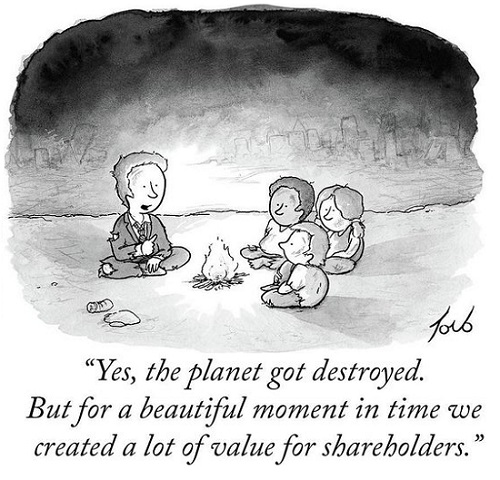
The current special interests driving US foreign and domestic policy are centered around Wall Street and Washington and represent an increasingly unrealistic, unsustainable, archaic network based on traditional banking, energy and manufacturing monopolies.

Many of the tools used by these special interests to maintain and expand their power and influence including mass media, extensive lobbying, networks dedicated to political subversion abroad and political distractions at home find themselves increasingly ineffective as both the American people and nations around the globe become increasingly familiar with them and as they begin developing effective countermeasures.

While US special interests dedicate a seemingly immense amount of time countering “Russian” or “Chinese” “propaganda,” it is primarily alternative media from the United States and its partner nations that have done the most to expose and diminish the unwarranted influence wielded from Wall Street and Washington. Wikileaks is a prime example of this.

As America’s elite and their networks weaken, alternatives continue to grow stronger.

An unsustainable socioeconomic and political model, coupled with equally unsustainable military campaigns abroad along with a political and media strategy that is no longer even remotely convincing even to casual observers demarks what is an irreversible decline of America’s current, prevailing order.

America’s Elite Face Challenges from Within as Well as From Abroad

The topic of Chinese corporations out-competing long-established US monopolies has become an increasingly common topic across global media. It is indeed this process that has precipitated the seemingly pointless and futile US-led trade war against China, a futile exercise that seems to only highlight the decline of America’s established elite rather than address it.

Corporations like Huawei, despite facing serious setbacks owed to US sanctions and efforts to undermine them, still move forward, while their US competitors continue to struggle. This is because despite setbacks, Huawei is built upon a solid foundation of business and economic fundamentals, while its American counterparts, despite their initial advantages owed to a lack of competition, have neglected and continue to neglect such fundamentals.

But Chinese corporations aren’t the only challengers America’s established elite face.

Within the US itself some of the most innovative and disruptive companies in the world are cropping up, challenging not only foreign competition but also long-established monopolies based in the US.

Electric vehicle manufacturer Tesla is a perfect example of this. Its breakneck pace of innovation, high-profile successes and the disruptive impact it is having on traditional car manufacturing is setting back the American car industry first and foremost. It also poses a serious threat to the petroleum-centric energy model the US has adopted and propagated globally for over a century.

American car manufacturing monopolies have spent decades developing a model of planned obsolescence and marketing gimmicks as a stand-in for genuine consumer value and innovation. The industry has become a means of simply making as much money as possible and to increase profits each year, with “making cars” merely the means through which this money and the influence it buys is being accumulated.

Tesla has for years now been growing both in terms of business and in terms of sociopolitical influence. US car manufacturing monopolies have attempted to ape the most superficial aspects of Tesla’s appeal, but have entirely failed to examine or replicate the substance that drives the new company’s success.

Just as the US elite have attempted to use what could be described as “dirty tricks” rather than direct competition to deal with competitors like Huawei abroad, similar “dirty tricks” have been employed against disruptive companies within the US itself like Tesla. Attempts by faux-unions to complicate Tesla’s US-based factories are one example of this.

US-based aerospace manufacturer SpaceX is another example of an American-bred competitor directly challenging (and threatening) long-established US monopolies, in this case aerospace monopolies like Lockheed Martin, Boeing and Northrop Grumman.

SpaceX is not only driving aerospace innovation forward at breakneck speeds, it is driving down the overall cost of access to space at the same time. It is doing this at such impressive rates that established aerospace monopolies like Lockheed, Boeing and Northrop, even with their immense lobbying networks, are unable to dissuade SpaceX customers (including the US government itself) from purchasing rides on its rockets.

Bloated monopolies who have become overly reliant on maintaining profits through lobbying and political games have little means to overhaul their massive organizations in the face of real competition as it emerges. Because of this, the prevailing order driving US policy faces an insurmountable obstacle that already appears to have resulted in terminal decline and displacement.

Those doing the displacing stand to assume the position at the levers of American power and influence, with an opportunity to set an entirely new course into the future that will have a fundamental impact on both the American nation and its people, and the nations of the world it will interact with.

America’s New Order May Seek Genuine Competition and Collaboration 

Tesla and SpaceX are prominent examples, but by no means the only examples of the ongoing transition that is increasingly evident within America. There are emerging innovations and companies threatening virtually every area America’s current elite dominate. From the alternative media targeting the deeply rooted corporate media of America, to a growing movement of local organic farmers chipping away at America’s massive agricultural monopolies, there are already many tangible examples of a transition taking place; a positive transition that those interested in truly addressing the negative aspects of America’s current role globally can invest in or contribute toward.

In what is perhaps a hopeful sign of the new America that might emerge as this process continues forward is the fact that emerging disruptors like Tesla are not afraid of collaborating with other nations, seeking to simply do business rather than construct a global spanning network aimed at dominating others. Tesla’s massive Gigafactory going into operation in Shanghai, China takes place as the US attempts to sever China’s access to the economic benefits of doing business with the US for purely political and hegemonic purposes.

Despite the apparent hostilities between the US and nations like Russia and China, the consensus in nations targeted by America’s current prevailing order is one of simply wanting to do business on equal terms. Whatever hostility may exist is reserved not for America as a nation or as a people, but toward the handful of special interests obstructing constructive competition and collaboration between these nations and the US.

In the near to intermediate future, this process will continue to resemble a bitter struggle as US special interests attempt to maintain their grip on power, fighting against inevitable decline and displacement, and against competitors both abroad and within the US itself.

Beyond that, there is a hopeful future where the US finds itself a constructive member of a multipolar world, constructively competing against and collaborating with nations rather than attempting to assert itself over them.

Because of this, it is important for nations and peoples to refrain from unnecessary, broad hostilities and to instead patiently weather current efforts emanating from Wall Street and Washington. It is important to establish ties and relations with US interests genuinely interested in true competition and collaboration and who represent America’s future, and to distinguish them from deeply rooted US interests that represent America’s abusive past and and are responsible for America’s current decline.

The foreign policies of Moscow, Beijing and even of many emerging and developing nations may seem overly passive or appeasing, but around the capitals of the world many are aware of the transition taking place in America and are attempting to position themselves advantageously for the fall of the American Empire so they can do business with those who assume the levers of power in America once it does.

The Child That Christmas Forgot: How Would Jesus Fare in the American Police State?

By John W. Whitehead

Source: The Rutherford Institute

“Once upon a midnight clear, there was a child’s cry, a blazing star hung over a stable, and wise men came with birthday gifts. We haven’t forgotten that night down the centuries. We celebrate it with stars on Christmas trees, with the sound of bells, and with gifts… We forget nobody, adult or child. All the stockings are filled, all that is, except one. And we have even forgotten to hang it up. The stocking for the child born in a manger. It’s his birthday we’re celebrating. Don’t let us ever forget that. Let us ask ourselves what He would wish for most. And then, let each put in his share, loving kindness, warm hearts, and a stretched out hand of tolerance. All the shining gifts that make peace on earth.”—The Bishop’s Wife (1947)

The Christmas story of a baby born in a manger is a familiar one.

The Roman Empire, a police state in its own right, had ordered that a census be conducted. Joseph and his pregnant wife Mary traveled to the little town of Bethlehem so that they could be counted. There being no room for the couple at any of the inns, they stayed in a stable (a barn), where Mary gave birth to a baby boy, Jesus. Warned that the government planned to kill the baby, Jesus’ family fled with him to Egypt until it was safe to return to their native land.

Yet what if Jesus had been born 2,000 years later?

What if, instead of being born into the Roman police state, Jesus had been born at this moment in time? What kind of reception would Jesus and his family be given? Would we recognize the Christ child’s humanity, let alone his divinity? Would we treat him any differently than he was treated by the Roman Empire? If his family were forced to flee violence in their native country and sought refuge and asylum within our borders, what sanctuary would we offer them?

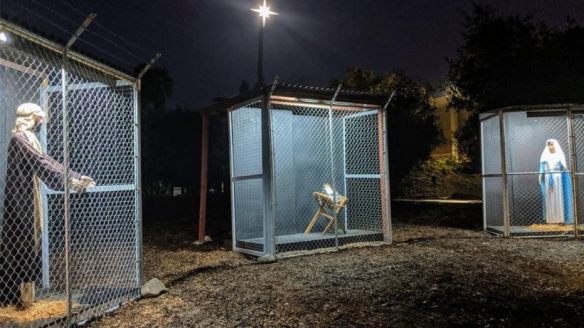
A singular number of churches across the country are asking those very questions, and their conclusions are being depicted with unnerving accuracy by nativity scenes in which Jesus and his family are separated, segregated and caged in individual chain-link pens, topped by barbed wire fencing.

These nativity scenes are a pointed attempt to remind the modern world that the narrative about the birth of Jesus is one that speaks on multiple fronts to a world that has allowed the life, teachings and crucifixion of Jesus to be drowned out by partisan politics, secularism, materialism and war.

The modern-day church has largely shied away from applying Jesus’ teachings to modern problems such as war, poverty, immigration, etc., but thankfully there have been individuals throughout history who ask themselves and the world: what would Jesus do?

What would Jesus—the baby born in Bethlehem who grew into an itinerant preacher and revolutionary activist, who not only died challenging the police state of his day (namely, the Roman Empire) but spent his adult life speaking truth to power, challenging the status quo of his day, and pushing back against the abuses of the Roman Empire—do?

Dietrich Bonhoeffer asked himself what Jesus would have done about the horrors perpetrated by Hitler and his assassins. The answer: Bonhoeffer risked his life to undermine the tyranny at the heart of Nazi Germany.

Aleksandr Solzhenitsyn asked himself what Jesus would have done about the soul-destroying gulags and labor camps of the Soviet Union. The answer: Solzhenitsyn found his voice and used it to speak out about government oppression and brutality.

Martin Luther King Jr. asked himself what Jesus would have done about America’s warmongering. The answer: declaring “my conscience leaves me no other choice,” King risked widespread condemnation when he publicly opposed the Vietnam War on moral and economic grounds.

Even now, despite the popularity of the phrase “What Would Jesus Do?” (WWJD) in Christian circles, there remains a disconnect in the modern church between the teachings of Christ and the suffering of what Jesus in Matthew 25 refers to as the “least of these.”

As the parable states:

“Then the King will say to those on his right, ‘Come, you who are blessed by my Father; take your inheritance, the kingdom prepared for you since the creation of the world. For I was hungry and you gave me something to eat, I was thirsty and you gave me something to drink, I was a stranger and you invited me in, I needed clothes and you clothed me, I was sick and you looked after me, I was in prison and you came to visit me.’ Then the righteous will answer him, ‘Lord, when did we see you hungry and feed you, or thirsty and give you something to drink? When did we see you a stranger and invite you in, or needing clothes and clothe you? When did we see you sick or in prison and go to visit you?’ The King will reply, ‘Truly I tell you, whatever you did for one of the least of these brothers and sisters of mine, you did for me.’ Then he will say to those on his left, ‘Depart from me, you who are cursed, into the eternal fire prepared for the devil and his angels. For I was hungry and you gave me nothing to eat, I was thirsty and you gave me nothing to drink, I was a stranger and you did not invite me in, I needed clothes and you did not clothe me, I was sick and in prison and you did not look after me.’ They also will answer, ‘Lord, when did we see you hungry or thirsty or a stranger or needing clothes or sick or in prison, and did not help you?’ He will reply, ‘Truly I tell you, whatever you did not do for one of the least of these, you did not do for me.’”

This is not a theological gray area: Jesus was unequivocal about his views on many things, not the least of which was charity, compassion, war, tyranny and love.

After all, Jesus—the revered preacher, teacher, radical and prophet—was born into a police state not unlike the growing menace of the American police state. When he grew up, he had powerful, profound things to say, things that would change how we view people, alter government policies and change the world. “Blessed are the merciful,” “Blessed are the peacemakers,” and “Love your enemies” are just a few examples of his most profound and revolutionary teachings.

When confronted by those in authority, Jesus did not shy away from speaking truth to power. Indeed, his teachings undermined the political and religious establishment of his day. It cost him his life. He was eventually crucified as a warning to others not to challenge the powers-that-be.

Can you imagine what Jesus’ life would have been like if, instead of being born into the Roman police state, he had been born and raised in the American police state?

Consider the following if you will.

Had Jesus been born in the era of the America police state, rather than traveling to Bethlehem for a census, Jesus’ parents would have been mailed a 28-page American Community Survey, a mandatory government questionnaire documenting their habits, household inhabitants, work schedule, how many toilets are in your home, etc. The penalty for not responding to this invasive survey can go as high as $5,000.

Instead of being born in a manger, Jesus might have been born at home. Rather than wise men and shepherds bringing gifts, however, the baby’s parents might have been forced to ward off visits from state social workers intent on prosecuting them for the home birth. One couple in Washington had all three of their children removed after social services objected to the two youngest being birthed in an unassisted home delivery.

Had Jesus been born in a hospital, his blood and DNA would have been taken without his parents’ knowledge or consent and entered into a government biobank. While most states require newborn screening, a growing number are holding onto that genetic material long-term for research, analysis and purposes yet to be disclosed.

Then again, had Jesus’ parents been undocumented immigrants, they and the newborn baby might have been shuffled to a profit-driven, private prison for illegals where they first would have been separated from each other, the children detained in make-shift cages, and the parents eventually turned into cheap, forced laborers for corporations such as Starbucks, Microsoft, Walmart, and Victoria’s Secret. There’s quite a lot of money to be made from imprisoning immigrants, especially when taxpayers are footing the bill.

From the time he was old enough to attend school, Jesus would have been drilled in lessons of compliance and obedience to government authorities, while learning little about his own rights. Had he been daring enough to speak out against injustice while still in school, he might have found himself tasered or beaten by a school resource officer, or at the very least suspended under a school zero tolerance policy that punishes minor infractions as harshly as more serious offenses.

Had Jesus disappeared for a few hours let alone days as a 12-year-old, his parents would have been handcuffed, arrested and jailed for parental negligence. Parents across the country have been arrested for far less “offenses” such as allowing their children to walk to the park unaccompanied and play in their front yard alone.

Rather than disappearing from the history books from his early teenaged years to adulthood, Jesus’ movements and personal data—including his biometrics—would have been documented, tracked, monitored and filed by governmental agencies and corporations such as Google and Microsoft. Incredibly, 95 percent of school districts share their student records with outside companies that are contracted to manage data, which they then use to market products to us.

From the moment Jesus made contact with an “extremist” such as John the Baptist, he would have been flagged for surveillance because of his association with a prominent activist, peaceful or otherwise. Since 9/11, the FBI has actively carried out surveillance and intelligence-gathering operations on a broad range of activist groups, from animal rights groups to poverty relief, anti-war groups and other such “extremist” organizations.

Jesus’ anti-government views would certainly have resulted in him being labeled a domestic extremist. Law enforcement agencies are being trained to recognize signs of anti-government extremism during interactions with potential extremists who share a “belief in the approaching collapse of government and the economy.”

While traveling from community to community, Jesus might have been reported to government officials as “suspicious” under the Department of Homeland Security’s “See Something, Say Something” programs. Many states, including New York, are providing individuals with phone apps that allow them to take photos of suspicious activity and report them to their state Intelligence Center, where they are reviewed and forwarded to law-enforcement agencies.

Rather than being permitted to live as an itinerant preacher, Jesus might have found himself threatened with arrest for daring to live off the grid or sleeping outside. In fact, the number of cities that have resorted to criminalizing homelessness by enacting bans on camping, sleeping in vehicles, loitering and begging in public has doubled.

Viewed by the government as a dissident and a potential threat to its power, Jesus might have had government spies planted among his followers to monitor his activities, report on his movements, and entrap him into breaking the law. Such Judases today—called informants—often receive hefty paychecks from the government for their treachery.

Had Jesus used the internet to spread his radical message of peace and love, he might have found his blog posts infiltrated by government spies attempting to undermine his integrity, discredit him or plant incriminating information online about him. At the very least, he would have had his website hacked and his email monitored.

Had Jesus attempted to feed large crowds of people, he would have been threatened with arrest for violating various ordinances prohibiting the distribution of food without a permit. Florida officials arrested a 90-year-old man for feeding the homeless on a public beach.

Had Jesus spoken publicly about his 40 days in the desert and his conversations with the devil, he might have been labeled mentally ill and detained in a psych ward against his will for a mandatory involuntary psychiatric hold with no access to family or friends. One Virginia man was arrested, strip searched, handcuffed to a table, diagnosed as having “mental health issues,” and locked up for five days in a mental health facility against his will apparently because of his slurred speech and unsteady gait.

Without a doubt, had Jesus attempted to overturn tables in a Jewish temple and rage against the materialism of religious institutions, he would have been charged with a hate crime. Currently, 45 states and the federal government have hate crime laws on the books.

Had anyone reported Jesus to the police as being potentially dangerous, he might have found himself confronted—and killed—by police officers for whom any perceived act of non-compliance (a twitch, a question, a frown) can result in them shooting first and asking questions later.

Rather than having armed guards capture Jesus in a public place, government officials would have ordered that a SWAT team carry out a raid on Jesus and his followers, complete with flash-bang grenades and military equipment. There are upwards of 80,000 such SWAT team raids carried out every year, many on unsuspecting Americans who have no defense against such government invaders, even when such raids are done in error.

Instead of being detained by Roman guards, Jesus might have been made to “disappear” into a secret government detention center where he would have been interrogated, tortured and subjected to all manner of abuses. Chicago police have “disappeared” more than 7,000 people into a secret, off-the-books interrogation warehouse at Homan Square.

Charged with treason and labeled a domestic terrorist, Jesus might have been sentenced to a life-term in a private prison where he would have been forced to provide slave labor for corporations or put to death by way of the electric chair or a lethal mixture of drugs.

Indeed, as I show in my book Battlefield America: The War on the American People, given the nature of government then and now, it is painfully evident that whether Jesus had been born in our modern age or his own, he still would have died at the hands of a police state.

Thus, as we draw near to Christmas with its celebrations and gift-giving, we would do well to remember that what happened on that starry night in Bethlehem is only part of the story. That baby in the manger grew up to be a man who did not turn away from evil but instead spoke out against it, and we must do no less.

Get Ready For An Economic Wake-Up Call This Holiday Season

By Brandon Smith

Source: Alt-Market.com

If we are to measure the concept of “economic recovery” in real terms, then we would have to look at the fundamentals (not stock markets) and whether or not they’re improving. Unfortunately, not all economic data is presented to the public honestly. Very often it is mired and obscured in a fog of disinformation and false standards.

I would point out, though, that there is relatively accurate information out there in certain areas of the global economy, and it tells us our economic structure is destabilizing. Beyond that, even the rigged numbers are moving into negative territory. But what does all this mean for the holiday retail season, one of the mainstream’s favorite gauges of US financial health? And, if 2019’s holiday profits sink, what does this tell us is going to happen in 2020?

First, let’s start with what we know…

Since we live in a “globalized” economy where everything is supposedly “interdependent”, it helps to examine international export numbers. The US doesn’t manufacture and export much of anything anymore beyond agricultural products, but global markets do expect us to consume the goods of other nations. A decline in exports indicates a failing global economy, but in particular a failing US consumer economy.

The obvious example would be China, which has seen plunging export data at least the past three months, though many will argue that this is merely due to tariffs and the trade war. However, it’s not just China that is showing signs of collapse.

South Korea, another major manufacturing and export hub in Asia (5th largest in the world) has seen declining exports for 11 consecutive months. South Korean shipping is crumbling in November and the media is blaming the trade war, as some SK companies would be “hit indirectly” because they sell intermediate goods to China are are linked to US companies in China. But this makes little sense. Tariffs are highly targeted to specific companies and specific goods, and so far the US has not directed major tariff attention at South Korea beyond the auto market.  Also, the new KORUS deal between Trump and SK is different only cosmetically to original trade agreements, yet, South Korean exports continue to fall.

The same situation can be seen in Japan, with Japanese exports witnessing a 9.2% year-over-year drop in October, the largest decline in 3 years. Japan has seen three consecutive months of declines in exports.

And what about Europe? While Germany, the manufacturing powerhouse of the EU, finally saw a jump in exports to the US this past month, overall the European Union has seen consistently poor export performance for the past year, and Germany itself is hovering on the edge of recession with 0.1% official GDP growth. Many economist already consider Germany to be in recession, as official GDP numbers are constantly manipulated by governments to the upside.

But let’s not forget about the US. Remember how Trump promised that the trade war would result in a renaissance for US manufacturing and that millions of industrial jobs would be returning to our shores? Well, as I’ve warned consistently for the past couple years, there is NO WAY corporations will be bringing manufacturing jobs and factories back to the US without ample incentives. Trump already gave companies tax cuts without demanding anything in return, and the cost/benefit ratio of building new factories and paying American workers top dollar versus keeping existing factories in Asia and dealing with 10%-25% tariffs just doesn’t add up to a new US rust belt renaissance.

While manufacturing jobs have increased, US manufacturing activity has declined.  Meaning, there simply isn’t enough demand for the goods being produced.  US manufacturing ISM index just sank this month and has been sinking for the past four month into negative territory. While US PMI manufacturing data jumped this month, it is still well below the 10 year average and is also very low compared to past holiday seasons, which almost always see a spike in manufacturing.  US manufacturing remains at a historic low of 11% of US GDP and production output has decline steadily since January of this year.

The question is, will the vast decline in global manufacturing translate to a crash in consumer demand?  We know that US credit dependency has skyrocketed in the past few years, but will more debt result in more profits for retailers?  This is highly unlikely, as US retail sales growth, for example, has been in decline at the same time that consumer debt has been rising.  Why?  Credit delinquencies have been relatively stable (so far) this year, so my theory is that people in the US are paying off previous debts by taking on new debt. They are kicking the can on their insolvency.

We have seen this kind of destructive credit death cycle before – Right before the crash of 2008.

So what does all this mean? And why is the media portraying the trade war with China as the cause of the global export and shipping crisis when clearly most of the world is not directly or even indirectly tied to the tariffs?

As noted above, the narrative that is being pushed is that we live in an “interdependent” and globalized world, and that nations cannot function economically without cooperation. The trade war, I believe, is a smokescreen designed by the globalist establishment to do two things specifically:

1) It is being created to hide a crash in the greater economy. Notice that almost no one in the mainstream is talking about a collapse in global production and multiple fundamentals due to DEMAND; instead they constantly talk about the trade war and exports. The trade war is becoming the scapegoat for the implosion of the market bubble engineered by globalists and central banks through a decade of stimulus measures.

The collapse of the economic bubble is being caused in part by massive debt and a lack of consumer demand due to lack of consumer savings and cash flow. The trade war has little to do with it, and I suspect we would be seeing sharp declines in the US economy in particular even without the trade war.

2) The trade war creates a false dichotomy in which many Americans will be lured into blaming China and other nations for their economic ills, and China and the rest of the world will be lured into blaming America. It also reasserts the globalist propaganda argument that when nations and economies “go rogue”, they hurt everyone; therefore, more global controls and centralization will have to be established in order to prevent nationalism from harming the rest of the world.

And what does this all have to do with the Christmas shopping season? Like the end of last year, I think we are in for another ugly holiday retail event – Perhaps far worse than before. All the manufacturing and export data indicates that this will be the case. If so, then the mainstream narrative of recovery, long perpetuated as fact by the media and the Federal Reserve for the past several years, will finally die.

The only thing that might elevate holiday numbers would be increased price inflation in goods, but I predict that even inflation misrepresented as “profits” will not save Christmas stats this year.  Some skeptics of the ongoing crash will argue that Black Friday numbers this year were the best since 2013, therefore the holiday season will be a good one.  These people don’t know their economic history.  In most cases, holiday seasons that start off with a high traffic Black Friday end with poor overall sales data, including 2013.  This is because consumers that are cash strapped are more likely to buy early during Black Friday sales and spend far less over the rest of the season.

In the mind of the average American consumer, holiday retail sales are a primary indicator of the health of the economy. A dramatic crash in Christmas retail will end the delusion of a stable US system and cause the public to start asking questions. Economics is 50% math and 50% psychology. The math in the US economy says we are in the middle of a crash. The psychological orientation of the public has been on the opposite end of spectrum, but is now slowly moving to meet with reality. When the psychological delusion ends, the game is over. And, for the globalists a new game begins.

Order out of chaos is their motto for a reason…

The global “reset” as they sometimes refer to it, has already been triggered. Going into 2020, the question is will the fantasy fall completely away to reveal the grotesque economic swamp our foundation has been built on top of? Or, will the delusion drag on for at least one more year? Given the current data, I suspect the party is over. But it is difficult to predict how the public will react to a financial crash. Sometimes people have no choice but to acknowledge the danger in front of them, but sometimes they simply bury their heads in the sand deeper and hope that by dragging out the inevitable the inevitable will become forgettable.

This holiday season, American workers have little to celebrate

By Danny Haiphong

Source: Intrepid Report

Every year, much of the U.S. population celebrates Thanksgiving and Christmas to show appreciation for their families and friends. Thanksgiving normalizes the colonial origins of the United States and erases the brutality of the English settlers who massacred indigenous people to prepare the land for capitalist accumulation. Christmas is the annual holiday of big business. On no other day are workers more encouraged to spend their wages on the latest consumer product to gift to their loved ones. The holidays bring with them a deep pressure to be merry. Yet on this holiday season, workers have little to celebrate.

A new study by Brookings Institution provides a snapshot into the devastation wrought on the working class by American capitalism. Forty-four percent of all workers between the ages of 18-64 are employed in low-wage sectors and earn an average of $16 or less per hour. The study excluded workers who logged over 98 hours per week over the last year as well as certain sections of the college-educated population such as those living in dormitories and attending graduate school. Had these groups of workers been counted, the percentage of low-wage workers out of the total population would likely be even higher. This verifies prior datasets which proved that around half of the U.S. population makes less $30,000 per year.

The growing poverty of the American worker is a major contributor to the growth of toxic stress and mental illness. Half of all U.S. adults will develop a mental illness over the course of their life. Serious mental health conditions afflict nearly ten million people in the United States and over a quarter of these individuals live below the official poverty line. Suicide rates are at a thirty-year high. An obvious connection exists between rising poverty and the worsening mental health of the American worker.

Workers in the United States see no future under the current stage of capitalism. They struggle to afford rent in a nation where the federal minimum wage cannot pay for a two-bedroom apartment anywhere in the country. They indebt themselves in the trillions to attend college and obtain healthcare. They work in redundant, service sector jobs where hours are long and mistreatment, abuse, and injury are all too common. The American worker is increasingly alienated from themselves and each other. Union density rates in the U.S. have fallen to just ten percent of all workers since World War II.

The shrinking labor movement has followed a larger trend in U.S. society. Privatization has decimated the public sector. Workers have few places to socially convene independent of the machinations of consumer capitalism. Workers are competing for fewer jobs, most of which are not worth competing for at all. Homelessness, mass incarceration, and endless war remind workers that they can easily be turned into cannon fodder if they step out of line. In such an environment, addiction and self-destruction is encouraged while organizing for justice is discouraged.

Economic insecurity and alienation place more pressure on families to make up for stagnant wages and exorbitant amounts of debt. More young workers are living with their parents than at any other time in the last one hundred years. Older workers are not only forestalling retirement but also finding themselves without family or community support as siblings and adult children chase the highest paying jobs and the lowest rents and property values. Couples feel compelled to remain in toxic relationships for economic reasons. A strong link exists between domestic violence and poverty.

Contrary to the messages in Hallmark cards or the corporate media, the holidays are far from a time of celebration. Many workers view the holiday season as a harsh reminder of the loss, alienation, and despair that they’ve experienced over the course of their lives. Holidays place added pressure on workers to dismiss the ills of capitalism and the personal stressors associated with them. It should come as no surprise that most workers already struggling with mental health conditions report that the holidays only worsen their symptoms. Instead of embracing humanity, the holidays encourage workers to embrace rampant commercialism and the nuclear family.

To break from a culture steeped in the profit motive, workers will need to create their own traditions based upon solidarity and social transformation. Not everything about the holidays needs to be thrown out in the process. Spending time with family and friends during a day off from work can and should be rewarding to the psyche and to society. The conditions of capitalism prevent the holidays from serving a social purpose. Holidays under capitalism breed despair but brand themselves as moments of pure joy.

While workers may have little to celebrate this holiday season, there are reasons for the working class to be optimistic in the years to come. Teachers in cities such as Chicago and Los Angeles have won key gains in 2019 by using the most powerful weapon at the disposal of organized labor: the strike. At the beginning of the year, the Los Angeles Teachers won smaller class sizes and more support staff. The Chicago Teachers Union massively increased the number of nurses in the school district by forcing the city to hire nurses rather than continue the inefficient and harmful practice of hiring private contractors. The UAW’s strike of General Motors (GM) earlier this Fall made global headlines even if it was unable to win every demand that the workers put forth. These strikes reflect a growth of class consciousness in the United States. The continued growth of class consciousness will be critical toward building the kind of struggle capable of bringing about massive political and economic change for the working class.

Furthermore, workers around the world are leading the way in the struggle against class inequality and foreign-sponsored wars. Massive protests in Haiti, Chile, Honduras, and Algeria are just a few of many occurring around the globe. The protests have mainly targeted repressive U.S.-backed governments and their neoliberal economic agenda. China is leading the world in poverty reduction. Cuba is the most sustainably developed nation in the world. A vast majority of workers around the world want to see an end of the miseries imposed by global capital and are actively fighting to make their demands a reality.

The question is whether workers in the United States can decisively break from the despair, the racism, and the extreme alienation shaping their current condition. Being determines consciousness. At this moment, the neoliberal race to the bottom has rendered most workers too fearful, disorganized, and full of self-blame to fight back. However, millions of workers have rallied behind the political campaign of Bernie Sanders. Labor unrest is likely to continue as neither political party appears interested in implementing Bernie Sanders’ social democratic agenda. Workers in the United States are in desperate need of a revived labor movement to quench their thirst for a better life. Putting our energies into building this movement will go a long way toward shaking the Holiday Blues and giving workers something to really celebrate: a society run by workers, in the interests of workers.

Minority Report (2002) Esoteric Analysis

By Jay Dyer

Source: Jay’s Analysis

Spielberg’s Minority Report is now an important film to revisit.  Based on the short story by visionary science fiction author Phillip K. Dick, Spielberg’s film version implements an important number of predictive programming elements not found in Dick.  Both are worth a look, but the film is important for JaysAnalysis, since now 13 years later, we are actually seeing the implementation of the total technocratic takeover, including pre-crime tracking systems.

Although the film and the short story present the precognition as a metaphysical mystery by telepathic individuals who can see into the aether, the real pre-crime systems are based on A.I. and the digitizing of all records under total information awareness.  And as I’ve said, this was DARPA’s plan for the Internet all along.

In fact, a good friend of mine worked for a few years digitizing mass medical records, and while most are aware of Google’s attempts to digitize all books, most do not know why.  I’ve warned for several years now the end goal of all this digitization is not for “efficiency” and trendy techy cool iWatches to monitor heart rates and location.  The ultimate goal is total mind control, loss of free will and the complete rewrite of all past reality.

Consider, for example, the power the system will wield with the ability to “delete” all past versions of literature – religious texts, Shakespeare, 1984, nothing will be sacred and unable to be “revised.”  Remember that in 2009 Amazon erased Orwell’s 1984.  Your own past may even be deleted, subject to revision or altered to make you the next villain!  All this is revealed in detail in Minority Report.  Thus, while the public adopts “Kindles,” print itself is assigned the doom of the kindled fire – like Farenheit 451, as Richard Grove has said.

Minority Report’s setting is a 2055 dystopic D.C., where Agent John Anderton (Tom Cruise) is framed for two murders from within his own PreCrime Corporation ranks by the CEO, Lamar Burgess (Max Von Sydow). (Note: The existing system appears to be a merger of private and government sectors.)   I’m sure most readers have seen the film, so I’ll spare you detailed plot recaps and hit the highlights for the sake of our purposes.

The film’s PreCrime alerts a private corporation to a predetermined murder event ahead of time, giving the Agents of the corporation time to save victims.  Hailed as a perfect system, the infallibility of PreCrime has made D.C. the safest city in the world, with no murders for several years.  As a result, the PreCrime test requires a total surveillance society, something akin to complete panopticism.  In fact, the advertising in D.C. is user specific, targeting pedestrian’s personal desires based on retina scans – and all travel requires retinal scanning and mass microchipping.

We are now on the verge of the implementation of retinal scanning, as the U.S. military has engaged in retinal scanning in occupied territories for several years now.  It is important to understand that the action of the military abroad are often a test ground for the implementation of such surveillance and tracking technology at “home.”  In October 2010, the Guardian reported of U.S. troops stationed in Afghanistan:

“With each iris and fingertip scanned, the device gave the operator a steadily rising percentage chance that the goat herder was on an electronic “watch list” of suspects. Although it never reached 100%, it was enough for the man to be taken to the nearest US outpost for interrogation.

Since the Guardian witnessed that incident, which occurred near the southern city of Kandahar earlier this year, US soldiers have been dramatically increasing the vast database of biometric information collected from Afghans living in the most war-torn parts of southern and eastern Afghanistan. The US army now has information on 800,000 people, while another database developed by the country’s interior ministry has records on 250,000 people.”

Wired Magazine reported millions were the goal.  The goal is not millions, but the entire globe, where any and all information is now currency for “big data.”  This is exactly the world Minority Report foresaw, and for those curious about Phillip K. Dick, whispers are his foresight was due to being well-connected with the Silicon Valley elites.  This is how Ubik foresaw the “Internet of Things” I’ve written about many times, and probably in part why Dick went insane (or was targeted).  Slate writes of Ubik:

“Samsung, the world’s largest manufacturer of televisions, tells customers in its privacy policy that “personal or other sensitive” conversations “will be among the data captured and transmitted to a third party” through the TV’s voice-recognition software. Welcome to the Internet of Things.

Sci-fi great Philip K. Dick warned us about this decades ago. In his classic 1969 novel Ubik, the characters have to negotiate the way they move and how they communicate with inanimate objects that monitor them, lock them out, and force payments.”

Just as the predictive algorithm in Asimov’s Foundation was able to track mass movements, so now the same algorithmic tracking is in place across the “web of things” that are capable of being recorded and tracked – and that’s most things.  The Pentagon has a virtual “you” in a realtime 3D interface that updates its data consistently from everything done on the web.  The Register reported in 2009 about this simulated warfare and predictive software:

“Defense analysts can understand the repercussions of their proposed recommendations for policy options or military actions by interacting with a virtual world environment,” write the researchers.

“They can propose a policy option and walk skeptical commanders through a virtual world where the commander can literally ‘see’ how things might play out. This process gives the commander a view of the most likely strengths and weaknesses of any particular course of action.”

It’s not telepathic Samantha Morton’s in a tub of goo, it’s Google and DARPA developing highly advanced technology along the lines of what William Binney exposed, as a former NSA employee.  Think here of War Games (1983), where the A.I. bot was able to war game future scenarios of global thermonuclear war, but thankfully Ferris Bueller was there to save us.  If this was displayed in 1983 in pop culture, imagine how far that technology has come 30 years later.  Lest anyone think the “precrime” is merely for security and weekend Xbox enjoyment, recall what I wrote two years back:

“Capitalism, communism, nationalism, 401ks, blah blah blah, all of these things are basically obsolete. Why?  Because of the nature of the real secret high-tech and plans for mega SmartCities that are to come.  You see, you think you are getting ahead and climbing the scum social ladder, and you aren’t even aware that the CEO of IBM Ginni Rommety gives lectures about SmartCities where everything you do will be rationed, tracked and traced by the central supercomputers, with pre-crime determining whether you are guilty of crimethink.  So everything you are trusting in is already obsolete.  You think I’m exaggerating?  On the contrary, you and your children’s futures are determined (you don’t have a future), and if you are allowed to live past the great culling, you will essentially be boxed into a giant WalmartTargetGameStopUniversity City that will literally be run by a supercomputer. Watch for yourself:”

And lest anyone think PreCrime is a thing of the future, consider that it has been used for two years in the U.K.  The New Scientist and 21stCenturyWire report:

“That’s the hope of police in the US, who have begun using advanced software to analyse crime data in conjunction with emails, text messages, chat files and CCTV recordings acquired by law enforcement. The system, developed by Wynyard, a firm based in Auckland, New Zealand, could even look at social media in real time in an attempt to predict where the gang might strike next.

“We’re trying to get to the source of the mastermind behind the criminal activity, that’s why we’re setting up a database so everybody can provide the necessary information and help us get higher up the chain,” says Craig Blanton of the Marion County Sheriff’s Office in Indiana. Because Felony Lane Gang members move from state to state to stay one step ahead, the centralised database is primed to aggregate historical information on the group and search for patterns in their movements, Blanton says.

“We know where they’ve been, where they are currently and where they may go in the future,” he says. “I think had we not taken on this challenge, we along with the other 110 impacted agencies would be doing our own thing without better knowledge of how this group operates.”

It’s not the only system that police forces have at their disposal. PredPol, which was developed by mathematician George Mohler at Santa Clara University in California, has been widely adopted in the US and the UK. The software analyses recorded crimes based on date, place and category of offence. It then generates daily suggestions for locations that should be patrolled by officers, depending on where it calculates criminal activity is most likely to occur.”

Returning to the film, an interesting tidbit occurs about three times that I noticed.  Any time Anderton or his fellow Agents access the “Temple,” the holding site of the telepathic PreCogs, the sound made is distinctly the iPhone power on sound.  The first iPod premiered in 2001, so I’m assuming it’s the same sound for turning on, but readers can correct me.  I find it curious if not, since the sound would likely be chosen for a reason. This puts the infamous 1984 Apple ad in a new, ominous light.

If you’ve seen the important Spike Jonze film, Her, you’ll see why.  In Her, lead character Theodore (Joaquin Phoenix) falls in love with an iOS – his operating system.  The iOS of his future is an intelligent software system with capability for learning (like the A.I. in War Games), and ultimately transcends its own limitations.

I bring this up because Minority Report is distinctly dominated by eye imagery.  While seemingly insignificant, it is my opinion that Siri and Apple in particular are crucial in the implementation of the coming new order.  Apple ads have contained a distinctly esoteric and significant cultural referent.  This is not to say Microsoft or any of the other tech giants are insignificant, on the contrary, I believe they are all arms of one entity and the appearance of competition is largely illusory.

There is only one military industrial complex, and DARPA and Google and Apple and Microsoft are all its children.  The façade of competition is enough to advance the technology by the tech nerds that serve it, but in the end, it all serves the same system.  My point here is that the iPhone is much more than an iPhone. It is actually an EYEphone, functioning as the eye of Sauron himself, as A.I. reconnaissance before the takeover.

I have mentioned before the whispers are the iPhone of the next few years will contain a Siri that communicates with you like a personal assistant.  I have finally found an article on this here, which describes it directly in connection to Her, like I said here.  “Viv” will do the following:

“On the other hand, not only will Viv recognize disparate requests, she will also be able to put them together. Basically, Viv is Siri with the ability to learn. The project is being kept heavily under wraps, but the guys at Viv have hinted that they’re working towards creating a “global brain,” a shared source of artificial intelligence that’s as readily accessible as heat or electricity.  It’s unclear how soon a breakthrough of this magnitude can happen. But if this team made Siri, you can bet their next project is going to blow the tech world to pieces.”

In order to endear the public to that idea, a prototype Siri had to be offered.  While this may be a rumor, it will eventually come.  And the dystopic scenario presented in Her will meet the nightmare of Minority Report.  For now, it all seems harmless (though we are seeing a generation of youth destroyed by screens and pads – Steve Jobs didn’t let his own kids play with an iPad!), but the end goal I assure is nefarious.

The dominant ideology of these tech giants is pure and total dysgenics (not eugenics).  In order for the total rewrite to come, the existing structure must be destroyed.  The “old way” of doing things will be scapegoated as the technocracy replaces it, offering utopia and salvation, but the synthetic rewrite is a Trojan horse.  Humanity will be enslaved in the same virtual Matrix Anderton is enslaved in, in the film.

The film’s tag line, which pops up numerous times in the story, is about running.  “Everybody runs,” and John spends most of the film on the run from the very system he operated.  The film asks the question multiple times, “Can you see?” and when we think of this on a deeper level in terms of predictive programming, I think we are intended to look beyond the immediate narrative.  There are also numerous hat tips to Blade Runner, where again the “running” imagery comes to the fore.  Can we run from the panopticon?  Do we have eyes to see the iEYES that are “infallibly” surveilling us perpetually?

Corporate America Is an Anti-Social Black Plague: Negative Network Effects Run Amok

By Charles Hugh Smith

Source: Of Two Minds

The anti-social carnage unleashed by Corporate America’s “lock-in” / negative network effects has no real limits.

Here’s the U.S.economy in a nutshell: Corporate America is an anti-social Black Plague, gorging on cartel-monopoly profits reaped from negative network effects running amok, enriching the few at the expense of the many and concentrating political power in the hands of the most rapacious, anti-democratic corporate sociopaths.

Let’s start with network effects: the conventional definition is “When a network effect is present, the value of a product or service increases according to the number of others using it.”

So for example, when telephone service was only available to a few users, its value was limited. As more people obtained telephone service, the value of the network increased to both its owners and to users, who could reach more people and conduct commerce more easily as a result of having telephone service.

In the conventional analysis, negative network effects occur from “congestion,” i.e. the network is adding new users so quickly that “more users make a product less valuable.”

But this superficial analysis misses the fatally anti-social consequences of corporate negative network effects, a dynamic described by analyst Simons Chase in this essay. Here is an excerpt:

Even the most imaginative and far-reaching narratives about non-obvious economic fragility and off balance sheet risks are mere rants without constructive ideas about causes and solutions.

Consider network effects, the popular economic construct applied to market concentration and increasing returns for strategies pursued by some leading tech companies. This dynamic economic agent is also known as demand side economies of scale.

W. Brian Arthur, the economist credited with first developing the theory, described the condition of increasing returns as a game of strategic positioning and building up a user base to the point where ‘lock in’ of dominant players occurs. Companies able to tap network effects have been rewarded with huge valuations and highly defensible businesses.

But what about negative network effects? What if the same dynamic applies to the U.S.’s pay-to-play political industry where the government promotes or approves of something through a policy, subsidy or financial guarantee due to private sector influence.

Benefits accrue only to the purchaser of the network effects, and consumers, induced by the false signal of large network size, ultimately suffer from asymmetric risk and experience what I’m calling a loss of intangible net worth for each additional member after the ‘bandwagon’ wares off.

If this were the case, then you would see companies experience rapid revenue growth (out of line with traditional asset leverage models), executives accumulating huge fortunes and political campaign coffers swelling.

But the most striking feature would be the anti-social outcomes, the ones not available without the instant critical mass of government-supported network effects, the ones that, at scale, monetize a society’s intangible net worth.

Some products tied to these metrics include: prescriptions drugs, junk food targeting children, mortgages, diplomas, and social media. The list of industries that are likely to have gained through the purchasing of network effects in D.C. maps closely to the decay that is visible in U.S. society.

The loss of intangible capital and other manifestations of non-obvious economic fragility (to use Simons’ apt phrase) is the subject of my latest book, Will You Be Richer or Poorer? Profit, Power and A.I. in a Traumatized World, in which I catalog the anti-social consequences of negative network effects and other forces eroding our nation’s intangible capital.

Consider Facebook, a classic case of negative network effects running amok, creating immensely anti-social consequences while reaping billions in profits: Facebook isn’t free speech, it’s algorithmic amplification optimized for outrage (TechCrunch.com).

The full social cost of social media’s negative network effects are difficult to tally, but studies have found that loneliness and alienation are correlated to how many hours a day individuals spend on social media. (An Internet search brings up dozens of reports such as NPR’s Feeling Lonely? Too Much Time On Social Media May Be Why.)

Facebook is trying to leverage its social media “lock-in” to issue its own global currency and both Facebook and Google are trying to offer banking services without any of the pesky regulations imposed on legitimate banks. (Will $10 million in lobbying do the trick? How about $100 million? We’ve got billions to “invest” in corrupting and controlling public agencies and political power.)

Once Corporate America locks in cartel-monopoly power, i.e. you have to use our services and products, the corporate sociopaths use their billions in market cap and profits to buy the sociopaths in government. Pay-to-play is the real political machinery; “democracy” is the PR fig-leaf to mask the private sector “lock-in” (monopoly) and the public-sector “lock-in” (regulatory influence, anti-competitive barriers to entry, the legalization of corporate fraud, cooking the books, embezzlement, etc.)

Consider Boeing, an effective monopoly which used $12 billion in profits to buy back its own shares and “invested” millions in buying political influence so it could minimize public-sector oversight.

Rather than spend the $12 billion designing a new safe aircraft, Boeing cobbled together a fatally flawed design dependent on software, as described in The Case Against Boeing (The New Yorker) to maximize the profitability of its “lock-in”.

Google is running amok on so many levels, it’s difficult to keep track of its anti-social “let’s be evil, it’s so incredibly profitable” agenda: Google’s Secret ‘Project Nightingale’ Gathers Personal Health Data on Millions of Americans (Wall Street Journal). The goal, of course, is to reap more billions in profits for insiders and corporate sociopaths.

The anti-social carnage unleashed by Corporate America’s “lock-in” / negative network effects has no real limits. Consider the essentially limitless private and social damage caused by Big Tech: Child Abusers Run Rampant as Tech Companies Look the Other Way (New York Times).

Then there’s the opioid epidemic, whose casualties run into the hundreds of thousands, an epidemic that was entirely a creature of Corporate America seeking to maximize “lock-in” profits by buying regulatory approval and pushing false claims that the corporate products were safe and non-addictive.

Note the media sources of these reports: these are the top tier of American journalism, not some easily dismissed alt-media source.

What does this tell us? It tells us the anti-social consequences are now so extreme and so apparent that the corporate media cannot ignore them. Once Corporate America locks-in market, financial and political power, it acts as a virulent Black Plague on the social order, legitimate democracy, and an entire spectrum of intangible social capital including the rule of law.

As Simons put it: “The ethical dimension underpinning the whole system is this: what’s moral is what’s legal and what’s legal is for sale.” Where does this Black Plague pathology take us? To a collapse of the status quo which enabled it, cheered it, and so richly rewarded it.

Our Vanishing World: Birds

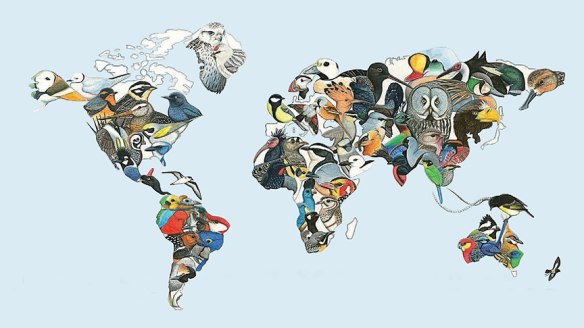
Illustration by Luke Seitz

By Robert J. Burrowes

At the beginning of the nineteenth century, it is estimated that the total number of passenger pigeons in the United States was about three billion birds. The bird was immensely abundant, as illustrated by this passage written by the famous ornithologist, naturalist and painter John James Audubon:

‘I dismounted, seated myself on an eminence, and began to mark with my pencil, making a dot for every flock that passed. In a short time finding the task which I had undertaken impracticable, as the birds poured in countless multitudes, I rose, and counting the dots then put down, found that 163 had been made in twenty-one minutes. I traveled on, and still met more the farther I proceeded. The air was literally filled with Pigeons; the light of noon-day was obscured as by an eclipse, the dung fell in spots, not unlike melting flakes of snow; and the continued buzz of wings had a tendency to lull my senses to repose… Before sunset I reached Louisville, distance from Hardensburgh fifty-five miles. The Pigeons were still passing in undiminished numbers, and continued to do so for three days in succession.’ See ‘Passenger Pigeon’.

So numerous was this bird that, in the nineteenth century, the passenger pigeon was one of the most abundant birds on Earth.

In 1914 it was extinct.

While new settlements kept reducing the bird’s habitat, more importantly, it was literally hunted from the sky. Shot for its meat.

So I have two questions for you? When is the last time that you saw a flock of birds so vast that ‘the light of noon-day was obscured as by an eclipse’? And when did you last see a flock of just 20 birds?

Sobering to ponder, isn’t it?

The origin of birds

Birds evolved from small carnivorous dinosaurs of the Late Jurassic and in the 65 million years since the extinction of the rest of the dinosaurs, this ancestral lineage diversified into the major groups of birds alive today. See ‘The origin of birds’.

Because they did not exist during the first five mass extinction events on Earth, birds have been spared the widespread extinctions suffered by those species that did exist in earlier eras.

Extinctions of birds in prehistory and history

Nevertheless, the fossil record tells us of the existence of prehistoric birds that became extinct before the Late Quaternary (that is, the past half to one million years) and thus occurred in the absence of significant human interference – see ‘List of fossil bird genera’ – while various sources tell us of both prehistoric and historic bird species, including flightless megafauna birds, that became extinct between 40,000 BCE and 1500 AD and ‘was coincident with the expansion of Homo sapiens beyond Africa and Eurasia, and in most cases, anthropogenic factors played a crucial part in their extinction, be it through hunting, introduced predators or habitat alteration’. See ‘List of Late Quaternary prehistoric bird species’.

Of course, there is an even wider range of evidence of bird extinctions since 1500. See ‘List of recently extinct bird species’. Most notably perhaps, given the symbolism it has since acquired, the dodo, a flightless bird of Mauritius, was driven to extinction by 1681 but not before it was carefully drawn. See ‘Dodo’.

How many bird species are there on Earth now?

While one recent estimate – see ‘Scaling laws predict global microbial diversity’ – indicates that Earth may be the home to one trillion species (the vast bulk of which are microorganisms such as bacteria, archaea and microscopic fungi), of which only an estimated 8.7 million species fall into the usual and simpler categories of plants, birds, animals, fish, amphibians, insects and reptiles, the most recent research conducted by George F. Barrowclough, Joel Cracraft, John Klicka and Robert M. Zink and published in 2016 indicated that there are just 18,043 species of birds worldwide. See ‘How Many Kinds of Birds Are There and Why Does It Matter?’

Somewhat controversially – see ‘New Study Doubles the World’s Number of Bird Species By Redefining “Species”’ – this figure is nearly twice as many as previously thought because the study focused on ‘hidden’ avian diversity: birds that look similar to one another or were thought to interbreed but are actually different species. In any case, whether there are just 10,000 species of birds, 11,000+ as estimated by the recognized international authority BirdLife International – see ‘Introducing the IUCN Red List’ – or even18,000, just like other species of life on Earth, birds are now under siege in a way they have never been before.

Killing birds in the late twentieth and early twenty-first centuries

More than 100 years have passed since the passenger pigeon became extinct. However, while one might have hoped that humans had become more adept at nurturing populations of birds, the reality is that we are continuing to drive bird populations to extinction. Moreover, we are now doing this with breathtaking efficiency, slaughtering birds by the millions in ever-shortening timeframes.

As a result, the fate of the passenger pigeon has been replicated many times over with a vast number of bird species passing through the International Union for Conservation of Nature’s eight preliminary categories – Not Evaluated, Data Deficient, Least Concern, Near Threatened, Vulnerable, Endangered, Critically Endangered, Extinct in the Wild – before reaching the ninth and final category: Extinct. See ‘IUCN Red List Categories and Criteria’. At the moment, the ‘IUCN Red List of Threatened Species’ identifies 14% of remaining bird species as ‘threatened with extinction’. Also see ‘Introducing the IUCN Red List’.

Of course, this ongoing assault on birds is well documented in the scientific literature, along with descriptions of long-standing causes as well as those that are more recent.

In recently published research on the status of birds in North America, Dr. Kenneth V. Rosenberg led an international team of scientists from seven institutions in analyzing the population trends of 529 bird species on the North American continent. Their study quantified, for the first time, the total decline in bird populations in the continental U.S. and Canada: a loss of 2.9 billion breeding adult birds, with devastating losses among birds in every biome, since 1970. Moreover, their research revealed that ‘declines are not restricted to rare and threatened species – those once considered common and widespread are also diminished’. See ‘Decline of the North American avifauna’ and ‘Vanishing: More Than 1 in 4 Birds Has Disappeared in the Last 50 Years’.

Like scholars researching dramatic declines and extinctions of other species, such as insects, Rosenberg and his colleagues stress that their results have ‘major implications for ecosystem integrity, the conservation of wildlife more broadly, and policies associated with the protection of birds and native ecosystems on which they depend’. While species extinctions ‘have defined the global biodiversity crisis’, extinction ‘begins with loss in abundance of individuals that can result in compositional and functional changes of ecosystems’. Hence, the staggering loss of bird abundance ‘signals an urgent need to address threats to avert future avifaunal collapse and associated loss of ecosystem integrity, function, and services’. See ‘Decline of the North American avifauna’.

In more blunt language ‘the most comprehensive inventory ever done for North American birds, points to ecosystems in disarray because of habitat loss and other factors that have yet to be pinned down’. See ‘Billions of North American birds have vanished’. And, yet more bluntly: ‘The scale of loss portrayed in the [Rosenberg et.al.] study is unlike anything recorded in modern natural history.’ See ‘Vanishing: More Than 1 in 4 Birds Has Disappeared in the Last 50 Years’.

Even more importantly, however, pointing out that the study results ‘transcend the world of birds’, Rosenberg explained that ‘These bird losses are a strong signal that our human-altered landscapes are losing their ability to support birdlife’ and ‘that is an indicator of a coming collapse of the overall environment.’ See ‘Vanishing: More Than 1 in 4 Birds Has Disappeared in the Last 50 Years’.

Is North America alone in its decimation of bird populations? Far from it. Other research and data have revealed that ‘farmland birds in Europe have declined by over 50 per cent collectively in the last 30 or 40 years’ according to Professor Richard Gregory, head of species monitoring and research at the Royal Society for the Protection of Birds (RSPB) in the UK where, according to Martin Harper, director of conservation at the RSPB, ‘Our beleaguered farmland birds have declined by 56 per cent between 1970 and 2015 along with declines in other wildlife linked to changes in agricultural practices, including the use of pesticides’.

And, Professor Romain Julliard, a conservation biologist at France’s National Museum of Natural History, confessed his ‘shock’ when the latest research revealed that France has lost one-third of its birds in the past 15 years in what is being labeled a ‘dramatic collapse’ and ‘ecological catastrophe’ particularly because the decline has accelerated dramatically in recent years. See ‘“Shocking” decline in birds across Europe due to pesticide use, say scientists’.

In Germany, bird populations are vanishing with scientists using words like ‘decimated’ and ‘collapse’ to describe the enormity of the problem. In a recent study of government data, the German environmental organization Nature And Biodiversity Conservation Union (NABU) estimated ‘that more than 25 million birds [15% of the country’s total bird population] disappeared from Germany over the past 12 years’. See ‘Über zwölf Millionen Vogelbrutpaare weniger in Deutschland’, ‘Insect and bird populations declining dramatically in Germany’ and ‘“Decimated”: Germany’s birds disappear as insect abundance plummets 76%’. But why?

While habitat destruction and other factors played roles, scientists have also long linked pesticide use to insect decline – a reasonable assumption given that killing insects is the purpose of pesticides – and research clearly demonstrates that pesticides are killing more than target insects. For instance, a 2008 study demonstrated low but persistent levels of a common neonicotinoid pesticide in aquatic ecosystems can kill off or reduce the growth of insects (such as mosquitoes) that have an acquatic phase. See ‘Acute and Chronic Toxicity of Imidacloprid to the Aquatic Invertebrates Chironomus tentans and Hyalella azteca under Constant- and Pulse-Exposure Conditions’ and ‘“Decimated”: Germany’s birds disappear as insect abundance plummets 76%’.

In essence, the problem is that killing the insects is tantamount to killing the birds that feed on them.

Another recent study came to the same conclusion. The study, conducted in the Lake Constance area in southern Germany, found that the population of six of the most common birds had ‘declined massively’. According to Hans-Guenther Bauer of the Max Planck Institute for Behavioral Biology: ‘These are truly shocking figures, especially when you consider that the decline in birds began decades before our first data collection in 1980.’ Why is it happening? According to Bauer, a key reason for the decline is the loss of food. ‘This confirms what we have long suspected. The death of insects caused by humans has a massive impact on our birds.’ To stem the tide of losses, scientists are calling for a rethink in agricultural and forestry policy including ‘drastic restrictions on insecticides and herbicides in agriculture, forestry, public areas and private gardens’ and significantly less fertilization. See ‘Scientists fear “collapse” of bird populations in Germany’.

As is the case elsewhere around the world, birds in Africa also face a wide variety of threats, the most significant of which are habitat fragmentation, degradation and destruction as well as direct impacts including hunting and trapping (mainly for meat and trafficking). See ‘Multiple threats are driving threatened birds towards extinction in Africa’.

But nowhere is safe with the killing of migratory birds in China – see Market trade is fuelling the killing of migratory birds in Northern China – and various factors adversely impacting penguins in Antarctica – see ‘Climate-driven reductions in krill abundance have caused Adélie penguin declines’ – just two more of many examples that could be cited.

Illegal hunting and trapping of birds

According to Birdlife International, the organization responsible for monitoring the welfare of birds for the IUCN’s Red List, ‘The illegal killing and taking of wild birds remains a major threat on a global scale’ with recent examples including the illegal poisoning of vultures in Sub-Saharan Africa, the illegal shooting of raptors in Europe and North America, the illegal trapping of passerines (perching birds) in Asia and the illegal capture for the bird trade in South America.

For example, based on extensive research over many years in relation to bird killing during migratory flights across the Mediterranean and through Northern and Central Europe and the Caucasus, BirdLife International has compiled a series of reports. These reports document massive illegal killing of birds, often in ways that constitute torture, and totaling in excess of 25 million birds annually, including birds of species that are threatened with extinction. For recent reports, see ‘The Killing 2.0: A View to a Kill’, ‘Assessing the scope and scale of illegal killing and taking of birds in the Mediterranean, and establishing a basis for systematic monitoring’ and ‘Review of illegal killing and taking of birds in Northern and Central Europe and the Caucasus’. For a more detailed scientific report on this issue, see ‘Preliminary assessment of the scope and scale of illegal killing and taking of birds in the Mediterranean’.

But if you would simply prefer to be revolted, then watch BirdLife’s one minute video: Help us STOP illegal #birdkilling’. Or read a straightforward account of how ‘innocent’ human behaviours can be deadly for birds, in this case by ‘vacuuming’ millions of sleeping birds into oblivion each year during olive harvesting at night. See ‘Millions of Birds Killed by Nighttime Harvesting in Mediterranean’.

Unfortunately, if you think the descriptions and video of birdkilling above are bad, you won’t be impressed with the sheer insanity that militarized humans can display: ‘The Farmagusta area of Cyprus comes out as the worst place for illegally killing birds in the Mediterranean, while the British Territory in Cyprus is also affected, with the Dhekelia UK military base seeing hundreds of thousands of birds killed each autumn. The Ministry of Defence has started a programme to remove illegally planted trees and shrubs in the area, which trappers use for cover and to lure birds in.’ See ‘Millions of Birds Killed in the Mediterranean’. So, instead of ordering soldiers to stop shooting birds while using a combination of education and law enforcement measures to prevent civilians doing so, they removed ‘illegally planted trees and shrubs’!

Wild Bird trafficking

Another major killer of birds is the wildlife trade. Birds are often killed as a ‘byproduct’ of the trade in exotic birds, most of which is illegal, but which is a multi-billion dollar a year industry along with human, weapons, currency and drug trafficking. Equally importantly, however, once traded, birds no longer form part of their original habitat and hence they are lost as contributing and breeding members of that ecosystem. According to the Convention on International Trade in Endangered Species of Wild Fauna and Flora (CITES), species listed in Appendix I of the Convention are considered to be threatened with extinction and are not allowed to be traded commercially. There are currently 161 bird species on Appendix I. However, birds included on Appendix II are allowed to enter international trade ‘under specific controlled circumstances’; there are 1,300 bird species on this appendix. See ‘Wild Bird Trade and CITES’ and ‘CITES Appendices I, II and III’.

In theory, state parties are obliged to develop national legislation effectively implementing the obligations of the Convention including setting sustainable quotas for Appendix II species. But I am sure that you can imagine how well this regime works given the incredibly profitable wildlife trafficking industry, in which birds are a crucial component. In fact, ‘one third (3,337) of living bird species [that is, 2,000 species more than those that are “legal”] have been recorded as traded internationally for the pet trade and other purposes’. Of these species, 266 (that is, 8% of those internationally traded) are considered globally threatened. See ‘The Red List Index for internationally traded bird species shows their deterioration in status’.

And if the domestic trade in birds is taken into account as well, then ‘Nearly 4,000 bird species involving several million individuals annually are subject to domestic or international trade with finches, weavers, parrots and raptors being some of the most heavily affected groups.’ See ‘Wild Bird Trade and CITES’.

For a candid account of bird trafficking at its origin which describes the fate of macaw chicks being stolen from their forest nests in Ecuador, see ‘Wildlife Trafficking’.

Seabirds

In relation to seabirds, one recent study found that the global population of these birds declined by 70% between 1950 and 2010 as a result of a multiplicity of threats. These threats included ‘entanglement in fishing gear, overfishing of food sources, climate change, pollution, disturbance, direct exploitation, development, energy production, and introduced species (predators such as rats and cats introduced to breeding islands that were historically free of land-based predators)’. See ‘Population Trend of the World’s Monitored Seabirds, 1950-2010’.

Another study concluded just recently, was ‘the first objective quantitative assessment of the threats to all 359 species of seabirds’ and identified the main threats to their survival while outlining priority actions for their conservation. Using the standardized ‘Threats Classification Scheme’ developed for the IUCN Red List to objectively assess threats to each species, a team of ten scientists identified the top three threats to seabirds – in terms of number of species affected and average impact – to be as follows: invasive alien species (particularly rats and cats) which affected 165 species across all of the most threatened groups; bycatch in fisheries which ‘only’ affected 100 species but with the greatest average impact; and the climate catastrophe which affected 96 species. ‘Overfishing, hunting/trapping and disturbance were also identified as major threats to seabirds.’ The study emphasized that 70% of seabirds, especially those that are globally threatened, face multiple threats. For the three most threatened groups of seabirds – albatrosses, petrels and penguins – it is essential to tackle both terrestrial and marine threats to reverse declines. See ‘Threats to seabirds: A global assessment’.

In addition, however, another problem that has been getting insufficient attention is the result of the expanding impacts of the rapidly increasing levels of ocean acidification, ocean warming, ocean carbon flows and ocean plastics. Taken in isolation each of these changes clearly has negative consequences for the ocean. All these shifts taken together, however, result in a rapid and serious decline in ocean health and this, in turn, adversely impacts all species dependent on the ocean, including seabirds. Moreover, on top of these problems is the issue of oxygen availability given that oxygen in the air or water is of paramount importance to most living organisms. As the recently released report ‘Ocean deoxygenation: Everyone’s problem. Causes, impacts, consequences and solutions’ describes in some detail, oxygen levels are currently declining across the ocean.

But to graphically illustrate just one of the threats to seabirds, consider the impact of our chronic overfishing which is depleting the oceans of fish. In November 2019, thousands of short-tailed shearwater birds migrating from Alaska were washed up dead on Sydney’s iconic beaches in Australia. Moreover, thousands more shearwaters died out at sea in clear confirmation of the incredible fish shortages in the Pacific Ocean. After spending the summer in Alaska, the shearwaters were migrating back to southern Australia to breed: a 14,000km trip over the Pacific that requires the birds to be at full strength.

Unfortunately, vast numbers died due to lack of food because the krill and other fish they feed on have vanished. But if you think the problem only occurred along or at the end of their journey, in fact there had been ‘a series of catastrophic die-offs’ before and shortly after the birds departed to head south with thousands of shearwaters (along with puffins, murres and auklets too) lying dead from starvation on the beaches of Alaska and on Russia’s Chukotka Peninsula back in mid-year as well. The overall ‘large die-off’ pattern has been repeating since 2015 with little knowledge of the full extent of the crisis because millions of the birds ‘die at sea’. See ‘Fish all gone!… Millions of small sea birds died since 2015’.

Tragically though, as touched on above, an ocean emptied of fish is not the only hazard that seabirds have no choice but to attempt to navigate. An ocean full of plastic – with concentrations up to 580,000 pieces per square kilometer – is also deceiving many seabirds into attempting to eat pieces of plastic and this only complicates efforts by seabirds to get adequate nutrition. See ‘Threat of plastic pollution to seabirds is global, pervasive, and increasing’ and ‘Nearly Every Seabird on Earth Is Eating Plastic’. This is graphically illustrated in this photo of a dead albatross – see ‘Laysan Albatrosses’ Plastic Problem’ – although, tragically, plastic is not the only non-food item that is consumed by and is killing these majestic birds, with an abandoned US military base on Midway Atoll – where 65% of the global albatross population breeds – playing a vital role too. See ‘Study shows lead-based paint is poisoning albatross chicks at Midway Atoll National Wildlife Refuge’.

But why do seabirds eat plastic instead of correctly identifying food? Well, one recent research project provided ‘the first evidence that, in addition to looking like food, plastic debris may also confuse seabirds that hunt by smell’. See ‘Marine plastic debris emits a keystone infochemical for olfactory foraging seabirds’ and ‘The oceans are full of plastic, but why do seabirds eat it?’

Other threats to birds

Another threat faced by birds in the nuclear age is the outcome of the radioactive contamination of the Earth in many places. For example, while there are ‘severe reductions in species richness and density’ in the regions surrounding the sites of the Chernobyl and Fukushima nuclear catastrophes, surviving birds display a wide range of deformities and dysfunctionalities, notably including impaired brain development as reflected by head volume with its negative implications for cognitive ability and hence viability. See Chernobyl Birds Have Smaller Brains’ and ‘Bird populations near Fukushima are more diminished than expected’.

Yet another threat to birds is posed by the deployment of 5G. ‘Typical effects of radiation from cellular communication antennas on resident, breeding, and migratory birds [include] site abandonment, feather deformation, locomotion problems, weight loss, weakness, reduced survivorship and death.’ Moreover, it can ‘blot out a bird’s perception of the earth’s field, causing the bird to fly in the wrong direction, and also disrupt a bird’s internal clock based on the sun’s changing position’. See ‘5G to Kill the Birds, Bees and Your Loved Ones?’ and ‘Western Insanity and 5G Electromagnetic Radiation’.

Finally, without elaboration, vast numbers of birds are also killed each year by warfare and other military activities – see, for example, ‘The impact of the 1991 Gulf War oil spill on bird populations in the northern Arabian Gulf – a review’ – by industrial activity and accidents – see, for example, ‘Effects of the Exxon Valdez Oil Spill on Birds: Comparisons of Pre- and Post-spill Surveys in Prince William Sound, Alaska’ – by road and air traffic, the spread of certain avian diseases to previously unaffected species – see ‘Avian diseases are spreading to impact hitherto unaffected populations’ – wind turbines, cats, windows and communication towers, with 7 million birds losing their lives each year in the United States alone to the ‘web-like traps of wire and metal’ used for communication. See ‘Communication Towers Are Death Traps for Threatened Bird Species’. Other birds are now being killed in response to conflict generated between birds. See ‘Climate Change Leading to Fatal Bird Conflicts’. And, of course, ‘domesticated’ birds such as chickens and turkeys are farmed and consumed in prodigiously huge quantities, including for Christmas.

Sadly, too, millions of birds of many species are imprisoned in cages as ‘pets’ denied the freedom that all humans crave for themselves.

So, in essence, if you were a bird, here is a survival strategy that should work. Only live in a habitat that will not be impacted, in any way, by human beings and their activities. That is, don’t live on Earth.

Saving the birds

Given the vast range of threats posed to birdlife by humans – see a straightforward summary of ‘The greatest threats facing Important Bird & Biodiversity Areas today’ which doesn’t mention all threats and those that are emerging – it is clearly going to take a monumental effort on many fronts to contain the killing of birds and avert the ongoing extinction of bird species on Earth.

And, unless you are naive enough to believe that elite-controlled governments or international organizations and processes are going to do something that is actually effective – see ‘The Global Elite is Insane Revisited’ – then it is up to us to make the difference. Of course, we can do a few things that are specific to saving birds but the bulk of what must happen is really about saving the biosphere (which includes birds) generally. The biosphere is, after all, one deeply-interconnected living entity.

This is why, according to some biologists, laws that focus on the protection of rare species miss the big picture. Joel Cracraft, for example, argues that ‘We’re losing the battle because we’re fighting over single endangered species’. Species protection tends to focus on charismatic species – beautiful birds and mammals – and doesn’t value rare ecosystems or collections of species. See ‘New Study Doubles the World’s Number of Bird Species By Redefining “Species”’. Nor does it value the biosphere as a whole.

Still, some superlative efforts have been made on behalf of birds. For example, you can read some inspirational success stories by BirdLife International: ‘10 vital bird habitats saved through conservation action’.

And for one man’s initiative 120 years ago that is having ongoing impact, see ‘How one man changed a Christmas tradition forever – to save birds’.

So you can, of course, support the efforts of Birdlife International and the local, national and other organizations like it. See Welcome to BirdLife’s Globally Threatened Bird Forums’ and, for example, ‘Stop Wildlife Trafficking’.

Separately from initiatives that focus specifically on birds, if you wish to fight powerfully to save Earth’s biosphere consider joining those participating in The Flame Tree Project to Save Life on Earth which outlines a simple program to systematically reduce your consumption and increase your local self-reliance over a period of years. Among many other beneficial environmental outcomes, this will reduce the ongoing destruction of bird habitat to produce the products we all consume.

But given the fear-driven violent parenting and education models that drive all violence in our world and which, among a multitude of other adverse outcomes, generates the addiction of most people in industrialized countries to the over-consumption that is destroying Earth’s biosphere – see ‘Love Denied: The Psychology of Materialism, Violence and War’ – then consider addressing this directly starting with yourself – see ‘Putting Feelings First’ – and by reviewing your relationship with children. See ‘My Promise to Children’ and ‘Nisteling: The Art of Deep Listening’. For fuller explanations, see Why Violence?’ and Fearless Psychology and Fearful Psychology: Principles and Practice.

If you wish to campaign strategically to defend birds against particular threats, such as the climate catastrophe, military violence or the deployment of 5G, for example, consider joining those campaigning to halt these and other threats as well. See Nonviolent Campaign Strategy which already includes a comprehensive list of strategic goals necessary to achieve these outcomes in two key contexts in ‘Strategic Aims’.

But, whatever you do, don’t fall into the trap of fearfully begging elites to act on your behalf as, for example, the antiwar and climate movements are doing (with climate ‘activists’ marginalized at the latest COP25 gathering in Madrid). If we do not focus our efforts on engaging all people who are powerful enough to do so to respond strategically, then we will fail. And our failure will not only be the result of the elite refusing to take the requisite action despite your entreaties but also because the elite, as a group, is powerless to make sufficient difference: only a massive response from the wider population can produce the outcome we now need. For explanations of this, see ‘Why Activists Fail’, ‘The Global Climate Movement is Failing: Why?’ and ‘The War to End War 100 Years On: An Evaluation and Reorientation of our Resistance to War’.

Moreover, in those cases where corrupt or even electorally unresponsive governments are leading the destruction of the biosphere – by supporting, sponsoring and/or engaging in environmentally destructive practices – it might be necessary to remove these governments as part of the effort. See Nonviolent Defense/Liberation Strategy.

You might also consider joining the global network of people resisting violence in all contexts, including against the biosphere, by signing the online pledge of The Peoples Charter to Create a Nonviolent World.

Or, if none of the above options appeal or they seem too complicated, consider committing to:

The Earth Pledge

Out of love for the Earth and all of its creatures, and my respect for their needs, from this day onwards I pledge that:

  1. I will listen deeply to children (see explanation above)
  2. I will not travel by plane
  3. I will not travel by car
  4. I will not eat meat and fish
  5. I will only eat organically/biodynamically grown food
  6. I will minimize the amount of fresh water I use, including by minimizing my ownership and use of electronic devices
  7. I will not buy rainforest timber
  8. I will not buy or use single-use plastic, such as bags, bottles, containers, cups and straws
  9. I will not use banks, superannuation (pension) funds or insurance companies that provide any service to corporations involved in fossil fuels, nuclear power and/or weapons
  10. I will not accept employment from, or invest in, any organization that supports or participates in the exploitation of fellow human beings or profits from killing and/or destruction of the biosphere
  11. I will not get news from the corporate media (mainstream newspapers, television, radio, Google, Facebook, Twitter…)
  12. I will make the effort to learn a skill, such as food gardening or sewing, that makes me more self-reliant
  13. I will gently encourage my family and friends to consider signing this pledge.

Do all these options sound unpalatable? Prefer something requiring less commitment? You can, if you like, do as most sources suggest: nothing (or its many tokenistic equivalents). I admit that the options I offer are for those powerful enough to comprehend and act on the truth. Why? Because there is so little time left and I have no interest in deceiving people or treating them as unintelligent and powerless. See ‘Human Extinction by 2026? A Last Ditch Strategy to Fight for Human Survival’ and ‘Doomsday by 2021?’

Conclusion

Birds are being killed with ruthless efficiency by human beings and their activities all over the world. Obviously, this is an unmitigated tragedy for Earth’s birds, the biosphere as a whole and those humans who love life generally. But what are the practical implications of this ongoing bird killing for us?

Well just as the death of one canary in a coal mine warned miners about their dangerous environment, the mass death of birds is yet another warning that we are destroying the planetary biosphere.

However, in this case, we are not treating the canary’s death as a warning and, even if we were, it does not mean that we can escape because there is nowhere else to go.

In short, if we don’t save the birds, we won’t save ourselves.


Biodata: Robert J. Burrowes has a lifetime commitment to understanding and ending human violence. He has done extensive research since 1966 in an effort to understand why human beings are violent and has been a nonviolent activist since 1981. He is the author of Why Violence? His email address is flametree@riseup.net and his website is here.

The Economic Crash So Far: A Look At The Real Numbers

By Brandon Smith

Source: Alt-Market.com

There are many problems when attempting to track a faltering economy. For one, the people in government generally do not want the public to know when the system is in decline because this looks bad for them. They prefer to rig statistical indicators as much as possible and hope that no one notices. When the crash occurs, they then claim that “no one saw it coming” and the disaster “came out of nowhere”, so how could they be to blame?

I have even heard it argued that political leaders, including the president, have a “duty” to lie about the state of the economy because once they admit to the decline they will cause a panic and perpetuate the crisis. This is stupidity. If an economic system is in disrepair and is built on a faulty foundation, then the problems should be identified and fixed immediately. The weak businesses should be culled, not bailed out. The wasteful government spending should be cut, not increased. The downturn should not be hidden and prolonged for years or decades. In most cases, this only makes the inevitable crash far worse and more damaging.

Another factor, which some people might call “conspiracy theory” – but it has been proven time and time again in history – is that the money elites have a tendency to engineer economic disasters while deliberately hiding the real statistics from the public. Why? Well, if the real data was widely disseminated, then a crash would not be much of a surprise and the populace could be prepared for it. I suspect the elites hide the data because they WANT the crash to be a surprise. The bigger the shock, the bigger the psychological effect on the masses. This fear and confusion allows them to make changes in the power structure of a nation or of the entire world that they would not be able to accomplish otherwise.

The most rigged statistics tend to be the least important overall in analysis, but this does not stop the mainstream media and investors from hyper focusing on them. How many times have you told friends and family about the collapse in manufacturing or the explosion in consumer and corporate debt, only to hear them say, “But the stock market is at all-time highs!” Yes, even though stock markets are a meaningless trailing indicator, even though GDP stats are a complete fallacy, and even though jobless numbers do not include tens of millions of people out of work, these are the stats that the average person takes mental note of when consuming their standard 15 minutes of news per day.

While the issue of rigged statistics makes analysis of a crash difficult, a willfully ignorant citizenry makes reporting on the real data almost impossible. It’s sad to say, but a large number of people do not want to hear about negative information. They want to believe that all is well, and will delude themselves with fantasies of blind optimism and endless summers. Like the tale of “The Ant And The Grasshopper”, they are grasshoppers and they see anyone who focuses on the negative as “chicken littles” and “doom mongers”. In their minds they have all the time in the world, until they freeze and starve when winter comes.

When I encounter people who actually believe the manipulated numbers or buy into the stock market farce or simply don’t want to accept that a crash could happen in their lifetime, I always ask them to consider these questions: If the global economy is not on the verge of collapse, then why did central banks keep propping it up for the past ten years? And if central banks have been propping up the system, how much longer do you think they can do this? How much longer do you think they want to do it? What if one day they decide to let the entire house of cards tumble? What if such an event actually benefits them?

We’ve seen that a broken economy can be technically held together for a decade, but under the surface, the structure continues to rot. The bottom line is that even if the elites wanted to keep the system going for another ten years, and even if politicians continued to help them by pumping out false statistics, there is no way to hide the effects of crumbling fundamentals. We saw this during the crash of 2008, and now we’re seeing it again.

After nearly ten years of stimulus inflated the largest financial bubble in history (the Everything Bubble), the Federal Reserve and other central banks halted stimulus measures and tightened global liquidity. By the end of 2018, a new crash began, the implosion of the Everything Bubble had been triggered. All of this is still just an extension of the crash of 2008, which never really subsided; it was only slowed down through tens of trillions of dollars in central bank intervention. Now, the central banks have started an avalanche that cannot be stopped. But the fact of the matter is, they don’t really want to stop it.

Here are the indicators so far that prove a crash is happening in the U.S. while a majority of the public is oblivious:

GDP numbers are completely manipulated. Government spending of taxpayer dollars on a number of inflated programs, including continued spending on Obamacare, is added to GDP calculations. Without this fancy accounting, U.S. GDP growth would actually be negative, according to ShadowStats. But even with the juiced data, official GDP growth is still in decline, falling to 1.9% and well below the 3% growth we were supposed to see this year.

Official unemployment stats remain at all-time lows, which is commonly cited by the mainstream media, Donald Trump (he used to argue the opposite three years ago), and even the Federal Reserve in reference to the health and stability of the economy. What they do not mention much is the 95 million people not in the labor force and not counted because they have been unemployed for so long. When the media does mention this fact, they claim the number is “misleading”, that most of these people are students or retired, that the retirement age is decreasing and Baby Boomers are leaving the workforce sooner, and that the people who don’t have jobs are simply “not interested” in working. None of this is true.

The retirement age is increasing in the U.S., not decreasing, according the SS Administration. Current average retirement age is now 67, up from 65, almost the same as it was during the Great Depression.

Baby Boomers are not retiring at rates similar to ten years ago, and are in fact attempting to stay in the workforce due to the poor economy. Many of them are trying to come OUT of retirement just to make ends meet.

The labor participation rate remains near record lows.

Interestingly, the Bureau of Labor Statistics (BLS) house survey that is used to determine if people “want a job” assumes that if you are near retirement age and do not have a job, you are simply not interested in a job, and they count you as “non-participating”. However, if you DO have a job and you are near retirement age, they count you as participating. It’s a rather convenient assumption on the government’s part to claim that just because an unemployed person is near retirement age, that means they “don’t want a job”.

While there is surely a small percentage of the 95 million people not counted in the labor force that do not want a job, if unemployment stats counted U-6 measurements as they used to, the unemployment rate would be closer to 20%.

Another problem is the quality of jobs being created. U.S. manufacturing jobs, as well as higher wage jobs, are in steep decline. They have been replaced with low paying jobs in the service sector.

Real wages in the U.S. have not kept up with inflation. The average worker is now losing money overall as prices rise beyond the pace of their incomes.

As more and more Millennials say they cannot afford to buy a home, rental prices have skyrocketed in the past several years. The home ownership rate plunged starting in 2006 and has not recovered since.

U.S. manufacturing has fallen to levels not seen since the crash of 2008. U.S. factory orders have slumped in 2019.

U.S. Services PMI continues to falter since spring of this year. Job growth is now slowing and over 8,500 retail stores have been closed down already in 2019. Web-based retail is not picking up the slack, as online sellers like Amazon are suffering from falling profits.

Corporate profits overall have tumbled this year and projected future profits have been drastically adjusted to the downside.

Corporate debt, consumer debt and national debt are all at historic highs. Corporate cash flow is so tight that Federal Reserve repo purchases continue to run into high demand. This debt signal is one we saw in 2007, just before the credit crisis.

U.S. trucking and railroad freight continue to log steep declines in traffic and goods. This tells us what we already know: Even though consumer spending has increased recently, this does not mean people are buying more stuff or have more disposable income. What is really happening is inflation, or stagflation. Cost of living is going up. Debt payments are going up. Consumers are spending more on the same amount of stuff, or less stuff, and have less expendable income. U.S. consumers are being bled dry.

All of these factors and more show an economy in recession or depression (depending on what historic standards you use). In the darker corners of the investment world, the great hope is that the central banks will return to pumping trillions into the banking sector ($16 trillion during the TARP bailout dwarfs the $250 billion the Fed has recently pumped out in their repo markets). They hope that this will free up even more credit. Meaning, they believe only more debt will save the system from suffering.

I say, time is up on the debt party. More stimulus will not stall the crash that is already happening, and the Fed does not appear poised to print anywhere near what it did during the credit crisis, at least not in time to change the trend. The can has been kicked for the last time. The grasshopper mentality will not save people from the clear reality. Only preparation and planning will.