
A fiasco in the making? As the coronavirus pandemic takes hold, we are making decisions without reliable data

By John P.A. Ioannidis

Source: Stat News

The current coronavirus disease, Covid-19, has been called a once-in-a-century pandemic. But it may also be a once-in-a-century evidence fiasco.

At a time when everyone needs better information, from disease modelers and governments to people quarantined or just social distancing, we lack reliable evidence on how many people have been infected with SARS-CoV-2 or who continue to become infected. Better information is needed to guide decisions and actions of monumental significance and to monitor their impact.

Draconian countermeasures have been adopted in many countries. If the pandemic dissipates — either on its own or because of these measures — short-term extreme social distancing and lockdowns may be bearable. How long, though, should measures like these be continued if the pandemic churns across the globe unabated? How can policymakers tell if they are doing more good than harm?

Vaccines or affordable treatments take many months (or even years) to develop and test properly. Given such timelines, the consequences of long-term lockdowns are entirely unknown.

The data collected so far on how many people are infected and how the epidemic is evolving are utterly unreliable. Given the limited testing to date, some deaths and probably the vast majority of infections due to SARS-CoV-2 are being missed. We don’t know if we are failing to capture infections by a factor of three or 300. Three months after the outbreak emerged, most countries, including the U.S., lack the ability to test a large number of people and no countries have reliable data on the prevalence of the virus in a representative random sample of the general population.

This evidence fiasco creates tremendous uncertainty about the risk of dying from Covid-19. Reported case fatality rates, like the official 3.4% rate from the World Health Organization, cause horror — and are meaningless. Patients who have been tested for SARS-CoV-2 are disproportionately those with severe symptoms and bad outcomes. As most health systems have limited testing capacity, selection bias may even worsen in the near future.

The one situation where an entire, closed population was tested was the Diamond Princess cruise ship and its quarantine passengers. The case fatality rate there was 1.0%, but this was a largely elderly population, in which the death rate from Covid-19 is much higher.

Projecting the Diamond Princess mortality rate onto the age structure of the U.S. population, the death rate among people infected with Covid-19 would be 0.125%. But since this estimate is based on extremely thin data — there were just seven deaths among the 700 infected passengers and crew — the real death rate could stretch from five times lower (0.025%) to five times higher (0.625%). It is also possible that some of the passengers who were infected might die later, and that tourists may have different frequencies of chronic diseases — a risk factor for worse outcomes with SARS-CoV-2 infection — than the general population. Adding these extra sources of uncertainty, reasonable estimates for the case fatality ratio in the general U.S. population vary from 0.05% to 1%.

That huge range markedly affects how severe the pandemic is and what should be done. A population-wide case fatality rate of 0.05% is lower than seasonal influenza. If that is the true rate, locking down the world with potentially tremendous social and financial consequences may be totally irrational. It’s like an elephant being attacked by a house cat. Frustrated and trying to avoid the cat, the elephant accidentally jumps off a cliff and dies.

Could the Covid-19 case fatality rate be that low? No, some say, pointing to the high rate in elderly people. However, even some so-called mild or common-cold-type coronaviruses that have been known for decades can have case fatality rates as high as 8% when they infect elderly people in nursing homes. In fact, such “mild” coronaviruses infect tens of millions of people every year, and account for 3% to 11% of those hospitalized in the U.S. with lower respiratory infections each winter.

These “mild” coronaviruses may be implicated in several thousands of deaths every year worldwide, though the vast majority of them are not documented with precise testing. Instead, they are lost as noise among 60 million deaths from various causes every year.

Although successful surveillance systems have long existed for influenza, the disease is confirmed by a laboratory in a tiny minority of cases. In the U.S., for example, so far this season 1,073,976 specimens have been tested and 222,552 (20.7%) have tested positive for influenza. In the same period, the estimated number of influenza-like illnesses is between 36,000,000 and 51,000,000, with an estimated 22,000 to 55,000 flu deaths.

Note the uncertainty about influenza-like illness deaths: a 2.5-fold range, corresponding to tens of thousands of deaths. Every year, some of these deaths are due to influenza and some to other viruses, like common-cold coronaviruses.

In an autopsy series that tested for respiratory viruses in specimens from 57 elderly persons who died during the 2016 to 2017 influenza season, influenza viruses were detected in 18% of the specimens, while any kind of respiratory virus was found in 47%. In some people who die from viral respiratory pathogens, more than one virus is found upon autopsy and bacteria are often superimposed. A positive test for coronavirus does not mean necessarily that this virus is always primarily responsible for a patient’s demise.

If we assume that case fatality rate among individuals infected by SARS-CoV-2 is 0.3% in the general population — a mid-range guess from my Diamond Princess analysis — and that 1% of the U.S. population gets infected (about 3.3 million people), this would translate to about 10,000 deaths. This sounds like a huge number, but it is buried within the noise of the estimate of deaths from “influenza-like illness.” If we had not known about a new virus out there, and had not checked individuals with PCR tests, the number of total deaths due to “influenza-like illness” would not seem unusual this year. At most, we might have casually noted that flu this season seems to be a bit worse than average. The media coverage would have been less than for an NBA game between the two most indifferent teams.

Some worry that the 68 deaths from Covid-19 in the U.S. as of March 16 will increase exponentially to 680, 6,800, 68,000, 680,000 … along with similar catastrophic patterns around the globe. Is that a realistic scenario, or bad science fiction? How can we tell at what point such a curve might stop?

The most valuable piece of information for answering those questions would be to know the current prevalence of the infection in a random sample of a population and to repeat this exercise at regular time intervals to estimate the incidence of new infections. Sadly, that’s information we don’t have.

In the absence of data, prepare-for-the-worst reasoning leads to extreme measures of social distancing and lockdowns. Unfortunately, we do not know if these measures work. School closures, for example, may reduce transmission rates. But they may also backfire if children socialize anyhow, if school closure leads children to spend more time with susceptible elderly family members, if children at home disrupt their parents ability to work, and more. School closures may also diminish the chances of developing herd immunity in an age group that is spared serious disease.

This has been the perspective behind the different stance of the United Kingdom keeping schools open, at least until as I write this. In the absence of data on the real course of the epidemic, we don’t know whether this perspective was brilliant or catastrophic.

Flattening the curve to avoid overwhelming the health system is conceptually sound — in theory. A visual that has become viral in media and social media shows how flattening the curve reduces the volume of the epidemic that is above the threshold of what the health system can handle at any moment.

Yet if the health system does become overwhelmed, the majority of the extra deaths may not be due to coronavirus but to other common diseases and conditions such as heart attacks, strokes, trauma, bleeding, and the like that are not adequately treated. If the level of the epidemic does overwhelm the health system and extreme measures have only modest effectiveness, then flattening the curve may make things worse: Instead of being overwhelmed during a short, acute phase, the health system will remain overwhelmed for a more protracted period. That’s another reason we need data about the exact level of the epidemic activity.

One of the bottom lines is that we don’t know how long social distancing measures and lockdowns can be maintained without major consequences to the economy, society, and mental health. Unpredictable evolutions may ensue, including financial crisis, unrest, civil strife, war, and a meltdown of the social fabric. At a minimum, we need unbiased prevalence and incidence data for the evolving infectious load to guide decision-making.

In the most pessimistic scenario, which I do not espouse, if the new coronavirus infects 60% of the global population and 1% of the infected people die, that will translate into more than 40 million deaths globally, matching the 1918 influenza pandemic.

The vast majority of this hecatomb would be people with limited life expectancies. That’s in contrast to 1918, when many young people died.

One can only hope that, much like in 1918, life will continue. Conversely, with lockdowns of months, if not years, life largely stops, short-term and long-term consequences are entirely unknown, and billions, not just millions, of lives may be eventually at stake.

If we decide to jump off the cliff, we need some data to inform us about the rationale of such an action and the chances of landing somewhere safe.


John P.A. Ioannidis is professor of medicine, of epidemiology and population health, of biomedical data science, and of statistics at Stanford University and co-director of Stanford’s Meta-Research Innovation Center.
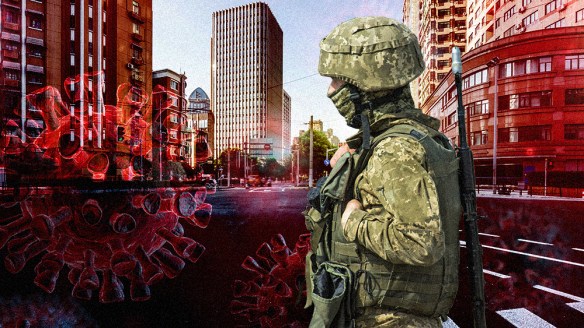
Cyber Forces Manipulate Public Opinion

By Vladimir Platov

Source: New Eastern Outlook

The influence on public opinion is one of the primary functions of the information space, presented today not only by TV, radio and print media, but also by the Internet and social networks. Therefore, it isn’t surprising that the CIA is especially focused on obtaining control of the information field and seeks ways to influence it. Thus, in the middle of the last century, the agency began a large-scale secret operation named Mockingbird on the territory of the U.S. and abroad. Most of the documents related to said operation are still classified. The purpose of Operation Mockingbird was to secure the CIA’s control over the media and the information space in America and beyond by establishing an extensive network of agents in leading publications, news outlets, radio and television all around the world.

After numerous pieces of evidence of illegal CIA activities in the media, including those executed through Operation Mockingbird, a special working group called the Church Committee (named after Senator Frank Forrester Church III, a Democrat from Idaho) was established in 1975 in the U.S. Senate. The Commission was later transformed into the Senate’s Select Committee on Intelligence.

In 1976, the Committee even prepared a separate report detailing the CIA’s interference into the U.S. and foreign media in order to misinform the public. In particular, the report notes: “The CIA currently maintains a network of several hundred foreign individuals around the world who provide intelligence for the CIA and at times attempt to influence opinion through the use of covert propaganda. These individuals provide the CIA with direct access to a large number of newspapers and periodicals, scores of press services and news agencies, radio and television stations, commercial hook publishers, and other foreign media outlets.”

After investigations and hearings held by the U.S. Congress, it was decided to forbid the CIA to continue Operation Mockingbird. In 1976, George W. Bush, appointed director of the CIA, even announced the following new policy: “Effective immediately, the CIA will not enter into any paid or contractual relationship with any full‑time or part‑time news correspondent accredited by any U.S. news service, newspaper, periodical, radio or television network or station.” However, he added that the CIA will continue to ‘value’ voluntary cooperation with journalists, which is obviously always influenced by money.

Many experts are convinced that Operation Mockingbird has not been completely terminated and is being carried out not only through traditional media, but also in the cyberspace. The operation’s main targets in its current form are all those who speak against the policy of the White House. From here arise numerous anti-Russian and xenophobic campaigns of the U.S. special services, which preserve the CIA’s traditions of working not only with journalists, but also with social networks controlled by Washington.

A large-scale research “The Global Disinformation Order 2019: Global Inventory of Organised Social Media Manipulation” was carried out recently by Oxford University. It focuses on the ways public opinion is swayed by via the Internet and social networks. In the resulting report, the researchers showed that the number of countries where attempts of organized manipulation of public opinion with the help of social networks were detected has more than doubled since 2017. The authors registered 28 such countries back then, and the number went up to 48, then 70 in 2018 and 2019 respectively. 25 countries cooperate with private Internet companies to disseminate propaganda on the Internet.  The most popular among them is Facebook, and the second most popular platform for attempts at manipulation is Twitter. At the same time, the researchers found that 56 countries, in one way or another, have organized campaigns to misinform users of social networks. The leading perpetrators are the United States and the United Kingdom.

Today many countries possess special cyber forces, whose representatives use social networks to try and influence the opinion of Internet users from certain countries, different religions and political beliefs. Special attention is paid to such efforts in the Pentagon and American security services. Only Americans (ideally those who know the language of the country being manipulated) are involved in these activities. The CIA’s website even has a detailed description of the people who can apply for such jobs. In order to further impact the public, today the FBI is even trying to recruit Russians living in the United States through social networks (in particular, Facebook), as reported by CNN.

Anti-Russian sentiment of the main direction of Operation Mockingbird is evidenced by several media outlets which are independent from Washington. The same goals are pursued today by U.S. intelligence agencies. “The U.S. State Department considers the battle against state-run media from Russia, Iran and China one of its top priorities,” said Acting U.S. Deputy Secretary of State Heather Nauert in March 2018. That is why the U.S. budget for fiscal year 2019 includes $661 million meant to finance the BBG (Broadcasting Board of Governors), which is engaged in anti-Russian propaganda. The White House project for the budget of the U.S. government in 2021 entails the allocation of $700 million for the information war ‘against Russia’s destructive influence.’

Britain is not behind the United States in waging a hybrid war. A special unit in the British cyber forces is called JTRIG, and it is this unit’s ‘specialists’ who quite often carry out propagandistic cyber operations, which have recently most often been directed against Russia. Among these are the anti-Russian fuss around Skripal poisoning, groundless accusations of Russia’s alleged involvement in the crash of the Malaysian plane MH-17 over Donetsk, and accusations of Moscow’s aggressive actions in Syria. Such work is done using both the cyberspace, as well as media which are loyal to London. The 77th brigade of these troops is working specifically on Twitter. They actively attempt to undermine the users’ faith in their own beliefs, trying to convey ‘their thoughts’ by appealing to emotions. Further promotion of the propagandistic struggle against Russia, £18 million is going to be spent by the British government on ‘counteraction’ in Eastern Europe and on strengthening the ‘independent media’ in the Western Balkans. This was reported by the press service of the British Foreign Office.

NATO also has a cyber force, which includes over 13,000 military personnel. The organization is called CCDCEO and is located in Tallinn.

Governments have long used propaganda, but digital tools have made it more complex and effective. Over the past few years, intelligence agencies have mirrored the experience of activists in using social media to disseminate information and are now actively using these methods. Additionally, interactive tools, such as data analysis software, allow for adapting cyber warfare to be more effective against certain groups of people, maximizing its impact.

Welcome to the New Communist Police State, blamed on a virus

By Scott Baker

Source: OpEdNews.com

The draconian measures being taken or certainly being talked about – food rationing?!– will end up killing more people than the virus.

How many elderly will die because their caregivers can’t get to them (bye bye meals on wheels)? How many people already on special diets won’t be able to maintain them and get sick as a result? (Me, I eat mostly fresh, unboxed/uncanned food, devoid of extra salt and sugar, instead of the cheap crap that only governments will pay for).

People will die from this too.

Think you can can substitute daily school lunches for actual school and not have the same infection rate? Forget it. It’ll slow it down for a couple of weeks at most. And in New York City, 74% of the children in public school are poor. Without school lunch they go hungry. With school lunch, and then a return to home, their parents – or parent, singular, since many come from single parent households – can’t work, they can’t staff our hospitals, clean our streets, or do any of the hundred things the Departments of Health say are necessary to contain the virus.

People will die from this too.

I’m not usually paranoid, but this seems to be a way of trapping people into a police state. Oh, and yeah, what happens to the actual police who have to enforce this regime of deprivation? Will they use force when someone wants to go for a jog? If they injure someone, who will treat them in the over-crowded hospitals? Supposedly, exercise is fine, but what if you want to go jogging or biking in a group? I am scheduled to lead a 50-person bike group around New York City the end of April. Is that against the laws now? Wait…what law? Expect court challenges…wait, what courts? They are all working remotely or not at all. Our Civil Rights are already gone but we just don’t know it yet. Where is the ACLU? They are silent. Rights for LGBT, for voting…wait, long lines at polling stations. That’s already forbidden. Ohio postponed its primary for today. A half dozen other states did as well.

And recessions kill. You can’t pay your bills. Evictions and utility shutoffs are supposedly illegal in our new communist state, but what happens when the landlord or utility can’t pay its bills? Yes I know, record profits for utilities in the last few years. But that went into buybacks. That wasn’t against the law and still isn’t. It SHOULD be but it wasn’t. And corporations are deep in debt now, and bankruptcies will follow in a week or so; it’s that close. The economy is being unraveled and government can’t, or won’t, even pass the first of dozens of mitigating bills in the New Communism. The New Communism includes tax breaks and bailouts for the largest corporations though, $850 billion worth, so the Administration has learned nothing. Worse, actually, the centerpiece of the proposal is to eliminate the payroll tax, which will save corporations many millions, might trickle down to the employee, unless the corporations pocket the extra, and won’t help those out of a job or working for tips at all. Even worse, it will gut Social Security and Medicare, already due to start running out of money in a few years, even during Trump’s next term – and yes, he will get another term unless Biden or Sanders can distinguish themselves by what they will do differently, AND we have a recession. But, getting back to Social Security and Medicare; Trump has already said he wants to rein in the costs (read: gut or eliminate the programs millions depend upon to survive). Trump wants a permanent underclass, not entitled to any entitlements, even those it earned. He wants the free-to-be-corrupt market to provide for your old age or illness, or to let you die if you don’t plan 40 years ahead, or anticipate cancer.

This is permanent. We are giving up our rights supposedly temporarily. But that’s what was said after 9/11, and we still have the Patriot Act and a permanent war footing. BTW, presidential candidate Tulsi Gabbard wants a $1,000/month guaranteed income for everyone. That would be much more in keeping with our Civil Rights and much more fair. But no one is listening to her in the MSM or debates,where she is excluded.

This is permanent. This will kill more people than the virus ever would.

So, again, more people will die from the measures to contain the virus – which will ultimately fail anyway – than from the virus itself.

Of Course Billionaires Shouldn’t Exist

By HipCrime Vocab

There’s apparently a row over whether billionaires should exist. That is, whether or not billionaires should be a thing in our society.

What a stupid question. Of course billionaires shouldn’t exist! But the reason has nothing to do with Socialism.

Rather, under a properly-functioning free-market capitalist system, billionaires shouldn’t exist. And that would have also been the opinion of the “Classical Liberals” so favored by the Right these days: Adam Smith, David Ricardo. Thomas Malthus, John Stuart Mill, and so on.

Billionaires are a sign of market failure.

Let me say that again: billionaires are a form of market failure! You cannot simultaneously be both pro-Market and pro-billionaire.

I’m amazed at how few people get this!

In a truly competitive market, excess profits would be competed away. Someone would come along and undercut outsize profits. That’s exactly how the Classical Liberals assumed free markets would work. In this, they saw markets as instruments of greater equality, not inequality, and certainly not as a way to construct a new and improved aristocracy even more powerful than the old one.

The Classical Liberals wrote in opposition to the main power centers of their day: aristocratic government and chartered monopolies like the East India Company. They didn’t see the purpose of their writings as defending privilege and power. One can dispute the end results, but that was not their goal. Quite the contrary. The idea that a single, solitary individuals would possess more wealth than the kings and pharaohs of old under a functioning free market system would have been unthinkable to them.

In their time, much of the national wealth was monopolized by a landed aristocracy who gained their wealth through disproportionate ownership of the country’s productive land. The other major source of wealth came from large joint-stock companies that were granted royal monopolies due to their political connections. Yet another source of unearned wealth came from the holders of bonds (gilts)—essentially loaning money to the state and getting the government’s tax revenues funneled to them via interest payments.

Classical English Liberals felt that competitive markets would do away with a good portion of the unearned and unproductive wealth common in Great Britain at the time. They believed that “free and open” markets would channel wealth and activity to more productive ends. That is, they would break up large pools of wealth and unproductive money. The kind of obscene fortunes that they saw in their day would no longer be possible thanks to competition, they assumed, and that British society would become more equal than it was under landed aristocracy, not less. We can dispute their logic (and I have issues with it), but I think we can safely say that this is what they believed, rightly or wrongly.

An inherent part of their conception of free markets is the possibility of failure. Unproductive or inefficient businesses would be competed away, they assumed, and the fortunes earned through such activities would disappear. But that is not the case today. Billionaires have so much money they can literally never lose it! That’s not capitalism, that’s aristocracy. I read recently that someone like Bill Gates literally cannot give away money to his pet causes fast enough to reduce his fortune even if he tried. In fact, he’s grown wealthier even while giving away billions.

The important point about [Adam] Smith’s system, on the other hand, is that it precluded steep inequalities not out of a normative concern with equality but by virtue of the design that aimed to maximize wealth. Once we put the building blocks of his system together, concentration of wealth simply cannot emerge.

In Smith, profits should be low and labor wages high, legislation in favor of the worker is “always just and equitable,” land should be distributed widely and evenly, inheritance laws should partition fortunes, taxation can be high if it is equitable, and the science of the legislator is necessary to thwart rentiers and manipulators.

Political theorists and economists have highlighted some of these points, but the counterfactual “what would the distribution of wealth be if all the building blocks were ever in place?” has not been posed. Doing so encourages us to question why steep inequality is accepted as a fact, instead of a pathology that the market economy was not supposed to generate in the first place.

Contrary to popular and academic belief, Adam Smith did not accept inequality as a necessary trade-off for a more prosperous economy (LSE Blogs)

Yet today the people who call themselves the heirs to “Classical English Liberals” emphatically defend the existence of billionaires and extreme inequality at every turn. Such people are not pro-market or pro-capitalism as they like to portray themselves; they are simply pro-wealth, or—to use a less complementary term—bootlickers. They are not defending capitalism or Markets; what they really are defending is oligarchy, power, privilege, and hierarchy. As Corey Robin opined, “The priority of conservative political argument has been the maintenance of private regimes of power,” with all the soaring rhetoric about markets and freedom being just a smokescreen and a cover for defending hierarchies and power imbalances. Their defense of billionaires is proof positive of this. This is true of presidential candidates as well.

The existence of obscene fortunes and extreme inequality are not a sign of capitalism’s success; they are a sign of capitalism’s failure.

This is pointed out by Chris Dillow:

“I don’t think anyone in this country should be a billionaire” said Labour’s Lloyd Russell-Moyle yesterday, at which the BBC’s Emma Barnett took umbrage. The exchange is curious, because from one perspective it should be conservative supporters of a free market who don’t want there to be billionaires.

I say so because in a healthy market economy there should be almost no extremely wealthy people simply because profits should be bid away by competition. In the textbook case of perfect competition there are no super-normal profits, and in the more realistic case of Schumpeterian creative destruction, high profits should be competed away quickly.

From this perspective, every billionaire is a market failure – a sign that competition has failed. The Duke of Westminster is rich because there’s a monopoly of prime land in central London. Would Ineos’ Jim Ratcliffe be so rich if pollution were properly priced, or if his firm faced more competition?

The Right’s Mega-Rich Problem (Stumbling and Mumbling)

How is this rectified? How do they square their supposed love of fair competition and free and open markets with the presence of outsize fortunes?

They don’t.

And the sad thing is how many people buy into their nonsense. Everyone seems to think that a defense of billionaires is a defense of capitalism.

It’s not. It’s the opposite.

What is a billionaire?

Billionaires are only made possible through monopolies and tollbooths. Period. And such monopolies are more possible than ever before thanks to technology.

This is argued by Matt Stoller, an expert on monopolies, in a post entitled, What Is A Billionaire?:

Most people think a billionaire is someone with a lot of money, a sort of Scrooge McDuck who goes swimming in a pool of gold coins. And why wouldn’t we? The name billionaire has the word billion contained within it, so clearly it means having a net worth of at least ten figures. And in a sense, that is technically true. But if you look at the top ranks of the Bloomberg billionaire index, you’ll notice that nearly all of the leaders are people who own a corporation with substantial amounts of market power in one or more markets.

Billionaires use market power to extract revenue the way that a tollbooth operator does.
 If you want to drive on a road, you have to pay for the privilege. It costs the tollbooth operator nothing, he/she just has a strategic chokepoint for extraction. Billionaire Warren Buffett, for instance, has such a ‘tollbooth’ strategy for investing, though he uses the term ‘moat’ because it sounds charming and quirky rather than rapacious.

Put another way, the Bloomberg billionaire index isn’t a list of the most important Scrooge McDuck’s, it’s a list of the biggest tollbooth operators in the world.

What he’s saying is that one becomes a billionaire only by short-circuiting the competitive market economy. Then their profits cannot be competed away. Only by gaming the system can one “earn” over a billion dollars. No one person is that valuable.

Stoller goes on to elucidate the operational tactics used by both Bill Gates and by his predecessor John D. Rockefeller, and finds that even though the industries are radically different, the techniques of short-circuiting and circumventing market competition are the same. Whether it’s horizontal and vertical integration, or using market influence to price out rivals, or exclusive contracts, the techniques are the same regardless of industry or time period:

In 1976 and 1980, Congress allowed the copyrighting of software. IBM had been under aggressive antitrust investigation and litigation since 1967, so when it built a personal computer, it outsourced the operating system – MS-DOS – to Gates’s company and allowed Gates to license it to other equipment makers. (Gates’s upbringing didn’t hurt; the CEO of IBM at the the time knew his mother.) Such a relationship with a vendor was a shocking change for IBM, which had traditionally made everything in-house or tightly controlled its suppliers. But IBM treated Microsoft differently, transferring large amounts of programming knowledge to the small corporation. IBM also did this with the microprocessor company Intel, which IBM protected from Japanese competition.

And yet, in 1982, the Department of Justice dropped the antitrust suit against IBM, signaling a new pro-concentration framework. Bill Baxter, Reagan’s antitrust chief, did not want to bring monopolization suits, and did not. The new fast-growing technology space of personal computers would be a monopolized industry. But it would not be monopolized by IBM, which had kept control of the computing industry since the 1950s, because IBM’s corporate structure was now skittish about the raw use of power. And it would not be monopolized by AT&T, which was kept out of the computing industry by a 1956 consent decree that lasted until 1984. Gates, in many ways, had a greenfield, an environment friendly to monopoly but one in which all the old monopolists had been cleared out by antitrust actions.

In the case of Amazon, even though it theoretically has competition, through vertical and horizontal integration it can effectively control online e-commerce to a large degree. The result is a fortune greater than that of entire nation-states controlled by a single individual. One hardly imagines that Adam Smith would approve.

I read an interesting concept, and I forget where it came from. It was that networks are natural monopolies. This explains things like Facebook, Apple, Amazon, etc. It’s entirely possible that the online world, due to features inherent in the technology, simply cannot be regulated by normal competition the way the market for goods and services can. Yet all our theories pretend that it can. It’s delusional.

Under these scenarios,’ profits’ are really a form of tribute (or perhaps plunder). In fact, we really shouldn’t even use the word ‘profits’ to describe them (just like we shouldn’t use ‘trade’ to describe global wage arbitrage).

And there are many more examples of competition being limited by deliberate legal policy. Much of Microsoft’s profits come from the fact that other people can’t copy their software—which they’ve arbitrarily labeled “piracy”—without facing legal repercussions enforced by the state and its legal system. In that sense, outsized fortunes are a consequence of laws, and not a feature inherent to technology:

…inequality is not in fact driven by technology, it is driven by our policy on technology, specifically patent and copyright monopolies. These forms of protection do not stem from the technology, they are policies created by a Congress which is disproportionately controlled by billionaires.

If the importance of these government granted monopolies is not clear, ask yourself how rich Bill Gates would be if any start-up computer manufacturer could produce millions of computers with Windows and other Microsoft software and not send the company a penny. The same story holds true with most other types of technology. The billionaires get rich from it, not because of the technology but because the government will arrest people who use it without the patent or copyright holder’s permission.

This point is central to the debate on the value of billionaires. If we could get the same or better technological progress without making some people ridiculously rich, then we certainly don’t need billionaires. But in any discussion of the merits of billionaires, it is important to understand that they got their wealth because we wrote rules that allowed it. Their immense wealth was not a natural result of the development of technology.

Farhad Manjoo promotes billionaire ideology in proposal to get rid of billionaires (Dean Baker, Real World Economic Review)

Baker has also pointed out that outsized salaries in many fields are determined by limiting competition though things like wildly expensive education and licensing requirements, which are ultimately determined by the government. Doctors and lawyers do not have compete against the wage rates in India or China thanks to the legal system, for example. Everyone else, however, is required to compete against the entire world for jobs.

On a global level, most billionaires are not the result of “hard work” or doing things beneficial for their society:

The vast majority of the world’s billionaires have not become rich through anything approaching ‘productive’ investment. Oxfam has showed that, approximately one third of global billionaire wealth comes from inheritance, whilst another third comes from ‘crony connections to government and monopoly’.

Why on Earth Shouldn’t People Be Able to Be Billionaires? (Novara Media)

And the monopolies that allow billionaires to exist are not good for the economy as a whole. In fact, they are highly detrimental, as Chris Dillow further points out:

What’s more, monopoly pricing is a form of tax – a tax which often falls upon other, smaller businesses…In this sense, not only are billionaires a symptom of an absence of a healthy competitive economy, but they are also a cause of it: their taxes on other firms restrict growth and entrepreneurship…

Tories are wrong, therefore, to portray attacks on the mega-rich as the politics of envy. It’s not. The existence of billionaires is a sign and cause of a dysfunctional economy…

In fact, logically, it is rightists who should be most concerned by the concentration of wealth. We lefties can point to it as evidence that the system is rigged. But Tories should worry that it undermines the legitimacy of the existing order not only because people don’t like inequality, but because it slows down economic growth and so encourages demands for change.

Furthermore, their existence is detrimental politically:

Controlling society’s wealth effectively gives the wealthy the right to plan economic activity. Billionaires – and the people who manage their money – determine which governments can access borrowing, which companies deserve to grow, and which ideas should be researched. This gives them an immense amount of political, as well as economic, power – allowing billionaires to provide favours to those politicians who helped them get rich in the first place.

Ultimately, the monopolisation of society’s resources by a tiny, closed-off elite means that most of society’s resources are used for dirty, unsustainable and unproductive speculation.

Why on Earth Shouldn’t People Be Able to Be Billionaires? (Novara Media)

In fact, the proliferation of billionaires in the developed world has accompanied a period of slow growth and stagnation, not rapid growth. As has been pointed out ad nauseum, yet still fails to sink in, America’s fastest period of growth came when there were fewer billionaires and tax rates ranged from 50 to 90 percent. There is no evidence that the proliferation of billionaires has benefited society as whole. And now, billionaires are attempting to buy political offices outright, making a joke of democracy.

People defending billionaires are only defending raw power, not capitalism, not democracy, and certainly not free markets.

Stoller concludes:

[Billionaires] are not people with a bunch of dollar bills stacked to the moon, they are (largely) men with a strategic position of power protected by public laws and rules. They aren’t better or smarter than anyone else, they are simply politically adept and in the right place at the right time. There’s no reason we have to enable such people to run our culture. At the end of the day, tollbooths are nothing but bottlenecks on a road on which we would otherwise travel faster and more freely.

What is a Billionaire? (Matt Stoller)

So, should there be billionaires? The answer is no. And you should believe that if you consider yourself a libertarian free marketeer or a democratic socialist. Anyone asserting anything else is just a bootlicker or a toady.

Addendum:

Here’s a good piece explaining how billionaires are basically mad kings:

…one of civilization’s great challenges stems from millionaire rhyming with billionaire. In holding them in the same linguistic corner of our minds, we conflate them, yet they’re so mathematically distinct as to be unrelated. A millionaire can, with some dedicated carelessness, lose those millions. Billionaires can be as profligate and eccentric as they wish, can acquire, without making a dent, all the homes and jets and islands and causes and thoroughbreds and Van Goghs and submarines and weird Beatles memorabilia they please. Unless they’re engaging in fraud or making extremely large and risky investments, they’re simply no match for the mathematical and economic forces—the compounding of interest, the long-term imperatives of markets—that make money beget more money. They can do pretty much whatever they want in this life, and therein lies the distinction. A millionaire enjoys a profoundly lucky economic condition. A billionaire is an existential state.

This helps explain the cosmic reverence draped over so many billionaires, their most banal notions about innovation and vision repackaged as inspirational memes, their insights on markets and customers spun into best sellers. Their extravagances are so over the top as to inspire legend more often than revolution…

The Gospel of Wealth According to Marc Benioff (Wired)

One of the most potent demonstrations that the modern-day rich are mad kings, comes form the story of Adam Neumann of WeWork. This is the impression I got from the Behind the Bastards podcast on Neumann: The Idiot Who Made, and Destoryed, WeWork (Podtail)

US Intel Agencies Played Unsettling Role in Classified and “9/11-like” Coronavirus Response Plan

Medical personnel arrive to perform COVID-19 coronavirus infection testing procedures at Glen Island Park, Friday, March 13, 2020, in New Rochelle, N.Y. (AP Photo/John Minchillo)

As coronavirus panic grips the world, concern over government overreach is growing given the involvement of US intelligence agencies in classified meetings for planning the U.S.’ coronavirus response.

By Whitney Webb

Source: Mint Press News

As the COVID-19 coronavirus crisis comes to dominate headlines, little media attention has been given to the federal government’s decision to classify top-level meetings on domestic coronavirus response and lean heavily “behind the scenes” on U.S. intelligence and the Pentagon in planning for an allegedly imminent explosion of cases.

The classification of coronavirus planning meetings was first covered by Reuters, which noted that the decision to classify was “an unusual step that has restricted information and hampered the U.S. government’s response to the contagion.” Reuters further noted that the Secretary of the Department of Health and Human Services (HHS), Alex Azar, and his chief of staff had “resisted” the classification order, which was made in mid-January by the National Security Council (NSC), led by Robert O’Brien — a longtime friend and colleague of his predecessor John Bolton.

Following this order, HHS officials with the appropriate security clearances held meetings on coronavirus response at the department’s Sensitive Compartmentalized Information Facility (SCIF), which are facilities “usually reserved for intelligence and military operations” and — in HHS’ case — for responses to “biowarfare or chemical attacks.” Several officials who spoke to Reuters noted that the classification decision prevented key experts from participating in meetings and slowed down the ability of HHS and the agencies it oversees, including the Centers for Disease Control and Prevention (CDC), to respond to the crisis by limiting participation and information sharing.

It has since been speculated that the decision was made to prevent potential leaks of information by stifling participation and that aspects of the planned response would cause controversy if made public, especially given that the decision to classify government meetings on coronavirus response negatively impacted HHS’ ability to respond to the crisis.

After the classification decision was made public, a subsequent report in Politico revealed that not only is the National Security Council managing the federal government’s overall response but that they are doing so in close coordination with the U.S. intelligence community and the U.S. military. It states specifically that “NSC officials have been coordinating behind the scenes with the intelligence and defense communities to gauge the threat and prepare for the possibility that the U.S. government will have to respond to much bigger numbers—and soon.”

Little attention was given to the fact that the response to this apparently imminent jump in cases was being coordinated largely between elements of the national security state (i.e. the NSC, Pentagon, and intelligence), as opposed to civilian agencies or those focused on public health issues, and in a classified manner.

The Politico article also noted that the intelligence community is set to play a “key role” in a pandemic situation, but did not specify what the role would specifically entail. However, it did note that intelligence agencies would “almost certainly see an opportunity to exploit the crisis” given that international “epicenters of coronavirus [are] in high-priority counterintelligence targets like China and Iran.” It further added, citing former intelligence officials, that efforts would be made to recruit new human sources in those countries.

Politico cited the official explanation for intelligence’s interest in “exploiting the crisis” as merely being aimed at determining accurate statistics of coronavirus cases in “closed societies,” i.e. nations that do not readily cooperate or share intelligence with the U.S. government. Yet, Politico fails to note that Iran has long been targeted for CIA-driven U.S. regime change, specifically under the Trump administration, and that China had been fingered as the top threat to U.S. global hegemony by military officials well before the coronavirus outbreak.


A potential  “9/11-like” response

The decision to classify government coronavirus preparations in mid-January, followed by the decision to coordinate the domestic response with the military and with intelligence deserves considerable scrutiny, particularly given that at least one federal agency, Customs and Border Patrol (CBP), will be given broad, sweeping powers and will work closely with unspecified intelligence “partners” as part of its response to a pandemics like COVID-19.

The CBP’s pandemic response document, obtained by The Nation, reveals that the CBP’s pandemic directive “allows the agency to actively surveil and detain individuals suspected of carrying the illness indefinitely.” The Nation further notes that the plan was drafted during the George W. Bush administration, but is the agency’s most recent pandemic response plan and remains in effect.

Though only CBP’s pandemic response plan has now been made public, those of other agencies are likely to be similar, particularly on their emphasis on surveillance, given past precedent following the September 11 attacks and other times of national panic. Notably, several recent media reports have likened coronavirus to 9/11 and broached the possibility of a “9/11-like” response to coronavirus, suggestions that should concern critics of the post-9/11 “Patriot Act” and other controversial laws, executive orders and policies that followed.

While the plans of the federal government remain classified, recent reports have revealed that the military and intelligence communities — now working with the NSC to develop the government’s coronavirus response — have anticipated a massive explosion in cases for weeks. U.S. military intelligence came to the conclusion over a month ago that coronavirus cases would reach “pandemic proportions” domestically by the end of March. That military intelligence agency, known as the National Center for Medical Intelligence (NCMI), coordinates closely with the National Security Agency (NSA) to conduct “medical SIGINT [signals intelligence].”

The coming government response, the agencies largely responsible for crafting it and its classified nature deserve public scrutiny now, particularly given the federal government’s tendency to not let “a serious crisis to go to waste,” as former President Obama’s then-chief of staff Rahm Emanuel infamously said during the 2008 financial crisis. Indeed, during a time of panic — over a pandemic and over a simultaneous major economic downturn — concern over government overreach is warranted, particularly now given the involvement of intelligence agencies and the classification of planning for an explosion of domestic cases that the government believes is only weeks away.


A Shaky Foundation

By Michael Krieger

Source: Liberty Blitzkrieg

And so castles made of sand fall in the sea, eventually.
– Jimi Hendrix

There’s a widespread belief out there that the U.S. and the global economy in general is on much sounder footing ever since the financial crisis of a decade ago. Unfortunately, this false assumption has resulted in widespread complacency and elevated levels of systemic risk as we enter the early part of the 2020s.

All it takes is a cursory amount of research to discover nothing was “reset” or fixed by the government and central bank response to that crisis. Rather, the entire response was just a gigantic coverup of the crimes and irresponsible behavior that occurred, coupled with a bailout designed to enrich and empower those who needed and deserved it least.

Everything was papered over in order to resuscitate a failed paradigm without reforming anything. Since it was all about pretending nothing was structurally wrong with the system, the response was to build more castles of sand on top of old ones that had unceremoniously crumbled. The whole event was a huge warning sign and opportunity to change course, but it was completely ignored. Enter novel coronavirus.

I’ve been concerned about the coronavirus outbreak from the start, and have been tweeting about it consistently for well over a month.

This observation proved prescient within just a few weeks, as the U.S. Centers for Disease Control (CDC) screwed up its early response to the pandemic in the most sloppy and unimaginable way possible. For whatever reason, the CDC instituted ridiculously stringent guidelines for testing potential infections by limiting testing to only those who recently traveled from China or had contact with someone known to be infected. The CDC continued to stick to these insane guidelines as the disease began to spread rapidly all over the world, particularly in South Korea and Italy.

The event that finally prompted the CDC to change its guidelines was the emergence of the first confirmed incidence of community spread coronavirus in the U.S., which occurred in northern California. The health professionals caring for that patient had requested testing days earlier, but the CDC rejected the initial request, putting medical staff and others at risk for no good reason. On top of all that, the limited testing kits the CDC had sent out didn’t work properly. The level of incompetence and failure we’ve seen from the CDC is almost hard to fathom, but given how hollowed out and corrupt our society has become, shouldn’t be surprising.

At this point, nobody knows what the eventual impact of the coronavirus on the planet will be. Anyone who says they know for sure is lying, but I think we should be taking it very seriously given the potential tail risks. A global pandemic is an uncertain and dangerous thing in the most robust and healthy of systems, but the consequences within a fragile house of cards system such as ours can be devastating.

A month ago, stock market valuations were near the highest ever and interest rates were near the lowest they’ve been in recorded human history. A gigantic “everything bubble” of historic proportions had been blown and investors were flying too close to the sun. It was a balloon looking for a pin, and it found one in the coronavirus. Nobody knew what the pin would be, which is exactly why the stock market collapsed so rapidly the moment investors began to appreciate the gravity of the situation. The fragility of the financial markets should be taken as a warning sign with regard to the rest of the system.

Financial assets have been intentionally blown to nonsensical levels in order to coverup the massive rot underneath. They’ve been masking the fact that much of the underlying economy consists of little more than financial engineering scams and war-making enterprises. The imperial oligarchy we live under is an utterly rotten, corrupt, and fragile superstructure that’s been carefully hidden for ten years under a facade of euphoric markets and a mass of debt-based consumption slaves.

The coronavirus itself should be seen in this context. The global system as it exists is simply not prepared for anything like this, but the reality is things like this do occur from time to time. Maybe we’ll get lucky and avoid the worst case scenario with this virus, but that’s not the point. There will always be other pins, and when your entire superstructure is fundamentally fragile and led by mediocre, corrupt sociopaths, it doesn’t take much to bring it down faster than you can imagine.

We stand at a moment where the fragility of our Potemkin Village paradigm will increasingly confront the harsh realities of meatspace. Coronavirus is a warning. It’s exposing a lot already, and will likely expose far more as it continues to spread. It’s exposing our ridiculous financial bubbles, it’s exposing the fact the U.S. can’t even manufacture its own surgical masks or medicines, and it’s exposing the clownish ineptitude of our leaders and institutions.

It’s important we take this warning to heart and do something useful with it. It’s crucial we understand that the current paradigm is long past its useful life and likely won’t be hanging around much longer. Don’t cry or experience nostalgia for what was, rather, get your stuff together so you can help build and usher in the new world to come.

Those too attached to the way things have been will have a particularly hard time adjusting to the turbulent times ahead, so you want to do whatever you can in order to avoid being in that group. Change doesn’t have to be bad, but resistance to change can be deadly. Don’t allow yourself to be a casualty.

The Economic Cataclysm Ahead

By Charles Hugh Smith

Source: Of Two Minds

The economic storm hasn’t passed; the false calm is only the eye of the financial hurricane.

To understand the economic cataclysm ahead, do the math. Those expecting the Covid-19 pandemic to leave the U.S. economy untouched are implicitly making these preposterously unlikely claims:

1. China will resume full pre-pandemic production and shipping within the next two weeks.

2. Chinese consumers will resume borrowing and spending at pre-pandemic rates in a few weeks.

3. Every factory and every worker in China will resume full pre-pandemic production without any permanent closures or disruptions.

4. Corporate America’s just-in-time inventories will magically expand to cover weeks or months of supply chain disruption.

5. Not a single one of the thousands of people who flew direct from Wuhan to the U.S. in January is an asymptomatic carrier of the coronavirus who escaped detection at the airport.

6. Not a single one of the thousands of people who flew from China to the U.S. in February is an asymptomatic carrier of the coronavirus.

7. Not a single one of the thousands of people who are in self-quarantine broke the quarantine to go to Safeway for milk and eggs.

8. Not a single person who came down with Covid-19 after arriving in the U.S. feared being deported so they did not go to a hospital and are therefore unknown to authorities.

9. Even though U.S. officials have only tested a relative handful of the thousands of people who came from Covid-19 hotspots in China, they caught every single asymptomatic carrier.

10. Not a single asymptomatic carrier caught a flight from China to Southeast Asia and then promptly boarded a flight for the U.S.

I could go on but you get the picture: an extremely contagious pathogen that is spread by carriers who don’t know they have the virus to people who then infect others in a rapidly expanding circle has been completely controlled by U.S. authorities who haven’t tested or even tracked tens of thousands of potential carriers in the U.S.

These same authorities are quick to claim the risk of Covid-19 spreading in the U.S. is low even as the 14 infected people they put on a plane ended up infecting 25 passengers on the flight. These same authorities tried to transfer quarantined people to a rundown facility in Costa Mesa CA that was not suitable for quarantine, forcing the city to file a lawsuit to stop the transfer.

Do these actions instill unwavering confidence in the official U.S. response? You must be joking.

Do the math, people. The coronavirus is already in the U.S. but authorities have no way to track it due to its spread by asymptomatic carriers. People who don’t even know they have the virus are flying to intermediate airports outside China and then catching flights to the U.S.

None of the known characteristics of the virus support the confidence being projected by authorities. The tests are not reliable, few are being tested, carriers can’t be detected because they don’t have any symptoms, the virus is highly contagious, thousands of potential carriers continue to arrive in the U.S., etc. etc. etc.

The network of global travel remains intact. Removing a few nodes (Wuhan, etc.) does not reduce the entire network’s connectedness that enables the rapid and invisible spread of the virus.

Second, what authorities call over-reaction is simply prudent risk management. As I noted yesterday in How Many Cases of Covid-19 Will It Take For You to Decide Not to Frequent Public Places?, when an abstract pandemic becomes real, shelves are emptied and streets are deserted.

It doesn’t take thousands of cases to trigger a dramatic reduction in the willingness to mix with crowds of strangers. A relative handful of cases is enough to be consequential.

Many of the new jobs created in the U.S. economy over the past decade are in the food and beverage services sector, the sector that is immediately impacted when people decide to lower their risk by staying home rather than going out to crowded restaurants, theaters, bars, etc.

Many of these establishments are hanging on by a thread due to soaring rents, taxes, fees, healthcare and wages. Many of the employees are also hanging on by a thread, only making rent if they collect big tips.

Central banks can borrow money into existence but they can’t replace lost income. A significant percentage of America’s food and beverage establishments are financially precarious, and their exhausted owners are burned out by the stresses of keeping their business afloat as costs continue rising. The initial financial hit as people reduce their public exposure will be more than enough to cause many to close their doors forever.

As small businesses fold, local tax revenues crater, triggering fiscal crises in local government budgets dependent on ever-higher tax and fee revenues.

A significant percentage of America’s borrowers are financially precarious, one paycheck or unexpected expense away from defaulting on student loans, subprime auto loans, credit card payments, etc.

A significant percentage of America’s corporations are financially precarious, dependent on expanding debt and rising cash flow to service their expanding debt load. Any hit to their revenues will trigger defaults that will then unleash second-order effects in the global financial system.

The global economy is so dependent on speculative euphoria, leverage and debt that any external shock will tip it over the cliff. The U.S. economy is far more precarious than advertised as well.

The economic storm hasn’t passed; the false calm is only the eye of the financial hurricane.

Why this Draconian Response to COVID-19?

By Jeffrey A. Tucker

Source: Activist Post

Imagine if you are the organizer of a major arts and tech event that attracts a quarter-million attendees. One week out from the conference, the mayor cancels your event. Your event is not named specifically, just that all events involving more than 2,500 people are officially banned. He does this using emergency powers, justified in the name of containing a virus.

And that’s it. This is what happened to South by Southwest, one of the most important events in the world in Austin, Texas, which has thus far not reported a single case of COVID-19. Based on last year’s numbers, It’s the end for:

  • 73,716 conference attendees and 232,258 festival attendees;
  • 4,700 speakers
  • 4,331 media/press attendees
  • 2,124 sessions
  • 70,00 trade show attendees occupying 181,400 square feet of exhibit space
  • 351 official parties and events
  • 612 international acts
  • 1,964 performance acts

Local merchants are devastated. All hotel and flight reservations are lost. It’s a financial calamity for the city (last year brought half a billion dollars for local merchants) and for untold millions of people affected by the abrupt decision.

Draconian, to say the least.

Making matters worse, a vicious and completely false report published by Variety said that the festival was aching for the city to make the call so that the festival could collect insurance money. This turns out to be entirely wrong: South by Southwest had no insurance against infectious disease. It was a smear and response to mass frenzy. After all, a petition on Change.org signed by 55,000 people had demanded the cancellation.

The city acquiesced to the mob. A grand and glorious conference was destroyed – the first of many this season.

Italy now has 16 million people under quarantine, which is to say that they are prisoners.

Anyone living in Lombardy and 14 other central and northern provinces will need special permission to travel. Milan and Venice are both affected. Prime Minister Giuseppe Conte also announced the closure of schools, gyms, museums, nightclubs and other venues across the whole country. The measures, the most radical taken outside China, will last until 3 April.

Americans have been quarantined on cruise ships and then forced to pay for their later hospitalization. The government that quarantines you has zero intention to pay the costs associated with your care, to say nothing of the opportunity costs of missing work.

The press isn’t helping. The New York Times has cheered it all on, aggressively advocating that governments go Medieval on this one.

In six months, if we are in a recession, unemployment is up, financial markets are wrecked, and people are locked in their homes, we’ll wonder why the heck governments chose disease “containment” over disease mitigation. Then the conspiracy theorists get to work.

The containment strategy was never debated or discussed. For the first time in modern history, governments of the world have taken it upon themselves to control population flows in the hopes of stemming the spread of this disease – regardless of the cost and with scant evidence that this strategy will actually work.

More and more, the containment response is looking like global panic. What’s interesting, Psychology Today points out, is that your doctor is not panicking:

COVID-19 is a new virus in a well-known class of viruses. The coronaviruses are cold viruses. I’ve treated countless patients with coronaviruses over the years. In fact, we’ve been able to test for them on our respiratory panels for the entirety of my career.

We know how cold viruses work: They cause runny noses, sneezing, cough, and fever, and make us feel tired and achy. For almost all of us, they run their course without medication. And in the vulnerable, they can trigger a more severe illness like asthma or pneumonia.

Yes, this virus is different and worse than other coronaviruses, but it still looks very familiar. We know more about it than we don’t know.

Doctors know what to do with respiratory viruses. As a pediatrician, I take care of patients with hundreds of different viruses that behave similarly to this one. We take care of the kids at home and see them if the fever is prolonged, if they get dehydrated, or if they develop breathing difficulty. Then we treat those problems and support the child until they get better.

Meanwhile, the New England Journal of Medicine reports as follows:

On the basis of a case definition requiring a diagnosis of pneumonia, the currently reported case fatality rate is approximately 2%. In another article in the Journal, Guan et al. report mortality of 1.4% among 1,099 patients with laboratory-confirmed Covid-19; these patients had a wide spectrum of disease severity. If one assumes that the number of asymptomatic or minimally symptomatic cases is several times as high as the number of reported cases, the case fatality rate may be considerably less than 1%. This suggests that the overall clinical consequences of Covid-19 may ultimately be more akin to those of a severe seasonal influenza (which has a case fatality rate of approximately 0.1%) or a pandemic influenza (similar to those in 1957 and 1968) rather than a disease similar to SARS or MERS, which have had case fatality rates of 9 to 10% and 36%, respectively.

Slate’s piece on this topic offers more perspective:

This all suggests that COVID-19 is a relatively benign disease for most young people, and a potentially devastating one for the old and chronically ill, albeit not nearly as risky as reported. Given the low mortality rate among younger patients with coronavirus—zero in children 10 or younger among hundreds of cases in China, and 0.2-0.4 percent in most healthy nongeriatric adults (and this is still before accounting for what is likely to be a high number of undetected asymptomatic cases)—we need to divert our focus away from worrying about preventing systemic spread among healthy people—which is likely either inevitable, or out of our control—and commit most if not all of our resources toward protecting those truly at risk of developing critical illness and even death: everyone over 70, and people who are already at higher risk from this kind of virus.

Look, I’m obviously not in a position to comment on the medical aspects of this; I defer to the experts. But neither are medical professionals in a position to comment on the political response to this; mostly they have assiduously declined to do so.

Meanwhile, governments are willy-nilly making drastic decisions that profoundly affect the status of human freedom. Their decisions are going to affect our lives in profound ways. And there has thus far been no real debate on this. It’s just been presumed that containment of the spread rather than the care of the sick is the only way forward.

What’s more, we have governments all-too-willing to deploy their awesome powers to control human populations in direct response to mass public pressure based on fears that have so far not been justified by any available evidence. For this reason, we have every reason to be concerned.

Are we really ready to imprison the world, wreck financial markets, destroy countless jobs, and massively disrupt life as we know it, all to forestall some uncertain fate, even as we do know the right way to deal with the problem from a medical point of view? It’s at least worth debating.