In Gaza genocide, US defends Israel’s ‘aura of power’

As South Africa accuses Israel of genocide, the Biden administration endorses Israel’s bid to sow “fear” in Gaza’s defenseless civilians.
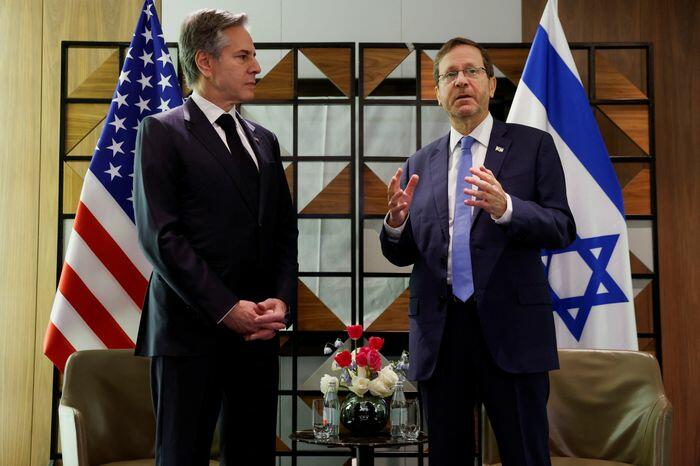
By Aaron Maté

Source: Aaron Maté Substack

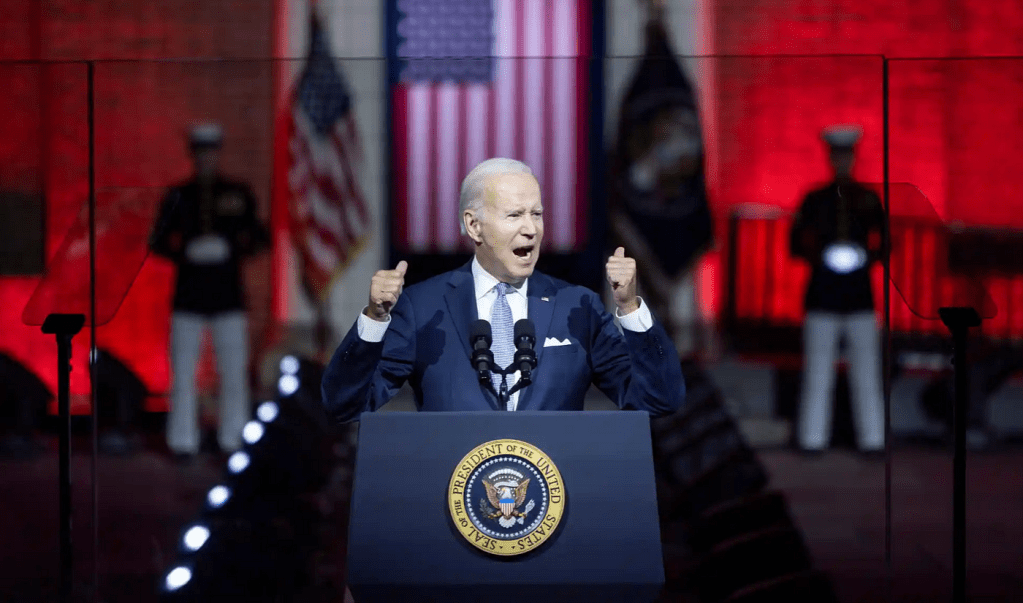
Days after South Africa filed a motion to the International Court of Justice accusing Israel of genocide against the Palestinians of Gaza, the Biden administration responded with indignation. The allegation, White House spokesperson John Kirby declared, is “meritless, counterproductive, and completely without any basis in fact whatsoever.”

South Africa’s 84-page submission is in fact exhaustive in its documentation of Israel’s mass murder campaign in Gaza and Israeli leaders’ open intention to carry it out. By contrast to this detailed intervention, Israel’s chief sponsor in Washington openly admits that it still refuses even minimal scrutiny of the extermination campaign that it is funding and arming.

Nearly three months into an Israeli assault that has relied on billions of dollars in US weaponry, the Biden administration has still “conducted no formal assessment of whether Israel is violating international humanitarian law,” Politico reports. While going out of its way to avoid this assessment, the Biden administration has gone around Congressional review to transfer $147.5 million in artillery shells and other gear to Israel – the second time it has invoked emergency powers to do so.

A senior administration official insists to Politico that there is nothing to worry about: “If you just look at what Israel is doing, they aren’t systematically targeting civilians.” Even if that were true, which it clearly is not, what is indisputable is that Israel is systematically killing civilians. As even President Biden blurted out last month, Israel is carrying out “indiscriminate bombing,” an unambiguous war crime. For this reason, the New York Times reports, when Biden offered that “not… scripted comment,” his blunder “sent aides scrambling to explain.”

How the White House is now scrambling to explain its view that Israel is not committing genocide or even violations of humanitarian law is even more revealing. According to Politico: “The U.S. came to that conclusion in part after looking at press reports and conversations with Israeli officials about their military operations.” Absent from the Biden administration’s list of source material is its own intelligence, which recently found that almost half of the munitions that Israel has dropped on Gaza have been indiscriminate “dumb” bombs that have predictably murdered countless civilians in their homes and shelters.

Instead, the US is only relying on “press reports” – but clearly not those documented in South Africa’s ICJ submission, which collects Israeli leaders’ genocidal rhetoric in nine pages of chilling detail (p. 59-67). That leaves “conversations with Israeli officials” – who, unsurprisingly, are not keen to admit that they are the 21st century’s worst war criminals.

Israel’s bombing campaign is accompanied by an unprecedented blockade that deprives Gaza of vital aid. According to Arif Husain, the chief economist at the United Nations World Food Program, “80% of the people [globally], or four out of five people, in famine or a catastrophic type of hunger are in Gaza right now.”

At the White House podium, Kirby said that he is “not aware of any kind of formal assessment being done by the United States government to analyze the compliance with international law by our partner Israel.” And given that Kirby has previously stated that the White House has “no red lines” when it comes to Israel’s conduct, that will remain the case. “We have not seen anything that would convince us that we need to take a different approach in terms of trying to help Israel defend itself,” he said.

But just as the US is fully aware that its partner Israel is committing genocide, the US is also aware that Israel’s professed “right to self-defense” against occupied territory has nothing to do with self-defense. Biden administration officials have admitted as much to one of their most reliable media mouthpiece since Oct. 7th, the New York Times. “The Americans say Israel’s forceful response… reflects the importance that it places on re-establishing deterrence against attacks from adversaries in the region,” the Times reported in November. “The Israeli military’s aura of power was shaken by the Oct. 7 attack, the officials say.”

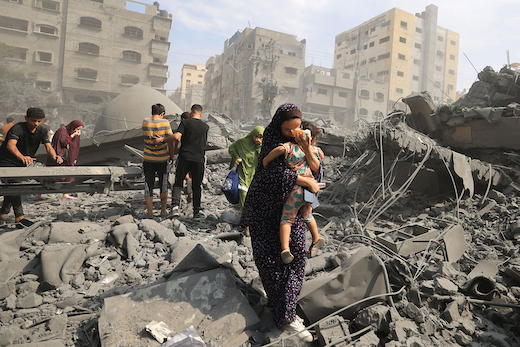
To restore Israel’s shaken “aura of power,” therefore, the empathetic Americans have given Israel a free pass to slaughter more than 22,000 defenseless civilians, all while pushing the two million survivors into famine and desperation.

This imperative of “deterrence” – establishing a monopoly on violence against occupied Palestinians and regional neighbors – has guided Israeli strategy since its inception.

As a divisional military commander in 1967, future Israeli Prime Minister Ariel Sharon voiced concern that Israel was losing its “deterrence capability,” which he defined as “our main weapon – the fear of us.”

In 1988, one month into the first Intifada, Defense Minister Yitzhak Rabin boasted that his policy of brutalizing demonstrating Palestinians was successfully employing Israel’s main weapon of fear. “The use of force, including beatings, undoubtedly has brought about the impact we wanted—strengthening the population’s fear of the Israel Defense Forces,” Rabin said.

When Israel launched Operation Cast Lead in December 2008, a three-week long assault that killed 1,400 Palestinians, including more than 300 children, in the Gaza Strip, Israel wielded the same weapon. According the New York Times, Israeli officials were guided by a “larger concern”: that their “enemies are less afraid of it than they once were or should be.” Therefore, the Times reported, “Israeli leaders are calculating that a display of power in Gaza could fix that,” using slain Palestinians civilians to “re-establish Israeli deterrence.”

The same imperative applies to Israel’s current extermination campaign in Gaza. In calling for “a war of unprecedented magnitude” on Gaza, former Israeli Prime Minister Naftali Bennett explained in October that “Israel’s future depends not on pity from the world, but on fear in the hearts of our enemies.”

In a new account of the Biden administration’s dealings with Israel, the New York Times again confirms that Israel seeks to preserve its monopoly on state terror. In Gaza, the Times explains, “strategically, Israel does not mind too much if the rest of the world thinks it is willing to go overboard with overwhelming force.” After all, Israel has spent more than a “half century… fostering the image of invincibility, an image shattered on Oct. 7. Israeli leaders want to reestablish the deterrence that was lost.”

Israel indeed need not mind that the world opposes its genocidal campaign when the world’s top superpower gives it free rein to “go overboard with overwhelming force” – the Times’ artful euphemism for state terror.

The White House continues to make this endorsement clear, even as it occasionally feigns concern about the civilian toll. According to the Times, “there is no serious discussion within the Biden administration about cutting Israel off or putting conditions on security aid.” The only “real debate” concerns “the language to use and how hard to push,” on marginal tactical issues. But no matter how many more civilians die, “no one inside is really pressing for a dramatic policy shift like suspending weapons supplies to Israel — if for no other reason than they understand the president is not willing to do so.”

Israel undoubtedly appreciates Biden’s unwillingness to stop the genocide. As Israel’s former US ambassador Michael Oren explains, Israel was “dependent on the United States,” after Oct. 7th. “And that meant they have a say in things.” The White House’s main contribution, Oren adds, is that “Biden has not used the two most obvious tools available to him to force Israel’s hand, namely the flow of U.S. arms to Israel and the U.S. veto at the U.N. Security Council that protects Israel from international sanctions.” According to White House insiders, while Biden and Netanyahu “are not truly friends,” both “understand each other’s politics and their mutual dependence at this point.”

Biden and Netanyahu’s mutual dependence only means that Israel must occasionally temper its savagery to meet US public relations needs. According to Times, Netanyahu “agreed to let humanitarian aid into Gaza as a condition for Mr. Biden visiting” Israel after Oct. 7th. In other words, Netanyahu let a trickle of humanitarian aid into the besieged Gaza death camp solely for the political benefit that a Biden visit could offer him. The Times offers this revelation in passing without further comment. In the view of the Times and its Biden administration sources, it is perfectly reasonable for Israel to block vital supplies to Gaza just to extract a gesture of US political support for its extermination campaign there.

In a recent opinion article for The Wall Street Journal, Netanyahu described his “three prerequisites for peace between Israel and its Palestinian neighbors in Gaza” as follows: “Hamas must be destroyed, Gaza must be demilitarized, and Palestinian society must be deradicalized.”

But Netanyahu’s vision of “peace” is predicated on exterminating his Palestinian neighbors in Gaza. Along with its bombing campaign and starvation siege, Israeli officials have openly called for ethnic cleansing. “What needs to be done in the Gaza Strip is to encourage emigration,” Israeli finance minister Bezalel Smotrich recently told Israeli Army Radio. “If there are 100,000 or 200,000 Arabs in Gaza and not 2 million Arabs, the entire discussion on the day after will be totally different.” According to The Times of Israel, Netanyahu has informed cabinet members that: “Our problem is [finding] countries that are willing to absorb Gazans, and we are working on it.”

Any serious “prerequisite for peace” therefore requires the inverse of Netanyahu’s strategy: the Israeli government must be demilitarized and Israeli society must be deradicalized. The same applies for the Biden administration, which is so radicalized that it openly flaunts its support for what South Africa calls “the physical destruction of Palestinians in Gaza,” all to help defend Israel’s “aura of power.”

Apocalypse Now: The Government’s Use of Controlled Chaos to Maintain Power

By John & Nisha Whitehead

Source: The Rutherford Institute

Figure One: Just stop a few of their machines and radios and telephones and lawn mowers…throw them into darkness for a few hours and then you just sit back and watch the pattern. 

Figure Two: And this pattern is always the same? 

Figure One: With few variations. They pick the most dangerous enemy they can find…and it’s themselves. And all we need do is sit back…and watch…and let them destroy themselves. — “The Monsters Are Due on Maple Street,” Twilight Zone

Will 2024 be the year the Deep State’s exercise in controlled chaos finally gives way to an apocalyptic dismantling of our constitutional republic, or what’s left of it?

All the signs seem to point in this direction.

For years now, the government has been pushing us to the brink of a national nervous breakdown.

This breakdown—triggered by polarizing circus politics, media-fed mass hysteria, militarization and militainment (the selling of war and violence as entertainment), a sense of hopelessness and powerlessness in the face of growing corruption, the government’s alienation from its populace, and an economy that has much of the population struggling to get by—has manifested itself in the polarized, manipulated mayhem, madness and tyranny that is life in the American police state today.

Why is the Deep State engineering this societal madness? What’s in it for the government?

What is playing out before us is a chilling lesson in social engineering that keeps the populace fixated on circus politics and conveniently timed spectacles, distracted from focusing too closely on the government’s power grabs, and incapable of standing united in defense of our freedoms.

It’s not conspiratorial.

It’s a power play.

Rod Serling, the creator of the Twilight Zone, understood the dynamics behind this power play.

In the Twilight Zone episode, “The Monsters Are Due on Maple Street,” Serling imagined a world in which the powers-that-be carry out a social experiment to see how long it would take before the members of a small American neighborhood, frightened by a sudden loss of electric power and caught up in fears of the unknown, will transform into an irrational mob and turn on each other.

It doesn’t take long at all.

Likewise, in Netflix’s apocalyptic thriller Leave the World Behind (produced by Barack and Michelle Obama’s studio), unexplained crises lead to a technological blackout that leaves the populace disconnected, disoriented, isolated, suspicious, and under attack from mysterious ailments and each other.

As one of Leave the World’s characters speculates, the culprit behind the escalating catastrophes, which range from WiFi outages and mysterious health ailments to cities under siege from rogue forces, may be the result of a military campaign intended to destabilize a nation by forcing people to turn against each other.

It’s really not so far-flung a scenario when you consider some of the many ways the government already has the ability to manufacture crises in order to sow fear, fuel hysteria, destabilize the nation and institute martial law.

The government has the tools and the know-how to manufacture health crises. Long before COVID-19 locked down the nation, the U.S. government was creating lethal viruses and unleashing them on an unsuspecting public.

The government has the tools and the know-how to manufacture civil unrest and political upheaval. Since the days of J. Edgar Hoover, the FBI has been using agent provocateurs to infiltrate activist groups in order to “expose, disrupt, misdirect, discredit and otherwise neutralize” them.

The government has the tools and the know-how to manufacture economic instability. As the national debt continues to rise upwards of $34 trillion, with little attempt by federal agencies to curtail spending, it stands as the single-most pressing threat to the economy.

The government has the tools and the know-how to manufacture environmental disasters. Deployed in 1947, Project Cirrus, an early precursor to HAARP, the government’s weather-altering agency, attempted to disable a hurricane as it was moving out to sea. Instead of weakening the storm, however, the government steered it straight into Georgia, resulting in millions of dollars in damaged properties.

The government has the tools and the know-how to manufacture communications blackouts. Internet and cell phone kill switches enable the government to shut down communications at a moment’s notice. It’s a practice that has been used before in the U.S. In 2005, cell service was disabled in four major New York tunnels (reportedly to avert potential bomb detonations via cell phone). In 2009, those attending President Obama’s inauguration had their cell signals blocked (again, same rationale). And in 2011, San Francisco commuters had their cell phone signals shut down (this time, to thwart any possible protests over a police shooting of a homeless man).

The government has the tools and the know-how to manufacture terrorist attacks. Indeed, the FBI has a pattern and practice of entrapment that involves targeting vulnerable individuals, feeding them with the propaganda, know-how and weapons intended to turn them into terrorists, and then arresting them as part of an elaborately orchestrated counterterrorism sting.

The government has the tools and the know-how to manufacture propaganda aimed at mind control and psychological warfare. Not long ago, the Pentagon was compelled to order a sweeping review of clandestine U.S. psychological warfare operations (psy ops) conducted through social media platforms. The investigation came in response to reports suggesting that the U.S. military had been creating bogus personas with AI-generated profile pictures and fictitious media sites on Facebook, Twitter and Instagram in order to manipulate social media users. Of the many weapons in the government’s vast arsenal, psychological warfare (or psy ops) can take many forms: mind control experiments, behavioral nudging, propaganda. In fact, the CIA spent nearly $20 million on its MKULTRA program, reportedly as a means of programming people to carry out assassinations and, to a lesser degree, inducing anxieties and erasing memories, before it was supposedly shut down.

We must never forget that the government no longer exists to serve its people, protect their liberties and ensure their happiness.

Rather, “we the people” are the unfortunate victims of the diabolical machinations of a make-works program carried out on an epic scale whose only purpose is to keep the powers-that-be permanently (and profitably) employed.

This is how tyranny rises and freedom falls.

Almost every tyranny being perpetrated by the U.S. government against the citizenry—purportedly to keep us safe and the nation secure—has come about as a result of some threat manufactured in one way or another by our own government.

Think about it: Cyberwarfare. Terrorism. Bio-chemical attacks. The nuclear arms race. Surveillance. The drug wars. Domestic extremism. The COVID-19 pandemic.

In almost every instance, the U.S. government has in its typical Machiavellian fashion sown the seeds of terror domestically and internationally in order to expand its own totalitarian powers.

Consider that this very same government has taken every bit of technology sold to us as being in our best interests—GPS devices, surveillance, nonlethal weapons, etc.—and used it against us, to track, trap and control us.

Are you getting the picture yet?

The U.S. government isn’t protecting us from threats to our freedoms.The U.S. government is creating the threats to our freedoms.

It’s telling that in Leave the World Behind, before disaster strikes, the main characters—on their way to a family vacation—are utterly oblivious, connected to their electronic devices and insulated from each other and the world around them. Adding to the disconnect, the family’s teen daughter, Rose, is fixated on binge-watching episodes of Friends, even as the world falls apart around them. As TV critic Jen Chaney explains, the sitcom’s presence in the story “underlines how human beings crave escapism at the expense of embracing the actual present, a different way of ‘leaving the world behind.’

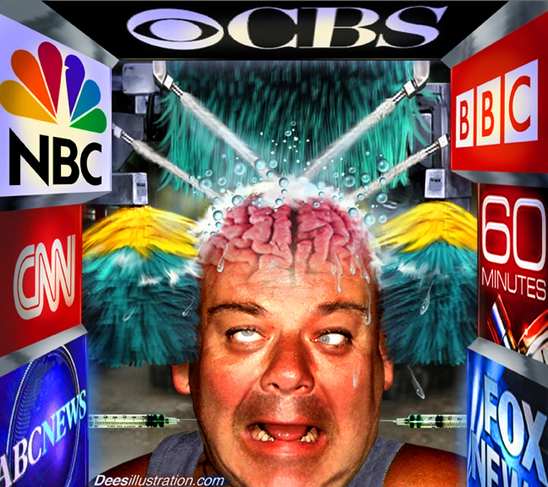
We’re in a similar escapist bubble, suffering from a “crisis of the now,” which keeps us distracted, deluded, amused, and insulated from reality.

Professor Jacques Ellul studied this phenomenon of overwhelming news, short memories and the use of propaganda to advance hidden agendas. “One thought drives away another; old facts are chased by new ones,” wrote Ellul.

“Under these conditions there can be no thought. And, in fact, modern man does not think about current problems; he feels them. He reacts, but he does not understand them any more than he takes responsibility for them. He is even less capable of spotting any inconsistency between successive facts; man’s capacity to forget is unlimited. This is one of the most important and useful points for the propagandists, who can always be sure that a particular propaganda theme, statement, or event will be forgotten within a few weeks.”

Yet in addition to being distracted by our electronic devices and diverted by bread-and-circus entertainment spectacles, we are also being polarized by political theater, which aims to keep us divided and at war with each other.

This is the underlying cautionary tale of Leave the World Behind and “The Monsters Are Due on Maple Street”: we are being manipulated by forces beyond our control.

A popular meme circulating a while back described it this way:

“If you catch 100 red fire ants as well as 100 large black ants, and put them in a jar, at first, nothing will happen. However, if you violently shake the jar and dump them back on the ground the ants will fight until they eventually kill each other. The thing is, the red ants think the black ants are the enemy and vice versa, when in reality, the real enemy is the person who shook the jar. This is exactly what’s happening in society today. Liberal vs. Conservative. Black vs. White. Pro Mask vs. Anti Mask. The real question we need to be asking ourselves is who’s shaking the jar … and why?”

As I make clear in my book Battlefield America: The War on the American People and in its fictional counterpart The Erik Blair Diaries, the government has never stopped shaking the jar.

Sickening Profits — The Global Food System’s Poisoned Food and Toxic Wealth

By Colin Todhunter

Source: Off-Guardian

The modern food system is being shaped by the capitalist imperative for profit. Aside from losing their land to global investors and big agribusiness concerns, people are being sickened by corporations and a system that thrives on the promotion of ‘junk’ (ultra-processed) food laced with harmful chemicals and cultivated with the use of toxic agrochemicals.

It’s a highly profitable situation for investment firms like BlackRock, Vanguard, State Street, Fidelity and Capital Group and the food and agribusiness conglomerates they invest in. But BlackRock and others are not just heavily invested in the food industry. They also profit from illnesses and diseases resulting from the food system by having stakes in the pharmaceuticals sector as well. For them, it’s a win-win situation.

Lobbying by agrifood corporations and their well-placed, well-funded front groups ensures this situation prevails. They continue to capture policy-making and regulatory space at international and national levels and promote the (false) narrative that without their products the world would starve.

They are now also pushing a fake-green, ecomodernist agenda and rolling out their new proprietary technologies in order to further entrench their grip on a global food system that produces poor food, illness, environmental degradation, dependency and dispossession.

The prevailing globalised agrifood model is built on unjust trade policies, the leveraging of sovereign debt to benefit powerful interests, population displacement and land dispossession. It fuels export-oriented commodity monocropping and regional food insecurity.

This model is responsible for increasing rates of illness, nutrient-deficient diets, a narrowing of the range of food crops, chemical runoffs, increasing levels of farmer indebtedness and the eradication of biodiversity. And it relies on a policy paradigm that privileges urbanisation, global markets and agrifood corporations’ needs ahead of rural communities, local markets, on-farm resources and food sovereignty.

In addition, there are also the broader geopolitical aspects of food and agriculture in a post-COVID world characterised by food inflation, hardship and multi-trillion-dollar global debt.

There are huge environmental, political, social and health issues that stem from how much of our food is currently produced and consumed. A paradigm shift is required.

All of this is set out in Sickening Profits: The Global Food System’s Poisoned Food and Toxic Wealth (December 2023), published as an open-access (free) e-book by Global Research (it can be read directly on the Global Research website or downloaded as a pdf) and is a follow up to the author’s book Food, Dispossession and Dependency: Resisting the New World Order (2022).

That book contains substantial sections on the agrarian crisis in India and issues affecting the agriculture sector. Aruna Rodrigues — prominent campaigner and lead petitioner in the GMO Mustard Public Interest Litigation in the Supreme Court of India — stated the following about the book:

This is graphic, a detailed horror tale in the making for India, an exposé on what is planned, to hand over Indian sovereignty and food security to big business.”

‘Sickening Profits’ continues in a similar vein. By describing situations in Ukraine, India, the Netherlands and elsewhere, it is another graphic horror tale in the making that is being intensified across the globe. The question is: Can it be stopped?

Western War Machine is in Panic Mode

By Salman Rafi Sheikh

Source: New Eastern Outlook

The sheer inability of the collective West to force Russia into submission in Ukraine plus the fast-changing global opinion about the West in the context of the latter’s support for Israel’s brutal war on the Gazans has put the so-called ‘liberal-democratic’ world into a panic mode. The White House has already said that it will run out of money to fund Ukraine into 2024 unless the US Congress gives approval for more funding. This has led the Western war machine – primarily led by the US – to anticipate a possible defeat. “There is no guarantee of success with us, but they are certain to fail without us”, a senior US military official told CNN recently. Without the military support, US officials now estimate, Ukraine would fall by the summer of 2024. But, in Western calculations, Ukraine’s fall does not just mean Russia’s victory; it also implies a possible collapse of NATO and the eventual downfall of the Western-dominated global political, economic, and security order.

recent piece in the Wall Street Journal said,

“Even more important, Russia’s success in Ukraine would increase a threat to NATO’s Eastern flank—in particular the Baltic states and Poland. Outside of Europe it would embolden Moscow’s allies Iran and North Korea and provide a template for China for the military solution of the Taiwan dispute. In all those cases, the U.S. and NATO troops could find themselves in the midst of a military conflict of the sort that Ukraine fights today without direct involvement of NATO”.

Such prospects are causing severe problems. Germany, for instance, is considering shelving voluntary force and making a return to conscription. “I believe that a nation that needs to become more resilient in times like these will have a higher level of awareness if it is mixed through with soldiers,” said Jan Christian Kaack, the chief of the German Navy. This is in addition to the fact that the German army is too small to defend itself against any threat; hence, the renewed emphasis on conscription.

But Germany is not an exceptional case. In fact, it mirrors developments in the rest of Europe.  The UK, otherwise known to possess one of the best fighting forces in the world, is running into some problems of a fundamental nature. The Sky News reported earlier in the year that, a senior US general “privately told Defence Secretary Ben Wallace the British Army is no longer regarded as a top-level fighting force”. It was further reported that the “The armed forces would run out of ammunition in a few days if called upon to fight” and that “The UK lacks the ability to defend its skies against the level of missile and drone strikes that Ukraine is enduring”.

On top of it is the fact that the Russian military position in Ukraine remains strong, making it a lot harder for the West to provide enough funding. The Biden administration is facing its own challenges vis-à-vis more funding for Ukraine. As far as Europe is concerned, a recent report showed that pledges for funding made in August 2023 fell by almost 90 percent compared to the same period last year.

This is war fatigue that is being compounded by a well-sustained Russian resolve to achieve its objectives. For the West, Vladimir Putin remains “stubborn”. As Putin recently reiterated, “There will be peace when we achieve our goals… Now let’s return to these goals – they have not changed. I would like to remind you how we formulated them: denazification, demilitarisation, and a neutral status for Ukraine.”

Speaking from a position of strength – and keeping in mind the war fatigue in the West – Putin further said that Russian forces are “improving their position almost along the entire line of contact. Almost all of them are engaged in active combat. And the position of our troops is improving along [the entire line of contact.]”. This being the case, Putin conveyed no ideas of making a compromise with the West over Ukraine. Speaking from the Russian perspective, it would make no sense to offer negotiations and, thus, turn Russian tactical victories into unsustainable settlements.

Clearly, Russia has no intention of withdrawing from its victories, which is why there is a panic, especially in Europe. If Russia continues to win and the US funding stalls, Europe will be left to fend for itself. Germany’s defence minister minced no words to express this fear last Saturday when he said that the US “was losing interest in European affairs and that security tensions in the Pacific would likely leave the European Union having to fend for itself”, adding that “One can assume that the USA will be more involved in the Pacific region in the next decade than it is today – regardless of who becomes the next president,” he said. His conclusion is: “This means that we Europeans must increase our commitment to ensure security on our continent.”

In a nutshell, for the US, if the war in Ukraine was to unify the West, it is beginning to have an exactly opposite effect. There lies a very strong reason for the US to reconsider its strategy. This reconsideration can go in two directions. First, the US can withdraw from its obsession with expanding NATO to include Ukraine. Second, the US can make one last push and make Ukraine fight for as long as it can, hoping that this might break Russia. The Biden administration favours the second option, which is why it is pushing for the US$61 billion aid package. But will a Republican victory allow this to happen? A Republican victory could not only end support for Ukraine but also leave Europe in a total lurch. Tough times ahead.

When Black Mirror’s Dystopia Becomes Our Reality

Exploring the Impact of Black Mirror’s Predictive Technologies on Society and Ethics

By Nolan Clarke

Source: Medium

In the eerie twilight between fiction and reality, the anthology series “Black Mirror” has captivated audiences with its unnerving portrayal of technological advancements and their potential consequences. As we stand on the brink of a new era, it’s both fascinating and disconcerting to contemplate which of these technologies might soon transcend the screen and become part of our everyday lives. In this exploration, we delve into the dark corridors of possibility, uncovering the most disturbing technologies from “Black Mirror” that could become real in the near future.

The Grains of Memory: ‘The Entire History of You’

In the episode ‘The Entire History of You’, characters have ‘grains’ implanted behind their ears, recording everything they see and hear. This technology is not too far off from the reality we are inching towards with the continuous advancement in augmented reality (AR) and wearable tech. Companies like Google and Facebook are already experimenting with AR glasses. Imagine a world where every conversation and every event in your life is recorded, rewound, and scrutinized. The implications for privacy and mental health are profound, opening up a pandora’s box of ethical dilemmas.

The Echoes of Social Acceptance: ‘Nosedive’

In ‘Nosedive’, society is ruled by social ratings, with every interaction affecting one’s societal status. This dystopian vision mirrors the existing social credit systems and online rating platforms. China’s social credit system, for instance, rewards or punishes citizens based on their behavior. The psychological impact of living in a society where one’s worth is constantly judged and quantified is alarming, leading to a performative existence devoid of authenticity.

The Haunting Presence of the Dead: ‘Be Right Back’

This episode brings to life an AI that imitates the deceased, based on their online presence. With advancements in AI and deep learning, creating digital personas of the departed is not far-fetched. Companies are already developing chatbots based on deceased individuals’ online data. The moral implications are significant, raising questions about grief, closure, and the ethics of digitally resurrecting the dead.

The Tyranny of Surveillance: ‘Arkangel’

‘Arkangel’ presents a future where children are monitored through neural implants, giving parents omnipresent surveillance capabilities. This reflects the growing trend of helicopter parenting and the use of technology to track children. With GPS trackers and smartphone monitoring apps already prevalent, the leap to neural implants doesn’t seem too distant. The invasion of privacy and loss of childhood independence are stark reminders of the dangers of over-surveillance.

The Price of Convenience: ‘Crocodile’

In ‘Crocodile’, memories can be externally accessed and displayed. With tech giants already exploring brain-computer interfaces, the concept of accessing thoughts or memories isn’t purely fictional. Neuralink, for instance, aims to create devices that can be implanted in the human brain. The ethical implications of such technology are immense, potentially threatening the very sanctity of our thoughts and experiences.

The Dark Side of Entertainment: ‘White Bear’

‘White Bear’ shows a world where punishment is turned into a form of entertainment. While this may seem extreme, the proliferation of reality TV and online shaming cultures points towards a society increasingly desensitized to the exploitation of human suffering for entertainment. The blurring lines between justice and voyeurism highlight a disturbing aspect of human nature.

Conclusion: A Reflection on Our Path Forward

As these “Black Mirror” technologies creep from fiction to reality, we must tread cautiously, balancing innovation with ethical responsibility. We stand at a crossroads, where the choices we make today will shape the morality and humanity of our technological tomorrow. In the end, it’s not just about the technology we create, but the reflection of ourselves that we see in it — a black mirror showing us who we might become if we’re not careful.

Who Is to Blame for the Genocide in Gaza?

By Eric Zuesse

Source: The Duran

Israel’s indiscriminate bombing of one of the most densely populated areas on this planet, the Gaza Strip, is genocidal because it is aimed at hospitals, schools, refugee camps, and not ONLY at possible military targets such as the Israeli regime alleges. Furthermore, Israel is harvesting body-parts of the Palestinian corpses it is generating there, as the Gaza media office reports that “After examining the bodies [of corpses that Israel’s forces delivered on December 26th to the Gazan authority at the Karam Abu Salem border-crossing], it is clear that the features of those killed had changed greatly in a clear indication that the Israeli occupation [force in Gaza] had stolen vital organs from them.”

The main difference between what Israel is doing now, and what Hitler’s Germany did in its Holocaust then, is that this time, it’s probably being done much faster because everyone who lives in that 365 km2 (141 sq mi) “the world’s largest open-air prison” called “Gaza” is being targeted to be either directly slaughtered by bombs and missiles, or else starved to death by Israel’s siege of that area; and, so, it can be much more efficiently and much faster conducted this time than when Hitler did it on an individual-by-individual basis by selecting out from the general population whom to slaughter and whom not to. This time, Israel already knows whom it will slaughter: the entire Gaza population there. It’s just like what America did when it nuked Hiroshima and Nagasaki to start the Cold War against the Soviet Union in 1945. Or, as Eisenhower advised Truman to do that, “no power on earth could keep the Red Army out of that war [that “the Red Army” already actually were in] unless victory [by the U.S. alone against Japan] could come before they [the Soviet forces] could get in.” So: Truman nuked Hiroshima and Nagasaki in order to win Japan for America ultimately against the Soviet Union. Truman made that decision (to start the Cold War) on 25 July 1945. And Netanyahu cannot turn back now from his commitment to “eliminate Hamas” without exterminating the Palestinians, who overwhelmingly support Hamas; and, though support by the Gazans for Hamas has increased 10% since the October attack by Hamas, support for Hamas on the West Bank is even higher, around 90% now — so: what could Netanyahu realistically hope to replace Hamas with? The answer is obvious: Israel is slaughtering the Gazans so as to avoid that problem. It will be a genocide there.

recent poll in America found that by an overwhelming margin, far more Americans think that Hamas aims to genocide Israelis than think that Israelis aim to genocide Gazans. However, that finding is not surprising when one recognizes that the U.S. Government itself is a 50-50 partner with Israel’s Government in perpetrating this genocide; and, as I reported on December 8th, “Biden backs Israel’s policy to eliminate all Gazans” but that he constantly denies it by alleging that he is pressuring Netanyahu to discontinue doing it — even while it is the case that though Israel is supplying the troops to do it, the U.S. is supplying the weapons and the bombs and the missiles and the satellite intelligence that enables them to do it. This is a genocide that is being done by two means: Israel supplies the troops, and America supplies the intelligence and the weapons, to do it. Both are equally responsible for it.

Furthermore, America, all alone at both the U.N. Security Council and in the General Assembly, is the only nation that is blocking from either and both U.S. bodies a resolution condemning this genocide and condemning Israel for doing it. Of course, since the U.S. regime holds itself out as being superior to and above the United Nations, and the U.N. organization effectively allows that, there are NO resolutions at the U.N. that blame the U.S. regime for this genocide — though it is a 50-50-participant in perpetrating it. Or: as Israel’s Jewish News Service reported on November 27th:

Israel’s dependence on the United States was stated bluntly by retired IDF Maj. General Yitzhak Brick in an interview earlier this week.

“All of our missiles, the ammunition, the precision-guided bombs, all the airplanes and bombs, it’s all from the U.S. The minute they turn off the tap, you can’t keep fighting. You have no capability. … Everyone understands that we can’t fight this war without the United States. Period.”

On December 26th, Dave DeCamp at antiwar dot com headlined “US Has Delivered Over 10,000 Tons of Weapons to Israel Since October 7: Over 240 US cargo planes and 20 ships have made deliveries to Israel” and reported that

Two hundred and forty-four American cargo planes and 20 ships have delivered over 10,000 tons of military equipment to Israel since October 7 to support the massacre in Gaza, Israel’s Channel 12 reported on Monday.

The US support has been crucial in Israel’s ability to keep up its relentless bombardment of Gaza. The Washington Post reported on December 9 that, up to that date, Israel dropped over 22,000 US-provided bombs on the Gaza Strip.

The Pentagon has refused to disclose what types of weapons it’s been sending to Israel, but media reports have revealed some details. The Wall Street Journal reported on December 1 that the US had shipped 15,000 bombs and 57,000 155mm artillery shells to Israel since October 7. …

US officials claim they are “concerned” about the massive civilian casualty rate in Gaza, but the Biden administration continues to provide unconditional military aid for the slaughter. A report from +972 Magazine revealed that Israel is intentionally targeting civilian areas as part of its war strategy.

Biden’s protestations of innocence in this genocide are just more lies from him. He is equally to blame for it along with Netanyahu.

Righting a wrong: Burying decades of US-led wars

Today’s global conflicts – whether in Eastern Europe, West Asia, or East Asia – are spawned by a fading US hegemon desperately clinging to power.

By Mohamad Hasan Sweidan

Source: The Cradle

“One era is ending, a new one is beginning, and the decisions that we make now will shape the future for decades to come.”

With these words, US Secretary of State Antony Blinken defined the “turning point” of the American era, the transition from one world order to another. 

“In this pivotal time, America’s global leadership is not a burden. It’s a necessity to safeguard our freedom, our democracy, and our security,” Blinken said in his address to the Johns Hopkins School of Advanced International Studies (SAIS) in September. 

Official US documents, including last year’s National Security Strategy, underscore Washington’s conviction that waiting is a luxury it cannot afford; that it “will act decisively” to maintain its global leadership. As such, the US involvement in conflicts in Ukraine and Gaza, as well as the militarization in Southeast Asia, must be seen through this lens of international dynamics.

Broadly, tensions in Africa and Asia are interconnected with the west’s frenzied initiatives to maintain a dominant position and decisive role in the new multipolar order.

From Eastern Europe to West Asia 

Since the outbreak of war in Ukraine, the US has strategically tied its support for Kyiv to the defense of the “rules-based order.”

With clichéd sound bites, President Joe Biden characterized the conflict as “a battle between democracy and autocracy, between liberty and repression, between a rules-based order and one governed by brute force.”

Many Atlanticist leaders echo the sentiment that unwavering support for Ukraine aims to deter Russia from challenging a world order where the west holds sway.

Most prominently, German Chancellor Olaf Scholz articulated this perspective in his Foreign Affairs article published in early 2023 titled The Global Zeitenwende, (“an epochal tectonic shift”) in which he posits that Russian President Vladimir Putin is challenging a world order where Washington is a decisive power.

Scholz emphasizes the need for collective action by those who believe in a rules-based world order, even cooperating with countries that do not embrace democratic institutions but endorse the US-led principles for global governance. That western rules-based paradigm, it should be noted, is one in which international law and the UN Charter have long been discarded in favor of power and advantage.

Today, those dueling visions are playing out in the Ukraine war: a confrontation between the west seeking to maintain its global superiority and Russia striving to disrupt this dominance. Moscow’s rationale for the war is to prevent NATO from expanding to Russia’s borders, as confirmed by the western military alliance’s Secretary-General Jens Stoltenberg.

Similarly, the war in Gaza must be seen through this international lens, with Israel representing western interests in West Asia and any harm to the occupation state viewed inherently as a blow to US influence in the region. 

As Washington stands at this crucial turning point, according to Blinken, the cost of a blow to Israel is deemed too high, underscoring the resolute US defense of its global influence in the devastated towns and cities of Gaza.

Neo-colonial maneuvers

There are important nuances between these two US-backed wars, however: Ukraine is seen as a tool used by Washington to achieve its interests, while Israel is considered an American interest in itself. That Biden once famously asserted that the US would need to create an Israel if it did not exist illustrates its status as a neo-colonial outpost, protecting western interests in the region. 

This also explains the noticeable shift in US interest away from Eastern Europe to West Asia after the Palestinian resistance breached the occupied territories on 7 October to target military personnel and take prisoners. The deliberate shift of American attention from one war zone to the other was neatly exemplified by the Washington Post’s swift removal of the ‘War in Ukraine’ tab from its homepage. 

As previously mentioned by The Cradle, “Israel’s ongoing war on the Gaza Strip is best understood to be a US-backed one,” one that is being fought to safeguard US influence and interests in West Asia. However, the maneuvering room for Washington’s allies is shrinking dramatically. Unlike the diverse strategic options West Asian countries explored during the Ukraine war, Gaza offers no such latitude. It is fundamentally Washington’s war, demanding collective mobilization to defend the US position.

It is also telling that the US-led multination task force, Operation Guardian of Prosperity in the Red Sea, is already facing major set-backs since its recent inception, with some members pulling out and others choosing to remain unnamed.

White House National Security Council Strategic Communications Coordinator John Kirby had to awkwardly caveat the secrecy like this: “There are some countries that have agreed to participate and be part of the operation in the Red Sea, but they have to decide how much they want that to be public. And I’m going to leave it to them so that they can describe it somehow, because not everyone wants to be public.”

For example, the role of NATO member Turkiye has transformed into that of an energy transmission station for Israel, while the UAE, Saudi Arabia and Jordan serve as a transit bridge for goods bound for the occupation state that Yemen prevents from passing through the Red Sea.

Notably, shipments from Turkiye to Israel surged to 355 after 7 October, with many linked to the Justice and Development Party (AKP) and individuals close to Turkish President Recep Tayyip Erdogan, including his son Buraq. Even Egypt, restricted to allowing aid trucks through the Rafah crossing, could not facilitate aid to Palestinians without US approval.

How conflict spreads

In international relations, there are two main theories that address the relationship between power and the spread of peace. The first is the hegemonic stability theory which posits that the international order is likely to remain stable when one country is the dominant global power. The proponents of this theory believe that the existence of a single hegemon deters all powers in the world and prevents them from spreading tension.

However, given the reality that the United States has dominated a conflict-ridden global order for four decades, it can be argued that the presence of the hegemon did not lead to global stability. Rather, the dominant was the major source and catalyst for spreading tension around the world. It is sufficient to look at the distribution of US bases in the world and the proliferation of military agreements signed by Washington to understand how the US consistently provokes rivals and challengers, and creates strife.

The second is the balance of power theory, in which states seek to protect themselves by preventing any country from acquiring enough military power to control all other nations. If one power dominates – such as the United States – the theory predicts that weaker countries will unite in a defense alliance. 

According to this theory, a balance of power between competing states or alliances raises the cost of tension for everyone and ensures stability in the world. Thus, achieving peace today requires a rise in the level of power among Washington’s rivals, power which will provide the deterrence required to limit the spread of tensions around the world. Increasing the capabilities of Washington’s rivals is now a key requirement for all peaceful peoples and nations. And according to the balance of power theory, uniting against Israel is the most successful way to stabilize West Asia and its environs today.

Post-unipolar realities 

As the war in Gaza is unequivocally an American war, a vertical division emerges in West Asia, dividing those siding with Palestine and the Resistance Axis from those aligning with Israel and the Zionist project. Washington’s allies cannot stay neutral as the US leads the battle directly. 

This clarifies the positions of Saudi Arabia, Jordan, the UAE, Egypt, Turkiye, and other West Asian countries choosing to align with the US at the expense of Palestinian interests.

Observing Washington’s policies reveals global tensions spurred on by the pursuit of US influence. From Eastern Europe to West Asia and Southeast Asia, the US works to counter Eurasian powers Russia and China, and other influential countries, such as Iran and North Korea.

Since the end of the Cold War, Washington’s unipolar moment has resulted in more wars and destruction imaginable in decades often characterized as ones marked by peace. A more stable world order necessitates the achievement of a global balance of power by weakening the US and empowering new rising powers. Thus, peace and stability in West Asia hinges on the weakening of Israel, a colonial project so intricately tied to Washington’s hegemonic agenda.

Humanity Under Assault by the Elites – When Will We Have Had Enough?

By Phil Butler

Source: New Eastern Outlook

“I speak of peace, therefore, as the necessary rational end of rational men. I realize that the pursuit of peace is not as dramatic as the pursuit of war–and frequently the words of the pursuer fall on deaf ears. But we have no more urgent task.” – John F. Kennedy

For most people, it’s difficult to imagine much of what’s happening today. And this is why so many seem in the dark about what we should do to alleviate our problems. Looking at the situation in which a proxy is being waged on Russia from Ukraine, nothing seems to add up. The same is true for the genocide now going on in Gaza. And when we superimpose problems like curing cancer and other diseases, environmental problems, and failing economies, the only thing we can see is that our leaders have failed miserably at prioritising. It’s also obvious that we, the people, are the farthest thing from their minds.

Regarding visualisation, there’s no bigger confusion than grasping just how much money the Western powers are shovelling into the war against Russia. So far, something like $233 billion has been donated to Ukraine. The top donors are the EU($90B) and the United States ($73B). Interestingly, most of the EU funding has been aimed at financial aid, while the US donates are mostly military aid. Neither the EU nor the US spent much on humanitarian aid, at least not by comparison. But then, humanitarian money does not go into the pockets of the elites, now does it? The arms companies and financial institutions seem to be leveraging this Ukraine mess for a return on assets. But that’s another story. Now, I’d like to compare spending on Ukrainian and Israeli wars against efforts that do help human beings.

Let’s look at one of humanity’s most dreaded killers: cancer. In total, global oncology spending in 2022 was $193 billion. The numbers are far more telling in key research, where funding often comes from philanthropy. The Lancet reported recently that some 66,388 awards with a total investment of about $24.5 funded research for 2016–20. And now these figures have nosedived. In 2020, there were 19.3 million cases and 10 million deaths from the dreaded disease.

If we look at how many people are starving on our planet, it’s appalling to think of billions thrown away on unwinnable wars for the sake of selling weapons. In 2021, U.N. World Food Programme Executive Director David Beasley said it would take an estimated $40 billion annually to end world hunger by 2030. Let’s think about that for a moment. Each day, 25,000 people, including more than 10,000 children, die from hunger and related causes. Envision the lost potential of all those children perishing, if you can. Beasley went on to etch the situation in stone with this statement:

“There is 400 trillion dollars’ worth of wealth on the earth today, and the fact that 9 million people die from hunger every year… Shame on us. In the height of COVID, billionaires’ net worth increase was $5.2 billion per day. At the same time, 24,000 people die per day from hunger. Shame on us. Every hour, the net worth of billionaires during the height of COVID was a substantial $216 million per hour. Yet 1000 people per hour were dying from hunger… Shame on us.”

Two-hundred-sixteen million dollars per hour! I’ll wager the vast majority of that wealth had nothing whatsoever to do with helping human beings, curing disease, or stopping the endless wars. Moving on, let’s look at the homeless/poverty situation worldwide. In 2021, there were 150 million homeless people worldwide. While so many people here in Greece and other countries in Europe strive to go live in the United States, few realise that over 18% of the people living in my country live below the poverty line. And no one wanting to become American realises that the overwhelming solution to poverty in my country is to punish and imprison the poor (Homelessness World Cup). Using only what’s been spent on Ukraine so far, the U.S. Government could have issued a check for $1,825 to each of the 40 million homeless people in the country. That’s two or even three months’ rent for all homeless people in the USA.

Even in highly developed countries like Germany, more than 14.8% of the people are living beneath the national poverty line. Interestingly, some Latin American countries equal or better poverty rate than North American or some European countries. Take Argentina as an example. The situation there is no worse than it is in the United States. In Chile, only 9% of the population lives in dire circumstances. Unbelievably, there are countries like Bangladesh, traditionally thought of as the world’s poorest countries, where less than 13% of the population lives below the poverty line. In Romania, 26% of the people live in extreme poverty, and in neighbouring Bulgaria, the rate is almost 24%.

Turning to more practical matters that bear on quality of life and efficiency, we find the United States of America ranks 13th out of 141 countries in overall infrastructure. What a stunning achievement for the richest (supposedly) country in the world! After all, how do we balance what a country’s wealth is? What is the negative value of a dangerous, rusty bridge or a pothole in a road so deep you can hear Chinese being spoken from its depths? How bad is 13th place? Well, the American Society of Civil Engineers estimated that it would take 50 years to complete only the necessary repairs on more than 46,000 deteriorated bridges in the country. Both the Trump and Biden administrations promised to pour more money into the problem, but so far the US of A is still crumbling. So that you understand, Spain, Singapore, South Korea, Japan, and eight other countries have better quality infrastructures than the US. Remember I mentioned at the beginning, prioritisation? Is it possible that the Spaniards are doing more to care for their own people than America? Does Spain start proxy wars on Russia’s borders? I do not see Spanish ships in the South China Sea provoking war.

Since we landed in Spain, let’s take a look at some interesting facts about their quality of life. For instance, the Spanish Constitution includes a right to housing. The reality of homelessness there is that less than 8.5% of the population is homeless, and most of those live in shelters. Spain ranked 27th out of OF 189 countries in the Human Development Index Rankings.  Romania was 49th, the USA was 17th, Chile 43rd, and South Korea was 23rd. For me at least, what is significant in these numbers is the wide disparity in position in a world that was supposed to be some globalisation miracle a couple of decades ago. Despite all the PR and belly-rubbing the people of Earth have received, things in most countries are just not getting better. And trillions are being spent on wars and corporate machinations that steal from our prosperity.

Returning to my thesis, we must add the humongous waste of money that has gone to the state of Israel, Saudi deals, and the new monies soon to flow in that direction simply to eradicate or force migrate the Palestinians. Before the current crisis, the Biden administration had pledged $14.3 billion in aid to Israel since the October 7th Hamas campaign against the Israelis began. But this figure is a bit misleading if we want to see just how massive the American sacrifice for Israel has been. Since World War II, the United States has given Israel more aid than any other nation, currently more than $260 billion. To wrap things up for this report, the U.N. says the conflict in Yemen is one of the world’s worst humanitarian crises. Saudi Arabia does not receive American aid through loans, grants, or gifts pegged for killing Yemenis. However, the US Accounting Office reported that between 2015 and 2021, the US Department of Defense supplied more than $54.6 billion in military support for the Saudis and the United Arab Emirates. Now, imagine what human strife could be alleviated with these hundreds of billions combined with the trillions spent on failed US wars across the globe.

For those who enjoy simple examples of what could be. There are over 33,000 homeless veterans who fought these wars for the United States. The billions in military support only for Saudi Arabia would be enough to gift each one of those vets $1.7 million. You do the math. What is being spent to kill millions of us, could save the millions being killed PLUS millions of others starving, wasting away, or swept away by disasters. Now you tell me when the time will be right to get out the torches and pitchforks.