Mark Ruffalo: ‘Monsanto Chief is Horrible’

mark-ruffalo-the-hulk

By Mark Ruffalo

Source: EcoWatch

Monsanto chief is horrible … And I got to tell him that to his face after his interview on CBS This Morning.

Approaching someone like this isn’t really my thing. But being so well behaved all the time doesn’t seem to be helping people. It made me really uncomfortable to do it. But that’s how we change. We must become uncomfortable. We must act out of our comfort zones for things to change. We must call out the people who are doing horrible things when they do them.

Hugh Grant (Monsanto CEO not the actor) must be made to feel uncomfortable for what he allows his company to do in the world. That is why I told him what I did and why I am sharing it with you.

Before a segment I was doing for the movie Spotlight with Mike Rezendes on Dec. 2, I was waiting in the green room watching Grant worm his way through the strong questions he was getting from the CBS team. His handlers clearly have been working very hard with him to give him every slippery non-answer to every question he was asked. I was beside myself watching this guy who is responsible for so much misery and sickness throughout the world slime his way through his interview. I could not hold my tongue. He came through the Green Room door ready to do high fives with his press agent and I simply told him this:

“You are wrong. You are engaged in monopolizing food. You are poisoning people. You are killing small farms. You are killing bees. What you are doing is dead wrong.”

A bead of sweat broke out on his head. “Well, what I think we are doing is good,” Grant replied.

“I am sure you do,” I told him.

When people get paid the kind of money he gets paid their thinking becomes incredibly clouded and the first thing to go is their morality.

He says Monsanto needs to do a better job with their messaging.

Hugh, it’s not your messaging that makes you and your company horrible. It’s the horrible stuff you guys do that makes you and your company horrible. People don’t walk around making horrible stories up about good companies because they got nothing else better to do with their time. People like you and your company are horrible because … you are horrible. No matter how much jumping around you do on morning shows (where no one can really nail you down for the horrible stuff you do), you will still always be horrible and people will always greet you the way I did, when you go around trying to cover up the fact that you are horrible.

Want to know more about the real Monsanto and Hugh Grant? Watch this:

There is a lot more horrible stuff to look at here:

Monsanto’s greatest hit jobs.

In 2003, Monsanto settled a lawsuit for $700 million with 20,000 Anniston, Alabama residents who claimed that a Monsanto plant contaminated local rivers, lakes, soil and air with polychlorinated biphenyls (PCBs). Plaintiffs reported a range of health issues including cancer, birth defects and neurological disorders.

New York Times: $700 Million Settlement in Alabama PCB Lawsuit

CBS News: Toxic Secret: Alabama Town Never Warned of Contamination

In 2012, Monsanto settled a lawsuit with tens of thousands of plaintiffs in West Virginia for $93 million. Residents of Nitro, West Virginia claimed they had been poisoned by decades of contamination from cancer-causing chemicals used in the manufacturing of Agent Orange produced in a Monsanto plant.

The Guardian: Monsanto Settles ‘Agent Orange’ Case with US Victims

In March 2015, the International Agency for Research on Cancer (IARC), an arm of the World Health Organization, concluded in a study that glyphosate, the active ingredient in Monsanto’s widely used weedkilling product Roundup, was “probably carcinogenic to humans.”

Shortly after the IARC’s study was made public, France took steps to limit the sale of Roundup. France has also banned the cultivation of genetically modified crops.

Reuters: Frances Bolsters Ban on Genetically Modified Crops

Newsweek: Frances Bans Sale of Monsanto’s Roundup in Garden Centers After UN Names it Probable Carcinogen

In September 2015, a French appeals court in Lyon upheld a decision that held Monsanto liable for poisoning a French farmer. The grain farmer, Paul Francois, developed neurological damage after inhaling Monsanto’s weedkilling product Lasso.

Reuters: French Court Confirms Monsanto Liable in Chemical Poisoning Case

Le Monde: Monsanto Condamné pour L’Intoxicite d’un Agriculteur Francais

In September 2015, two U.S. farm workers filed suit against Monsanto claiming that exposure to Roundup caused them to develop cancer.

Reuters: U.S. Workers Sue Monsanto Claiming Herbicide Caused Cancer

You can find reports of Monsanto products being linked to cancer and other health issues all over the world, for example:

Argentina is the world’s third largest soy-producing country.

According to Mother Jones, nearly 100 percent of the soy crop is genetically altered and Monsanto’s Roundup is very widely used. As the use of pesticides and herbicides in Argentina has increased, cancer clusters have begun to develop around farming communities. A 2010 study at the University of Buenos Aires also found that injecting glyphosate (the active ingredient in Roundup) into chicken and frog embryos caused the same sort of spinal defects that doctors have found to be increasingly prevalent in communities where farm chemicals are used.

Mother Jones: Argentina is Using More Pesticides than Ever. And Now It Has Cancer Clusters

On Monsanto suing small farmers:

The Guardian: Monsanto Sued Small Farmers to Protect Seed Patents

Vanity Fair: Monsanto’s Harvest of Fear


Related Article: Global Citizens Tribunal to Put Monsanto on Trial at the International People’s Court in The Hague


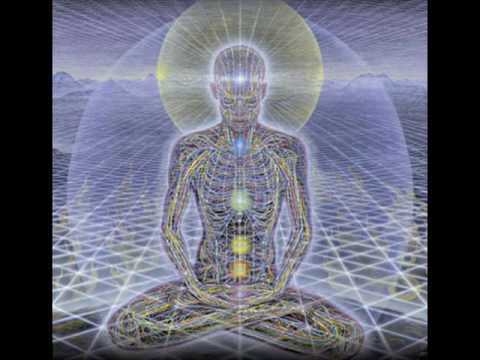
Buddhism and the Brain

741-hz-consciousness-expansion-is-bes-airl-hear-the-messages-of-the-universe-in-your-mind

Many of Buddhism’s core tenets significantly overlap with findings from modern neurology and neuroscience. So how did Buddhism come close to getting the brain right?

By David Weisman

Source: Seed Magazine

Over the last few decades many Buddhists and quite a few neuroscientists have examined Buddhism and neuroscience, with both groups reporting overlap. I’m sorry to say I have been privately dismissive. One hears this sort of thing all the time, from any religion, and I was sure in this case it would break down upon closer scrutiny. When a scientific discovery seems to support any religious teaching, you can expect members of that religion to become strict empiricists, telling themselves and the world that their belief is grounded in reality. They are always less happy to accept scientific data they feel contradicts their preconceived beliefs. No surprise here; no human likes to be wrong.

But science isn’t supposed to care about preconceived notions. Science, at least good science, tells us about the world as it is, not as some wish it to be. Sometimes what science finds is consistent with a particular religion’s wishes. But usually not.

Despite my doubts, neurology and neuroscience do not appear to profoundly contradict Buddhist thought. Neuroscience tells us the thing we take as our unified mind is an illusion, that our mind is not unified and can barely be said to “exist” at all. Our feeling of unity and control is a post-hoc confabulation and is easily fractured into separate parts. As revealed by scientific inquiry, what we call a mind (or a self, or a soul) is actually something that changes so much and is so uncertain that our pre-scientific language struggles to find meaning.

Buddhists say pretty much the same thing. They believe in an impermanent and illusory self made of shifting parts. They’ve even come up with language to address the problem between perception and belief. Their word for self is anatta, which is usually translated as ‘non self.’  One might try to refer to the self, but the word cleverly reminds one’s self that there is no such thing.

When considering a Buddhist contemplating his soul, one is immediately struck by a disconnect between religious teaching and perception. While meditating in the temple, the self is an illusion. But when the Buddhist goes shopping he feels like we all do: unified, in control, and unchanged from moment to moment. The way things feel becomes suspect. And that’s pretty close to what neurologists deal with every day, like the case of Mr. Logosh.

Mr. Logosh was 37 years old when he suffered a stroke. It was a month after knee surgery and we never found a real reason other than trivially high cholesterol and smoking. Sometimes medicine is like that: bad things happen, seemingly without sufficient reasons. In the ER I found him aphasic, able to understand perfectly but unable to get a single word out, and with no movement of the right face, arm, and leg. We gave him the only treatment available for stroke, tissue plasminogen activator, but there was no improvement. He went to the ICU unchanged. A follow up CT scan showed that the dead brain tissue had filled up with blood. As the body digested the dead brain tissue, later scans showed a large hole in the left hemisphere.

Although I despaired, I comforted myself by looking at the overlying cortex. Here the damage was minimal and many neurons still survived. Still, I mostly despaired. It is a tragedy for an 80-year-old to spend life’s remainder as an aphasic hemiplegic. The tragedy grows when a young man looks towards decades of mute immobility. But you can never tell with early brain injuries to the young. I was yoked to optimism. After all, I’d treated him.

The next day Mr. Logosh woke up and started talking. Not much at first, just ‘yes’ and ‘no.’ Then ‘water,’ ‘thanks,’ ‘sure,’ and ‘me.’ We eventually sent him to rehab, barely able to speak, still able to understand.

One year later he came back to the office with an odd request. He was applying to become a driver and needed my clearance, which was a formality. He walked with only a slight limp, his right foot a bit unsure of itself. His voice had a slight hitch, as though he were choosing his words carefully.

When we consider our language, it seems unified and indivisible. We hear a word, attach meaning to it, and use other words to reply. It’s effortless. It seems part of the same unified language sphere. How easily we are tricked! Mr. Logosh shows us that unity of language is an illusion. The seeming unity of language is really the work of different parts of the brain, which shift and change over time, and which fracture into receptive and expressive parts.

Consider how easily Buddhism accepts what happened to Mr. Logosh. Anatta is not a unified, unchanging self. It is more like a concert, constantly changing emotions, perceptions, and thoughts. Our minds are fragmented and impermanent. A change occurred in the band, so it follows that one expects a change in the music.

Both Buddhism and neuroscience converge on a similar point of view: The way it feels isn’t how it is. There is no permanent, constant soul in the background. Even our language about ourselves is to be distrusted (requiring the tortured negation of anatta). In the broadest strokes then, neuroscience and Buddhism agree.

How did Buddhism get so much right? I speak here as an outsider, but it seems to me that Buddhism started with a bit of empiricism. Perhaps the founders of Buddhism were pre-scientific, but they did use empirical data. They noted the natural world: the sun sets, the wind blows into a field, one insect eats another. There is constant change, shifting parts, and impermanence. They called this impermanence anicca, and it forms a central dogma of Buddhism.

This seems appropriate as far as the natural world is concerned. Buddhists don’t apply this notion to mathematical truths or moral certainties, but sometimes, cleverly, apply it to their own dogmas. Buddhism has had millennia to work out seeming contradictions, and it is only someone who was not indoctrinated who finds any of it strange. (Or at least any stranger than, say, believing God literally breathed a soul into the first human.)

Early on, Buddhism grasped the nature of worldly change and divided parts, and then applied it to the human mind. The key step was overcoming egocentrism and recognizing the connection between the world and humans. We are part of the natural world; its processes apply themselves equally to rocks, trees, insects, and humans. Perhaps building on its heritage, early Buddhism simply did not allow room for human exceptionalism.

I should note my refusal to accept that they simply got this much right by accident, which I find improbable. Why would accident bring them to such a counterintuitive belief? Truth from subjective religious rapture is also highly suspect. Firstly, those who enter religious raptures tend to see what they already know. Secondly, if the self is an illusion, then aren’t subjective insights from meditation illusory as well?

I don’t mean to dismiss or gloss over the areas where Buddhism and neuroscience diverge. Some Buddhist dogmas deviate from what we know about the brain. Buddhism posits an immaterial thing that survives the brain’s death and is reincarnated. After a person’s death, the consciousness reincarnates. If you buy into the idea of a constantly changing immaterial soul, this isn’t as tricky and insane as it seems to the non-indoctrinated. During life, consciousness changes as mental states replace one another, so each moment can be considered a reincarnation from the moment before. The waves lap, the sand shifts. If you’re good, they might one day lap upon a nicer beach, a higher plane of existence. If you’re not, well, someone’s waves need to supply the baseline awareness of insects, worms, and other creepy-crawlies.

The problem is that there’s no evidence for an immaterial thing that gets reincarnated after death. In fact, there’s even evidence against it. Reincarnation would require an entity (even the vague, impermanent one called anatta) to exist independently of brain function. But brain function has been so closely tied to every mental function (every bit of consciousness, perception, emotion, everything self and non-self about you) that there appears to be no remainder. Reincarnation is not a trivial part of most forms of Buddhism. For example, the Dalai Lama’s followers chose him because they believe him to be the living reincarnation of a long line of respected teachers.

Why have the dominant Western religious traditions gotten their permanent, independent souls so wrong? Taking note of change was not limited to Buddhism. The same sort of thinking pops up in Western thought as well. The pre-Socratic Heraclitus said, “Nothing endures but change.” But that observation didn’t really go anywhere. It wasn’t adopted by monotheistic religions or held up as a central natural truth. Instead, pure Platonic ideals won out, perhaps because they seemed more divine.

Western thought is hardly monolithic or simple, but monotheistic religions made a simple misstep when they didn’t apply naturalism to themselves and their notions of their souls. Time and again, their prominent scholars and philosophers rendered the human soul exceptional and otherworldly, falsely elevating our species above and beyond nature. We see the effects today. When Judeo-Christian belief conflicts with science, it nearly always concerns science removing humans from a putative pedestal, a central place in creation. Yet science has shown us that we reside on the fringes of our galaxy, which itself doesn’t seem to hold a particularly precious location in the universe. Our species came from common ape-like ancestors, many of which in all likelihood possessed brains capable of experiencing and manifesting some of our most precious “human” sentiments and traits. Our own brains produce the thing we call a mind, which is not a soul. Human exceptionalism increasingly seems a vain fantasy. In its modest rejection of that vanity, Buddhism exhibits less error and less original sin, this one of pride.

How well will any religion apply the lessons of neuroscience to the soul? Mr. Logosh, like every person who’s brain lesion changes their mind, challenges the Western religions. An immaterial soul cannot easily account for even a stroke associated with aphasia. Will monotheistic religions change their idea of the soul to accommodate data? Will they even try? It is doubtful. The rigid human exceptionalism is cemented firmly into dogma.

Will Buddhists allow neuroscience to render their idea of reincarnation obsolete? This is akin to asking if the Dalai Lama and his followers will decide he’s only the symbolic reincarnation of past teachers. This is also doubtful, but Buddhism’s first steps at least made it possible. Unrelated to neuroscience and neurology, in 1969 the Dalai Lama said his “office was an institution created to benefit others. It is possible that it will soon have outlived its usefulness.” Impermanence and shifting parts entail constant change, so perhaps it is no surprise that he’s lately said he may choose the next office holder before his death.

Buddhism’s success was to apply the world’s impermanence to humans and their souls. The results have carried this religion from ancient antiquity into modernity, an impressive distance. With no fear of impermanent beliefs or constant change, how far will they go?

Life in VALIS

216377

By Kingsley L. Dennis

Source: Reality Sandwich

VALIS is a 1981 science fiction novel by Philip K. Dick. The title stands for Vast Active Living Intelligence System, which in some respects is very close to the living intelligence I discuss in this series of essays.[i] A living intelligence also suggests a non-local field view of reality. The latest findings in the quantum sciences (notably quantum mechanics and biophysics) posit a field-view understanding that is said to underpin the construction of our universe, and hence the nature of our reality.

In the past, various people — mystics, psychologists, and consciousness researchers — have alluded to this intelligence field by a variety of names: cosmic consciousness, superconsciousness, transpersonal consciousness, integral consciousness, etc. All these descriptions share common themes; namely, a heightened sense of intuition and empathy, a feeling of greater connectivity to the world and to people, a sense of ‘inner knowing’ (gnosis), and the realization that humanity exists and evolves within a universe of intelligence and meaning. Forms and intimations of these new consciousness patterns are already emerging in the world, but as yet they have not become a part of our accepted paradigm.

As Dr. Richard Bucke stated in his work Cosmic Consciousness, the early signs of this new evolutionary development have been appearing within humankind for some time:

The simple truth is, that there has lived on the earth, ‘appearing at intervals’, for thousands of years among ordinary men, the first faint beginnings of another race … This new race is in the act of being born from us, and in the near future it will occupy and possess the earth.1

Such signs — or evolutionary mutations — have included, for example, visionaries, mystics, artists, psychics, and a smattering of young gifted children. I would posit that social and cultural events have occurred throughout world history that have served to seed higher functioning into human consciousness. Such events would have taken the form of artistic movements; scientific innovations; faith movements; cultural/social revolutions; architecture; fraternities; myths and legends; sporting fixtures, and more. All such socio-cultural impacts affect human consciousness in a way that prepares the human mind for periods of development and change. Within these seemingly random occurrences lie the components that act as the ‘technologies’ for developing human consciousness. In recent years we have seen the rapid expansion of our informational flows, and thus human awareness in general.

The increasing manifestation of a collective human consciousness — or rather a collective of minds accessing the living intelligence — is most likely to be in line with certain evolutionary necessities. Preparation has been necessary through a succession of events that form an overall pattern of mutually reinforcing stimuli aimed at raising humanity’s psychic awareness. This includes the expansion of intellect, psychological awareness, social development, humanitarianism, empathy, and creativity. These developments have also served to stimulate human intuition. In other words, there have been moments throughout recent human history that helped prepare the ‘mental soil’ for new patterns of consciousness to slowly seed and grow. According to one well-placed commentator on this subject:

The human being’s organism is producing a new complex of organs in response to such a need. In this age of the transcending of time and space, the complex of organs is concerned with the transcending of time and space. What ordinary people regard as sporadic and occasional bursts of telepathic or prophetic power are…nothing less than the first stirrings of these same organs.2

Similarly, the revered Persian poet Jalalludin Rumi stated,

New organs of perception come into being as a result of necessity/Therefore, O man, increase your necessity, so that you may increase your perception.[ii]

On the whole, socio-cultural and material forces are slow to react to changes in expressions of human consciousness. Yet this is nothing new, as throughout history there have been individuals who, feeling the need for transformational change, have been caught up in social-cultural upheavals. These events and human efforts, according to Gopi Krishna, indicate a stirring of the human evolutionary impulse:

I can safely assert that the progress made by mankind in any direction, from the subhuman level to the present, has been far less due to man’s own efforts than to the activity of the evolutionary forces at work within him. Every incentive to invention, discovery, aesthetics, and the development of improved social and political organizations invariably comes from within, from the depths of his consciousness by the grace of … the superintelligent Evolutionary Force in human beings.3

I would further add that in order for continued human development to occur there are particular periods of human history wherein humanity becomes ready, or in need of, the activation of particular faculties — our evolutionary potentials. During such transitional periods humanity will acquire — or be coerced into developing — new capacities for accessing consciousness (a.k.a. the living intelligence).  As in all paradigm shifts, old energies must inevitably give way to the new.

In the years ahead a new wave of young people will be manifesting a consciousness that is simultaneously open to spiritual impulses as well as to the latest in scientific research. A new generation will be growing up with the desire to develop a collective sense of wellbeing, connectedness, empathy and creative vision. What we refer to as the ‘nonlocal’ will to them be the same as integral interconnectedness, and will feel natural and normal. New patterns of thinking and a stronger sense of intuition will also be a sign that greater access to the field of living intelligence is occurring. This access is the same as, in our older language, direct interaction with nonlocal and non-ordinary states of consciousness.

The experience of direct nonlocal consciousness used to be the domain of experienced practitioners (shamans, mystics, psychics) who would have undergone rigorous and lengthy training. Our ‘everyday consciousness’ of the local view of the universe has been until now largely unprepared for the realms of non-ordinary reality. In Western civilization especially, the nonlocal mode of perception (subjective experience) has not been encouraged, or even recognized. As such it has lain dormant, atrophied, and largely left to the province of the esoteric sciences. The myopic, linear, and rational view of reality has resulted in the dominating values of competition, power, ego, and greed. A nonlocal, intuitive sense of reality, however, will be one that embraces the values of Connection ~ Communication ~ Collaboration ~ Consciousness ~ Compassion. It is my view that the new generation(s) of young people in the world will be the first to embody these values in a widespread manner — thus ushering in a new epoch for the development of human consciousness.

Connected to Living Information

It appears that the Earth is now receiving different forms of energetic impacts — especially electromagnetically — which will alter the Earth’s resonant energy signature. As the Earth’s magnetic field is not a static shield, but rather like an oscillating wave, fluctuations in the field are known to affect living systems upon the Earth. Biological bodies, being electrical energy units, are sensitive to external energetic and atmospheric variations, though usually these reactions operate at a subconscious level. Likewise, magnetic variations can have unusual effects on human consciousness. Our sciences are now understanding more and more how human life – our thoughts, emotions, and behavior — are affected directly by fluctuations in Earth’s magnetic field.[iii] As the energetic resonance of the Earth alters over time, this will undoubtedly affect how human DNA calibrates itself as a newborn child enters into the world.

The knowledge that human DNA can be influenced and modulated by frequencies (sound, light, language, and thought) has been utilized by various spiritual traditions over the ages. This can be seen in the variety of exercises that utilize thought focus (prayer), sounds (music, chanting, singing), light (both natural light and produced light, such as in stained glass), and language (specific recitations such as a mantra and zikr). Similarly, various shamanic practices have alluded to the notion that DNA can be accessed through deliberate, conscious intention.4 DNA appears to function, therefore, not only as a protein builder (the minority function) but also as a medium for the storage, receiving, and communication of information.

If we understand that information is processed by us on a neurobiological level, then we can accept that our nervous systems are channels for information. Since we know that DNA is present throughout our cellular structure, we can be sure that our complete physiology is involved in and related to external energy fields — electromagnetism, gamma bursts, solar rays, as well as consciousness fields.

It appears that part of our human DNA ‘energetic signature’ can be re-calibrated in our lifetime through exercising various techniques, as in a range of meditative practices and associated stimuli (as described above). For many people, these are the exact practices that have guided them through their lives. It may be that in past epochs direct intervention — such as wisdom teachings, mystery schools, and the like — were required in preparing individuals to access the living intelligence as the current environment alone was not sufficient to provide the catalytic trigger.

This situation, I speculate, may now be changing. The young children being born today appear to be already more connected with a form of intuitive intelligence. Contact with one’s own intuitive intelligence is another way of saying a person manifests a degree of gnosis. And true gnosis is a form of transceiving of information; that is, the receiving as well as transmitting of nonlocal information. Such gnosis is likely to be in the form of informational exchange between the human nervous system and living intelligence, which together in-form the body consciousness field. A more coherent connection between a person and the living intelligence field suggests greater potential/capacity for a self-initiated awakening, without the need for external teaching environments. It may be the case that humanity has just been waiting for the establishment of an energetically conducive environment. And that time may now be at hand.

Fields of Resonance

In preceding years the human socio-cultural environment was not conducive to individual development on a large scale. For this reason many wisdom teachings or streams of perennial wisdom had to operate quietly, or as clandestine operations. And yet the human capacity to access consciously the living intelligence field is without doubt an in-born natural ability. Only that for most people this capacity has lain dormant as, like an under-exercised muscle, it was never properly used. As one source recently pointed out — ‘The information you need is encoded in the structural makeup of every single cell in your body. Contact is there.’5 The same source also noted that:

When you are aware of your totality, the Life-impulse will transmit to you everything that you need to know in any given situation. Its message will always come as your first spontaneous impulse. Be attentive.6

We now know that the entire genetic information for a human body is contained in each of the body’s many trillion cells. It may be the case — only speculative at this stage — that accessing the living intelligence also operates through connection/communication with the information that is en-folded in these communicating fields of energy. That is, our human physiology — DNA, cellular structure, nervous system, etc. — acts as a whole, coherent, transceiving apparatus that filters our consciousness from the nonlocal intelligence field. The bodily ‘transceiving apparatus’ resonates with the various energy fields that originate literally under our feet as well as above our heads.

Geologists are developing their understanding of how Earth energies are transmitted both along the surface of the crust as well as within the core of the Earth. Latest research indicates that the Earth’s core behaves more along the lines of a crystalline structure, rather than as the molten mass that many of us imagine. In 1936 it was discovered (by the seismologist Inge Lehmann) that the Earth has a solid inner core distinct from its liquid outer core. This solid inner core was deduced by observing how earthquake-generated seismic waves were being reflected off the boundary of the inner core. Likewise, the outer core was found to be liquid, as earlier suspected. However, more recent observations have shown that the inner core is not completely uniform. Rather, it contains large-scale structures indicated by seismic waves that pass more rapidly through some parts of the inner core than through others. It has even been suggested that the inner solid core is formed from iron crystals. What is known by science is that the inner core, through its dynamo action, plays a significant role in the generation of Earth’s magnetic field. Similarly, the crust of the Earth is known to support a network of energized, or ‘magnetized’ paths — variously called ley lines, Earth grid, pilgrimage routes, etc. It appears that the Earth manifests particular tracks, or routes, of increased energy upon which it is said many ancient temples, ceremonial sites, gatherings, and the like have been based. Indeed, many gatherings and buildings today continue to be based upon certain accepted energized ‘hot spots.’ Quite literally, the energy fields of the Earth pulsate under our very feet. In addition to this, above our heads the Earth’s magnetic field, interacting with solar and cosmic rays, envelopes humanity in a bubble of fluctuating energy.

The latest findings in science tell us that the Earth’s electromagnetic field is a sensitive membrane that responds to solar activity such as sun spot cycles, solar flares, coronal mass ejections, and solar winds. We also know from neuroscience that human brain activity creates small electrical charges. Further, the human heart is now understood to act as a vibrant generator of electromagnetic energy. Collate this with a human nervous system and cellular structure that communicates as a coherent quantum field, then we have intrinsic resonance between human biology and our terrestrial, solar, and cosmic environments. We are literally living amidst a VALIS Vast Active Living Intelligence System.

This understanding connects us with notions of a nonlocal field of consciousness that has been referred to over the years as the noosphere (Teilhard de Chardin; Vladimir Vernadsky); Overmind (Sri Aurobindo); and the world sensorium (Oliver Reiser). We can also consider this ‘noosphere/overmind’ — a.k.a. living intelligence field — as emerging as a form of planetary consciousness. If this is the case, then humanity may be instrumental in facilitating the emergence of a single planetary organism with a shared living intelligence (i.e., consciousness). A collectively aligned conscious and aware human civilization could become a physical channel for this living intelligence. This suggests that, as a species, we would have arrived at the point where we now needed to interiorize the evolutionary process for further development to occur.

The manifestation of consciousness through humanity appears to be undergoing an increased psychic compression that may serve to synchronize life on this planet. This process, in fact, is nothing ‘esoteric’ as it has been part of human civilization from the first day our ancestors began to worship an external presence. The convergence of human consciousness/thought patterns takes place in ceremonial worship, and is central to human prayer. If we look at the salah practice of formal worship in Islam (it constituting one of the Five Pillars of Sunni Islam), we see that this ritual prayer obliges the worshipper to pray five times a day facing Mecca. These specifically designated times of concentrated states of consciousness create an intense convergence and focused stream of energy across the globe directed toward the geographical location of Mecca. We have many other forms of consciousness convergence (or mental synchronization) upon this planet, throughout a myriad of socio-cultural-religious-spiritual ceremonies, events, gatherings, etc. For example, the ‘Global Consciousness Project’[iv], established by Roger Nelson at Princeton University, has demonstrated how human consciousness becomes collectively coherent and synchronized at moments of global emotional release. In the past, however, heightened synchronization in the human collective consciousness field was induced by external triggers[v]. It is to be speculated whether a change is underway upon this planet that will result in supporting greater coherence in the human consciousness field. If this is the case, we may suspect that this will facilitate a clearer contact between the human transceiving apparatus (the human body) and the nonlocal living intelligence field.

It is my own sense that the coming generation(s) will be among the first to awaken en masse to an era of instinctual gnosis. That is, a generation of instinctively aware young children who inherently feel an intentional connection and communion between their ‘self’ and the living intelligence. This contact will be a young person’s primary contact in their life, providing trustful feelings and instinctual guidance. This, we can hope, will assist in making our epochal and monumental planetary transition less turbulent and more coherent. The 13th century Persian poet Jalāl ad-Dīn Rūmī – known in the West simply as Rumi – suggested this intentional coherence when he accurately wrote about the distinction between acquired and instinctual intelligence:

Two Kinds of Intelligence

There are two kinds of intelligence: One acquired,
as a child in school memorizes facts and concepts
from books and from what the teacher says,
collecting information from the traditional sciences
as well as from the new sciences.

With such intelligence you rise in the world.
You get ranked ahead or behind others
in regard to your competence in retaining
information. You stroll with this intelligence
in and out of fields of knowledge, getting always more
marks on your preserving tablets.

There is another kind of tablet, one
already completed and preserved inside you.
A spring overflowing its springbox. A freshness
in the center of the chest. This other intelligence
does not turn yellow or stagnate. It’s fluid,
and it doesn’t move from outside to inside
through the conduits of plumbing-learning.

This second knowing is a fountainhead

from within you, moving out. 7

This ‘second knowing’ which is the ‘fountainhead’ within us corresponds to the source of living intelligence – present within our very cells. Through accessing this contact/communication we are likely to find ourselves actively engaging with a developmental impulse unfolding upon this planet.

Notes 

1 Bucke, R. (1972/1901) Cosmic Consciousness: A Study in the Evolution of the Human Mind. London:  The Olympia Press.

2 Shah, I. (1982) The Sufis. London:  Octagon, p.54

 3 Krishna, G. (1993) Higher Consciousness and Kundalini. Ontario, CA:  F.I.N.D. Research Trust, p.166

 4 Narby, J. (1999) Cosmic Serpent: DNA and the Origins of Knowledge. London:  Phoenix.

 5Carey, K. (1995/1982) The Starseed Transmissions. New York:  HarperCollins, p.47

 6Carey, K. (1995/1982) The Starseed Transmissions. New York:  HarperCollins, p.41

7 Jalāl ad-Dīn Rūmī, ‘Two Kinds of Intelligence’, Mathnawi IV:1960-1968 (Trans. Coleman Barks) 

[i] See the first part –  The Rise of an Intuitive Humanity

[ii] Taken from Rumi’s Masnavi

[iii] See research material at HeartMath Institute – https://www.heartmath.org/research/research-library/

[iv] See http://noosphere.princeton.edu/

[v] Examples include the death of Princess Diana in the UK, and the World Trade Center collapse in the US.

 

Marrying robots, killing with drones, and making empty selfies

by Edward Curtin

Source: Intrepid Report

Today everything has become a spectacle, including writing. My title probably caught your eye, as it was intended. But now I would like to tell you a personal story about a man whose brilliant work foreshadowed and dissected the issues of my title before it existed. In this he was prophetic, and it is why his work is so important. He always insisted that true artists were able to uncover society’s conflicts before they emerged consciously. Though a psychologist by profession, he was in this sense an artist as well.

His name, Rollo May, has disappeared from public discourse in this era of biological psychology and psychiatry. This great American thinker and writer was the man who introduced existential psychology to the United States. And though he died twenty-one years ago, his prescient voice begs to be heard in our current conditions.

From his first important book in 1950—The Meaning of Anxiety—he examined key underlying issues that have plagued this country ever since: the worship of technology as a death cult; the loss of a genuine sense of self; sex obsessions leading to lovelessness and impotence; and violence yoked to a lack of compassion.

In book after book, he reiterated one of his central themes: that full passionate life is only possible when one refuses to block off from consciousness the frightful emotions of anxiety, guilt, and despair. In this, his life’s work ran against the grain of the emerging zeitgeist of happy pills, mood stabilizers, and the happiness industry. “After despair,” he wrote, “the one thing left is possibility.” For possibility (Latin, posse, to be able) means power, and true power only comes to those who dare to be weak and freely embrace their personal destinies and the truth of their political and cultural conditions. I think it is not an exaggeration to say that we are presently living in an era of despair, and to embrace that reality is a hard but necessary pill to swallow. May is a wonderful guide.

While topical, in many ways his message is timeless as well. But I would like to tell you about some things I learned from him years ago that speak to our current condition. And it seems fitting that I should begin these thoughts on a day when a prominent, mainstream website has published an article arguing that humans should be able to marry robots and the day of those blissful conjugal ties is in our not too distant future. So I will proceed with those lovely words ringing in my mind: “I now pronounce you robot and wife.”

It was during the closing years of the Cold War when he and I sat down for a long conversation about his thought. Cold War rhetoric and nuclear saber rattling dominated the news and a strong anti-nuclear movement was astir. I had been deeply impressed with May’s paradoxical thinking ever since I had read his award-winning Love and Will in 1969, a year in which I had been forced out of a college teaching position for “heretical” thinking and opposition to the Vietnam war. In his work, which was not openly political, I nevertheless found a voice of deep wisdom and prophetic power. He seemed to be unearthing hidden springs of the madness sweeping the country, and in so doing also addressing the future, and, of course, me. I was feeling particularly vulnerable, yet paradoxically intensely strong, as I had recently declared myself a conscientious objector from war and the Marine Corps. It was a time like today when death and destruction were in the air, and, as Yeats puts it: “Things fall apart; the center cannot hold/Mere anarchy is loosed upon the world/The blood-dimmed tide is loosed, and everywhere/The ceremony of innocence is drowned/The best lack all conviction, while the worst/Are full of passionate intensity.”

The first thing I noticed about May the day we met was that he seemed painfully vulnerable, as though he had so opened himself to existence that the slightest breeze could blow him away. Yet when he began talking I sensed a fierceness, as well, as I recalled a favorite quote of his from Beethoven: “I will seize fate by the throat.”

So I asked him, “In reading your works one of the things that strikes me is the vitality you draw from an awareness of death. Most people would call this morbid and depressing, and yet it seems to bring you joy. I wonder how this began for you?”

“Well,” he answered without hesitation but in his ruminative way, “I’ve had some long bouts with killing illnesses. I had tuberculosis for five or six years. I had malaria fever when I was in Greece. And I’ve had several other bouts with death. If most people would call the consciousness of death depressive, I think they are the ones who have the—what I would call—masochistic or neurotic viewpoint. All through human history mortality has been faced directly and out of it, and this especially true for the ancient Greeks, they got the sense of the value of life from the fact that we are mortal. Now our age is afraid of death and we repress it and we think the only wise thing is to think about living, which strikes me as itself very sick. It’s because we’ve wedded ourselves to technology, and technology is really a study of death. You say ‘vitality.’ You can’t speak of technology as having vitality. Vitality is the human beings contribution and he ought to use technology to make his life richer. But we have become identified with it.”

Presto! Back to the present/future! As if on cue, a refutation of May’s dismissal of machines having life walks in my door. I see the mailman deliver our mail, so I get up and fetch it. An invitation has arrived for a public lecture at the college where I teach—a lecture by the futurist Ray Kurzweil, the man of “Singularity” fame, the prognosticator of the day he says is coming when artificial intelligence will surpass human intelligence and human biology will disappear into the machine. Ray has a plan to never die, so he takes 130 plus supplements a day to keep himself alive until he is able to upload his consciousness onto a hard drive and become one with the machine for a happy immortality as bits of information. Sounds like a great hereafter. And Ray has a backup plan in case the pills don’t do the trick and keep him going until he impregnates the machine; he’ll be fresh frozen at the Alcor Life Extension Foundation where he expects to be defrosted like a frozen burrito in no more than fifty years.

May said to me, “I’m very much against the quantitative views of human life. You could live exceptionally as Pascal did and die in your middle forties. As Kierkegaard did also. The length of life I don’t think is relevant. The idea that we are going to prolong life for two hundred years seems to me to be the most misplaced goal in the whole technological, crazy scheme.”

It looks like Rollo had a point: the worship of technology as a death cult. He could see it then, and today it is carrying us to our doom unless we change course. “More and more,” he wrote, “the question is being asked whether society as a whole is psychotic, and the pause after the question is a sign that the answer could be yes as well as no.” There was, he then felt, a fear of psychosis on a very broad scale, and at the heart of this fear is a loss of faith in the reality of the self, as well as a widespread feeling that one can never be sure anything is real. This sense of unreality has increased exponentially since then, and the issue of self-identity has become a hall of mirrors in our reality-media funhouse. “As in a Kafka novel, everything is waiting for us, but we ourselves do not appear.” But what does appear today, as then, but in a slightly different guise, and grows larger and larger as people’s faith in themselves grows smaller and smaller and their sense of impotence increases, is the possibility of nuclear warfare and world destruction—a new cold war started by the United States by encircling Russia and setting Ukraine ablaze. The ultimate technological death cult is, of course, nuclear weapons .

May made the connections. Like the great sociologist C. Wright Mills, he knew that our destinies are personal and social, and to deny one is to deny the other. By being existential he meant understanding the individual, not as an atomized self, but as a person-in-the world. Mills called it the sociological imagination; May preferred the term paradoxical. But they were on the same page. One’s sense of self—self-identity—is rooted social and historical conditions.

Starting with Man’s Search for Himself in the 1950s and continuing until his death in 1994, May repeatedly explored the reasons why there was an increasing loss of a genuine sense of self resulting in widespread identity confusion and a growing apathy linked to a lack of compassion. He clearly described the anxiety and loneliness that ate at so many people who “not only do not know what they want; they often do not have any clear idea of what they feel.” Feeling only empty and bored and lacking a real sense of self, they conform to hollow cultural values and mores while consuming the goods and services that a consumer culture offers to fill them up. Consuming, they are consumed. This powerless dependency, rooted in a lack of self-identity and the need to be liked, leads to painful anxiety, despair, and powerlessness resulting in acquiescence to social ills. This is today’s selfie/media culture in a nutshell, what Christopher Lasch once called the culture of narcissism.

I obviously couldn’t ask him when we talked, but I can imagine his response to today’s trends of people marrying robots, selfie photos, Facebook, avatars and second lives in cyberspace, the growth of pornography, sex with machines, the sexual saturation of culture, electronic warfare, drone killings, etc.—a bemused laugh and a comment suggesting the tragedy of it all. In Love and Will he wrote that “the contemporary paradoxes in sex and love have one thing in common, namely the banalization of sex and love. By anesthetizing feeling in order to perform better, by employing sex as a tool to prove prowess and identity, by using sensuality to hide sensitivity, we have emasculated sex and left it vapid and empty. The banalization of sex is well-aided and abetted by our mass communication. . . . They oversimplify love and sex, treating the topic like a combination and learning to play tennis and buying life insurance. In this process, we have robbed sex of its power by sidestepping eros (the creative life force); and we have ended by dehumanizing both.” He predicted that this technical approach to sex would lead to sex obsessions, lovelessness, and increased sexual impotence. And here we are—Viagra, big butts, enhanced this and enhanced that—all in the service of sexual satisfaction produced by the cult of technique and devoid of passion.

“Shooting” yourself with a phone camera, sex with a robot or a machine, and killing with drones—this is life today. We have become separated from our humanity by our machines. We worship our images and in so doing can’t grasp the death and destruction caused by our drones and foreign wars. Others don’t exist in this solipsistic culture. May saw it coming and explained why. He saw that violence was yoked to a lack of compassion and that this lack of compassion (to suffer with others) was connected to our flight from death and emotions we consider negative. He saw this form of thinking as an effort to control life that was self-defeating and could only lead to more violence.

“Paradoxical thinking,” he told me, “seems to me to be the only kind that gets to the root of human existence. I don’t think analytical thinking does. It leaves out too much. You remember Heraclitus. I think he’s quite right that we always think in terms of positive/negative. We think like electricity, thus both the negative and positive pole and the oscillation back and forth, and human thinking is a play with opposites.”

Since he has written so much about the breakdown of our traditional myths and symbols, I asked him if there was any one word or symbol that he thought encompassed the body of his work.

After a long pause, he said, “No, I think that’s impossible for any person who writes to say. I think you could say it much better than I could because we’re so much in it. All I know is that I think paradoxically.” And without pause or any word from me, he continued. “Well, if you wanted to push me, I would say that what I think is the basic, well, the basic symbol of my life, I would say that it is compassion. That’s what matters most to me. I grew up in a rather difficult family, quite difficult. I did not have a good childhood. I was quite lonely as a child. And I did suffer a good deal.”

Out of this childhood pain, he learned early to be a therapist for his family, and felt that these experiences gave him an acute sensitivity to others’ feelings. In his memoir Paulus, about his friend, Paul Tillich, the great Protestant theologian, he wrote words that could equally apply to himself: “Someone has to mediate, to make a connection through his own life between opposites.” For out of his wounds, May has created a powerful body of writings, and out of a torn self, a paradox of wholeness.

For us today, in the era of apathy, depression, and indifference to the suffering and deaths of “others” everywhere, May’s work begs to be resurrected. He urges us to care again, and to let our care and compassion lead us to act to stop the violence that we are taught to ignore. Don’t look away, I can hear him say, face fully all dimensions of the human experience, the negative and positive; remember that despair and joy are linked to the possibility of freedom; reject the cult of death that hides within technological obsessiveness; and remember that love brings the intimation of our mortality but also our greatest joys and passions.

And if he were still sitting across from me—and you—today, he’d probably also say with a grin, “Above all, don’t marry a robot.”

Edward Curtin is a sociologist and writer who teaches at Massachusetts College of Liberal Arts and has published widely.

The true value of money

index

Economics needs a revolution.

By David Orrell

Source: Adbusters

This sentiment has been expressed by people from the physicist turned hedge-fund manager Jean-Philippe Bouchaud (in a 2008 paper), to the Bank of England’s Andrew Haldane (in a 2014 foreword for Manchester’s student-run Post-Crash Economics), to activist groups such as Kick It Over. So what would such a revolution look like?

Perhaps the archetypal model for a scientific revolution is the quantum revolution that shocked the world at the turn of the last century. In the space of a few short years, almost everything that was known about the nature of matter was overturned. The Newtonian view of the world as a predictable machine crumbled with it.

Except, that is, in economics – which continues to base its models on quasi-Newtonian economic laws.

A peculiar feature of orthodox economics is that money is treated as an inert medium of exchange, with no special properties of its own. As a result, money is largely excluded from macroeconomic models, which is one reason the financial crisis of 2007/8 was not predicted (it involved money). In many respects, when viewed through the lens of quantum physics, money behaves a lot like matter – and acknowledging that behavior promises to do to economics what quanta did for physics.

The main insight of quantum physics is that matter is composed of entities which behave in some ways as waves and in other ways as particles. This novel insight countered the Newtonian view that billiard ball-like atoms behaved independently of each other. A beam of light, for example, is an electromagnetic wave but it is also a stream of particles known as photons. At a quantum level, matter is fundamentally dualistic: neither the particle nor the wave description is complete by itself.

The same can be said of money, which turns out to have quantum properties of its own. Money is strange stuff, when you think about it – but because it has been around for millennia we rarely do. Consider for example a U.S. dollar bill. On the one hand it represents a number – in this case the number one. On the other hand it is a physical thing which can be possessed, exchanged and above all valued (even lusted after, if there are enough of them). It therefore lives partly in the abstract world of numbers and mathematics and partly in the real world of things, people and value.

The same is true of any money object that we use for payment. Here “object” could refer either to a physical object – such as a coin – or a virtual object, such as 1.2107 bitcoin (BTC) sent from a phone. What makes such objects special is that they have a fixed, defined value in currency units.

While seeing money objects as things with a fixed monetary value might appear trivial, it turns out to have complex and contradictory properties that feed into the economy as a whole. In particular, they combine two aspects, abstract number and real world value, which are as different as waves and particles.

For example numbers are subject to mathematical laws – such as compound interest – and can grow without limits, while in the real world natural processes tend to be subject to bounds. In 1850 an American lawyer did the math and calculated that five English pennies invested at 5 percent compound interest since 0 AD would have accumulated to 32 billion spheres of pure gold, each equal in size to the Earth. This is a useful exercise for anyone who thinks that gross domestic product (GDP) can grow forever.

Numbers can be negative, as in debts, but (as the English physicist-turned-economist Frederick Soddy pointed out) there is no such thing as a negative number of objects. You might be underwater on your mortgage but you can’t own a negative house. Throughout history the frightening ability of negative debt to grow without bounds has been responsible for forcing people into economic slavery.

Numbers are hard and precise, like the particle aspect of matter. Real-world concepts such as value are diffuse and fuzzy, like the wave aspect of matter. By combining these two aspects in a single package, money objects are our contribution to the quantum universe.

The dualistic nature of money explains its frequently paradoxical behavior. In the early 2000s, cheap credit in the United States meant that even low-income people could afford their own homes. Some cashed in and sold their houses at the top of the market. For them the money was real – they could go to the bank and withdraw dollar bills. But when the credit crunch kicked in most of the new money disappeared into the ether, as if it had never existed. Money seemed to be both real and unreal at the same time – a sensation familiar to anyone who has studied quantum physics.

Just as quantum physics overturned Newtonian physics, so a reexamination of money promises to disrupt economics. The reason that critics are calling for fundamental change is that neoclassical economics has failed to provide answers to problems such as wealth inequality, financial crises and environmental degradation – which is unsurprising if it treats money as nothing more than an inert, Newtonian medium of exchange. The tendency of money to clump and accumulate with a small group of creditors, or for financial markets to be inherently unstable, or for GDP growth to be valued over the environment, becomes clearer when we acknowledge the vital, active role of money and the tension and discrepancy between numbers and the real world that drives it.

Of course, one should not underestimate the resistance of economists to adopting new ideas, however the worldwide student movement calling for change is unlikely to go away. Economics is primed for a quantum revolution of its own.

— David Orrell is a mathematician and author. His latest book, Truth or Beauty: Science and The Quest for Order, explores the role of aesthetics in science. He is currently working on a book about money.

Saturday Matinee: The Fuck-It Point

THE-FUCK-IT-POINT

Synopsis by Savage Revival:

A film about civilization, why we should bring it down and why most civilized people don’t.

[THE FUCK-IT POINT]
‘When you have had enough. When you decide to take matters into your own hands and don’t care what’s going to happen to you. When you know that from now on you will resist with whatever tactic you think is most effective.’

Towards a Critical Public Pedagogy of Predatory Anthropocene

blogs_500x400_5619_695657_poll_xlarge

By Michael B. McDonald

Source: The Hampton Institute

In 2015, a group of scientists published ” The trajectory of the Anthropocene: The Great Acceleration “. They showed that rising consumption and increasing rates of impact on Earth Systems began after the Second World War. It was the expansion of economic activity charged by increasing resource use that created new technologies that expanded rates of consumption. This was a celebrated new socio-economic phase called the Great Acceleration that was supposed to lead to full employment and a bright future for all. It was also the beginning of a next phase of world capitalism accelerated by increasing urbanization. By 2008 humanity officially entered a new urban phase where 50% of the earth’s population lives in urban spaces. More cities will be built in the next thirty years than in all previous human history. Earth System scientists have shown that all of these changes are having unprecedented impacts on the Earth. Human life is changing the Earth, they call it anthropocene.

But the Great Acceleration did not lead to full employment nor a bright future. In fact, it has led to massive inequality created by a very small percentage of people controlling a staggering amount of wealth. In 2010, OECD countries had 18% of the earth’s population but accounted for 74% of GDP. But only .1% controlled this vast wealth through a system that I call predatory anthropocene.

The system of predatory anthropocene can be found in changes to the global economy and a fundamental shift in the way the economy works through its transformation of subjective, social and environmental ecologies, what Felix Guattari called the Three Ecologies. One aspect of this change has been called semiocapitalism, the blending of imagination, ideas, language and capital. Semiocapitalism works by capturing evolutionary life. Belonging, for instance, is now produced by the consumption of psycho-social products that gain economic value in consumption and are financed by increasing debt. The GDP of the United States is now 70% consumption.

Making community through mass consumption is eroding the anthropological basis upon which human life is built. We need a language for this. Perhaps we need to recognize that the communicative and biological systems of the human species have habitats. The biosphere sustains biological life while the ethnosphere sustains communicational life. The biosphere is quite well known but the ethnosphere less so. Wade Davis suggests that the ethnosphere is a global quilt of local cultures, a band of cultural life functioning in tandem with the biosphere for the creation, organization, and expression of human communicational life.[1] The ethnosphere is a collection of languages, ideas, and dreams. It is the anthropological rituals that have accompanied human evolution, has organized social reproduction, it is the institution of language [2] in all its complexity, but is also beyond language.[3] When people talk about humanity in general, they mean the biosphere and ethnosphere, the cultures of the world in their physical, expressive, subjective dimensions. But now ethnosphere complexity is reduced by global commodities, unique cultures consumed by Hollywood-hegemony, human imagination consumed by consumer products, dreams being replaced by corporate produced and globalized desires. A single system is producing hegemony in ways that no single system was ever before capable. It is necessary for us to see that our species is under threat by a monster system that we have created, a monsterous, cancerous, predatory system poisoning the Earth. Henry Giroux has argued that:

What makes American society distinct in the present historical moment are a culture and social order that have not only lost their moral bearings but produce levels of symbolic and real violence whose visibility and existence set a new standard for cruelty, humiliation, and mechanizations of a mad war machine, all of which serves the interest of the political and corporate walking dead-the new avatars of death and cruelty-that plunder the social order and wreak ecological devastation. We now live in a world overrun with flesh-eating zombies, parasites who have a ravenous appetite for global destruction and civic catastrophe. (2014, xi-xii)[4]

Because I follow Guattari’s cybernetic view I am less certain than Giroux appears to be, that is it possible to tell zombies from non-zombies in a period where a) agribusiness replaces agriculture and transforms all aspects of domestic life that b) creates stretches of suburbs that wipe out, without social discussion, the farmland that has laid the foundation of human flourishing, c) as mounting debt continues without slowing and without discourse in the public sphere, as d) waves of fellow humans are dislocated everyday due to military, economic, and environmental calamities. And none of this is news, we watch all of it studiously, staring at our displays unmoved by the misery and pain we see on the faces, and hear in the cries of fellow humans. Too many of us escape our responsibilities to confront this pain by fleeing to walled-in communities whose walls are maintained, not by bricks but by the capacity to carry the mortgage debt (that machinically contributes to predatory anthropocene) in the hopes of living in relative safety while the poor (who can not access debt) are left in decaying city centers. But as foreclosures swept across America after the housing bubble burst, suburban safety was shown to be precarious. It is important for us to take notice of the fact that we know all of this and collectively do very little to change it. We sign petitions on Facebook, but we still shop at malls that we built on farmland and we clearly have little access to empathy. And I am not saying this to be critical of you. I am truly stuck. After many years of being inspired by Adbusters and semio-politics and culture jamming I’m not sure what the next step is. I feel free space disappearing. I’m looking for options.

This difficulty of expressing empathy tells us something about hegemony under semiocapitalism. We now know that empathy is not something we develop, but something that we shut down. Vittorio Gallese in ” The Manifold Nature of Interpersonal Relations: The Quest for a Common Mechanism” has shown that for us to “know that another human being is suffering or rejoicing, is looking for food or shelter, is about to attack or kiss us, we do not need verbal language” (Virno 2008: 175) we only need the activation of what Gallese called mirror neurons a “class of premotor neurons [that] was discovered in the macaque monkey brain that discharged not only when the monkey executes goal-related hand actions like grasping objects, but also when observing other individuals (monkeys or humans) executing similar actions” (Gallese: 522). Experiments successfully illustrated that mirror neurons were also in the human brain “positioned in the ventral part of the inferior frontal lobe, consisting of two areas, 44 and 45, both of which belong to the Broca region” (Virno: 177). Mirror neurons allow us to experience what we see. When we see someone doing something that we’ve never done, our brain reacts as if we are doing it, what Gallese calls “embodied simulation.” This means that empathy is not something that we need to develop it is something that is functioning in our brains whether we like it or not. But as Paulo Virno points out, humans are clearly adept at seeing other humans as not-humans in order to override “embodied simulation”. We are constantly unmoved watching violent death in both fiction and non-fiction, and constantly enacting laws to restrict sexuality and eroticism in the social sphere. In this context there is little doubt that a public pedagogy of human negation is taking place that values violence and negates the erotic energy that produces new human life! What this means is that “every naturalist thinker must acknowledge one given fact: the human animal is capable of not recognizing another human animal as being on of its own kind.” How does this public pedagogy of negation occur? Virno argues that verbal language, “distinguishes itself from other communicative codes, as well as from cognitive prelinguistic performance, because it is able to negate any type of semantic content.”(176). Through language we are able to negate others as not-human, shutting down the empathy that is produced by mirror neurons. But all is not lost as Paulo Freire points out, pedagogies of dehumanization can be countered through critical pedagogy. That we might learn to negate dehumanization is our hope, to dissolve the oppressor-oppressed binary through the creation of new anti-predatorial segnifications. Virno suggests that while language introduced human-negation into communication it also provides us the technology to negate-negation. In this way critical pedagogy is the negation-of-negation. But only when it is used in this way. I make one amendment to Virno’s suggestion, that it is necessary to go beyond the notion of linguistic negation to identify the ways that negation is in the production of subjectivity, not just in the linguistic negation but in complex existential negations that occur within complex machinic semiotics. It is necessary to see the ways that the production of aesthetic systems produces collective subjectivities that produce We’ness as well as Other’ness.

Cultural technologies produce cultural workers who reproduce subjectivity-producing systems that produce subjects who reduce the ethnosphere and pollute the biosphere. Theodore Adorno was right to be concerned about the culture industry just as Walter Benjamin saw with clear sight the dangers of the absorption of aesthetics into politics. They both saw that the industrialization of the satisfaction of desire, what we might call affective-capitalism, has significant socio-political-economic impacts. There is a real danger when anthropological rituals developed for the social life are replaced by capitalist products. The production and satisfaction of desire on the marketplace is a constantly undermining of love of the local, a replacement of belonging with having the same mass manufactured private property, the replacement of environmentally-embedded anthropological bonds with capital resource consuming exchange. The production of subjectivity is consumed by the factory, negating living, thus extending the contractions of capitalism beyond the factory into all aspects of live time. Giroux has called this a “new kind of authoritarianism that does not speak in the jingoistic discourse of empowerment, exceptionalism, or nationalism. Instead, it defines itself in the language of cruelty, suffering, and fear, and it does so with a sneer and an unbridled disdain for those considered disposable. Neoliberal society mimics the search for purity we have seen in other totalitarian societies” (2014, xvii). And it does so through the production of subjectivity, in the distribution of social subjection and the institution of machinic enslavement. Together these form the contents of the public pedagogy of culture industry, the negation of lived time that blocks access to mirror neurons, limits our ability to negate the negations of the neoliberal culture industry, thus limiting our ability to resist through the production life affirming social machines, liberatory and collectively produced social subjectivations and life affirming machinic enslavements.
I, Terminator

Some people however, are arguing that the changes I call predatory anthropocene are a step forward for humanity. Luciano Floridi, for instance, imagines a new humanity as interconnected informational organisms (inforgs) active in “sharing with biological agents and engineered artifacts, a global environment ultimately made of information” (2011,9). Collectively these inforgs produce an infosphere that either replaces or contributes to the ethnosphere. But Floridi does not account for political economy and therefore misses that his dreams of the infosphere are enslaved by the algorithms of capitalism.

Franco ‘Bifo’ Berardi however, shows that inforgs are not liberated informational workers but are ‘cognitariate’ (exploited proletarians of information) controlled by the automatisms of machinic enslavements, no longer disciplined but under subjectively captured within the new means of control. Machinic enslavement is not discipline, but it is none-the-less controlling. No longer is there a need for an authority to hover over your shoulder to keep you in line. Machinic enslavement works to lead you into accepting the circuits of capture and control embedded cybernetically in modes of production, exchange and consumption. In the machinic enslavement of predatory anthropocene your only value is through economic consumption, and control is located in your desire to fulfill your consumptive role. Desire (libidinal, economic, social) is no longer a location of liberation, but a mechanism of discipline. This is power within predatory anthropocene.

Floridi’s infosphere and its cognitarians are colonizers machinically enslaving dreams and desires. Their colonization does not in fact produce the infosphere but instead a nightmarish mechanosphere. The mechanosphere converts the anthropological ethnosphere into capitalist products, cognitive capitalism “produces and domesticates the living on a scale never before seen” (Boutang 2011, 48). Felix Guattari and Franco Berardi “emphasize that entire circuits and overlapping and communicating assemblages integrate cognitive labor and the capitalistic exploitation of its content”[5] in a model they call semiocapitalism, that captures “the mind, language and creativity as its primary tools for the production of value”( Berardi 2009, 21). Our language is being transformed into capitalist value, our words, dreams, desires and subjectivities are lost to the mechanosphere, “the authoritarian disimagination machine that affirms everyone as a consumer and reduces freedoms to unchecked self-interest while reproducing subjects who are willingly complicit with the plundering of the environment, resources, and public goods by the financial elite” (Giroux 2014, xxi).

Predatory anthropocene not only massively increases earth system impacts but creates massive inequality. In early 2015 year Oxfam released Working for the Few a terrifying document that shows, “Almost half of the world’s wealth is now owned by just one percent of the population” and that, “The bottom half of the world’s population owns the same as the richest 85 people in the world,” and that this already extreme economic disparity is getting worse.

But we do not tell stories of predatory anthropocene to our children. Instead we tell myths of consumption, stories of gleeful elves happily working in non-unionized factories making toys for unproblematically good children, all the while supported by a covert group of elf spies that complicit parents move around their house for weeks. This is the childhood public pedagogy of predatory anthropocene where domestic life is machinically enslaved to global capitalism, domesticated to surveillance-of-consumption, young lives converted to effective consumer-citizens. Perhaps it’s time to start telling our children the very true story of predatory anthropocene, the killer system that we have created and released into our world but refuse to name, refuse to accept, and spend a great deal of money and words denying. There is no sense denying predatory anthropocene, we need to talk of the monster that is killing our planet, we need to develop a critical pedagogy of predatory anthropocene, to learn to negate the negation.

Notes


[1] Davis, Wade. (2007). Light at the Edge of the World: A Journey Through the Realm of Vanishing Cultures. Vancouver, BC: Douglas &McIntyre Ltd.

[2] Virno, Paolo. (2008). Multitude: Between Innovation and Negation. Los Angeles, California: Semiotext(e)Foreign Agents Series.

[3] Here I am thinking about post Spinozist philsophers that argue for a semiotics beyond language signification and even beyond logocentric significations and include Gilles Deleuze, Felix Guattari, Michel Foucault, Maurizio Lazzarato, Rosi Braidotti. Most compelling is the Deleuze and Guatarri suggestion that Lazzarato has picked up on in Signs and Machines and Governing by Debt that there is a machinic order as well as a logocentric order. My argument here is that predatory anthropocene functions through a machinic order that is little impacted by traditional semiotics, by political sloganeering, or even by radical critique. That there must be a politics of doing, or dropping out of predatory anthropocene in the way that Franco ‘Bifo’ Berrardi suggests in After the Future.

[4] Giroux, Henry (2014). Zombie Politics and Culture in the Age of Casino Capitalism New York: Peter Lang Press.

[5] Genosko, Gary. 2012. Remodeling Communication: From WWII to WWW. Toronto, Can: University of Toronto Press. (pg. 150)

Everything You Think You Know About Addiction is Wrong: Smashing the Drug War Paradigm

war-on-drugs

By Matt Agorist

Source: The Free Thought Project

“Overwhelming evidence points to not just the failure of the drug control regime to attain its stated goals but also the horrific unintended consequences of punitive and prohibitionist laws and policies,” states a study, published by the Global Commission on Drug Policy (GCDP).

“A new and improved global drug control regime is needed that better protects the health and safety of individuals and communities around the world,”
 the report says. “Harsh measures grounded in repressive ideologies must be replaced by more humane and effective policies shaped by scientific evidence, public health principles and human rights standards.”

This sudden onset of logic by political bodies across the globe is likely due to the realization of the cruel and inhumane way governments deal with addiction. Arbitrary substances are deemed “illegal” and then anyone caught in possession of those substances is then kidnapped and locked in a cage, or even killed.

The fact that this barbaric and downright immoral practice has been going on for so long speaks to the sheer ignorance of the state and its dependence upon violence to solve society’s ills.

The good news is that the drug war’s days are numbered, especially seeing that it’s reached the White House, and they are taking action, even if it is symbolic. Evidence of this is everywhere. States are defying the federal government and refusing to lock people in cages for marijuana. Colorado and Washington served as a catalyst in a seemingly exponential awakening to the government’s immoral war.

Following suit were Oregon, D.C., and Alaska. Medical marijuana initiatives are becoming a constant part of legislative debates nationwide. We’ve even seen bills that would not only completely legalize marijuana but deregulate it entirely, like corn.

As more and more states refuse to kidnap and cage marijuana users, the drug war will continue to implode.

Knowledge is a key role in this battle against addiction tyranny and investigative journalist Johann Hari, has some vital information to share. In a recent TEDx talk, Hari smashes the paradigm of the war on drugs.

What really causes addiction — to everything from cocaine to smart-phones? And how can we overcome it? Johann Hari has seen our current methods fail firsthand, as he has watched loved ones struggle to manage their addictions. He started to wonder why we treat addicts the way we do — and if there might be a better way. As he shares in this deeply personal talk, his questions took him around the world, and unearthed some surprising and hopeful ways of thinking about an age-old problem.