The idea that human life subdivides rather naturally into stages is based on our natural progression from childhood into adulthood and eventual (if we’re lucky) old age.
Confucian thought views life as a developmental process with seven stages, each roughly corresponding to a decade: childhood, young adulthood (16-30), age of independence (30-39), age of mental independence (40-49), age of spiritual maturity (50-59), age of acceptance (60-69), and age of unification (70 – end of life).
Each stage has various tasks, goals and duties, which establish the foundation for the next stage.
Each stage is centered on a core human drama: for the teenager, establishing an identity and life that is independent of parents; for the young adult, finding a mate and establishing a career; for the middle-aged, navigating the challenges of raising children and establishing some measure of financial security; for those in late middle-age, helping offspring reach independent adulthood and caring for aging parents; early old age, seeking fulfillment now that life’s primary duties have been accomplished and managing one’s health; and old age, the passage of accepting mortality and the loss of vitality.
The End of Secure Work and the diminishing returns of financialization are disrupting these core human dramas and frustrating those who are unable to proceed to the next stage of life:
1. Teenagers are being pressured to focus their lives on achieving a conventional financial success that is becoming harder to achieve.
2. Young adults without secure full-time careers cannot afford marriage or children, so they extend the self-absorption of late adolescence into middle age.
3. The middle-aged are finding financial security elusive or out of reach as they struggle to fund their young adult children, aging parents and their own retirement.
4. Increasing longevity is pressuring the late-middle-aged’s stage of fulfillment, as elderly parents may require care even as their children reach their own retirement (65-70).
The financial pressures generated by the demise of financialization and the End of Secure Work are not just disrupting each stage; they are upending essential financial balances between the young, the middle-aged and the old.
The elderly, protected by generous social welfare benefits paid by current taxpayers, also benefit from the soaring value of assets such as real estate and stocks. Meanwhile, financialization’s asset bubbles have pushed housing beyond the reach of most young people.
Downsizing, lay-offs, low-paying replacement work and poor decisions to buy houses near the peak of the prior bubble have left many of the middle-aged with high fixed costs and a stagnant or increasingly insecure income.
The stresses of trying to make enough money to afford what was once assumed to be a birthright–a “middle class” lifestyle–is taking a heavy toll on the mental and physical health of the middle-aged, leaving many of them too tired for any fulfilling activities and easy prey for destructive self-medication.
This erosion of opportunities to complete life’s stages and core dramas is gradual, and rarely recognized, much less addressed. We are constantly bombarded with messages to innovate, keep up, be fulfilled, etc.–essentially impossible demands for those with multiple generational and/or business duties.
The most productive response to these financial disruptions is to focus not on what’s scarce and fraught with intense competition (the top 5% slots of conventional financial security) but on what’s still abundant, which is opportunities outside conventional hierarchies, ways of reducing fixed costs and life-skills that are entrepreneurial, adaptive and fulfilling.
When I talk about the Mobile Creative class, I’m not talking about a finance-centric definition of success or a path to join the top 5% in Corporate America and the government. The herd is chasing those dwindling slots, too, guaranteeing frustration and failure for the 95% who won’t secure one of those slots.
What we’re really discussing is a way of living that places a premium on independent thinking, maintaining very low fixed costs, establishing a healthy honesty with oneself and one’s associates and customers, the ability to make realistic assessments of oneself, one’s successes, failures and errors, and a focus on challenges, opportunities, risks, adaptability, flexibility and experimentation, all with a goal of building one’s own human, social and physical capital–the foundations not just of well-being but of any meaningful measure of independent, real wealth.
In our Age of Anxiety, society assaults us from every possible angle with an avalanche of uncertainty. How do we fight back under conditions of precarity?
An Age of Anxiety is upon us, one where society assaults us from every possible angle with an avalanche of uncertainty, fear and alienation. We live with neither liberty nor security but instead precariousness. Our housing, our income and our play are temporary and contingent, forever at the whim of the landlord, policeman, bureaucrat or market. The only constant is that of insecurity itself. We are gifted the guarantee of perpetual flux, the knowledge that we will forever be flailing from one abyss to another, that true relaxation is a bourgeois luxury beyond our means.
Our very beings come to absorb this anxiety. We internalize society’s cruelty and contradiction and transform them into a problem of brain chemistry, one that is diagnosed and medicated away instead of being obliterated at root. All hope is blotted out. Authentic experience, unmediated conversation, distraction-free affection and truly relaxed association feel like relics of a bygone era, a sepia dream that perhaps never existed.
Instead we have the frenetic social arenas of late capitalism: the commodified hedonism of clubs and festivals, express lunches, binge culture and the escapist, dislocating experience of online video games, all underlined by either our desperate need to numb our anxieties or to create effective, time-efficient units of fun so we are available for work and worry.
This is assuming we have work, of course. Many of us are unemployed, or are instead held in constant precarity. Stuck on zero-hour contracts or wading through as jobbing freelancers in industries that used to employ but don’t anymore, we are unable to plan our lives any further than next week’s rota, unable to ever switch off as the search for work is sprawling and continuous.
And if we do have traditional employment, what then? We are imprisoned and surveilled in the office, coffee shop or back room, subject to constant assessment, re-assessment and self-assessment, tracked, monitored and looped in a perpetual performance review, one which even our managers think is worthless, but has to be done anyway because, hey, company policy.
Continuous is the effective probationary period and we are forever teetering on the edge of unemployment. We internalize the implications of our constant assessment, the knowledge that we’re always potentially being surveilled. We censor ourselves. We second-guess ourselves. We quash ourselves.
And thanks to the effective abolition of the traditional working day, work becomes unbearable and endless. The security of having delineated time — at work and then at play — has been eradicated. Often this is because individuals have to supplement their atrocious wages with work on the side. But it is also because traditional 9-to-5 jobs have suffered a continuous extension of working hours into out-of-office time, enabled and mediated by our laptops and smartphones. These gadgets demand immediacy and, when coupled with the knowledge that you are always reachable and thus available, they instill in us a frantic need to forever reply in the now.
And with this expectation comes obligation. Hyper-networked technologies gift our bosses the ability to demand action from us at any moment. Things that had to wait before become doable — and thus are done — in the now. If you are unwilling, then someone is ready to take your place. You must always be at their beck and call. From this, our only refuge is sleep, perhaps the last bastion of delineated time against frenetic capitalism, and one that is being gradually eroded and replaced.
For those that are out of work the situation is no better. They face the cruel bureaucracy of the Job Centre or the Atos assessment, institutions that have no interest in linking up job seekers with fulfilling employment but instead attempt only to lower the benefits bill through punitive, arbitrary sanctions and forcing the sick back to work. Insider accounts of these programs betray the mix of anxiety inducing micro-assessment and surveillance they employ.
Disabled claimants — always claimants, never patients, insists Atos — are assessed from the moment they enter the waiting room, noted as to whether they arrive alone, whether they can stand unassisted and whether they can hear their name when called. Compounding this is the hegemonic demonization of those that society has failed: if you are out of work, you are a scrounger, a benefit cheat and a liar. Utterly guilty of your failure, a situation individualized in its totality and attributable to no system, institution or individual but yourself.
We are surveilled, monitored and assessed from cradle to grave, fashioned by the demand that we must be empirical, computable and trackable, our souls transformed into a series of ones and zeros. This happens in the workplace, on the street and in various government institutions. But its ideological groundwork is laid in the nursery and the school.
These institutions bracket our imaginations while still in formation, normalizing a regime of continuous surveillance and assessment that is to last for the rest of our lives. Staff are increasingly taken away from educating and nurturing and instead are made to roam nurseries taking pictures and recording quotes, all to be computed and amalgamated so authorities can track, assess and predict a child’s trajectory.
It is true that this does not trouble the child in the same way traditional high intensity rote examination does. But what it instead achieves is the internalization of the surveillance/assessment nexus in our minds; laying the groundwork for an acquiescence to panoptical monitoring, a resignation to a private-less life and a buckling to regimes of continuous assessment.
Britain is particularly bad in this respect. Not only does our government have a fetish for closed-circuit television like no other, but also, GCHQ was at the heart of the Snowden revelations. Revelation, however, is slightly misleading — as what was most telling about the leaks wasn’t the brazen overstep by government institutions, but that few people were surprised. Although we didn’t know the details, we suspected such activity was going on. We acted as if we were being watched, tracked and monitored anyhow.
In this we see the paranoid fugitive of countless films, books and television dramas extrapolated to society writ large. We are all, to some extent, that person. Our growing distrust of governments, the knowledge that our technologically-integrated lives leave a heavy trace and the collection of “big” data for both commercial and authoritarian purposes contributes to our destabilized, anxious existence. An existence that impels us towards self-policing and control. One where we do the authority’s job for them.
Many individuals offer the amount of choice we have, or the amount of knowledge we can access at the click of a button, as the glorious consequences of late capitalist society. But our rampant choice society, one where we have to make an overwhelming number of choices — about the cereal we eat, the beer we drink, or the clothes we wear — is entirely one sided. While we have an incredible amount of choice over issues of little importance, we are utterly excluded from any choice about the things that matter; what we do with the majority of our time, how we relate to others or how society functions as a whole. Nearly always these choices are constricted by the market, the necessity of work, cultures of overwork and neoliberal ideology.
Again we find this ideology laid down in primary education. Over the years more and more “continuous” learning has been introduced whereby children, over a two week period or so, have to complete a set of tasks for which they can choose the order. This is an almost perfect example of how choice functions in our society, ubiquitous when insignificant but absent when important. The children can choose when they do an activity, which matters little as they will have to do it at some point anyway, but cannot choose not to do it, or to substitute one kind of activity with another.
Why does this matter? Because meaningful choices about our lives give us a sense of certainty and control. Avalanches of bullshit choices that still have to be made, as study after study has shown, make us incredibly anxious. Each of them takes mental effort. Each contains, implicitly, the multitude of choices that we didn’t make; all those denied experiences for every actual experience. This is fine if there are only one or two. But if there are hundreds, every act is riddled with disappointment, every decision shot with anxiety.
Compounding this orgy of choice, and in itself another root cause of anxiety, is the staggering amount of information that assaults us every day. Social media, 24-hour news, the encroachment of advertising into every crack — both spatially and temporally — and our cultures of efficiency that advocate consuming or working at every possible moment all combine to cause intense sensory overload. This world, for many, is just too much.
Although we’ve talked mostly about work, surveillance, assessment and choice, there are a multitude of factors one could add. The desolation of community due to the geographical dislocation of work, the increased transiency of populations and the growing privatization of previously public acts — drinking, eating and consuming entertainment are increasingly consigned to the home — shrinks our world to just our immediate families.
Camaraderie, extended community and solidarity are eroded in favor of mistrust, suspicion and competition. Outside of work our lives become little more than a series of privatized moments, tending to our property and ourselves rather than each other, flitting between the television shows, video games, home DIY and an incredible fetish for gardening with no hint towards the thought that perhaps these experiences would be better if they were held in common, if they appealed to the social and looked outward rather than in.
In the same way we could mention the ubiquity of debt — be it the mortgage, the credit card or the student loans — and the implicit moral judgment suffered by the debtor coupled with the anxiety-inducing knowledge that they could lose everything at any moment. Or we could consider the near-existential crises humanity faces, be it climate change, ISIS or the death throes of capitalism; all too abstract and total to comprehend, all contributing to a sense that there is no future, only a grainy, distant image of lawless brutality, flickering resolutely in our heads.
But the crux, and the reason anxiety could become a revolutionary battleground, is that neoliberal ideology has individualized our suffering, attributing it to imbalances in our brain chemistry, constructing it as a problem of the self, rather than an understandable human reaction to a myriad of cruel systemic causes. Instead of changing society the problem is medicalized and we change ourselves, popping pills to mold our subjectivities to late-capitalist structures, accepting the primacy of capitalism over humanity.
This is why “We Are All Very Anxious”, a pamphlet released by the Institute of Precarious Consciousness, is so explosively brilliant. Not only does it narrate the systemic causes of anxiety, but it situates the struggle within a revolutionary strategy, constructing a theory that is at once broad and personal, incorporating one’s own subjective experience into an explanatory framework, positing anxiety as a novel, contemporary revolutionary battleground, ripe for occupation.
It is, they claim, one of three eras spanning the last two-hundred years where we have progressed between different dominant societal affects. Until the postwar settlement we suffered from misery. The dominant narrative was that capitalism benefited everybody; while at the same time overcrowding, malnourishment and slum dwelling were rife. In response to this appropriate tactics such as strikes, mutual aid, cooperatives and formal political organization were adopted.
After the postwar settlement, until around the 1980s, a period of Fordist boredom ensued. Compared to the last era, most people had stable jobs, guaranteed welfare and access to mass consumerism and culture. But much of the work was boring, simple and repetitive. Life in the suburbs was beige and predictable. Capitalism, as they put it, “gave everything needed for survival, but no opportunities for life.” Again movements arose in opposition, positioned specifically against the boredom of the age. The Situationists and radical feminism can be mentioned, but also the counter-culture surrounding the anti-war movement in America and the flourishing DIY punk scene in the UK.
This period is now finished. Capitalism has co-opted the demand for excitement and stimulation both by appropriating formerly subversive avenues of entertainment — the festival, club and rave — while dramatically increasing both the amount and intensity of distractions and amusements.
In one sense we live in an age of sprawling consumerism that avoids superficial conformity by allowing you to ornament and construct your identity via hyper-customized, but still mass-produced products. But technological development also mean that entertainment is now more total, immersive and interactive; be it the video game or the full-color film watched on a widescreen, high-definition television.
Key to this linear conception is the idea of the public secret, the notion that anxiety, misery or boredom in these periods are ubiquitous but also hidden, excluded from public discourse, individualized and transformed into something unmentionable, a condition believed to be isolated and few because nobody really talked about it. Thus to even broach the subject in a public, systematic manner becomes not just an individual revelation but also a collective revolutionary act.
I’ve seen this first-hand when running workshops on the topic. Sessions, which were often argumentative and confrontational, became, when the subject was capitalism and anxiety, genuinely inquisitive and exploratory. Groups endeavored to broaden their knowledge of the subject, make theoretical links and root out its kernel rather than manning their usual academic ramparts and launching argument after rebuttal back and forth across the battlefield.
But more than this, there was a distinct edge of excitement, the feeling that we were onto something, a theory ripe with explosive newness, one that managed to combine our subjective experiences and situate them in a coherent theoretical framework.
However, we must be critical. To posit anxiety as a specifically modern affect, unique to our age, is contentious. What about the 1950s housewife, someone mentioned in one of the sessions, with her subjectivity rigidly dictated by the misogyny and overbearing cultural norms of the time? Didn’t this make her feel anxious?
Well, perhaps. But if we take anxiety to mean a general feeling of nervousness or unease about an uncertain outcome — with chronic anxiety being an actively debilitating form — then we can draw distinct differences. Although the housewife was oppressed, her oppression was codified and linear, her life depressingly mapped out with little room for choice or maneuver. Similarly with the slave — surely the universal symbol of oppression — hierarchies aren’t nebulous but explicit, domination is ensured by the whip and the gun, the master individualized and present.
This is in stark contrast to the current moment. While it is obvious that oppressions are distinct and incomparable, we can nevertheless see that the fug of the 21st century youth is of a different nature. Our only certainty is that of uncertainty. Our oppressor is not an individual but a diffuse and multiplicitous network of bureaucrats, institutions and global capital, hidden in its omnipotence and impossible to grasp.
We aren’t depressed by the inevitability of our oppression, but instead are baffled by its apparent (but unreal) absence, forever teetering on the brink, not knowing why, nor knowing who we should blame.
Similarly it is bold to claim that anxiety is the dominant affect of Western capitalism, tantamount to pitching it as the revolutionary issue of our age. Yet if we analyze the popular struggles of our time — housing, wages, work/life balance and welfare — they are often geared, in one way or another, towards promoting security over anxiety.
Housing for many is not about having a roof over their heads, but about security of tenure, be it via longer fixed-term tenancies or the guarantee that they won’t be priced out by rent rises that their precarious employment can’t possibly cover. In the same way struggles over welfare are often about material conditions, but what particularly strikes a chord is the cruel insecurity of a life on benefits, forever at the whim of sanction-wielding bureaucrats who are mandated to use any possible excuse to remove your only means of support.
Anxiety is also a struggle that unites diverse social strata, emanating from institutions such as the job center, loan shark, university, job market, landlord and mortgage lender, affecting the unemployed, precariously employed, office worker, indebted student and even the comparatively well-off. Again we find this unification in the near-universal adoption of the smartphone and other hyper-networked technologies. All of us, and especially our children, are beholden to a myriad of glowing screens, flitting between one identity and another, alienated and disconnected from our surroundings and each other.
This is not to say a movement against anxiety itself will ever arise. Such a rallying cry would be too abstract and fail to inspire. Instead, anxiety must be conceptualized both as an affect which underlies various different struggles, and a schema within which they can be assembled into a revolutionary strategy.
So, what is our tangible aim here? In part it must be to reduce the level of general anxiety so as to increase quality of life. Yet if we are to take a revolutionary rather than a mere humanitarian approach, this drop in anxiety must in some way translate into a rise in revolutionary disposition. In certain ways it obviously will. If there is a public realization that large swathes of the mentally ill are not as such because of their unfortunate brain chemistry but instead because of a misconfiguration of society, people are already thinking on an inherently challenging, systemic level.
Similarly, conflict with the state or capital — be it on the street, in the workplace or inside one’s own head — tends to be high-impact and anxiety-inducing. A drop in general anxiety will make it more likely that individuals will engage in such moments of conflict and, crucially, experience the intense radicalization and realization of hegemonic power that can only be achieved through such visceral moments. But a second part to this, hinted at already and integral to giving the struggle a revolutionary edge, is to emphasize that there is a public secret to be aired. As well as combating the sources of anxiety, we must say we are doing so; we must situate these struggles within larger frameworks and provide education on its systemic nature.
Thus, any strategy would need to be both abstract and practical. On one hand we must explode the public secret by raising consciousness. This would require a general onslaught of education, including, but not limited to, consciousness-raising sessions, participatory workshops, articles, books, pamphlets, leaflets, posters, YouTube videos and “subvertised” adverts. The emphasis would be to educate but also to listen, to intermingle theoretical understanding with subjective experience.
The second part would be to strategically support campaigns and make demands of politicians that specifically combat anxiety in its various different guises. When it comes to work, the abolition of zero-hour contracts, the raising of the minimum wage in line with the actual cost of living, and the tightening of laws on overwork as part of a broader campaign to assert the primacy of life over work, of love over pay, would be a good start.
For those out of work, underpaid or precarious, the introduction of a basic citizen’s income would represent a revolutionizing of the job market. In one move it would alleviate the cultural and practical anxieties of worklessness — ending the bureaucratic cruelty of the job center while removing the anxiety-inducing stigma associated with claiming benefits — while simultaneously allowing individuals to pursue culturally important and revolutionary activities such as art, music, writing or (dare I say it?) activism, without the crushing impossibility of trying to make them pay. When we look to housing obvious solutions include mandatory, secured five-year tenancies, capped rent increases and a guarantee of stable, suitable social housing for those who need it.
There are many more reforms I could list. You will notice, however, that these are indeed reforms; bread and butter social democracy. Does that mean such a program is counter-revolutionary? A mere placatory settlement between capital and the working class? No, it does not. Revolution does not emerge from the systematic subjection of individuals to increased misery, anxiety and hardship as accelerationist logic demands. Instead it flourishes when populations become aware of their chains, are given radical visions for the future and the means to achieve them. It is when leftists critique but also offer hope. It is when the population writ large are included in and are masters of their own liberation; not when they are viewed as a lumpen, otherly mass, of only instrumental importance in achieving the glorious revolution.
Look at the practicalities and this becomes obvious. How can we expect individuals to launch themselves into high-tension anxiety-inducing conflicts if the mere thought of such a situation causes them to have a panic attack? How can individuals, in the face of near panoptical surveillance and monitoring, combat the overwhelming desire to conform if they aren’t awarded some freedom from the practical anxieties of life? How are we to think and act in a revolutionary, and often abstract, manner if the very real and immediate anxieties of work, home and play fog our minds so totally?
This is not to say freedom will be given to us. It must always be taken, and we must not rely on electoral politics to hand us the revolution down from above. Nor will true struggle ever be an anxiety-free leisure pursuit. Genuine conflict with the state and capital will always entail danger, stress and the possibility of intensified precariousness.
Nevertheless, the dismissal of electoral politics in its totality represents abysmal revolutionary theory. The pursuit of reforms by progressive governments being bitten at the heels by sharp, vibrant social movements can produce real, tangible change.
It was what should have happened with Syriza, and it is what will hopefully happen with the new Labour leadership in the UK. And if, as individuals and communities, we are to puncture the distress, precariousness and general sense of cruel unknowing so particular to the moment in which we live, if we are to overcome the avalanche of bullshit and reclaim our confidence, if we to construct and disseminate a distinctly communal, hopeful revolutionary fervor, such changes are imminently needed.
Joseph Todd is a writer and an activist. Find more of his writings here or follow him on twitter.
I always find it interesting that people blame corporate greed for our overall condition. Sure it’s a major factor at one level, but it’s just an obvious outcropping of something much, much deeper. Sadly not that many are willing to go there.
That the entire world system is built on a capitalist system in one form or another is mind boggling. Defying our innate conscious awareness to the contrary, the signal has been given and repeatedly endorsed as well as crassly promoted that we need to gain off of each other, in each and every transaction, every exchange, in a no holds barred, dog eat dog environment.
One look at the marketing world and you get the picture. And the supposed “fittest” come out on top.
This is how and why the populace acquiesces to domination by the few. “They’re just good at what they do. They’re smarter and more motivated than the rest of us so surely they deserve to be winners in the game.”
Humanity’s being told how the game works and that this is your only option. “It’s just the way it is, so get to work and earn your salary, then invest in the game and try to get ahead and make a name and lots of money for yourself.” At which point the sharks devour the unsuspecting guppy.
Group absolved endemic greed doesn’t make it right, however justified, by any stretch of the imagination.
The Corporate “Growth” Model
It’s fully accepted that corporations need to grow. For their good, for our good, or so we’re told. It’s a fear based econo-survivalist psychological scam. Who says they need to constantly make more, for their investors’ interests or otherwise? Yet this is considered healthy in a capitalistic system, under the guise of increased jobs and benefits and a prosperous economy.
Do the employees really benefit? Do the consumers who go increasingly into debt trying to catch the materialist carrot benefit? Who really benefits?
Yet this model is accepted carte blanche as a driving force for a healthy economy. If you stand back to think about it outside of all this financial gibberish it’s completely destructive, enslaving insanity for the good of the few. And yet this model is mimicked as if it’s the paradigm of truth through every level of Pavlovian entrained economic and interpersonal commerce engagement.
Getting to the Root of the Problem
The entire system is built on a background of assumed scarcity, that there’s not enough to go around so unless you push and shove your way into a place where you “earn” your keep and beat those around you you’ll be hung out to dry.
Clever bastards. All while they sit at the top of the food chain devouring their prey.
What’s even more surreal is how those who “succeed” in making a lot of money are then considered authorities on any and every subject. Just look the Rockefeller family, one such clusterfuck among many, screwing their way up the capitalist ladder who then set up think tanks, foundations and whatnot to influence the course of humanity according to their whims.
What or who made them the “wise ones” to rule over us? Guess what: Endorsed greed, abject avarice and the resultant intoxicating money and power in the hands of a few.
Look at creeps like George Soros or Bill Gates and a plethora of other unelected plutocrats, inserted intellectuals and accepted moral and geopolitical authorities like the Pope, lap dog Kissinger or voice pet Brzezinski and the panorama of puppet heads of state. It’s insane. Never mind the Rothchilds, Carnegies, Morgans, the so-called royal families of Europe such as the Windsors and House of Orange-Nassau of the Netherlands, the Vatican or whomever is hoarding the really big bucks.
The message is the same: in their minds we and our world are owned. And they ain’t sharing nothing with the rest of us. Why? Apparently we don’t deserve it. Do you like that fate and outcome? “Everyone else is accepting it, so it must be OK”…reasons the stilted servant.
Greed – A Name You Can Trust
You’ve all heard the outlandish statistics about how few have so much in this world. Yet it is by and large accepted by quiet submission, incredible as that may seem. The problem is humanity’s acquiescence to a rigged system. While the wealth of some of these bloodline families, banking moguls and mega rich corporate thugs could feed the poor of the earth many times over, they sit on their booty and only get more oppressive.
This brings us to the psychopathy of greed, amongst many other issues. Greed is insatiable. It is a vampiristic dynamic. It only sucks and is never satisfied. Wealth soon takes a back seat to power and control, their ultimate aphrodisiac. This is what it all leads to. And this reptilian, archontic urge is never satisfied, it always wants more. At any cost to the hosts of these parasites.
The issue is that psychopathy, especially in positions of power, is not just rampant but so readily accepted. That’s where the problem exponentially compounds.
This is the heartbreaking aspect to all of this, how humanity has bought into their program and replicates these unnatural urges at every level of society, which of course their system is designed to do. And while the masses abuse each other in this same lower vibrational parasitic frequency, no one is conscious enough to realize their oppressive trendsetters are feeding off of all of humanity by the very meme they’ve put into place.
If people woke up to that one fact we’d have an overnight revolution of disengagement causing a massive resetting of how society should and could cooperate.
Conclusion – The 5 Step Program
Parasitic forces build parasitic institutions, and encourage the same in others while maintaining their dominance. Be it corporatism, capitalism, communism and socialism, fractional banking or base line competition for resources and day to day needs, this system is rigged to the core.
Agreeing to help foment this dog eat dog mentality under the guise of survival or “rightful competition” only perpetrates the problem.
To become free and help build the better world we know exists requires conscious disconnection with this systemic disease. It begins in both small and big steps. But the underlying propellant towards change is identifying the problem for what it is. A parasitic disease, promulgated by those who stand to gain, and realizing their mindset is a pathological, direly destructive one that seeks to exert its twisted idea of oligarchical as well as personal control at any expense.
Step Up
First, do your part. Realize what is transpiring before your eyes, no matter how horrid it may first appear.
Second, disengage. In any and every way possible. Just take steps in that direction and the mounting freedom it engenders will empower you to take the next step.
Third, tell others – like a house afire. Use wisdom but never hold back. The hour is late as they are entering their last phases of implementable programs and are getting desperate to throttle humanity’s awakening.
Fourth – stand strong in your convictions. Feed those convictions, strengthen them, and encourage the same in others, as the mainstream of society is a nasty polluted river we must avoid, resist, oppose and most of all penetrate and reverse with everything in us.
Fifth – Stand fast in your convictions. Live a life committed to your newfound awakened understanding….fearlessly. This presence of awakened individuals does more than we’ll ever know.
See greed for what it is, but most of all don’t comply with their fabricated hierarchical world of abuse. It’s fraudulent, manipulative, destructive and a de facto form of voluntary enslavement.
See the world for what it has become. But more importantly, see the world as it should be and operate within that paradigm. Their fabricated world of lies will then crumble at our feet.
Frida Berrigan’s piece today speaks to me very personally. At 71, I have two children and a grandchild in this world, and I feel some responsibility for the sorry planet I’m leaving them. TomDispatch began as a no-name listserv, springing from a post-9/11 foreboding that, though I had been mobilized and active in the Vietnam War era, what was coming would be the worst years of my life, politically speaking. As those repetitive ceremonies in which we celebrated ourselves and our country as the greatest victims, survivors, and dominators on the planet spread, as they refused to end, as the urge for revenge of some all-encompassing sort grew and was encouraged by the Bush administration, as I began to grasp where its top officials were thinking about taking us (to hell and back, to quote a movie title of my childhood), I had the urge to do something.
I had done good work as a book editor over the years, but this was different. It was a powerful feeling that I couldn’t just leave what seemed to be a degrading country or world to my children without lifting a hand, without trying to do something. I had no idea what, but from that feeling, thanks to happenstance, dumb luck, and obsession, TomDispatch stumbled into existence. And because I was then indeed doing something, I felt, amid the gloom, a certain hope.
So I’ve never looked back. But, of course, one small critical website that attempts to offer ways to reframe what’s happening on our increasingly embattled planet hardly represents a world-saving act, nor did I ever think that such an act could be mine — or really any individual’s. What this has meant, though, is that, 14 years later, when with utter exuberance my grandson “races” me down a city block pulling me by the hand, I feel just the sort of pleasure (at one remove since I’m no longer the parent) that TomDispatch regular Berrigan describes so movingly with her own daughter. And every time I’m with him, just as she describes, there are those other moments, the ones when I suddenly remember what’s happening on this planet, the ones when I look at him and feel overcome by sadness verging on grief at the potentially devastated world that may be his inheritance, my “gift” to him. Those are indeed fears “too big to name.” Still, Berrigan does a remarkable job of bringing to consciousness a new sensibility that, however seldom mentioned, must be increasingly common currency on this planet. Tom
Parenting on the Brink Wrestling With Fears Too Big to Name
By Frida Berrigan
Madeline is in the swing, her face the picture of delight. “Mo, mo,” she cries and kicks her legs to show me that she wants me to push her higher and faster. I push, and push, and push with both hands. There is no thought in my head except for her joy. I’m completely present in this moment. It’s perfection. Madeline embodies the eternal now and she carries me with her, pulling me out of my worries and fears and plans.
But not forever: after a few minutes, my mind and eyes wander. I take in the whole busy playground, crowded with toddlers plunging headlong into adventure and their attendant adults shouting exhortations to be careful, offering snacks, or lost in the tiny offices they carry in their hands. It’s a gorgeous day. Sunny and blue and not too hot, a hint of fall in the breeze. And then my eye is caught by a much younger mom across the playground trying to convince her toddler that it’s time to go.
When Madeline graduates from high school, I will be 57. Jeez, I think, that mom will still be younger than I am now when her kid walks across that stage. If I live to be 85, Madeline will be 46 and maybe by then I’ll have some grandkids. In fact, I’m suddenly convinced of it. Between Madeline and her three-year-old brother Seamus and their eight-year-old sister Rosena, I will definitely live to see grandkids. I reassure myself for the millionth time that having kids in my late thirties was totally fine.
And then another thought comes to mind, the sort of thought that haunts the parents of this moment: When I’m 85, it will be 2059, and what will that look like? When my grandkids are my age now, it could be almost a new century. And what will our planet look like then? And I feel that little chill that must be increasingly commonplace among other parents of 2015.
And then I’m gone. You wouldn’t know it to look at me. After all, I’m still pushing the swing, still cooing and chatting with my buoyant 18-month-old daughter, but my mind is racing, my heart is pounding. This playground will not be here. This tranquil, stable, forever place wasn’t built to last 100 years, not on a planet like this one at this moment anyway.
I look around and I know. None of this — the municipal complex, the school across the street, the supermarket up the road — is built for 100 years, especially not this hundred years. It won’t last. And I can’t imagine a better future version of this either. What comes to mind instead are apocalyptic images, cheesy ones cribbed from The Walking Dead, that zombie series on AMC; The Day After, a 1980s made-for-TV dramatization of a nuclear attack on the United States; Cormac McCarthy’s haunting novel The Road; Brad Pitt’s grim but ultimately hopeful World War Z; and The Water Knife, a novel set in the western United States in an almost waterless near future.
They all rush into my head and bump up against the grainy black-and-white documentary footage of Hiroshima in 1945 that I saw way too young and will never forget. This place, this playground, empty, rusted, submerged in water, burned beyond recognition, covered in vines, overrun by trees. Empty. Gone.
Then, of course, Madeline brings me back to our glorious present. She wants to get out of the swing and hit the slides. She’s fearless, emphatic, and purposeful. She deserves a future. Her small body goes up those steps and down the slide over and over and over again. And the rush of that slide is new every time. She shouts and laughs at the bottom and races to do it again. Now. Again. Now. This is reality. But my fears are real, too. The future is terrifying. To have a child is to plant a flag in the future and that is no small responsibility.
We Have Nothing to Fear but…
We mothers hear a lot these days about how to protect our children. We hear dos and don’ts from mommy magazines, from our own mothers, our pediatricians, each other, from lactation experts and the baby formula industry, from the Centers for Disease Control and the Food and Drug Administration, from Doctor Bob Sears, from sociologists and psychiatrists and child development specialists. We are afraid for our kids who need to be protected from a world of dangers, including strangers, bumblebees, and electrical outlets.
Such threats are discussed, dissected, and deconstructed constantly in the media and ever-newer ones are raised, fears you never even thought about until the nightly news or some other media outlet brought them up. But hanging over all these humdrum, everyday worries is a far bigger fear that we never talk about and that you won’t read about in that mommy magazine or see in any advice column. And yet, it’s right there, staring us in the face every single day, constant, existential, too big to name.
We can’t say it, but we are increasingly afraid of the future, of tomorrow, afraid for our children in ways that, in themselves, are frightening to bring up. It’s as diffuse as “anything can happen” and as specific as we are running out of ______ [fill in the blank: clean water, fossil fuels, space for people, arable land, cheap food stuffs, you name it]. Even if the supply of whatever you chose to think about isn’t yet dwindling in our world, you know that it will one of these days. Whatever it is, that necessity of everyday life will be gone (or too expensive for ordinary people) by ______ [2020, 2057, 2106].
It’s paralyzing to look at Madeline and think such thoughts, to imagine an ever-hotter planet, ever-less comfortable as a home not just for that vague construct “humanity,” but for my three very specific children, not to speak of those grandchildren of my dreams and fantasies.
It’s something that’s so natural to push away. Who wouldn’t prefer not to think about it? And at least here, in our world, on some level we can still do that.
For those of us who are white and western and relatively financially stable, it’s still possible to believe we’re insulated from disaster — or almost possible anyway. We can hold on to the comfort that our children are unlikely to be gunned down or beaten to death by police, for example. We can watch the news and feel sadness for the mass exodus out of Syria and all those who are dying along the way, but those feelings are tinged with relief in knowing that we will not be refugees ourselves.
But for how long? What if?
They say: enjoy your kids while they’re young; pretty soon they’ll be teenagers. Haha, right? Actually, I’m excited about each stage of my kids’ lives, but Madeline won’t be a teenager until 2027. According to climate scientists and environmentalists, that may already be “past the point of no return.” If warming continues without a major shift, there will be no refreezing those melting ice shelves, no holding back the rising seas, no scrubbing smog-clogged air, no button we can press to bring water back to parched landscapes.
These are things I know. This is a future I, unfortunately, can imagine. These are the reasons I try to do all the right things: walk, eat mostly vegetarian, grow some of our own food, conserve, reuse, reduce, recycle. We had solar panels installed on our roof. We only have one car. We’re trying, but I know just as well that such lifestyle choices can’t turn this around.
It will take everyone doing such things — and far more than that. It will require governments to come to their senses and oil companies to restrain the urge to get every last drop of fossil fuel out of the ground. It will take what Naomi Klein calls a “Marshall Plan for the Earth.” In her groundbreaking and hopeful book, This Changes Everything, she writes,
“I am convinced that climate change represents a historic opportunity on an even greater scale [than the New Deal]. As part of the project of getting our emissions down to the levels many scientists recommend, we once again have the chance to advance policies that dramatically improve lives, close the gap between rich and poor, create huge numbers of good jobs, and reinvigorate democracy from the ground up.”
Which brings me to fear and how it paralyzes. I don’t want to be paralyzed in the face of catastrophic climate change or any other looming calamity. I want to be motivated and spurred to action not by an apocalyptic vision of our local playground engulfed in flames or submerged under several feet of water, but by the potential for the brighter future than is surely within our grasp — within my grasp today and Madeline’s in some future that she truly deserves.
Preparing for the Unthinkable
Growing up, I heard this a lot: “Don’t be so First World, Frida.”
That’s what Phil Berrigan — former priest, brazenly nonviolent activist, tireless organizer for peace and justice — would tell me, his eldest daughter. If I was flippant or tweenish, that’s what he would always say. “Don’t be so First World.” It was his rejoinder when I asked for spending money or permission to go to the movies. What he meant was: regulate your wants, consider others, be comfortable being alone, put yourself second, listen, be in solidarity, choose the harder path.
My father’s admonishment sounds a discordant note amid today’s morass of parenting messages with their emphasis on success and ease and happiness. But it prepared me for much of what I encountered along the road to adulthood and it resonates deeply as I parent three children whose futures I cannot imagine. Not really. Will they have clean water, a home, a democracy, a playground for their children? Will they be able to buy food — or even grow it? Will they be able to afford transportation? I don’t know.
What I can do is prepare them to distinguish needs from wants, to share generously and build community, to stand up for what they believe and not stand by while others are abused. When, as with Madeline at that playground, the unspoken overwhelms me, I wonder whether I shouldn’t sooner or later start teaching them how the world works and basic skills that will serve them well in an uncertain future: what electricity is and how to start a fire, how to navigate by the stars, how to feed themselves by hunting and gathering, how to build a shelter or find and purify water, or construct a bicycle out of parts they come across on the road to perdition.
The only problem is that, like most of my peers and friends, I actually don’t know how to do any of that (except maybe for the bicycle building), so I better get started. I should also be planting nut trees in our backyard and working for global nuclear disarmament. I can help New London (a water’s edge community) be prepared and more resilient in the face of rising sea levels and be active in our local Green Party.
I know that there’s no simple solution, no easy or individual fix to what’s coming down the road. I know as well that there is no future except the one we are making right now, this second, again and again and again. And in our world, I call that hope, not despair. Perhaps you could just as easily call it folly. Call it what you will. I don’t have a label for my parenting style. I’m not a helicopter mom or a tiger mom. But like a lot of other people right now, whether they know it or not, realize it or not, I am parenting on the brink of catastrophe. I’m terrified for my children, but I am not paralyzed and I know I am not alone, which makes me, despite everything, hopeful, not for myself, but for Madeline.
The Santa Clause: Lying is OK, so long as everyone else is doing it.
The Santa Claus Syndrome is the effect of societal complicity in, and/or complacency to, lies and the belief that’s ok.
Take a moment to imagine yourself an outsider and visitor to a new culture. Imagine if you will an annual global celebration so fantastic that people excitedly await it all year long. Imagine the celebration correlates the winter solstice. Imagine the celebration is so spectacular and grandiose that it spurs the sales of products worldwide and some businesses exist solely because of it. Imagine that nearly all businesses profit from it and promote it. Imagine that the main part of the celebration, for most people, aside from sparkling decorations and elaborate gift giving, is openly lying to young children!
Most everyone celebrates the holiday, but those who do not celebrate it are expected to go along with the tradition of broadly lying to children and accepting the excessive materialism out of consideration for cultural tradition.
Conjuring, Consumerism and Conditioning
Although some call Christmas today a ‘Pagan’ holiday, in reality it is nothing of the kind. The pagans I know want nothing to do with it.
Christmas is a children’s consumption holiday. They look forward to it the most. Well, children and the profiting corporations, of course. Children receive countless presents, rewarded for accepting as truth impossible fictions about a fat man from the North Pole, an omnipotence external being who “sees you when you’re sleeping”, who judges children, and who withholds or grants material incentives accordingly.
It is better to give than to receive, they are told.
Celebration and happiness is in the receiving, they observe.
Reward is earned by modelling behavior and suspending critical thinking, they learn.
Generally speaking, telling children fiction as fact is counter-productive to their developing minds. But children do of course eventually inquire of their parents and strangers alike about the phenomenon of the holiday and the fat man. For a period of time after that first enquiry, many children are lied to further – to prolong the “magic”. Finally, they get their answer and find that majority of adults are in on the lie. Even institutions like schools lie, and local and national news. And now they will lie, too. And it’s all okay… so long as everyone else is doing it.
And that, kids, is the magic of Christmas!
Other celebration rituals involve cutting down young trees for indoor decorations, wrapping gifts in paper from other trees and putting them under the dying, decorated tree on the last night of the celebration and saying the fat man did it. The children are told the fat man traverses the world on an inadequately sized sled powered by flying reindeer (the lead one featuring an inexplicable glowing nose) and stops by the homes of children, entering through chimneys yet staying crispy clean, having cookies at each house as he drops off plastic weapons and impossibly thin dolls.
And the fat man, old Santa Claus, he isn’t just generous, he’s mysterious. He doesn’t simply give because it’s better than receiving. He and his elf workers in the North Pole watch all the children of Earth all year long. He decides which children receive the promise of abundance based on who’s been naughty and nice.
Sounds a bit like the other Big Guy, who decides who receives the promise of abundance in the ‘afterlife’, based on who’s been naughty and nice.
First Lies
The Santa Claus story is an unnecessary social conjuration of a blatantly un-sacred holiday. Those of us who grew up in in ‘Christmas’ homes were all influenced by it in one way or another; even the ‘not Christmas’ kids were openly encouraged to withhold the truth from the ‘Christmas’ kids – to prolong the magic.
Abstract and nuanced, it is the first load of garbage young humans in Christian-influenced societies have to mentally digest. For many kids, it is the first time they come to doubt their parents on a point of truth, and the first time they are knowingly lied to if their suspicions are deflected. Then, once entrusted with continuing the Santa Claus myth with younger children, it is the first time they learn that the caveat to the long held ‘no lying’ rule is … ‘so long as everyone else is doing it’.
Just play along kids, and you’ll still get the gifts.
Amid all the Christmas hoopla, which starts to build in stores as early as October, children are normally so occupied with shiny lights and the prospect of gifts that there really is no impetus to question it. Eventually, despite the enticements on offer, the lie is realized of course, for some kids much sooner than others, and the specifics and nuances come undone as a natural function of their maturing minds.
Tradition or Parody?
Regardless of any magical intention, the blunt reality is that parents, teachers, strangers, radio hosts, and local weathermen are deceiving children in perfect synchronization, steering them into immense emotional and material attachment to a collective (unnecessary) illusory figure that withholds from the ‘naughty’ and rewards the ‘nice’.
The holiday in its current formation gives us all practice at complicity, passing on cultural fictions because they were passed onto us, and because that’s what adults do. It is effectively a child-friendly celebration of the doctrines — It’s better to receive than to give, and you’re expected to lie so long as everyone else is doing it — proudly brought to you by your favorite sugary drink, Coca-Cola.
The worst part of the celebration of this vile conjuration is not the lie itself, but the results of it. Lying to kids in this way creates a parody of genuine human tradition, substituting meaningful ritual with an illusory commercial mockery. But that’s only stage one of the Santa Claus Syndrome…
Learning the Santa Clause is the the first test of adulthood. Left unresolved, the experience can manifest to varying degrees, in a number of ways.
The Santa Claus Syndrome
The Santa Clause: Lying is OK, so long as everyone else is doing it.
If you don’t question what you’ve been told, accept incomplete information, and don’t proceed with your natural impulse, you quite likely have the Santa Claus Syndrome to some degree. Quite simply, it makes people ignore serious issues.
The Santa Claus Syndrome manifests in a number of stages:
Stage One:
It manifests as insistence on celebrating lies posing as tradition, elaborate intent on the deception of youth including distraction with sparkling decoration and gifts, and instilling ‘the Santa Clause’ in children.
Beyond that, ;the Santa Clause’ teaches us to conform to widely-accepted untruths.
Stage Two:
Stage two is the acceptance of adult lies, servitude to authority and unquestioning belief in whatever the ‘proper authority’ states. The childhood belief in Santa Claus and trust of authority leads to an adulthood belief that the government, corporate and religious institutions they trust do not lie.
Just like a kid sees the local weather reporter tracking Santa’s flight path, an adult with stage two Santa Claus Syndrome will see as real other fictions in the news and media (such as chemically treated food is just as healthy as organic, or nuclear is a safe energy system).
Stage Three:
Telling adult lies. Stage Three Santa Claus Syndrome is also indicated by people who continue adult likes, such as nuclear is safe… or cannabis has no medicinal value… or insert any number of lies here _____ that many people perpetuate on behalf of our corrupted institutions.
Stage Four:
In Stage Four, one has all the symptoms of stages One through Three. Further, those in Stage Four are likely to lash out at those who question the status quo or expose lies (and forcing change) in anyway. Stage Four can involved the conjuration of adult lies, instituting great and broad fictions for trifle and temporary gains, often as a way to psychologically rationalize not just with others but themselves, to believe what they are doing – and who they are – is ok.
Trading why for what
It is no coincidence that around the time when young children begin to ask the eternal why, a series of ‘whys’ in regard to every subject, they are taught ‘the Santa Clause’, which teaches them, teaches us, to replace the endless series of why into an endless series of what. Where the Santa Claus fiction is concerned, knowing is less important than obtaining. It is the first true test of our ‘adulthood’; once you are entrusted with the truth of the lie, adults check that you repeat the lie to those younger than you; those who aren’t to know.
Then in adulthood, we are exposed to big and sometimes seriously dark and disturbing lies. And adult lies – lies told by authorities – are often backed up by the local news reporters and retailers, just like Santa Claus. And just like the children we were, and the children we raise, we adults too stop asking why in exchange for what.
The materialistic enticement of ‘the Santa Clause’ has contributed to a culture where understanding is inhibited, and truth undervalued. We teach our children not to tell the truth so as not to make the babies cry. We reward materialistic impulses, confusing gratification with what is right and wrong. But worst of all, we teach little people to accept that we are lied to, and to contribute to broadly accepted lies — as long as we have bright shiny things.
Evidence of the Santa Clause Syndrome is everywhere in our society. Many personal and societal problems can be theoretically traced to it, but also many institutions can be rationally broken down as disturbingly negative or outright useless when considering it. Most evidently, Santa Claus Syndrome does not promote individuation, but conformity – at a very impressionable stage of childhood development.
Santa Claus is Dead
Christmas today doesn’t celebrate the humanity nor the amazing world around us – in other words, anything real – and that is a direct reflection of our sick society. Although I risk being accused of some ridiculous thinking here, I believe we need to heal and re-create our culture through sacred, nutritious traditions grounded in love, simplicity and gratitude.
In contrast, the fiction of Santa doesn’t encourage a sense of gratitude in children. Children “earn” gifts from Santa Claus by adhering to social norms – naughty or nice – and any innate sense of gratitude a child may feel for this annual abundance is intentionally misdirected at a magical, fictional patriarch, until a comprehensive deception is finally realized. Sadly, that realization is where, for most kids, their broader sense of magic is hindered a learned distrust of their developing senses.
Arguably the most underestimated and psychologically disturbing rites of passage for children in Christian-based cultures today, ‘the Santa Clause’ is another failing institutionalization, much like the religions that spawned it. And so, many of us are now facing the decision to keep perpetuating ‘the Santa Clause’ within our family circles, or begin the process of transforming this ritualized nonsense into a genuinely sacred, annual celebration of peace, renewal and gratitude.
This year Santa is dead to me. There will be no false idol. This year, children will learn the truth if they come around here. And with that, healing from the Santa Clause Syndrome can begin.
This holiday season, be sure to not tell your kids a pack of lies and cater only to their material desires – no matter the tradition.
“Be yourself; everyone else is already taken.” – Oscar Wilde
High school was hard. Not so much the classes. The classes, at least at my high school, were a breeze. The hard part about high school was navigating the social cliques and doing anything possible, including great leaps of effort and imagination, to not, under any circumstances, do or say anything that would constitute the tragic and unshakable label of being weird. I did my best to look like everyone else, and everyone else did their best to look like me. We were all hiding – with each other and from each other.
Being insecure in high school I can understand. Everyone is still growing into themselves and trying to map out their coordinates on the spectrum of social relationships. High schoolers are allowed to be nervous wrecks, afraid that their own shadow will make fun of them if they trip and fall. But after high school, when we transition into adults, shouldn’t this need for approval go away? My high school years are long gone but everywhere I look the social pressure to conform to the standards and expectations of others remains. Adults too are afraid of looking weird. Should we be?
Throughout history, the great creators and innovators were those who were not afraid to stand out from the crowd and risk being different. The truth is, everyone is different. This should be celebrated, not hidden. Allowing yourself to be weird is good because it means you have stopped judging yourself. And when you stop judging yourself you will stop judging others. And when you stop judging others they will stop judging you. But first you can’t be afraid to be different. You can’t be afraid to be weird.
It’s okay to be weird. Here’s why.
1. There is no such thing as normal.
Everyone is weird and therefore nobody is weird. Personality exists on a spectrum. Some people are loud, others are quiet. Some people are creative, others are analytical. There is no right or wrong way to be. There is no normal; there is only natural. What is natural to me may not be natural to you. Don’t worry about being normal. Find your natural.
2. What you think is weird is really your super power.
We all have traits that make us different. The truth is that what makes you different is secretly your superpower. If it seems weird, you just haven’t learned how to harness the power yet. Instead of hiding what makes you weird, learn how to use it. When you master your quirks you will find power within them.
3. What makes you weird makes you memorable.
Being normal leads to mediocre results. Nobody pays money to see what is expected. People pay money to see things that are unexpected and captivating. What makes you weird makes you interesting because you have something others do not. People won’t remember the thing you did that everybody does. But they will remember the thing you did that only you can do.
4. The world needs more authenticity.
People are hungry for authenticity and realness. Your weirdness is in high demand because it is true. When you start living as your true self – weirdness and all – you are giving those around you permission to do the same. We all want to be real. But we’re afraid to be the first one. Your honesty and truth have great value to others. We may not say it out loud, but we want you to be honest. We want you to be weird.
5. All great art was made by weird people.
Every great creative achievement – whether in music, art, science or business – was, by definition, different, and required a new way of thinking. This is the creative benefit of being weird. Embracing your weirdness gives you a new perspective. Innovation does not happen within the status quo. Innovation happens when outsiders challenge the status quo with weird ideas.
6. Resisting your weirdness makes you dark.
When we freely express ourselves – even our quirks – we feel better. There will always be people who do not understand or appreciate our differences, but that’s okay. But when we hide our unique characteristics and resist our natural weirdness, we don’t feel good. Our personality becomes dark. Just as a black hole results from the absence of a star, so does the rejection of our inner light result in a dark and inverted projection of self. Your weirdness is part of you. It’s okay to let it shine.
7. Standing out is how you find your tribe.
Many people follow crowds because they don’t want to be lonely. But standing out will not make you lonely. When you break away from the crowd you will find others like you. This is your tribe. Most people never find their tribe because they are afraid of letting go of what is known. But when you embrace your weirdness and stand up for what you believe in, you will find those who have stood up before you, and you will serve as inspiration for those who will stand up next.
8. Every new idea is weird at first.
Even the best ideas, when they are first introduced, seem weird. A new idea is like a biological mutation. At first it doesn’t make sense. But eventually the biological mutation finds a purpose. Ideas are the evolution that pushes society forward. When Henry Ford introduced the world’s first automobile, it seemed weird and unnecessary. “If I had asked people what they wanted, they would have said faster horses,” he said. Instead, Ford took a risk on an unpopular idea. It seemed weird at the time, but who could question him now?
9. If you hide your truth you might regret it.
Nobody looks back on life and thinks, “I wish I had tried harder to be like everyone else.” But if you spend your life trying to be like others, instead of being the best version of yourself, chances are you will look back with regret and think, “I wish I had lived without fear of being judged or misunderstood.” In the end, living your truth is all that matters.
10. When you own who you are the world will conform.
There is power in self-perception. If you see yourself as capable, others will see you as capable. If you see yourself as incapable, others will see you as incapable. When you own your weirdness and claim it as a strength, nobody can judge you. The choice is yours. Would you rather bend your focus to fit the world around you, or bend the world around you with the power of your focus?
“When she transformed into a butterfly, the caterpillars spoke not of her beauty, but of her weirdness. They wanted her to change back into what she always had been. But she had wings.” – Dean Jackson
Editor’s note: On this 87th anniversary of the birth of Philip K. Dick (December 16, 1928 – March 2, 1982), enjoy a deep dive into some of the more paranormal aspects of his life and how they relate to experiences of other visionaries.
This article will look at some of the similarities between the contact experiences of two American writers, Philip K Dick and Robert Anton Wilson. In the 1973-1974 time frame, both would have unusual experiences that they thought could be contact with an extraterrestrial civilization. Or some undefinable something that wanted them to think it was extraterrestrial. And as incredible as it sounds, some of their experiences are confirmed by other people, and include verified transmission of knowledge that it seems they could not have obtained from any human source. We will also look very briefly at some other possibly related contact experiences involving musician and cultural icon John Lennon, researcher into human-dolphin communication and consciousness Dr. John Lilly and the Swiss scientist and inventor of LSD Dr. Albert Hofmann.
NOTE: William Burroughs first told Robert Anton Wilson about the “23 Enigma”. Wilson and Kerry Thornley incorporated it into their ideas and created the related concept of the Discordian Law of Fives (2+3=5). The number 23 and the numbers 2 & 3 & 5 recur at multiple points in this article. In most cases I do not note them but the interested reader may wish to note how many times they recur and if it is more than expected by chance.
PHILIP K DICK
Philip K Dick was a science fiction writer with a prolific output from 1953 to 1981 of 121 short stories and 44 novels. Since his death in l982 he has become even better known. His stories have been made into major films like “Blade Runner”, “A Scanner Darkly,” and “Minority Report”. He has also been acknowledged as a major influence on other films, including “The Matrix”. The recent indie film “Radio Free Albemuth” is an excellent adaptation of Phil’s novel of the same name, dealing with Phil’s fictional version of the true events dealt with in this article.
PKD had themes that recur over and over again throughout his stories – What is real? What is human? How do we know that what we think of as reality is actually real? What defines humanity? Will humans be replaced by machines? PKD also had political themes and religious themes. Though he turned 40 in l968, he identified with the youth counterculture of the l960’s. He was against the Vietnam War and the Nixon administration. He refused to pay federal taxes in protest of the war, and his name appeared in published ads of writers and artists involved in the protest. The federal government confiscated his car for back taxes.
A typical PKD hero was a writer, small businessman, a TV repairman and/or a backyard inventor. He finds his life turned upside down when he discovers that reality is not what it seemed. He wages a fight against vast evil empires of heartless corporations, fascist governments, robots posing as humans, and alien invaders. He is often assisted by a beautiful and intelligent dark haired girl.
Starting in 1971, Phil was no longer just writing about government conspiracies, alternative realities, and struggles against an empire. He started living it. His home was broken in to. Things were damaged, papers were taken, but little of value was stolen. It did not seem like a traditional burglary. Strangely, part of Phil was actually relieved. He thought, “See! I’m not some crazy paranoid. They really are after me.” But he was also horrified and scared of what they would do next. It also validated him however. He must be getting through and having an impact if he was enough of a threat to have this done to him.
His wife Tessa confirms that in 1969 Phil got a phone call from a fan, Dr. Timothy Leary. She wonders if that call was wiretapped by Feds trailing Leary, and if Phil came on their radar screen then, if he had not before. When Leary escaped from Folsom prison, she wonders if Phil got attention because of the Leary connection. Phil claimed that he also talked to John Lennon as part of this same phone call. The connection was probably Rolling Stone writer Paul Williams, who knew PKD well and wrote about him in Rolling Stone magazine, and Williams was with Lennon and Leary in Canada.
President Nixon had called Leary “the most dangerous man in America”, a label he only used for one other person, Pentagon Papers leaker Daniel Ellsberg. Nixon had authorized a break in at Ellsberg’s psychiatrist’s office. The FBI, BNDD(DEA) and the CIA were involved in the hunt and recapture of Leary. Did one of those agencies do the break in looking for clues to where Leary was hiding? Nixon was also using the pretext of a marijuana conviction to try to get Lennon deported. The real reason was his anger over Lennon’s support of the anti-war movement, both lyrically and financially.
Aside from the Leary/Lennon connection, Phil had also attracted government attention on his own, as he had in the Ramparts magazine anti-war tax protest. He later found out that letters he had sent to Soviet scientists had been intercepted by the CIA. His books appeared on a list compiled by the government of works that promoted the drug culture. (This was ironic as Phil later became very anti-hard drugs, because he felt they robbed people of their humanity and led to tragic results). In between marriages, Phil opened his home to and hung out with drug users, small time criminals, political radicals, teenage runaways and street people. An Orange County cop told Phil “They don’t need crusaders here.” Phil says he was afraid to ask the cop who or what he thought he was crusading for.
Phil obsessed over who did the break in – the FBI? CIA? KGB? Local police? A right wing group like the Neo-Nazis? A criminal gang? But eventually something else even bigger would come along to obsess over.
In February and March of l974, Phil had amazing contact experiences that changed his life. He would spend the rest of his life trying to figure out what exactly happened, and who or what was responsible. His theories included mental illness at one end, to direct contact with God at the other end. In between were the theories of contact with an alien race, time travelers, an AI (Artificial Intelligence) computer from the future, a government agency or a secret society.
Eventually he came to call what contacted him VALIS, for Vast Active Living Intelligence System. Phil would have different ideas on what VALIS was – a satellite beaming information to him from an alien world or just a manifestation of God? He came to think VALIS was a satellite from advanced entities perhaps from the Sirius double star system. One of the missions of VALIS was to fight the Empire,(“The Empire never ended”) the continuation of the Roman Empire in the evil power elites in the East and West, who were secretly connected in their desire to keep their populations enslaved. The second mission of VALIS was to enlighten people with information and knowledge, to spark creativity, invention, art and innovation. This was also partially done through the true hidden and suppressed gospels of Jesus Christ which were revealed to the world in the Gnostic Gospels found at Nag Hammadi in 1945. This information is a living plasmate that comes alive in every person who reads the gospels or who reads about VALIS in the stories of Philip K Dick. The final mission of VALIS was to show Phil that this is a fake world, a “Black Iron Prison”, a “criminal virus” that occludes people from seeing that the world is alive. In fact the world that we see is fake, and we may be living in a computer simulation or a hologram. Now you can see why the creators of “The Matrix” acknowledge PKD as a major influence.
He would write what he called his Exegesis to investigate and explain what he came to call the “2-3-74” experience, meaning February and March of 1974. His Exegesis would grow to over 8,000 pages. Recently a 900 page version was published. Phil increasingly came to favor theological interpretations of VALIS, but at one point, after reading Arthur C. Clarke’s novel “Childhood’s End”, he expressed his experience in Clarke language and classic Sci-Fi terms:
(1)We are not only being watched; we are being controlled, but don’t know it; they remain beyond our threshold of vision.
(2) They work for a higher purpose, one we can’t understand but which fits our concepts of spiritual, moral purposes.
(3) We are instruments, therefore, of an invisible spiritual force which causes us to grow and develop in certain arranged directions.
(4) Some of us are either part of their race or can be elevated to their level, as they work through these individuals.
(5) The probable reason for their concealment is our evil qualities. We cannot be trusted, individually or collectively (man qua beast).
(6) A critical moment has approached or is approaching; this is a unique period in their work, therefore in our use-purpose.
(7) The extent of camouflage and delusion induced in us is extraordinary in amount and degree
Understand that the above formulation was not Phil’s favorite. As I stated he increasingly came to favor a more theological interpretation, bringing in elements from Buddha, Dionysus, and mysticism, but primarily Gnostic Christianity as revealed in the Nag Hammadi scriptures uncovered in 1945. But I like the formulation above because it is clear and concise and perhaps fits best with some of the other experiences we will look at later. Section #5 about concealment deals with a subject Phil talked a lot about, which was the fate of men like Socrates, Christ, Bruno, JFK , MLK and his friend Bishop Jim Pike. Given that history, VALIS must conceal itself most of the time, and rather than announce itself on the lawn of the White House, and be sent to federal prison or worse, it would reveal itself gradually in scattered trash, pulp magazines, rock music songs, comic books, B movies, episodes of “Star Trek”, sci-fi paperbacks and through an imperfect odd California science fiction writer.
In part of the 2-3-74 experience Phil saw a cartoon cat that appeared in the pink light of a rectangle that reflected the “Golden Ratio.” The Golden Ratio of 1.618 occurs throughout nature, and is seen in everything from galaxies to sea shells to flowers to the human face. Phil’s cat had just died and he said the cartoon cat came over to him and put his paw on his shoulder, as if to console him and tell him it will be all right.
In another part of the2- 3-74 experience, Phil said he experienced hundreds of abstract and expressionist art paintings. They were as vivid and colorful and real as anything he had ever seen in his life. He mentioned Kandinsky and Klee as the type of art that he saw.
Then throughout 1974 he experienced strange events, some seemingly “good”, and some seemingly “bad”. Strange synchronicities, “coincidences” that seemed to have underlying connections. If VALIS was a positive moral force aiding Phil and humanity, there were also other dark forces wanting to keep humanity enslaved and blind, and Phil feared these dark forces. He gave his son Christopher an improvised Christening with chocolate milk and a bit of hot dog bun, as a way to protect him from these dark forces.
Phil had multiple marriages and divorces and a documented history of mental illness; and of course, he had a vivid imagination, as seen in his stories. Add in that he had a reputation as a drug user, and it is tempting to write off these interesting but unverifiable experiences as hallucinations, insanity, and/or hoaxes.
It’s true that Phil had mental health issues, but they mostly revolved around depression. In this period, living with his wife Tessa and young son Christopher, he was happy most of the time. Phil did take legal uppers, and he experimented with LSD, but only twice. His reputation as a wild man drug user was exaggerated in the press. One time Phil was eating dinner at a sci-fi convention, and a fan snatched a pill beside his plate and swallowed it. “What’s going to happen to me?” the fan asked. Phil explained, “Well, if you have a sore throat it will feel better.”
First of all, it is doubtful that Phil would have been moved to devote the time and energy of an 8,000 page exegesis if all these events were just hoaxes or misperceptions. Secondly, a few key incidents have been verified either by outside facts and/or his wife at the time, Tessa.
Tessa B. Dick has written her own book called “Remembering Firebright: My Life with Philip K. Dick”. In a few instances she explains how she thinks Phil misconstrued ordinary facts into something fantastic. One senses she is honestly recounting things as best she can remember, and that like Phil, she has struggled over the years to understand these events. But on several key incidents, she largely confirms Phil’s account of events. She says that unusual and unexplainable things did happen.
One of these is the “Firebright” of the book’s title. Phil said this was a small baseball size sphere of blue light. He said he thought it facilitated communication between him and an alien satellite that was in orbit around the earth. This satellite explained mysteries of the universe to him, sometimes by historical figures he admired (or simulations thereof), like Francis Bacon and Thomas Aquinas. Tessa did not experience that aspect, but she states she did see Firebright, that she and Phil could see it together, and each correctly describe what it was doing. Was it a shared hallucination? Was it a shared reality?
Another incident described by Phil was when his radio kept playing, even after he turned it off and even after he unplugged it. He said the radio was saying messages attacking him. Tessa does confirm the radio kept playing even after being unplugged, and it was not the type that had batteries. She did not hear personal attacks on Phil, but normal pop songs. However, she can’t explain how or why it kept playing. She did note at the time that the neighbor’s apartment was mostly vacant, as if nobody actually lived there, but they had a lot of electronic equipment, so there may be a natural earth-bound explanation for the strange radio incident. She felt then and now that they were spying on someone, be it Phil or someone else. But that would not explain the mystery of “Firebirght”, nor would it explain the following mystery.
Sometime in the late summer of 1974, Phil reported drifting between sleep and waking while listening to the Beatles song “Strawberry Fields Forever,” sung by John Lennon. At the point in the song where it says “Living is easy with eyes closed,” Phil opened his eyes. He cried out to Tessa to “Call the doctor and tell him that Christopher has an inguinal hernia and he could die if it strangulated”. Tessa says Phil looked as if he were in a trance and she confirms what he said, and that he stated the medical terms correctly. She took their 14 month old son Christopher to a doctor, and the doctor confirmed Phil’s diagnosis, and the doctor scheduled and eventually did the potentially life-saving surgery as soon as Christopher was old enough, which was a couple of months later. In the meantime they were instructed to be careful not to let him cry for any prolonged period.
In subsequent conversations with the “normal” Phil, Tessa says he went back to not understanding the medical terms and was mispronouncing them. Who or what intervened and gave Phil the information that saved his son’s life? Was it VALIS?
I was able to recently ask Phil’s last wife Tessa about this incident. She again confirmed most of the elements of Phil’s story as correct. She said the doctor told her that if Christopher had been left to cry throughout the night for an extended period, the hernia could have strangulated and cut off blood flow, causing serious injury or even death. She does not remember the stereo being on, so unless Phil had the small radio on, she wondered if Phil heard “Strawberry Fields Forever” in his dream. I asked her how was Phil able to correctly diagnose the hernia? Was it VALIS, a religious miracle, just really good intuition or simply unexplainable? She stated:
“I have no earthly explanation for how Phil could have known that our son had a hernia. He did not change diapers, and he had little medical knowledge. I knew that something was wrong with our baby, but I had not yet discussed it with Phil.”
Phil felt that it was VALIS, and that it also intervened in his life in other positive ways. He says it prompted him to ask his agent for back royalties on books sold overseas, and he subsequently received substantial checks. He also had a sense of renewed creativity and in addition to the non-fiction Exegesis, the strange events in his life gave inspiration to several excellent novels, including “Radio Free Albemuth”, “VALIS”, “The Divine Invasion”, and others. His income from book sales greatly increased, and his novel “Do Androids Dream of Electric Sheep” was made into the movie “Blade Runner” (the title came from William Burroughs). He saw parts of the film before it was released and was greatly impressed. He told the makers of the film that it validated his entire career and even his life.
Tragically, he never got to see the entire film and the world got no more PKD stories. He had a series of strokes leading to a heart attack , which caused his death on March 2, 1982. Before he died and when he was in seemingly good health, he may have had a premonition about his death, as he told Tessa, whom he had divorced but was seeing again, “You will remember, and you will tell them”.
ROBERT ANTON WILSON
Robert Anton Wilson was an editor at Playboy magazine — a very good, interesting and well paid job. But he left the magazine in 1971 to pursue his other interests. These interests included sex, drugs, higher states of consciousness, libertarian economics, anarchist politics, Constitutional rights, philosophy, quantum physics, history, psychology and the occult.
Along with Robert Shea he wrote the “Illuminatus!” trilogy, the most complex exposure of the conspiracies running the world and/or satire of such theories. He wrote many successful books, and he approached all topics with his trademark agnosticism and maybe logic. This avoided the traps of dogmatism and guruism. He wrote about serious subjects with a sense of humor, but treated even seemingly crazy ideas seriously.
Within weeks of meeting Timothy Leary in 1964, he and his family saw their first UFO. Timothy Leary, who was kicked out of Harvard for his LSD experiments, would become a good friend, mentor, frequent teacher, major influence, sometime student, co-author, and partner in “thought crime”.
Philip K. Dick met several times with RAW, and they became correspondents. PKD famously said that “Wilson managed to reverse every mental polarity in me, as if I had been pulled through infinity.” PKD mentions RAW in his Exegesis, and RAW mentions PKD in his books. Just as PKD’s fiction seemingly came to life in his contact experiences, RAW’s fiction also escaped from the page into his life.
RAW embarked on a course of what he called “deliberately induced brain change.” From July 23, 1973 until October, 1974, he entered a belief system in which he was (perhaps) receiving telepathic messages from advanced entities on a planet near the double star Sirius.
Were these entities real? To him, at the time, they “seemed real enough”, though “not as real as the IRS”, but “easier to get rid of.”
In keeping with his model agnosticism and desire not to get trapped in any one reality tunnel, RAW undertook a multiple-paths-all-at-once approach to making contact with higher intelligence. He used incantations and rites by Aleister Crowley to invoke the Holy Guardian Angel. Wilson says that if you look at Crowley’s words on the page, they mostly seem like “pretentious rubbish”, but when read out loud, it “vibrates, moans and sings with eerie power.” He also used a hypnosis tape called “Beliefs Unlimited” by Dr. John Lilly, the pioneer in inter-species communication and consciousness research. At first he also used Mescaline and LSD. He later achieved similar results without any drugs. He also tried tantric sex with his wife with the goal of breaking through to new levels of consciousness (and having fun, which RAW always liked to do).
In a dream on July 23, 1973, he got the message “Sirius is very important.” He did not know what it meant. He found out that Sirius was a double star system about 8.6 light years away from Earth. Further research showed him that Sirius (maybe) played an important role in the belief systems of Crowley, the Freemasons, and various occult groups. He then found out that in the ancient Egyptian tradition, the dog star Sirius was celebrated from July 23 to September 8. This was the period when contact between Sirius and Earth was said to be strongest.
He wrote about his experiences in his book “Cosmic Trigger.” You don’t just read this book, you go along on his intellectual, spiritual and physical adventure with him. The topics he writes about start happening in his life. In similar and different ways to what happened to PKD, strange things, unexplained events and seeming “coincidences” linked by underlying synchronicity start to occur.
In this book he mentions Philip K. Dick and his novel “VALIS” based on real events. He notes some of the similarities and differences in their experiences. He also mentions a book by Robert KG Temple called “The Sirius Mystery”.
In reading Temple’s book, he learned that there was evidence (maybe) that Egypt, Sumeria and other ancient civilizations told legends of contact with advanced men who came down from the sky to teach them engineering, science and arts, and that these men came from the Sirius system. He learned that the Dogon tribe in West Africa also had legends of contact with entities from Sirius, and knew that Sirius had a companion star which was not visible to the naked eye. How did they know it existed? Because they really were visited long ago by entities from Sirius who told then about it? Well maybe. But maybe they learned about it from more recent European visitors. But if so why did they claim it was a long standing part of their belief system? What about all the other evidence of “Ancient Astronauts” and many peoples who tell legends of men from the sky, including stories from the Bible?
Wilson quotes this key part by Robert KG Temple from his book “The Sirius Mystery”:
“I would even venture that we may be under observation or surveillance at this very moment, with an extraterrestrial civilization based at the Sirius system, monitoring our development to see when we will be ready ourselves for their contacting us . . .Would they think that (this book) was their cue? If what I propose in this book really is true, then am I pulling a cosmic trigger?”
Most of the experiences Wilson describes are fascinating, but subjective and unverifiable. He himself comes to no definite conclusion about them. But one in particular stands out as unexplainable, and like the incident with Philip K. Dick and his son, it involves a child in danger. On April 26, 1974, Wilson was with a group of self-proclaimed witches in a new version of the Golden Dawn occult group. He had a vision of his son Graham lying on the ground with police walking toward him. He was afraid this indicated that Graham had been in an accident or some kind of trouble.
He invoked a cone of protection around his son and tried to send a message to call him in the morning. The next morning Graham did call and he explained that he and his friends had been illegally sleeping in a field. Police spotted their car, and walked towards them with their flashlights. They were certain they would be seen and then arrested, but amazingly, the cops did not see them and just walked away. This happened a few minutes before midnight, which was the same time that Wilson had his vision of Graham lying in a field with police walking towards him.
Wilson would later have another vision that a member of his family was in danger, and thought again it was Graham. Tragically, it turned out to be his daughter Luna, killed in a violent and senseless robbery. He writes movingly of her life and death. A lifelong opponent of the death penalty, even in his grief and anger, he does not want her killer to die, because he believes more than ever in the value of life over death.
Wilson comes to no final conclusions about his experiences. He suspects that the Holy Guardian Angel and the extraterrestrials from Sirius probably do not exist outside of our imaginations. But even if they are not literally real, RAW thinks that a belief in them was a tool to open up access to a previously untapped area of his brain.
On the other hand, remembering Arthur C. Clarke’s idea that any sufficiently advanced technology may be indistinguishable from magic, RAW wondered “what if Temple’s book was true?” What if PSI powers like ESP and telepathy are true? Stars can last 9 billion years. We are only half way through the life cycle of our star. That means there could be civilizations from Sirius or elsewhere that are one billion years more advanced than us. RAW asks what would be the technological capabilities and PSI powers of a civilization 100 million years, 500 million years, two billion years more advanced than we are now? RAW wonders if they will use psychic powers and/or technologically advanced communication methods to aid our evolution. Which sounds a lot like VALIS.
In his book “The Illuminati Papers”, Wilson quotes Dr. Ronald Bracewell from Stanford and Dr. Frank Drake of Cornell as saying that advanced aliens may have immortality and may be “trying to communicate with us right now.” Dr. Brian O’Leary, a Berkeley PHD and former NASA employee, states that aliens, be they extraterrestrial or inter-dimensional, may be on Earth now and have “technologies of consciousness.” Did an advanced race use “technologies of consciousness” to contact PKD and RAW?
Wilson in “Cosmic Trigger” also noted that the genius Tesla reported getting whole detailed descriptions and blue prints for inventions into his mind from an unknown source and sometimes had conversations with unseen entities. He reported that Dr. Jacques Valle told him that over 100 scientists had similar experiences of transmission of ideas but most are afraid to go public for fear of ridicule. Dr. Jack Sarfatti is one of the few who have gone public.
The discoverer of DNA, Nobel Prize winner Dr. Francis Crick, was a regular user of marijuana and may have first perceived the double helix shape of DNA while on LSD. Dr. Kary Mullis says taking LSD was one of the most important things he ever did and that he would not have won the Nobel prize for perfecting the PCR DNA method if he had not done it. He also had a strange UFO or Mothman Prophecies type encounter with an entity. Steve Jobs said taking LSD was one of the most important things he had done and convinced him that the goal of life was not just to make money but to invent and design things that would go into the stream of history and affect consciousness. Both the DNA and computer internet revolutions owe something to the (VALIS directed?) discovery of LSD Dr. Hofmann which we will examine. Is DMT or LSD a pathway to communication with higher intelligence? Or is it a pathway to open up previously untapped parts of our brain? Maybe. But this is a reason for LSD and other drugs to be legal, so they can be correctly manufactured and taken in safe doses at facilities with medical and psychological professionals. Both RAW and PKD strongly warned people not to take street drugs, they each saw the bad consequences that can result.
JOHN LENNON, DR JOHN LILLY, DR ALBERT HOFMANN
Finally I want to mention very briefly some other experiences that may have some similarities to the PKD and RAW experiences. John Lennon, as part of the Beatles and on his own, was a huge catalyst for the Sixties counter-culture revolution. Not only a force in music and the arts, he affected politics through his support of the anti-war movement and giving money to radical groups. He even gave money to Dr. Timothy Leary when he was on the run. John had a life-long interest in the subject of UFO’s, including subscribing to British journals on the subject. In a period when he separated from Yoko Ono and was living with May Pang, he actually saw a UFO from the balcony of his NY apartment. It was on August 23, 1974. John actually cried out for the UFO to take him. They took pictures but they did not come out. They called all their friends. One of their friends called the police and newspapers and was told others had seen it as well.
May Pang later said that Lennon told her “if the masses started to accept UFO’s, it would profoundly affect their attitudes toward life, politics, everything. It would threaten the status quo.” Pang also said that 1974 was not his first sighting. He told her more than once he suspected he had been abducted as a child and that this experience made him different from other people the rest of his life. Abducted by aliens? “Yes, but John didn’t go into detail about it”. Pang said.
Dr. John Lilly, MD, was a genius who pioneered human – dolphin communication and researched communication among whales and gorillas. He also researched human consciousness with himself as a test subject. He did experiments with LSD, Ketamine and other substances, sometimes in conjunction with an isolation tank he developed. His work with dolphins inspired the film “Day of the Dolphin” and his research on consciousness inspired the film “Altered States”.
Adam Gorightly wrote an article called “John Lilly, Ketamine and the Entities from ECCO”. He describes two incidents that have some similarities to the experiences discussed here. Adam told me he got the information from a book by Lilly called “John Lilly, So Far”. The first incident seems to have taken place in the summer of 1973, the summer of the RAW Sirius experience. Lilly took Ketamine and got into his hot tub. His body could not support itself and he sank under. He was drowning. His friend Phil Halecki had a sudden urge to call him. He called him at that moment. He got John’s wife Toni who said John was fine he was in the hot tub. Phil insisted she get him right now. She did and saw John face down and drowning. She saved him and performed CPR, which she had just learned the day before from a magazine article.
John felt he was saved by the work of what he playfully called the Earth Coincidence Control Office, or ECCO. He first encountered these entities of light and love as a child and given his religious upbringing he thought of them as angels. He came to believe that they arrange “coincidences” on Earth to assist in the growth of knowledge and for the greater good. ECCO sounds very similar to what PKD called VALIS, the Vast Active Living Intelligence System, which he felt intervened in his life to save his son, impart knowledge and fight the Empire. Both ECCO and VALIS also sound similar to the Carl Jung concepts of synchronicity, the collective unconscious and archetypes. They also resonate with what quantum physicist David Bohm called the “implicate order” and Celtic legends call Fairyland.
While ECCO works on the side of aiding humans, an entity Dr. Lilly called Solid State Intelligence (SSI) works to achieve dominance for computers and machines over all biological forms, in particular intelligent mammals like humans, dolphins and whales. Think of the machines in “The Matrix” or the mega computer Skynet in “The Terminator”. Dr. Lilly used computers and technology for good purposes but feared there use for bad purposes, by evil men of the military-industrial corporate state or even self-aware AI computers on their own.
The other incident is said by the book to have happened in the fall of 1974, but as the book is loose with dates and even years, I have reason to think it was probably 1973. John and Toni were on a flight to Los Angeles. Dr. Lilly took Ketamine on the flight and then looked at the Comet Kahoutek and it greatly increased in brightness. He then received a message that said SSI was going to shut down all systems at LAX. He told this to Toni, who disapproved of John’s increasing drug experiments and thought ECCO was nonsense. But minutes later, the pilot announced they could not land at LAX because a plane had crashed into power lines causing a black out. The plane landed safely elsewhere. Terence Kahoutek was not visible to the naked eye in 1974 but it was visible in 1973. There was a plane that hit power lines on November 17, 1973.
John later felt that the message was from ECCO about the dangers of SSI. Had the pilot attempted to land at LAX when the power and lights went out, he might have crashed. Did ECCO/VALIS send Dr. Lilly a warning? As it had sent to his friend when he was drowning? As ECCO/VALIS had sent to PKD and RAW about their sons? Dr. Lilly later got warning messages of nuclear devastation from ECCO in 1974.
Dr. Albert Hofmann was the Swiss chemist who had many great patents and discoveries, but his greatest was discovering LSD. He said that he had planned a career in the humanities or arts but that “Mystical experiences in childhood, in which nature was altered in magical ways” caused him to want to understand the world and he choose chemistry. At the website for the Albert Hofmann Foundation writer John Beresford notes that the first major step in the creation of the atom bomb happened on December 2, 1942, in Chicago. Enrico Fermi as part of the Manhattan Project caused the first nuclear chain reaction.
About 131 or 132 days later Dr. Hofmann had what he called in German a “Vorgefuhl”, which roughly translates as a presentiment, about LSD-25. He actually first discovered that 5 years ago, on November 16, 1938, but he had discarded it on the useless pile, no doubt with hundreds of other failures. Dr. Hofmann would not say if the Vorgefuhl happened when he was asleep or awake. But it was strong enough that it caused him to go back to this formula from 5 years ago, and on April 16, 1943 he (re) discovered LSD – 25, and changed the history of the world. World War II was raging and the stakes got even higher some 132 days before with the Chicago nuclear chain reaction.
Beresford writes:
“One is free to speculate that the “instruction” to re-synthesize LSD came from a spiritual power which intervenes in the affairs of man to restore order when the danger of disorder has become too great. The reckless act of science in Chicago in December, 1942 was remedied in Basel four months later with Albert Hofmann chosen as the instrument to perform the cure.”
What he describes sounds very much like VALIS. Along these lines one should also consider that the first detonation of an atom bomb occurred on July 16, 1945 (7/16=23?) at the Trinity Site at White Sands Missile Range, New Mexico. About two years later, around June 16, 1947, the “flying saucer” enters American culture with the reality (or myth) of a saucer crash at Roswell, New Mexico, just 114 miles to the east of the Trinity Site at White Sands Missile Range, New Mexico. On June 21, 1947 the Maury Island UFO is sighted in Puget Sound, Washington. On June 24, 1947 pilot Kenneth Arnold sees nine shining discs near Mt. Rainer in Washington. Others pilots also see them and a man photographs these discs.
Terence McKenna believed that the reality (or myth) of UFO’s were a confounding of the close minded scientific, corporate and government establishments, in the same way that the reality (or myth) of the resurrection of Jesus was a confounding of Greek empiricism and Roman Imperialism. McKenna felt that what he called the “Overmind” of the planet can create UFO’s, miracles and other events when technology and power out run ethics. His “Overmind” also sounds a lot like PKD’s VALIS, except it is probably not extraterrestrial in origin. But then again VALIS may not actually be extraterrestrial either, even if it wanted to appear to be so at times.
Carl Jung felt the massive wave post war UFO sightings indicated “changes in the constellation of psychic dominants, of the archetypes, or “gods” as they used to be called, which bring about, or accompany, long-lasting transformations of the collective psyche.” He compared them to the “signs and wonders” that accompanied the transition from paganism to Christianity. Constantine seeing a cross in the sky and the spinning disc and lights seen at Fatima in 1917 might also fit in here.
This entity, let us call it VALIS, is not necessarily always pro-Christianity, or pro or anti-technology, or UFO. As Dr. Jacques Vallee states it is a cultural thermostat. In the summer the thermostat cools your house, in the winter it warms it. At the time of the brutal Roman Empire the Christian idea of universal love was needed. When Christianity became a Roman Empire of its own, a new confounding was needed. (PKD=”The Empire never ended”) VALIS acted to spur science and technology when needed and to counter it when needed. Dr. Vallee felt these things have been with us a long time but ancient man called them gods from the sky, later man called them angels or demons, the Celts called them fairies.
Jung felt that some UFO’s were real in the sense that they are picked up on radar screens and in some cases can be photographed, and McKenna felt that they were “real” in every sense of the word, though most or all were probably not nuts and bolts craft and most or all were not probably not extraterrestrial in origin. It presents another way to think about unexplained things. These alternative ideas are explored best in “Passport to Magonia” by Dr. Jacques Vallee , “The Mothman Prophecies” and “Our Haunted Planet” by John Keel, “The Archaic Revival” by Terence McKenna and “Flying Saucers: A Modern Myth of Things Seen in the Skies” by Carl Jung.
We can perhaps tie the presentiment about LSD and the start of the UFO sightings to the end of WWII and the start of the nuclear era. Why did the experiences of PKD, RAW, Lennon and Lilly happen in the 1973/1974 era? Was it related to the Nixon drive for war abroad and a police state at home? Was there a higher danger for nuclear war or other calamity in this time frame? General Alexander Haig, in the waning days of the Nixon regime which ended on August 9, 1974, issued instructions to the military not to follow orders from the President, reportedly out of fears revolving around his drinking and mental state, and concerns he might start a nuclear war or use troops to refuse to cede power if impeached.
Philip K Dick felt VALIS had a political dimension. He had received the message “The Empire never ended”. He took this to mean the Roman Empire continued through Nazi Germany, through totalitarian communism in the East and the military-industrial complex ruling elite in the West. PKD felt The Nixon regime in particular had come to power through the murders of JFK, RFK and MLK, and now posed the threat of outright fascist dictatorship and a police state through the pretext of the War on Drugs and the criminalization of dissent and free thought. PKD thought VALIS helped to defeat Nixon in this crucial 1973/1974 period. In his novels the character President Ferris F Fremont was an even more McCarthyite and fascistic version of Nixon. “The Empire never ended.” That was the message PKD got from VALIS. The true Gnostic Christian rebels helped by VALIS defeated Nixon in August 1974.
Or was the 1973/1974 era also the time for a need for a change in culture and the arts, in ways that we cannot understand or explain? Was there, as Carl Jung would put it, a need for a change in the collective psyche?
CONCLUSION
RAW was excited when Ken Campbell did a stage play in Liverpool of “Illuminatus!” in 1986. In 2014 Ken’s daughter, Daisy Eris Campbell did a stage play of “Cosmic Trigger”. Graphic novelist Alan Moore has often talked about the influence RAW had on him. Moore has also stated that he has read and admired PKD. Moore supported the new play and provided the voice for an off stage character. Moore wrote the magnificent graphic novel “V for Vendetta” which was the basis for the film of the same name. RAW was quite happy when a German youth named Karl Koch adopted the name of his “Illuminatus!” anarchist hero Hagbard Celine as his computer hacker name and became (in)famous.
PKD, through the films “Blade Runner” and “The Matrix” as well as his many novels, stories and non-fiction, influenced modern science fiction, art, film, the Cyberpunk movement and the computer hacker culture. Influenced by PKD, RAW and Moore, the cyberpunks, white knight computer hackers and hacktivists try to turn the technology of the modern corporate police state against itself. The RAW influenced Alan Moore was very pleased when members of autonomous groups like the pro-democracy activists in Eastern Europe and the Middle East, Occupy and Anonymous started using the stylized Guy Fawkes masks used by his hero V from “V for Vendetta” in real life protests. Moore stated that when he wrote “V for Vendetta” he would have thought “wouldn’t it be great if these ideas actually made an impact? So when you start to see that idle fantasy intrude on the regular world…It’s peculiar. It feels like a character I created 30 years ago has somehow escaped from the realm of fiction.”
The change we want will not come from over optimism and simply waiting for God, the New Age , the UFO or LSD or any other one thing alone to rescue us. Nor will it come from over pessimism and thinking the Rockefellers and Bushes and their plutocratic ilk control the world and we are totally helpless to affect change. As RAW said those guys may think they run the world, “but I prefer to think me and my friends run the world”. He believed time would judge whether the power of money or the power of ideas would win in the long run. He felt the power of ideas would. If VALIS or something like it is actually real then it should be studied further, to find ways to connect to it, to enable it (or even just the untapped powerful parts of our brain) to assist us. But in the end it is up to us. Wilson said that any single act of love or hope could be the grain of sand that tips the scales towards utopia, while any single act of cruelty or injustice may be the grain of sand that tips the scales the other way, toward oblivion. It is up to all of us.
As Alan Moore said in 2014 in a promotion for the “Cosmic Trigger” play, “It is time to take the safety off and pull the Cosmic Trigger.”
Is VALIS real? Most seem to quickly write off the experiences of Philip K Dick and Robert Anton Wilson as products of their over active imaginations. Yet parts of their stories are verified by others and resist such easy explanations. Who or what gave Phil the information that probably saved his son Christopher’s life? What caused the accurate vision of Wilson? What caused Dr. Hofmann to ‘remember” a useless formula from years ago, which led to the (re) invention of LSD? Indeed what is the seemingly intelligent force behind evolution, that has taken us from amphibian to ape, from ape to caveman, and from caveman to Einstein, Shakespeare and Beethoven? And from there to what a 1,000 years from now? Philip K Dick said the Vast Active Living Intelligence System exists to 1) Fight the Empire in all its manifestations and 2) Exult, inspire and direct man to higher intelligence, creativity and achievement.
Whatever we are talking about, it seems unlikely it involves entities from across the galaxy – unless such distances can be traveled instantly. And it is not clear why entities light years away would take such an interest in us. So rather than ET’s the evidence is more supportive of Inter Dimensional entities. As some quantum physicists postulate, there may be multiple dimensions coexisting with us here on Earth. They have some capacity to communicate with us. At different times in history we have called these entities Gods, men from the sky, fairies, angels or aliens. They seem to communicate to certain individuals at certain critical times in our history. They may be part of the active intelligent force that has created our planet, the life on it and has directed our evolution.
Consider the words of Nobel Prize winning physicist Max Planck, think about the perfect rotation of our Earth around the sun, and reflect on how closely Planck’s description matches PKD’s concept of a Vast Active Living Intelligence System: “[As a hard headed physicist I tell you that] there is no such thing as matter as such. All matter originates and exists only by virtue of a force which brings the particle of an atom to vibration and holds this most minute solar system of the atom together. We must assume behind this force the existence of a conscious and intelligent mind. This mind is the matrix of all matter.”
Max Planck, The nature of Matter Speech, 1944
AK WILKS AUTHOR BIO
AK Wilks has a BA in Political Philosophy and a Juris Doctor in Law. He has worked as an attorney, researcher and writer. He is also a screenwriter. He is continuing his research into the subjects of PKD, RAW, LSD, HP Lovecraft, Crowley, the UFO enigma, contacts with higher intelligence and related subjects for a book and/or film.
Erik Davis is the author of TechGnosis: Myth, Magic, & Mysticism in the Age of Information (recently reissued by North Atlantic Books with a new afterword). An investigation into how our transcendental urges play out in the realm of high technology, it is a rare treat – both an exemplary work of scholarship and also a delightful read – a florid, fun, and virtuosic play of language. Even more impressive is that in our metamorphic times, this book has aged considerably well. TechGnosis is in ways more relevant today than it was in the rosy dawn of 1998, before The Matrix and the iPhone, Facebook, and Edward Snowden. We’re living in the future. Read this book and learn the territory.
Over a glitchy Google Hangout (you can watch bothparts on YouTube), Erik and I discussed our culture’s highest hopes and darkest dreams for our collective future, and how they’ve both become more complicated since the turn of the Millennium.
If you imagine browser windows as a kind of portal in between dimensions – if you wonder when the apes and whales will open social media accounts – if you believe that we can find a way to surf the turbulence of our connected century with grace and humor – then read on…
(Thanks to Terra Celeste and Ivan Marko for transcribing this!This is about one-third of the full conversation. You can also read the transcript in its raw entiretyhere.)
Erik: I apologize for our developing-world level of internet connectivity. Here in San Francisco! That’s right, folks, you heard it right: I live in the city of San Francisco, the absolute white hot center of the technological creative mutation, and yet my internet’s kind of crappy.
Michael: Well, you know, San Francisco was where Skynet was headquartered in the last Terminator film, so it may just be that your home is becoming ever-more inimical to human existence.
Erik: And the Federation, too! In a way those were the two models, right? On the one hand, you have the Federation from Star Trek, where it’s a liberal, UN, kind of globalist model – we’re no longer fighting nation states, we’re still human beings, we have desires, we get to drink tea and explore the universe. That sounds pretty cool from a humanist point of view, and yet on the other side we have Skynet, which is of course a whole other ball of wax. In a way, isn’t that it? It’s the struggle between the Federation and Skynet.
Michael: It’s funny, ‘cause most of what I wanted to talk to you about today was about how your book -– which is a brilliant piece of writing – has aged since 1998. The new volume includes a new afterword from the 2004 edition, as well as a new afterword from the 2015 edition. One of the things that you discuss is the way that the expectation that we had of boundary dissolution and transcendence at the turn of the millennium has become more complex. Now, it’s more of just a general shifting and metamorphosis of the construction of new boundaries. And so, like in the most recent Star Trek films and Terminator films, we now have good Terminators that believe they are people and are willing to donate their heart to the dying members of the human resistance. You know, the actual human heart that these Terminators possess, in order spoof human security systems. And then, in the latestStar Trek film, the threat comes from within the Federation, from a black box military program. Our culture seems to be getting more and more comfortable with these liminal zones and these ethical complexities. Less naïve with respect to that kind of simple dyadic distinction.
Erik:Techgnosis first came out in ’98. I talk a lot about gnosticism in the book and about these ancient Christian heresies about the spark in us that can escape from this prison that’s run by evil demons who are fabricating reality. That ancient model of mysticism and theology just fits like a hand and glove in our digital era. And then the Matrix films come along and I was like, “Oh my God, so beautiful.” It was just a perfect expression, and I wrote about that in the afterword for the 2004 edition. Nowadays a lot of the topics that I wrote about are even more available and perceivable through popular culture because popular culture has gotten weirder, more full of occultism, more intense, even as, in some ways, it’s become more ordinary. A lot of these sort of topics were very fringe in the ’80s or even the ’90s, in the sense that you had to kinda dig for occultism, for Satanism, for people who believed that they were channeling deities. All this stuff was part of a subculture, an outsider culture. Whether we believed it or not doesn’t matter. In a way, it’s not that there are necessarily more people who believe in these things. It’s just that they’re more available, because of the way that popular culture introduces these ideas. We become fans of shows. Fantasy and science fiction have become the norm.
Michael: I’m sure you remember when James Cameron’s Avatar came out, and the Avatar world immediately took off within the LARPing community. And so you started to see this foreshadowing of a new dysphrenia, a psychological disorder of the possible fragmentation of worldspaces that we seem kind of doomed to experience with the advent of the true landing of virtual reality. These people were so just morose and desperate because they became so immersed in the Pandora world that they couldn’t readjust to their life as human beings. It’s sort of akin to my generation’s wave of acid burnouts, maybe. As we invest more and more of ourselves into this increasingly popular and available and sexy because it’s not just animated by our religious impulses, but it’s actively being advertised, and commercialized and sold to us. We’re really being encouraged to throw ourselves into these alternative worldspaces. And then there isn’t a landing pad for when we get back. So I feel like one of the lasting lessons of your book, one of the reasons that I feel its resonance remains, is because it allows a person to integrate those experiences. In a way, it functions as a manual for understanding our drives and the larger emotional matrix in which we play with new freedoms to explore occult realities.
Erik: That’s very well said, actually, because in conventional society, even very recently, these things have largely been shuttered out. My generation grew up in the shadow of the hippies, and those things were around, but they were very much part of the counterculture. They were either mocked or ignored in the New York Times reality, which is still kind of a good symbol for consensus reality. I’m not even sure if we have a consensus reality anymore, or if it’s not some crazy topological knot, but in the old days, it had a little bit more stability to it, and you would never see these things acknowledged. Or if they were, they were pathologized – it was crazy, it was absurd, it was narcissistic and navel-gazing. This was true for a whole range of things – meditation, esotericism, UFOs, psychedelics, the whole range of extraordinary experience that people wanted to seek and experience.
As someone who basically keeps my feet on the ground, I’m largely skeptical in temperament. I’m very anthropological in my approach, which means I like to go into environments and participate as I observe, that classic stance of participant-observation. And what’s come from that is a realization that you can plunge very deeply into very interesting, rich otherworlds that are full of magic and enchantment and bizarre synchronicities and wonderful downloads, but at the same time you can also trust the ability to return to the body, to the ordinary, to the conditions of human experience in an everyday way, and that those don’t have to be in conflict so much.
I think that these experiences are not only really valuable, but they’re absolutely necessary to understand what’s actually happening. Whether people acknowledge it or not, a lot of the time we are driven by desires to be in dreamworlds, to achieve unusual-states-of-consciousness, to find them inside ourselves and see the way that they’re driving us. There’s a strong kind of rationalist technologized way of thinking about experience that’s very pervasive now, that’s actually carried like a philosophical virus through the widespread notions of tweaking and controlling your experience, of making yourself more efficient or powerful. So for me it’s really important to keep portals open to the unknown, to the mystery, to the bizarre, because it’s precisely in those encounters that we see beyond the rationalistic frame, which often is, in my opinion, benighted. Instead, we can adopt a more open-ended, but not necessarily mystical, attitude to the whole range of otherworldly experiences.
Michael: There’s a through-line here in one of the last chapters of Coming into Being: Artifacts and Texts in the Evolution of Consciousness by William Irwin Thompson, someone whom I know that has inspired us both immensely. That books last chapter a chapter is about how the Ramayana tells how humans and animals allied to expel the demons from what we now take as take as mundane, everyday reality. Bill Thompson’s view was that the Electrical Imaginary descending back into our networked global civilization is opening a portal, and that the screen is literally a shamanic window through which these spirits are granted fresh access to our world. And then in your latest afterword you talk about how the irony of these ultra-hyper-realist-skeptic-atheist-revenge-of-the-enlightenment types is that you can’t actually create a complete model of the mundane world. You can’t perfectly map the enlightened cosmos without getting into all of the weird stuff, the out-of-body experiences, the UFO abductions. These things have to be explained in order to cast out all of the shadows, but the naïve attempt to cast them out is really just an invocation. It’s like the topological knot you mentioned earlier, where merely addressing them makes them a more vivid part of our reality.
Erik: Absolutely. I think that that’s part of the deeper logic behind the renaissance of psychedelics. In many ways, “psychedelics” as a topic is a key site in understanding how modern technological scientific people recover, rediscover, and repackage, if you will, these kinds of liminal states and otherworldly encounters, with their potential sources of meaning and spiritual experiences. I also think that one of the reasons we have seen such an incredible renaissance emerge so quickly is because it was an inevitable part of scientific logic. Science has to take the brain seriously, it has to take the experiences in the brain seriously. Psychedelics are clearly physical, material agents that produce somewhat regular phenomenological effects. We have to understand that if we’re going to understand the brain. Any reasonable scientist is going to say that. And, whoa, lo and behold, it actually seems to do some good. So the genie is out of the bottle, and the genie doesn’t mean that we’re going to return to some kind of mystical worldview. I don’t believe we are. I think we’re in a state of tremendous mixing, of a multidimensional view where we have to learn how to move between different kinds of frameworks, including occult and animist frameworks, including mystical or religious frameworks, but also including secular, critical, analytic frameworks – scientific in that classic sense as well. How to do that I don’t know. But I do know that it’s a multidimensional field and I think that that’s why we see this turn towards the very multidimensional psychedelics.
Michael: Yeah, definitely. That is, in the sense of the original articulation of TechGnosis. You’ve got that chapter, “The Path is a Network”. There is something about the way the network allows for this manifold, multifaceted appraisal of reality, that really breeds and encourages and nourishes multiperspectivism. And so, in a way, I think the inherently psychedelic nature of our age, and what’s become really just like much more imminently and vividly obvious and easy to spot about the mainstream culture in general, is that we don’t all agree. It’s a much deeper revelation of the same kind of cultural relativism that we started to experience through the global interchange and commerce a couple hundred years ago, but now it’s to the point where culture has splintered to such an extraordinary degree due to the fact that everyone at the dinner table is occupying their own iPhone reality portal, that the main yoga of at least the first half of the twentieth century seems to be the psychedelic yoga, of being able to take our ontological conclusions lightly, and to be able to juggle them and to adopt them when they’re appropriate but to treat them with the kind of middle-way balance of skepticism and sympathy that you have modeled for your readers.
Erik: Yeah, that’s a really important thing for me. Also, itIt also plays an important role in a lot of the stuff that we haven’t been talking about, which is the dark side of the tale. Probably my proudest thing about TechGnosis is that it first came out in 1998, so the book was written during the first internet bubble. This was the time when a truly millennialist set of ideas were held by many people working in technology, the new rules of the economy of abundance. That kind of utopian thinking.was partly legitimately believed. I knew a lot of these people, I was kinda part of that world, of people who were imagining the potential of virtual reality, of new kinds of political formations, people drawn together in new forms of community, etc. At the same time those ideas were also ruthlessly exploited by capitalist forces, which created essentially a kind of ponzi scheme of IPOs. And so, the sense that something new and different was actually happening was simultaneously exploited.
When I was writing TechGnosis, it would have been easy for someone to write a much more happy, fluffy vision of the connections between spirituality and technology. “Here we are, just around the corner, just about to break through!” But for me, that sense of transformation was always accompanied by a shadow. If you open the portal and you accept the existence of these half-fantastic beings, there are demons there as well. In our future visions now we feel the presence apocalyptic energies. There’s the sense of mass breakdown, of ecological collapse, or the rise of a fascist surveillance state. On some intimate level we know that every time we’re using a device we’re moving through a shadow realm where we don’t know what sorts of agents – entities, algorithms, human beings – are perceiving and making meaning out of our operations. That is an unnerving, uncanny situation, and it’s one that we have to live with.
We have to acknowledge that we do have these fears and terrors, and apocalyptic presumptions inside of us, inside our imaginations, inside our hearts, inside our stories, inside our cultural traditions. And so we have to be very careful about where and how we mix the apocalyptic templates that we carry in our imaginations with the actual real conditions that we find ourselves in. It’s very tricky, but I suspect it takes that same sort of balance of skepticism and sympathy into the shadow realm as well as the utopian, or at least poetic possibility. And in a lot of ways I feel that’s where we’re at. That’s part of why I do what I do, is to try to kind of map that ginger, open, but questioning space, because it seems like one of the places to try to navigate these very difficult issues.
Michael: So many people worship the idea of the return to nature, or Terence McKenna’s idea of an archaic revival, this sort of forward-escape atavism where we go all the way around and end up back where we started, transformed. But we’re also naïve to the lived reality of not being on the top of the food chain, and that’s absolutely part of this that comes back, it can’t be divorced from the rest of it. We long for the community of the tribal life that we left behind, for the openness, the permeability of the self that we experience. The last experiment of civilization was profoundly dissociative, isolated, and lonely, and as consequence, we have a totally pathological relationship to the natural world. But in restoring that, in the humility of science recognizing its ultimate ignorance, we move back into an age where we’re no longer able to kid ourselves quite so successfully about the dragons that we have swept under the map. They’re still there, and they’re in a way even more alive for us now.
In your interview with Vice, you said a god is just a fiction that everyone believes in. So in a way – and this is kind of Information Warfare 101 – even if the NSA did not have supercomputers inside that Utah data complex, the fact that they built it, and that it can be observed on Google Maps, holds this profound power over the human imagination, and so we’re all having to catch up really quickly to these magical concepts. Even if they’re not clothed in the language and trappings of magical traditions, we’re being reacquainted with the power of the symbol and the power of ritual, and the sway that an idea has over the population when it becomes harder and harder to verify things beyond the shadow of a doubt.
Erik: You could call it conspiracy thinking, although that gets defined in all sorts of ways, some of which I think are themselves forms of mind-gaming. Either way, we’re in a realm of mind-games, where perception is reality, and where the crafting of perception takes place on multiple levels through multiple agendas. Multiple agents are crafting reality in a more and more overt way, even as we’re technically learning to craft subjective experience more and more. Here we’re getting into the edge of Virtual Reality 2.0. I think that, again, familiarity with these occult or even animist liminal zones will help us navigate through the jungle that we’re in. I mean, I can totally understand why people want to drop out of this thing. Like, fully drop out – whether into criminal underworlds, into darknet trafficking, or whether they go off the grid, or try to monkey-wrench the show. Those desires makes a lot of sense to me. It’s not who I am, it’s not where I am, but I can resonate with that. So, as long as I’m still participating in this network world that we’re sharing, that we’re fabricating, that the machines are fabricating, that we’re sharing with the machines, we have to develop that kind of light step.
You also mentioned a sense of the larger ecological framework that we’re in. As we look at what’s happening with technology, as we try to understand what’s happening with communication and human civilization, it’s impossible to extricate it from this larger ecological condition of crisis and no-going-back. It really feels like what we’re being asked to do, ethically and imaginatively, is to extend our ability to sympathize, to engage with, and even just to leave a space open for that which is outside of us, outside of the human frame, outside of the human story. That Outside may be technology, in the sense of the algorithmic intelligences that are already beginning to swamp our world, as well as the complex institutions and networks that are distributing these things. But that Outside also supports a more ecological and even cosmic view. We’re on a planet, the planet’s changing rapidly, spinning in space. All of those larger views, I think, are what we’re called upon to connect with.
I think one of my greater fears or concerns – I mean, I have so many, but just talking specifically about technology, and how people use it – is that it’s very easy to stay within a kind of human narcissistic world through media, especially social media, and the internet. I see people putting their energy into virtual or technological information circuitry, getting absorbed into a mass-cybernetic web of media, with its transmission of human stories and human perceptions and human egos and identification and projection. The whole game is so absorbing, so seductive, so fascinating, so enervating, that it can drown out our ability to wrestle with the non-human – whether it’s technology, geology, animals, capital flows. We need to become better post-humans, not narcissistic post-humans seeking our pleasure buttons, figuring out the best way to design some kind of crazy experience. That’s great, it’s part of the whole picture, but we have to also really think about what does it mean to live in a profoundly interwoven cosmos that necessarily draws us out of our narrow human egoic frame.
Michael: I totally agree. So, in light of that, I’m really fascinated by what you might have to say on recent developments on the interspecies internet – have you heard much about this? There was a TED talk about it a year or two ago.
Erik: I think I know what you mean. Why don’t you set it up?
Michael: A couple of years ago, Vint Cerf, Peter Gabriel, and a couple other people – dolphin researchers, bonobo researchers, and technologists – came forward at a TED conference to launch the idea that we can get into the sensorium of other animals and understand the way they experience things well enough to create computer interfaces for them that perform something like “Babel Fish” or Google Translate, so that we can communicate – whether it’s through music, symbols, or something else – with some of these other animals that we know have high intelligence and a sense of self.
I was really excited about being a part of this in some way, just throwing my bid into this process, and then I started thinking about how it got more complex. Because, what’s really going on here is that we can scarcely recognize a world beyond ourselves without immediately attempting to colonize it with our technological bid for control. To reference George Dvorsky of io9, there’s something really beautiful in his fascination with animal uplift, and his vision of our ethical responsibility to involve non-human species in the fate of the planet – which is currently being decided by human parliamentary action. The dolphins should get a vote. The gorillas should get a vote. And the only way that they can get a vote is to involve them in the technological infrastructure that we’re creating that is allows us the hope and the opportunity for that Star Trek world government. At the same time, it enfolds them into our own personal and transpersonal nightmare that we just discussed, and ultimately they may not want to participate in our uniquely human breed of insanity.
Erik: Yeah, that’s very well put. You know, we keep stumbling onto this Faustian bargain. It increasingly seems to describe these kinds of situations. There are people who believe that we can design a good enough system where, even despite its flaws, we’re drawing in others to decisions about the best and most ethical thing to do. And at the same time you’re going to have people who are just, like, gagging in their throats. It’s like, after all of the violence we have exerted on the animal world, to do this is the final, most nihilistic violence – to draw them into this madness! And you could have the same discussion about the desire to colonize planets. How could we not get excited about the idea of human beings on Mars or even robots landing on asteroids? It’s just totally fascinating and wonderful, and yet it’s pretty easy to see what that would look like as an industry, and the kinds of problems that would arise in the way that seems stitched into the nature of human beings. Sometime you can almost be Christian about it. It’s a kind of original sin, a way of, like, always fighting and competing and outmaneuvering and exploiting and trying to create elites. All these things that civilization has been doing since the get-go, since we stepped outside of the Paleolithic life and made a pact with writing and social organization, with pyramidical structures. It’s an old, old, old pact, and it’s deeply religious. Our religion is fundamentally bound up with the mythology of the state.
And so, where I stumble now is…where is the state? Is it everywhere? Is it nowhere? Are we at a point where that whole relationship is shifting? Is it worth extending hope into these things, or is it reasonable to say, “Look, we just keep doing the same horrible thing over and over again, so let’s just tear it down.”
Getting back to the specific question about animals, though. I really buy that radical democratic notion in a lot of ways. Turning to the Outside, whether it’s animals or elements of technology or geological forces, is part of what democracy means. Part of the constitution in Ecuador recognizes the rights of nature. Not just nature, but “Pachamama” – and, as people who are interested in medicine work and indigenous worldviews know, Pachamama is a goddess. It’s a way of understanding and relating to the fecund, beneficent giving quality of the earth, in a spiritual light, or a personhood light, or an animist light, whatever you want to call it. And that’s part of the constitution, part of a legal document. The thinking behind that document is, “Look, it’s just extending the idea of rights, which is a modern construct. The notion of inalienable rights emerges at a certain point in Western history, it gets installed into governmental and legal forms. Initially it’s just for white men with property, then it’s just for men, then women get it, then people of color, whatever – you have this spreading of the notion of rights, so that now we are called upon to spread it into the environment as well.” Very tricky, very complicated, very confusing. What does it mean, to give nature a voice? Is “nature”, or Pachamama, even the right word? And at the same time, that seems like a very vital and significant mutation in the operating system of the state. You’ve got to factor in these others, even though exactly how that happens is so difficult to understand. So again, here we go! Plunging into the Faustian bargain!
Michael: It’s very much related to a book that I feel stands in a fun balance with yours. It came out this last year by Christian Schwägerl. It’s called The Anthropocene, and if you haven’t read it I highly recommend the read (editor’s note: Shwägerl has anumberofexcerptspublished on Reality Sandwich). It ignores the mystical dimensions of things. Schwägerl lives in Berlin, and he’s very much operating from a secular, European Union, modern global ecological sensibility. But the whole idea of his book is that the last remaining wild places are, in a sense, artifacts, because they only exist due to the determination of the human hand to preserve them. That there is no real wilderness anymore on our planet, at least in the natural world. Everything is indoors, and we have to find a way to first recognize that the so-called “Human Age” is actually tilting us into this much more profound, complex, and difficult relationship with the non-human world.
But we do have to find a way to express that world in our own language and our own systems – for example, by honoring what he calls “ecosystem services” in our economy, not factoring out that the water cycle, the carbon cycle, and all of these supporting systems that have an order of magnitude greater economic value than anything we’re trading on the stock market. They must be preserved at literally all costs. But he is ethically divided by the question, “Do we have to talk about the rainforest in terms of its monetary value in order to save it?”
Erik: That’s the crux. I’m glad you brought up this topic of wilderness, because I think it’s a good way to reflect on one of the problems we face. On the one hand, we have the wild – what the wild represents, what it means to be wild, what it means to stumble across the wild in your life, We are talking the unknown, the mystery, the chaos, a kind of Dionysian encounter, an intensity that takes you beyond reason, whether it’s experienced in a natural environment or in your head, or in the city. There’s something about wildness that’s profound to human beings. It has a lot to do with what people seek when they’re spiritual seekers, when they’re religious, when they are plumbing the depths. When people question the autonomy or imperial demands of reason, it’s often in the name of some kind of wild – whether it’s the sacred or the archaic or the nonhuman.
At the same time, you can sit down and go, “But this whole idea of wilderness, of natural wilderness, well, it’s a construct, it’s part of the European imagination, and that imagination is over. It’s not doing anyone any good anymore.” Some very serious environmentalists will argue that ideas of wilderness or even “nature” are actually in the way. The argument is that the religious and spiritual ideas about nature that were such an important part of twentieth century environmentalism actually get in the way of the process of introducing these non-human factors into the system in a way that would actually force the system to recognize and negotiate with them, rather than pretending in this abstract, insidious way that they don’t exist. And I don’t know what to do with that tension between these two “wildernesses”. All I know is that it’s incredibly vital in whatever way that we keep a portal open to the wild.
In that sense I’m very different than rationalist people who think we just need to introduce everything into the system – that it has to be drawn into the logic of capital, it has to be commodified, it has to be seen. That the way to deal with pollution is to create carbon debt and to introduce it into the financial system. But that solution is a house of cards. I have a slightly, perhaps darker view that whatever tumult lies ahead, whatever sorts of forms of chaos we confront, whether they’re through a highly developed technological society that manages to keep things going, or whether society is forced to reorganize in the face of a major hiccups and breakdowns, whatever the thing is, the more that we are actually able to handle the wild, the chaos, the unknown, the mystery, the others, the whispers on the edge of our vision, the better we’ll be able to actually navigate that situation on an individual and a cultural level. There is a problem with the rational, reasonable, incorporate-everything logic, with its call to squeeze everything for its monetary value, to quantify everything, to quantify the self. All of that may be fine and well, but only as long as it keeps a space open for those kinds of encounters, for that kind of imagination, for that kind of risk and vulnerability.
But that’s often what doesn’t happen. So, in a way, my work, not just in TechGnosis, but in all the writing and conversations that I’ve done and continue to do is about riding these edges. I just want to keep those portals open, to keep the spaces open, so that people don’t feel like they have to be fools in order to engage these broader ways of seeing the world. That’s why it’s really important to keep those portals, those edges open.


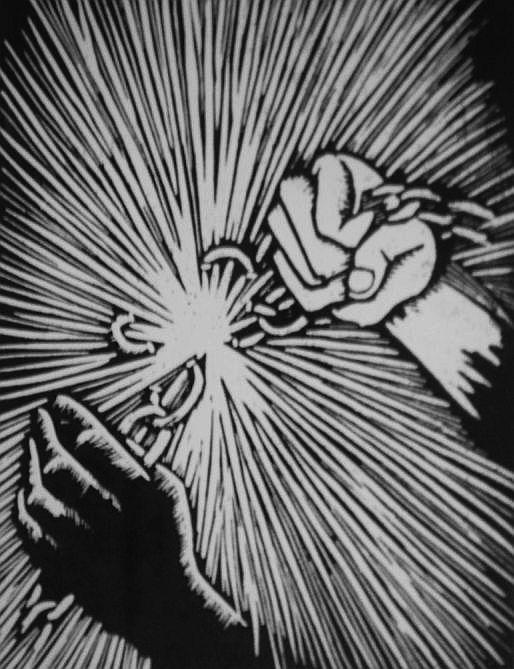


 After the Crash