Thralldom and Its Uses

By James Howard Kunstler

Source: Kunstler.com

Spring is always convulsive, with new things heaving into life. Under every dead leaf, something stirs and seeks light, the old must make way for the new, and to some degree the earth is not quite the same place as it was the last time it turned, though the scene looks superficially familiar. Winter’s torpor is, at least, a cold comfort, but springtime’s warmth and movement rattle the nerves. Things unseen shift ominously beneath us. Everything is pending and tending, and nothing is resolved.

Having wrecked its latest business model —hypertrophic financial fakery — Western Civ stumbles into the blinding new reality that it takes real stuff to run an economy, and that money itself is not an adequate replacement for the stuff. The trillions supposedly vested, for instance, in stock market valuations mostly represent mere wishes and promises, and for what? Why, for more money — which responds by losing value, so that we’re racing ever faster toward a receding horizon.

The net result: a world with less available stuff and plenty of money that’s increasingly worthless in pursuit of stuff. It isn’t long before people recognize the disutility of both conditions. The idea that we can fix this problem with central bank digital money is hilarious. When faced with less available stuff, resorting to “money” ever more abstracted from any relation to stuff only puts you in thrall to more empty wishes and promises when this is exactly the moment to be less in thrall and more in touch.

America has had enough of being in thrall, especially to figures and forces dedicated to our destruction. This spring is the beginning of a national life with less stuff, including, looks like, stuff to eat. That will sure enough put folks in touch with something real, and then they will naturally have to do something about it. Centralized control of the population via trackable digital money is the last thing that will avail in the face of hunger and desperation. In fact, that is just another set of empty wishes and promises.

The reality is that centralized government, such as the one in Washington DC, is less and less in control of anything — except the manufactured pretense that it can fix the problems of less stuff and decaying money. The federal government is increasingly impotent, unable to discharge its basic obligations to preserve public order and safety. Its previous attempt to fix something was the response to Covid-19, which has culminated in the fiasco of the mRNA vaccines, now pending and tending toward an astounding wave of early deaths among those in thrall to the transparently dishonest promises of officialdom (“safe and effective”).

That’s the trouble with thrall. It narrows the field-of-vision so badly, you can’t see what’s coming at you indirectly, like: hardship and death. The country has been in serious trouble for more than a decade. Cavalcades of bad choices — and then lying to ourselves about these bad choices — has shoved us well over the edge of our cherished expectations. One way out, then, is to simply refuse to remain in thrall to officialdom and the manufactured bullshit that is its only product.

We are lately in thrall to the melodrama in Ukraine, largely engineered by figures and forces in our own government and for their own ends, which look suspiciously at odds with the nation’s actual interests (the nation being us, its people). Perhaps this illustrates the widening gulf between the slouching beast government has become and the people trying to operate their lives and destinies under it. No food for you, no fertilizers for future food for you, no spare parts for you, no free speech for you, no social or economic role for you, no health for you, and (watch it, now!) soon no life for you.

Collectively going crazy has been a luxury we can’t afford anymore. You fell for RussiaGate and it kept you in thrall for years. You fell for the Adam Schiff orchestrated Ukraine phone call impeachment gambit. You fell for the Covid scare and the dangerously defective vaccines forced on you. You fell for the fraud-drenched election of the empty vessel known as “Joe Biden.” Don’t fall for the invitation to World War Three.

Russia means business in its historic sphere of influence. It’s none of our business, and we’re only making it worse for the Ukrainian people by pretending it’s our business with the false promise of our support. The only thing that matters to us about Ukraine just now is that we’re standing in the way of useful negotiations to end the conflict there and egging on various other countries in Europe to aggravate the situation.

It’s been a fine distraction from everything else that is slipping away in our own country, including the loss of liberty, the right to a livelihood, the need for legitimate meaning, the value of our money, our respect for the law, the ability to speak our minds, and our duty and obligations to each other. Our government is not interested in supporting any of that, and we might doubt that it even could anymore if it wanted to. It only wants to keep you in a state of abject thrall while it fritters away our posterity.

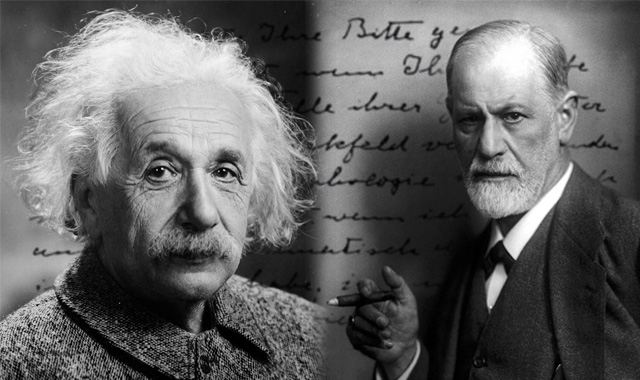
Einstein and Freud’s ‘Why War?’ Revisited: Why Anti-War Efforts Go Nowhere

By Robert J. Burrowes

In 1932, Sigmund Freud and Albert Einstein exchanged letters, later published under the title ‘Why War?’ See ‘Why War? An exchange of letters between Freud and Einstein’.

However, whatever insight these two giants of an earlier era brought to our understanding of war, the reality is that a great deal has been learned since they corresponded.

Nevertheless, since the emergence of an identifiable, organized anti-war movement during World War I which has grown to include a diverse range of activists and organizations from across the political spectrum, as well as peace and conflict resolution scholars from various disciplines, there is little evidence that this movement, or any of the many organizations within it, has been learning from its failures by systematically undertaking or commissioning further research to understand the phenomenon of war more completely and then devising a strategy to end it based on that learning.

Hence, during its existence for more than 100 years, the organized anti-war movement – and the subsequently developed peace movement with its broader agenda – has had minimal impact in preventing or halting particular military conflicts, including wars, and zero impact in ending war generally, as the record testifies.

And so, even today, war continues in several countries in West Asia (the Middle East), Africa, elsewhere and, more recently, in Ukraine with the antiwar movement again demonstrating its ineffectiveness and, in the case of Ukraine, failing to comprehend the deeper agenda behind what is taking place in that country. See ‘The War in Ukraine: Understanding and Resisting the Global Elite’s Deeper Agenda’.

Of course, while an utterly inadequate analysis of what, fundamentally, is driving war is the critical foundation of the anti-war movement’s problems, it is still just one of the substantial range of problems it faces, some of which derive from this flawed analysis but others which a better analysis would expose. These include, for example, an understanding of why the fear of most of those within the anti-war movement is preventing the movement from mustering the commitment and courage that will be necessary if we are to undertake the many actions necessary to end war. In essence, fear makes most participants in the movement happy to complain about war but not take action themselves (or take action that has zero or minimal impact).

As Daniel Berrigan noted in his 1969 book No Bars to Manhood: ‘the waging of war, by its nature, is total – but the waging of peace, by our own cowardice, is partial.’

This cowardice means that a large proportion of the anti-war movement contents itself with a range of powerless measures – usually extending no further than signing petitions, issuing lameduck ideologically-oriented statements, writing articles, organizing conferences, issuing calls for negotiations or appeals to politicians – all invariably devoid of emotional and geopolitical reality as well as realistic measures to avert/halt the latest war.

This might include advocacy of measures, such as those developed under the guise of international humanitarian law, in relation to ‘outlawing war’ or outlawing particular weapons systems, despite the obvious observation that these legal constraints are routinely violated with impunity by any military power, starting with the United States, or non-state actor that is unconstrained by questions of legality.

Beyond this, ‘action’, when it is taken, is usually confined to conducting (notoriously ineffective) street protests or employing other tactics devoid of strategic impact in the context (of ending war). As former US Secretary of State Alexander Haig once noted about a massive anti-war demonstration: ‘Let them march all they want, as long as they continue to pay their taxes.’ See Alexander Haig. As a four-star general, Haig, not regarded as the most intelligent Secretary of State in US history, certainly understood that tactical choice is a question of strategy. Most activists have no idea.

So if we are to end war as a phenomenon in human affairs, or even meaningfully attempt to prevent or end a particular war, we need to do a number of things. Most fundamentally, we must start with a sound understanding of what causes violence to begin with because war does not emerge from a vacuum. War, when all is considered, is just another manifestation of violence, like everything from violence against women to economic exploitation to environmental destruction.

And if we are not able or willing to investigate and understand what is causing violence, and address this fundamental cause as part of our strategy, then our other efforts to end the manifestations of violence, including war, must all be in vain. Again, as the record readily testifies.

What Causes Violence?

So what is the cause of violence? Here is what 41 years (1966-2007) of concerted effort taught me.

Perpetrators of violence learn their craft in childhood. If you inflict violence on a child, they learn to inflict violence on others. The political leaders who decide to wage war, the military leaders who plan and conduct it, as well as the soldiers, sailors and aircraft personnel who fight war each suffered violence as a child. The terrorist suffered violence as a child. The neo-Nazi suffered violence as a child. The individual who inflicts violence on his (or her) partner suffered violence as a child. The corporate executive who exploits working class people and/or those who live in Africa, Asia or Central/South America suffered violence as a child. The racist or religious bigot suffered violence as a child. The individual who perpetrates violence in the home, in the schoolyard or on the street suffered violence as a child. The individual who overconsumes, or even consumes certain products and/or otherwise destroys the biosphere, suffered violence as a child.

So let me illustrate this point, in a very simplified way, by briefly explaining the parenting experience of a neo-Nazi. This individual has been terrorized by their parents and/or other significant adults in their life into projecting their fear onto particular groups of human beings and into believing that violence is a morally correct and superior way of dealing with these ‘different’ people. But for a much fuller and more nuanced explanation of this point, see the sections headed ‘The Emotional Profile of Archetype Perpetrators of Violence’ and ‘The Spectrum of the Violent Personality’ in ‘Why Violence?’

If we want to end violence in all of its manifestations, structural and otherwise, locally and globally, then we must finally end our longest and greatest war: the adult war on children. And here is an additional incentive: if we do not tackle the fundamental cause of violence, then our combined and unrelenting efforts to tackle all of its other symptoms must ultimately fail. And extinction at our own hand – by nuclear war or other means – is inevitable.

How can I claim that violence against children is the fundamental cause of all other violence? Consider this. There is universal acceptance that behaviour is shaped by childhood experience. If it was not, we would not put such effort into education and other efforts to ‘socialize’ children to ‘fit into’ their society. And this is why many psychologists have argued that exposure to war toys and violent video games shapes attitudes and behaviours in relation to violence.

But it is far more complex than this and, strange though it may seem, it is not just the ‘visible’ violence (such as hitting, screaming at and sexually abusing) that we normally label ‘violence’ that causes the main damage, although this is extremely damaging. The largest component of damage arises from the ‘invisible’ and ‘utterly invisible’ violence that we adults unconsciously inflict on children during the ordinary course of the day. Tragically, the bulk of this violence occurs in the family home and at school. See ‘Why Violence?’ and ‘Fearless Psychology and Fearful Psychology: Principles and Practice’.

So what is ‘invisible’ violence? It is the ‘little things’ we do every day, partly because we are just ‘too busy’. For example, when we do not allow time to listen to, and value, a child’s thoughts and feelings, the child learns to not listen to themSelf thus destroying their internal communication system. When we do not let a child say what they want (or ignore them when they do), the child develops communication and behavioral dysfunctionalities as they keep trying to meet their own needs (which, as a basic survival strategy, they are genetically programmed to do).

When we blame, condemn, insult, mock, embarrass, shame, humiliate, taunt, goad, guilt-trip, deceive, lie to, bribe, blackmail, moralize with and/or judge a child, we both undermine their sense of Self-worth and teach them to blame, condemn, insult, mock, embarrass, shame, humiliate, taunt, goad, guilt-trip, deceive, lie, bribe, blackmail, moralize and/or judge.

The fundamental outcome of being bombarded throughout their childhood by this ‘invisible’ violence is that the child is utterly overwhelmed by feelings of fear, pain, anger and sadness (among many others). However, mothers, fathers, teachers, religious figures and other adults also actively interfere with the expression of these feelings and the behavioral responses that are naturally generated by them and it is this ‘utterly invisible’ violence that explains why the dysfunctional behavioral outcomes actually occur.

For example, by ignoring a child when they express their feelings, by comforting, reassuring or distracting a child when they express their feelings, by laughing at or ridiculing their feelings, by terrorizing a child into not expressing their feelings (for example, by screaming at them when they cry or get angry), and/or by violently controlling a behavior that is generated by their feelings (for example, by hitting them, restraining them or locking them into a room), the child has no choice but to unconsciously suppress their awareness of these feelings.

However, once a child has been terrorized into suppressing their awareness of their feelings (rather than being allowed to have their feelings and to act on them) the child has also unconsciously suppressed their awareness of the reality that caused these feelings. This has many outcomes that are disastrous for the individual, for society and for nature because the individual will now easily suppress their awareness of the feelings that would tell them how to act most functionally in any given circumstance and they will progressively acquire a phenomenal variety of dysfunctional behaviors, including some that are violent towards themself, others and/or the Earth.

From the above, it should also now be apparent that punishment should never be used. ‘Punishment’, of course, is simply one of the words we use to obscure our awareness of the fact that we are using violence. Violence, even when we label it ‘punishment’, scares children and adults alike and cannot elicit a functional behavioural response. See ‘Punishment is Violent and Counterproductive’ and ‘The Rule of Law: Unjust and Violent’.

If someone behaves dysfunctionally, they need to be listened to, deeply, so that they can start to become consciously aware of the feelings (which will always include fear and, often, terror) that drove the dysfunctional behaviour in the first place. They then need to feel and express these feelings (including any anger) in a safe way. Only then will behavioural change in the direction of functionality be possible. See ‘Nisteling: The Art of Deep Listening’.

‘But these adult behaviors you have described don’t seem that bad. Can the outcome be as disastrous as you claim?’ you might ask. The problem is that there are hundreds of these ‘ordinary’, everyday behaviors that destroy the Selfhood of the child. It is ‘death by a thousand cuts’ and most children simply do not survive as Self-aware individuals. And why do we do this? As mentioned above, we do it so that each child will fit into our model of ‘the perfect citizen’: that is, obedient and hardworking student, reliable and pliant employee/soldier, and submissive law-abiding citizen (that is, one who pays their taxes, including those for war, and votes and/or lobbies politicians rather than acting powerfully themSelf).

The bottom line is simple: As parents, teachers, religious figures and adults generally, we want the child to be obedient to our commands, and not powerfully able to act in accord with their own Self-will. And we achieve this outcome by terrorizing the child into doing what we want rather than nurturing the child’s innate capacity to listen, deeply, to themSelf in order to follow their own will.

Moreover, once we destroy the Selfhood of a child, it has many flow-on effects. For example, once you terrorize a child into accepting certain information about themSelf, other people and the state of the world – with the bulk of this information mediated by elite agents including education systems, the entertainment industry and the corporate media – the child becomes unconsciously fearful of dealing with new information, especially if this information is contradictory to what they have been terrorized into believing. As a result, the child will unconsciously dismiss new information, no matter how truthful, out of hand.

In short, the child has been terrorized in such a way that they are no longer capable of learning (or their learning capacity is seriously diminished by excluding any information that is not a simple extension of what they already ‘know’). If you imagine any of the bigots you know, you are imagining someone who is utterly terrified. But it’s not just the bigots; virtually all people are affected in this manner making them incapable of responding adequately to new (or even important) information. This is one explanation why some people are ‘climate deniers’, most people do nothing in response to the climate catastrophe and even those people who do take action usually do so ineffectively. See ‘The Global Climate Movement is Failing: Why?’

But the same can be said for those working to end war – see ‘The War to End War 100 Years On: An Evaluation and Reorientation of our Resistance to War’ – end the nuclear weapons race or engage in other struggles, including liberation struggles, that are vital parts of the global struggle to create a more peaceful, just and sustainable human culture. See ‘Why Activists Fail’.

And to briefly put this issue in the current global context, the vast bulk of the human population, including most of those individuals whom society would regard as ‘highly intelligent’, has been readily terrorized into believing that they are threatened by a pathogenic virus (labeled ‘SARS-CoV-2’) when there is no documented, scientific proof that such an entity as a pathogenic virus even exists – see ‘Dismantling the Virus Theory – The “measles virus” as an example’ and What Really Makes You Ill? Why everything you thought you knew about disease is wrong – and certainly no documented scientific proof that a virus labeled SARS-CoV-2 exists. See ‘COVID-19: The virus does not exist – it is confirmed!’ and ‘Statement On Virus Isolation (SOVI)’. And for an account of researcher Christine Massey’s fruitless search over the course of more than a year to find evidence of an isolated virus, via Freedom of Information requests to health/science institutions all over the world, see ‘177 health/science institutions globally all failed to cite even 1 record of “SARS-COV-2” purification, by anyone, anywhere, ever’.

Despite this, the vast bulk of the human population has been terrorized into accepting a series of medical intrusions (including lockdowns, PCR tests, mask-wearing and gene-altering injectables) when, in fact, there is no documented, scientific proof that (assuming there was a ‘pathogenic virus’) lockdowns, PCR tests, mask-wearing or ‘vaccines’ even ‘work’ and/or extensive documentation of their harm. See, for example, ‘And How Are the Children? Lockdowns, Massive Fear, Deaths from Suicides and Drug Abuse’The WHO Confirms that the Covid-19 PCR Test is Flawed: Estimates of “Positive Cases” are Meaningless. The Lockdown Has No Scientific Basis’‘Conclusion Regarding Masks: They Do Not Work’‘Masks “don’t work,” are damaging health and are being used to control population: Doctors panel’‘The Truth about the Covid-19 Vaccine’A Final Warning to Humanity‘COVID Shots to “Decimate World Population,” Warns Dr. Bhakdi’ and ‘20 Facts about Vaccination Your Doctor Forgot To Tell You’.

And because the fear generated by the elite-driven ‘virus’/injectable narrative has been so debilitating and thus engendered a high level of obedience by the population at large, it is a rare individual who has investigated both the shortcomings in this narrative and the horrific agenda that this narrative is concealing, let alone identified a powerful strategy to resist it. See ‘We Are Human, We Are Free’.

So, to return to the focus of this article, let me briefly reiterate this vital point: The essence of what human beings call ‘socialization’ is the process by which each child is terrorized in such a way that they are no longer capable of learning or their learning capacity is seriously diminished. The multifaceted violence inflicted throughout childhood and adolescence ensures that the adult who emerges is suppressing awareness of an enormous amount of fear, pain, sadness and anger (among many other feelings) and must live in delusion to remain unaware of these suppressed feelings. This ensures that, as part of their delusion, the individual develops a strong sense that what they are doing already is functional and working (no matter how dysfunctional and ineffective it may actually be) while not investigating the existence of evidence that might contradict their delusion and/or unconsciously suppressing awareness of any evidence they come across that does contradict it. They do this because, unconsciously, people learn to identify obedience with ‘functional and working’ (because they do not get punished for being obedient). See ‘Why Violence?’‘Fearless Psychology and Fearful Psychology: Principles and Practice’‘Do We Want School or Education?’‘Love Denied: The Psychology of Materialism, Violence and War’ and ‘Human Intelligence or Human Awareness?’

Just one critically important outcome of this terrorization process is that a significant proportion of the human population is effectively insane, and this certainly includes the Global Elite and those primary elite agents on which it relies to generate and maintain wars. See ‘The Global Elite is Insane Revisited’.

Another critically important outcome of this terrorization process is that the international conflict resolution architecture – which is essentially a legal framework – does not take emotional factors into account. Hence it is not capable of resolving conflicts in any meaningful way. This is why negotiations often go nowhere, particularly in a timeframe that would avert adverse outcomes. And why ‘agreements’ that are reached are utterly superficial. The fundamental drivers of the conflict – invariably including suppressed terror, self-hatred and anger which are often unconsciously projected at the other party – are never addressed and will continue to manifest as violence in various forms, even if military violence is ended in a particular context. See ‘Challenges for Resolving Complex Conflicts’.

So if we want a powerfully effective anti-war movement (or peace movement, environmental movement, social justice movement….) then we need Self-aware individuals who can think, plan and act powerfully as part of strategically-oriented organizations to achieve ambitious longer-term goals. Such as ending the institution of war.

Anything less will fail. Again, as the record demonstrates.

So What Can We Do?

Ending war is possible. But it will take a courageous, sophisticated, strategic effort, given how deeply violence is embedded into the human ‘socialization’ process which makes war just one of the many approved violent behaviours in which adults are expected and encouraged to participate, beginning with paying taxes to finance it.

So while it is possible to end war, this won’t be happening any time soon.

And it can’t happen until we commit ourselves to eliminating violence against children so that human society creates adults who are psychologically whole and powerfully able to participate in conflict without resorting to violence to ‘resolve’ it.

Nevertheless, in parallel with efforts to eliminate violence against children, those powerful enough can also participate in a comprehensive strategy to end war as explained on the ‘Nonviolent Strategy’ website, starting with this list of ‘Strategic Goals to End War’. This is extrapolated from a book which explained why a strategy of nonviolent defense, understood and implemented by sufficient committed and organized individuals, is strategically superior to any military strategy. See The Strategy of Nonviolent Defense: A Gandhian Approach.

Or, if you want to participate in a strategy to end a particular war, such as that in Ukraine, particularly given the possibility of it morphing into a longer term insurgency – see ‘Ukraine And The New Al Qaeda’ – you can read how to do so here: Nonviolent Defense/Liberation Strategy.

But, as explained above, precisely because of their socialization experience during childhood, most of those who would identify as ‘anti-war’ are simply too frightened to act powerfully in resisting it. Hence, war will continue until we address its root cause: violence against children.

Biodata: Robert J. Burrowes has a lifetime commitment to understanding and ending human violence. He has done extensive research since 1966 in an effort to understand why human beings are violent and has been a nonviolent activist since 1981. He is the author of ‘Why Violence?‘ . His email address is flametree@riseup.net and his website is at http://robertjburrowes.wordpress.com

A World At Odds: The Great Principles Wipe

By Phil Butler

Source: New Eastern Outlook

The world of analysts has missed something critical, something fundamental for explaining what’s going on. We’re so focused on the symptoms of the great reset that’s been going on, that we’ve overlooked that which will reveal the end game. The techniques, the strategies being used, their breadth, and the essence of the psychological warfare being waged – let us know dangerous these days are. The Russians are not simply fighting to preserve Russia, they’re the footsoldiers standing against the beast. The real beast in the hearts of evil men.

“One believes things because one has been conditioned to believe them.” ― Aldous Huxley, Brave New World

Mask, or no mask. Vaccine, or no vaccine. The pandemic awakened the suspicions of millions that something other than a serious influenza epidemic is going on. But the conspiracy that was too big to be a genuine conspiracy, was meant to be unbelievable. The bug itself, likely manufactured in a Biolab by our own government, seems to have been engineered to be contagious enough, just deadly enough, to erase our principles. This bug, the manipulation of the pandemic, it set the world at odds with itself. And what about climate change? Do you think that the elites running this shit show would pass up yet another chance to befuddle us? Climate science, or climate hoax – we’re at odds even over fundamental physics. Are you sensing it, the dastardly strategies at work, I mean? I am sure many of you do. But, I am also sure most people have no conception of the depth of the mind games being played today.

We’re undergoing a morality and mind wipe no psychothriller novelist ever imagined. The idea came to me like a bolt, snapping me from a deep sleep last night. Something about all that’s been going on has gnawed at me, as I am sure it has you, for months now. And now I know what it is. We’re being prepared for those artificial wombs that Aldous Huxley conjured up for his post-dystopian Utopia in the novel Brave New World. We must have been totally blinded, not to have seen and felt it before. Trangenderism, the United States creating gender-free passports, and Walt Disney’s company being boycotted over what American moms are calling “grooming” their kids to be victims of pedophiles. A Supreme Court nominee the other day, said in her confirmation hearings the other day, that she could not define what a woman is. Think about this for a moment. Supreme court justices are the most powerful and influential officials in the U.S. government. They are justices for life, appointed to interpret the law!

Mind cleansing. The great erasure of our morality is what is happening right now. The elites in North America and in Europe have joined hands in some kind of ritual, with plans for the final takeover of Earth. And Russia is the biggest hurdle in the way of this. But also, another facet of the overall wipe – Putin bad, or Putin good, that kind of ideological dilemma. But the reader should not simply take my word here. Read the sort of academic papers the Rothschild advisors and the Queen Mother’s men would be reading. Start with “Wiping the Slate Clean: Psychological Consequences of Physical Cleansing,” which discusses how cleaning your hands with disinfectants helps absolve you morally, of past transgressions. No, I am not joking. Those billions of hand sanitizer bottles at every store, restaurant, and office have a secondary effect. I know, more to think about. But while you are thinking, here is a direct quote from this research. See if you can deduce any correlations or benefits for this Bold New World being built:

“These findings show that the psychological impact of cleansing goes beyond the conceptual metaphor of moral cleanliness (Lakoff & Johnson, 1980). The metaphoric notion of washing away one’s sins seems to have generalized to a broader conceptualization of “wiping the slate clean” (Lee & Schwarz, 2010b). This allows people to remove unwanted residues of the past, from threats to a moral self-view (Zhong & Liljenquist, 2006) to doubts about recent decisions (Lee & Schwarz, 2010b) and worries about bad luck (Xu et al., 2011).”

The ‘clean slate,” is the point I am driving at here. In order for the elites waging total war on the Russians to succeed in their ultimate plan, western societies (first) must be under total control, in harmony, willingly compliant to whatever the technocrats and their benefactors dictate. Think of this as the indoctrination young children get when they first go to a religious school. Everything is being broken down and eradicated so that something else can take the place of former reality, morality, and faith. I told you, it’s diabolical what’s going on. And I think Putin and his people know this, but hesitate to reveal the inconceivable nature of it all.

What’s taking place in the world right now is the start of the final battle for the planet, which begins with the warring within our own hearts and minds. What we see happening is an overriding strategy based on what the ancient philosophers called tabula rasa, or clean slate. This is the idea that we are born without built-in mental content, and that experience and learning imprint our desires, fears, love, hate, morality, etc. The reader might ask now, “How can these elites wipe our slate clean to imprint their orders into us now, after years or decades of experiences?” It’s a logical question, but an easy one to answer.

While these theories of the soul and the self have been bounced back and forth for centuries in the works of philosophers like Thomas Hobbes and John Locke, the concept of the “inconceivable” iterated by Diogenes Laërtius (3rd Century AD) weighs on the mind-wiping taking place in the media, in society, and with the individual right now. Our perception is what is being wiped clean so that it can be rewritten. The philosopher writes:

“Perception, again, is an impression produced on the mind, its name being appropriately borrowed from impressions on wax made by a seal; and perception they divide into, comprehensible and incomprehensible: Comprehensible, which they call the criterion of facts, and which is produced by a real object, and is, therefore, at the same time conformable to that object; Incomprehensible, which has no relation to any real object, or else, if it has any such relation, does not correspond to it, being but a vague and indistinct representation.”

The strategy, as it were, is all focused on where the source of knowledge is. First, all sources must be called into question. This is where the term “Fake News’ came in. First, anybody who did not talk nicely about Donald Trump became a fake news outlet. We all thought this was both funny, and correct, and we adopted the idea and the term wholeheartedly. But, as we see with the Ukraine crisis, news and information from Russia is totally banned, censored, and non-existent in the western psyche. And here’s where the real evil genius part comes in.

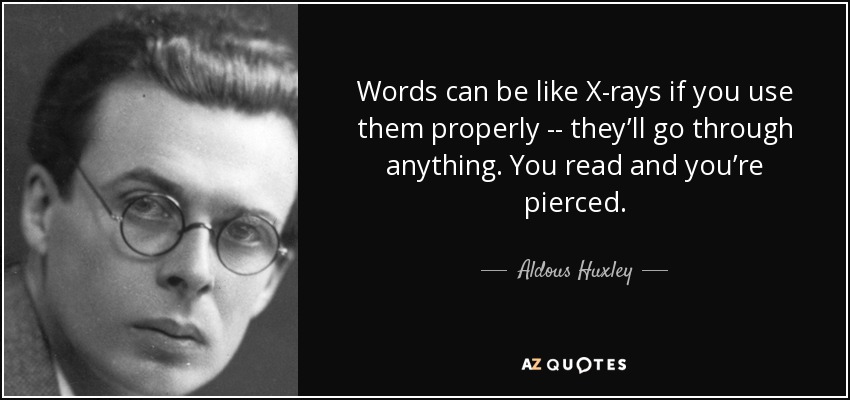
“Words can be like X-rays if you use them properly – they’ll go through anything. You read and you’re pierced.”― Aldous Huxley, Brave New World

Russia sympathetic sources of information, or those input channels, are not “good sources,” this is being established. Meanwhile, in America, people are getting the final touch of mind mopping via contrived incidents like the recent Academy Awards circus involving actor Will Smith and comedian Chris Rock. And, many other moral crises are being interjected before the final mind fuck. Half and half, like masks versus no masks, and climate change over climate hoax, Americans’ morality is being rubbed raw by the big rubber, gummy eraser of the controlling elites. And this, my friends, will lead to the powerful world order to literally dictate good and evil, right and wrong through the worldly version of what 11th-century philosopher Avicenna called the “perfect source of knowledge.” Their aim is to become, our source, our gods, our everything.

Look at how it rolls out. Western theorists and analysts, cringing because Vladimir Putin cites historical facts, or insists on legal precedent. The new generation ignorant of even 9/11 or the so-called “war on terror” is being indoctrinated. At the same time those who have experienced things like Vietnam or the Cold War, we’re being reprogrammed. Our principles are being wiped off of our cerebrums, like the spilled milk of belief in God, country, or the long-lost quest for peace. Mickey Mouse is a transvestite. Arnold Schwarzenegger does not vanquish torturing Nazis, he becomes one. And anyone who cannot be reprogrammed must be obliterated.

Finally, at the core of this wiping our slates clean strategy the original position (OP), often referred to as the veil of ignorance experiment seems to be in motion. On the one side, the elites seem convinced that humanity is capable of being totally alienated from past knowledge. And on the other, this veil cannot be applied because it is impossible for us to forget things like gender, ethnicity, the past, our complexion, or fact, as it were. Perhaps the ruling elites who have conjured up with gigantic brainwashing scheme, truly do feel like gods. Maybe their power to market and sell products and war has deluded them. At least I pray they are deluded. I pray the Russians and the other two-thirds of the world abstaining from the game, win out in the long run. I, for one, am not ready for a Brave New World of artificial wombs.

THE ANTI-STATIST: A REBEL FOR OUR TIMES

By Gary Z McGee

Source: Waking Times

“One man who stopped lying could bring down a tyranny.” ~Aleksandr Solzhenitsyn

All flag worshipers have the same unhealthy religion: statism. Flag worship is a nationalist’s false idol. It doesn’t matter if you’re a sieg-heiling Nazi or a little kid singing the pledge of allegiance. It’s all parochial symbolism digging its tentacles into contemporary ideals. It leads to blind conformity, indoctrinated complacency, bloated pride, war, and people all too happy to choke on the blue pill of blind obedience to an outdated chain of command.

Flag worship is a psychosocial hang-up. It works because we are social creatures. But what begins as a symbol for unifying people becomes a symbol for dividing people when it is taken too seriously or too pridefully.

In a world of 195 nation states, all with their own flags, it behooves us to use the same reasoning that Aristotle used when he said, “It is the mark of an educated mind to be able to entertain a thought without accepting it,” and then apply it to the concept of flags. Better to entertain a flag without accepting its authority. That’s what anti-statists do. And so, anti-statists are free under all banners.

Statism keeps the world divided. Divided people are easier to control. As Maximilien Robespierre surmised, “The secret of freedom lies in educating people, whereas the secret in tyranny is in keeping them ignorant.” Anti-statists teach us how not to be ignorant statists. They teach us how to rise above our cultural conditioning and how to become well-informed free-range humans instead.

As Nietzsche famously explained, “State is the name of the coldest of all cold monsters. Coldly it lies; and this lie slips from its mouth: ‘I, the state, am the people.’” Anti-statists are here to remind us that we are NOT the state. We are free individuals who require others to be free so that we can remain free. It really is that simple. As Albert Camus said, “I rebel, therefore we exist.”

Statism only functions when unhealthy, divided individuals create an us-versus-them mentality. It cannot continue if people are healthy and connected. It cannot continue if people realize that freedom is paramount. In short: statism fails when enough people achieve a sense of freedom and wellbeing despite the state.

So how do you know if you’re a statist or not?

Here are seven tell-tale signs you may be a statist:

1.) You are a statist if you believe that you need a ruler to rule over you.

2.) You are a statist if you believe that you require permission to be free.

3.) You are a statist if you blindly worship a flag.

4.) You are a statist if you believe that violence is the solution to problems.

5.) You are a statist if you believe that people should be forced into doing things without their consent.

6.) You are a statist if you believe that an authority should make decisions for you.

7.) You are a statist if you believe in comfortable obedience over uncomfortable freedom.

Anti-statism is an alien concept in our world, even though statelessness can be extended to all living beings “in principle” and “in theory,” at its irreducible bedrock nature, it is exceptionally difficult to be sovereign and stateless. This is because the entire world is plagued with the disease of statism. Statism is so second-nature to our existence that we never question it.

We might as well be fish questioning water. But we are NOT fish. We are human beings with the ability for deep logic, higher reasoning, and basic common sense. As Alvaro Koplovich quipped, “A man without a government is like a fish without a bicycle.” Fish do not need bicycles. Just like mankind does not need government, though he is conditioned to think he does.

People are unlikely to question a system they’ve been indoctrinated into, even if that system goes against common sense, the golden rule, and the non-aggression principle. People are more likely to stick to what they’ve been conditioned to believe, whether that belief is judicial, political, religious or all three (statism).

Overcoming statism takes a particular flavor of courage that doesn’t readily exist in the average person. It’s a kind of courage that must be birthed through great psychological upheaval and the death of one’s cultural conditioning. It must be nursed and cultivated daily, lest it slip back into passivity or typical, ineffective, and outdated modes of courage. It must be guided by a unique and daring flavor of leadership: a radical leadership that checks and balances constructs of power and teaches others how to do the same. This is Anti-statism.

Freedom begins by overcoming false truths. A false truth is any belief that is deemed invalid according to universal laws. It’s our responsibility alone to figure this out. Nobody else can do it for us. It’s our responsibility alone to question what we’ve been taught.

What’s crucial to understand is that the concept of freedom is almost entirely psychological in nature. In today’s day and age, it is less about breaking free physically (from harsh overt slavery), and more about breaking free psychologically (from comfortable covert slavery). Breaking free psychologically is rising above the cultural conditioning and reconditioning our condition.

The anti-statist does this with pluck and aplomb, acting as both a beacon of light for those stuck in the dark (confused and disoriented) AND as a beacon of darkness for those blinded by the light (culturally conditioned).

Anti-statists force us to look into the cultural mirror. They teach us how to pour the statist Kool Aid down the sink. They teach us how and why to deny any authority that claims we need permission to be free. They teach us how to disobey inauthentic leadership and how to embrace authentic leadership instead. They teach us how to become leaders who teach others HOW to think rather than WHAT to think.

Where statism is comfortable slavery, anti-statism is uncomfortable freedom. The anti-statist is free and uses that freedom with the soul intent to free others. They escape tyranny by freeing others through the symbol of their own freedom. Thus, freedom begets more freedom.

As the folks at Academy of Ideas said, “Contrary to what statist propaganda teaches, freedom cannot be imposed on us from above, nor is it created or destroyed at the ballot box. Freedom emerges at a societal level when enough of us recognize its value and structure our lives accordingly.”

Freedom must find its limit in justice and justice must find its limit in freedom. Otherwise, we either find ourselves living in a free-for-all state of chaos where anybody can do anything without any consequences (like the movie The Purge), or we’re living in a violent authoritarian state with oppressive laws and the illusion of freedom (like statism). Ideally, freedom balanced with justice and justice balanced with freedom is the healthiest way.

Here are five anti-statist tactics to overcome statism:

1.) Don’t ask for permission to be free.

2.) Don’t pay for the guards to guard you.

3.) Learn self-defense and honor the nonaggression principle.

4.) Vote with your feet: Don’t vote in, vote out.

5.) Don’t rely on government; govern yourself.

(Further reading: The Best Way to Manage Slaves (and how to avoid becoming one.)

Though anti-statists are born into a profoundly sick society, they decide not to be a part of it. They decide to live in the “real” world, a world not tainted by the unhealthy culture that the false system has created. Although the unhealthy culture is something the anti-statist must deal with, it is not something they must be a part of unless they choose to.

The anti-statist takes up the mantle of freedom despite authority so that you, your mother, your daughters, and even your granddaughters can one day be free from the powers of false men. They feel it is their own responsibility, as truly free humans, to do something about the unhealthy state of affairs because nobody else will. Nobody else seems to have the capacity to do what the anti-statist can do.

A wise man once said, “All that is needed for the forces of evil to triumph is for good men and women to do nothing.” Thus, anti-statists refuse to do nothing. They don’t waste time talking about being good men. They ARE good men. They will not allow evil to triumph. Even if that means they must make the goody-two-shoes and snowflakes of the world uncomfortable. Even if that means they must be amoral in the face of shortsighted morality and blind immorality.

When the laws of a nation-state are moral and just, the anti-statist follows them. When they are immoral and unjust, the anti-statist breaks them. This is because the anti-statist has become a self-ruling, self-overcoming, amoral agent unto himself. He can see through the nationalism that blinds the statist and, for that reason, he is a forerunner regarding the healthy and progressive evolution of the species.

Where statists believe that you require permission to be free, anti-statists understand that you are required to be free. Where the statist believes that only the state can provide and protect one’s freedom, the anti-statist understands that it is the sole responsibility of each individual to provide and protect their own freedom and often it must be taken away from the state. As William Blake said, “I must create a system or be enslaved by another Man’s.”

At the end of the day, it comes down to taking personal responsibility. The anti-statist teaches us all that it is our sole responsibility to realize how we are caught up in the song and dance of an extremely dangerous religion known as statism. Statism is an avalanche of outdated cultural conditioning that has divided the world for too long. It is high time that we break the cascade of divisiveness.

If, as Voltaire warned, “No snowflake in an avalanche ever feels responsible,” then the anti-statist’s rebuttal is: if enough snowflakes take the responsibility to distance themselves from the avalanche, then there is no avalanche.

THE ELEVENTH HOUR

By Kingsley L. Dennis

Source: Waking Times

In the Age of Materialism, it is said that people have their orientation outwards and towards the boundary that separates humanity from the lower orders – the animals and plants – rather than the inner orientation towards Source. And it is within the great depth of materialism that represents the final stage of a grand cycle where the world reaches its ‘extremity of separation’ in a period of remoteness from the sacred impulse.

Unknowing and blind to this, the materialist believes they experience no loss because progress has given humanity much more than it ever had, and that material progress shall be their salvation. At such a time, it symbolizes that humankind has reached a limit of distance (an extremity) from its essential nature – from its centre – and thus from its sacred home. And the modern person – especially the product of westernized modernism – has gone so far from their essential nature that they have ceased to think of it or question its existence, and even fabricate and invent a pseudo-truth for its material reality.

Many now see these times of deep materialism as representing the ‘eleventh hour’ for humanity; as a decisive moment before a dramatic turn of events in its trajectory. Others, like myself, have referred to these times as representing humanity’s ‘dark night of the soul.’ I wrote the following passage over a decade ago:

We have now entered the crisis window, the transition phase – that heroic journey into the underworld – where we will be forced to experience a shamanic initiatory experience, perhaps a near-death experience, before we can emerge as an adolescent species with a new, more mature mind. Until we reach that stage, however, we will have to struggle with the death throes of the old mind, as old systems cling to power and global infrastructures attempt to remain in control of a world in transition…the ‘dark passage’ that we are now venturing into. This is part of our collective rites of passage: it will shake us, reshuffle and reorientate a great deal of life on the planet; and it will also, hopefully, catalyze and prepare us for a psychophysical transformation. The reorientation required – both psychological and physical – may be far from linear…as we wrestle with the cloak of the old world system that clings onto a modus operandi, refusing to let go without a fight. Despite our glorious, gleaming, polished achievements that the world displays with pride, our current systems (social, cultural, political and economic) are remarkably anachronistic, cunningly deceptive, opaque, and in dire need of renovation. Yet in order to sweep out the brushwood we may be forced to endure a metaphorical, and literal, dark night of the soul. The next 20 years cannot be the same as the last 20 years. Change is upon us rapidly, even if we are not aware of its pace.[1]

We were not aware of the pace as I wrote those words; and many are no more aware now even though that pace has dramatically quickened. At each cyclical renewal we are faced with prophecies of the ‘End Time’ that also throw up images and imaginations of the world apocalypse. Yet such an apocalypse is not a fatality but a revelation – a revealing. It marks the disintegration of one narrated cycle and the emergence of new mythological voices as heralding a departure from the dying throes of an aeon of time. At such a moment, the aftermath of an apocalypse/revealing lies a great expanse where reality itself requires a re-stitching together and reimagining. A new operation of worlding comes into being. There is a change of guard of the architypes: the social-status figures of leaders, politicians, and bankers are replaced by the metaphysician, the mystic, and the prophet.[2]

It is said that the nearness of an end of an era brings with it a sense of otherworldliness. It is at such threshold moments where the veil thins to allow a penetration, a mergence, of energies from various sources, physical and metaphysical. Dimensions start to crossover and intervene; boundaries begin to dissolve.  It is then that the illusion of ordinary, consensus reality is fast breaking down; this very same illusion that shielded many people from infra-psychic incursions. According to philosopher Rene Guenon, the extremity of materialistic beliefs and practices leads to a ‘solidification of the world,’ and it is this solidification that causes ‘fissures’ to open up through which ‘infra-psychic’ forces enter. In other words, humanity is invaded by the specters of its own psyche.

The reality of unknown psychic powers, and their influences, from beyond our world has always been part of human knowledge – only that now it comes out from its occult shell and more into visibility. The dissolution of the physical world, its fragmentation, chaos, and disarray, catalyzes the psychic manifestations that represent the phase of the dissolution of the present cycle. The dissolution of the present cycle of materialism only begets a necessary re-creation of the world. The hardening and extremity of corruption of our physical world must also lead to a degree of psychological fracturing if a new psycho-physical environment is to unfold. That is, unless there are cracks within the highly conditioned collective psychosphere of humanity, how can the light get it?

Every human soul is infused with a sense, a knowing, of the Transcendent – a filament or spark of Source – of the Alpha and Omega of all existence. Ignorance of it only exists on this physical, earthly plane, and obscured by the degraded forces of deep materialism. The inner faculty which recognizes this is often referred to as the Heart, and is the human being’s highest faculty – although it lies dormant or slumbering within most people. This is an incorruptible, inviolable element within the human – a ‘supramental organ of knowledge’ – that is beyond mind or intellect.

The sense of the transcendent implies an inner urge, longing, or pull to transcend the limitations of this plane of reality. These urges are the signs of the times – the moment of the eleventh hour. The contact with Source energy is available (gives) to those who are aware of it: ‘For unto every one that hath shall be given, and he shall have abundance: but from him that hath not shall be taken away even that which he hath.’ (Matthew 25:29). It is at the eleventh hour, from a dissolution to a new beginning, that we understand also the phrase: ‘and the last shall be first.’

WHY IS NON-CONFORMITY YOUR GREATEST ASSET IN THESE STRANGE TIMES?

By Dylan Charles

Source: Waking Times

Have you noticed that in most of the great works of dystopian science fiction and cinema there’s a recurring theme of mass conformity to uncomfortably rigid and enforced social norms?

There’s always an impenetrable bureaucracy which has reduced the masses to statistical averages to be more efficiently managed. The system is never benign and loving, because paradoxically, at the top of the pyramid there always resides a single individual ruler, who is invariably psychotic, having no contact with reality. His psychosis is mirrored by the masses, and paradoxically, the individual is overrun by the mass so the the mass can be overrun by an individual.

The citizen-collective in these stories is intrinsically recognized as inhuman, unnatural, malignant and dangerous. It is compassionless, irrational, illogical and excessively emotional. To behold such a well-behaved and compliant hive stirs the primal fear of dying before death, of not-living while alive, and of an existence devoid of meaning.

The hero in these stories is always the lone individual who finds it unbearable to subjugate his autonomy to the herd. As much as he understands the consequences for non-conformity he simply cannot refuse the risk of rebellion, and is compelled to covertly express his distinctiveness. Once he experiences the thrill of making some small departure from the standard, he is thereby morally obliged to further differentiate himself, ultimately arousing the fury of the state which aims to brutally suppress him in order to maintain its position of absolute authority.

George Orwell’s 1984 is a favored example of this because the book takes you inside the mind of someone who cannot resist the pull of inner authenticity, self-integrity and truth. Aroused by truth and love, the protagonist, Winston Smith, is simply incapable of squashing his internal drive towards individuation from the party-mind, and sets out on a futile endeavor to experience the joys of having a genuine human existence… if only for a moment.

“So long as human beings stay human, death and life are the same thing.” ~Winston Smith, 1984

I won’t spoil it for you, but it doesn’t go well. He gets a short glimpse of what life could be like outside of the prison of total obedience, but is quickly punished. And horribly so.

Our natural drive towards individuation and authenticity is such a powerfully buoyant force that to subjugate it requires a tremendous counter force. Fear is typically what does the trick. Fear is the glue that holds the collective together.

What many people don’t realize is that this same story plays out metaphorically in our personal lives all day everyday, and without a proper understanding of how the mind seeks safety amongst the tribe, we’re at the mercy of the default programs running in the subconscious mind.

This is where we are wired to conform to the group, because the subconscious mind is the survival-seeking mechanism at the root of consciousness, and it compels us to pursue the safety of not being rejected, abandoned, ridiculed or ostracized. It looks at what everyone else is doing and it imitates, emulates, copies, and mimics the most common behaviors it sees in the tribe around us, now matter how insane or psychotic they are.

It has the faulty perception that to exist outside of the tribe is fatal, when in today’s society, the opposite is true.

But the good life lies beyond the herd, because by its very nature, the herd is a reduction to an average. It is by definition mediocre.

Just look at the quality of the average today. Unhealthy, unhappy, broke, dissatisfied, depressed, emotional, disconnected, dysfunctional and delusional. Being average here is deadly.

The good life is found in your authenticity and individuality. This is the part of you that has access to those non-average, non-mediocre experiences which make life worth living and inspire you to live deeply into your definition of success. Without the nuances of individual experience and authentic expression, life is dull, stupid, frightful and boring.

Culturally we have a history of valuing the individual in his own right. We’ve always revered him over the collective and credit the ingenuity and creativity of individualistic, non-conformist thinking for shaping the system and circumstances which built the foundation of the prosperity we enjoy today. This is reflected in a few excellent quotes from some of our most revered American authors, speaking from a time when there was no herd mentality, only individuals collaborating to build something unique:

“All greatness of character is dependent on individuality. The man who has no other existence than that which he partakes in common with all around him, will never have any other than an existence of mediocrity.”~James Fenimore Cooper

“If a man does not keep pace with his companions, perhaps it is because he hears a different drummer. Let him step to the music which he hears, however measured or far away.” ~Henry David Thoreau

“They [conformists] think society wiser than their soul, and know not that one soul, and their soul, is wiser than the whole world… Society everywhere is in conspiracy against the manhood of every one of its members… Whoso would be a man, must be a nonconformist… Nothing is at last sacred but the integrity of your own mind.” ~Ralph Waldo Emerson

Again, your best, most prosperous life is dependent on your willingness and ability to differentiate yourself from this sick tribe. The subconscious, however, wants you to feel safe, which is not the same thing as being safe, nor happy. And this is why your individuality is essential to real happiness and prosperity. It represents the drive to express your most extraordinary qualities, which is required to bring your true nature to completion.

Carl Jung elucidated this process of individuation, which is the psyche’s journey toward full maturation and independence. Individuation is, as he put it is, ‘to divest the self of false wrappings.’ The false wrappings of today’s world are revealed in how you self-sabotage and how you hold yourself back from your potential.

What repetitive behaviors do you engage in that you wish you didn’t? Where did the programs for these behaviors originate? Are they yours by choice, or are they learned from others, perhaps your family or tribe of origin? What do you repeatedly do, or not do, that takes your further and further from living the life you deserve and desire?

Here’s a final quote by Carl Jung on the importance of expressing your uniqueness and allowing for your individuation.

“Insofar as society is itself composed of de-individualized human beings, it is completely at the mercy of ruthless individualists. Let it band together into groups and organizations as much as it likes – it is just this banding together and the resultant extinction of the individual personality that makes it succumb so readily to a dictator. A million zeros joined together do not, unfortunately, add up to one.

Ultimately everything depends on the quality of the individual, but our fatally shortsighted age thinks only in terms of large numbers and mass organizations, though one would think that the world had seen more than enough of what a well disciplined mob can do in the hands of a single madman… People go on blithely organizing and believing in the sovereign remedy of mass action, without the least consciousness of the fact that the most powerful organizations in the world can be maintained only by the greatest ruthlessness of their leaders and the cheapest of slogans.” ~Carl Jung

HOW TO OVERCOME THE FEAR OF MORTALITY

By Gary Z McGee

Source: Waking Times

“I believe in everything; nothing is sacred. I believe in nothing; everything is sacred.” ~Tom Robbins

Some say death is a compass. Others say it’s a crossroads. Some say death is the beginning of time. Others say it’s the end of the beginning. But no matter what people say, death is nonnegotiable. It is coming for us all. We ignore this knowledge at our own great peril.

Staring into the headlights of our own death, some of us are consciously aware of these lights, but a lot of us are unconscious to them. For some of us, the lights are speeding right towards us, and death is nigh. For most of us, the lights are far off, dimly lit on the horizon. But all of us will eventually be ran over by the vehicle of Death.

So, what is a stumbling, fumbling mortal to do? How do we square the circle of knowing that we will die? How do we navigate this Mobius Strip of doom? How do we loosen the noose so that we can at least live a decent life?

Knowing how to deal with the fear of mortality is probably the most important life skill that we can have. But it’s a two-sided coin. On the one side, the fear of mortality is the fear of death. On the other side, the fear of mortality is the fear of life. Both must be honored, honed, and humored before sublimity is ours.

The fear of death:

“The more unlived your life, the greater your death anxiety. The more you fail to experience your life fully, the more you will fear death.” ~Irvin Yalom

Know this, right at the jump: There is no escape. You can’t have your cake and eat it too. A life well-lived is a life lived staring death in the face. You can’t be an adventurous artist or a drunken spirit and still be a law-abiding citizen or solid oak in a comfortable yard. If you want to get drunk, you have to accept the nausea and the hangover. If you want to say yes to sunlight and adventure, you have to say yes to filth and danger.

Everything is within you, demon and diamond, power and pain, the laughter of life and the trepidation of death. Say yes to it all, shirk nothing. Don’t try to lie to yourself. You are not going to live forever. You are not immortal. You are a butterfly in a tsunami. Don’t fight it. Surrender to it. Let it guide you. Let it drive you. Become one with the tempest. You have this one life. Make the best of it.

Reconcile your mortal fear, assimilate your existential angst, integrate your death anxiety. Defy death by confronting it head-on. Die inside it. Burn off the dross. Lose your sentimental baggage, your naivete, your innocence. Then resurrect yourself into a person with the fortitude to handle the pain. For Pain is the ultimate teacher. Especially the pain that Death teaches. Learn from it. Let it shape you. Let it sharpen you into an instrument worthy of magnificence. As Atticus cryptically stated, “Let my death be a long and magnificent life.”

In the end, death makes philosophers of us all.

The fear of life:

“Life will break you. Nobody can protect you from that, and living alone won’t either, for solitude will also break you with its yearning. You have to love. You have to feel. It is the reason you are here on earth. You are here to risk your heart. You are here to be swallowed up. And when it happens that you are broken, or betrayed, or left, or hurt, or death brushes near, let yourself sit by an apple tree and listen to the apples falling all around you in heaps, wasting their sweetness. Tell yourself you tasted as many as you could.” ~Louise Erdrich

Life will break your heart. Oh well. Let it break. Your heart was made to break open, suck the whole of experience into it—good and bad—and then come back together again. That’s what makes you stronger. Paraphrasing Samuel Becket here: Ever loving. Ever broken hearted. No matter. Love again. Break your heart open again. Break it better.

Life is less about receiving flowers, rainbows, and sunshine and more about how well you navigate thorns, storms, and darkness. Don’t avoid the thorns at the expense of the rose. Don’t avoid the storm at the expense of adventure. Don’t avoid the darkness at the expense of seeing beyond the light. Pain should not be avoided at the expense of wholeness; wholeness should be embraced at the risk of pain. As James Hillman powerfully stated, “We are composed of agonies not polarities.”

It’s what you do with these agonies that will decide the wholeness of your life. Being whole is not never breaking. Not at all. Being whole is breaking and then coming back together again stronger than you were before. And it never ends. It’s a constant: get wounded, mend your wounds, and then transform them into sacred wounds. That’s a well-lived life.

Another way of looking at the life-death-rebirth cycle is in terms of wholeness. There is no point in the cycle that is not the beginning and the end of every other point in the cycle. That is what you are. You are wholeness perceiving fractured aspects of the whole as points along the way.

During dark times, when it feels like you’ve been buried in failure and pain, remember this feeling of wholeness, and then flip the script and imagine you’ve been planted instead. Now all there is left to do is to take this wholeness and bloom into sublimity.

Discover the Sublime:

“There are heights of the soul from which even tragedy ceases to look tragic.” ~Nietzsche

When you assimilate your fear of life and death, you experience a state of cosmic sublimity. You rise above all the pains and pleasures, all the ups and downs, all the fear and angst and hunger. All the heaviness of mortality slips away into lightheartedness. Amor fati overwhelms you and all you can do is step into the powerful role of being love itself. You fall in love with being in love with your fate.

In this state of cosmic sublimity, all the pain, all the pleasure, all the ups and downs, all the fear and love of life become mere ingredients for your own immortality project, your magnum opus, your ultimate work of art.

Where a plant blooms into a flower, a human blooms into a piece of art. When you’re in the throes of an artistic process, you are flourishing. You touch the Philosopher’s Stone. The transcendent shines through the art. The sublime shines through you. It all comes together in that sacred space between life and death: surrender.

The cosmic sublime is an ontological pivot point, a perspective in which death is also rapture and resurrection, and the death of the ego is linked to creativity. It’s a movement into psychological depth.

If you want to discover the sublime, meditate on death. Meditate on eternity. Meditate on interconnectedness. Meditate on pain and probability. When you become deeply aware of your mortality it gives you a sense of purpose and energy. Find ways to transform this purpose and energy into vitality, creativity, and power. Seek expansion. Transform energy into synergy. Express the infinite in the tangible and bounded form of a work of art. Bring magic elixir back to “the tribe” and change the way the tribe sees the world.

Nostalgic for the Future

By Edward Curtin

Source: Behind the Curtain

Despite its pedigree as a fundamental element in civilization’s greatest stories, nostalgia has come to be associated with treacly sentimentality, defeatism, and spurious spiritual inclinations.  Homer, Vergil, Dante, the Biblical writers, and their ilk would demur, of course, but they have been dead for a few years, so progress’s mantra urges us to get on with it.  This is now.

But now is always, and like its twin – exile – nostalgia is perpetual.  The aching for “home” – from Greek algos, pain + nostos, homecoming – is not simply a desire for the past, whether in reality or imagination, time or place, but a passionate yearning for the best from the past to be brought into the future.

Nostalgia may be more a long ache of old people, but it is also a feeling that follows everyone along life’s way.  Its presence may be shorter in youth, and it may be brief, intermittent, and unrecognized, but it is there.  Surely it grows with experience.  As everyone knows, a taste, a smell, a sight, a sound, a song – can conjure up a moment’s happiness, a reverie of possibility.  Paradise regained, but differently.  A yearning recognized, as with seeing for the first time how Van Gogh’s blue paint opens a door to ecstasy or a line of poetry cracks open a space in one’s heart for prospective love.  Hope reborn as an  aperture to the beyond reimagined and made possible.

There is no need to ever leave where we are to find that we are already no longer there, for living is a perpetual leaving-taking, and the ache of loss is its price.

But like all pains, it is one we wish to relieve in the future; and in order to make a future, we must be able to imagine or remember it first.  We are all exiled in our own ways. Home was yesterday, and our lost homes lie in our futures, if we hold to the dream of homecoming, whatever that may mean to each person.  But it also has a universal meaning, since we dwell on this earth together, our one home for our entire human family.

You may think I am engaging in fluff and puff and flimsy imaginings.  But no.

All across the world there are hundreds of millions of exiles, forced by wars, power politics, poverty, starvation, destructive capitalism, and modernization’s calamitous consequences to leave their homes and suffer the disorientation of wandering.  Emigration, immigration, salvaging bits of the old in the new strange lands – thus is their plight.  So much lost and small hopes found in nostalgic remembering. Piecing together the fragments.

But in a far less physical sense, the homeless mind is the rule today.  There are very few people these days who don’t wish to somehow return to a time when the madness that engulfs us didn’t exist; to escape the whirligig of fragmented consciousness in which the world appears – i.e. is presented by the media – as a pointillistic painting whose dots move so rapidly that a coherent picture is near impossible.  This feeling is widespread.  It is not a question of politics.  It crisscrosses the world following the hyper-real unreality of the technologies that join us in a state of transcendental homelessness and anxiety.  All the propaganda about a “new normal” and a digital disembodied future ring hollow. The Great Reset is the Great Nightmare.  Nothing seems normal anymore and the future seems even less so.

The world has become Weirdsville. This is something that most people – young and old – feel, even if they can’t articulate it.  The feeling that all the news is false and that some massive con game is underway is pandemic.

Here is an insignificant bit of nostalgia.  I mention it because it points beyond itself, then and now.  It has always been nostalgia for the future.  I think it is a commonplace experience.

When I was in high school, there was a tiny cheese shop on Lexington Avenue and 85th St. in New York City near the subway that I took to and home from school.  It was the size of a walk-in closet.  Thousands of cheeses surrounded you when you entered. The smells were overwhelming.  I would often stop in there with empty pockets on my way home from school.  The proprietor, knowing I was in awe of the thousands of cheeses, would often give me little samples with pieces of crusty French bread.  He would regale me with tales of Paris and the histories of the various European cheeses. He would emphasize their livingness, how they breathed.  By the door was a large basket filled with long loaves of fragrant French bread flown in every morning from Paris by Air France.  These were the days before every supermarket sold knockoff versions of the genuine thing.  Each long loaf was in a colorful French tricolored paper bag.

Those loaves of bread in the French colors always transported me to Paris, a place I had never been, but whose language I was studying.  Then, and for years afterwards, I was nostalgic for a Paris that was not yet part of my physical experience.  How could this be? I asked myself.  One day I realized that I was not nostalgic for Paris or the cheese shop, nor for the cheese or the bread, which I had tasted many times, but for the paper bags the bread came in.  Why?

This question perplexed me until I realized my notion of nostalgia was wrong.  For those bags had always represented the future for me, the birds of flight a sign of freedom beckoning as my youthful world expanded.  My nostalgia for the Air France bags was a way to go back to go forward, not to wallow in sentimentality and the “good old days,” but to read the entrails for their prophetic message: the small-life world is limiting – expand your horizons.

It was not a question of jumping on a plane and going somewhere different, although that in time would also be good.  It was not an invitation to revisit that cheese shop, as if that were possible, for the store was long gone and in any case it would not mean the same thing.  It was not a desire to become a teenager again. You cannot repeat an experience, despite F. Scott Fitzgerald writing:  “You can’t repeat the past?…Why of course you can.”

The past in that sense is quicksand, a death wish.  For many people (and this is the prevalent understanding of nostalgia as an exclusively negative way of thinking), embittered nostalgia is their way of denying the present and the future, often by the fictitious creation of “the good old days” when everything was supposedly so much better.

But nostalgia can also be an impetus to create a better future, a reminder that good aspects of what has been lost need to be regained to change the course of the present’s future trajectory.

Today most people are bamboozled by world events, as an idiot wind blows through the putrescent words of the media sycophants who churn out their endlessly deceptive and confusing propaganda on behalf of their elite masters.  Given a few minutes peace of mind to analyze this drivel – a tranquility destroyed by the electronic frenzy – it becomes apparent that their fear, anxiety, and contradictory reports are intentional, part of a strategy to pound down the public into drooling, quaking morons.

But many people in their better moments do recall times when they experienced glimpses of a better life, transitory as those experiences might have been.  Moments when they felt more at home in their skin in a world where they belonged and they could make better sense of the news they received.  Not lost and wandering and constantly fearfully agitated by a future seemingly chaotic, leading to dusty death in a story told by an idiot full of sound and fury signifying nothing.

I suggest that those nostalgic moments revolve around the changing nature of our experience of space and time.  There was a time when time was time and space and speed had some human meaning, for people lived within the limits of the natural world of which they were a part.  As I wrote once before:

In former days you could cross over to other people’s lives and come back with a different perspective, knowing what was obvious was true and that to exist meant to be composed of flesh and blood like all the others in different places and to be bound by the natural cycles of life and death, spring and fall, summer and winter. There were limits then, on the land, water, and even in the sky, where space too had dimensions and the stars and planets weren’t imaginary landing strips for mad scientists and their partners in celluloid fantasies.

In that rapidly disappearing world where people felt situated in space and time, life was not yet a holographic spectacle of repetitive images and words, a pseudo-world of shadowy figures engaging in pseudo-debates on electronic screens with people traveling from one place to another only to find that they never left home. When the mind is homeless and the grey magic of digital propaganda is its element, life becomes a vast circinate wandering to nowhere. The experience of traveling thousands of miles only to see the same chain of stores lining the same roads in the same towns across a country where the same people live with their same machines and same thoughts in their same lives in their same clothes. A mass society of mass minds in the hive created by cell phones and measured in nanoseconds where the choices are the freedom to choose what is always the same within a cage of categories meant to render all reality a ‘mediated reality.’

Nostalgia is always about time and space. In that sense, it is equivalent to all human experience that also takes place within these dimensions.  And when technology has radically disrupted our human sense of limits in their regard, it becomes harder and harder to feel at home, to dwell enough to grasp what is happening in the world.

I believe that many people feel nostalgic for slower and more silent days when they could hear themselves think a bit.  When the sense of always being on the go and lacking time predominates as it does today, thinking becomes very difficult.  To think, one must dethrone King Rush and silence Queen Noise, the two conditions that the speed and noise of digital technology render impossible.  Tranquilized by the beeping trivia pouring out of the omnipresent electronic gadgets, the very devices being used by the elites to control the masses, a profound grasp of the source of one’s disquietude is impossible. The world becomes impossible to read. The sense of always being away, ungrounded, and mentally homeless in a cacophonous madhouse becomes the norm.  One feels sick in heart and mind.

Most people sense this, and whether they think of it as nostalgia or not, I believe they feel that something important is missing and that they are wandering like rolling stones, as Dylan voiced it so poetically, with no direction home.

How does it feel?  It feels lousy.

So it’s not a question of returning to “the good old days.”  The future beckons.  But if we don’t find a way to rediscover those essential human needs of slowness and silence, to name but two, I am afraid we will find ourselves speeding along into an inferno of our own making, where it’s noisy as hell and not fit for human habitation.