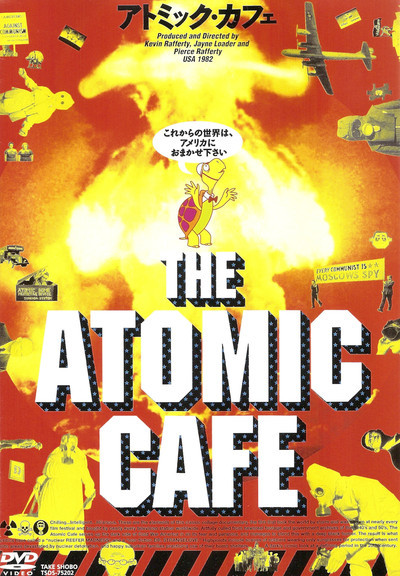
Saturday Matinee: War Documentary Double Feature

large_fKiccFBjZwOKkmsDCQVVcuKgYbxhearts-and-minds

“Hearts and Minds” (1974) and “The Atomic Cafe” (1982) are two of the most chilling and persuasive anti-war documentaries ever made (at least for viewers who are not psychopaths). Though the editorial choices of both films clearly reflect an anti-war perspective, their messages are made more powerful by their lack of narration and abundance of archive footage, newsreels, and public statements from military and political officials. Both documentaries were years in the making with much time (nearly the entire time in the case of The Atomic Cafe) spent on research and editing, and the work clearly pays off by expanding the scope of the films to the political, cultural, and psychological factors behind wars. The filmmakers involved in Hearts and Minds and The Atomic Cafe, unlike most corporate news coverage of wars, both display great empathy in their inclusion of footage of “enemy” casualties of the war and “collateral damage” (ie. innocent victims caught in the crossfire). In the context of the current war-mongering from the Obama administration and corporate/government news media, Hearts and Minds and The Atomic Cafe are more relevant than ever and should be required viewing for everyone who values life.


Why Independent 9/11 Research and Education Still Matters

Editor’s note: This is a revised article from last year followed by recent podcasts and videos on the topic.

One of the ways corrupt people and institutions retain power is by discouraging criticism and discussions that could lead to organized opposition. A classic tactic is to vilify targets as unpatriotic, disloyal, traitorous, heretical, dangerous, crazy, etc. Think about what happened to critics of capitalism during the peak of the cold-war hysteria. George Orwell’s 1984 depicted how governments could also manipulate language, history, media and other information in order to diminish critical thought (which leads to critical speech and organizing) and to control thought. The creation of a Big Brother-style police/surveillance state is another way to create a climate of fear and foster a culture which discourages the sharing of knowledge about certain topics and prevents people from taking action.

This should be kept in mind when discussing 9/11, because those who still have complete faith in government and corporate media (an increasingly shrinking number), have been conditioned to ignore, deny or dismiss any information that would lead them to question the official story. The most common knee-jerk reaction is to defend the official story by labeling all alternative narratives “conspiracy theory”. Though this argument is not as convincing today, when political scandals and crimes are almost a daily occurrence, the association between “conspiracy theories” and negative terms such as “crazy” and “wacko” are deeply ingrained in the culture, and not by accident.

The term “conspiracy theory” was not used as an ad hominem attack until shortly after the assassination of John F. Kennedy. Documented evidence shows the CIA needed to develop new and more effective ways to attack and discredit those who dared to question the Warren Commission Report. So when one counters questions about the official narrative with “That’s just a crazy conspiracy theory” they’re actually using a psy-op attack developed by and for a conspiracy. Because of experience and greater proliferation of information through the internet, fewer people are naive enough to deny extremely wealthy and powerful people would conspire to protect their position and interests. History and hard evidence shows it would be crazier to suppose that they don’t.

Another common argument is “The government is too incompetent to pull off something of that scale and keep it a secret”. It’s true that aspects of the government are incompetent, but the incompetence is generally limited to things they care little about such as medical and educational systems, the food system, domestic infrastructure, safety, financial regulation, disaster relief, fair elections, etc. When it comes to things they prioritize such as wars, bailouts, black budgets, black ops, cronyism, crowd control, surveillance, propaganda, etc., the US government is extremely effective. And the higher up the hierarchy, the easier it is to keep secrets. All it takes is a relatively small number of people in key positions, and through division of labor, compartmentalization, formation of policies conducive to conspiring, and covert actions and communications protected under the cloak of “national security” (with help from a mass culture of conformity, credulity and fear). One should also keep in mind that governments are not monolithic and are comprised of factions with conflicting interests which can be used, manipulated and/or compromised by players involved in the conspiracy (not just within U.S. government but in foreign governments and the private sector as well).

Some simply can’t accept that individuals and factions within U.S. government could intentionally cause an attack such as 9/11 or let it happen. This speaks to the power of corporate media and establishment propaganda on different levels. It shows how a significant majority of Americans can be kept completely ignorant of decades of violent imperialist policy around the world and how false flags have been used to start wars through history. There’s also a long history of state violence against its own people and on American soil going back to the genocide of Native Americans, murders of countless slaves and people of color, multiple massacres of labor activists, assassination of leaders such as JFK, RFK, MLK, Black Panthers, and MOVE, the 93 WTC bombing, WACO, OK City bombing, etc. There’s also ample documentation proving the US government has at least considered actions not dissimilar to 9/11 such as Operation Northwoods and Project for a New American Century. What this argument presupposes is that powerful and wealthy (mostly) white men are inherently more trustworthy, empathetic, and righteous than “Muslim fanatics” or any other “enemy” most Americans have been conditioned to fear and hate.

Other attacks against independent 9/11 researchers include dismissals like “9/11 is no longer relevant” and/or “there’s more important problems to deal with so we need to move on”. I would argue that when such crimes occur that have harmed and killed vast numbers of people and is responsible for countless casualties and elimination of civil liberties more than a decade after due to policies supposedly justified by the event, we have a moral obligation to uncover who did it and why. There’s no peace without justice and no justice as long as the truth behind such nation-changing crimes remains suppressed. Of course there’s always plenty of immediate and equally important issues to address, but those who don’t know history are condemned to repeat it. More specifically, those who benefit most from historical events such as 9/11 are motivated to repeat it while those who only know a distorted version of history while remaining ignorant of the truth are more likely to let it happen again.

Because of the work of “conspiracy theorists” we are now more aware of the scope of government/corporate criminality and connections between government, wall street, war-profiteers, and the criminal underworld. For example, without the work of independent JFK researchers we wouldn’t be aware of Operation Northwoods which many now view as a false flag template used for 9/11. Gaining a better understanding of how and why 9/11 happened helps us put current geopolitical events in context while providing insight into how such operations work and how they can be counteracted.

There’s also the “straw man” argument which creates the illusion of having refuted a proposition by replacing an argument with a superficially similar yet non-equivalent proposition and refuting it without ever having refuted the original position. This is particularly easy to do with complex high profile incidents such as 9/11 and the JFK assassination, where there can be a wide array of theories and speculation due to the complexity of the narrative, widespread interest, deep secrecy and disinformation or misinformation from “useful idiots” and/or those who would benefit from keeping crucial information hidden.

Discussing controversial subjects is never easy but it’s always rewarding when people turn out to be more receptive and thoughtful than one might suspect. Though corporate media does its best to defend the official stories, more people than ever are waking up. On this 9/11 anniversary with the potential for another war on the horizon, it’s as good a day as any to talk about it, share this information and help others wake up.

http://www.youtube.com/watch?v=ef-SK_nN8Ko#t=27

http://www.youtube.com/watch?v=A7tSfwkKaUo

9/11/14 Update:

On the 9/3/14 episode of “Guns and Butter” Tod Fletcher uses a contextual approach to analyzing events at the Pentagon, explores origins and elements of the hijacker story (ie. telephone calls from the planes, analysis of eyewitness reports, physical debris, photo/video evidence, black boxes and FBI involvement) and investigates means, motive and opportunity.


audio http://archives.kpfa.org/data/20140903-Wed1300.mp3

This episode was followed by the 9/10/14 Guns and Butter: “9/11 and the Politics of Deception” with Christopher Bollyn.


http://archives.kpfa.org/data/20140910-Wed1300.mp3

Project Censored 9/8/14: With the anniversary of the September 11 attacks at hand, Peter and Mickey speak with Ken Jenkins, organizers of the annual 911 Film Festival in Oakland, California, about questions that still linger 13 years after the attacks. Then Shahid Buttar of the Bill of Rights Defense Committee talks about the scope and implications of the ongoing federal surveillance activities against Americans, and how to resist them. The program concludes with Robbie Martin of Media Roots, speaking about his new documentary “American Anthrax.”

https://s3.amazonaws.com/Pcradiodos/Project+Censored+090514.mp3

9/11: The Mother of All Big Lies by Stephen Lendman

9/11 Truth, Inner Consciousness, and the Public Mind by James Tracy

Thirteen Years After the September 11 Attacks, Blindness Persists by Thierry Meyssan

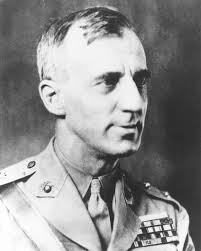
Smedley Butler and the Racket That Is War

index

By Sheldon Richman

Source: The Future of Freedom Foundation

From 1898 to 1931, Smedley Darlington Butler was a member of the U.S. Marine Corps. By the time he retired he had achieved what was then the corps’s highest rank, major general, and by the time he died in 1940, at 58, he had more decorations, including two medals of honor, than any other Marine. During his years in the corps he was sent to the Philippines (at the time of the uprising against the American occupation), China, France (during World War I), Mexico, Central America, and Haiti.

In light of this record Butler presumably shocked a good many people when in 1935 — as a  second world war was looming — he wrote in the magazine Common Sense:

I spent 33 years and four months in active military service and during that period I spent most of my time as a high class muscle man for Big Business, for Wall Street and the bankers. In short, I was a racketeer, a gangster for capitalism [corporatism]. I helped make Mexico and especially Tampico safe for American oil interests in 1914. I helped make Haiti and Cuba a decent place for the National City Bank boys to collect revenues in. I helped in the raping of half a dozen Central American republics for the benefit of Wall Street. I helped purify Nicaragua for the International Banking House of Brown Brothers in 1902-1912. I brought light to the Dominican Republic for the American sugar interests in 1916. I helped make Honduras right for the American fruit companies in 1903. In China in 1927 I helped see to it that Standard Oil went on its way unmolested. Looking back on it, I might have given Al Capone a few hints. The best he could do was to operate his racket in three districts. I operated on three continents.

That same year he published a short book with the now-famous title War Is a Racket, for which he is best known today. Butler opened the book with these words:

War is a racket. It always has been.

It is possibly the oldest, easily the most profitable, surely the most vicious. It is the only one international in scope. It is the only one in which the profits are reckoned in dollars and the losses in lives.

He followed this by noting: “For a great many years, as a soldier, I had a suspicion that war was a racket; not until I retired to civil life did I fully realize it. Now that I see the international war clouds gathering, as they are today, I must face it and speak out.”

Butler went on to describe who bears the costs of war — the men who die or return home with wrecked lives, and the taxpayers — and who profits — the companies that sell goods and services to the military. (The term military-industrial complexwould not gain prominence until 1961, when Dwight Eisenhower used it in his presidential farewell address. See Nick Turse’s book The Complex: How the Military Invades Our Everyday Lives.)

Writing in the mid-1930s, Butler foresaw a U.S. war with Japan to protect trade with China and investments in the Philippines, and declared that it would make no sense to the average American:

We would be all stirred up to hate Japan and go to war — a war that might well cost us tens of billions of dollars, hundreds of thousands of lives of Americans, and many more hundreds of thousands of physically maimed and mentally unbalanced men.

Of course, for this loss, there would be a compensating profit — fortunes would be made.  Millions and billions of dollars would be piled up. By a few. Munitions makers. Bankers.  Ship builders. Manufacturers. Meat packers. Speculators. They would fare well.…

But what does it profit the men who are killed? What does it profit their mothers and sisters, their wives and their sweethearts? What does it profit their children?

What does it profit anyone except the very few to whom war means huge profits?

Noting that “until 1898 [and the Spanish-American War] we didn’t own a bit of territory outside the mainland of North America,” he observed that after becoming an expansionist world power, the U.S. government’s debt swelled 25 times and “we forgot George Washington’s warning about ‘entangling alliances.’ We went to war. We acquired outside territory.”

It would have been far cheaper (not to say safer) for the average American who pays the bills to stay out of foreign entanglements. For a very few this racket, like bootlegging and other underworld rackets, brings fancy profits, but the cost of operations is always transferred to the people — who do not profit.

Butler detailed the huge profits of companies that sold goods to the government during past wars and interventions and the banks that made money handling the government’s bonds.

The normal profits of a business concern in the United States are six, eight, ten, and sometimes twelve percent. But war-time profits — ah! that is another matter — twenty, sixty, one hundred, three hundred, and even eighteen hundred per cent — the sky is the limit. All that traffic will bear. Uncle Sam has the money. Let’s get it.

Of course, it isn’t put that crudely in war time. It is dressed into speeches about patriotism, love of country, and ‘we must all put our shoulders to the wheel,’ but the profits jump and leap and skyrocket — and are safely pocketed.

And who provides these returns? “We all pay them — in taxation.… But the soldier pays the biggest part of the bill.”

His description of conditions at veterans’ hospitals reminded me of what we’re hearing today about the dilapidated veterans’ health care system. Butler expressed his outrage at how members of the armed forces are essentially tricked into going to war — at a pitiful wage.

Beautiful ideals were painted for our boys who were sent out to die. This was the “war to end all wars.” This was the “war to make the world safe for democracy.” No one mentioned to them, as they marched away, that their going and their dying would mean huge war profits. No one told these American soldiers that they might be shot down by bullets made by their own brothers here. No one told them that the ships on which they were going to cross might be torpedoed by submarines built with United States patents. They were just told it was to be a “glorious adventure.”

Thus, having stuffed patriotism down their throats, it was decided to make them help pay for the war, too. So, we gave them the large salary of $30 a month.

Butler proposed ways to make war less likely. Unlike others, he had little faith in disarmament conferences and the like. Rather, he suggested three measures: (1) take the profit out of war by conscripting “capital and industry and labor” at $30 a month before soldiers are conscripted; (2) submit the question of entry into a proposed war to a vote only of “those who would be called upon to do the fighting and dying”; (3) “make certain that our military forces are truly forces for defense only.”

It’s unlikely that these measures would ever be adopted by Congress or signed by a president, and of course conscription is morally objectionable, even if the idea of drafting war profiteers has a certain appeal. But Butler’s heart was in the right place. He was aware that his program would not succeed: “I am not a fool as to believe that war is a thing of the past.”

Yet in 1936 he formalized his opposition to war in his proposed constitutional “Amendment for Peace.” It contained three provisions:

  • The removal of the members of the land armed forces from within the continental limits of the United States and the Panama Canal Zone for any cause whatsoever is prohibited.
  • The vessels of the United States Navy, or of the other branches of the armed service, are hereby prohibited from steaming, for any reason whatsoever except on an errand of mercy, more than five hundred miles from our coast.
  • Aircraft of the Army, Navy and Marine Corps is hereby prohibited from flying, for any reason whatsoever, more than seven hundred and fifty miles beyond the coast of the United States.

He elaborated on the amendment and his philosophy of defense in an article in Woman’s Home Companion, September 1936.

It’s a cliche of course to say, “The more things change, the more they stay the same,” but on reading Butler today, who can resist thinking it? As we watch Barack Obama unilaterally and illegally reinsert the U.S. military into the Iraqi disaster it helped cause and sink deeper into the violence in Syria, we might all join in the declaration with which Butler closes his book:

TO HELL WITH WAR!

Postscript: In 1934 Butler publicly claimed he had been approached by a group of businessmen about leading half a million war veterans in a coup against President Franklin D. Roosevelt with the aim of establishing a fascist dictatorship. This is known as the “Business Plot.” A special committee set up by the U.S. House of Representatives, which heard testimony from Butler and others, reportedly issued a document containing some confirmation. The alleged plot is the subject of at least one book, The Plot to Seize the White House, and many articles.

Memorial Days

By Tom Karlson

they sang and prayed,
naming that day in May,
Decoration day they dis-interred 257 Union men
mass graved, dumped, piled broken bodies twisted,
a Charleston North Carolina Guernica
forgotten men dug up, re-interred
with honor, memory, celebration
by 10,000 in 1866
that first Memorial Day

it is Memorial Day 2010
the Turkish flotilla
bringing aid to Gaza
the attack, nine dead,
Americans, Turks
no aid delivered

Memorial Day 1937,
steelworkers striking Little Steel,
strikers with families march toward the Republic steel mill gate
police-guards open fire
ten dead
thirty shot
one hundred clubbed

today we are at Jones beach
it is Memorial Day
we are fifty souls
remembering our dead, the dead
hundreds of Long Islanders
thousands of North Americans
more than a million Iraqis and Afghanis
families stroll past
some look, others see without vision
all have come to eat, drink
and celebrate that insatiable beast
today the Blue Angles
spin flip dive swoop
begging boys and girls to sign up
the navy, the marines want you
as we call out the named and nameless
let us remember these days
past, present, and future

Tom Karlson is founder of Poets for Peace, Long Island, NY.

A Memorial Day Truth

by Walter Brasch

Source: OpeEdNews.com

It’s the third and final day of the Memorial Day weekend.

Millions of Americans are visiting friends and relatives, perhaps taking a three- or four-day mini-vacation. They may be at pool parties and grilling burgers, hotdogs, veggies, and whatever else appeals to them.

The nation’s politicians are going to Memorial Day rallies. There will be speeches and music. American flags and bunting will drape the stages. The politicians will tell us about the “ultimate sacrifices” American servicemen and women made. They will tell us how wonderful America is, how we are the best country in the world, how we defend freedom and remember those who put their lives on the line to do so. The crowds, whether a few or thousands, will applaud vigorously.

Some will even say that the VA hospitals need a complete overhaul, that Gen. Eric Shinseki–who was wounded and earned three Bronze Stars for bravery, should be fired. These are some of the same politicians who had attacked Shinseki when he was Army chief of staff who warned that it would take hundreds of thousands of Americans, not thousands as the Bush-Cheney cabal had claimed, to successfully invade and control Iraq. For his military knowledge, he was forced into an early retirement. These are the politicians who are outraged that America is treating veterans poorly.

Here’s what the politicians also won’t say. They won’t tell us that 41 Republican senators blocked legislation this past year to provide necessary funding for veterans health. They won’t tell us that during the first years of the Iraq War, the quality of American-based hospitals had deteriorated to the point that it took a major newspaper series to expose what had happened and, finally, with politicians forced to look at despicable conditions, and shamed by their ignorance, there were some measures to improve the care for wounded soldiers after their lives were saved by courageous battlefield medics.

They won’t tell us that members of Congress blocked significant increases in the foodstamp program or that governors and legislatures have not done what they should to care for the homeless. After all, the impoverished and homeless don’t contribute to political campaigns. Of course, the politicians won’t tell us that one-fourth of all adult homeless are veterans.

They won’t tell us about veterans who came home from war, and then lost their jobs or homes during the Great Recession that followed the fraud and greed committed by the bankers and industrial giants who were able to become rich because government did little to protect the people.

With crocodile tears and shallow words, recorded by the news media, the politicians will tell us how much they mourn–but they won’t tell us they are part of the problem, for proudly claiming they voted time after time to block necessary funding and for demanding government not intrude upon the free enterprise system.

The politicians will wave flags and say how much they believe in America and our veterans, and how much they mourn the loss of our soldiers. The crowds will enthusiastically agree–and then go to their barbeques and picnics.

No, they won’t tell us that if we want to reduce these problem–DON’T THUMP YOUR CHESTS, UNFURL YOUR FEATHERS, AND SEND THE YOUTH TO WARS THAT SHOULD NEVER BE FOUGHT.

During the Vietnam War, John Prine recorded “Your Flag Decal Won’t Get You Into Heaven Anymore.” It was true then. It is still true. Please listen.

TSA Threatens Satirist’s First Amendment Rights

TSA-airport-security-enhanced-pat-downs

On November 6, 2013 Infowars.com sponsored a “We Will Resist TSA & NSA Tyranny” video contest. One of the participants, Telly “Leatherface” Blackwood, received a call regarding his entry from a man claiming to be from the TSA on Monday afternoon. According to a statement posted with a recording of a follow-up call on YouTube:

I received a call from a man named John on January 19 claiming to be from the TSA and had some questions for me. I asked him to call me back next day that I couldn’t hear him well. He agreed and within an hour or two I download an app so I can record phone calls. Today January 20th around 5:42pm while sitting outside he called back and I was able to record the whole thing. It was a strange call but very laughable. Sounds like one irritated TSA agent had enough of my video.

The contentious video from Blackwood’s comedy group “Off the Hook Television”:

In 2012, a TSA video from Natural News was suppressed by YouTube’s age restrictions (though this reposting got around it):

This is Joy Camp’s submission to the Infowars contest:

Bonus Clip: A new Joy Camp video mocking the contemporary pop music scene:

Snowden’s Christmas Message to the World

Yesterday, NSA whistleblower Edward Snowden gave an “Alternative Christmas Message” on Britain’s Channel 4 television. It was short and concise, yet more substantial and important than a typical State of the Union Address. Though he makes the connection to Orwell’s 1984 that many of us have already made, it’s still a message more people need to become aware of or be reminded of. It’s also a call to action that all freedom loving people can rally behind regardless of nationality and political ideology.

This is the full transcript followed by the unedited video:

Hi, and Merry Christmas. I’m honored to have the chance to speak with you and your family this year.

Recently, we learned that our governments, working in concert, have created a system of worldwide mass surveillance, watching everything we do.

Great Britain’s George Orwell warned us of the danger of this kind of information. The types of collection in the book—microphones and video cameras, TVs that watch us—are nothing compared to what we have available today. We have sensors in our pockets that track us everywhere we go.

Think about what this means for the privacy of the average person. A child born today will grow up with no conception of privacy at all. They’ll never know what it means to have a private moment to themselves—an unrecorded, unanalyzed thought. And that’s a problem, because privacy matters. Privacy is what allows us to determine who we are and who we want to be.

The conversation occurring today will determine the amount of trust we can place both in the technology that surrounds us and the government that regulates it. Together, we can find a better balance. End mass surveillance. And remind the government that if it really wants to know how we feel, asking is always cheaper than spying.

For everyone out there listening, thank you, and Merry Christmas.

Pearl Harbor: The Original 9/11

pearl-harbor

Yesterday marked the 72nd anniversary of the Pearl Harbor attack, which from today’s perspective can be viewed as the template on which 9/11 was modeled after. In both cases, documentation exists implicating the U.S. government. In the case of Pearl Harbor, there’s the McCollum Memo which describes in detail the strategy used to successfully provoke the Japanese government into attacking. Shortly before the Pearl Harbor attack, Secretary of State Hull presented “peace terms” to the Japanese government that all but guaranteed an inevitable attack.

In the case of 9/11, there’s a policy document from Project for a New American Century called Rebuilding America’s Defenses, which provides a clear motive to create a “catastrophic and catalyzing event – like a new Pearl Harbor”. It’s not conclusive proof they were behind the attacks, but it’s suspicious to say the least that the people with established motives for conducting an event like 9/11 were responsible for national security at the time multiple unlikely and implausible coincidences made such a successful attack possible.

A number of other dubious aspects of the Pearl Harbor attack were compiled at Washington’s Blog last year, including:

Active Interference with Military’s Ability to Defend

It has also recently been discovered that the FDR administration took numerous affirmative steps to ensure that the Japanese attack would be successful. These steps included taking extraordinary measures to hide information from the commanders in Hawaii about the location of Japanese war ships (information of which they would normally be informed), denying their requests to allow them to scout for Japanese ships, and other actions to blind the commanders in Hawaii so that the attacks would succeed. See, for example, this book (page 186).

Key Military Players Incommunicado

In addition, the heads of the Army and Navy suddenly disappeared and remained unreachable on the night before Pearl Harbor. And they would later testify over and over that they “couldn’t remember” where they were (pages 320 and 335).

Gagging Whistleblowers

Two weeks after Pearl Harbor, the Navy classified all documents top secret, and the Navy Director of Communications sent a memo ordering all commanders to “destroy all notes or anything in writing” related to the attacks. More importantly, all radio operators and cryptographers were gagged on threat of imprisonment and loss of all benefits. (page 256).

Media Complicity

Amazingly, the Army’s Chief of Staff informed the Washington bureau chiefs of the major newspapers and magazines of the impending attacks before they occurred, and swore them to an oath of secrecy, which the media honored (page 361); and listen to interview here (we personally spent an hour speaking with Stinnett, and find him to be a highly credible and patriotic American.)

Postscript: Coincidentally, Philip Zelikow – the Executive Director of the 9/11 Commission, the administration insider whose area of expertise is the creation and maintenance of “public myths” thought to be true, even if not actually true, who controlled what the 9/11 Commission did and did not analyze, then limited the scope of the Commission’s inquiry so that the overwhelming majority of questions about 9/11 remained unasked – also happened to be the main guy defending the alleged unforeseeablity of the Pearl Harbor attack, who wrote a hit piece on Pearl Harbor historians like Stinnett.

Just like 9/11, Pearl Harbor was used as a tool to focus mass hatred on a race demonized by propaganda. The attack created a culture of fear allowing for suspension of civil liberties while crushing opposition to the war. Most importantly (for powerful interests pushing for war) the attacks were a pretense for pursuing and expanding global political and economic hegemony.

For a comprehensive compilation of evidence of U.S. government involvement in the Pearl Harbor conspiracy, see: http://whatreallyhappened.com/WRHARTICLES/pearl/www.geocities.com/Pentagon/6315/pearl.html

Jeremy Hammond Speaks Out on FBI Entrapment

Jeremy Hammond Photo: Jim Newberry, FreeHammond.com

Jeremy Hammond Photo: Jim Newberry, FreeHammond.com

By Sparrow Media and Jeremy Hammond

[NEW YORK, NY] Jeremy Hammond, a 28-year-old political activist, was sentenced today to 10 years in prison after pleading guilty to participating in the Anonymous hack into the computers of the private intelligence firm Strategic Forecasting (Stratfor). The Ceremonial Courtroom at the Federal Court for the Southern District of New York was filled today with an outpouring of support by journalists, activists and other whistleblowers who see Jeremy Hammond’s actions as a form of civil disobedience, motivated by a desire to protest and expose the secret activities of private intelligence corporations.

The hearing opened with arguments as to what sections of the court record will remain redacted after sentencing. While Jeremy’s attorneys initially erred on the side of caution in previous memorandums and kept large pieces of the record redacted, both the defense and prosecution agreed this morning that many of the sections should now be made available for public view. The prosecution, however took stiff exception to portions of the court record being made public that indicate victims, specifically foreign governments, that Jeremy allegedly hacked under the direction of Hector “Sabu” Monsegur, the FBI informant at the helm of Jeremy’s alleged actions. Judge Preska ordered that the names of these foreign governments remain sealed.

Jeremy’s counsel, Sarah Kunstler, who is 9 months pregnant and due to give birth today, delivered a passionate testimonial as to the person that Jeremy is, and the need for people like Jeremy during this era of exponential changes in our socio-political landscape. (Read Sarah Kunstler’s complete argument HERE) She was followed by co-counsel, Susan Kellman, who wept as she recalled her own experiences reading the hundreds of letters from supporters to the court detailing Jeremy Hammond’s unbridled selflessness and enthusiastic volunteerism. She pointed out that it was this same selflessness that motivated Jeremy’s actions in this case. She closed her testimony by underscoring that, “The centerpiece of our argument is a young man with high hopes and unbelievably laudable expectations in this world.”

Susan was followed by Jeremy Hammond himself, who gave a detailed, touching and consequential allocution to the court. The following is Jeremy’s statement to the court. We have redacted a portion [marked in red] upon the orders of Judge Preska. While we believe the public has a right to know the redacted information therein, we refuse to publish information that could adversely effect Jeremy or his counsel.

JEREMY HAMMOND’S SENTENCING STATEMENT | 11/15/2013

Good morning. Thank you for this opportunity. My name is Jeremy Hammond and I’m here to be sentenced for hacking activities carried out during my involvement with Anonymous. I have been locked up at MCC for the past 20 months and have had a lot of time to think about how I would explain my actions.

Before I begin, I want to take a moment to recognize the work of the people who have supported me. I want to thank all the lawyers and others who worked on my case: Elizabeth Fink, Susan Kellman, Sarah Kunstler, Emily Kunstler, Margaret Kunstler, and Grainne O’Neill. I also want to thank the National Lawyers Guild, the Jeremy Hammond Defense Committee and Support Network, Free Anons, the Anonymous Solidarity Network, Anarchist Black Cross, and all others who have helped me by writing a letter of support, sending me letters, attending my court dates, and spreading the word about my case. I also want to shout out my brothers and sisters behind bars and those who are still out there fighting the power.

The acts of civil disobedience and direct action that I am being sentenced for today are in line with the principles of community and equality that have guided my life. I hacked into dozens of high profile corporations and government institutions, understanding very clearly that what I was doing was against the law, and that my actions could land me back in federal prison. But I felt that I had an obligation to use my skills to expose and confront injustice—and to bring the truth to light.

Could I have achieved the same goals through legal means? I have tried everything from voting petitions to peaceful protest and have found that those in power do not want the truth to be exposed. When we speak truth to power we are ignored at best and brutally suppressed at worst. We are confronting a power structure that does not respect its own system of checks and balances, never mind the rights of it’s own citizens or the international community.

My introduction to politics was when George W. Bush stole the Presidential election in 2000, then took advantage of the waves of racism and patriotism after 9/11 to launch unprovoked imperialist wars against Iraq and Afghanistan. I took to the streets in protest naively believing our voices would be heard in Washington and we could stop the war. Instead, we were labeled as traitors, beaten, and arrested.

I have been arrested for numerous acts of civil disobedience on the streets of Chicago, but it wasn’t until 2005 that I used my computer skills to break the law in political protest. I was arrested by the FBI for hacking into the computer systems of a right-wing, pro-war group called Protest Warrior, an organization that sold racist t-shirts on their website and harassed anti-war groups. I was charged under the Computer Fraud and Abuse Act, and the “intended loss” in my case was arbitrarily calculated by multiplying the 5000 credit cards in Protest Warrior’s database by $500, resulting in a total of $2.5 million.My sentencing guidelines were calculated on the basis of this “loss,” even though not a single credit card was used or distributed – by me or anyone else. I was sentenced to two years in prison.

While in prison I have seen for myself the ugly reality of how the criminal justice system destroys the lives of the millions of people held captive behind bars. The experience solidified my opposition to repressive forms of power and the importance of standing up for what you believe.

When I was released, I was eager to continue my involvement in struggles for social change. I didn’t want to go back to prison, so I focused on above-ground community organizing. But over time, I became frustrated with the limitations, of peaceful protest, seeing it as reformist and ineffective. The Obama administration continued the wars in Iraq and Afghanistan, escalated the use of drones, and failed to close Guantanamo Bay.

Around this time, I was following the work of groups like Wikileaks and Anonymous. It was very inspiring to see the ideas of hactivism coming to fruition. I was particularly moved by the heroic actions of Chelsea Manning, who had exposed the atrocities committed by U.S. forces in Iraq and Afghanistan. She took an enormous personal risk to leak this information – believing that the public had a right to know and hoping that her disclosures would be a positive step to end these abuses. It is heart-wrenching to hear about her cruel treatment in military lockup.

I thought long and hard about choosing this path again. I had to ask myself, if Chelsea Manning fell into the abysmal nightmare of prison fighting for the truth, could I in good conscience do any less, if I was able? I thought the best way to demonstrate solidarity was to continue the work of exposing and confronting corruption.

I was drawn to Anonymous because I believe in autonomous, decentralized direct action. At the time Anonymous was involved in operations in support of the Arab Spring uprisings, against censorship, and in defense of Wikileaks. I had a lot to contribute, including technical skills, and how to better articulate ideas and goals. It was an exciting time – the birth of a digital dissent movement, where the definitions and capabilities of hacktivism were being shaped.

I was especially interested in the work of the hackers of LulzSec who were breaking into some significant targets and becoming increasingly political. Around this time, I first started talking to Sabu, who was very open about the hacks he supposedly committed, and was encouraging hackers to unite and attack major government and corporate systems under the banner of Anti Security. But very early in my involvement, the other Lulzsec hackers were arrested, leaving me to break into systems and write press releases. Later, I would learn that Sabu had been the first one arrested, and that the entire time I was talking to him he was an FBI informant.

Anonymous was also involved in the early stages of Occupy Wall Street. I was regularly participating on the streets as part of Occupy Chicago and was very excited to see a worldwide mass movement against the injustices of capitalism and racism. In several short months, the “Occupations” came to an end, closed by police crackdowns and mass arrests of protestors who were kicked out of their own public parks. The repression of Anonymous and the Occupy Movement set the tone for Antisec in the following months – the majority of our hacks against police targets were in retaliation for the arrests of our comrades.

I targeted law enforcement systems because of the racism and inequality with which the criminal law is enforced. I targeted the manufacturers and distributors of military and police equipment who profit from weaponry used to advance U.S. political and economic interests abroad and to repress people at home. I targeted information security firms because they work in secret to protect government and corporate interests at the expense of individual rights, undermining and discrediting activists, journalists and other truth seekers, and spreading disinformation.

I had never even heard of Stratfor until Sabu brought it to my attention. Sabu was encouraging people to invade systems, and helping to strategize and facilitate attacks. He even provided me with vulnerabilities of targets passed on by other hackers, so it came as a great surprise when I learned that Sabu had been working with the FBI the entire time.

On December 4, 2011, Sabu was approached by another hacker who had already broken into Stratfor’s credit card database. Sabu, under the watchful eye of his government handlers, then brought the hack to Antisec by inviting this hacker to our private chatroom, where he supplied download links to the full credit card database as well as the initial vulnerability access point to Stratfor’s systems.

I spent some time researching Stratfor and reviewing the information we were given, and decided that their activities and client base made them a deserving target. I did find it ironic that Stratfor’s wealthy and powerful customer base had their credit cards used to donate to humanitarian organizations, but my main role in the attack was to retrieve Stratfor’s private email spools which is where all the dirty secrets are typically found.

It took me more than a week to gain further access into Stratfor’s internal systems, but I eventually broke into their mail server. There was so much information, we needed several servers of our own in order to transfer the emails. Sabu, who was involved with the operation at every step, offered a server, which was provided and monitored by the FBI. Over the next weeks, the emails were transferred, the credit cards were used for donations, and Stratfor’s systems were defaced and destroyed. Why the FBI would introduce us to the hacker who found the initial vulnerability and allow this hack to continue remains a mystery.

As a result of the Stratfor hack, some of the dangers of the unregulated private intelligence industry are now known. It has been revealed through Wikileaks and other journalists around the world that Stratfor maintained a worldwide network of informants that they used to engage in intrusive and possibly illegal surveillance activities on behalf of large multinational corporations.

After Stratfor, I continued to break into other targets, using a powerful “zero day exploit” allowing me administrator access to systems running the popular Plesk webhosting platform. Sabu asked me many times for access to this exploit, which I refused to give him. Without his own independent access, Sabu continued to supply me with lists of vulnerable targets. I broke into numerous websites he supplied, uploaded the stolen email accounts and databases onto Sabu’s FBI server, and handed over passwords and backdoors that enabled Sabu (and, by extension, his FBI handlers) to control these targets.

These intrusions, all of which were suggested by Sabu while cooperating with the FBI, affected thousands of domain names and consisted largely of foreign government websites, including those of XXXXXXX, XXXXXXXX, XXXX, XXXXXX, XXXXX, XXXXXXXX, XXXXXXX and the XXXXXX XXXXXXX. In one instance, Sabu and I provided access information to hackers who went on to deface and destroy many government websites in XXXXXX. I don’t know how other information I provided to him may have been used, but I think the government’s collection and use of this data needs to be investigated.

The government celebrates my conviction and imprisonment, hoping that it will close the door on the full story. I took responsibility for my actions, by pleading guilty, but when will the government be made to answer for its crimes?

The U.S. hypes the threat of hackers in order to justify the multi billion dollar cyber security industrial complex, but it is also responsible for the same conduct it aggressively prosecutes and claims to work to prevent. The hypocrisy of “law and order” and the injustices caused by capitalism cannot be cured by institutional reform but through civil disobedience and direct action. Yes I broke the law, but I believe that sometimes laws must be broken in order to make room for change.

In the immortal word of Frederick Douglas, “Power concedes nothing without a demand. It never did and it never will. Find out just what any people will quietly submit to and you have found out the exact measure of injustice and wrong which will be imposed upon them, and these will continue till they are resisted with either words or blows, or both. The limits of tyrants are prescribed by the endurance of those whom they oppress.”

This is not to say that I do not have any regrets. I realize that I released the personal information of innocent people who had nothing to do with the operations of the institutions I targeted. I apologize for the release of data that was harmful to individuals and irrelevant to my goals. I believe in the individual right to privacy – from government surveillance, and from actors like myself, and I appreciate the irony of my own involvement in the trampling of these rights. I am committed to working to make this world a better place for all of us. I still believe in the importance of hactivism as a form of civil disobedience, but it is time for me to move on to other ways of seeking change. My time in prison has taken a toll on my family, friends, and community. I know I am needed at home. I recognize that 7 years ago I stood before a different federal judge, facing similar charges, but this does not lessen the sincerity of what I say to you today.

It has taken a lot for me to write this, to explain my actions, knowing that doing so — honestly — could cost me more years of my life in prison. I am aware that I could get as many as 10 years, but I hope that I do not, as I believe there is so much work to be done.

STAY STRONG AND KEEP STRUGGLING!

To schedule interviews with Jeremy Hammond’s attorneys and supporters following today’s sentencing please contact Andy Stepanian, 631.291.3010, andy@sparrowmedia.net.

The Jeremy Hammond Defense Committee is a coalition of family members, activists, lawyers, and other supporters who are working together to protect free speech and to support Jeremy Hammond. The committee’s goal is to provide information to the public and the press, to organize events related to Jeremy’s case, and to support Jeremy while he is in jail. For more information, please visit http://freejeremy.net.


sparrow donate