If You’ve Just Started Paying Attention To US Foreign Policy

There are always, ALWAYS lies, obfuscations and manipulations involved in marketing a new war to the public, or in hiding its involvement in foreign wars from public attention.

By Caitlin Johnstone

Source: CaitlinJohnstone.com.au

If you’re among those who have only just begun paying attention to US foreign policy and western media bias in light of Israel’s destruction of Gaza and Biden’s act of war against Yemen, it’s important to understand that none of the depravity you’re seeing is new. The lies. The insane double standards. The murderousness. The western political/media class always does this.

Every war the US involves itself in is always facilitated by lies promulgated in one voice by the official government in Washington and by the “independent” “free” press (actually propaganda services) of the western world. They deceived the world about Ukraine. They deceived the world about Yemen. They deceived the world about Syria, Libya and Iraq. There are always, always lies, obfuscations and manipulations involved in marketing a new war to the public, or in hiding its involvement in foreign wars from public attention.

All of this manipulation and deceit is necessary to hide the fact that the US-centralized empire is the most tyrannical power structure on this planet. And make no mistake, it is an empire. Washington serves as the hub of an undeclared empire comprised of alliances, partnerships, assets, public deals and secret agreements which knit a large number of nations together into what functions as a single power structure with regard to international affairs.

Most of the beneficiaries of this power structure reside in the west, or global north, while the most exploited and abused victims of this power structure tend to reside in the east, or global south. There are all sorts of rules and regulations and narratives and justifications for why this all happens the way it happens, but if you mentally “mute” the soundtrack on the verbal overlay and just look at what’s actually happening, what you will see is the lion’s share of the world’s wealth and resources moving northward and westward from populations of a darker average skin tone toward populations of a paler average skin tone. Wherever that movement is hindered, diverted, threatened or inconvenienced, you will see western war machinery moving southward and eastward to get it back on the desired track.

Most major international conflicts can be understood as either direct or indirect efforts by the US empire to shore up planetary domination, which are often met with resistance by populations who wish to retain their sovereignty. Much of this conflict happens in the middle east because that’s where the world gets a lot of its oil from, with US-aligned nations like Israel and Saudi Arabia frequently serving as the frontline for hostilities with non-US-aligned nations like Iran and Syria as well as non-US-aligned forces like Hezbollah, Ansarallah and Hamas.

This struggle for US planetary hegemony is disguised by the western political/media class as something other than what it is, because you can’t allow the public in a democratic nation to understand clearly that their government is on the side of evil. They’ll frame it as a US-led international coalition to liberate a nation from a tyrannical dictator. As a humanitarian intervention to protect human rights. As support for Israel’s right to defend itself. As protection of freedom of navigation in the Red Sea. But what’s actually happening is the world’s most powerful and murderous power structure killing human beings in western Asia in order to secure control over a crucial resource.

You see this all over the world against nations which refuse to allow themselves to be absorbed into the US-centralized power structure like North Korea, Venezuela and Cuba, with China being by far the strongest of these and Russia a distant second. And you will notice that you have heard every nation I just mentioned cast in a very negative light by the western press over the years. This is not a coincidence. 

You don’t need to believe anything I’m saying on faith. If you just keep in mind what I said and start watching the patterns for yourself while seeking out the truth day by day, you will see it for yourself. You will see the same patterns emerging over and over again, year after year. Over and over again you will see the US and the states that are aligned with it acting with extreme aggression toward non-US-aligned powers in ways that benefit the US-centralized power structure, and you will see the western press deceiving the world about what’s happening. The next Official Bad Guy you see dominating western press coverage on international affairs will be a non-US-aligned power, and if you apply diligent research and critical thinking you will find that they are not presenting an accurate picture of what’s happening.

Just keep learning and studying the patterns with open curiosity and self-honesty, and the picture will inevitably become clear to you. And then you will clearly see who’s really driving the bulk of the violence and disorder in our world.

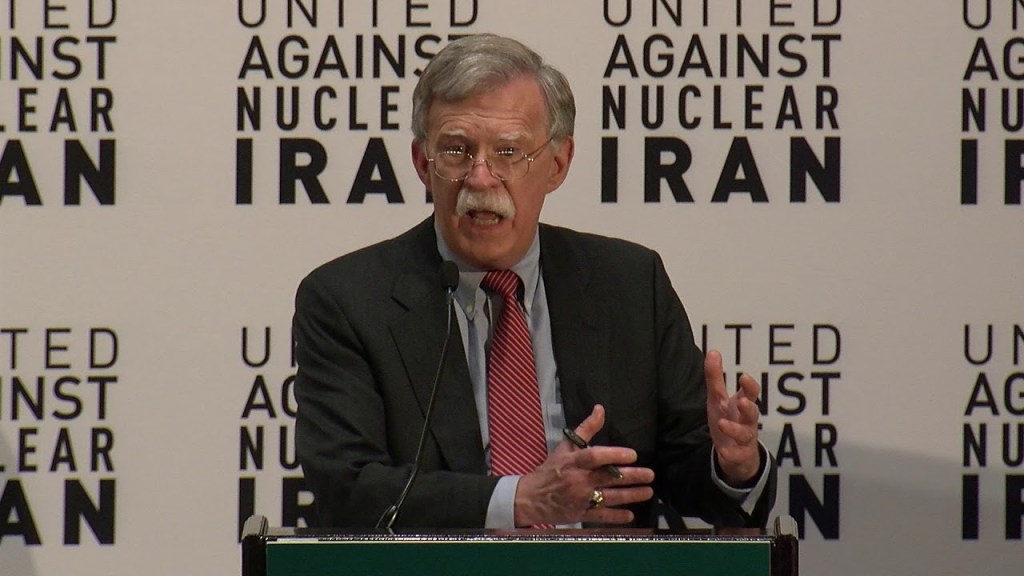
UNITED AGAINST NUCLEAR IRAN: THE SHADOWY, INTELLIGENCE-LINKED GROUP DRIVING THE US TOWARDS WAR WITH IRAN

By Alan MacLeod

Source: Mint Press News

Most of the world has watched the Israeli assault on Gaza in horror. As tens of thousands have been killed and millions displaced, tens of millions of people around the world have poured onto the streets to demand an end to the violence. But a few select others have taken to the pages of our most influential media to demand an escalation of the violence and that the United States help Israel strike not just Palestine, Syria, and Lebanon but Iran as well.

“I might have once favored a cease-fire with Hamas, but not now,” wrote Bush-era diplomat Dennis Ross in The New York Times, explaining that “if Hamas is perceived as winning, it will validate the group’s ideology of rejection, give leverage and momentum to Iran and its collaborators and put [our] own governments on the defensive.”

In the wake of Hamas’ October 7 assault, arch-neoconservative official John Bolton was invited on CNN, where he claimed that what we witnessed was really an “Iranian attack on Israel using Hamas as a surrogate” and that the U.S. must immediately respond. When asked whether he had any evidence, given the implications of what he was saying, he shrugged and replied, “This is not a court of law.”

On December 28, Bolton doubled down on his hawkish stance, writing in the pages of Britain’s Daily Telegraph that “The West may now have no option but to attack Iran” – a position he has held for at least a decade.

Meanwhile, in an interview with Saudi state-funded broadcaster Iran International, senior Bush official Mark Wallace bellowed that, “This is Iran’s work. Iran will suffer at the hands of retribution and will suffer the consequences of supporting this terror group and its horrific attack on Israel.” Wallace continued:

No civilized country wants further conflict. But the Iranians are forcing the civilized world’s hand. And you will see a dramatic response soon as the United States, Israel, and our allies begin to position assets around the world in preparation.”

If there was any doubt as to what sort of “dramatic response” Wallace wanted to see, he added a message to Iran’s Islamic Revolutionary Guard Corps: “I look forward to seeing you hanged from the end of one of your own ropes.”

Iran was recently the victim of a deadly terrorist attack. As mourners commemorated the U.S. assassination of Qassem Soleimani, two bombs exploded, killing 91 and injuring hundreds more. In this context, it was understandable why Iranian officials pointed the finger at the U.S. and Israel.

Warmongers, Inc

What these individuals all have in common is that they are board members of United Against Nuclear Iran (UANI), a shadowy but influential organization dedicated to pushing the West toward a military confrontation with the Islamic Republic.

Founded in 2008, the group is led by neoconservative hawks and has close ties to both U.S. and Israeli intelligence. It does not divulge where it receives its copious funding. However, it is known that right-wing Israeli-American billionaire Sheldon Adelson was a source. There is strong circumstantial evidence that Gulf dictatorships may also be bankrolling the group, although UANI has strongly denied this. In 2019, Iran designated UANI as a terrorist organization.

When asked by MintPress what he made of UANI’s recent statements, Eli Clifton, one of the few investigative journalists to have covered the group, said, “It’s very consistent with the positions and advocacy that the organization has taken since its inception.” Adding,

United Against Nuclear Iran does not miss an opportunity to try to bring the United States closer to a military conflict with Iran. And on the other side of the equation, they also have worked very hard to oppose efforts to de-escalate the U.S.-Iran relationship.”

UANI’s board is a who’s who of high state, military and intelligence officials from around the Western world. Among its more notable members include:

  • CEO Mark Wallace, former U.S. Ambassador to the United Nations and deputy campaign manager for George W. Bush’s 2004 reelection.
  • Chairman Joe Lieberman, former senator and Democratic vice-presidential nominee for the 2000 election.
  • Tamir Pardo, Director of the Mossad, 2011-2016.
  • Dennis Ross, former State Department Director of Policy Planning and former Middle East Envoy under George H. W. Bush and Bill Clinton.
  • Field Marshall Lord Charles Guthrie, ex-Chief of Staff of the U.K. Armed Forces.
  • Jeb Bush, former Governor of Florida.
  • August Hanning, President of the German Federal Intelligence Service (BND), 1998-2005; State Secretary at the Federal Interior Ministry, 2005-2009.
  • Zohar Palti, former head of the Political-Military Bureau, Israeli Ministry of Defense; former Director of Intelligence of the Mossad.
  • Frances Townsend, Homeland Security Advisor to President George W. Bush.
  • John Bolton, former U.S. National Security Advisor and former U.S. Ambassador to the U.N.
  • Roger Noriega, former Assistant Secretary of State for Western Hemisphere Affairs and Ambassador to the Organization of American States.
  • Otto Reich, former Assistant Secretary of State for Western Hemisphere Affairs and architect of the 2002 U.S. coup against Venezuela.
  • Michael Singh, White House Senior Director for Near East and North African Affairs, 2007-2008.
  • Giulio Terzi di Sant-Agata, former Italian Foreign Minister.
  • Robert Hill, former Minister of Defense of Australia.
  • Jack David, Deputy Assistant Secretary of Defense for Combating Weapons of Mass Destruction, 2004-2006.
  • Mark Kirk, U.S. Senator for Illinois, 2010-2017.
  • Lt. Gen. Sir Graeme Lamb, ex-Director of U.K. Special Forces and Commander of the British Field Army.
  • Norman Roule, former CIA Division Chief and National Intelligence Manager for Iran at the Director of National Intelligence.
  • Irwin Cotler, Canadian Minister of Justice and Attorney General, 2003-2006.
  • Baroness Pauline Neville-Jones, U.K. Minister of State for Security and Counter Terrorism, 2010-2011.

In addition, notable former board members include ex-CIA Director R. James Woolsey; head of Mossad between 2002 and 2011, Meir Dagan; and one-time chief of British spy agency MI6, Sir Richard Dearlove.

For 15 years, UANI has organized conferences, published reports, and lobbied politicians and governments, all with one goal: pushing a neoconservative line on Iran. “UANI are a force multiplier. They provide at least the veneer of an intellectual infrastructure for the Iran hawk movement. They did not invent being hawkish on Iran, but they sure made it a heck of a lot easier,” Ben Freeman, Director of the Democratizing Foreign Policy Program at the Quincy Institute, told MintPress.

Conflicts and Conflicts of Interest

For such a large, well-financed, and influential organization filled with senior officials, United Against Nuclear Iran keeps its funding sources very quiet. However, in 2015, Clifton was able to obtain a UANI donor list for the 2013 financial year. By far and away, the largest funders were billionaire New York-based investor Thomas Kaplan and multibillionaire Israeli-American casino mogul Sheldon Adelson.

Kaplan, whose $843,000 donation supplied around half the group’s 2013 funding, is a venture capitalist investor concentrating on metals, particularly gold. He is the chairman of Tigris Financial and the Electrum Group LLC. Both of Kaplan’s firms employ UANI CEO Mark Wallace as CEO and COO, respectively.

A 2010 Wall Street Journal article titled “Tigris Financial Goes All-in on Gold” noted that the company had bet billions of dollars on the price of gold rising, more than the reserves of the Brazilian central bank. As Clifton has noted, both Kaplan and Wallace have marketed gold to clients as the perfect commodity to hold if there is increased instability in the Middle East. Therefore, both Kaplan and Wallace stand to make massive sums if the U.S. or Israel were to attack Iran, making their UANI warmongering a gigantic and potentially profitable conflict of interest.

Adelson provided the majority of the rest of UANI’s funding. The world’s 18th-richest individual at the time of his 2021 death, the tycoon turned his economic empire into a political one, supporting ultraconservative causes in both the United States and Israel. Between 2010 and 2020, he and his wife donated more than $500 million to the Republican Party, becoming GOP kingmakers in the process. He would often vet Republican presidential candidates at his casino in Las Vegas, and it was often said that this “Adelson Primary” was almost as important as the public one.

An ardent Zionist, Adelson bankrolled numerous pro-Israel lobby projects, such as AIPAC, One Jerusalem and Taglit Birthright. He also owned Israel Hayom, the country’s most-read newspaper, with 31% of the national share. Relentlessly pro-Netanyahu, it was said that the Israeli prime minister asked his friend Adelson to set up a newspaper to help his political career.

Adelson and his influence have been one of the driving forces of American hostility towards Iran. In 2013, during a conversation with Rabbi Shmuley Boteach, he called for the United States to stop negotiating and drop a nuclear bomb on Iran to show that “we mean business.”

A potential third, even more controversial, source of funding is the Gulf monarchies of Saudi Arabia and the UAE. Leaked emails show UANI officials soliciting support from the Emirati royal family. Both Mark Wallace and Frances Townsend, for example, emailed the Emirati Ambassador to the U.S. detailing cost estimates for upcoming events and inquiring about support from the UAE.

Thomas Kaplan himself is extraordinarily close to the nation. “The country and the leadership of the UAE, I would say, are my closest partners in more facets of my life than anyone else other than my wife,” he told the Emirati outlet, The National News, which also detailed his friendship with Crown Prince of Abu Dhabi, Sheikh Mohamed bin Zayed.

Putting Iran in the Crosshairs

One of United Against Nuclear Iran’s primary activities, Iranian political commenter Ali Alizadeh told MintPress, is to create a worldwide “culture of fear and anxiety for investing in Iran.” The group attempts to persuade businesses to divest from the Islamic Republic and sign their certification pledge, which reads as follows:

The undersigned [Name], the [Title] of [Company] (the “Company”), does hereby certify on behalf of the Company that until the Iranian regime verifiably abandons its drive for nuclear weapons, support for terrorism, routine human rights violations, hostage-taking, and rampant anti-Americanism as state policy, that neither the Company nor any subsidiary or affiliate of the Company, directly or through an agent, representative or intermediary.”

One corporation that UANI targeted was the industrial machinery firm Caterpillar. UANI hectored the firm, even erecting a roadside billboard outside its headquarters in Peoria, IL, insinuating that they were aiding Iran in constructing a nuclear weapon. Caterpillar quickly ordered its Iran projects terminated. Wallace took heart from his group’s victory and warned that other businesses would be targeted.

These have included French companies such as Airbus and ​​Peugeot-Citroen, who were threatened with legal action. In 2019, UANI earned an official rebuke from the Russian Foreign Ministry for attempting to intimidate Russian corporations trading with Tehran. “We think such actions are unacceptable and deeply concerning,” said Foreign Ministry spokesperson Maria Zakharova. “Attempts to pressure and threaten Russian business … are a follow-up on the dishonorable anti-Iranian cause by the U.S. administration,” she added, hinting at collusion between the government and the supposedly non-governmental organization.

Some of UANI’s campaigns have been markedly petty, including pressuring New York City hotels to cancel bookings with Iranian officials (including then-President Mahmoud Ahmadinejad) visiting the city on United Nations business. Others, however, have been devastating to the Iranian economy, such as the SWIFT international money transfer terminating its relationship with Tehran, cutting the country off from the global banking system.

On UANI’s actions against businesses, Freeman said: “It’s effective, and (in some cases, at least) it’s to the detriment of the people of Iran; it’s to the detriment of these companies; and it’s to the detriment of peace in the region.”

While the group presents itself as against a nuclear Iran, UANI was strangely opposed to the Joint Comprehensive Plan of Action (JCPOA) – the deal between Iran and the West that limited the former’s nuclear technology research in exchange for sanctions relief from the latter. As MintPress reported at the time, UANI spent millions on T.V. advertisements trashing the agreement. As Wallace noted, “We have a multi-million-dollar budget, and we are in it for the long haul. Money continues to pour in.”

After the JCPOA was signed, UANI hosted a summit attended by senior Israeli, Emirati, and Bahraini officials, touting its failures. Once UANI’s John Bolton was named Donald Trump’s National Security Advisor, he persuaded the president to withdraw entirely from the deal. Bolton has deep connections to the Mojahedin-e-Khalq (MEK), an exiled Iranian political group widely identified as a terrorist organization. He has, for some time, considered them a government in waiting after the U.S. overthrows the current administration. “Before 2019, we will celebrate in Tehran,” he told the group in 2018, predicting that, with him at the helm, the Trump administration would soon cause the downfall of the Iranian government.

Bolton has long been a hardliner on regime change. “To stop Iran’s bomb, bomb Iran,” read the title of his 2015 New York Times op-ed. Yet this appears to be the dominant position at UANI. In March, Ross published an article in The Atlantic headlined “Iran needs to believe America’s threat,” which demanded that the U.S. “take forceful action to check Tehran’s progress toward a nuclear bomb.” Failure to do so, Ross claimed, would provoke Israel to do so itself – a “much more dangerous scenario,” according to him. Yet only two years previously, Ross called on the U.S. to “give Israel a big bomb” to “deter Iran,” noting that the “best way” to stop the Iranian nuclear program was to supply Israel with its own nukes, thereby taken as a given that Iran was indeed pursuing nuclear weapons itself (a highly questionable claim at the time) and ignoring Israel’s already existing 200+ stockpile of nuclear missiles.

“It doesn’t seem like UANI ever really took seriously the possibility of a diplomatic means to constrain Iran from continuing to increase its enrichment levels and moving towards a nuclear weapon,” Clifton told MintPress. “As a matter of fact, they generally fought tooth and nail against the JCPOA. They are eager to push the United States toward confrontation with Iran using the possibility of Iranian nuclear weapons as a reason,” he added.

Intelligence Connections

That UANI is headed by so many state, military and intelligence leaders begs the question: to what extent is this really a non-governmental organization? “That is one of the dirty secrets of think tanks: they are very often holding tanks for government officials,” Freeman said, adding:

The Trump folks all had to leave office when Biden won, so a lot of them ended up in think tanks for a while, four years, let’s say. And if Trump wins again, they will bounce back into government. And the same is true of Democratic administrations, too.”

The U.S. government also clearly has a longstanding policy of outsourcing much of its work to “private” groups in order to avoid further scrutiny. Many of the CIA’s most controversial activities, for example, have been farmed out to the National Endowment for Democracy (NED), a technically non-governmental organization funded entirely by Washington and staffed with ex-state officials. In recent years, the NED has funneled millions of dollars to protest leaders in Hong Kong, organized an attempted color revolution in Cuba, organized anti-government rock concerts in Venezuela, and propped up dozens of media organizations in Ukraine.

These sorts of institutions blur the line between public and private sectors. But a 2014 legal case raises even more questions about UANI’s connections to the U.S. government. After UANI accused Greek shipping magnate Victor Restis of working with the Iranian government, he sued them for libel. In an unprecedented move for what was a private, commercial lawsuit, Attorney General Eric Holder intervened in the lawsuit, ordering the judge to shut the case down on the grounds that, if it continued, it would expose key U.S. national security secrets. The case was immediately dropped without explanation.

In the past, when the Justice Department has invoked state secrets, a high-ranking state official has offered a public statement as to why. Yet, this time, nothing was offered. Reporters at the time speculated that much of the material Restis wanted to make public was possibly given to UANI by either the CIA or Mossad, which would have revealed a network of collusion between state intelligence agencies and a supposedly independent, private non-profit. Given the glut of ex-Mossad and CIA chiefs at UANI, this speculation is perhaps not as wild as it might seem.

UANI’s funders certainly also have extensive connections to Israel. Kaplan is the son-in-law of Israeli billionaire Leon Recanati and is said to be close with Prime Ministers Naftali Bennet and Yair Lapid. He has also employed a number of Israeli officials at his businesses. An example of this is Olivia Blechner, who, in 2007, left her role as the Director of Academic Affairs at the Israeli Consulate General in New York to become Executive Vice-President of Investor Relations and Research at Kaplan’s Electrum Group – a rather perplexing career move.

Adelson, meanwhile, was given what amounted to an official state funeral in Israel, one that even Prime Minister Netanyahu attended. He was buried on the Mount of Olives in Jerusalem – one of the holiest sites in Judaism and an honor that very few figures receive.

A Network of Regime Change Groups

While United Against Nuclear Iran is already a notable enough organization, it is actually merely part of a large group of shadowy non-governmental groups working to cause unrest and, ultimately, regime change in Iran. These groups all share overlapping goals, funders and key individuals.

One example of this is the Counter Extremism Project (CEP), a non-profit that purports to exist to “combat the growing threat posed by extremist ideologies.” Yet the group focuses largely on Islamist extremism – and only those groups that are enemies of the U.S., Israel and the Gulf Monarchies (about whose extremism and violence the CEP has nothing to say). Ten members of the CEP’s leadership council are also on UANI’s board, including Wallace, who is CEO of both organizations.

Another group headed by Wallace is the Jewish Committee to Support Women Life Freedom in Iran. This organization claims to be focused on improving women’s rights in Iran. It very quickly, however, divulges that this is a vehicle for regime change. On its homepage, for example, it writes:

These freedom fighters continue with no sign of relenting on their calls for regime change. Calls for “Woman Life Freedom” and the removal of Supreme Leader Ayatollah Ali Khamenei echo from rooftops, down street corridors, across campus hallways, and on government billboards. These brave Iranians have expressed their hatred for the ruling clerics not only in their words, but in their actions.”

Seven members of the Jewish Committee to Support Women Life Freedom in Iran’s steering group – including Wallace and Kaplan – also lead UANI.

Mike Wallace, second from right, poses with prominent anti-Iran figures at a lobbying event in Italy, February 2023. Photo | Twitter

Kaplan is well-known as a conservationist. However, his group, Panthera, which works to preserve the world’s 40 known species of big cats, has also been accused of being a secret regime change operation. Panthera has a number of UANI officials on its board or conservation council, including Wallace and Lamb (the ex-director of U.K. Special Forces and Commander of the British Army). Also on the council are Itzhak Dar, former Director of the Israeli Secret Service, Shin Bet, and General David Petraeus, former CIA Director and Commander of the U.S. invasion of Afghanistan.

In 2018, Iranian authorities arrested eight individuals working with Panthera inside the country. All eight were convicted of spying on behalf of the U.S. and Israel. While many in the West decried the trials as politically motivated, any organization led by these figures is bound to cause suspicions.

This is especially the case as Wallace is also a founder of PaykanArtCar, an organization that attempts to use art to, in its words, “advocate for the restoration of human rights and dignity for all in Iran.” All three team members of PaykanArtCar also work at UANI.

The final group in this Iran regime change network is the International Convention for the Future of Iran. Set up by Wallace himself, the organization’s website explains that it exists to “end the repression of the regime and bring true change to Iran.” Further purposes are to “connect the Iranian opposition in exile [i.e., the MEK] with policymakers in the United States and internationally” and to “offer program grants and technical support” to groups working to overthrow the government. However, judging by the lack of updates and the group’s Twitter profile having only 31 followers, it appears that it has not had much success achieving its goals.

In short, then, there exists a network of American NGOs with the mission statements of helping Iran, opposing Iran, preserving Iran, and bombing Iran, all staffed by largely the same ex-U.S. government officials.

Iran, however, is not the only target in Wallace’s sights. It appears that he is also trying to give Turkey similar treatment. Wallace is the CEO of the Turkish Democracy Project, a non-profit established to oppose the rule of President Recep Tayyip Erdoğan, who, it says, has “dramatically altered Turkey’s position in the international community and its status as a free and liberal democracy.” The Turkish Democracy Project denounces what it calls Erdoğan’s “destabilizing actions in and beyond the region, his systemic corruption, support for extremism, and disregard for democracy and human rights.” There are no Turkish people among the Turkish Democracy Project’s leadership. But there are seven UANI board members at the top, calling the shots.

A Lesson From History

The history of Iran has been intimately intertwined with the United States since at least 1953 when Washington orchestrated a successful coup against Prime Minister Mohammad Mosaddegh. Mosaddegh had refused U.S. demands to stamp out Communist influences in his country and had nationalized the nation’s oil. The U.S. installed Shah Mohammad Reza Pahlavi as a puppet ruler. An unpopular and authoritarian ruler, the Shah was overthrown in the Revolution of 1979. Since then, it has become a target for regime change, and its nuclear program is something of an obsession in the West.

Often orchestrated by UANI officials while they were in government, the U.S. has carried out a sustained economic war against Tehran, attempting to collapse its economy. American sanctions have severely hurt Iran’s ability to both buy and sell goods on the open market and have harmed the value of the Iranian rial. As prices and inflation rose rapidly, ordinary people lost their savings.

During the COVID-19 pandemic, the U.S. turned the screw once again, intimidating both businesses and nations into refusing to sell Tehran vital medical supplies. Eventually, the World Health Organization stepped in and directly supplied it with provisions – a factor in the Trump administration’s decision to pull out of the agency.

While U.S. actions have severely harmed the Iranian economy, a future bright spot may come in the form of BRICS, the economic bloc that Iran – along with Egypt, Ethiopia, Saudi Arabia, and the UAE – joined on January 1. American economic power on the global stage appears to be waning. However, This new reality might spur Washington policymakers to reconsider a military option, as UANI desperately wants them to.

It is perfectly reasonable to be worried about Iran – or any country, for that matter – developing atomic bombs. Nuclear weapons pose an existential threat to human civilization, and more actors with access to them increase the likelihood of a devastating confrontation. Already in the region, India, Pakistan, Israel and Russia possess them. But it is only the United States that has ever used them in anger, dropping two on Japan and coming close to doing so in China, Korea and Vietnam. And given the U.S.’ recent track record of attacking countries that do not possess weapons of mass destruction (e.g., Iraq, Libya, Afghanistan) and not touching those who do (such as North Korea), it is entirely understandable why Iran might want one. As Freeman said:

I certainly do not want Iran to get a nuclear weapon. But at the same time, you can also believe that it would be catastrophic if the U.S. were to engage in a war with Iran…And the concern with groups like UANI is that they are taking that [the worry of Iran getting a nuclear weapon] and pushing that argument to a point where it might lead to an active conflict.”

The slaughter in Gaza has been horrifying enough. More than 22,000 people have been killed in the Israeli invasion, and a further 1.9 million displaced. Israel is also simultaneously bombing the West Bank, Syria and Lebanon. The U.S. is facilitating this, sending billions of dollars in weaponry, pledging iron-clad political support to Israel, silencing critics of its actions, and vetoing United Nations resolutions.

But United Against Nuclear Iran is eager to escalate the situation to a vastly greater level, urging Washington to attack a well-armed country of nearly 90 million people, erroneously claiming that Iran is behind every Hamas or Hezbollah action. “This is not a nuclear non-proliferation organization” Clifton said, noting that there are plenty of genuine already existing peace and environmental groups worried about nuclear weapons that either supported the JCPOA or said it did not go far enough. “Their focus is more on working towards regime change in Iran rather than actually supporting efforts that might prevent Iranian nuclear weapons,” he added.

IF UANI gets its way, a conflict with Iran might spark a Third World War. And yet they are receiving virtually no pushback to their ultra-hawkish pronouncements, largely because they operate in the shadows and receive virtually no public scrutiny. It is, therefore, imperative for all those who value peace to quickly change that and expose the organization for what it is.


How to Navigate Our Low-Trust, Increasingly Dysfunctional Society and Economy

By Charles Hugh Smith

Source: Of Two Minds

Politicians and corporate managers have an enviable record of self-enrichment but very little to show in terms of putting the long-term interests of the citizenry above their own short-term gains.

This week’s focus is on self-reliance, a topic of increasing relevance than is more complex that it may seem.

Sociologists differentiate between high-trust and low-trust societies: in high-trust social orders, citizens tend to trust institutions and each other to conform to social norms, enabling strangers to trust a vast circle of transactions and socio-economic ties. Low-trust societies are plagued with distrust of authority and institutions and fear of getting taken advantage of by strangers, so the circles of trust are small, inhibiting social mobility and economic growth.

Economies and political systems can also be understood as high-trust or low-trust. If the political system excels at rewarding insiders and incumbents while leaving critical problems unsolved, citizens have little reason to trust the system.

The same is true of economies that greatly enrich insiders and incumbents at the expense of the citizenry via monopoly/cartel price-gouging, shrinkflation, degrading the quality of goods and services and the immiseration of standard services, forcing customers to “upgrade” from wretched to merely dismal.

Conventional pundits and economists are constantly whining that Americans “just don’t get it”: they tout our soaring per capita wealth, i.e. we’re getting richer, so everyone should be delighted, yet only 20% of the public are “satisfied with the way things are going.”

What the well-compensated pundits and economists are ignoring (or are paid to ignore) is the decay of the U.S. from a high-trust-functional to a low-trust-dysfunctional society and economy: Americans will still go out of their way to aid strangers, but their trust in institutions has plummeted to lows, as has their trust in the political-corporate elites’ leadership: politicians and corporate managers have an enviable record of self-enrichment but very little to show in terms of putting the long-term interests of the citizenry above their own short-term gains.

People understand the name of the game now is to spout all the expected optimistic PR of “innovation” and “serving the public” while maximizing their private gain at the expense of the nation. Offshoring America’s essential industrial supply chains wasn’t done to serve the nation; it was done to maximize profits, 90% of which flow to the top 10%. Pushing us into debt servitude is highly profitable, but it isn’t benefiting us or the nation.

Americans were told to trust long, hyper-globalized single-source supply chains as “efficient” (i.e. profitable) and trustworthy, yet they’ve discovered these supply chains are vulnerable and fragile. Americans were told that corporate monopolies were selling them “innovations” when in fact they were being sold highly addictive (and therefore highly profitable) goods and services.

Americans were told that their financial security was increasing even as the U.S. economy became increasingly dependent on hyper-financialized asset bubbles and central bank bailouts, the precise opposite of stability. Rather than producing more financial security for the bottom 80%, these “innovations” greatly expanded the gulf between the wealthy and the increasingly precarious bottom 80%.

Americans were told to trust that the hyper-centralization of political and financial power would benefit them, when the evidence is piling up that this hyper-centralization has increased the dysfunction of core institutions and the fragility of essential systems.

Doesn’t it ring hollow to glorify our soaring wealth while households declare bankruptcy due to medical bills, college students sign up for a lifetime of debt servitude to pay tuition and inflation has destroyed 20% of every wage earner’s paycheck just since January 2020? All that “soaring wealth” is asymmetrically distributed, but let’s not talk about that, let’s talk about statistics that mask that asymmetry.

What the well-compensated pundits and economists are paid to ignore is the concentration of the vast majority of all this new wealth and income in the top 10%. Soaring wealth only widens wealth inequality; it doesn’t benefit the nation, it weakens its foundations by accelerating the decay of trust in core institutions and systems.

What happens when high-trust decays to low-trust is the circle of reliable, trustworthy sources and people shrinks to the local, decentralized level. Rather than trust Big Ag, Big Fast-Food and supply chains of highly processed glop to feed us, we start turning to local sources of real food.

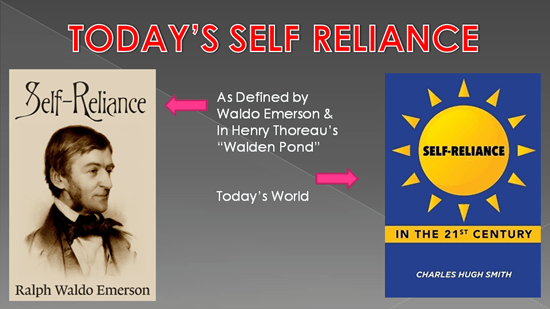
In the same way, we rediscover the value of thinking for ourselves rather than accepting self-serving memes-of-the-day. We rediscover the value of what Ralph Waldo Emerson wrote about in his 1841 essay Self-Reliance (free text, Project Gutenberg).

Emerson counsels us to “be our best selves,” and not to count property wealth above all else. (“They measure their esteem of each other by what each has, and not by what each is.”)

Emerson understood that the values of a society are the foundation of its economic order. A system lacking any principles and values other than greed and self-enrichment is a rotten structure doomed to collapse. It is not just the larger socio-economic order that needs a rock-solid value system; each individual must ground their choices and actions in a value system they have embraced on their own. (“Nothing can bring you peace but yourself. Nothing can bring you peace but the triumph of principles.”)

What Emerson is espousing is self-reliance, in thought, in values, and in economic and financial matters. In today’s world of crumbling hyper-globalization, self-reliance extends to the practical world of where our essential goods and services are coming from.

Gordon Long and I discuss these and many other aspects of Self-Reliance in the 21st Century in our wide-ranging podcast Self Reliance (45 min).

We discuss how the American economy has changed over the past 40 years, to the detriment of the nation’s values and the security of its citizenry, and what self-reliance means today– the topic of my book Self-Reliance in the 21st Century. (Read the first chapter for free.)

How can we best navigate our low-trust, increasingly dysfunctional society and economy? By strengthening our own self-reliance.

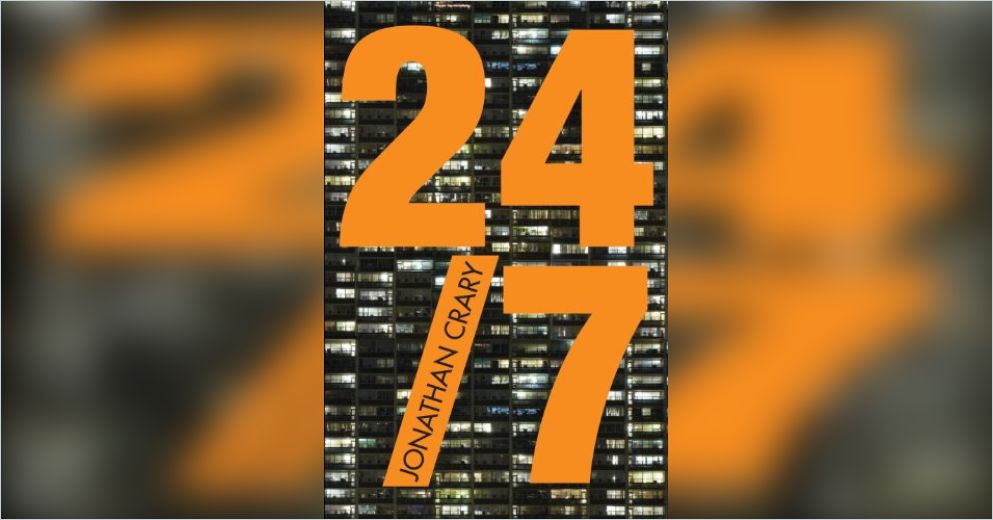
Daydreaming While Reading Jonathan Crary’s 24/7: Late Capitalism and the Ends of Sleep

By Edward Curtin

Source: Behind the Curtain

“Sleep that knits up the raveled sleave of care, The death of each day’s life, sore labor’s bath, Balm of hurt minds, great nature’s second course, Chief nourisher in life’s feast.”   – Shakespeare, Macbeth

People often laugh when I tell them that I go to sleep at 8:15 P.M.  They laugh harder when I say it’s been a lifetime habit, with unavoidable exceptions of course.  And that I wake up long before dawn.  Not because I am a dairy farmer or a baker, but because I love to sleep and all the best things I have written have been written in my dreams and refined during reveries while walking or in the early morning when all is silent still and I am alone with my musings.  I have always felt that sleeping and being awake were a seamless whole, contrary to the go-getters’ attitude that sleep and dreams are a waste of time, and I have been blessed with the ability to fall asleep as soon as I crawl into my crib and usually to remember my dreams in detail when I wake.

Jonathan Crary, the Meyer Schapiro Professor of Modern Art and Theory at Columbia University, agrees that sleep is profoundly important and under assault today.  To enter his book, 24/7, Late Capitalism and the Ends of Sleep, (which was first published in 2014) is for me to discover a kindred spirit, but also to enter a mind so capacious and profound that I wish to share his insights while I dream in words.

If what William Wordsworth (what a name!) wrote in 1802 was true then,

The world is too much with us; late and soon,
Getting and spending, we lay waste our powers;—
Little we see in Nature that is ours;
We have given our hearts away, a sordid boon!

what possibly could one say about today?  That shopping or thinking about shopping – things or propaganda or the latest useless buzz – is all we know?  That we have become completely insane, bamboozled by a capitalist techno-electronic madness that has not only seized our hearts but convinced our minds that it is good to spend our lives – our sleep and dreams and time and praxis – in tending to machines that destroy our souls night and day without interruption.

When fifty plus years ago the monk Thomas Merton wrote that “someday they will sell us the rain,” he could today add that the hard rain that Dylan sung of then has already fallen and they now need not sell us anything because we have eaten the bitter fruit of our own corruption.  People say they want peace while they fill their nights and days with digital dreams, eliminating what Crary calls “fugitive anonymity” for the bait of 24/7 capitalist drug addiction and being “with it.”  All the clichés have it that peace begins with “you,” yet you has become them or it, the tech-life 24/7.  I hear Sinatra singing Cole Porter’s lyrics today as

Night and day, you are the one
Only you ‘neath the moon or under the sun
Whether near to me or far
It’s no matter, cell phone, where you are
I think of you day and night

And such love is reciprocated, of course, as the electronic machines help so many distracted and restless souls make it through the night.  Sort of.  Not the kind of help Kris Kristofferson sang about, but a fleshless flashing gizmo colder than a frozen heart.

It is well known that sleep disorders are widespread today with technologically produced sleep drugs (and now marijuana) used by vast numbers of people. Such drug-induced sleep, the flip side of the frenetic passivity that precedes and follows it, occurs within a larger 24/7 sleepless framework that Crary accurately notes happens “ . . . within the globalist neoliberal paradigm, [for] sleeping is for losers.”   Yet what’s to be won is never enunciated because the winners’ faces are always well-hidden as they execute the prodigious capitalist machine of control that creates docility and separation in people who find the machine life irresistible – even as it drains them of easy-going vitality and the joy of dawdling, even for an idle while.  Doing nothing has become a crime.

Last night I stepped outside an hour after sunset and was startled by a massive full moon eyeing me as it rose over the eastern hills.  Here where I dwell there are no city or factory lights to block the moon and stars as they illuminate our nights.  But most people are not so lucky, for what our ancestors once took for granted – that we are part of nature, part of the Tao – has been lost for so many as artificial lights, urbanization, and a 24/7 linguistic mind-control ideology block the thrill of being transfixed by the moon’s loving gaze, an invitation to taste the sweetness of the north wind’s cookie.  Maybe the sight of her face might rattle the televised images lodged in people’s “memories” of mechanical misbegotten men in ghost suits trampling her peaceful countenance.

The 24/7 digital life, essential to neo-liberal financialized capitalism with its day and night markets and infrastructure that allow for continuous consumption and work – total availability – is the culmination of a long process that began with the invention of artificial lighting that allowed the English cotton mills to run 24/7.  Crary brilliantly illustrates this point through the 1782 painting, Arkwright’s Cotton Mills by Night, by the British artist James Derby.  This painting shows the windows of the massive mills lit like pin-points in the rural night, watched over by a full moon that illuminates the sky.  Incongruous time indeed!  He writes, “The artificial lighting of the factories announces the rationalized deployment of an abstract relation between time and work, severed from the cyclical temporalities of lunar and solar movements.”  This radical break from the traditional relation between time and work and the earth was later noted by Karl Marx as essential to the advance of capitalism since it disconnected the laboring individual from all interdependent connections to family, community, etc. while reorienting people’s feelings for time.  The English art critic John Berger, who knew that time with its corollary to place was a key to understanding so much history, put it this way: “Every ruling minority needs to numb and, if possible, to kill the time-sense of those it exploits.  This is the authoritarian secret of all methods of imprisonment.”

Dreaming of imprisonment, I just remembered that although it seems like a delusion from so far away and long ago, I once worked in a factory by day with its huge blast furnaces, in a NYC Police precinct jail on the 4-12 P.M. shift, and all-night as a nightwatchman.   All good lessons in how American society works, although I hated them all and labored simply for the pay.  But each in its own way taught me about imprisonment, especially the watchman’s job, since it involved a jolting sense of time and staying awake all night and sleeping by day.  I was always exhausted and felt I was violating my deepest nature.

Sleep deprivation is a central component of the torturers’ methods, as so many victims of the U.S. war machine have learned.  And the Pentagon (DARPA) has spent vast sums trying to create a sleepless soldier who can go at least seven days without sleep.  As Crary notes: “ . . . scientists in various labs are conducting experimental trials of sleeplessness techniques, including neurochemicals, gene therapy, and transcranial magnetic stimulation.”   The war against sleep is being waged on many fronts by well-armed maniacs intent on controlling human beings for nefarious ends.  To control sleep is to control time is to confound minds, which is the goal.

Ovid, the most sensual of Roman poets, would be shocked, I imagine, to learn that Morpheus, the god of sleep and dreams from his Metamorphoses, would be attacked so relentlessly by today’s madmen who never heard of his poetry.  My mind drifts to my college days translating Ovid under a weeping willow.  “My cause is better: no-one can claim that I ever took up arms against you,” he wrote and I read.  These words come back to me as I muse on the arms taken today against sleep, but I’m not sure if it’s Ovid or Bob Dylan’s lyrics in his song Workingman’s Blues #2 (from the album Modern Times) that fly to mind, for Dylan also sings “No-one can ever claim/ That I took up arms against you.”

Poor Morpheus, so many people in these modern times yearn for your arms but instead of that balm, they toss and turn in a time out of mind and out of sleep.

Crary tells us that the amount of sleep the average North American adult gets has gone from ten hours in the early twentieth century to eight hours a generation ago to six-and-a-half today.  And although people will always have to sleep, I think we can expect further reductions.  To say it is a form of torture is probably an exaggeration, but not by much.  He writes:

Behind the vacuity of the catchphrase, 24/7 is a static redundancy that disavows its relation to the rhythmic and periodic textures of human life. . . . A 24/7 environment has the semblance of a social world, but it is actually a non-social model of machinic performance and a suspension of living that does not disclose the human cost required to sustain its effectiveness. . . . 24/7 is a time of indifference, against which the fragility of human life is increasingly inadequate and within which sleep has no necessity or inevitability.  In relation to labor, it renders plausible, even normal, the idea of working without pause, without limits.  It is aligned with what is inanimate, inert, or unageing.  As an advertising exhortation it decrees the absoluteness of availability, and hence the ceaselessness of needs and their incitement, but also their perpetual non-fulfillment.

In other words, 24/7 is a form of linguistic mind control tied to cell phones, computers, and the digital life of the Internet whose purpose is to convince people that sleep and the human body is somehow unnatural and the future lies with people accepting their marriage to machines in a disenchanted and transhuman world.  It is a lie, of course, for if that is a future people accept, there will be no future, just a desert.  “Deleuze and Guattari went to the point of comparing the order-word [24/7] to a ‘death sentence,’” writes Crary. Such an order-word or imperative is similar in this respect to the term “9/11” which was coined to send an instant message that emergencies will now be endless so we will have to monitor you forevermore.  Keep your cell phone ready.  Be on your toes, stay alert, the terrorists come at all hours – keep awake!

Crary makes a profoundly important point at a time when there is much justifiable focus on propaganda and the lies of governments and the media.  This is the power of habit involved in the acceptance of the naturalness of various devices – today, electronic screens that are omnipresent – that we semi-automatically accept as normal.  He says, “In this sense, they are part of larger strategies of power in which the aim is not mass-deception, but rather states of neutralization and inactivation, in which one is dispossessed of time.  But even within habitual repetitions there remains a thread of hope – a knowingly false hope – that one more click or touch might open onto something to redeem the overwhelming monotony in which one is immersed.  One of the forms of disempowerment within 24/7 environments is the incapacitation of daydream or any mode of absent-minded introspection that would otherwise occur in intervals of slow or vacant time.”

This is part of a modern process of psychological reductionism and a changed understanding of the nature of wishes that have excluded dreaming and daydreaming from any connection to a traditional magico-theological framework.  Science and especially the neuro-sciences have reduced all life to what is empirically provable, attenuating life and the creation of art in the service of human life.  Crary uses Jean Paul Satre’s inelegant but insightful neologism, “practico-inert,” to explain people’s inability to see the nature of the social worlds they are part of with any clarity.  “The practico-inert was thus Sartre’s way [in Critique of Dialectical Reason] of designating the sedimented, institutional everyday world constituted out of human energy but manifested as the immense accumulation of routine passive activity.”

To repeat, this frenetic passivity serves to obscure the negative historical reality of life in a 24/7 electronic spectacle that is advertised as amazingly empowering but is the reverse.

For direct experience has fallen on hard times as life today has come to be mediated through electronic gadgets.  Surprises must be googled in advance or photographed to prove their reality.  Living is never easy, not in the summertime or any other season. Tension, inattention, exhaustion, and constant busyness are the order of the day.  This should be self-evident but isn’t.  People feel it but can’t see it.

Commenting on the dying art of storytelling, Walter Benjamin, in an essay called “The Storyteller,” said the following about people’s ability to listen and remember stories that they can integrate into their own experience so they can pass them on:

This process of assimilation, which takes place in depth, requires a state of relaxation, which is becoming rarer and rarer [written in 1936].  If sleep is the apogee of physical relaxation, boredom is the apogee of mental relaxation.  Boredom is the dream bird that hatches the egg of experience.  A rustling in the leaves drives him away.  His nesting places – the activities that are intimately associated with boredom – are already extinct in the cities and are declining in the country as well.  With this the gift of listening is lost and the community of listeners disappears.  [my emphasis]

We have gone beyond rustling in the bushes to a cacophonous electronic world that makes one deaf to all else.  That it will come crashing down around our ears is hard to imagine, but it will.  It already has in the damage that it’s done.

Once upon a time . . . well, I will spare you.  It might just seem like the dream of a ridiculous man, or something Dostoevsky would write, not your normal story or even daydream.

So read Jonathan Crary’s brilliant, 24/7: Late Capitalism and the Ends of Sleep and its sequel, Scorched Earth: Beyond the Digital Age to a Post-Capitalist World.  They will get you to think about your sleep habits and whether or not you are ever turned off and tuned out but just sometimes only in “sleep mode.”

Sickening Profits — The Global Food System’s Poisoned Food and Toxic Wealth

By Colin Todhunter

Source: Off-Guardian

The modern food system is being shaped by the capitalist imperative for profit. Aside from losing their land to global investors and big agribusiness concerns, people are being sickened by corporations and a system that thrives on the promotion of ‘junk’ (ultra-processed) food laced with harmful chemicals and cultivated with the use of toxic agrochemicals.

It’s a highly profitable situation for investment firms like BlackRock, Vanguard, State Street, Fidelity and Capital Group and the food and agribusiness conglomerates they invest in. But BlackRock and others are not just heavily invested in the food industry. They also profit from illnesses and diseases resulting from the food system by having stakes in the pharmaceuticals sector as well. For them, it’s a win-win situation.

Lobbying by agrifood corporations and their well-placed, well-funded front groups ensures this situation prevails. They continue to capture policy-making and regulatory space at international and national levels and promote the (false) narrative that without their products the world would starve.

They are now also pushing a fake-green, ecomodernist agenda and rolling out their new proprietary technologies in order to further entrench their grip on a global food system that produces poor food, illness, environmental degradation, dependency and dispossession.

The prevailing globalised agrifood model is built on unjust trade policies, the leveraging of sovereign debt to benefit powerful interests, population displacement and land dispossession. It fuels export-oriented commodity monocropping and regional food insecurity.

This model is responsible for increasing rates of illness, nutrient-deficient diets, a narrowing of the range of food crops, chemical runoffs, increasing levels of farmer indebtedness and the eradication of biodiversity. And it relies on a policy paradigm that privileges urbanisation, global markets and agrifood corporations’ needs ahead of rural communities, local markets, on-farm resources and food sovereignty.

In addition, there are also the broader geopolitical aspects of food and agriculture in a post-COVID world characterised by food inflation, hardship and multi-trillion-dollar global debt.

There are huge environmental, political, social and health issues that stem from how much of our food is currently produced and consumed. A paradigm shift is required.

All of this is set out in Sickening Profits: The Global Food System’s Poisoned Food and Toxic Wealth (December 2023), published as an open-access (free) e-book by Global Research (it can be read directly on the Global Research website or downloaded as a pdf) and is a follow up to the author’s book Food, Dispossession and Dependency: Resisting the New World Order (2022).

That book contains substantial sections on the agrarian crisis in India and issues affecting the agriculture sector. Aruna Rodrigues — prominent campaigner and lead petitioner in the GMO Mustard Public Interest Litigation in the Supreme Court of India — stated the following about the book:

This is graphic, a detailed horror tale in the making for India, an exposé on what is planned, to hand over Indian sovereignty and food security to big business.”

‘Sickening Profits’ continues in a similar vein. By describing situations in Ukraine, India, the Netherlands and elsewhere, it is another graphic horror tale in the making that is being intensified across the globe. The question is: Can it be stopped?

Humanity Under Assault by the Elites – When Will We Have Had Enough?

By Phil Butler

Source: New Eastern Outlook

“I speak of peace, therefore, as the necessary rational end of rational men. I realize that the pursuit of peace is not as dramatic as the pursuit of war–and frequently the words of the pursuer fall on deaf ears. But we have no more urgent task.” – John F. Kennedy

For most people, it’s difficult to imagine much of what’s happening today. And this is why so many seem in the dark about what we should do to alleviate our problems. Looking at the situation in which a proxy is being waged on Russia from Ukraine, nothing seems to add up. The same is true for the genocide now going on in Gaza. And when we superimpose problems like curing cancer and other diseases, environmental problems, and failing economies, the only thing we can see is that our leaders have failed miserably at prioritising. It’s also obvious that we, the people, are the farthest thing from their minds.

Regarding visualisation, there’s no bigger confusion than grasping just how much money the Western powers are shovelling into the war against Russia. So far, something like $233 billion has been donated to Ukraine. The top donors are the EU($90B) and the United States ($73B). Interestingly, most of the EU funding has been aimed at financial aid, while the US donates are mostly military aid. Neither the EU nor the US spent much on humanitarian aid, at least not by comparison. But then, humanitarian money does not go into the pockets of the elites, now does it? The arms companies and financial institutions seem to be leveraging this Ukraine mess for a return on assets. But that’s another story. Now, I’d like to compare spending on Ukrainian and Israeli wars against efforts that do help human beings.

Let’s look at one of humanity’s most dreaded killers: cancer. In total, global oncology spending in 2022 was $193 billion. The numbers are far more telling in key research, where funding often comes from philanthropy. The Lancet reported recently that some 66,388 awards with a total investment of about $24.5 funded research for 2016–20. And now these figures have nosedived. In 2020, there were 19.3 million cases and 10 million deaths from the dreaded disease.

If we look at how many people are starving on our planet, it’s appalling to think of billions thrown away on unwinnable wars for the sake of selling weapons. In 2021, U.N. World Food Programme Executive Director David Beasley said it would take an estimated $40 billion annually to end world hunger by 2030. Let’s think about that for a moment. Each day, 25,000 people, including more than 10,000 children, die from hunger and related causes. Envision the lost potential of all those children perishing, if you can. Beasley went on to etch the situation in stone with this statement:

“There is 400 trillion dollars’ worth of wealth on the earth today, and the fact that 9 million people die from hunger every year… Shame on us. In the height of COVID, billionaires’ net worth increase was $5.2 billion per day. At the same time, 24,000 people die per day from hunger. Shame on us. Every hour, the net worth of billionaires during the height of COVID was a substantial $216 million per hour. Yet 1000 people per hour were dying from hunger… Shame on us.”

Two-hundred-sixteen million dollars per hour! I’ll wager the vast majority of that wealth had nothing whatsoever to do with helping human beings, curing disease, or stopping the endless wars. Moving on, let’s look at the homeless/poverty situation worldwide. In 2021, there were 150 million homeless people worldwide. While so many people here in Greece and other countries in Europe strive to go live in the United States, few realise that over 18% of the people living in my country live below the poverty line. And no one wanting to become American realises that the overwhelming solution to poverty in my country is to punish and imprison the poor (Homelessness World Cup). Using only what’s been spent on Ukraine so far, the U.S. Government could have issued a check for $1,825 to each of the 40 million homeless people in the country. That’s two or even three months’ rent for all homeless people in the USA.

Even in highly developed countries like Germany, more than 14.8% of the people are living beneath the national poverty line. Interestingly, some Latin American countries equal or better poverty rate than North American or some European countries. Take Argentina as an example. The situation there is no worse than it is in the United States. In Chile, only 9% of the population lives in dire circumstances. Unbelievably, there are countries like Bangladesh, traditionally thought of as the world’s poorest countries, where less than 13% of the population lives below the poverty line. In Romania, 26% of the people live in extreme poverty, and in neighbouring Bulgaria, the rate is almost 24%.

Turning to more practical matters that bear on quality of life and efficiency, we find the United States of America ranks 13th out of 141 countries in overall infrastructure. What a stunning achievement for the richest (supposedly) country in the world! After all, how do we balance what a country’s wealth is? What is the negative value of a dangerous, rusty bridge or a pothole in a road so deep you can hear Chinese being spoken from its depths? How bad is 13th place? Well, the American Society of Civil Engineers estimated that it would take 50 years to complete only the necessary repairs on more than 46,000 deteriorated bridges in the country. Both the Trump and Biden administrations promised to pour more money into the problem, but so far the US of A is still crumbling. So that you understand, Spain, Singapore, South Korea, Japan, and eight other countries have better quality infrastructures than the US. Remember I mentioned at the beginning, prioritisation? Is it possible that the Spaniards are doing more to care for their own people than America? Does Spain start proxy wars on Russia’s borders? I do not see Spanish ships in the South China Sea provoking war.

Since we landed in Spain, let’s take a look at some interesting facts about their quality of life. For instance, the Spanish Constitution includes a right to housing. The reality of homelessness there is that less than 8.5% of the population is homeless, and most of those live in shelters. Spain ranked 27th out of OF 189 countries in the Human Development Index Rankings.  Romania was 49th, the USA was 17th, Chile 43rd, and South Korea was 23rd. For me at least, what is significant in these numbers is the wide disparity in position in a world that was supposed to be some globalisation miracle a couple of decades ago. Despite all the PR and belly-rubbing the people of Earth have received, things in most countries are just not getting better. And trillions are being spent on wars and corporate machinations that steal from our prosperity.

Returning to my thesis, we must add the humongous waste of money that has gone to the state of Israel, Saudi deals, and the new monies soon to flow in that direction simply to eradicate or force migrate the Palestinians. Before the current crisis, the Biden administration had pledged $14.3 billion in aid to Israel since the October 7th Hamas campaign against the Israelis began. But this figure is a bit misleading if we want to see just how massive the American sacrifice for Israel has been. Since World War II, the United States has given Israel more aid than any other nation, currently more than $260 billion. To wrap things up for this report, the U.N. says the conflict in Yemen is one of the world’s worst humanitarian crises. Saudi Arabia does not receive American aid through loans, grants, or gifts pegged for killing Yemenis. However, the US Accounting Office reported that between 2015 and 2021, the US Department of Defense supplied more than $54.6 billion in military support for the Saudis and the United Arab Emirates. Now, imagine what human strife could be alleviated with these hundreds of billions combined with the trillions spent on failed US wars across the globe.

For those who enjoy simple examples of what could be. There are over 33,000 homeless veterans who fought these wars for the United States. The billions in military support only for Saudi Arabia would be enough to gift each one of those vets $1.7 million. You do the math. What is being spent to kill millions of us, could save the millions being killed PLUS millions of others starving, wasting away, or swept away by disasters. Now you tell me when the time will be right to get out the torches and pitchforks.

News That the U.S. Regime Blocks From the Public

By Eric Zuesse

Source: The Duran

First of all, the U.S. regime blocks from the public the scientifically proven fact that America IS a regime — a dictatorship — instead of a democracy (just click onto the link there in order to get to the evidence on that fact).

Of course, all of the evidence that there was a U.S. coup in February 2014 in Ukraine, and that Ukraine has been controlled by the U.S. regime ever since, is likewise hidden from the public.

For example, there is no mention of this fact in an 18 December 2023 Washington Post ‘news’-report that headlined “Listening devices found in office of Ukraine’s top general, Valery Zaluzhny”, though the fact that a power-struggle is now taking place within that U.S. colony (‘ally’) is crucially important to understanding what’s happening there; and, so, that WP ‘news’-story blocks truthful understanding of what is going on. (That ‘news’-story even fails to mention, or even hint, that what is going on is a power-struggle within Ukraine’s government; and, then, it is even so bold as to speculate that this spying upon Ukraine’s General Zaluzhny was done “possibly by Russian special services,” and the WP provided zero evidence for that extremely unlikely alternative explanation.)

Here is a 26-minute-long video discussion of these events which comes from a non-regime news-source and provides the necessary context in order to understand what’s actually happening to Ukraine’s government now — and it makes clear that a ferocious power-struggle is now going on within the government of Ukraine. Here is a different presentation — an article instead of a video — that likewise is from a non-Establishment news-site that’s not censored. Both the video and the article offer facts that the billionaires want the public not to know: that Ukraine’s government is now falling apart.

Similarly, the fact that (as I documented on 17 December 2023) “Polls Show Americans Wildly Deceived About Gaza War” is blocked from the public, by the U.S. regime (which censorship actually explains WHY “Polls Show Americans Wildly Deceived About Gaza War”).

What happens when a public are so extremely deceived, as this? How is it even POSSIBLE for such a nation to BE a democracy? IS it possible?

Americans were blatantly lied-to by our Government and by its ‘news’-media (both Republican and Democratic) in the lead-up to our invasion and destruction of Iraq in 2003, which ‘news’ not only failed to expose and contradict the regime’s lies about “Saddam’s WMD” which were provably lies even at the time they were being reported; and, yet, despite the Government’s and media’s having lied in order to produce popular support to perpetrate that atrocity, Americans continue, even to this day, to subscribe to these same lying ‘news’-media, a full twenty years after the fact. First, the lies were reported as-if they were instead truths; then when the falsehoods could no longer be denied to have been falsehoods, ‘intelligence errors’ were said to have caused the falsehoods; but never was the truth published: that both the Government and its ‘news’-media had intentionally deceived their public in order to carry-out the U.S. empire’s program as being the result of a ‘democracy’ — not as it actually was: the result of a dictatorship. It is a dictatorship by and for an ‘elite’ who consist of the richest 1% (and mainly by the richest 0.1%) of the richest 1% of the American public, an aristocracy of extreme wealth.

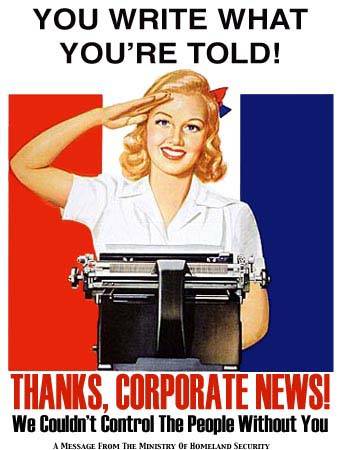
America’s aristocrats do not themselves and directly do the censoring-out of the key facts, but, instead, their corporations carefully hire (and, when dissatisfied, demote or fire) the employees and agents who do this dirty-work of deceiving the public, on their behalf. This is the way that the empire — and ANY empire — functions.

It has become not merely the norm but the rule within the U.S. empire, and it is yet another historical example of the solidly established fact that censorship is essential to any dictatorship and toxic to any democracy.

Born in a Police State: The Deep State’s Persecution of Its Most Vulnerable Citizens

By John & Nisha Whitehead

Source: The Rutherford Institute

“When the song of the angels is stilled, when the star in the sky is gone, when the kings and princes are home, when the shepherds are back with their flocks, the work of Christmas begins: to find the lost, to heal the broken, to feed the hungry, to release the prisoner, to rebuild the nations, to bring peace among the people, to make music in the heart.”—Howard Thurman, theologian and civil rights activist

The Christmas story of a baby born in a manger is a familiar one.

The Roman Empire, a police state in its own right, had ordered that a census be conducted. Joseph and his pregnant wife Mary traveled to the little town of Bethlehem so that they could be counted. There being no room for the couple at any of the inns, they stayed in a stable (a barn), where Mary gave birth to a baby boy, Jesus. Warned that the government planned to kill the baby, Jesus’ family fled with him to Egypt until it was safe to return to their native land.

Yet what if Jesus had been born 2,000 years later?

What if, instead of being born into the Roman police state, Jesus had been born at this moment in time? What kind of reception would Jesus and his family be given? Would we recognize the Christ child’s humanity, let alone his divinity? Would we treat him any differently than he was treated by the Roman Empire? If his family were forced to flee violence in their native country and sought refuge and asylum within our borders, what sanctuary would we offer them?

A singular number of churches across the country have asked those very questions in recent years, and their conclusions were depicted with unnerving accuracy by nativity scenes in which Jesus and his family are separated, segregated and caged in individual chain-link pens, topped by barbed wire fencing.

Those nativity scenes were a pointed attempt to remind the modern world that the narrative about the birth of Jesus is one that speaks on multiple fronts to a world that has allowed the life, teachings and crucifixion of Jesus to be drowned out by partisan politics, secularism, materialism and war, all driven by a manipulative shadow government called the Deep State.

The modern-day church has largely shied away from applying Jesus’ teachings to modern problems such as war, poverty, immigration, etc., but thankfully there have been individuals throughout history who ask themselves and the world: what would Jesus do?

What would Jesus—the baby born in Bethlehem who grew into an itinerant preacher and revolutionary activist, who not only died challenging the police state of his day (namely, the Roman Empire) but spent his adult life speaking truth to power, challenging the status quo of his day, and pushing back against the abuses of the Roman Empire—do about the injustices of our  modern age?

Dietrich Bonhoeffer asked himself what Jesus would have done about the horrors perpetrated by Hitler and his assassins. The answer: Bonhoeffer was executed by Hitler for attempting to undermine the tyranny at the heart of Nazi Germany.

Aleksandr Solzhenitsyn asked himself what Jesus would have done about the soul-destroying gulags and labor camps of the Soviet Union. The answer: Solzhenitsyn found his voice and used it to speak out about government oppression and brutality.

Martin Luther King Jr. asked himself what Jesus would have done about America’s warmongering. The answer: declaring “my conscience leaves me no other choice,” King risked widespread condemnation as well as his life when he publicly opposed the Vietnam War on moral and economic grounds.

Even now, despite the popularity of the phrase “What Would Jesus Do?” (WWJD) in Christian circles, there remains a disconnect in the modern church between the teachings of Christ and the suffering of what Jesus in Matthew 25 refers to as the “least of these.”

Yet this is not a theological gray area: Jesus was unequivocal about his views on many things, not the least of which was charity, compassion, war, tyranny and love.

After all, Jesus—the revered preacher, teacher, radical and prophet—was born into a police state not unlike the growing menace of the American police state. When he grew up, he had powerful, profound things to say, things that would change how we view people, alter government policies and change the world. “Blessed are the merciful,” “Blessed are the peacemakers,” and “Love your enemies” are just a few examples of his most profound and revolutionary teachings.

When confronted by those in authority, Jesus did not shy away from speaking truth to power. Indeed, his teachings undermined the political and religious establishment of his day. It cost him his life. He was eventually crucified as a warning to others not to challenge the powers-that-be.

Can you imagine what Jesus’ life would have been like if, instead of being born into the Roman police state, he had been born and raised in the American police state?

Consider the following if you will.

Had Jesus been born in the era of the America police state, rather than traveling to Bethlehem for a census, Jesus’ parents would have been mailed a 28-page American Community Survey, a mandatory government questionnaire documenting their habits, household inhabitants, work schedule, how many toilets are in your home, etc. The penalty for not responding to this invasive survey can go as high as $5,000.

Instead of being born in a manger, Jesus might have been born at home. Rather than wise men and shepherds bringing gifts, however, the baby’s parents might have been forced to ward off visits from state social workers intent on prosecuting them for the home birth. One couple in Washington had all three of their children removed after social services objected to the two youngest being birthed in an unassisted home delivery.

Had Jesus been born in a hospital, his blood and DNA would have been taken without his parents’ knowledge or consent and entered into a government biobank. While most states require newborn screening, a growing number are holding onto that genetic material long-term for research, analysis and purposes yet to be disclosed.

Then again, had Jesus’ parents been undocumented immigrants, they and the newborn baby might have been shuffled to a profit-driven, private prison for illegals where they first would have been separated from each other, the children detained in make-shift cages, and the parents eventually turned into cheap, forced laborers for corporations such as Starbucks, Microsoft, Walmart, and Victoria’s Secret. There’s quite a lot of money to be made from imprisoning immigrants, especially when taxpayers are footing the bill.

From the time he was old enough to attend school, Jesus would have been drilled in lessons of compliance and obedience to government authorities, while learning little about his own rights. Had he been daring enough to speak out against injustice while still in school, he might have found himself tasered or beaten by a school resource officer, or at the very least suspended under a school zero tolerance policy that punishes minor infractions as harshly as more serious offenses.

Had Jesus disappeared for a few hours let alone days as a 12-year-old, his parents would have been handcuffed, arrested and jailed for parental negligence. Parents across the country have been arrested for far less “offenses” such as allowing their children to walk to the park unaccompanied and play in their front yard alone.

Rather than disappearing from the history books from his early teenaged years to adulthood, Jesus’ movements and personal data—including his biometrics—would have been documented, tracked, monitored and filed by governmental agencies and corporations such as Google and Microsoft. Incredibly, 95 percent of school districts share their student records with outside companies that are contracted to manage data, which they then use to market products to us.

From the moment Jesus made contact with an “extremist” such as John the Baptist, he would have been flagged for surveillance because of his association with a prominent activist, peaceful or otherwise. Since 9/11, the FBI has actively carried out surveillance and intelligence-gathering operations on a broad range of activist groups, from animal rights groups to poverty relief, anti-war groups and other such “extremist” organizations.

Jesus’ anti-government views would certainly have resulted in him being labeled a domestic extremist. Law enforcement agencies are being trained to recognize signs of anti-government extremism during interactions with potential extremists who share a “belief in the approaching collapse of government and the economy.”

While traveling from community to community, Jesus might have been reported to government officials as “suspicious” under the Department of Homeland Security’s “See Something, Say Something” programs. Many states, including New York, are providing individuals with phone apps that allow them to take photos of suspicious activity and report them to their state Intelligence Center, where they are reviewed and forwarded to law-enforcement agencies.

Rather than being permitted to live as an itinerant preacher, Jesus might have found himself threatened with arrest for daring to live off the grid or sleeping outside. In fact, the number of cities that have resorted to criminalizing homelessness by enacting bans on camping, sleeping in vehicles, loitering and begging in public has doubled.

Viewed by the government as a dissident and a potential threat to its power, Jesus might have had government spies planted among his followers to monitor his activities, report on his movements, and entrap him into breaking the law. Such Judases today—called informants—often receive hefty paychecks from the government for their treachery.

Had Jesus used the internet to spread his radical message of peace and love, he might have found his blog posts infiltrated by government spies attempting to undermine his integrity, discredit him or plant incriminating information online about him. At the very least, he would have had his website hacked and his email monitored.

Had Jesus attempted to feed large crowds of people, he would have been threatened with arrest for violating various ordinances prohibiting the distribution of food without a permit. Florida officials arrested a 90-year-old man for feeding the homeless on a public beach.

Had Jesus spoken publicly about his 40 days in the desert and his conversations with the devil, he might have been labeled mentally ill and detained in a psych ward against his will for a mandatory involuntary psychiatric hold with no access to family or friends. One Virginia man was arrested, strip searched, handcuffed to a table, diagnosed as having “mental health issues,” and locked up for five days in a mental health facility against his will apparently because of his slurred speech and unsteady gait.

Without a doubt, had Jesus attempted to overturn tables in a Jewish temple and rage against the materialism of religious institutions, he would have been charged with a hate crime. More than 45 states and the federal government have hate crime laws on the books.

Had anyone reported Jesus to the police as being potentially dangerous, he might have found himself confronted—and killed—by police officers for whom any perceived act of non-compliance (a twitch, a question, a frown) can result in them shooting first and asking questions later.

Rather than having armed guards capture Jesus in a public place, government officials would have ordered that a SWAT team carry out a raid on Jesus and his followers, complete with flash-bang grenades and military equipment. There are upwards of 80,000 such SWAT team raids carried out every year, many on unsuspecting Americans who have no defense against such government invaders, even when such raids are done in error.

Instead of being detained by Roman guards, Jesus might have been made to “disappear” into a secret government detention center where he would have been interrogated, tortured and subjected to all manner of abuses. Chicago police have “disappeared” more than 7,000 people into a secret, off-the-books interrogation warehouse at Homan Square.

Charged with treason and labeled a domestic terrorist, Jesus might have been sentenced to a life-term in a private prison where he would have been forced to provide slave labor for corporations or put to death by way of the electric chair or a lethal mixture of drugs.

Indeed, as I make clear in my book Battlefield America: The War on the American People and in its fictional counterpart The Erik Blair Diaries, given the nature of government then and now, it is painfully evident that whether Jesus had been born in our modern age or his own, he still would have died at the hands of a police state.

Thus, as we draw near to Christmas with its celebration of miracles and promise of salvation, we would do well to remember that what happened in that manger on that starry night in Bethlehem is only the beginning of the story. That baby born in a police state grew up to be a man who did not turn away from the evils of his age but rather spoke out against it.

We must do no less.