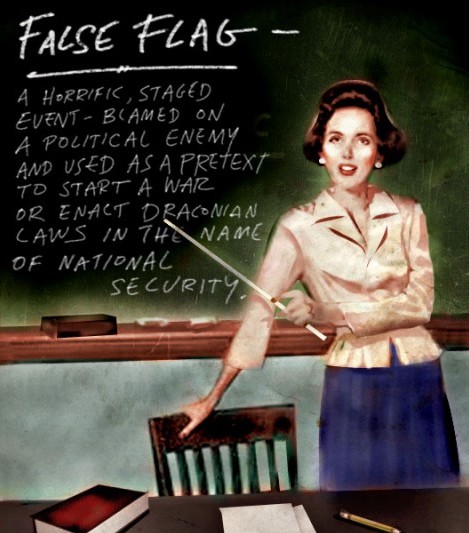
Still Waiting for Evidence of a Russian Hack

More than two years after the allegation of Russian hacking of the 2016 U.S. presidential election was first made, conclusive proof is still lacking and may never be produced, says Ray McGovern.

By Ray McGovern

Source: Consortium News

If you are wondering why so little is heard these days of accusations that Russia hacked into the U.S. election in 2016, it could be because those charges could not withstand close scrutiny. It could also be because special counsel Robert Mueller appears to have never bothered to investigate what was once the central alleged crime in Russia-gate as no one associated with WikiLeaks has ever been questioned by his team.

Veteran Intelligence Professionals for Sanity — including two “alumni” who were former National Security Agency technical directors — have long since concluded that Julian Assange did not acquire what he called the “emails related to Hillary Clinton” via a “hack” by the Russians or anyone else. They found, rather, that he got them from someone with physical access to Democratic National Committee computers who copied the material onto an external storage device — probably a thumb drive. In December 2016 VIPS explained this in some detail in an open Memorandum to President Barack Obama.

On January 18, 2017 President Obama admitted that the “conclusions” of U.S. intelligence regarding how the alleged Russian hacking got to WikiLeaks were “inconclusive.” Even the vapid FBI/CIA/NSA “Intelligence Community Assessment of Russian Activities and Intentions in Recent U.S. Elections” of January 6, 2017, which tried to blame Russian President Vladimir Putin for election interference, contained no direct evidence of Russian involvement.  That did not prevent the “handpicked” authors of that poor excuse for intelligence analysis from expressing “high confidence” that Russian intelligence “relayed material it acquired from the Democratic National Committee … to WikiLeaks.”  Handpicked analysts, of course, say what they are handpicked to say.

Never mind. The FBI/CIA/NSA “assessment” became bible truth for partisans like Rep. Adam Schiff (D-CA), ranking member of the House Intelligence Committee, who was among the first off the blocks to blame Russia for interfering to help Trump.  It simply could not have been that Hillary Clinton was quite capable of snatching defeat out of victory all by herself.  No, it had to have been the Russians.

Five days into the Trump presidency, I had a chance to challenge Schiff personally on the gaping disconnect between the Russians and WikiLeaks. Schiff still “can’t share the evidence” with me … or with anyone else, because it does not exist.

WikiLeaks

It was on June 12, 2016, just six weeks before the Democratic National Convention, that Assange announced the pending publication of “emails related to Hillary Clinton,” throwing the Clinton campaign into panic mode, since the emails would document strong bias in favor of Clinton and successful attempts to sabotage the campaign of Bernie Sanders.  When the emails were published on July 22, just three days before the convention began, the campaign decided to create what I call a Magnificent Diversion, drawing attention away from the substance of the emails by blaming Russia for their release.

Clinton’s PR chief Jennifer Palmieri later admitted that she golf-carted around to various media outlets at the convention with instructions “to get the press to focus on something even we found difficult to process: the prospect that Russia had not only hacked and stolen emails from the DNC, but that it had done so to help Donald Trump and hurt Hillary Clinton.”  The diversion worked like a charm.  Mainstream media kept shouting “The Russians did it,” and gave little, if any, play to the DNC skullduggery revealed in the emails themselves. And like Brer’ Fox, Bernie didn’t say nothin’.

Meanwhile, highly sophisticated technical experts, were hard at work fabricating “forensic facts” to “prove” the Russians did it.  Here’s how it played out:

June 12, 2016: Assange announces that WikiLeaks is about to publish “emails related to Hillary Clinton.”

June 14, 2016: DNC contractor CrowdStrike, (with a dubious professional record and multiple conflicts of interest) announces that malware has been found on the DNC server and claims there is evidence it was injected by Russians.

June 15, 2016: “Guccifer 2.0” affirms the DNC statement; claims responsibility for the “hack;” claims to be a WikiLeaks source; and posts a document that the forensics show was synthetically tainted with “Russian fingerprints.”

The June 12, 14, & 15 timing was hardly coincidence. Rather, it was the start of a pre-emptive move to associate Russia with anything WikiLeaks might have been about to publish and to “show” that it came from a Russian hack.

Enter Independent Investigators

A year ago independent cyber-investigators completed the kind of forensic work that, for reasons best known to then-FBI Director James Comey, neither he nor the “handpicked analysts” who wrote the Jan. 6, 2017 assessment bothered to do.  The independent investigators found verifiable evidence from metadata found in the record of an alleged Russian hack of July 5, 2016 showing that the “hack” that day of the DNC by Guccifer 2.0 was not a hack, by Russia or anyone else.

Rather it originated with a copy (onto an external storage device – a thumb drive, for example) by an insider — the same process used by the DNC insider/leaker before June 12, 2016 for an altogether different purpose. (Once the metadata was found and the “fluid dynamics” principle of physics applied, this was not difficult to disprove the validity of the claim that Russia was responsible.)

One of these independent investigators publishing under the name of The Forensicator on May 31 published new evidence that the Guccifer 2.0 persona uploaded a document from the West Coast of the United States, and not from Russia.

In our July 24, 2017 Memorandum to President Donald Trump we stated, “We do not know who or what the murky Guccifer 2.0 is. You may wish to ask the FBI.”

Our July 24 Memorandum continued: “Mr. President, the disclosure described below may be related. Even if it is not, it is something we think you should be made aware of in this general connection. On March 7, 2017, WikiLeaks began to publish a trove of original CIA documents that WikiLeaks labeled ‘Vault 7.’ WikiLeaks said it got the trove from a current or former CIA contractor and described it as comparable in scale and significance to the information Edward Snowden gave to reporters in 2013.

“No one has challenged the authenticity of the original documents of Vault 7, which disclosed a vast array of cyber warfare tools developed, probably with help from NSA, by CIA’s Engineering Development Group. That Group was part of the sprawling CIA Directorate of Digital Innovation – a growth industry established by John Brennan in 2015. [ (VIPS warned President Obama of some of the dangers of that basic CIA reorganization at the time.]

Marbled

“Scarcely imaginable digital tools – that can take control of your car and make it race over 100 mph, for example, or can enable remote spying through a TV – were described and duly reported in the New York Times and other media throughout March. But the Vault 7, part 3 release on March 31 that exposed the “Marble Framework” program apparently was judged too delicate to qualify as ‘news fit to print’ and was kept out of the Times at the time, and has never been mentioned since.

“The Washington Post’s Ellen Nakashima, it seems, ‘did not get the memo’ in time. Her March 31 article bore the catching (and accurate) headline: ‘WikiLeaks’ latest release of CIA cyber-tools could blow the cover on agency hacking operations.’

“The WikiLeaks release indicated that Marble was designed for flexible and easy-to-use ‘obfuscation,’ and that Marble source code includes a “de-obfuscator” to reverse CIA text obfuscation.

“More important, the CIA reportedly used Marble during 2016. In her Washington Post report, Nakashima left that out, but did include another significant point made by WikiLeaks; namely, that the obfuscation tool could be used to conduct a ‘forensic attribution double game’ or false-flag operation because it included test samples in Chinese, Russian, Korean, Arabic and Farsi.”

A few weeks later William Binney, a former NSA technical director, and I commented on Vault 7 Marble, and were able to get a shortened op-ed version published in The Baltimore Sun.

The CIA’s reaction to the WikiLeaks disclosure of the Marble Framework tool was neuralgic. Then Director Mike Pompeo lashed out two weeks later, calling Assange and his associates “demons,” and insisting; “It’s time to call out WikiLeaks for what it really is, a non-state hostile intelligence service, often abetted by state actors like Russia.”

Our July 24 Memorandum continued:  “Mr. President, we do not know if CIA’s Marble Framework, or tools like it, played some kind of role in the campaign to blame Russia for hacking the DNC. Nor do we know how candid the denizens of CIA’s Digital Innovation Directorate have been with you and with Director Pompeo. These are areas that might profit from early White House review.  [ President Trump then directed Pompeo to invite Binney, one of the authors of the July 24, 2017 VIPS Memorandum to the President, to discuss all this.  Binney and Pompeo spent an hour together at CIA Headquarters on October 24, 2017, during which Binney briefed Pompeo with his customary straightforwardness. ]

“We also do not know if you have discussed cyber issues in any detail with President Putin. In his interview with NBC’s Megyn Kelly he seemed quite willing – perhaps even eager – to address issues related to the kind of cyber tools revealed in the Vault 7 disclosures, if only to indicate he has been briefed on them. Putin pointed out that today’s technology enables hacking to be ‘masked and camouflaged to an extent that no one can understand the origin’ [of the hack] … And, vice versa, it is possible to set up any entity or any individual that everyone will think that they are the exact source of that attack.

“‘Hackers may be anywhere,’ he said. ‘There may be hackers, by the way, in the United States who very craftily and professionally passed the buck to Russia. Can’t you imagine such a scenario? … I can.’

New attention has been drawn to these issues after I discussed them in a widely published 16-minute interview last Friday.

In view of the highly politicized environment surrounding these issues, I believe I must append here the same notice that VIPS felt compelled to add to our key Memorandum of July 24, 2017:

“Full Disclosure: Over recent decades the ethos of our intelligence profession has eroded in the public mind to the point that agenda-free analysis is deemed well nigh impossible. Thus, we add this disclaimer, which applies to everything we in VIPS say and do: We have no political agenda; our sole purpose is to spread truth around and, when necessary, hold to account our former intelligence colleagues.

“We speak and write without fear or favor. Consequently, any resemblance between what we say and what presidents, politicians and pundits say is purely coincidental.” The fact we find it is necessary to include that reminder speaks volumes about these highly politicized times.

Identity Theft and the Body’s Disappearance

By Robert Bohm

Source: The Hampton Institute

“What sphinx of cement and aluminum bashed open their skulls and ate up their brains and imagination?”

– Allen Ginsberg from his poem “ Howl

Identity theft, at least the most familiar type, is possible because today the individual exists not merely as flesh and blood, but as flesh and blood spliced with bank account numbers, user names, passwords, credit card chips, etc. These added parts aren’t secondary to the individual’s overall identity, they’re central to it. Sometimes they’re all there is of it, as in many banking and purchasing transactions. In such instances, the data we’ve supplied to the relevant institutions doesn’t merely represent us, it is us. Our bodies alone can’t complete transactions without the account numbers, user names, passwords, credit card numbers, and ID cards which have become our identity’s essence. Without them, in many ways, we don’t exist.

In a worst case scenario, if someone gets hold of this private data, they can become us by possessing the data that is us. Following this, who or what we are is no longer a question. We don’t exist, except in the form of a stolen dataset now under someone else’s control.

In such a case, an unknown proxy has eliminated us and become who we once were.

Although problematic, the above form of identity theft is relatively minor. A worse form is one we all know about, yet chronically underestimate because we think of ourselves as too canny to be conned. Nonetheless, this other form of identity theft frames and limits everything we do. In the process, it fleeces us of the fullness of our identities and subjects our lives to a type of remote control. This remote control consists of the combined influence on us, from childhood onward, of society’s major institutions and dominant activities, which seed us with a variety of parameters for how to acceptably navigate society and and its particular challenges.

This process is usually called “socialization.” However, it’s better seen as a sorting procedure in which society sifts us through a citizenship sieve in order to eliminate supposed defects, thereby guaranteeing that, despite each of us possessing unique characteristics, we share an underlying uniformity. Ultimately, this process is a kind of identity eugenics which strives to purify the population by eliminating or weakening troublesome qualities – e.g., an overly questioning attitude, chronic boundary-testing, a confrontational stance toward authority, a fierce protectiveness toward whatever space the body inhabits, etc. Such traits are frowned upon because they’re seen by the status quo as a likely threat to society’s stability.

Such indoctrination is much subtler yet, in many ways, more pervasive than outright propaganda. Its theater of operations is everywhere, taking place on many fronts. Public and private education, advertising, mass culture, government institutions, the prevailing ideas of how to correct socioeconomic wrongs (this is a “good” form of protest, this a “bad” one), the methods by which various slangs are robbed of their transgressive nature through absorption into the mainstream, the social production of substitute behaviors for nonconformity and rebellion – each of these phenomena and others play a role in generating the so-called “acceptable citizen,” a trimmed down (i.e., possesses reduced potential) version of her or his original personality.

Make no doubt about it, this trimming of the personality is a form of identity theft. It is, in fact, the ultimate form. Take as an example the African slave in the U.S.: abducted from her or his homeland, forbidden from learning to read or write, denied legal standing in the courts, given no say over whether offspring would be sold to another owner or remain with them. The slave was robbed of her/his most essential identity, their status as a human being.

In his book, The Souls of Black Folk , W.E.B. Du Bois described this theft in terms of how slavery reduces the slave to a person with “no true self-consciousness” – that is, with no stable knowledge of self, no clear sense of who she or he is in terms of culture, preceding generations, rituals for bringing to fruition one’s potential to create her or his own fate. As Du Bois correctly argued, this left the slave, and afterwards the freed Black, with a “longing to attain self-conscious manhood,” to know who she or he was, to see oneself through one’s own eyes and not through the eyes of one’s denigrators – e.g., white supremacists, confederate diehards, “good” people who nonetheless regarded Blacks as “lesser,” etc. Du Bois understood that from such people’s perspectives, Blacks possessed only one identity: the identity of being owned, of possessing no value other than what its owner could extract from them. Without an owner to extract this value, the slave was either identity-less or possessed an identity so slimmed and emaciated as to be a nothing.

The point here isn’t that today socialization enslaves the population in the same way as U.S. slavery once enslaved Blacks, but rather that identity theft is, psychologically and culturally speaking, a key aspect of disempowering people and has been for centuries. Today, because of mass culture and new technologies, the methods of accomplishing it are far more sophisticated than during other eras.

How disempowerment/identity theft occurs in contemporary society is inseparable from capitalism’s current state of development. We long ago passed the moment (after the introduction of assembly line production in the early 20th century) when modern advertising started its trek toward becoming one of the most powerful socialization forces in the U.S. As such, it convinces consumers not only to purchase individual products but, even more importantly, sells us on the idea that buying in general and all the time, no matter what we purchase, is proof of one’s value as a person.

To accomplish this end, modern advertising was molded by its creators into a type of PSYOP designed for destabilizing individuals’ adherence to old saws like “a penny saved is a penny earned” and “without frugality none can be rich, and with it very few would be poor.” Once this happened, the United States’ days of puritan buying restraint were over. However, modern advertising was never solely about undermining personal fiscal restraint. It was also about manipulating feelings of personal failure – e.g., dissatisfaction with lifestyle and income, a sense of being trapped, fear of being physically unappealing, etc. – and turning them not into motives for self-scrutiny or social critiques, but into a spur for commodity obsession. This wasn’t simply about owning the product or products, but an obsessive hope that buying one or more commodities would trigger relief from momentary or long-term anxiety and frustration related to one’s life-woes: job, marriage, lack of money, illness, etc.

Helen Woodward, a leading advertising copywriter of the early decades of the 20th century, described how this was done in her book, Through Many Windows , published in 1926. One example she used focused on women as consumers:

The restless desire for a change in fashions is a healthy outlet. It is normal to want something different, something new, even if many women spend too much time and too much money that way. Change is the most beneficent medicine in the world to most people. And to those who cannot change their whole lives or occupations, even a new line in a dress is often a relief. The woman who is tired of her husband or her home or a job feels some lifting of the weight of life from seeing a straight line change into a bouffant, or a gray pass into a beige. Most people do not have the courage or understanding to make deeper changes.

Woodward’s statement reveals not only the advertising industry’s PSYOP characteristic of manipulating people’s frustrations in order to lure them into making purchases, but also the industry’s view of the people to whom it speaks through its ads. As indicated by Woodward’s words, this view is one of condescension, of viewing most consumers as unable to bring about real socioeconomic change because they lack the abilities – “the courage or understanding” – necessary to do so. Consequently, their main purpose in life, it is implied, is to exist as a consumer mass constantly gorging on capitalism’s products in order to keep the system running smoothly. In doing this, Woodward writes, buyers find in the act of making purchases “a healthy outlet” for troubled emotions spawned in other parts of their lives.

Such advertising philosophies in the early 20th century opened a door for the industry, one that would never again be closed. Through that door (or window), one could glimpse the future: a world with an ever greater supply of commodities to sell and an advertising industry ready to make sure people bought them. To guarantee this, advertisers set about creating additional techniques for reshaping public consciousness into one persuaded that owning as many of those commodities as possible was an existential exercise of defining who an individual was.

In his book The Consumer Society , philosopher Jean Baudrillard deals with precisely this process. He writes that such a society is driven by:

the contradiction between a virtually unlimited productivity and the need to dispose of the product. It becomes vital for the system at this stage to control not only the mechanism of production, but also consumer demand.

“To control … consumer demand.” This is the key phrase here. Capitalist forces not only wanted to own and control the means of production in factories, it also wanted to control consumers in such a way that they had no choice but to buy, then buy more. In other words, capitalism was in quest of a strategy engineered to make us synch our minds to a capitalism operating in overdrive (“virtually unlimited” production).

The way this occurs, Baudrillard argues, is by capitalism transforming (through advertising) the process of buying an individual product from merely being a response to a “this looks good” or “that would be useful around the house” attitude to something more in line with what psychologists call “ego integration.” It refers to that part of human development in which an individual’s various personality characteristics (viewpoints, goals, physical desires, etc.) are organized into a balanced whole. At that point, what advertising basically did for capitalism was develop a reconfigured ego integration process in which the personality is reorganized to view its stability as dependent on its life as a consumer.

Advertisers pulled this off because the commodity, in an age of commodity profusion, isn’t simply a commodity but is also an indicator or sign referring to a particular set of values or behavior, i.e. a particular type of person. It is this which is purchased: the meaning, or constellation of meanings, which the commodity indicates.

In this way, the commodity, once bought, becomes a signal to others that “I, the owner, am this type of person.” Buy an Old Hickory J143 baseball bat and those in the know grasp that you’re headed for the pros. Sling on some Pandora bling and all the guys’ eyes are on you as you hip-swing into the Groove Lounge. Even the NY Times is hip to what’s up. If you want to be a true Antifa activist, the newspaper informed its readers on Nov. 29, 2017, this is the attire you must wear:

Black work or military boots, pants, balaclavas or ski masks, gloves and jackets, North Face brand or otherwise. Gas masks, goggles and shields may be added as accessories, but the basics have stayed the same since the look’s inception.

After you dress up, it’s not even necessary to attend a protest and fight fascists to be full-blown Antifa. You’re a walking billboard (or signification) proclaiming your values everywhere. Dress the part and you are the part.

Let’s return to Baudrillard, though. In The System of Objects , another of his books, he writes about how the issue of signification, and the method by which individuals purchase particular commodities in order to refine their identity for public consumption, becomes the universal mass experience:

To become an object of consumption, an object must first become a sign. That is to say: it must become external, in a sense, to a relationship that it now merely signifies … Only in this context can it be ‘personalized’, can it become part of a series, and so on; only thus can it be consumed, never in its materiality, but in its difference.

This “difference” is what the product signifies. That is, the product isn’t just a product anymore. It isn’t only its function. It has transitioned into an indicator of a unique personality trait, or of being a member of a certain lifestyle grouping or social class, or of subscribing to a particular political persuasion, Republican, anarchist, whatever. In this way, choosing the commodities to purchase is essential to one’s self-construction, one’s effort to make sure the world knows exactly who they are.

The individual produced by this citizen-forming process is a reduced one, the weight of her/his full personality pared down by cutting off the unnecessary weight of potentials and inclinations perceived as “not a good fit” for a citizen at this stage of capitalism. Such a citizen, however, isn’t an automaton. She or he makes choices, indulges her or his unique appetites, even periodically rebels against bureaucratic inefficiency or a social inequity perceived to be particularly stupid or unfair. Yet after a few days or few months of this activity, this momentary rebel fades back into the woodwork, satisfied by their sincere but token challenge to the mainstream. The woodwork into which they fade is, of course, their home or another favorite location (a lover’s apartment, a bar, a ski resort cabin, a pool hall, etc.).

From this point on, or at least for the foreseeable future, such a person isn’t inclined to look at the world with a sharp political eye, except possibly within the confines of their private life. In this way, they turn whatever criticism of the mainstream they may have into a petty gripe endowed with no intention of joining with others in order to fight for any specific change(s) regarding that political, socioeconomic or cultural phenomenon against which the complaint has been lodged. Instead, all the complainer wants is congratulations from her or his listener(s) about how passionate, on-target, and right the complaint was.

This is the sieve process, identity eugenics, in action. Far more subtle and elastic than previous methods of social control, it narrows what we believe to be our options and successfully maneuvers us into a world where advertising shapes us more than schools do. In this mode, it teaches us that life’s choices aren’t so much about justice or morality, but more about what choosing between commodities is like: which is more useful to me in my private life, which one better defines me as a person, which one makes me look cooler, chicer, brainier, hunkier, more activist to those I know.

It is in this context that a young, new, “acceptable” citizen enters society as a walking irony. Raised to be a cog in a machine in a time of capitalistic excess, the individual arrives on the scene as a player of no consequence in a game in which she or he has been deluded that they’re the game’s star. But far from being a star, this person, weakened beyond repair by the surrender of too much potential, is so without ability that she or he has no impact whatsoever on the game. Consequently, this individual is, for all practical purposes, an absence. The ultimate invisible person, a nothing in the midst of players who don’t take note of this absence at all. And why should they? The full-of-potential individual who eventually morphed into this absence is long gone, remembered by no one, except as a fading image of what once was.

This process of reducing a potentially creative person into a virtual non-presence is a form of ideological anorexia. Once afflicted, an individual refuses nourishment until they’re nothing but skin and bones. However, the “weight” they’ve lost doesn’t consist of actual pounds. Instead, it involves a loss of the psychological heftiness and mental bulk necessary to be a full human being.

One can’t lose more weight than that.

Human life as we once knew it is gone, replaced by the ritual of endless purchasing. This is existence in what used to be called “the belly of the beast.” Our role in life has become to nourish capitalism by being at its disposal, by giving of ourselves. Such giving frequently entails self-mutilation: the debt, credit card and otherwise, that bludgeons to death the dreams of many individuals and families.

This quasi-religious self-sacrifice replicates in another form: the Dark Ages practice employed by fanatical monks and other flagellants who lashed themselves with whips made from copper wires, thereby ripping their flesh and bleeding until they descended into a state of religious hysteria. The more we give of ourselves in this way, the thinner and more weightless we become. Meanwhile, the god whom Allen Ginsberg called Moloch grows more obese day after day, its belly is filled with:

Robot apartments! invisible suburbs! skeleton treasuries! blind capitals! demonic industries! spectral nations! invincible madhouses! granite cocks! monstrous bombs!…

Dreams! adorations! illuminations! religions! the whole boatload of sensitive bullshit!

What capitalism wants from us, of course, isn’t merely self-sacrifice, it’s surrender. Hunger for life is viewed negatively by the status quo because it nourishes the self, making it stronger and more alert and, therefore, better prepared to assert itself. The fact that such an empowered self is more there (possesses more of a presence) than its undersized counterpart makes the healthier self unacceptable to the powers that be. This is because there-ness is no longer an option in our national life. Only non-there-ness is. If you’re not a political anorexic, you’re on the wrong side.

Wherever we look, we see it. Invisibility, or at least as much of it as possible, is the individual’s goal. It’s the new real. Fashion reveals this as well as anything. It does so by disseminating an ideal of beauty that fetishizes the body’s anorexic wilting away. Not the body’s presence but its fade to disappearance is the source of its allure. The ultimate fashion model hovers fragilely on the brink of absence in order not to distract from the only thing which counts in capitalism: the commodity to be sold – e.g., the boutique bomber jacket, the shirt, the pantsuit, the earrings, the shawl, the stilettos, the iPhone, the Ferrari, and, possibly most of all, the political passivity intrinsic to spending your life acquiring things in order to prove to others and ourselves that we’ve discovered in these things something more useful than Socrates’ goal of knowing thyself or Emma Goldman’s warning , “The most unpardonable sin in society is independence of thought.”

What is true on the fashion runway is also true in politics. Just as the best model is one thin enough to fade into non-presence, so our democracy, supposedly ruled “by and for the people,” has thinned down so much that “the people” can’t even be seen (except as stage props), let alone get their hands on democracy except in token ways. No matter how often we the people are praised rhetorically by politicians, we aren’t allowed as a group to get in the way of the capitalist system’s freedom to do whatever it wants in order to sustain commodity worship and guarantee capital’s right to permanent rule. If the military-industrial complex needs another war in order to pump out more profits, then so be it. We have no say in the matter. The identity theft built into society’s structure makes sure of this. It’s stripped us of our “weight” – our creativity, our willingness to take political risks, our capacity to choose action over posturing. After this forced weight loss, what’s left of us is a mess. Too philosophically and psychologically anemic to successfully challenge our leaders’ decisions, we, for all practical purposes, disappear.

As a reward for our passivity, we’re permitted a certain range of freedom – as long as “a certain range” is defined as “varieties of buying” and doesn’t include behavior that might result in the population’s attainment of greater political power.

So, it continues, the only good citizen is the absent citizen. Which is to say, a citizen who has dieted him or herself into a state of political anorexia – i.e., that level of mental weightlessness necessary for guaranteeing a person’s permanent self-exclusion from the machinery of power.

***

Our flesh no longer exists in the way it once did. A new evolutionary stage has arrived.

In this new stage, the flesh isn’t merely what it seems to be: flesh, pure and simple. Instead, it’s a hybrid. It’s what exists after the mind oversees its passage through the sieve of mass culture.

After this passage, what the flesh is now are the poses it adopts from studying movies, rappers, punk rockers, fashionistas of all kinds, reality TV stars, football hunks, whomever. It’s also what it wears, skinny jeans or loose-fitting chinos, short skirt or spandex, Hawaiian shirt or muscle tank top, pierced bellybutton, dope hiking boots, burgundy eyeliner. Here we come, marching, strolling, demon-eyed, innocent as Johnny Appleseed. Everybody’s snapping pics with their phones, selfies and shots of others (friends, strangers, the maimed, the hilarious, the so-called idiotic). The flesh’s pictures are everywhere. In movie ads, cosmetic ads, suppository ads, Viagra ads. This is the wave of the already-here but still-coming future. The actual flesh’s replacement by televised, printed, digitalized and Photoshopped images of it produces the ultimate self-bifurcation.

Increasingly cut off from any unmediated life of its own, the flesh now exists mostly as a natural resource for those (including ourselves) who need it for a project; to photograph it, dress it up, pose it in a certain way, put it on a diet, commodify/objectify it in any style ranging from traditional commodification to the latest avant-garde objectification.

All these stylings/makeovers, although advertised as a form of liberation for the flesh (a “freeing” of your flesh so you can be what you want to be), are in fact not that. Instead, they are part of the process of distancing ourselves from the flesh by always doing something to it rather than simply being it.

When we are it, we feel what the flesh feels, the pain, the joy, the satisfaction, the terror, the disgust, the hints of hope, a sense of irreparable loss, whatever.

When we objectify it, it is a mannequin, emotionless, a thing that uses up a certain amount of space. As such we can do what we want with it: decorate it, pull it apart, vent our frustrations on it, starve it, practice surgical cuts on it, put it to whatever use we like. It isn’t a person. It is separate from our personhood and we own it.

In fact we own all the world’s flesh.

We live, after all, in the American Empire, and the Empire owns everything. As the Empire’s citizens, we own everything it owns. Except for one thing: ourselves.

***

The flesh is both here and not here. Increasingly, it is more an object that we do things to – e.g., bulk it up, change its hair color, mass-kill it from a hotel window on the 32nd floor, view in a porno flick – than a presence in its own right (i.e., self-contained, a force to be reckoned with). In this sense, it is a growing absence, each day losing more of its self-determination and becoming more a thing lost than something that exists fully, on its own, in the here and now. Given this, the proper attitude to have toward the flesh is one of nostalgia.

Of course, the flesh hasn’t really disappeared. What has disappeared is what it once was, a meat-and-bones reality, a site of pleasure and injury. Now, however, it’s not so valuable in itself as it is in its in its role as a starting-off point for endless makeovers.

These makeover options are arrayed before the consumer everywhere: online, in big box stores, in niche markets and so on. Today, it is in these places, not at birth, that the flesh starts its trek toward maturation. It does this by offering itself up as a sacrifice to be used as they see fit by the fashion industry, the gym industry, the addiction-cure industry, the diet industry, the pharmaceutical industry, the education industry, etc. Each body in the nation reaches its fullest potential only when it becomes a testing site to be used by these industries as they explore more and better ways to establish themselves as indispensable to capitalism’s endless reproduction.

In the end, the flesh, the target of all this competition for its attention, has less of a life on its own than it does as the object of advertisers’ opinions about what can be done to improve it or to reconstruct it. Only to the extent that the flesh can transcend or reconstitute itself can it be said to be truly alive.

This last fact – about aliveness – represents the culmination of a process. This process pertains to the visualization and digitalization of everything and the consequent disappearance of everything behind a wall of signification.

A televised or computerized image, discussion, commentary, conjecture, etc., becomes the thing it meditates on, depicts or interprets. This happens by virtue of the fact that the thing itself (the real flesh behind the televised or computerized image, discussion, commentary, conjecture, etc.) has disappeared into the discussion or into the image of it presented on the computer or TV screen.

In the same way, an anorexic model (her/his flesh and blood presence) disappears into the fashions she or he displays for the public.

In each instance the thing (the flesh) now no longer exists except in other people’s meditations on it; it has become those other people’s meditations. The ultimate anorexic, it (the thing) has lost so much weight it’s no longer physically there except as an idea in someone else’s mind or in a series of binary codings inside computers.

This is the final victory of absence over there-ness, of the anorexic ideal over the idea of being fully human (i.e., “bulging with existence,” “fat with life”). The self has been successfully starved to the point of such a radical thinness that it can no longer stand up to a blade of grass, let alone make itself felt by the powers that be.

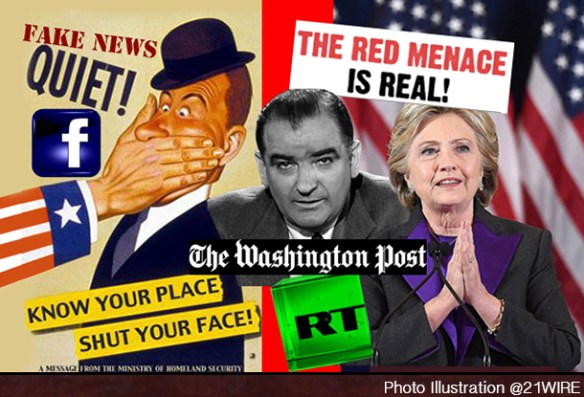
No Need To Wait – Dystopia Is Almost Upon Us

Source: TruePublica

Microsoft’s CEO has warned the technology industry against creating a dystopian future, the likes of which have been predicted by authors including George Orwell and Aldous Huxley. Satya Nadella kicked off the the company’s 2017 Build conference with a keynote that was as unexpected as it was powerful. He told the developers in attendance that they have a huge responsibility, and that the choices they make could have enormous implications.

They won’t listen of course. The collection of big data along with management, selling and distribution and the systems architecture to control it is now worth exactly double global military defence expenditure. In fact, this year, the big data industry overtook the worlds most valuable traded commodity – oil.

The truth is that the tech giants have already captured us all. We are already living in the beginnings of a truly dystopian world.

Leaving aside the endemic surveillance society our government has chosen on our behalf with no debate, politically or otherwise, we already have proof of the now and where it is leading. With fingerprint scanning, facial recognition, various virtual wallets to pay for deliveries, some would say your identity is as good as stolen. If it isn’t, it soon will be. That’s because the hacking industry, already worth a mind blowing $1trillion annually is expected to reach $2.1 trillion in just 14 months time.

The reality of not being able to take public transportation, hire a car, buy a book, or a coffee – requiring full personal identification is almost upon us. Britain even had an intention to be completely cashless by 2025 – postponed only by the impact of Brexit.

Alexa, the Amazon home assistant listens to everything said in the house. It is known to record conversations. Recently, police in Arkansas, USA demanded that Amazon turn over information collected from a murder suspect’s Echo — the speaker that controls Alexa, because they already knew what information could be extracted from it.

32M is the first company in the US that provides a human chip, allowing employees “to make purchases in their break-room micro market, open doors, login to computers, use the copy machine.” 3M also confirmed what the chip could really do – telling employees to “use it as your passport, public transit and all purchasing opportunities.”

Various Apps now locate people you may know and your own location can be shared amongst others without your knowledge and we’ve known for years that governments and private corporations have access to this data, whether you like it not.

Other countries are providing even scarier technologies.  Hypebeast Magazine reports that  Aadhaar is a 12-digit identity number issued to all Indian residents based on their biometric and demographic data. “This data must be linked to their bank account or else they’ll face the risk of losing access to their account. Folks have until the end of the year to do this, with phone numbers soon to be connected through the 12 digits by February. Failure to do so will deactivate the service. ” The technology has the ability to refuse access to state supplied services such as healthcare.

Our article “Insurance Industry Leads The Way in Social Credit Systems” also highlights what the fusion of technology and data is likely to end up doing for us. An astonishing 96 per cent of insurers think that ecosystems or applications made by autonomous organisations are having a major impact on the insurance industry. The use of social credit mechanisms is being developed, some already implemented, which will determine our future behaviour, which will affect us all – both individually and negatively.”

The Chinese government plans to launch its Social Credit System in 2020. Already being piloted on 12 million of its citizens, the aim is to judge the trustworthiness – or otherwise – of its 1.3 billion residents. Something as innocuous as a person’s shopping habits become a measure of character. But the system not only investigates behaviour – it shapes it. It “nudges” citizens away from purchases and behaviours the government does not like. Friends are considered as well and individual credit scores fall depending on their trustworthiness. It’s not possible to imagine how far this will go in the end.

However to get us all there, to that situation, we need to be distracted from what is going on in the background. Some, are already concerned.


Distraction – detaching us from truth and reality

The Guardian wrote an interesting piece recently which highlighted some of the concerns of those with expert insider knowledge of the tech industry. For instance, Justin Rosenstein, the former Google and Facebook engineer who helped build the ‘like’ button –  is concerned. He believes there is a case for state regulation of smartphone technology because it is “psychologically manipulative advertising”, saying the moral impetus is comparable to taking action against fossil fuel or tobacco companies.

If we only care about profit maximisation,” he says, “we will go rapidly into dystopia.” Rosenstien also makes the observation that after Brexit and the election of Trump, digital forces have completely upended the political system and, left unchecked, could render democracy as we know it obsolete.

Carole Cadwalladre’s recent Exposé in the Observer/Guardian proved beyond doubt that democracy has already departed.  Here we learn about a shadowy global operation involving big data and billionaires who influenced the result of the EU referendum. Britain’s future place in the world has been altered by technology.

Nir Eyal 39, the author of Hooked: How to Build Habit-Forming Products writes: “The technologies we use have turned into compulsions, if not full-fledged addictions.” Eyal continues: “It’s the impulse to check a message notification. It’s the pull to visit YouTube, Facebook, or Twitter for just a few minutes, only to find yourself still tapping and scrolling an hour later.” None of this is an accident, he writes. It is all “just as their designers intended”.

Eyal feels the threat and protects his own family by cutting off the internet completely at a set time every day. “The idea is to remember that we are not powerless,” he said. “We are in control.”

The truth is we are no longer in control and have not been since we learned that our government was lying to us with the Snowden revelations back in 2013.

Tristan Harris, a 33-year-old former Google employee turned vocal critic of the tech industry agrees about the lack of control. “All of us are jacked into this system,” he says. “All of our minds can be hijacked. Our choices are not as free as we think they are.” Harris insists that billions of people have little choice over whether they use these now ubiquitous technologies, and are largely unaware of the invisible ways in which a small number of people in Silicon Valley are shaping their lives.

Harris is a tech whistleblower. He is lifting the lid on the vast powers accumulated by technology companies and the ways they are abusing the influence they have at their fingertips – literally.

“A handful of people, working at a handful of technology companies, through their choices will steer what a billion people are thinking today.”

The techniques these companies use such as social reciprocity, autoplay and the like are not always generic: they can be algorithmically tailored to each person. An internal Facebook report leaked this year, ultimately revealed that the company can identify when teenagers feel “worthless or “insecure.” Harris adds, that this is “a perfect model of what buttons you can push in a particular person”.

Chris Marcellino, 33, a former Apple engineer is now in the final stages of retraining to be a neurosurgeon and notes that these types of technologies can affect the same neurological pathways as gambling and drug use. “These are the same circuits that make people seek out food, comfort, heat, sex,” he says.

Roger McNamee, a venture capitalist who benefited from hugely profitable investments in Google and Facebook, has grown disenchanted with both of the tech giants. “Facebook and Google assert with merit that they are giving users what they want,” McNamee says. “The same can be said about tobacco companies and drug dealers.”

James Williams ex-Google strategist who built the metrics system for the company’s global search advertising business, says Google now has the “largest, most standardised and most centralised form of attentional control in human history”. “Eighty-seven percent of people wake up and go to sleep with their smartphones,” he says. The entire world now has a new prism through which to understand politics, and Williams worries the consequences are profound.

Williams also takes the view that if the attention economy erodes our ability to remember, to reason, to make decisions for ourselves – faculties that are essential to self-governance – what hope is there for democracy itself?

“The dynamics of the attention economy are structurally set up to undermine the human will,” he says. “If politics is an expression of our human will, on individual and collective levels, then the attention economy is directly undermining the assumptions that democracy rests on. If Apple, Facebook, Google, Twitter, Instagram and Snapchat are gradually chipping away at our ability to control our own minds, could there come a point, I ask, at which democracy no longer functions?”

“Will we be able to recognise it, if and when it happens?” Williams says. “And if we can’t, then how do we know it hasn’t happened already?”


The dystopian arrival

Within ten years, some are speculating that many of us will be wearing eye lenses. Coupled with social media, we’ll be able to identify strangers and work out that a particular individual, in say a bar, has a low friend compatibility, and data shows you will likely not have a fruitful conversation. This idea is literally scratching the surface of the information overload en-route right now.

It is not at all foolish to think that in that same bar a patron is shouting at the bartender, who refuses to serve him another drink because the glass he was holding measured his blood-alcohol level through the sweat in his fingers. He’ll have to wait at least 45 minutes before he’ll be permitted to order another scotch. You might even think that is a good idea – it isn’t.

Google’s Quantum Artificial Intelligence  Lab, already works with other organisations associated with NASA. Google’s boss sits on the Board of the Pentagon with links plugged directly into the surveillance architecture of the NSA in the USA and GCHQ in Britain. This world, where artificial intelligence makes its mark, as Williams mentions earlier, will deliberately undermine the ability to think for yourself.

In the scenario of the eye lenses, you might even have the ability to command your eyewear to shut down. But when you do, suddenly you are confronted with an un-Googled world. It appears drab and colourless in comparison. The people before you are bland, washed out and unattractive. The art, plants, wall paint, lighting and decorations had all been shaped by your own preferences, and without the distortion field your wearable eyewear provided, the world appears as a grey, lifeless template.

You find it difficult to last without the assistance of your self imposed augmented life, and accompanied by nervous laughter you switch it back on. The world you view through the prism of your computer eyewear has become your default setting. You know you have free will, but don’t feel like you need it. As Marcellino says the same neurological pathways as gambling and drug use drive how you choose to see the world.

This type of technology will be available and these types of scenario’s will become real, sooner than you think.

Our governments, allied with the tech giants are coercing us into a place of withering obedience with the use of 360 degree state surveillance. New technology, which is somehow seen as the road to liberty, contentment and prosperity, is really our future being shaped by a system that will destroy our civil liberties, crush our human rights and it will eventually ensnare and trap us all. This much they are already attempting in China and Japan with social credit mechanisms and pre-crime technology which is a truly frightening prospect. Without debate or our knowledge, here in western democracies, these technologies are already in use.


Convenient Tales About Riches Within Reach

By Sam Pizzigati

Source: OpEdNews.com

The world at large knew virtually nada about Sylvia Bloom for 96 years. Then she died in 2016. Now, just a little too late, Sylvia Bloom is getting her belated — yet richly deserved — 15 minutes of worldwide fame.

The New York Times has just published a heart-warming story of the caring, upright life Sylvia Bloom lived, and the remarkable — and hidden — fortune she quietly accumulated over the course of her 67-year career as a Manhattan legal secretary.

That fortune totaled, in the end, over $9 million. The bulk of that wealth, the Times account reveals, is going — per Bloom’s wishes — to help students from poor families advance their educations.

None of Bloom’s surviving relatives or law firm colleagues or fellow volunteers at the Henry Street Settlement, the social services agency set to get $6.24 million from her bequest, had any idea that their unassuming loved one and friend had saved anything remotely close to multiple millions.

Counting Pennies

Bloom lived frugally all her life in Brooklyn and commuted, by subway, to her job. The “high life” never interested her in the least. She led a simple existence. She counted her pennies. In the end, she put them all to good use.

Stories like Bloom’s have been popping up regularly over recent years. Leonard Gigowski, a Wisconsin shopkeeper, died three years ago at age 90, and left behind a “secret $13 million fortune” that’s currently funding scholarships. Grace Groner passed away in 2010 at age 100. She spent most of her life in a one-bedroom Illinois home, shopped at thrift stores, and left $9 million for her alma mater.

Convenient Tales

Our popular culture can’t seem to get enough of these life-affirming tales of modest multi-millionaire seniors. These stories make us feel good. They also, unfortunately, reinforce a message that our society’s richest — and their cheerleaders — find enormously convenient.

You don’t have to be money-hungry, commit vile acts or have remarkable talents to become wealthy, the tellers of all these stories of hidden millions suggest. You just have to be frugal; almost anybody, in other words, can become rich.

And if you don’t happen to become rich, the media coverage of these stories not so subtly hints, just look in the mirror for the reason why. You, too, could have resisted temptation and counted your pennies.

You, too, could have built a huge personal fortune. Shame on you. You chose not to.

The Millionaire Next Door

A couple of decades ago, two academic researchers — Thomas Stanley and William Danko — made themselves not insignificant personal fortunes by wrapping up that same theme in reams of statistics. Their 1996 book, The Millionaire Next Door, has so far sold over 4 million copies.

That thrifty fellow down the block with a six-year-old Ford, The Millionaire Next Door related, could well be worth millions. And those millions, the book stressed, all begin with frugality.

Conservative pundits have always loved this basic frugality-pays thesis. Stanley and Danko, the argument goes, have served up the ultimate secret to getting rich. “Hardly any” of the self-made rich the pair profiled in The Millionaire Next Door, as one commentator noted a few years ago, “had expensive tastes.” Instead, these millionaires avoided “new homes and expensive clothes” and “often invested 15 to 20 percent of their net income.”

Any of us could follow that lead, this analyst would add, so long as we understand “that building wealth takes discipline, sacrifice, and hard work.”

Reaping Rewards

But if “discipline, sacrifice, and hard work” build wealth, why do so many millions of disciplined, sacrificing, and hard-working Americans today have so little of it? Why is the “millionaire next door” — especially for our millennial generation — becoming a vanishing species?

Sylvia Bloom’s life offers some clues. Yes, Bloom lived frugally, sacrificed, and worked hard. But she also matured in a society — mid-20th century America — that endeavored to help disciplined, sacrificing, and hard-working people.

That help came in many different forms. Sylvia Bloom attended Hunter College, part of a system of free public higher education in New York City. She and her husband, a firefighter and later teacher, lived in a rent-controlled apartment. She commuted, for just a few dimes per day, on the world’s most extensive public transit system.

Sylvia Bloom’s young adult counterparts today? They confront a totally different reality. The sky-high costs of attending college have turned 21st-century young adults into life-long debtors. To find an affordable place to live, they squeeze into tiny apartments close to their jobs or plop themselves in distant exurbs, fighting traffic jams all the way to work — if not paying big bucks daily for scarce transit options.

Austerity Trumps Frugality

These millennials aren’t living the frugal life. They’re living the austere life — and not by choice. Our elected leaders have thrust this austerity upon them, with decades of public policies that have rewarded the rich with tax cuts at every turn and whittled away public services at every opportunity.

If Sylvia Bloom had been born a millennial, she’d be pinching pennies today to pay off her college debts. She’d be looking forward to years of hard work and sacrifice, with no hope of ever saving up enough to become a significant invester.

In her actual life, Sylvia Bloom had the good fortune to live her early adult years in a society much more caring than ours. She cared back — and chose to devote her own financial good fortune to helping others to the same support that so helped her.

Sylvia Bloom’s life does indeed offer up inspiration. Let’s not let our rich turn that life into a rationalization for their riches.

WikiLeaks and whistleblowers condemn new allegations against Julian Assange

By James Cogan

Source: WSWS.org

WikiLeaks has announced it will sue the British Guardian over the scurrilous allegations it made on May 15 that Julian Assange “hacked” the communication system of the Ecuadorian embassy in London where he has been confined since he sought political asylum in June 2012.

The only and obvious motive behind the unsubstantiated, “anonymous” allegations is to provide the Ecuadorian government with a pretext to renege on Assange’s asylum and force him out of the embassy. Upon doing so, he would be arrested by waiting British police for breaching bail conditions. Once in British custody, the WikiLeaks editor would face the prospect of extradition to the US to stand trial on charges of espionage, which could lead to his protracted imprisonment or, potentially, even his execution (see: “Conspiracy emerges to push Julian Assange into British and US hands”).

In a tweet issued shortly after the publication of the Guardian articles, WikiLeaks denounced the assertions as an “anonymous libel” made on behalf of the “current UK-US government onslaught against Mr Assange’s asylum—while he can’t respond. You’ve gone too far this time. We’re suing.”

Assange cannot respond because on March 28, more than seven weeks ago, the Ecuadorian government of President Lenín Moreno cut off all his communications with the outside world and has blocked him from even receiving visitors. Ample indications exist that Ecuador did so on the demand of Washington, as part of the price for improved relations with the US.

WikiLeaks ended its tweet with a link to the scathing review that Assange wrote of the Guardian-published 2014 book, The Snowden Files: The Inside Story of the World’s Most Wanted Man. The author of the book was Luke Harding, the same Guardian journalist who co-wrote the May 15 attack on Assange and WikiLeaks.

In the first sentence of his review, Assange described Harding’s work as a “hack job in the purest sense of the word” and more than substantiated that characterisation. He condemned the Guardian for having “caved to government pressure” over the publication of leaked material and for leaving Edward Snowden “in the lurch” when the NSA whistleblower fled to Hong Kong in June 2013. It was a representative of WikiLeaks who organised for Snowden to escape to Russia, where he was eventually granted political asylum.

Harding and the Guardian did not have credibility in 2014 and they do not today.

Beside WikiLeaks and the World Socialist Web Site, only a handful of other websites and individuals have stepped forward to denounce the Guardian for serving as the conduit for the anti-Assange vendetta of the US government and intelligence agencies. In the main, there is a complicit silence on the part of the pro-imperialist establishment media and no less pro-imperialist pseudo-left organisations.

Former British whistleblower Craig Murray, who has vocally defended Assange from the outset, wrote on his blog yesterday that the Guardian articles included “outright lies.” Murray exposed, for example, the false claim by the newspaper that Sweden was “unable to question Assange” over allegations he may have committed sexual offences in 2010. The reprehensible attempt to slander Assange as a “rapist” has been relentlessly used to try and undermine the immense international support for WikiLeaks and its editor.

In fact, Assange was questioned before he left Sweden for Britain and a prosecutor deemed he had no case to answer. A second prosecutor, however, reopened the case and pursued it aggressively, gaining an arrest warrant to force Assange to return to Sweden to answer “questions.” The warrant was issued under conditions in which US and allied governments were baying for Assange’s blood because WikiLeaks had published vast amounts of damning evidence of war crimes and intrigues that had been courageously leaked by then Private Bradley [now Chelsea] Manning.

Assange correctly refused to submit to the politically-motivated warrant and challenged it in the British courts. He sought asylum in June 2012 only when his legal avenues ran out to prevent his extradition to Sweden, and likely rendition on to the US.

When Swedish authorities finally agreed to Assange’s longstanding offer to answer any questions, from Britain, he was interviewed by prosecutors and police for two days in November 2016. In May 2017, Sweden completely dropped the case. After more than six years of persecution, Assange was never charged with any crime.

Craig Murray characterised the May 15 Guardian articles as a “new low… in a collaboration between long term MI6 mouthpiece Luke Harding and the CIA financed neo-con propagandists of Focus Ecuador”—the right-wing Spanish-language site which was also provided the “anonymous” information that Assange “hacked” the embassy.

Murray opined: “I would bet any money that these anonymous ‘sources’ are as always Harding’s mates in the British security services.”

The Intercept website featured today an interview conducted by Glenn Greenwald, its editor and former whistleblower, with previous Ecuadorian President Rafael Correa, whose administration granted Assange asylum in 2012.

Correa denounced his protégé and successor Lenín Moreno for cutting off Assange’s communications and visitors, labelling it as “basically torture and “a clear violation of his rights.” He declared the Ecuadorian government “is attacking Julian’s mental health.” He reviewed the closer relations between Moreno’s administration and Washington that had been developed immediately prior to the attack on Assange

Correa stated that the Guardian allegations that Assange hacked the embassy were “absurd” and that it had “presented no evidence for this, just an anonymous source.”

The ex-president stated that if Moreno allowed the WikiLeaks’ editor to be forced out of the London embassy without an iron-clad guarantee he would not be extradited to the US, it would be a “terrible betrayal, a violation of the rules of asylum and a breach of Ecuador’s responsibility to protect the safety and welfare of Julian Assange.”

The almost universal hostility towards Assange and indifference to his fate on the part of the establishment press and self-styled “left” is in stark contrast to mass popular sentiment. On Facebook, Twitter and other social media, every defence of Assange is being responded to with a stream of supportive comments, retweets and shares, and sharp and informed rebuttals of all those who attempt to attack Assange and WikiLeaks with pro-state propaganda and lies.

The social force that must be politically mobilised in defence of democratic rights is the international working class. It must be alerted and educated as to the tremendous dangers posed by the steadily escalating efforts to censor the Internet, suppress free speech and railroad whistleblowers and principled journalists like Julian Assange into prison or worse.


The author also recommends:

Ecuador hints it may hand over Julian Assange to Britain and the US
[12 May 2018]

Freedom for Julian Assange!
[11 January 2018]

“One Long Discomfort”: The Legacy and Future of David Lindsay’s ‘A Voyage to Arcturus’

By Ben Schwartz

Source: We Are the Mutants

Ballantine “Adult Fantasy” edition, 1973, with cover art by Bob Pepper

David Lindsay’s masterpiece A Voyage to Arcturus was first published in London in 1920 by Methuen & Co. It came dressed in a simple red cloth cover; no dust jacket, just the title and author’s name debossed into the front. This first printing sold less than 600 copies, and so Arcturus didn’t come to the US until Macmillan brought it out in 1964. In 1968, Ballantine picked it up after the massive success of the publisher’s Lord of the Rings paperbacks, and, for the first time ever, the cover featured bespoke art, painted by Bob Pepper. The printing predated Ballantine’s influential Adult Fantasy series, edited by Lin Carter, but was eventually given honorary membership, with later printings carrying the unicorn stamp and benefiting from the cachet the series possessed.

With the late-1960s Lord of the Rings phenomenon leading the charge, speculative fiction, and Arcturus with it, rode into the public consciousness on about as high a tide as it has ever had. Lindsay’s biographer Bernard Sellin notes that Ballantine’s edition “[had]… overtaken all the accumulated efforts of forty years” in terms of circulating Lindsay’s first novel. But he’s quick to point out that Lindsay’s audience is still limited, and that “The average, sensual reader is in serious danger of being disappointed in Lindsay.” Sellin wrote this in 1981 and, with a weird choice of words, envisions a “‘superior race’ of readers, anxious to go beyond the plot” of Arcturus and grasp what it’s really about. Today, in 2018, Lindsay’s potential audience, superior or otherwise, struggles against a vanishing text.

In the UK, Gollancz brought out an Arcturus reissue in the ’40s (the “novel… is regarded by some of those who have read it as a work of genius,” the cover read), which was subsequently routed into their “Rare Works of Imaginative Fiction” reissues in the early ’60s. Today, the label keeps it alive in its “Fantasy Masterworks” series as an affordable paperback. A high quality limited edition from Savoy Books was the high point of its publication history, but that small batch is fifteen years gone now.

In the states, the novel languishes in Print on Demand Hell. Most readily available copies are ill-starred editions from nebulous outfits bearing names like CreateSpace and Wilder Publications, featuring non sequitur cover images that look like refugees from a Windows ME screensaver folder: a field of wheat, a macro of autumn leaves, an anonymous, slightly-out-of-focus Roman ruin. Even outside of PoD territory there are some seriously janky efforts, leprous with typos: the first printing of Arcturus from Bison Press misspelled the word “Commemorative” on its own cover, and newer printings still contain fistfuls of errors.

And this is a book that counts Clive Barker, Alan Moore, Michael Moorcock, and Jeff Vandermeer among its admirers. C.S. Lewis called it the “real father” of his Space Trilogy. Pathological anti-genre lit critic Harold Bloom’s sole piece of published fiction—ever—is a pseudo-sequel to Arcturus called A Voyage to Lucifer. Colin Wilson, who became a literary sensation with publication of his The Outsider in 1956, put it in his curriculum while teaching and wrote multiple essays about Lindsay. These and other enthusiasts have tended the flame over the years, keeping the book visible to the small cadre of readers that are likely to respond to it. But will Arcturus ever grow beyond that niche audience?

It may be helpful to explain what readers find when they pick up the novel. On a superficial level, A Voyage to Arcturus is a spacefaring adventure of a strong, competent hero, same as you’d find in any number of time-yellowed pulp paperbacks. After a few strange chapters spent on earth, our hero, Maskull, and his two companions, Nightspore and Krag, journey to Tormance, a planet orbiting Arcturus, which in the book is a binary star with two suns, Branchspell and Alppain. Maskull wakes alone in a fantastical desert on Tormance, and quickly becomes embroiled in this new world. There are rocket ships, tentacle arms, dreamlike landscapes—Tormance is prodigious when it comes to landscapes: like Ifdawn Marest, a place of crags and mountains that are constantly sinking and shooting up in fatal, vertiginous thousand-foot shifts; or Matterplay, a valley so replete with life energy that new beings literally pop into existence, fully formed; or the Sinking Sea, whose water varies in density from place to place and which Maskull navigates by riding a giant, semi-living treelike creature. The evocative names of places and people have a distinctly Amazing Stories vibe: Disscourn, Panawe, Corpang, the Lusion Plain.

Maskull sets out ostensibly looking for Nightspore and Krag. But as he proceeds, it becomes clear that his purpose on Tormance is tied to that of a being called Surtur, who draws Maskull northward with a slow, insistent drumbeat that only he can hear. Every chapter sees Maskull enter a new region of Tormance, each with its own particular landscape and specific philosophical culture—a sort of Gulliver’s Travels recast as a troubling, darkly symbolic dream. Ifdawn Marest lives violently, crudely, simply—its residents engage in contests of mind control to dominate, torture, and kill one another. The land of Sant houses vain ascetics who have renounced all the physical pleasures of the world. In Matterplay, Maskull encounters the last of the phaen, an ancient race composed not of men or women but a third, primordial gender. Names of other supreme beings are revealed: some mention Muspel, but many talk of Crystalman, possibly another god, or maybe just another name for Surtur—the Tormancians’ accounts vary. But when people die on Tormance, their faces twist into a nauseating smile known as Crystalman’s grin. The precise cosmology always remains just out of focus, however, and this refusal to resolve comes to drive Maskull forward more than the thought of finding his companions. And through this driving impetus, Maskull finds each place, each philosophy, exposed as limited, false, incomplete. This falseness usually results in an explosion of ugly violence, and Maskull, often as not, is perpetrating it.

And so the book proceeds, like some dark, cosmic picaresque, until Maskull reaches Surtur’s Ocean, the northernmost ocean of Tormance. He reunites with Krag, who seems to be expecting him. Krag takes the physically failing Maskull on a raft out to sea, on a journey to Muspel, which Maskull learns is the name of the “true world,” the world outside the corruption of illusory things. As they sail along, Maskull, exhausted and spent, dies, which somehow releases Nightspore back into being. Then Krag lets Nightspore off at a lone edifice in the sea. As he ascends through it, Nightspore stops at a succession of windows that show him the nature of reality: there is Muspel, Surtur’s world, the impartial, pure, true world that most are prevented from seeing by the illusory world of Crystalman, who is not an aspect of Surtur but an embodiment of deceit and distraction. Violence, art, love, talk, work, play—all of these are tools Crystalman uses to ensnare the spark of Muspel contained in each living thing, preventing that life from returning to the world it came from. All the inhabitants of Tormance and their multifarious philosophies were blinded to this truth by Crystalman—and that’s why, when they died, their faces contorted into Crystalman’s Grin, the signature of his triumph over their souls.

Arcturus ends with the resurrected/transmogrified/newborn Nightspore descending the tower and meeting up with Krag again, who reveals that he is Surtur, and that his name on earth is Pain. Nightspore steps back onto the raft and the two sail away into the darkness, presumably to continue their struggle against Crystalman, on earth or elsewhere. It’s a powerful, striking, triumphless ending—a metaphysical cliffhanger that opens up long avenues of thought.

Anybody reading with their internal aerial up and receiving would have noticed something going on with Arcturus before the final chapters, but they are only the biggest among many clues that make it clear the novel is more than a weightless adventure yarn. Maskull is an off-putting protagonist. He’s animated less by personality and more by some psychic decree outside of his control (authorial or otherwise). He’s got the wrong proportions for a standard hero: Lindsay describes him as “a kind of giant, but of broader and more robust physique than most giants,” with a full beard, short bristling hair, and features that are “thick and heavy, coarsely modeled, like those of a wooden carving”—and yet with eyes sparkling with “intelligence and audacity.” He’s impulsive, driven, and violent—and key to the dark energy that propels Arcturus away from genre pulp into deeper, thornier territory.

Much early speculative fiction created vistas of longing; they showed better worlds, nobler peoples, purer ways of living. The Lord of the Rings set the standard in this regard but it was hardly alone, and not the first. The Worm Ouroboros, Lud-in-the-Mist, Time and the Gods are others—all committed to beauty and magic and bravery as antidotes to our own world. They didn’t deny their correlation to accepted reality, but they actively opposed aspects of that reality by showing us better versions. Arcturus, rather than look outward over the hills of faerie, turns inward, drills down until it exposes its fundamental vision of existence, and that vision is a searing one. Its aspect is fire, and whereas most speculative fiction is aspirational, Arcturus is agonized; reality is, like the unearthly wound Maskull receives from Krag, “one long discomfort,” a galaxy of damnation:

Millions of grotesque, vulgar, ridiculous, sweetened individuals – once Spirit – were calling out from their degradation and agony for salvation from Muspel…

Arcturus the planet isn’t meant to be “real” like Minas Tirith or Lud-in-the-Mist or Witchland are meant to be real. Instead of creating another world, Lindsay showed us our own; refracted through the alien metaphors of Tormance, yes, but nevertheless recognizable. As anthropologist Loren Eiseley notes in his introduction to the Ballantine edition, Arcturus is really “a long earth journey.” There’s a dystopia in Lindsay’s novel, though the dystopia is not political or societal, but metaphysical. It’s not a nightmare city, but a nightmare world; not a corrupt government, but a corrupt soul. Maskull’s vicious, driving nature allows him to open that final door for readers.

Naturally, this dark, anguished, philosophical heart impacted Arcturus’ initial sales. In 1920, science fiction seemed impossibly far from literary “respectability.” There was a strong undercurrent of literary speculative fiction at the time, but it wasn’t universally popular and certainly not accepted by the establishment. Arcturus came blazing fully-formed into the world, subverting tropes that had barely been established. And you can imagine potential readers either avoiding Arcturus because of those tropes, or dropping it because it didn’t thoroughly conform to nascent genre conventions. Arcturus did itself no commercial favors by tapping SF in the name of art. It made itself a black sheep among black sheep.

Sellin ends his ’81 overview of Linday’s life and work as all essays on Arcturus and Lindsay end: with hope for a wider readership in the future. But I predict Arcturus will continue to be preserved by a small but vocal readership—no more. I think it has already assumed the strange, somewhat sour mantle of an “influential” classic, one whose most visible legacy will always be the way it presaged so much that came after. Once you read Arcturus, you’re always finding chunks of it here and there, like burning fragments of an exploded spaceship smoldering in a field. Its Mariana Trench pessimism turns up in Harlan Ellison and, with a paranoiac twist, in Philip K. Dick. Its deep exploration of reality through violence and sexuality bring to mind A Clockwork Orange, Dhalgren; and Maskull’s surrender into a metaphysical system vaster than himself hits on core conceits in much of Pynchon. And most obviously, science fiction as metaphor for our own world, our own souls, was a shocking and (to some) ugly experiment in Arcturus—but today it’s as common as grass.

I think the novel’s admirers want recognition for Arcturus because Lindsay’s life is always painted as one of frustration, where recognition for his accomplishments was continually withheld. And that’s true. But he also created a masterwork, and it seems weird to quibble with immortality, no matter how it comes. Even today, Lindsay’s first novel stands out in any literary landscape, casting a long shadow: an architecture phased in from a parallel dimension both alien and familiar.

How false flag operations are carried out today

By Philip M. Giraldi

Source: Intrepid Report

False Flag is a concept that goes back centuries. It was considered to be a legitimate ploy by the Greeks and Romans, where a military force would pretend to be friendly to get close to an enemy before dropping the pretense and raising its banners to reveal its own affiliation just before launching an attack. In the sea battles of the eighteenth century among Spain, France and Britain hoisting an enemy flag instead of one’s own to confuse the opponent was considered to be a legitimate ruse de guerre, but it was only “honorable” if one reverted to one’s own flag before engaging in combat.

Today’s false flag operations are generally carried out by intelligence agencies and non-government actors including terrorist groups, but they are only considered successful if the true attribution of an action remains secret. There is nothing honorable about them as their intention is to blame an innocent party for something that it did not do. There has been a lot of such activity lately and it was interesting to learn by way of a leak that the Central Intelligence Agency (CIA) has developed a capability to mimic the Internet fingerprints of other foreign intelligence services. That means that when the media is trumpeting news reports that the Russians or Chinese hacked into U.S. government websites or the sites of major corporations, it could actually have been the CIA carrying out the intrusion and making it look like it originated in Moscow or Beijing. Given that capability, there has been considerable speculation in the alternative media that it was actually the CIA that interfered in the 2016 national elections in the United States.

False flags can be involved in other sorts of activity as well. The past year’s two major alleged chemical attacks carried out against Syrian civilians that resulted in President Donald Trump and associates launching 160 cruise missiles are pretty clearly false flag operations carried out by the rebels and terrorist groups that controlled the affected areas at the time. The most recent reported attack on April 7 might not have occurred at all, according to doctors and other witnesses who were actually in Douma. Because the rebels succeeded in convincing much of the world that the Syrian government had carried out the attacks, one might consider their false flag efforts to have been extremely successful.

The remedy against false flag operations such as the recent one in Syria is, of course, to avoid taking the bait and instead waiting until a thorough and objective inspection of the evidence has taken place. The United States, Britain and France did not do that, preferring instead to respond to hysterical press reports by “doing something.” If the U.N. investigation of the alleged attack turns up nothing, a distinct possibility, it is unlikely that they will apologize for having committed a war crime.

The other major false flag that has recently surfaced is the poisoning of Sergei Skripal and his daughter Yulia in Salisbury, England, on March 4. Russia had no credible motive to carry out the attack and had, in fact, good reasons not to do so. The allegations made by British Prime Minister Theresa May about the claimed nerve agent being “very likely” Russian in origin have been debunked, in part through examination by the U.K.’s own chemical weapons lab. May, under attack even within her own party, needed a good story and a powerful enemy to solidify her own hold on power so false flagging something to Russia probably appeared to be just the ticket as Moscow would hardly be able to deny the “facts” being invented in London. Unfortunately, May proved wrong and the debate ignited over her actions, which included the expulsion of twenty-three Russian diplomats, has done her severe damage. Few now believe that Russia actually carried out the poisoning and there is a growing body of opinion suggesting that it was actually a false flag executed by the British government or even by the CIA.

The lesson that should be learned from Syria and Skripal is that if “an incident” looks like it has no obvious motive behind it, there is a high probability that it is a false flag. A bit of caution in assigning blame is appropriate given that the alternative would be a precipitate and likely disproportionate response that could easily escalate into a shooting war.

An Interview with the Late Counterculture Publisher Adam Parfrey

By Tamra Lucid

Source: Reality Sandwich

The following interview was originally published on Newtopia Magazine. 

Adam Parfrey has left the building. On May 10, the writer, publisher, and journalist passed away at the age of 61. He was a great curator. His curio shops, Feral House and Process, showcased the most fascinating underground culture and lost history for decades. Finding one of his creations at a Tower Records changed many a life. He found, encouraged and presented a treasure trove of writers on a spectrum of subjects from the absurd to the profound. As Isis Aquarian said, so much would have been lost if not for his efforts. Not just books, but people. Many an odd ball and rogue scholar found a home under Feral House’s wing.

Adam was working on his memoir. What a loss that we won’t have that. There’s no one to compare him to in publishing. He broke new ground, pissed off all the right people, and even managed to keep his business and his community intact as Amazon grew enormous and Tower Records disappeared. And that was just the tip of his iceberg.

I’ll miss his sardonic wit, the hearts he’d place on certain posts (a conversation in itself), his readiness to answer my questions about all sorts of shit having to do with publishing and culture in general, and that feeling that a giant was still standing in the world of independent creativity, a creative force who impacted so many lives, and who gave confidence, inspiration, education and opportunity to many.

Here’s an interview I did with the man a few years ago.


Tamra Lucid: So let me get this straight, you went to Santa Monica High School in the early seventies?

Adam Parfrey: Yes, dear old Samohi. I lived near the Ventura County Line, and the school bus rides were an hour each way. On the way into Santa Monica, the bus picked up a girl with special needs who seemed to always choose to sit next to me. She was an epileptic, and all too often she would have a seizure in which her arms were flailing into my face. Fellow students on the bus shouted at me to stick a pencil into this poor girl’s mouth. I knew nothing about what to do, but it didn’t seem wise to me to stick writing utensils into her mouth.

Then attended UCLA (where you were co-editor of the Arts Section of The Daily Bruin?)  So what was it like? 

This was 1976, and I learned a great deal about writing doing reviews and features. At this time I received a small stipend, too. This was a time when it was quite cheap to attend school. One of my biggest memories of working on this paper was the time when Iranian students were protesting The Shah, and for reasons unknown they decided to not allow us to leave the building while chanting “DOWN WITH THE SHAH!” The good thing about all this was that I was able to purchase from the protesters the earliest Khomeini propaganda that included great political cartoons of Jimmy Carter as Satan himself.

Were you an already macabre fish out of water or did the surfer stoner good vibes inspire you to counter them? Or did you simply party away all the mellow until only the feral remained?

Though I loved living near the beach, and did a lot of fishing, clamming, and body surfing, I was very pale, dark-haired and looked too goth prior to the time that goth even existed. As such, I did not fit the surfer archetype at all. I also didn’t much care for the “Locals Only” xenophobia.

When you were 21 you toured with what you called a “second rate Shakespearean company.” What roles did you play?

This group was called The New Shakespeare Co., and it was run by a Weimar-period German woman named Margit Roma and her man friend. She spoke about Max Reinhardt to me a great deal. We traveled around the country, particularly the deep South, and we were particularly coveted visitors by the girls at women-only Christian colleges down in Georgia and Tennessee. Sometimes we’d crash at locals’ homes. One woman in Arizona imagined that I looked like Elvis Presley, and as such wanted me to fulfill her Elvis fetish. The group was racially mixed, and as a result we were booted from some cafes and motels in some towns in Mississippi and Alabama. It gave me an understanding why so many honkies are particularly venomous about our mulatto President.

I joined this group to see the country, and we did, but mainly from the point of view of the cheapest hotels at the perimeter of various towns. I was hired after Margit Roma saw me in a touring college production of A Midsummer Nights Dream playing Oberon. It was all strange fun.

The hilarious Encyclopaedia of Hell: An Invasion Manual for Demons Concerning the Planet Earth and the Human Race Which Infests It compels me to ask if you were a fan of the original National Lampoon.

That magazine was a great thing for a while in the ‘70s….

How is the evolution (devolution?) of publishing and book selling from brick and mortar to ebooks impacting Feral?

Our office is now in our house, and we try not to have too many expenses so that there are lesser consequences to selling fewer books, as it happens these days. Several chains that sold a lot of Feral House books are now out of business… Tower Books, Virgin Megastore, Borders… also a lot of independents. People have so many distractions today in the form of reading material that I’m amazed that we’re still able to keep going. But we do.

You co-wrote and published Ritual America in 2012, accompanying the stops on your book tour with a slide show.  The book reveals the American fetish for secret societies and shows how even the most apparently innocent can turn out to have dark secrets.  What was the most surprising fact for you personally that you uncovered?

What surprised me the most was that at least half the entire country belonged to some secret society or another from the late nineteenth century through the early twentieth century, how they were literally everywhere and possessed a major role in the structure of the nuclear family.

This year the film you co-produced The Source documentary, directed by Jodi Wille and Maria Demopoulos, played SXSW and other important film festivals. Besides the hot hippie chicks, what drew you to this quirky story of a judo champion who had once robbed a bank who turned into an organic foods pioneer and guru to a small tribe, many of whom still revere him?  What have you learned about the rapidly changing world of documentary filmmaking?

Jodi and I had great interest in “cults” and communes, and how society treated and often mischaracterized them. I was working on a book about The Process Church of the Final Judgment, and one day while browsing Amoeba Records I discovered a student video about The Source Family and showed it to Jodi, who on her own contacted the group, and as a result had a long-lasting connection to many ex-members. First was the book, and then Jodi and Maria’s film, which is really extraordinary. They did a great job with it.

With the white witch of Los Angeles, the glamorous Maja D’Aoust you co-authored the Secret Source in 2004, a revised edition was released this year.  The book shows how the ideas behind the fad of positive thinking unleashed by The Secret are just the latest in a long line of positive thinkers that ultimately reach back to some of the most profound, esoteric, and ancient roots of spiritual culture. It passes what I guess is the Adam acid test: does it muckrake?

There were a few things I discovered and revealed about people involved with The Secret, but the primary reason for the book was unveiling the occult beliefs in American and world history.

But the tone is sincere and frankly metaphysical. Is this the inner Adam?  Or did you adopt neutrality while traveling through yet another intriguing frontier?

It would have been easiest for me to fall back on a skeptical point of view, and disparage all metaphysical ideas as utter hogwash, but that wouldn’t have been true to my personal experiences. For example, before I took Ibogaine I would have never believed that plants had a certain intelligence and connection to human experience. Now I cannot deny that it happens. Now I see Skepticism, the kind with the capital S, as another belief system that provides comfort to many by empowering believers with the illusion that they know all. Why reduce the mystery of the Universe to ideas that can be encompassed in a 6th grade Science class. BTW, I love Science, and have subscriptions to Science magazines.

In 2012 you published Psychic Blues: Confessions of a Conflicted Medium, a book by a three-decade veteran magician from the Magic Castle about his career as a cold reader pretending to be a psychic. It reminds me of the popular documentary Kumare, because both pose the question can someone pretending to have spiritual insight to scam people actually do some good despite themselves?  As the author himself says, no doubt sometimes something is happening, but when you try to make a buck off it consistently it turns into pure entertainment. The Fox Sisters could have told him that a hundred years ago!

Actually the Fox Sisters found their way into Ritual America.  It intrigued me that the author of Psychic Blues didn’t reduce psychic beliefs to a total Nightmare Alley situation, but I’m also interested in the ways of those who conduct those gypsy scams, too.

Still, I’d be surprised if you hadn’t had any uncanny experiences yourself?

I have.

In 1995 in an interview in Cyberpsychos you said you believed you might be on some sort of blacklist. While magazines like Conde Nast would call you for ideas, they wouldn’t entertain the idea of simply publishing your writing. So are you blacker now more than ever?

For a couple years after Apocalypse Culture was first released, it sold well and had certain notoriety, but for some time no one wrote about it or reviewed it. Some of this, I think, had to do with an article called “Aesthetic Terrorism” which tried to draw the blinds on the scammery of Fine Art. It even named names, and you just don’t do that because a lot of people in that world controlled magazines and newspapers. I didn’t say the right things or kiss the right ass to receive media glory.

Has almost two decades of the world wide web changed the way blacklists work?

Absolutely. Prior to the web fewer people and fewer publications controlled a great deal more. Now it’s all everywhere, and even the New York Times does feature articles on Feral House publications, like the other day with a piece on Psychic Blues.

You commissioned and published Snitch Culture: How Citizens are Turned into the Eyes and Ears of the State, before Bush won the 2000 election, before 9/11.  So you’re probably not surprised by how much more privacy and liberty have eroded under Bush and Obama?

We tend to forget what happened under the Clinton Administration, like the so-called Crime Bill, which later ushered in Bush’s Patriot Act. Both Democrats as well as Republicans are interested in building up the police state.

In 2002 you edited Extreme Islam: Anti-American Propaganda of Muslim Fundamentalism.  You took strong stands when you published 50 Reasons Not to Vote for Bush in 2004, and then 35 Articles of Impeachment and the Case for Prosecuting George W. Bush.  It was a courageous choice since you were potentially inviting trouble, again.

Disliking George W. wasn’t a particularly courageous choice. Difficult not to speak out when this douchebag was our figurehead.

Last year you were involved in an interesting problem regarding the Process Media book The Urban Homestead: Your Guide to Self-Sufficient Living in the Heart of the City, published three months before the Dervaes family, one of a handful of urban farming pioneers, decided to trademark “urban homestead.”  On Valentine’s Day you received the cease and desist letter that had been popping up in mail boxes across the nation as the Dervaes tried to sew up their control of the phrase.  Then mentions of the book began disappearing from Facebook, from Process Media’s own page!  Facebook told you they were banning the links until they heard otherwise from the owners of the trademark.  You warned the Dervaes you’d take them to court if they didn’t back down, but they didn’t back down.  Of course, I want to know what’s happened since, but also how did you feel about Facebook deciding to vanish your important book and what it says about the potential and actual pitfalls of digital culture?

The great Electronic Frontier Foundation (EFF) has taken up our cause with Urban Homestead and the patent/trademark office. Hopefully this govt. organization will see that they gave a private party the ability to abuse rights to a generic common term. Thousands of backyard gardeners support our cause here, and even have their own Facebook page.

Five years ago you left Los Angeles for Port Townsend, Washington, like Gertrude Stein leaving Paris for her farmhouse, instead of salons you now entertain stayovers. I know you visit often, but what made you give up on your hometown? And what do you love best about your new hometown?

It may sound strange, but in LA I felt bombarded by issues of traffic and electromagnetic radiation, and felt better getting out to the country, where I can more easily grow food and keep a big dog and chickens. I like to get out of Port Townsend in winters particularly. I do love LA too. My past is all there, and so are many of my friends.

What new projects are you working on that you’re excited about?

I’m glad to say that my excitement level of projects that I’m working on have not receded at all.  One book coming soon is called “Dying for the Truth”… It’s primarily from the Mexican blog called blogdelnarco.com … But the book has other images and information that has not yet appeared on the blog.  The book is called “Dying for the Truth” since the journalists and citizens involved in it have been threatened and killed as a result of revealing the gruesome stark truth of what’s going on just South of the border and throughout Mexico itself.  It’s going to be particularly difficult to publish due to the insanity of the situation down there, the stacking of bodies and limbs and the bizarre dark aesthetic of the murderers. It may be the most gruesome book that’s ever been published. But we need to examine why much of Mexico and its citizens are dying.  We’re also excited about forthcoming films with scripts that I co-wrote. One is a feature film based on Lords of Chaos, and the other is a thriller of sorts based on the weirder aspects of the JFK assassination cover-up called “Dallas in Wonderland.”

You’ve seen society from so many unique and often ignored perspectives through so many changes from the hippie optimism that flourished when you were a kid to today’s rampant pessimism. Looking to the future of our country and our world what is your biggest fear and what is your biggest hope?

This a complex issue. I’m not a fan of mass movements per se; they seem to bury unorthodox thought, but I do see a need for hive-like beliefs if the human race wishes to carry on in the future. What are seven, eight, nine, ten billion humans going to do when the land and water is totally poisoned and exhausted? It may not be pretty.