Podcast Roundup

7/12: Host Douglas Lain has a freewheeling discussion with Steven Michalkow connecting an odd episode of Columbo with psychoanalysis, theology, philosophy, surrealism, “The Prisoner” TV series and beyond:


http://dietsoap.podOmatic.com/enclosure/2014-04-11T10_19_14-07_00.mp3

7/13: On Expanding Minds, author Mitch Horowitz discusses the history of positive thinking, William James and the modern skeptic movement among other related topics:


http://expandingmind.podbean.com/mf/web/in3m76/ExpandingMind_071314.mp3

7/14: Paul Molloy and Mark Thornton of the Von Mises Institute discuss potential pitfalls of the recent minimum wage increase in Seattle:


http://library.mises.org//media/Interviews/Minimum%20Wage%20and%20Unintended%20Consequences.mp3

7/14: On The Progressive Commentary Hour retired US Army Colonel Larry Wilkerson discusses parallels between the build up to war with Syria and build up to the invasion of Iraq followed by Dr. Douglas Hall, Executive Director of National Priorities Project, who discusses the backwards priorities of the federal budget.


http://s50.podbean.com/pb/41fd9bbc863f4b9cc489a55a2783e998/53c5c21e/data2/blogs18/371244/uploads/PCH_Madhi_070714.mp3

7/15: Guillermo Jimenez and Danny Benavides tackle the immigration issue and the escalating “humanitarian crisis” along the US-Mexico border on Traces of Reality Radio:


http://tracesofreality.com/wp-content/uploads/2014/07/Traces-of-Reality-Radio-2014.07.11-Danny-Benavides.mp3

7/15: On the Project Censored Show, Mickey Huff is joined by Ken Walden of “What the World Could Be” to discuss public banking for the 99%:


http://s39.podbean.com/pb/c913d2484774a3f6ad1f69a136e87968/53c5c81f/data1/blogs18/405745/uploads/ProjectCensored071414.mp3

Today is a Good Day for Science Fiction

Image-1Snowpiercer_International_11_5_13

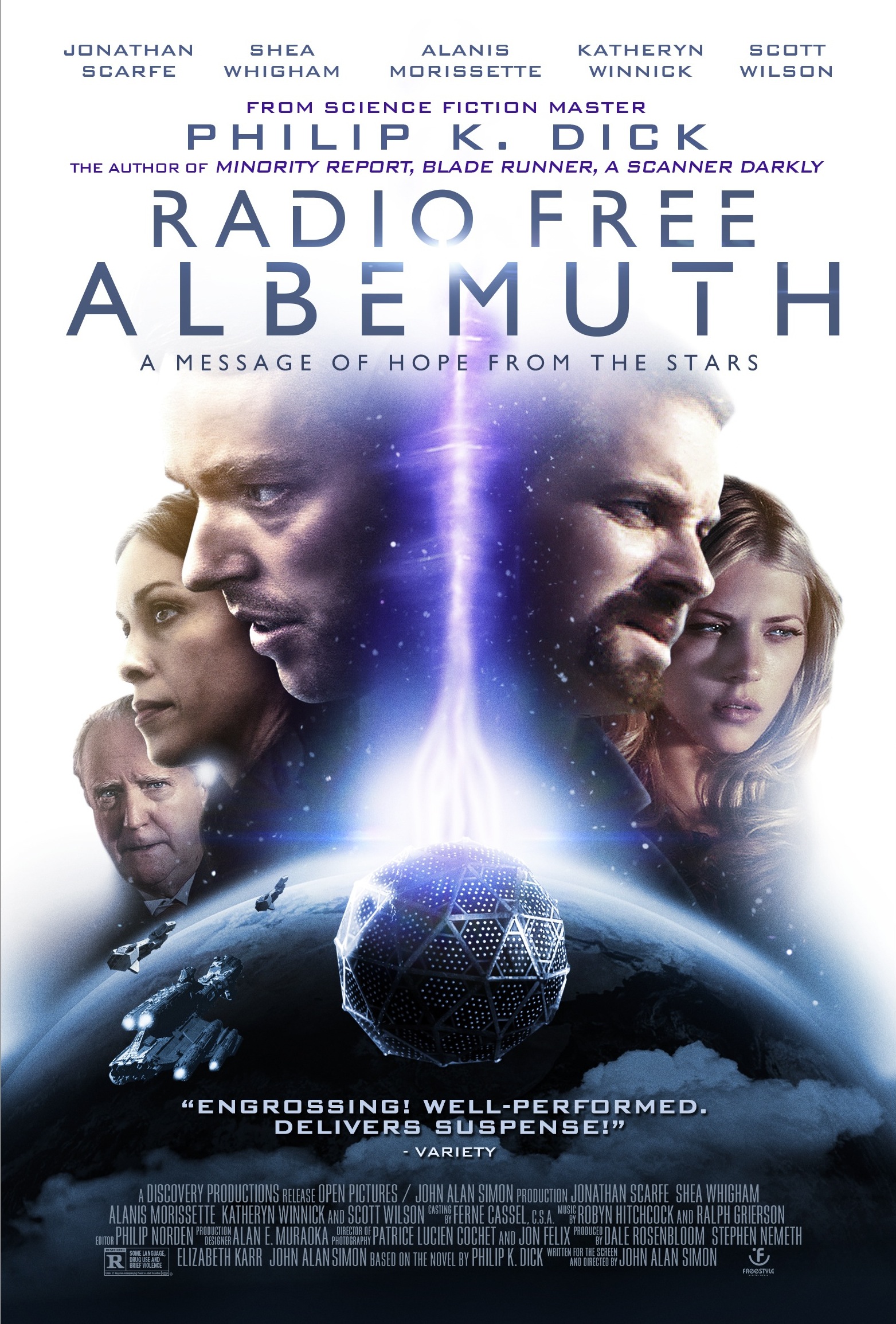
No, I’m not talking about Transformers 4. Today is the official U.S. release date for two films which will likely be regarded as cult classics of the sci-fi genre: “Radio Free Albemuth” and “Snowpiercer”. I’ve had the good fortune to have had the opportunity to see preview screenings of both films and can attest to their quality and excellent screenplays that are as intelligent as they are provocative.

Radio Free Albemuth, a film I’ve previously written about here, is possibly the most faithful cinematic adaptation of a Philip K. Dick novel, and while Snowpiercer may not follow its source material (Jacques Lob’s “Le Transperceneige”) as closely, it’s an excellent movie nevertheless. Korean director Bong Joon-ho, has made great films in the past such as “Memories of Murder” and “Mother”, but with Snowpiercer he manages to balance large scale Hollywood-style spectacle with the emotional intensity of his earlier work while getting excellent performances from English-speaking cast members such as Tilda Swinton, John Hurt and Ed Harris. It’s an odd coincidence that Snowpiercer and Radio Free Albemuth share the same U.S. release date since they’re not only the best science fiction films to come out in quite some time, but are also dark metaphors for the current socio-political moment (but not without a glimmer of hope).

To get an idea of what to expect from these films check out the reviews and trailers linked below to learn more about the projects:

http://totaldickhead.blogspot.com/2009/08/my-first-look-at-radio-free-albemuth.html

http://chycho.blogspot.ca/2014/05/may-i-recommend-post-apocalyptic-movie.html

According to the official Radio Free Albemuth website, June 27th also marks the day of significant events in history including:

  • In 1905 – Russian sailors mutinied onboard the Battleship Potemkin (the basis for Segei Eisenstein’s landmark film
  • in 1929 – the first color television was demonstrated
  • in 1942 – FBI captured 8 Nazi saboteurs from a sub off Long Island, New York.
  • 1969 – Police raid Stonewall Bar in Greenwich Village, NY, hundreds of gay patrons protest against police for 3 days
  • 1990 – Salman Rushdie, condemned to death by Iran for his novel The Satanic Verses.
  • Birthday of anarchist Emma Goldman, blind-deaf author Helen Keller, and the great Polish director Krzysztof Kieslowski


George Orwell on the Atomic Bomb

George_Orwell_press_photo

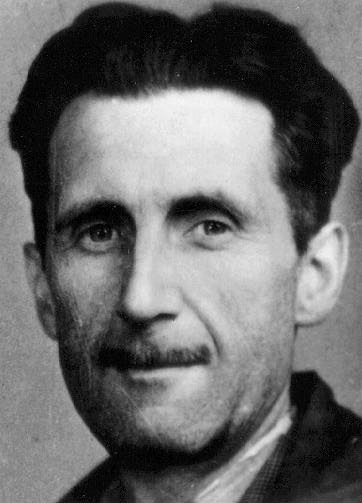
On this day in 1903, Eric Blair (who later adopted the pen name George Orwell) was born in Bihar, India. He’s best known as the author of  “1984”, one of the greatest dystopian novels and a major influence on countless novels and films (and unfortunately, seemingly a prophetic manual for authoritarian surveillance states around the world). Anyone who hasn’t read 1984 by now should definitely read it as soon as possible because it’s more relevant than ever. Many of Orwell’s socio-political predictions of the novel are shockingly accurate though descriptions of some technologies may be dated. As Robert Montgomerie noted in a recent OpEdNew.com article, 1984 also describes different stages many working within a system may experience as they come to terms with its fascist nature: apathy, cognitive dissonance, awakening, passive aggressive rebellion, and salvation through confession.

On October 19, 1945, two months after atomic bombs were dropped over Hiroshima and Nagasaki (a holocaust which many are only now realizing was not morally defensible), he wrote the following essay which hints at some of the themes covered in greater detail in the novel 1984 which was published in 1949:


You and the Atomic Bomb

By George Orwell

Considering how likely we all are to be blown to pieces by it within the next five years, the atomic bomb has not roused so much discussion as might have been expected. The newspapers have published numerous diagrams, not very helpful to the average man, of protons and neutrons doing their stuff, and there has been much reiteration of the useless statement that the bomb ‘ought to be put under international control.’ But curiously little has been said, at any rate in print, about the question that is of most urgent interest to all of us, namely: ‘How difficult are these things to manufacture?’

Such information as we — that is, the big public — possess on this subject has come to us in a rather indirect way, apropos of President Truman’s decision not to hand over certain secrets to the USSR. Some months ago, when the bomb was still only a rumour, there was a widespread belief that splitting the atom was merely a problem for the physicists, and that when they had solved it a new and devastating weapon would be within reach of almost everybody. (At any moment, so the rumour went, some lonely lunatic in a laboratory might blow civilisation to smithereens, as easily as touching off a firework.)

Had that been true, the whole trend of history would have been abruptly altered. The distinction between great states and small states would have been wiped out, and the power of the State over the individual would have been greatly weakened. However, it appears from President Truman’s remarks, and various comments that have been made on them, that the bomb is fantastically expensive and that its manufacture demands an enormous industrial effort, such as only three or four countries in the world are capable of making. This point is of cardinal importance, because it may mean that the discovery of the atomic bomb, so far from reversing history, will simply intensify the trends which have been apparent for a dozen years past.

It is a commonplace that the history of civilisation is largely the history of weapons. In particular, the connection between the discovery of gunpowder and the overthrow of feudalism by the bourgeoisie has been pointed out over and over again. And though I have no doubt exceptions can be brought forward, I think the following rule would be found generally true: that ages in which the dominant weapon is expensive or difficult to make will tend to be ages of despotism, whereas when the dominant weapon is cheap and simple, the common people have a chance. Thus, for example, tanks, battleships and bombing planes are inherently tyrannical weapons, while rifles, muskets, long-bows and hand-grenades are inherently democratic weapons. A complex weapon makes the strong stronger, while a simple weapon — so long as there is no answer to it — gives claws to the weak.

The great age of democracy and of national self-determination was the age of the musket and the rifle. After the invention of the flintlock, and before the invention of the percussion cap, the musket was a fairly efficient weapon, and at the same time so simple that it could be produced almost anywhere. Its combination of qualities made possible the success of the American and French revolutions, and made a popular insurrection a more serious business than it could be in our own day. After the musket came the breech-loading rifle. This was a comparatively complex thing, but it could still be produced in scores of countries, and it was cheap, easily smuggled and economical of ammunition. Even the most backward nation could always get hold of rifles from one source or another, so that Boers, Bulgars, Abyssinians, Moroccans — even Tibetans — could put up a fight for their independence, sometimes with success. But thereafter every development in military technique has favoured the State as against the individual, and the industrialised country as against the backward one. There are fewer and fewer foci of power. Already, in 1939, there were only five states capable of waging war on the grand scale, and now there are only three — ultimately, perhaps, only two. This trend has been obvious for years, and was pointed out by a few observers even before 1914. The one thing that might reverse it is the discovery of a weapon — or, to put it more broadly, of a method of fighting — not dependent on huge concentrations of industrial plant.

From various symptoms one can infer that the Russians do not yet possess the secret of making the atomic bomb; on the other hand, the consensus of opinion seems to be that they will possess it within a few years. So we have before us the prospect of two or three monstrous super-states, each possessed of a weapon by which millions of people can be wiped out in a few seconds, dividing the world between them. It has been rather hastily assumed that this means bigger and bloodier wars, and perhaps an actual end to the machine civilisation. But suppose — and really this the likeliest development — that the surviving great nations make a tacit agreement never to use the atomic bomb against one another? Suppose they only use it, or the threat of it, against people who are unable to retaliate? In that case we are back where we were before, the only difference being that power is concentrated in still fewer hands and that the outlook for subject peoples and oppressed classes is still more hopeless.

When James Burnham wrote The Managerial Revolution it seemed probable to many Americans that the Germans would win the European end of the war, and it was therefore natural to assume that Germany and not Russia would dominate the Eurasian land mass, while Japan would remain master of East Asia. This was a miscalculation, but it does not affect the main argument. For Burnham’s geographical picture of the new world has turned out to be correct. More and more obviously the surface of the earth is being parceled off into three great empires, each self-contained and cut off from contact with the outer world, and each ruled, under one disguise or another, by a self-elected oligarchy. The haggling as to where the frontiers are to be drawn is still going on, and will continue for some years, and the third of the three super-states — East Asia, dominated by China — is still potential rather than actual. But the general drift is unmistakable, and every scientific discovery of recent years has accelerated it.

We were once told that the aeroplane had ‘abolished frontiers’; actually it is only since the aeroplane became a serious weapon that frontiers have become definitely impassable. The radio was once expected to promote international understanding and co-operation; it has turned out to be a means of insulating one nation from another. The atomic bomb may complete the process by robbing the exploited classes and peoples of all power to revolt, and at the same time putting the possessors of the bomb on a basis of military equality. Unable to conquer one another, they are likely to continue ruling the world between them, and it is difficult to see how the balance can be upset except by slow and unpredictable demographic changes.

For forty or fifty years past, Mr. H. G. Wells and others have been warning us that man is in danger of destroying himself with his own weapons, leaving the ants or some other gregarious species to take over. Anyone who has seen the ruined cities of Germany will find this notion at least thinkable. Nevertheless, looking at the world as a whole, the drift for many decades has been not towards anarchy but towards the reimposition of slavery. We may be heading not for general breakdown but for an epoch as horribly stable as the slave empires of antiquity. James Burnham’s theory has been much discussed, but few people have yet considered its ideological implications — that is, the kind of world-view, the kind of beliefs, and the social structure that would probably prevail in a state which was at once unconquerable and in a permanent state of ‘cold war’ with its neighbors.

Had the atomic bomb turned out to be something as cheap and easily manufactured as a bicycle or an alarm clock, it might well have plunged us back into barbarism, but it might, on the other hand, have meant the end of national sovereignty and of the highly-centralised police state. If, as seems to be the case, it is a rare and costly object as difficult to produce as a battleship, it is likelier to put an end to large-scale wars at the cost of prolonging indefinitely a ‘peace that is no peace’.


Utopia

Utopia Channel 4 serie

Though I don’t watch much television lately, I recently discovered an excellent series that I feel duty-bound to share with readers. It’s a British production called “Utopia” (2013) and is one of the few shows I’ve seen to consistently tackle topics such as geopolitics, man-made pandemics, political blackmail, assassination and the surveillance state with a sense of intelligence and realism (though with a twist of dark humor). It’s an amalgamation of parapolitical topics strung together by a fictionalized narrative, similar to the best X-Files episodes but more sophisticated and pessimistic to keep up with the times. Props to YouTube member John Alves for uploading most of season 1 (except episode 3, for some reason) which you can find on his channel: https://www.youtube.com/channel/UCvfxyfr-cNDcVMI0RKeydxg

This is the trailer for Utopia season 2 which will air in July on Britain’s Channel 4 (and hopefully will also be on YouTube shortly after):

Saturday Matinee: Documentary Double Feature

MV5BMTQxMjMzMTczM15BMl5BanBnXkFtZTcwNzg5MzUyMQ@@._V1_SY317_CR4,0,214,317_AL_MV5BMTM4Nzk5Mzk4N15BMl5BanBnXkFtZTcwNTk5OTgyMQ@@._V1_SY317_CR5,0,214,317_AL_

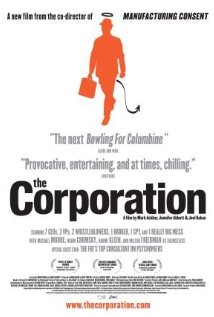
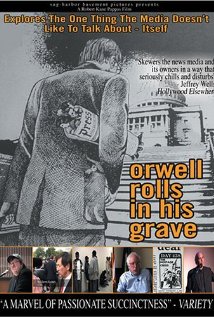
Today I’m featuring two classic political documentaries, both more than a decade old (from 2003) yet still equally topical and among the best films on their respective subject matters.

The first is Mark Achbar and Jennifer Abbott’s “The Corporation”, a comprehensive and well-researched film exploring the history of corporations, how they operate and how they’ve come to attain so much political power. Related topics they cover include the 1933 attempted corporate coup exposed by General Smedley Butler, the Fox news coverup of the dangers of Monsanto’s Bovine Growth Hormone, and the mass protests in Bolivia sparked by the attempted privatization of their water supply in 2000.

“Orwell Rolls in His Grave” directed by Robert Kane Pappas is possibly the best dissection of contemporary mass media propaganda yet, with a focus on corporate media consolidation and the role of corporate media in the controversial US presidential election of 2000. The film features interviews with Mark Crispin Miller, Bernie Sanders and Danny Schechter among others.

Who got to CNN? Network pulls scheduled interview with Donald Sterling’s beat-up mistress

By Daniel Hopsicker

Source: Mad Cow Morning News

Donald Sterling has unsavory links with the owner of the New York City boutique hotel where his former mistress was beaten up Sunday night.

Four developments during the past few days in New York City offer dramatic evidence that questions recently raised here (and elsewhere) about the links to organized crime of real estate mogul, sexual sleazeball, casual racist, and soon-to-to-ex LA Clippers owner Donald Sterling are both serious and well-founded.

The first thing that occurred has already received lots of coverage. The woman who blew the whistle on Sterling’s casual racism, his former mistress V Stiviano, was badly beaten Sunday night by two white thugs in hoodies at a swank boutique hotel  in New York City.

Dom-V

The second development involves the venue where the beatdown occurred, whose significance remains largely unknown.  The Hotel Gansevoort, outside whose doors Stiviano was assaulted, belongs to one William Achenbaum.

Until just three weeks before being busted, Hotelier Achenbaum had “owned”— as a straw front man for the CIA—a Gulfstream II luxury jet (N987SA) that was caught carrying 4 tons of cocaine in the Yucatan as part of the same operation.

During the time  the two men controlled the plane, it made numerous trips to the U.S. base in Guantanamo, the McClatchy Newspapers group reported,  flying extraordinary renditions for the CIA. 

Achenbaum’s partner in the hotel, Arik Kislin of Long Island, whose family is repeatedly linked to the Russian Mob in published reports,  also owned the Long Beach CA air charter company, Air Rutter Intern’l, offered the Gulfstream II for charter. 

Unsavory links to the global drug trade

Are these facts at all relevant to the current tawdry Donald Sterling saga? Absolutely. Because Donald Sterling and William Achenbaum both share an unsavory link to an expatriate Saudi named Ramy El Batrawi, a longtime lieutenant of notorious CIA fixer Adnan Khashoggi. 

El Batrawi and Achenbaum both owned airplanes used in a drug trafficking enterprise in Florida between 2005-2008 that top DEA officials in Miami called an out of control “rogue operation” of the Immigration and Customs Enforcement (ICE) in Tampa.

For his part, El Batrawi has made “fronting” for the CIA, with planes and even airlines, into a career. During Iran Contra,  he posed as the owner and president of an airline in Miami called Jetborne that secretly flew Oliver North’s TOW missiles to the mullahs in Iran.

Later court testimony, during bankruptcy proceedings, revealed that Jetborne had all along been a CIA proprietary airline.

“Closest thing to a real scandal we’re like to see hereabouts, nowadays”

In July 2003, the drug trafficking operation that DEA officials say was being protected by federal agents in the Tampa ICE Office received a second DC-9 (N12ONE), “sold” or “transferred”  or just ‘passed along” to  the operation by Ramy El Batrawi.

The operation, called Operation Mayan Jaguar, would soon blow up into the closest thing to a real scandal that anyone is likely to see in America for a long time.

It resulted in the forced sale of America’s 4th largest bank, Wachovia, after that bank was discovered to be laundering drug money from Mexico’s Sinaloa Cartel used to purchase a fleet of 50 American aircraft to be used as drug planes.

Links between recent owners of the two drug planes, first discovered during an examination of FAA registration records, suggested a long-running and continuing criminal conspiracy to engage in massive drug trafficking.

Before the Gulfstream II business  was “parked” in the name of New York real estate developer Achenbaum and his partner Kislin with ties to the Russian Mob, the plane had passed through the hands of a secretive Midwestern media baron named Stephen Adams, also a Republican fund-raiser extraordinaire (he was one of the ‘elite’ Bush’s Rangers), who was personally buying over $1 million of billboard ads for George W. Bush for his 2000 Presidential election bid.

Scammers, fraudsters, grifters & bunco artists of the national security state

Adams had another business partner, Michael Farkas, whose company SkyWay owned a DC-9 (N900SA) which became the first drug plane the Tampa operation lost to a big bust in the Yucatan. 

SkyWay, the company whose DC-9 was busted in April 2006 in the Yucatan with 5.5 tons of cocaine, for example, had been founded the year before by a slippery Miami  attorney named Michael Farkas. 

According to SEC filings,  Stephen Adams and Michael Farkas jointly control Holiday RV Superstores, Inc.,  used by mastermind Adnan Khashoggi in the complicated securities fraud which stole as much as $300 million from investors and taxpayers. 

Companies Farkas controlled, like Holiday RV and Imperial Credit, were full partners in the stock manipulation scheme, along with Stephen Adams’ company, which passed on the Gulfstream II luxury jet to William Achenbaum.

In an example of extremely sloppy tradecraft, Khashoggi and El Batrawi’s partners in the massive fraud were men who’d provided planes to the drug trafficking operation, making “plausible deniability” something of a sticky wicket. 

“The complex sale of the Gulfstream II jet and its end in the Mexican jungle highlight the increasingly complicated illicit drug trade,” read the McClatchy Newspapers’ account on September 29, 2007.

From ‘whack-a-mole’ to ‘hide the pea,’ its still a sordid business

The ‘players” were an ecumenical cast of international characters:  Republican fund-raiser Adams, Saudi arms dealer Khashoggi, oligarchs in the Russian Mob,  elements of American military and civilian intelligence who populated the executive ranks at SkyWay, and a large but dirty San Diego defense contractor called Titan Corp. that would soon get even larger when it was merged into L3, one of today’s behemoth defense contractors. 

What this means, should any courageous federal prosecutor take note, is that the drug plane’s rapid series of ownership changes are nothing more than sham transactions, part of the CIA’s traditionally sophisticated game of “hide the pea” designed to conceal the aircraft’s true owners. From what we’ve begun to learn of Sterling, he appears to fit right in.

Just knowing unsavory characters who are also acquainted is hardly a crime. What involvement does Donald Sterling have in the sordid business?  

The answer comes several months after the SEC charges Ramy El-Batrawi and his boss Adnan Khashoggi, in April 2006, with masterminding a massive financial fraud that resulted in investor and taxpayer losses of more than $100 million (The figure later doubled.) 

The two Saudis were the lead actors in a massive financial fraud that earned the name Stockwalk, that complemented the drug trafficking operation by using stock from the same companies—led by Khashoggi and El Batrawi’s company, GenesisIntermedia—that had been supplying drug planes.

The ‘other’ Donald issues a bizarre press release

Donald Sterling enters the action just as the two Saudis are being hammered by bad publicity from their recent indictment, which gets so bad that both men consider going on the lam to avoid the police. Khashoggi eventually will, living quite comfortably, according to a source in Palm Beach Florida, in a guest cottage on the grounds of Donald Trump’s Mar a Largo Mansion.

At this crucial moment Sterling steps in to help stem the tide of bad publicity swamping Khashoggi and El Batrawi’s efforts to move on to another scam. Sterling, of course, has considerable public relations clout. He  regularly buys full-page ads touting his charitable achievements in the Los Angeles Times.

In early August Donald Sterling  names Ramy El Batrawi the winner of Sterling’s non-existent “Humanitarian of the Year Award” for El Batrawi’s (also non-existent) efforts to solve the problem of the homeless on Skid Row in downtown Los Angeles.

No one was more surprised at being named “Humanitarian of the Year” than Ramy El-Batrawi himself, judging by his reaction. He freely admits to the LA Times that he’s made no contribution of money or time to helping the homeless.

But it’s what happened in the aftermath of  the Sterling mistress beat-down that provides the biggest shock. 

Did CNN cave before the bell?

Sterling’s  former mistress V Stiviano was in New York to appear in an hour-long interview scheduled with Anderson Cooper on CNN Monday night. 

After the beating, her camp leaks to the press that Sterling’s former mistress “started getting death threats almost immediately after Sterling’s racist rants — which she recorded — were made public,” said a well-placed source to Radar Online, which was consistently out in front of the pack on the story.

“Most of the threats were made on social media, “the source continued, “and this is one of the reasons why she has scaled back her activity. It has been very scary for V, and she also hired a bodyguard.” 

But plucky Ms V is undeterred, her attorney tells reporters late Sunday night.  “Stiviano will still be on Anderson Cooper’s show Monday night. No one will intimidate her.”

Maybe no one will intimidate Stiviano. But somebody sure did get to CNN.

 A story nobody is talking about…yet

Just hours before the scheduled sit-down, and with no explanation, CNN removed Anderson Cooper from the broadcast.  Producers notified Stiviano that Cooper was unavailable, and that Chris Cuomo would now be conducting the interview. 

Stiviano immediately backed out. Thanks but no thanks, the former mistress’ replied. Nothing against Cuomo, her attorney explained. “But Anderson had previously met with V and Donald Sterling several weeks ago when he flew out to Los Angeles. Her camp has a relationship with  Anderson.” 

Makes sense.  What doesn’t make sense: Who kept Anderson Cooper from doing an interview he’d already prepared for? And why?

To put it bluntly: Who got to CNN? 

Police Commissioner comes down with virulent case of hoof in mouth

What happened next, the 4th development, is possibly the most revealing. On Monday night NYPD Commissioner Bill Bratton weighs in with gratuitous comments about his feelings towards Sterling’s former mistress.  

Asked about V Stiviano’s lawyer’s claim that she was punched out by a pair of N-word-spewing punks outside a Meatpacking District hot spot on Sunday night, Bratton said he wished Donald Sterling’s infamous ex had never shown up in the Big Apple. 

“I wasn’t even aware she was in town,” he stated. “We would have hoped that she would stay on the West Coast.”

A follow-up question to Bratton I’d have loved to hear someone ask: “Commissioner Bratton, who do you mean by ‘we’?”

Up for the lead in “Vile little Man”

Don’t all victimized citizens deserve to be treated with respect by the police? Apparently, if you’ve offended someone as “connected” as Sterling, the answer is probably no.

Given Sterling’s unsavory links with William Achenbaum, owner of the New York City boutique hotel where V Stiviano was beaten up,  makes Bratton’s comments seem particularly menacing and gratuitous.   

The FBI has long touted its success in critically weakening the forces of organized crime through its efforts to break up the Mafia in New York City. 

But they clearly remain powerful enough to pull strings at CNN.

Saturday Matinee: Paprika

satoshikon4

“Paprika” (2006) was the final feature-length anime masterpiece directed by Satoshi Kon, who died a few years later at age 46 of pancreatic cancer. Paprika is seemingly influenced by the novels of Philip K. Dick and films of Terry Gilliam, with a plot involving a radical psychotherapy treatment using a technology which allows one to view and interact with other people’s dreams. When a mysterious culprit steals the technology and uses it to cause the deaths of two scientists, it’s up to a determined detective and Paprika, a dream world avatar, to solve the mystery and prevent a chaotic merging of dreams and reality.

Lee Camp’s Redacted Tonight

index

Activist/comedian Lee Camp, best known for his Moment of Clarity YouTube channel and podcasts (and who follows the fine tradition of stand-up social critics such as George Carlin or Bill Hicks), is host of the new RT program “Redacted Tonight”. Not surprisingly it’s an expert blend of humor and news, and you can watch the entire premier episode here: