The year was 2011. I was full to the brim with anger toward the United States for the deleterious impact of racism on my life and the lives of those closest to me. I was equally furious with liberal elitism and the class-blind racial politics that privileged “diversity” over the substantive material issues most critical to oppressed people everywhere. I marched with Occupy Wall Street and engaged in the labor movement but still felt alone. I frequently asked myself: “Why are all sides of the so-called American Left unable to fight race and class simultaneously?”
I then came across Glen Ford’s work from a simple online search and recall a similar reaction to that of Ho Chi Minh after he was introduced to Vladimir Lenin’s “Theses on the Colonial Question,”
What emotion, enthusiasm, clear-sightedness and confidence it instilled into me! I was overjoyed to tears. Though sitting alone in my room, I shouted out aloud as if addressing large crowds: “Dear martyrs compatriots! This is what we need, this is the path to our liberation!”
Reading and listening to Glen Ford’s analysis of the Obama administration placed a bright spotlight on a historical moment of intense darkness. At present, there are still too few others who have been able to coherently place the Obama era in its proper context of the U.S.’s ongoing counterinsurgency warfare against Black liberation and self-determination. While much of the American left equated the rise of Obama with “progress,” Glen Ford repeatedly warned us that the Obama administration rendered U.S. imperialism and white supremacy a more effective, and therefore more dangerous, evil.
That’s what revolutionaries do. They warn us through careful explanation and analysis of how oppressive systems work. They prepare us to make history through revolution; to replace the old decrepit order with a new one. But revolutionaries do not just champion any social order. Glen Ford was quite clear that any social transformation of the United States must satisfy the needs of humanity, especially the most terrorized and exploited among us. Socialism and self-determination were not antithetical principles but rather interconnected aims wholly consistent with the struggle for Black liberation.
Glen Ford’s work convinced me in rapid fashion of the necessity of Black revolutionary leadership in the long struggle to build a socialist project in the United States. His grasp of theory and history was matched by few others. His talent behind the microphone and written word brought his analysis to life. From 2011 to 2013, I followed Black Agenda Report regularly and held it to the sky as a necessary source for anyone claiming interest in “social justice.” Glen Ford’s work on the U.S. war against the African country of Libya, an invasion led by the first Black President of the United States, laid the foundations for my own anti-imperialist approach to both activism and journalism.
In 2013, I took a leap and submitted my first article to Glen Ford analyzing Barack Obama’s presidency as a corporate brand. My writing was raw. I was schooled poorly in grammar and had only begun reading regularly over the last year. Clarity was not yet a strength that I possessed. Not to worry. Glen’s brief responses to my submissions over the next several months provided a basic education into concise analytical writing, and I owe much of my development as both a writer and political analyst to him.
From 2014 to 2016, I met Glen Ford in the flesh only in brief encounters at The Left Forum. In 2017, I moved to New York City. Glen and I would eventually convene at Molly Wee’s in Manhattan on a periodic basis and speak for hours about the political situation in the U.S. and abroad. Glen Ford was a communist who shared his experiences in the Black Panther Party and the Communist Party without hesitation to trusted comrades. He loved to tell a good story.
But it wasn’t just for the fun of it. Glen had expectations. He didn’t need to say it bluntly for me to know that he hoped his stories would be incorporated in my own work in service of the people. Everything with Glen was for the people. This didn’t mean he didn’t enjoy a good time, however. A good time for Glen Ford was defined both by the company he kept and his passion for analyzing the world and those struggling for power within it. A drink didn’t hurt, either.
Glen Ford always addressed me as a fellow revolutionary, a comrade. This was one of the greatest personal gifts that I have ever received. In the beginning of our relationship, I was intimidated. I was aware from his bio in Black Agenda Report and his personal stories just how significant he was as a pioneer in Black journalism. Glen had once held deep relationships with not only James Brown but also political officials such as the late John Conyers. He could have become a Black media mogul and raked in millions through loyalty to the powerful.
Instead, Glen Ford died a revolutionary mentoring people like myself in the theory and practice of revolutionary struggle. Instead of lucrative gigs, Glen was creating a new language for oppressed people to understand and change the world. We can attribute to him the term “Black misleadership class” to describe Black leaders such as Al Sharpton who have gained comfortable careers from service to the white capitalist class. In 2015, Glen Ford led the way in principled critiques of the Black Lives Matter Network’s (BLM) relationship with the Democratic Party. He took great pride in knowing Black Agenda Report played a large part in BLM’s refusal to endorse the DNC in the 2016 election.
On numerous occasions, Glen Ford advised me on how to navigate difficult political problems. There were some on the so-called “Left” who took issue with my contribution to Black Agenda Report and my criticisms of the Black Lives Matter Network. Glen Ford smiled when I brought the issue to him. His advice? Tell the naysayers that the best of the Black liberation movement has always been inclusive to the interests and movements of all oppressed people. And he was clear with me, and to anyone who questioned, that Black Agenda Report would remain firmly under radical Black leadership no matter who contributed.
Glen Ford was a remarkable revolutionary who encouraged others to develop and hone their skills for the movement. His commitment to the Black Radical Tradition’s anti-imperialist and socialist politics blazed a path forward in a historical period of intense reaction and crisis. Roberto Sirvent and I did not have to think twice about asking Glen Ford to contribute the afterword to our book on American exceptionalism. Glen’s influence, especially his cutting style and fearless takedowns of the American empire, was so influential to the project that it was only natural for him to have the last word.
We must continue to keep Glen’s spirit and work alive. We must apply all of his lessons about elite chicanery, imperialism, and the dangers of the Democratic Party to our efforts to develop revolutionary leadership in the citadel of oppression. We cannot thank Glen Ford enough for all of the sacrifices he made for the cause of liberation. His work lives on not only in Black Agenda Report, but also in political organizations such as The Black Alliance for Peace, the Black is Back Coalition, and the United National Anti-War Coalition (UNAC) to name just a few.
Personally, I am one of the luckiest humans on this earth for the opportunity to learn from his contributions up close and personal. His mentorship was, and will always be, invaluable. In truth, however, anyone who followed or knew Glen Ford was mentored by him. He is one of the few among us who lived by Amilcar Cabral’s iconic words,
Far from being a war against “white supremacy,” the Biden administration’s new “domestic terror” strategy clearly targets primarily those who oppose US government overreach and those who oppose capitalism and/or globalization.
In the latest sign that the US government’s War on Domestic Terror is growing in scope and scale, the White House on Tuesday revealed the nation’s first ever government-wide strategy for confronting domestic terrorism. While cloaked in language about stemming racially motivated violence, the strategy places those deemed “anti-government” or “anti-authority” on a par with racist extremists and charts out policies that could easily be abused to silence or even criminalize online criticism of the government.
Even more disturbing is the call to essentially fuse intelligence agencies, law enforcement, Silicon Valley, and “community” and “faith-based” organizations such as the Anti-Defamation League, as well as unspecified foreign governments, as partners in this “war,” which the strategy makes clear will rely heavily on a pre-crime orientation focused largely on what is said on social media and encrypted platforms. Though the strategy claims that the government will “shield free speech and civil liberties” in implementing this policy, its contents reveal that it is poised to gut both.
Indeed, while framed publicly as chiefly targeting “right-wing white supremacists,” the strategy itself makes it clear that the government does not plan to focus on the Right but instead will pursue “domestic terrorists” in “an ideologically neutral, threat-driven manner,” as the law “makes no distinction based on political view—left, right or center.” It also states that a key goal of this strategic framework is to ensure “that there is simply no governmental tolerance . . . of violence as an acceptable mode of seeking political or social change,” regardless of a perpetrator’s political affiliation.
Considering that the main cheerleaders for the War on Domestic Terror exist mainly in establishment left circles, such individuals should rethink their support for this new policy given that the above statements could easily come to encompass Black Lives Matter–related protests, such as those that transpired last summer, depending on which political party is in power.
Once the new infrastructure is in place, it will remain there and will be open to the same abuses perpetrated by both political parties in the US during the lengthy War on Terror following September 11, 2001. The history of this new “domestic terror” policy, including its origins in the Trump administration, makes this clear.
It’s Never Been Easier to Be a “Terrorist”
In introducing the strategy, the Biden administration cites “racially or ethnically motivated violent extremists” as a key reason for the new policy and a main justification for the War on Domestic Terror in general. This was most recently demonstrated Tuesday in Attorney General Merrick Garland’s statement announcing this new strategy. However, the document itself puts “anti-government” or “anti-authority” “extremists” in the same category as violent white supremacists in terms of being a threat to the homeland. The strategy’s characterization of such individuals is unsettling.
AG Merrick Garland: “In the FBI’s view, the top domestic violent extremist threat comes from racially or ethically motivated violent extremists specifically those who advocate for the superiority of the white race.” pic.twitter.com/4JtruuMSv2
For instance, those who “violently oppose” “all forms of capitalism” or “corporate globalization” are listed under this less-discussed category of “domestic terrorist.” This highlights how people on the left, many of whom have called for capitalism to be dismantled or replaced in the US in recent years, could easily be targeted in this new “war” that many self-proclaimed leftists are currently supporting. Similarly, “environmentally-motivated extremists,” a category in which groups such as Extinction Rebellion could easily fall, are also included.
In addition, the phrasing indicates that it could easily include as “terrorists” those who oppose the World Economic Forum’s vision for global “stakeholder capitalism,” as that form of “capitalism” involves corporations and their main “stakeholders” creating a new global economic and governance system. The WEF’s stakeholder capitalism thus involves both “capitalism” and “corporate globalization.”
The strategy also includes those who “take steps to violently resist government authority . . . based on perceived overreach.” This, of course, creates a dangerous situation in which the government could, purposely or otherwise, implement a policy that is an obvious overreach and/or blatantly unconstitutional and then label those who resist it “domestic terrorists” and deal with them as such—well before the overreach can be challenged in court.
Another telling addition to this group of potential “terrorists” is “any other individual or group who engages in violence—or incites imminent violence—in opposition to legislative, regulatory or other actions taken by the government.” Thus, if the government implements a policy that a large swath of the population finds abhorrent, such as launching a new, unpopular war abroad, those deemed to be “inciting” resistance to the action online could be considered domestic terrorists.
Such scenarios are not unrealistic, given the loose way in which the government and the media have defined things like “incitement” and even “violence” (e. g., “hate speech” is a form of violence) in the recent past. The situation is ripe for manipulation and abuse. To think the federal government (including the Biden administration and subsequent administrations) would not abuse such power reflects an ignorance of US political history, particularly when the main forces behind most terrorist incidents in the nation are actually US government institutions like the FBI (more FBI examples here, here, here, and here).
Furthermore, the original plans for the detention of American dissidents in the event of a national emergency, drawn up during the Reagan era as part of its “continuity of government” contingency, cited popular nonviolent opposition to US intervention in Latin America as a potential “emergency” that could trigger the activation of those plans. Many of those “continuity of government” protocols remain on the books today and can be triggered, depending on the whims of those in power. It is unlikely that this new domestic terror framework will be any different regarding nonviolent protest and demonstrations.
Yet another passage in this section of the strategy states that “domestic terrorists” can, “in some instances, connect and intersect with conspiracy theories and other forms of disinformation and misinformation.” It adds that the proliferation of such “dangerous” information “on Internet-based communications platforms such as social media, file-upload sites and end-to-end encrypted platforms, all of these elements can combine and amplify threats to public safety.”
Thus, the presence of “conspiracy theories” and information deemed by the government to be “misinformation” online is itself framed as threatening public safety, a claim made more than once in this policy document. Given that a major “pillar” of the strategy involves eliminating online material that promotes “domestic terrorist” ideologies, it seems inevitable that such efforts will also “connect and intersect” with the censorship of “conspiracy theories” and narratives that the establishment finds inconvenient or threatening for any reason.
Pillars of Tyranny
The strategy notes in several places that this new domestic-terror policy will involve a variety of public-private partnerships in order to “build a community to address domestic terrorism that extends not only across the Federal Government but also to critical partners.” It adds, “That includes state, local, tribal and territorial governments, as well as foreign allies and partners, civil society, the technology sector, academic, and more.”
The mention of foreign allies and partners is important as it suggests a multinational approach to what is supposedly a US “domestic” issue and is yet another step toward a transnational security-state apparatus. A similar multinational approach was used to devastating effect during the CIA-developed Operation Condor, which was used to target and “disappear” domestic dissidents in South America in the 1970s and 1980s. The foreign allies mentioned in the Biden administration’s strategy are left unspecified, but it seems likely that such allies would include the rest of the Five Eyes alliance (the UK, Australia, Canada, New Zealand) and Israel, all of which already have well-established information-sharing agreements with the US for signals intelligence.
The new domestic-terror strategy has four main “pillars,” which can be summarized as (1) understanding and sharing domestic terrorism-related information, including with foreign governments and private tech companies; (2) preventing domestic terrorism recruitment and mobilization to violence; (3) disrupting and deterring domestic terrorism activity; and (4) confronting long-term contributors to domestic terrorism.
The first pillar involves the mass accumulation of data through new information-sharing partnerships and the deepening of existing ones. Much of this information sharing will involve increased data mining and analysis of statements made openly on the internet, particularly on social media, something already done by US intelligence contractors such as Palantir. While the gathering of such information has been ongoing for years, this policy allows even more to be shared and legally used to make cases against individuals deemed to have made threats or expressed “dangerous” opinions online.
Included in the first pillar is the need to increase engagement with financial institutions concerning the financing of “domestic terrorists.” US banks, such as Bank of America, have already gone quite far in this regard, leading to accusations that it has begun acting like an intelligence agency. Such claims were made after it was revealed that the BofA had passed to the government the private banking information of over two hundred people that the bank deemed as pointing to involvement in the events of January 6, 2021. It seems likely, given this passage in the strategy, that such behavior by banks will soon become the norm, rather than an outlier, in the United States.
The second pillar is ostensibly focused on preventing the online recruitment of domestic terrorists and online content that leads to the “mobilization of violence.” The strategy notes that this pillar “means reducing both supply and demand of recruitment materials by limiting widespread availability online and bolstering resilience to it by those who nonetheless encounter it.“ The strategy states that such government efforts in the past have a “mixed record,” but it goes on to claim that trampling on civil liberties will be avoided because the government is “consulting extensively” with unspecified “stakeholders” nationwide.
Regarding recruitment, the strategy states that “these activities are increasingly happening on Internet-based communications platforms, including social media, online gaming platforms, file-upload sites and end-to-end encrypted platforms, even as those products and services frequently offer other important benefits.” It adds that “the widespread availability of domestic terrorist recruitment material online is a national security threat whose front lines are overwhelmingly private-sector online platforms.”
The US government plans to provide “information to assist online platforms with their own initiatives to enforce their own terms of service that prohibits the use of their platforms for domestic terrorist activities” as well as to “facilitate more robust efforts outside the government to counter terrorists’ abuse of Internet-based communications platforms.”
Given the wider definition of “domestic terrorist” that now includes those who oppose capitalism and corporate globalization as well as those who resist government overreach, online content discussing these and other “anti-government” and “anti-authority” ideas could soon be treated in the same way as online Al Qaeda or ISIS propaganda. Efforts, however, are unlikely to remain focused on these topics. As Unlimited Hangout reported last November, both UK intelligence and the US national-security state were developing plans to treat critical reporting on the COVID-19 vaccines as “extremist” propaganda.
Another key part of this pillar is the need to “increase digital literacy” among the American public, while censoring “harmful content” disseminated by “terrorists” as well as by “hostile foreign powers seeking to undermine American democracy.” The latter is a clear reference to the claim that critical reporting of US government policy, particularly its military and intelligence activities abroad, was the product of “Russian disinformation,” a now discredited claim that was used to heavily censor independent media. This new government strategy appears to promise more of this sort of thing.
It also notes that “digital literacy” education for a domestic audience is being developed by the Department of Homeland Security (DHS). Such a policy would have previously violated US law until the Obama administration worked with Congress to repeal the Smith-Mundt Act, thus lifting the ban on the government directing propaganda at domestic audiences.
The third pillar of the strategy seeks to increase the number of federal prosecutors investigating and trying domestic-terror cases. Their numbers are likely to jump as the definition of “domestic terrorist” is expanded. It also seeks to explore whether “legislative reforms could meaningfully and materially increase our ability to protect Americans from acts of domestic terrorism while simultaneously guarding against potential abuse of overreach.” In contrast to past public statements on police reform by those in the Biden administration, the strategy calls to “empower” state and local law enforcement to tackle domestic terrorism, including with increased access to “intelligence” on citizens deemed dangerous or subversive for any number of reasons.
To that effect, the strategy states the following (p. 24):
“The Department of Justice, Federal Bureau of Investigation, and Department of Homeland Security, with support from the National Counterterrorism Center [part of the intelligence community], are incorporating an increased focus on domestic terrorism into current intelligence products and leveraging current mechanisms of information and intelligence sharing to improve the sharing of domestic terrorism-related content and indicators with non-Federal partners. These agencies are also improving the usability of their existing information-sharing platforms, including through the development of mobile applications designed to provide a broader reach to non-Federal law enforcement partners, while simultaneously refining that support based on partner feedback.”
Such an intelligence tool could easily be, for example, Palantir, which is already used by the intelligence agencies, the DHS, and several US police departments for “predictive policing,” that is, pre-crime actions. Notably, Palantir has long included a “subversive” label for individuals included on government and law enforcement databases, a parallel with the controversial and highly secretive Main Core database of US dissidents.
DHS Secretary Alejandro Mayorkas made the “pre-crime” element of the new domestic terror strategy explicit on Tuesday when he said in a statement that DHS would continue “developing key partnerships with local stakeholders through the Center for Prevention Programs and Partnerships (CP3) to identify potential threats and prevent terrorism.” CP3, which replaced DHS’ Office for Targeted Violence and Terrorism Prevention this past May, officially “supports communities across the United States to prevent individuals from radicalizing to violence and intervene when individuals have already radicalized to violence.”
The fourth pillar of the strategy is by far the most opaque and cryptic, while also the most far-reaching. It aims to address the sources that cause “terrorists” to mobilize “towards violence.” This requires “tackling racism in America,” a lofty goal for an administration headed by the man who controversially eulogized Congress’ most ardent segregationist and who was a key architect of the 1994 crime bill. As well, it provides for “early intervention and appropriate care for those who pose a danger to themselves or others.”
In regard to the latter proposal, the Trump administration, in a bid to “stop mass shootings before they occur,” considered a proposal to create a “health DARPA” or “HARPA” that would monitor the online communications of everyday Americans for “neuropsychiatric” warning signs that someone might be “mobilizing towards violence.” While the Trump administration did not create HARPA or adopt this policy, the Biden administration has recently announced plans to do so.
Finally, the strategy indicates that this fourth pillar is part of a “broader priority”: “enhancing faith in government and addressing the extreme polarization, fueled by a crisis of disinformation and misinformation often channeled through social media platforms, which can tear Americans apart and lead some to violence.” In other words, fostering trust in government while simultaneously censoring “polarizing” voices who distrust or criticize the government is a key policy goal behind the Biden administration’s new domestic-terror strategy.
Calling Their Shots?
While this is a new strategy, its origins lie in the Trump administration. In October 2019, Trump’s attorney general William Barr formally announced in a memorandum that a new “national disruption and early engagement program” aimed at detecting those “mobilizing towards violence” before they commit any crime would launch in the coming months. That program, known as DEEP (Disruption and Early Engagement Program), is now active and has involved the Department of Justice, the FBI, and “private sector partners” since its creation.
Barr’s announcement of DEEP followed his unsettling “prediction” in July 2019 that “a major incident may occur at any time that will galvanize public opinion on these issues.” Not long after that speech, a spate of mass shootings occurred, including the El Paso Walmart shooting, which killed twenty-three and about which many questions remain unanswered regarding the FBI’s apparent foreknowledge of the event. After these events took place in 2019, Trump called for the creation of a government backdoor into encryption and the very pre-crime system that Barr announced shortly thereafter in October 2019. The Biden administration, in publishing this strategy, is merely finishing what Barr started.
Indeed, a “prediction” like Barr’s in 2019 was offered by the DHS’ Elizabeth Neumann during a Congressional hearing in late February 2020. That hearing was largely ignored by the media as it coincided with an international rise of concern regarding COVID-19. At the hearing, Neumann, who previously coordinated the development of the government’s post-9/11 terrorism information sharing strategies and policies and worked closely with the intelligence community, gave the following warning about an imminent “domestic terror” event in the United States:
“And every counterterrorism professional I speak to in the federal government and overseas feels like we are at the doorstep of another 9/11, maybe not something that catastrophic in terms of the visual or the numbers, but that we can see it building and we don’t quite know how to stop it.”
This “another 9/11” emerged on January 6, 2021, as the events of that day in the Capitol were quickly labeled as such by both the media and prominent politicians, while also inspiring calls from the White House and the Democrats for a “9/11-style commission” to investigate the incident. This event, of course, figures prominently in the justification for the new domestic-terror strategy, despite the considerable video and other evidence that shows that Capitol law enforcement, and potentially the FBI, were directly involved in facilitating the breach of the Capitol. In addition, when one considers that the QAnon movement, which had a clear role in the events of January 6, was itself likely a government-orchestratedpsyop, the government hand in creating this situation seems clear.
It goes without saying that the official reasons offered for these militaristic “domestic terror” policies, which the US has already implemented abroad—causing much more terror than it has prevented—does not justify the creation of a massive new national-security infrastructure that aims to criminalize and censor online speech. Yet the admission that this new strategy, as part of a broader effort to “enhance faith in government,” combines domestic propaganda campaigns with the censorship and pursuit of those who distrust government heralds the end of even the illusion of democracy in the United States.
In a book just recently published, I began with a chapter on “Why Government is Bad.” I first decided that this statement would be obvious to everyone. After all, look around: city, state, national, these governments are all obvious malfunctioning, inept, and largely corrupted operations that clearly are not solving the important problems of our lives today—health, education (higher and lower), housing, transportation, energy, agriculture, civic participation, popular culture—nor the crises that threaten our futures, including global overheating, more new diseases, rising oceans, species extermination, depleting forests…–but need I go on?
But then I realized that though this all seemed so obvious to me, most people live lives saturated with the propaganda that government is good, necessary for public order and social harmony and all that, and it has been with us as the foundation of our civilizations for centuries—and a lot of people, well really most people, believe that’s true. So I decided I had to lay out the reasons why government is wrong.
Start with what a government is. At a minimum, it is a system of control over the members of a political body—Max Weber said that it was “the monopoly of the legitimate use of physical force within a given territory”—that includes the power to levy and collect taxes and raise and maintain an army. You will notice the centrality of “control,” and its ancillary, “power.”
Now you can either like the idea of a large and usually distant body telling you what to do, how much money you can keep, whether you need to serve in its army, and such other limitations on your life as it may think of from time to time. Or feel that the fundamental values in a political society are, by contrast, individual liberty, familial integrity, and communal sovereignty, none of which are taken care of by government, nor even in the purview of government. If one values those, one knows or very quickly comes to see that government is wrong: by its nature it is in the business of control, the antithesis of liberty, it calculates in terms of populations, not families, it takes as its form the nation-state or empire, caring little about community. And its instrument is power, the power to create laws or edicts, to regulate, to tax, to raise armies, to declare war, to control the public in fact in any way that it sees fit or can get away with without resistance or rebellion.
But there is more: government by its nature tends to get bigger and stronger, to enlarge its scope, to expand its reach. The rulers of any government, if only to expand the welfare of all, need continually to increase taxes and expand bureaucracy, and sometimes, again in the interest of all, to conquer other lands and rule other people. Individual rulers may not hunger for more influence but they are at the head of a system—of princes and priests, of generals and bureaucrats, of satraps and underlords, of bankers and brokers—that does, with the result that inevitably the ruler oversees more power.
And more: government by nature seeks to centralize that power and diminish other nodes where power may be exerted. No matter what rules and constrictions may be devised—and the U.S. Founding Fathers, for example, devised many of them—they are insufficient to keep a central government, which accumulates wealth through taxes, from increasing its control over lesser forms of government and diminishing their purses and their powers; the more it is the piper, the more it calls the tune. One reason that governments love wars is that it enables them to draw increasing authority, and taxes, from smaller entities, making lords into commanders, states into counties, effectively nullifying whatever influence lesser bodies and offices may have had.
But even more: modern governments, those that have developed since the onset and adoption of mechanical technology and professionalism—let’s say from the beginning of the 20th century—have magnified the errors of systems of state control. They managed to generate two devastating world wars at the cost of millions of lives, to create systems of totalitarianism that cost 100 million more, to build welfare-warfare states of every description, and to create a world that is perpetually on the brink of a war that can annihilate us all.
So there is the indictment: government is a system of human organization that lessens individual liberty, nullifies family, and emaciates community, invariably working to enlarge its power at the expense of other organizations, and inevitably grows to threaten human lives. It does not matter what kinds of people are running it, what various combinations of checks and balances may be tried, whatever benefits it may be attempting to achieve, it cannot escape its inherent nature: if the Founding Fathers, among the brightest and most civic-minded cohorts ever assembled, could not devise a system to prevent increased authoritarianism and centralization, with three separate branches designed to restrain each other and a series of ten explicit limits on its reach, it may be said that no one could. As the anti-Federalists, learned men who had studied the character of governments throughout history, warned them at the time.
I leave you with the wisdom of one Arthur Arnould, a Frenchman, from the February 1896 edition of a publication called The Rebel, put out in Boston:
An individual eats some mushrooms and is poisoned by them. The doctor gives him an emetic and cures him. He goes to the cook and says to him:
—“The mushrooms in white sauce made me ill yesterday! Tomorrow you must prepare them with brown sauce.”
Our individual eats the mushrooms in brown sauce. Second poisoning, second visit of the doctor, and second cure by the emetic.
—“By Jove!” says he, to the cook, “I want no more mushrooms with brown or white sauce, to-morrow you must fry them.”
Third poisoning, with accompaniment of doctor and emetic.
—“This time,” cries our friend, “they shall not catch me again! . . . to-morrow you must preserve them in sugar.”
The preserved mushrooms poison him again.
But that man is an imbecile! you say. Why does he not throw away his mushrooms and stop eating them?
Be less severe, I beg you, because that imbecile is yourself, it is ourselves, it is all humanity.
Here are four to five thousand years that you try the State—that is to say Power, Authority, Government—in all kinds of sauces, that you make, unmake, cut, and pare down, constitutions of all patterns, and still the poisoning goes on. You have tried legitimate royalty, manufactured royalty, parliamentary royalty, republics unitary and centralized, and the only thing from which you suffer, the despotism, the dictature of the State, you have scrupulously respected and carefully preserved.
In 2020, we saw the enshrinement of techno-feudalism – one of the overarching themes of my latest book, Raging Twenties.
In lightning speed, the techno-feudalism virus is metastasizing into an even more lethal, wilderness of mirrors variant, where cancel culture is enforced by Big Tech all across the spectrum, science is routinely debased as fake news in social media, and the average citizen is discombobulated to the point of lobotomy.
Top political analyst Alastair Crooke has attempted a sharp breakdown of the broader configuration.
Geopoliticallly, the Hegemon would even resort to 5G war to maintain its primacy, while seeking moral legitimization via the woke revolution, duly exported to its Western satrapies.
The woke revolution is a culture war – in symbiosis with Big Tech and Big Business – that has smashed the real thing: class war. The atomized working classes, struggling to barely survive, have been left to wallow in anomie.
The great panacea, actually the ultimate “opportunity” offered by Covid-19, is the Great Reset advanced by Herr Schwab of Davos: essentially the replacement of a dwindling manufacturing base by automation, in tandem with a reset of the financial system.
The concomitant wishful thinking envisages a world economy that will “move closer to a cleaner capitalist model”. One of its features is a delightfully benign Council for Inclusive Capitalism in partnership with the Catholic Church.
As much as the pandemic – the “opportunity” for the Reset – was somewhat rehearsed by Event 201 in October 2019, additional strategies are already in place for the next steps, such as Cyber Polygon, which warns against the “key risks of digitalization”. Don’t miss their “technical exercise” on July 9th, when “participants will hone their practical skills in mitigating a targeted supply chain attack on a corporate ecosystem in real time.”
A New Concert of Powers?
Sovereignty is a lethal threat to the ongoing cultural revolution. That concerns the role of the European Union institutions – especially the European Commission – going no holds barred to dissolve the national interests of nation states. And that largely explains the weaponizing, in varying degrees, of Russophobia, Sinophobia and Iranophobia.
The anchoring essay in Raging Twenties analyzes the stakes in Eurasia exactly in terms of the Hegemon pitted against the Three Sovereigns – which are Russia, China and Iran.
It’s under this framework, for instance, that a massive, 270-plus page bill, the Strategic Competition Act , has been recently passed at the US Senate. That goes way beyond geopolitical competition, charting a road map to fight China across the full spectrum. It’s bound to become law, as Sinophobia is a bipartisan sport in D.C.
Hegemon oracles such as the perennial Henry Kissinger at least are taking a pause from their customary Divide and Rule shenanigans to warn that the escalation of “endless” competition may derail into hot war – especially considering AI and the latest generations of smart weapons.
On the incandescent US-Russia front, where Foreign Minister Sergey Lavrov sees the lack of mutual trust, no to mention respect, as much worse than during the Cold War, analyst Glenn Diesen notes how the Hegemon “strives to convert the security dependence of the Europeans into geoeconomic loyalty”.
That’s at the heart of a make-or-break saga: Nord Stream 2. The Hegemon uses every weapon – including cultural war, where convicted crook Navalny is a major pawn – to derail an energy deal that is essential for Germany’s industrial interests. Simultaneously, pressure increases against Europe buying Chinese technology.
Meanwhile, NATO – which lords over the EU – keeps being built up as a global Robocop, via the NATO 2030 project – even after turning Libya into a militia-ridden wasteland and having its collective behind humiliatingly spanked in Afghanistan.
For all the sound and fury of sanction hysteria and declinations of cultural war, the Hegemon establishment is not exactly blind to the West “losing not only its material dominance but also its ideological sway”.
So the Council on Foreign Relations – in a sort of Bismarckian hangover – is now proposing a New Concert of Powers to deal with “angry populism” and “illiberal temptations”, conducted of course by those malign actors such as “pugnacious Russia” who dare to “challenge the West’s authority”.
As much as this geopolitical proposal may be couched in benign rhetoric, the endgame remains the same: to “restore US leadership”, under US terms. Damn those “illiberals” Russia, China and Iran.
Crooke evokes exactly a Russian and a Chinese example to illustrate where the woke cultural revolution may lead to.
In the case of the Chinese cultural revolution, the end result was chaos, fomented by the Red Guards, which started to wreak their own particular havoc independent of the Communist Party leadership.
And then there’s Dostoevsky in The Possessed, which showed how the secular Russian liberals of the 1840s created the conditions for the emergence of the 1860s generation: ideological radicals bent on burning down the house.
No question: “revolutions” always eat their children. It usually starts with a ruling elite imposing their newfound Platonic Forms on others. Remember Robespierre. He formulated his politics in a very Platonic way – “the peaceful enjoyment of liberty and equality, the reign of eternal justice” with laws “engraved in the hearts of all men”.
Well, when others disagreed with Robespierre’s vision of Virtue, we all know what happened: the Terror. Just like Plato, incidentally, recommended in Laws. So it’s fair to expect that the children of the woke revolution will eventually be eaten alive by their zeal.
Canceling freedom of speech
As it stands, it’s fair to argue when the “West” started to go seriously wrong – in a cancel culture sense. Allow me to offer the Cynic/Stoic point of view of a 21st century global nomad.
If we need a date, let’s start with Rome – the epitome of the West – in the early 5th century. Follow the money. That’s the time when income from properties owned by temples were transferred to the Catholic Church – thus boosting its economic power. By the end of the century, even gifts to temples were forbidden.
In parallel, a destruction overdrive was in progress – fueled by Christian iconoclasm, ranging from crosses carved in pagan statues to bathhouses converted into churches. Bathing naked? Quelle horreur!
The devastation was quite something. One of the very few survivors was the fabulous bronze statue of Marcus Aurelius on horseback, in the Campidoglio/ Capitoline Hill (today it’s housed in the museum). The statue survived only because the pious mobs thought the emperor was Constantine.
The very urban fabric of Rome was destroyed: rituals, the sense of community, singin’ and dancin’. We should remember that people still lower their voices when entering a church.
For centuries we did not hear the voices of the dispossessed. A glaring exception is to be found in an early 6th century text by an Athenian philosopher, quoted by Ramsay MacMullen in Christianity and Paganism in the Fourth to Eight Centuries.
The Greek philosopher wrote that Christians are “a race dissolved in every passion, destroyed by controlled self-indulgence, cringing and womanish in its thinking, close to cowardice, wallowing in all swinishness, debased, content with servitude in security.”
If that sounds like a proto-definition of 21st century Western cancel culture, that’s because it is.
Things were also pretty bad in Alexandria. A Christian mob killed and dismembered the alluring Hypatia, mathematician and philosopher. That de facto ended the era of great Greek mathematics. No wonder Gibbon turned the assassination of Hypatia into a remarkable set piece in Decline and Fall of the Roman Empire (“In the bloom of beauty, and in the maturity of wisdom, the modest maid refused her lovers and instructed her disciples; the persons most illustrious for their rank or merit were impatient to visit the female philosopher”).
Under Justinian – emperor from 527 to 565 – cancel culture went after paganism no holds barred. One of his laws ended imperial toleration of all religions, which was in effect since Constantine in 313.
If you were a pagan, you’d better get ready for the death penalty. Pagan teachers – especially philosophers – were banned. They lost their parrhesia: their license to teach (here is Foucault’s brilliant analysis).
Parrhesia – loosely translated as “frank criticism” – is a tremendously serious issue: for no less than a thousand years, this was the definition of freedom of speech (italics mine).
There you go: first half of the 6th century. This was when freedom of speech was canceled in the West.
The last Egyptian temple – to Isis, in an island in southern Egypt – was shut down in 526. The legendary Plato’s Academy – with no less than 900 years of teaching in its curriculum – was shut down in Athens in 529.
Guess where the Greek philosophers chose to go into exile: Persia.
Those were the days – in the early 2nd century – when the greatest Stoic, Epictetus, a freed slave from Phrygia, admirer of both Socrates and Diogenes, was consulted by an emperor, Hadrian; and became the role model of another emperor, Marcus Aurelius.
History tells us that the Greek intellectual tradition simply did not fade away in the West. It was a target of cancel culture.
Washington runs its global air piracy with the full, silent complicity of European governments. If the Europeans expressed opposition to that global piracy then they might just have a bit of moral authority to comment on the Belarus incident.
There were volcanic eruptions of outrage and condemnation from American and European states after Belarus forced a commercial airliner to land in order to arrest a wanted opposition activist.
Western media headlines were dominated with expressions of “shock” and fury over what was labeled a “hijacking”, “air piracy” and an “act of state terrorism”.
European leaders who were meeting at a summit on Monday called for renewed sanctions on Belarus. U.S. President Joe Biden is being urged to raise the air incident with Russian counterpart Vladimir Putin owing to Moscow’s friendly relations with Belarus, a former Soviet republic.
The Western reaction is hysterical and hypocritical. Admittedly, what took place in Belarusian airspace was irregular and possibly illegal. But the United States and European allies are in no position to sermonize about “hijacking” and “state terrorism”.
The Ryanair flight from Athens was heading for the Lithuanian capital Vilnius on Sunday. As it transited Belarusian airspace, the pilots were ordered by air traffic control to divert to Minsk. A suspected onboard bomb was cited. But that seems to have been a ploy. No device was found, and the plane departed from Minsk arriving in Vilnius six hours later.
It was opposition activist Roman Protasevich whom the Belarusian authorities wanted. He was taken off the plane in Minsk and into detention along with a female companion. Protasevich (26) has been a key player in organizing anti-government protests in Belarus since a disputed election in August 2020 which saw President Alexander Lukashenko re-elected. The Belarusian authorities claim that their country is being subjected to a “color revolution” orchestrated by the United States and European allies.
Protasevich was living in exile in Lithuania and Poland before the street protests took off. He set up an opposition media channel that has fomented demonstrations and has been accused of spreading false information damaging the Belarusian authorities. The U.S. government-funded propaganda service Radio Free Europe is associated with the Belarusian protests and several of its figures are based in the Baltic states and Poland which Minsk accuses of foreign interference in its internal affairs.
Belarus had requested those European states to hand over exile opposition figures on the basis of international arrest warrants. The exiles like Protasevich have been charged with inciting violence and could face lengthy jail sentences.
The refusal by European states to respond to Belarusian arrest warrants was no doubt what prompted Minsk to take the controversial step of forcing the airliner to land.
What should be really shocking, however, is the blatant double standards being applied by Western states. Belarus is vilified as the “last dictatorship in Europe” and the airline incident is described as an “unprecedented” violation of international aviation.
How short is the memory of the Americans and Europeans. In July 2013, the private jet of Bolivian President Evo Morales was hijacked by European states on the orders of Washington. Morales was flying back from an energy conference in Russia when France, Italy, Spain and Portugal suddenly closed off their airspace. The Americans suspected that the NSA/CIA whistleblower Edward Snowden was onboard Morales’ plane. The pilot was forced to land in Vienna where Austrian security agents searched the jet. Of course, Snowden was not on it and Morales was eventually allowed to continue his journey after several hours’ delay.
South American nations condemned the act of “state terrorism” and the violation of Bolivia’s sovereignty. It was a flagrant act of banditry perpetrated by the United States and its European minions. Then French President Francois Hollande offered a pathetic apology subsequently.
Another breach of aviation regulations that was met with silence from Washington and Europe was the forced landing of a Belarusian airliner in October 2016 by Ukraine. The plane had taken off from Kiev but was ordered to return under threat of fighter jets being scrambled. Onboard was Armenian journalist Armen Martirosyan who worked for Russian media critical of the Kiev regime. The journalist was briefly detained in Kiev before being allowed to travel on to Minsk. Somehow the American and European backers of the Ukrainian regime did not find that incident worthy of “outrage” and headlines screaming with condemnation.
If we are genuinely interested in condemning air piracy then the European governments should be far more concerned by the systematic abuse of their airspace by the American CIA and its “extraordinary rendition” program. Countless “terrorist suspects” unlawfully kidnapped by American military forces operating illegally all over the world have been transited covertly through European airports on their way to Guantanamo Bay or some black site for torture.
Washington runs its global air piracy with the full, silent complicity of European governments. Now perhaps if the Europeans expressed opposition to that global piracy then they might just have a bit of moral authority to comment on the Belarus incident. But the Europeans are craven in their support for American aviation hijacking and violations. So their selective protestations are null and void.
During 2016 CIA director John Brennan and FBI director James Comey, together with the corrupt Democrat party, began orchestrating Russiagate in order to prevent Trump from reducing the risk of nuclear war by normalizing relations with Russia. President Trump tried to nip a New Cold War in the bud, but that was not in the interest of the power and profit of the military/security complex which desperately needs the “Russian threat” as its raison d’etre.
Stephen Cohen, myself and a few others expressed concern that the tensions between the two nuclear powers were being driven to more dangerous highs than ever existed during the 20th century Cold War. Many websites joined in debunking the orchestrated Russiagate fabrication.
To discredit these voices, a new website, PropOrNot, suddenly appeared with a list of 200 “Russian agents/dupes.” Those of us who had raised red flags about Russiagate and the worsening of tensions were on the list. The Washington Post gave the accusation credibility by reporting the PropOrNot accusation that those who dissented from a hostile policy toward Russia were “Putin agents.”
A number of the falsely accused websites were intimidated and abandoned the truth. CounterPunch went even further. It dropped its best and most incisive writers—people such as Mike Whitney and Diana Johnstone. CounterPunch, which had once collected, published, and marketed a collection of my essays as a book, suddenly discovered that it preferred fiction over fact. Other websites that had religiously reproduced all of my columns now became selective about which parts of the official narrative they would permit to be examined on their sites. This was, perhaps, the beginning of the movement to de-platform all who challenge the narrative.
The threat to truth-tellers has now been elevated by election thief Joe Biden’s latest Executive Order declaring a “national emergency” to “deal with the Russian threat.” Pepe Escobar reports that Biden’s order opens every American to being accused of being a Russian agent engaged in undermining US security. “A sub-paragraph (C), detailing ‘actions or policies that undermine democratic processes or institutions in the United States or abroad,’ is vague enough to be used to eliminate any journalism that supports Russia’s positions in international affairs.”
“Supports Russia’s position” includes an objective description and non-partisan analysis of Russian policy. The crucial point is that, in effect, Biden’s executive order places everyone reporting objectively on Russia’s political positions as a potential threat to the United States. https://www.unz.com/pescobar/putin-rewrites-the-law-of-the-geopolitical-jungle/
If we are honest, we will acknowledge that we have undergone the complete collapse of the United States. Truth is prohibited in the media, school systems, and universities if it conflicts with the elite agendas served by the official narratives. The First Amendment is dead and buried. Free speech is reserved for the official narratives, such as “systemic racism” and “Russian threat.” Those who exercise their Constitutional right find themselves de-platformed or fired.
To understand how the victory of propaganda over truth elevates the likelihood of nuclear Armageddon, consider the difference between the 20th century and 21st century cold wars.
In the original Cold War both Soviet and American leaders worked to defuse tensions. Agreements were made on arms control and the anti-ballistic missile treaty. There were regular meetings or summits between American and Soviet leaders. Diplomatic decorum was maintained. There were agreements that permitted each side to inspect the other’s compliance.
This process began with President John F. Kennedy and Soviet First Secretary Khrushchev. It continued through President Reagan and, more or less, President George H. W. Bush. It ended with the Clinton regime and has been downhill ever since. President Trump intended to reduce the dangerous tensions, but was not permitted. Indeed, his intent was sufficient cause for the Establishment to drive him from office. 2020 was a coup, not an election.
In the 20th century Cold War Russian experts differed in their assessments of the threat, and their differences were publicly aired. Differing assessments were debated. Dissenters were not demonized as Russian agents. Today American Russian experts find that being Russophobic is a career boost. In the 20th century the New York Times and Washington Post were aligned with peace efforts. Today they are part of the neoconservative warmongers’ propaganda ministry.
The alarming conclusion is that since the Clinton regime, the US government has worked consistently to worsen relations with Russia even to the extent of publicly demonizing the Russian president and strangling objective debate in the US. This is the perfect foundation for war.
All the while insouciant Americans elected governments that successively raised the likelihood of nuclear annihiliation while shutting down dissident concerns. As I reported on March 17, “In the United States Russian Studies has degenerated into propaganda. Recently, two members of the Atlantic Council think tank, Emma Ashford and Matthew Burrows, suggested that American foreign policy could benefit from a less hostile approach to Russia. Instantly, 22 members of the think tank denounced the article by Ashford and Burrows.”
Today even in Republican and conservative circles to question Putin’s demonization raises disapproving eyebrows (the same for China and Iran). The US Establishment has succeeded in labeling objective analysis as “pro-Russian” (or pro-Chinese or pro-Iranian). This means that an objective view of US/Russian relations is off-limits to US policymakers.
The “Russian threat” is another hoax, one that will destroy the world.
America’s financial system and state are themselves the problems, yet neither system is capable of recognizing this or unwinding their fatal synergies.
why do some systems/states emerge from crises stronger while similar systems/states collapse? Put another way: take two very similar political-social-economic systems/nation-states and two very similar crises, and why does one system not just survive but emerge better adapted while the other system/state fails?
The answer lies in what author Geoffrey Parker termed Fatal Synergies and Benign Synergies in his book Global Crisis: War, Climate Change, & Catastrophe in the Seventeenth Century. Synergy results from “interactions that produce a combined effect greater than the sum of their separate effects.” In other words, 2 + 2 + 2 + 2 = 8 is linear, while synergy is 2 X 2 X 2 X 2 = 16.
Given that the core function of states is the distribution of resources, capital and agency, we can distill the difference between Fatal Synergies and Benign Synergies into two questions:
1. What problems cannot be resolved by the financial system/state, no matter how many reforms are thrown at them?
2. Which groups have a meaningful voice in decision-making / governance and which groups are effectively voiceless / powerless?
The first question identifies the structural weak points in the system. These weak points could have any number of sources: they could be perverse incentives embedded in the system, elites caught up in their own enrichment, or even a willful blindness to the nature of the crisis threatening the system.
Here’s an example in the U.S. system: corporations reap $2.4 trillion in profits annually, roughly 15% of the nation’s entire output. Politicians need millions of dollars in campaign contributions to win elections. Those seeking political influence have not just billions but tens of billions. Those needing to distribute political favors will do so for mere millions.
“I’d say that contrary to what decades of political science research might lead you to believe, ordinary citizens have virtually no influence over what their government does in the United States. And economic elites and interest groups, especially those representing business, have a substantial degree of influence. Government policy-making over the last few decades reflects the preferences of those groups — of economic elites and of organized interests.”
This asymmetry cannot be overcome. Indeed, the past 40 years have witnessed an increasing concentration of wealth and power in corporations and their lobbyists and a decline of political influence of the masses to near-zero. Every reform has failed to slow this momentum, which is constructed of incentives to maximize profits, gain political favors and win elections.
In a similar fashion, the Imperial Presidency has gained power at the expense of Congress for decades–a reality that scholars bemoan but the reforms allowed by the system are unable to stop. So we have endless wars of choice without a declaration of war by Congress, one of the core powers of the elected body.
An analogy to these systemic weak points is the synergies of an organism’s essential organs: if any one organ fails, the organism dies even though the other organs are working just fine. In other words, any system is only as robust as its weakest essential component/process.
Whatever problems the system is incapable of resolving have the potential to bring down the system once they interact synergistically.
The second question identifies how many groups have been suppressed, silenced or ignored by those at the top of the heap. If these groups have an essential role in the system as producers, consumers and taxpayers, their demand to have a say in decisions that directly affect them is natural.
Another group with understandable frustrations at being left out of the decision-making are those in the educated upper classes whose expectations of roles in the top tier were encouraged by their families, society and training. When these expectations are not met because there are no longer enough slots in the top tier for the rapidly proliferating upper classes, the group left out in the cold has the time, education and motivation to demand a voice.
In other words, those denied access to resources, capital and agency who felt entitled to this access will not be as easily silenced as those who accept their low status and restricted access to resources, capital and agency as “the natural order of things.”
All the groups that are denied a voice and access to resources, capital and agency are in effect a sealed pressure cooker atop a flame. The pressure builds and builds without any apparent consequence until it explodes.
The more that power is concentrated in the hands of the few, the greater the desperation of the groups who are locked out of power. As their desperation rises, some of these groups are willing to go to whatever lengths are necessary to effect change.
The process of explosive demands for change erupting is difficult to manage once released. The system’s essential subsystems may be destabilized–the equivalent of organ failure–and once destabilized, it’s often no longer possible to restore the previous stability.
In this environment, the common good falls by the wayside and the system collapses.
In the context I’ve laid out, Fatal Synergies arise when access to resources, capital and agency are limited by elite hoarding or massive declines in available resources and capital.
Beneficial Synergies arise when whatever resources and capital are available are shared, if not equitably, at least in a process in which every group affected by the distribution has a voice in public decision-making.
Fatal Synergies arise when the identity of each group is based not on shared values and cooperation but on unyielding resistance to competing claims on the nation’s wealth and income.
Beneficial Synergies arise when all groups have a voice and a say in the process of distribution, even if it is limited.
Crises reveal the problems the system is incapable of resolving. How we respond to those constraints and weak points is the difference between Fatal Synergies and collapse and Beneficial Synergies that generate successful evolutionary responses to pressing selective pressures: simply put, “adapt or die.”
America’s financial system and state are themselves the problems, yet neither system is capable of recognizing this or unwinding their fatal synergies.
Back in the 1880s, the mathematician and theologian Edwin Abbott tried to help us better understand our world by describing a very different one he called Flatland.
Imagine a world that is not a sphere moving through space like our own planet, but more like a vast sheet of paper inhabited by conscious, flat geometric shapes. These shape-people can move forwards and backwards, and they can turn left and right. But they have no sense of up or down. The very idea of a tree, or a well, or a mountain makes no sense to them because they lack the concepts and experiences of height and depth. They cannot imagine, let alone describe, objects familiar to us.
In this two-dimensional world, the closest scientists can come to comprehending a third dimension are the baffling gaps in measurements that register on their most sophisticated equipment. They sense the shadows cast by a larger universe outside Flatland. The best brains infer that there must be more to the universe than can be observed but they have no way of knowing what it is they don’t know.
This sense of the the unknowable, the ineffable has been with humans since our earliest ancestors became self-conscious. They inhabited a world of immediate, cataclysmic events – storms, droughts, volcanoes and earthquakes – caused by forces they could not explain. But they also lived with a larger, permanent wonder at the mysteries of nature itself: the change from day to night, and the cycle of the seasons; the pin-pricks of light in the night sky, and their continual movement; the rising and falling of the seas; and the inevitability of life and death.
Perhaps not surprisingly, our ancestors tended to attribute common cause to these mysterious events, whether of the catastrophic or the cyclical variety, whether of chaos or order. They ascribed them to another world or dimension – to the spiritual realm, to the divine.
Paradox and mystery
Science has sought to shrink the realm of the inexplicable. We now understand – at least approximately – the laws of nature that govern the weather and catastrophic events like an earthquake. Telescopes and rocket-ships have also allowed us to probe deeper into the heavens to make a little more sense of the universe outside our tiny corner of it.
But the more we investigate the universe the more rigid appear the limits to our knowledge. Like the shape-people of Flatland, our ability to understand is constrained by the dimensions we can observe and experience: in our case, the three dimensions of space and the additional one of time. Influential “string theory” posits another six dimensions, though we would be unlikely to ever sense them in any more detail than the shadows almost-detected by the scientists of Flatland.
The deeper we peer into the big universe of the night sky and our cosmic past, and the deeper we peer into the small universe inside the atom and our personal past, the greater the sense of mystery and wonder.
At the sub-atomic level, the normal laws of physics break down. Quantum mechanics is a best-guess attempt to explain the mysteries of movement of the tiniest particles we can observe, which appear to be operating, at least in part, in a dimension we cannot observe directly.
And most cosmologists, looking outwards rather inwards, have long known that there are questions we are unlikely ever to answer: not least what exists outside our universe – or expressed another way, what existed before the Big Bang. For some time, dark matter and black holes have baffled the best minds. This month scientists conceded to the New York Times that there are forms of matter and energy unknown to science but which can be inferred because they disrupt the known laws of physics.
Inside and outside the atom, our world is full of paradox and mystery.
Breaking News: Evidence is mounting that a tiny subatomic particle is being influenced by forms of matter and energy that are not yet known to science but which may nevertheless affect the nature and evolution of the universe. https://t.co/8cwwhlPCOe
Despite our science-venerating culture, we have arrived at a similar moment to our forebears, who gazed at the night sky in awe. We have been forced to acknowledge the boundaries of knowledge.
There is a difference, however. Our ancestors feared the unknowable, and therefore preferred to show caution and humility in the face of what could not be understood. They treated the ineffable with respect and reverence. Our culture encourages precisely the opposite approach. We show only conceit and arrogance. We seek to defeat, ignore or trivialise that which we cannot explain or understand.
The greatest scientists do not make this mistake. As an avid viewer of science programmes like the BBC’s Horizon, I am always struck by the number of cosmologists who openly speak of their religious belief. Carl Sagan, the most famous cosmologist, never lost his sense of awestruck wonder as he examined the universe. Outside the lab, his was not the language of hard, cold, calculating science. He described the universe in the language of poetry. He understood the necessary limits of science. Rather than being threatened by the universe’s mysteries and paradoxes, he celebrated them.
When in 1990, for example, space probe Voyager 1 showed us for the first time our planet from 6 billion km away, Sagan did not mistake himself or his fellow NASA scientists for gods. He saw “a pale blue dot” and marvelled at a planet reduced to a “mote of dust suspended in a sunbeam”. Humility was his response to the vast scale of the universe, our fleeting place within it, and our struggle to grapple with “the great enveloping cosmic dark”.
Mind and matter
Sadly, Sagan’s approach is not the one that dominates the western tradition. All too often, we behave as if we are gods. Foolishly, we have made a religion of science. We have forgotten that in a world of unknowables, the application of science is necessarily tentative and ideological. It is a tool, one of many that we can use to understand our place in the universe, and one that is easily appropriated by the corrupt, by the vain, by those who seek power over others, by those who worship money.
Until relatively recently, science, philosophy and theology sought to investigate the same mysteries and answer the same existential questions. Through much of history, they were seen as complementary, not in competition. Abbott, remember, was a mathematician and theologian, and Flatland was his attempt to explain the nature of faith. Similarly, the man who has perhaps most shaped the paradigm within which much western science still operates was a French philosopher using the scientific methods of the time to prove the existence of God.
Today, Rene Descartes is best remembered for his famous – if rarely understood – dictum: “I think, therefore I am.” Four hundred years ago, he believed he could prove God’s existence through his argument that mind and matter are separate. Just as human bodies were distinct from souls, so God was separate and distinct from humans. Descartes believed knowledge was innate, and therefore our idea of a perfect being, of God, could only derive from something that was perfect and objectively real outside us.
Weak and self-serving as many of his arguments sound today, Descartes’ lasting ideological influence on western science was profound. Not least so-called Cartesian dualism – the treatment of mind and matter as separate realms – has encouraged and perpetuated a mechanistic view of the world around us.
We can briefly grasp how strong the continuing grip of his thinking is on us when we are confronted with more ancient cultures that have resisted the west’s extreme rationalist discourse – in part, we should note, because they were exposed to it in hostile, oppressive ways that served only to alienate them from the western canon.
Hearing a Native American or an Australian Aboriginal speak of the sacred significance of a river or a rock – or about their ancestors – is to become suddenly aware of how alien their thinking sounds to our “modern” ears. It is the moment when we are likely to respond in one of two ways: either to smirk internally at their childish ignorance, or to gulp at a wisdom that seems to fill a yawning emptiness in our own lives.
Science and power
Descartes’ legacy – a dualism that assumes separation between soul and body, mind and matter – has in many ways proved a poisonous one for western societies. An impoverished, mechanistic worldview treats both the planet and our bodies primarily as material objects: one a plaything for our greed, the other a canvas for our insecurities.
The British scientist James Lovelock who helped model conditions on Mars for NASA so it would have a better idea how to build the first probes to land there, is still ridiculed for the Gaia hypothesis he developed in the 1970s. He understood that our planet was best not viewed as a very large lump of rock with life-forms living on it, though distinct from it. Rather Earth was as a complete, endlessly complex, delicately balanced living entity. Over billions of years, life had grown more sophisticated, but each species, from the most primitive to the most advanced, was vital to the whole, maintaining a harmony that sustained the diversity.
Few listened to Lovelock. Our god-complex got the better of us. And now, as the bees and other insects disappear, everything he warned of decades ago seems far more urgent. Through our arrogance, we are destroying the conditions for advanced life. If we don’t stop soon, the planet will dispose of us and return to an earlier stage of its evolution. It will begin again, without us, as simple flora and microbes once again begin recreating gradually – measured in aeons – the conditions favourable to higher life forms.
But the abusive, mechanistic relationship we have with our planet is mirrored by the one we have with our bodies and our health. Dualism has encouraged us to think of our bodies as fleshy vehicles, which like the metal ones need regular outside intervention, from a service to a respray or an upgrade. The pandemic has only served to underscore these unwholesome tendencies.
In part, the medical establishment, like all establishments, has been corrupted by the desire for power and enrichment. Science is not some pristine discipline, free from real-world pressures. Scientists need funding for research, they have mortgages to pay, and they crave status and career advancement like everyone else.
Kamran Abbasi, executive editor of the British Medical Journal, wrote an editorial last November warning of British state corruption that had been unleashed on a grand scale by covid-19. But it was not just politicians responsible. Scientists and health experts had been implicated too: “The pandemic has revealed how the medical-political complex can be manipulated in an emergency.”
He added: “The UK’s pandemic response relies too heavily on scientists and other government appointees with worrying competing interests, including shareholdings in companies that manufacture covid-19 diagnostic tests, treatments, and vaccines.”
So many conflicts of interest in the decisions that shape our understanding of the world. Here's just one more tiny, unremarkable nugget told in passing:
'Google’s parent company, Alphabet, owns 12% of Vaccitech', the biotech firm behind AstraZeneca's jab https://t.co/XSslDkpDd4
But in some ways Abbasi is too generous. Scientists haven’t only corrupted science by prioritising their personal, political and commercial interests. Science itself is shaped and swayed by the ideological assumptions of scientists and the wider societies to which they belong. For centuries, Descartes’ dualism has provided the lens through which scientists have often developed and justified medical treatments and procedures. Medicine has its fashions too, even if they tend to be longer-lived – and more dangerous – than the ones of the clothing industry.
In fact, there were self-interested reasons why Descartes’s dualism was so appealing to the scientific and medical community four centuries ago. His mind-matter division carved out a space for science free from clerical interference. Doctors could now claim an authority over our bodies separate from that claimed by the Church over our souls.
But the mechanistic view of health has been hard to shake off, even as scientific understanding – and exposure to non-western medical traditions – should have made it seem ever less credible. Cartesian dualism reigns to this day, seen in the supposedly strict separation of physical and mental health. To treat the mind and body as indivisible, as two sides of the same coin, is to risk being accused of quackery. “Holistic” medicine still struggles to be taken seriously.
Faced with a fear-inducing pandemic, the medical establishment has inevitably reverted even more strongly to type. The virus has been viewed through a single lens: as an invader seeking to overwhelm our defences, while we are seen as vulnerable patients in desperate need of an extra battalion of soldiers who can help us to fight it off. With this as the dominant framework, it has fallen to Big Pharma – the medical corporations with the greatest firepower – to ride to our rescue.
Vaccines are part of an emergency solution, of course. They will help save lives among the most vulnerable. But the reliance on vaccines, to the exclusion of everything else, is a sign that once again we are being lured back to viewing our bodies as machines. We are being told by the medical establishment we can ride out this war with some armour-plating from Pfizer, Moderna and AstraZeneca. We can all be Robocop in the battle against Covid-19.
Pfizer claims people will likely need a third dose of its Covid-19 vaccine within six to 12 months of receiving the first two doses.
CEO Albert Bourla says, from then on, it is also possible that people may require annual booster shots. pic.twitter.com/Ki9nVLVg7v
But there are others ways to view health than as an expensive, resource-depleting technological battle against virus-warriors. Where is the focus on improving the ever-more nutrient-deficient, processed, pesticide-laden, and sugar and chemical-rich diets most of us consume? How do we address the plague of stress and anxiety we all endure in a competitive, digitally connected, no-rest world stripped of all spiritual meaning? What do we do about the cosseted lifestyles we prefer, where exertion is a lifestyle choice renamed as exercise rather than integral to our working day, and where regular exposure to sunshine, outside of a beach vacation, is all but impossible in our office-bound schedules?
Fear and quick-fixes
For much of human history, our chief concern was the fight for survival – against animals and other humans, against the elements, against natural disasters. Technological developments proved invaluable in making our lives safer and easier, whether it was flint axes and domesticated animals, wheels and combustion engines, medicines and mass communications. Our brains now seem hardwired to look to technological innovation to address even the smallest inconvenience, to allay even our wildest fears.
So, of course, we have invested our hopes, and sacrificed our economies, in finding a technological fix to the pandemic. But does this exclusive fixation on technology to solve the current health crisis not have a parallel with the similar, quick-fix technological remedies we keep seeking for the many ecological crises we have created?
Global warming? We can create an even whiter paint to reflect back the sun’s heat. Plastics in every corner of our oceans? We can build giant vacuum-cleaners that will suck it all out. Vanishing bee populations? We can invent pollinator drones to take their place. A dying planet? Jeff Bezos and Elon Musk will fly millions of us to space colonies.
Were we not so technology obsessed, were we not so greedy, were we not so terrified of insecurity and death, if we did not see our bodies and minds as separate, and humans as separate from everything else, we might pause to ponder whether our approach is not a little misguided.
Science and technology can be wonderful things. They can advance our knowledge of ourselves and the world we inhabit. But they need to be conducted with a sense of humility we increasingly seem incapable of. We are not conquerors of our bodies, or the planet, or the universe – and if we imagine we are, we will soon find out that the battle we are waging is one we can never hope to win.




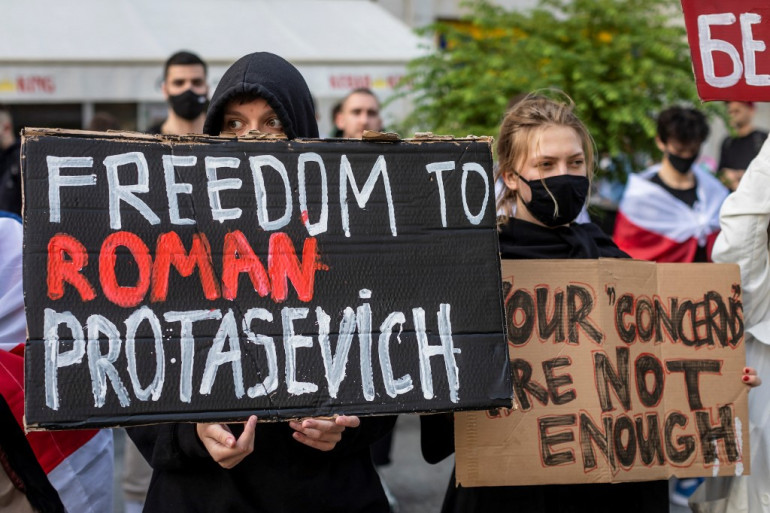


 After the Crash