Are We Living Haunted Lives?

By Kingsley L. Dennis

Source: Waking Times

‘Fear has many eyes
And can see things underground’
~Cervantes, Don Quixote

The world as we know it has gone from being flat to round; from being the center of the universe to the center of the solar system; from being animistic and supernatural to raw in tooth and claw; from being particle-atomic to wavy-quantum. And now we are disappearing into the digital domains of virtual-augmented spaces and false information, bombarded with the spectacle and the image. And somewhere in the midst of all this is the human soul, still largely wrapped and unopened. If there’s a crime here then it is that we’ve allowed ourselves to become haunted – to live haunted lives that lack significance and meaning.

The ‘objects’ or values that we have attempted to live by, or that we pursue, – such as power, truth, understanding, dreams, work, love, and the rest – have all seemingly vanished into some warped, elusive reality where the presence of these things no longer tangibly exist. However, the doubt, uncertainty, and pain of their absence – or ‘fake presence’ – are indeed real enough to affect us deeply. We seek the already disappeared and stalk their substitutes.

We are now close to the stage where we end up just acting out our fantasies upon the phantasmal theatre of our lives and thinking it is reality. This theatre, or screen, of fantasies and the fantastical is like the cave wall in Plato’s allegory where the flickering shadows that move across are taken to be the real. In an updating of Plato’s famous allegory we no longer have shadows projected upon the cave wall; they are now projected upon the green screens that form the back-drop for computer-generated imagery (CGI) that adorn our movies, television programs, and video games.

Whole societies, notably in the technologically-advanced western world, are arranging for our lives to be enacted amidst a scenery backdrop of events and issues artificially projected for us as CGI onto a fake canvas. Within this encroaching visual world, full of misinformation that influences our worldview, we are made to believe in a different kind of reality. It is a reality that is uncertain and insecure, and that requires for us to hold deep obedience to our state institutions to protect us. And within this projection of reality, meanings are provided for us as ready-made meals. In other words, full of too much salt, saturated fats, and laziness.

These socially manufactured meanings are provided as a substitute for the genuine lack. Of these choices offered we often take our pick, as consumers in a marketplace. It may be career, wealth, fame, achievement, or a combination of these and more. Yet the manufactured consent in our sense of meaning, no matter how thoroughly pursued and potentially obtained, is still not genuine. And like the ready-made meal, it soon leaves us with a continued hunger. The illusion of meaning is a vital illusion, yet it still remains an illusion. We may say then that the world we have come to know is a great spectacle of illusion and play; of movement, distraction, simulation, and excess. Yet rather than critically confronting the illusions and distractions we are cleverly persuaded to indulge in them.

The world we share now is also shared with our collective doubts, fears, anger, and frustrations. And these new emotions upon the global stage are blurring our picture of the world and its future. Whilst there are many of us who are excited and genuinely inspired by this increased complexity and diversity there has been a cultural backlash, in the western nations especially, to cover this up with a sheen of simplicity through generic news, bland reporting, and excruciatingly trivial entertainment. This clash of the complex with the simple is creating an odd reality where things just don’t feel right anymore.

We are participants on a ride through the flippant and the flimsy, the significant and the necessary, as we are expected to find our foothold – our human soul – in a world seemingly on the verge of insanity. In such a world, Disneyland may seem to some as the greatest of sanctuaries; whilst to rest of us it stands as a superficial sign of our times.

Most of us do not have the capacity to verify the truth claims of the mainstream media and yet we are more than willing it accept the veracity of their claims. We suspend our own disbelief by trusting in others, especially when it comes to authority and experts. In other words, we have been conditioned to respect the positions of authority and ‘the expert,’ often without critical thought.

And this is the context which frames the telling of his-story and also our-stories. The singer-songwriter Lou Reed once sang, ‘Don’t believe anything you hear and only half of what you see.’ Documentary film-maker Adam Curtis discusses this phenomenon of how the mainstream media projects a simplified, fake reality in his film HyperNormalization (2016). The term hypernormaliztion was taken from an account of life in the Soviet Union during the twenty years before it collapsed. In this account everyone knew the system was failing but they couldn’t envision any alternative and so everyone is resigned to maintaining the pretence of a functioning society. Over time this delusion is accepted as real, an effect termed as hypernormalization. In other words, when the fake is finally accepted as the real then we are living in a hypernormalized state. Does this sound familiar?

The question is – does Reality ever take place?

Our bodies of authority, our mainstream media channels, and our centers of learning – that is, a majority of our significant institutions – have turned, or are in the process of turning, into advertising gimmicks. They peddle publicity and propaganda as endless programs stuck on a loop. They serve to produce the appearance of reality; yet they fail to represent a sense of reality. And this fundamental difference has produced a feeling of living haunted lives. We wander as ghosts in liminal zones, hungry for meaning.

In this sense of loss we no longer seem to know, or distinguish, between oppositions. Almost all of our value systems are based on relative terms – good, bad, my history, your history, etc. Often, the values we take to be ‘our values’ were inculcated in us depending upon which culture we happened to be born into. It is true there are some values more universally shared – such as thou shalt not kill – but the majority of them are culturally relative. Take for instance, sex before marriage – good or bad? Same-sex partnerships? Freedom of religious speech? Eating pork? Eating rats? Democrats or Republicans? Labour or Conservative? Which is good and which is bad? In the case of political parties it is neither – they are false oppositions. More than that, they are also distractions. When you’re arguing (sorry, debating) over political parties you are not observing the system behind them that created this false lack of choice in the first place. False oppositions plague our haunted hinterland. We don’t see this if we are the aimless ghosts, or the walking dead. It’s not pleasant – it’s eerie. And we are in eerie times.

Modernity in its current form is haunted by a sense of loss; of not knowing where it is heading. There are a great many aspects of our age that are in disruption and dislocation. All forms of stability are in question; old and incumbent patterns and models are in dispute; and too many people are experiencing moods of despair and anguish. It is as if our human civilization has come loose from its moorings and is now adrift upon the waters of uncertainty, insignificance, and the loss of meaning.

And so it seems that our civilization is careering dangerously close to some kind of blind spot where we no longer can tell what is true or false anymore. Truth is replaced by a fake substitute and the false becomes a parody of the truth. They are the haunted spaces where the mist drifts by. It’s like a Zen joke. It’s the same as a voice whispering in the darkness saying there is no such thing as a voice whispering in the darkness. They couldn’t have written a better riddle if they had tried.

So what went wrong? Where did it all go? What is it, in fact?

A profound sense of unease has crept into many of us, and also into our social systems, our cultures, our art, our news, and into the very collective soul of humanity. It is an eeriness; an uncertain disquiet – almost an unsettling foreboding. Something has come loose, and we’re not sure what it is. Further still, most of us are fairly certain that those institutions supposedly ‘looking after our best interests’, or running the show – whether they be governmental bodies, financial elites, or shadowy organizations and cabals – are not really in control or are sure either. It feels as if something is amiss, and we just can’t quite put our finger on it. Welcome to our haunted modernity.

We have disarray over a consensus concerning climate chaos, stock market panics and economic crashes, offshore tax evasions and leaked documents, political scandals, pandemic threats and contested vaccines, state and terrorist violence, congenital anxiety and existential fear – a whole cauldron of terror, dread, disquiet, nervousness, angst, and what-the-hell-is-going-on collective confusion is bubbling both under and over in many of our societies.

We have been infiltrated with a virus and it is infecting not only our bodies but our very minds. It’s a pure mind-bending virus and it’s playing havoc with our insecurities and indulging in our sense of lostness. The Spanish have a phrase for this state – “de perdidos al río” – and it roughly translates as from lost to the river. It may not make complete literal sense in English but that’s just it; you can get the sense of it and its vagueness is exactly where we are – from lost to the river!

In such ‘haunted lives’ we can easily become accustomed to metaphysical anguish as just another pain. It is like a pulled muscle or a sprained ankle; something unpleasant and yet we continue to move around with it. In the end we learn how to direct and project this metaphysical anguish onto other things – we choose intoxicating entertainment, sports, and other cultural pastimes and diversions. Angst just becomes a factor that appears to come as a default setting with our species. There is the danger that we become accepting of the ghostly flimsiness to life, which ends up being hypernormalized so that the sense of absence of something real becomes the new reality. There is the dangerous potential here for a state of indifference to emerge and seep into our cultures, which then becomes an ennui-creep into the world until…oh, well, what does it matter anyway?

During these years of disarray and turbulence it is essential that we create meaning for ourselves, otherwise the ‘distant algorithmic’ universe that runs the life around us will create a deep sense of alienation. In a world of scrambled code and big data, transcendence will seem another chimera not within grasp or even real. Or, at worse, the very notion of transcendence will seem the delirium of unstable minds – for those people not able to ‘get real’ with the world of Now.

In this instance, transcendence will appear as a form of spiritual autism. And yet the notion of going beyond ourselves, of developing our capacities for higher perception, are the saving grace inherent within our human species. We are incomplete, and this haunts us, and yet it should also give us meaning and a higher aim in life in knowing that there is further to go. In knowing that there are tools within us for creating, shaping, and cultivating these finer faculties. In being haunted we are also being reminded of what is lacking and this urge should compel us to find a solution within ourselves. We are in fact being ‘haunted into remembrance.’

However, for many of us a haunted modernity offers us a conditioned life where there is little or no space for transcendence. In such social and cultural hauntings there are no navigable locations. We have stepped into an unsouling from the wilderness. We are compelled to walk on.

Upgrade to the Next Level of Now

By High Vibe Tribe

Source: Waking Times

All things are new. The old systems and paradigms are crumbling before our eyes and minds. Outdated mechanisms of knowledge and understanding have shifted and are passing. For those who are open and ready, it’s an amazing time for letting go.

It can be conceived as timeline or dimensional shifts and bleed-throughs if you like. For those experiencing and tracking these changes you will understand, others may sense something fundamentally different but are having a more difficult time just yet, but all will continue to progress. For those wanting to move with this energetic shift it will come, and more understanding as well as awareness will seep in. It can be subtle, or sometimes one psychic or transdimensional experience can trigger a big leap forward.

While we have so much in common we are all on unique paths. There’s no “one way” but there are commonalities that we all experience.

This energetic shift simply requires letting go into it, because it just is. As sure as we’re alive and Source eternally exists, our progression is assured one way or the other. The move “forward” is always there if we’re willing to move into it, but even if we hang back the overall field is moving anyway. This gets to the crux of our learning experience here, as there are several paradoxical aspects to all of this.

Those who’ve been seeking and learning and growing and working to bring about a better world as well as a more realized self expression have gone through much. While our most profound realizations are incredibly simple, all we’ve gone through to get there has been essential. Each of our paths are distinctly individual, yet we are a form of collective soul at the same time, each yearning for mastery of our being with the best possible outcome for all. This obviously does not apply to all those we share the planet with at this point, but the opportunity is available to all.

While many of us have striven to bring truth and openness to a deliberately darkened world, we’ve gone through many stages in the process. We’ve been the dreaming child, the system slave, the dropout, the student, the philosopher, the hungry researcher, the activist, the warrior, the preacher, the pundit, the angry cynic, the tired observer, the insider, the outcast, etc. The list is long, but these stages, whatever they’ve been, were essential to our development.

We eventually learn we cannot impose receiving the truth on anyone, only offer what we individually have learned, and it’s up to others what they do with it. Increased communication has been one of the driving forces for this recent acceleration of awareness that’s sweeping the planet, in addition to other unseen influences. For those engaged in these activities it’s right at whatever level they’ve chosen, but we must be aware of being drawn back into their vibrational level.  We need to help in whatever effective way possible but we can’t force it or interfere with free will, despite the fact that the matrix operates this way.

It operates on a judgmental frequency. Source does not.

Whatever our outlook, a rising tide lifts all boats.

And the tide is rising.

The Dissolving Past

Not only is the external structure collapsing, albeit somewhat violently, old manners and frameworks of perception are dissipating. How much each old system is sustained depends on how many cling to these often self-projected or believed paradigms, as nothing can override our choice to progress or hold on to the status quo. This is causing a separation of worlds in many respects, as realities split apart, much like worlds or timelines.

This is real.

This is not always obviously manifested externally, certainly not to the satisfaction of the skeptic or naysayer. It is evident, however, in changed lives, raised and lowered vibrations, new discoveries and ideas surfacing, and new social trends taking hold. In fact, it’s quite remarkable once you can perceive them.

A Place Called Now

For the sincere seekers, our search has been for meaning, for the full experience of living, and the Truth that permeates all things. We look for answers to the fundamental questions of life and eventually come to realize we’ve contained them all along in our heart of hearts . We have a knowing about a Source that emanates from within and without and have always been set out to connect with it.

It appears in the timeless state of Now. We get glimpses of it; our feelings draw us towards it, and our hearts long to experience more of it. A certain amount of information helps us along the way, but the reality we seek is beyond it, as what we perceive through this limitation only provides arrows pointing towards the unspeakable which we experience in moments outside of time.

This has long been known, yet even this experience is transcending the old concepts and belief systems. We’ve accumulated many helpful understandings from past teachings, yet in the light of this truly new energetic shift even those are outdated in many respects. Reference points can be anchors if we’re not fully conscious, which is clearly seen in the fullness of a truly fresh Now experience.

The Now is a portal. It’s always there, it’s always here. The Now is the ever present zero point everyone is striving for, yet it is always with us. It exists – over and over, yet timelessly. It’s we who have the difficulty in turning into it fully. Again the paradox, finding no time while inhabiting a world seemingly bound by time.

The Now just is, yet we struggle to find it, to understand it, as it slips through our fingers. Or so we think. In fact we’re flickering in and out of it continuously. Sometimes we can feel its ecstasy, sometimes not. We know we should live in it, yet time sweeps us along like the current of a mighty river, only allowing temporary glimpses of the majestic Now. Our minds then scurry to understand what only the heart can perceive, our ever present conundrum in this denser world of duality.

How do we escape time and explore this amazing realm of Now? It’s not always easy, yet it happens spontaneously with little or no effort. Mind gets in the way to make work of it, or identify when it is happening. Filtration mechanisms working overtime dull our nowness. Concerns and habits shroud our sensibilities. Circumstances and physical conditions blind the senses. Ever new as well as old ephemeral belief systems cloak our awareness.

Yet inspiration opens the door continually. Imagination lights the way. Each of our developmental stages were paving stones that led up to now, and they will continue, albeit in continued transformational manifestations. Yet those too must be let go of in deep energetic and forgiving ways in so many respects so as not to hold us back from previous perceptions.

Everything Is New

The truth is we can all be more in the Now than we are, but the inspiring realization is we’re there a lot more than we think we are. Besides always being in it whether we’re fully conscious of it or not, our lives are filled with breakthrough Now experiences.

Techniques such as meditation and more quiet time and deep experience in nature enhance this, while moments of emotional release, insights and creative imagination and inspiration abound in our lives, often spontaneously, resulting in the same. Making room for more of all of these aspects being a higher priority than ever in our lives soon goes without saying, once we’re really serious about this transition personally as well as for all of humanity and our planetary condition.

Therein lies a commitment to be made.

The Letting Go

We each experience a great falling away of many things in this process. Old unfruitful relationships, locations, living conditions, modes of expression and cherished belief systems. All of these shift or evaporate altogether. Let them pass. The new will manifest almost immediately and in many cases concurrently.

While we may experience times of isolation and solitude, it’s all a wonderful growing opportunity. It can be quite an emotional journey facing ourselves honestly and seeing former close acquaintances or beliefs fade from our lives. The beauty here is that our true friends and family become manifest.

And we are many.

Depending on our rate of acceleration as well as preparation, this shifting process can be a bit disconcerting. While our previous efforts may appear to have been off course or pointless in light of what we learn down the road, they weren’t. Many ideas and concepts and viewpoints will prove to have been quite off course in relation to what we come to learn is true, but they were what helped get us here. It’s seeing that and letting the old go that are at issue.

It’s easy if we’re malleable and trusting. Call it faith in the divine nature of it all, but that is something we can all be securely confident of, despite the seemingly bizarre nature and consequences of many of the choices that have taken place on this evolving planet.

There are no mistakes. There is no condemnation except what we personally ascribe to. Outside of us everything is beautifully neutral. There is no judgement. We invent and comply with that, in accordance with separation. When we realize all is One in different facets and stages and in the process of expansion we don’t judge, we accept, and in love, seeing the wonder of Creation both seen and unseen.

The Paradox of Three Dimensional Life

Yet paradoxically there is the part we are each here to do, most of all to truly awaken and raise in conscious awareness and enduring unconditional love. The ultimate solution. Nothing to wait for. Just be it. The rest will follow as we let go of old triggers toward less fruitful endeavors. It’s very tempting to get into the fray and all things reactive and fight it out in our minds or on the streets or in the staged informational platform at their low density level, but it’s to no avail and only muddies the waters.

Steer clear. Don’t feed the miasma. Be aware of it but don’t even touch it. It’s a tar baby designed to short circuit our connectivity to Source and who we truly, deeply are. That’s what they fear. Not our activism or exposure, although that’s all part of it. It’s us getting the real understanding of our true power as well as what energizes them and keeps them in business, which we then refuse to supply as we rise to a higher vibration with much more effectiveness.

That’s non-compliance.

Get free. Stay free. Help raise the planetary vibration. Share love, speak truth, live in the true joy of real Knowing that transcends these tricks and traps and manifestations of ignorance. Live according to your passion. The world is starving for love, kindness, gentleness, hope and happiness. We’re awash in it if we look around. Don’t let them drag us down to their level.

Let’s rise up and be the living solution. All is well and right in the grand scheme of things, the BIG picture.

Creation keeps expanding and learning, and we are an amazing and integral part of it all!

What a wonder!

And empires die

Source: Intrepid Report

Nothing ever seems to last, everybody changes oh so fast,
promises made promises lost and pride is kept at any cost,
And flowers die, and children cry, and lonely people carry on.
—Palermo & Farruggio 1970

That was from the song And Flowers Die, by prolific composer Michael Palermo and this writer as lyricist. How appropriate to compare this song with the ‘death song’ of our Military-Industrial Amerikan Empire, now in only its 72nd year of prominence. How great and powerful our empire was for so long. We controlled the economies and governments of so many countries, even continents. Now it is the autumn of our status as Number One. The Asian rim, as many refer to it, being led by China and all those other nations in that region, will become the future economic powerhouse of this planet.

This writer will leave it to the many progressive scholars out there for the explanation of the how and why of this equation. Let me just say that we all, from grade school on, have been fed the pabulum of America as a democracy, benevolent to the entire world. Many sadly still believe that lie, and that strengthens the reason why this empire is in freefall.

Since we became the preeminent world empire at the end of WW2, two things held the greedy ones who run things in we’ll say half check: The progressive federal tax rate and the union movement. The top tax rate from 1953 to 1963 was 91%. Now, we know that the super rich did not pay at that rate, but even after their accountants sharpened a few pencils, many still had to pay at least 50%, for argument sake. Today’s top rate is 39.6%, meaning that folks like mega millionaire Mitt Romney pay at around 15%-20%. Do the math and see how much more went into the treasury then as opposed to now. The second factor that held this empire in half check was the stronger union movement in the ‘50s, ‘60s and ‘70s. In the 1950s, about 35% of American workers belonged to unions. In 1983, it went down to around 20%. Now, the percentage is around 12%. So, that means that three times more working stiffs in the recent past had the protection of a union, however weak or compliant that union may have been. Today, this empire can breathe easily as fewer and fewer working stiffs even have a union!

To this writer, with all the many factors that have contributed to the demise of our nation via this Military-Industrial Empire, the number one factor is our foreign policy. When over half of your spending goes for military reasons, how can a nation sustain itself at home? When you have over 1,000 military bases in over 100 countries, and you consistently are involved in these phony wars, the home front must feel the strain. Our myriad of domestic bleeding is so obvious . . . yet so few here will acknowledge it. Our infrastructure is crumbling, our health care is a mess, too many mediocre paying jobs (with too many being part time with NO benefits), our political system is controlled by Big Money, our media is controlled by the same Big Money . . . and the fools still fight amongst each other over the Two Party/One Party con job.

Let’s face it: All the major industrialized nations are controlled by their super rich. There are really few exceptions. Sadly, with over 99+ % of the populace in all these countries being just simple working stiffs, it is time for a change of mindset. The mindset must be simple: The super rich need to go back to paying their fair share, and government needs to become what Mark Twain prescribed: ‘To protect us from the crooks and scoundrels.’

As Babies are Prescribed Pharmaceuticals, Have We Reached Dystopia?

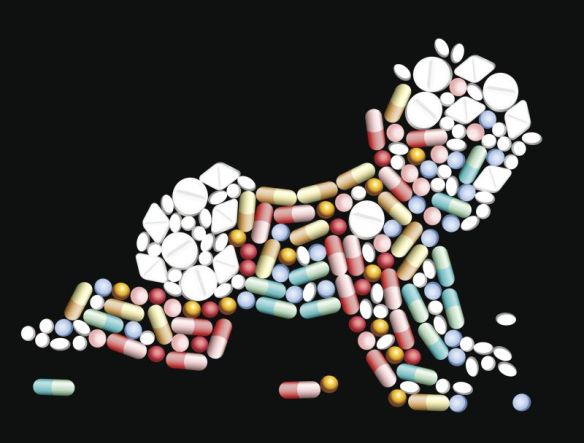
Tablets Pills Baby

By Joe Jarvis

Source: The Daily Bell

Would you let a five-year-old smoke a joint? I certainly hope not. Yet that would probably be less harmful than loading kids up on pharmaceuticals.

Currently, over a million American children UNDER SIX YEARS OLD are taking psychiatric drugs. Babies are literally being doped up by the pharmaceutical industry. Over 274,000 babies UNDER ONE-YEAR-OLD are given drugs, mostly for anxiety.

Anxiety drugs for babies. Have they tried motherly love? Or is that just an old fashioned, outdated concept?

You know, I like to mention society’s similarity to Orwell’s 1984. And surely the growing police state, war on drugs, and endless military campaigns–where the enemy seems to change daily–are reminiscent of the fictional dictatorship of Big Brother.

But it seems the powers that be are working tirelessly to blend together the dystopia of 1984, with that of Aldous Huxley’s Brave New World.

In that dystopia, there is no police state or war. Society has been perfectly designed by scientists, inspired by Ford’s assembly line. Babies are grown in the lab, cloned to all look alike, depending on their class. Parents are an embarrassing relic of the past. How silly to think a child needs family when they have the state!

The lower castes are deprived of oxygen as embryos to stunt their mental development. In America, they use fluoride in the drinking water instead.

In Brave New World, children listen to 24-hour propaganda in their cribs. Betas hear:

Alpha children wear grey. They work much harder than we do, because they’re so frightfully clever. I’m really awfully glad I’m a Beta, because I don’t work so hard. And then we are much better than the Gammas and Deltas. Gammas are stupid. They all wear green, and Delta children wear khaki. Oh no, I don’t want to play with Delta children. And Epsilons are still worse.

White pride, black pride, gay pride, national pride. Pride is not meant for accidents of birth. You should be proud of accomplishments and achievements, not genetics and geography. Perhaps someone has been whispering in these radicalized children’s ears.

And how jealous the Department of Education must be of the incubators of Brave New World! They have to sometimes wait years to indoctrinate children. But at least the government gets to drug them up at a young age! And if the TV is left on, most of the programming is done for them.

Of course, the adults are drugged up in Brave New World as well, just like in America. If anyone feels the least bit anxious, nervous, sad–or any other troublesome emotion–they get “soma.” It’s the perfect mix of drugs with only pleasant feelings and no ill side effects.

The 1 in 6 Americans on antidepressants, antipsychotics, and anti-anxiety medication still have to put up with side effects.

The 50 million plus Americans on psychiatric medication sometimes kill themselves, or go mad and kill others. I guess the government is still working out the kinks. Or it’s just another creative blending of 1984 and Brave New World. In the former, the proles must be properly terrified.

And there is one more thing I can remember from Brave New World that strikes eerily similar to modern America.

At what age does the public education system start teaching sex ed? Kindergarteners in some states receive “age appropriate”–according to the government–sexual education. Some studies suggest teen pregnancies rise in areas where sex ed is taught at younger ages.

How young is too young for a sex change? Kids can now choose between 43 genders, or make up a new one! It’s like Mr. Potato head, but with their own bodies. And they will be given corresponding drugs to enhance the “natural” changes.

In the classrooms of Brave New World:

“We had Elementary Sex for the first forty minutes,” she answered. “But now it’s switched over to Elementary Class Consciousness.”

The Director walked slowly down the long line of cots. Rosy and relaxed with sleep, eighty little boys and girls lay softly breathing…

He let out the amazing truth. For a very long period before the time of Our Ford, and even for some generations afterwards, erotic play between children had been regarded as abnormal (there was a roar of laughter); and not only abnormal, actually immoral (no!): and had therefore been rigorously suppressed.

Drugging the population, programming citizens with propaganda, sexualizing children, creating class divisions.

These dystopian novels were meant to be warnings, not instruction manuals.


5 Reasons why donations to the poor may bring bad results!

By John Hawthorne

Source: Business Connect

Does donating to poor countries actually help? Keep in mind there is a big difference between disaster response and longer term, more effective and sustainable development.  Much of the time outside assistance and donations do not have much impact and in the long term, can be harmful.

When people see images of impoverished countries and situation, our first thought is, I should donate something.

This is noble  and shouldn’t be dismissed. However, many people fail to realize that donating to the poor often makes them more poor. It creates a vicious, unintended cycle.

This isn’t an anecdotal argument either. More and more research is showing that donations have long term consequences that end up hurting more than helping.

In this post, we’re going to lay out five reasons why donating to the poor often hurts more than it helps, and then pose a possible solution. Our goal is to convince you that there is a better way.

Reason #1: The Communities Can’t Sustain The Things Donated To Them

It’s an idea that sounds great on paper and makes for ovation-garnering speeches. Go into an impoverished community, help them create life-giving resources (like a well), and then let the community reap the benefits.

It sounds so noble. Enlightened. The wealthy westerners coming into rescue the poor and the impoverished who can’t survive on their own. Knights in shining armor delivering those imprisoned by their own poverty.

This mentality is incredibly shortsighted and even insulting to the recipients of that charity.

It’s shortsighted because it fails to consider one massive problem: how will impoverished communities continue to support and maintain the created resources? A drilled well may function effectively for several years, but it won’t be long before it starts to break down.

Where will they get the parts to repair it? Will they have the necessary technical expertise to maintain the well? These aren’t hypothetical questions.

This does not mean you should do nothing. But it does mean that any solution must involve, at the minimum, the following components: time, education, partnership, a champion, and accountability.

As Jamie Skinner comments:

There is no point an external agency coming in, putting in a drill-hole and then passing it over to the local community if they can’t afford to maintain it over the next 10 or 20 years. There needs to be a proper assessment of just how much local people are able to finance these water points. It’s not enough to just drill and walk away.

What happens if this kind of support is not offered? Annie Kelly notes:

In 2007, before the African Medical and Research Foundation and Farm-Africa began their development work in Katine, worms were found in the polluted water supply at the village of Abia, next to the Emuru swamp. A badly constructed and poorly maintained shallow well, dug by a charity, was full of soil and animal faeces and was making local people sick.

That well that you helped dig on your church mission trip? How are they going to maintain that? Are you going back every three months to fix it? Are you going to stay in constant contact to make sure they always have the supplies they need? Those parts are probably only available in other countries, so how in the world are you going to get them to those who need them?

It’s easy to feel good about yourself but you probably just made things worse.

Reason #2: It’s Misguided And Doesn’t Solve The Problem

Too often, remedies and relief are donated without considering whether they solve the problem. Take water disinfection treatments. Many organizations and donors assume that supplying water treatments is an effective solution for polluted water.

And so they distribute water disinfectants in great number, feeling good about how they are fixing the problem.

But they’re NOT necessarily fixing the problem. In fact, there is debate over whether some of (not all) these disinfectants actually produce real, lasting change.

As microbiologist Paul Hunter notes:

Disinfection household water treatments don’t seem to have any public health benefit. I’d be more than happy to change my mind if someone comes up with some good evidence, but it would have to be a large double-blinded study.

In other words, a solution that is taken as gospel by many organizations may not add much benefit at all to impoverished communities.

Don’t assume that every solution is equally good. Sure, you paid for some malaria nets to be given to a village. Is that what they need? Will that solve the most pressing problems they have? It’s easy to feel good about yourself for donating something, but you may be trying to solve the wrong problem.

Reason #3: The Solutions Aren’t Fully Developed

More and more, tech companies are trying to step into underdeveloped countries and offer solutions that will “solve” all their problems. They distribute tablets and apps and internet kiosks, believing that these will help people elevate themselves out of poverty.

And while this is a noble notion, it fails the majority of the time. Why? Because the tech companies haven’t fully developed the solutions in conjunction with local governments and businesses. If the underlying infrastructure isn’t in place, these tech solutions are like a band aid on a cannon ball wound. They may stop the bleeding for a few minutes, but they don’t solve the problem.

One of the very first learnings a donor agency or new volunteer learns is that poverty issues are never in isolation. Everything is connected, integrated, and often, complex.  For example, lack of adequate income is tied to lack of education, poor infrastructure, public policy, access to capital, inferior quality water which means poor health, community loyalties, and on and on. Every initiative needs to be evaluated in terms of the multiple relationships between other issues.

Speaking of tech companies attempting to “upgrade” India, Eric Bellman writes:

A $40 tablet that was supposed to revolutionize education has not been getting the government orders it expected. The national networks of Internet kiosks that were supposed to empower farmers have largely shut down. The $2,000 Tata Nano minicar that was supposed to allow millions of people upgrade from the dangerous family motorcycle was not popular and anti-rape apps which were supposed to use mapping and automatic SMS to protect women were never connected to the country’s police force.

You simply can’t put high-tech equipment into a country that doesn’t have the infrastructure for it. It would be like giving the Pilgrims automatic machine guns or airplanes. All chaos would break loose.

Tech nonprofits are big these days. You donate some money and they import computers into impoverished countries. But can those computers even be used, or are they going to collect dust in a warehouse? Can the country even handle this type of computer? Can it be hooked up to the internet? This is a ready, fire, aim strategy that usually hits the wrong target.

Reason #4: Donors Don’t Have A Sustainable Plan

Too often, donors come into help without any real plan for how to sustain things after they’ve left. They assume that their work is done once they’ve implemented the initial solution, not realizing that without a plan for the future things will quickly fall apart.

Too often the support structures for success are not even considered whether it be government policies, ongoing encouragement, mentoring, or something as simple as adequate financial support.  Many of us live in the fantasy world that people who have lived their entire life surviving the harsh reality of poverty, doing what it takes to live with so little, suddenly can embrace and understand the values and resources that make the new intervention possible.

A prime example of this is World Bank’s billion dollar effort to bring improved water access to the country of Tanzania. While it was certainly a noble goal, it generated a stunning lack of success.

The Global Post reports:

In 2007 [before the project], only 54 percent of Tanzanians had access to what is called an improved water source — a water point, like a well or water pump, that is protected from contamination. By 2012, that figure had actually decreased to 53 percent, according to the latest available World Bank Data. Coupled with Tanzania’s rising population, 3.5 million more Tanzanians lacked access to improved water than did before the project began.

The problem? The lack of a sustainable plan. Over time, the water sources begin to fail and become polluted, and the local communities didn’t have the finances or resources to fix them. Suddenly, the communities are worse off than when they started.

Herbert Kashililah makes this damning statement: “If I am from the World Bank, it is easier to count new projects than try to ensure people are running their own systems.”

A problem is not a problem to be addressed by good hearted outsiders unless identified and owned by the local population, and there are champions, local people who are committed, to work and address it.

To put it into practical terms, maybe you financed a cow for a family through a charity. That’s great, but what will that cow actually do for the family? Do they even have the land necessary to pasture it? How will they afford the food? Do the people even know what’s required to raise a cow?

Reason #5: It Kills Local Economies

Several years ago, Jason Sadler had the idea to collect and donate 1 million t-shirts to Africa. Now, besides obvious questions like, “Is that what they really need?” Sadler failed to consider one enormous factor: the impact on the local economy.

What so many donors fail to realize is that their giving can actually kill a local business.

Disaster response efforts especially must be careful about destroying local businesses.  It would be so much wiser to further develop the capacity of local entrepreneurs to meet the local needs. This is also true when hunger is prevalent. Buy local food first, create initiatives to produce more, purchase relief supplies locally. Organizations need to deeply consider the economic impact of their actions. Will this help or hurt the economy? Will it create or kill jobs? Will it ultimately provide self-generated income for the residents? A failure to weigh these things results in the poor becoming poorer.

Let’s say an individual had a thriving t-shirt business. He makes his livelihood and supports his family by making and selling t-shirts. What happens when a million shirts are suddenly dropped into his country? No one will buy from him. Why would they? They can get shirts for free. Suddenly the t-shirt economy is destroyed and the business goes under.  What happens when the donated t-shirts wear out?  There is no local business to fill the void and another donation is needed; dependency is created.  All this because of the well-intentioned efforts of a donor.

The Solution?

Business Connect embraces the concept that self-sustaining business solutions will have more longer lasting impact for the alleviation of poverty than a thousand give away products. Every donation we receive or facilitate goes through a local entrepreneur, who then gets a commission of the sale. That entrepreneur is then there to support the product for its lifespan, including maintenance and parts.

By empowering entrepreneurs, we are lifting an entire economy and helping build strong local businesses where green, life-improving products can be purchased.  In the process we pay duties and the fees so that the entire economy is boosted.

This is our mission. We’re passionate about helping local communities thrive, rather than simply dropping supplies on them. It’s simply a better way.


Decoding a Fake Reality

By Rosanne Lindsay

Source: Waking Times

Reality is a program of beliefs we decode:

Disease equals Health
Fake news equals Truth
Wars equal Peace
Uniformity equals Unity
State-granted rights equal human rights
Slavery equals Freedom.

All is illusion.

As our world unfolds in multiple dimensions, we are focused in a time-space continuum (linear construct) with limited perception. Our “perception deception” in this reality timeline means that no matter what happened in the past, or what might happen in the future, we are always pondering it and creating it in the Now.

The power to restructure reality is only possible with the clarity of the cosmic mind. Unfortunately, as humans, we are easily programmed to believe that what we see, feel, taste, hear, and smell is all there is.

“The outer world is a reflection of the inner world. Other people’s perception of you is a reflection of them; your response to them is an awareness of you.” ~Roy T. Bennett, The Light in the Heart

Our beliefs guide our perception about who we are and what we can create. Believe we are sick and tired and we are. The body responds to core beliefs. The cells hear what we say, they hear limitations and feel fear. If we love our cells, the body will support our beliefs. What we do in our bodies is pivotal to our multidimensional selves, as well as to other timelines.

The Structure of Reality

Reality is constructed in time and space in this Third Dimension. Time and space are frequencies which cycle in a looped timeline, which our brains decode so that we can experience life as humans. Everything cycles, from the seasons to the economy, just as history tends to repeat itself.

We live in a Matrix system that can be described as a grid, a hologram, or a game composed of electromagnetic (EM) frequencies. The hologram is information as light that is distributed non-locally. Our brains decode this information based on perception; how things appear to us. And as we know, appearances can be deceiving.

Indeed, all is not as it seems. We create a collective reality with electromagnetic frequencies where everyone and everything is connected, in similar fashion to how the internet works. However, in the space we occupy we see only a small visible light spectrum, a narrow band of information that represents only 0.0001% of the whole electromagnetic spectrum.

Spirit First

We perceive that the brain is the central processing unit of the body, the body is a computer, and our DNA is nature’s hard drive. Yet we must also accept that we are receivers and transmitters of information – we are also the energy that runs the body. We are Spirit first. We are consciousness having a physical experience in a holographic constructed reality for our soul’s growth and evolution. Consciousness creates reality.

“You are a creator. You of humanity… Science has a fixation on knowledge, particularly that which is compatible with sense perception. Despite instruments which far exceed man’s sensory capacity, all knowledge gained in translated back to a sense perception before it can be coded as information. If it cannot be seen, heard, touched, smelled or tasted, it is not received by physical man. The five senses of man. The four walls and the lid of your prison. Discard them. Touch will not determine subtle shapes. Eye will not perceive reality. Ears do not hear the song of the universe. You cannot taste the food of angels or smell the fragrance of a higher truth. We rejoice as you begin to unshackle the self-imposed chains of limitation. Use your physical senses, enjoy them, but never for one moment believe in them as complete reality. Your heart knows – experience. Believe. Believe. Whatever you believe is so.” ―  Jade Plant, Talking with Nature by Michael J. Roads

If we understand the construction of an atom, then we appreciate that we are not solid at all. We are pure awareness in a cosmos we cannot measure. We are not our bodies or our names. We are not our emotions. We are limitless. Through our limited perception and core beliefs this may sound impossible.

However, we are not impossible but everything that is possible. All possibility means we are everything and no-thing. We are matter and energy, sound and silence. Life is a continuum, between physical and non-physical. Without beginning and without end.

In this game of illusion, we are a projection of our True Selves. In this reality, we are a hologram in a holographic universe. A hologram: a three-dimensional projection written on a two dimensional surface (i.e., piece of paper).

We are here to remember that we are more than words on paper just as we are more than base pairs of our DNA. Our DNA is a projection of a greater force. We are wave and particle at the same time. We are not complex. We are multiplex.

In this game of illusion, humans are caught in a time loop distortion where we have lost our power to those who control the program in the hologram. Not only are minds controlled (via social engineering and frequencies), but human genetics have been manipulated to perceive through five physical senses, resulting in the suppression of our true selves and our true potential.

The Freedom To Choose

In navigating All That We Are, we have a choice. We can choose to become bees in a Hive Mind on a colony of control and draconian laws, or we can choose freedom.

“Liberty lies in the hearts of men and women. When it dies there, no constitution, no law and no court, can save it.” ― Judge Learned Hand

When we talk about freedom, we perceive only a fraction of what is possible based on what we have been programmed and conditioned to believe through the limits of the five senses. The moment we perceive differently to use all of our senses, and to embody freedom, we reclaim our freedom. We no longer have to conform to colony control.

Decoding a Fake Reality

The mind controls beliefs in a reality that conforms to core beliefs. When we do not see beyond the page and open to all that is possible, we decode a fake reality and perpetuate it. We become distracted by the limitations set up to suppress our inherent power instead of creating the reality that best serves all of humanity and the planet.

“Morpheus: The Matrix is everywhere. It is all around us. Even now, in this very room. You can see it when you look out your window or when you turn on your television. You can feel it when you go to work… when you go to church… when you pay your taxes. It is the world that has been pulled over your eyes to blind you from the truth.


Neo: What truth?


Morpheus: That you are a slave, Neo. Like everyone else you were born into bondage. Into a prison that you cannot taste or see or touch. A prison for your mind.” ~The Matrix

The Matrix is a system into which humans incarnate and reincarnate for the purpose of soul evolution, and to wake up. While this construct may not be able to be “fixed” it can be conditioned by the way we respond to it.

A Reality of Now in Three Steps

Step 1: Free the mind from the program of beliefs.

Unlearn Core Beliefs:
Schools are there to enlighten us to the truth of the world.
Governments grant rights to protect us.
Big Pharma cures us.
The mainstream media tells the truth about what is happening in the world.
Politicians stand for hope and change.
Terrorists (false flag events) necessitate less freedom though more controls and surveillance.
GMO foods feed the world.
RFID microchips make life more convenient and efficient.
Chemtrails and geoengineering control “global warming” to protect the planet.

Step 2: Expand what we think is possible. Choose to become conscious of the Matrix system or to choose to remain unconscious. If we are in denial we cannot change anything. Accept what is so that we can change what is.

Step 3: Move from thinking and talking about it to doing something about it. Start with the body. Change emotions to lighten the body burden. Love the Self. See the body respond and heal and watch it ripple out to change reality.

8 Critical Factors Behind Every Food Crisis

FILE – In this Monday, Aug. 15, 2011 file photo, children from southern Somalia hold their pots as they line up to receive cooked food in Mogadishu, Somalia. A report by two U.S. government-funded famine and food agencies gives the highest death toll yet, estimating that 260,000 people died – more than double previous estimates. (AP Photo/Farah Abdi Warsameh, File)

By John Hawthorne

Source: Business Connect

From the beginning of time, their have been food crises in one form or another. Ancient books such as the Bible have records of various famines devastating portions of the world.

And while it’s easy to attribute these crises to a single cause, such as war or drought, the causes are usually much deeper and much more complex.

Nelson Mandela said, “Overcoming poverty is not an act of charity, it is an act of justice.”

In order for us to achieve the kind of justice envisioned by Mandela, it’s essential that we first understand the underlying causes of food crises. Only after we have understood can we then begin creating meaningful solutions.

With that in mind, here are 8 primary factors behind almost every global food crisis. While not all 8 of these will be present at a time, you will almost always find several of these at work.

Factor #1 – Poverty

One of the greatest factors in every food crisis is stark and abject poverty. This isn’t surprising. With enough money, anyone can ensure they have enough food. But with many developing nations sitting well below the poverty line, the population simply can’t afford the food they so desperately need.

Additionally, poverty has a distinct effect on food output. In Africa, for example, many farmers can’t afford proper irrigation and fertilizer. This, in turn, leads to lower yields, which then reduces the overall amount of food available to the population.

The population of the Sub-Saharan region of Africa is expected to grow at an astronomical rate, topping out at 2.4 billion by 2050. This will continue to exacerbate the poverty issue, which will then continue to drive the lack of sufficient food in the area.

Factor #2 – Drought and Desertification

Widespread droughts, leading to the desertification of particular locations also causes huge disruptions to food production. For example, leading up to and during the global food crisis of 2008, 110 countries experienced significant droughts. This caused even the most well-irrigated, fertile areas to become arid deserts, making it impossible to grow crops.

As Mark Hughes noted:

Australia is normally the second largest exporter of grain, after the U.S. The continent, though, is experiencing an ongoing drought that has been described as the worst in a century. Grain yields have shrunk and many silos remain empty. Australia’s drought is a major factor in global wheat stocks being at their lowest since 1979. In fact, many wheat and rice farmers are switching to crops that demand less water, such as wine grapes.

Additionally, farmers often let animals over-graze on their land, reducing the amount of vegetation and increasing desertification. If the soil becomes dry enough, it is ruined and unable to support any crops at all.

Finally, as populations grow, deforestation occurs at an increased rate, which then leads to less vegetation and more desertification.

Factor #3 – Political Pressure

In the past, the International Monetary Fund has pressured small farmers, particularly in impoverished African countries, to abandon agricultural farming in favor of industrial work. The money generated from this practice would be used to pay off debt and import food.

While it may sound like a working strategy, it has created catastrophic results.

As Eric Holt-Giménez noted:

The urban population increased seven-fold, swelling from 18% to 33% of the population. Millions of poor and unemployed workers have swelled the cities—with two-thirds of them living in slums. The manufacturing and industrial sector did not “take off” in African countries; the percent of the GDP coming from industry was 30% in 1961 and 32% in 2000. In the countryside, as plantations for agro-exports expanded, food production plummeted and poverty grew. Though the rural population, density increased by 180% as more farmers were crowded onto smaller plots.

Factor #4 – Increased Consumption of Meat and Dairy

Many countries have begun adopting a more Western diet, which includes eating significantly more meat and dairy. To make this happen, farmers have been forced to raise more cattle, and more cattle means more grain being consumed.

The problem, however, is that this causes a significant deficiency in terms of calories consumed versus calories available. A cow consumes approximately 700 calories worth of grain to produce a piece of meat containing only 100 calories. When this happens on a massive scale, an enormous shortage of food is the end result. The longer this deficit continues, the greater the imbalance will become.

Factor #5 – Increased Oil and Transportation Costs

When the price of oil goes up, the energy cost for planting and transporting foods goes through the roof. When food costs more to grow, it then costs more to sell. These rising costs then make it more difficult for the local population to purchase crops as well as for farmers to export their crops to industrialized nations.

Additionally, increased oil costs has led many countries to invest heavily in the development of agro-fuels. More agro-fuels always means less food available.

As Esther Vivas helpfully puts it:

The increase in the price of oil, which doubled in 2007 and 2008 and caused a big rise in the price of fertilizers and transport related to the food system, has resulted in increasing investment in the production of alternative fuels such as those of plant origin. Governments in the United States, the European Union, Brazil and others have subsidized production of agro-fuels in response to the scarcity of oil and global warming. But this green fuel production comes into direct competition with the production of food. To give just one example, in 2007 in the United States 20% of the total cereal harvest was used to produce ethanol and it is calculated in the next decade that this figure will reach 33%. We can imagine the situation in the countries of the South.

Factor #6 – Falling World Aid

At the peak of the 2007-2008 food crisis, food aid was at it’s lowest point since 1961. This is one of the oddities about the national food market. When cereal prices are low, countries look to sell their food through international aid. However, when food prices are high, they prefer to sell them on the open market for increased profits.

In other words, during food crises, when food is scarcest and at it’s highest prices, it isn’t available for international aid. When the bottom falls out of world aid, food crises grow in magnitude.

Factor #7 – International Conflicts

International conflicts are a particularly visible factor behind many food crises. During conflicts, it’s common for one country to restrict exports to another country, which then reduces the amount of food available to the general population.

Or, even worse, dictators will intentionally isolate their countries, refusing foreign aid that is desperately needed. Aid workers may be blocked from entering the country, making it difficult for the citizens to receive needed help. If foreign aid does come, they seize it for themselves, depriving the population of desperately needed sustenance.

Factor #8 – Disease

If a country experiences a particularly violent outbreak of a disease, it can completely disrupt the overall food supply. For example, the HIV/AIDS crisis in Africa has killed farmers, which in turn pushes families deep into poverty.

When a population is undernourished, drugs become less effective and can at times create intense hunger pains. These two factors combined create a vicious cycle of death, poverty, and hunger.

Additionally, certain highly contagious diseases can restrict the amount of aid available to a country. For example, during the 2014 Ebola epidemic in West Africa, aid workers were restricted from traveling to the region due to fear of spreading the disease.

Perfect Storms

Most food crises aren’t the result of a single factor. Rather, they are caused by a perfect storm of events that coalesce into a deadly storm.

For example, in 2011, Somalia was devastated by a drought that caused widespread crop failure. The food crisis was made even worse by a non-functioning government as well as a national conflict. All these forces combined to make it difficult for aid workers to reach those who so desperately needed help.

The result was that approximately 260,000 people died.

Because the problems are almost always complex and multi-layered, the solutions must be equally multi-faceted. Simple solutions typically exacerbate the problem at the expense of the local population.

The best solutions are those that involve numerous parties working together to create a tangible, workable solution.

There will always be food crises to one degree or another. But as we grow in our understanding of what causes them, we can also grow in our ability to bring them to an end.

The Complexity of Cultural Evolution

By Joe Brewer

Source: Resilience

What does the ecological crisis have in common with global poverty? How does politics relate to economics? The study of history? The changing landscape of technology, arts, and culture? Why is there not a coherent School of Social Sciences that brings themes like these together in one place? Answers can only be found by synthesizing two of the most important areas of scientific work in the last 150 years — in the fields of evolutionary studies and complexity science.

All of the most interesting and important topics of concern in the world today (How does consciousness work? What is the human mind? Is it possible to restore health to deteriorated ecosystems? Can we create political systems that promote widespread health and well-being?) involve vast networks of relationships interacting with each other — what are called complex adaptive systems in the lingo of complexity science.

Familiar examples include things like the weather with its inherent unpredictability or a market economy that has no central locus of control. The thing that makes a system “complex” is that patterns arise through the interactions that are not reducible to its constituent parts. You cannot explain the weather simply by describing what water molecules or solar radiation on their own are capable of doing. Neither can you explain an economy by describing how individuals engage in barter or exchange if they happen to be in a market-based society.

Importantly, complex adaptive systems are always far from equilibrium. They are not static. And the only way to make sense of their behavior is to computationally model how the various parts interact with each other dynamically — which leads to the importance of evolution. Emphasis on the word adaptive in complex adaptive systems gives an inkling of Charles Darwin’s Theory of Natural Selection, where the biological traits of an organism that happen to be adaptive in its environment tend to occur more frequently than traits that are not adaptive.

Over time (since living systems are also dynamic), the evolutionary pathway for biology is traced by the intersections of adaptive fitness in environments that might be changing quickly or slowly. All biological systems are complex (they have many interacting parts with emergent phenomena that are not reducible) and they are adaptive (as natural selection plays out in changing environments).

So what does this say about cultural evolution? How can we apply this basic finding from biology to the study of history and economics, politics, and environmental management? Well it turns out that researchers who study cultural evolution — and there are now nearly 2,000 of them in the newly formed Cultural Evolution Society that I was tasked to help create — have brought the mathematical toolkit used in complexity science to the study of cultural change in human and non-human species.

The earliest inklings of this synthesis go back to a debate a century ago when foundations were being laid for the study of population genetics. At that time, statisticians were actively grappling with questions about how to account for genetic variation in biological organisms without the use of digital computers. They developed accounting systems for biological traits that matured continuously through the early-to-mid 20th Century.

In the late 1970’s and early 80’s, there was a group of cultural evolution researchers who translated these statistical tools for the distinct mechanisms of “selection” that play out for behavioral repertoires and other cultural phenomena in human and non-human cultures. Among them were Luigi Cavalli-Sforza and Marcus Feldman at Stanford, Peter J. Richerson at UC-Davis, and Robert Boyd of Arizona State University. These efforts culminated in the publishing of Cultural Transmission and Evolution: A Quantitative Approach in 1981 and Culture and the Evolutionary Process in 1988.

It was during this same time period that the field of complexity research was getting underway — with the multidisciplinary Santa Fe Institute being established in 1984 to explore the mathematical patterns of complex adaptive systems across many domains of study. They organized workshops and symposia on economics, ecology, urban studies, epidemiology, and more to discover how complex systems evolve and change using the mathematical tools of fractal geometry, network science, differential equations, and computational methods.

As I have written elsewhere, the time is urgently upon us to synthesize and apply what is known about complexity and evolution. The fate of humanity literally depends on our ability to do this. In a time of unprecedented exponential change, we must learn to manage complex systems as they evolve in real time.

We need to firstly understand that cultural systems evolve according to Darwinian principles. The interested reader can find many books explaining why this is the case. Here are a few to get you started:

This is a mere sampling — there are now hundreds of books on cultural evolutionary studies that one can dive into. Important for this article is to note that (i) the field of cultural evolution is quite mature at this point in time; (ii) it has advanced rapidly since incorporating mathematical tools used in the study of complexity; and (iii)the world is in flux with tremendous need for this body of knowledge to be brought to bear on our global challenges in the 21st Century.

This is the work of culture design.

The most pressing challenges in the world have foundational cultural components. Global warming arose from the false illusions of human separation from nature and the perception of endless bounty for natural resources at the beginning of the industrial era. Terrorism is cultivated in landscapes where people feel deep-seated anxiety and economic desperation — which arise from particular models of colonial (or post-colonial) exploitation that have unique cultural histories.

Similarly, the spread of rugged individualism as a cultural construct treats human beings as if they are separate from their communities, inherently selfish, and venerable for engaging in psychopathic behaviors like wealth hoarding. In each case, the real state of power is culture and the only viable solutions involve the intentional management of cultural evolutionary change.

But we cannot even start to think this way if we don’t recognize how human cultures operate as complex systems. Only by learning to see that emergent patterns arise through the interactions of constituent parts will we begin to discern how evolutionary change is taking us closer to planetary-scale collapse — and that design practices will be needed that make use of what is now known from cultural evolutionary studies.

Onward, fellow humans.