A former US intelligence official has confirmed that the shambolic Maidan remix staged in Brasilia on 8 January was a CIA operation, and linked it to the recent attempts at color revolution in Iran.
On Sunday, alleged supporters of former right-wing President Jair Bolsonaro stormed Brazil’s Congress, Supreme Court, and presidential palace, bypassing flimsy security barricades, climbing on roofs, smashing windows, destroying public property including precious paintings, while calling for a military coup as part of a regime change scheme targeting elected President Luis Inacio “Lula” da Silva.
According to the US source, the reason for staging the operation – which bears visible signs of hasty planning – now, is that Brazil is set to reassert itself in global geopolitics alongside fellow BRICS states Russia, India, and China.
That suggests CIA planners are avid readers of Credit Suisse strategist Zoltan Pozsar, formerly of the New York Fed. In his ground-breaking 27 December report titled War and Commodity Encumbrance, Pozsar states that “the multipolar world order is being built not by G7 heads of state but by the ‘G7 of the East’ (the BRICS heads of state), which is a G5 really but because of ‘BRICSpansion’, I took the liberty to round up.”
He refers here to reports that Algeria, Argentina, Iran have already applied to join the BRICS – or rather its expanded version “BRICS+” – with further interest expressed by Saudi Arabia, Turkiye, Egypt, Afghanistan, and Indonesia.
The US source drew a parallel between the CIA’s Maidan in Brazil and a series of recent street demonstrations in Iran instrumentalized by the agency as part of a new color revolution drive: “These CIA operations in Brazil and Iran parallel the operation in Venezuela in 2002 that was highly successful at the start as rioters managed to seize Hugo Chavez.”
Enter the “G7 of the East”
Straussian neo-cons placed at the top of the CIA, irrespective of their political affiliation, are livid that the “G7 of the East” – as in the BRICS+ configuration of the near future – are fast moving out of the US dollar orbit.
Straussian John Bolton – who has just publicized his interest in running for the US presidency – is now demanding the ouster of Turkey from NATO as the Global South realigns rapidly within new multipolar institutions.
Russian Foreign Minister Sergey Lavrov and his new Chinese counterpart Qin Gang have just announced the merging of the China-driven Belt and Road Initiative (BRI) and the Russia-driven Eurasia Economic Union (EAEU). This means that the largest 21st century trade/connectivity/development project – the Chinese New Silk Roads – is now even more complex, and keeps expanding.
That sets the stage for the introduction, already being designed at various levels, of a new international trading currency aimed at supplanting then replacing the US dollar. Apart from an internal debate among the BRICS, one of the key vectors is the discussion team set up between the EAEU and China. When concluded, these deliberations will be presented to BRI-EAEU partner nations and of course the expanded BRICS+.
Lula at the helm in Brazil, in what is now his third non-successive presidential term, will offer a tremendous boost to BRICS+, In the 2000s, side by side with Russian President Putin and former Chinese President Hu Jintao, Lula was a key conceptualizer of a deeper role for BRICS, including trade in their own currencies.
BRICS as “the new G7 of the East,” as defined by Pozsar, is beyond anathema – as much for Straussian neo-cons as for neoliberal.
The US is being slowly but surely expelled from wider Eurasia by concerted actions of the Russia-China strategic partnership.
Ukraine is a black hole – where NATO faces a humiliation that will make Afghanistan look like Alice in Wonderland. A feeble EU being forced by Washington to de-industrialize and buy US Liquified Natural Gas (LNG) at absurdly high cost has no essential resources for the Empire to plunder.
Geoeconomically, that leaves the US-denominated “Western Hemisphere,” especially immense energy-rich Venezuela as the key target. And geopolitically, the key regional actor is Brazil.
The Straussian neo-con play is to pull all stops to prevent Chinese and Russian trade expansion and political influence in Latin America, which Washington – irrespective of international law and the concept of sovereignty, continues to call “our backyard.” In times where neoliberalism is so “inclusive” that Zionists wear swastikas, the Monroe Doctrine is back, on steroids.
All about the ‘strategy of tension’
Clues for Maidan in Brazil can be obtained, for instance, at the US Army Cyber Command at Fort Gordon, where it’s no secret the CIA deployed hundreds of assets across Brazil ahead of the recent presidential election – faithful to the “strategy of tension” playbook.
CIA chatter was intercepted at Fort Gordon since mid-2022. The main theme then was the imposition of the widespread narrative that ‘Lula could only win by cheating.’
A key target of the CIA operation was to discredit by all means the Brazilian electoral process, paving the way for a prepackaged narrative that is now unraveling: a defeated Bolsonaro fleeing Brazil and seeking refuge at former US president Donald Trump’s Mar-a-Lago mansion. Bolsonaro, advised by Steve Bannon, did flee Brazil, skipping Lula’s inauguration, but because he’s terrified he may be facing the slammer sooner rather than later. And by the way, he is in Orlando, not Mar-a-Lago.
The icing on the stale Maidan cake was what happened this past Sunday: fabricating a 8 January in Brasilia mirroring the events of 6 January, 2021 in Washington, and of course imprinting the Bolsonaro-Trump link on people’s minds.
The amateurish nature of 8 January in Brasilia suggests CIA planners got lost in their own plot. The whole farce had to be anticipated because of Pozsar’s report, which everyone-who-matters has read across the New York-Beltway axis.
What is clear, is that for some factions of the powerful US establishment, getting rid of Trump at all costs is even more crucial than crippling Brazil’s role in BRICS+.
When it comes to the internal factors of Maidan in Brazil, borrowing from novelist Gabriel Garcia Marquez, everything walks and talks like the Chronicle of a Coup Foretold. It is impossible that the security apparatus around Lula could not have foreseen these events, especially considering the tsunami of signs on social networks.
So there must have been a concerted effort to act softly – without any preventive big sticks – while just emitting the usual neoliberal babble.
After all, Lula’s cabinet is a mess, with ministers constantly clashing and some members supporting Bolsonaro even a few months ago. Lula calls it a “national unity government,” but it is more like a tawdry patchwork job.
Brazilian analyst Quantum Bird, a globally respected physics scholar who has returned home after a long stint in NATO lands, notes how there are “too many actors in play and too many antagonistic interests. Among Lula’s ministers, we find Bolsonarists, neoliberal-rentiers, climate interventionism converts, identity politics practitioners and a vast fauna of political neophytes and social climbers, all well aligned with Washington’s imperial interests.”
CIA-stoked ‘militants’ on the prowl
One plausible scenario is that powerful sectors of the Brazilian military – at the service of the usual Straussian neo-con think tanks, plus global finance capital – could not really pull off a real coup, considering massive popular rejection, and had to settle at best for a “soft” farce. That illustrates just how much this self-aggrandizing and highly corrupt military faction is isolated from Brazilian society.
What is deeply worrying, as Quantum Bird notes, is that the unanimity in condemning 8 January from all quarters, while no one took responsibility, “shows how Lula navigates virtually alone in a shallow sea infested by sharpened corals and hungry sharks.”
Lula’s position, he adds, “decreeing a federal intervention all by himself, without strong faces of his own government or relevant authorities, shows an improvised, disorganized and amateurish reaction.”
And all that, once again, after CIA-stoked “militants” had been organizing the “protests” openly on social media for days.
The same old CIA playbook though remains at work. It still boggles the mind how easy it is to subvert Brazil, one of the natural leaders of the Global South. Attempted old school coups cum regime change/color revolution scripts will keep being played – remember Kazakhstan in early 2021, and Iran only a few months ago.
As much as the self-aggrandizing faction of the Brazilian military may believe they control the nation, if Lula’s significant masses hit the streets in full force against the 8 January farce, the army’s impotence will be graphically imprinted. And since this is a CIA operation, the handlers will order their tropical military vassals to behave like ostriches.
The future, unfortunately, is ominous. The US establishment will not allow Brazil, the BRICS economy with the best potential after China, to be back in business with full force and in synch with the Russia-China strategic partnership.
Straussian neo-cons and neoliberals, certified geopolitical jackals and hyenas, will get even more ferocious as the “G7 of the East,” Brazil included, moves to end the suzerainty of the US dollar as imperial control of the world vanishes.
The ongoing US war against Russia has elevated American-allied Nazis to the international stage as ‘freedom fighters,’ resulted in the deaths of tens of thousands of Ukrainian civilians, raised the risk of nuclear war, ended any effective international cooperation on environmental issues through rekindling energy geopolitics, assured Europe of one or more Great Depression type winters with limited heating fuel, and more probably than not will soon produce the total annihilation of Ukraine as a modern state by the Russians.
The ‘American view’ towards the war, informed domestically by an absence of the political violence that the US so regularly visits upon innocents around the globe, rank ideology, state propaganda, ignorance of world history, and the narrow economic interests of American oligarchs, imagines that it is fighting Frankenstein’s monster when it is that monster. What is the strategic interest of Ukraine to the US? More importantly, is it worth a potentially world-ending war?
In recent history, the US could have abided by the 1991 promise made by the George H.W. Bush administration to keep NATO away from Russia’s border. The US could have negotiated a security agreement with the Russians— as they have regularly requested over the last three decades. The US could have made Ukraine abide by the Minsk Accord(s) to which the Ukrainians and Russians had in principle agreed. There have been so many requests from the Russians to negotiate a lasting peace with the US that there is no convincing argument that the US didn’t want this war.
And yet the American anti-war left continues to insist, with decades of evidence to the contrary, that German and French guardians of the oligarchs (Scholz, Macron) would / could have overridden the (Joe) Biden administration’s drive to war when, as I predicted here in 2019, Biden was brought to power by the national security state to launch a war against Russia. Biden was up to his eyeballs in the US-led coup in Ukraine in 2014, was subsequently appointed to be the American prefect in Ukraine; and began preparing for war the day he entered office.
The reason why the US wants a war with Russia is first and foremost that the poor policy choices of the US political leadership over the last five decades ended American economic and political dominance somewhere around 2008. Starting in the 1970s, market fundamentalist ideology became the American tool of choice for extracting wealth from poor and working people and nations around the globe. The political class, acting at the behest of industrialists and Wall Street, believed its own fantasy that ‘nature,’ and not imperialist looting, had made rich Americans rich.
The result since the 1970s has been a shift from political leaders governing to the ideological use of government to serve business interests. The logic is that business makes ‘us’ rich, despite the fact that most of ‘us’ aren’t rich. The insight that emerged from the Great Depression— that unhindered capitalism was both unstable and destabilizing, was flipped to the disproven logic that it is government that destabilizes capitalism. In economic terms, this shift placed American liberals well to the political right of the historical American political right.
The response from power was to redefine left and right in terms that flattered power. Capitalism could be made ‘just’ by making it fairer, went the new political project of the liberal – left. This, despite half-a-millennium of capitalism causing the very illiberalism that it is now expected to ameliorate. This imagined flat society, where one ‘equal’ earns a few billion dollars a year scamming widows and orphans while another ‘equal’ begs for money on a highway off-ramp, defines the political project of this new left.
To the social democracy that young liberals eternally call for, the US had that in the 1970s, just before it was abandoned by liberals. The (Ronald) Reaganite effort to shift resources, and with it, power, from the public sphere to the private was matched by liberals using an ideological market fundamentalism to accomplish similarly motivated outcomes from a better-hidden position. Wall Street and the largely privatized US military were re-elevated to be the economic bludgeon / capital allocation device of militarized capitalist-imperialism.
More to the point, social-democratic governments have been the vanguard of neoliberalism since the 1970s. Recall, the Biden administration was going to broaden economic distribution through raising the minimum wage, govern on the side of labor, enact environmental programs that might actually stabilize, or even reverse, environmental decline, and it was going to keep the US out of forever wars. While Democrats may need another twenty or thirty years to acquaint themselves with their actual policies, the other 80% of the country has already come to different conclusions.
In the meantime, the US has two political parties to represent the interests of capital and the radical right, but none to support the interests of ‘the people’ more broadly considered. Quickly, what are the metrics by which quasi-privatized public schools (Charter Schools) are measured? Well, most have been exempted from having to demonstrate that they are successfully educating students for a decade or more. How about healthcare? Since the ACA was implemented in 2015, 3 – 5 million Americans have died who wouldn’t have if the US had a functioning healthcare system.
The point is that, as these metrics suggest, raising profits for ‘American’ corporations has been the singular goal of social-democratic policies in the US, and similarly in Europe. The easiest way to sell ruling class interests as those of ‘the people’ is to claim that they are for the people— while setting them up to benefit only executives and oligarchs. Question: if Americans understood that the American war against Ukraine was provoked by the Americans, would they still support it? If so, why are the Biden administration and the state-affiliated press (NYT, WP) continuing to lie about the causes of the war?
With Ukraine being supplied with weapons by the US; being central to American oil geopolitics in Europe; and key to the neo-colonial wealth extraction from Ukraine that the US imagines it will exert after the conflict ends, US arms and materiel makers started shopping for larger houses the day that Joe Biden was elected president. But again, the cost is being paid by others. Russians and Ukrainians (and Poles, etc.) are dying to raise profits for ‘American’ corporations. And the Ukrainians that manage to survive the war will rue the day that they handed control of Ukraine to the Americans.
An historical analogy: during WWII the OUN-B (Organization of Ukrainian Nationalists- Bandera) had Ukrainian nationalists join with the German Nazis to commit racist / antisemitic atrocities across Eastern Europe and ultimately, to attack the Soviets. These Banderites—followers of Ukrainian nationalist and enthusiastic Nazi Stepan Bandera, imagined that Adolf Hitler would want like-minded Nazis to rule Ukraine as a racialized Nazi state. Surprise: Hitler was using the Banderites to further the Nazi goal of defeating the Soviets. The German Nazis reportedly shot OUN-B leaders when they dared to suggest that they be allowed to rule Ukraine.
This brings us to the current geopolitical predicament. The American war against Russia comes as the US political leadership tries to recover a functioning economy using the same logic and institutions that produced the dysfunction in the first place. Deindustrialization? Check. Financialization? Check. Militarization? Check. The American economic and political leadership spent five decades ending what it was that America ‘does’ without any apparent plan to address the (predictable) consequences that are now upon us.
The American war against Russia has been framed by the Americans in terms of oil geopolitics and humanitarian intervention. A seven-year-old with a map of the world could see easily enough that geography favors the Russians in terms of both prosecuting a major war in Europe and providing oil and gas to Europeans and to European industry. The effort by the American political and military leadership to cleave Europe from Russia faces this insurmountable problem of geography. Add 4,000 miles of supply lines, the distance from the US to Germany, to the Nazi Siege of Leningrad for insight into the nature of the problem.
Moreover, the American plan reeks of desperation. The explanation given by the Biden administration, by CIA linked commercial news outlets like the New York Times, and by what is claimed to be a dissident left in the US, depends on a stopping point in history that few outside of the US find plausible. The Russians were rebuffed by the Americans for three decades as they tried to negotiate security guarantees, including immediately prior to the launch of Russia’s SMO (Special Military Operation) and again in April 2022, when UK PM Boris Johnson told the Ukrainian political leadership that the Americans had refused any negotiations.
(Here is a background history of the US – Russia conflict that I wrote a couple of weeks after the conflict started. Here is where I correctly predicted in 2019 that Joe Biden would be brought to power by the national security state to launch a war against Russia. And here is a history of the American alliance with German and Ukrainian Nazis for purposes of enticing them to commit terrorist attacks against the Soviets, now the Russians, since the mid-1940s).
(Here is American historian and Cold Warrior George Kennan explaining US President Woodrow Wilson’s use of the American Expeditionary Force in 1919 to launch a stealth American war against the Bolsheviks with the goal of reversing the October Revolution. As ideologically and constitutionally inconvenient as this might be for American liberals and ‘the left,’ there is history to the US – Russia relationship that preceded the launch of Russia’s SMO (Special Military Operation) in 2022.
Likewise, American claims of Ukrainian sovereignty are almost too stupid to countenance. Starting in 2013, the US State Department, likely with direct or indirect assistance from the CIA and its stealth cut-outs like NED (National Endowment for Democracy), stoked a burgeoning uprising by the Ukrainian people to turn it into an American regime change operation. Around this same time Ukrainian Nazis from Right Sector and Svoboda committed suspiciously well-timed atrocities against Ukrainian citizens that de-legitimated the democratically elected president of Ukraine to install a government chosen by the American State Department.
The ‘American view’ has it that the Ukrainian people ousted the Ukrainian President, after which Ukraine returned to being the liberal democracy that it never was. In fact, an early act by the US was to retain predatory and potentially extractive loans from the IMF for Ukraine that the Ukrainian people are on the hook to repay. From 2014 forward the US was arming, supplying, and training Ukrainian militias, including significant contingents of self-described Nazis, to fight in the civil war that the US instigated.
At the time of the launch of Russia’s SMO, US-armed Nazis had surrounded Russian ethnic enclaves in Eastern Ukraine and were preparing to ethnically-cleanse Russian-speaking Ukrainians from Eastern Ukraine. This followed eight-years of civil war where the Americans supplied, armed, and trained Ukrainian Nazis to do exactly that. Why Russia’s SMO doesn’t qualify as ‘humanitarian intervention’ in the American view, while far more destructive American interventions in Syria, Serbia, Iraq, Libya, Afghanistan, etc. do, would be a puzzle if it were a puzzle.
For those who missed it, here is the infamous ‘fuck the EU’ call from 2014 where former US Assistant Secretary of State for European Affairs, Victoria Nuland, lays out US plans to install a US-allied puppet government to run Ukraine following the US-led coup there. To my knowledge, this (link above) is the only clip that includes mention of Joe Biden’s future role as the American prefect in Ukraine. Recall: the first Trump impeachment was over Trump halting weapons shipments that the US was sending to Ukraine to commit terrorist attacks against Russia with.
While Joe Biden appears to have played largely a figure-head role in the coup and subsequent CIA / Nazi civil war against Russian-speaking Ukrainians, what he represents to not-Americans is the persistence of an adversarial foreign policy towards Russia that re-emerged when US President Bill Clinton reneged on the George H.W. Bush administration’s promise to keep NATO away from Russia’s border. Biden’s response has been to censor press accounts that contradict the official storyline while using state propaganda to convince gullible liberals that Nazis doing the bidding of American capital are ‘freedom fighters.’
The question for most of us is: why? What possible interest does American capital have in destroying Ukraine? Well, there is the means— weapons and materiel ‘lent’ to the Ukrainian-Nazi leadership by the Americans that they (the Ukrainians) will spend the next several decades paying for. There is the replacement of Russian oil and gas with more expensive and environmentally-destructive-to-transport ‘American’ oil and gas. There is the rebuilding of Ukraine by American corporations at Ukrainian expense after it has been destroyed. And there is the regional control over Europe currently imagined to accrue to the Americans from the war.
But how realistic is this? If the Americans can blow up the Nord Stream pipeline supplying Russian LNG to Europe, why can’t the Russians blow up LNG transport ships crossing the Atlantic Ocean to deliver ‘American’ oil and gas to Europe? More to the point, how will European industry be affected by rising energy prices that disproportionately affect it? Reminder: Adolf Hitler was appointed Chancellor of Germany in 1933, the pit of the Great Depression. Is another Great Depression in Europe really what the Americans want?
The Wall Street meltdown of 2008 raised very basic questions regarding the future role of the US in the world. The child-like / aggressively implausible stage of neoliberal capitalism (1980s – today), where the US abandoned its industrial policy while deindustrializing the nation in order to foster money-manager capitalism where bankers allocate capital— mostly to themselves, raises the question of what it is that Americans ‘do?’ In history, the trajectory ran from manufacturing to service jobs to gig jobs.
Joe Biden has been a part of every bad policy decision that the American political leadership has made from the 1970s to today. The neoliberal turn? Check. Resources wars for ‘American’ business interests? Check. Repressive social policies to create the largest carceral population in world history? Check. Promoting George W. Bush’s lie that Iraq possessed WMDs? Check. Privatizing and cutting Social Security? Check. Funding executive bonus pools under the guise of solving environmental problems? Check.
Biden was elected to start a war with Russia. If you follow the history, he has been in place at critical junctures to do just that. That he was a right-wing, neoliberal, war hawk for forty-eight of his fifty years of public self-service— until he ran for president in 2020, should have been a clue that he was the wrong politician for this time. And while the warm embrace of American liberals with self-described Nazis is no surprise here, the broader political context suggests that those interested in political solutions should stop calling each other names and end the war.
This written, the US is in a bad way. And it will remain so no matter who is president. These problems will be intractable until the existing distribution of wealth and power has been reconsidered (redistributed). As long as Lockheed Martin, Goldman Sachs, and Amazon rule the nation, ‘public’ policies will be for their benefit, not ours. Younger readers don’t have twenty or thirty years to figure this out. The problem with low and mid-level conflicts that persist is that they can escalate in the blink of an eye. This war has to be ended quickly. The Americans need to end the bullshit and negotiate a peace.
Building on millennia of learning how to structure and manage an economy to accumulate and consolidate control and wealth in particular hands, as explained in Part 1 of this investigation, the Global Elite launched its final coup in January 2020 under cover of the fake Covid-19 ‘pandemic’. Using the health threat supposedly implied by the existence of a pathogenic ‘virus’, the bulk of the world population was terrorized into submitting to an onerous series of violations of their human rights which was tantamount to a declaration of martial law. See ‘The Final Battle For Humanity: It Is “Now or Never” In The Long War Against Homo Sapiens’.
Under a barrage of propaganda delivered by Elite agents – including organizations such as the World Economic Forum, the United Nations, the World Health Organisation, governments, the pharmaceutical industry and corporate media as well as individuals such as Klaus Schwab, Yuval Noah Harari and Bill Gates – people were compelled to wear masks, use QR codes, stay locked down in their homes and, later, submit to a series of experimental but involuntary gene-altering bioweapons to acquire a ‘vaccine passport’, among other measures.
This inevitably adversely impacted the entire supply chain: That is, the process that connects the production of raw materials, such as food grown on farms and minerals mined from the Earth, to factories that produce everything from canned food to computers, and then to outlets that sell these products to the public. All components of this chain were either shut down completely at one or more times, as part of the imposed restrictions or other policy measures – watch, for example, ‘Biden pays farms to STOP – EU out of Feed – Meat taxes & Chicken permits – Up to you to GROW FOOD!’ – or just substantially curtailed by the unavailability of essential inputs, ranging from replacement parts to competent labour.
To exacerbate matters, the transport industry (trucking, railroads, shipping, airlines) was also effectively shut down, containers became unavailable (because they were in the wrong places) and logistics corporations (that organize the movement of trade goods) were disabled, including by cyber attacks. The airline and tourist industries were just two industries that were profoundly disrupted. But so was much of small business, with many businesses destroyed. As a result, hundreds of millions of people lost employment, many permanently, throughout the industrial economies and millions more were starved to death in Africa, Asia and Central/South America because the day-to-day economy, by which many survive, was shuttered and any ameliorative measures by governments and international organizations were, deliberately, woefully inadequate (or were siphoned into elite wallets). See ‘The Global Elite’s “Kill and Control” Agenda: Destroying Our Food Security’.
But ‘behind the (obvious) scenes’ outlined above, there has been a great deal more going on that has been deliberately concealed from public view, and this has been considered and discussed by some fine analysts.
According to Catherine Austin Fitts, using ‘national security’ as the justification, the U.S. National Security Act 1947 and the CIA Act 1949 were the basis of a series of Acts and Executive Orders that ‘created a secrecy machinery’ which essentially meant that ‘the most powerful financial interests in the world can keep a whole bunch of money secret’, thus creating a secret black budget. And, starting in 1998, according to US federal government documentation, huge sums of money were not accounted for while private equity firms began exploding and, despite having no capacity to raise such amounts, were suddenly investing huge sums of money in emerging markets. According to Fitts ‘we are now missing over $US21 trillion’, which she calls a ‘financial coup d’etat’ that is clearly in ‘massive violation’ of the US constitution. The financial value of what has transpired under the Covid-19 narrative is that the ‘magic virus’ can be used to explain, for example, why there is no money for healthcare or pension funds cannot pay on retirement those who paid into them throughout their lives. Watch ‘We Need to Talk about Mr Global – Part Two’ with a simple summary here: ‘The Real Game of Missing Money’.
‘We are now over $US100 trillion of undocumentable adjustments if we use their most recent figures and so I would say we are describing a financial system which is completely and utterly out of control…. If any of the allegations about financial fraud in the 2020 [US Presidential] election are true, and I believe that many of them are, we’ve now delinked both the election system and the finances [from] the constitution and the law so we are are now operating both in terms of who governs and how they spend the money completely outside of the law and completely outside of any democratic process. So this is a coup.’
To which Professor Skidmore responds:
‘The reason that I really struggled… watching what was going on during the last financial crisis, [was that] I thought ‘Wow we don’t have the rule of law’. It was so obvious that we didn’t ten years ago and it’s like it’s devolving even more and so I am not sure how much further we can go before we are just completely devoid of the rule of law at least for a subset of the very powerful.’
As an aside, while genuinely appreciative of the research of Fitts and Skidmore, as outlined earlier in this article and previously demonstrated, democracy has always been a sham and the Elite has always operated beyond the rule of law, routinely corrupting national political processes in pursuit of Elite ends. See ‘The Elite Coup to Kill or Enslave Us: Why Can’t Governments, Legal Actions and Protests Stop Them?’ All we are seeing in the current context is Elite corruption being flaunted in a way that reflects the sure knowledge that it can act corruptly, on a global scale, with impunity.
But to return to the subject at hand: In 2019, the central bankers of the G7 countries met for their regular conference at Jackson Hole, Wyoming and agreed to the ‘Going Direct Reset’, a plan devised (and later orchestrated) by BlackRock – see ‘Dealing with the next downturn’ – and, as explained by John Titus, the fundamental purpose of this ‘Reset’ was to orchestrate the largest asset transfer in history under cover of the forthcoming Covid-19 ‘pandemic’. Watch ‘Larry & Carstens’ Excellent Pandemic’ with a summary here: ‘Summary – Going Direct Reset’.
In the words of Titus: ‘In a nutshell, the arrival of the 2020 pandemic was about as accidental as an assassination. The pandemic narrative is nothing but a cover story to conceal from the public what in reality is the biggest asset transfer ever.’ See ‘Summary – Going Direct Reset’.
While you can learn the mechanics of how this was conducted in the excellent documents and videos immediately above, as Fitts points out in relation to the central banks: ‘Controlling and having access to data on fiscal and monetary policy is the basis of huge fortunes.’ And, combined with the secrecy that has protected their manipulations from public view – ‘if you look at all the technology and assets that have been transferred, by questionable means, into private and corporate hands, the liability is over the top’ – it has engendered the view that their only way forward is ‘complete, total central control’.
Central Bank Digital Currencies
How will this ‘total control’ be achieved? One key element will be the introduction of Central Bank Digital Currencies (CBDCs). According to Fitts: The fundamental value of digitized systems, from the elite perspective, is that they enable centralized control. So, by creating CBDCs the financial transaction control grid becomes the means by which you enable centralized control; that is, slavery. Watch ‘We Need to Talk about Mr Global – Part Two’.
How does this work? CBDCs allow the Central Bank to determine exactly what products and services your digital currency can be spent on, when it can spent and where it can be spent. It also allows the issuing authority to freeze, reduce or empty your bank account, and to alter its functionality with the latest ‘update’, based on your ‘social credit score’, political allegiance or if you do not comply with certain directives. But it goes beyond this.
According to the Bank for International Settlements:
‘The G20 has made enhancing cross-border payments a global priority and has identified CBDC as a potential way forward to improving such payments. A “holy grail” solution for cross-border payments is one which allows such payments to be immediate, cheap, universally accessible and settled in a secure settlement medium. For wholesale payments, central bank money is the preferred medium for financial
market infrastructures. A multi-CBDC platform upon which multiple central banks can issue and exchange their respective CBDCs is a particularly promising solution for achieving this vision, and mBridge is a wholesale multi-CBDC project that aims to advance towards this goal. It builds on previous work…. Project mBridge tests the hypothesis that an efficient, low-cost, real-time and scalable cross-border multi-CBDC arrangement can provide a network of direct central bank and commercial participant connectivity and greatly increase the potential for international trade flows and cross-border business at large…. All the while safeguarding currency sovereignty and monetary and financial stability by appropriately integrating policy, regulatory and legal compliance, and privacy considerations.’ See ‘Project mBridge: Connecting economies through CBDC’.
Apart from the fact that the G20 governments are distinctly unrepresentative of the world’s people, these words are typical of the type usually chosen when the Elite is intent on sugarcoating their lies to conceal their true agenda.
Fortunately, Agustin Carstens of the Bank for International Settlements has been more forthcoming: ‘We don’t know, for example, who’s using a $100 bill today, we don’t know who is using a 1,000 peso bill today. The key difference with the CBDC is the central bank will have absolute control on the rules and regulations that will determine the use of that expression of central bank liability, and also we will have the technology to enforce that.’ Watch ‘Cross-Border Payments: A Vision for the Future’. And here is the Bank of England advising government ministers in the UK on the issue of programming CBDCs: ‘Bank of England tells ministers to intervene on digital currency “programming”’. For a more detailed explanation, see ‘What Is Programmable Money?’ And for an update on progress in your country, see ‘CBDC: A Country-by-Country Guide’.
Before proceeding, however, it is worthwhile noting the conflict that is going on between the central banks and the commercial banks (the traditional actors in the retail banking sector, that is, the part of banking where people interact directly with a bank), as well as that between the commercial banks and the big tech companies, such as PayPal, Alipay, Facebook and Amazon that have developed or are developing their own digital currencies and/or payments systems outside the traditional financial system. While non-bank financial institutions long-ago overtook commercial banks in lending, bank influence generally continues to decline and is accelerating in the face of the competition from the technology giants. Why the conflict? Because a CBDC risks collapsing the commercial banking sector completely by eliminating retail banking and thus destabilizing the long-standing financial system. For some discussion of this, watch Alice Fulwood’s presentation ‘Could digital currencies put banks out of business?’ There is no doubt, of course, that this conflict will be resolved and that it will not be in our favour.
And to elaborate the significance of imprisoning you in a ‘smart’ city, Patrick Wood points out the evidence both in the literature and in practice: The intention is to force us off the land, as is already happening in China, and at gunpoint if necessary, so that ‘vacated farm land’ can be combined ‘into giant factory farms to be operated by advanced technology such as agricultural robots and automated tractors’. Once relocated into the ‘smart’ city of the government’s choice, everyone will be subject to 24 hour surveillance using a plethora of ‘smart’ technologies such as biometric facial scanning, geospatial tracking and CBDCs, forced onto public transport which will not include the option of leaving the city, and confined to those work and other activities approved by the relevant technocrats. See ‘Day 9: Technocracy And Smart Cities’.
The bottom line, in simple language however, is the same as it has always been: Endlessly acting to consolidate their control over the rest of us, our money is being stolen by the Elite for their own ends and they are not required to report it and they cannot be held accountable, legally or otherwise. The only difference to what has happened historically is that now even the pretense of some form of equity, the rule of law and even the notion of democracy are being abandoned in the final rush to techno-totalitarianism and wealth concentration.
Not content with these measures, however, the war in central Asia was precipitated by the Elite to advance key elements of their program. Superficially portrayed by most politicians and corporate media as a war between Russia and Ukraine, many thoughtful analysts perceive some of the deeper strands of what has occurred: Since the collapse of the Soviet Union and NATO commitments made at the end of the Cold War, NATO has consistently violated those commitments and there has been routine Ukrainian attacks on Donetsk and Luhansk over the past eight years. These and other events have ensured a long but steady ‘lead time’ in the final build up to the war, precipitating the military response of Russia, as intended. For just four thoughtful analyses, see ‘Understanding The Great Game in Ukraine’, ‘Ukraine, Russia, and the New World Order’, ‘Some of Us Don’t Think the Russian Invasion Was “Aggression.” Here’s Why.’ and ‘The U.S. Is Leading the World Into the Abyss’.
Obscured by the war, however, the leaderships of both Russia and Ukraine are heavily involved in the World Economic Forum and both have been heavily committed to imposing the elite agenda on their populations. In short, the Russia-Ukraine war serves elite purposes well with consequences including even greater disruption of food and fuel supply chains than the ‘Great Reset’ was able to achieve alone. See ‘The War in Ukraine: Understanding and Resisting the Global Elite’s Deeper Agenda’.
Similarly, the sabotage of the Nord Stream 1 & 2 gas pipelines – see ‘Ukraine War: New Developments’ – might be seen through various lenses but, again, it serves elite purposes well. As Tom Luongo noted: ‘The important thing I keep trying to point out [is] that thinking in terms of “country” is ultimately the wrong lens to view these people’s actions. Factions are the better lens. Factions cross political borders.’ See ‘The Curious Whodunit of Nordstreams 1 and 2’. Given that the sabotage of these two pipelines is seriously exacerbating the energy crisis in Europe, while displacing people’s anger onto one or other parties in the war, as always the elite forces driving destruction of the world economy escape scrutiny.
Beyond this, on 7 October 2022 the Biden Administration dealt a ‘nuclear’ strike to the hi-tech industry by imposing onerous new export rules that cut off supply of essential technology (advanced semiconductors, chip-making equipment and supercomputer components) to China, immediately and adversely impacting Chinese production. See ‘Implementation of Additional Export Controls: Certain Advanced Computing and Semiconductor Manufacturing Items’. But whatever pain this will inflict on the Chinese, it will inflict far more pain on ordinary people who will be required to deal with the outcomes of this latest supply-chain disruption: higher prices, more battered household budgets and fewer families able to scrape by on shrinking wages. See ‘Biden’s Tech-War Goes Nuclear’ and ‘US Economic War on China Threatens Global Microchip Industry’.
In any case, the ongoing destruction of the global economy will continue even while, apparently, considerable effort is being made to restructure key elements of it, such as those in relation to trade relations, trade routes, currencies and international banking being undertaken in various international fora. For one discussion of these ongoing efforts, see ‘Russia, India, China, Iran: the Quad that really matters’.
But, again, how serious are these efforts when all governments are collaborating closely on the fundamental Elite program? At one of these meetings, recently concluded, the G20 Summit in Bali – see ‘G20 Bali Leaders’ Declaration’ – Moscow, Beijing, Washington and all other governments present, agreed to ‘the creation of a global health-preserving Pandemic Fund sponsored by the WHO, the World Bank, Bill Gates, and the Rockefeller Foundation. The fund will ensure there is plenty of money for experimental genetic vaccines in the weeks, months, and decades ahead.’ Beyond this, however, the Declaration contains ‘purple prose’ about ‘digital transformation’, ‘interoperability of Central Bank Digital Currencies (CBDCs) for cross-border payments’, and other elements of the Elite’s technocratic program. As Riley Waggaman observed: ‘It’s truly heart-warming that even amidst ceaseless geopolitical squabbling, Moscow and the Collective West can sit down at the negotiating table, break bread, and agree to cattle-tag the entire world.’ See ‘World leaders agree to cattle-tag the planet’.
And while a recent World Economic Forum report, based on the views of 50 chief economists from around the world, sanitized economic prospects by simply referring to a likely forthcoming ‘recession’ either in 2022 or 2023, spokesperson Saadia Zahidi couldn’t avoid mentioning the heavy consensus that real wages will decline, poverty will increase and ‘social unrest is expected to continue to rise’ in response to rises in the cost of living, particularly due to production and supply chain disruptions in fuel and food supplies. See ‘Special Agenda Dialogue on the Future of the Global Economy’.
Taking a similarly ‘moderate’ stance, in its recent ‘World Economic Outlook’, the International Monetary Fund warned that ‘More than a third of the global economy will contract this year or next, while the three largest economies – the United States, the European Union, and China – will continue to stall. In short, the worst is yet to come, and for many people 2023 will feel like a recession.’ See ‘World Economic Outlook – Countering the Cost-of-Living Crisis’. At the media briefing to launch the report, the Director of the IMF’s Research Department, Pierre-Olivier Gourinchas, noted that ‘the global economy is headed for stormy waters’ and ‘Too many low-income countries are close to or are already in debt distress. Progress toward orderly debt restructuring… is urgently needed to avert a wave of sovereign debt crises. Time may soon run out.’ See ‘WEO Press Briefing Annual Meetings 2022’.
But other reports suggest something far worse.
Summarizing his own extensive research on the subject over the past three years, in a recent interview Professor Michel Chossudovsky simply explains what triggered the economic collapse, referring to the origin of the crisis with decisions made in early 2020: ‘This is really Economics 101:… the announcement of the lockdown… implies the confinement of the labor force on the one hand and the freezing of the workplace on the other…. What happens? The answer is obvious: Collapse! Economic and social collapse on an unprecedented basis because it was implemented simultaneously in 190 countries.’ Watch ‘The Worldwide Corona Crisis, Global Coup d’Etat Against Humanity’.
Noting the complete failure of authorities to hold even one corporate executive to account for the financial collapse they caused in 2008 – when banking institutions intentionally sold securities they knew were bad to defraud customers and increase their own profits, as carefully reported in a ‘Frontline’ documentary in 2013 – Dr Joseph Mercola argues that the ‘same criminal bankers are now intentionally destroying the global financial system in order to replace it with something even worse – social credit scores, digital identity and Central Banking Digital Currencies (CBDCs), which will give them the ability to control not only your individual finances but also everything else in your life’. Apparently unaware of the extensive lead time on what is happening, he goes on to observe that ‘We’re now at the point where banksters have self-selected themselves to rule the whole world, tossing notions of democracy, freedom and human dignity in the waste bin along the way.’ See ‘Who Is Behind the Economic Collapse?’
As explained above, these ‘banksters’ operate beyond the rule of law too.
According to the Irish economist Philip Pilkington: ‘The Western world today faces a serious risk of slipping into another Great Depression. This risk has arisen… due to global economic relations deteriorating to the point of all out warfare.’ Noting the critical importance of the sabotage of the Nord Stream pipelines, leaving Europe with ‘insufficient access to energy, the price of energy in Europe will remain extremely high for years to come. European industry, for which energy is a key input, will become uncompetitive.’ See ‘The next Great Depression? Economic warfare has severe implications’.
According to former BlackRock manager, Edward Dowd, the outcome of what has been happening, which is being accelerated by the corruption that has plagued Wall Street since the 1990s, is that the forthcoming financial collapse is a ‘mathematical certainty’ and will occur within the next six to 24 months. Watch ‘Ex-BlackRock Manager: Global Financial Collapse a “Mathematical Certainty”’.
Or, in the words of strategic risk consultant William Engdahl: What is coming in the months ahead, barring a dramatic policy reversal, ‘is the worst economic depression in history to date’. See ‘Global Planned Financial Tsunami Has Just Begun’.
After listing a sequence of industry shutdowns and other measures in Europe because of energy shortages, Michael Snyder simply observes that ‘This is what an economic collapse looks like’, notes the prospect (also predicted by NATO Secretary General Jens Stoltenberg and, as we saw above, the World Economic Forum) of ‘civil unrest’ and warns that ‘Europe is going to descend into “the new Dark Ages” this winter, and the entire world will experience extreme pain as a result.’ See ‘This Winter, Europe Plunges Into “The New Dark Ages”’.
According to Irina Slav, countries of the European Union have suffered a consistent decline in gas and electricity consumption this year amid record-breaking prices. Businesses are shutting down factories, downsizing or relocating, while production of such basic products as steel, zinc, aluminium, chemicals, plastics and ceramics has been cut substantially, if not slashed dramatically. Observing that the European Union is heading for a recession that is ‘quite clear to anyone watching the indicators’ she goes on to state that ‘Europe may well be on the way to deindustrialization’. See ‘Europe May See Forced De-Industrialization As Result Of Energy Crisis’.
Dr. Seshadri Kumar agrees. He has offered an intensively detailed critique of the economic fallout from the ongoing Russia-Ukraine war and events such as the sanctions against Russia and the sabotage of the Nord Stream 1 & 2 gas pipelines. Following his careful analysis, he notes a series of conclusions including that ‘The scarcity of oil and gas, combined with the scarcity of commodities, will lead to the De-Industrialization of Europe in short order.’
‘Europe needs what Russia has (and what China has). It cannot do without those things. But Russia (and China) can do without what Europe has. They are self-sufficient. The financial impact of European sanctions on Russia is minimal. Therefore, economic sanctions against Russia (or China) will never work. But, because of the overwhelming dependence of Europe on Russian (and Chinese) goods, sanctions on Russia (or China) will utterly destroy Europe. The only hope for Europe to prevent a total economic catastrophe is to achieve an agreement with Russia that ends the current destructive sanctions as soon as possible, and at whatever political cost, including the abandonment of Ukraine and cession of Ukrainian territory to Russia. The longer this is postponed, the more extensive the permanent economic damage to Europe will be….
‘A New World Order is taking birth before our eyes….
Commenting on the banking system, precious metals businessman Stefan Gleason warns that ‘The global fractional-reserve banking system is teetering on the brink of failure. Financial strains are exposing major banks as under-capitalized and ill prepared to weather additional strains from high inflation, rising interest rates, and a weakening economy. Banks operating outside the United States are presently most vulnerable. A spike in interest rates concomitant with a spike in the exchange rate of the Federal Reserve note “dollar” is wreaking havoc in global debt markets and driving capital flight. Many analysts fear bank runs are coming. They are already hitting developing countries.’ See ‘Banks on the Brink: Is Your Money Safe?’
Noting that imposition of technologies associated with the fourth industrial revolution and the war in Ukraine are impacting the labor force, among a wide variety of other impacts on society as a whole, ‘Winter Oak’ observes that while anticipating future employment trends is not easy, ‘the combined threat of pandemics and wars means the labour force is on the brink of an unprecedented reshuffle with technology reshaping logistics, potentially threatening hundreds of millions of blue and white collar jobs, resulting in the greatest and fastest displacement of jobs in history and foreshadowing a labour market shift which was previously inconceivable.’
Furthermore: the nation state model is being upended ‘by a global technocracy, consisting of an unelected consortium of leaders of industry, central banking oligarchs and private financial institutions, most of which are predominantly non-state corporate actors attempting to restructure global governance and enlist themselves in the global decision-making process.’ See ‘The Great Reset Phase 2: War’.
James Corbett simply observes that ‘the financial order we have known our whole lives is slated for destruction’. The demolition of the economy provides cover to conceal implementation of other key elements of the elite plan in which all fit neatly together: ‘vaccine passports introduce the digital ID. The digital ID provides the infrastructure for the CBDCs. The CBDCs provide a mechanism for enforcement of a social credit system.’ As Corbett notes: ‘To see these events as separate events unfolding haphazardly and coincidentally is to miss the entire point.’ See ‘The Controlled Demolition of the Economy’.
And, according to a source cited by Anviksha Patel, executives at the giant hedge-fund firm Elliott Management Corp. recently sent a letter to investors advising that the world is ‘on the path to hyperinflation’ which could lead to ‘global societal collapse and civil or international strife’. See ‘Hedge-fund giant Elliott warns looming hyperinflation could lead to “global societal collapse”’.
Among many other commentaries offering insight into one or more aspects of what is happening, Oxfam documents the fact that ‘billionaires in the food and energy sectors are increasing their fortunes by $1 billion dollars every two days’ and that a new billionaire is being created every 30 hours while nearly a million people are being pushed into extreme poverty at nearly the same rate. See ‘Pandemic creates new billionaire every 30 hours – now a million people could fall into extreme poverty at same rate in 2022’.
But perhaps the most evocative account of what is transpiring is offered by Egon von Greyerz, founder and managing partner of Matterhorn Asset Management in Switzerland, a company that has ‘always held a deep respect for analysing and managing risk’: By the end of the 1990s, it was clear ‘that global [financial] risk was growing increasingly apparent as debts and derivative levels rapidly rose’. See Matterhorn Asset Management: History.
Noting that laws governing the functioning of modern economies ensure that ‘No banker, no company management or business owner ever has to take the loss personally if he makes a mistake. Losses are socialised and profits are capitalised. Heads I win, Tails I don’t lose!’ Greyerz goes on to note that ‘there are honourable exceptions.’ Some Swiss banks still operate in accordance with the principle of unlimited personal liability for the partners/owners which clearly encourages a responsible, ethical approach to the conduct of business.
He observes: ‘If the global financial system and governments applied that principle, imagine how different the world would look not just financially but also ethically.’ If we had such a system, he contends, then human values would come before adoration of ‘the golden calf’. And evaluation of an investment proposal or a loan would be based on a judgment about its soundness economically and ethically, as well as a judgment that the risk of loss was minimal, rather than just the size of the personal profit it might return.
Instead, since 1971 (when President Nixon unilaterally terminated convertibility of the US dollar into gold, effectively ending the 1944 Bretton Woods system) ‘governments and central banks have contributed to the creation of almost $300 trillion of new money plus quasi money in the form of unfunded liabilities and derivatives [‘the most dangerous and aggressive financial instrument of destruction’] of $2.2 quadrillion making $2.5 [quadrillion] in total. As debt explodes, the world could easily face a debt burden of $3 quadrillion by 2025-2030.’ At the same time, ‘Central banks around the world hold $2 trillion [in gold reserves].’
The outcome is inevitable: ‘with over $2 quadrillion (2 and 15 zeros) of debt and liabilities resting on a foundation of $2 trillion of government-owned gold that makes a gold coverage of 0.1% or a leverage of 1000X!… an inverse pyramid with a very weak foundation.’ Noting that a sound financial system ‘needs a very solid foundation of real money’ it is simply the case that quadrillions of debt and liabilities ‘can not survive resting on this feeble amount of gold. So the $2 quadrillion financial weapon of mass destruction is now on the way to totally destroy the system. This is a global house of cards that will collapse at some point in the not too distant future…. No government and no central bank can solve the problem that they have created. More of the same just won’t work.’ See ‘$2 Quadrillion Debt Precariously Resting on $2 Trillion Gold’.
The fundamental summary then, according to Greyerz, is this: ‘This system will start to implode.’… ‘The whole banking system is rotten. With the problems in Europe now it is actually a critical situation…. We have a two tier economy:… the rich are still rich but the poor are really poor. And you see that in every country in the world now… People haven’t got enough money to live…. This is going to be a human disaster of major proportions: it’s so sad and governments will not have any chance of doing anything about it.’ In the US outside the metropolitan areas, ‘the poverty is incredibly high and people live in boxes… poverty is everywhere and sadly, we are only seeing the beginning and there is no solution…. From a human point of view, we are looking at a major disaster.’ Watch ‘$2.5 Quadrillion Disaster Waiting to Happen’.
Will action be taken to halt the collapse? According to alternative economist Brandon Smith, it won’t. Consider this: ‘What if the goal of the Fed is the destruction of the middle class?… What if they are luring investors into markets with rumors of a pivot, tricking those investors into pumping money back into markets and then triggering losses yet again with more rate hikes and hawkish language? What if this is a wealth destruction steam valve? What if it’s a trap? I present this idea because we have seen this before in the US, from 1929 through the 1930s during the Great Depression. The Fed used very similar tactics to systematically destroy middle class wealth and consolidate power for the international banking elites.’
And that, of course, is the point: the crash has been engineered. Why?
In summarizing the ongoing collapse of European infrastructure and industry, and energy shortages in the USA, Mike Adams notes that the ‘globalists are decimating the pillars of civilization in order to cause collapse and depopulation…. The overarching goal is to exterminate the vast majority of the human population, then enslave the survivors.’ See ‘Dark Times: Industry and infrastructure collapsing by the day across Europe and the USA’.
But this is no surprise. All that any thoughtful observer needs to do is consider history, listen to what the Global Elite is telling us they are doing, observe them doing it, and then simply inform people what is at hand: The destruction of the global economy, as part of the fundamental reshaping of world order.
After all, the Elite has been crystal clear. It’s fundamental aim is to kill off a substantial proportion of the human population and reduce those humans and transhumans left alive to slavery while confined in their technocratic prison; even wealth concentration is anciliary to that, although a product of it. See ‘The Elite Coup to Kill or Enslave Us: Why Can’t Governments, Legal Actions and Protests Stop Them?’ And if you crash the global economy denying people regular food, energy to stay warm and the capacity to communicate effectively, most of those left alive will be inclined to submit to whatever conditions they are offered in order to survive. How bad does your technocratic prison sound now? Even if you are eating insects?
So, to reiterate a vital point, the Elite agenda in relation to the economy is intimately related to its wider agenda in relation to eugenics and technocracy.
How will this happen? While it will obviously require several of the range of measures being introduced, particularly including the deployment of 5G, the digitization of your identity and the utilization of a range of other technologies such as artificial intelligence and geofencing, here is what Clive Thompson, retired Managing Director of Union Bancaire Privée in Switzerland, believes might happen:
‘I think its quite likely that the CBDC will arrive and it will also be the subject of the currency reset at the same time. At some point the world is going to go into a crisis or a country is going to go into a crisis…. When that happens I think they will close the banks, you will wake up on a Sunday morning and hear the news that they’ve shut the banks, they’re not going to open on Monday. Then by Monday evening or Tuesday you’ll get the announcement that we’re having a new currency – the CBDC – and don’t worry it will be one-to-one against the old currency but there will be some restrictions on your ability to convert your old money into the new money.
‘So if you’re poor and you have a small bank account it will be converted one-to-one straight away, and you’ll probably even find that you get a free gift from the government to kickstart the system, maybe three or five thousand pounds will be given to every citizen gratuitiously to kickstart the new system to the new CBDC. But if you have a hundred thousand or a million in the bank you’re going to be told ‘Yes, it’s one-to-one but you’re going to have to wait to convert it to the new currency.’ Now “wait” means “never”, we all know that. But they won’t tell you that. They’ll say it’s a temporary suspension because we’re in the middle of a crisis, the people are rioting in the street, we need to calm the system so ‘Here’s some free money everybody, go and enjoy yourselves.’…
‘So I think the CBDC will arrive as a consequence of a crisis and when that happens there will be a limitation on how much of your old currency you can convert, at one-to-one, with the new one…. But the advantage of this, from the government’s point of view, is it’s to all intents and purposes wiping the slate clean because all their liabilities will be denominated in a currency that nobody can use, nobody can spend.’ Watch ‘The Currency Reset Will Wipe Out Creditors and Usher in CBDCs. Part 1’.
In preparing to cope with the disruption this must inevitably cause, among other assets that would be critically useful while retaining value, such as open-pollinated (non-hybrid) seeds, Thompson suggests gold and silver (including gold and silver coins), land, property, equities, collectibles (such as art and rarer coins), machine and other tools, electricity generators, useful items, animals, firewood, washing powder, canned food and house extensions. See ‘The Currency Reset Will Wipe Out Creditors and Usher in CBDCs. Part 2.’
Of course, Thompson might be wrong in his prediction of precisely how the technocratic state will ultimately be imposed. But imposed it will be, one way or another, unless we are effectively resisting the foundational components of the Elite program.
Is cryptocurrency part of the answer?
Many people are suggesting cryptocurrencies as one way around some of the problems we face. However, the very basis of sound economy for any world that is unfolding is self-reliance, particularly in relation to essential needs around food, water, clothing, shelter and energy, within a local, sustainable community that is as self-sufficient as possible, and able to nonviolently defend itself.
Complemented by use of local markets and trading schemes – whether using local currencies or goods and services directly – this will maximise economic survival prospects for those participating (and no doubt some others besides).
And unless a currency is backed by something with genuine value – as currencies were backed by gold or other metals in earlier eras – or there is widespread confidence in a currency for another reason (as currencies around the world have been backed by their governments until now), it can become valueless very quickly.
But for an extremely succinct warning against crypto, check out this brief statement from Catherine Austin Fitts: ‘If you move to crypto, and I just want to really underscore this, crypto is not a currency, it is a control system.’ See ‘The Dangers Of Cryptocurrencies’.
For another of the many critiques of crypto, see retired corporate accountant Lawrence A. Stellato’s ‘The Dangers of Cryptocurrencies’.
Crypto has a high environmental cost too, given the technology it uses and the energy it needs to run.
In essence: Just not part of the future we must work together to build.
The Rothschilds and Transhumanism
Before concluding this investigation, it is worth returning to consideration of the Rothschild family in relation to one final issue: Transhumanism.
Why is this important?
Throughout this investigation, I have endeavoured to document a few basic facts: The Global Elite is intent on reshaping world order by killing off a substantial proportion of the human population and enslaving those left alive as transhuman slaves imprisoned in ‘smart’ cities. As part of achieving this outcome, the global economy is being ransacked and destroyed: This is intended to deprive people of the sustenance necessary to resist the entire Elite program that, among other outcomes, will concentrate virtually all remaining wealth in Elite hands.
This program has been planned in detail by elite agents in organizations like the World Economic Forum and the World Health Organization and is being implemented by relevant international organizations and multinational corporations (particularly those in the pharmaceutical and biotechnology industries, and the corporate media), as well as national governments and medical organizations.
But, as I have pointed out, every organization, corporation and government is composed of individual human beings who make decisions (consciously or unconsciously) about what they do in any given circumstance. And while structural power is not something that can be ignored, individuals do have agency.
To illustrate this point, I have used the House of Rothschild as one example of a family of individuals who make decisions about how to act in the world and how the decisions of this family exercise enormous influence over world events. Consider another brief example of the decisions made by Rothschild family members and what has transpired as a result.
The Rothschild influence over world banking and the global economy, and thus political systems, is heavily documented and illustrated above. So, given the current Elite push to substantially reduce the human population and introduce a technocratic state populated by transhuman slaves, one question that inevitably suggests itself as worthy of further investigation concerns the possible involvement of the Rothschilds in the research and development of the technologies and biotechnologies that make this all possible.
An investigation soon reveals that Nathaniel Mayer Victor Rothschild, the 3rd Baron Rothschild, was born in 1910 and attended Trinity College, Cambridge, where he read physiology, later gaining a PhD. After working for MI5 during World War II, ‘he joined the zoology department at Cambridge University from 1950 to 1970. He served as chairman of the Agricultural Research Council from 1948 to 1958 and as worldwide head of research at Royal Dutch/Shell [as noted above, a family business] from 1963 to 1970.’ See ‘Victor Rothschild, 3rd Baron Rothschild’.
Beyond this, however, articles in ‘The Financial Times’ in 1982-1983 reveal that N.M. Rothschild, of which the biologist Lord Rothschild was head, had established a venture capital fund called Biotechnology Investments in 1981 to attract £25m investments for biotechnology research. However, the fund, registered in the tax haven of Guernsey, had such exacting scientific and financial standards that it was having trouble identifying companies that could meet those standards despite the rapidly growing field. According to one news report in 1982: ‘City [of London] estimates put the number of new technology companies established in the last five years at about 150, mostly in North America. At least 70 are practising genetic engineering.’ See ‘Newsclippings re. Biotechnology Investments Limited (BIL) owned by N.M. Rothschild Asset Management’.
But lest you are concerned that the Rothschilds failed to establish a firm foothold in this fledgling industry, you might be reassured, but no wiser, to read the entry on the CHSL Archives Repository (that focuses on ‘Preserving and promoting the history of molecular biology’) titled ‘Rothschild Asset Management – Rothschild, Lord Victor’.
You will be no wiser because the archive is marked ‘Closed until Jan 2045 – Suppress all images for 60 years’.
As it turns out, however, the Rothschilds, whose business acumen is never questioned, are still raising funds and investing heavily in biotechnology. See ‘Edmond de Rothschild private equity unit to invest in biotech’. It’s just that, as usual, while you are hearing from elite agents (such as Klaus Schwab, Yuval Noah Harari and Elon Musk) who publicly promote transhumanist endeavours, you are hearing very little from those, like the Rothschilds, who prefer control and profit to publicity.
Consequently, the Rothschilds are playing a key role both in the ongoing ransacking of the global economy and in profiting from the control they are helping to make possible through introduction of transhumanist technologies. It goes without saying that the family has heavy investments in many other technologies too, including those that will be critical to the success of the imminent technocratic world order, such as the Internet of Things. See, for example, Rothschild Technology Limited.
Because it controls the political, economic, financial, technological, medical, educational, media and other important levers of society, the Elite profits hugely from daily human activity. But it can also precipitate an ‘extreme event’ (or the delusion of one) – a war, financial crisis (including depression), revolution, ‘natural disaster’, ‘pandemic’ (if you think that the Covid-19 scam was the last of its kind, see ‘Who’s Driving the Pandemic Express?’ and watch the plan for the next one, already available: ‘Catastrophic Contagion’) – and use its control of the political, economic, technological and other levers mentioned to manage how events unfold while simultaneously managing the narrative about what is taking place so that the truth is concealed.
This means that the Elite’s killing and exploitation of the human population at large is hidden behind whatever ‘enemy’ (human or otherwise) that Elite agents in government and the media direct the attention of the public towards at any given time.
It doesn’t matter whether we all end up blaming Hitler, Saddam or ‘the Russians’, ‘the capitalists’ or ‘Wall Street’, ‘the government’, ‘the climate’ or ‘the virus’, we never blame the Elite. So we never take action that is focused on stopping those individuals and their corporations and institutions that are fundamentally responsible for inflicting unending harm on us all, as well as the Earth and all of its other creatures too.
Fortunately, while the Elite is adept at devising an ever-expanding range of tools that can be used to manipulate events while simultaneously concealing this behind a barrage of propaganda, there is still just enough time to finally recognize what is happening and to end it. Otherwise, just as in the board game ‘Monopoly’, where one player finally owns everything and the other players have been forced out of the game, the Elite will win the ‘final battle’ against humanity, capture all wealth and reduce those humans and transhumans left alive to the status of slaves. See ‘The Final Battle for Humanity: It is “Now or Never” in the Long War Against Homo Sapiens’.
But just because someone is insane and their plan is insane, it doesn’t mean they cannot succeed. Remember Adolf Hitler? Idi Amin in Uganda? Pol Pot in Cambodia? Insane violence of unspeakable magnitude can succeed if too many people either cannot perceive the insanity, are afraid of it or simply believe it is too preposterous – ‘It can’t be true.’ – and do nothing about it. Or, in the cases just mentioned, not until it was too late to prevent vast killing.
So here is the summary: Humanity faces the gravest threat in our history. But because our opponent – the Global Elite – is insane, we cannot rely on reason or thoughtfulness alone to get us out of this mess: You cannot reason with insanity. And because the Global Elite controls international and national political processes, the global economy and legal systems, efforts to seek redress through those channels must fail. See ‘The Elite Coup to Kill or Enslave Us: Why Can’t Governments, Legal Actions and Protests Stop Them?’
Hence, if we are going to defeat this long-planned, complex and multifaceted threat, we must defeat its foundational components, not delude ourselves that we can defeat it one threat at a time or even by choosing those threats we think are the worst and addressing those first.
This is because the elite program, whatever its flaws and inconsistencies, as well as its potential for technological failure at times, is deeply integrated so we must direct our efforts at preventing or halting those foundational components of it that make everything else possible. This is why random acts of resistance will achieve nothing. Effective resistance requires the focused exercise of our power. In simple terms, we must be ‘strategic’.
If you are interested in being strategic in your resistance to the ‘Great Reset’ and its related agendas, you are welcome to participate in the ‘We Are Human, We Are Free’ campaign which identifies a list of 30 strategic goals for doing so.
In addition and more simply, you can download the one-page flyer that identifies a short series of crucial nonviolent actions that anyone can take. This flyer, recently updated and now available in 23 languages (Chinese, Croatian, Czech, Danish, Dutch, English, Finnish, French, German, Greek, Hebrew, Hungarian, Italian, Japanese, Malay, Polish, Portuguese, Romanian, Russian, Serbian, Spanish, Slovak and Turkish) with several more languages in the pipeline, can be downloaded from here: ‘One-page Flyer’.
If this strategic resistance to the ‘Great Reset’ (and related agendas) appeals to you, consider joining the ‘We Are Human, We Are Free’ Telegram group (with a link accessible from the website).
And if you want to organize a mass mobilization, such as a rally, at least make sure that one or more of any team of organizers and/or speakers is responsible for inviting people to participate in this campaign and that some people at the event are designated to hand out the one-page flyer about the campaign.
If you like, you can also watch, share and/or organize to show, a short video about the campaign here: ‘We Are Human, We Are Free’ video.
In parallel with our resistance, we must create the political, economic and social structures that serve our needs, not those of the Elite. That is why long-standing efforts to encourage and support people to grow their own food, participate in local trading schemes (involving the exchange of knowledge, skills, services and products with or without a local medium of exchange) and develop structures for cooperation, governance, nonviolent defence and networking with other communities are so important. Of course, indigenous peoples still have many of these capacities – lost to vast numbers of humans as civilization has expanded over the past five millennia – but many people are now engaged in renewed efforts to create local communities, such as ecovillages, and local trading schemes, such as Community Exchange Systems. Obviously, we must initiate/expand these forms of individual and community engagement in city neighbourhoods too.
Moreover, as Catherine Austin Fitts reminds us, if we choose that option, there is nothing to stop us having our own decentralised money system, starting with our own local community central bank and our own local community currency. Watch ‘We Need to Talk about Mr Global – Part Two’.
Finally, as noted by Professor Carroll Quigley in the very last words of his nearly-1,000 page epic Tragedy & Hope:
‘Some things we clearly do not yet know, including the most important of all, which is how to bring up children to form them into mature, responsible adults.’ See Tragedy & Hope: A History of the World in Our Time, p. 947.
Fortunately, the passage of time since Quigley wrote these words has revealed an answer to this challenge. So, if you want to raise children who are powerfully able to investigate, analyze and act, you are welcome to make ‘My Promise to Children’.
Conclusion
Since the dawn of human civilization 5,000 years ago, in one context after another, some people who are more terrified than others in their immediate vicinity have sought what they perceived to be increased personal ‘security’ by gaining and exercising greater control over the people and resources around them.
Progressively, over time, this serious psychological dysfunctionality has been compounding until, today, the degree of ‘security’ and control that some people require includes all of us and all of the world’s resources. For want of a better term, we might call them the ‘Global Elite’ but it is important to understand that they are insane, criminal and ruthlessly violent.
This takeover of all of us and everything on Planet Earth is currently being attempted by this Elite through the ‘Great Reset’ and its related fourth industrial revolution, eugenicist and transhumanist agendas.
In essence, the intention is to kill off a substantial proportion of us, as is now happening, enclose the commons forever (and force those who live in regional areas off the land) while imprisoning those left alive as transhuman slaves in their technocratic ‘smart cities’ where we will ‘own nothing’ but provide the compliant workforce necessary to serve Elite ends.
Whether wars or financial crises (including depressions), ‘natural disasters’, revolutions or ‘pandemics’, great events are contrived by the Elite to distract attention from and facilitate profound changes in world order and obscure vast transfers of wealth from ordinary people to this Elite.
And this is done with the active complicity of Elite agents – including international organizations such as the United Nations, national governments and legal systems – which is why redress cannot be found through mainstream political or legal channels.
However, distracted by an endless stream of irrelevant ‘news’, superficial debates such as capitalism vs. socialism, monarchy vs. democracy, this political party vs. that political party, or even which football team is better, virtually all people are oblivious to how the world really works and who is orchestrating how history will be written by elite agents.
Is there conflict between individuals, families and groups within the Elite? Of course! But unlike the conflicts they endlessly throw in our faces to distract and manipulate us, the unifying agenda to which they all subscribe is to perpetually restructure world order to expand Elite control and extract more wealth for Elites. 5,000 years of human history categorically demonstrates that point.
Hence, if humanity is to defeat this Elite program, we must do it ourselves.
And if you want your resistance to this carefully-planned Elite technocratic takeover to be effective, then it must be strategic. Otherwise, your death or technocratic enslavement is now imminent.
I thank Anita McKone for thoughtful suggestions to improve the original draft of this investigation.
Robert J. Burrowes has a lifetime commitment to understanding and ending human violence. He has done extensive research since 1966 in an effort to understand why human beings are violent and has been a nonviolent activist since 1981. He is the author of ‘Why Violence?’ His email address is flametree@riseup.net and his website is here. He is a regular contributor to Global Research.
In fits of, what might well be termed, masochism, some of us now-and-then tune in to the legacy media. When doing so, one is likely to hear western-aligned politicians rhetorize ad nauseam about the linguistically vogue rules-based order. Now and then, the word “international” is also inserted: the rules-based international order.
But what exactly is this rules-based order?
The way that the wording rules-based order is bandied about makes it sound like it has worldwide acceptance and that it has been around for a long time. Yet it comes across as a word-of-the-moment, both idealistic and disingenuous. Didn’t people just use to say international law or refer to the International Court of Justice, Nuremberg Law, the UN Security Council, or the newer institution — the International Criminal Court? Moreover, the word rules is contentious. Some will skirt the rules, perhaps chortling the aphorism that rules are meant to be broken. Rules can be unjust, and shouldn’t these unjust rules be broken, or better yet, disposed of? Wouldn’t a more preferable wording refer to justice? And yes, granted that justice can be upset by miscarriages. Or how about a morality-based order?
Nonetheless, it seems this wording of a rules-based order has jumped to the fore. And the word order makes it sound a lot like there is a ranking involved. Since China and Russia are advocating multipolarity, it has become clearer that the rules-based order, which is commonspeak among US and US-aligned politicians, is pointing at unipolarity, wherein the US rules a unipolar, US-dominated world.
An Australian thinktank, the Lowy Institute, has pointed to a need “to work towards a definition” for a rules-based order. It asks, “… what does America think the rules-based order is for?
Among the reasons cited are “… to entrench and even sanctify an American-led international system,” or “that the rules-based order is a fig leaf, a polite fiction that masks the harsh realities of power,” and that “… the rules-based order can protect US interests as its power wanes relative to China…”
The Hillwrote, “The much-vaunted liberal international order – recently re-branded as the rules-based international order or RBIO – is disintegrating before our very eyes.” As to what would replace the disintegrated order, The Hill posited, “The new order, reflecting a more multipolar and multicivilizational distribution of power, will not be built by Washington for Washington.”
The Asia Timesacknowledged that it has been a “West-led rules-based order” and argued that a “collective change is needed to keep the peace.”
It is a given that the rules-based order is an American linguistic instrument designed to preserve it as a global hegemon. To rule is America’s self-admitted intention. It has variously declared itself to be the leader of the free world, the beacon on the hill, exceptional, the indispensable nation (in making this latter distinction, a logical corollary is drawn that there must be dispensable nations — or in the ineloquent parlance of former president Donald Trump: “shithole” nations).
Thus, the US has placed itself at the apex of the international order. It seeks ultimate control through full-spectrum dominance. It situates its military throughout the world; it surrounds countries with bases and weapons that it is inimically disposed toward — for example, China and Russia. It refuses to reject the first use of nuclear weapons. It does not reject the use of landmines. It still has a chemical-weapons inventory, and it allegedly carries out bioweapons research, as alluded to by Russia, which uncovered several clandestine biowarfare labs in Ukraine. This news flummoxed Fox News’ Tucker Carlson. Dominance is not about following rules, it is about imposing rules. That is the nature of dominating. Ergo, the US rejects the jurisdiction of the International Criminal Court and went so far as to sanction the ICC and declare ICC officials persona non grata when its interests were threatened.*****Having placed itself at the forefront, the US empire needs to keep its aligned nations in line.
It is a commonly heard truism that actions speak louder than words. But an examination of Trudeau’s words compared to his actions speaks to a contradiction when it comes to Canada and the rule of law.
It seems Canada is just a lackey for the leader of the so-called free world.
One of the freedoms the US abuses is the freedom not to sign or ratify treaties. Even the right-wing thinktank, the Council on Foreign Relations lamented, “In lists of state parties to globally significant treaties, the United States is often notably absent. Ratification hesitancy is a chronic impairment to international U.S. credibility and influence.”
The CFR added, “In fact, the United States has one of the worst records of any country in ratifying human rights and environmental treaties.”
It is a matter of record that the US places itself above the law. As stated, the US does not recognize the ICC; as a permanent member of the UN Security Council, the US has serially abused its veto power to protect the racist, scofflaw nation of Israel; it ignored a World Court ruling that found the US guilty of de facto terrorism for mining the waters around Nicaragua.
The historical record reveals that the US, and its Anglo-European-Japanese-South Korean acolytes, are guilty of numerous violations of international law (i.e., the rules-based, international order).
When it comes to the US, the contraventions of the rules-based order are myriad. To mention a few:
Currently, the US is occupying Syria and stealing the oil of the Syrian people;
The US funded the Maidan coup that overthrew the elected president of Ukraine, leading to today’s special military operation devastating Ukraine, which continues to fight a US-NATO proxy war.
Then, there is the undeniable fact that the US exists because of a genocide wreaked by its colonizers, which has been perpetuated ever since.
Even the accommodations that the US imposed on the peoples it dispossessed are ignored, revealed by a slew of broken treaties.3
The history of US actions (as opposed to its words) and its complicit tributaries needs to be kept firmly in mind when the legacy media unquestioningly reports the pablum about adhering to a rules-based order.
Read Bob Joseph, 21 Things You May Not Know About the Indian Act: Helping Canadians Make Reconciliation with Indigenous Peoples a Reality, 2018. []
Vine Deloria, Jr., Behind the Trail of Broken Treaties: An Indian Declaration of Independence, 1985. This governmental infidelity to treaties is also true in the Canadian context. []
Question 1—You think that Putin should have acted more forcefully from the beginning in order to end the war quickly. Is that an accurate assessment of your view on the war? And—if it is—then what do you think is the downside of allowing the conflict to drag on with no end in sight?
Paul Craig Roberts—Yes, you have correctly stated my position. But as my position can seem “unAmerican” to the indoctrinated and brainwashed many, those who watch CNN, listen to NPR, and read the New York Times, I am going to provide some of my background before going on with my answer.
I was involved in the 20th century Cold War in many ways: As a Wall Street Journal editor; as an appointee to an endowed chair in the Center for Strategic and International Studies, part of Georgetown University at the time of my appointment, where my colleagues were Henry Kissinger, National Security Advisor and Secretary of State, Zbigniew Brzezinski, National Security Advisor, and James Schlesinger, a Secretary of Defense and CIA director who was one of my professors in graduate school at the University of Virginia; as a member of the Cold War Committee on the Present Danger; and as a member of a secret presidential committee with power to investigate the CIA’s opposition to President Reagan’s plan to end the Cold War.
With a history such as mine, I was surprised when I took an objective position on Russian President Putin’s disavowal of US hegemony, and found myself labeled a “Russian dupe/agent” on a website, “PropOrNot,” which may have been financed by the US Department of State, the National Endowment for Democracy, or the CIA itself, still harboring old resentments against me for helping President Reagan end the Cold War, which had the potential of reducing the CIA’s budget and power. I still wonder what the CIA might do to me, despite the agency inviting me to address the agency, which I did, and explain why they went wrong in their reasoning.
I will also say that in my articles I am defending truth, not Putin, although Putin is, in my considered opinion, the most honest player, and perhaps the most naive, in the current game that could end in nuclear Armageddon. My purpose is to prevent nuclear Armageddon, not to take sides. I remember well President Reagan’s hatred of “those godawful nuclear weapons” and his directive that the purpose was not to win the Cold War but to end it.
Now to Mike’s question, which is to the point. Perhaps to understand Putin we need to remember life, or how it was presented by the West to the Soviet Union and the American broadcasts into the Soviet Union of the freedom of life in the West where streets were paved with gold and food markets had every conceivable delicacy. Possibly this created in the minds of many Soviets, not all, that life in the Western world was heavenly compared to the hell in which Russians existed. I still remember being on a bus in Uzbekistan in 1961 when a meat delivery truck appeared on the street. All traffic followed the truck to the delivery store where a several block long line already waited. When you compare this life with a visit to an American supermarket, Western superiority stands out. Russian hankerings toward the West have little doubt constrained Putin, but Putin himself has been affected by the differences in life between the US in those times and the Soviet Union.
Putin is a good leader, a human person, perhaps too human for the evil he faces. One way to look at my position that Putin does too little instead of too much is to remember the World War II era when British Prime Minister Chamberlin was accused of encouraging Hitler by accepting provocation after provocation. My own view of this history is that it is false, but it remains widely believed. Putin accepts provocations despite having declared red lines that he does not enforce. Consequently, his red lines are not believed. Here is one report:
RT reported on December 10 that “The US has quietly given Ukraine the go-ahead to launch long-range strikes against targets inside Russian territory, the Times reported on Friday, citing sources. The Pentagon has apparently changed its stance on the matter as it has become less concerned that such attacks could escalate the conflict.”
In other words, by his inaction Putin has convinced Washington and its European puppet states that he doesn’t mean what he says and will endlessly accept ever worsening provocations, which have gone from sanctions to Western financial help to Ukraine, weapons supply, training and targeting information, provision of missiles capable of attacking internal Russia, attack on the Crimea bridge, destruction of the Nord Stream pipelines, torture of Russian POWs, attacks on Russian parts of Ukraine reincorporated into the Russian Federation, and attacks on internal Russia.
At some point there will be a provocation that is too much. That’s when the SHTF.
Putin’s goal has been to avoid war. Thus, his limited military objective in Ukraine to throw the Ukrainian forces out of Donbass meant a limited operation that left Ukrainian war infrastructure intact, able to receive and deploy advanced weapons from the West, and to force Russian withdrawals to lines more defensible with the very limited forces Putin committed to the conflict. The Ukrainian offensives convinced the West that Russia could be defeated, thus making the war a primary way of undermining Russia as an obstacle to Washington’s hegemony. The British press proclaimed that the Ukrainian Army would be in Crimea by Christmas.
What Putin needed was a quick victory that made it completely clear that Russia had enforceable red lines that Ukraine had violated. A show of Russian military force would have stopped all provocations. The decadent West would have learned that it must leave the bear alone. Instead the Kremlin, misreading the West, wasted eight years on the Minsk Agreement that former German Chancellor Merket said was a deception to keep Russia from acting when Russia could have easily succeeded. Putin now agrees with me that it was his mistake not to have intervened in Donbass before the US created a Ukrainian army.
My last word to Mike’s question is that Putin has misread the West. He still thinks the West has in its “leadership” reasonable people, who no doubt act the role for Putin’s benefit, with whom he can have negotiations. Putin should go read the Wolfowitz Doctrine. If Putin doesn’t soon wake up, Armageddon is upon us, unless Russia surrenders.
Question 2—I agree with much of what you say here, particularly this: “Putin’s inaction has convinced Washington… that he doesn’t mean what he says and will endlessly accept ever worsening provocations.”
You’re right, this is a problem. But I’m not sure what Putin can do about it. Take, for example, the drone attacks on airfields on Russian territory. Should Putin have responded tit-for-tat by bombing supplylines in Poland? That seems like a fair response but it also risks NATO retaliation and a broader war which is definitely not in Russia’s interests.
Now, perhaps, Putin would not have faced these flashpoints had he deployed 500,000 combat troops to begin and leveled a number of cities on his way to Kiev, but keep in mind, Russian public opinion about the war was mixed at the beginning, and only grew more supportive as it became apparent that Washington was determined to defeat Russia, topple its government, and weaken it to the point where it could not project power beyond its borders. The vast majority of the Russian people now understand what the US is up-to which explains why Putin’s public approval ratings are presently at 79.4% while support for the war is nearly universal. In my opinion, Putin needs this level of support to sustain the war effort; so, postponing the mobilization of additional troops has actually worked to his benefit.
More importantly, Putin must be perceived to be the rational player in this conflict. This is absolutely essential. He must be seen as a cautious and reasonable actor who operates with restraint and within the confines of international law. This is the only way he will be able to win the continued support of China, India etc. We must not forget that the effort to build a multipolar world order requires coalition building which is undermined by impulsive, violent behavior. In short, I think Putin’s “go-slow” approach (your words) is actually the correct course of action. I think if he had run roughshod across Ukraine like Sherman on his way to the sea, he would have lost critical allies that will help him establish the institutions and economic infrastructure he needs to create a new order.
So, my question to you is this: What does a Russian victory look like? Is it just a matter of pushing the Ukrainian army out of the Donbas or should Russian forces clear the entire region east of the Dnieper River? And what about the west of Ukraine? What if the western region is reduced to rubble but the US and NATO continue to use it as a launching pad for their war against Russia?
I can imagine many scenarios in which the fighting continues for years to come, but hardly any that end in either a diplomatic settlement or an armistice. Your thoughts?
Paul Craig Roberts—I think, Mike, that you have identified the reasoning that explains Putin’s approach to the conflict in Ukraine. But I think Putin is losing confidence in his approach. Caution about approaching war is imperative. But when war begins it must be won quickly, especially if the enemy has prospects of gaining allies and their support. Putin’s caution delayed Russia’s rescue of Donbass for eight years, during which Washington created and equipped an Ukrainian army that turned what would have been an easy rescue in 2014 like Crimea into the current war approaching a year in duration. Putin’s caution in waging the war has given Washington and the Western media plenty of time to create and control the narrative, which is unfavorable to Putin, and to widen the war with US and NATO direct participation, now admitted by Foreign Minister Lavrov. The war has widened into direct attacks on Russia herself.
These attacks on Russia might bring the pro-Western Russian liberals into alignment with Putin, but the ability of a corrupt third world US puppet state to attack Russia is anathema to Russian patriots. The Russians who will do the fighting see in the ability of Ukraine to attack Mother Russia the failure of the Putin government.
As for China and India, the two countries with the largest populations, they have witnessed Washington’s indiscriminate use of force without domestic or international consequence to Washington. They don’t want to ally with a week-kneed Russia.
I will also say that as Washington and NATO were not constrained by public opinion in their two decades of wars in the Middle East and North Africa, based entirely on lies and secret agendas, what reason does Putin have to fear a lack of Russian public support for rescuing Donbass, formerly a part of Russia, from neo-Nazi persecution? If Putin must fear this, it shows his mistake in tolerating US-financed NGOs at work in Russia brainwashing Russians.
No, Putin should not engage in tit-for-tat. There is no need for him to send missiles into Poland, Germany, the UK, or the US. All Putin needs to do is to close down Ukrainian infrastructure so that Ukraine, despite Western help, cannot carry on the war. Putin is starting to do this, but not on a total basis.
The fact of the matter is that Putin never needed to send any troops to the rescue of Donbass. All he needed to do was to send the American puppet, Zelensky, a one hour ultimatum and if surrender was not forthcoming shut down with conventional precision missiles, and air attacks if necessary, the entirety of the power, water, and transportation infrastructure of Ukraine, and send special forces into Kiev to make a public hanging of Zelensky and the US puppet government.
The effect on the degenerate Woke West, which teaches in its own universities and public schools hatred of itself, would have been electric. The cost of messing with Russia would have been clear to all the morons who talk about Ukraine being in Crimea by Christmas. NATO would have dissolved. Washington would have removed all sanctions and shut up the stupid, war-crazy neoconservatives. The world would be at peace.
The question you have asked is, after all of Putin’s mistakes, what does a Russian victory look like? First of all, we don’t know if there is going to be a Russian victory. The cautious way that Putin reasons and acts, as you explained, is likely to deny Russia a victory. Instead, there could be a negotiated demilitarized zone and the conflict will be set on simmer, like the unresolved conflict in Korea.
On the other hand, if Putin is waiting the full deployment of Russia’s hypersonic nuclear missiles that no defense system can intercept and, following Washington, moves to first use of nuclear weapons, Putin will have the power to put the West on notice and be able to use the power of Russian military force to instantly end the conflict.
Question 3—You make some very good points, but I still think that Putin’s slower approach has helped to build public support at home and abroad. But, of course, I could be wrong. I do disagree strongly with your assertion that China and India “don’t want to ally with weak-kneed Russia”. In my opinion, both leaders see Putin as a bright and reliable statesman who is perhaps the greatest defender of sovereign rights in the last century. Both India and China are all-too-familiar with Washington’s coercive diplomacy and I’m sure they appreciate the efforts of a leader who has become the world’s biggest proponent of self-determination and independence. I’m sure the last thing they want, is to become cowering houseboys like the leaders in Europe who are, apparently, unable to decide anything without a ‘nod’ from Washington. (Note: Earlier today Putin said that EU leaders were allowing themselves to be treated like a doormat. Putin: “Today, the EU’s main partner, the US, is pursuing policies leading directly to the de-industrialization of Europe. They even try to complain about that to their American overlord. Sometimes even with resentment they ask ‘Why are you doing this to us?’ I want to ask: ‘What did you expect?’ What else happens to those who allow feet to be wiped on them?”)
Paul Craig Roberts—Mike, I agree that Russia for the reasons you provide is the choice partner of China and India. What I meant is that China and India want to see a powerful Russia that shields them from Washington’s interference. China and India are not reassured by what at times seems to be Putin’s irresolution and hesitancy. The rules that Putin plays by are no longer respected in the West.
Putin is correct that all European, and the Canadian, Australian, Japanese, and New Zealand governments, are doormats for Washington. What escapes Putin is that Washington’s puppets are comfortable in this role. Therefore, how much chance does he have in scolding them for their subservience and promising them independence? A reader recently reminded me about the Asch experiment in the 1950s, which found that people tended to conform to the prevalent narratives, and of the use to which Edward Bernays analysis of propaganda is put. And there is the information given me in the 1970s by a high government official that European governments do what we want because we “give the leaders bags of money. We own them. They report to us.”
In other words, our puppets live in a comfort zone. Putin will have a hard time breaking into this with merely exemplary behavior.
Question 4—For my final question, I’d like to tap into your broader knowledge of the US economy and how economic weakness might be a factor in Washington’s decision to provoke Russia. Over the last 10 months, we’ve heard numerous pundits say that NATO’s expansion to Ukraine creates an “existential crisis” for Russia. I just wonder if the same could be said about the United States? It seems like everyone from Jamie Diamond to Nouriel Roubini has been predicting a bigger financial cataclysm than the full-system meltdown of 2008. In your opinion, is this the reason why the media and virtually the entire political establishment are pushing so hard for a confrontation with Russia? Do they see war as the only way the US can preserve its exalted position in the global order?
Paul Craig Roberts—The idea that governments turn to war to focus attention away from a failing economy is popular, but my answer to your question is that the operating motive is US hegemony. The Wolfowitz Doctrine states it clearly. The doctrine says the principal goal of US foreign policy is to prevent the rise of any country that could serve as a constraint on US unilateralism. At the 2007 Munich security conference Putin made it clear that Russia will not subordinate its interest to the interest of the US.
There are some crazed neoconservatives in Washington who believe nuclear war can be won and who have shaped US nuclear weapons policy into a pre-emptive attack mode focused on reducing the ability of the recipient of a first strike to retaliate. The US is not seeking a war with Russia, but might blunder into one. The operative neoconservative policy is to cause problems for Russia that can cause internal problems, distract the Kremlin from Washington’s power moves, isolate Russia with propaganda, and even possibly pull off a color revolution inside Russia or in a former Russian province, such as Belarus, as was done in Georgia and Ukraine. People have forgot the US-instigated invasion of South Ossetia by the Georgian army that Putin sent in Russian forces to stop, and they have forgot the recent disturbances in Kazakhstan that were calmed by the arrival of Russian troops. The plan is to keep picking away at the Kremlin. Even if Washington doesn’t meet in every case with the success enjoyed in the Maidan Revolution in Ukraine, the incidents succeed as distractions that use up Kremlin time and energy, result in dissenting opinions within the government, and that require military contingency planning. As Washington controls the narratives, the incidents also serve to blacken Russia as an aggressor and portray Putin as “the new Hitler.” The propaganda successes are considerable–the exclusion of Russian athletes from competitions, refusals of orchestras to play music of Russian composers, exclusion of Russian literature, and a general refusal to cooperate with Russia in any way. This has a humiliating effect on Russians and might be corrosive of public support for the government. It has to be highly frustrating for Russian athletes, ice skaters, entertainers, and their fans.
Nevertheless, the conflict in Ukraine can turn into a general war intended or not. This is my concern and is the reason I think the Kremlin’s limited go-slow operation is a mistake. It offers too many opportunities for Washington’s provocations to go too far.
There is an economic element. Washington is determined to prevent its European empire from being drawn into closer relations with Russia from energy dependence and business relationships. Indeed, some explain the economic sanctions as de-industrializing Europe in behalf of Washington’s economic and financial hegemony. See: https://www.unz.com/mhudson/german-interview/
“The powerful are panicking, and so they should. Their secrets are leaking.” —Miranda Devine
“It’s all just snake oil. We want to save the planet, and the life upon it, but we’re not willing to pay the price and bear the consequences. So we make up a narrative that feels good and run with it.” — Raul Ilargi Meier
“2023 could be a pivotal year for the USA if the pervasive lying can be exposed, digested, and believed. All that exposure has to happen amidst continuing boondoggles toward the Great Reset agenda.” – Truman Verdun
“More borrowing only ever makes sense if you are expecting a larger economy in the future. All economic expansion is based on energy. Countries with energy can expand, those without cannot.” — Chris Martenson
“To be an enemy to America can be dangerous, but to be a friend is fatal.” — Henry Kissinger
“The incorrect narrative provided by mainstream media (MSM) is that climate change is our worst problem. To lessen this problem, citizens need to move quickly away from fossil fuels and transition to renewables. The real narrative is that we are running short of fossil fuels that can be profitably extracted, and renewables are not adequate substitutes. However, this narrative is too worrisome for most people to handle.” — Ugo Bardi
It’s hard to contemplate 2023 without spiraling into nausea, tachycardia, and cold sweat. But it is an inescapable duty here to lay out the probabilities ahead. I’ve been doing this forecast thing for some years now, and, of course, I am often wrong, so take some solace in that and relax. Maybe the new year will be all unicorns, rainbows, talking gerbils, and candied violets.
2022 sure was a cold shower. The long emergency I talk so much about finally got up to cruising speed, with the ectoplasmic “Joe Biden” revving our country into economic, political, and cultural collapse — a hat-trick of calamity — and he did it more swiftly and directly than any emperor managed in late-day Rome, with policies and actions 180-degrees contra to America’s public interest — cheered on by a thinking class that had obviously lost it consensual mind.
Was the governing strategy simply to do the opposite of what the loathed and detested Mr. Trump would do? Could it be that simple or that automatic? The thinking class’s eyes have a zombified glaze these days. It’s obvious, you might agree, that “Joe Biden” is not in charge of anything, really. He’s an animatronic figure programmed to read a teleprompter and not much else. Half the time, he can’t even find his way off-stage after doing that one trick. The claque pulling his strings just may be the crew you see around him (you know, WYSIWYG): Susan Rice, Ron Klain, Jake Sullivan, Antony Blinken, Victoria Nuland, and company. Ms. Rice has kept herself completely hidden backstage at the White House for two years. Nobody ever hears about her or sees her. Weird, a little bit, for the Director of the Domestic Policy Council.
Or else, are there puppeteers deeper in the shadows, say, “JB’s” former boss Barack Obama, Der Schwabenklaus and his WEF retinue, Bill Gates and other tech billionaires, the “systemically important” bankers, George Soros…? Or some coven of super-elite warlocks we’d never heard of? The US leadership dynamic is truly mystifying and has been for two whole years. Will mysteries be revealed in 2023? Personally, I think so. Things are lining up in that direction, though who knows whether the damage can even be reversed at this point. And now onto the shape of things to come….
Economy
All you can really say is that the folks running things have hijacked every module of our nation’s interests and tilted them down into decadence and ruin. They’ve tanked whatever’s left of the US economy with an array of surefire idiotic maneuvers. By spending trillions of dollars that don’t exist to buy votes, they’ve inflated away our money’s purchasing power — an Econ 101 level mistake. The “Green New Deal” is a swindle, an out-front, in-your-face nefarious operation to subvert Western Civ by the WEF, and its stooges — laid out explicitly in its house publications.
There is no way we can run our society as currently outfitted on any combination of alt.energies. All the Greenies can really accomplish with this crusade is to destroy the complex systems we rely on faster than would happen in the normal course of things, foreclosing any chance of an orderly retreat to a plausibly downscaled arrangement for daily life. We are exiting the current system anyway, like it or not — the longstanding thesis of The Long Emergency.
This gets to the heart of the conundrum we face. Ill-intentioned as the WEF and its allies may be, the world is heading toward a Great Re-set. The catch is, it won’t be the WEF’s version of it, their schematic techno-nirvana with a tiny comfortable elite lording over the bug-eating hoi-polloi. They somehow miss the glaring point that the energy required to run their precious transhuman tech won’t be there. By the way, the WEF’s core idea of central control by a coordinated world government is at odds with the core reality of the times ahead, which is that life is about to get much more local and downscaled — the exact opposite of centralized. Everything organized at the giant scale is veering into failure: empires, global corporations, hypertrophic cities, giant universities, giant farms, you name it. Their business models are broken. The activities these things represent have to get smaller, finer, and more regional. Depending on what we’re able to salvage and re-purpose from the fabricated leftovers of Modernity, we’ll be lucky to land back in life lived at the level of the early 1800s. Or else, if we really mess up, we’ll plunge haplessly into a dark age in a resource-stripped world.
The “Green New Deal,” based on a combination of wishful thinking and self-destructive malice, includes the deliberate undermining of what’s left of America’s oil industry by cancelling pipelines, drilling licenses on public lands, draining the strategic petroleum reserve, and other efforts to sabotage what’s left. America still has a lot of oil in the ground, yet much of it is hard to get at and uneconomical to produce at the scale required. It’s a money-loser, and losing money consistently doesn’t pencil out for any real business.
This hard reality is especially true of shale oil, which had a good run production-wise 2009 to 2022, though the producers could barely make a dime at it. The shale oil “miracle” was largely a byproduct of near-zero interest rates. Investors flocked to it after 2009 because they couldn’t get any yield from bonds. Shale oil was played-up as a sure thing. It took investors a decade, and over a hundred oil company bankruptcies, to catch on — and now shale oil can’t attract enough new investment to keep up the giant operations at scale. The main shale oil regions, the Permian Basin in Texas and the Bakken fields of North Dakota, have entered permanent decline as they run out of “sweet spots” to drill and frack. Considering the new era of capital scarcity ahead, money for shale oil companies will be even harder to get and we’ll get less shale oil every year, while conventional oil continues its own remorseless decline. The catch here is that oil prices are just as likely to go down as up because the foundering economy creates substantial demand destruction — meaning that customers drop out of the market.
Natural gas involves similar dynamics. There seems to be a lot of it for now in the Marcellus formation spread over Pennsylvania, Ohio, West Virginia, and into New York (where fracking has been prohibited for years). Natgas is very useful for electric generation, home heating, and some manufacturing, but not so much for transportation. Shale gas production is also based on “sweet spots” for drilling and there are fewer of them every year. The depletion curve for natgas is even more extreme than it is for oil: the flow stops all at once. The early shale gas plays in the southern US — Haynesville, Fayetteville, Barnett — have been in decline for years. As with shale oil, producing shale gas is expensive, with all the trucks ceaselessly delivering sand, water, and fracking chemicals to the drilling pads, and then transporting waste liquids off-site. Prediction: in 2023, we’ll hear the first rumblings about “nationalizing the oil industry,” which will be a giant step toward killing it altogether, given the all-around incompetence of government.
The strategy of changing out oil-based cars and trucks for electric vehicles (EVs) is a loser on several counts beyond the disruption and instability facing US oil production. One, it’s premised on the fantasy that we can continue living in a suburban sprawl arrangement by other means. Two, the electric grid is too inadequate and fragile to support the charging of so many millions of EVs in addition to everything else we ask it to do. Three, the middle class is being decimated, so there are fewer credit-worthy customers for cars priced out of their shrinking budgets anyway. Four, far less capital will be available for consumer loans. The car industry itself may not survive the re-possession orgy coming in 2023 for defaulted auto loans. That shortfall will infect banking, too. The economy is already hurting. The “Green New Deal” will cut its wobbly legs off.
Similarly, the new mandates against the use of nitrogenous fertilizers (made from natgas). European countries are already on-board with this WEF folly. The Netherlands, Europe’s leading food producer, is going so far as to forcibly shut down thousands of farms and limit fertilizer use on the remaining ones. Germany is likewise limiting fertilizers. Canada fell in line next. Prediction: in early 2023, “Joe Biden” will set in motion anti-fertilizer policies in the US. There will be plenty of squawking in the big farming states, rising to angry protests. The tractor convoys may invade Washington. The situation sets up a grim prospect for the US food supply: scarcity, high prices, and hunger ahead.
The Ukraine bread-basket is out of the picture in 2023, unless military action ends well before planting season. Thanks to “Joe B’s” stupid sanctions policy, a more vulnerable Europe can’t depend on Russia, another world-leading grain producer. By summer, the projected harvests all over Western Civ will be inadequate to feed the existing populations. Routine grain exports to the poor nations of the “global south” will stop and a lot of people will starve in those countries. By then, it will be too late to fix anything. The price of food will soar throughout Western Civ, aggravating other economic crises that will amount to metastasizing poverty. Populations will get very restless. Governments will fall (candidates: France, Germany, UK, Australia, the USA). In some places they will not recover in their prior form.
As a general proposition, Globalism is done. That got that underway in earnest with the Covid shut-downs. Now, geopolitical friction gets worse and trade relations deteriorate further. There will still be trade between nations, but much reduced. Global supply chains are already wrecked, especially for specialized mechanical replacement parts and electronic components. It will be harder to fix cars, trucks, turbines, really any sort of machine, including computers and things run by them. A lot of commercial activity will just stop.
Europe has already blundered into buying its one-way ticket to Palookaville. Germany and the rest paid for that ticket by going along with feckless US policy to “weaken” Russia with sanctions (mission not accomplished). The coup de grace was the US wrecking the Nord Stream pipelines. So, Euroland has inadvertently decided to ditch its industrial base, which means they go medieval or worse. They have committed economic suicide. They’d better hope reincarnation is for-real. Anyway, they’re not coming back from this fiasco the way they went into it, that is, the way things were. When the shock of winter is over in early 2023, strife will be the new leitmotif in the Old World. People grow desperate in the six-weeks-wont of springtime. Nations crack up.
America’s economy largely hinges on finance now that financialization replaced manufacturing as the basis for prosperity. Alas, financialized prosperity is false prosperity, since it consists mainly of borrowing ever greater amounts of money to keep up the mere appearance of prosperity. In real life, prosperity requires producing things of value, not just trading increasingly abstract financial instruments purporting to represent money. I’ve discussed this enough in books, prior blogs, and previous forecasts. Suffice it to say we’ve run out the string on this stunt. All we’re left with now is the debt markers, documents that purport to represent wealth. The collateral is all the stuff we produced previously that is still standing: buildings, developed properties, public works. A lot of this stuff is deteriorating quickly, losing its value — for instance the tens of millions of suburban houses built with shitty, short-lived materials like strand-board and vinyl… all the cars….
Financialization led to the current inflation in our debt-based money system. More borrowing becomes more money going into existence, chasing a declining amount of goods as production falls off and supply lines choke. Services also suffer. People can’t afford to eat out, get acupuncture, visit hair-dressers. When the inflation is bad enough, say more than ten percent annually, it will cause enough economic damage to provoke a big contraction in activity, bringing on a deluge of loan defaults on mortgages, car payments, and corporate obligations. Loan defaults cause money to disappear from the system. This flips inflation into deflation. The bond-market is blowing up as this occurs, because bonds are debts and they’re not being serviced or paid-off. The imploding bond market infects the stock markets and they crash, too.
Before long, nobody has money, except people who invested in gold and silver. Prediction: the change-over from inflation to deflation comes in summer of 2023 and gathers momentum into the fall. The implosion leads to economic conditions worse than the Great Depression of the 1930s because our social and family arrangements have disintegrated along with our towns and cities. Civil disorder ignites. The government attempts lockdowns, but this time without a disease to blame it on. It’s no longer safe to be a politician.
The Covid-19 Story Backfires Badly and Hell Breaks Loose
Against the backdrop of a developing economic depression, the public can no longer avoid seeing the calamity that the mRNA vaccines have instigated. Early death is in the news daily now and from exactly the adverse effects that have been derided as “conspiracy theory” by public health experts since 2021: myocarditis, blood clots, organ damage, neurological illness, unusually aggressive cancers, damaged immune systems. Meanwhile, America’s public health aristocracy — Dr. Tony Fauci, Rochelle Walensky, Francis Collins, Deborah Birx, Surgeon General Vivek Murthy, and many, many others will be compelled to testify under oath before newly re-constituted House committees and finally answer for all their dishonesty in the Covid-19 response saga. They lied about everything, especially the “vaccines?” It will go worse for them as public sentiment turns from submission to official bullshit to rage over a deadly fraud.
By then, the past efforts of this gang to mislead the public on Twitter and other social media will be well-documented. The exposed slime-trail of money and corruption between Pharma and federal bureaucrats will finally make an impression on the long-bamboozled nation. The mainstream media will be dragged into this morass and the public will begin to understand how the newspaper editors and TV news producers, too, were bought off by Pharma and controlled by the national security state to pimp for the Democratic Party and globalist interests outside the USA. This exposure could be the end of the great legacy news organs, The New York Times and the rest of the gang. Their executives will have to testify along with everyone else. They might not be prosecuted — in a gesture of respect for the First Amendment — but rather will suffer badly from their loss of credibility.
All of this will aggravate the animus against the government and the Democrat Party’s “Joe Biden” regime — which will be under assault from separate inquiries into the Hunter Biden laptop and its abundant evidence of bribery and treason, and hearings about the wide-open border, payments to Ukraine, and the gestapo-like behavior of the FBI.
Here’s a scenario for you: The Justice Department will be drowning in criminal referrals. The FBI will be in a state of paralysis, unable to carry out more insults against US citizens as its systematic crimes are revealed. When the DOJ dithers about bringing action, the public will be even more enraged. The current Attorney General, Merrick Garland, gets dragged into Congress to answer for his misconduct and the resulting humiliation will run him out of office. “Joe Biden” may be forced to resign, drowned in a sea of troubles and scandals revealed. A deal will be made to let Veep Kamala Harris off the hook in exchange for her resignation.
That will leave the Republican Speaker of the House, whoever it is, to become president. He will fire every political appointee in the executive branch and replace them with people who will follow the law. It will look like a promising return to decency and the rule of law. But the damage to America’s prestige will have been so gross by then that the federal government has lost legitimacy. The financial crisis, meanwhile, puts the government into something that smells like bankruptcy. The country is in a ferocious depression, the people have no money, but neither does the government. Real authority devolves to states and localities. The playing out of these dynamics also depends on what is happening outside the USA.
Europe in Macro
Don’t forget, Europe, the west end of the Eurasian landmass, used to be an important part of the world, with an aggregate GDP greater than even the USA’s or China’s. Europe is the birthplace of Western Civ, a division of the human project the past few thousand years that yielded tremendous advances in science, art, music, philosophy, and organized intelligence generally. Now it is on the rocks. Europe, in the aggregate, as represented, say, by the European Union, or NATO, made a grave error going along with the USA’s foolish Neocon project to make a heap trouble in Ukraine in order to “weaken” Russia.
Russia was no longer a threat to the USA after 1991. Once the USSR was done as a political entity, and after Russia recovered from the daze of collapse, it wanted to be treated by the West as a normal European nation. Russia became a market economy, like all the others in Europe. It held elections like the others, had a legislature, a new body of property law, a private news media, regular banks, and all the other trappings of modern political normality. Russia even requested early-on to become a member of NATO. The USA and Europe refused NATO membership, but also refused to admit Russia into European normality. Instead, led by the USA, the West conducted an asset stripping operation which hampered Russia’s redevelopment.
Otherwise, the West mostly ignored Russia, and in spite of all that Russia got back on its feet, got some industries going, especially oil-and-gas, and enjoyed two decades of relative stability. Russia eventually began reaching out in the world and made trade agreements with other countries. It built those Nord Stream gas pipelines. It organized a regional “customs union” among its Eurasian neighbors that functioned rather like the Eurozone.
As that was all happening — pay attention — around 2010 then-Secretary of State Hillary Clinton sat on a State Department’s Committee on Foreign Investment in the United States (CFIUS) that threatened to block the sale of a Canadian company, Uranium One, to Rosatom, the Russian State Atomic Energy Corporation, on the grounds that Uranium One’s assets included 20-percent of the USA’s uranium supply. Selling all that American uranium to Russia looked kind of bad, you’d think, and you’d be right. But then, suddenly, about $150-million dollars poured into the Clinton Foundation — much of it from Uranium One’s owner, one Frank Giustra — plus Bill Clinton happened to get a half-million dollar speaking gig in Russia, and… whaddaya know, CFIUS ended up approving the sale. The public hardly heard a peep about it. (Where was the US new media?)
During that same period, Hillary Clinton also helped facilitate the transfer of American bio-medical, nuclear, and Info technology to the high-tech consortium called Skolkovo, Russia’s version of Silicon Valley. Much of the tech at issue was dual-use, good for civilian and military applications. Again, tens of millions of dollars gushed into the Clinton Foundation from the corporate participants in the Skolkovo deal. Crickets from the news media again.
In 2011, relations between the US and Russia soured when President Putin accused the US of fomenting protests in Russia over its parliamentary elections. And from there, our State Department decided that Russia and the USA could not even pretend to be friendly.
Jump ahead to 2014: Neocons in the Obama administration figured it was time to cut Russia back down to size. That effort crystalized around the former Soviet province, Ukraine, and blossomed into the US-sponsored-and-organized Maidan Revolution, utilizing Ukraine’s sizeable Stepan Bandara legacy Nazi forces in the vanguard, to foment violence in Kiev’s main city square. The US shoved out elected Ukraine President Yanukovych — who angered America by pledging to join Russia’s Custom’s Union instead of the EU — and installed its own puppet Yatsenyuk, who was ultimately replaced by the candy tycoon, Poroshenko, replaced by the Ukrainian TV star, comedian Volodymyr Zelensky. Ha Ha. Who’s laughing now? (Nobody.)
From 2014-on, Ukraine, with America’s backing, did everything possible to antagonize Russia, especially showering the eastern provinces of Ukraine, called the Donbas, with artillery, rockets, and bombs to harass the Russia-leaning population there. After eight years of that, and continued American insults (the Steele Dossier, 2016 election interference), and renewed threats to drag Ukraine into NATO, Mr. Putin had enough and launched his “Special Military Operation” to discipline Ukraine. Once that started, American Defense Secretary Lloyd Austin stated explicitly to the world that America’s general policy now was to “weaken Russia.”
That declaration was accompanied by America’s policy to isolate Russia economically with ever more sanctions. Didn’t work. Russia just turned eastward to the enormous Asian market to sell its oil and gas and utilized an alternate electronic trade-clearance system to replace America’s SWIFT system. Sanctions also gave Russia a reason to aggressively pursue an import-replacement economic strategy — manufacturing stuff that they had been buying from the West, for instance, German machine tools critical for industry.
Russia did sacrifice more than $50-billion in financial assets stranded in the US banking system — we just confiscated it — but, ultimately, that only harmed the US banking system’s reputation as a safe place to park money, and made foreign investors much more wary of stashing capital in American banks. Net effect: the value of the ruble increased and stabilized, and Russia found new ways to neutralize American economic bullying.
Europe was the big loser in all that. For a while, Europe could pretend to go along with the US / NATO project, pouring arms and money into Ukraine, and at the same time depend on Russian oil and gas imports. Eight months into the Ukraine-Russia conflict, the US blew up the Nord Stream One and Two pipelines, and that was the end of Europe’s supply of affordable natgas, to heat homes and power industry. In a sane world, that sabotage would have been considered an act of war against Germany by the USA. But it only revealed the secret, humiliating state of vassalage that Europe was in. Europe had already made itself ridiculous buying into the hysteria over climate change and attempting to tailor its energy use to so-called “renewables” in history’s biggest virtue-signaling exercise. Germany, the engine of the EU’s economy, made one dumb mistake after another. It invested heavily in wind and solar installations, which fell so short of adequacy they were a joke, and it closed down its nuke-powered electric generation plants so as to appear ecologically correct.
So now, Germany, and many other EU member states, teeter on the edge of leaving Modernity behind. They managed to scramble and fill their gas reserves sufficiently this fall to perhaps squeak through winter without freezing to death, but not without a lot of sacrifice, chopping down Europe’s forests, and wearing their coats indoors. Now, only a few days into Winter, it remains to be seen how that will work out. We’ll know more in March of the new year. France had been the exception in Europe, due to its large fleet of atomic energy plants. But many of them have now aged-out, some shut down altogether, and “green” politics stood in the way of replacing them, so France, too, will find itself increasingly subject to affordable energy shortages.
Prediction: Europe’s industry will falter and close down by painful increments. The EU will not withstand the economic stress of de-industrialization. It will shatter and leave Europe once again a small continent of many small fractious nations with longstanding grudges. Some of these countries may break-up into smaller entities in turn, as Yugoslavia, Czechoslovakia, and Russia did in the 1990s. Keep in mind, the macro trend world-wide will be downscaling and localization as affordable energy recedes for everyone. Since the end of World War Two, Europe was the world’s tourist theme park. Now it could go back to being a slaughterhouse. The Euro currency will have to be phased out as sovereign bankruptcies make the EU financial system untenable, and animosities and hostilities arise. Each country will have to return to its traditional money. Gold and silver will play a larger role in that.
The USA poured over $100-billion into Ukraine in arms, goods, and cash in 2022. That largesse will not continue as America sinks into its Second Great Depression. In any case, much of that schwag was fobbed off with. The arms are spent, the launchers destroyed. A lot of weapons were trafficked around to other countries and non-state actors. Russia is going to prevail in Ukraine. The news emanating from American media about Ukraine’s military triumphs has been all propaganda. There was hardly ever any real doubt that Russia dominated the war zone strategically and tactically. Even its withdrawals from one city or another were tactically intelligent and worthwhile, sparing Russian lives. The Special Military Operation wasn’t a cakewalk because Russia wanted to avoid killing civilians and refrain from destroying infrastructure that would leave Ukraine a gutted, failed state. Over time, the USA proved itself to be negotiation-unworthy, and Ukraine’s president Zelensky refused to entertain rational terms for settling the crisis. So, now the gloves are off in Ukraine. As of December 29, Russia shut off the lights in Kiev and Lvov.
The open questions: how much punishment does Ukraine seek to suffer before it capitulates? Will Zelensky survive? (Even if he runs off to Miami, he may not survive.) What exactly will be left of Ukraine? In 2023 Russia will decide the disposition of things on-the-ground. Failed states make terrible neighbors. One would imagine that Russia’s main goal is to set up a rump Ukraine that can function, but cease to be an annoying pawn of its antagonists. Ukraine will no longer enjoy access to the Black Sea; it will be landlocked. The best case would be for Ukraine to revert to the agricultural backwater it was for centuries before the mighty disruptions of the modern era. Perhaps Russia will take it over altogether and govern it as it had ever since the 1700s — except for Ukraine’s brief interlude post-USSR as one of the world’s most corrupt and mal-administered sovereign states.
Bottom line: Ukraine is and always was within Russia’s sphere-of-influence, and will remain so. The USA has no business there and it will be best for all concerned when we bug out. Let’s hope that happens without America triggering a nuclear World War Three. (Yeah, “hope” is not a plan. Try prayer, then.) Mr. Putin’s challenge going into 2023 is to conclude the Ukraine hostilities without humiliating the USA to the degree that we do something really stupid.
Asia
The enormous region where most of the world’s people live is swirling with quickly changing dynamics. It’s hard to tell what kind of shape China is actually in at the close of 2022. The CCP capitulated on its extreme lockdown policy and now the country seems gripped by a new and severe outbreak of the Covid virus. It’s killing a lot of people, including quite a few higher-ups in the CCP. The world saw the beginning of a popular revolt in China through the fall of 2022 as demonstrations erupted. The political side remains opaque.
The economic side, less so. China’s wealth since year 2000 has derived from its immense factory capacity and cheap labor force. Globalism is wobbling, and with that the world’s supply line network. If trade relations with the USA continue to sour, both China and the USA will suffer. China will find itself at over-capacity, even for the giant Asian market. And they are competing with several other quickly-industrialized nations in the south, plus India, plus the old stalwarts South Korea and Japan.
The main problem for China, and indeed all the Pacific Rim nations on the Asian side: energy. China doesn’t have very much oil in the ground and is utterly dependent on imports. It has a lot of low-quality coal. It’s building coal and nuke plants like mad. Will that suffice? Electricity is great, but you need fossil fuels to run heavy industries. In the great shiftings of 2022, China made deals for getting more oil and gas from Russia. That might work for a while. But Russia’s energy resources are probably near peak production now. What happens on the way down from that peak? Maybe Russia will be less avid for sharing its fossil fuels with its neighbors. Maybe that will cause political friction. Maybe a desperate China will reach out and try to grab resources from Russia’s vast Siberian territories? Not next year, though….
The Neocon-led US foreign policy establishment is insane for sure, but the CCP is only not-crazy during times of great stability. Throw in some popular dissent and some economic distress, and the CCP could go cuckoo. Uncle Xi shows very Mao-like tendencies for creative despotism. The party must have a long game for Taiwan, but a distressed and crazed CCP, and an agitated Uncle Xi, could turn that into a short game out of desperation — and then what? We’d have two really crazed governments, the USA and China, ginning up the Eastern theater of World War Three. The upshot of predicament depends to some extent on how delicately Mr. Putin can organize America’s exit from Ukraine.
Prediction: For 2023 internal friction will preoccupy China as it attempts to square its operations with those pressing trends of our time: downscaling and relocalization. All this could easily lead to regional strife in China. For decades, the CCP has been the glue between its disparate peoples. It may prove to not be superglue.
Japan remains as enigmatic as ever. It has drifted economically for nearly forty years. Now it looks like it’s drifting into a sovereign bankruptcy as it loses control of its deeply-gamed bond markets. I’ll stick to my old predication that Japan is en route to going medieval. Its pre-industrial culture was very charming and worked well for long periods of history. Industrial modernity demoralized them. Japan imports all its oil. Without it, you can’t even begin to run a modern war machine, so there won’t be a second reaching-out for resources as in the 20th century. The Japanese will not be alone in the new medievalism when this era completes itself.
The Deep State, an Appreciation
America is at a crossroads, a threshold, a tipping point. Every vital institution in the land has been at least partially wrecked, most especially the ones in charge of the rule of law, which was the best thing we had going for us. The Deep State is for real — the weaponization of a national bureaucracy against the nation itself. Yet, it’s certainly not just an American thing; it’s happening across Western Civ. Is it some natural process of self-destruction? An auto-immune disorder of a giant cultural organism, with parts attacking the whole? The USA, Great Britain, Canada, and Australia took such special pride in being open societies and now they are consumed in censorious lunacy. Continental Europe had a sketchier history with liberty, the enlightened individualism of Everyman, though they actually birthed its principles. But now the whole works is infected and ailing, and by what? It’s as if some cosmic spike protein came among us all and got into our hearts.
Most major religions feature some version of the idea of death-and-rebirth, and it’s a fact that we see ourselves embedded in cycles, especially seasons. Things turn and return, are born, develop, degenerate, pass away. This was the brilliant application of Strauss and Howe’s Fourth Turning theory to the study of history, and by those terms we are have entered a deep secular winter of the human project. One can appreciate how the onset of winter spooked our prehistoric ancestors. They developed their prayerful ceremonies for bringing back the sun, and warmth, and new growth, dancing around the fire in the skins of animals, often making blood sacrifices to the mysterious forces in charge of… everything. The modern way of reenacting all that seems to be industrial-strength warfare. Many of us are praying right now that we don’t have to go through that.
More likely, I think, we’ll forego the nuclear fire and simply go through a collapse of the socioeconomic organization that our governance rests on, and the Deep State illness with it. It’ll come with plenty of hardship, but it will purge the poisons that have disordered us, and when we get through it, we’ll make new arrangements for daily life. For some years, I’ve been calling this process a long emergency, and now we seem to be right in the thick of it. I believe in the natural process called emergence. Systems transform themselves organically from one state to another when acted upon by the circumstances of time and place. The outcome is usually a surprise, and not all surprises are bad. So, adios 2022 and hello little baby 2023. Lead us where you will and let’s go forward into it bravely. As Bob said so many years ago, it’s all right, Ma. It’s life and life only….
Western MSM operate as fake news ministries of truth in nations where they’re located.
They’re bribed with big bucks to lie and mass-deceive by sticking exclusively to the fabricated official narrative.
On major world and national issues, what’s reported on TV, radio or in print is based on state-approved talking points.
Orwell long ago explained today’s reality, his no longer fiction dystopian “1984” novel saying the following:
“The Ministry of Peace concerns itself with war, the Ministry of Truth with lies, the Ministry of Love with torture and the Ministry of Plenty with starvation.”
“These contradictions are not accidental, nor do they result from from ordinary hypocrisy.”
“They are deliberate exercises in doublethink.”
Orwell’s Ministry of Truth was all about controlling the message, eliminating whatever conflicts with it, memory holes used for this purpose.
What’s suppressed is “whirled away (in) enormous furnaces…devoured by flames,” Orwell, adding:
“(T)here were the directing brains who co-ordinated the whole effort and laid down policy which made it necessary that this fragment of the past should be preserved, that one falsified, and the other rubbed out of existence.”
No memory holes are needed today throughout the decadent, depraved West.
MSM operate as willing co-conspirators in support of manipulating the public mind with rubbish unfit to print or report electronically.
A daily diet of fake news over the real thing includes drug pushing by heavily promoting health-destroying kill shots, the scourge of Nazism in Ukraine and use of its criminal class for perpetual war on Russia because it’s free from hegemon USA control.
Truth and full disclosure are mortal enemies of peace, equity, justice, imperial rampaging and the rule of law.
So MSM are used to suppress what conflicts with the fabricated official narrative in support of hegemon USA-dominated NATO’s war on humanity domestically and worldwide.
Russia and China are targeted for regime change because they alone stand in the way of the US war party’s drive for unchallenged hegemony by a policy of perpetual war-making on invented enemies.
Throughout the US/West, free and open societies, including democracy as it should be, are virtually banned.
Nor do their ruling regimes tolerate these notions anywhere, targeting them for elimination where exist.
Yet state-approved MSM-proliferated fake news, information and opinion pretend otherwise.
Turning reality on its head and trampling on it, they pretend that Nazi-infested Ukraine is democratic, that its battered and degraded military is defeating overwhelmingly superior Russian firepower.
And well over $100 billion worth of weapons, munitions and equipment supplied to Ukrainian Nazis by US/Western regimes since 2014 were largely destroyed by Russia or resold by Kiev kleptocrats for self-enrichment.
Unable to defeat Russia’s military superiority on the battlefield, regime troops largely focus on terror-shelling of its residential areas in Donetsk, Lugansk and elsewhere to kill, injure and terrorize noncombatants in harm’s way.
Yet US/Western regimes, Kiev Nazis and their MSM press agents falsely blame Russia for war crimes committed against the state and its people.
There’s been no ambiguity about the ability of Russian forces to demilitarize and deNazify Ukraine from day-one of its liberating SMO.
And sanctions war on Russia by US/Western regimes is deindustrializing Europe as planned by the empire of lies, while leaving the Russian Federation largely unscathed.
Separately on Wednesday, Sergey Lavrov stressed the following:
Hegemon USA-dominated Western regimes “closed ranks” against Russia.
“Their mentality of domination” is hard-wired with no signs of “moderat(ing).”
Russia is “at war with the collective West led by” nuclear armed and recklessly dangerous USA.
“China is next in line.”
“It poses the most formidable and systemic longterm challenge and is the only country capable of surpassing (hegemon USA) in almost all areas” to eventually become the dominant world power politically, economically, financially and militarily.
The notion has both wings of the US war party planning for war on a nation it cannot win.
Yet with Taiwan as an invented pretext like Ukraine is used against Russia, the threat of war on China by the empire of lies is ominously real.
Built on a one-China foundation a half century ago, normalized Sino/US relations no longer exist.
A state of war exists by hegemon USA against nonthreatening Russia, China earmarked for regime change by its war party in similar fashion.
Brave new dystopian world order proponent/notorious international con man, George Soros, once said we need a global sheriff.
Did he have hegemon USA or himself in mind by enforcing a policy of perpetual war on humanity?
Clearly, if this prediction is to come true, then many things must happen. Let me identify why the World Economic Forum believes it will happen and then investigate these claims. Among other questions, I will examine whether those who will own nothing will include the Rothschild, Rockefeller and other staggeringly wealthy families. Or, perhaps, whether they just mean people like you and me.
In fact, a primary intention behind the Elite’s ongoing technocratic coup, initiated in January 2020, is to trigger a process of depopulation, as well fundamentally reshape world order including by turning those humans left alive into “transhuman slaves”, drive the global economy to collapse and implement the final redistribution of global wealth from everyone else to this Elite.
Let me start with the briefest of histories so that what is happening can be understood as the ultimate conclusion of a long-standing agenda, identify who I mean by the ‘Global Elite’ (and its agents), then present the evidence to explain how this is happening and, most importantly, a comprehensive strategy to defeat it.
Needless to say, in the interests of keeping this study manageable, many critical historical events – including how imperialism and colonialism, the international slave trade, a great number of wars and coups, Wall Street support for the Bolshevik Revolution in Russia in 1917 and precipitation of the Great Depression in 1929, were used to advance the Elite program – are not addressed in this investigation. But for accounts of the latter two events which provide evidence consistent with the analysis offered below, see Wall Street and The Bolshevik Revolution and The Secrets of the Federal Reserve.
A Brief Economic History
Following the Neolithic revolution 12,000 years ago, agriculture allowed human settlement to supersede the hunter-gatherer economy. However, while the Neolithic revolution occurred spontaneously in several parts of the world, some of the Neolithic societies that emerged in Asia, Europe, Central America and South America resorted to increasing degrees of social control, ostensibly to achieve a variety of social and economic outcomes, including increased efficiency in food production.
Civilizations emerged just over 5,000 years ago and, utilizing this higher degree of social control, were characterized by towns or cities, efficient food production allowing a large minority of the community to be engaged in more specialized activities, a centralized bureaucracy and the practice of skilled warfare. See ‘A Critique of Human Society since the Neolithic Revolution’.
With the emergence of civilization, elites of a local nature (such as the Pharoahs of Egypt), elites with imperial reach (including Roman emperors), elites of a religious nature (such as Popes and officials of the Vatican), elites of an economic character (particularly the City of London Corporation) and elites of a ‘national’ type (especially the monarchies of Europe) progressively emerged, essentially to manage the administration associated with maintaining and expanding their realms (political, economic and/or religious).
The Peace of Westphalia in 1648 formally established the nation-state system in Europe. Enriched by the long-standing and profitable legacy of their control over local domestic populations, support for the imperial conquest of non-European lands, colonial subjugation of indigenous peoples and the international slave trade, European elites, backed by military violence, were able to impose a long series of changes over national political, economic and legal systems which facilitated the emergence of industrial capitalism in Europe in the 18th century.
These interrelated political, economic and legal changes facilitated scientific research that was increasingly geared towards utilizing new resources and technological innovation that drove the ongoing invention of machinery and the harnessing of coal-fired power to make industrial production possible.
Beyond this, and following several centuries of more and less formal versions of it, Elite political and economic imperatives drove the ‘legal’ enclosure of the Commons to force people off their land and into the poorly-paid labour force needed in the emerging industrial cities. In these cities, an ongoing series of developments in the organization of work in factories, electrification, banking, and other changes and technologies dramatically expanded the gap between rich and poor. Along with subsequently imposed changes to education and, later, healthcare, national economies and the global economy were increasingly structured to profoundly disconnect ‘ordinary’ people from their land, traditional knowledge and long-standing healthcare practices to make them dependent while dramatically reinforcing an institutional reality progressively consolidated since the dawn of human civilization: Elite control ensured that the economy perpetually redistributed wealth from those who have less to those who have more.
As noted by Adam Smith, for example, in his classic work An Inquiry into the Nature and Causes of the Wealth of Nationspublished in 1775: ‘All for ourselves, and nothing for other people, seems, in every age of the world, to have been the vile maxim of the masters of mankind’.
And this was exemplified, for example, by the 150-year struggle between the bankers working to establish a privately-owned central bank in the newly independent United States and those Presidents (such as Andrew Jackson and Abraham Lincoln) and members of Congress who worked tirelessly to defeat it. In fact: ‘Most of the founding fathers realized the potential dangers of banking and feared bankers’ accumulation of wealth and power.’ Why?
Having observed how the privately-owned British central bank, the Bank of England, had run up the British national debt to such an extent that Parliament had been forced to place unfair taxes on the American colonies, the founders in the US understood the evils of a privately-owned central bank, which Benjamin Franklin later claimed was the real cause of the American Revolution.
As James Madison, principal author of the US Constitution argued: ‘History records that the Money Changers used every form of abuse, intrigue, deceit, and violent means possible to maintain their control over governments by controlling money, and its issuance.’ Another founder, Thomas Jefferson, put it this way: ‘I sincerely believe that banking institutions are more dangerous to our liberties than standing armies. The issuing power should be taken from the banks and restored to the people to whom it properly belongs.’ As it turns out, the battle over who would get the power to issue US money raged from 1764, changing hands eight times, until the bankers’ final deceitful victory in 1913 with the establishment of the Federal Reserve System. ‘The battle over who gets to issue our money has been the pivotal issue throughout the history of the United States. Wars are fought over it. Depressions are caused to acquire it. Yet after WWI, this battle was rarely mentioned in the newspapers or history books. Why? By WWI, the Money Changers with their dominant wealth had seized control of most of the nation’s press.’ Watch The Money Masters: How International Bankers Gained Control of America (with the relevant section of the four-part transcript of the video available here: ‘The Money Masters: Part I’.)
Why the objection to a private central bank? Well, consider the formation and ownership of the inaccurately named Bank of England, established in 1694.
By the end of the C17th, England was in financial ruin: 50 years of more or less continuous wars with France and Holland had depleted it. So government officials asked the bankers for the loans necessary to pursue their political purposes. What did these bankers want in return? ‘The price was high: a government-sanctioned, privately owned bank which could issue money created out of nothing.’ It became the world’s first privately-owned central bank and, although it was deceptively called the Bank of England to make people think it was part of the government, it was not. Moreover, like any other private corporation, the Bank of England sold shares to get started. ‘The investors, whose names were never revealed, were supposed to put up 1,250,000 British pounds in gold coins, to buy their shares in the bank. But only 750,000 pounds was ever received.’ Despite that, the bank was duly chartered in 1694 and started the business of loaning out several times the money it supposedly had in reserves, all at interest.
Let me restate that for clarity: The British government legislated to create a privately-owned central bank (that is, a bank owned by a small group of wealthy individuals) that loaned out vast amounts of money it did not have so that it could make a profit by charging interest.
This practice is called ‘fractional reserve banking’ to make it sound like some sophisticated economic concept rather than a deceitful practice that, should you or I do it, we would be jailed. ‘In exchange the Bank would loan the British politicians as much of the new currency as they wanted, as long as they secured the debt by direct taxation of the British people.’ In other words, the Bank could not lose.
So, as William T. Still notes: ‘legalization of the Bank of England amounted to nothing less than the legal counterfeiting of a national currency for private gain.’
‘Unfortunately’, he goes on, ‘nearly every nation now has a privately controlled central bank, using the Bank of England as their basic model. Such is the power of these central banks, that they soon take total control over a nation’s economy. It soon amounts to nothing else than a plutocracy, rule by the rich.’ Watch The Money Masters: How International Bankers Gained Control of America (with the relevant section of the four-part transcript of the video available here: ‘The Money Masters: Part I’.)
Before proceeding, if how the banking system works isn’t your strong point, this brief video does a good job of spelling out essential points in a non-technical way. Watch ‘Banking – the Greatest Scam on Earth’.
In any case, the fundamental point is simple: After 5,000 years, the various processes by which local elites, then ‘national’ elites, then international elites, and now the Global Elite have continuously asserted their control to enhance their capacity to shape how the world works and to accumulate wealth has now reached its climax. Thus we are on the brink of being herded into an Elite-controlled technocracy in which, as the World Economic Forum makes clear: By 2030 ‘You’ll Own Nothing. And You’ll Be Happy.’
So you will own nothing.
And why would you be happy about that? Because you will be a transhuman slave: an organism that no longer even owns their own mind.
Who is the Global Elite and How does it Operate?
Many authors have, directly or indirectly, addressed this question and each has come up with their own nuanced combination of wealthy individuals and families, their political connections, as well as the financial instruments and organizational structures through which their power is gained and exercised.
For the purposes of this study, I am going to define the Global Elite as those families that had acquired their vast wealth and firmly established their preeminent political and economic power in global society by the end of the 19th century. These families have thus played the central role in shaping institutions and events both before but also since that time, thus providing the framework in which other wealthy people have since emerged.
In order to perform their fundamental role in shaping the modern world to serve their purposes, this Elite has facilitated the creation of a vast network of agents – corporations, institutions, other families and individuals – who are owned and/or controlled by this Elite and act as ‘fronts’ to advance Elite interests. In any given period, the Elite families remain largely unchanged (while succeeding generations of individuals further the families’ interests) but the organizational and individual agents through which these families work vary, depending on Elite aims in the contexts it precipitates.
Let me briefly illustrate my approach by using one family – the ‘House of Rothschild’ – as a case study before moving onto a wider description of how Elite families use their wealth to shape corporations, institutions, events and people to serve their own purposes.
In addition, the account draws on sources that report neutrally on Rothschild involvement as well as some sources that are critical. These sources are cited in context below.
By the mid-18th century, the ancestors of Mayer Amschel had long been small merchants in the town ghetto of Frankfurt. But, as a Jew without a family name and before street numbering was used, Mayer was also known by the name some ancestors had used on the house sign where they once lived: Rothschild (Red Shield). With more ability than other merchants and having been sent to learn the rudiments of business in the firm of Wolf Jakob Oppenheim, he became a dealer in rare coins, medals and antiques, the buyers of which were almost invariably aristocratic collectors, including William, Hereditary Prince of Hesse-Kassel. It was this business that enabled Mayer Amschel to accumulate the capital to move into banking, a natural outgrowth of his policy of extending credit to some of his clients. His wealth started to increase rapidly as he focused more on state and merchant banking, both local and international.
With a policy of seeking little profit from interest on loans while seeking trade concessions in other areas, seeking clientele only among ‘the noblest personages in Germany’, secret bookkeeping in parallel with the official one and, later, deploying his five sons to replicate his style and activities in England (Nathan, who, after a few years in Manchester, established himself in the City of London), Paris (Jakob, known as James), Naples (Kalman, or Carl), Vienna (Salomon) as well as Frankfurt (where eldest son Amschel eventually succeeded father Mayer), the Rothschild dynasty and ‘multinational business model’ quickly established itself throughout Europe. Critically, it was serviced by the maintenance of close relationships with leading political figures and salaried agents working in financial markets who provided essential political and commercial news, as well as private communications channels (including coaches with secret compartments) that worked with enormous efficiency.
And it was this ‘Red Shield’ communication network, later operating under Royal patronage, combined with a certain audacity, that enabled the Rothschilds to profit handsomely from a variety of adverse circumstances including the restrictions on trade between England and the continent which characterized the Napoleonic period, and the Napoleonic Wars as well. This included smuggling vast amounts of contraband goods from England to the continent and transferring a substantial hoard of gold bullion through France to finance the feeding of Wellington’s army.
Most spectacularly, and despite family efforts to suppress awareness of this fact, the Rothschilds profited enormously from their privileged notice that Wellington defeated Napoleon at Waterloo in 1815, as recorded by William T. Still and Patrick S.J. Carmack in their 3.5 hour documentary The Money Masters: How International Bankers Gained Control of America (with the relevant section of the four-part transcript of the video available here: ‘The Money Masters: Part II’.)
How did this happen?
Following a long series of wars across Europe and the eastern Mediterranean, during which he was very successful, rapidly promoted and, in 1804, elected Emperor of France, Napoleon was eventually defeated. He abdicated and was exiled to Elba, an island off the Tuscan coast, in 1814 but escaped nine months later in February 1815.
As he returned to Paris, French troops were sent out to capture Napoleon but such was his charisma that ‘the soldiers rallied around their old leader and hailed him as their emperor once again.’ And, having borrowed funds to rearm, in March 1815 Napoleon’s freshly equipped army marched out to be ultimately defeated by Britain’s Duke of Wellington at Waterloo less than three months later. As Still remarks: ‘Some writers claimed Napoleon borrowed 5 million pounds from the Bank of England to rearm. But it appears these funds actually came from Ubard Banking House in Paris. Nevertheless, from about this point on, it was not unusual for privately controlled central banks to finance both sides in a war.’
‘Why would a central bank finance opposing sides in a war?’ Still asks. ‘Because war is the biggest debt generator of them all. A nation will borrow any amount for victory. The ultimate loser is loaned just enough to hold out the vain hope of victory, and the ultimate winner is given enough to win. Besides, such loans are usually conditioned upon the guarantee that the victor will honor the debts of the vanquished.’
While the outcome of the battle at Waterloo was certainly in doubt, back in London Nathan Rothschild planned to use the outcome, no matter who won or lost, to try to seize control over the British stock and bond market and possibly even the Bank of England. How did he do this? Here is one account. ‘Rothschild stationed a trusted agent, a man named Rothworth, on the north side of the battlefield, closer to the English Channel.’ Once the battle had been decided, at the cost of many thousands of French, English and other European lives, Rothworth headed immediately for the Channel. He delivered the news to Nathan Rothschild, a full 24 hours before Wellington’s own courier arrived with the news.
Rothschild hurried to the stock market and, with all eyes on him given the Rothschild’s legendary communications network was well known, others present observed Rothschild knowing that if Wellington had been defeated, and Napoleon was again at large in Europe, the British financial situation would become grave indeed. Rothschild began selling his consoles (British government bonds). ‘Other nervous investors saw that Rothschild was selling. It could only mean one thing: Napoleon must have won, Wellington must have lost.’
The market plummeted. Soon everyone was selling their own consoles and prices dropped sharply. ‘But then Rothschild started secretly buying up the consoles through his agents for only a fraction of their worth hours before.’
Fallacious? As Still concludes this recounting of the episode: ‘One hundred years later, the New York Times ran the story that Nathan Rothschild’s grandson had attempted to secure a court order to suppress a book with that stock market story in it. The Rothschild family claimed that the story was untrue and libelous. But the court denied the Rothschilds’ request and ordered the family to pay all court costs.’
In any case, having built their initial fortune using various means – some of which, as just illustrated, were neither moral nor legal – throughout the 19th century the Rothschild family continued to accumulate wealth through the international bond market, which they played a key role in developing, as well as other forms of financial business: bullion broking and refining, accepting and discounting commercial bills, direct trading in commodities, foreign exchange dealing and arbitrage, even insurance. The Rothschilds also had a select group of clients – usually royal and aristocratic individuals whom they wished to cultivate – to whom they offered a range of ‘personal banking services’ ranging from large personal loans (such as that to the Austrian Chancellor Prince Metternich) to a first class private postal service (for Queen Victoria). The family also had substantial mining interests and was a major industrial investor backing the construction of railway lines in Europe in the 1830s and 1840s. But, apart from its other interests, the family continued to be heavily involved in ‘the money trade’.
‘From 1870 onwards, London was the centre of Britain’s greatest export: money. Vast quantities of savings and earnings were gathered and invested at considerable profit through the international merchant banks of Rothschild, Baring, Lazard, and Morgan in the City’. See Hidden History: The Secret Origins of the First World War, p. 220.
But what, exactly, is the City?
The City of London Corporation, an independent square mile in the heart of London, was founded in about AD50 and quickly established itself as an important commercial centre which ultimately gave birth to some of the world’s greatest financial institutions such as the London Stock Exchange, Lloyd’s of London and, in 1694, the Bank of England. The City’s ‘modern period’ is sometimes dated from 1067.
However, as explained by Nicholas Shaxson, the City ‘is an ancient, [semi-foreign] entity lodged inside the British nation state; a “prehistoric monster which had mysteriously survived into the modern world”, as a 19th century would-be City reformer put it…. the corporation is an offshore island inside Britain, a tax haven in its own right.’ Of course, the term ‘tax haven’ is a misnomer, ‘because such places aren’t just about tax. What they sell is escape: from the laws, rules and taxes of jurisdictions elsewhere, usually with secrecy as their prime offering. The notion of elsewhere (hence the term “offshore”) is central. The Cayman Islands’ tax and secrecy laws are not designed for the benefit of the 50,000-odd Caymanians, but help wealthy people and corporations, mostly in the US and Europe, get around the rules of their own democratic societies. The outcome is one set of rules for a rich elite and another for the rest of us.’
In the words of Shaxson:
The City’s ‘elsewhere’ status in Britain stems from a simple formula: over centuries, sovereigns and governments have sought City loans, and in exchange the City has extracted privileges and freedoms from rules and laws to which the rest of Britain must submit. The City does have a noble tradition of standing up for citizens’ freedoms against despotic sovereigns, but this has morphed into freedom for money. See ‘The tax haven in the heart of Britain’.
As Gerry Docherty and Jim Macgregor explain it then, by 1870:
City influence and investments crossed national boundaries and raised funds for governments and companies across the entire world. The great investment houses made billions, their political allies and agents grew wealthy…. Edward VII, both as king and earlier as Prince of Wales, swapped friendship and honours for the generous patronage of the Rothschilds, Cassel, and other Jewish banking families like the Montagus, Hirschs and Sassoons…. The Bank of England was completely in the hands of these powerful financiers, and the relationship went unchallenged….
The flow of money into the United States during the nineteenth century advanced industrial development to the immense benefit of the millionaires it created: Rockefeller, Carnegie, Morgan, Vanderbilt and their associates. The Rothschilds represented British interests, either directly through front companies or indirectly through agencies that they controlled. Railroads, steel, shipbuilding, construction, oil and finance blossomed…. These small groups of massively rich individuals on both sides of the Atlantic knew one another well, and the Secret Elite in London initiated the very select and secretive dining club, the Pilgrims, that brought them together on a regular basis. See Hidden History: The Secret Origins of the First World War, p. 220.
To choose one example from those just listed, you can read an official account of the Rothschild family’s early involvement in oil production, including its ‘decisive influence’ in the formation of Royal Dutch Shell, in the Rothschild Archive. See ‘Searching for Oil in Roubaix’.
Beyond their investments in the industries just listed, however, the Rothschilds had significant media interests: Their Paribas Bank ‘controlled the all-powerful news agency Havas, which in turn owned the most important advertising agency in France.’ See Hidden History: The Secret Origins of the First World War, p. 214.
And, by the late 19th century, direct Rothschild investment in major ‘armaments companies’ (now better known as weapons corporations) and related industries was substantial with official biographer Niall Ferguson candidly noting ‘If late-nineteenth-century imperialism had its “military-industrial complex” the Rothschilds were unquestionably part of it.’ See The House of Rothschild – Volume 2 – The World’s Banker, 1849-1998, p. 579.
Of course, as noted previously, the Rothschild family is not the only family that uses its wealth to exercise enormous economic and political power and to profit from war, but the evidence suggests that it has long been the most deeply entrenched in the institutions, including those it has created, that facilitate the exercise of this power. Moreover, it is linked to many other wealthy families through a multitude of arrangements as will be shown.
Consider the following examples of how the power of wealth is exercised and note the names of some other wealthy families.
Invariably working ‘in the background’, elite figures spend considerable time manipulating ‘well-positioned’ people, and none are more adept at this than the Rothschilds. To cite just one of many examples, ‘both the great estates of Balmoral and Sandringham, so intimately associated with the British royal family, were facilitated, if not entirely paid for, through the largess of the House of Rothschild’ thus maintaining the long-standing Rothschild tradition of gifting ‘loans’ – that is, bribes, as the brothers had long before privately acknowledged – to royalty (and other key officials).
Of course, this manipulation of people is done to ensure the creation of particular institutions or to precipitate or facilitate a particular sequence of events. Just one obvious example of this occurred when the British government was manipulated into the Boer War of 1899-1902 by ‘the secret society of Cecil Rhodes’ as it was originally known and of which Lord (Nathan) Rothschild was a founding member along with Alfred, later Lord, Milner who succeeded Rhodes as head of this exclusive secret club. While the British public was given a more palatable pretext for this war via the media, it was fundamentally fought to defend and consolidate the rich South African gold-mining interests of wealthy businesspeople, including the Rothschilds. By the time the war ended, the Transvaal’s gold was finally in their hands. The cost? ‘32,000 deaths in the concentration camps, [of whom more than 26,000 were women and children]; 22,000 British Empire troops were killed and 23,000 wounded. Boer casualties numbered 34,000. Africans killed amounted to 14,000.’ See Hidden History: The Secret Origins of the First World War, pp. 23 & 38-50 and The Anglo-American Establishment: From Rhodes to Cliveden.
The US Federal Reserve System
In his classic work The Creature from Jekyll Island: A Second Look at the Federal Reserve, in which he describes the formation, structure and function of the US Federal Reserve System, which governs banking in the United States, G. Edward Griffin identified the seven men and who they represented, at the secret meeting held at the private resort of J.P. Morgan on Jekyll Island off the coast of Georgia in November 1910 when the System was conceived (and later passed as The Federal Reserve Act in 1913).
The seven men at this meeting represented the great financial institutions of Wall Street and, indirectly, Europe as well: that is, they represented one-quarter of the total wealth of the entire world. They were Nelson W. Aldrich, Republican ‘whip’ in the US Senate, Chair of the National Monetary Commission and father-in-law of John D. Rockefeller Jr.; Henry P. Davison, senior partner of J.P. Morgan Company; Charles D. Norton, President of the 1st National Bank of New York; A. Piatt Andrew, Assistant Secretary of the Treasury; Frank A. Vanderlip, President of the National City Bank of New York, representing William Rockefeller; Benjamin Strong, head of J.P. Morgan’s Bankers Trust Company and later to become head of the System; and Paul M. Warburg, a partner in Kuhn, Loeb & Company, representing the Rothschilds and Warburgs in Europe.
But lest you think that there is some ‘diversity’ here, long-standing ties generated from huge financial injections at crucial times meant that several other key banks owed much to Rothschild wealth. For example, in 1857 a run on U.S. banks saw the bank Peabody, Morgan and Company in deep trouble as four other banks were driven out of business. But Peabody, Morgan and Company was saved by the Bank of England. Why? Who initiated the rescue? According to Docherty and Macgregor, ‘The Rothschilds held immense sway in the Bank of England and the most likely answer is that they intervened to save the firm. Peabody retired in 1864, and Junius Morgan inherited a strong bank with powerful links to Rothschild.’ Junius was the father of J.P. Morgan. See Hidden History: The Secret Origins of the First World War, p. 222.
A similar thing happened when Nathaniel Rothschild headed the Bank of England committee that rescued Barings Bank from imminent collapse in 1890. But other big banks ‘were beholden to or fronts for the Rothschilds…. Like J.P. Morgan, Barings and Kuhn Loeb, the M.M. Warburg Bank owed its survival and ultimate success to Rothschild money.’ To reiterate then: ‘by the early twentieth century numerous major banks, including J.P. Morgan and Barings, and armaments firms, were beholden to or fronts for the Rothschilds.’ And this had many advantages. J.P. Morgan, who was deeply involved with the Pilgrims – an exclusive club that linked major U.K. and U.S. businesspeople – was clearly perceived as an upright Protestant guardian of capitalism, who could trace his family roots to pre-Revolutionary times, so by acting in the interests of the London Rothschilds he shielded their American profits from the poison of anti-Semitism.
But the connections do not end there. Superficially, ‘there were periods of blistering competition between the investment and banking houses, the steel companies, the railroad builders and the two international goliaths of oil, Rockefeller and Rothschilds, but by the turn of the century the surviving conglomerates adopted a more subtle relationship, which avoided real competition.’ A decade earlier, Baron de Rothschild had accepted an invitation from John D. Rockefeller to meet in New York behind the closed doors of Standard Oil’s headquarters on Broadway where they had quickly reached a confidential agreement. ‘Clearly both understood the advantage of monopolistic collusion.’ The apparent rivalry between major stakeholders in banking, industry and commerce has long been a convenient facade, which they are content to leave much of the world believing. See Hidden History: The Secret Origins of the First World War, pp. 222-225.
Beyond business and financial links of this nature, of course, there is marriage. For example, according to Dean Henderson: ‘The Warburgs, Kuhn Loebs, Goldman Sachs, Schiffs and Rothschilds have intermarried into one big happy banking family. The Warburg family… tied up with the Rothschilds in 1814 in Hamburg, while Kuhn Loeb powerhouse Jacob Schiff shared quarters with Rothschilds in 1785. Schiff immigrated to America in 1865. He joined forces with Abraham Kuhn and married Solomon Loeb’s daughter. Loeb and Kuhn married each others sisters and the Kuhn Loeb dynasty was consummated. Felix Warburg married Jacob Schiff’s daughter. Two Goldman daughters married two sons of the Sachs family, creating Goldman Sachs. In 1806 Nathan Rothschild married the oldest daughter of Levi Barent Cohen, a leading financier in London.’ See Big Oil and Their Bankers in the Persian Gulf: Four Horsemen, Eight Families and Their Global Intelligence, Narcotics and Terror Network, p. 488.
So to return to the foundation of the US Federal Reserve System, according to Griffin:
The reason for secrecy was simple. Had it been known that rival factions of the banking community had joined together, the public would have been alerted to the possibility that the bankers were plotting an agreement in restraint of trade – which, of course, is exactly what they were doing.
What emerged was a cartel agreement with five objectives:
stop the growing competition from the nation’s newer banks;
obtain a franchise to create money out of nothing for the purpose of lending;
get control of the reserves of all banks so that the more reckless ones would not be exposed to currency drains and bank runs;
get the taxpayer to pick up the cartel’s inevitable losses; and convince Congress that the purpose was to protect the public.
It was realized that the bankers would have to become partners with the politicians and that the structure of the cartel would have to be a central bank. The record shows that the Fed has failed to achieve its stated objectives. That is because those were never its true goals. As a banking cartel, and in terms of the five objectives stated above, it has been an unqualified success.
To reiterate Griffin’s key point: ‘a primary objective of that cartel was to involve the federal government as an agent for shifting the inevitable losses from the owners of those banks to the taxpayers.’ And this is confirmed by the ‘massive evidence of history since the System was created’.
Or, in the words of economics Professor Antony C. Sutton, who carefully detailed the longstanding links between Wall Street and the family of US President Franklin D. Roosevelt, including Roosevelt himself (a banker and speculator from 1921 to 1928): ‘The Federal Reserve System is a legal private monopoly of the money supply operated for the benefit of a few under the guise of protecting and promoting the public interest.’ See Wall Street and F.D.R.
And, as U.S. Congressman Louis Thomas McFadden, chairman of the House Committee on Banking and Currency, observed in 1932: ‘When the Federal Reserve Act was passed, the people of the United States did not perceive that… this country was to supply financial power to an international superstate – a superstate controlled by international bankers and international industrialists acting together to enslave the world for their own pleasure.’ See ‘Speech by Rep. Louis T. McFadden denouncing the Federal Reserve System’.
Equally importantly, creation of the Federal Reserve was just one of many preliminary steps taken over a 25-year period by a select group of men in key positions who conspired to ignite The Great War to both shape the future world order and profit enormously from the death and destruction. You can read detailed accounts of what took place, including key players, their motives and instigation of the Boer War in South Africa, touched on above, as part of the process, in books such as these:
The primary cost of World War I was 20 million human lives, but it was immensely profitable for some.
The Bank for International Settlements
Another critical development in this period was the creation of the Bank for International Settlements (BIS) – as ‘the central bank of central banks’ – in 1930. As described by Professor Carroll Quigley, the BIS was the apex of efforts by elite bankers ‘to create a world system of financial control in private hands able to dominate the political system of each country and the economy of the world as a whole.’
But the push started many years before with Montagu Norman (Bank of England) and Benjamin Strong (the first governor of the Federal Reserve Bank of New York) both committed advocates. ‘In the 1920’s, they were determined to use the financial power of Britain and of the United States to force all the major countries of the world to go on the gold standard and to operate it through central banks free from all political control, with all questions of international finance to be settled by agreements by such central banks without interference from governments.’
This system was to be controlled in a feudalist fashion by the central banks of the world acting in concert, by secret agreements arrived at in frequent private meetings and conferences. The apex of the system was to be the Bank for International Settlements in Basle, Switzerland, a private bank owned and controlled by the world’s central banks which were themselves private corporations.
Each central bank, in the hands of men like Montagu Norman of the Bank of England, Benjamin Strong of the New York Federal Reserve Bank, Charles Rist of the Bank of France, and Hjalmar Schacht of the Reichsbank, sought to dominate its government by its ability to control Treasury loans, to manipulate foreign exchanges, to influence the level of economic activity in the country, and to influence cooperative politicians by subsequent economic rewards in the business world. The B.I.S. as a private institution was owned by the seven chief central banks and was operated by the heads of these, who together formed its governing board.
But, Quigley points out:
It must not be felt that these heads of the world’s chief central banks were themselves substantive powers in world finance. They were not. Rather, they were the technicians and agents of the dominant investment bankers of their own countries, who had raised them up and were perfectly capable of throwing them down.
The substantive financial powers of the world were in the hands of these investment bankers (also called ‘international’ or ‘merchant’ bankers) who remained largely behind the scenes in their own unincorporated private banks.
These formed a system of international cooperation and national dominance which was more private, more powerful, and more secret than that of their agents in the central banks. This dominance of investment bankers was based on their control over the flows of credit and investment funds in their own countries and throughout the world. They could dominate the financial and industrial systems of their own countries by their influence over the flow of current funds through bank loans, the discount rate, and the re-discounting of commercial debts; they could dominate governments by their control over current government loans and the play of the international exchanges. Almost all of this power was exercised by the personal influence and prestige of men who had demonstrated their ability in the past to bring off successful financial coupe, to keep their word, to remain cool in a crisis, and to share their winning opportunities with their associates. In this system the Rothschilds had been preeminent during much of the nineteenth century. See Tragedy & Hope: A History of the World in Our Time, pp. 242-3 & 245.
Ensuring that this select group of international bankers could operate without any form of accountability to any other authority in the world, the BIS ‘Headquarters Agreement with Switzerland’ Articles 4 and 12 specifically identify a range of ‘privileges and immunities’ that, among others, provide that ‘The Bank shall enjoy immunity from jurisdiction’ and ‘members of the Board of Directors of the Bank, together with the representatives of those central banks which are members of the Bank’ with ‘immunity from arrest or imprisonment’. See ‘Agreement between the Swiss Federal Council and the Bank for International Settlements to determine the Bank’s legal status in Switzerland’.
Beyond this, as Sutton notes, because politicians sympathetic to financial capitalism and academics with ideas about world control are kept in line with a system of rewards and penalties, ‘in the early 1930s the guiding vehicle for this international system of financial and political control’ was the BIS, headquartered in Basle. The BIS ‘continued its work during World War II as the medium through which the bankers – who… were not at war with each other – continued a mutually beneficial exchange of ideas, information, and planning for the post-war world.’ In this sense only, the war was irrelevant to them. See Wall Street and The Rise of Hitler, pp. 11-12.
So while elite figures, including the Rothschilds, continued to shape institutions and events to restructure world order and make it more profitable for themselves, virtually everyone else in the world was an unwitting victim of their secret programs, many at the cost of their own life.
A notable exception was US Major General Smedley Butler who at least spelled out the critical role that war played in wealth creation for the elite. Following more than three decades of highly-decorated service in the US Marine Corp, Butler later described his experience in the following terms: ‘I spent most of my time being a high-class muscle man for Big Business, for Wall Street and for the bankers. In short, I was a racketeer for capitalism.’ See ‘Major General Smedley Butler’.
In his book published in 1935, he wrote:
‘War is a racket. It always has been. It is possibly the oldest, easily the most profitable, surely the most vicious…. It is the only one in which the profits are reckoned in dollars and the losses in lives…. It is conducted for the benefit of the very few, at the expense of the very many. Out of war a few people make huge fortunes.’
He went on to describe some of the individuals and corporations that made huge profits out of World War I. See War Is A Racket.
World War II
And, just a few years later, World War II demonstrated that ‘war is a racket’ yet again. By carefully penetrating the cloak of deception behind which it was hidden, Professor Antony C. Sutton considered original documentation and eyewitness accounts to reveal what remains one of the most remarkable and under-reported facts of World War II. In his account of this orchestrated conflagration, Sutton carefully documents how prominent Wall Street banks and US businesses supported Hitler’s rise to power by financing and trading with Nazi Germany, reaching the unsavory conclusion that ‘the catastrophe of World War II was extremely profitable for a select group of financial insiders’ including J.P. Morgan, T.W. Lamont, the Rockefeller interests, General Electric, Standard Oil, and the National City, Chase, and Manhattan banks, Kuhn, Loeb and Company, General Motors, Ford Motor Company, and scores of others in ‘the bloodiest, most destructive war in history’. See Wall Street and The Rise of Hitler.
To illustrate the complex and wide-ranging collaboration between US business interests and the Nazis throughout the war, consider just one example: On the eve of World War II the German chemical complex of I.G. Farben, which included the banker Max Warburg (brother of Paul of the US Federal Reserve) on its Board of Directors, was the largest chemical manufacturing enterprise in the world, with extraordinary political and economic power within Hitler’s Nazi state. The Farben cartel dated from 1925 and had been created with financial assistance from Wall Street by the organizing genius of Hermann Schmitz, a prominent early Nazi who, through I.G. Farben, helped fund Hitler’s seizure of control in March 1933. Schmitz created the super-giant chemical enterprise out of six already giant German chemical companies.
So critical was I.G. Farben to the Nazi war effort that it produced 100% of its lubricating oil and various other products, 95% of its poison gas – ‘enough gas to kill 200 million humans’ – used in the extermination chambers, 84% of its explosives, 70% of its gunpowder, and very high proportions of many other critical products including aviation fuel. As Sutton concludes: ‘Without the capital supplied by Wall Street, there would have been no I.G. Farben in the first place and almost certainly no Adolf Hitler and World War II.’ See Wall Street and The Rise of Hitler, pp.17-20.
The cost in human lives of World War II was 70-85 million. But there was no cost to those Wall Street corporations and their fellow war profiteers that collaborated with Nazi Germany. Just massive profits.
Following World War II
Documenting what had become the long-standing collusion between political, corporate and military elites, sociology Professor C. Wright Mills published his classic work The Power Elite in 1956. This scholarly effort was among the earliest of the post-World War II era to document the nature of the US elite and how it functioned, highlighting the interlocking power of corporate, political and military elites as they exercised control over US national society and went about the task of exploiting the general population.
But a weakness of the account by Mills was his failure to grapple with the already long-standing power of a global elite to manipulate key events in any one country, and certainly the United States, even if much of this was done through the relevant national elite(s).
This ‘global reach’ of the Elite is again clearly apparent in any study of ownership of the world’s oil resources. In his 1975 book The Seven Sisters, Anthony Sampson popularized this collective name for the shadowy oil cartel that, throughout its history, had vigorously worked to eliminate competitors and control the world’s oil. See The Seven Sisters: The Great Oil Companies and the World They Shaped. Several decades later, Dean Henderson simply observed that ‘After a tidal wave of mergers at the turn of the millennium, Sampson’s Seven Sisters were Four Horsemen: Exxon Mobil, Chevron Texaco, BP Amoco and Royal Dutch/Shell.’ Beyond this, however, Henderson noted the following:
The oil wealth generated in the Persian Gulf region is the main source of capital [for the international mega-banks]. They sell the Gulf Cooperation Council sheiks 30-year treasury bonds at 5% interest, then loan the sheiks’ oil money out to Third World governments and Western consumers alike at 15-20% interest. In the process these financial overlords – who produce nothing of economic import – use debt as their lever in consolidating control over the global economy.
And, following a series of mergers and then the 2008 banking crisis, four giant banks emerged to dominate the US economy: JP Morgan Chase, Citigroup, Bank of America and Wells Fargo. Moreover, these banks, along with Deutsche Bank, Banque Paribas, Barclays ‘and other European old money behemoths’, own the four oil giants and are also ‘among the top 10 stock holders of virtually every Fortune 500 corporation’ giving them vast control over the global economy.
So who owns these banks? By now it should come as no surprise that several scholars at different times during the past 100 years have investigated this issue and come to essentially the same conclusion: the major families, increasingly interrelated by blood, marriage and/or business interests, have simply consolidated their control over the banks. Apart from scholars already mentioned above, in the 1983 revision of his book, Eustace Mullins noted that a few families still controlled the New York City banks which, in turn, hold the controlling stock of the Federal Reserve Bank of New York. Mullins identified the families of the Rothschilds, Morgans, Rockefellers, Warburgs and others.
Several scholars have written on the subject of elite power since Mills with Professor Peter Phillips penning the 2018 book Giants: The Global Power Elite which reviews ‘the transition from the nation state power elites described by Mills to a transnational power elite centralized on the control of global capital around the world. The Global Power Elite function as a nongovernmental network of similarly educated wealthy people with common interests of managing, facilitating, and protecting concentrated global wealth and insuring the continued growth of capital.’
Aside from the obvious criticism that Phillips effectively repeats the mistake made by Mills in assuming that there was no pre-existing ‘transnational power elite’ even if in different form, Phillips goes on to usefully identify the world’s top seventeen asset management firms, such as BlackRock and J.P Morgan Chase, that collectively manage (by now) more than $US50 trillion in a self-invested network of interlocking capital that spans the globe.
More precisely, Phillips identifies the 199 individual directors of the seventeen global financial Giants and the importance of those transnational institutions that serve a unifying function – including:
the World Bank, International Monetary Fund, G20, G7, World Trade Organization (WTO),
And Phillips carefully explains why and how the Global Elite defends its power, profits and privilege against rebellion by the ‘unruly exploited masses’: ‘the Global Power Elite uses NATO and the US military empire for its worldwide security…. The whole system continues wealth concentration for elites and expanded wretched inequality for the masses.’ Advocating the importance of systemic change and the redistribution of wealth, Phillips goes on to argue that ‘This concentration of protected wealth leads to a crisis of humanity, whereby poverty, war, starvation, mass alienation, media propaganda, and environmental devastation are reaching a species-level threat.’
Hence, it is worth reiterating: War plays an ongoing and vital role in the exercise of Elite power to reshape world order to maximize wealth concentration by the Elite. If you want further evidence of this, you might find these recent reports instructive: the US Congressional Research Service report
But, as the discussion above and below illustrates, war is not the only mechanism the Elite uses.
For an account which focuses on identifying many of the world’s largest corporations, in many industries, and then illustrates the interlocking nature of corporate ownership while demonstrating that they are all owned by the same small group of giant asset management corporations – notably including Vanguard, BlackRock and State Street – this video is very instructive:‘Monopoly: Who Owns the World?’
And for a penetrating critique of BlackRock and its overall strategy to acquire vast worldwide control, including by using its Aladdin investment analysis technology (which employs massive data collection, artificial intelligence and machine learning to derive investment insight),
In the ‘Monopoly’ video, you will again see the names of some familiar individuals and families who own significant shareholdings in these corporations and asset management firms. After showcasing families such as the Rothschilds, Rockefellers and Morgans, the narrator simply observes in relation to Vanguard that its ‘largest shareholders are the private funds and nonprofit organizations of these families’.
And if you think that national Elites in countries like China and Russia are somehow not involved in all this, you might find it interesting to read articles that discuss the wealth and political influence of the Chinese ‘immortals’ and the Russian oligarchs –
Beyond this, however, Emanuel Pastreich points out that if anyone attributes responsibility for Chinese policies in relation to data collection and control based on QR codes and contact tracing, they inevitably identify the Chinese government.
‘But the truth is that few, or none, of these policies were made up or implemented by the Chinese government itself, but rather that the Chinese government is occupied by IT corporations that report to the billionaires (often through Israel and the United States) and bypass the Chinese government altogether.’
Pastreich goes on to offer some insight into how key Elite intelligence and finance corporations are driving the technocratic social control policies being implemented under cover of the ‘virus’ in China.
In fact, as Patrick Wood points out, referencing a much earlier book of his own and Professor Antony Sutton – see Trilaterals Over Washington Volumes I & II – ‘Thanks to early members of the [Elite’s] Trilateral Commission, China was brought out of its dark ages Communist dictatorship and onto the world stage. Furthermore, the Trilateral Commission orchestrated and then facilitated a massive transfer of technology to China in order to build up its non-existent infrastructure…. As a failed Communist dictatorship, China was a blank slate with over 1.2 billion citizens under its control. However, Chinese leadership knew nothing about capitalism and free enterprise, and [key Trilateralist Zbigniew] Brzezinski made no effort to teach them about it. Instead, he planted seeds of Technocracy…. In the 20-year period from 1980 to 2000, a transformation took place that was considered nothing short of an economic miracle; but it was not of China’s doing. Rather, it can be fully attributed to the masters of Technocracy within the ranks of the Trilateral Commission.’ After listing several key features of China’s technocracy (5G, AI, social credit scores…), Wood concludes that ‘China is a full-blown Technocracy and it is the first of its kind on planet earth.’ See this article on China as one of Wood’s 12-part series on technocracy: ‘Day 7: China Is A Technocracy’.
And in relation to Russia, Riley Waggaman simply observes that ‘As for “COVID-triggered” economic restructuring: the Russian government has openly embraced the World Economic Forum’s Fourth Industrial Revolution. In October [2021], the Russian government and the WEF signed a memorandum on the establishment of a Center for the Fourth Industrial Revolution in Russia.
Russia has already adopted a law allowing for “experimental legal regimes” to allow corporations and institutions to deploy AI and robots into the economy, without being encumbered by regulatory red tape. Returning to Gref and his digital Sbercoin: Russia’s central bank is already planning to test-run a digital ruble that, among other nifty features, could be used to restrict purchases.’ See ‘I believe we are facing an evil that has no equal in human history’.
Separately from this, bear in mind that the Elite, as well as its agents and organizations (including those in China and Russia), have vast wealth stashed in ‘secrecy jurisdictions’ (better known as tax havens): locations around the world where wealthy individuals, criminals and terrorists, as well as governments and government agencies (such as the CIA), banks, corporations, hedge funds, international organizations (such as the Vatican) and crime syndicates (such as the Mafia), can stash their money so that they can avoid regulation and oversight, and evade tax. Just how much wealth is stashed in tax havens? While this is impossible to know precisely, it can only be measured in tens of trillions of dollars as well as an unknown number of gold bricks, artworks, yachts and racehorses.
How is this possible? Well, it is protected by government legislation and legal systems, with an ‘army’ of Elite agents – accountants, auditors, bankers, businesspeople, lawyers and politicians – ensuring that they remain protected. The point here is simple: if you have enough money, the law simply does not exist. And you can evade taxes legally and in the full knowledge that your vast profits (even from immorally-acquired wealth such as sex trafficking, gun-running, endangered species trafficking, conflict diamonds and drug trafficking) are ‘lawful’ and will escape regulation and oversight of any kind. See ‘The Rule of Law: Unjust and Violent’.
But legal systems facilitate monstrous injustice in other ways too. For example, they ensure that owners of corporations are enabled to ruthlessly exploit both their workers and all taxpayers as well. For a thoughtful and straightforward account of how this works, see this article by Professor James Petras: ‘How Billionaires Become Billionaires’.
According to Dean Henderson writing in 2010, it is ‘the Goldman Sachs, Rockefellers, Lehmans and Kuhn Loebs of New York; the Rothschilds of Paris and London; the Warburgs of Hamburg; the Lazards of Paris; and the Israel Moses Seifs of Rome.’
Henderson goes on to state that ‘The control that these banking families exert over the global economy cannot be overstated and is quite intentionally shrouded in secrecy. Their corporate media arm is quick to discredit any information exposing these money powers as halfbaked conspiracy theory. The word “conspiracy” itself has been demonized, much like the word “communism”. Anyone who dare utter the word is quickly excluded from public debate and written off as insane. Yet the facts remain.’
In his exceptionally detailed investigation into three major historical events of the C20th – the Bolshevik Revolution, the rise of Franklin D. Roosevelt and the rise of Hitler – Professor Antony Sutton identified the seat of political power in the United States not as the US Constitution authorized but ‘the financial establishment in New York: the private international bankers, more specifically the financial houses of J.P. Morgan, the Rockefeller-controlled Chase Manhattan Bank, and in earlier days (before amalgamation of their Manhattan Bank with the former Chase Bank), the Warburgs.’
For most of the twentieth century the Federal Reserve System, particularly the Federal Reserve Bank of New York (which is outside the control of Congress, unaudited and uncontrolled, with the power to print money and create credit at will), has exercised a virtual monopoly over the direction of the American economy. In foreign affairs the Council on Foreign Relations, superficially an innocent forum for academics, businessmen, and politicians, contains within its shell, perhaps unknown to many of its members, a power center that unilaterally determines U.S. foreign policy. The major objective of this submerged – and obviously subversive – foreign policy is the acquisition of markets and economic power (profits, if you will), for a small group of giant multi-nationals under the virtual control of a few banking investment houses and controlling families. See Wall Street and The Rise of Hitler, pp.125-126.
So what has changed?
Nothing has changed.
But it is not just fine scholars who have reached this conclusion. Consider David Rockefeller’s delusionary whitewashing of his own family’s key role in the killing, devastation and destruction outlined above: ‘Some even believe we are part of a secret cabal working against the best interests of the United States, characterizing my family and me as “internationalists” and of conspiring with others around the world to build a more integrated global political and economic structure – one world, if you will. If that’s the charge, I stand guilty, and I am proud of it…. one of the most enduring [conspiracies] is that a secret group of international bankers and capitalists, and their minions, control the world’s economy…. [but these people] ignore the tangible benefits that have resulted from our active international role during the past half-century’. See Memoirs, p. 483.
If you are wondering how all of this happens without any significant pushback from within elite circles, there is a simple answer: They are all insane and control to maximize resource accumulation has become the perpetual substitute for their destroyed capacity to engage emotionally in their own lives and empathize with their fellow human beings. For more detail, see ‘Love Denied: The Psychology of Materialism, Violence and War’ and ‘The Global Elite is Insane Revisited’.
So while some of us occasionally ponder how we can contribute more to improve the human condition and the state of the world, and then endeavour to do something along those lines, there are plenty of terrified people whose daily life is consumed (consciously or unconsciously) by the question ‘How can I take more?’ And people like that have been taking more since the dawn of human civilization and, no doubt, earlier.
The Global Elite is simply those who have been insanely ruthless and organized enough to take more, whatever the cost to humanity and all other life on Earth.
The Post World War II Superstructure to Transform World Order, Destroy the World Economy and Capture All Wealth
So how, precisely, is the Global Elite driving the transformation of world order, the collapse of the world economy and capturing final control of all wealth?
There are three parts to the answer to this question: 1. The foundations progressively laid over the past 5,000 years, as outlined above; 2. The superstructure (including such institutions as the United Nations, the World Bank and International Monetary Fund) that has been built since World War II and, more recently, under the guise of the United Nation’s Sustainable Development agenda, to impose global governance on the human population and, particularly, to intrude global financial governance into every aspect of our lives. In the words of Iain Davis and Whitney Webb, this is because the UN’s sustainable development goals ‘do not promote “sustainability” as most conceive it and instead utilise the same debt imperialism long used by the Anglo-American Empire to entrap nations in a new, equally predatory system of global financial governance’ – see ‘Sustainable Debt Slavery’ – and 3. The final part relates to political, economic and, especially, technological measures being imposed as part of the World Economic Forum’s ‘Great Reset’ under cover of the fake narrative about a Covid-19 ‘pandemic’.
If we briefly consider elements of the post-World War II superstructure, for example, both the World Bank and International Monetary Fund have historically used debt to force countries, mostly in the developing world, to adopt policies that redistribute wealth to the elite via their banks, corporations and institutions. But corporations have employed their own ‘economic hit men’ to do the same thing: By identifying and ‘persuading’ leaders of developing nations, using a variety of devices – ranging from false economic projections and bribes to military threats and assassinations – to accept enormous ‘development’ loans for projects which are contracted with western corporations, countries quickly become entrapped in debt. This is then used to force those countries to implement unpopular austerity policies, deregulate financial and other markets, and privatize state assets, thus eroding national sovereignty. See The New Confessions of an Economic Hit Man.
If you want to read further evidence of the role of the World Bank and the IMF as agents of Elite policy against nation-states, you might find the US Army’s manual of unconventional warfare interesting. See ‘Army Special Operations Forces: Unconventional Warfare’. Originally released by Wikileaks in 2008 and described by them as the US military’s ‘regime change handbook’, as elaborated by Webb, ‘the U.S. Army states that major global financial institutions – such as the World Bank, International Monetary Fund (IMF), the Organization for Economic Cooperation and Development (OECD) [and the Bank for International Settlements (BIS] – are used as unconventional, financial “weapons in times of conflict up to and including large-scale general war,” as well as in leveraging “the policies and cooperation of state governments.”’ See ‘Leaked Wikileaks Doc Reveals US Military Use of IMF, World Bank as “Unconventional” Weapons’.
Beyond this, however, what we have seen since the UN, increasingly a tool of corporations since the 1990s, adopted its Sustainable Development Goals is a dramatically expanded set of mechanisms designed to enslave the bulk of the human population, not just those in ‘developing’ countries, and take complete control of Earth’s ecosystems and natural processes.
While this sanitized account obscures the threat it poses to humankind, Iain Davis and Whitney Webb have thoughtfully critiqued it – see ‘Sustainable Debt Slavery’ – noting that even a 2016 UN Department of Economic and Social Affairs report – see ‘Public-Private Partnerships and the 2030 Agenda for Sustainable Development: Fit for purpose?’ – also found it ‘unfit for purpose’. So what is it? According to Davis, the Global Public-Private Partnership (G3P) is a worldwide network of stakeholder capitalists and their partners: the Bank for International Settlements, central banks, global (including media) corporations, the ‘philanthropic’ foundations of multi-billionaires, policy think tanks, governments (and their agencies), key non-governmental organizations and global charities, selected academic and scientific institutions, labour unions and other chosen ‘thought leaders’. (You can see an instructive diagram in the article cited below.)
The G3P controls the world economy and global finance. ‘It sets world, national and local policy (via global governance) and then promotes those policies using the mainstream media’, typically distributes the policies through an intermediary such as the IMF, WHO or IPCC and uses governments to transform G3P global governance into hard policy, legislation and law at the national level. ‘In this way, the G3P controls many nations at once without having to resort to legislation. This has the added advantage of making any legal challenge to the decisions made by the most senior partners in the G3P (an authoritarian hierarchy) extremely difficult.’ In short: global governance has already superseded the national sovereignty of states: ‘National governments had been relegated to creating the G3P’s enabling environment by taxing the public and increasing government borrowing debt.’ See ‘What Is the Global Public-Private Partnership?’
As Davis notes: We are supposed to believe that a G3P-led system of global governance is beneficial for us and to accept that global corporations are committed to putting humanitarian and environmental causes before profit, when the conflict of interest is obvious. ‘Believing this requires a considerable degree of naïveté.’ Davis clearly perceives ‘an emergent global, corporate dictatorship that cares not one whit about truly stewarding the planet. The G3P will determine the future state of global relations, the direction of national economies, the priorities of societies, the nature of business models and the management of a global commons. There is no opportunity for any of us to participate in either their project or the subsequent formation of policy.’ Davis goes on: ‘in theory, governments do not have to implement G3P policy, in reality they do. Global policies have been an increasing facet of our lives in the post-WW2 era…. It doesn’t matter who you elect, the policy trajectory is set at the global governance level. This is the dictatorial nature of the G3P and nothing could be less democratic.’
Another initiative was launched at the COP26 conference in November 2021. The Glasgow Financial Alliance for Net Zero (GFANZ) is an industry-led and UN-convened alliance of private banking and financial institutions that announced plans to overhaul the role of global and regional financial institutions, including the World Bank and IMF, as part of a broader plan to ‘transform’ the global financial system. See ‘Our progress and plan towards a net-zero global economy’.
But this report makes it clear that GFANZ will simply employ the same exploitative tactics that the ‘economic hitmen’ and agents such as the multilateral ‘development’ banks (MDBs) – including the World Bank, Inter-American Development Bank, Asian Development Bank, the African Development Bank and the European Bank for Reconstruction and Development – have long used to force even greater deregulation on ‘developing’ countries to facilitate supposedly climate and environmentally-friendly investments by alliance members. In fact, composed of several “subsector alliances”, including the Net Zero Asset Managers Initiative, the Net Zero Asset Owner Alliance and the Net Zero Banking Alliance, GFANZ commands ‘a formidable part of global private banking and finance interests’. Moreover, the ‘largest financial players’ who dominate GFANZ include the CEOs of BlackRock, Citi, Bank of America, Banco Santander and HSBC as well as the CEO of the London Stock Exchange Group and chair of the Investment Committee of the David Rockefeller Fund. In essence then, as Whitney Webb goes on to explain it:
[T]hrough the proposed increase in private-sector involvement in MDBs, such as the World Bank and regional development banks, alliance members seek to use MDBs to globally impose massive and extensive deregulation on developing countries by using the decarbonization push as justification. No longer must MDBs entrap developing nations in debt to force policies that benefit foreign and multinational private-sector entities, as climate change-related justifications can now be used for the same ends….
Though GFANZ has cloaked itself in lofty rhetoric of ‘saving the planet,’ its plans ultimately amount to a corporate-led coup that will make the global financial system even more corrupt and predatory and further reduce the sovereignty of national governments in the developing world. See ‘UN-Backed Banker Alliance Announces “Green” Plan to Transform the Global Financial System’.
But, again, it is not just their fellow human beings over whom the Elite wants total control. They want that control over nature too, and that is yet another project in which the Elite has been long engaged.
Hence, in September 2021, the New York Stock Exchange (NYSE) announced the launch of a new asset class, jointly developed with Intrinsic Exchange Group (IEG) – whose founding investors included the Inter-American Development Bank and the Rockefeller Foundation – for Natural Asset Companies: ‘sustainable enterprises that hold the rights to ecosystem services’ that enable natural asset owners ‘to convert nature’s value into financial capital, providing additional resources necessary to power a sustainable future’.
According to the IEG: ‘Natural areas, underpinned by biodiversity, are inherently valuable in and of themselves.’ See ‘Natural Areas’. Either unaware of their ignorance or, perhaps, making hypocritically tokenistic use of some key words often-expressed by indigenous peoples and deep ecologists (including the inventor of the term ‘deep ecology’, Professor Arne Naess, in his 1973 article ‘The Shallow and the Deep, Long-Range Ecology Movement’) – the IEG goes on to express this ‘value’ in strictly economic terms: ‘They also contribute life supporting services upon which humanity and the global economy depends. These include provisioning services such as food, water, timber, and genetic resources; regulating services that affect climate, floods, disease, and water quality; cultural services that provide recreational, aesthetic, and spiritual benefits; and supporting services such as soil formation, photosynthesis, and nutrient cycling.’
Elaborating the IEG’s delusional conception of how further business investment in natural resources will work, Douglas Eger, the CEO of IEG, suggests that ‘This new asset class on the NYSE will create a virtuous cycle of investment in nature that will help finance sustainable development for communities, companies and countries.’ Really? I wonder how. But IEG’s motives are more likely revealed in this fact: ‘The asset class was developed to enable exposure to the opportunities created by the estimated $125 trillion annual global ecosystem services market, encompassing areas such as carbon sequestration, biodiversity and clean water.’
Hence, to clarify: corporations are now engaged in the largest land and resource grab in history. This will enable Elite corporations to privately own the ecosystem services of a pristine rainforest, a majestic waterfall plunging into a lagoon, an expansive grassland, a picturesque cave, a magnificent wetland, a trout-filled lake, a beautiful coral reef or other natural area and then sell clean air, fresh water, pollination services, food, medicines, and a range of biodiversity services such as the enjoyment of nature, while displacing the world’s remaining indigenous populations.
So what about the Commons? ‘The Commons is property shared by all, inclusive of natural products like air, water, and a habitable planet, forests, fisheries, groundwater, wetlands, pastures, the atmosphere, the high seas, Antarctica, outer space, caves, all part of ecosystems of the planet.’ Or are corporations finally about to own the Commons as well? See ‘Mother Nature, Inc.’
Are we to reduce everything in nature to its value as a profit-making commodity?
As Robert Hunziker concludes his own critique of this initiative: ‘The sad truth is Mother Nature, Inc. will lead to extinction of The Commons, as an institution, in the biggest heist of all time. Surely, private ownership of nature is unseemly and certainly begs a much bigger relevant question that goes to the heart of the matter, to wit: Should nature’s ecosystems, which benefit society at large, be monetized for the direct benefit of the few?’ See ‘Mother Nature, Inc.’
But if you believe that corporations – extensively documented to destroy pristine natural environments in their rapacious efforts to exploit fossil fuels, minerals, rainforest products and a vast range of other products, as well as force indigenous peoples off their land to do so: see, for example, ‘Seven (of Hundreds) Environmental Nightmares Created by Open Pit Mines (and the Obligatory Tailings Ponds) that have Caused Irremediable, Highly Toxic Contamination Downstream’ – are about to become ‘virtuous investors’ in nature when 4 billion years of Earth’s history and 200,000 years of indigenous people living harmoniously with nature have an impeccable record of preserving ecosystems and their services, without the involvement of these ‘virtuous investors’, then you will do extremely well on any gullibility test you attempt.
In Part 2 of this investigation, I will examine how the Global Elite is implementing its final coup to take complete technocratic control over all life on Earth and what we must do to prevent this happening.
I thank Anita McKone for thoughtful suggestions to improve the original draft of this investigation.
Robert J. Burrowes has a lifetime commitment to understanding and ending human violence. He has done extensive research since 1966 in an effort to understand why human beings are violent and has been a nonviolent activist since 1981. He is the author of ‘Why Violence?’ His email address is flametree@riseup.net and his website is here. He is a regular contributor to Global Research.

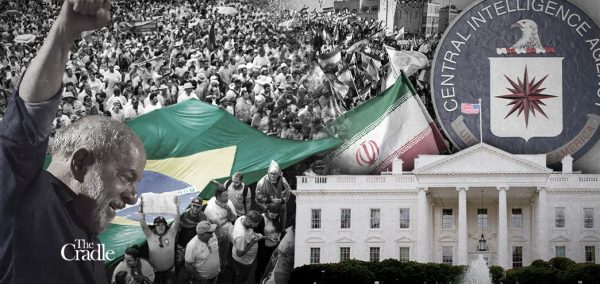
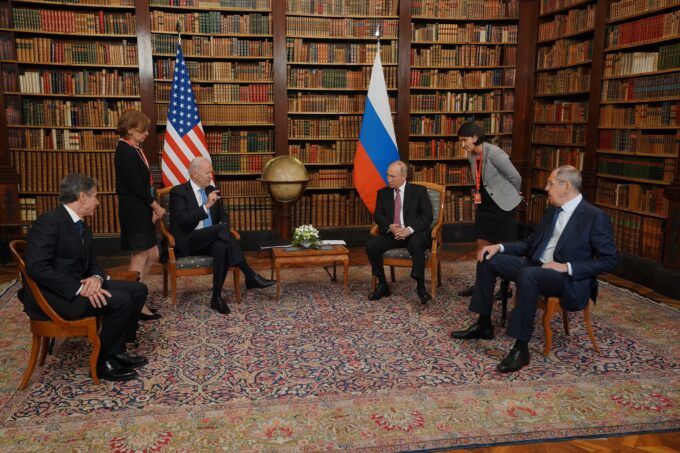

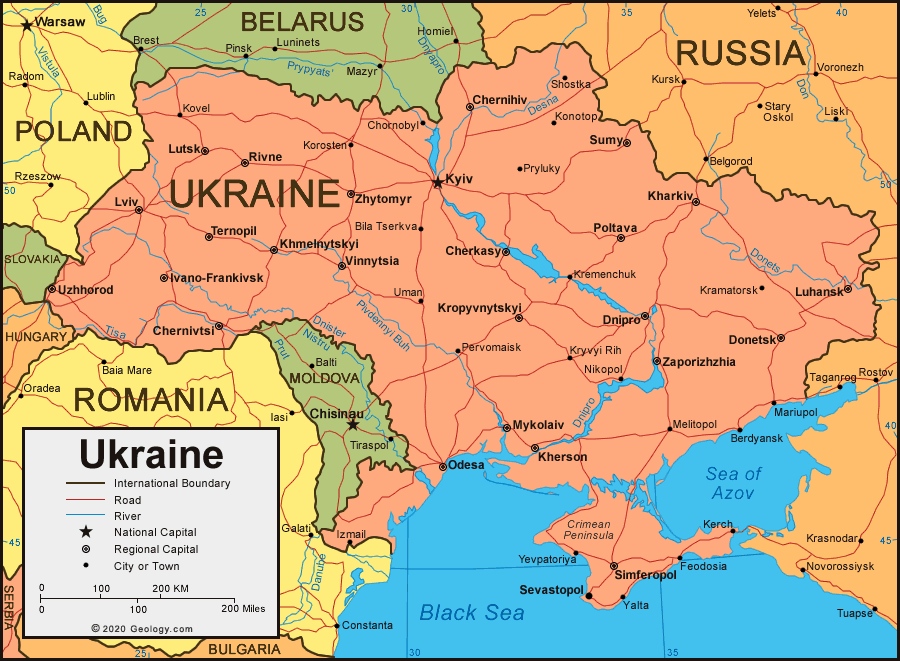



 After the Crash