The Largest Conspiracy Theory Peddlers Are MSM And The US State Department

By Caitlin Johnstone

Source: CaitlinJohnstone.com

The US State Department has issued a statement accusing the Syrian government of having carried out a false flag chemical weapons attack in northwestern Aleppo with the intent to blame it on the jihadist factions in the region, citing “credible info” that the public has not been permitted to see. Never mind the known fact that there are actual, literal Al Qaeda affiliates who have admitted to using chemical weapons in Aleppo, and who are known to have used chemical weapons throughout Syria even by the State Department’s own admission: the Official Narrative is that only the Syrian government uses chemical weapons, so the chemical weapons usage must necessarily be a false flag staged by Syrian president Bashar al-Assad.

Except they didn’t use the words “false flag”. Despite the accusation being the exact definition of the thing that a false flag attack is, you won’t see the US government using that term, nor will you ever see it used in this instance by any of the authorized mainstream narrative-framing institutions like CNN or Fox News. This is because the term “false flag” is reserved solely for mention when referring to crazy, kooky Kremlin propaganda, as in the insane, unhinged, tinfoil hat belief that terrorists in Syria might possibly have some kind of motive to stage a false flag chemical attack in order to get the US, UK and France to act as their air force in a retaliatory strike against the Syrian government. That kind of false flag would be completely inconceivable to any right-minded empire loyalist, and is forbidden to even think about.

At the same time we are seeing a push from the mass media to advance a narrative that the Yellow Vests protests in France are due to Russian influence, with Iraq-raping neocon Max Boot publishing a column today in the Washington Post that is based entirely around the talking point that two trending Russian topics on social media have been “giletsjaune” and “France,” and Bloomberg putting out an article blatantly titled “Pro-Russia Social Media Takes Aim at Macron as Yellow Vests Rage”. Their entire theory is that since there are people in Russia talking about a major event that everyone else in the world is also talking about, the protests against Macron’s unpopular centrist policies are therefore the result of a conspiracy seeded by Russia.

But you’ll never hear this theory about a Russian conspiracy referred to as a “conspiracy theory” by the mainstream press. The theory that Russian elites have conspired to infiltrate the highest levels of the US government has been given serious treatment at the top echelons of media and political influence, despite its lacking any discernible evidence whatsoever, but when they talk about these alleged conspiracies they always make a point of using the word “collusion” instead. There is no actual difference between the words collude and conspire when used in this way, but the former is used because a deliberate effort has been made to stigmatize the word “conspiracy” while the word “collude” remains effectively neutral in the public eye.

But the fact of the matter is that conspiracy theories have gone mainstream, and there is no legitimate reason to call the authorized, power-manufactured conspiracy theories by a different name than the grassroots narratives like those about 9/11 or the JFK assassination. Indeed, due to the nature of populist folk narratives there is a lot more publicly available evidence contradicting the official 9/11 and JFK assassination stories than there is for the establishment Russia conspiracy theories, because those narratives often boil down to nothing more than secretive intelligence agencies saying “This is true because we said so.” Since grassroots conspiracy theories are unable to rely on empty assertions from authority, they tend to be built upon information that is publicly available.

Some people get annoyed with me for using the term conspiracy theory at all, but I insist that the phrase is itself intrinsically neutral: a theory about a conspiracy. The problem is not the phrase, it is the stigma that has been attached to that phrase by establishment media and establishment politicians; shifting to a different phrase to describe theories about conspiracies would only ensure that that phrase becomes stigmatized in the exact same way by the same sort of campaign. This would only ensure the survival of the tactic of regurgitating a pre-stigmatized label in the war of ideas instead of advancing actual arguments. The fact of the matter is that powerful people do indeed conspire, those conspiracies do indeed need to be talked about, and the largest promulgators of conspiracy theories are not Infowars or RT, but mainstream media and the US State Department.

Those who dismiss an idea by calling it a “conspiracy theory” without providing further argumentation are simply admitting to you that they have no argument, and it is right to point this out when they do it, because something being a conspiracy theory doesn’t mean it’s not grounded in facts. Some conspiracy theories are good and are backed by solid evidence, some are stupid and are circulated for intellectually dishonest reasons. Once upon a time you would be called a conspiracy theorist for saying the west is arming terrorists in Syria or the DNC is conspiring to ensure the primary victory of Hillary Clinton; those things are now conspiracy facts, as history has vindicated the solid theories which predicted them. Other conspiracy theories are promulgated by dim-witted partisan loyalists for no other reason than dim-witted partisan loyalty, like the aforementioned Russiagate conspiracy theory, or the QAnon conspiracy theory which claims Donald Trump is leading a rebellion against the Deep State as cryptically reported by an anonymous user on 8chan.

Other conspiracy theories are subscribed to simply because they help people escape the cognitive dissonance of conflicting beliefs. For example, a strong believer in capitalism who sees the undeniable signs that a plutocratic class has control of their government, but who cannot accept that this plutocratic takeover was facilitated by a rampant capitalist system which ensures that the greediest sociopaths rise to the top, may avoid cognitive dissonance by explaining the existence of the corrupt dominator class with conspiracy theories about Jews or pedovore cults. A liberal who cannot accept that neoliberal empire loyalists like Macron have failed to “make centrism cool” as Max Boot predicted will avoid cognitive dissonance by explaining the failures of the Church of the Status Quo with conspiracy theories about Russian social media campaigns.

Conspiracy theories, in reality, are nothing more than people’s attempts to explain what is going on in their world. Why Trump got elected. Why things stay shitty despite our perfectly rational attempts to change them. Why voting doesn’t seem to make much difference in the actual behaviors of one’s government. Why we keep marching into stupid wars, Orwellian dystopia and climate collapse despite having every incentive not to. Why the wealthiest of the wealthy keep getting wealthier while everyone else gets poorer and poorer. Some attempts to explain these things will come from a well-informed and intellectually honest place, and some will come from a myopic and intellectually dishonest place. Their individual merits can only be assessed on a case-by-case basis.

And in my opinion the conspiracy theories coming from the world’s most powerful institutions are the most dishonest by far. I saw a recent post by the WikiLeaks Twitter account which referred to the corporate media as “the narrative business pretending to be in the news business,” which is in my opinion a perfect way to phrase it. The real currency of the world is not gold, nor is it bureaucratic fiat, nor even raw military force; it’s narrative control. The ability to control the stories people tell about what’s going on in their world means the ability to control how they think, how they vote, how they behave, and how they all agree money and power itself operates within our society. Since society is made of narrative, controlling the narrative is controlling that society.

Conspiracy theories are a way for those in power to manipulate the narrative without actually giving the public any hard facts and evidence, and the world’s most powerful institutions are increasingly relying on conspiracy theories because they don’t have facts and evidence on their side. And why would they? The same power establishment which deceived the world into destroying Iraq is obviously far too depraved to be able to justify its global hegemony with factual evidence. All they have is narrative control, and they’re starting to lose even that.

The Guardian’s Reputation In Tatters After Forger Revealed To Have Co-Authored Assange Smear

By Elizabeth Vos

Source: Disobedient Media

Regular followers of WikiLeaks-related news are at this point familiar with the multiple serious infractions of journalistic ethics by Luke Harding and the Guardian, especially (though not exclusively) when it comes to Julian Assange and WikiLeaks. However, another individual at the heart of this matter is far less familiar to the public. That man is Fernando Villavicencio, a prominent Ecuadorian political activist and journalist, director of the USAID-funded NGO Fundamedios and editor of online publication FocusEcuador.

Most readers are also aware of the Guardian’s recent publication of claims that Julian Assange met with former Trump campaign manager Paul Manafort on three occasions. This has now been definitively debunked by Fidel Narvaez, the former Consul at Ecuador’s London embassy between 2010 and 2018, who says Paul Manafort has never visited the embassy during the time he was in charge there. But this was hardly the first time the outlet published a dishonest smear authored by Luke Harding against Assange. The paper is also no stranger to publishing stories based on fabricated documents.

In May, Disobedient Media reported on the Guardian’s hatchet-job relating to ‘Operation Hotel,’ or rather, the normal security operations of the embassy under former Ecuadorian President Rafael Correa. That hit-piece, co-authored by Harding and Dan Collyns, asserted among other things that (according to an anonymous source) Assange hacked the embassy’s security system. The allegation was promptly refuted by Correa as “absurd” in an interview with The Intercept, and also by WikiLeaks as an “anonymous libel” with which the Guardian had “gone too far this time. We’re suing.”

A shared element of The Guardian’s ‘Operation Hotel’ fabrications and the latest libel attempting to link Julian Assange to Paul Manafort is none other than Fernando Villavicencio of FocusEcuador. In 2014 Villavicencio was caught passing a forged document to the Guardian, which published it without verifying it. When the forgery was revealed, the Guardian hurriedly took the document down but then tried to cover up that it had been tampered with by Villavicencio when it re-posted it a few days later.

How is Villavicencio tied to The Guardian’s latest smear of Assange? Intimately, it turns out.

Who is Fernando Villavicencio?

Earlier this year, an independent journalist writing under the pseudonym Jimmyslama penned a comprehensive report detailing Villavicencio’s relationships with pro-US actors within Ecuador and the US. She sums up her findings, which are worth reading in full:

“…The information in this post alone should make everyone question why in the world the Guardian would continue to use a source like Villavicencio who is obviously tied to the U.S. government, the CIA, individuals like Thor Halvorssen and Bill Browder, and opponents of both Julian Assange and former President Rafael Correa.”

As most readers recall, it was Correa who granted Assange asylum in the Ecuadorian Embassy in London. Villavicencio was so vehemently opposed to Rafael Correa’s socialist government that during the failed 2010 coup against Correa he falsely accused the President of “crimes against humanity” by ordering police to fire on the crowds (it was actually Correa who was being shot at). Correa sued him for libel, and won, but pardoned Villavicencio for the damages awarded by the court.

Assange legal analyst Hanna Jonasson recently made the link between the Ecuadorian forger Villavicencio and Luke Harding’s Guardian stories based on dubious documents explicit. She Tweeted2014 Ecuador’s Foreign Ministry accused the Guardian of publishing a story based on a document it says was fabricated by Fernando Villavicencio, pictured below with the authors of the fake Manafort-Assange ‘secret meeting’ story, Harding and Collyns.”

Jonasson included a link to a 2014 official Ecuadorian government statement  which reads in part: “There is also evidence that the author of this falsified document is Fernando Villavicencio, a convicted slanderer and opponent of Ecuador’s current government. This can be seen from the file properties of the document that the Guardian had originally posted (but which it has since taken down and replaced with a version with this evidence removed).”  The statement also notes that Villavicencio had fled the country after his conviction for libeling Correa during the 2010 coup and was at that time living as a fugitive in the United States.

It is incredibly significant, as Jonasson argues, that the authors of the Guardian’s latest libelous article were photographed with Villavicencio in Ecuador shortly before publication of the Guardian’s claim that Assange had conducted meetings with Manafort.

Jonasson’s Twitter thread also states: This video from the news wire Andes alleges that Villavicencio’s name appeared in the metadata of the document originally uploaded alongside The Guardian’s story.” The 2014 Guardian piece, which aimed a falsified shot at then-President Rafael Correa, would not be the last time Villavicencio’s name would appear on a controversial Guardian story before being scrubbed from existence.

Just days after the backlash against the Guardian reached fever-pitch, Villavicencio had the gall to publish another image of himself with Harding and Collyns, gloating : “One of my greatest journalistic experiences was working for months on Assange’s research with colleagues from the British newspaper the Guardian, Luke Harding, Dan Collins and the young journalist Cristina Solórzano from somos_lafuente” [Translated from Spanish]

https://twitter.com/VillaFernando_/status/1069079592927928320

The tweet suggests, but does not specifically state, that Villavicencio worked with the disastrous duo on the Assange-Manafort piece. Given the history and associations of all involved, this statement alone should cause extreme skepticism in any unsubstantiated claims, or ‘anonymously sourced’ claims, the Guardian makes concerning Julian Assange and Ecuador.

Astoundingly, and counter to Villavicencio’s uncharacteristic coyness, a recent video posted by WikiLeaks via Twitter does show that Villavicencio was originally listed as a co-author of the Guardian’s Manafort-Assange allegations, before his name was edited out of the online article. The original version can be viewed, however, thanks to archive services.

The two photographs of Villavicencio with Harding and Collyns as well as the evidence showing he co-authored the piece doesn’t just capture a trio of terrible journalists, it documents the involvement of multiple actors associated with intelligence agencies and fabricated stories.

All of this provoke the question: did Villavicencio provide more bogus documents to Harding and Collyns – Harding said he’d seen a document, though he didn’t publish one (or even quote from it) so readers might judge its veracity for themselves – or perhaps these three invented the accusations out of whole-cloth?

Either way, to quote WikiLeaks, the Guardian has “gone too far this time” and its already-tattered reputation is in total shambles.

Successful Propaganda, Failed Journalism

Craig Murray calls Harding an “MI6 tool“, but to this writer, Harding seems worse than an MI6 stooge: He’s a wannabe-spook, hanging from the coat-tails of anonymous intelligence officers and publishing their drivel as fact without so much as a skeptical blink. His lack of self-awareness and conflation of anecdote with evidence sets him apart as either one of the most blatant, fumbling propagandists of our era, or the most hapless hack journalist to stain the pages of printed news.

To provide important context on Harding’s previous journalistic irresponsibility, we again recall that he co-authored the infamous book containing the encryption password of the entire Cablegate archive, leading to a leak of the unredacted State Department Cables across the internet. Although the guilty Guardian journalists tried to blame Assange for the debacle, it was they themselves who ended up on the receiving end of some well-deserved scorn.

In addition to continuing the Guardian’s and Villavicencio’s vendetta against Assange and WikiLeaks, it is clearly in Harding’s financial interests to conflate the pending prosecution of Assange with Russiagate. As this writer previously noted, Harding penned a book on the subject, titled: “Collusion: Secret Meetings, Dirty Money, and How Russia Helped Donald Trump Win.” Tying Assange to Russiagate is good for business, as it stokes public interest in the self-evidently faulty narrative his book supports.

Even more concerning is the claim amongst publishing circles, fueled by recent events, that Harding may be writing another book on Assange, with publication presumably timed for his pending arrest and extradition and designed to cash in on the trial. If that is in fact the case, the specter arises that Harding is working to push for Assange’s arrest, not just on behalf of US, UK or Ecuadorian intelligence interests, but also to increase his own book sales.

That Harding and Collyns worked intensively with Villavicencio for “months” on the “Assange story,” the fact that Villavicencio was initially listed as a co-author on the original version of the Guardian’s article, and the recent denial by Fidel Narvaez, raises the likelihood that Harding and the Guardian were not simply the victims of bad sources who duped them, as claimed by some.

It indicates that the fake story was constructed deliberately on behalf of the very same intelligence establishment that the Guardian is nowadays only too happy to take the knee for.

In summary, one of the most visible establishment media outlets published a fake story on its front page, in an attempt to manufacture a crucial cross-over between the pending prosecution of Assange and the Russiagate saga. This represents the latest example in an onslaught of fake news directed at Julian Assange and WikiLeaks ever since they published the largest CIA leak in history in the form of Vault 7, an onslaught which appears to be building in both intensity and absurdity as time goes on.

The Guardian has destroyed its reputation, and in the process, revealed the desperation of the establishment when it comes to Assange.

GHW Bush: Honoring a War Criminal

By Stephen Lendman

Source: StephenLendman.org

America honors its worst. Throughout his career as a House member, UN envoy, GOP National Committee chairman, ambassador to China, CIA director, vice president and president, GHW Bush was an unapologetic imperial spear carrier.

He supported all US wars of aggression and launched his own – against nations threatening no one. His actions showed profound indifference to rule of law principles and human suffering.

Countless millions were grievously harmed by an agenda he backed and led as president. Major media shamefully praised what demands condemnation and accountability, even posthumously.

Praising “his leadership and choices on the global stage,” the NYT claimed “historians will almost certainly treat him more kindly than the voters did in 1992” – establishment ones only, not honorable truth-tellers.

A Jeb Bush/James Baker op-ed shamefully said they “never met a man as remarkable as George HW Bush” – a profound perversion of truth.

Wall Street Journal editors praised his war on Iraq, ignoring his naked aggression and genocidal sanctions, the latter responsible for the deaths of around 5,000 Iraqi children under age-five monthly while in force.

He was involved in Washington’s Contra war in Nicaragua. It followed the Sandinista National Liberation Front’s (FSLN) overthrow of US-supported tyrannical Anastasio Somoza’s fascist regime.

As president, he ordered the invasion of Panama on December 20, 1989, aiming to prove his toughness against a defenseless nation no match against America’s military might.

Manuel Noriega was Washington’s man in Panama from December 1983 until yearend 1989, a valued CIA asset until forgetting who’s boss.

No longer being convenient stooge enough for his imperial master led to his downfall.

Bush’s machismo and imperial arrogance bore full responsibility for thousands of Panamanian civilian deaths and injuries, many more thousands displaced.

Residential neighborhoods were destroyed in poorest parts of the country, including by incendiary devices used to torch structures.

Tanks crushed victims. Panamanian defense force members, civilians, journalists, and others were executed in cold blood.

Bush proved his cajones by mass slaughter and destruction. In the aftermath, he shamefully said it was “worth it” – smashing nations a US specialty before and after the rape of Panama.

William Blum earlier called (fantasy) “democracy” America’s deadliest export. Its agenda makes the world safe for Wall Street and other corporate favorites at the expense of ordinary people everywhere.

Commenting on carnage in Panama, Blum said “(t)he invasion and ensuing occupation produced gruesome scenes: People burning to death in the incinerated dwellings, leaping from windows, running in panic through the streets, cut down in cross fire, crushed by tanks, human fragments everywhere.”

Accountability never follows the highest of US high crimes, victims blamed for US wrongdoing every time.

Most Americans know nothing about the so-called 1989 Christmas invasion, why it was launched, the devastation caused, or human toll.

Raping Panama, deposing and arresting Noriega, along with Bush’s Gulf War walkover of Iraq let him crow that “we’ve kicked the Vietnam syndrome once and for all.”

Horrendous Nuremberg-level crimes don’t matter. Noriega fell out of favor for not cooperating with Washington’s contra war on Nicaragua.

Media hysteria vilified him, citing things that didn’t matter when he was Washington’s man in Panama.

When no longer wanted, his fate was sealed, how Washington treats other foreign leaders no longer useful, notably Saddam Hussein.

The January 1991 Gulf War followed imposition of sanctions in August 1990. Enforced for over a dozen years, they were genocidal. A Kuwait-funded PR campaign whipped up public support for naked aggression – ending on February 28.

US forces committed high crimes of war and against humanity, including mass slaughter and destruction of essential to life facilities.

Terror-bombing blasted power plants, dams, water purification facilities, sewage treatment and disposal systems, telephone and other communications, hospitals, schools, residential areas, mosques, irrigation sites, food processing, storage and distribution facilities, hotels and retail establishments.

Transportation infrastructure, oil wells, pipelines, refineries and storage tanks, chemical plants, factories and other commercial operation, civilian shelters, government buildings, and historical sites were also destroyed.

The Panama and Gulf War were two of history’s great crimes. In Iraq, virtually everything needed for normal life was destroyed or heavily damaged.

Genocidal sanctions killed up to two millions Iraqis, two-thirds of them children under age-five. Bush II’s 2003 “shock and awe” blitzkrieg through 2007 took up to 2.0 million more lives, mostly young children.

Two imperial wars of aggression and genocidal sanctions destroyed the cradle of civilization. War and related violence in Iraq continues to this day, the nation occupied as a US colony.

Bush I’s new world order agenda, continued by his successors, including Bush II, features endless wars of aggression, state terror on a global scale, along with growing homeland tyranny, heading toward becoming full-blown.

A special place in hell awaits GHW Bush, Bush II when he passes, and all other US war criminals.

They include everyone supporting Washington’s imperial agenda, including congressional  members authorizing funds without which wars can’t be waged.

An earlier article said the Bush I, II, and entire family dynasty speaks for itself – a crime family for over a century.


Related Articles:

The Amazing GWHB Hagiography

If There’s A Hell Below, That’s Where He’ll Go: The BAR Obituary on George H.W. Bush


The Troika of Tyranny: The Imperialist Project in Latin America and Its Epigones

By Roger Harris

Source: CounterPunch

Cuba, Nicaragua, and Venezuela are today threatened by US imperialism. The first salvo of the modern Age of Imperialism started back in 1898 when the US seized Cuba along with Puerto Rico and the Philippines in the Spanish-American War.

The Age of Imperialism, as Lenin observed, is characterized by the competition of the various imperial powers for dominance. That inter-imperialist rivalry led to World War I. Lenin called those putative socialists who supported their own national imperialist projects “social imperialists.” Social imperialism is a tendency that is socialist in name and imperialist in deed. Imperialism and its social imperialist minions are still with us today.

US Emerges as the World’s Hegemon

The United States emerged after World War II as the leading imperialist power. With the implosion of the Socialist Bloc around 1991, US hegemony became even more consolidated. Today the US is the undisputed world’s hegemon.

Hegemony means to rule but even more so to dominate. As the world’s hegemon, the US will not tolerate neutral parties, let alone hostile ones. As articulated in the Bush Doctrine, the US will try to asphyxiate any nascent counter-hegemonic project, no matter how insignificant.

In the Caribbean, for instance, the US snuffed out the leftist government of Grenada in 1983 in what was code named Operation Urgent Fury. Grenada has a population smaller than Vacaville, California.

The only powers that the world’s hegemon will tolerate are junior partners such as Colombia in Latin America. The junior partner must accept a neoliberal economic regime designed to serve the interests of capital. Structural adjustment of the economy is demanded such that the neoliberal “reforms” become irreversible; so that you can’t put the toothpaste back in the tube.

Colombia recently joined NATO, putting that junior partner’s military under direct interaction with the Pentagon bypassing its civilian government. The US has seven military bases in Colombia in order to project – in the words of the US government – “full spectrum” military dominance in the Latin American theatre.

Needless-to-say, no Colombian military bases are in the US. Nor does any other country have military bases on US soil. The world’s hegemon has some 1000 foreign military bases. Even the most sycophantic of the US’s junior partners, Great Britain, is militarily occupied by 10,000 US troops.

The US is clear on its enemies list. On November 1, US National Security Advisor John Bolton, speaking in Miami, labelled Venezuela, Nicaragua, and Cuba the “troika of tyranny.” He described a “triangle of terror stretching from Havana to Caracas to Managua.”

Venezuela, Nicaragua, and Cuba are targeted by US imperialism because they pose what might be called the “threat of a good example;” that is, an alternative to the neoliberal world order.

These countries are suffering attacks from the imperialists because of the things they have done right, not for their flaws. They are attempting to make a more inclusive society for women, people of color, and the poor; to have a state that, instead of serving the rich and powerful, has a special option for working people, because these are the people most in need of social assistance.

Sanctions: The Economic War against Venezuela, Nicaragua, and Cuba

The US imperialist rhetoric is backed with action. In 2015, US President Obama declared Venezuela an “extraordinary threat to US security” and imposed sanctions. These sanctions have been extended and deepened by the Trump administration. The US has likewise subjected Cuba to sanctions in a seamless bipartisan policy of both Republicans and Democrats for over half a century. Now the US is the process of imposing sanctions on Nicaragua.

Unilateral sanctions, such as those imposed by the US, are illegal under the charters of both the UN and the Organization of American States, because they are a form of collective punishment targeting the people.

The US sanctions are designed to make life so miserable for the masses of people that they will reject their democratically elected government. Yet in Venezuela, those most adversely affected by the sanctions are the most militantly in support of their President Nicolás Maduro.

Consequently, the Trump administration is also floating the option of military intervention against Venezuela. The recently elected rightwing leaders Bolsonaro in Brazil and Duque in Colombia, representing the two powerful states on the western and southern borders of Venezuela, are colluding with the hegemon of the north.

The inside-the-beltway human rights organizations, such as Human Rights Watch, fail to condemn these illegal and immoral sanctions. They lament the human suffering caused by the sanctions, all the while supporting the imposition of the sanctions. Nor do they raise their voices against military intervention, perhaps the gravest of all crimes against humanity.

Liberal establishments such as the advocacy group Washington Office on Latin America (WOLA) try to distinguish themselves from hardline imperialists by opposing a military invasion in Venezuela while calling for yet more effective and punishing sanctions. In effect, they play the role of the good cop, providing a liberal cover for interference in the internal affairs of Latin American nations.

These billionaire-funded NGOs have a revolving-door staffing arrangement with the US government. So it is not surprising that they will reflect Washington’s foreign policies initiatives.

But why do some organizations claiming to be leftist so unerringly echo the imperialists, taking such umbrage over Venezuela, Cuba, and Nicaragua while ignoring far greater problems in, say, Mexico, Colombia, and Honduras, which are US client states?

Most Progressive Country in Central America Targeted

Let’s take Nicaragua. A year ago, the polling organization Latinobarómetro, found the approval rating of Nicaraguans for their democracy to be the highest in Central America and second highest in Latin America.

Daniel Ortega had won the Nicaraguan presidency in 2006 with a 38% plurality, in 2011 with 63%, and 72.5% in 2016. The Organization of American States officially observed and certified the vote. Polls indicated Ortega was perhaps the most popular head of state in the entire western hemisphere. As longtime Nicaraguan solidarity activist Chuck Kaufman noted, “Dictators don’t win fair elections by growing margins.”

Nicaragua is a member of theanti-imperialist Bolivarian Alliance for the Peoples of Our America with Cuba, Venezuela, Bolivia, and some Caribbean states. Speaking at the UN, the Nicaraguan foreign minister had the temerity to catalogue the many transgressions of what Martin Luther King called “the greatest purveyor of violence in the world” and express Nicaragua’s opposition.

These are reasons enough for a progressive alternative such as Nicaragua to curry the enmity of the US. The enigma is why those claiming to be leftists would target a country that had:

+ Second highest economic growth rates and the most stable economy in Central America.

+ Only country in the region producing 90% of the food it consumes.

+ Poverty and extreme poverty halved; country with the greatest reduction of extreme poverty.

+ Reached the UN Millennium Development Goal of cutting malnutrition by half.

+ Nicaraguans enjoyed free basic healthcare and education.

+ Illiteracy had been virtually eliminated, down from 36% in 2006 when Ortega took office.

+ Average economic growth of 5.2% for the past 5 years (IMF and the World Bank).

+ Safest country in Central America (UN Development Program) with one of the lowest crime rates in Latin America.

+ Highest level of gender equality in the Americas (World Economic Forum Global Gender Gap Report 2017).

+ Did not contribute to the migrant exodus to the US, unlike neighboring Honduras, El Salvador, and Guatemala.

+ Unlike its neighbors, kept out the drug cartels and pioneered community policing.

In April of this year, all of this was threatened. The US had poured millions of dollars into “democracy promotion” programs, a euphemism for regime change operations. Suddenly and unexpectedly, a cabal of the reactionary Catholic Church hierarchy, conservative business associations, remnants of the US-sponsored Contras, and students from private universities attempted a coup.

Former members of Ortega’s Sandinista Party, who had long ago splintered off into political oblivion and drifted to the right, became effective propogandists for the opposition. Through inciting violence and the skillful use of disinformation in a concerted social media barrage, they attempted to achieve by extra-legal means what they could not achieve democratically.

Imperialism with a Happy Face

We who live in the “belly of the beast” are constantly bombarded by the corporate media, framing the issues (e.g., “humanitarian bombing). Some leftish groups and individuals pick up these signals, amplify, and rebroadcast them. While they may genuinely believe what they are promulgating, there are also rewards such as funding,media coverage, hobnobbing with prominent US politicians, and winning awards for abhorring the excesses of imperialism while accepting its premises.

Today’s organizations that are socialist in name and imperialist in deed echo the imperial demand that the state leaders of the progressive movements in Latin America “must go” and legitimize the rationale that such leaders must be “dictators.”

They try to differentiate their position from the imperialists by proffering a mythic movement, which will create a triumphant socialist alternative that fits their particular sect’s line: chavismo without Maduro in Venezuela, sandinismo without Ortega in Nicaragua, and the Cuban Revolution without the Cuban Communist Party in Cuba.

The political reality in Latin America is that a rightwing offensive is attacking standing left-leaning governments. President George W. Bush was right: “Either you are with us, or you are with the terrorists.” There is no utopian third way. Each of us has to determine who are the real terrorists, as the juggernaut of US imperialism rolls out a neoliberal world order.

Chaos: The New Imperialist Game Plan

For now, the coup in Nicaragua has been averted. Had it succeeded, chaos would have reigned. As even the most ardent apologists for the opposition admit, the only organized force in the opposition was the US-sponsored rightwing which would have instigated a reign of terror against the Sandinista base.

The US would prefer to install stable rightwing client states or even military dictatorships. But if neither can be achieved, chaos is the preferred alternative. Libya, where rival warlords contest for power and slaves are openly bartered on the street, is the model coming to Latin America.

Chaos is the new imperialist game plan, especially for Bolton’s so-called troika of tyranny. The imperialists understand that the progressive social movements in Venezuela, Nicaragua, and Cuba are too popular and entrenched to be eradicated by a mere change of personnel in the presidential palace. Much more drastic means are envisioned; means that would make the bloody aftermath of the US-backed Pinochet coup in 1973 in Chile pale by comparison.

In Venezuela, for example, the opposition might well have won the May 2018 presidential election given the dire economic situation caused in large part by the US sanctions. The opposition split between a moderate wing that was willing to engage in electoral struggle and a hard-right wing that advocated a violent takeover and jailing the chavistas.

When Venezuelan President Maduro rejected the US demand to call off the elections and resign, he was labelled a dictator by Washington. And when moderate Henri Falcon ran in the Venezuelan presidential race on a platform of a complete neoliberal transition, Washington, instead of rejoicing, threatened sanctions against him for running. The US belligerently floated a military option for Venezuela, stiffened the suffocating sanctions, and tipped the balance within the Venezuelan opposition to the radical right.

The US is not about to allow Venezuela a soft landing. Their intent is to exterminate the contagion of progressive social programs and international policy that has been the legacy of nearly two decades chavismo. Likewise, for Cuba and Nicaragua. We should also add Bolivia in the crosshairs of the empire.

We’ve seen what Pax Americana has meant for the Middle East. The same imperial playbook is being implemented in Latin America. Solidarity with the progressive social movements and their governments in Latin America is needed, especially when their defeat would mean chaos.

The Forgotten Legacy of George H.W. Bush That the Media Won’t Tell You About

By John Liberty

Source: The Mind Unleashed

On Friday November 30th, former President George H.W. Bush passed away at the age of ninety four, according to a statement released by his friends and family.

While the establishment celebrates the life of the former president and Americans line up to mourn their fallen leader, the facts that are being reported in the mainstream media are far different than the legacy he is leaving behind.

The Early Years

George Herbert Walker Bush was born on June 12, 1924 in Massachusetts to Prescott Sheldon Bush and Dorothy (Walker) Bush. Shortly after his birth, the family moved to Connecticut where he began his formal education at Greenwich Country Day School. At the age of eighteen, Bush joined the U.S. Navy.

During his tenure in the Navy, Bush was stationed with Torpedo Squadron 51 aboard the USS San Jacinto. On August 1, 1944 his unit launched an operation against the Japanese in the Bonin Islands. On September 2, 1944, Bush’s aircraft was downed leading to the death of eight Navy airmen, leaving Bush as the lone survivor. The episode later became known as the Chichijima incident and led to the future president being hailed as a war hero.

Political Career

Upon graduating from Yale, Bush began his career in politics and was elected chairman of the Harris County, Texas Republican Party in 1963. Three years later, Bush was elected to the US House of Representatives, marking the beginning of a meteoric rise which resulted in him being named director of the Central Intelligence Agency in 1976.

While Bush served less than a year as the head of the CIA, he was caught destroying evidence of US war crimes. As reported by MuckRock,

“Declassified records recently unearthed in CREST show the CIA waffled on a promise to obey the law in destroying records of Agency’s illegal activities and wrongdoing.”

Four years after serving as the director of the CIA, George H.W. Bush was elected as the 43rd Vice President of the United States. Serving under former President Ronald Reagan, Bush kept a low profile and avoided making any key policy decisions or criticisms of the Reagan administration, but attended a large number of ceremonies and public events.

In 1988, Bush was elected president defeating Michael Dukakis of Massachusetts. Within his first year in office, Bush’s approval ratings began to slip due to his inability to deal with Panamanian leader Manuel Noriega. Bush responded by deciding to invade Panama, and on December 20,1989 he deployed 25,000 troops to the tiny nation. Bush justified the invasion— code named operation just cause— on the grounds of national security. The president mislead the country by claiming Noriega had threatened the US, a claim which turned out to be untrue. After two weeks the conflict ended, resulting in the deaths of twenty American soldiers and as many as 2,000 Panamanians.

Less than a year after the invasion of Panama, Bush once again found himself responding to another foreign policy debacle. On August 2, 1990 Iraqi leader Saddam Hussein began an invasion of nearby Kuwait. In response, President Bush and the American media used the testimony of a 15-year-old Kuwaiti girl, known only by her first name of Nayirah to justify US intervention in Kuwait. However, Nayirah was later discovered to be the daughter of a U.S. ambassador, who was being coaxed by military psychological operations specialists.

In 1991, Bush gave his infamous ‘New World Order’ speech, which many people believe signaled the beginning of the PNAC plan also known as the Project For a New American Century.

Life After Politics

After leaving office in 1993, George H.W. Bush retired with his wife Barbara and built a home in a community near Houston, Texas.  Though retired, the former president would still face controversy. Last year, during the height of the #MeToo movement, at least five women women claimed they were abused by the former president. In an interview with Time Magazine, a woman named Roslyn Corrigan claimed Bush sexually assaulted her in 2003 when she was only 16-years-old. At least five more women have accused Bush of sexual assault, including an unnamed Michigan woman who came forward claiming the former president groped her in 1992 at a campaign event. Actress Heather Lind also stated, in a now deleted Instagram post, that Bush groped her during a photo-op in 2014.

Perhaps, instead of blindly praising a documented criminal, Americans should consider asking themselves what other crimes the US government and the media are covering up for the former president.

Written in History: The Death of America’s Hyper-Power Fantasy

By Martin Sieff

Source: Strategic Culture Foundation

In 1987, Paul Kennedy, a British professor of history at Yale University, unleashed a political and intellectual firestorm with the publication of his great (677-page) book, “The Rise and Fall of the Great Powers.” Kennedy produced a magisterial overview of the competition for global power over the past 500 years from 1500 AD to the present.

Kennedy proposed the thesis that any power that achieved, imagined it had achieved or sought to achieve and maintain a dominant hyper-power role of global dominance was doomed to lose it and then rapidly decline in overall power, wealth, prosperity and influence.

Kennedy argued – with a wealth of detail drawn from different nations over his vast period of half a millennium – that the very attempt to achieve and maintain such power forced every nation that attempted it into a ruinous pattern of strategic overstretch.

This demanded every major global empire in their turn to devote ruinously far too many economic resources to unproductive military power and ever more costly global commitments and conflicts.

The more ambitious the commitments, the quicker came military defeat, economic ruin and national collapse, Kennedy documented.

Kennedy published his book however at exactly the wrong moment for its abundantly documented conclusions and arguments to be taken seriously in the United States. The Cold War was just ending. The heroic actions of the Russian people in rejecting communism and leading in the dismantling of the Soviet Union were being misinterpreted as an eternal and lasting victory for the United States and for the forces of free market capitalism and minimum government regulation.

Kennedy was therefore subjected to a furious firestorm of abuse, especially from the emerging neoconservatives who under President George W Bush succeeded in imposing their reckless policies on nations across the Middle East and Eurasia. Kennedy, unlike his enraged critics was a gracious and tolerant gentleman as well as great scholar and took the firestorm in his stride.

Now more than 30 years after Kennedy published his great work, we can see how prescient, wise and visionary it truly was.

In 2016 President Donald Trump was elected on a platform of dealing with domestic crises raging from economic ruin and impoverishment to an out of control drug and opioid abuse epidemic and the collapse of law and order across the long US land border with Mexico.

That outcome provided telling testimony to the previous US policies of wasting at least $2 trillion on entirely unsuccessful nation-building and government-toppling projects ranging from Iraq to Afghanistan and since extended into such nations as Ukraine, Syria, and Libya

All the national pathologies of bankruptcy, exhaustion, decline and ever spreading human misery that Kennedy in his book traced in previous empires can now be clearly delineated in the policies of the post-Cold War United States.

The bottom line lesson to be drawn from Kennedy’s great book that so outraged neoconservatives at the time was a simple and stunning clear one: Unipolar Moments are just that and nothing more. They last for moments not ages.

Instead, the very attempt to maintain a unipolar moment of apparent global supremacy by any power automatically instead will raise up a host of challenges to that power that will rapidly exhaust and then doom it.

Kennedy traced this process of inexorable over – commitment and decline in 17th century Habsburg Spain. He followed it again in 18th century Bourbon France. He documented it once more in the rise, pride and inevitable fall of the British Empire and in the rash German attempts to create dominant global empires in both world wars of the 20th century.

A generation before Kennedy published his great work, British historian Correlli Barnett, focusing only on the British Empire, published in 1972 his own classic “The Collapse of British Power.” Barnett focused on a one, single unipolar moment – the 1920s and 1930s when the British ruling class, like their American successors today imagined that they were the divinely-appointed global policeman charged by Providence with maintaining their own conceptions of right and wrong over the whole world.

The British at least were reluctantly forced to cede independence to their vast global territories. It is doubtful whether the American people will be so lucky: The US Deep State establishment and their tame, unthinking media puppets remain blindly committed to inflexible expansion, conflict and strategic gambling with the peace and even survival of the world.

Thirty years after his magnum opus was published, Paul Kennedy’s message of warning remains unheeded. America’s Unipolar Moment is long since dead and gone. America’s pretensions to rule supreme as the world’s unchallenged hyper-power have become a dangerous and unsustainable fantasy.

A wakening to sanity is long overdue and the hour is late: National catastrophe can be the only other outcome.

The War to End War 100 Years On: An Evaluation and Reorientation of our Resistance to War


By Robert J. Burrowes

British author and social commentator H.G. Wells may have coined the expression that originally popularized World War I as The War that Will End War, as his book, based on articles written during that vast military conflict, was titled. In any case, in one version or another, the expression was one of the most common catchphrases of the Great War of 1914-1918 and has survived as an expression, often used with a grimace of sarcasm, ever since.

As we commemorate the passing of the 100th anniversary of the armistice ending ‘the war to end war’, one can only marvel at how wrong humans can be sometimes. Not content with the violence inflicted during World War I, humans used the twentieth century to systematically decimate human and other life as violence and war raged across the planet with an increasingly massive and sophisticated armory. In fact, by mid-century, in a tribute to their technological ingenuity and psychological dysfunctionality, humans had invented a weapon that could destroy life on Earth.

And by the beginning of the 21st century, humans were living in the era of perpetual war against life – see ‘Humanity has wiped out 60% of animal populations since 1970, report finds’ and Living Planet Report 2018: Aiming Higher’ – with war also the largest contributor to the climate catastrophe: ‘Not only is the Pentagon the single largest industrial consumer of fossil fuels, but fighter jets, destroyers, tanks and other weapons systems emit highly toxic, carbon-intensive emissions, not to mention the greenhouse gases that are released from the detonation of bombs. How quickly the world forgot the toxic legacy of Saddam Hussein’s oil fires!’ See War and Climate Change: Time to Connect the Dots’.

So advanced is our war against life that human extinction is now imminent. See ‘Human Extinction by 2026? A Last Ditch Strategy to Fight for Human Survival’.


Resisting war historically

Of course, the failure to end war has not been the outcome of lack of effort. And while there have been many efforts focused on ending a particular war, efforts directed at ending a particular aspect of war (such as the use of a type of weapon), and efforts aimed at preventing a type of war (such as ‘aggressive war’ or nuclear war), there have also been ongoing efforts to achieve ‘the holy grail’: to end war itself.

These attempts have included ongoing grassroots mobilization by anti-war organizations spawned by World War I (such as the Women’s International League for Peace and Freedom founded in 1915 and War Resisters’ International founded in 1921) and many equivalents since that time, official attempts to outlaw war such as the Kellogg-Briand Pact that outlawed war in 1928 but has been ignored ever since – see League of Nations ‘Treaty Series’ vol. XCIV, 1929, p. 63 – and institutional efforts to prevent it, particularly by establishment of the League of Nations in 1920 and its successor the United Nations in 1945, both also readily ignored or manipulated.

Separately from the above, however, there has been a long history of nonviolent activism to end wars and this has been conducted by individuals and groups all over the world. Undoubtedly the most effective anti-war movement in history was that undertaken in response to the US war against Vietnam, Cambodia and Laos. Inspired and supported by the nonviolent resistance of the civilian population, and building on the long history of resistance to war within the military – see, for example, The Soldiers’ Strikes of 1919 – there was widespread nonviolent resistance undertaken by US troops and conscripts to end the US war against Vietnam, Cambodia and Laos from 1968 until it ended in 1975.

If you like, you can read detailed descriptions of the systematic and ongoing resistance (nonviolent and otherwise) within the US military, in many forms, which progressively incapacitated the US Army, Marine Corps, Navy and Air Force during the last years of the war, forcing the US out of Vietnam, Cambodia and Laos. See Soldiers in Revolt: GI Resistance During the Vietnam War and Self-Destruction: The Disintegration and Decay of the United States Army during the Vietnam Era with a summary of the first book in ‘Antiwar Resistance Within the Military During the Vietnam War’ and a review of it in ‘The soldiers’ revolt in Vietnam: Rebellion in the ranks’.

For a documentary account of the conscientious objection by more than half a million US conscripts to military service in South East Asia during this period, which overwhelmed the legal system making prosecutions beyond a token few impossible and, combined with soldier resistance and civilian efforts, forced Presidents Johnson and Nixon to curtail plans to escalate the war and make plans to end it, see the forthcoming film The Boys Who Said NO!


Reanalysing the Cause of War to Reorient our Resistance

So, if we are to use this 100th anniversary to renew our struggle to end war and to work effectively to achieve that purpose, then clearly we need to reassess our analysis of the cause(s) of war so that we understand the problem more precisely, and then use this revised analysis to guide the development and implementation of a strategy that addresses the cause(s). Of course, I am not suggesting that ending war will be easy, even with a sound analysis and a comprehensive strategy. But at least it will be feasible.

Before proceeding, I would like to record my own passion for this subject. I lost two great uncles to World War I: Tom Farrell was killed in action at Gallipoli and Les Burrowes was a victim of ‘shell shock’ – later labeled post-traumatic stress disorder – after being wounded in action three times at Gallipoli and then dying prematurely some years after the war.

My father served in World War II as a coastwatcher and both of his brothers, including his twin, were killed. I am named after my father’s older brother. Bob died when the Japanese POW ship Montevideo Maru was torpedoed by the USS Sturgeon on 1 July 1942. 1,053 Australian POWs died that night. And my father’s twin, Tom, died when his Beaufort Bomber was shot down on 14 December 1943 killing the entire crew.

So my childhood is dotted with memories of occasional commemorations of war which, for me, always ended with the same question: Why? But not just ‘why war?’ Given other manifestations of violence I observed around the world during my childhood, including exploitation of peoples in Africa, Asia and Central/South America as well as destruction of the environment, the deeper question was always my focus: ‘Why violence?’

Well, despite considerable research over three decades, I was never content with any version of the answer to this question that I found. Consequently, 14 years in seclusion with Anita McKone ‘taking our own minds apart’ finally gave me the answer I wanted. In ugly detail. If you would like to read this answer, which explains the unrelenting ‘visible’, ‘invisible’ and ‘utterly invisible’ violence that adults inflict on children and the enormous lifetime damage (including the legacy of unconscious fear, self hatred and powerlessness) that this causes, you can do so in Why Violence?’ with our process described in Fearless Psychology and Fearful Psychology: Principles and Practice.

Needless to say, understanding a problem makes developing a strategy to address it far easier (which does not mean that the problem is easy to resolve). However, it is also the case that violence has many manifestations – notably including war, violence against huge sectors of the human population in various contexts (ranging from violence against women and indigenous peoples to military occupations and dictatorships), economic exploitation and destruction of the biosphere – and tackling each of these effectively requires its own sophisticated nonviolent strategy.

This is partly because certain manifestations of violence are structural – see ‘Violence, Peace, and Peace Research’ – or cultural – see ‘Cultural Violence’ – as Professor Johan Galtung describes these terms, and they originated long ago and have been recreated and ‘built-in’ over successive centuries.

However, it is important to understand that the nature of any given structure or cultural symbol/process reflects the psychology of those who create and/or maintain it. That is, it is dysfunctionalized human beings who create and maintain dysfunctional (that is, violent and/or exploitative) structures and cultures.

So, for example, while the origin of capitalism can be explained in terms of the development of economic structures and processes that took place over preceding centuries (in a particular socio-political-legal setting), fundamentally the exploitative nature of capitalism is a direct outcome of the badly damaged psychology of those men who progressively created it and now those men (and some women) who maintain it, expand it and primarily benefit from the manner in which it exploits most others.

And if those men and women were not psychologically damaged by the violence they suffered during childhood, then they would devote their efforts to creating egalitarian economic structures and processes that benefited everyone equally and nurtured the biosphere. In short, a human being who is psychologically whole regards the idea of killing or exploiting a fellow human being as deplorable. This is not a moral stance. It is a psychological outcome for the child who is parented lovingly: such parenting produces compassionate identification with others (and, in fact, everything that lives and the biosphere as a whole).

The same reasoning applies to the institution of war particularly as it has evolved and is now conducted by western nations, led by the US, and their allies such as Israel. War is a method of conducting conflict. It has a great many components including elites who promote war-for-profit by using various channels such as ‘think tanks’, the corporate media, government propaganda and education systems to call for and ‘justify’ it, political processes to order it, legal processes to defend it (including against those who take nonviolent action against it), military command, control and communication structures to plan and implement it, corporations employing a labor force to manufacture weapons and other hardware to be used in it, military personnel to deploy and fire the weapons, and citizens willing to pay taxes (or too scared to resist doing so) to finance it.

But at every level of the institution of war, and despite vast advances in peace, conflict and nonviolence theory and practice during the past 60 years, it requires individuals who were terrorized during their childhood into believing that killing fellow human beings is an appropriate way to deal with conflict (or, a variation, that killing human beings is a reasonable way to earn a wage or make a profit). And because they are so psychologically damaged and now deeply embedded within the institution of war, consideration of alternatives to violence is only tokenistically contemplated, if at all (with occasional exceptions by those whose conscience survived the childhood violence they suffered). If you like, you can read a little more about how childhood violence creates insane individuals who perpetuate violence and war in articles such as ‘The Global Elite is Insane Revisited’ but there is plenty more on that website.

In essence, if most human beings were not so psychologically damaged by the violence inflicted on them during childhood (leaving them unconsciously terrified, self-hating and powerless), there would be a mass uprising against the barbarity of war: the large-scale industrial slaughter of people like you.


So what are we to do?

Well, if we consider war as an outcome not of political and economic differences manifesting as military violence but, fundamentally, as an outcome of psychological dysfunctionality preventing intelligent resolution of conflict, then our strategy for ending war can acquire a sophistication it must otherwise lack. Put simply, by understanding the psychological roots of violence we can develop and implement a strategy that intelligently addresses these, both in the short and medium terms.

So how do we tackle, strategically, the interrelated set of problems that constitute the institution of war?

If your primary interest is focusing on war itself, check out the Nonviolent Strategy Wheel which simply illustrates the 12-point strategic framework necessary to conduct an effective nonviolent campaign and then consider the basic list of 35 strategic goals necessary to end war. Choose one or a few goals appropriate to your circumstances and conduct a strategically-oriented nonviolent campaign, as explained on the same website, to achieve those goals.

If you are concerned that you need some form of military defense against those who might attack your country, it is actually strategically superior to use a strategy of nonviolent defense, which is explained in detail in The Strategy of Nonviolent Defense: A Gandhian Approach and presented more simply in Nonviolent Defense/Liberation Strategy. In fact, this strategic framework can be used to plan and implement a nonviolent strategy to defend against a foreign invading power or a political/military coup, to liberate your country from a dictatorship or a foreign occupation, or to defeat a genocidal assault.

As an aside, if your preferred focus is the climate catastrophe, some other assault on the biosphere or a social justice campaign of any kind, the Nonviolent Strategy website will assist you to develop a comprehensive and focused strategy.

When conducting any campaign, keep in mind a clear understanding of ‘Nonviolent Action: Why and How it Works’ and remember the distinction between The Political Objective and Strategic Goal of Nonviolent Actions’. By keeping these points in mind, your campaign (including each of your tactics) will be focused for strategic impact.

If your interest in ending war is more focused on undermining it at its source, consider making ‘My Promise to Children’ and nisteling, whenever appropriate, to children too. See ‘Nisteling: The Art of Deep Listening’.

This will mean that any children in your life are supported, at least by you, to become self-loving and powerful individuals who are immune to the seductions and indoctrination of those who advocate and make war while developing the capacity to pursue life-enhancing behavioral options when dealing with conflict.

If parenting children in this manner feels beyond you, consider allowing yourself the time to heal from the violence that you have suffered throughout your life. See Putting Feelings First’.

And don’t forget: while depending on our psychological dysfunctionality to accept, finance and conduct war as a means of dealing with conflict, at its most mundane level, war is a conflict over resources, particularly fossil fuels, strategic minerals and fresh water, and it is our consumption of these, in all of those products (such as meat and cars) and services (like airline flights) that we buy, that fuels the wars conducted in our name while also destroying the biosphere in various other ways. (If you want to understand the psychological origin of this obsession with material goods, see ‘Love Denied: The Psychology of Materialism, Violence and War’.) In short, there is no point deluding ourselves that we can subvert this violent world order without substantially reducing our consumption on all fronts.

So another way you can have strategic impact in undermining the institution of war (and capitalism), while slowing destruction of the biosphere, is to join those participating in ‘The Flame Tree Project to Save Life on Earth’. The Flame Tree Project outlines a simple plan for people to progressively reduce their consumption, by at least 80%, involving both energy and resources of every kind – water, household energy, transport fuels, metals, meat, paper and plastic – while dramatically expanding their individual and community self-reliance in 16 areas.

You might also be interested in signing the online pledge of ‘The People’s Charter to Create a Nonviolent World’ where the names of many people who are working to end war (and other violence) are already listed.

Ending war is not impossible. Far from it, in fact. But it is going to take a phenomenal amount of intelligent strategic effort, courage and commitment.


Biodata: Robert J. Burrowes has a lifetime commitment to understanding and ending human violence. He has done extensive research since 1966 in an effort to understand why human beings are violent and has been a nonviolent activist since 1981. He is the author of ‘Why Violence?’ http://tinyurl.com/whyviolence His email address is flametree@riseup.net and his website is here. http://robertjburrowes.wordpress.com

Robert J. Burrowes
P.O. Box 68
Daylesford, Victoria 3460
Australia

Email: flametree@riseup.net

Websites:
Nonviolence Charter
Flame Tree Project to Save Life on Earth
‘Why Violence?’
Feelings First
Nonviolent Campaign Strategy
Nonviolent Defense/Liberation Strategy
Anita: Songs of Nonviolence
Robert Burrowes
Global Nonviolence Network

Whither Russiagate?

By Philip Giraldi

Source: OffGuardian

Two years have passed since the 2016 presidential election. Allegations that foreign interference had influenced the result, perhaps decisively, began to surface even as the last ballots were being counted. Against all odds underdog Donald J. Trump had been elected president and the Establishment, which denigrated him throughout the campaign, had to find a scapegoat to explain their failure to elect the preferred candidate. The scapegoat turned out to be Russia.

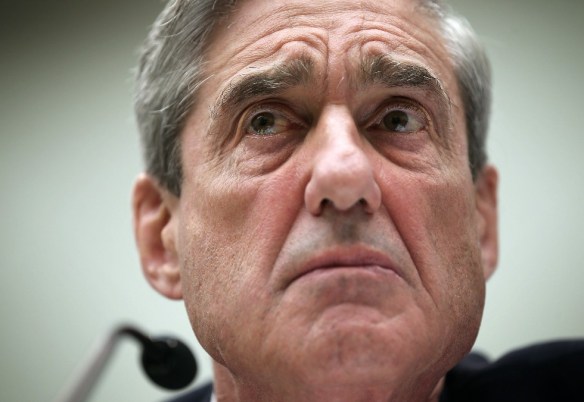
The Robert Mueller led inquiry into the election has been running since May 2017. It has been tasked with determining whether the Trump campaign colluded corruptly with the Russian government to influence the outcome of the election. It has worked hard to delegitimize the president without that being its stated objective and has had a certain measure of success in doing just that.

But apart from a couple of low-level convictions for perjury, Mueller has come up with nothing that convincingly demonstrates that Moscow had some kind of plan to disrupt the elections and thereby damage American democracy. There was, to be sure, some Russian government sponsored probing and what might be described as attempted influencing, but that is what intelligence agencies do to justify their existence. The worst culprit when it comes to election interference worldwide is undoubtedly America’s own Central Intelligence Agency, which has been doing just that since 1947. But apart from some low-level activity, there has been nothing to suggest some kind of grand design orchestrated by Russian President Vladimir Putin to overthrow or cast into confusion the American government.

No one should ever let a good story line go to waste, so the U.S. mainstream media has bought into the proposition that Russia did both interfere in and influence the result of the election based on the assumption that where there is smoke there must be fire with little in the way of evidence being provided. Some media outlets have maintained that the margin of victory for Trump was actually “made in Russia,” meaning that he is ipso facto Moscow’s puppet. It should be noted that this is the same media that embraced Saddam Hussein’s weapons of mass destruction and transatlantic gliders back in 2002 and the Syrian use of chemical weapons more recently, suggesting that the relationship between demonstrated facts and what comes out in the reporting is very tenuous.

To keep the story fresh, both government and the media have now been suggesting that there has already been an attempt by Russia to interfere in the 2018 midterm election which will take place on Tuesday. The New York Times describes an “elaborate campaign of ‘information warfare’ to interfere.” On October 19th, federal prosecutors charged Elena Alekseevna Khusyaynova of St. Petersburg Russia, a woman whom they labeled the project’s “chief accountant.” She allegedly managed a budget to “sow division and discord” in the lead-up to the voting. The Times goes on to describe how “She bought internet domain names and Facebook and Instagram ads and spent money on building out Twitter accounts and paying to promote divisive posts on social media.”

And the list of culprits has also been expanded to include China and Iran, if one goes by PBS’s coverage of the story. One would not be surprised to see North Korea added to the list, as it is convenient to keep all of one’s enemies in one place, all on the march to destroy American democracy and its political institutions before the GOP and Democrats finally get around to doing it.

One might easily regard the never ending Russiagate saga as a bit of an amusement, but there are actually real-life consequences to corrupting the popular sentiment in a large and powerful nuclear armed nation like the United States by constantly discovering new enemies to stimulate the selling of newspapers and television ad time. At a minimum, phony threat accusations create paranoia and also mistrust in the institutions that are supposed to be protecting the country.

And there are also other less tangible consequences, namely that the constant crying wolf over the Russians and Chinese corrupting America’s political system actually does tell the voters that their vote does not matter as outside forces beyond their control will determine the result anyway.

Stephen Cohen, professor of Russian studies at Princeton University, has been arguing for some time that the pursuit of Russiagate and the various delusions that have become attached to it is doing grave damage not only to the bilateral relationship between Moscow and Washington but also to perceptions of the state of the U.S. political system. His latest article in The Nation entitled Who is really undermining American democracy? has as a sub-heading “Allegations that Russia is still ‘attacking’ US elections, now again in November, could delegitimize our democratic institutions.”

Cohen argues plausibly how the “undermine American democracy” meme may itself erode confidence in U.S. political institutions because if the trick of claiming outside interference can to be used successfully once it will be used again even after Trump is gone. If there are claims by losing candidates that Russia or some other foreign power interfered in the midterm this week it will inevitably jumpstart a witch hunt to find those congressmen who were “helped.” The legitimacy of congress itself will be in question.

Cohen also argues that “Russiagate has revealed the low esteem that many U.S. political-media elites have for American voters—for their ability to make discerning, rational electoral decisions, which is the bedrock assumption of representative democracy… Presumably this is a factor behind the current proliferation of programs—official, corporate, and private—to introduce elements of censorship in the nation’s ‘media space’ in order to filter out ‘Kremlin propaganda.’ Here, it also seems, elites will decide what constitutes such ‘propaganda.’”

It is the ultimate irony that the most powerful and least threatened country in the world – the United States of America-runs on fear. The obsession with possible foreign interference in U.S. elections reflects the fundamental insecurity of the elites that actually manipulate the system to benefit themselves and their constituencies. If the midterm results do not satisfy the Establishment and the “foreign menace” again is surfaced as causative it will, in truth, be the beginning of the end for American democracy as mistrust of the integrity of the government institutions will continued to be eroded. The alternative? Tell Robert Mueller to put his cards on the table and prove what is being generally accepted as true regarding Russia or fold up his tent and go home because he is no longer need.