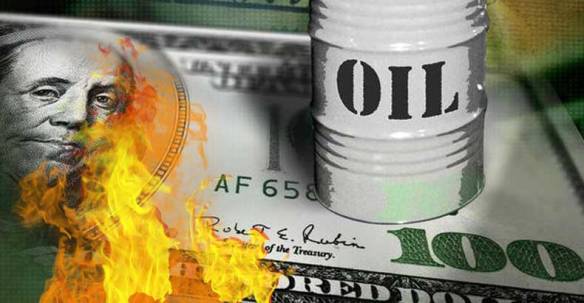
Human Delusion and Our Destruction of the Biosphere: We Aren’t Even Trying!

By Robert J. Burrowes

Have you heard the expression ‘climate change’? That lovely expression that suggests a holiday in a place with a more pleasant climate.

Unfortunately, only the rarest individual has the capacity to see through the elite-promulgated delusion that generated this benign expression and its twin notions that 1.5 degrees celsius (above the preindustrial level) is an acceptable upper limit for an increase in global temperature and that the timeframe for extinction-threatening outcomes of this ‘climate change’ is the ‘end of the century’.

If you believe that this 1.5 degree increase is achievable or even viable for sustaining life on Earth and that the ‘end of the century’ is our timeframe then you are the victim of your own fear, which is suppressing your capacity to seek out, analyze and comprehend the evidence that is readily available and to then behave powerfully in response to it. For an explanation, see Why Violence?’ and Fearless Psychology and Fearful Psychology: Principles and Practice.

Therefore, your fear, rather than the climate catastrophe and other critical assaults on Earth’s biosphere, is the real problem.

The most casual perusal of the evidence in relation to what is happening to Earth’s biosphere – as distinct from the propaganda that is endlessly promulgated in the global elite’s corporate media – clearly indicates that the cataclysmic assault on our biosphere in a wide range of synergistic ways is now driving the sixth mass extinction event in Earth’s history and that, as a direct result of our relentless and rampaging destruction of habitat, it will take down humanity with it. Well within 10 years. See ‘Human Extinction by 2026? A Last Ditch Strategy to Fight for Human Survival’.

Now if your fear hasn’t already been triggered so that you ceased reading this article, let me offer the barest outline of the nature and extent of the assault on Earth’s biosphere and why the climate catastrophe is only one part of it which nonetheless needs to be seriously, rather than tokenistically, addressed, as is usually suggested whether by most climate lobby groups or, of course, elite-controlled governments and the IPCC.

But before ranging beyond the climate to highlight other threats to the biosphere, did you know that governments and corporations around the world are currently planning or have under construction 1,380 new coal plants? That’s right. 1,380 new coal plants. In 59 countries. See ‘NGOs Release List of World’s Top Coal Plant Developers’ and ‘2018 Coal Plant Developers List’.

For just a taste of the detail on this rapid coal expansion, try the report ‘Tsunami Warning: Can China’s Central Authorities Stop a Massive Surge in New Coal Plants Caused by Provincial Overpermitting?’ and ‘The World Needs to Quit Coal. Why Is It So Hard?’

So if we are deluding ourselves about coal, what about oil? Can we expect a dramatic reduction in oil use to compensate for the substantial increase in coal use? Well, according to the just-released report of the International Energy Agency (IEA), while there is some projected improvement in fuel economy for cars and a projected increase in the number of electric vehicles, cars only account for about one-quarter of the world’s oil consumption and there is no projected reduction in the oil used to fuel freight trucks, ships and airplanes; for heating; and to make plastics and other petrochemicals. As a result, the agency expects global oil demand to keep rising through 2040.

To summarize: the IEA report notes that global carbon dioxide emissions rose 1.6% in 2017 and are on track to climb again in 2018 and, on the current trajectory, emissions will keep rising until 2040. See ‘World Energy Outlook 2018’ and ‘Clean Energy Is Surging, but Not Fast Enough to Solve Global Warming’.

So, given that we are led to believe that there is supposed to be some sort of international consensus to limit the global temperature increase to 1.5 (which is far too high in any case) above the preindustrial level, why is this happening? Well, in relation to coal: ‘Powerful companies, backed by powerful governments, often in the form of subsidies, are in a rush to grow their markets before it is too late. Banks still profit from it. Big national electricity grids were designed for it.’ See ‘The World Needs to Quit Coal. Why Is It So Hard?’

And just to illustrate what those of us who are genuinely concerned are up against, if you want to read the latest breathtakingly delusional account of the state of the world’s climate which prodigiously underestimates the nature of the climate catastrophe and utterly fails to consider the synergistic impact of other critical environmental destruction, you can do so in the US government’s just-released report ‘Fourth National Climate Assessment Volume II: Impacts, Risks, and Adaptation in the United States’ which is summarized here: ‘Fourth National Climate Assessment Volume II: Impacts, Risks, and Adaptation in the United States; Report-in-Brief’.

This report is presented in one of the global elite’s primary propaganda outlets as follows: ‘A major scientific report issued by 13 federal agencies on [23 November 2018] presents the starkest warnings to date of the consequences of climate change for the United States, predicting that if significant steps are not taken to rein in global warming, the damage will knock as much as 10 percent off the size of the American economy by century’s end.’ See ‘U.S. Climate Report Warns of Damaged Environment and Shrinking Economy’.

At this point I must confess that despite my substantial knowledge of human psychology and widespread human insanity (and the fear that drives it), certainly afflicting the global elite, sometimes even I am impressed with the level of delusion that elites can propagate and have so many believe. See ‘The Global Elite is Insane Revisited’.

Still, as Joseph Goebbels, Nazi Minister of Propaganda and Public Enlightenment under Adolf Hitler once noted:

‘If you tell a lie big enough and keep repeating it, people will eventually come to believe it. The lie can be maintained only for such time as the State can shield the people from the political, economic and/or military consequences of the lie. It thus becomes vitally important for the State to use all of its powers to repress dissent, for the truth is the mortal enemy of the lie, and thus by extension, the truth is the greatest enemy of the State.’

What Goebbels didn’t know is that someone must be terrified – as we terrorize our children – so that they can be so victimized by propaganda as adults.

Anyway, apart from our destruction of Earth’s climate by burning coal and oil, not to mention gas, elites use geoengineering to wage war on Earth’s climate, environment and ultimately us. For the latest update on the geoengineering assault on Earth’s biosphere, listen to Dane Wigington’s latest superb ‘Geoengineering Watch Global Alert News, #172’ and read, watch and listen to the vast documentary record available on the Geoengineering Watch website which remind us how climate engineering is annihilating plants, toxifying soils and water, and destroying the ozone layer among many other outcomes. For a video explaining the role of geoengineering in the latest wildfires in California, see ‘Climate Engineering Total Desperation, Engineering Catastrophic Wildfires To Temporarily Cool Earth’.

All of the above is happening despite the existing temperature increase (about one degree) triggering the now-endless succession of deadly wildfires, droughts, cold snaps, floods, heat waves and catastrophic hurricanes (often in parts of the world where the corporate media can ignore them), as well as the out-of-control methane releases into the atmosphere that are occurring. See ‘7,000 underground gas bubbles poised to “explode” in Arctic’ and ‘Release of Arctic Methane “May Be Apocalyptic,” Study Warns’.

Moreover, these methane releases coupled with other ongoing climate impacts such as sea ice melt and permafrost thawing in the Arctic – summarized in ‘Will humans be extinct by 2026?’ – which has led to the ‘Arctic’s strongest sea ice break[ing] up for first time on record’ and the dramatic weakening of the Gulf Stream – see ‘Anomalously weak Labrador Sea convection and Atlantic overturning during the past 150 years’, ‘Observed fingerprint of a weakening Atlantic Ocean overturning circulation’ and Gulf Stream current at its weakest in 1,600 years, studies show’ – threaten imminent human extinction.

So do you think we are even trying? Or are we tinkering around the edges of this accelerating catastrophe and deluding ourselves that we are doing enough?

But this is far from the end of it. There are other critical threats to Earth’s biosphere that horribly complicate the nature and extent of this catastrophe. What are these threats?

Well, to leave aside a series of threats only marginally less drastic, here are some of the key ones, all of which seriously degrade (or destroy outright) vital components of the interrelated ecosystems (‘the web of life’) that make life on Earth possible.

Rainforests

We are currently destroying the world’s rainforests, mainly by logging them for timber and burning them down to make way for cattle ranches or palm oil plantations. In an extensive academic study, more than 150 joint authors of a report advised that ‘most of the world’s >40,000 tropical tree species now qualify as globally threatened’. See ‘Estimating the global conservation status of more than 15,000 Amazonian tree species’.

Why are more than 40,000 tropical tree species threatened with extinction? Because ‘Upwards of 80,000 acres of rainforest are destroyed across the world each day, taking with them over 130 species of plants, animals and insects.’ See ‘Half of Amazon Tree Species Face Extinction’ and ‘Measuring the Daily Destruction of the World’s Rainforests’. If you missed that, it was 80,000 acres of rainforest destroyed each day.

Oceans

We are destroying the Earth’s oceans by dumping into them everything ranging from excess carbon dioxide and vast amounts of synthetic poisons to plastic and the radioactive contamination from Fukushima. The oceans absorb carbon dioxide as one manifestation of the climate catastrophe and, among other outcomes, this accelerates ocean acidification, adversely impacting coral reefs and the species that depend on these reefs.

In addition, a vast runoff of agricultural poisons, fossil fuels and other wastes is discharged into the ocean, adversely impacting life at all ocean depths – see Staggering level of toxic chemicals found in creatures at the bottom of the sea, scientists say’ – and generating ocean ‘dead zones’: regions that have too little oxygen to support marine organisms. See Our Planet Is Exploding With Marine “Dead Zones”’.

Since the Fukushima nuclear reactor disaster in 2011, and despite the ongoing official coverup, vast quantities of radioactive materials are being ongoingly discharged into the Pacific Ocean, irradiating everything in its path. See ‘Fukushima: A Nuclear War without a War: The Unspoken Crisis of Worldwide Nuclear Radiation’.

Finally, you may not be aware that there are up to 70 ‘still functional’ nuclear weapons as well as nine nuclear reactors lying on the ocean floor as a result of accidents involving nuclear warships and submarines. See ‘Naval Nuclear Accidents: The Secret Story’ and ‘A Nuclear Needle in a Haystack: The Cold War’s Missing Atom Bombs’.

Soil

But not all of our destruction is as visible as our vanishing rainforests and contaminated oceans. Have you considered the Earth’s soil recently? Apart from depleting it, for example, by washing it away (sometimes in dramatic mudslides but usually unobtrusively) because we have logged the rainforest that held it in place, we also dump vast quantities of both inorganic and organic pollutants into it as well. Some of the main toxic substances in waste are inorganic constituents such as heavy metals, including cadmium, chromium, lead, mercury, nickel and zinc. Mining and smelting activities and the spreading of metal-laden sewage sludge are the two main culprits responsible for the pollution of soils with heavy metals. See ‘Soil-net’.

Far more common, however, is our destruction of the soil with organic based pollutants associated with industrial chemicals. Thousands of synthetic chemicals reach the soil by direct or indirect means, often in the form of fertilizers, pesticides, herbicides and other poisons that destroy the soil, by reducing the nutrients and killing the microbes, in which we grow our food (which many people actually eat, at great cost to their health). See, for example, ‘Glyphosate effects on soil rhizosphere-associated bacterial communities’.

Using genetically modified organisms, and the chemical poisons on which they rely, exacerbate this problem terribly. But two other outcomes of the use of such poisons are that the depleted soil can no longer sequester carbon and the poisons also kill many of the beneficial insects, such as bees, that play a part in plant pollination and growth.

And, of course, military contamination and destruction of soil is prodigious ranging from the radioactive contamination of vast areas to the extensive and multifaceted chemical contamination that occurs at military bases.

Partly related to military violence but also a product of using nuclear power, humans generate vast amounts of waste from exploitation of the nuclear fuel cycle. This ranges from the pollution generated by mining uranium to the radioactive waste generated by producing nuclear power or firing a nuclear weapon. But it also includes the nuclear waste generated by accidents such as that at Chernobyl and Fukushima.

Again, for just a taste of the monumental nature of this problem, see Emergency Declared at Nuclear Waste Site in Washington State, ‘Disposing of Nuclear Waste is a Challenge for Humanity’ and ‘Three Years Since the Kitty Litter Disaster at Waste Isolation Pilot Plant’.

Like destroying the rainforests and oceans, destroying the soil is an ongoing investment in future extinctions. And so is our overconsumption and contamination of the Earth’s finite fresh water supply.

Fresh Water

Whether wetland, river, creek, lake or acquifer, Earth’s fresh water is under siege. Given corporate negligence, this includes all of the chemical poisons and heavy metals used in corporate farming and mining operations, as well as, in many cases around the world where rubbish removal is poorly organized, the sewage and all other forms of ‘domestic’ waste discharged from households. Contamination of the world’s creeks, rivers, lakes and wetlands is now so advanced that many are no longer able to fully support marine life. For one summary of the problem, see ‘Pollution in Our Waterways is Harming People and Animals – How Can You Stop This!’

Beyond this, however, Earth’s groundwater supplies (located in many underground acquifers such as the Ogallala Aquifer in the United States) are also being progressively contaminated by gasoline, oil and chemicals from leaking storage tanks; bacteria, viruses and household chemicals from faulty septic systems; hazardous wastes from abandoned and uncontrolled hazardous waste sites (of which there are over 20,000 in the USA alone); leaks from landfill items such as car battery acid, paint and household cleaners; and the pesticides, herbicides and other poisons used on farms and home gardens. See ‘Groundwater contamination’.

Moreover, while notably absent from the list above, these contaminants also include radioactive waste from nuclear tests – see ‘Groundwater drunk by BILLIONS of people may be contaminated by radioactive material spread across the world by nuclear testing in the 1950s’ – and the chemical contamination caused by hydraulic fracturing (fracking) in search of shale gas, for which about 750 chemicals and components, some extremely toxic and carcinogenic like lead and benzene, have been used. See ‘Fracking chemicals’.

By the way, if you didn’t know it, our purchase and use of all of those hitech products – cars, computers, mobile phones, televisions… – coupled with our consumption of intensively-farmed animal products, all of which are produced using huge quantities of fresh, clean water, is rapidly depleting and degrading the remaining fresh water on Earth, as well as savagely exploiting the people from whose countries we take the strategic minerals and water necessary for such production. See, for example, ‘500 Years is Long Enough! Human Depravity in the Congo’.

War

In addition to the above (and many other biosphere-destroying activities not mentioned), relying on our ignorance and fearful complicity, elites have a budget of hundreds of billions of dollars annually – see the US budget for war in ‘Costs of Post-9/11 U.S. Wars to 2019: $5.9 Trillion’ – to kill huge numbers of our fellow human beings but also to destroy vast areas of Earth’s biosphere through war and other military violence. See, for example, the Toxic Remnants of War Project and the film ‘Scarred Lands & Wounded Lives’.

Unfortunately, too few activists have the awareness and courage to acknowledge the role that war plays in destroying the climate and environment, and include anti-war efforts in their campaigns. Campaigns that will fail dismally, and spectacularly, if the threatened nuclear war should eventuate. See ‘The War to End War 100 Years On: An Evaluation and Reorientation of our Resistance to War’.

Extinction beckons

In summary, our multifaceted, monumental and unrelenting assault on Earth’s biosphere is generating an extinction rate of 200 species (plants, birds, animals, fish, amphibians, insects and reptiles) each day with another 26,000 species already identified as ‘under threat’ – see ‘Red list research finds 26,000 global species under extinction threat’ – with some prominent scholars explaining how even these figures mask a vital component of the rapidly accelerating catastrophe of species extinctions: the demise of local populations of a species. See ‘Biological annihilation via the ongoing sixth mass extinction signaled by vertebrate population losses and declines’.

For further evidence from the vast literature on this subject touching only on impacts in relation to insects and its subsequent impact on birds, see ‘Death and Extinction of the Bees’, ‘Insectageddon: farming is more catastrophic than climate breakdown’ and ‘“Decimated”: Germany’s birds disappear as insect abundance plummets 76%’.

So severe is this assault on the biosphere that recent research warns that the ‘alarming loss of insects will likely take down humanity before global warming hits maximum velocity…. The worldwide loss of insects is simply staggering with some reports of 75% up to 90%, happening much faster than the paleoclimate record rate of the past five major extinction events’. Without insects ‘burrowing, forming new soil, aerating soil, pollinating food crops…’ and providing food for many bird species, the biosphere simply collapses. See ‘Insect Decimation Upstages Global Warming’.

So what can we do?

If you are genuinely powerful, you can stop lobbying governments to tinker with their policies, for example, in the direction of renewable energy (which, alone, cannot solve the multiplicity of ecological crises).

Governments are not the problem. And they simply do as elites direct them in any case. (If you believe that voters decide governments and their policies, and that lobbying them is effective, then your fear is deluding you again.)

The real problem is you and me. We have swallowed one of the ‘big lies’ that Joseph Goebbels talked about: we have believed and acted on the capitalist imperative to endlessly overconsume so that economic growth can rise perpetually in our finite world: a planet that has ecological limits.

But, as I noted above, the big lie only works because our fear makes us believe delusion. Why? Because we were terrorized as a child into accepting material goods as a substitute for our capacity to be our unique and powerful Self. See ‘Love Denied: The Psychology of Materialism, Violence and War’.

The monstrous assault on Earth’s biosphere, that goes far beyond the climate catastrophe, is the outcome of each of us consuming more than we need and then fearfully deluding ourselves that it is necessary (or that the harm it caused was too little to matter or justified by some other consideration). Well, you can delude yourself as much as you like but it is still just that: a fearful delusion.

And the point is simply that you can choose differently and powerfully, if you have the courage. For a start, you can forego all air travel. You can travel without owning your own car. You can eat well without consuming meat or fish (and eating biodynamically/organically grown vegetarian/vegan food instead). In essence: If the demand for planet-destroying products is reduced, corporations will not produce them (and destroy the Earth in doing so). This is how the law of supply and demand works under capitalism.

Beyond these simple but vital measures, you can consider many other powerful options, particularly including (accelerated) participation in the fifteen-year strategy outlined in ‘The Flame Tree Project to Save Life on Earth’ which provides a simple plan for people to systematically reduce their consumption, by at least 80%, involving both energy and resources of every kind – water, household energy, transport fuels, metals, meat, paper and plastic – while dramatically expanding their individual and community self-reliance in 16 areas, so that all environmental concerns are effectively addressed.

The Flame Tree Project was inspired by Mohandas K. Gandhi who identified the environmental crisis decades before it became an issue in the West, and who lived his own life in extraordinary simplicity and self-reliance, symbolized by his daily spinning of khadi. ‘Earth provides enough for every person’s need but not for every person’s greed.’ He also invited us to powerfully follow our conscience, reminding us that ‘Hesitating to act because others do not yet see the way only hinders progress.’

But, critically important though he believed personal action to be, Gandhi was also an extraordinary political strategist and he knew that we needed to do more than transform our own personal lives. We need to provide opportunities that compel others to consider doing the same.

So if your passion is campaigning for change, consider doing it strategically as outlined in Nonviolent Campaign Strategy. For example, see the Nonviolent Strategy Wheel and the list of strategic goals necessary to halt the climate catastrophe and end war. Choose one or a few goals appropriate to your circumstances and conduct a strategically-oriented nonviolent campaign, as explained on the same website, to achieve those goals.

Sound strategy is vital given the insanity driving elite behaviour (such as planning/building 1,380 new coal plants). As mentioned above, see ‘The Global Elite is Insane Revisited’.

If your fear makes it difficult to do things such as those suggested above, consider healing as explained in Putting Feelings First’.

If you want your children to be able to respond powerfully in the face of the biosphere’s progressive collapse, consider making ‘My Promise to Children’.

And if you want to join the worldwide movement to end all violence against humans and the biosphere, you can do so by signing the online pledge of The Peoples Charter to Create a Nonviolent World.

The bottom line is this. You can systematically and rapidly reduce your personal consumption and, one way or another, mobilize others or nonviolently compel them to do the same. Or you can let your fear delude you that the ongoing destruction of Earth’s biosphere is somehow unrelated to your personal choices about consumption and the choices of those around you.

Extinction beckons. The choice is yours.


Biodata: Robert J. Burrowes has a lifetime commitment to understanding and ending human violence. He has done extensive research since 1966 in an effort to understand why human beings are violent and has been a nonviolent activist since 1981. He is the author of ‘Why Violence?’ http://tinyurl.com/whyviolence His email address is flametree@riseup.net and his website is here. http://robertjburrowes.wordpress.com

Robert J. Burrowes
P.O. Box 68
Daylesford, Victoria 3460
Australia

Email: flametree@riseup.net

Websites:
Nonviolence Charter
Flame Tree Project to Save Life on Earth
‘Why Violence?’
Feelings First
Nonviolent Campaign Strategy
Nonviolent Defense/Liberation Strategy
Anita: Songs of Nonviolence
Robert Burrowes
Global Nonviolence Network


Once We Awaken

By Rudy Avizius

Source: OpEdNews.com

Do you get a sense, that something is wrong
like that dissonance, that does not belong

As we move through the journey of life, many people are experiencing a sense of dis-ease, that something is off-kilter, that the narratives we are receiving do not match the reality we are experiencing. There is great hope in this knowledge because once one recognizes this dissonance the process of awakening begins.

Deep down way inside, you may have suspicions
that much what we’re told, are but veiled omissions

The narratives are controlled by a small handful of people who determine what issues and discussions we should be examining. As we watch the main stream news and follow social media, the news and discussions we see are mostly spectacle designed to boost ratings with little or no coverage of the real issues such as: our wars without end, corporate and big money control of government and media, or anything critical of the powers that be. Most of the journalists we see on the main stream media are basically celebrity faces who no longer practice journalism, but are simply parroting what those in power want them to say with little effort made to investigate and corroborate the stories. There is great hope in recognizing this knowledge, as it allows one to view the narratives more critically and to filter out what does not resonate with them.

Why do we listen, to those who would divide
those who leave us empty, with our humanity denied

  • Both of the main stream political parties support the Military/Industrial/Security Complex.
  • Both of the main stream political parties support the multiple simultaneous wars and occupations of other nations.
  • Both of the main stream political parties support a foreign policy of economic and military sanctions on nations that wish to pursue paths that do not fit interests of the global central banking system.
  • Both of the main stream political parties support their corporate donors over their constituents.
  • Both of the main stream political parties voted to extend the surveillance of citizens.
  • Both of the main stream political parties have made little or no attempt to stop the flood of big money into political campaigns.

However, the powers that be are very successful at projecting that there is a real difference between the two political parties. Both political parties are successful in getting people to fight each other over social issues that in the big picture are really not the key issues. Then, as long as the people are focused on fighting each other, those who orchestrated this fight enjoy the benefits of this effective diversion, keeping people from paying attention to the criminal syndicate that has taken over the government. There is great hope in recognizing this old divide and conquer tactic because once one does recognize it, one can stop fearing or hating “the other” and recognize that we have far more in common than what is dividing us. We can stop with name calling and finger pointing, and instead engage in meaningful conversations.

Why listen to those, with so little to tell
the very same ones who, have so much to sell

So many listen to the main stream media where sensationalism such as murders, car crashes, kidnappings, sex scandals and the like dominate the content. This is the same media where 90% of the media is owned by 6 corporations. One does not need a PhD to understand that this concentration of control over the narrative that people experience is not a positive development. Those that control the news keep the masses living in fear. This fear can take many forms, but often it is physical, economic, or social.

This is the same media that now has 36% of its hourly content filled with commercials. The fact that people are recognizing this is good news because they will become more discerning about who they give their money to. They will start to question whether they really need that product or service, or do they just want it.

Once we will awaken, things won’t be the same
we will manifest, an end to their game

Once we will awaken, the angels will observe
as those with dark souls, we’ll no longer serve

Our current political system has been totally corrupted by those with vast accumulations of money. This cuts across all ideologies and political party lines. This system of legal bribery has even been ratified by the highest court in the land which opened the floodgates to even more money corroding our system. How can someone represent you when they are being paid millions to represent others? What we need now goes beyond simple reforms and enters the realm of transformational change. Many articles and videos (mostly those in the alternative media space) connect these dots so that more and more people are becoming aware. This awareness or awakening is a critical step as it opens up the possibility for transformational change to take place.

The changes we are seeking will not take place from the top down, they will take place from the bottom up. Those who benefit from the current paradigm have little motivation to implement meaningful changes. Once we are ready to accept our own roles in this process, we will realize that what needs to happen is that we have to change ourselves. Once we stop playing their game of competing with each other, we will start cooperating instead. Local, self sufficient, and resilient communities will spring up like wild flowers in a field where they grow much of their own food, start their own currencies, and their citizens will stop buying from the big corporations, instead they will patronize their local businesses.

The current system of how we create and distribute money is at the very heart of most of the problems we face. It is absolutely amazing that people will work a significant portion of their lives away to earn money, and yet have only the most elementary understanding of how our debt based monetary system works. What does debt based monetary system mean? When was the last time your main stream media covered this? When was the last time your school taught you this? Why is this information withheld?

This debt based monetary system perpetuates and amplifies the inequalities of how Earth’s abundant resources are distributed. Our very existence on this planet is being threatened as unlimited economic growth within a finite biosphere remains the current paradigm. Until we move to a totally new monetary system, we are only hacking away at branches, and not getting to the root of the problem. There can be no effective transformation of our societies until this happens.

The models for a new monetary system are already in place. However the private individuals who have been given the monopoly power to create money and are benefiting from the current system will fight to make sure that knowledge of these systems does not spread widely. Those benefiting from the current system will work hard to make sure it stays firmly entrenched. When was the last time you heard a corporate media network discuss monetary reform?

Once we have local control of moneyfood productionenergy generation,and governance, the current paradigm of corporate and big money control of our systems will simply become obsolete. It will simply fade into oblivion as it becomes less and less relevant. There will be no need to confront the system. Once we awaken and change our ways, we will “manifest an end to their game”.

Those who sell their souls, for their daily bread
may not take the time, to think of what’s ahead

There have always been those who would sell their souls and use the excuse “it’s my job” to justify their actions. From those who tortured Jesus to more modern times with concentration camp guards to even more currently the mercenaries who were hired to confront those seeking to protect their water supplies from pipeline companies.

Think about this, these mercenaries are people who left the communities they pledged to “protect and serve” to answer a call to “protect and serve” corporate interests in another community, while these same corporate interests were placing local people’s water supplies at serious risk.

These mercenaries were the tip of the spear, there were many behind the scenes who acted as enablers for their behaviors. There were the corporate executives, prosecutors, judges, minor bureaucrats, and politicians without whose support, such injustices could never take place. Those who served helping these forces have “sold their souls for their daily bread.”

“It was my job” is not an acceptable response when it curtails the access of life sustaining necessities of fellow human beings.

It is very easy to develop an “I see nothing” attitude, or to allow oneself to be silenced by monetary gain by “playing along” with those who control and manipulate the system. It is time to witness, it is time to speak up, it is time to resist when you see injustice taking place.

Those that are insatiable, always seeking moar
ever quite so willing, to send others to war

Why do we accede, to their self served schemes
rather than just simply, following our dreams

Once we awaken we will no longer serve those who think only of themselves and their own self serving schemes. YOU can start making a huge difference by the way you spend YOUR money. Think about this, when you give your money to someone or some corporation, as you are transferring some of your your power to them. Is this really something you wish to do?

Do you shop at a local merchant or do you save that 35 cents by buying from Amazon? Do you give a percentage of every purchase to the big banks by using credit cards or do you pay in cash? Do you buy animal products humanely produced? Do you buy organic food or food produced using chemicals that threaten our ecosystem (and your health?) Do you bank at a “too big to fail bank” or a local community bank or Credit Union? Sometimes the lowest price or convenience is not the best buy and can carry an even higher unseen cost.

As we develop our own resilient local communities and economies, our dependencies on the corporate model will be reduced, weakening their tight grip on us. Mother Teresa once said “I alone cannot change the world, but I can cast a stone across the waters to create many ripples.”

Once we will awaken, we will clearly see
many of the others, who’ve also broken free

This is the best part of the awakening process. It is easy to think that the problems we face are overwhelming and that nothing can be done. The powers that be want us to think that way. Yet as we awaken, it becomes very clear that there are so many more of us that feel this same way than we originally believed. Once we awaken we become aware of others who have broken free. It is very empowering once we realize we are not alone. A critical mass is forming. It turns out that it takes only 10% of a population to bring about real changes.

We live in a world of abundance. There is enough air, water, and food for every person, animal, and plant on the planet. We have the resources and ability to make our existence here a paradise, to continue to develop socially, intellectually, emotionally, and spiritually. It is within our power to create a true golden age on this blue oasis floating through space and attain wondrous levels of development on a personal, family, community, regional, and global level while creating this paradise.

Conjuring Up the Next Depression

By Chris Hedges

Source: TruthDig

During the financial crisis of 2008, the world’s central banks, including the Federal Reserve, injected trillions of dollars of fabricated money into the global financial system. This fabricated money has created a worldwide debt of $325 trillion, more than three times global GDP. The fabricated money was hoarded by banks and corporations, loaned by banks at predatory interest rates, used to service interest on unpayable debt or spent buying back stock, providing millions in compensation for elites. The fabricated money was not invested in the real economy. Products were not manufactured and sold. Workers were not reinstated into the middle class with sustainable incomes, benefits and pensions. Infrastructure projects were not undertaken. The fabricated money reinflated massive financial bubbles built on debt and papered over a fatally diseased financial system destined for collapse.

What will trigger the next crash? The $13.2 trillion in unsustainable U.S. household debt? The $1.5 trillion in unsustainable student debt? The billions Wall Street has invested in a fracking industry that has spent $280 billion more than it generated from its operations? Who knows. What is certain is that a global financial crash, one that will dwarf the meltdown of 2008, is inevitable. And this time, with interest rates near zero, the elites have no escape plan. The financial structure will disintegrate. The global economy will go into a death spiral. The rage of a betrayed and impoverished population will, I fear, further empower right-wing demagogues who promise vengeance on the global elites, moral renewal, a nativist revival heralding a return to a mythical golden age when immigrants, women and people of color knew their place, and a Christianized fascism.

The 2008 financial crisis, as the economist Nomi Prins points out, “converted central banks into a new class of power brokers.” They looted national treasuries and amassed trillions in wealth to become politically and economically omnipotent. In her book “Collusion: How Central Bankers Rigged the World,” she writes that central bankers and the world’s largest financial institutions fraudulently manipulate global markets and use fabricated, or as she writes, “fake money,” to inflate asset bubbles for short-term profit as they drive us toward “a dangerous financial precipice.”

“Before the crisis, they were just asleep at the wheel, in particular, the Federal Reserve of the United States, which is supposed to be the main regulator of the major banks in the United States,” Prins said when we met in New York. “It did a horrible job of doing that, which is why we had the financial crisis. It became a deregulator instead of a regulator. In the wake of the financial crisis, the solution to fixing the crisis and saving the economy from a great depression or recession, whatever the terminology that was used at any given time, was to fabricate trillions and trillions of dollars out of an electronic ether.”

The Federal Reserve handed over an estimated $29 trillion of this fabricated money to American banks, according to researchers at the University of MissouriTwenty-nine trillion dollars! We could have provided free college tuition to every student or universal health care, repaired our crumbling infrastructure, transitioned to clean energy, forgiven student debt, raised wages, bailed out underwater homeowners, formed public banks to invest at low interest rates in our communities, provided a guaranteed minimum income for everyone and organized a massive jobs program for the unemployed and underemployed. Sixteen million children would not go to bed hungry. The mentally ill and the homeless—an estimated 553,742 Americans are homeless every night—would not be left on the streets or locked away in our prisons. The economy would revive. Instead, $29 trillion in fabricated money was handed to financial gangsters who are about to make most of it evaporate and plunge us into a depression that will rival that of the global crash of 1929.

Kevin Zeese and Margaret Flowers write on the website Popular Resistance, “One-sixth of this could provide a $12,000 annual basic income, which would cost $3.8 trillion annually, doubling Social Security payments to $22,000 annually, which would cost $662 billion, a $10,000 bonus for all U.S. public school teachers, which would cost $11 billion, free college for all high school graduates, which would cost $318 billion, and universal preschool, which would cost $38 billion. National improved Medicare for all would actually save the nation trillions of dollars over a decade.”

An emergency clause in the Federal Reserve Act of 1913 allows the Fed to provide liquidity to a distressed banking system. But the Federal Reserve did not stop with the creation of a few hundred billion dollars. It flooded the financial markets with absurd levels of fabricated money. This had the effect of making the economy appear as if it had revived. And for the oligarchs, who had access to this fabricated money while we did not, it did.

The Fed cut interest rates to near zero. Some central banks in Europe instituted negative interest rates, meaning they would pay borrowers to take loans. The Fed, in a clever bit of accounting, even permitted distressed banks to use these no-interest loans to buy U.S. Treasury bonds. The banks gave the bonds back to the Fed and received a quarter of a percent of interest from the Fed. In short, the banks were loaned money at virtually no interest by the Fed and then were paid interest by the Fed on the money they borrowed. The Fed also bought up worthless mortgage assets and other toxic assets from the banks. Since Fed authorities could fabricate as much money as they wanted, it did not matter how they spent it.

“It’s like going to someone’s old garage sale and saying, ‘I want that bicycle with no wheels. I’ll pay you 100 grand for it. Why? Because it’s not my money,’ ” Prins said.

“These people have rigged the system,” she said of the bankers. “There is money fabricated at the top. It is used to pump up financial assets, including stock. It has to come from somewhere. Because money is cheap there’s more borrowing at the corporate level. There’s more money borrowed at the government level.”

“Where do you go to repay it?” she asked. “You go into the nation. You go into the economy. You extract money from the foundational economy, from social programs. You impose austerity.”

Given the staggering amount of fabricated money that has to be repaid, the banks need to build greater and greater pools of debt. This is why when you are late in paying your credit card the interest rate jumps to 28 percent. This is why if you declare bankruptcy you are still responsible for paying off your student loan, even as 1 million people a year default on student loans, with 40 percent of all borrowers expected to default on student loans by 2023. This is why wages are stagnant or have declined while costs, from health care and pharmaceutical products to bank fees and basic utilities, are skyrocketing. The enforced debt peonage grows to feed the beast until, as with the subprime mortgage crisis, the predatory system fails because of massive defaults. There will come a day, for example, as with all financial bubbles, when the wildly optimistic projected profits of industries such as fracking will no longer be an effective excuse to keep pumping money into failing businesses burdened by debt they cannot repay.

“The 60 biggest exploration and production firms are not generating enough cash from their operations to cover their operating and capital expenses,” Bethany McLean writes of the fracking industry in an articletitled “The Next Financial Crisis Lurks Underground” that appeared in The New York Times. “In aggregate, from mid-2012 to mid-2017, they had negative free cash flow of $9 billion per quarter.”

The global financial system is a ticking time bomb. The question is not if it will explode but when it will explode. And once it does, the inability of the global speculators to use fabricated money with zero interest to paper over the debacle will trigger massive unemployment, high prices for imports and basic services, and a devaluation in which the dollar will become nearly worthless as it is abandoned as the world’s reserve currency. This manufactured financial tsunami will transform the United States, already a failed democracy, into an authoritarian police state. Life will become very cheap, especially for the vulnerable—undocumented workers, Muslims, poor people of color, girls and women, anti-capitalist and anti-imperialist critics branded as agents of  foreign powers—who will be demonized and persecuted for the collapse. The elites, in a desperate bid to cling to their unchecked power and obscene wealth, will disembowel what is left of the United States.

Conflict Theory and Biosphere Annihilation

By Robert J. Burrowes

In a recent article titled Challenges for Resolving Complex Conflicts’, I pointed out that existing conflict theory pays little attention to the extinction-causing conflict being ongoingly generated by human over-consumption in the finite planetary biosphere (and, among other outcomes, currently resulting in 200 species extinctions daily). I also mentioned that this conflict is sometimes inadequately identified as a conflict caused by capitalism’s drive for unending economic growth in a finite environment.

I would like to explain the psychological origin of this biosphere-annihilating conflict and how this origin has nurtured the incredibly destructive aspects of capitalism (and socialism, for that matter) from the beginning. I would also like to explain what we can do about it.

Before I do, however, let me briefly illustrate why this particular conflict configuration is so important by offering you a taste of the most recent research evidence in relation to the climate catastrophe and biosphere annihilation and why the time to resolve this conflict is rapidly running out (assuming, problematically, that we can avert nuclear war in the meantime).

In an article reporting a recent speech by Professor James G. Anderson of Harvard University, whose research led to the Montreal Protocol in 1987 to mitigate CFC damage to the Ozone Layer, environmental journalist Robert Hunizker summarizes Anderson’s position as follows: ‘the chance of permanent ice remaining in the Arctic after 2022 is zero. Already, 80% is gone. The problem: Without an ice shield to protect frozen methane hydrates in place for millennia, the Arctic turns into a methane nightmare.’ See ‘There Is No Time Left’.

But if you think that sounds drastic, other recent research has drawn attention to the fact that the ‘alarming loss of insects will likely take down humanity before global warming hits maximum velocity…. The worldwide loss of insects is simply staggering with some reports of 75% up to 90%, happening much faster than the paleoclimate record rate of the past five major extinction events’. Without insects ‘burrowing, forming new soil, aerating soil, pollinating food crops…’ and providing food for many bird species, the biosphere simply collapses. See Insect Decimation Upstages Global Warming’.

So, if we are in the process of annihilating Earth’s biosphere, which will precipitate human extinction in the near term, why aren’t we paying much more attention to the origin of this fundamental conflict? And then developing a precisely focused strategy for transcending it?

The answer to these two questions is simply this: the origin of this conflict is particularly unpalatable and, from my careful observation, most people, including conflict theorists, aren’t anxious to focus on it.

So why are human beings over-consuming in the finite planetary biosphere? Or more accurately, why are human beings who have the opportunity to do so (which doesn’t include those impoverished people living in Africa, Asia, Central/South America or anywhere else) over-consuming in the finite planetary biosphere?

They are doing so because they were terrorized into unconsciously equating consumption with a meaningful life by parents and other adults who had already internalized this same ‘learning’.

Let me explain how this happens.

At the moment of birth, a baby is genetically programmed to feel and express their feelings in response to the stimuli, both internal and external, that the baby registers. For example, as soon after birth as a baby feels hungry, they will signal that need, usually by crying or screaming. An attentive parent (or other suitable adult) will usually respond to this need by feeding the baby and the baby will express their satisfaction with this outcome, perhaps with a facial expression, in a way that most aware parents and adults will have no difficulty identifying. Similarly, if the baby is cold, in pain or experiencing any other stimulus, the baby will express their need, probably by making a loud noise. Given that babies cannot immediately use a cultural language, they use the language that was given to them by evolution: particularly audibly expressed noise of various types that an aware adult will quickly learn to interpret.

Of course, from the initial moments after birth and throughout the next few months, a baby will experience an increasing range of stimuli – including internal stimuli such as the needs for listening, understanding and love, as well as external stimuli ranging from a wet nappy to a diverse set of parental, social, climate and environmental stimuli – and will develop a diverse and expanding range of ways, now including a wider range of emotional expression but eventually starting to include spoken language, of expressing their responses, including satisfaction and enjoyment if appropriate, to these stimuli.

At some vital point, however, and certainly within the child’s first eighteen months, the child’s parents and the other significant adults in the child’s life, will start to routinely and actively interfere with the child’s emotional expression (and thus deny them satisfaction of the unique needs being expressed in each case) in order to compel the child to do as the parent/adult wishes. Of course, this is essential if you want the child to be obedient – a socially compliant slave – rather than to follow their own Self-will.

One of the critically important ways in which this denial of emotional expression occurs seems benign enough: Children who are crying, angry or frightened are scared into not expressing their feelings and offered material items – such as food or a toy – to distract them instead. Unfortunately, the distractive items become addictive drugs. Unable to have their emotional needs met, the child learns to seek relief by acquiring the material substitutes offered by the parent. But as this emotional deprivation endlessly expands because the child has been denied the listening, understanding and love to develop the capacity to listen to, love and understand themself, so too does the ‘need’ for material acquisition endlessly expand.

As an aside, this explains why most violence is overtly directed at gaining control of material, rather than emotional, resources. The material resource becomes a dysfunctional and quite inadequate replacement for satisfaction of the emotional need. And, because the material resource cannot ‘work’ to meet an emotional need, the individual is most likely to keep using direct and/or structural violence to gain control of more material resources in an unconscious and utterly futile attempt to meet unidentified emotional needs. In essence, no amount of money and other assets can replace the love denied a child that would allow them to feel and act on their feelings.

Of course, the individual who consumes more than they need and uses direct violence, or simply takes advantage of structural violence, to do so is never aware of their deeply suppressed emotional needs and of the functional ways of having these needs met. Although, I admit, this is not easy to do given that listening, understanding and love are not readily available from others who have themselves been denied these needs. Consequently, with their emotional needs now unconsciously ‘hidden’ from the individual, they will endlessly project that the needs they want met are, in fact, material.

This is the reason why members of the Rothschild family, Jeff Bezos, Bill Gates, Warren Buffett, Amancio Ortega, Mark Zuckerberg, Carlos Slim, the Walton family and the Koch brothers, as well as the world’s other billionaires and millionaires, seek material wealth and are willing to do so by taking advantage of structures of exploitation held in place by the US military. They are certainly wealthy in the material sense; unfortunately, they are emotional voids who were never loved and do not know how to love themself or others now.

Tragically, however, this fate is not exclusive to the world’s wealthy even if they illustrate the point most graphically. As indicated above, virtually all people who live in material cultures have suffered this fate and this is readily illustrated by their ongoing excessive consumption – especially their meat-eating, fossil-fueled travel and acquisition of an endless stream of assets – in a planetary biosphere that has long been signaling ‘Enough!’

As an aside, governments that use military violence to gain control of material resources are simply governments composed of many individuals with this dysfunctionality, which is very common in industrialized countries that promote materialism. Thus, cultures that unconsciously allow and encourage this dysfunctional projection (that an emotional need is met by material acquisition) are the most violent both domestically and internationally. This also explains why industrialized (material) countries use military violence to maintain political and economic structures that allow ongoing exploitation of non-industrialized countries in Africa, Asia and Central/South America.

In summary, the individual who has all of their emotional needs met requires only the intellectual and few material resources necessary to maintain this fulfilling life: anything beyond this is not only useless, it is a burden.

If you want to read (a great deal) more detail of the explanation presented above, you will find it in Why Violence?’ and Fearless Psychology and Fearful Psychology: Principles and Practice.

So what can we do?

Well, I would start by profoundly changing our conception of sound parenting by emphasizing the importance of nisteling to children – see Nisteling: The Art of Deep Listening’ – and making ‘My Promise to Children’.

For those adults who feel incapable of nisteling or living out such a promise, I encourage you to consider doing the emotional healing necessary by ‘Putting Feelings First’.

If you already feel capable of responding powerfully to this extinction-threatening conflict between human consumption and the Earth’s biosphere, you are welcome to consider joining those who are participating in the fifteen-year strategy to reduce consumption and achieve self-reliance explained in ‘The Flame Tree Project to Save Life on Earth’ and/or to consider using sound nonviolent strategy to conduct your climate or environment campaign. See Nonviolent Campaign Strategy.

You are also welcome to consider signing the online pledge of The Peoples Charter to Create a Nonviolent World.

As the material simplicity of Mohandas K. Gandhi demonstrated: Consumption is not life.

If you are not able to emulate Gandhi (at least ‘in spirit’) by living modestly, it is your own emotional dysfunctionality – particularly unconscious fear – that is the problem that needs to be addressed.

Biodata: Robert J. Burrowes has a lifetime commitment to understanding and ending human violence. He has done extensive research since 1966 in an effort to understand why human beings are violent and has been a nonviolent activist since 1981. He is the author of ‘Why Violence?’ http://tinyurl.com/whyviolence His email address is flametree@riseup.net and his website is here. http://robertjburrowes.wordpress.com

Robert J. Burrowes
P.O. Box 68
Daylesford, Victoria 3460
Australia

Email: flametree@riseup.net

Websites:
Nonviolence Charter
Flame Tree Project to Save Life on Earth
‘Why Violence?’
Feelings First
Nonviolent Campaign Strategy
Nonviolent Defense/Liberation Strategy
Anita: Songs of Nonviolence
Robert Burrowes
Global Nonviolence Network

Ecuador Endangered

By John Seed

The tropical Andes of Ecuador are at the top of the world list of biodiversity hotspots in terms of vertebrate species, endemic vertebrates, and endemic plants. Ecuador has more orchid and hummingbird species than Brazil, which is 32 times larger, and more diversity than the entire USA.

In the last year, the Ecuadorean government has quietly granted mining concessions to over 1.7 million hectares (4.25 million acres) of forest reserves and indigenous territories. These were awarded to transnational corporations in closed-door deals without public knowledge or consent.

This is in direct violation of Ecuadorean law and international treaties, and will decimate headwater ecosystems and biodiversity hotspots of global significance. However, Ecuadorean groups think there is little chance of stopping the concessions using the law unless there is a groundswell of opposition from Ecuadorean society and strong expressions of international concern.

The Vice President of Ecuador, who acted as Coordinating Director for the office of ‘Strategic Sectors’, which promoted and negotiated these concessions, was jailed for 6 years for corruption. However, this has not stopped the huge giveaway of pristine land to mining companies.

From the cloud forests in the Andes to the indigenous territories in the headwaters of the Amazon, the Ecuadorean government has covertly granted these mining concessions to multinational mining companies from China, Australia, Canada, and Chile, amongst others.

The first country in the world to get the rights of Nature or Pachamama written into its constitution is now ignoring that commitment.

They’ve been here before. In the 80’s and 90’s Chevron-Texaco dumped 18 billion gallons of crude oil there in the biggest rainforest petroleum spill in history. This poisoned the water of tens of thousands of people and has done irreparable damage to ecosystems.

Now 14% of the country has been concessioned to mining interests. This includes a million hectares of indigenous land, half of all the territories of the Shuar in the Amazon and three-quarters of the territory of the Awa in the Andes.

Please sign the petition and contribute to the crowdfund which will help Ecuadorean civil society’s campaign to have these concessions rescinded.

As founder and director of the Rainforest Information Centre (RIC), I’ve had a long history of involvement with Ecuador’s rainforests.

Back in the late ‘80’s our volunteers initiated numerous projects in the country and one of these, the creation of the Los Cedros Biological Reserve was helped with a substantial grant from the Australian Government aid agency, AusAID. Los Cedros lies within the Tropical Andes Hotspot, in the country’s northwest. Los Cedros consists of nearly 7000 hectares of premontane and lower montane wet tropical and cloud forest teeming with rare, endangered and endemic species and is a crucial southern buffer zone for the quarter-million hectare Cotocachi-Cayapas Ecological Reserve. Little wonder that scientists from around the world rallied to the defense of Los Cedros.

In 2016 a press release from a Canadian mining company alerted us to the fact that they had somehow acquired a mining concession over Los Cedros! We hired a couple of Ecuadorean researchers and it slowly dawned on us that Los Cedros was only one of 41 “Bosques Protectores” (protected forests) which had been secretly concessioned. For example, nearly all of the 311,500 hectare Bosque Protector “Kutuku-Shaimi”, where 5000 Shuar families live, has been concessioned. In November 2017, RIC published a report by Bitty Roy, Professor of Ecology from Oregon State University and her co-workers, mapping the full extent of the horror that is being planned.

Although many of these concessions are for exploration, the mining industry anticipates an eightfold growth in investment to $8 billion by 2021 due to a “revised regulatory framework” much to the jubilation of the mining companies. Granting mineral concessions in reserves means that these reserves aren’t actually protected any longer as, if profitable deposits are found, the reserves will be mined and destroyed.

In Ecuador, civil society is mobilising and has asked their recently elected government to prohibit industrial mining “in water sources and water recharge areas, in the national system of protected areas, in special areas for conservation, in protected forests and fragile ecosystems”.

The indigenous peoples have been fighting against mining inside Ecuador for over a decade. Governments have persecuted more than 200 indigenous activists using the countries anti-terrorism laws to hand out stiff prison sentences to indigenous people who openly speak out against the destruction of their territories.

Fortunately, the new government has signalled an openness to hear indigenous and civil society’s concerns, not expressed by the previous administration.

In December 2017, a large delegation of indigenous people marched on Quito and President Moreno promised no NEW oil and mining concessions, and on 31 January 2018, Ecuador’s Mining Minister resigned a few days after Indigenous and environmental groups demanded he step down during a demonstration. On 31 January, The Confederation of Indigenous Nationalities of Ecuador, CONAIE, announced their support for the platform shared by the rest of civil society involved in the anti-mining work. Then on 15 February CONAIE called on the government to “declare Ecuador free of industrial metal-mining”, a somewhat more radical demand than that of the rest of civil society.

But we will need a huge international outcry to rescind the existing concessions: many billions of dollars of mining company profits versus some of the most biologically diverse ecosystems on Earth and the hundreds of local communities and indigenous peoples who depend on them.

PLEASE SIGN THE PETITION TO SUPPORT THEIR DEMANDS.

From 2006, under the Correa-Glas administration, Ecuador contracted record levels of external debt for highway and hydroelectric dam infrastructure to subsidize mining. Foreign investments were guaranteed by a corporate friendly international arbitration system, facilitated by the World Bank which had earlier set the stage for the current calamity by funding mineralogical surveys of national parks and other protected areas and advising the administration on dismantling of laws and regulations protecting the environment.

After 2008, when Ecuador defaulted on $3.2 billion worth of its national debt, it borrowed $15 billion from China, to be paid back in the form of oil and mineral exports. These deals have been fraught with corruption. Underselling, bribery and the laundering of money via offshore accounts are routine practice in the Ecuadorean business class, and the Chinese companies who now hold concessions over vast tracts of Ecuadorean land are no cleaner. Before leaving office Correa-Glas removed much of the regulation that had been holding the mining industry in check. And the corruption goes much deeper than mere bribes.

The lure of mining is a deadly mirage. The impacts of large-scale open pit mining within rainforest watersheds include mass deforestation, erosion, the contamination of water sources by toxins such as lead and arsenic, and desertification. A lush rainforest transforms into an arid wasteland incapable of sustaining either ecosystems or human beings.

Without a huge outcry both within Ecuador and around the world, the biological gems and pristine rivers and streams will be destroyed.

But it doesn’t have to be this way. Civil society needs an open conversation with the state. Ecuador has enormous potential to develop its economy based on renewable energy and its rich biodiversity can support a large ecotourism industry. In 2010 Costa Rica banned open-pit mining, and today has socioeconomic indicators better than Ecuador’s. Costa Rica also provides a ‘Payment for Ecosystem Services’ to landholders, and through this scheme has actually increased its rainforest area (from 20% to just over 50%).

Ecuador’s society and government must explore how an economy based on the sustainable use of pristine water sources, the country’s incomparable forests, and other natural resources is superior to an economy based on short term extraction leaving behind a despoiled and impoverished landscape. For example, studies by Earth Economics in the Intag region of Ecuador (where some of the new mining concessions are located) show that ecosystem services and sustainable development would offer a better economic solution let alone ecological and social.

The Rainforest Information Centre is launching a CROWDFUND to support Ecuadorean NGO’s to mobilise and to mount a publicity and education campaign and to help advance a dialogue throughout Ecuador and beyond: ‘Extractivism, economic diversification and prospects for sustainable development in Ecuador’.

We have set the crowdfund target at A$15,000 and Paul Gilding, ex-CEO of Greenpeace International is getting the ball rolling with an offer to match all donations $ for $ so that every $ that you donate will be matched by Paul. Donations are tax-deductible in Australia and the US.

When you sign the PETITION you will reach not just to the President of Ecuador and his cabinet. The petition is also addressed to the other actors who have set the stage for this calamity, being:

  • The World Bank who funded a project which collected geochemical data from 3.6 million hectares of Western Ecuador including seven national protected areas and dozens of forest reserves thus doing the groundwork for the mining industry.
  • The international governments and NGO’s who funded the creation and upkeep of these Bosques Protectores and indigenous reserves and other protected sites and who now need to persuade Ecuador to prevent their good work from being undone.
  • The governments of the countries whose mining companies are preparing this devastation.

Australian senator Lee Rhiannon (who was part of helping us create Los Cedros 30 years ago) wrote to the Canadian Environment Minister on our behalf and the Canadian Embassy has expressed concern about the bad name Cornerstone is giving the other Canadian mining projects. They have asked us for a meeting to discuss the reports of bad business practices by the company. Likewise, the Chinese government is beginning to develop some guidance which will come into effect in March 2018. We are lobbying the Australian government to put pressure on BHP, Solgold and other Australian companies preparing to mine protected forests and indigenous reserves in Ecuador.

Visit Ecuador Endangered for more links to the history and causes of Ecuador’s mining crisis. There you will find research, detailed reports and news updates. Contact information can be found for those wanting to be involved in the campaign, which is being run entirely by volunteers. To let the Ecuadorean Government, World Bank and mining companies know you want them to invest in a sustainable future for all, a petition can be found here.


Please join, follow and share this campaign on Social Media.


Biodata: John Seed is the founder and director of the Rainforest Information Centre in Australia. He has been campaigning to save the world’s rainforests since the 1970s.


FOR PRINT MEDIA: A LONGER VERSION OF THIS ARTICLE REPLETE WITH HYPERLINKS MAY BE FOUND AT www.rainforestinfo.org.au/forests/ecuador/article.htm

Demise Of The Petrodollar Has The Potential To Reshape The Geopolitical World

By James ONeill

Source: New Eastern Outlook

In the early 1970s President Richard Nixon instigated two changes that had profound effects. The first of these was taking United States off the gold standard; i.e. henceforth US dollars would no longer be convertible to Gold. Ordinarily this might have been expected to have significant ramifications for the value of the US dollar.

Deleterious effects however, were avoided by another equally profound change. Nixon’s National Security Adviser Henry Kissinger negotiated an agreement with Saudi Arabia that henceforth all oil(initially from Saudi Arabia but rapidly extended to all OPEC) countries would be traded only in US dollars, the birth of the so called petrodollar.

It was a classic mafia style arrangement. In exchange for Saudi Arabia’s agreement to the sole use of the dollar for oil transactions, the US underwrote Saudi Arabia’s security thereby ensuring the continuity of one of the world’s most corrupt and repressive regimes.

Also unknown at the time, the US and Saudi Arabia entered an arrangement whereby Islamist terrorist groups (as long as they were Sunni) would be financed by Saudi Arabia and armed by the Americans and then used in pursuit of US geopolitical goals. Operation Cyclone, begun under the Carter administration in the 1970s was an early forerunner of this tactic, but it has been refined and utilized in different formats in a wide number of countries ever since.

The objective was always fundamentally the same: to undermine and if necessary replace governments that were insufficiently compliant with US geopolitical aims. As and when necessary, US troops and their “coalition” allies would be inserted into the target countries. The destruction of Afghanistan (2001 and continuing) Iraq (2003 and continuing) Libya (2011 and continuing) are only three of the better-known examples.

The huge financial cost of these military and geopolitical ventures did not impose a proper price upon the US because of the hegemonic role of the US dollar. The US, in effect, had their multiple wars of choice paid for by other countries as the dollar’s role in world trade created a constant demand for US Treasury bonds.

The role of the US dollar also permitted the US to impose sanctions on recalcitrant countries. The selective nature of the sanctions, always directed toward a US geopolitical or commercial advantage, were clearly an instrument of repressive power. Notwithstanding claims that they were to “punish” the alleged misconduct of the specified country, their actually use betrayed their geopolitical purpose.

Sanctions against Russia for its” invasion” of Ukraine “annexation” of Crimea, and against Iran for its “nuclear program” are two of the better known illustrations of sanctions being justified on spurious grounds..

The use and abuse of the dollar’s power is clearly unacceptable, but the capacity to invoke countermeasures was until quite recently severely limited. The single most important countervailing force is the rise of China as the economic powerhouse of the world, and importantly, the creation of alternative structures in trade, finance and security, that translate China’s economic power into a force for major change.

That change is assisted by the number of collateral developments. In 1990, the G7 nations (Canada, France, Germany, Italy, Japan, the US and UK) had a combined GDP approximately six times greater then the seven economically most important emerging nations (Brazil, China, India, Indonesia, Mexico, Russia and South Korea).

By 2013 the “emerging seven” had surpassed the G7’s GDP total and according to the IMF’s estimates for 2017, the GDP of the two groups will be $47 .5 trillion and $37.8 trillion for the emerging seven and the G7 respectively. Turkey, which is growing at 5% per annum, has replaced Mexico in the top emerging seven.

BRICS, which contains four of the emerging seven nations and the Shanghai Corporation Organisation (SCO), which includes China, India and Russia, are working together on the architecture of a monetary alternative to the dollar. The SCO alone contains 42% of the world’s population.

India’s role in BRICS and the SCO is one reason it is being assiduously cultivated by Australia, Japan and the United States in an attempt to set up a “quadrilateral four” to slow and undermine the role of China and Russia in creating an alternative to longstanding western domination and exploitation.

It was in this context that Russia’s President Putin at the recent BRICS meeting in Xiamen, China said that

“Russia shares the BRICS countries concerns over the unfairness of the global financial and economic architecture, which does not give due regard to the growing weight of the emerging economies.”

This speech developed a theme that Putin had developed in an article published prior to the BRICS meeting. Putin bluntly vowed to destroy the US led financial system, aiming to reform a system that gives excessive domination to a limited number of reserve (i.e. predominantly western) currencies.

China has developed a new Cross Border Interbank Payments System (CIPS) to replace the US dominated SWIFT system, itself used as a tool for financial bullying by the US. Russia has also taken steps to insulate itself from the ill effects of being excluded from SWIFT.

Other major changes are also occurring. Venezuela, with the world’s largest known oil reserves, has ceased accepting payment in US dollars. In the past US retaliation through regime change would have been immediate as happened to Libya’s Gaddafi (confirmed by Clinton’s leaked emails) and the Iraq’s Saddam Hussein who had announced that he would henceforth accept payment in euros and not dollars.

China and Qatar recently concluded a $50 billion deal denominated in Yuan. There were immediate threats and absurd demands from Saudi Arabia, undoubtedly acting as the voice of the US administration, but nothing more serious. The lack of military intervention or attempted regime change was probably attributable to Turkey’s military intervention, a series of agreements with Iran, and the probable implied threat of Chinese intervention should the Saudis further demonstrate their military incompetence (as in Yemen) by anything as rash as direct military moves against Qatar.

Saudi Arabia is rapidly reaching a crunch point in its relationship with China, a huge purchaser of Saudi Arabia’s oil. It is widely known that China wants future oil contracts denominated in Yuan. The attraction for Saudi Arabia is that the Chinese guarantee their Yuan with gold traded on the Hong Kong and Shanghai exchanges. Ironically, this puts China in the same position as the United States prior to Nixon’s withdrawal from the gold backed dollar.

The dilemma for the Saudis is that if they comply with the Chinese demands they risk losing the Americans underwriting their security. US instigated regime change in Saudi Arabia is a very real possibility and the recent maneuverings by Mohammad bin Salman to consolidate his power can be interpreted as a response to that possibility.

Typically, the western media focused on relative trivialities, such as women being able to drive motor vehicles from 2018 (in limited circumstances), rather than examining the underlying geopolitical power struggle.

The other major development worth mentioning in this context is the rapid increase in the number of countries doing deals with China using the Yuan or their own national currencies as the medium of exchange. China’s Belt and Road Initiative, currently involving 65 nations, will undoubtedly accelerate this trend. Russia and China are already each other’s critically important trading partners and all agreements between them are being denominated in either Yuan or Rubles.

It would be naïve to assume that this is all going to occur without a massive rearguard action by the Americans who know full well that their ability to defy economic logic is only possible because of the dollar’s unique role, allowing in turn military interventions to prop up their now rapidly declining power.

The United States’ aggressive and provocative actions in the South China Sea, North Korea, Ukraine, Syria and elsewhere our best interpreted as the flailing’s of a declining empire. The real question is will the United States accept the disappearance of the unique power that it has wielded since the Bretton Woods agreement of 1944 and adjust its policies accordingly, or destroy us all in their attempts to recapture a lost world.

Newsletter: From Neoliberal Injustice To Economic Democracy

By Kevin Zeese and Margaret Flowers

Source: Dissident Voice

The work to transform society involves two parallel paths: resisting harmful systems and institutions and creating new systems and institutions to replace them. Our focus in this article is on positive work that people are doing to change current systems in ways that reduce the wealth divide, meet basic needs, ensure sustainability, create economic and racial justice and provide people with greater control over their lives.

When we and others organized the Occupation of Washington, DC in 2011, we subtitled the encampment ‘Stop the Machine, Create a New World’, to highlight both aspects of movement tasks — resistance and creation. One Popular Resistance project, It’s Our Economy, reports on economic democracy and new forms of ownership and economic development.

Throughout US history, resistance movements have coincided with the growth of economic democracy alternatives such as worker cooperatives, mutual aid and credit unions. John Curl writes about this parallel path in “For All the People,” which we summarized in “Cooperatives and Community Work are Part of American DNA.”

Mahatma Gandhi’s program of nonviolent resistance, satyagraha, had two components: obstructive resistance and constructive programs. Gandhi promoted Swaraj, a form of “self-rule” that would bring independence not just from the British Empire but also from the state through building community-based systems of self-sufficiency. He envisioned economic democracy at the village level. With his approach, economics is tied to ethics and justice — an economy that hurts the moral well-being of an individual or nation is immoral and business and industry should be measured not by shareholder profit but by their impact on people and community.

Today, we suffer from an Empire Economy. We can use Swaraj to break free from it. Many people are working to build a new economy and many cities are putting in place examples of economic democracy. One city attempting an overall transformation is Cooperation Jackson in Jackson, Mississippi.

Economic Democracy in response to neoliberalism

In his new book, Out of the Wreckage: A New Politics for an Age of Crisis, George Monbiot argues that a toxic ideology of greed and self–interest resulting in extreme competition and individualism rules the current economic and political culture. It is built on a misrepresentation of human nature. Evolutionary biology and psychology show that humans are actually supreme altruists and cooperators.  Monbiot argues that the economy and government can be radically reorganized from the bottom up, enabling people to take back control and overthrow the forces that have thwarted human ambitions for a more just and equal society.

In an interview with Mark Karlin, Monbiot describes how neolibealism arose over decades, beginning in the 1930s and 40s with John Maynard Keynes, Friedrich Hayek and others, and is now losing steam, as ideologies do. Monbiot says we need a new “Restoration Story.”

We are in the midst of writing that new story as people experience the injustice of the current system with economic and racial inequality, destruction of the environment and never ending wars. Indeed, we are further ahead in creating the new Restoration Story than we realize.

Cooperatives

New research from the University of Wisconsin–Madison’s Center for Cooperatives (UWCC) has found there are 39,594 cooperatives in the United States, excluding the housing sector, and there are 7 million employer businesses that remain “potential co-op candidates.” These cooperatives account for more than $3 trillion in assets, more than $500 billion in annual revenue and sustain nearly two million jobs. This May, the Office of Management and Budget approved including coop questions in the Economic Census so that next year the US should have more accurate figures. The massive growth of cooperatives impacts many segments of the economy including banking, food, energy, transit and housing among others.

In cooperatives, workers or consumers decide directly how their business operate and work together to achieve their goals; it is a culture change from the competitive extreme capitalist view dominated by self-interest.

In Energy Democracy: Advancing Equity in Clean Energy Solutions, editors Denise Fairchild and Al Weinrub describe energy cooperatives that are creating a new model for how we organize the production and distribution of energy, which is decentralized, multi-racial and multi-class.

Lyn Benander of Co-op Power, a network of many cooperatives in New England and New York, writes that they transform not just energy but also their communities:

First, people come together across class and race to make change in their community by using their power as investors, workers, consumers, and citizens ready to take action together. Then, they work together to build community-owned enterprises with local capital and local jobs to serve local energy needs. It’s a proven strategy for making a real difference.

In Lancaster, CA, the mayor has turned the town into a solar energy capital where they produce power not just for themselves, but also to sell to other cities. They are also moving to create manufacturing jobs in electric buses, which more cities are buying, and energy storage. Research finds that rooftop solar and net-metering programs reduce electricity prices for all utility customers, not just those with solar panels. The rapid growth of rooftop solar is creating well-paying jobs at a rate that’s 17 times faster than the total U.S. economy. Rooftop solar, built on existing structures, such as homes and schools, puts energy choices in the hands of customers rather than centralized monopolies, thereby democratizing energy.

Including housing cooperatives would greatly increase the number of cooperatives. According to the National Association of Housing Cooperatives, “Housing cooperatives offer the more than one million families who live in them several benefits such as: a collective and democratic ownership structure, limited liability, lower costs and non-profit status.”  Residents of a mobile home park in Massachusetts decided to create a housing cooperative to put the residents in charge of the community when the owner planned to sell it.

Related to this are community land trusts. A section of land is owned in a trust run as a non-profit that represents the interests of local residents and businesses. Although the land is owned by the trust, buildings can be bought and sold. The trust lowers prices and can prevent gentrification.

Universal Basic Income

Another tool gaining greater traction is a universal basic income.  James King writes in People’s Policy Project that “. . . a universal basic income (UBI) – a cash payment made to every person in the country with no strings attached – is becoming increasingly popular in experimental policy circles. . . payments  [would be] large enough to guarantee a minimum standard of living to every person independent of work. In the US, that would be roughly $12,000 per person based on the poverty line.”

The wealth divide has become so extreme in the United States that nearly half of all people are living in poverty. A small UBI would provide peace of mind, financial security and the possibility of saving money and building some wealth. A report by the Roosevelt Institute, this week, found that a conservative analysis of the impact of a UBI of $1,000 per month would grow the economy by 12.56 percent after an eight-year implementation, this translates to a total growth of $2.48 trillion.

Public Finance

Another major area of economic democracy is the finance sector. At the end of 2016 there were 2,479 credit unions with assets under 20 million dollars in the United States. Members who bank in credit unions are part of a cooperative bank where the members vote for the board and participate in other decisions.

Another economic democracy approach is a public bank where a city, state or even the national government creates a bank using public dollars such as taxes and fee revenues. Public banks save millions of dollars that are usually paid in fees to Wall Street banks, and the savings can be used to fund projects such as infrastructure, transit, housing, healthcare and education, among other social needs. Public banks can also partner with community banks or credit unions to fund local projects. This could help to offset one of the negative impacts of Dodd-Frank, which has been a reduction in community banks. In testimony, the Secretary of Treasury, Stephen Munchin, said we could “end up in a world where we have four big banks in this country.”

North Dakota is the only state with a public bank, and it has the most diverse, locally-owned banking system in the country. Stacey Mitchell writes that “North Dakota has six times as many locally owned financial institutions per person as the rest of the nation. And these local banks and credit unions control a resounding 83 percent of deposits in the state, more than twice the 30 percent market share such banks have nationally.” Public banking campaigns are making progress in many parts of the country, among them are Oakland, Los Angeles, Philadelphia, Santa Fe, and other areas.

Mutual Aid

When crises occur, no matter what their cause, people can work together cooperatively and outside of slow and unresponsive state systems to meet their needs. This is happening in Athens, Greece, which has been wracked by financial crisis and austerity for years. People have formed “networks of resistance” that meet in community assemblies organized around needs of the community, such as health care and food. They started with time banks as a base for a new non-consumer society.

Similar efforts are underway in Puerto Rico following the devastation of Hurricane Maria. A group called El Llamado is coordinating more than 20 mutual aid efforts, and providing political education and support for self-organizing at the same time.

As George Monbiot describes it, this is consistent with the truth about what human beings are:

We survived despite being weaker and slower than both our potential predators and most of our prey. We did so through developing, to an extraordinary degree, a capacity for mutual aid. As it was essential to our survival, this urge to cooperate was hard-wired into our brains through natural selection.

As we face more crises, whether in lack of access to health care, education, housing, food or economic and climate disasters, let’s remember that we have the capacity to meet our needs collectively.  In fact, every day, people are putting in place a new economic democracy that allows people to participate based on economic and racial justice as well as real democracy. As these alternatives are put in place, they may become dominant in our economy, communities and politics and bring real democracy and security to our lives.


Kevin Zeese and Margaret Flowers are co-directors of Popular Resistance. Read other articles by Kevin Zeese and Margaret Flowers.

8 Critical Factors Behind Every Food Crisis

FILE – In this Monday, Aug. 15, 2011 file photo, children from southern Somalia hold their pots as they line up to receive cooked food in Mogadishu, Somalia. A report by two U.S. government-funded famine and food agencies gives the highest death toll yet, estimating that 260,000 people died – more than double previous estimates. (AP Photo/Farah Abdi Warsameh, File)

By John Hawthorne

Source: Business Connect

From the beginning of time, their have been food crises in one form or another. Ancient books such as the Bible have records of various famines devastating portions of the world.

And while it’s easy to attribute these crises to a single cause, such as war or drought, the causes are usually much deeper and much more complex.

Nelson Mandela said, “Overcoming poverty is not an act of charity, it is an act of justice.”

In order for us to achieve the kind of justice envisioned by Mandela, it’s essential that we first understand the underlying causes of food crises. Only after we have understood can we then begin creating meaningful solutions.

With that in mind, here are 8 primary factors behind almost every global food crisis. While not all 8 of these will be present at a time, you will almost always find several of these at work.

Factor #1 – Poverty

One of the greatest factors in every food crisis is stark and abject poverty. This isn’t surprising. With enough money, anyone can ensure they have enough food. But with many developing nations sitting well below the poverty line, the population simply can’t afford the food they so desperately need.

Additionally, poverty has a distinct effect on food output. In Africa, for example, many farmers can’t afford proper irrigation and fertilizer. This, in turn, leads to lower yields, which then reduces the overall amount of food available to the population.

The population of the Sub-Saharan region of Africa is expected to grow at an astronomical rate, topping out at 2.4 billion by 2050. This will continue to exacerbate the poverty issue, which will then continue to drive the lack of sufficient food in the area.

Factor #2 – Drought and Desertification

Widespread droughts, leading to the desertification of particular locations also causes huge disruptions to food production. For example, leading up to and during the global food crisis of 2008, 110 countries experienced significant droughts. This caused even the most well-irrigated, fertile areas to become arid deserts, making it impossible to grow crops.

As Mark Hughes noted:

Australia is normally the second largest exporter of grain, after the U.S. The continent, though, is experiencing an ongoing drought that has been described as the worst in a century. Grain yields have shrunk and many silos remain empty. Australia’s drought is a major factor in global wheat stocks being at their lowest since 1979. In fact, many wheat and rice farmers are switching to crops that demand less water, such as wine grapes.

Additionally, farmers often let animals over-graze on their land, reducing the amount of vegetation and increasing desertification. If the soil becomes dry enough, it is ruined and unable to support any crops at all.

Finally, as populations grow, deforestation occurs at an increased rate, which then leads to less vegetation and more desertification.

Factor #3 – Political Pressure

In the past, the International Monetary Fund has pressured small farmers, particularly in impoverished African countries, to abandon agricultural farming in favor of industrial work. The money generated from this practice would be used to pay off debt and import food.

While it may sound like a working strategy, it has created catastrophic results.

As Eric Holt-Giménez noted:

The urban population increased seven-fold, swelling from 18% to 33% of the population. Millions of poor and unemployed workers have swelled the cities—with two-thirds of them living in slums. The manufacturing and industrial sector did not “take off” in African countries; the percent of the GDP coming from industry was 30% in 1961 and 32% in 2000. In the countryside, as plantations for agro-exports expanded, food production plummeted and poverty grew. Though the rural population, density increased by 180% as more farmers were crowded onto smaller plots.

Factor #4 – Increased Consumption of Meat and Dairy

Many countries have begun adopting a more Western diet, which includes eating significantly more meat and dairy. To make this happen, farmers have been forced to raise more cattle, and more cattle means more grain being consumed.

The problem, however, is that this causes a significant deficiency in terms of calories consumed versus calories available. A cow consumes approximately 700 calories worth of grain to produce a piece of meat containing only 100 calories. When this happens on a massive scale, an enormous shortage of food is the end result. The longer this deficit continues, the greater the imbalance will become.

Factor #5 – Increased Oil and Transportation Costs

When the price of oil goes up, the energy cost for planting and transporting foods goes through the roof. When food costs more to grow, it then costs more to sell. These rising costs then make it more difficult for the local population to purchase crops as well as for farmers to export their crops to industrialized nations.

Additionally, increased oil costs has led many countries to invest heavily in the development of agro-fuels. More agro-fuels always means less food available.

As Esther Vivas helpfully puts it:

The increase in the price of oil, which doubled in 2007 and 2008 and caused a big rise in the price of fertilizers and transport related to the food system, has resulted in increasing investment in the production of alternative fuels such as those of plant origin. Governments in the United States, the European Union, Brazil and others have subsidized production of agro-fuels in response to the scarcity of oil and global warming. But this green fuel production comes into direct competition with the production of food. To give just one example, in 2007 in the United States 20% of the total cereal harvest was used to produce ethanol and it is calculated in the next decade that this figure will reach 33%. We can imagine the situation in the countries of the South.

Factor #6 – Falling World Aid

At the peak of the 2007-2008 food crisis, food aid was at it’s lowest point since 1961. This is one of the oddities about the national food market. When cereal prices are low, countries look to sell their food through international aid. However, when food prices are high, they prefer to sell them on the open market for increased profits.

In other words, during food crises, when food is scarcest and at it’s highest prices, it isn’t available for international aid. When the bottom falls out of world aid, food crises grow in magnitude.

Factor #7 – International Conflicts

International conflicts are a particularly visible factor behind many food crises. During conflicts, it’s common for one country to restrict exports to another country, which then reduces the amount of food available to the general population.

Or, even worse, dictators will intentionally isolate their countries, refusing foreign aid that is desperately needed. Aid workers may be blocked from entering the country, making it difficult for the citizens to receive needed help. If foreign aid does come, they seize it for themselves, depriving the population of desperately needed sustenance.

Factor #8 – Disease

If a country experiences a particularly violent outbreak of a disease, it can completely disrupt the overall food supply. For example, the HIV/AIDS crisis in Africa has killed farmers, which in turn pushes families deep into poverty.

When a population is undernourished, drugs become less effective and can at times create intense hunger pains. These two factors combined create a vicious cycle of death, poverty, and hunger.

Additionally, certain highly contagious diseases can restrict the amount of aid available to a country. For example, during the 2014 Ebola epidemic in West Africa, aid workers were restricted from traveling to the region due to fear of spreading the disease.

Perfect Storms

Most food crises aren’t the result of a single factor. Rather, they are caused by a perfect storm of events that coalesce into a deadly storm.

For example, in 2011, Somalia was devastated by a drought that caused widespread crop failure. The food crisis was made even worse by a non-functioning government as well as a national conflict. All these forces combined to make it difficult for aid workers to reach those who so desperately needed help.

The result was that approximately 260,000 people died.

Because the problems are almost always complex and multi-layered, the solutions must be equally multi-faceted. Simple solutions typically exacerbate the problem at the expense of the local population.

The best solutions are those that involve numerous parties working together to create a tangible, workable solution.

There will always be food crises to one degree or another. But as we grow in our understanding of what causes them, we can also grow in our ability to bring them to an end.