We haven’t seen anything like this in decades. Energy prices are soaring to unprecedented heights. Food shortages in some parts of the world are starting to become quite severe. Rampant inflation is out of control all over the globe. Meanwhile, economic activity is slowing down everywhere that you look. Some are comparing this current crisis to the “stagflation” of the 1970s, but I believe that is a far too optimistic assessment. Just about everyone can see that economic conditions are rapidly deteriorating, and there is a tremendous amount of alarm about what the months ahead will bring.
According to a brand new Wall Street Journal-NORC survey that was just released, the percentage of Americans that believe that the state of the U.S. economy is “poor or not so good” is 83 times larger than the percentage of Americans who believe that the state of the U.S. economy is “excellent”…
A severe pessimism grips the U.S. economy and Americans report the highest level of dissatisfaction with their financial situation in at least half a century, poll results released Monday show.
Eighty-three percent of Americans describe the state of the economy as poor or not so good, according to a Wall Street Journal-NORC Poll. Only one percent describe the economy as “excellent.”
I would like to talk to someone from the one percent of Americans who still believe that the U.S. economy is in “excellent shape”.
To me, it is always fascinating to find someone who can completely deny reality even when all of the evidence points in the other direction.
The same survey found that the percentage of Americans who are “not at all satisfied with their financial condition” is the highest in at least 50 years…
Thirty-five percent said they are not at all satisfied with their financial condition, the highest level of dissatisfaction since NORC began asking the question every few years starting in 1972.
Sixty-three percent of Americans say they are extremely or very concerned about the price of gas. Fifty-four percent say they are extremely or very concerned about the impact of high grocery prices on their household’s financial situation. Just 13 percent say they not very or not at all concerned about gas prices and 19 percent about grocery prices.
In other words, this is the gloomiest that Americans have been about their own personal finances in at least five decades.
Wow.
One of the big reasons why people feel this way is because the price of just about everything is going up.
In particular, the price of gasoline has been making national headlines just about every day. On Tuesday, it set another brand new record…
The national average price of gas is now $4.955, reflecting an over three-cent jump overnight, 28-cent rise in the last week, and nearly 64-cent rise in the last month. Diesel also hit another record on Tuesday, reaching $5.719.
Currently, 16 states are experiencing an average price of gas of $5.00 or more. That includes Maine ($5.023), Massachusetts ($5.21), New Jersey ($5.032), Pennsylvania ($5.031), Michigan ($5.214), Ohio ($5.061), Indiana ($5.234), Illinois ($5.532), Idaho ($5.025), Alaska ($5.469), Hawaii ($5.493), Washington ($5.489), Oregon ($5.485), Nevada ($5.564), Arizona ($5.181), and California ($6.390). California’s Mono County appears to be reporting the highest gas price average in the Golden State — $7.213.
Unfortunately, there is a growing consensus among the experts that this is just the beginning. Here is one example…
With the summer travel season just getting underway, demand for gasoline, coupled with the cut-off of Russian oil shipments due to the war in Ukraine, is sending oil prices higher on global markets.
The national average for gasoline could be close to $6 by later this summer according to Tom Kloza, global head of energy analysis for the OPIS, which tracks gas prices for AAA.
GasBuddy head of petroleum analysis Patrick De Haan provided insight into record-high gas prices, warning on Wednesday that “we’re going to be swimming in these high prices for a while.”
Speaking on “Varney & Co.” on Wednesday, De Haan also revealed his forecasts for how high prices at the pump will climb, arguing that they could reach a national average of $6 a gallon in the coming months, but “what seems like more of a guarantee is that $5 mark.”
Others are even more pessimistic. In fact, the head of commodity trading giant Trafigura just warned that the price of oil could actually make a “parabolic ” move in the months ahead.
Needless to say, energy prices have a domino effect throughout the entire economy. When commentator Anthony B. Sanders contacted moving companies about his coming move out of state, he could hardly believe the quotes that he was given…
As I line up my move from Fairfax VA to Columbus OH, I am getting a variety of quotes from moving companies. And wow! The cost of moving using a national moving company for a 4 bedroom house is $15,000 to $20,500. That includes International, North American and Bekins.
One of the reasons for the high cost of moving is the massive increase in diesel fuel used for trucking. Diesel fuel under Biden has risen 117%. And since it was revealed that natural gas often is used for electric charging stations, and NATGAS is up 281% under Biden (but there aren’t many electric moving trucks yet).
Could you imagine paying $20,000 to move from Virginia to Ohio?
In the old days, you could purchase your own new vehicle for that much money.
“Joining the parade of downsized products is cereal stalwart Honey Bunches of Oats, which has seen the weight of its standard box, previously 14.5 ounces, lessen to 12 ounces — a reduction of roughly 17 percent,” the U.K. paper said.
Angel Soft toilet paper has also reduced its size from 425 sheets per roll to 320, while Bounty paper towels have cut their rolls from 165 sheets per roll to 147 late last year. Gatorade also cut its bottle size from 32 ounces to 28 ounces.
Do they actually believe that we will not notice that the packages have changed?
And this isn’t just happening here in the United States. At this point, this is taking place all over the globe…
In the U.S., a small box of Kleenex now has 60 tissues; a few months ago, it had 65. Chobani Flips yogurts have shrunk from 5.3 ounces to 4.5 ounces. In the U.K., Nestle slimmed down its Nescafe Azera Americano coffee tins from 100 grams to 90 grams. In India, a bar of Vim dish soap has shrunk from 155 grams to 135 grams.
Our standard of living is falling with each passing day, and that process is only going to accelerate during the second half of this year.
In a desperate attempt to keep living the way that they always have, many Americans are turning to their credit cards at an alarming rate.
Needless to say, that is only a short-term solution.
A closely followed measurement from the Atlanta Federal Reserve Bank suggests the economy could be headed for a second-quarter decline in gross domestic product, the broadest measure of goods and services produced in a country. The GDPNow tracker shows the economy grew at an annualized pace of just 0.9% in the spring, a steep decline from its previous estimate of 1.3% on June 1.
If U.S. GDP is actually negative for the second quarter, that will be two quarters in a row, and that will mean that we are officially in a recession right now.
But what we are heading into in 2023 and beyond is not going to be just a “recession”.
Two corrupt companies were in rocky financial territory just a few weeks ago. Now, with concerns over a global monkeypox outbreak being hyped by media and global health organizations alike, the worries – and sins – of these two firms are quickly being forgotten.
In recent days, concern over a global outbreak of monkeypox, a mild disease related to smallpox and chickenpox, has been hyped in the media and health ministries around the world, even prompting an emergency meeting at the World Health Organization (WHO). For some, fears have centered around monkeypox being the potential “next pandemic” after Covid-19. For others, the fear is that monkeypox will be used as the latest excuse to further advance draconian biosecurity policies and global power grabs.
Regardless of how the monkeypox situation plays out, two companies are already cashing in. As concern over monkeypox has risen, so too have the shares of Emergent Biosolutions and SIGA Technologies. Both companies essentially have monopolies in the US market, and other markets as well, on smallpox vaccines and treatments. Their main smallpox-focused products are, conveniently, also used to protect against or treat monkeypox as well. As a result, the shares of Emergent Biosolutions climbed 12% on Thursday, while those of SIGA soared 17.1%.
For these companies, the monkeypox fears are a godsend, specifically for SIGA, which produces a smallpox treatment, known by its brand name TPOXX. It is SIGA’s only product. While some outlets have noted that the rise in the valuation of SIGA Technologies has coincided with recent concerns about monkeypox, essentially no attention has been given to the fact that the company is apparently the only piece of a powerful billionaire’s empire that isn’t currently crumbling.
That billionaire, “corporate raider” Ron Perelman, has deep and controversial ties to the Clinton family and the Democratic party as well as troubling ties to Jeffery Epstein. Aside from his controlling stake in SIGA, Perelman has recently made headlines for rapidly liquidating many of his assets in a desperate bid for cash.
Similarly, Emergent Biosolutions has also been in hot water. The company, which has troubling ties to the 2001 Anthrax attacks, came under fire just under two weeks ago for engaging in a “cover up” over quality control issues relating to their production of Covid-19 vaccines. A Congressional investigation found that quality control concerns at an Emergent-run facility led to more than 400 million doses of Covid-19 vaccines being discarded. The Emergent factory in question had been shut down by the FDA in April 2021. They were allowed to reopen last August before the government terminated the contract. Given that the majority of the company’s business is tied to US government contracts, the loss of this contract, and the accompanying poor publicity, the news that its smallpox vaccine may soon be of international interest is likely seen as a godsend by the company.
Notably, this the second time in a year that both companies have benefitted from pandemic or bioterror fears propagated by the media. Last November, speculation rose that a re-emergence of the eradicated virus that causes smallpox would soon take place. This first began with Bill Gates’ comments on the prospects of smallpox bioterrorism during a November 4th, 2021 interview and was followed by the November 16th announcement of a CDC/FBI investigation into 15 suspicious vials labeled “smallpox” at a Merck facility in Philadelphia. Now, roughly six months later, the same fears are again paying off for the same two companies.
A Killer Enterprise
Emergent Biosolution was previously known as BioPort. The company was founded by Fuad el-Hibri, a Lebanese businessman, who leveraged his contacts with powerful US former military officials and politicians, to take control of a flailing Michigan factory. It was the only factory authorized to produce an anthrax vaccine.
The anthrax vaccine was known to have major problems even before BioPort had acquired it, and is believed by many investigators to be one of the main causes of “Gulf War” syndrome. The vaccine itself, originally developed at Fort Detrick, had little to no safety track record at the time it was administered to US troops in the First Gulf War – a problem that was never remedied. However, its chronic safety issues and its clumsy, multi-dose regimen would later prompt BioPort/Emergent Biosolutions to spend years developing a new formulation of its anthrax vaccine.
The creation of BioPort coincided with the Clinton administration’s efforts to mandate the anthrax vaccine for all members of the US Armed Forces. With control over the only source of anthrax vaccine, BioPort was poised to make a killing.
Once the company acquired the Michigan facility, it took large amounts of US government funds, ostensibly to make improvements at the site. However, the company declined to use the funds to make the necessary repairs, instead spending that money on its executives’ offices, as opposed to the vaccine factory, and millions more on bonuses for “senior management.” Pentagon auditors would later find that still millions more had gone “missing” and BioPort’s staff were unaware of the cost of producing a single dose of the vaccine. Despite the clear mismanagement and corruption, BioPort demanded to be bailed out by the Pentagon, and they were. Meanwhile, the Michigan facility lost its license after a government inspection found numerous safety issues.
However, by August 2001, BioPort stood to lose the Pentagon contracts – its only source of income. The Pentagon began preparing a report, due to be released in September 2001, that would detail a plan for letting BioPort go. Thanks to the September 11, 2001 attack on the Pentagon, that report was never released. Shortly thereafter, the 2001 anthrax attacks began.
Just months before, BioPort had contracted Battelle Memorial Institute to help rescue its flailing vaccine program. The deal gave Battelle “immediate exposure to the vaccine” and it was used in connection with the Pentagon-funded, gain-of-function anthrax program that involved both Ken Alibek and William C. Patrick III, two bioweapons experts with deep ties to the CIA. That program was housed at Battelle’s West Jefferson facility in Ohio. That facility is believed by many investigators to be the source of the anthrax used in the 2001 attacks.
The ensuing panic from the anthrax attacks led the Department of Health and Human Services (HHS) to intervene. They gave BioPort its license back in January 2002 despite persisting safety concerns at its vaccine production facility in Michigan. BioPort was not content to merely see its past contracts with the Pentagon restored, however, as it began lobbying heavily for new contracts for anthrax vaccines intended for American civilians, postal workers and others. They would get them, largely thanks to HHS’ then-counter-terrorism adviser and soon to be HHS’ newest Assistant Secretary — Jerome Hauer. Hauer would later join the board of BioPort, after it reformed as Emergent Biosolutions, in 2004.
Such examples of cronyism are more common than not when it comes to Emergent Biosolutions. Indeed, the company has frequently relied on individuals who spend their careers passing through the “revolving door” between the pharmaceutical industry and government, particularly those who also moonlight as bioterror alarmists. One of the main individuals critical to the company’s success over the years has been Robert Kadlec. Kadlec served as the top bioterror advisor to the Pentagon in the weeks leading up to the 2001 anthrax attacks. Months prior, he had participated in the June 2001 simulation Dark Winter, which “predicted” major aspects of the subsequent anthrax attacks. Kadlec subsequently crafted much of the legislation that would create the country’s subsequent bioterror/pandemic response policy, including BARDA and the Strategic National Stockpile.
Soon after leaving government, Robert Kadlec helped found a new company in 2012 called “East West Protection,” which develops and delivers “integrated all-hazards preparedness and response systems for communities and sovereign nations.” The company also “advises communities and countries on issues related to the threat of weapons of mass destruction and natural pandemics.”
Kadlec formed the company with W. Craig Vanderwagen, the first HHS Assistant Secretary for Preparedness and Response (a position Kadlec had helped write into law and would later hold himself). The other co-founder of East West Protection was Fuad El-Hibri, the founder of BioPort/Emergent Biosolutions, who had just stepped down as Emergent’s CEO earlier that year.
Kadlec then became a consultant. Kadlec’s consultancy firm, RPK Consulting, netted him $451,000 in 2014 alone, where he directly advised Emergent Biosolutions as well as other pharmaceutical companies like Bavarian Nordic. Kadlec was also a consultant to military and intelligence contractors, such as the DARPA-backed firm Invincea and NSA contractor Scitor, which was recently acquired by SAIC.
Kadlec would return to government as HHS ASPR under Trump, a position which he held at the time the Covid-19 crisis began. The year prior, in 2019, Kadlec had conducted a months-long simulation focused on a global pandemic originating in China called Crimson Contagion. Once the Covid-19 crisis began in earnest, he played a major role in securing Covid-19 vaccine contracts for Emergent Biosolutions, despite his conflicts of interest, some of which he had declined to disclose upon being appointed to serve as ASPR.
Emergent Biosolutions’ pattern of corrupt behavior, beginning with its anthrax vaccine, can be seen with its recent actions as it relates to its production of Covid-19 vaccines. Per the recent Congressional report, released just days before the recent spike in concern over monkeypox began, Emergent lab workers “intentionally sought to mislead government inspectors about issues” at its Baltimore-based plant and also repeatedly “rebuffed” efforts by AstraZeneca and Johnson & Johnson to inspect their facilities. “Despite major red flags at its vaccine manufacturing facility, Emergent’s executives swept these problems under the rug and continued to rake in taxpayer dollars,” House Oversight and Reform Committee Chairwoman Carolyn Maloney (D-NY) stated upon the report’s release. Yet such “major red flags” can be found throughout the company’s entire history, for those willing to take the time to look.
Just days after the Congressional report was released, Emergent Biosolutions announced that it would acquire the exclusive worldwide rights to the “first FDA-approved Smallpox Oral Antiviral for all ages” from the company Chimerix. The drug, called TEMBEXA, is only for the treatment of smallpox, which the company refers to as “a high priority public health threat.” The press release on the company’s acquisition of TEMBEXA states that multi-million US government contracts for the product are anticipated. The FDA formally approved the drug last June.
Emergent Biosolutions also has the rights to the smallpox vaccine known as ACAM2000, which can also be used to treat monkeypox. The vaccine, originally produced by Sanofi, was acquired by the company in 2017. As a result, the company has an essential monopoly over smallpox vaccines as ACAM2000 is “the only vaccine licensed by the FDA for active immunization against smallpox disease for people determined to be at high risk of smallpox infection.”
Given their track record, it’s worth asking why Emergent Biosolutions has been working in recent months to pivot much of its business into smallpox treatments. However, there is no speculation needed when observing that the current monkeypox fears and helping rescue the company, whose shares had fallen some 26% year to date before concern over the recent monkeypox outbreak began to grow.
Whatever comes of the monkeypox situation, Emergent Biosolutions’ decades-long track record is undeniably one of corruption and cronyism.
“BioArmor” for Ron Perelman’s Flailing Business Empire
SIGA Technologies, which likens its products to “Human BioArmor”, features a quote from Bill Gates at the top of its about page. The quote reads: “[…] the next epidemic could originate on the computer screen of a terrorist intent on using genetic engineering to create a synthetic version of the smallpox virus […]” The quote is from Bill Gates’ speech to the 2017 Munich Security Conference, where he used to the threat specifically of smallpox to argue that “health security” and “international security” be merged. Notably, last March, the Munich Security Conference hosted a simulation of a global pandemic caused by a “genetically engineered monkeypox virus.”
SIGA is one example of a company that seeks to find its niche in the middle of “health security” and “international security.” It specifically provides “solutions for unmet needs in the health security market that comprises medical countermeasures against chemical, biological, radiological, and nuclear (CBRN) threats, as well as emerging infectious diseases.” The majority of contracts for CBRN medical countermeasures in the US are funded by the Pentagon. While it promotes itself as a CBRN threat-focused company, SIGA is, for now, singularly focused on smallpox.
Indeed, SIGA Technologies is only currently profitable in the event of an actual outbreak of smallpox or a related disease, or when fear of a smallpox bioterror event is high. Specifically, concern over the latter has led to the company to win government contracts to produce TPOXX for the Strategic National Stockpile (SNS). This is because TPOXX is only used to treat active smallpox or monkeypox infection, not prevent it. This means that it is only useful if smallpox, monkeypox or a related disease is actively infecting people or if there is a high risk that one of these diseases will soon infect large groups of people. TPOXX was first approved in 2018 by the FDA and was approved by the European Medicine Agency (EMA) this past January. The FDA approved an intravenous version of TPOXX just this past Thursday. Overall, SIGA has received over $1 billion from the US government to develop TPOXX.
SIGA is currently partnered with HHS’ BARDA, the Department of Defense, the CDC and the NIH. Another partner is Lonza, a European pharmaceutical manufacturing firm that is partnered with both the World Economic Forum and Moderna. SIGA’s CEO, Phillip Gomez, is an alumni of PRTM Consulting, where he would have worked closely with Robert Kadlec, as the two men overlapped as directors of the firm and both worked advising government agencies on matters of public health and biodefense.
SIGA is also notable because it is possibly the only company in the business empire of corporate raider Ron Perelman that is not attached to growing mountains of debt. Perelman is one of the notorious corporate raiders from the 1980s who conducted corporate takeovers fueled by junk bonds, particularly those connected to Michael Milken’s Drexel Burnham Lambert. Perelman’s business tactics have long been informed by his volcanic temper and his ruthlessness, with former Salomon Brothers CEO John Gutfruend once remarking that “believing Mr. Perelman has no hostile intentions is like believing the tooth fairy exists.”
Perelman is also known for being a long-time patron of the Clinton family, even though, more recently he donated to Donald Trump’s political campaigns. Perelman apparently first became interested in courting influence with the Clintons after marrying Patricia Duff in 1994. Duff was deeply connected to the Democratic Party, having worked for Democratic pollster Pat Cadell, and she had also worked for the House panel that “investigated” the assassinations of John F. Kennedy and Martin Luther King Jr. Prior to marrying Perelman, she had been married to movie mogul Michael Medavoy and had “introduced Clinton to the Hollywood establishment,” according to the Washington Post.
As Perelman’s wife, Duff styled herself a leading Democratic fundraiser, with the 1995 fund-raising dinner being emblematic of that. Also, in 1995, Perelman attended a $1,000-a-plate dinner in New York for the Clintons, where Perelman sat across from the President, as well as a state dinner for Brazil’s president at the White House.
For Perelman, his generosity to the Clinton political machine resulted in an appointment by Clinton to the board of trustees of the Kennedy Center in 1995. Other, less public gestures from the Clintons were likely, as Perelman offered much more to the First Family than he appears to have received in return. Perhaps most notable of Perelman’s favors for Bill Clinton was his offering of jobs to scandal-ridden members of his administration, Webster Hubbell and Monica Lewinsky, in the wake of their respective controversies. However, after the job offers were publicly reported, both Hubbell and Lewinsky were let go, though the offers later caught the attention of independent counsel Ken Starr. Starr never subpoenaed or investigated Perelman or the offers he had made to Hubbell or Lewinsky.
The controversial hirings had been arranged between Perelman and Clinton advisor Vernon Jordan, who sat on the board of Revlon, a Perelman-controlled company, while his wife was on the board of another Perelman-owned firm. Jordan was known as Clinton’s “conduit to the high and mighty” and had taken Clinton to the 1991 Bilderberg conference. On the decision to hire Lewinsky following the scandal, a former business associate of Perelman’s told the Washington Post that “It’s like the Mafia, it’s all done in code,” adding that “I can assure you that Ronald made the decision to give Lewinsky the job. And I can assure you he wouldn’t want to know why Jordan was asking.”
In 1995, Perelman held a Clinton fundraiser at his mansion, with guests including singer Jimmy Buffett, Miami Vice actor Don Johnson, actor Michael Douglas’ then-wife Deandra and DNC co-chair Don Fowler. Other guests included A. Paul Prosperi, a corrupt Clinton crony, and the now infamous Jeffrey Epstein. Clinton himself attended the fundraiser. According to the Palm Beach Post, guests had donated at least $100,000 to the DNC to attend the dinner with the President. This was, of course, in the lead up to the 1996 election, and the DNC would later come under heavy scrutiny due to illegal fundraising. This fundraiser was not Epstein’s only interaction with Perelman – Perelman would later be listed as a frequent dinner guest of Epstein’s in the 2003 Vanity Fair profile penned by Vicky Ward and is listed in Epstein’s black book of contacts.
For most of the 2000s, Perelman has sat atop a massive, ever-growing fortune. Yet, since 2020, Perelman has “been unloading assets ‘A lot of them. Rapidly.’” It stated with sales of valuable paintings at Sotheby’s and soon extended to Perelman’s investment company MacAndrews & Forbes, which disposed of its interest in two companies that same year, including $1 billion in shares in Scientific Games. According to MoneyWeek, Perelman’s net worth dropped from $19 billion in 2018 to $4.2 billion in late 2020, “prompting speculation that he’s runnings out of money.” Over the course of last year, Perelman has continued to “downsize”, looking to sell off his estate in the Hamptons for $115 million, another 57-acre estate worth $180 million and two townhouses in Manhattan’s Upper East Side for $60 million.
Other assets held by Perelman’s company MacAndrews & Forbes are also drowning in debt. One of the few assets of the company that isn’t currently haemorrhaging money or struggling with debt is its shares in SIGA Technologies. Perelman’s main company, MacAndrews & Forbes, has long been one of SIGA’s biggest investors and remains its largest shareholder, controlling 33% of all shares.
Since Perelman got involved with SIGA, accusations of corruption have plagued the company. For instance, in May 2011, SIGA was given a no-bid contract worth about $433 million to develop and produce 1.7 million doses of anti-viral drug for smallpox. At the time there was no evidence the smallpox drug in question was capable of treating the disease and there was alarm among some HHS staffers that SIGA’s return on investment from the contract was “outrageous.” The contract began to be investigated over concerns that the contract had been awarded to SIGA precisely because it was controlled by Perelman, who had donated heavily to Barack Obama. At the time, CNN noted the following about Perelman’s connections to the Obama White House:
“Ronald Perelman is controlling shareholder of Siga Technologies and a longtime Democratic Party activist and fundraiser. He’s also a large contributor to Republicans, but has been a particular friend of the Obama White House.
Also on Siga’s board of directors is Andy Stern, former president of the Service Employees International Union, who has had close relations with the Obama administration and who has supported President Barack Obama’s health care initiatives.”
As a result of these concerns and the potential conflict of interest, a congressional investigation began. Days after learning that this key government contract may be in jeopardy, SIGA executives sold off large amounts of company stock at an average price of $13.46 per share, netting its Chief Executive Officer and Chief Scientific Officer at the time millions of dollars. A month later, the company announced that its contract had been downsized and shares in the company fell to under $2 by that December.
Given past “pay-to-play” accusations around Perelman’s role in the firm during the Obama administration, when President Joe Biden served as Vice President, what are we to make of the recent media hype around monkeypox? Or concerns raised last year of a bioterrorism event involving smallpox?
Perhaps it’s more important to ask other questions – why has Perelman’s role in SIGA been largely obfuscated or totally ignored by recent reporting on the company? Similarly, why has Emergent Biosolutions’ horrific track record also been excluded from recent reports, including the major complaints from Congress made against the company less than two weeks ago? It seems the fear being generated around monkeypox is not only boosting shares for these two rotten companies, it’s helping the public forget their past sins.
The world watched in varying states of mind as the Davos set enjoyed its annual turn on the world stage, supping on sumptuous Atlantic crab and fresh Iberian pork, sustainable Norweigian cod, and the best Italian coffee.
When not tucking into a lavish feast, they bandied about their ideas for how the world ought to exploited (the key euphemisms here are “sustainable,” “stakeholder,” and “impossible beef.”)
Some revile and protest the annual ruling class summit, but many millions more embrace it, even gaze admirably at the mandarins of the new world order as they flit across mobile screens and offer uplifting quotes to curious media attendees.
Indeed, few seem to care as the cabal of monied interests chat amiably about centrally managed digital currencies, consolidating global health authority in unelected bodies, collapsing the world economy, generating needless food shortages, unpopular fake meat, and other new market opportunities. Fewer still see the implicit threat of globalist agendas to the rule of sovereign states.
There is such little resistance largely because billions of people believe what they read and what they are told by the news media. A healthy dose of distrust would serve the global populace well, if only it could release itself from the grip of mainstream corporate news.
In this respect, it’s worth remembering two quotes from the incomparable muckraker Upton Sinclair–author of the startling expose The Jungle.
In his book The Brass Check, Sinclair betrays the great lie of modern media, namely that it is independent. This easy falsehood is widely accepted. Millions of Americans believe that the truly deceitful media are the ones that YouTube labels as “state-affiliated media,” a damning modifier that instantly discredits every outlet so identified.
But Sinclair reminds us that “[Media] represents private interests, not public interests.” He could have gone farther and said mainstream media represents the private interests of elite capital. Marx said that every state serves a particular class. So does corporate media.
Sinclair later writes that, “It is difficult to get a man to understand something when his salary depends on his not understanding it.”
This second quote explains why so much of the MSM go along quite happily with the prescribed narrative from Washington. Their livelihoods depend on it. Occasionally a pious mainstream journalist will fiercely declare his independence from any malign editorial influence.
But as Michael Parenti responds,
“They like what you write because you write what they like.”
The principles of American exceptionalism are a prerequisite for any journalist hoping to earn a slot at a high-paying MSM outlet. They have long internalized the values of power. Put together, these quotes tell us that we are subjected to an official narrative that serves the interests of elite capital and is dutifully disseminated by a cabal of right-thinking stenographers.
The same elite interests that own the government own the media. Hence the narrative consistency.
ALTERNATE REALITY
Given that elite interests are largely out of step with the interests of the vast majority of Americans, we often find ourselves living in an alternate reality. The war in Ukraine is just the latest iteration. Most of the reality of the conflict has been obscured from view, sins of omission that ensure the public is largely misled. Fierce and ‘principled’ op-eds reinforce the bias. For instance, little attention is paid to:
Economic motivations underlying the conflict: arms sales for American defense contractors; oil and grain profits by crisis-oriented commodity monopolies; and broader agricultural profiteering by Monsanto and Dupont via a post-coup IMF agreement; the foreclosure of the Nord Stream 2 gas pipeline from the Baltic Sea into Germany, which opens the door to western consortiums supplying the shortfall.
Ukrainian academic Olga Baysha gave a telling interview to The Gray Zone. She noted how Volodymyr Zelensky’s neoliberal policies were sold as “westernization” and “modernization” to the Ukrainian public. But these were camouflage for privatization, deregulation, and downsizing of the public sphere, all commonplace neoliberal prescriptions for wealth extraction by global corporations. To secure this narrative, Zelensky shuttered opposition media channels and political parties, including sanctions and repression before the final step.
Zelensky was following the post-coup government’s deployment of ultranationalist battalions to violently extinguish the anti-coup resistance in Donbas. That “anti-terrorist operation” was really the beginning of a civil war by Kiev against its own population, including tanks and artillery, gunships and warplanes. The subsequent Minsk peace agreements were likewise largely ignored by the aggressive Kiev action against the East.
All of these political and national conflicts seem to evolve from—and devolve into—imperial economic relations. West against East, with Ukraine as a battleground. War is a revenue stream in capitalism. War is a profit center for the elites that own the media; it is only carnage for the lower classes. This distinction is rarely made.
WHY SOCIAL MEDIA HAS ABDICATED ITS ROLE
What is relatively unique in the propaganda about the Ukraine war is the degree to which social media has advanced its repressive apparatus in line with state directives. Social media became a serious thorn in the side of state power and corporate media when it consistently exposed falsehoods about the 2016 election, Russiagate, and the pandemic.
Though much war propaganda has been uncovered by scrupulous independent journalists (with a working class bias), the success of the Ukrainian narrative has been stupendous. Social media is falling in line, censoring or discrediting wrongthink whenever it appears.
What Google and YouTube and others are doing at the behest of the federal government is as Brett Weinstein said of the pandemic narrative, “They are infantilizing a huge fraction of the population. They are making certain discussions off limits.” We must “…adhere to certain pre-digested conclusions and we pretend that they emerged from evidence, which they do not.”
What we need is rational discussion. The answer to bad speech is more speech, not less. One would expect Google and YouTube and Facebook and Twitter to know this. In fact, it is very likely they do know this. As the venerable linguist politico Noam Chomsky once derisively commented, there’s no point in speaking truth to power: they already know the truth, and don’t care.
What has happened is what happens to all new media in a corporate fascist state: it is threatened until it complies with the official narrative being disseminated by the government, which is effectively owned by elite capital. Congress may have a word with Justice, and Justice may on a quiet Tuesday open the preliminaries of an antitrust investigation.
Suddenly the bright horizons of the Silicon giants are considerably dimmed. It is similar with the news media. The MSM rely too heavily on the gossip and good favor of well-placed officials; they bend too easily to the unspoken preferences of the advertisers who line their coffers; they keel too readily at the unctuous general who cavils over the soft treatment of a geopolitical rival. These perverse incentives are nicely modeled in Manufacturing Consent.
Elite capital may be loosely defined as those groups that are making enormous amounts of money off the status quo, even as many more millions are harmed by the same status quo. Elite capital used to be called “special interests.”
They are the rich and powerful billionaires who can be seen at Davos, on the boards and membership lists of the Rockefeller and Ford Foundations, the Bill and Melinda Gates Foundation and the Clinton Foundation; the Trilateral Commission and the Council on Foreign Relations; and in important think tanks like the Heritage Foundation, the American Enterprise Institute, the Brookings Institute, RAND Corporation, Cato, Hoover, CSIS, and Center for American Progress, among a proliferation of others.
They are thus not a monolithic or discrete coalition of individuals, but rather intertwined interests that share a common desire to uphold the existing establishment, by force or fraud.
MASTERS OF MYTH
Our current experience—in which we are terrifically afraid of a mild seasonal respiratory virus and terrifically xenophobic toward Russians—is reminiscent of the heyday of the Bush administration, when the neoconservative believers were riding high on a surfeit of manufactured intelligence.
Abetted by the ghoulish founder of Blairism, who claimed kindly London burghers might be liquidated by Arab WMDs in just 45 minutes. From launch to impact. From Baghdad missile shed to Kensington glade in less than an hour. Around that frightful time, George Bush’s svengali Karl Rove, educated a stunned reporter about what reality truly meant at the Metropole, in the imperium itself,
We’re an empire now, and when we act, we create our own reality. And while you’re studying that reality — judiciously, as you will — we’ll act again, creating other new realities, which you can study too, and that’s how things will sort out. We’re history’s actors … and you, all of you, will be left to just study what we do.”
That reality is what Henry Giroux called, “…the deadening unity and totalizing narratives that now marks dominant neoliberal and instrumental ideologies of the West.”
More than any moment in recent American history, we find ourselves under the spell of these reality makers, who have over the past five years produced a breathtaking array of crises that have utterly enthralled the population.
From the stunning election of a reeling madman, to chilling revelations of foreign influence, feckless investigations, failed impeachments, lethal pathogens launched from fog-draped bio labs in polluted Sino capitals, and finally to the good news of a redemptive election, only to be circumscribed by fatal new “variants” spread by pathologically stupid Trumpists.
And finally, the plague is swept from the marquee by Russian imperialism on the march in Europe. The masses automatically swap their masks for Ukrainian flags. The fear and anger remain, but are merely redirected.
WAGE SLAVERY AND PUBLIC CONSCIOUSNESS
The indoctrination of individuals into the doctrinal system of American exceptionalism is driven not only by media consolidation but also economic enslavement. First a couple of figures—as if we need more—from a John Steppling’s essay on his Aesthetic Resistance blog. He notes that in 1870 some 67 percent of Americans were self-employed, probably artisans or farmers of some kind.
Once industrial capitalism particularly in urban areas grew, that number plummeted. Today it stands at 6 percent. The point being that the independence of millions of Americans has been compromised. Now they work—millions of them—not for themselves but for vast faceless corporations.
Companies that are essentially fascist constructs, whose decisions are inscrutable to most employees, and which typically sweep the scythe of cost cutting through the ranks every few years, and increasingly turn to automated processes that are merely overseen by an incrementally deskilled workforce.
This alienation from our own work was not unaccompanied by attendent catastrophes. Alongside the vast migration of men and women into wage labor came first a rise and then a fierce destruction of union representation. That too stands at around 7 percent today, once as high as 35 percent in the early to mid 20th century, when there were socialists roaming the untamed streets and word of a Bolshevik Revolution rippled through bourgeois mansions.
The currents of the time were not overlooked by the managers of the economy. The bankers bought the papers. The president created a commission for public information. The business roundtable sketched anti-labor plot lines. Sigmund Freud’s nephew invented the dark arts of public relations.
A similar phenomenon occurred after the cultural explosion of the Sixties. The neoliberal rollback of the so-called welfare state on one hand (happily embraced by hippies as they tossed aside their tasseled suede for wide lapels and polyester pantsuits) and the co-optation of counterculture on the other.
As hippies reproduced, they found themselves suddenly needing the money on offer from the corporate monoliths they once defaced the logos of. No longer able to sustain themselves as village artisans or independent producers, they succumbed to the economic pressures and joined the rat race.
Madison Avenue, a Cyclopean beast capable of the most astonishing mimetic performances, quickly absorbed the counterculture and regurgitated rebellion as offbeat consumerism.
Everything became a style code. Facing down a lynch mob or jackbooted police cordon was replaced with wearing Chuck Conners sneakers, running marathons in ‘Just Do It’ Nikes, or donning a Coca-Cola tee shirt with a sardonic grin. At the radical end of the spectrum, burning draft cards were replaced with ‘buy nothing’ anti-consumer holidays.
Irony supplants resistance, a concession of the educated classes to the diminished prospects for revolution.
And so, having been alienated from their work, having had their counterculture killed, gutted, dressed, and stuffed, the average person has little recourse for independent thinking. At work, he is conditioned by a corporate culture that esteems ‘yes men’, pathologizes optimism, and encourages virtue signaling on behalf of the corporate charter, the values of which one is welcome to adopt as one’s own.
Away from the office, he encounters an ersatz ‘culture’ of media news and entertainment that reifies the values of the corporate state, which ostensibly include diversity, multiculturalism, and inclusion. The news instantiates the tropes of the corporate news hour, which feature the sly demonization of other societies under the guise of national security and the banner of freedom.
Then entertainment reinforces them. One reads of new sanctions levied against a rogue regime in Caracas, and then watches a new action series on Netflix in which an earnest American thwarts a diabolical scheme by the brown Venezuelan with an unquenchable thirst for yanquee blood.
IDEOLOGIES AND SUB-IDEOLOGIES
But should one spy the troubling contradictions between our professed values of inclusion and our foreign policy of exclusion, there is nowhere to turn. Unless one knows about marginalized progressive websites, Noam Chomsky primers, or a nearby Communist Meet Up, one is left with the cardboard caricatures of corporate media, which go to great lengths to convince you those contradictions are all a misunderstanding—your own, to be sure.
Without ‘comrades’ to confirm your natural mistrust, it will tend to fade as the omnipresent corporate conditioning takes over.
Louis Althusser, the French Marxist philosopher, wrote that we are all conditioned by the Ideological State Apparatuses (ISAs) and repressed by Repressive State Apparatuses (RSAs). He said we are ‘interpellated’ by the ISAs into the helpful groupthink that sustains the status quo. Perhaps to keep his readers from guzzling Drano, he did concede that ‘interventions’ were possible in which a sub-ideology breaks through a crack in the dominant ideology.
What this intervention produces, though, is indeterminate. A riotous uprising that is brutally put down by some frightful caudillo general? Whose leaders are liquidated in the bowels of some rusting soccer stadium held over from the Pan Am Games? Or perhaps the glorious, dreamed of Revolution (capital ‘R’) that guts the capitalist oligarchy, assumes its productive forces, and achieves a breathtaking synthesis of revolutionary theory and worker power? The pipe-puffing Althusser declined to say.
REALITY REPEATS ITSELF: AMOR FATI?
It is no surprise when we see such little resistance in the population to the supplying of $40 billion in lethal aid to Ukraine, or to aggressive authoritarian mandates of the government regarding the pandemic. For all of the aforementioned reasons, the dominant response is unquestioning compliance and even gratitude.
After all, having never been taught the past, or having deliberately compartmentalized those troubling histories, we digest the official narrative like a child accepts the spoonfuls of baby food from a doting mother. Tens of millions of doses of soma shoveled down the hatch at daybreak or dusk, or both, do their numbing best to aid and abet digestion of those sometimes thorny narratives, so thick with intrigue and, not occasionally, senselessness. The reward of the incurious is consensus.
Within the official narratives themselves, there is at least one constant: the demonization of the other. We can easily see parallels in the gross caricature of unvaccinated individuals as pathogenic threats in need of the needle and the demonization of Russians as barbaric hordes in need of European refinements.
These depictions are not far from the efforts of German National Socialists to segregate non-Aryans, mostly of Jewish origin, from the righteous population of pure-blood Volk. Yet one needn’t leave one’s own history to see this blatant segregationist behavior. The dark era of Jim Crow, and the modern version of the carceral state, evince the deep hostility of society for the other, those that differ in skin color, sex, gender, sexual preference, religion, ideology, economic model, or worldview.
Edward Said notes in Orientalism how the western Orientalist needed to whittle down Islam to the caricature of “tent and tribe” in order to fit it into his orderly cosmology, in which the rationalism of the European Enlightenment prevailed. Today the West performs the same reductionist act on Eurasia.
Reclining in his sumptuous country estate, the elitist Marquis tells Charles Darnay in A Tale of Two Cities, “Repression is the only lasting philosophy. The dark deference of fear and slavery…will keep the dogs obedient to the whip, as long as this roof shuts out the sky.”
Like Sinclair, Charles Dickens historicized his novels, and it might be noted that the Marquis’ venerable roof would soon fall with the collapsing scenery of the French Revolution. Whenever we are sold those confident, end-of-history tales from the corridors of elite power—be it a French chateau or a chalet in the Swiss Alps—we’d do well to recall the timeless warning of every marketplace and bazaar: caveat emptor.
“Life, liberty, and the pursuit of happiness have given way to permanent crisis management: to policing the planet and fighting preventative wars of ideological containment, usually on terrain chosen by, and favorable to, our enemies. Limited government and constitutional accountability have been shouldered aside by the kind of imperial presidency our constitutional system was explicitly designed to prevent.”— David C. Unger, The Emergency State: America’s Pursuit of Absolute Security at All Costs
America, meet your new dictator-in-chief.
As the New York Times reports, “Newly disclosed documents have shed a crack of light on secret executive branch plans for apocalyptic scenarios—like the aftermath of a nuclear attack—when the president may activate wartime powers for national security emergencies.”
The problem, of course, is that we have become a nation in a permanent state of emergency.
Power-hungry and lawless, the government has weaponized one national crisis after another in order to expand its powers and justify all manner of government tyranny in the so-called name of national security.
Just what sort of actions the president will take once he declares a national emergency can barely be discerned from the barebones directives. However, one thing is clear: in the event of a national emergency, the COG directives give unchecked executive, legislative and judicial power to the president.
The country would then be subjected to martial law by default, and the Constitution and the Bill of Rights would be suspended.
Essentially, the president would become a dictator for life.
It has happened already.
As we have witnessed in recent years, that national emergency can take any form, can be manipulated for any purpose and can be used to justify any end goal—all on the say so of the president.
The emergency powers that we know about which presidents might claim during such states of emergency are vast, ranging from imposing martial law and suspending habeas corpus to shutting down all forms of communications, including implementing an internet kill switch, and restricting travel.
Yet according to documents recently obtained by the Brennan Center, there may be many more secret powers that presidents may institute in times of so-called crisis without oversight from Congress, the courts, or the public.
It doesn’t even matter what the nature of the crisis might be—civil unrest, the national emergencies, “unforeseen economic collapse, loss of functioning political and legal order, purposeful domestic resistance or insurgency, pervasive public health emergencies, and catastrophic natural and human disasters”—as long as it allows the government to justify all manner of government tyranny in the name of so-called national security.
The war on COVID-19, the war on terror, the war on drugs, the war on illegal immigration: all of these programs started out as responses to pressing national concerns and have since become weapons of compliance and control in the police state’s hands.
Deploying the same strategy it used with 9/11 to acquire greater powers under the USA Patriot Act, the police state—a.k.a. the shadow government, a.k.a. the Deep State—has been planning and preparing for such crises for years now, quietly assembling a wish list of presidential lockdown powers that could be trotted out and approved at a moment’s notice.
Indeed, the Trump Administration even asked Congress to allow it to suspend parts of the Constitution whenever it deems it necessary during the COVID-19 crisis and “other” emergencies. The Department of Justice (DOJ) went so far as to quietly trot out and test a long laundry list of terrifying powers that override the Constitution.
We’re talking about lockdown powers (at both the federal and state level): the ability to suspend the Constitution, indefinitely detain American citizens, bypass the courts, quarantine whole communities or segments of the population, override the First Amendment by outlawing religious gatherings and assemblies of more than a few people, shut down entire industries and manipulate the economy, muzzle dissidents, “stop and seize any plane, train or automobile to stymie the spread of contagious disease,” reshape financial markets, create a digital currency (and thus further restrict the use of cash), determine who should live or die.
These are powers the police state would desperately like to make permanent.
In such a climate, the American president becomes dictator with permanent powers: imperial, unaccountable and unconstitutional.
Bear in mind that the powers the government officially asked Congress to recognize and authorize barely scratch the surface of the far-reaching powers the government has already unilaterally claimed for itself.
Unofficially, the police state with the president at its helm has been riding roughshod over the rule of law for years now without any pretense of being reined in or restricted in its power grabs by Congress, the courts or the citizenry.
Although the Constitution invests the President with very specific, limited powers, in recent years, American presidents have claimed the power to completely and almost unilaterally alter the landscape of this country for good or for ill.
The powers amassed by each successive president through the negligence of Congress and the courts—powers which add up to a toolbox of terror for an imperial ruler—empower whoever occupies the Oval Office to act as a dictator, above the law and beyond any real accountability.
Moreover, it doesn’t even matter whether other presidents have chosen not to take advantage of any particular power, because “it is a President’s action in using power, rather than forsaking its use, that has the precedential significance.”
In other words, each successive president continues to add to his office’s list of extraordinary orders and directives, expanding the reach and power of the presidency and granting him- or herself near dictatorial powers.
All of the imperial powers amassed by Barack Obama and George W. Bush—to kill American citizens without due process, to detain suspects indefinitely, to strip Americans of their citizenship rights, to carry out mass surveillance on Americans without probable cause, to suspend laws during wartime, to disregard laws with which he might disagree, to conduct secret wars and convene secret courts, to sanction torture, to sidestep the legislatures and courts with executive orders and signing statements, to direct the military to operate beyond the reach of the law, to operate a shadow government, and to act as a dictator and a tyrant, above the law and beyond any real accountability—were inherited by Donald Trump and passed along to Joe Biden.
These are the powers that continue to be passed along to each successive heir to the Oval Office, the Constitution be damned.
This is what you might call a stealthy, creeping, silent, slow-motion coup d’état.
From Clinton to Bush, Obama to Trump, and now Biden, it’s as if we’ve been caught in a time loop, forced to re-live the same abuses over and over again: the same assaults on our freedoms, the same disregard for the rule of law, the same subservience to the Deep State, and the same corrupt, self-serving government that exists only to amass power, enrich its shareholders and ensure its continued domination.
We’ve been losing our freedoms so incrementally for so long—sold to us in the name of national security and global peace, maintained by way of martial law disguised as law and order, and enforced by a standing army of militarized police and a political elite determined to maintain their powers at all costs—that it’s hard to pinpoint exactly when it all started going downhill, but “we the people” are paying the price for it now.
We are paying the price every day that we allow the government to continue to wage its war on the American People, a war that is being fought on many fronts: with bullets and tasers, with surveillance cameras and license readers, with intimidation and propaganda, with court rulings and legislation, with the collusion of every bureaucrat who dances to the tune of corporate handouts while on the government’s payroll, and most effectively of all, with the complicity of the American people, who continue to allow themselves to be easily manipulated by their politics, distracted by their pastimes, and acclimated to a world in which government corruption is the norm.
Unless something changes in the way we deal with these ongoing, egregious abuses of power, the predators of the police state will continue to wreak havoc on our freedoms, our communities, and our lives.
If we continue down this road, there can be no surprise about what awaits us at the end.
After all, it is a tale that has been told time and again throughout history about how easy it is for freedom to fall and tyranny to rise, and it often begins with one small, seemingly inconsequential willingness on the part of the people to compromise their principles and undermine the rule of law in exchange for a dubious assurance of safety, prosperity and a life without care.
Unfortunately, the process of unseating a dictator and limiting the powers of the presidency is far from simple but at a minimum, it must start with “we the people.”
Start locally—in your own communities, in your schools, at your city council meetings, in newspaper editorials, at protests—by pushing back against laws that are unjust, police departments that overreach, politicians that don’t listen to their constituents, and a system of government that grows more tyrannical by the day.
What we desperately need is a concerted, collective commitment to the Constitution’s principles of limited government, a system of checks and balances, and a recognition that they—the president, Congress, the courts, the military, the police, the technocrats and plutocrats and bureaucrats—answer to and are accountable to “we the people.”
This will mean that Americans will have to stop letting their personal politics and party allegiances blind them to government misconduct and power grabs.
It will mean holding all three branches of government accountable to the Constitution (i.e., vote them out of office if they abuse their powers).
The antiwar community has fractured at a time when it most needs to speak with one voice to end the war in Ukraine. About all we can agree on is that the war is a terrible thing that needs to be stopped. Beyond that, reasonable people disagree about messaging, and unreasonable people demonize those who disagree. The result is that average Americans who don’t usually follow politics, let alone international affairs, form opinions based on emotional responses to what they hear in mainstream media rather than what may be most likely to promote peace. This is true despite the fact that most would say that peace is what they want.
The ability to influence American thinking through emotional appeals is what those with the power to manipulate the media count on to serve imperialism’s aims. If we can at least agree that how we frame our response is important, people who sincerely want to do something to end the war might be able to agree on what message would most effectively sway public opinion in a way that might influence our government to act in the interest of peace.
The most fundamental disagreement is over whether it’s necessary to call Russia out as solely or even primarily at fault for the war, or whether it is important to provide the context needed to understand the US role in creating the conditions that led it to decide that it had no choice but to respond to Ukrainian actions in Donbass with military force.
Given that our goal is to influence public opinion, it’s understandable that most peace groups have opted to follow the lead of politicians and mainstream commentators and preface every statement with a condemnation of Russia. After all, since they believe these accusations are justified, they fear being seen as supportive of Russia if they only focus on what the US has done that promotes war and what it hasn’t done that might have prevented it. Some peace groups go so far as to ignore clear US provocations as unimportant. Since it was Russia that invaded, they believe that their proper job is to wave Ukrainian flags and protest Russia’s actions, despite the reality that this will have no beneficial effect on the course of the war.
Other peace activists feel that either approach absolves the US of responsibility for creating conditions that led to the conflict. Believing the US actually initiated the conflict, they argue that dating its onset as February 24 is not only misleading, but false. They see the conflict as having started long before the Russian invasion and argue that knowing what choices Putin had is relevant to assigning blame.
The truth is thatwe don’t have to agree on who is at fault if we don’t make that an issue.As a psychotherapist with training in family therapy, I know from experience that focusing on who is responsible for a problem almost never leads to a satisfactory solution. And from a practical standpoint, placing sole blame on Russia is counterproductive not only because it splits the antiwar movement, but because to much of the public it provides a justification for an aggressive US response. Avoiding a conflict over whether Russia should be characterized as the sole aggressor is why many want to limit the message to demanding that the US 1) stop arming Ukraine, 2) declare it will never support Ukraine joining NATO, and 3) push Ukraine to negotiate without preconditions.
From a family therapy perspective, trying to keep the discussion focused on a solution would certainly be the approach to take if the US actually wanted to end the conflict. Unfortunately, that doesn’t seem to be the case. The effect of sending increasingly lethal weapons and imposing sanctions that primarily harm civilians is to prolong the war and increase casualties of both soldiers and civilians on both sides.
Recent reports indicate that the effort to help a depleted Ukrainian military drive Russia out of Donbass is futile. However, this approach is very profitable for a weapons industry that generously funds the elections of members of Congress willing to serve its interests, which is no doubt why any debate about how the US should proceed assumes that it will involve continuing a strategy that has proven to result in arming extremists when used in places like Iraq and Afghanistan. And yes, there are extremists with significant influence in Ukraine despite media denials.
Clearly, the focus on providing weapons has redirected the public’s attention from the question of how to end the war to how best to punish Russia, regardless of how US strategy affect Ukrainian civilians. This is not by accident, but by design. That’s why it is necessary to challenge the distortions, omissions and outright lies that are used to influence public opinion to conform with the goals of American imperialism. Unfortunately, the inability to agree on the facts is what has led to the stark divisions among those wanting to do something to make the war to end. That is we have to put aside our pride and listen to each other to understand why a minority firmly believes that the consensus opinion of the majority is based on misplaced trust in mainstream media.
Most Americans think they are informed if they read mainstream media and watch a variety of TV news sources. Antiwar activists know differently, because we know we have been lied into war repeatedly, at least from Vietnam through Syria. Unfortunately, like the general public, many peace proponents have no idea how information that challenges the government’s narrative is being systematically suppressed in unprecedented ways.
It’s always been true that truth is the first casualty of war. In today’s hybrid warfare, it is more critical than ever to control the information domain. The way news is presented by government officials and approved media frames the way most people think about US foreign policy. This is why the idea of sending ever more powerful weapons to prolong a military conflict that cannot be won is never challenged. While the ultimate outcome of Russia’s invasion cannot be predicted with certainty, the one thing we know for sure is that providing increasingly lethal weaponry will lead to more death on both sides and do nothing to promote stability in the region.
Of course, there is much more that could be said about the tremendous amount of disinformation in the mainstream media regarding Ukraine. While much of it is relevant to understanding the situation, it is far beyond the scope of this essay. I can only recommend that those who are inclined to believe what they read or hear in government-approved media look at any of the credible alternative sources that present evidence of critical facts that are being withheld from them.
A good way to find them is to look at the list of websites that Prop or Not, a shadowy group that claims to be the arbiter of “reliable sources,” claims should not be trusted. Interspersed among many dubious websites listed are some of the most informative sources of information contradicting the mainstream narrative. These are sites with authors that include prominent investigative journalists and veterans of the CIA, NSA, State Department, high ranking White House positions and military intelligence. They cite their sources, which gives their articles far more credibility than the mostly anonymous sources favored by the New York Times and Washington Post when reporting on many of the same stories.
I urge anyone interested in finding a common message to present to the public to read the statement released by the US Peace Council.
The created food crisis, whether real or a smoke-and-mirrors psy-op, is all about tearing down the global food system and “building back better” – a new dystopian food system built by corporate monoliths and rigidly controlled in the name of the greater good.
The press has been predicting this for years, but up until now it always appeared to be nothing more than fearmongering, designed to worry or distract people, but the signs are there that this time, to quote Joe Biden, it “is going to be real”.
Nobody knows how bad it could get, except the people who are creating it.
Because the evidence is pretty clear, it is being deliberately & cold-bloodedly created. We’ve been documenting it for months.
We have Russia’s “special operation” in Ukraine driving up the price of staple foods, wheat and sunflower oil, as well as fertiliser.
We have the sudden “bird flu outbreak” driving up the price of poultry and eggs.
The soaring price of oil is driving up the cost of food distribution.
The inflation caused by huge influxes of fiat currency means families are spending more money on less food.
And as all this is happening, the US and UK (and maybe others, we don’t know) are literally paying farmers not to farm.
It’s pretty clear this is The Great Reset: Food Edition. The lockdown melody with slightly different lyrics. A process of breaking down the structures already in place so we can “build back better” with a more controlled and more corporatised food system
Just as the Covid “pandemic” was said to highlight “weaknesses in the multilateral system”, so this food crisis will show that our “unstable food systems are in need of reform” and we need to ensure our “food security”…or a thousand variations on that theme.
That’s not supposition. They already started, over a year ago.
The Journal of Agriculture, Food Systems & Community Developments published a paper in February 2021 titled:
Dismantling and rebuilding the food system after COVID-19: Ten principles for redistribution and regeneration
In an interview from July last year, Ruth Richardson the Executive Director of the NGO Global Alliance for the Future of Food literally said:
Our Dominant Food System Needs to Be Dismantled and Rebuilt”
Later, in September 2021, the UN convened the first-ever “Food Systems Summit”, whose mission statement included the line:
Rebuilding the food systems of the world will also enable us to answer the UN Secretary-General’s call to “build back better” from COVID-19.
Writing in the Guardian two weeks ago, George Monbiot, weathervane for every deep state agenda, states with his trademark lack of subtlety:
The banks collapsed in 2008 – and our food system is about to do the same…The system has to change.
But what does “change” and “rebuilt” actually mean in this context?
Well, that’s no mystery, they’ve been talking it up for years.
Almost all of these are stories from just the past month or so, many of them talking points at the World Economic Forum’s Davos Conference.
As is almost always the case, the problem to which they’re currently “reacting” already has a series of pre-ordained solutions.
Just as we saw lockdowns break the economy to pieces whilst the billionaire class land record profits whilst corporate megaliths expanded their monopolies, so too will any proposed food security policies end up benefiting the already mega-rich or installing infrastructure for corporate control.
They just announced the building of the largest “cultured meat factory” in the world. Fake meat, of course, can’t be raised at home and is subject to patented processes of creation. Genetically edited or modified plants and animals are likewise subject to patents.
Supranational companies, with profits larger than the budget of some nations, are developing carbon footprint tracker apps which reward people for making the “right decisions”. That could easily be applied to food.
While the so-called liberal and conservative corporate mainstream media – all stenographers for the intelligence agencies – pour forth the most blatant propaganda about Russia and Ukraine that is so conspicuous that it is comedic if it weren’t so dangerous, the self-depicted cognoscenti also ingest subtler messages, often from the alternative media.
A woman I know and who knows my sociological analyses of propaganda contacted me to tell me there was an excellent article about the war in Ukraine at The Intercept, an on-line publication funded by billionaire Pierre Omidyar I have long considered a leading example of much deceptive reporting wherein truth is mixed with falsehoods to convey a “liberal” narrative that fundamentally supports the ruling elites while seeming to oppose them. This, of course, is nothing new since it’s been the modus operandi of all corporate media in their own ideological and disingenuous ways, such as The New York Times, CBS, the Washington Post, the New York Daily News, Fox News, CNN, NBC, etc. for a very long time.
Nevertheless, out of respect for her judgment and knowing how deeply she feels for all suffering people, I read the article. Written by Alice Speri, its title sounded ambiguous – “The Left in Europe Confronts NATO’s Resurgence After Russia’s Invasion of Ukraine” – until I saw the subtitle that begins with these words: “Russia’s brutal invasion complicates…” But I read on. By the fourth paragraph, it became clear where this article was going. Speri writes that “In Ukraine, by contrast [with Iraq], it was Russia that had staged an illegal, unprovoked invasion, and U.S.-led support to Ukraine was understood by many as crucial to stave off even worse atrocities than those the Russian military had already committed.” [my emphasis]
While ostensibly about European anti-war and anti-NATO activists caught on the horns of a dilemma, the piece goes on to assert that although US/NATO was guilty of wrongful expansion over many years, Russia has been an aggressor in Ukraine and Georgia and is guilty of terrible war crimes, etc.
There is not a word about the U.S. engineered coup in 2014, the CIA and Pentagon backed mercenaries in Ukraine, or its support for the neo-Nazi Azov Battalion and Ukraine’s years of attacks on the Donbass where many thousands have been killed. It is assumed these actions are not criminal or provocative. And there is this:
The uncertain response of Europe’s peace activists is both a reflection of a brutal, unprovoked invasion that stunned the world and of an anti-war movement that has grown smaller and more marginalized over the years. The left in both Europe and the U.S. have struggled to respond to a wave of support for Ukraine that is at cross purposes with a decades long effort to untangle Europe from a U.S.-led military alliance. [my emphasis]
In other words, the article, couched in anti-war rhetoric, was anti-Russia propaganda. When I told my friend my analysis, she refused to discuss it and got angry with me, as if I therefore were a proponent of war. I have found this is a common response.
This got me thinking again about why people so often miss the untruths lying within articles that are in many parts truthful and accurate. I notice this constantly. They are like little seeds slipped in as if no one will notice; they work their magic nearly unconsciously. Few do notice them, for they are often imperceptible. But they have their effects and are cumulative and are far more powerful over time than blatant statements that will turn people off, especially those who think propaganda doesn’t work on them. This is the power of successful propaganda, whether purposeful or not. It particularly works well on “intellectual” and highly schooled people.
For example, in a recent printed interview, Noam Chomsky, after being introduced as a modern day Galileo, Newton, and Descartes rolled into one, talks about propaganda, its history, Edward Bernays, Walter Lippman, etc. What he says is historically accurate and informative for anyone not knowing this history. He speaks wisely of U.S. media propaganda concerning its unprovoked war against Iraq and he accurately calls the war in Ukraine “provoked.” And then, concerning the war in Ukraine, he drops this startling statement:
I don’t think there are ‘significant lies’ in war reporting. The U.S. media are generally doing a highly creditable job in reporting Russian crimes in Ukraine. That’s valuable, just as it’s valuable that international investigations are underway in preparation for possible war crimes trials.
In the blink of an eye, Chomsky says something so incredibly untrue that unless one thinks of him as a modern day Galileo, which many do, it may pass as true and you will smoothly move on to the next paragraph. Yet it is a statement so false as to be laughable. The media propaganda concerning events in Ukraine has been so blatantly false and ridiculous that a careful reader will stop suddenly and think: Did he just say that?
So now Chomsky views the media, such as The New York Times and its ilk, that he has correctly castigated for propagandizing for the U.S. in Iraq and East Timor, to use two examples, is doing “a highly creditable job in reporting Russian crimes in Ukraine,” as if suddenly they were no longer spokespeople for the CIA and U.S. disinformation. And he says this when we are in the midst of the greatest propaganda blitz since WW I, with its censorship, Disinformation Governance Board, de-platforming of dissidents, etc., that border on a parody of Orwell’s Nineteen Eighty-Four.
Even slicker is his casual assertion that the media are doing a good job reporting Russia’s war crimes after he earlier has said this about propaganda:
So it continues. Particularly in the more free societies, where means of state violence have been constrained by popular activism, it is of great importance to devise methods of manufacturing consent, and to ensure that they are internalized, becoming as invisible as the air we breathe, particularly in articulate educated circles. Imposing war-myths is a regular feature of these enterprises.
This is simply masterful. Explain what propaganda is at its best and how you oppose it and then drop a soupçon of it into your analysis. And while he is at it, Chomsky makes sure to praise Chris Hedges, one of his followers, who has himself recently wrote an article – The Age of Self-Delusion – that also contains valid points appealing to those sick of wars, but which also contains the following words:
Putin’s revanchism is matched by our own.
The disorganization, ineptitude, and low morale of the Russian army conscripts, along with the repeated intelligence failures by the Russian high command, apparently convinced Russia would roll over Ukraine in a few days, exposes the lie that Russia is a global menace.
‘The Russian bear has effectively defanged itself,’ historian Andrew Bacevich writes.
But this is not a truth the war makers impart to the public. Russia must be inflated to become a global menace, despite nine weeks of humiliating military failures. [my emphasis]
Russia’s revanchism? Where? Revanchism? What lost territory has the U.S. ever waged war to recover? Iraq, Syria, Cuba, Vietnam, Yugoslavia, etc.? The U.S.’s history is a history not of revanchism but of imperial conquest, of seizing or controlling territory, while Russia’s war in Ukraine is clearly an act of self-defense after years of U.S./NATO/Ukraine provocations and threats, which Hedges recognizes. “Nine weeks of humiliating military failures”? – when they control a large section of eastern and southern Ukraine, including the Donbass. But his false message is subtly woven, like Chomsky’s, into sentences that are true.
“But this is not a truth the war makers impart to the public.” No, it is exactly what the media spokespeople for the war makers – i.e. The New York Times (Hedges former employer, which he never fails to mention and for whom he covered the Clinton administration’s savage destruction of Yugoslavia), CNN, Fox News, The Washington Post, the New York Post, etc. impart to the public every day for their masters. Headlines that read how Russia, while allegedly committing daily war crimes, is failing in its war aims and that the mythic hero Zelensky is leading Ukrainians to victory. Words to the effect that “The Russian bear has effectively defanged itself” presented as fact.
Yes, they do inflate the Russian monster myth, only to then puncture it with the myth of David defeating Goliath.
But being in the business of mind games (too much consistency leads to clarity and gives the game away), one can expect them to scramble their messages on an ongoing basis to serve the U.S. agenda in Ukraine and further NATO expansion in the undeclared war with Russia, for which the Ukrainian people will be sacrificed.
Orwell called it “doublethink”:
Doublethink lies at the very heart of Ingsoc, since the essential act of the Party is to use conscious deception while retaining the firmness of purpose that goes with complete honesty.To tell deliberate lies while genuinely believing in them, to forget any fact that has become inconvenient, and then, when it becomes necessary again, to draw it back from oblivion for just so long as it is needed, to deny the existence of objective reality and all the while to take account of the reality one denies – all this is indispensably necessary….with the lie always one step ahead of the truth.
Revealing while concealing and interjecting inoculating shots of untruths that will only get cursory attention from their readers, the writers mentioned here and others have great appeal for the left intelligentsia. For people who basically worship those they have imbued with infallibility and genius, it is very hard to read all sentences carefully and smell a skunk. The subterfuge is often very adroit and appeals to readers’ sense of outrage at what happened in the past – e.g. the George W. Bush administration’s lies about weapons of mass destruction in Iraq.
Chomsky, of course, is the leader of the pack, and his followers are legion, including Hedges. For decades they have been either avoiding or supporting the official versions of the assassinations of JFK and RFK, the attacks of September 11, 2001 that led directly to the war on terror and so many wars of aggression,and the recent Covid-19 propaganda with its devastating lockdowns and crackdowns on civil liberties. They are far from historical amnesiacs, of course, but obviously consider these foundational events of no importance, for otherwise they would have addressed them. If you expect them to explain, you will be waiting a long time.
Almost the entire left intelligentsia has remained psychically stuck in March 2020. Its members have applauded the new biosecurity repression and calumniated as liars, grifters, and fascists any and all who dissented. Typically, they did so without even engaging evidence and while shirking public debate. Among the most visible in this has been Noam Chomsky, the self-described anarcho-syndicalist who called for the unvaccinated to “remove themselves from society,” and suggested that they should be allowed to go hungry if they refuse to submit.
Parenti’s critique of the left’s response (not just Chomsky’s and Hedges’) to Covid also applies to those foundational events mentioned above, which raises deeper questions about the CIA’s and NSA’s penetration of the media in general, a subject beyond the scope of this analysis.
For those, like the liberal woman who referred me to The Intercept article, who would no doubt say of what I have written here: Why are you picking on leftists? my reply is quite simple.
The right-wing and the neocons are obvious in their pernicious agendas; nothing is really hidden; therefore they can and should be opposed. But many leftists serve two masters and are far subtler. Ostensibly on the side of regular people and opposed to imperialism and the predations of the elites at home and abroad, they are often tricksters of beguiling rhetoric that their followers miss. Rhetoric that indirectly fuels the wars they say they oppose.
Smelling skunks is not as obvious as it might seem. Being nocturnal, they come forth when most are sleeping.
Are we heading into another real estate bubble / crash? Those who say “no” see the housing shortage as real, while those who say “yes” see the demand as a reflection of the Federal Reserve’s artificial goosing of the housing market via its unprecedented purchases of mortgage-backed securities and “easy money” financial conditions.
My colleague CH at econimica.blogspot.com recently posted charts calling this assumption into question. The first chart (below) shows the U.S. population growth rate plummeting as housing starts soar, and the second chart shows housing unit per capita, which has just reached the same extreme as the 2008 housing bubble.
Demographics and housing do not reflect a housing shortage nationally, though there could be scarcities locally, of course, and other factors such as thousands of units being held off the market as short-term rentals or investments by overseas buyers who have no interest in renting their investment dwellings.
On a per capita basis, housing has reached previous bubble levels. That suggests housing shortages are artificial or local, not structural.
Next, let’s consider how the current housing bubble differs from previous bubbles in the late 1970s and 2000s. In my view, the previous bubbles were driven by demographics, inflation and monetary policy: in the late 70s, the 65 million-strong Baby Boom generation began buying their first homes, pushing demand higher while inflation soared, making real-world assets such as housing more desirable.
Once the Federal Reserve pushed interest rates to 18%, mortgage rates rose in lockstep and housing crashed as few could afford sky-high housing prices at sky-high mortgage rates.
The housing bubble of 2007-08 was largely driven by declines in mortgage rates (as the Fed pursued an “easy money” policy to escape the negative effects of the Dot-Com stock market bubble crash) and a loosening of credit/mortgage standards. These fueled a bubble that morphed into a speculative free-for-all of no-down payment and no-document loans.
This decline in the cost of borrowing money (mortgage rates) enabled a sharp rise in the price of housing, a speculative boom that was greatly accelerated by “innovations” in the mortgage market such as zero down payments loans, interest-only loans, home equity loans, and no-document “liar loans”–mortgages underwritten without the usual documentation of income and net worth.
These forces generated a speculative frenzy of house-flipping, leveraging the equity in the family home to buy two or three homes under construction and selling them before they were even completed for fat profits, and so on.
Needless to say, the pool of potential buyers expanded tremendously when people earning $25,000 a year could buy $500,000 houses on speculation.
Once the bubble popped, the pool of buyers shrank along with the home equity.
If we study this chart below of new home prices (courtesy of Mac10), we can see that the 21st century’s Bubble #2 rose as the Federal Reserve pushed mortgage rates far below historic norms. Once rates reached a bottom, the 7-year inflation of home prices (from 2011 to 2018) began rolling over.
This deflation of home prices was reversed by the pandemic recession, as the Fed’s vast expansion of credit and mortgage-buying, which pushed mortgage rates to new lows. Trillions of dollars in new credit and cash stimulus ignited a speculative frenzy in stocks, bonds and real estate, a frenzy which drove bubble #3 to extraordinary heights.
All this unprecedented fiscal and monetary stimulus also ignited inflation, and so rates are rising in response. Bubble #3 is already deflating, at least by the measure of new home prices.
But the current bubble has a number of dynamics that weren’t big factors in previous bubbles.
One is the rise of remote work. Many people have been working remotely since the late 1990s enabled Internet-based work, but the pandemic greatly increased the pool of employers willing to accept remote work as a permanent feature of employment.
This trend has been well documented, but the consequences are still unfolding: remote workers are no longer trapped in unaffordable, congested cities and suburbs.
Several other trends have attracted much less attention, but I see them as equally consequential.
1. Housing in many urban zones are out of reach of all but the top 10% without extraordinary sacrifice, and now that employment isn’t necessarily tied to urban zones, the bottom 90% of young people without family wealth or high incomes are coming to realize the benefits of urban living are not worth the extreme sacrifices needed to buy an overvalued house.
A middle-class life–home ownership, financial security, leisure and surplus income to invest in one’s family and well-being–is no longer affordable for the majority of young Americans.
Few are willing to concede this because it reveals the neofeudal nature of American life. Those who bought homes in coastal urban zones 20+ years ago are wealthy due to soaring housing valuations while young people can’t even afford the rent, much less buying a house.
If you’re not making $250,000 or more a year as a couple, the only hope for a middle-class life that includes leisure and some surplus income to invest is top move to some place with much lower housing and other costs. That place is rural America.
2. The benefits of urban living are deteriorating while the sacrifices and downsides are increasing. Urban living is fun if you’re wealthy, not so fun if you don’t have plenty of surplus income to spend.
Urban problems such as homelessness, traffic congestion and crime are endemic and unresolvable, though few are willing to state the obvious. Americans are expected to be optimistic and to count on some new whiz-bang technology to solve all problems.
Unfortunately, problems generated by dysfunctional, overly complex institutions, corruption and unaffordable costs can’t be solved by some new technology, and so the decay of cities will only gather momentum.
The hope that billions of federal stimulus funding would solve these problems is about to encounter reality as the funds dry up and all the problems remain or have actually expanded despite massive “investments” in solutions.
Few analysts have looked at the finances of high-cost cities. The decline in bricks-and-mortar retail, rising crime, soaring junk fees, rents and property taxes have all made urban small business insanely costly and therefore risky.
Small businesses are the core sources of employment and taxes. As high costs, crime, etc. choke small businesses, employment and tax revenues drop and commercial real estate sits empty, generating decay and defaults.
Once office and retail space is no longer affordable or necessary, commercial real estate crashes in value as owners who bought at the top default and go bankrupt.
People need shelter but they don’t need office space or to start a bricks-and-mortar retail business.
As urban finances unravel, cities won’t have the funding to run their bloated, inefficient, overly complex and unaccountable bureaucracies.
3. In geopolitics, we speak of the core and the periphery. Empires have a core (Rome and central Italy in the Roman Empire) and a periphery (Britain, North Africa, Egypt, the Levant).
As finances and trade decay and costs soar, the periphery is surrendered to maintain the core.
In urban zones, the same dynamic will become increasingly visible: the peripheral neighborhoods will be underfunded to continue protecting the wealthy enclaves.
Crime will skyrocket in the periphery even as residents of the wealthy enclaves see little decay in their neighborhoods.
This asymmetry–already extreme–will drive social unrest and disorder. This is a self-reinforcing feedback: as the periphery neighborhoods deteriorate, the remaining businesses flee and the smart money sells and moves away.
Tax revenues plummet and city services decay even further, persuading hangers-on to move before it gets even worse. Cities compensate for the lower revenues by increasing taxes on the remaining residents and cutting services.
Each turn of the screw triggers more closures and selling and fewer tax revenues.
4. Dependency chains will become increasingly consequential: the greater a city’s dependency on essentials trucked/shipped from hundreds or thousands of of kilometers/miles away, the more prone that city will be to disruptions of essentials: food, energy, materials and infrastructure.
Though few are willing to dwell on such vulnerabilities, most cities are totally dependent on diesel fueled fleets of trucks, rail and jet fuel for luxuries flown in from afar for virtually all goods. Cities produce very little in the way of essentials such as food and energy.
The past reliability of long supply chains has instilled a confidence that these supply chains stretching thousands of kilometers and miles are unbreakable and forever. They aren’t, and the initial disruptions will be a great shock to Americans who believe full gas tanks and fully stocked store shelves are their birthright.
5. As I’ve explained in my new book Global Crisis, National Renewal, the era of cheap, reliable abundance has drawn to a close and now we are entering an era of scarcity in essentials.
Another reality few discuss is the relative stability of global weather over the past 40 years. As weather becomes less reliable, so too do crop yields and food supplies.
Globalization has poured capital into expanding acreage under cultivation to the point that the planet’s forests are being decimated to grow more soy to feed animals to be slaughtered for human consumption.
On the margins, land that was once productive has been lost to desertification. Fresh water aquifers have been drained and glaciers feeding rivers are melting away. Soil fertility has declined even as fertilizer use has expanded.
The low-hanging fruit of GMO seeds, fertilizers, insecticides, herbicides and Green Revolution hybrids have all been plucked. The gains have been reaped but now the downsides of these dependencies are becoming increasingly consequential: fertilizer costs are rising fast, insects and diseases are evading chemicals and vaccines, and the vulnerabilities of mono-crop, industrialized agriculture and animal husbandry threaten to cascade into crop failures, soaring prices and shortages.
6. This will have two consequences: rural incomes which have been falling for decades due to globalization (i.e. bringing in cheap food from places with no environmental standards, cheap labor and few taxes / social costs) will start rising sharply, fueling a reversal in the long decline of rural communities based on agricultural income.
The soaring costs of essentials will reduce the disposable income of the bottom 90%, reducing the money they’ll have to spend on eating out, retail shopping, etc.–all the surplus spending that drives cities’ economies and tax revenues.
Few (if any) commentators forecast a cyclical reversal of the demographic trend of people moving from rural locales to cities. I think this trend has already reversed and will gather momentum as cities become increasingly unlivable, disposable incomes decline as scarcities push prices higher and people flee for lower cost, more secure environs.
7. As I often note, following what the super-wealthy are doing is a pretty sound investment strategy because the super-wealthy spend freely to buy the best advice and are highly motivated to protect their wealth.
People who live in well-known, highly desirable rural towns (Telluride, Jackson Hole, Lake Tahoe, etc.) are describing a feeding frenzy of wealthy urbanites buying multi-million dollar homes. Small cities such as Bozeman, MT and Ashville, NC are experiencing a flood of new residents that is straining infrastructure and pushing housing prices out of reach for local residents with average wages.
8. Rural towns in the U.S., Italy, Japan and even Switzerland are trying to attract new residents with offers of free land, subsidized rent, low cost homes, etc. This shows that the trends are global and not limited to any one nation. Would you take free land in rural America?
The decay of urban life isn’t yet consequential enough to push people into making a major move, but once someone has been robbed, repeatedly found human feces on their doorstep or experienced scarcities that trigger the madness of crowds, the decision to leave becomes much, much easier.
Some cities will manage the decline of employment and tax revenues more gracefully than others. Most will suffer from the dynamic I’ve often described on the blog: the Ratchet Effect. Costs move effortlessly higher as tax revenues have increased in one speculative bubble after another, but once revenues drop, cities have no mechanisms or political constituency to manage a sharp, long-term decline in revenues.
They then become prone to the other dynamic I’ve described, the Rising Wedge Breakdown (see chart below): as agencies and institutions become sclerotic, unaccountable and self-serving, even a relatively modest cut in revenues triggers institutional collapse, as the system requires 100% funding to function. A 10% reduction doesn’t cause a 10% decline in service, it causes an 50% decline in service, on the way to complete dysfunction.
Few believe cities can unravel, but remote work, geographic arbitrage (discussed below), tightening credit, rising crime, the decline of commercial real estate, end of massive stimulus, scarcities, the madness of crowds, the decline of civic services and amenities and an insanely high cost of living all have consequences and second-order effects.
What were beneficial synergies become fatal synergies as dynamics reverse and begin reinforcing each other.
So let’s put all this together.
A. The cycle of declining interest rates and inflation has ended and a cycle of much higher interest and mortgage rates and inflation is beginning. Higher mortgages rates will depress housing prices as only the highest income households will be able to afford today’s prices once mortgage rates rise.
B. The decay of urban finances and quality of life will accelerate as stimulus ends, credit dries up and inflation decimates disposable income.
C. The stress of trying to make enough money to afford the high costs of city/suburban living as the real estate bubble pops and the benefits of city living decline will burn out increasing numbers of people who will have no choice but to find more affordable, more secure and more livable places.
D. While the wealthy have already secured second or third homes in the toniest desirable towns, there are still opportunities for lower cost, more secure residences in rural areas.
E. This migration, even at the margins, will further depress urban housing prices and push prices in desirable rural locales higher.
F. This migration will have regional, ethnic and cultural variations. For example, some African-Americans leaving the upper Midwest are finding favor with communities in the South where family, church and cultural ties beckon.
G. Correspondent John F. used the phrase geographic arbitrage which means earning money remotely in high-wage sectors while living some place that’s low cost and secure.
I wrote about this many years ago in my post about young Japanese maintaining a part-time remote-work gig while pursuing farming in rural communities: Degrowth Solutions: Half-Farmer, Half-X (July 19, 2014).
H. Though monetary / inflationary forces will pop housing prices based solely on low mortgage rates, this doesn’t mean housing everywhere will decline: as burned out urbanites seek lower cost, more secure and livable places in rural locales, homes in desirable towns and small cities could rise sharply because they’re starting from such low levels.
I. If urban areas decay rapidly, housing prices could plummet much faster than most people think possible.
When cities lose employment, tax revenues and desirability, they can go down fast. Property values can fall in half and then by 90%.
How is this possible? Supply and demand: if demand falls off a cliff, there won’t be buyers for thousands of homes that come on the market all at once. This is just like a stock market in which buyers disappear, as no one wants to buy an asset that’s rapidly losing value.
As I’ve noted many times, prices for assets are set on the margins: the last sale of a house resets the price for the entire neighborhood.
The stock market is easily manipulated by the big players, who can stop a slide in prices by buying huge chunks of stocks and call options. There are no equivalent forces which can stop a decline in housing prices.
And since rates will rise regardless of what the Federal Reserve does because global capital is demanding a real return above inflation, then the hope for lower mortgage rates to support bubble-level housing prices will be in vain.
How low could housing go? As explained above, there will likely be very asymmetric declines and increases in housing valuations going forward. But on a technical-analysis level, we can anticipate a general decline to previous lows, first to the 2019 lows and then to the 2011 lows.
Some analysts believe inflation will funnel capital into housing as investors seek assets that will go up with inflation, but this is a murky forecast: the bottom 90% of American households are already priced out of coastal housing, so inflation only robs their wages of purchasing power. They don’t have any hope of buying a house anywhere near current prices.
Corporations are buying thousands of houses for the rental income, but once all the stimulus runs out and the excesses of speculation reverse, they’ll find few renters can afford their sky-high rents. At that point corporate buyers become corporate sellers, but they won’t find buyers willing or able to pay their asking prices, which are based on bubble pricing, not reality.
All these swirling currents will affect housing valuations in different places differently. Some areas could see 50% declines while others see 50% increases, regardless of mortgage rates or Fed policy.
What will become most desirable is a low cost of living, security and livability, which includes community, reduced dependency on long supply chains and local production of essentials.
We are all prone to believing the recent past is a reliable guide to the future. But in times of dynamic reversals, the past is an anchor thwarting our progress, not a forecast.



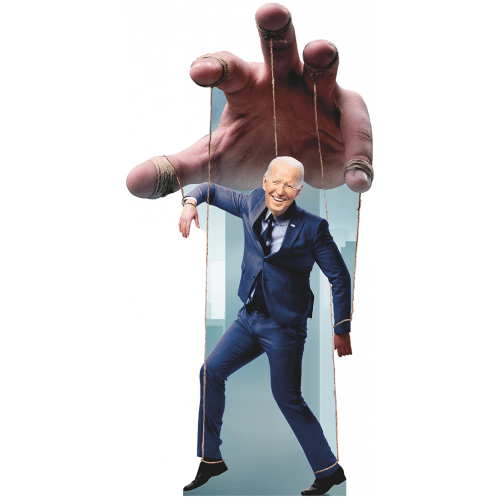


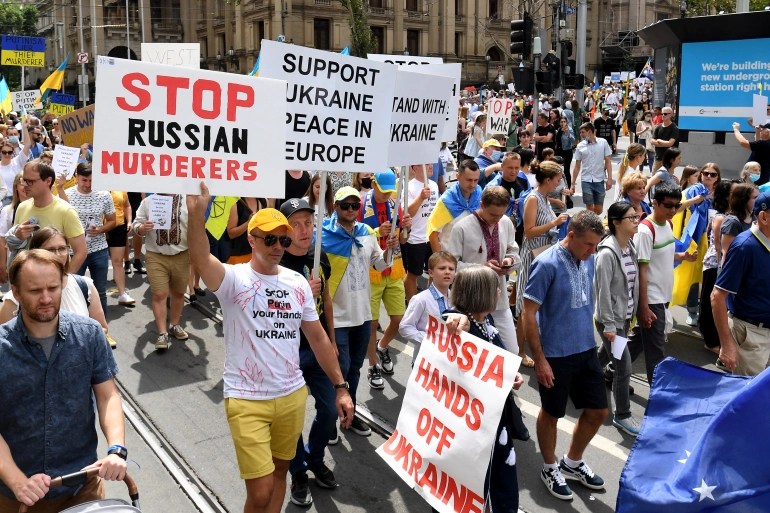
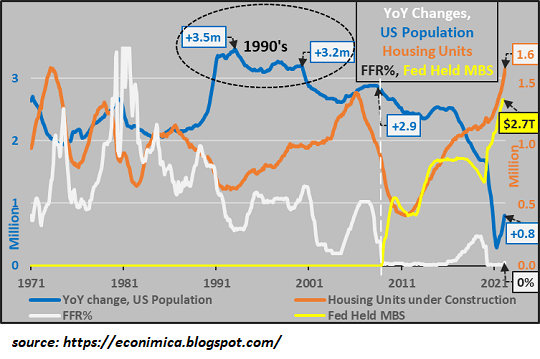
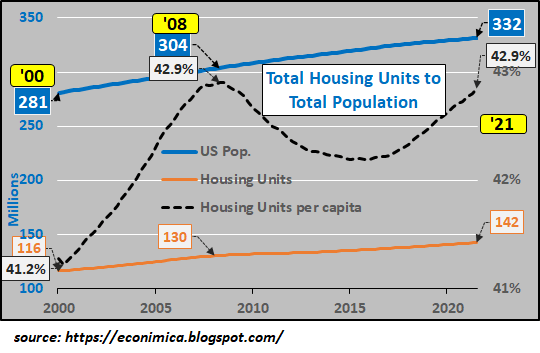
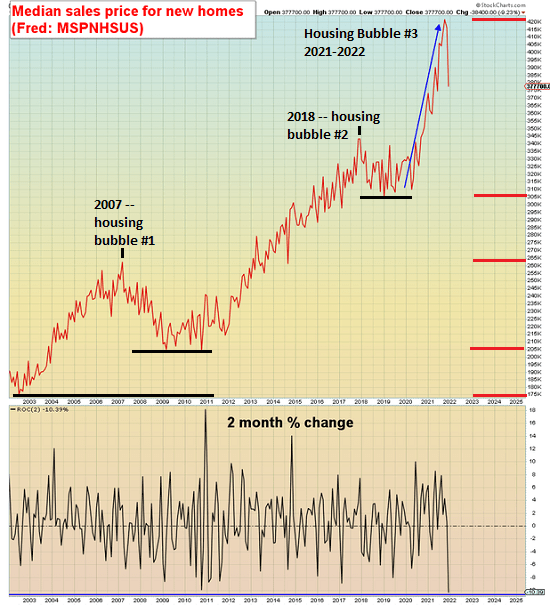
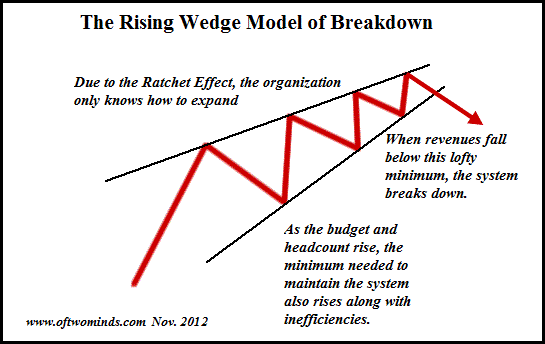
 After the Crash