

By Sadie Doyle
Source: The Baffler
Leonard Nimoy, who passed away this past Friday, was less an actor than an icon, an ever-present figure and a seemingly universal pop-culture touchstone. What struck me, upon hearing the news of his death, was that I’d somehow assumed he couldn’t die. It seemed as if Leonard Nimoy had always been there, in one form or another—as Spock, as himself on the best episodes of The Simpsons, as the man singing that ridiculously earworm-y theme song to the animated Hobbit movie—and I’d believed he always would be.
Not bad, for a guy whose biggest claim to fame was a TV show that was cancelled after three seasons. Despite his understandable discomfort with being identified solely with Star Trek (his first memoir was entitled I Am Not Spock, after all), it’s Spock, and Star Trek, that will be Leonard Nimoy’s most lasting legacy.
The role also explains much of the emotional hold he had on fans: he was the purest and clearest symbol of Star Trek’s utopian vision. Spock was an icon of perfectible human nature existing in a perfected world.
The Star Trek universe’s political vision is fun in part because it’s so massively impractical. The reasons I adored it as a child are the same reasons I find it so charming today. To start with, Star Trek is explicitly post-capitalist. No one worries about money; the characters seem to show up to work simply because they like being there. And the one alien species that does operate on a capitalist structure, the Ferengi, are villains. Yet the Federation is entirely devoid of the problems anti-capitalists face now: no one gets stuck with a crap job on the spaceship, because all of the “bad” jobs (factory labor, secretarial work, cleaning the Holodeck) are automated. No one has to worry that sharing resources will deprive them of things they want; in the Federation, everyone is comfortably middle-class, if not rich.
Needless to say, this is impossible. As ecofeminists like Vandana Shiva and Maria Mies have repeatedly affirmed, affluent, technologically enabled Western lifestyles simply can’t be universalized. (See, for instance, this excerpt from their book Ecofeminism (PDF). In the real world, at least, the Earth is a closed system. There’s only so much stuff we can use. Western ideas of “comfort” or affluence depend on Westerners using up vastly disproportionate amounts of that stuff, which depends on global capitalism, which depends on strategically impoverishing other countries and using them as a source of exploited labor. We can create a world where no one is poor, but never a world where everyone is rich; the Earth simply can’t produce enough to support that level of consumption.
But you know what solves the problem of the Earth as closed system? Spaceships, that’s what. In Star Trek, there is infinite Stuff, and whatever you don’t have, you just find on a new planet, or get from the replicator. Poverty and exploitation are things of the past, because their fundamental cause—competition for limited resources—simply doesn’t exist.
Star Trek’s perfect social reality is nothing next to its vision of perfect people. It’s not so much that Star Trek is dorky—although every character on those shows is deeply dorky—as that it lacks the necessary conditions for coolness to arise. There’s no counterculture; the culture is already perfect, so who’d want to counter it? There’s no youthful rebellion—even Wesley Crusher, the much-abhorred teenage pipsqueak of Star Trek: The Next Generation, hangs out mostly with his mom—because there’s nothing to rebel against.
If the Federation can seem humorless, it’s only because the keenest humor, as Freud reminds us, arises from hostility; in Star Trek, interpersonal hostility has been replaced with an all-encompassing sweetness, a sense that, although the characters on the Enterprise may chafe each other occasionally, they’re ultimately friends, making common cause in the best of all possible worlds.
Which brings us to Spock, and to Nimoy. Though Spock is half Vulcan—and, as such, treated to some of the show’s few explicit acknowledgements that racism might not just disappear, via McCoy’s frequent references to him as a “green-blooded goblin”—he was also Star Trek’s clearest statement of what a perfected human might be. His character is cleansed of hatred, fear, greed, and self-destructive impulses, just as the show’s universe is cleansed of oppression. He is a strict rationalist; the show, likewise, puts its faith in science to resolve all practical and emotional problems. If someone is getting on Spock’s nerves, he merely remarks that their actions are “highly illogical.” If something threatens his life, he’s more likely to call it “fascinating” than panic or run away.
Try to visualize Spock yelling at someone in rush-hour traffic. Visualize Spock in the midst of an acrimonious divorce, or picking a pointless fight with a friend after a rough day at work. You can’t. Those are the parts of human nature that are ugly and hard to manage, the parts that we don’t like, and that others don’t like about us. Spock has none of them.
Ridding ourselves of hostility and irrationality is just as impossible as everything else in Star Trek. Nimoy’s great gift as an actor was to make it seem plausible: With his seriousness, with his stillness, with the reserves of humor we could always sense glinting just under the surface (that eyebrow!), he made Spock a real person, and so gave our ideal selves form. That gift made him the most beloved character in one of our most beloved stories. And Star Trek granted him his own measure of immortality. Leonard Nimoy couldn’t stay with us forever. But Spock can.

New Analysis Shatters Narrative of Charter School Success

In Minnesota, ‘new information is fueling critics who say the charter school experiment has failed to deliver.’
By Deirdre Fulton
Source: CommonDreams.org
Public schools are outperforming charter schools in Minnesota, in some cases “dramatically,” according to a new analysis by the state’s Star-Tribune newspaper.
In addition, many charter schools fail to adequately support minority students, close examination of the data revealed.
Journalist Charlene Briner, the Minnesota Department of Education looked at 128 of the state’s 157 charter schools and found “that the gulf between the academic success of its white and minority students widened at nearly two-thirds of those schools last year. Slightly more than half of charter schools students were proficient in reading, dramatically worse than traditional public schools, where 72 percent were proficient.”
Between 2011 and 2014, McGuire reported, 20 charter schools failed to meet the state’s expectations for academic growth each year, “signaling that some of Minnesota’s most vulnerable students had stagnated academically.”
Charlene Briner, the Minnesota Department of Education’s chief of staff, told the newspaper that she was troubled by the information, “which runs counter to ‘the public narrative’ that charter schools are generally superior to public schools.”
“Minnesota is the birthplace of the charter school movement and a handful of schools have received national acclaim for their accomplishments, particularly when it comes to making strong academic gains with low-income students of color,” the Star-Tribune claims. “But the new information is fueling critics who say the charter school experiment has failed to deliver on teaching innovation.”
Education analyst Diane Ravitch notes: “Minnesota was the home of the charter movement, which began with high expectations as a progressive experiment but has turned into a favorite mechanism in many states to promote privatization of public education and to generate profits for charter corporations like Imagine, Charter Schools USA, and K12. Today, charter advocates claim that their privately managed charters will ‘save low-income students from failing public schools,’ but the Minnesota experience suggests that charters face the same challenges as public schools, which is magnified by high teacher turnover in charter schools.”
The findings back up a report (pdf) put out last fall by the Institute on Metropolitan Opportunity at the University of Minnesota Law School, which examined the success and failures of the charter school system in Chicago, Illinois.
That study concluded:
Sadly the charters schools, which on average score lower that the Chicago public schools, have not improved the Chicago school system, but perhaps made it even weaker. Further charters, which are even more likely to be single race schools than the already hyper segregated Chicago school system, have not increased interracial contact, an often-stated goal of charter systems. Finally, the fact that Chicago charters use expulsion far more often that public schools deserves further study. In the end it is unlikely that the Chicago charter school experience provides a model for improving urban education in other big city school districts.
Meanwhile, in Philadelphia, the School Reform Commission plans to vote on no fewer than 39 charter school applications at a special meeting starting Wednesday afternoon. There will be opportunity for final statement by applicants and public commenting by just 39 speakers who registered in advance.
Earlier this month, a pro-charter, non-profit organization offered the cash-strapped city school district up to $35 million to help defray the costs of enrolling an additional 15,000 students in new charter schools.
The Matrix Is Real and How It Will Change All Of Our Lives
By Paul Craig Roberts
Source: King World News
Americans are the most manipulated people in history. Since 2008, the economy has been manipulated for the benefit of a few oversized banks “too big to fail.” US foreign policy has been manipulated to serve the hegemonic agenda of a handful of neoconservatives. These manipulations have undercut the consumer basis of the US economy and have pushed the American people into a conflict situation with Russia and China.
Lies, US Economic Collapse And Nuclear War
US economic collapse and nuclear war are the two most likely outcomes of Washington’s manipulations of the American people. Time and again, the American public has fallen for transparent lies and orchestrated events. 2015 is a decisive year. Will a credulous people cast off their gullibility, or will they be swept away by economic collapse and war?
There are reasons to believe that the government’s manipulations have overreached and are crossing the point of believability, even on the part of credulous Americans. Let’s review some of these manipulations — first, economic, and then foreign policy.
Unemployment Number Is Meaningless
On January 9, the US government told Americans that the unemployment rate had fallen to a comforting 5.6 percent, an indication that the Federal Reserve’s policy of Quantitative Easing was successful in restoring the US economy. A 5.6 percent rate of unemployment suggests that Americans have a reasonable chance of finding a job. Yet we know there are millions of discouraged workers who have given up looking for a job.
The explanation of this paradox is that the 5.6 percent unemployment rate (U.3) does not include unemployed people who have not looked for a job in the previous four weeks. These unemployed are called “discouraged workers.” If they have been discouraged for less than one year, they are counted in a seldom-reported measure of unemployment (U.6). This rate stands at 11.2 percent, twice as high as the unemployment rate stressed by government and financial media.
The 11.2 percent rate is an official measure, but it is not publicized because it indicates a dismal employment outlook 5.5 years after the 2008 recession was declared over, in June 2009. What kind of recovery is it when the unemployment rate remains at 11.2 percent years after the recession has officially ended?
The Great Lie Exposed
The story worsens. The 11.2 percent rate does not include the millions of unemployed long-term discouraged workers (those discouraged for more than one year). Prior to 1994, the US Bureau of Labor Statistics counted the long-term discouraged as unemployed, and the government of Canada still does. John Williams (shadowstats.com) continues to include the long-term discouraged. When the long- term discouraged are added to the U.6 measure, the rate of unemployment again doubles, to 23 percent.
In other words, the actual unemployment rate is actually four times higher than the comforting figure released January 9.
Inflation Rate Also Falls Victim
The government engages in similar deception with the inflation rate. If the price of an item in the index rises, a lower-priced item is substituted, thus eliminating inflation by substitution. Inflation also is eliminated by redefining a price rise as a quality improvement.
By undercounting inflation, the government reports price increases as real economic growth, denies cost-of-living increases to Social Security recipients, and justifies paying savers negative real interest rates. These manipulations provide banks with free money, thus boosting bank profits while encouraging the stock market with “good news.”
Americans who search for jobs without success know other Americans in the same situation. As time passes, they learn from experience that the unemployment rate cannot be low and falling when jobs are harder to find. People who shop for food and pay utility bills know inflation is far higher than the government reports. Experience and the passage of time make the government’s numbers less and less believable.
Global Financial Markets Manipulated
The financial markets also are manipulated. To protect the dollar from declining in value due to its overproduction, the Federal Reserve’s bullion bank agents drive down the price of gold and silver by dumping uncovered shorts in the futures market. Since 2011, we have had the extraordinary situation in which the prices of gold and silver have been driven down despite strong demand and constraints on supply — a result that can be achieved only by manipulation in the futures market.
The dollar’s value also is manipulated by foreign central banks in cooperation with Washington. The Japanese and European central banks print yen and euros to protect the dollar’s exchange value. If all major currencies also are being printed, the dollar cannot decline.
The government’s Plunge Protection Team can prevent major stock-market corrections by stepping in and purchasing S&P futures, thus preventing the market’s overvaluation from bursting the bubble.
These manipulations are apparent to experienced investors. Sooner or later, attentive Americans will realize that the government’s deceit is not limited to the marketplace, but extends into foreign policy.
Fooled Over And Over Into War
Ever since the Clinton regime’s demonizations of Yugoslavia and Serbia, Americans have been deceived into supporting expensive wars and foreign-policy positions that are not in their interest. Washington’s demonizations of the Taliban, Osama bin Laden, Saddam Hussein, Gaddafi, Assad, Iran and of Muslims generally have resulted in 14 years of wars in which seven or eight countries have been invaded, bombed and attacked with drones. Increasingly, people at home and abroad understand these wars and bombings are based on lies and deceptions.
The destruction of countries and the massive human hurt happened because the US government lied and deceived.
There were no weapons of mass destruction in Iraq. Assad did not use chemical weapons in Syria. Gaddafi did not issue Viagra to his troops to assist in the rape of Libyan women. Iran does not have a nuclear- weapons program.
Millions of Muslims have been killed, maimed and dislocated by these wars, and tens of thousands of American soldiers have been killed and physically or psychologically maimed. The destruction of countries and the massive human hurt happened because the US government lied and deceived.
The most extraordinary aspect of the Charlie Hebdo event is that the French cartoonists are being championed in the name of free speech. Yet the Anglo-American world does not have free speech. Free speech, if it involves criticism or exposure of the government, is being redefined as “domestic extremism.” Criticism of Washington now implies that the critic is hostile to the public, a possible extremist who must be deterred before he inflicts harm on innocents. As Glenn Greenwald noted, try satirizing Israelis in the manner that Charlie Hebdo satirized Muslims, and you will find out how little free speech there is. http://bit.ly/1xYF93V Free speech is used to demonize Washington’s hand-picked enemies. That’s about as far as it goes.
Washington Demonizing Russia
As 2014 drew to a close, Washington was at work demonizing Russia and its president. Russia no more invaded Ukraine than Saddam Hussein had weapons of mass destruction. But despite years of experience with the government’s foreign-policy lies, polls show that more than 60 percent of the US population has fallen for Washington’s demonization of Russia.
We now have two decades of evidence that Washington uses demonization as a prelude to war. Russia and China, recognizing Washington’s intent to destabilize, have formed a strategic alliance. War with Russia and China would not be like war with Iraq and Libya, or drone attacks on Yemen and Pakistan. Unlike Saddam Hussein and Iran, Russia and China do have weapons of mass destruction — plenty of them.
Whereas Americans are not subject to any meaningful retaliation from Washington’s wars against Muslims, Washington’s aggressive warlike policy toward Russia and China, ringing both countries with military bases while demonizing both with false charges, threatens the life of every American and every person on earth. A threat of this magnitude could pull Americans out of their insouciance and force them to confront the government over its dangerous manipulations of public opinion.
Governments successful with their deceptions end up overreaching. The Charlie Hebdo affair possibly is an overreach. The Paris shootings have many characteristics of a false-flag operation. The attack on the cartoonists’ office was a disciplined professional attack associated with special forces; yet the suspects later corralled and killed seemed bumbling and unprofessional. It is like they were two different sets of people.
Is This Really The Official Story?
Muslim terrorists are usually prepared to die in the attack; yet the two professionals who hit Charlie Hebdo so hard escaped. Their identities were established by the unprofessional and unlikely act of leaving their identification in the getaway car. This reminds me of the undamaged passport miraculously found among the ruins of the two World Trade Center towers. The incriminating passport was the only undamaged item in the entire ruins and was the basis for identifying the 9/11 alleged hijackers.
It is a plausible inference that the ID left in the getaway car was the ID of one of the two brothers later killed by police, from whom we will never hear anything, and not the ID of the professionals who attacked Charlie Hebdo. An important fact that supports this inference is the report that the third suspect in the attack, Hamyd Mourad, the alleged driver of the getaway car, when seeing his name circulating on social media as a suspect, realized the danger he was in and quickly turned himself in to police for protection against being murdered by security forces as a terrorist.
Hamyd Mourad says he has an ironclad alibi. If so, this makes him the despoiler of a false-flag attack. If that is the case, he is likely to be coerced or tortured into some sort of confession to support the official story. http://bit.ly/1Aai8pJ
Mainstream Media Clueless
The American and European media have ignored this important story. I googled Hamyd Mourad and all I found (January 12) was the main US and European media reporting that the third suspect had turned himself in. The news was reported in a fashion that gave credence to the accusation that the suspect who turned himself in was part of the attack. Not a single US mainstream media source reported that the alleged suspect turned himself in because he had an ironclad alibi. The list of sources that reported Mourad’s turning himself in to police report in a way that can be read as confirmation of his guilt.
Some merely reported it in a headline with no coverage in the report. The list of those I googled includes:
• The Washington Post (January 7, by Griff Witte and Anthony Faiola)
• Die Welt (Germany), “One suspect has turned himself in to police in connection with Wednesday’s massacre at the offices of Parisian satirical magazine, Charlie Hebdo”
• ABC News (January 7), “Youngest suspect in Charlie Hebdo Attack turns himself in”
• CNN (January 8), “Citing sources, the Agence France Presse news agency reported that an 18-year- old suspect in the attack had surrendered to police.”
High-Ranking Police Official Suddenly Commits Suicide?
Another puzzle in the official story that remains unreported, according to my 6 p.m. Google search on January 12, is the alleged suicide of a high-ranking member of the French Judicial Police who had a lead role in the Charlie Hebdo investigation. For unknown reasons, a police official involved in the most important investigation of a lifetime decided to kill himself in his police office in the middle of the night while writing his report on his investigation. The alternative media reports it: http://bit.ly/1xc8W1W So did the UK Telegraph. But no suspicion is seen in the police official’s death, and as far as the US “presstitute” media is concerned, it did not happen. There are no reports, domestic or foreign, at the time of writing, about his death and whether his report has disappeared.
Media Cloaks The Lies And Crimes Of Government
As Gerald Celente has pointed out for years and as Patrick L. Smith writes in CounterPunch (Vol. 21, No. 10, 2014), the media serve as presstitutes. The media justify withholding information from the public on the basis of patriotism. Patriotism requires the media to support the government, not the truth. Patrick Smith quotes former New York Times editor Jill Abramson, who says in defense of the New York Times misleading the American people: “Journalists are Americans, too. I consider myself to be a patriot.” Of course, journalists lie to us because their careers are controlled by government and corporations dependent on government. Patriotism has little to do with it, but it serves as a cover. Patriotism is like “national security,” a cloak for the lies and crimes of government.
Life In The Matrix
Here we have it. The media lie to us because they are patriots. We believe the lies because we are patriots. More likely, the fact of the matter might be that both the media and the people are morally and spiritually corrupt.
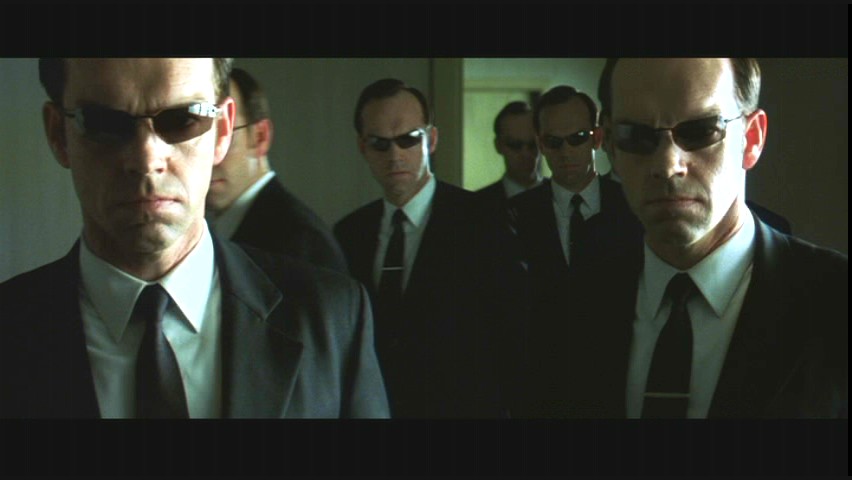
In other words, we willfully live in The Matrix and are our own worst enemy.
The Soft Drink That Conquered the World
Environmental historian Bartow J. Elmore discusses the global consequences of ‘Coca-Cola capitalism.’
By Elaina Koros
Source: USnews.com
From its origins as a patent medicine formulated in a small southern pharmacy, Coca-Cola has grown into a multibillion-dollar company. Headquartered in Atlanta, it possesses one of the world’s most valuable brands. Yet despite its exponential growth over the decades, Coca-Cola has kept its operations streamlined by relying on partnerships with commercial titans like Monsanto and integrating its manufacturing plants with public water and recycling infrastructures, explains Bartow J. Elmore, an environmental historian at the University of Alabama. In his new book, “Citizen Coke: The Making of Coca-Cola Capitalism,” he argues that this business model, though widespread and successful, has global environmental consequences in the modern age. Elmore recently spoke with U.S. News about the sustainability and applicability of what he calls “Coca-Cola capitalism.” Excerpts:
What inspired you to write this book?
I grew up in Atlanta, born and raised on the syrupy Coke soft drink. Seeing this product that was from my hometown end up everywhere, I wondered how [something] that had started in the Jim Crow South in 1886 ended up all over the world. As someone who was interested in environmental history, I was particularly interested in answering that question from a materials standpoint. Beyond the advertising and marketing, how did the company acquire the natural resources it needed to put its product on retail shelves around the globe?
What is Coca-Cola’s business model?
I call the model Coca-Cola capitalism. I’d say what makes Coke great is not so much what Coke does, but what it doesn’t do. Coca-Cola embeds itself in systems of production and distribution that it doesn’t own. Coke didn’t own sugar plantations. It didn’t own caffeine processing plants. It didn’t own bottling businesses for most of its history. [Instead, it] relied on a host of independent businesses to supply its needs and to distribute its products.
How are Coke operations impacting the environment globally?
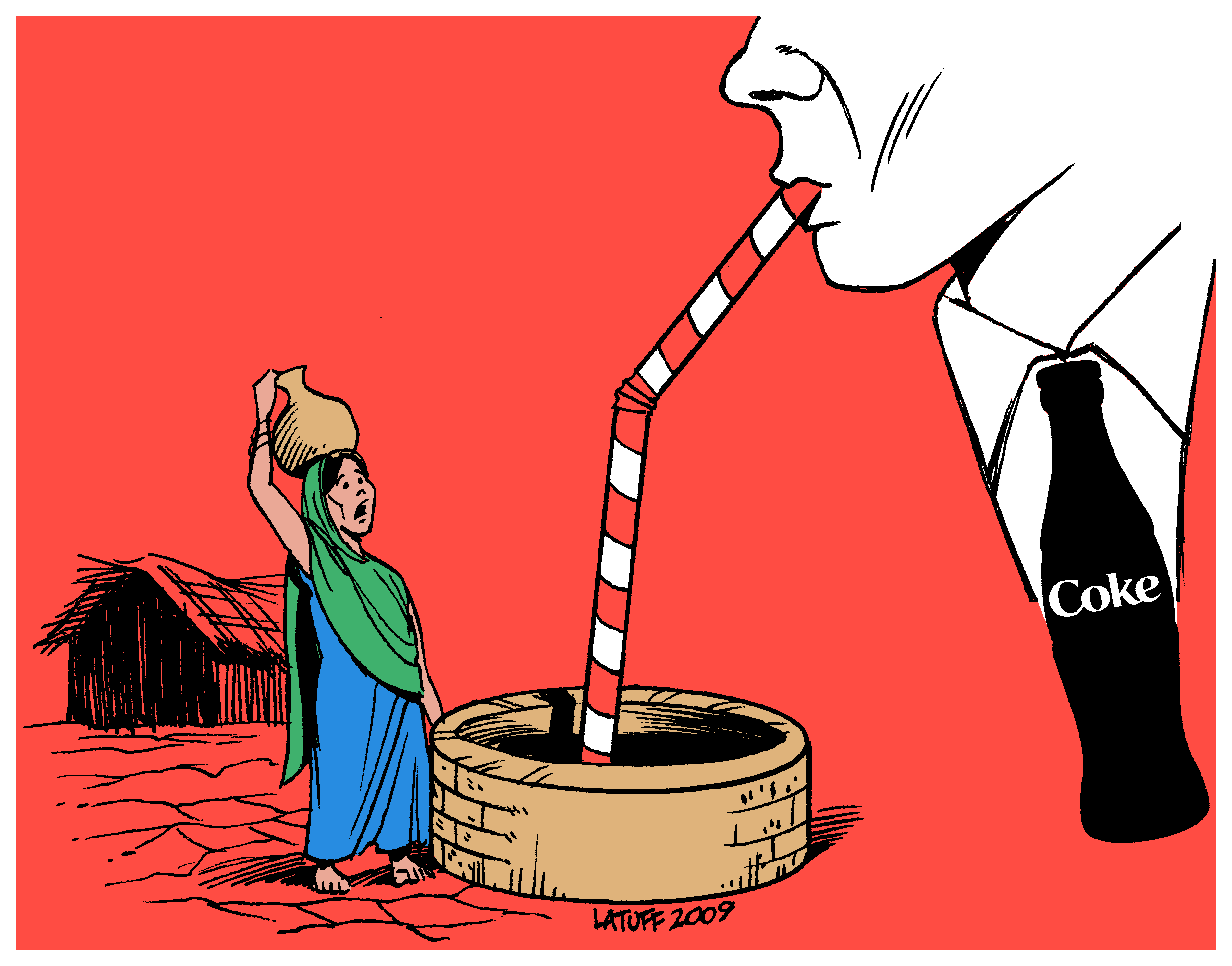
Coke is expanding into increasingly arid regions of the developing world, and that’s in part because Coke is going to places where there aren’t the same kinds of health concerns that there are in the United States. Unfortunately, that means they’re extracting water from places that don’t have a great deal of water to spare.
I think of the human body as part of the environment, and I end the book by explaining how the stomach has become a kind of silo, a storage unit for Coke’s excess. In a nation where more than 30 percent of people are obese today, this is a hot issue for Coca-Cola.
How has Coke’s expansion impacted other companies and the public?
One great example is Monsanto. You wouldn’t have a chemical company like Monsanto without Coke, because Coke in the early 20th century bought all of Monsanto’s main product, which was saccharin, an artificial sweetener. If you go to the Monsanto website, they say that in 1903 and 1905, without Coca-Cola’s massive purchases of their saccharin, they would not exist. I think that’s true of a lot of companies. It’s amazing how many businesses Coke has kept alive through its huge purchasing contracts.
When I say that Coca-Cola capitalism involves partnering with people, that often means the government. I think two good examples of this are public water supplies and recycling. Coke, throughout its history, depended on bottlers who tapped into the public water supply to access 80 percent of what they sold to consumers, which was water, 80 percent of the finished product. In the early 20th century, cities and even the federal government participated in building this infrastructure, spending billions of dollars to bring fresh, clean water to cities and increasingly to rural areas of the country. So, what made Coke expand so rapidly was that it was able to tap into that government infrastructure.
The other example would be recycling. If you look at the history, you see that Coca-Cola and its industry partners lobbied heavily in Congress to try and get curbside recycling to be the solution to the nation’s litter problem. Why not have you and I, the regular taxpayer, pay for that infrastructure and, in a way, conveniently bring the company’s packaging back to the company?
How would you curb some of the negative effects of Coke’s operations and products?
One thing is to make companies pay for the pollution they generate. If we don’t like litter, then we should force corporations to realize that by putting a price tag on it. I would say the same thing goes for obesity. If we think that these products contribute to really expensive health costs like obesity, then let’s make these corporations change. They’ll find ways to respond to the pressures that people put on them.
Life in the Algorithm

By Douglas Haddow
Source: Adbusters
The searches we make, the news we read, the dates we go on, the advertisements we see, the products we buy and the music we listen to. The stock market. The surveillance society. The police state, and the drones. All guided by a force we never see and few understand.
A series of calculation procedures that come together to constitute capitalism’s secret ingredient — the all holy algorithm, that which binds and optimizes. Those strange numerical gods who decide whether or not you’re a terrorist and what kids’ toy is going to set the market on fire this Christmas. But what are they, where did they come from and how did they get so powerful?
Algorithms are not new. You can trace their origin all the way back to a 9th century Persian mathematician by the name of Muhammad ibn Musa al–Khwarizmi (Algoritmi in Latin) from whom the word derives its name. Then there was Abu Yusaf Ya’qub ibn Ishaq al–Kindi, a contemporary of al–Khwarizmi’s at Baghdad’s House of Wisdom. He discovered and developed the science of frequency analysis, or code–breaking, providing a basis for code breaker Alan Turing to develop his Turing Machine, the theoretical prototype for the 9 billion devices currently sending and receiving signals through the Internet.
When we talk about algorithms, when they come up in conversation, often tied to latent and emerging fears, we’re not talking about the mathematical models behind them, we’re talking about the models that the models were modeled on. Most people have never heard of a polytope, Boolean Logic or the Hirsch Conjecture. But everyone has a credit score, whether they like it or not.
If we want to interrogate the true nature of these numbers, the wizard behind the ghost in the machine, we need to look no further than Adam Smith, that dour Scot who lived with his mum and accidentally created the modern world.
Smith was neither a modernist nor a cosmopolitan. He was an absent’minded hermit who never married, had few friends, suffered from alternating fits of depression and hypochondria, travelled outside Britain on just one occasion and demanded that all his personal writing be burned upon his death. He was the supreme king of unintended consequences, a humble and misunderstood moral philosopher who became the patron saint of greed.
Most famously, and most tragically, Smith was an ambitious writer who got a bit flowery with his language on occasion, and, as a result, his entire legacy was reduced to two words: invisible and hand. As in, the Invisible Hand — that mysterious market force that secretly and surreptitiously guides all our actions and decisions. Or so we’ve been told.
In The Wealth of Nations, the blueprint for what became known as capitalism, Smith drops the phrase but once. It’s situated in a rather dry discussion on trade policy and is used as a metaphor in a straightforward critique of mercantilism’s excessive restrictions.
And that’s it. Just a cursory metaphor used for poetic flourish in an otherwise obscure and forgettable passage. And for the 150 years that followed the book’s publication, that’s exactly what it was — obscure and forgotten. Smith didn’t mention it, his contemporaries didn’t mention it, nor did his critics. Nary a soul on Earth repeated those two words or paid them any heed.
That is, until 1948, when everything changes.
If you look at a Google NGRAM chart of “invisible hand,” you’ll see that there was little to no interest in the phrase up until the 1930s and ’40s, at which point it begins to bubble up a bit, gaining traction in a few peripheral spheres here and there. Then in ’48, Chicago School economist Paul Samuelson writes a book called Economics: An Introductory Analysis, which would go on to become the best–selling economics book of all time.
In his book, Samuelson grabs hold of Smith’s wordplay and freebases meaning from it until a mere metaphor mutates into the economic doctrine that would define the shape and form of global finance for the remainder of the century, and beyond.
“Every individual, in pursuing only his own selfish good, was led, as if by an invisible hand, to achieve the best good for all, so that any interference with free competition by government was almost certain to be injurious,” writes Samuelson. And with that, not only is it justifiable to be callous in the pursuit of wealth, your callousness will somehow, vis–à–vis the invisible hand, uplift those you trample on your way to the top.
Picture Gordon Gekko, hair trickling with high–end product, walking with the gait of limitless sprezzatura, saying, “Greed is right, greed works. Greed clarifies, cuts through and captures the essence of the evolutionary spirit. Greed, in all of its forms; greed for life, for money, for love, knowledge has marked the upward surge of mankind.”
Samuelson would later go on to regret the liberties he took with Smith’s words, but the meme had already been injected into the passive hive mind of economics. What followed was a long and tangled game of economic telephone wherein Smith’s fatalistic conceit gradually took on mythical qualities. From turn of phrase to doctrine, from doctrine to dogma, from dogma to metaphysical law. The invisible hand became the celestial justification of the free market and the economic rationalist’s negation of anything that stood in its way.
Austrian economist Friedrich Hayek even went so far as to develop an entire theory of human interaction based on the myth. It was called Catallactics, and proposed that we did not live within an economy, but rather, a Catallaxy — a complex and self–organizing system in which every individual sent out a constant stream of complex signals that mixed to create overall market behavior.
Knowledge, Hayek argued, was distributed on an individual level, each person containing their own fraction of the whole.
The vast repository of human knowledge was inherently decentralized. Because of this, no central body or government agency could ever hope to contain enough of it to know what was really going on. But if allowed to move freely without meddling, these messages would come together to create order and equilibrium in the market.
This, he argued, is why the government should never meddle in the market. And why order could never be “planned,” and was instead “brought about by the mutual adjustment of many individual economies in a market.” As long as the signals, our private info–snowflakes, could float freely, the market would reach equilibrium.
Through Hayek, dogma became revelation — the invisible hand was not merely a magical presence promising equilibrium, it was also pointing us toward a not–too–distant utopia. And if we didn’t follow the hand? Oppression and despair would follow mankind into a dark hole of tyranny.
Hayek’s ideas spread swiftly through a series of think tanks connected to his economic clique, The Mont Pelerin Society, which counted Karl Popper, Ludwig von Mises and, of course, who else but Milton Friedman among its members. Together they successfully launched what we now call “neoliberalism” into the political consciousness.
Neoliberalism found its champions in Margaret Thatcher and Ronald Reagan. Thatcher regularly corresponded with Hayek and used the slogan There Is No Alternative (TINA) to explain her affection for its concepts. Reagan hired Friedman to be his economic advisor. And together they carried out an economic revolution that smashed trade unions and deregulated and privatized anything and everything that could be guillotined. From this axis of Anglos, it spread to other parts of the Commonwealth, then to Europe, Asia, South America and beyond.
But no matter how much they stripped away government meddling, somehow the “abstract signals” still weren’t getting through. The hand remained clenched and crises endemic. Asia, Argentina, the Eurozone, the 2008 meltdown, the flash crash. The market continually failing to magically self–correct and achieve equilibrium.
The faithful kept their faith and stuck to the program. The crisis, both economic and existential, were met with a recommitment to the faith in the form of austerity and technology and the dream persisted.
The problem was obvious to anyone outside the neoliberal thought–bubble: the invisible hand wasn’t real and it didn’t exist. It never had existed. It wasn’t just invisible, but immaterial, made from the twisted fantasies of economists obsessed with achieving an impossible “equilibrium.” You couldn’t touch it, and it couldn’t touch you.
Until now.
In 2010, when the Dow Jones Industrial dropped 1000 points in under a minute, the biggest one–day point decline in history, it received far less attention then it deserved, because everything returned to normal a few seconds later. Now, miniature flash crashes occur constantly throughout the day. But this crash was a turning point, demonstrating that something had changed. That something was that the neoliberals had achieved what communists, socialists and Christians never could: they made their god real, and in doing so, achieved their utopia. They just didn’t let the rest of us in on it.
The critical flaw in Hayek’s vision of the hand was that a “central body” could never gather enough information. We know this to be untrue, and with big data and the analysis and manipulation of that data through algorithmic equation, the missing link between money and the machine was discovered.
The searches we make, the news we read, the dates we go on, the advertisements we see, the products we buy and the music we listen to. The stock market … All informed by this marriage between mathematics and capital, all working together in perfect harmony to achieve a singular goal — equilibrium. But it’s a curious sort of equilibrium. Less to do with the relationship between supply and demand, and more about the man and the market.
All these algorithms we encounter throughout the day, they’re working toward a greater goal: solving problems and learning how to think. Like the advent and rise of high–frequency trading, they’re part of an optimization trend that leads to a strange brand of perfection: automated profit.
And their current day use, no matter how impressive the specs, is still rooted in 7th century code–breaking. Only now it’s about breaking our individual codes. Throughout the day we send out thousands of our own individual abstract signals and the algorithms figure out how best to streamline our existence into the market’s needs. We’re all just cyphers waiting to get cracked.
This is not the stuff of Orwell and Huxley, but Amazon and the NSA.
There is an overwhelming feeling of inevitability surrounding all of this. With computational capacity still threatening to double every two years, the algorithmic estate will continue to expand and become more sophisticated. All of this development, testing and research is leading to a predictable outcome. Given that they are leading investment and research in the sector, Wall Street financiers will develop the world’s first fully functioning Artificial Intelligence.
If any of this feels inevitable, it’s because it was designed to make us feel that way. If the algorithms that organize the world of money were turned on their head and used to analyze the defects in their guiding philosophy, they would shred it all on one razor sharp fact: the world beyond the market is still a real one. And no matter how sophisticated the math, how brilliant the AI, we will always be living in it.
Outside of The Wealth of Nations, Smith employed the Invisible Hand concept on only two other occasions. Once in his Theory of Moral Sentiments, where he slags off the rich, and the other in the History of Astronomy, where he says:
For it may be observed, that in all Polytheistic religions, among savages, as well as in the early ages of Heathen antiquity, it is the irregular events of nature only that are ascribed to the agency and power of their gods. Fire burns, and water refreshes; heavy bodies descend, and lighter substances fly upwards, by the necessity of their own nature; the invisible hand of Jupiter was never apprehended to be employed in those matters.
These days, the “savages” kick back, polish their yachts and let the machines do their thinking for them. Their god is a primitive and cruel one. Worse yet, it lacks imagination. The future it sees is just an optimized version of the present. Everything that falls within its gaze is predictable, because mathematical sequences are predictable. What remains to be seen is whether or not human beings are as predictable as the machines think we are.
The Global De-dollarization and the US Policies

By Vladimir Odintsov
Source: New Eastern Outlook
In its quest for world domination, which the White House has been pursuing for more than a century, it relied on two primary tools: the US dollar and military might. In order to prevent Washington from establishing complete global hegemony, certain countries have recently been revising their positions towards these two elements by developing alternative military alliances and by breaking with their dependence on the US dollar.
Until the mid-twentieth century, the gold standard was the dominant monetary system, based on a fixed quantity of gold reserves stocked in national banks, which limited lending. At that time, the United States managed to become the owner of 70% of world’s gold reserves (excluding the USSR), therefore it pushed its weakened competitor, the UK, aside resulting to the creation of the Bretton Woods financial system in 1944. That’s how the US dollar became the predominant currency for international payments.
But a quarter century later this system had proven ineffective due to its inability to contain the economic growth of Germany and Japan, along with the reluctance of the US to adjust its economic policies to maintain the dollar-gold balance. At that time, the dollar experienced a dramatic decline but it was saved by the support of rich oil exporters, especially once Saudi Arabia began to exchange its black gold for US weapons and support in talks with Richard Nixon. As a result, President Richard Nixon in 1971 unilaterally ordered the cancellation of the direct convertibility of the United States dollar to gold, and instead he established the Jamaican currency system in which oil has become the foundation of the US dollar system. Therefore, it’s no coincidence that from that moment on the control over oil trade has become the number one priority of Washington’s foreign policy. In the aftermath of the so-called Nixon Shock the number of US military engagements in the Middle East and other oil producing regions saw a sharp increase. Once this system was supported by OPEC members, the global demand for US petrodollars hit an all time high. Petrodollars became the basis for America domination over the global financial system which resulted in countries being forced to buy dollars in order to get oil on the international market.
Analysts believe that the share of the United States in today’s world gross domestic product shouldn’t exceed 22%. However, 80% of international payments are made with US dollars. As a result, the value of the US dollar is exceedingly high in comparison with other currencies, that’s why consumers in the United States receive imported goods at extremely low prices. It provides the United States with significant financial profit, while high demand for dollars in the world allows the US government to refinance its debt at very low interest rates.
Under these circumstances, those hedging against the dollar are considered a direct threat to US economic hegemony and the high living standards of its citizens, and therefore political and business circles in Washington attempt by all means to resist this process. This resistance manifested itself in the overthrow and the brutal murder of Libyan leader Muammar Gaddafi, who decided to switch to Euros for oil payments, before introducing a gold dinar to replace the European currency.
However, in recent years, despite Washington’s desire to use whatever means to sustain its position within the international arena, US policies are increasingly faced with opposition. As a result, a growing number of countries are trying to move from the US dollar along with its dependence on the United States, by pursuing a policy of de-dollarization. Three states that are particularly active in this domain are China, Russia and Iran. These countries are trying to achieve de-dollarization at a record pace, along with some European banks and energy companies that are operating within their borders.
The Russian government held a meeting on de-dollarization in spring of 2014, where the Ministry of Finance announced the plan to increase the share of ruble-denominated contracts and the consequent abandonment of dollar exchange. Last May at the Shanghai summit, the Russian delegation manged to sign the so-called “deal of the century” which implies that over the next 30 years China will buy $ 400 billion worth of Russia’s natural gas, while paying in rubles and yuans. In addition, in August 2014 a subsidiary company of Gazprom announced its readiness to accept payment for 80,000 tons of oil from Arctic deposits in rubles that were to be shipped to Europe, while the payment for the supply of oil through the “Eastern Siberia – Pacific Ocean” pipeline can be transferred in yuans. Last August while visiting the Crimea, Russia’s President Vladimir Putin announced that “the petrodollar system should become history” while “Russia is discussing the use of national currencies in mutual settlements with a number of countries.” These steps recently taken by Russia are the real reasons behind the West’s sanction policy.
In recent months, China has also become an active member of this “anti-dollar” campaign, since it has signed agreements with Canada and Qatar on national currencies exchange, which resulted in Canada becoming the first offshore hub for the yuan in North America. This fact alone can potentially double or even triple the volume of trade between the two countries since the volume of the swap agreement signed between China and Canada is estimated to be a total of 200 billion yuans.
China’s agreement with Qatar on direct currency swaps between the two countries are the equivalent of $ 5.7 billion and has cast a heavy blow to the petrodollar becoming the basis for the usage of the yuan in Middle East markets. It is no secret that the oil-producing countries of the Middle Eastern region have little trust in the US dollar due to the export of inflation, so one should expect other OPEC countries to sign agreements with China.
As for the Southeast Asia region, the establishment of a clearing center in Kuala Lumpur, which will promote greater use of the yuan locally, has become yet another major step that was made by China in the region. This event occurred in less than a month after the leading financial center of Asia – Singapore – became a center of the yuan exchange in Southeast Asia after establishing direct dialogue regarding the Singapore dollar and the yuan.
The Islamic Republic of Iran has recently announced its reluctance to use US dollars in its foreign trade. Additionally, the President of Kazakhstan Nursultan Nazarbayev has recently tasked the National Bank with the de-dollarization of the national economy.
All across the world, the calls for the creation of a new international monetary system are getting louder with each passing day. In this context it should be noted that the UK government plans to release debts denominated in yuans while the European Central Bank is discussing the possibility of including the yuan in its official reserves.
Those trends are to be seen everywhere, but in the midst of anti-Russian propaganda, Western newsmakers prefer to keep quiet about these facts, in particular, when inflation is skyrocketing in the United States. In recent months, the proportion of US Treasury bonds in the Russian foreign exchange reserves has been shrinking rapidly, being sold at a record pace, while this same tactic has been used by a number of different states.
To make matters worse for the US, many countries seek to export their gold reserves from the United States, which are deposited in vaults at the Federal Reserve Bank. After a scandal of 2013, when the US Federal Reserve refused to return German gold reserves to its respective owner, the Netherlands have joined the list of countries that are trying to retrieve their gold from the US. Should it be successful the list of countries seeking the return of gold reserves will double which may result in a major crisis for Washington.
The above stated facts indicate that the world does not want to rely on US dollars anymore. In these circumstances, Washington relies on the policy of deepening regional destabilization, which, according to the White House strategy, must lead to a considerable weakening of any potential US rivals. But there’s little to no hope for the United States to survive its own wave of chaos it has unleashed across the world.
Vladimir Odintsov, political commentator, exclusively for the online magazine “New Eastern Outlook”
Former CIA Official Lied in Boston Bombing Cover-Up

By Daniel Hopsicker
Source: MadCowNews
Former top CIA official Graham Fuller lied in a press interview about his former son-in-law, Ruslan Tsarni, the uncle of “The Brothers Tsarnaev,” Tamerlan, now dead, and Dzhokhar, soon to go on trial in Boston for allegedly planting a homemade pressure-cooker bomb packed with shrapnel near the finish line of the Boston Marathon.
“A story on the Internet implying possible connections between Ruslan (Tsarni) and the Agency through me is absurd,” Fuller said in an Apr 27 2013 story headlined “Former CIA officer: ‘Absurd’ to link uncle of Boston suspects, Agency,” in Washington-D.C.-based Al-Monitor, which bills itself as the “Pulse of the Middle East.”
Fuller was responding to an exclusive report published here headlined “Was Boston Bombers ‘Uncle Ruslan’ with the CIA?”,which he and reporter Laura Rosen churlishly refused to credit, calling it merely a “story on the Internet” even as they labored to debunk it. Yet it was reported and re-published so widely in the aftermath of the Boston Marathon terror attack that Fuller felt compelled to respond.
Well, compelled to respond may be a little strong. Still, respond he did, in an interview which marshalled arguments to indicate questioning whether Ruslan Tsarni’s connection with the CIA had been through his famous former father-in-law were not just an exercise in futility. They were absurd.
Just to be clear, there is zero evidence to indicate either Uncle Ruslan Tsarni or the CIA hired the Tsarnaev Brothers to blow up Boston. There is, however, abundant evidence that elements of the U.S. Government have been playing footsie with Chechen terrorists, presumably to divert Russia from committing the kind of rash Neo-Communist Gangster stuff they’d be doing already unless we’re very very careful.
Here’s a troubling question: If it was blow-back from that campaign which blew up in Boston—throwing covert U.S. support at Chechen terrorists—do you think anyone in the U.S. Government is eager to let the American people in on that no-doubt classified-for-reasons-of-national-security secret?
Why, the very idea seems—to use Mr. Fuller’s word—absurd.
Uncle Ruslan meets ‘the boys’
In his interview, Graham Fuller admitted that a second bombshell disclosure in an exclusive Apr 26, 2013, report headlined Boston bombers’ uncle married daughter of top CIA official, also was true: The Tsarnaev Brothers’ uncle, Ruslan Tsarni, was his former son-in-law.
Tsarni was married to Graham Fuller’s daughter Samantha between 1994 and sometime near the dawn of the millenium, Fuller grudgingly admitted. Still, he insisted,without explanation, that suggestions that law enforcement should be checking to see if Ruslan Tsarni had “hooked up” with the CIA through Fuller were “absurd.”
It was an odd assertion. At the very moment he was making it, investigators with the FBI—who remained convinced the Tsarnaev Brothers had outside help and support—were in an intensive manhunt to find foreign connections to the case. Asking questions about links between Ruslan, the CIA, and the bombers would not be seen as out of bounds. Or would they?
Of course, statements by former top CIA officials should be taken with a large grain of salt. Double the salt allowance if the “former” official is still engaged in intrigue in Central Asia.
Hannibal crosses the Alps; Fuller fords his Rubicon
And that’s before discounting fstill further for being widely and infamously known as the man who convinced the Reagan Administration that it would be a neat idea to send a callow Marine Lt. Col. named Oliver North with a cake under one arm and some TOW missiles under the other to a meet-and-greet in Tehran with the Ayatollah.
But back to the body blows being thrown against the credibility of anyone with the temerity of reporting the obvious…
“Fuller retired from the agency almost a decade before the brief marriage,” sniffed Laura Rosen, the reporter selected to give him a sympathetic hearing.
“I, of course, retired from CIA in 1987,” Fuller offered helpfully, suggesting his Agency past had receded into the far reaches of recorded history, a dimly-remembered time located somewhere just this side of Hannibal crossing the Alps.
If Fuller retired, moved to Florida, and taken up golf while decked out in the vibrant hues of lime-green and canary-yellow sweater-slack combinations favored in the Florida golfing fraternity, he might have a point.
That was not, alas, how Fuller chose to spend his dwindling years. Even today he keeps stirring the pot in Central Asia, a long-time player in what previous generations called the Great Game.
He’s a consultant at Rand Corp; and he’s written a prodigious number of books with Great-Game-y titles: “Turkey & the Arab Spring;” “The Arab Shia’a;” “The Future of Political Islam;” “Turkey’s Kurdish Question;” “The Geopolitics of Islam & the West. “
Kazakh-style crony capitalism, illustrated
Ruslan Tsarni’s former father-in-law isn’t his only link to the CIA. There’s also his decades-long work history, discovered in a press release from a dodgy oil-related company with no assets and a ridiculous name whose President had been somehow lured away from a life-long career with Halliburton.
It reveals that Tsarni had worked in Central Asia for the Agency for International Development (USAID)—a U.S. Government Agency often used for cover by the CIA, including a two-year stint in the former Soviet Republic of Kazakhstan during the “Wild West” days of the early 1990’s, when anything that wasn’t nailed down in that country was up for grabs.
At a time when vast natural resources and enormous fortunes were ‘in play’ during the economic free-for-all in the “Stans” after the collapse of the Soviet Union, 24-year old Ruslan Tsarni was already a ‘player.’
Ruslan Tsarni is once again working (since 2010) working for USAID. Oddly enough, Russia, the country competing with the US for influence in the region, unceremoniously kicked USAID out of the country just months before the Boston Bombing terror attack, for, according to a Putin spokesmen, encouraging his political opposition.
Ruslan Tsarni & the Congress of Chechen International Organizations
In his interview with Laura Rosen, Fuller uncorked a whopper. Said Fuller,“Like all Chechens, Ruslan was very concerned about his native land, but I saw no particular involvement in politics [although] he did try to contact other Chechens around.”
Perhaps Fuller felt that no one would notice. Perhaps he felt immune to fact-checking, a sentiment common among Reagan-era CIA officials. But whatever his motivation, he has been caught in a provable lie. Ruslan Tsarni, as Fuller well knows, has been up to his neck in Central Asian political intrigue for decades.
On August 17,1995, while Ruslan Tsarni and Graham Fuller’s daughter Samantha were still virtual newlyweds, Tsarni incorporated a company in Maryland called the “Congress of Chechen International Organizations.”
Ruslan Tsarni was listed as the company’s resident agent. The group sent aid to Islamic terrorists in Chechnya, including thousands of pairs of combat boots, coordinating its efforts with another so-called “charity,” Benevolence International, designated “financiers of terrorism” by the Treasury Department before being shut down by US Attorney Patrick Fitzgerald.
The company’s listed address, 11114 Whisperwood Ln. Rockville MD., was the home address of former top CIA official s Graham Fuller.
Today, the home remains listed in his wife’s name.
“An impromptu press conference aired live on network television”
With worldwide attention on the upcoming trial of Boston Marathon bombing suspect Dzhokhar Tsarnaev, what facts could possibly be being deliberately de-selected and hidden from view?
In “Long Mile Home” a book about the Boston Marathon Bombing by two Boston Globe reporters, everything they have to say about Ruslan Tsarni isn’t much:
“On the Friday morning after Tamerlan was killed, with police still hunting for Dzhokhar, investigators and reporters found their uncle, Ruslan Tsarni, a corporate attorney living outside Washington D.C.
When he emerged after speaking to FBI agents inside his home, he walked up to television cameras and reporters gathered outside looking for the latest in what had become the biggest story in the world. In an impromptu press conference aired live on network television, Tsarni offered condolences to the bombing victims, denounced his nephews, and ordered Dzhokhar to turn himself in.
Asked to explain what provoked the brothers to attack, Tsarni said, “Being losers. Hatred for those who were able to settles themselves. These are the only reasons I can imagine. Anything else—anything to do with religion, with Islam –that’s a fraud. It’s a fake.”
Asked how he felt about the United States, Tsarni said, “I respect this country. I love this country.”
An opinion writer for the Washington Post called his words “inspiring,” and said his press conference was “a moment we all needed.”
The New Yorker said he “looked like he might hunt his nephew down himself.”
That’s it. That’s everything they wrote about Ruslan Tsarni. Nothing about his work overseas for USAID. Nothing about being the former son-in-law of a top CIA official, or about running an organization out of his house that was sending aid to Chechen terrorists. Most of all nothing about his being—at the same time he was calling his nephews “losers”— a guy involved, according to the London Telegraph, in the biggest bank fraud in history.
By anyone’s standards, that’s a lot not to report. The authors must be proud.
“Uncle” Ruslan Tsarni is the elephant in the living room
“News,” someone once wrote, “is selection.”
And selection is always based on an ideology and an agenda. Just something to remember the next time you’re reading, or watching, the ‘news.’
As jury selection proceeds in Boston in the upcoming trial of Dzhokhar Tsarnaev, the most pressing question about the attack remains one which is so obvious even Time Magazine is asking it: Did They Really Act On Their Own?
The logical place to start would be with Uncle Ruslan, who’s been married to the daughter of a former top CIA official who remains a”player” in Central Asia’s Great Game. But, of course, it ain’t gonna happen.
Whether by accident or design, Ruslan Tsarni played the same role in the aftermath of the Boston terror attack played after the 9/11 terror attack by Rudi Dekkers, manager of Mohamed Atta’s flight school in Venice. And just like Rudi Dekkers before him, his pronouncements were received uncritically.
The mainstream media fawned all over him. He was soon being called “Uncle Ruslan. He became the primary go-to source on the suspects, peddling his brief about the perfidy and all-around loser nature of his two nephews, one of whom, who he’d helped raise and bring to America, had just been killed in a hail of gunfire with police.
There were no tears for Uncle Ruslan. He was “protected,” and no doubt glad for it.
When Graham Fuller fibbed about Ruslan’s political activities, was it out of personal loyalty, or in support of a larger operation which had Ruslan Tsarni leading every 24-hour news cycle for more than a week during the biggest story of the year? Is there anyone in America who still thinks this happens by accident?
What does this say about the CIA’s ability to mold news coverage of a major event?
Already a valuable asset, Uncle Ruslan hadn’t even executed his most valuable task yet. Tsarni would soon be single-handedly responsible for leading the entire mainstream media of the Western World on a two-week long wild goose chase. Like a Pied Piper for the electronic age, he led the world away from whoever had actually punched the Tsarnaev Brothers ticket to jihad, towards something that didn’t even exist, “a chubby red-haired Armenian Muslim exorcist named Misha.”
More on this in our next story.
Uncle Ruslan’s network for “international corruption”
When he was pontificating daily on live network television, why had no one thought to ask him about his contemporaneous involvement in what London newspapers had begun calling “the biggest bank fraud in history?”
That’s the other side, the well-connected oil executive-side, of Ruslan Tsarni, that remains hidden. When one reporter had the bad manners to ask him what he did, Tsarni got touchy, and would say only, “I work for a living.”
End-of-story,CIA-style.
Tsarni is implicated in an international criminal investigation that oddly enough also involves another name currently in the news: Britain’s Prince Andrew, who sold his run-down estate to a Kazakh billionaire banker-turned-fugitive looking for asylum in London who paid Andrew $10 million more than it was worth.
Before he left Almaty for a more exciting life in London, the banker, with Tsarni’s help, had made off with a cool six billion dollars. Six billion. With a “B.”
More on this in our next story too.
When Graham Fuller was caught lying, it confirmed growing suspicions that huge chunks of the truth about the Boston Marathon Bombing—the biggest act of terrorism in America since the 9/11 attack— are deliberately being hidden from view.
In truth, news that another cover-up is underway comes as no great surprise. What is surprising is how much of cover-up, both in the 9/11 and the Boston Marathon terror attacks, was first identified here, in The MadCow Morning News, whose very name points out the surrealistic absurdity of contemporary American journalism.
Novelist Thomas Pynchon put it best: “If they can get you to ask the wrong questions, they don’t have to worry about the answers.”
Decentralization and the Future World Order – Part I: The Revolution Is On

Source: Thought Infection
A technological revolution is underway. An array of technologies are being developed that aim to do nothing less than disrupt the deepest fabric of the current world order. In a world where trust is power, decentralization steals the power from the hands of centralized institutions like corporations, banks, and even governments and puts it into the hands of the network. The revolution is beginning with a race to build the next generation of decentralized technologies that may soon replace internet giants like Dropbox or Facebook, but this is only the beginning of a transition to a future world order of decentralized power.
Lets start with a simple question: What is decentralization?
Many people equate decentralization with cryptographic networks like Bitcoin, which combine cryptography with decentralization, but decentralized applications do not inherently require encryption. The prototypical example of a modern decentralized technology would be Bittorrent, a technology with no inherent requirement for encryption. At its base, decentralization is the simple process of taking information and distributing copies among some sort of network so as to enhance data accessibility, security, redundancy, and congruence (consistency between parties).
The idea of decentralization is actually as old as communication itself. Cavemen would share their knowledge of hunting techniques and weapon technology among their tribe in order to be sure that the loss of no single individual would mean the loss of vital information. As humans created increasingly elaborate systems of exchange, organizations learned that keeping two or more copies of important documents was essential to ensuring their security.
The central problem of decentralization is that it also greatly increases the likelihood that information could fall into the hands of untrusted individuals. Thus, balancing the need for privacy and security meant finding a balance between centralized and decentralized structures for information sharing. To solve the age-old problem of privacy in shared information, cryptographic encoding or information was developed. Since at least Medieval times, people have been using simple ciphers to encode messages which they wished to share with only specific individuals.
In the 20th century, cryptography advanced greatly particularly during the world wars, when warring nations needed to be able to move around large amounts of information while preventing it from falling into the hands of the enemy. This spurned great innovations in both encryption and decryption, with both sides pouring resources into figuring out what their enemy was planning. It is widely believed, that the breaking of the Enigma code by British code-breakers which included one of the greatest minds of the 20th century, Alan Turing, was key to winning the war.
With the help of the universal computers Alan Turing helped invent, increasingly secure encryption algorithms were developed over the last half of the 20th century. Using these modern encryption algorithms, we can hide information well enough to confidently exchange sensitive financial information over a network which is essentially open (the internet). Thus, cryptography means that anyone eavesdropping on your web communications with your bank would have no way to understand the messages.
The Bitcoin blockchain is a distributed, encrypted ledger which stores the holdings of users of the network in individually encrypted data. This way, those using the network can be sure to agree on what amount of Bitcoin each user has, while only allowing those with the keys to be able to unlock their data and send some amount of Bitcoin to another user (see more here). Using the encrypted blockchain, Bitcoin is able to seamlessly transfer a limited supply of units of value between individuals in a way which does not rely on backing from any one central authority to provide value to the currency.
The core advance of the blockchain is that it allows the distribution of highly secure and highly congruent information throughout a network with no need for a centralizing authority.
As a side-thought, I would like to point out that although the software instantiation of the blockchain which underlies Bitcoin is totally dependent on digital computation, I see no reason a similar system based on mechanical encryption could not also be possible. Even if we never had invented computers I think we eventually would have come up with a sort of steam punk Bitcoin through which we could distribute value or congruent information using a cryptographic ledger system.
Bittorrent was the first application to show that sharing of encrypted information over a decentralized network could be used to transfer value securely and efficiently, but there is no reason that decentralized technology could not be used to share any kind of information in a trustless network.
The MaidSafe and Storj projects have the ambitious goal of allowing anyone to share anything securely and efficiently over a decentralized network, something that could have deep consequences for the way that the internet works. If anyone can use the distributed network to share a website, then this could eliminate the needs for centralized servers which currently serve up websites when you visit them. Under these protocols, the cost of storing and sharing data with other users of the network who donate some part of their bandwidth and hard-drive space in exchange for the right to use the network. While some might worry that such a network would be used primarily for content piracy (as has been the case for Bittorrent), the integration of the Safecoin cryptocurrency with the MaidSafe network may actually make it easier than ever for content producers to monetize their content.
According to the project leader, both Maidsafe and Storj could be used to develop alternative, distributed versions of popular services such as Dropbox, Facebook, or even Google. Distributed versions of these centralized services could offer advantages for security and failure resistance. MaidSafe could also dramatically lower the barriers to entry for new players trying to compete such internet institutions as Facebook. While I have doubts whether the massive data-crunching necessary for Google could be pulled off on a decentralized network, a decentralized social network seems an obvious applications for MaidSafe.
Whereas MaidSafe, Storj and Bitcoin are specific applications of distributed technology, the Ethereum project aims to go much further and create a general distributed computer language on top of which anyone could easily develop an application like MaidSafe or Bitcoin. They are essentially trying to create a sort of decentralization operating system on top of which it would be possible to build any sort of program. By allowing the secure sharing of computer programs, Ethereum could allow the creation of advanced smart contracts with defined limits on how and when their funds could be disperse, or potentially even much more complex entities such a corporations.
2014 was a bit of a down year for Bitcoin, with coins falling from a value as high as $1000 to around $230 today. While this might be taken as a sign that the future of Bitcoin is in some danger, it is absolutely clear that it does not reflect at all on the wider cryptocurrency ecosystem. The ability to distribute trust through a network through the use of a Blockchain is a world changing technology, and the value of one currency does nothing to change its utility as a method of exchange. Saying that a drop in the price of bitcoin makes it irrelevant is like saying that the drop in the price of computer chips makes them irrelevant. Bitcoin is just the first in a series of decentralized applications that are already beginning to compete with centralized services.
Decentralization is becoming the gold standard for when you truly need to trust something, and in a world where trust is power it seems inevitable that decentralized technologies are destined to become the new nexus of power. In my next post I will discuss the past present and future of trust and power, and how that has been reshaped by decentralization.
————-
I would like to make a recommendation for a subreddit and a podcast that I think that those stimulated by this article might enjoy following, /r/Rad_Decentralization and the Decentralize Podcast.
 After the Crash