After the Crash

Dispatches From a Long Recovery (Est. 10/2024)

After the Crash

From Chi-Town bagman to ECOWAS chairman: meet the former money launderer leading the push to invade Niger

By Alexander Rubinsteain and Kit Klarenberg

Source: The Grayzone

Since the overthrow of Niger’s US-friendly government, West African nations of the ECOWAS bloc have threatened an invasion of their neighbor.

Before leading the charge for intervention, ECOWAS chair Bola Tinubu spent years laundering millions for heroin dealers in Chicago, and has since been ensnared in numerous corruption scandals.

Hours after Niger’s Western-backed leader was detained by the country’s presidential guard on July 28, Nigerian President and chair of the Economic Community of West African States (ECOWAS) Bola Tinubu leapt into action, warning that the group of nations “will not tolerate any situation that incapacitates the democratically-elected government.”

“As the Chairperson of ECOWAS…I state without equivocation that Nigeria stands firmly with the elected government in Niger.”

Two days later, ECOWAS imposed severe sanctions on Niger, and the bloc issued a stark ultimatum: if the newly-inaugurated junta won’t reinstall the ousted president in a week’s time, the group’s pro-Western African governments will — by military means, if necessary. 

On Saturday, July 6 — one day before the deadline — ECOWAS leaders approved a plan to invade the country, with the ominous caveat that they are “not going to tell the coup plotters when and where we are going to strike.”

If ECOWAS gets its way, member states Benin, Cabo Verde, Côte d’Ivoire, The Gambia, Ghana, Guinea Bissau, Liberia, Nigeria, Sierra Leone, Sénégal and Togo will be pressured to send their soldiers to invade Niger.

These developments have thrust the typically-overlooked West African country of Niger into the Western media spotlight. But if hostilities break out, it wouldn’t just be one single impoverished African state in the crosshairs.

Neighboring Burkina Faso, Mali and Guinea, which are also governed by military administrations that recently seized power by force, have all warned that any attack on Niger will be viewed as an attack on them too. If their ECOWAS rivals make the first move, the nations which mainstream media have dubbed Africa’s “coup belt” have pledged to unleash their military forces as well — an announcement which should end any illusions that restoring the country’s previous president would be a painless process.

Leading the pro-Western coalition is the president of its most powerful country, Nigeria: Bola Tinubu. One of Nigeria’s wealthiest men, the source of the scandal-plagued president’s fortune remains unclear.

Documents reviewed by The Grayzone reveal Tinubu as a longtime US asset who was named as an accomplice in a massive drug running operation that saw him launder millions on behalf of a heroin-dealing relative. 

Bola Tinubu’s career marred by drug-trafficking, corruption allegations

For over 30 years, Bola Tinubu has been a major force in Nigeria’s political scene and the country’s economy, with local nicknames ranging from “the Mother of the Market” to “the Godfather of Lagos” and “the Lion of Bourdillon.” But his power inside Nigeria went largely unnoticed by international audiences until 2023, when he became ECOWAS chair after winning the presidency in an election closely tracked by the US government.

As president, Tinubu quickly instituted a regime of economic reforms backed by the US-controlled International Monetary Fund and the World Bank. Over the course of Tinubu’s political career in Nigeria, the African operator has cultivated a close relationship with the US embassy. According to a slew of classified State Department cables released by WikiLeaks, American officials relied heavily on Tinubu’s assessments of the domestic political landscape.

The ECOWAS chair’s early life is shrouded in mystery, and even his exact age is unknown. Nearly every detail of Tinubu’s personal history — prior to his appearance in Chicago on a student visa — is in dispute, including his legal birth name.

Records from Chicago State University show that Tinubu received a degree in Business Administration in 1979. In the following years, media reports indicate that Tinubu was employed in some capacity at a number of major US-based multinationals, including Mobil Oil Nigeria, consulting firm Deloitte, and GTE, which was the largest communication and utilities company in the US at the time.

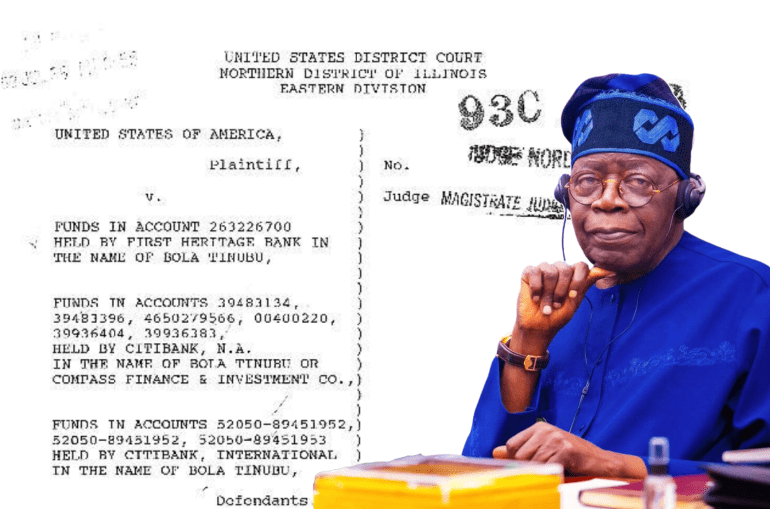
Of the few details about the Nigerian President’s early exploits which can be confirmed, many are derived from a 1993 court docket naming Tinubu as an accomplice in a massive midwestern drug smuggling operation. 

As journalist David Hundeyin has detailed, court documents from the US District Court’s Northern District of Illinois make it clear that Tinubu amassed a small fortune laundering money for a heroin-trafficking relative in Chicago, and that US government officials ultimately seized well over a million dollars from various bank accounts registered under the current Nigerian president’s name.

A 1993 report by IRS Special Agent Kevin Moss explained that “there is probable cause to believe that funds in certain bank accounts controlled by Bola Tinubu… represent proceeds of drug trafficking; therefore these funds are forfeitable to the United States.”

In the documents, Moss describes an extremely close working relationship between the future Nigerian president and two Nigerian heroin dealers named Abiodun Olasuyi Agbele and Adegboyega Mueez Akande, the latter of whom was listed as Tinubu’s cousin on an application for a vehicle loan.

“According to bank employees, when Bola Tinubu came to First Heritage Bank in December 1989 to open the accounts, he was introduced to them by Adegboyega Mueez Akande, who at that time maintained an account at the bank.” What’s more, bank records indicate that “Bola Tinubu also opened a joint checking account in his name and the name of his wife, Oluremi Tinubu,” who had “previously opened a joint bank account also at this bank with Audrey Akande, the wife of Adegboyega Mueez Akande,” Moss explained. In several of the applications, the addresses used by Tinubu exactly matched those previously used by Akande.
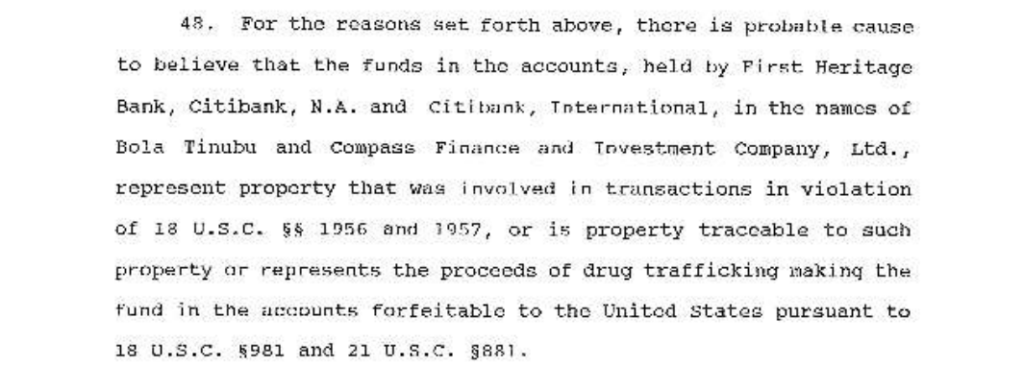
“According to bank records… Tinubu opened an individual money market account and a NOW account” at First Heritage Bank in December 1989, the special agent noted. “In the application, Tinubu stated that his address was 7504 South Stewart, Chicago, Illinois” — “the same address used previously by Akande.”
“Bank records disclosed that five days after the account was opened, on January 4, 1990, $80,000 was deposited into the NOW account at First Heritage Bank by wire transfer through First Chicago from Banc One Houston,” the report continues. According to the IRS, the money was sent by Akande.

But the Nigerian president’s financial dealings with the heroin traffickers went even further, according to the IRS special agent. He wrote that Citibank records documented “two additional corporate accounts held in the name of Compass Finance and Investment Company, Ltd. which were controlled by Bola Tinubu.”

“When Bola Tinubu opened these accounts,” he provided “a memorandum of association and articles of association” which “identified Mueez Adegboyega Akande and Abiodun Olasuyi Agbele as directors of Compass Finance and Investment Company, Ltd.,” Moss wrote.

In the end, Tinubu somehow managed to deposit over $660,000 in his First Heritage Bank account in 1990, and more than $1.2 million the next year — all while claiming to take home just $2,400 a month from his position at Mobil Oil Nigeria.

As the investigation into the money laundering scheme began to gain traction, Tinubu left the US and returned to Nigeria. Ultimately, Moss was able to speak to Tinubu by telephone on a number of occasions, and the special agent reported that the future president initially acknowledged his personal and financial dealings with the pair of drug traffickers. 

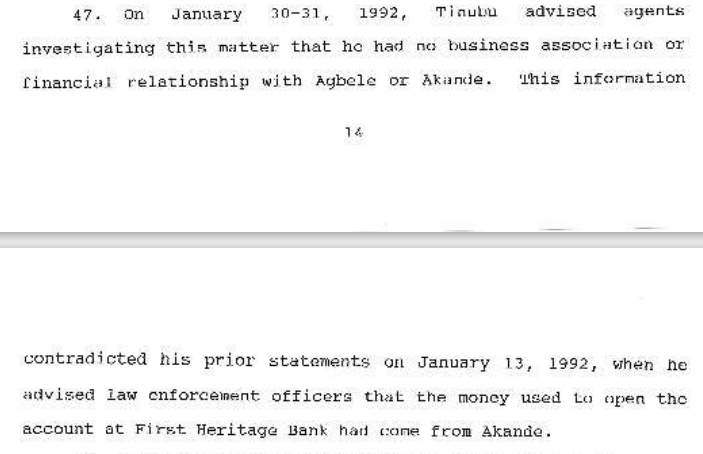
But in late January of 1992, “Tinubu advised agents investigating this matter that he had no business association or financial relationship with Abele or Akande,” Moss wrote. “This information contradicted his prior statements on January 13, 1992, when he advised law enforcement officers that the money used to open the account at First Heritage Bank had come from Akande.”

Back in Nigeria, Tinubu had already begun to transition into the political arena. By 1992, he’d been elected to the Senate, and in 1999 he became the Governor of Lagos State, a position he retained until 2007. At some point in his tenure, Tinubu established a relationship with the US Embassy which would last for years to come, according to a trove of diplomatic cables released by Wikileaks.

But even his State Department allies couldn’t help noticing Tinubu’s penchant for dishonesty. One particularly noteworthy cable pointed out that the politician was “known to play fast and loose with the facts” and “has been caught in the past embellishing his educational achievements.”

In the end, however, Tinubu’s usefulness seemed to outweigh his casual relationship with the truth, and the future Nigerian president went on to provide American officials with a near-continuous assessment of the political situation in his country. One typically intimate meeting with Tinubu ended with the US ambassador to Nigeria commenting: “as always, we found his take on the national political scene to be insightful.”

When the cables came to light in 2011, many Nigerians were shocked at the candor with which their elected officials spoke to Washington’s envoys. “The willingness of our elites to divulge unsolicited information about the nation to U.S. officials betrays an infantile thirst for a paternal dictatorship,” Nigerian-American professor and columnist Farooq Kperogi wrote.

Though Tinubu appeared to have escaped justice for his alleged role in a heroin trafficking conspiracy, accusations of corruption would continue to dog the ECOWAS chair throughout his political career in Nigeria. Since leaving office as governor of Lagos in 2007, Tinubu “picked every subsequent winning candidate,” according to German broadcaster DW, which noted earlier this year that the tycoon “is believed to be one of Nigeria’s richest politicians but the source of his wealth is unknown.”

In recent years, clues about the origins of the fortune amassed by one of Africa’s leading political players have begun to come to light.

In 2009, Tinubu came under investigation by the Metropolitan Police of London, who were probing allegations that the politician had pooled money with two other Nigerian governors to create a front company known as the “African Development Fund Incorporation.”

Investigators alleged the unusual business arrangement was actually a joint effort to illegally acquire shares of ECONET, a telecommunications firm founded by US intelligence asset and Gates Foundation trustee Strive Masiyiwa. But attempts to probe the legitimacy of the transactions in question were sidelined when the Nigerian federal government stonewalled the British investigation, which ultimately concluded without a single arrest. To this day, Nigerian authorities have yet to release the evidence requested by UK authorities.

In 2011, Tinubu was tried before the Code of Conduct Tribunal in Nigeria for illegally operating 16 foreign bank accounts. Eager to avoid the embarrassment he’d previously suffered when being photographed in court, the ECOWAS chair reportedly refused to take his place at the dock in a judicial hearing.

But the unwelcome attention appears to have done little to rein in the politician’s extravagant taste, and Tinubu once again found himself embroiled in a corruption scandal following an investigation into the luxurious 7,000-square foot mansion where the Nigerian president stays when receiving medical care in London.
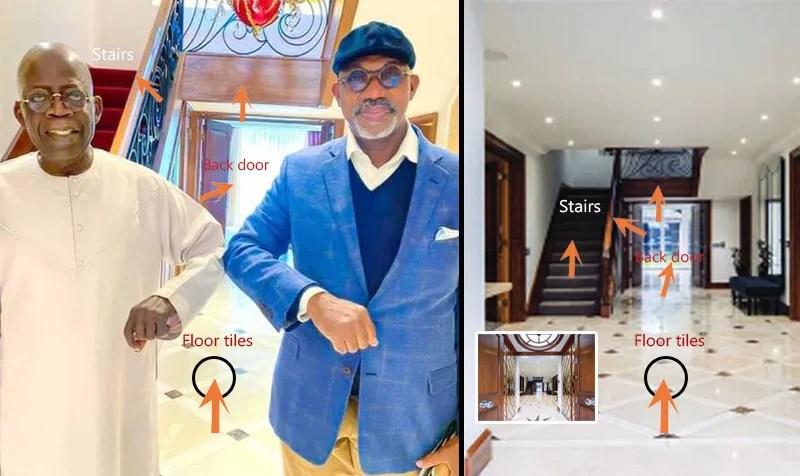
According to Nigerian outlet Premium Times, the massive villa in London’s exclusive Westminster borough was picked up for a song by Tinubu’s son, who somehow managed to purchase the property at a discount of approximately $10 million from a wealthy fugitive – even though the seller’s assets, including the mansion in question, had been frozen by a Nigerian court. Photos published on social media in 2017 show Tinubu posing inside the villa alongside Nigeria’s president at the time, Muhammadu Buhari.

The current and previous president worked closely for decades, and Tinubu has publicly claimed sole credit for Buhari’s presidency while campaigning. “If it were not for me standing before you leading the army, saying ‘Buhari, go ahead, we’re behind you,’ he could never have become the president,” he told supporters at a rally last year.

But the suspicious confluence of money and influence didn’t end with the mysterious mansion in London. During Nigeria’s 2019 general election, footage of armored trucks entering Tinubu’s residence went viral on social media, and the incident was widely seen as proof that the politician was engaged in a fraudulent vote-buying scheme. But Tinubu remained defiant, telling reporters, “I keep money wherever I want.”

“Excuse me, is it my money or government money?” he asked. “If I don’t represent any agency of government and I have money to spend, if I have money, if I like, I give it to the people free of charge,” he insisted.

This January, the official explanation for the episode evolved again when one of his party’s representatives told a Nigerian TV station that the armored trucks in question had simply “missed [their] way” and arrived at the wrong address. Asked why Tinubu had seemingly admitted to dispensing cash to the public, the party’s organizing secretary in Lagos offered the bemused presenters an equally improbable explanation: “he said that jokingly.”

ECOWAS as a neocolonial weapon

While ECOWAS was officially founded via the Treaty of Lagos in 1975, its official history notes the bloc’s origins date back to the creation of the CFA Franc in 1945, which consolidated France’s West African empire into a single-currency union. Publicly, the move was described as a benevolent attempt to shield these colonies from the consequences of the French franc’s sharp devaluation in 1945, following the creation of the US-dominated Bretton Woods system. As the French finance minister said at the time:

“In a show of her generosity and selflessness, metropolitan France, wishing not to impose on her faraway daughters the consequences of her own poverty, is setting different exchange rates for their currency.”

In reality, the introduction of the CFA Franc meant that Paris was able to maintain highly unequal trading relationships with its African colonies, at a time when its economy was ravaged by World War II and its overseas empire was rapidly disintegrating. The currency made it cheap for member states to import from France and vice versa, but prohibitively expensive for them to export anything anywhere else.

This forced dependency in Francophone West Africa created a captive market for the French, and by extension the rest of Europe. That dynamic, which has stunted regional economic development for decades, persists to this day. The CFA Franc’s continued dominance ensures West African states remain under the economic and political control of France. Those African nations are powerless to enact meaningful policy changes, as they lack control over their own monetary policy.

That the currency features so prominently in the authorized history of ECOWAS is instructive, because the bloc has long-been criticized as an extension of French imperialism. It was not for nothing that in 1960, then-French President Charles de Gaulle made membership of the CFA Franc a precondition for decolonization in Africa.

Though ECOWAS is theoretically meant to maximize member states’ collective bargaining power by fostering “interstate economic and political cooperation,” such harmonization makes it easier for former imperial powers like France to exploit and enfeeble their constituent countries. The bloc imposes a strict, Western-approved legal and financial framework upon its members, and any state deviating from these rules is harshly punished.

In January 2022, ECOWAS imposed strict sanctions on Mali, prompting thousands to take to the streets in support of the military government that seized power in January the previous year. The new government’s efforts to purge the country of malign foreign influence saw a complete ban on French media imposed, a decision which was slammed by the UN but cheered by average Malians.

ECOWAS applied similar measures to Burkina Faso in response to a September 2022 military coup, which saw Paul-Henri Sandaogo Damiba removed after just eight months in power. Though Damiba himself seized via military coup, there was little condemnation from Western officials and few suggestions that ECOWAS impose sanctions — perhaps due to the ousted leader’s pro-Western orientation and status as a graduate of multiple elite US military and State Department training courses.

Since 1990, ECOWAS has waged seven separate conflicts in West Africa, in order to protect the West’s preferred despots across the region. Meanwhile, between 1960 and 2020, Paris launched 50 separate overt interventions in Africa. Figures for clandestine activities conducted during this time are unavailable, but the country’s fingerprints are plastered all over multiple rigged elections, coups, and assassinations that have sustained compliant, corrupt governments in power throughout the continent.

As President Jacques Chirac remarked in 2008, “without Africa, France will slide down into the rank of a third [world] power.” This perspective was reaffirmed in a 2013 French Senate report, Africa is Our Future. Indeed, the mere existence of anti-imperialist governments anywhere in the region is intolerable to Paris. 

Luckily for the French elite, compromised figures like Bola Tinubu are still on hand to do their dirty work for them.
‘We the People’ Are the New, Permanent Underclass in America

By John W. Whitehead & Nisha Whitehead

Source: The Rutherford Institute

“We are now speeding down the road of wasteful spending and debt, and unless we can escape we will be smashed in inflation.”—Herbert Hoover

This is financial tyranny.

The U.S. government—and that includes the current administration—is spending money it doesn’t have on programs it can’t afford, and “we the taxpayers” are the ones who must foot the bill for the government’s fiscal insanity.

We’ve been sold a bill of goods by politicians promising to pay down the national debt, jumpstart the economy, rebuild our infrastructure, secure our borders, ensure our security, and make us all healthy, wealthy and happy.

None of that has come to pass, and yet we’re still being loaded down with debt not of our own making.

Let’s talk numbers, shall we?

The national debt (the amount the federal government has borrowed over the years and must pay back) is $30 trillion and growing. That translates to roughly $242,000 per taxpayer.

Now the Biden administration is proposing a $5.8 trillion spending budget that notably includes $813 billion for national defense, $30 billion to “fund the police,” and a plan to reduce the national deficit by roughly $1 trillion over 10 years through additional tax hikes.

It’s estimated that the amount this country owes is now 130% greater than its gross domestic product (all the products and services produced in one year by labor and property supplied by the citizens).

The U.S. ranks as the 12th most indebted nation in the world, with much of that debt owed to the Federal Reserve, large investment funds and foreign governments, namely, Japan and China.

Essentially, the U.S. government is funding its very existence with a credit card.

In 2021, we paid more than $562 billion in interest on that public debt, which according to journalist Rob Garver, “is more than the annual budget of every individual federal agency except for the Treasury, the Department of Health and Human Services (which manages the Medicare and Medicaid government health insurance programs), and the Department of Defense.”

According to the Committee for a Reasonable Federal Budget, the interest we’ve paid on this borrowed money is “nearly twice what the federal government will spend on transportation infrastructure, over four times as much as it will spend on K-12 education, almost four times what it will spend on housing, and over eight times what it will spend on science, space, and technology.”

Clearly, the national debt isn’t going away anytime soon, especially not with government spending on the rise and interest payments making up such a large chunk of the budget.

Still, the government remains unrepentant, unfazed and undeterred in its wanton spending.

Indeed, the national deficit (the difference between what the government spends and the revenue it takes in) remains at more than $1.5 trillion.

If Americans managed their personal finances the way the government mismanages the nation’s finances, we’d all be in debtors’ prison by now.

Despite the government propaganda being peddled by the politicians and news media, however, the government isn’t spending our tax dollars to make our lives better.

We’re being robbed blind so the governmental elite can get richer.

We’re not living the American dream. We’re living a financial nightmare.

In the eyes of the government, “we the people, the voters, the consumers, and the taxpayers” are little more than pocketbooks waiting to be picked.

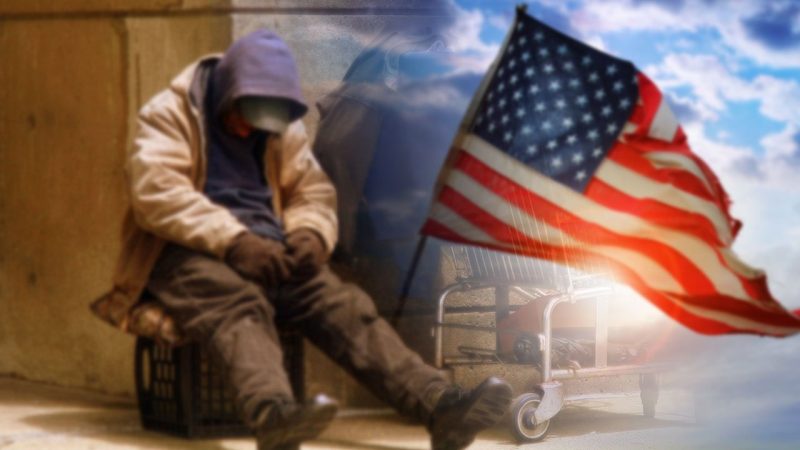
“We the people” have become the new, permanent underclass in America.

Consider: The government can seize your home and your car (which you’ve bought and paid for) over nonpayment of taxes. Government agents can freeze and seize your bank accounts and other valuables if they merely “suspect” wrongdoing. And the IRS insists on getting the first cut of your salary to pay for government programs over which you have no say.

We have no real say in how the government runs, or how our taxpayer funds are used, but we’re being forced to pay through the nose, anyhow.

We have no real say, but that doesn’t prevent the government from fleecing us at every turn and forcing us to pay for endless wars that do more to fund the military industrial complex than protect us, pork barrel projects that produce little to nothing, and a police state that serves only to imprison us within its walls.

If you have no choice, no voice, and no real options when it comes to the government’s claims on your property and your money, you’re not free.

It wasn’t always this way, of course.

Early Americans went to war over the inalienable rights described by philosopher John Locke as the natural rights of life, liberty and property.

It didn’t take long, however—a hundred years, in fact—before the American government was laying claim to the citizenry’s property by levying taxes to pay for the Civil War. As the New York Times reports, “Widespread resistance led to its repeal in 1872.”

Determined to claim some of the citizenry’s wealth for its own uses, the government reinstituted the income tax in 1894. Charles Pollock challenged the tax as unconstitutional, and the U.S. Supreme Court ruled in his favor. Pollock’s victory was relatively short-lived. Members of Congress—united in their determination to tax the American people’s income—worked together to adopt a constitutional amendment to overrule the Pollock decision.

On the eve of World War I, in 1913, Congress instituted a permanent income tax by way of the 16th Amendment to the Constitution and the Revenue Act of 1913. Under the Revenue Act, individuals with income exceeding $3,000 could be taxed starting at 1% up to 7% for incomes exceeding $500,000.

It’s all gone downhill from there.

Unsurprisingly, the government has used its tax powers to advance its own imperialistic agendas and the courts have repeatedly upheld the government’s power to penalize or jail those who refused to pay their taxes.

While we’re struggling to get by, and making tough decisions about how to spend what little money actually makes it into our pockets after the federal, state and local governments take their share (this doesn’t include the stealth taxes imposed through tolls, fines and other fiscal penalties), the government continues to do whatever it likes—levy taxes, rack up debt, spend outrageously and irresponsibly—with little thought for the plight of its citizens.

To top it all off, all of those wars the U.S. is so eager to fight abroad are being waged with borrowed funds. As The Atlantic reports, “U.S. leaders are essentially bankrolling the wars with debt, in the form of purchases of U.S. Treasury bonds by U.S.-based entities like pension funds and state and local governments, and by countries like China and Japan.”

Of course, we’re the ones who will have to repay that borrowed debt.

For instance, American taxpayers have been forced to shell out more than $5.6 trillion since 9/11 for the military industrial complex’s costly, endless so-called “war on terrorism.” That translates to roughly $23,000 per taxpayer to wage wars abroad, occupy foreign countries, provide financial aid to foreign allies, and fill the pockets of defense contractors and grease the hands of corrupt foreign dignitaries.

Mind you, that staggering $6 trillion is only a portion of what the Pentagon spends on America’s military empire.

The United States also spends more on foreign aid than any other nation, with nearly $300 billion disbursed over a five-year period. More than 150 countries around the world receive U.S. taxpayer-funded assistance, with most of the funds going to the Middle East, Africa and Asia. That price tag keeps growing, too.

As Forbes reports, “U.S. foreign aid dwarfs the federal funds spent by 48 out of 50 state governments annually. Only the state governments of California and New York spent more federal funds than what the U.S. sent abroad each year to foreign countries.”

Most recently, in response to Russia’s military aggression against Ukraine, the Biden Administration approved $13.6 billion in military and humanitarian aid for Ukraine, with an additional $200 million for immediate military assistance.

As Dwight D. Eisenhower warned in a 1953 speech, this is how the military industrial complex will continue to get richer, while the American taxpayer will be forced to pay for programs that do little to enhance our lives, ensure our happiness and well-being, or secure our freedoms.

This is no way of life.

Yet it’s not just the government’s endless wars that are bleeding us dry.

We’re also being forced to shell out money for surveillance systems to track our movements, money to further militarize our already militarized police, money to allow the government to raid our homes and bank accounts, money to fund schools where our kids learn nothing about freedom and everything about how to comply, and on and on.

It’s tempting to say that there’s little we can do about it, except that’s not quite accurate.

There are a few things we can do (demand transparency, reject cronyism and graft, insist on fair pricing and honest accounting methods, call a halt to incentive-driven government programs that prioritize profits over people), but it will require that “we the people” stop playing politics and stand united against the politicians and corporate interests who have turned our government and economy into a pay-to-play exercise in fascism.

Unfortunately, we’ve become so invested in identity politics that pit us against one another and keep us powerless and divided that we’ve lost sight of the one label that unites us: we’re all Americans.

Trust me, we’re all in the same boat, folks, and there’s only one real life preserver: that’s the Constitution and the Bill of Rights.

The Constitution starts with those three powerful words: “We the people.”

There is power in our numbers.

As I make clear in my book Battlefield America: The War on the American People and in its fictional counterpart The Erik Blair Diaries, that remains our greatest strength in the face of a governmental elite that continues to ride roughshod over the populace. It remains our greatest defense against a government that has claimed for itself unlimited power over the purse (taxpayer funds) and the sword (military might).

Where we lose out is when we fall for the big-talking politicians who spend big at our expense.

MORE PEOPLE WERE ARRESTED FOR CANNABIS POSSESSION THAN ALL VIOLENT CRIMES PUT TOGETHER IN THE US LAST YEAR

By John Vibes

Source: Waking Times

With legal recreational and medical cannabis now available in so many different US states, it is easy to get the impression that the war on cannabis users is over.

However, cannabis users still represent a significant portion of the people who are filling jails and courthouses throughout the country.

According to the FBI’s recent Uniform Crime Report, more people were arrested for cannabis possession last year than for all violent crimes put together.

The data showed that 545,602 people were arrested in the US for cannabis-related crimes last year. Meanwhile, just 495,871 people were arrested for violent crimes.

Furthermore, the vast majority of the people who got arrested for cannabis were not accused of selling or trafficking the substance, but just for simple possession. 500,395 of the total cannabis arrests last year, or about 92%, were for possession, which is still more than the number of people who were arrested for violent crimes.

Erik Altieri, the Executive Director for cannabis advocacy group NORML, says that police across America are still making a cannabis-related arrest every 58 seconds.

“At a time when the overwhelming majority of Americans want cannabis to be legal and regulated, it is an outrage that many police departments across the country continue to waste tax dollars and limited law enforcement resources on arresting otherwise law-abiding citizens for simple m***juana possession,” Altieri told Forbes.

Overall, cannabis arrests have been going down nationwide due to the spread of legalization. Last year, cannabis arrests were down by 18% when compared with 2018.

As suspected, the FBI’s data showed that people were less likely to get arrested for cannabis in states where it was legal or available for medical use, with eastern states seeing far more arrests.

According to the report, roughly 53% of all cannabis arrests last year took place in the northeastern part of the country, where cannabis laws are still catching up with the west.

People of color are also at a greater risk of being targeted for cannabis arrests. According to a report from the ACLU, 2018 data showed that people of color were 3.6 times more likely to be arrested for cannabis possession than white people, despite using the substance at the same rates.

In some states that are known to be especially dangerous for people of color, such as Montana or Kentucky, they are close to ten times more likely to be arrested for cannabis. In a few particular US counties, people of color were 50 times more likely to be arrested for cannabis possession.

In some states where cannabis has been legalized, lawmakers are making efforts to introduce pardons for those who previously broke the law.

Earlier this year, Nevada Governor Steve Sisolak introduced a measure that will pardon more than 15,000 people who were convicted for low-level cannabis possession in the state.

The resolution was unanimously approved by the state’s Board of Pardons Commissioners shortly after it was introduced.

In Colorado, lawmakers passed a bill that will allow the state’s governor to unilaterally pardon people with past convictions for possession of up to two ounces.

WHY WE’RE A CULTURE OF ADDICTS

By Leslie Garrett

Source: Waking Times

If there’s one constant among addicts of all types, it’s shame. It’s what makes us lie and hide. It’s what keeps us from asking for help – though we don’t think we need it because we’re also good at lying to ourselves.

About why we eat. Or shop. Or gamble. Or drink.

Dr. Gabor Maté knows the feeling well. Maté, a renowned doctor, speaker, and author, has seen it in the heroin-addicted men and women he treats in Vancouver’s Downtown Eastside. He sees it in the behavior of well-respected workaholics. The cosmetic surgery junkies. The power seekers. The ‘I Brake for Garage Sales’ shoppers.

He’s seen it in the mirror.

Maté, author of the groundbreaking book In the Realm of the Hungry Ghosts: Close Encounters with Addiction, believes shame is behind our unwindable ‘war on drugs.’ Our ‘tough on crime’ policies. Our judgment of addicts. Our marginalization of street junkies.

Maté knows, as so many of our spiritual teachers have tried to teach us, that our judgments of others are really all about us.

Maté, who serves as resident doctor at The Portland Hotel, a Vancouver housing project for adults coping with mental illness, addiction, and other challenges, saw himself in the stories of the women and men who, day after day, came to see him for treatment and who slowly, over years, revealed to him their pain.

Those of us still hiding and denying? Gabor Maté sees us too.

Haunted

Gabor Maté was born into the Jewish ghetto of Budapest in 1944, just weeks before the Nazis seized Hungary, to a loving but overwhelmed mother and an absent father, who had been sent to a forced-labor camp. Just months later, his grandparents were killed at Auschwitz. At a year old, he was handed by his mother to a gentile stranger who was assigned his safety.

Maté understands now that those early experiences – or, more accurately, his mother’s frantic state of mind – guided the neural circuitry in his still-developing brain. Impaired circuitry that virtually prescribed a future of addiction and its close cousin, attention-deficit disorder (ADD).

Over years of hearing the stories of street drug users, examining his own past, and putting it together with his medical training, Maté became convinced that – as he says in a recent interview:

both addiction and ADD are rooted in childhood loss and trauma.

It’s a novel – and surprisingly controversial – approach, examining not the addiction but the pain behind it. Fighting not the substance but the circumstances that lead someone to seek out that self-soothing.

Circumstance Over Substance

Addiction, says Maté, is nothing more than an attempt to self-medicate emotional pain.

Absolutely anything can become an addiction… It’s not the external behaviors, it’s our relationship to it.

Maté calls addicts ‘hungry ghosts,’ a reference to one of the six realms of the Buddhist Circle of Life. These hungry ghosts are depicted with large empty bellies, small mouths, thin necks — starving for external satisfaction, seeking to fill but never being full, desperate to be soothed.

We all know that realm, he says, at least some of the time. The only difference between the identified addict and the rest of us is a matter of degrees.

It’s a view that has earned him some critics, not least of which is the Canadian Conservative government, which has sought to shut down the safe-injection site he helps oversee. The conventional medical community certainly hasn’t embraced his ideas. Addiction is typically viewed through one of two lenses: as a genetic component or as a moral failure.

Both, says Maté, are wrong.

And he says he’s got the brain science to prove it.

“A Warm, Soft Hug”

Maté points to a host of studies that clearly show how neural circuitry is developed in early childhood. Human babies, more than any other mammals, do most of their maturing outside the womb, which means that their environment plays a larger role in brain development than in any other species.

Factor in an abusive, or at least stressful, childhood environment and you’ve produced impaired brain circuitry – a brain that seeks the feel-good endorphins and stimulating dopamine that it is unable, or poorly able, to produce on its own. A brain that experiences the first rush of heroin as a “warm, soft hug,” as a 27-year-old sex trade worker described it to Maté.

It’s the adversity that creates this impaired development, says Maté, not the genetics emphasized by the medical community.

And our response to addicts – criminalization, marginalization, ostracism – piles on that adversity, fueling the addictive behavior.

The good news is that addiction can be prevented, but only if you start early. Maté writes in Hungry Ghosts:

[Prevention] needs to begin in the crib, and even before then… in the social recognition that nothing is more important for the future of our culture than the way children develop.

What about those children who are now addicted adults? Unprecedented brain research has revealed that brains can, essentially, be rewired. He continues:

Our brains are resilient organs… Some important circuits continue to develop throughout our entire lives, and they may do so even in the case of a hard-core drug addict whose brain ‘never had a chance’ in childhood.

What’s more, Maté, unlike many of his medical counterparts, factors in our potential for recovery, even transformation:

something else in us and about us: it is called by many names, ‘spirit’ being the most democratic and least denominational.

The Illusion of Choice

We’d like to think that addicts have a choice, that they can just choose to stop — even if it’s hard.

But Maté insists that the ability to choose is limited by the addict’s physiology and personal history. He states:

The more you’re driven by unconscious mechanisms, because of earlier defensive reaction to trauma, the less choice you actually have… Most people have much less choice in things than we actually recognize.

These unconscious impulses are why we find ourselves with our hands in a bag of chocolate after an argument with our spouse. It’s why we’re on Craigslist arranging a sexual encounter while our wife sleeps beside us. It’s why a respected medical doctor finds himself lying to his wife. Again.

“‘Have you been obsessing and buying?’ she’s asked me a number of times in the past few weeks,” Maté writes in Hungry Ghosts. “I look directly at my life partner of thirty-nine years and I lie. I tell myself I don’t want to hurt her. Nonsense. I fear losing her affection. I don’t want to look bad in her eyes. I’m afraid of her anger. That’s what I don’t want.”

For years, Maté struggled with a shopping addiction, spending thousands of dollars on classical music CDs in a single spree, then unable to resist the impulse to do it again weeks later after promising his wife he’d stop. It’s an addiction he refers to as wearing ‘dainty white gloves’ compared to the grinding drug abuse of his Downtown Eastside patients.

But, he writes, “I’ve come to see addiction not as a discrete, solid entity – a case of either you’ve got it or you don’t got it – but as a subtle and extensive continuum.”

Unless we become fully aware of the drivers of our addiction, he says, we’ll continue to live a life in which ‘choice’ is an illusion.

“Passion Creates, Addiction Consumes”

Is there a difference between a drug addiction and being hooked on a behavior — like sex? The medical community continues to debate the question, but Maté is adamant.

All addictions, whether to drugs or to behaviors such as compulsive sexual acting out, involve the same brain circuits, the same brain chemicals and evoke the same emotional dynamics… Behavior addictions trigger substances internally. So (behavior addicts) are substance addicts.

Where do we draw the line between addiction and, well, passion? What about the Steve Jobs of the world, who drive themselves — and others — to push harder, work longer, produce more and do everything better?

Daniel Maté, Gabor’s son and an editor of his books, says:

A lot of people make wonderful contributions to the world at their own cost… We often lionize unhealthy things.

To determine whether we’re serving a passion or feeding an addiction, Daniel Maté suggests that it comes down to a simple question, answered honestly: Are you free or are you not free?

His father takes it further.

What function is the addiction performing in your life? What questions is it answering . . . and how do we restore that?

Or, as he writes in Hungry Ghosts, “Passion creates, addiction consumes.”

Compassion for the Addict — and Ourselves

Responding to addiction requires us not only to care for the body and mind but also the soul, Maté says. The spiritual element of his practice is critical, he says, not only to understand the hard-core street addict but also our own struggle.

We lack compassion for the addict precisely because we are addicted ourselves in ways we don’t want to accept and because we lack self-compassion. – Gabor Maté

And so we treat the addict as an ‘other’ – this criminal, this person making poor choices – to whom we can feel superior.

Compassion is understanding, and to understand is to forgive.

We need, he says, to turn compassion into policy.

Maté summed it up nicely in a 2010 talk at Reed College:

To . . . point the finger at that street-corner drug addict who’s in that position because of that early trauma is blind to say the very least… I think that if we developed a more compassionate view of addiction and a more deep understanding of the addict and if we recognized the similarities between the ostracized addict at the social periphery and the rest of society, and if we did so with compassion both for them and for the rest of us, we would not only have more efficient, more successful drug treatment programs, we would also have a better society.

Jeff Sessions Reminds Everyone Why He’s the Worst Attorney General in Modern History

“He was a racist when appointed, a racist while serving, and a racist to the very end.”

By Jessica Corbett

Source: CommonDreams

In his last “evil” act as head of the Justice Department under President Donald Trump, Jeff Sessions reminded “everyone yet again why he’s been the worst attorney general in modern history” and drastically limited the ability of federal officials to use court-enforced deals to require reforms at police departments that are found systematically violating people’s civil rights.

Shortly before Trump forced Sessions to resign on Wednesday—and appointed a temporary replacement who is hostile toward Special Counsel Robert Mueller’s investigation—Sessions signed a memorandum (pdf), as the New York Times reports, “sharply curtailing the use of so-called consent decrees, court-approved deals between the Justice Department and local governments that create a road map of changes for law enforcement and other institutions,” by imposing “three stringent requirements for the agreements.”

The decrees were, as the Times noted, “used aggressively by Obama-era Justice Department officials to fight police abuses,” but soon after Sessions took office, he had signaled he would scale back their use and “ordered a review of the existing agreements, including with police departments in Baltimore, Chicago, and Ferguson, Mo., enacted amid a national outcry over the deaths of black men at the hands of officers.”

Sessions’ last-minute final act was met with widespread outrage, but not surprise—rather, as many critics quickly pointed out, it fit with the patterns of Sessions’ moves throughout his tenure as attorney general.

“From day one, former Attorney General Jeff Sessions expressed open and naked hostility to the use of consent decrees, especially in the civil rights context,” said Kristen Clarke of the Lawyers’ Committee for Civil Rights Under Law. “This action by Sessions, on his way out the door, seals his legacy as an obstructionist when it comes to advancing justice and protecting rights in our country.”

I would never expect Sessions to be anything other than an unrepentant civil rights foe until the very last minute,” tweeted Sherrilyn Ifill, president and director-counsel of the NAACP Legal Defense Fund.

“He was a racist when appointed, a racist while serving, and a racist to the very end,” Josh Moon of the Alabama Reporter said of his state’s former senator. “There is no redeeming quality to Jeff Sessions. He’s a horrible racist at his core.”

The New Republic‘s Matt Ford concluded simply, “He is who we thought he was.”

Although Sessions, much to Trump’s frustration, recused himself from the Mueller probe, while serving as attorney general, he made several moves—including canceling Deferred Action for Childhood Arrivals (DACA) and implementing the “zero-tolerance” policy that tore migrant children away from their parents—that had civil and human rights advocates constantly raising alarm about “the Trump/Sessions white supremacist agenda.”

Even before news broke about his memo to curb the use of consent decrees, social justice advocates began to document Sessions’ record as he departed.

“Jeff Sessions was the worst attorney general in modern American history. Period,” the ACLU charged in a series of tweets on Wednesday that, among other things, noted his discrimination against trans people, enthusiastic enforcement of racist drug laws, and use of religion to attack women’s reproductive rights.

One of the most prominent parts of Sessions’ legacy is the immigration crisis he leaves behind, as Julia Preston outlined for The Marshall Project on Wednesday. Acknowledging Preston’s report, the Lawyers’ Committee for Civil Rights Under Law summarized on Twitter, “On President Trump’s favorite issue, the departing attorney general leaves behind record-breaking backlogs of cases, onerous constraints on judges, and a bulwark of punitive attitudes toward families seeking asylum.”


Saturday Matinee: The Sunshine Makers

A real-life Breaking Bad for the psychadellic set, The Sunshine Makers reveals the entertaining, untold story of Nicholas Sand and Tim Scully, the unlikely duo at the heart of 1960s American drug counterculture. United in a utopian mission to save the planet through the consciousness-raising power of LSD, Orange Sunshine, as they tried to stay one step ahead of the feds.

Watch the full film here.

A New World Order: Brought to you by the Global-Industrial Deep State

By John W. Whitehead

Source: Intrepid Report

“There are no nations. There are no peoples . . . There is only IBM and ITT and AT&T, and DuPont, Dow, Union Carbide and Exxon. Those are the nations of the world today. The world is a collage of corporations, inexorably determined by the immutable by-laws of business.”—Network (1976)

There are those who will tell you that any mention of a New World Order government—a power elite conspiring to rule the world—is the stuff of conspiracy theories.

I am not one of those skeptics.

What’s more, I wholeheartedly believe that one should always mistrust those in power, take alarm at the first encroachment on one’s liberties, and establish powerful constitutional checks against government mischief and abuse.

I can also attest to the fact that power corrupts, and absolute power corrupts absolutely.

I have studied enough of this country’s history—and world history—to know that governments (the U.S. government being no exception) are at times indistinguishable Civilfrom the evil they claim to be fighting, whether that evil takes the form of terrorism, torture, drug traffickingsex trafficking, murder, violence, theft, pornography, scientific experimentations or some other diabolical means of inflicting pain, suffering and servitude on humanity.

And I have lived long enough to see many so-called conspiracy theories turn into cold, hard fact.

Remember, people used to scoff at the notion of a Deep State (a.k.a. Shadow Government), doubt that fascism could ever take hold in America, and sneer at any suggestion that the United States was starting to resemble Nazi Germany in the years leading up to Hitler’s rise to power.

We’re beginning to know better, aren’t we?

The Deep State (“a national-security apparatus that holds sway even over the elected leaders notionally in charge of it”) is real.

We are already experiencing fascism, American-style.

Not with jackboots and salutes, as Robert Kagan of the Brookings Institution notes, “but with a television huckster, a phony billionaire, a textbook egomaniac ‘tapping into’ popular resentments and insecurities, and with an entire national political party—out of ambition or blind party loyalty, or simply out of fear—falling into line behind him.”

And the United States is increasingly following in Nazi Germany’s footsteps, at least in the years leading up to Hitler’s rise to power.

Given all that we know about the U.S. government—that it treats its citizens like faceless statistics and economic units to be bought, sold, bartered, traded, and tracked; that it repeatedly lies, cheats, steals, spies, kills, maims, enslaves, breaks the laws, overreaches its authority, and abuses its power at almost every turn; and that it wages wars for profit, jails its own people for profit, and has no qualms about spreading its reign of terror abroad—it is not a stretch to suggest that the government has been overtaken by global industrialists, a new world order, that do not have our best interests at heart.

Indeed, to anyone who’s been paying attention to the goings-on in the world, it is increasingly obvious that we’re already under a new world order, and it is being brought to you by the Global-Industrial Deep State, a powerful cabal made up of international government agencies and corporations.

It is as yet unclear whether the American Police State answers to the Global-Industrial Deep State, or whether the Global-Industrial Deep State merely empowers the American Police State. However, there is no denying the extent to which they are intricately and symbiotically enmeshed and interlocked.

This marriage of governmental and corporate interests is the very definition of fascism.

Where we go wrong is in underestimating the threat of fascism: it is no longer a national threat but has instead become a global menace.

Consider the extent to which our lives and liberties are impacted by this international convergence of governmental and profit-driven interests in the surveillance state, the military industrial complex, the private prison industry, the intelligence sector, the technology sector, the telecommunications sector, the transportation sector, and the pharmaceutical industry.

All of these sectors are dominated by mega-corporations operating on a global scale and working through government channels to increase their profit margins: Walmart, Alphabet (formerly Google), AT&T, Toyota, Apple, Exxon Mobil, Facebook, Lockheed Martin, Berkshire Hathaway, UnitedHealth Group, Samsung, Amazon, Verizon, Nissan, Boeing, Microsoft, Northrop Grumman, Citigroup . . . these are just a few of the global corporate giants whose profit-driven policies influence everything from legislative policies to economics to environmental issues to medical care.

The U.S. government’s deep-seated and, in many cases, top secret alliances with foreign nations and global corporations are redrawing the boundaries of our world (and our freedoms) and altering the playing field faster than we can keep up.

Global surveillance

Spearheaded by the National Security Agency (NSA), which has shown itself to care little for constitutional limits or privacy, the surveillance state has come to dominate our government and our lives.

Yet the government does not operate alone.

It cannot.

It requires an accomplice.

Thus, the increasingly complex security needs of our massive federal government, especially in the areas of defense, surveillance and data management, have been met within the corporate sector, which has shown itself to be a powerful ally that both depends on and feeds the growth of governmental bureaucracy.

Take AT&T, for instance. Through its vast telecommunications network that crisscrosses the globe, AT&T provides the U.S. government with the complex infrastructure it needs for its mass surveillance programs. According to The Intercept, “The NSA considers AT&T to be one of its most trusted partners and has lauded the company’s ‘extreme willingness to help.’ It is a collaboration that dates back decades. Little known, however, is that its scope is not restricted to AT&T’s customers. According to the NSA’s documents, it values AT&T not only because it ‘has access to information that transits the nation,’ but also because it maintains unique relationships with other phone and internet providers. The NSA exploits these relationships for surveillance purposes, commandeering AT&T’s massive infrastructure and using it as a platform to covertly tap into communications processed by other companies.”

Now magnify what the U.S. government is doing through AT&T on a global scale, and you have the “14 Eyes Program,” also referred to as the “SIGINT Seniors.” This global spy agency is made up of members from around the world (United States, United Kingdom, Australia, Canada, New Zealand, Denmark, France, Netherlands, Norway, Germany, Belgium, Italy, Sweden, Spain, Israel, Singapore, South Korea, Japan, India and all British Overseas Territories).

Surveillance is just the tip of the iceberg when it comes to these global alliances, however.

Global war profiteering

War has become a huge money-making venture, and America, with its vast military empire and its incestuous relationship with a host of international defense contractors, is one of its best buyers and sellers. In fact, as Reuters reports, “[President] Trump has gone further than any of his predecessors to act as a salesman for the U.S. defense industry.”

The American military-industrial complex has erected an empire unsurpassed in history in its breadth and scope, one dedicated to conducting perpetual warfare throughout the earth. For example, while erecting a security surveillance state in the U.S., the military-industrial complex has perpetuated a worldwide military empire with American troops stationed in 177 countries (over 70% of the countries worldwide).

Although the federal government obscures so much about its defense spending that accurate figures are difficult to procure, we do know that since 2001, the U.S. government has spent more than $1.8 trillion in the wars in Afghanistan and Iraq (that’s $8.3 million per hour). That doesn’t include wars and military exercises waged around the globe, which are expected to push the total bill upwards of $12 trillion by 2053.

The illicit merger of the global armaments industry and the Pentagon that President Dwight D. Eisenhower warned us against more than 50 years ago has come to represent perhaps the greatest threat to the nation’s fragile infrastructure today. America’s expanding military empire is bleeding the country dry at a rate of more than $15 billion a month (or $20 million an hour)—and that’s just what the government spends on foreign wars. That does not include the cost of maintaining and staffing the 1,000-plus U.S. military bases spread around the globe.

Incredibly, although the U.S. constitutes only 5% of the world’s population, America boasts almost 50% of the world’s total military expenditure,spending more on the military than the next 19 biggest spending nations combined. In fact, the Pentagon spends more on war than all 50 states combined spend on health, education, welfare, and safety. There’s a good reason why “bloated,” “corrupt” and “inefficient” are among the words most commonly applied to the government, especially the Department of Defense and its contractors. Price gouging has become an accepted form of corruption within the American military empire.

It’s not just the American economy that is being gouged, unfortunately.

Driven by a greedy defense sector, the American homeland has been transformed into a battlefield with militarized police and weapons better suited to a war zone. Trump, no different from his predecessors, has continued to expand America’s military empire abroad and domestically, calling on Congress to approve billions more to hire cops, build more prisons and wage more profit-driven war-on-drugs/war-on-terrorism/war-on-crime programs that pander to the powerful money interests (military, corporate and security) that run the Deep State and hold the government in its clutches.

Global policing

Glance at pictures of international police forces and you will have a hard time distinguishing between American police and those belonging to other nations. There’s a reason they all look alike, garbed in the militarized, weaponized uniform of a standing army.

There’s a reason why they act alike, too, and speak a common language of force.

For example, Israel—one of America’s closest international allies and one of the primary yearly recipients of more than $3 billion in U.S. foreign military aid—has been at the forefront of a little-publicized exchange program aimed at training American police to act as occupying forces in their communities. As The Intercept sums it up, American police are “essentially taking lessons from agencies that enforce military rule rather than civil law.”

Then you have the Strong Cities Network programFunded by the State Department, the U.S. government has partnered with the United Nations to fight violent extremism “in all of its forms and manifestations” in cities and communities across the world. Working with the UN, the federal government rolled out programs to train local police agencies across America in how to identify, fight and prevent extremism, as well as address intolerance within their communities, using all of the resources at their disposal. The cities included in the global network include New York City, Atlanta, Denver, Minneapolis, Paris, London, Montreal, Beirut and Oslo.

What this program is really all about, however, is community policing on a global scale.

Community policing, which relies on a “broken windows” theory of policing, calls for police to engage with the community in order to prevent local crime by interrupting or preventing minor offenses before they could snowball into bigger, more serious and perhaps violent crime.

It sounds like a good idea on paper, but the problem with the broken windows approach is that it has led to zero tolerance policing and stop-and-frisk practices among other harsh police tactics.

When applied to the Strong Cities Network program, the objective is ostensibly to prevent violent extremism by targeting its source: racism, bigotry, hatred, intolerance, etc. In other words, police—acting ostensibly as extensions of the United Nations—will identify, monitor and deter individuals who exhibit, express or engage in anything that could be construed as extremist.

Of course, the concern with the government’s anti-extremism program is that it will, in many cases, be utilized to render otherwise lawful, nonviolent activities as potentially extremist. Keep in mind that the government agencies involved in ferreting out American “extremists” will carry out their objectives—to identify and deter potential extremists—in concert with fusion centers (of which there are 78 nationwide, with partners in the private sector and globally), data collection agencies, behavioral scientists, corporations, social media, and community organizers and by relying on cutting-edge technology for surveillance, facial recognition, predictive policing, biometrics, and behavioral epigenetics (in which life experiences alter one’s genetic makeup).

This is pre-crime on an ideological scale and it’s been a long time coming.

Are you starting to get the picture now?

We’re the sitting ducks in the government’s crosshairs.

On almost every front, whether it’s the war on drugs, or the sale of weapons, or regulating immigration, or establishing prisons, or advancing technology, if there is a profit to be made and power to be amassed, you can bet that the government and its global partners have already struck a deal that puts the American people on the losing end of the bargain.

Unless we can put the brakes on this dramatic expansion, globalization and merger of governmental and corporate powers, we’re not going to recognize this country 20 years from now.

It’s taken less than a generation for our freedoms to be eroded and the police state structure to be erected, expanded and entrenched.

Rest assured that the U.S. government will not save us from the chains of the global police state.

The current or future occupant of the White House will not save us.

For that matter, anarchy, violence and incivility will not save us.

Unfortunately, the government’s divide and conquer tactics are working like a charm.

Despite the laundry list of grievances that should unite “we the people” in common cause against the government, the nation is more divided than ever by politics, by socio-economics, by race, by religion, and by every other distinction that serves to highlight our differences.

The real and manufactured events of recent years—the invasive surveillance, the extremism reports, the civil unrest, the protests, the shootings, the bombings, the military exercises and active shooter drills, the color-coded alerts and threat assessments, the fusion centers, the transformation of local police into extensions of the military, the distribution of military equipment and weapons to local police forces, the government databases containing the names of dissidents and potential troublemakers—have all conjoined to create an environment in which “we the people” are more divided, more distrustful, and fearful of each other.

What we have failed to realize is that in the eyes of the government, we’re all the same.

In other words, when it’s time for the government to crack down—and that time is coming—it won’t matter whether we voted Republican or Democrat, whether we marched on Washington or stayed home, or whether we spoke out against government misconduct and injustice or remained silent.

When the government and its Global-Industrial Deep State partners in the New World Order crack down, we’ll all suffer.

If there is to be any hope of freeing ourselves, it rests—as it always has—at the local level, with you and your fellow citizens taking part in grassroots activism, which takes a trickle-up approach to governmental reform by implementing change at the local level.

One of the most important contributions an individual citizen can make is to become actively involved in local community affairs, politics and legal battles. As the adage goes, “Think globally, act locally.”

America was meant to be primarily a system of local governments, which is a far cry from the colossal federal bureaucracy we have today. Yet if our freedoms are to be restored, understanding what is transpiring practically in your own backyard—in one’s home, neighborhood, school district, town council—and taking action at that local level must be the starting point.

Responding to unmet local needs and reacting to injustices is what grassroots activism is all about. Attend local city council meetings, speak up at town hall meetings, organize protests and letter-writing campaigns, employ “militant nonviolent resistance” and civil disobedience, which Martin Luther King Jr. used to great effect through the use of sit-ins, boycotts and marches.

And then, as I make clear in my book A Government of Wolves: The Emerging American Police State, if there is any means left to us for thwarting the government in its relentless march towards outright dictatorship, it may rest with the power of communities and local governments to invalidate governmental laws, tactics and policies that are illegitimate, egregious or blatantly unconstitutional.

Nullification works.

Nullify the court cases. Nullify the laws. Nullify everything the government does that flies in the face of the principles on which this nation was founded.

We could transform this nation if only Americans would work together to harness the power of their discontent.


Constitutional attorney and author John W. Whitehead is founder and president of The Rutherford Institute. His book A Government of Wolves: The Emerging American Police State is available online at www.amazon.com. Whitehead can be contacted at johnw@rutherford.org. Information about The Rutherford Institute is available at www.rutherford.org.

Big Pharma, Big Oil and Big Banks Meet the Definition of Terrorists

Common threads persist throughout definitions of terrorism: violence, injury or death, intimidation, intentionality, multiple targets and political motivation. Big pharma, big oil and big banks meet them all.

By Paul Buchheit

Source: Mint Press News

Various definitions of terrorism have been proposed in recent years, by organizations such as the FBI, the State DepartmentHomeland Security, and the ACLU. Some common threads persist throughout the definitions: violence, injury or death, intimidation, intentionality, multiple targets, political motivation. All the criteria are met by pharmaceutical and oil and financial companies. They have all injured and intimidated the American public, and caused people to die, with intentionality shown by their refusal to acknowledge evidence of their misdeeds, and political motives clear in their lobbying efforts, where among all U.S. industries Big Pharma is #1, Big Oil is #5, and Securities/Investment #8.

The terror inflicted on Americans is real, and is documented by the facts to follow.

Big Pharma: Qualifying for Trump’s Call for Capital Punishment for Drug Dealers

In a Time Magazine article a young man named Chad Colwell says “I got prescribed painkillers, Percocet and Oxycontin, and then it just kind of took off from there.” Time adds: “Prescriptions gave way to cheaper, stronger alternatives. Why scrounge for a $50 pill of Percocet when a tab of heroin can be had for $5?” About 75% of heroin addicts used prescription opioids before turning to heroin.

Any questions about Big Pharma’s role in violence and death in America have been answered by the Centers for Disease Control and the American Journal of Public Health. Any doubts about Big Pharma’s intentions to intimidate the public have been put to rest by the many occasions of outrageous price gouging. And any uncertainty about political pressure is removed by its #1 lobbying ranking.

As for malicious intentions, Bernie Sanders noted, “We know that pharmaceutical companies lied about the addictive impacts of opioids they manufactured.” Purdue Pharma knew all about the devastating addictive effects of its painkiller Oxycontin, and even pleaded guilty in 2007 to misleading regulators, doctors, and patients about the drug’s risk. Now Purdue and other drug companies are facing a lawsuitfor “deceptively marketing opioids” and ignoring the misuse of their drugs.

No jail for the opioid pushers, though, just slap-on-the-wrist fines that can be made up with a few price increases. But partly as a result of Pharma-related violence, Americans are suffering “deaths of despair”— death by drugs, alcohol and suicide. Suicide is at its highest level in 30 years.

Big Oil: Decades of Terror

Any doubts about the ecological terror caused by fossil fuel companies have been dispelled by the World Health Organization, the American Lung Association, the United Nations, the Pentagon, cooperating governments, and independent research groups, all of whom agree that human-induced climate change is killing people.

The oil industry’s intentionality and political motives have been demonstrated by their refusal to admit the known truth, starting with Exxon, which has covered up its own climate research for 40 years, and continuing through multi-million dollar lobbying efforts by Amoco, the US Chamber of Commerce, General Motors, Koch Industries, and other corporations in their effort to dismantle the Kyoto Protocol against global warming.

Big Banks: Leaving Suicidal Former Homeowners Behind

Any doubts about the violence stemming from the 2008 mortgage crisis have been resolved by studies of recession-caused suicides. Both the British Journal of Psychiatry and the National Institutes of Healthfound definite links between the recession and the rate of suicides.

As with Big Pharma and Big Oil, intentionality and political motives are evident in the banking industry’s lobbying efforts on behalf of deregulation — leading to the same conditions that threatened American homeowners in 2008. There has also been a surge in the number of non-bank lenders, who are less subject to regulation.

Making it all worse are private developers, who make most of their profits by building fancy homes for the rich. And by avoiding affordable housing. Since the recession, Blackstone and other private equity firms — with government subsidies — have been buying up foreclosed houses, holding them till prices appreciate, and in the interim renting them back at exorbitant prices.

This is leaving more and more Americans out in the cold — literally. A head of household in the U.S. needs to make $21.21 an hour to afford a two-bedroom apartment at HUD standards, much more than the $16.38 they actually earn. Since the recession, the situation has continually worsened. From 2010 to 2016 the number of housing units priced for very low-income families plummeted 60 percent.

Here’s the big picture: Since the 1980s there’s been a massive redistribution of wealth from middle-class housing to the investment portfolios of people with an average net worth of $75 million. It’s not hard to understand the “deaths of despair” caused by the terror inflicted on people losing their homes.


Lara Trace Hentz

INDIAN COUNTRY NEWS

In Saner Thought

"It is the duty of every man, as far as his ability extends, to detect and expose delusion and error"..Thomas Paine

ZEDJournAI

Human in Algorithms

Rooster Crows

From the Roof Top

Aisle C

I See This

The Free

blog of the post capitalist transition.. Read or download the novel here + latest relevant posts

अध्ययन-अनुसन्धान(Essential Knowledge of the Overall Subject)

अध्ययन-अनुसन्धानको सार