Facebook and Google Ready to Kill Alternative Media for the Government

facebook-censorship

By Jake Anderson

Source: AntiMedia

This week three media goliaths — Facebook, Google, and Twitter, who collectively act as information gatekeepers for the Internet — announced they would begin implementing censorship practices against news sites they deem misleading.

Websites that publish “fake,” misleading, or even satirical news will now be subject to a sliding scale of infractions that will target ad revenue and social media algorithms. Without ad revenue from monetization platforms like Google Adsense, many of these sites would not be able to continue publishing, and without Facebook’s distribution platform, even sites with good organic reach could find their traffic severely crippled.

“Moving forward, we will restrict ad serving on pages that misrepresent, misstate, or conceal information about the publisher, the publisher’s content, or the primary purpose of the web property,” Google stated, following the lead of Mark Zuckerberg.

On a proprietary note, do these companies have the right to restrict users of their services who they deem to be in breach of contract? Yes. Is it understandable to want to exert some control over hacks who manipulate search engine and social media algorithms at the expense of a misinformed public? Yes. Does this exonerate the intellectual and cultural crime of using the specter of online ‘yellow journalism’ to deliver a crippling blow to the revenue streams of independent media…?

The move comes after Facebook and Google found themselves taking a lot of heat after the election. (Liberal) detractors went so far as to blame Facebook and Google for Trump’s win, claiming the constant online echo chamber of sensationalist news, unsubstantiated claims, and apocryphal headlines paved the way for Clinton’s electoral collapse.

The new restrictions will target a wide variety of websites: sites whose editorial content is deemed (by, Google, Facebook and Twitter’s board of directors, presumably?) false or misleading; sites that intend to invoke outrage with clickbait-y titles; and even sites that are purposely fake (such as the Onion’s sister site, Clickhole) for satirical purposes.

The websites on the new blacklist include Zero Hedge, The Free Thought Project, Collective Evolution, Disclose.TV, and dozens of others. The selections run the gamut from partisan propagandistic sites to alternative philosophy and healing resources. Unsurprisingly, alt-right darlings Infowars and Breitbart, both of which will soon wield vast power in the Trump administration, are targeted. In the case of Infowars, one might surmise the conservative Trumpland publication’s insistence that Hillary Clinton’s inner-circle practices satanic rituals had something to do with their inclusion on the list.

Some of the other sites on the list are surprising. Collective Evolution, as an example, may be considered by some to have New Age influences, but many of their articles practice sound journalistic ethics.

Why such a draconian response? Some analysts believe “fake news” had a role in flipping the results of the election away from what the mainstream media had predicted — away from their carefully groomed candidate. Their conscription of Google, Facebook, and Twitter (which may institute something called ‘mute’ filters) in order to exact revenge may cripple, if not destroy, an alternative media infrastructure that has grown into a formidable challenge to the traditional media establishment.

Because of how blatantly fascistic this move is, I struggle to respond to those who say, ‘Well, some of these sites are bad.’

Yes, some of them are, but that’s not the point. The point is that this is a Pandora’s Box scenario. Once we give the Corporate State the ability to curate online content via punitive measures, we’ve bestowed upon them the power to act as gatekeeper for a stunning amount of public knowledge. This is crony capitalism integrated into the very ethos of the fourth estate, using groupthink and the free market to drown out sites that don’t make the cut of acceptable. They will now be able to go through all news stories and delegate carte blanche which ones are “false” and must therefore be algorithmically and punitively castrated. They already used Russia as an excuse to not acknowledge Wikileaks impeccably researched leaks. What won’t they stoop to in order to conceal their future transgressions?

It will actually likely end up resembling aspects of the TPP (Trans-Pacific Partnership). In that (hopefully dead) trade agreement, corporate tribunals would have been given the power to overrule national laws that hurt their profits. Similarly, with the “fake news” control mechanism, the political-media-industrial complex will be able to determine which stories are damaging to their geopolitical and domestic narratives and then use Google, Facebook, and Twitter to suffocate any news articles that challenge these narratives. Half-truths and controversial op-eds will be cited as reasons for bans. Hacked information from Wikileaks cables could be cited as specious and without corroboration, or, more likely, Russian espionage (well, if Clinton were still around, at least).

There is another parallel, and it’s nothing less than 9/11 itself. After the terrorist attacks that tragically took the lives of over three thousand Americans, the government used the nation’s fear and collective trauma to ram through the Patriot Act, which created a matrix of laws that has been stripping us of our civil liberties for over 15 years. It appears the political establishment wants to use Clinton’s loss in a similar way: to bottle public anger over the election into the deliverable censorship of grassroots media. I’ve been claiming for months that the government’s next war would be on hackers and publishers of hacked material. It appears I may have been wrong (oops, I guess Google and Facebook ought to break our site over their knee). The next war could be on independent media, who the establishment rightfully believes is one of their biggest enemies at the moment. Who else can expose to everyday Americans that the government and their corporate goon-slaves are full of the worst kind of shit?

Let’s be clear: there are certainly sites on the list that publish bad journalism, sloppy journalism, or straight up lies. And sometimes it’s easy to find them. After all, Professor Melissa Zimdars (who contributed to the list) made the following astute point:

“Odd domain names generally equal odd and rarely truthful news.”

But whether or not some sites practice questionable editorial standards is completely beside the point. By attacking the finances of alternative media sites who publish controversial but well-researched journalism, the government is blacklisting an entire movement. The precedent Google and Facebook will establish with this move will have incalculable ramifications on the future of alternative media and the Corporate State’s ability to censor any story they deem dangerous. This is nothing short of a two-step with fascism.

If they don’t want “misleading” news, they better kill the networks.

Let’s unpack this for a moment and pretend that truthful journalism is really what Google and Facebook are after. If that were the case, they would need to cut off the revenue streams of CNN, MSNBC, NBC, ABC, Fox, CBS, and all of the other mainstream news channels — you know, the same ones that collectively manipulated us into accepting the Iraq War and the subsequent regime change policies that have killed millions in the Middle East. And, see, that’s precisely the reason the mainstream media would never be held to these kinds of standards: they are a division of the State Department; they help manufacture consensus. You see, their “fake” news is important; the government’s fake news is real news.

Beyond just propagating blatantly misleading and fraudulent news (I’d be remiss if I didn’t mention that the link I just used, which catalogs instances of mainstream media perpetuating false news, is on the new official list of “fake” news), the networks have long been guilty of commission by omission — curating the news cycles so that stories on critical issues like Standing Rock, TPP and others get a fraction of the air time of, say, an airplane crash or Trump’s latest gaffe.

This is Trojan horse for the government

In the Deep State (which you won’t hear even a mention of on network news), the government operates as a series of revolving doors between private defense contractors, media conglomerates, the surveillance apparatus, and giant financial institutions. After the revelations of Snowden (source is another from the list of fake news – be wary!), it became clear that the government was spying on and data mining American citizens with impunity in ways far worse than even 1984 had imagined.

Caught with their pants down, the government stopped, right? No. In fact, they doubled down, except they did something smart: they farmed it out to corporations and created a new synergistic surveillance state. Without Silicon Valley, many of the NSA’s transgressions could have never come to pass. Similarly, the government will now outsource its censorship game to corporations. Ironically, it will be Google and Facebook, two companies that represent the 21st century Information Age, who will be holding the cuffs.

This is another example corporations pitch hitting for the government, and it sets a horrifying precedent.

What can you do?

1. Don’t listen to them. Trust independent media (while being extremely discerning) over corporate media.

2. Help in the effort to create alternative and underground internet and social media infrastructure. A huge part of this is holding independent media accountable to accurate reporting, confirming sources, and obtaining original documents. Alt. media doesn’t have the same financial resources available to them, but with the ubiquity of the Internet, there’s no excuse for sloppy reporting.

3. Support alternative media with donations and content sharing.

4. Boycott mainstream media.

5. Tell Google and Facebook you disagree with censorship.

6. Encrypt (always encrypt). This isn’t necessary for some journalists — but if you are breaking a big story you should be using anonymous web tools like Tor, a VPN, as well as using encryption to transmit and unlock messages. Take a look at the Twitter account of information activist Cory Doctorow. He lists a long string of numbers and letters. That is his public key, otherwise known as asymmetric cryptography, which allows him to communicate information privately and anonymously. In the future, it will be unthinkable for journalists to not protect themselves, their data, and their sources in this way.

Polarity and the Genetic Cellular Database

maxresdefault

By rahkyt

Source: Sacred Space in Time

We are not alone in this world. None of us. We are alone in this world. All of us. We are connected to each other. All of us. We are not connected to each other. None of us.

Each statement is true. Each is also, false.

This is the expression of polarity and has to do with perspective and scope. Where we each come from in engaging an issue. I cannot gauge your perspective nor can you gauge mine from a few simple conversations. It takes exploration at depth to truly understand where another is coming from.

We are each the sum total of our genetic cellular database. That is the collective totality of experience as encoded in our genes through the entirety of not only human history but all history of life. To make this idea relatable, consider your most recent ancestors. They are there. Here. With me. With you. Here. Now. Connected because they are a part of us. Their traumas and challenges are there. Here. Their joys and happiness are there. Here. Their sins and their transcendent impulses are there. Here.

Out thoughts are not all our own. We are collectives. Within us are smaller biological collectives with their own needs. Viruses and bacteria that have colonized different parts of our bodies and that communicate with us with electrical impulses that we interpret as imagery and claim as our own. Our sense of danger is often heavily influenced by these colonies as they react to perceived danger and thrill us in order to save themselves.

We are planets and universes unto ourselves.  Orbiting each other, pulled in by gravitational perturbations, repelled and attracted by magnetic flows of interpersonal energy. Our connections are quantum-based and sublime, mysterious and etheric energetics bind us in space, time and beyond. Consideration of this reality opens up fields of infinite potentiality and boundless creativity.

Reconciling these databases is one of the jobs of material incarnation. Equalizing the individual and the collective. Working through imbalances imprinted into genomes across centuries. Making the choices that our ancestors did not. Or reinforcing them with our own. Influencing our families, friends, communities and nations in manners most expressive of our internal, spiritual barometers.

Following our paths – regardless of whether they be dark or light – and manifesting our individual fate in the context of our collective destiny. All choices are valid. All happenings are “meant-to-be”.

All manifestations are necessary.

This reality offends the sensibilities of most but it is the world we live in. By dint of infinite human creativity we build material realities that attempt to modify or sublimate natural law in favor of human desire. Then we moan and complain when these institutions and mores are determined to be rife with corruption. In the attempt to create ‘more perfect unions’ it is forgotten that union within leads to union without. That until the inner landscape – the genetic cellular database – is reconciled, the outer landscape will remain chaotic and corrupt.

We are not our bodies. All of us. We are our bodies. None of us. We live for ourselves. None of us. We live for others. All of us.

Each statement is false. Each is also, true.

Saturday Matinee: League of Gods

league_of_gods_poster

“League of Gods” (2016) is a Hong Kong/Chinese production directed by Koan Hui (co-screenwriter of The Blade) and starring Jet Li, Tony Leung, Fan Bingbing, Louis Koo, Huang Xiaoming, Angelababy, Wen Zhang, and Jacky Heung. It’s an adaptation of Fengshen Yanyi, a 16th century novel by Xu Zhonglin widely viewed as one of the great works of Chinese literature. The story is a mythologized retelling of the fall of the Shang dynasty combining elements of history, folklore and fantasy and has previously been adapted as a manga, anime, TV series and video game.

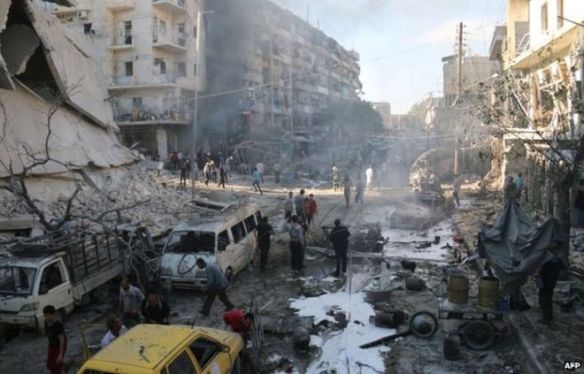
A Nonviolent Strategy to Liberate Syria

_74590478_00e0aa73-8303-4224-89de-0029b5e5eae1

Editor’s note: While we do not completely agree with the author’s analysis of factors leading to the strife in Syria, we share his desire for greater peace, freedom and stability in the region.

By Robert J. Burrowes

In early 2011, as the Arab Spring was moving across North Africa and the
Middle East, small groups of nonviolent activists in Syria, which has
been under martial law since 1963, started protesting against the brutal
dictatorship of Bashar al-Assad and demanding democratic reforms, the
release of political prisoners, an increase in freedoms, abolition of
the emergency law and an end to corruption.

By mid-March these protests, particularly in cities such as Damascus,
Aleppo and Daraa, had escalated and the ‘Day of Rage’ protest on 15
March 2011 is considered by many to mark the start of the nationwide
uprising against the Assad dictatorship. The dictatorship’s reaction to
the protests became violent on 16 March and on 18 March, after Friday
prayers, activists gathered at the al-Omari Mosque in Daraa were
attacked by security forces with water cannons and tear gas, followed by
live fire; four nonviolent activists were killed.

Within months, as the nonviolent protests expanded and spread, the
regime had killed hundreds of activists and arbitrarily arrested
thousands, subjecting many of them to brutal torture in detention. This
pattern has continued unchecked. For the earliest of a succession of
reports that document this regime violence against nonviolent activists,
see the Human Rights Watch report ‘”We’ve Never Seen Such Horror” Crimes
against Humanity by Syrian Security Forces‘.

For the most recent report, see the UN Human Rights Council report ‘Out
of Sight, Out of Mind: Deaths in Detention in the Syrian Arab Republic‘.

In recent commentaries on the war in Syria, both long-time solidarity
activist Terry Burke – see ‘U.S. Peace Activists Should Start Listening
to Progressive Syrian Voices‘
– and long-term Middle East scholar Professor Stephen Zunes have
encouraged the anti-war movement to listen to Syrian voices in framing
their response, particularly given the tendency within some sections of
it to support ‘the extraordinarily brutal Assad regime – a family
dictatorship rooted in the anti-leftist military wing of the Baath
Party’. See ‘Anti-war movement must listen to voices within Syria’s
civil war’.

One such Syrian voice is that of scholar and nonviolent activist
Professor Mohja Kahf. In her account of the Syrian uprising against the
Assad dictatorship – see ‘Then and Now: The Syrian Revolution to Date. A
young nonviolent resistance and the ensuing armed struggle‘
– Professor Kahf offers the following introductory paragraphs:

‘The Syrian uprising sprang from the country’s grassroots, especially
from youth in their teens, and adults in their twenties and thirties.
They, not seasoned oppositionists, began the uprising, and are its core
population. They share, rather than a particular ideology, a
generational experience of disenfranchisement and brutalization by a
corrupt, repressive, and massively armed ruling elite in Syria.

‘The uprising began nonviolently and the vast majority of its populace
maintained nonviolence as its path to pursue regime change and a
democratic Syria, until an armed flank emerged in August 2011.

‘The Syrian Revolution has morphed. From midsummer to autumn 2011, armed
resistance developed, political bodies formed to represent the
revolution outside Syria, and political Islamists of various sorts
entered the uprising scene. Since then, armed resistance has
overshadowed nonviolent resistance in Syria.

‘…political bodies and support groups for the revolution’s militarized
wing, have become venues for internal power struggles among opposition
factions and individuals, and entry-points for foreign powers attempting
to push their own agendas into a revolution sprung from Syrian
grievances, grown from the spilling of Syrian blood on Syrian soil.

‘Many in the global peace community can no longer discern the Syrian
uprising’s grassroots population through the smoke of armed conflict and
the troubling new actors on the scene. Further, some in the global left
or anti-imperialist camp understand the Syrian revolution only through
the endgame of geopolitics. In such a narrative, the uprising population
is nothing but the proxy of U.S. imperialism.

‘Such critics may acknowledge that the Assad regime is brutal, but
maintain from their armchairs that Syrians must bear this cost, because
this regime has its finger in the dike of U.S. imperialism, Zionism, and
Islamism. Or, perhaps they agree that a revolution against a brutal
dictator is not a bad idea, but wish for a nicer revolution, with better
players. Eyes riveted to their pencils and rulers and idées fixés, such
critics abandon a grassroots population of disenfranchised human beings
demanding basic human freedoms in Syria. This is a stunning and cruel
failure of vision.

‘The voices of the original grassroots revolution of Syria are
nonviolent, nonsectarian, noninterventionist, for the fall of the Assad
regime, and for the rise of a democratic, human rights upholding Syria
that is bound by the rule of law. They are still present in this
revolution. Who will hear them now, after so much dear blood has been
spilled, so much tender flesh crushed under blasted blocks of cement, so
much rightful anger unleashed?’

Other Syrian voices offer a similar account. See, for example, the
recent book by Robin Yassin-Kassab and Leila al-Shami titled ‘Burning
Country: Syrians in Revolution and War’
reviewed in ‘Book Review: Burning Country‘.

If Syrians and their solidarity allies are to develop and implement a
successful nonviolent grassroots strategy to end the war in/on Syria and
remove the Assad dictatorship, then we need a sound strategic framework
that guides the comprehensive planning of our strategy. Obviously, there
is no point designing a strategy that is incomplete or cannot be
successful.

A sound strategic framework simply enables us to think and plan
strategically so that once our strategy has been elaborated, it can be
widely shared and clearly understood by everyone involved. It also means
that nonviolent actions can then be implemented because they are known
to have strategic utility and that precise utility is understood in
advance. There is little point taking action at random, especially if
our opponent is powerful and committed (even if that ‘commitment’ is
insane, which is frequently the case).

There is a simple diagram presenting a 12-point strategic framework
illustrated here in the form of the ‘Nonviolent Strategy Wheel‘.

In order to think strategically about nonviolently resolving a violent
conflict, a clearly defined political purpose is needed; that is, a
simple summary statement of ‘what you want’. However, given the
complexity of the multifaceted conflict in the case of Syria, it is
strategically simpler to identify two political purposes. These might be
stated thus: 1. To end the war in/on Syria, and 2. To establish a
democratic form of government in Syria (which, obviously, requires
removal of the dictatorship).

Once the political purpose has been defined, the two strategic aims
(‘how you get what you want’) of the strategy acquire their meaning.
These two strategic aims (which are always the same whatever the
political purpose) are as follows: 1. To increase support for your
campaign by developing a network of groups who can assist you. 2. To
alter the will and undermine the power of those groups who support the
war/dictatorship.

While the two strategic aims are always the same, they are achieved via
a series of intermediate strategic goals which are always specific to
each struggle. To keep this article reasonably straightforward, I have
only identified a set of strategic goals that would be appropriate in
the context of ending the war in/on Syria below. For a basic set of
strategic goals appropriate for ending the dictatorship, see ‘Strategic
Aims‘.

Before listing the strategic goals for ending the war, I wish to
emphasize that I have only briefly discussed two aspects of a
comprehensive strategy to end the war in/on Syria: its political purpose
and its two strategic aims (with its many subsidiary strategic goals).
For the strategy to be effective, all twelve components of the strategic
framework should be planned (and then implemented). See Nonviolent
Defense/Liberation Strategy.
This will require, for example, that tactics that will achieve the
strategic goals must be carefully chosen and implemented bearing in mind
the vital distinction between the political objective and strategic goal
of any such tactic. See ‘The Political Objective and Strategic Goal of
Nonviolent Actions‘.

Strategic goals to end the war in/on Syria

I have outlined a basic list of strategic goals below although, it
should be noted, the list would be considerably longer as individual
organizations should be specified separately.

Many of these strategic goals would usually be tackled by action groups
working in solidarity with Syria campaigning within their own country.
Ideally they would be undertaken by activist groups with existing
expertise in the relevant area (for example, experience in campaigning
against a weapons corporation) but this is not essential.

Of course, individual activist groups would usually accept
responsibility for focusing their work on achieving just one or a few of
the strategic goals (which is why any single campaign within the overall
strategy is readily manageable).

It is the responsibility of the struggle’s strategic leadership to
ensure that each of the strategic goals, which should be identified and
prioritized according to their precise understanding of the
circumstances in Syria, (so, not necessarily precisely as identified
below) is being addressed (or to prioritize if resource limitations
require this).

So here is a set of strategic goals to end the war in/on Syria:

(1) To cause the women in [women’s organizations WO1, WO2, WO…] in Syria
to join the liberation strategy by participating in [your nominated
nonviolent action(s)/campaign(s) and/or constructive program
activities]. For example, simple nonviolent actions would be to wear a
national symbol (such as a badge of the Syrian revolutionary flag and/or
ribbons in the national colors) and/or to boycott all media outlets
supporting the war. For this item and many items hereafter, see the list
of possible actions that can be taken here: ‘198 Tactics of Nonviolent Action‘.

(2) To cause the workers in [trade unions T1, T2, T…] in Syria to join
the liberation strategy by participating in [your nominated nonviolent
action(s)/campaign(s) and/or constructive program activities]. For
example, this might include withdrawing their labor from occupations
that support the Syrian military forces.

(3) To cause young people in Syria to resist conscription into the
Syrian military forces.

(4) To cause young people in Syria to refuse recruitment into the Free
Syrian Army, al-Qaeda and its affiliates/allies, the Islamic State
(Daesh) and its allies.

(5) To cause the members of [religious denominations R1, R2, R…] in
Syria to join the liberation strategy by participating in [your
nominated nonviolent action(s)/campaign(s) and/or constructive program
activities].

(6) To cause the members of [ethnic communities EC1, EC2, EC…] in Syria
to join the liberation strategy by participating in [your nominated
nonviolent action(s)/campaign(s) and/or constructive program
activities].

(7) To cause the activists, artists, musicians, intellectuals and other
key social groups in [organizations O1, O2, O…] in Syria to join the
liberation strategy by participating in [your nominated nonviolent
action(s)/campaign(s) and/or constructive program activities].

(8) To cause the students in [student organizations S1, S2, S…] in Syria
to join the liberation strategy by participating in [your nominated
nonviolent action(s)/campaign(s) and/or constructive program
activities].

(9) To cause the soldiers in [military units M1, M2, M…] to refuse to
obey orders from the dictatorship to arrest, assault, torture and shoot
nonviolent activists and the other citizens of Syria.

(10) To cause the police in [police units P1, P2, P…] to refuse to obey
orders from the dictatorship to arrest, assault, torture and shoot
nonviolent activists and the other citizens of Syria.

(11) To cause young people in [the US, NATO countries, Russia and other
countries fighting in Syria] to refuse recruitment into their respective
military forces.

(12) To cause conscripts into the military forces of [NATO countries,
Russia and other countries fighting in Syria] that still use
conscription to conscientiously refuse to perform military duties.

(13) To cause military personnel in the military forces of [the US, NATO
countries, Russia and other countries fighting in Syria] to refuse
deployment to the war in/on Syria.

(14) To cause young people in [your country] to refuse recruitment into
the Free Syrian Army, al-Qaeda and its affiliates/allies, the Islamic
State (Daesh) and its allies.

(15) To cause former soldiers in [your country] to refuse recruitment as
mercenaries by corporations that supply ‘military contractors’ to fight
in Syria.

(16) To cause the activists in [peace groups P1, P2, P…] in [your
town/city/country] to resist the war on Syria by encouraging their
members to boycott [all/specified nonmilitary products] of [weapons
corporations W1, W2, W…]. For example, this might include boycotting all
commercial flights that use Boeing and Airbus passenger aircraft given
the heavy involvement of these corporations in the production of
military aircraft.

(17) To cause the activists in [environment groups E1, E2, E…] in [your
town/city/country] to resist the war on Syria by encouraging their
members to boycott [all/specified nonmilitary products] of [weapons
corporations W1, W2, W…]. For example, this might including boycotting
all commercial products of General Electric given the heavy involvement
of this corporation in the production of military engines, systems and
services.

(18) To cause the workers in [trade unions or labor organizations T1,
T2, T….] in [your town/city/country] to resist the war on Syria by
encouraging their members to boycott [all/specified nonmilitary
products] of [weapons corporations W1, W2, W…].

(19) To cause the women in [women’s organizations WO1, WO2, WO…] in
[your town/city/country] to resist the war on Syria by encouraging their
members to boycott [all/specified nonmilitary products] of [weapons
corporations W1, W2, W…].

(20) To cause the members of [religious denominations R1, R2, R…] in
[your town/city/country] to resist the war on Syria by encouraging their
members to boycott [all/specified nonmilitary products] of [weapons
corporations W1, W2, W…].

(21) To cause the members of [ethnic communities EC4, EC5, EC…] in [your
town/city/country] to resist the war on Syria by encouraging their
members to boycott [all/specified nonmilitary products] of [weapons
corporations W1, W2, W…].

(22) To cause the artists, musicians, intellectuals and other key social
groups in [organizations O4, O5, O…] in [your town/city/country] to
resist the war on Syria by encouraging their members to boycott
[all/specified nonmilitary products] of [weapons corporations W1, W2,
W…].

(23) To cause the students in [student organizations S1, S2, S…] in
[your town/city/country] to resist the war on Syria by encouraging their
members to boycott [all/specified nonmilitary products] of [weapons
corporations W1, W2, W…].

(24) To cause the consumers in [your town/city/country] to resist the
war on Syria by boycotting [all/specified nonmilitary products] of
[weapons corporations W1, W2, W…].

(25) To cause more individuals in [your town/city/country] to resist the
war on Syria by conscientiously resisting paying [part/all] of their
taxes for war.

(26) To cause more organizations in [your town/city/country] to resist
the war on Syria by conscientiously resisting paying [part/all] of their
taxes for war.

(27) To cause [weapons corporations W4, W5, W…] to convert from the
manufacture of military weapons to [the specified/negotiated
socially/environmentally beneficial products].

(28) To cause [banks B1, B2, B…] to cease financing the weapons
industry.

(29) To cause bank customers to shift their deposits to ethical banks
and credit unions that do not finance (or are otherwise involved in) the
weapons industry.

(30) To cause [religious organizations R4, R5, R…] to divest from the
weapons industry.

(31) To cause [superannuation funds S1, S2, S…] to divest from the
weapons industry.

(32) To cause superannuation fund customers to shift their money to
ethical funds that do not finance (or are otherwise involved in) the
weapons industry.

(33) To cause [insurance companies I1, I2, I…] to divest from the
weapons industry.

(34) To cause insurance customers to shift their policies to ethical
insurance companies that do not finance (or are otherwise involved in)
the weapons industry.

(35) To cause [corporations C1, C2, C…] that provide
[services/components] for [weapons corporations W1, W2, W…] to cease
doing so.

(36) To cause the workers in [trade unions or labor organizations T4,
T5, T…] to withdraw their labor from [weapons corporations W1, W2, W…]
[partially/wholly], [temporarily/permanently].

(37) To cause the workers in [trade unions or labor organizations T7,
T8, T…] to withdraw their labor from [corporations C1, C2, C…]
[partially/wholly], [temporarily/permanently].

(38) To cause [corporations C4, C5, C…] that provides
[services/supplies] to [military bases MB1, MB2, MB…] to cease doing so.

(39) To cause the workers in [trade unions or labor organizations T10,
T11, T…] who work in/supply [military bases MB1, MB2, MB…] to withdraw
their labor [partially/wholly], [temporarily/permanently].

(40) To cause the workers in [trade unions or labor organizations T13,
T14, T…] to withdraw their labor from [corporations C4, C5, C…]
[partially/wholly], [temporarily/permanently].

(41) To cause [corporations C7, C8, C…] that manufacture and supply spy
satellites for military purposes to cease doing so.

(42) To cause the workers in [trade unions or labor organizations T16,
T17, T…] to withdraw their labor from [corporations C7, C8, C…]
[partially/wholly], [temporarily/permanently].

(43) To cause [corporations C10, C11, C…] that provide
[services/components] for the militarization of space to cease doing so.

(44) To cause the workers in [trade unions or labor organizations T19,
T20, T…] to withdraw their labor from [corporations C10, C11, C…]
[partially/wholly], [temporarily/permanently].

(45) To cause [corporations C13, C14, C…] that provide private military
contractors (mercenaries) to fight in wars to cease doing so.

(46) To cause the private military contractors (mercenaries) who fight
in wars to withdraw their labor from [corporations C13, C14, C…].

(47) To cause the soldiers in [military units M1, M2, M…] in [your
town/city/country] to refuse to obey orders to [arrest, assault, torture
and shoot, depending on your local circumstances] nonviolent activists
campaigning against the war.

(48) To cause the police in [police units P1, P2, P…] in [your
town/city/country] to refuse to obey orders to [arrest, assault, torture
and shoot, depending on your local circumstances] nonviolent activists
campaigning against the war.

(49) To cause individual members of the military forces at [Military
Base MB1/Drone Base DB1/Navy Ship NS1/Air Force Base AFB1/Army unit
AU1/Marines unit MU1] in [your town/city/country] to resign.

(50) To cause individual members of those corporations that
employ/supply private military contractors (mercenaries) to resign.

As you can see, the two strategic aims are achieved via a series of
intermediate strategic goals.

Not all of the strategic goals will need to be achieved for the strategy
to be successful but each goal is focused in such a way that its
achievement functionally undermines the power of those conducting the
war.

The difference between success and failure in any struggle is the
soundness of the strategy.


Biodata: Robert J. Burrowes has a lifetime commitment to understanding and ending human violence. He has done extensive research since 1966 in an effort to understand why human beings are violent and has been a nonviolent activist since 1981. He is the author of ‘Why Violence?‘ His email address is flametree@riseup.netand his website is at http://robertjburrowes.wordpress.com

Robert J. Burrowes
P.O. Box 68
Daylesford
Victoria 3460
Australia
Email: flametree@riseup.net

Websites:
Nonviolence Charter
Flame Tree Project to Save Life on Earth
‘Why Violence?’
Nonviolent Campaign Strategy
Nonviolent Defense/Liberation Strategy
Anita: Songs of Nonviolence
Robert Burrowes
Global Nonviolence Network

Freedom Rider: Dump the Democrats for Good

gettyimages-621673240

By Margaret Kimberly

Source: Black Agenda Report

“The Democrats were so entrenched in their corruption and self-dealing that they didn’t see the Bernie Sanders campaign for modest reform as the savior it might have been.”

This columnist did not see a Donald Trump victory coming. The degree of disgust directed at an awful candidate was more than I had predicted. Neither the corporate media, nor Wall Street nor the pundits nor the pollsters saw this coming either. Their defeat and proof of their uselessness is total. Those of us who rejected the elite consensus and didn’t support Hillary Clinton should be proud.

Black people are now in fear and in shock when we ought to be spoiling for a fight. All is not lost. Even the victory of the openly bigoted Trump poses an opportunity to right our political ship. Not the electoral ship, the political one. For decades black Americans have been voting for people who have done them wrong. Bill Clinton got rid of public assistance as a right, and undid regulations that kept Wall Street in check. He put black people in jail and yet black people didn’t turn on him until he and his wife tried to defeat Obama. But Obama gave us more of the same. Bailouts of Wall Street, interventions and death for people all over the world, and a beat down of black people who still loved him. Despite the fear of Republican victory we end up losing whenever a Democratic presidential candidate wins.

“Obama bailed out banks, insurance companies, Big Pharma and even Ukraine.”

Victory is ours if we dump the Democrat Party and their black misleaders. The Democrats were so entrenched in their corruption and self-dealing that they didn’t see the Bernie Sanders campaign for modest reform as the savior it might have been. Instead they marched in lock step with a woman who was heartily disliked. Sanders went along as the sheep dog who led his flock straight over the cliff. The Democrats inadvertently galvanized people who had stopped participating in the system and who want change from top to bottom.

One of our biggest problems lies not in facts but in perceptions. What did Democrats do for black people? The Democrats ship living wage jobs off shore in corrupt trade deals like NAFTA and TTP. They don’t prosecute killer cops or raise the minimum wage. Trump will be hard pressed to deport more people than Obama did. The list of treachery is very long.

When Donald Trump asked black people, “What have you got to lose?” his words were met with derision. But in reality he posed a good question. What do we have to show for years of Democratic votes? Obama bailed out banks, insurance companies, Big Pharma and even Ukraine. But he didn’t rebuild Detroit or New Orleans. The water in Flint, Michigan is still poisoned and the prisons are still full.

“There may be opportunity in this crisis if we dare to seize it.”

The outpouring of love for Barack Obama was purely symbolic. In state after state, black people who gave him victory in 2008 and 2012 stayed home. They loved seeing him and his wife dressed up at state dinners but they were never fully engaged in politics because that is not what Democrats want. The love was phony and void of any political intent. Donald Trump will be president because of that veneer of political activism.

As for white people who voted for Trump, of course many of them are racists. However they are not without valid complaints. They don’t want neoliberalism but black people don’t either. They don’t want wars around the world and neither do black people. We corrupt our own heritage of radicalism in favor of shallow symbolism. While we slept walk in foolish nostalgia for Obama and cried at the thought of him leaving office, white people kept their hatred of Hillary to themselves or lied to pollsters. They want America to be great again, great for them. White nostalgic yearnings are dangerous for black people, and we must be vigilant. But there may be opportunity in this crisis if we dare to seize it.

Republicans have been the white people’s party for nearly 50 years. Trump just made it more obvious. He didn’t tell us anything we didn’t already know. We don’t have to be the losers in this election. Let us remember what we have achieved in our history. Half of black Americans didn’t even have the right to vote in the 1960s yet made earth shattering progress in a short time. But we must understand the source of that progress. It came from struggle and daring to create the crises that always bring about change.

“The dread of redneck celebration should not be our primary motivation right now.”

Yes white people will strut for president Trump but that doesn’t mean we must submit as if we are in the Jim Crow days of old. We have ourselves to rely on and we can reclaim our history of fighting for self-determination. The dread of redneck celebration should not be our primary motivation right now. Before we quake in fear at white America we must send the scoundrels packing.

The black politicians and the Democratic National Committee and the civil rights organizations that don’t help the masses must all be kicked to the proverbial curb. The rejection must be complete and blame must be laid squarely at their feet.

Those of us who voted for the green party ticket of Jill Stein and Ajamu Baraka must stand firmly and proudly for our choice. We must strategize on building a progressive party to replace the Democrats who never help us. We must applaud Julian Assange and Wikileaks for exposing their corruption. There should be no back tracking on the fight to build left wing political power.

“We must strategize on building a progressive party to replace the Democrats who never help us.”

The black people who didn’t return to the polls shouldn’t be blamed either. Those individuals must have personal introspection that is meaningful and political. Their lack of enthusiasm speaks to Democratic Party and black misleadership incompetence. We should refrain from personal blame and help one another in this process as we fight for justice and peace.

The end of the duopoly is the first step in liberation. Staying with a party that literally did nothing was a slow and agonizing death. Sometimes shock therapy is needed to improve one’s condition. If we don’t take the necessary steps to free ourselves this election outcome will be a disaster. Instead, why not bring the disaster to the people who made it happen? The destruction of the Democratic Party and creation of a truly progressive political movement is the only hope for black America.

Why Okinawa Should Matter

2015051815015274208

By Richard Falk

Source: Foreign Policy Journal

Okinawa has been a mostly unhappy host of American military bases, and the issue has been prominent at times on the agenda of the Japanese peace movement.

When President Barack Obama visited Hiroshima in May of 2016, there was an effort to persuade him to put Okinawa on his travel itinerary, but as has happened frequently throughout the long tortured history of Okinawa, the request was ignored, and the people of the island were once more disappointed. In an important sense, Okinawa is the most shameful legacy of Japan’s defeat in World War II, exceeding even the sites of the atomic attacks by its daily reminders of a continued colonialist encroachment on Okinawan national dignity and wellbeing.

Actually, Okinawa is being victimized by overlapping exploitations with that of the United States reinforced and legitimized by mainland Japan. For the United States, Okinawa serves as a hub for its strategic military operations throughout the Pacific, with at least 14 separate military bases occupying about 20% of the island. Kadena Air Base was used for B-29 bombing missions during the Korean War more than a half century ago, and the island was used as a major staging area throughout the Vietnam War. It has also been used as a secret site for the deployment of as many as 1,000 nuclear warheads in defiance of Japanese declared no-nukes policy. Actually, in recent years Okinawa rarely receives global news coverage except when there occurs a sex crime by American servicemen that provokes local outrage and peaceful mass demonstrations followed by the strained apologies of local American military commanders.

Japan’s role in the misfortunes of Okinawa is more than one of a passive acceptance of the enduring side effects of its defeat and humiliation in World War II. After a series of military incursions, Japan finally conquered Okinawa and the Ryukyu island chain of which it is a part in 1879, and then imposed its rule in ways that suppressed the culture, traditions, and even the language of the native populations of the islands. What is virtually unknown in the West is that Okinawa was the scene of the culminating catastrophic land battle between the United States and Japan in the spring of 1945 that resulted in the death of an astounding one-third of the island’s civilian population of then 300,000 and its subsequent harsh military administration by the United States for the next 27 years until the island was finally turned back to Japan in 1972. Despite an estimated 60-80% of Okinawans being opposed to the U.S. bases, confirmed by the recent election of an anti-bases governor of prefecture, the government in Tokyo, currently headed by a dangerous militarist, Shinzo Abe, is comfortable with the status quo, which allows most of the unpopular continuing American military presence to be centered outside of mainland Japan, and hence no longer a serious political irritant within the country.

What the plight of Okinawans exemplifies is the tragic ordeal of a small island society, which because of its small population and size, entrapment within Japan, and geopolitical significance, failed to be included in the decolonizing agenda that was pursued around the world with such success in the last half of the 20th century. This tragic fate that has befallen Okinawa and its people results from being a ‘colony’ in a post-colonial era. Its smallness of current population (1.4 million) combined with its enclosure within Japanese sovereign statehood and its role in pursuing the Asian strategic interests of the United States, as well as joint military operations with Japan make it captive of a militarized world order that refuses to acknowledge the supposedly inalienable right of self-determination, an entitlement of all peoples according to common Article 1 of both human rights covenants. In this respect, Okinawa, from a global perspective, is a forgotten remnant of the colonial past, which means it is subjugated and irrelevant from the perspective of a state-centric world order. In this respect, it bears a kinship with such other forgotten peoples as those living in Kashmir, Chechnya, Xinjiang, Tibet, Hawaii, Puerto Rico, Palau, Marianas Islands, among many others.

There are other ways of being forgotten. I have for many years been concerned about the Palestinian ordeal, another geopolitical and historical casualty of Euro-American priorities and the colonialist legacy. Here, too, the indigenous population of Palestine has endured decades of suffering, denials of basic rights, and a dynamic of victimization initiated a century ago when the British Foreign Office issued the Balfour Declaration pledging support to the world Zionist movement for the establishment of a Jewish Homeland in historic Palestine, later placed under the tutorial role of the United Kingdom with the formal blessings of the League of Nations until the end of World War II. Instead of Japan playing the intermediate role as in Okinawa, it is Israel that pursues its own interests and teams with the United States and Europe as a strategic partner to carry forward its shared geopolitical goals throughout the Middle East and North Africa. Of course, there are crucial differences. Japan is constrained as a partner by its postwar peace constitution, which Abe is keen to circumvent and dilute, while Israel has become a military powerhouse in the region, enjoying a special relationship with the United States that includes the incredible assurance by Washington of a military capability capable of defeating any foreseeable combination of Arab adversaries. Also, unlike Okinawa, there are no American military bases in Israel. There is no need for them. Israel acts as an American surrogate, and sometimes even vice versa. Yet the result is the same—force projection unconnected with self-defense, but vital for upholding regional strategic interests that involve maintaining a visible military presence and offering allies in the region credible promises of protection.

When we raise questions about the future of Okinawa, we come face to face with the role and responsibility of global civil society. The Palestinian goals appear to remain more ambitious than those of the Okinawans, although such an impression could be misleading. The Palestinian movement is centered upon realizing the right of self-determination, which means at the very least an end to occupation and a diplomacy that achieves a comprehensive, sustainable, and just peace. For Okinawans, long integrated into the Japanese state, earlier dreams of independence seem to have faded, and the focus of political energy is currently devoted to the anti-bases campaign. Taking moral globalization seriously means conceiving of citizenship as borderless with respect to space and time, an overall identity I have described elsewhere under the label ‘citizen pilgrim,’ someone on a life journey to build a better future by addressing the injustices of the present wherever encountered.

In this respect, acting as citizen pilgrims means giving attention to injustices that the world as a whole treats as invisible except when an awkward incident of lethal abuse occurs. Okinawa has been effectively swept under the dual rugs of statism (Okinawa is part of the sovereign state of Japan) and geopolitics (Okinawa offers the United States indispensable military bases), and even the mainly Japanese peace movement may have grown fatigued and distracted, being currently preoccupied with its opposition to the revival of Japanese militarism under Abe’s leadership. Whether attention to the plight of Okinawa will give rise to false hopes is a concern, but the aspiration is to produce an empowering recognition throughout the world that for some peoples the struggle against colonialism remains a present reality rather than a heroic memory that can be annually celebrated as an independence day holiday. Until we in the United States stand in active solidarity with such victims of colonialist governance we will never know whether more can be done to improve prospects of their emancipation. This awareness and allegiance is the very least that we can do if we are to act in the spirit of a citizen pilgrimage.


This article was originally published at RichardFalk.Wordpress.com. An earlier version first appeared in the Japanese publication Ryukyu Shimpo.


Punishment is Violent and Counterproductive

stpp

By Robert J. Burrowes

Punishment is a popular pastime for humans. Parents punish children. Teachers punish students. Employers punish workers. Courts punish lawbreakers. People punish each other. Governments punish ‘enemies’. And, according to some, God punishes evildoers.

What is ‘punishment’? Punishment is the infliction of violence as revenge on a person who is judged to have behaved inappropriately. It is a key word we use when we want to obscure from ourselves that we are being violent.

The violence inflicted as punishment can take many forms, depending on the context. It might involve inflicting physical injury and/or pain, withdrawal of approval or love, confinement/imprisonment, a financial penalty, dismissal, withdrawal of rights/privileges, denial of promised rewards, an order to perform a service, banishment, torture or death, among others.

Given the human preoccupation with punishment, it is perhaps surprising that this behaviour is not subjected to more widespread scrutiny. Mind you, I can think of many human behaviours that get less scrutiny than would be useful.

Anyway, because I am committed to facilitating functional human behaviour, I want to explain why using violence to ‘punish’ people is highly dysfunctional and virtually guarantees an outcome opposite to that intended.

Punishment is usually inflicted by someone who makes a judgment that another person has behaved ‘badly’ or ‘wrongly’. At its most basic, disobedience (that is, failure to comply with elite imposed norms) is often judged in this way, whether by parents, teachers, religious figures, lawmakers or national governments.

But is obedience functional or even appropriate?

Consider this. In order to behave optimally, the human organism requires that all mental functions – feelings, thoughts, memory, conscience, sensory perception (sight, sound, touch, smell, taste), truth register, intuition… – must be developed and readily involved, without interference, in our life. If this happens, then all of these individual functions will play an integrated role in determining our behaviour in any given circumstance. This is a very sophisticated mental apparatus that has evolved over billions of years and if it was allowed to function without interference in each individual, human beings would indeed be highly functional.

So where does obedience fit into all of this? It doesn’t. A child is genetically programmed to seek to meet their own needs, not obey the will of another. And they will behave functionally in endeavouring to meet these needs unless terrorized out of doing so. Moreover, they will learn to meet their own needs, by acting individually in some circumstances and by cooperating with others when appropriate, if their social environment models this.

However, if a child is terrorized into being obedient – including by being punished when they are not – then the child will have no choice but to suppress their awareness of the innate mental capacities that evolved over billions of years to guide their behaviour until they have ‘learned’ what they must do to avoid being punished. For a fuller explanation of this, see ‘Why Violence?’ and ‘Fearless Psychology and Fearful Psychology: Principles and
Practice’.

Unfortunately, as you can probably readily perceive, this process of terrorizing a child into suppressing their awareness of what they want to do so that they do what someone else directs is highly problematical. And it leads to a virtually infinite variety of dysfunctional
behaviours, even for those who appear to have been successfully ‘socialized’ into performing effectively in their society. This is readily illustrated.

Perhaps the central problem of terrorizing individuals into obedience of conventions, commands, rules and the law is that once the individual has been so terrorized, it is virtually impossible for them to change their behaviour because they are now terrified of doing so. If the obedient behaviours were functional in the circumstances then, apart from the obviously enormous damage suffered by the individual, there would be no other adverse social or environmental consequences.

Unfortunately, when all humans have been terrorized into behaving dysfunctionally on a routine basis (in the Western context, for example, by engaging in over-consumption) then changing their behaviour, even in the direction of functionality, is now unconsciously associated with the fear of violence (in the form of punishment) and so desirable behavioural change (in the direction of reduced consumption, for example) is much more difficult. It is not just that many Western humans are reluctant to reduce their consumption in line with environmental (including climatic) imperatives, they are unconsciously terrified of
doing so.

By now you might be able to see the wider ramifications of using violence and threats of violence to force children into being obedient. Apart from terrorizing each child into suppressing their awareness of their innate mental capacities, we create individuals whose entire (unconscious) ‘understanding’ of human existence is limited to the notion that violence, mislabeled ‘punishment’, drives socialization and society.

As just one result, for example, most people consider punishment to be appropriate in the context of the legal system: they expect courts to inflict legally-sanctioned violence on those ‘guilty’ of disobeying the law. As in the case of the punishment of children, how many people ask ‘Does violence restore functional behaviour? Or does it simply inflict violence as revenge? What do we really want to achieve? And how will we achieve that?’

Fundamentally, the flaw with violence as punishment is that violence terrifies people. And you cannot terrorize someone into behaving functionally. At very best, you can terrorize someone into changing their behaviour in an extremely limited context and/or for an extremely limited period of time. But if you want functional and lasting change in an individual’s behaviour, then considerable emotional healing will be necessary. This will allow the suppressed fear, anger, sadness and other feelings resulting from childhood terrorization to safely resurface and be expressed so that the individual can perceive their own needs and identify ways of fulfilling them (which does not mean that they will be obedient). For an explanation of what is required, see ‘Nisteling: The Art of Deep Listening’ which is referenced in ‘My Promise to Children‘.

So next time you hear a political leader or corporate executive advocating or using violence (such as war, the curtailment of civil liberties, an economically exploitative and/or ecologically destructive initiative), remember that you are observing a highly dysfunctionalized individual. Moreover, this dysfunctional individual is a logical product of our society’s unrelenting use of violence, much of it in the form of what is euphemistically called ‘punishment’, against our children in the delusional belief that it will give us obedience and hence social control.

Or next time you hear a public official, judge, terrorist or police officer promising ‘justice’ (that is, retribution), remember that you are listening to an emotionally damaged individual who suffered enormous violence as a child and internalized the delusional message that ‘punishment works’.

You might also ponder how bad it could be if we didn’t require obedience and use punishment to get it, but loved and nurtured children, by listening to them deeply, to become the unique, enormously loving and powerful individuals for which evolution genetically programmed them.

I am well aware that what I am suggesting will take an enormous amount of societal rethinking and a profound reallocation of resources away from violent and highly profitable police, legal, prison and military systems. But, as I wrote above, I am committed to facilitating functional human behaviour. I can also think of some useful ways that we could allocate the resources if we didn’t waste them on violence.

If you share this commitment and working towards this world appeals to you too, then you are welcome to consider participating in the fifteen-year strategy outlined in ‘The Flame Tree Project to Save Life on Earth‘ and to consider signing the online pledge of ‘The People’s Charter to Create a Nonviolent World‘.

Punishment can sometimes appear to get you the outcome you want in the short term. The cost is that it always moves you further away from any desirable outcome in the long run.


Biodata: Robert J. Burrowes has a lifetime commitment to understanding and ending human violence. He has done extensive research since 1966 in an effort to understand why human beings are violent and has been a nonviolent activist since 1981. He is the author of ‘Why Violence?‘ His email address is flametree@riseup.netand his website is at http://robertjburrowes.wordpress.com

Robert J. Burrowes
P.O. Box 68
Daylesford
Victoria 3460
Australia
Email: flametree@riseup.net

Websites:
Nonviolence Charter
Flame Tree Project to Save Life on Earth
‘Why Violence?’
Nonviolent Campaign Strategy
Nonviolent Defense/Liberation Strategy
Anita: Songs of Nonviolence
Robert Burrowes
Global Nonviolence Network