‘Sacrificial Lamb’: US Troops in Syria and Iraq is a Colonial-Style Occupation Ready to Sacrifice Their Lives for Israel in a Future Middle East Conflict

By Timothy Alexander Guzman

Source: Silent Crow News

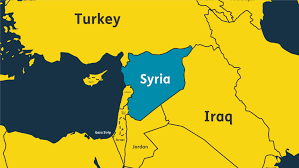
The Yemen News Agency (SABA) reported that “A U.S. military official has revealed that U.S. and coalition forces have been subjected to at least 97 attacks in Iraq and Syria since Oct. 17 until Wednesday.”  A US official confirmed “that the attacks came at 45 attacks in Iraq, in addition to 52 attacks in Syria.”  In a statement provided by the Islamic Resistance, it said that “the targeting of the US occupation base in al-Shadadi comes in response to the crimes of the enemy in the Gaza Strip.”  The Iraqis and Syrians are legitimately angry that Israel is getting away with genocide in Gaza and that the US government still has troops occupying their lands.  Since the war in Iraq began, the US and its allies including Israel has brought more death and destruction to the Middle East and Africa including Iraq, Syria, Lebanon, Libya, Yemen, Somalia and Palestine. 

They see US troops as occupiers just like the Israelis who have been occupying Palestinian land since 1948, so why is the mainstream media surprised that there has been an increase of attacks since the October 7th incident between Hamas and Israel.  The US government has violated international laws and even their own constitution by allowing US troops to remain in Syria. In Article 2(4) of the United Nations Charter All Members shall refrain in their international relations from the threat or use of force against the territorial integrity or political independence of any State, or in any other manner inconsistent with the Purposes of the United Nations.” The US government’s own constitution states that “The Congress shall have Power . . .] To declare War, grant Letters of Marque and Reprisal, and make Rules concerning Captures on Land and Water.”  Since Washington’s political establishment is beholden to Israel’s agenda, it decided to illegally occupy Syria when war criminal and former US President, Barack Obama declared that Syrian President, Bashar al Assad had lost his legitimacy and that he “must go.” Since then, the US congress still has not declared war, so why are US troops still in Syria? 

Syrian President, Bashar al-Assad never invited US troops to help fight the “Islamic State” known as ISIS, besides it was the US and Israel who funded and armed the Islamic State, Al-Qaeda, and other terrorist organizations in the first place.  So, fighting so-called “terrorism” was not the intended goal. 

The US is in Syria to play a significant part of a future war against the Syrian and Iraqi governments and the rest of the Middle East including the resistance on behalf of Israel.  The other reason that US troops are still in Syria is what the former US President Donald Trump had admitted publicly, to Take the Oil.”    

There are about 900 US troops, including an unspecified number of private contractors and US Special Forces who have been deployed to Syria’s northeastern oil fields including Al-Tanf in the south blocking the Syrian government’s energy supplies. 

The pretext of fighting terrorism is pure propaganda.  The US-NATO Alliance, Israel, and to an extent, Saudi Arabia, Turkey and Qatar, all played a significant role against Syria that began in 2011 that killed hundreds of thousands of Syrians thus turning millions more into refugees in the process.  It is internationally known that it was mainly the Russian military, Iranian-backed militias who played a major role in the defeat of ISIS.  One of the main reasons that the US is still in Syria is ‘Regime Change’ since it was Washington’s bi-partisan bureaucrats who allocated billions of dollars’ worth of arms to ISIS since the war began. It is well known that members of ISIS are mostly veterans from Al Qaeda and other linked terrorist organizations from Iraq, Afghanistan and other war zones from around the world.

US Troops in Syria and Iraq are Open Targets, Seen as Illegitimate

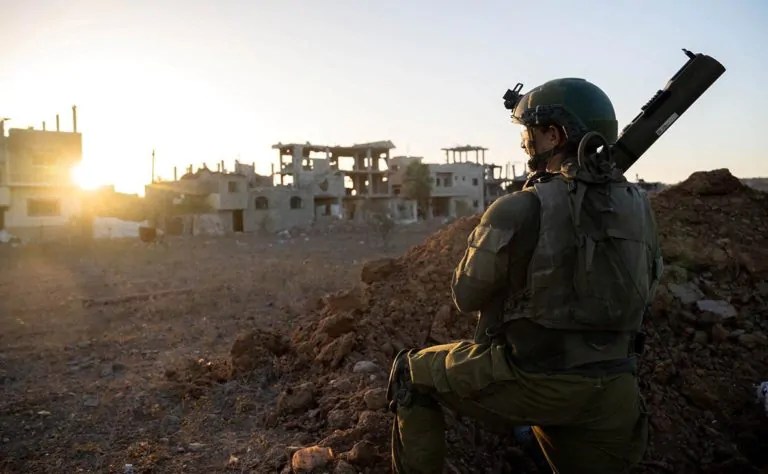
The corporate mainstream media reports daily on US occupation troops in Syria and Iraq being open targets by various resistance groups since Israel declared war on Hamas.  Al Mayadeen recently had a report based on numerous attacks on US bases in Syria, ‘Iraqi Resistance targets three US occupation bases in Syria ‘reported on several attacks on US bases in Syria and “confirmed that the US occupation military base in the Conoco gas field north of Deir Ezzor in Syria was targeted twice in less than an hour.”  It was also confirmed that “US forces at the al-Shadadi base in Syria was also targeted” and that the Islamic Resistance in Iraq announced in a statement that it targeted the Tanf occupation base and another occupation base in the Rukban camp using drones and achieved direct hits.” The resistance said that “the drones directly hit their targets in the two American bases.”  

The attacks have become a regular occurrence since Israel declared war on Gaza which means war on everyone who is Palestinian.  “Hashem al-Kindi, the head of the Naba Strategic Studies Group, told Al Mayadeen that “the Islamic Resistance in Iraq has carried out more than 70 strikes on American bases, and the escalation is ongoing” adding that “the Resistance in Iraq “used new weapons with long ranges, and it will also escalate by targeting Israel,” confirming that it “can push the confrontation to ranges unknown to the enemy.” 

The Iraqi resistance considers “US occupation bases in Syria and Iraq as legitimate targets” since the US supports Israel unconditionally including its genocide of the Palestinian people.  “On a similar note, the Pentagon said in a statement that the rate of attacks carried out against US personnel in Iraq and Syria has increased by 45% in the past three weeks.” 

FOX News, CNN Ignores Illegal US Occupation and Promotes a War Against Iran

The US mainstream media reports daily on how US troops are being targeted by “Iranian proxies.”  A report by the Zionist-run FOX News, ‘US military bases in Iraq, Syria attacked again, bringing total to at least 90 since Oct. 17’ blames Iran who is Washington’s and Israel’s main adversary in the Middle East, “Iran holds considerable sway in Iraq, and a coalition of Iran-backed groups brought Iraqi Prime Minister Mohammed Shia al-Sudani to power in October 2022. At the same time, there are some 2,000 U.S. troops in Iraq under an agreement with Baghdad, mainly to counter the militant Islamic State group.”  In another article by FOX News from May 26, 2023, ‘Iran regime close to getting nuclear bomb, but what’s the holdup?’, that Iran has moved dangerously close to enriching weapons-grade uranium for a nuclear bomb, but the regime has not yet crossed the critical threshold of declaring it has built an atomic weapon.”  

Fox News reached out to Lisa Daftari, an Iran expert and editor-in-chief of the Foreign Desk and said that “If there is reason to believe that there are a number of retardants that have put a pause in their weapons development, they’d relate back to targeted attacks by the U.S. and Israel, who clearly are very much concerned about stopping the mullahs” she continued “Israel has reportedly conducted at least two dozen targeted operations on Iran’s regime in the last 15 or so years, including drone attacks, cyberattacks, if you recall Stuxnet and assassinations of key players in Iran’s nuclear program.” 

Jason Brodsky, policy director of the U.S.-based United Against a Nuclear Iran (UANI), was also interviewed by FOX News and said that “I think Iran’s leadership to date has calculated the costs of doing so would outweigh the benefits at this juncture — mainly a destructive attack which targets its entire nuclear infrastructure,” he said that Iran’s leadership is emboldened and will cross international red lines, “But my concern is that calculus risks changing as the U.S. and Europe’s non-response to Iran’s nuclear escalation over the last two years — for example 60% enrichment and production of uranium metal — has emboldened Tehran’s leadership to continue testing international red lines.”  The article mentions that “The United States military and Israel Defense Forces launched a joint drill, Juniper Falcon, in February. The IDF’s website stated, “The exercise tested collective U.S.-Israel readiness and strengthened the interoperability between the two militaries,” the IDF stated on its website after the drill.” 

An article from CNN published on December 8th follows the same line, ‘Iran-backed militia vows more attacks after US Embassy in Iraq comes under fire’ said that “On Friday morning local time, a multi-mortar attack was launched against the US Embassy compound in Iraq, a US official told CNN. There were no injuries or infrastructure damage reported. Hours later, US and coalition forces came under attack three more times – once in Syria, and twice in Iraq – in a mix of rocket and drone attacks.”  The article mentions a man by the name of Abu Alaa al-Walae who is the commander of the Iraqi Kataib Sayyid al-Shuhada and said that he “did not claim responsibility for the attacks but said later Friday that they “reject talk about stopping or easing operations as long as Zionist crimes continue in Gaza and the American occupation continues in Iraq.” 

Syrian and Iraqi resistance groups do not need permission from Iran to attack US bases who are illegally occupying their territories to supposedly fight terrorists, it’s all a lie.  They know that the US troops who are in Syria and Iraq are there to counter Israel’s enemies once a major war breaks out.  Stealing the oil and controlling the political landscape is a bonus for Washington and its Big Oil conglomerates.

Washington is Sacrificing their Own Troops at the Behest of Israel

The bottom line is that Washington is preparing for a major war in the Middle East to save Israel by sacrificing its own US troops.  The Jerusalem Post published what US Air Force Third Air Force Commander Lt. Gen. Richard Clark had said in 2018:     

Washington and Israel have signed an agreement which would see the US come to assist Israel with missile defense in times of war and, according to Haimovitch, “I am sure once the order comes we will find here US troops on the ground to be part of our deployment and team to defend the State of Israel.”

And those US troops who would be deployed to Israel, are prepared to die for the Jewish state, Clark said, “We are ready to commit to the defense of Israel and anytime we get involved in a kinetic fight there is always the risk that there will be casualties. But we accept that – as every conflict we train for and enter, there is always that possibility,” he said

The US occupation in Syria and Iraq is about assisting Israel’s geopolitical agenda and we must include the US strategic goal to control the abundant natural resources and the political landscape of the Middle East.

If the US and Israel were to be victorious in a world war which is highly unlikely, governments in the Middle East and Africa will be forced to accept Western and Israeli dominance indefinitely, if not, those who want their country to be free and sovereign will be subject to regime change or will face threats of being bombed back to the stone age just like what they are doing to Gaza. The obvious is right in front of our eyes.

US And Israel Ensure Palestinians Will Spend Christmas In Living Hell

As U.S. leaders celebrate Christmas with their families, Palestinians will be mourning the loss of their loved ones.

By Michel Moushabeck

Source: The Free Thought Project

As our hopes for an extended ceasefire are dashed and Israel’s war on Gaza is now in its third month, the dire conditions that Palestinians are living under — hunger, lack of drinking water, infectious diseases, displacement, and fear of dying from the nonstop bombardment — continue to worsen as the U.S. supports Israel’s relentless assault on the besieged, occupied and now largely houseless population of Gaza.

How will the children endure the harsh conditions during the coming winter months as the torrential rains flood the streets of Gaza, the temperature starts to drop and illnesses become more rampant? How will 2.3 million Gazans — 90 percent of them displaced from their homes — be able to stay warm in their makeshift shelters? Who will give the displaced refugees the needed medical attention now that so many hospitals have been bombed and/or evacuated and so many doctors and nurses have been killed, including at least 300 aid workers? Who will bring us the truth and report on the ongoing atrocities wrought on Palestinian civilians now that 92 fine journalists have perished in the past nine weeks?

On December 14, the World Health Organization announced that it had delivered 4,200 body bags, underscoring the critical need to safeguard civilians from the risk of infection. Additionally, the shortage of latrines in shelters has given people no choice other than open defecation. As a result, the Palestinian Ministry of Health said: “There have been significant increases or increased risk of outbreak in some communicable diseases and conditions such as diarrhea, influenza, chicken pox, meningitis, jaundice, impetigo acute respiratory infections, skin infections and hygiene-related conditions like lice and scabies.”

Israeli snipers opened fire on several hundred Christian worshipers inside Gaza’s The Holy Family Catholic Church, in the Zeytun area, murdering a mother and her daughter, and received strong condemnation from the Vatican. An Al Jazeera journalist shook as he described how Israeli bulldozers crushed sick and injured civilians taking shelter outside the Kamal Adwan Hospital in northern Gaza, burying some alive — abominable and beyond human comprehension.

I can’t even begin to imagine a worse nightmare. The scenes of massive devastation are apocalyptic. The images of Palestinian civilians stripped down to their underwear, with hands strapped behind their backs, terrified, humiliated, and paraded like cattle by Israeli forces in the streets are utterly inhumane and disgusting.

You know that the world is broken when a country is given the freedom to annihilate another people as the world watches in real time. This should shake each and every one of us to the core.

While our elected officials will soon be going on their holiday recess to celebrate Christmas with their families, friends and loved ones in the warmth of their homes, Palestinian families will be huddling in cold tents or makeshift shelters shivering as they mourn the loss of loved ones. Many will still be searching with their bare hands for their children that remain missing under the rubble. It is estimated that more than 25,000 children have been orphaned since the start of the Israeli bombardment.

No one can doubt our elected officials’ complicity in fueling the ongoing genocide — committed and reported on in real time — by voting to send Israel an additional $14.3 billion in military aid, including the State Department’s bypassing of Congress to approve the expedited airlifting of 14,000 tank shells to slaughter more Palestinian civilians. I hope that they will wake up and realize — if they have a grain of compassion — what they have done and the extent of the death and destruction caused by their actions. Their unwillingness to demand an immediate ceasefire and stop the carnage has enabled the killing of nearly 20,000 civilians — 8,000 of whom are children — injured more than 50,000, displaced more than 1.9 million inhabitants of Gaza, and has drawn widespread outcry worldwide.

Before October 7, nearly 500 trucks were allowed to enter Gaza daily. The food and medical supplies they carried were barely enough to sustain the besieged population suffering from a 17-year blockade. Today, very few aid trucks are allowed into Gaza. Food has become very scarce; farms have become bombed-out war zones with massive craters; and Israeli forces are flooding Gaza with seawater, rendering agriculture impossible and drinking water undrinkable. Starvation is setting in and we are told by the World Food Program that 9 out of 10 people in Gaza cannot eat every day. This horrific situation will likely get worse if aid trucks continue to be prevented from entering the enclave.

Do U.S. politicians believe that the limitless death and destruction wreaked upon the people of Gaza is a just and moral assault, or are they afraid they’ll be accused of antisemitism and lose AIPAC campaign contributions if they call for a ceasefire? How many times do they need to be reminded that ethnic cleansing is a war crime?

In Israel “there is no voice calling to stop the bloodbath,” Israeli journalist Gideon Levy laments in Ha’aretz“We’ve never before had a war like this, a war of complete consensus, a war of total silence ….”

But while it appears to most of us on the outside that, as Levy said, “it is a unanimous war,” it is important to point out that opposition does exist despite the Israeli government’s aggressive crackdown on dissent. Protests in Israel have been largely repressed, silenced and criminalized. Numerous critics of the Israeli government have been attacked, jailed, harassed, interrogated, and warned about speech, protests, or social media posts that call for a ceasefire.

Masha Gessen, in her November 8 article for The New Yorker, outlines the various methods used by Israeli right-wing mobs and the Israeli security services to instill fear in peace activists who are opposed to Israel’s genocidal policies in Gaza. She quotes Kobi Shabtai, the head of Israeli police, who announced that protests against Israeli actions in Gaza would not be tolerated. He said: “Anyone who wishes to identify with Gaza, is welcome to — I will put him on the buses that are heading there now.”

Palestinian citizens of Israel, who comprise nearly 21 percent of the citizenry, have relatives in Gaza who were displaced, lost their homes, or were injured or killed in the Israeli bombardment. While there is outrage and opposition among Jewish peace activists, Israeli Arabs are the ones who suffer the most of Israel’s repressive practices. According to the Adalah Legal Center, they have been targeted by employers and academic institutions, and terrorized by right-wing mobs and subjected to surveillance by Israeli intelligence. A friend in Bethlehem told me that a Palestinian flag emoji can get you fired; a watermelon — because it has the same colors as the Palestinian flag — can get you arrested; and a keffiyeh around the neck can get you beaten up. Legendary human rights lawyer, Lea Tsemel, who has represented hundreds of jailed Palestinians, said that it is unprecedented that “people were getting arrested for social media posts and even likes.”

In the days and months ahead we shall see increased opposition in Israel, especially in the wake of reports that Israeli forces shot and killed three Israeli hostages even though they were holding white flags and were shirtless to show that they have not strapped themselves with suicide bombs. This tragic incident compelled protesters to set up tents outside the Israel’s Ministry of Defense in order to pressure the Netanyahu government to step up its negotiations for the hostage release. It is worth noting here that if those killed were Palestinians, it would not be newsworthy in U.S. or Israeli corporate media.

No Merry Christmas in the Land of Christ

As Americans celebrate the holiday season and enjoy a merry Christmas with their families, and children in the U.S. and Europe are busy rehearsing nativity or Christmas plays at school, it will not be merry at all in Palestine, the birthplace of Christ. In the Holy Land, where Palestinian baby Jesus was born in a manger and where Christ’s message of love, compassion and caring for the oppressed was heard for the first time, Palestinians live their lives in daily fear under the gun of Israeli soldiers and armed settlers. According to UNRWA, the United Nations refugee authority, 271 Palestinians, including 69 minors, have been killed by Israeli security forces in the West Bank this year — a record since the Second Intifada.

In the West Bank town of Jenin, residents have emptied the streets and children hide indoors as Israeli tanks and snipers raid the city. The Jenin Refugee Camp has been targeted with drones and repeatedly invaded with armored bulldozers that tear up streets. Since October 7, 58 Palestinians have been killed in Jenin alone. Last week, Israeli soldiers stormed Jenin’s Freedom Theatre, a renowned cultural institution, ransacking the place, knocking down walls, destroying theater and office equipment, confiscating computers and assaulting theater staff. They later beat up, handcuffed, blindfolded and abducted Mustafa Sheta, the Freedom Theatre’s general manager, and Ahmed Tobasi, the theater’s artistic director, from their homes. Zoe Lafferty, the theatre’s associate director, described the attack to the Middle East Eye as a form of “cultural genocide.”

In any given year, around Christmastime, the Church of Nativity receives hundreds of thousands of visitors and worshipers. This year, Bethlehem — home to more than a quarter of a million Palestinians — is besieged like other towns in the West Bank. It is shrouded in darkness, sadness, tears and agony. Since October 7, a large number of people were rounded up in Bethlehem and put in jail without being charged under Israel’s “administrative detention” policy.

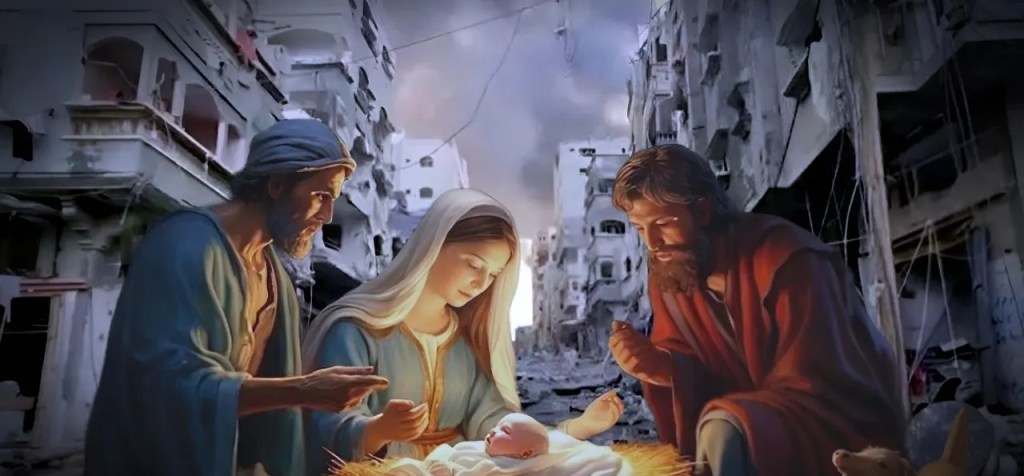
The Patriarchs and Heads of the Churches in Jerusalem declared the cancellation of Christmas celebrations in a solemn announcement on November 10. The Church of Nativity has canceled its Christmas festivities, put away its Christmas decorations, and instead of the church’s normal nativity scene, it placed baby Jesus on top of a pile of rubble inside the church.

Munther Isaac, the church’s pastor, explained his decision in his Sunday sermon in Arabic and said:

This is precisely the meaning of Christmas. This year due to the death, destruction, and rubble in our land, this is how we welcome ‘the King of Glory’ … Christmas is the presence of baby Jesus with those who suffer … If Christ were to be born today, he would be born under the rubble. I invite you to see the image of Jesus in every child killed and pulled from under the rubble … Yes, Christmas celebrations are canceled this year, but Christmas itself is not, and will not be canceled, for our hope cannot be canceled. Jesus’ birth is our hope; Jesus is our hope.

U.S. Ensures UN Fails to Stop the Genocide

On December 8, the UN secretary-general invoked Article 99 of the UN Charter to trigger a vote for an immediate ceasefire in Gaza. Many lives could have been saved had the U.S. not used its veto power and cast the single “no” vote. The U.S.’s veto of the ceasefire resolution — despite the fact that the vast majority of the people in the U.S. support a ceasefire — shows the people of this country and the world at large that the Biden administration’s allegiance is not to public opinion or international law, but to the apartheid state of Israel.

Four days after the Security Council vote, the UN General Assembly held an “emergency special session” under the “Uniting for Peace” resolution. This session is applicable when the Security Council fails to exercise its primary responsibility for international peace and security due to the veto of a permanent member. During the special session, the UN General Assembly voted overwhelmingly in favor of a resolution calling for an immediate ceasefire. The result was 153 votes in favor, 23 abstentions and 10 votes against. The negative votes were cast by the U.S., Israel, two EU countries (Austria and Czech Republic), Guatemala, Liberia, Micronesia, Nauru, Papua New Guinea and Paraguay.

While this “binding” vote shows that the U.S. and Israel are isolated and that most countries in the world want an immediate ceasefire, we know from past UN resolutions that Israel is unlikely to comply, having previously ignored more than 40 UN resolutions since its establishment.

National Security Adviser Jake Sullivan met with Israeli leaders last Thursday and delivered President Joe Biden’s message: Israel should switch to more precise tactics in about three weeks. But Prime Minister Benjamin Netanyahu repeated over the weekend that Israel will need to continue the “high-intensity” phase for more than another two months in order to achieve its goal of “eradicating Hamas.”

During his visit to Tel Aviv on Monday, Secretary of Defense Lloyd Austin said, “Hamas is determined to doom both Israelis and Palestinians to an unending cycle of suffering and strife.” He added: “So make no mistake: Hamas should never again be able to project terror from Gaza into the sovereign state of Israel. And we will continue to work together for a safer, more secure future for Israel, and a brighter future for the Palestinians.”

With a fresh supply of U.S.-made bombs and ammunition, the U.S.-backed Israeli war on the Palestinians of Gaza appears to have no end in sight.

As U.S. leaders celebrate Christmas with their families, Palestinians 

Born in a Police State: The Deep State’s Persecution of Its Most Vulnerable Citizens

By John & Nisha Whitehead

Source: The Rutherford Institute

“When the song of the angels is stilled, when the star in the sky is gone, when the kings and princes are home, when the shepherds are back with their flocks, the work of Christmas begins: to find the lost, to heal the broken, to feed the hungry, to release the prisoner, to rebuild the nations, to bring peace among the people, to make music in the heart.”—Howard Thurman, theologian and civil rights activist

The Christmas story of a baby born in a manger is a familiar one.

The Roman Empire, a police state in its own right, had ordered that a census be conducted. Joseph and his pregnant wife Mary traveled to the little town of Bethlehem so that they could be counted. There being no room for the couple at any of the inns, they stayed in a stable (a barn), where Mary gave birth to a baby boy, Jesus. Warned that the government planned to kill the baby, Jesus’ family fled with him to Egypt until it was safe to return to their native land.

Yet what if Jesus had been born 2,000 years later?

What if, instead of being born into the Roman police state, Jesus had been born at this moment in time? What kind of reception would Jesus and his family be given? Would we recognize the Christ child’s humanity, let alone his divinity? Would we treat him any differently than he was treated by the Roman Empire? If his family were forced to flee violence in their native country and sought refuge and asylum within our borders, what sanctuary would we offer them?

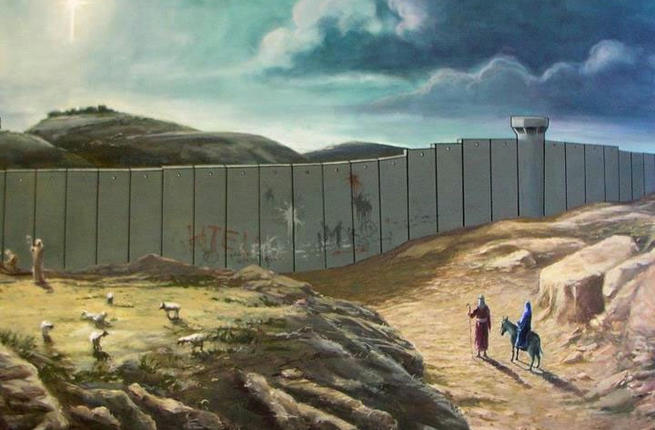
A singular number of churches across the country have asked those very questions in recent years, and their conclusions were depicted with unnerving accuracy by nativity scenes in which Jesus and his family are separated, segregated and caged in individual chain-link pens, topped by barbed wire fencing.

Those nativity scenes were a pointed attempt to remind the modern world that the narrative about the birth of Jesus is one that speaks on multiple fronts to a world that has allowed the life, teachings and crucifixion of Jesus to be drowned out by partisan politics, secularism, materialism and war, all driven by a manipulative shadow government called the Deep State.

The modern-day church has largely shied away from applying Jesus’ teachings to modern problems such as war, poverty, immigration, etc., but thankfully there have been individuals throughout history who ask themselves and the world: what would Jesus do?

What would Jesus—the baby born in Bethlehem who grew into an itinerant preacher and revolutionary activist, who not only died challenging the police state of his day (namely, the Roman Empire) but spent his adult life speaking truth to power, challenging the status quo of his day, and pushing back against the abuses of the Roman Empire—do about the injustices of our  modern age?

Dietrich Bonhoeffer asked himself what Jesus would have done about the horrors perpetrated by Hitler and his assassins. The answer: Bonhoeffer was executed by Hitler for attempting to undermine the tyranny at the heart of Nazi Germany.

Aleksandr Solzhenitsyn asked himself what Jesus would have done about the soul-destroying gulags and labor camps of the Soviet Union. The answer: Solzhenitsyn found his voice and used it to speak out about government oppression and brutality.

Martin Luther King Jr. asked himself what Jesus would have done about America’s warmongering. The answer: declaring “my conscience leaves me no other choice,” King risked widespread condemnation as well as his life when he publicly opposed the Vietnam War on moral and economic grounds.

Even now, despite the popularity of the phrase “What Would Jesus Do?” (WWJD) in Christian circles, there remains a disconnect in the modern church between the teachings of Christ and the suffering of what Jesus in Matthew 25 refers to as the “least of these.”

Yet this is not a theological gray area: Jesus was unequivocal about his views on many things, not the least of which was charity, compassion, war, tyranny and love.

After all, Jesus—the revered preacher, teacher, radical and prophet—was born into a police state not unlike the growing menace of the American police state. When he grew up, he had powerful, profound things to say, things that would change how we view people, alter government policies and change the world. “Blessed are the merciful,” “Blessed are the peacemakers,” and “Love your enemies” are just a few examples of his most profound and revolutionary teachings.

When confronted by those in authority, Jesus did not shy away from speaking truth to power. Indeed, his teachings undermined the political and religious establishment of his day. It cost him his life. He was eventually crucified as a warning to others not to challenge the powers-that-be.

Can you imagine what Jesus’ life would have been like if, instead of being born into the Roman police state, he had been born and raised in the American police state?

Consider the following if you will.

Had Jesus been born in the era of the America police state, rather than traveling to Bethlehem for a census, Jesus’ parents would have been mailed a 28-page American Community Survey, a mandatory government questionnaire documenting their habits, household inhabitants, work schedule, how many toilets are in your home, etc. The penalty for not responding to this invasive survey can go as high as $5,000.

Instead of being born in a manger, Jesus might have been born at home. Rather than wise men and shepherds bringing gifts, however, the baby’s parents might have been forced to ward off visits from state social workers intent on prosecuting them for the home birth. One couple in Washington had all three of their children removed after social services objected to the two youngest being birthed in an unassisted home delivery.

Had Jesus been born in a hospital, his blood and DNA would have been taken without his parents’ knowledge or consent and entered into a government biobank. While most states require newborn screening, a growing number are holding onto that genetic material long-term for research, analysis and purposes yet to be disclosed.

Then again, had Jesus’ parents been undocumented immigrants, they and the newborn baby might have been shuffled to a profit-driven, private prison for illegals where they first would have been separated from each other, the children detained in make-shift cages, and the parents eventually turned into cheap, forced laborers for corporations such as Starbucks, Microsoft, Walmart, and Victoria’s Secret. There’s quite a lot of money to be made from imprisoning immigrants, especially when taxpayers are footing the bill.

From the time he was old enough to attend school, Jesus would have been drilled in lessons of compliance and obedience to government authorities, while learning little about his own rights. Had he been daring enough to speak out against injustice while still in school, he might have found himself tasered or beaten by a school resource officer, or at the very least suspended under a school zero tolerance policy that punishes minor infractions as harshly as more serious offenses.

Had Jesus disappeared for a few hours let alone days as a 12-year-old, his parents would have been handcuffed, arrested and jailed for parental negligence. Parents across the country have been arrested for far less “offenses” such as allowing their children to walk to the park unaccompanied and play in their front yard alone.

Rather than disappearing from the history books from his early teenaged years to adulthood, Jesus’ movements and personal data—including his biometrics—would have been documented, tracked, monitored and filed by governmental agencies and corporations such as Google and Microsoft. Incredibly, 95 percent of school districts share their student records with outside companies that are contracted to manage data, which they then use to market products to us.

From the moment Jesus made contact with an “extremist” such as John the Baptist, he would have been flagged for surveillance because of his association with a prominent activist, peaceful or otherwise. Since 9/11, the FBI has actively carried out surveillance and intelligence-gathering operations on a broad range of activist groups, from animal rights groups to poverty relief, anti-war groups and other such “extremist” organizations.

Jesus’ anti-government views would certainly have resulted in him being labeled a domestic extremist. Law enforcement agencies are being trained to recognize signs of anti-government extremism during interactions with potential extremists who share a “belief in the approaching collapse of government and the economy.”

While traveling from community to community, Jesus might have been reported to government officials as “suspicious” under the Department of Homeland Security’s “See Something, Say Something” programs. Many states, including New York, are providing individuals with phone apps that allow them to take photos of suspicious activity and report them to their state Intelligence Center, where they are reviewed and forwarded to law-enforcement agencies.

Rather than being permitted to live as an itinerant preacher, Jesus might have found himself threatened with arrest for daring to live off the grid or sleeping outside. In fact, the number of cities that have resorted to criminalizing homelessness by enacting bans on camping, sleeping in vehicles, loitering and begging in public has doubled.

Viewed by the government as a dissident and a potential threat to its power, Jesus might have had government spies planted among his followers to monitor his activities, report on his movements, and entrap him into breaking the law. Such Judases today—called informants—often receive hefty paychecks from the government for their treachery.

Had Jesus used the internet to spread his radical message of peace and love, he might have found his blog posts infiltrated by government spies attempting to undermine his integrity, discredit him or plant incriminating information online about him. At the very least, he would have had his website hacked and his email monitored.

Had Jesus attempted to feed large crowds of people, he would have been threatened with arrest for violating various ordinances prohibiting the distribution of food without a permit. Florida officials arrested a 90-year-old man for feeding the homeless on a public beach.

Had Jesus spoken publicly about his 40 days in the desert and his conversations with the devil, he might have been labeled mentally ill and detained in a psych ward against his will for a mandatory involuntary psychiatric hold with no access to family or friends. One Virginia man was arrested, strip searched, handcuffed to a table, diagnosed as having “mental health issues,” and locked up for five days in a mental health facility against his will apparently because of his slurred speech and unsteady gait.

Without a doubt, had Jesus attempted to overturn tables in a Jewish temple and rage against the materialism of religious institutions, he would have been charged with a hate crime. More than 45 states and the federal government have hate crime laws on the books.

Had anyone reported Jesus to the police as being potentially dangerous, he might have found himself confronted—and killed—by police officers for whom any perceived act of non-compliance (a twitch, a question, a frown) can result in them shooting first and asking questions later.

Rather than having armed guards capture Jesus in a public place, government officials would have ordered that a SWAT team carry out a raid on Jesus and his followers, complete with flash-bang grenades and military equipment. There are upwards of 80,000 such SWAT team raids carried out every year, many on unsuspecting Americans who have no defense against such government invaders, even when such raids are done in error.

Instead of being detained by Roman guards, Jesus might have been made to “disappear” into a secret government detention center where he would have been interrogated, tortured and subjected to all manner of abuses. Chicago police have “disappeared” more than 7,000 people into a secret, off-the-books interrogation warehouse at Homan Square.

Charged with treason and labeled a domestic terrorist, Jesus might have been sentenced to a life-term in a private prison where he would have been forced to provide slave labor for corporations or put to death by way of the electric chair or a lethal mixture of drugs.

Indeed, as I make clear in my book Battlefield America: The War on the American People and in its fictional counterpart The Erik Blair Diaries, given the nature of government then and now, it is painfully evident that whether Jesus had been born in our modern age or his own, he still would have died at the hands of a police state.

Thus, as we draw near to Christmas with its celebration of miracles and promise of salvation, we would do well to remember that what happened in that manger on that starry night in Bethlehem is only the beginning of the story. That baby born in a police state grew up to be a man who did not turn away from the evils of his age but rather spoke out against it.

We must do no less.

Saturday Matinee: Breathing Happy

‘Breathing Happy’ Is A Fantastical Look At Addiction and Grief Perfect For The Holiday Seasons

By Sharai Bohannon

Source: Dread Central

Breathing Happy is a weird Christmas redemption story that defies genre. Writer-director-actor Shane Brady manages to give us a mind-bending story about recovery, redemption, and grief with a pinch of magic for good measure. Brady plays Dylan in the movie. Dylan is hours away from achieving a year of sobriety. However, his past comes back to haunt him, in the literal sense, making those last few hours even harder than he could’ve predicted. 

The holidays are difficult for all of us, but I imagine it’s even harder for our sober friends. We also find ourselves instantly rooting for Dylan even before getting the full story. Brady captures something profoundly human in a guy just trying to hold on that is so very relatable. Having his first anniversary on Christmas day raises the stakes even before his inner demons come out to play. Throughout the movie, we watch flashbacks of all the Christmases Dylan ruined because of his addiction. We also see how this has impacted his relationships with his family. Which answers the question of why he’s alone this year for such a big milestone.

Breathing Happy is a stylistic mindfuck. As we’re watching Dylan get into fights with talking doors, and we’re being thrown into flashbacks via VHS tapes, the narrative becomes a little dizzying. However, before I could get too annoyed, everything started to gel in a way that proved this was the only way to tell a story of this magnitude. The road to recovery isn’t a direct route. The same is true for the bumpy road that is the grieving process. As we discover these VHS moments are filling us in on Dylan’s dead dad, pieces fall into place. This leaves us realizing that this Christmas and sobriety anniversary is even heavier than we assumed at first glance.

Memories are tricky, and the fragmented way this movie gives us these moments makes it hard to not empathize with everyone involved. We feel bad for Dylan’s adopted mom and sisters, but we also are frustratingly sad for Dylan. Anyone close to an addict knows it’s a complicated relationship and that there is no right way to support them. You can try tough love, you can try being too kind, you can try combos of everything at your disposal, but it’s a helpless feeling because nothing you can do is going to magically cure this disease. Breathing Happy does a good job of reminding the viewers that there are no villains even when it looks like self-sabotage on Dylan’s part. There are bigger issues at play, and I think this is part of what works for this movie.

Breathing Happy is a messy story about being human and having emotions bigger than ourselves. Not all of the humor lands, but it does manage to pull at all the right heartstrings. I’m a magical realism girl, but I can also see this drama not being the holiday movie most genre fans are hunting for at this time of year. However, if you do catch it, you’ll probably agree that Brady has captured a lot more than the advertising for the film lets on. 

___________________

Watch Breathing Happy on Hoopla here: https://www.hoopladigital.com/title/15503415

US Seeks Plausible Deniability as it Lights Middle East on Fire

By Brian Berletic

Source: New Eastern Outlook

A surprising change of tone came from the Pentagon in early December. After weeks of devastating Israeli military operations inside Gaza, the US Secretary of Defense implored Israel to demonstrate restraint and concern for the civilian population.

The Hill in its early December 2023 article, “Israel risks ‘strategic defeat’ if civilians aren’t protected, Pentagon chief says,” would report:

Secretary of Defense Lloyd Austin said Israel risks a “strategic defeat” if it does not work to protect Palestinian civilians in Gaza amid its war on militant group Hamas in the region. “The center of gravity is the civilian population and if you drive them into the arms of the enemy, you replace a tactical victory with a strategic defeat…”

The article also noted:

The Biden administration has issued caution that a campaign in southern Gaza must be carried out more precisely than Israel did in the first leg of the war.

After a century of American military aggression killing millions (mostly civilians) around the globe, everywhere from Southeast Asia to North Africa, across the Middle East and deep into Central Asia, is Washington finally finding a sense of humanity?

No.

All while US Secretary of Defense Lloyd Austin attempted to convince the world that Washington cares about the Palestinian civilian population, the US continues flooding the Israeli arsenal with US-made weapons, enabling the campaign of indiscriminate brutality.

Bloomberg in its November 2023 article, “US Is Quietly Sending Israel More Ammunition, Missiles,” would report:

The Pentagon has quietly ramped up military aid to Israel, delivering on requests that include more laser-guided missiles for its Apache gunship fleet, as well as 155mm shells, night-vision devices, bunker-buster munitions and new army vehicles, according to an internal Defense Department list. 

The weapons pipeline to Israel is extending beyond the well-publicized provision of Iron Dome interceptors and Boeing Co. smart bombs. It continues even as Biden administration officials increasingly caution Israel about trying to avoid civilian casualties in the Gaza Strip.

Israel could not continue its military operations and the subsequent destruction of Gaza’s civilian population without this US military aid. Israel also continues to enjoy US political protection within the halls of the United Nations.

Washington cannot even say it didn’t know its weapons would be used by Israel to carry out this indiscriminate brutality because Israeli military representatives openly declared they would before their military operations into Gaza even began.

The Guardian in their October 10, 2023, article, “‘Emphasis is on damage, not accuracy’: ground offensive into Gaza seems imminent,” admitted:

IDF spokesperson R Adm Daniel Hagari made the startling admission that “hundreds of tons of bombs” had already been dropped on the tiny strip, adding that “the emphasis is on damage and not on accuracy…”

Why then does Washington want the world to believe it has growing concerns over the nature of Israel’s military operations in Gaza, and more specifically, concerns regarding the brutality Washington is admitting is being used against the civilian population?

Washington’s History of Pleading Peace While Pursuing War 

Washington wants plausible deniability. The US has for years followed a familiar pattern of attempting to covertly provoke nations and regions into conflict while publicly appearing to pursue reconciliation and peace.

For example, the US for years rhetorically supported the Minsk agreements regarding reconciliation within Ukraine, all while deliberately building up Ukraine’s military capabilities to empower and encourage the widening violence in eastern Ukraine and the eventual provocation of Russia to become directly involved in the conflict.

Likewise, the US officially maintains a “One China” policy in regards to the status of Taiwan, recognizing it as an integral part of Chinese territory, yet unofficially Washington has done everything in its power to undermine the policy and provoke war with China over its efforts to support separatism in Taipei.

Officially, the US supports the two-state solution regarding Israel and Palestine. Unofficially, and sometimes quite openly, the US has supported the most extreme elements within both Israel and among Palestinians to ensure no such peace agreement is ever possible.

Israel as the Eager Provocateur 

The intention by Washington to use Israel as a proxy and provocateur within the Middle East is well documented within US government and corporate-funded policy think tank papers. One such paper, published by the Brookings Institution in 2009 titled, “Which Path to Persia? Options for a New American Strategy Toward Iran,” focuses on containing Iran politically, militarily, and economically. It lays out options for disarming Iran and for overthrowing its government through US-sponsored sedition or US military intervention. Beyond the US and groups the paper sought to use as proxies within Iran, the paper also cited Israel as an eager regional proxy that could attack Iran, triggering a regional war that the US could then appear “reluctant” to join. The goal, of course, is to appear that the US sought peace, being left with no choice but war, all while a US-led war was the objective to begin with.

The paper notes:

…it would be far more preferable if the United States could cite an Iranian provocation as justification for the airstrikes before launching them. Clearly, the more outrageous, the more deadly, and the more unprovoked the Iranian action, the better off the United States would be. Of course, it would be very difficult for the United States to goad Iran into such a provocation without the rest of the world recognizing this game, which would then undermine it. (One method that would have some possibility of success would be to ratchet up covert regime change efforts in the hope that Tehran would retaliate overtly, or even semi-overtly, which could then be portrayed as an unprovoked act of Iranian aggression.)

It also says:

“In a similar vein, any military operation against Iran will likely be very unpopular around the world and require the proper international context—both to ensure the logistical support the operation would require and to minimize the blowback from it. The best way to minimize international opprobrium and maximize support (however, grudging or covert) is to strike only when there is a widespread conviction that the Iranians were given but then rejected a superb offer—one so good that only a regime determined to acquire nuclear weapons and acquire them for the wrong reasons would turn it down. Under those circumstances, the United States (or Israel) could portray its operations as taken in sorrow, not anger, and at least some in the international community would conclude that the Iranians “brought it on themselves” by refusing a very good deal.”

Here, the paper admits Iran does not seek war, but could be provoked into one anyway, and notes that the US, or Israel, could then carry out military aggression against Iran having convinced the world they did so reluctantly.

Israel factors so heavily in US plans to provoke war with Iran, it was given its own chapter in the paper. Chapter 5 of the paper is titled, “Leave it to Bibib: Allowing or Encouraging an Israeli Military Strike,” and notes how a war started by Israel could then be cited as a pretext for the US itself to join in afterwards, and most importantly, appear to do so “reluctantly.”

Thus, as Israel continues destroying Gaza, targeting the civilian population deliberately, knowingly triggering unrest across the region which in turn is placing pressure on Arab governments as well as Iran’s to respond, the stage is being set for the possibility of wider conflict.

As Israel attacks, invades, and erases Gaza, it is also targeting Hezbollah in Lebanon. Both the US and Israel have already carried out strikes in Syria. The goal is to trigger a conflict the US and Israel can portray as an act of aggression against either or both to then expand military operations across the whole region.

US Secretary of Defense Lloyd Austin posing as concerned for the Palestinian population all while arming Israel to continue indiscriminately brutalizing them, is being done to convince the world the US is pleading peace all while in actuality pursuing wider war.

The US used the proxy war in Ukraine to reorder Europe and reassert hegemony over the continent, rolling back European cooperation with both Russia and China. The US likely seeks to repeat a similar process in the Middle East where relations are improving within the region between Iran and Saudi Arabia, and between Syria and the rest of the Arab World. The region also collectively continues moving closer with Russia and China as well as toward multipolarism.

Only time will tell if the region continues successfully moving out from under generations of Western hegemony – first under the British Empire and now under the US – or if the US will successfully trigger regional conflict that can divide, destroy, and disrupt this process, just as it has in Europe.

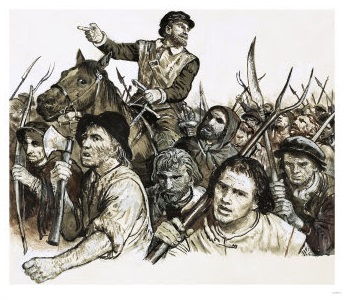
Could America Have a French-Style Revolution?

By Charles Hugh Smith

Source: Of Two Minds

Combine all these factors and the result is a potentially volatile mixture awaiting a catalyst.

In the past, I reckoned the odds of America experiencing a revolution akin to France 1789 were low due to the different political, economic and cultural conditions present then and now, but recently I’ve considered the possibility that America’s extremes of wealth, income and power inequality are a powder keg awaiting ignition.

By French-Style Revolution I don’t mean a violent overthrow of the ruling elite as much as a tumultuous reset of how resources and power are distributed. Systems become vulnerable to such resets when they become highly asymmetrical in how they distribute resources and power, and rigid in their defense of the extreme inequality of the distribution.

The fundamental source of democracy’s stability is the dynamic competition of various interests and the dynamic equilibrium of the three branches of the state each balancing the others by restraining the dominance of any one branch or interest.

But extremes of inequality undermine this stability, as the wealthiest elites now bring such a preponderance of wealth to bear that each of the three branches of the state are now beholden to the interests of the few, leaving little recourse to the many.

When the agenda and narratives have been shaped by the wealthiest elites’ foundations, think tanks, corporate PR and lobbyists, then electing different representatives has little effect on the power structure.

The masses can still influence cultural / social policies by voting in a liberal or conservative slate, but the distribution of wealth, power and resources remains unchanged.

As wealth and power are concentrated into ever fewer hands, the mythology of broad-based access to prosperity has vastly expanded the pool of second-tier elites who feel entitled (via implicit promises made by the system) to their fair share of income, wealth and power–financial security and political agency, i.e. a say in public decisions.

These second-tier elites are primarily university graduates and the offspring of upper-middle class households who have been led to expect a secure slot in the upper reaches of the economy or state is a birthright gained by their education and class.

That there are no longer enough slots for this class means those left out constitute the raw material of a potently dissatisfied and potentially angry political class. Historian Peter Turchin presents this as the result of the overproduction of elites, a dynamic he has traced back to previous eras of tumultuous upheaval.

Another common factor driving the masses to revolt is when the essentials of life are no longer affordable or available in sufficient quantity. Historian David Hackett Fischer has documented the perilous impact of inflation, i.e. the collapse of the purchasing power of wages.

Yet another potentially explosive factor is the supreme confidence of the wealthiest elites that the system they rule could ever turn against them or crumble beneath their feet–in a word, a hubris as extreme as their wealth and power. The resignation of the masses and the ease of distracting them with ginned-up controversies and crises and consumerist novelties has fed elite confidence that their supremacy is unassailable.

This hubris leads to the elite becoming tone-deaf to their own excesses and the instability their excesses are generating within the system, an instability that’s currently hidden beneath the resignation and distraction of the masses and the mute frustration of the second-tier elites facing lifetimes of insecurity.

Another factor is the promises made by the state generations ago can no longer be met without creating new money on a scale that guarantees destabilizing inflation. This new money is issued as Treasury bonds which are purchased for income by the wealthy, further exacerbating wealth and income inequality.

The power elite are incapable of demanding sacrifices of the wealthy as the prime directive of the status quo is to defend the current asymmetry of wealth and power. This undermines the collective consensus needed to take the collective action needed to reset the system.

Combine all these factors and the result is a potentially volatile mixture awaiting a catalyst. The confidence of the status quo that it is essentially omnipotent (the Federal Reserve will always save us, etc.) and eternal is itself a factor in the mix.

The key factor is the rigidity or flexibility of the power structure. If the structure is incapable of resetting to a more flexible, symmetric distribution of power as resources, it will come apart as pressures mount.

27 Premises

Silent Assumptions to Drive Systemic Thinking

By J Circio

Source: Modern Mythology

When you derive a conclusion, how do you get there? As you gather facts and pieces of narratives and figure out the picture that the puzzle should be configured into, what assumptions are you making — do you need to make for the sake of expediency, if nothing else — to get there without spending the better part of a lifetime so you no longer require a shortcut?

These are intrinsically generalizations, since they seem to arise from experience such as — if you find blue seashells every time you go to a particular sea shore, you might derive that sea shells are often blue and so come to conclude that is a general rather than local effect.

The following list each contain a brief explanation, and then a few additional comments. More on this in the upcoming Newsletter! (December 2023)

Talk with a GPT instructed to follow these 27 Premises, aka Narrative Machine-139.

1. Simpler is not necessarily more correct; Complicated is not necessarily more correct.

This principle challenges the idea that the truth or correctness of an idea, theory, or system can be judged based on its simplicity or complexity alone. It’s a rebuttal to both any rigid application of Occam’s Razor, which suggests that simpler explanations are generally better, and to the assumption that more complex theories are inherently more sophisticated or accurate simply on account of their complexity.

“Correctness” is question and context dependent, not innate.

2. Simplicity often obscures inner complications… and the inverse is also often true.

This principle underscores the notion that both simplicity and complexity can be misleading in their own ways. A simple explanation might overlook critical nuances, while a complex one might overcomplicate what is fundamentally straightforward.

An important corollary is that looking at a problem with the mindset of optimal complexity, or optimal simplicity, each will bring out some dynamics and minimize or remove others. Ideally, both frames need to be considered, although not always equally weighted.

3. Anything true is likely propped up by unspoken falsehoods. The inverse is sometimes but not always true.

This suggests that truths are often supported by assumptions or beliefs that may not be accurate. It underscores the importance of scrutinizing the underlying assumptions of any ‘truth,’ as well as the extreme difficulty of actually doing so. The inverse — that falsehoods can support truths — is acknowledged as a less common but possible scenario.

Logical relationship is based on assumptions about likeness, mimesis, and consistency with specified rules. In generalized form, it is tautological. This was a major fin de siecle fixation (before WW1), and in many ways historically and culturally, the devastation of that particular apocalypse was a form of answer to the question, in terms of some of the potential outcomes of “applied reason.”

Of that which goes beyond such tautological relationships, to quote Wittgenstein, “we cannot speak.” As he would also later come to recognize, that includes a significant portion of life.

4. Everything is relatively dependent on context; everything is in some sense connected, but not equivalently.

Context is critical in understanding any concept, idea, or system, as the environment in which anything might come to be. This principle aligns with systems theory, where the meaning and function of a component can only be fully understood in relation to the whole system. It also touches on existentialist ideas about individual perception being shaped by one’s unique context, however the emphasis is on the distributed interconnections of systems that actually operate within the world.

Everything is relatively dependent/contingent, and the range of possibilities that exist within those overlapping contexts in a given place and time, which is another way of saying that everything is connected but not equivalent. Your mileage may vary based on the local neighborhood you’re living in, whether that means solar system or city block. The same is likely true regarding time.

5. Time has various senses, such as that which is measured versus that which allows for experience.

This principle integrates ideas from physics and phenomenology. While time has measurable physical properties, our experience of time is subjective and varies based on individual perception and context.

Time can be measured through the entropy in a system, and it can be distorted by mass (4d curvature), but as a field that allows for experience to occur, our experience of time is just another socio-biological construct of our nervous system.

6. There are no first causes. Look instead for drivers of outcomes.

In line with complex systems theory, this principle rejects the notion of an original, singular cause of events, suggesting that causes are themselves effects of prior conditions, forming an interconnected web of causality.

The billiard ball model is oftentimes less salient than the idea of ‘entanglement.’ Attempting to chase that train to its point of origin will invariably lead you back to the big bang, although that neither means that it necessarily started there, or that it was ‘caused’ by it. Rather, if that had not happened, its antecedents would similarly not exist. That is to say the chain is one of contingency and continuity rather than discrete causality.

7. Nothing happens for a “reason”. (Causal syncretism).

This principle challenges the notion of a singular, directed purpose in events, instead favoring a view of causality where events are contingent on preceding conditions, always “reasons” plural. This aligns with complex systems theory, where outcomes are often the result of numerous interacting variables rather than a linear cause-effect relationship.

“It was meant to be.” Only in the sense that everything happens because many other things did or didn’t happen. What can we actually make of this contingency?

8. Meaning is something we project on the world, not the other way around.

This principle reflects the existentialist and constructivist view that meaning is not an inherent property of the world but is either constructed or imagined by individuals through their interactions, experiences, and interpretations.

Meaning is dependent on action and intent. What is the meaning of a rock? What is the meaning of a flower? What is the meaning of that letter you sent to me? Only one of these makes sense. Even the Buddha’s “flower sermon” only makes sense because of the intention behind holding up the flower, even if its specific meaning is enigmatic.

9. Conversely, and yet equally, our meaning is shaped by our being in the world.

Expanding on the previous as a corollary and yet seemingly contradictory point, this principle suggests that our personal meaning is contingent on our interactions with the world around us. There is in fact no contradiction here. This is a phenomenological view, recognizing that our consciousness and perception shape our understanding and meaning-making processes.

Our meaning is shaped by our own being in the world. We are not in any way inseparable from the worlds in which we have been. “Nothing exists within a void.” That also has dual meaning.

10. No point of view, model, or experience can singularly encompass the truth; they can only model it well or poorly, which is to say, be more or less pertinent to the needs of a specific situation.

This aligns with the philosophical understanding that absolute objectivity is unattainable, and in fact incoherent. All perspectives and models are inherently limited by virtue of their very existence, and can only approximate truth within specific contexts.

Those “needs” might be broad or narrow. Relating back to the first Premise, this is a determinative factor when it comes to how to model a situation, how many variables are necessary to track, and how they should be evaluated.

11. Correlation isn’t causation except when it is.

This principle addresses a fundamental concept in statistics and scientific reasoning, emphasizing the distinction between correlation (when two variables are related) and causation (when one variable directly affects another). While correlation does not inherently imply causation, there are instances where a causal relationship does exist, emphasizing the need for careful analysis in understanding relationships between variables.

This impetus to look for the exception to the rule holds true for many other things as well: e.g. The human mind isn’t like a computer… except in the ways it is.

12. Cause is often both partial and plural.

This principle suggests that in many situations, causes are not singular or absolute but are instead multiple and interconnected, each contributing partially to the outcome. It emphasizes a more nuanced understanding of causality that acknowledges the complexity and interdependence of factors in various contexts.

13. Beware false binaries, such as Free Will/Determinism.

This principle emphasizes the importance of recognizing and challenging oversimplified dichotomies, like the free will versus determinism debate. It suggests that such binary oppositions often fail to capture the complexity and nuance of philosophical, scientific, and ethical concepts.

Outcomes are determined within the context of systems, and in that sense nothing exists “outside” of the system including our own volition. We are free to the extent that our available range of choices allow us to be, although those actions are similarly conditioned (and so on down the chain). All parts affect all other parts, if not universally in the same type or measure.

14. Emergent complexity makes determinism problematic, and randomness or order may appear to emerge at certain levels of complexity or scale.

This principle addresses the challenges determinism faces in the context of complex systems, where emergent properties and behaviors can arise unpredictably. It suggests that at different levels of complexity, what may seem random or orderly may be a product of the system’s own inherent complexity. The unpredictability and non-linearity inherent in complex systems, where larger patterns and behaviors emerge from the interactions of simpler components, render deterministic models less applicable or even irrelevant in certain contexts.

Emergent complexity makes determinism not just epistemologically problematic, but also it doesn’t seem to hold between different scales. For example, things may appear more random at certain levels of complexity or scale, and deterministic at others.

15. Taxonomic categories are descriptive, not prescriptive.

This principle suggests that the classifications and categories we use in various disciplines are tools for describing the world, not inherent truths that dictate how the world must be. It aligns with contemporary understandings in linguistics, biology, and social sciences, challenging essentialist and fixed views of categorization.

We cannot learn all we need to know about an entity from its descriptive taxonomy. Language conceals as it reveals. This has cross-domain salience.

16. Fixed reality is always off limits.

This principle suggests that reality is not knowable without introducing some form of extension or abstraction based on our own prior assumptions, our experiences, and is similarly contingent upon the types of experience we can have. This aligns with post-structuralist ideas about the fluidity of meaning and reality.

We are required to look around corners to derive anything about the world we live in. This is at the root of the “problem of language” and representation in western philosophy.

17. Consciousness as we so far know it on earth is an embodied phenomenon.

This principle posits that consciousness may be a fundamentally embodied experience, emerging from the interactions between a living organism and its environment. It suggests that consciousness is not an abstract or detached entity but is intimately connected to the physical and experiential realities of organisms, operating within an environment.

More on this in upcoming notes.

18. Complexity and emergence on their own don’t simply result in capacity for experience.

This principle posits that consciousness arises not merely as a byproduct of complexity, but from a confluence of various factors within a system, leading to emergent phenomena that cannot be predicted solely from the properties of individual components. It emphasizes the role of emergence in the development of consciousness and warns against simplistic, reductionist views.

19. Consciousness may have a plurality of forms.

This principle recognizes the diversity and continuum of consciousness across different life forms, challenging the notion of a singular, universal model of consciousness. It posits that consciousness manifests in various forms, each unique to its bearer’s biological and ecological makeup.

20. The form of embodiment appears to determine cognitive shaping.

This principle acknowledges the significant role of the body in shaping cognition and consciousness, challenging the traditional dichotomy between the self and the external world. It suggests that the form of embodiment — how an entity exists within an existing ecosystem — plays a crucial role in the development and nature of its consciousness.

21. Self is sustained by narrative.

This is influenced by both existentialism and narrative psychology. It posits that our sense of self is constructed through the stories we tell about ourselves and our experiences, highlighting the importance of narrative in identity formation.

In this specific sense, we don’t exist save as a figment of our collective imagination, and the universe is just another such narrative construction, even if what it represents is obviously quite ‘real’ in a sense that none of our stories are. (Real, but singularly unknowable.)

22. Stories collectivize experience.

This aligns with the role of narrative in forming collective identities and shared understandings, a concept central to folklore and myth studies. Stories serve a crucial role in shaping collective understanding, identity, and social cohesion, but they also have the power to enforce and sustain hierarchies, manipulate public opinion, and solidify power structures.

This dual aspect of storytelling reflects its significant influence in societies, capable of both unifying and dividing through the central lie that the signifier is an entity akin to the signified.

23. A group, when regarded as a single entity, is a kind of mental fiction.

This principle acknowledges that while we often conceptualize groups as singular entities, this is a cognitive simplification. Each member of a group retains individuality as actually existing entities, whereas the group identity is an abstract construct.

The singular entities described by a group are not a mental fiction, nor are they usually strictly limited by that definition.

24. Entities are replicated within other minds by way of narrative methods.

This principle reflects the idea that our understanding of others and the world is mediated through the stories we construct and share, highlighting the role of narrative in shaping our understanding and internal representation of entities, whether they are individuals, groups, concepts, or events. It suggests that our mental models of these entities are largely formed and communicated through storytelling and narrative frameworks.

Our experience is direct, certain, and present to ourselves, and to no one else. Language is one of the primary ways that humans attempt to bridge that gap, to maintain the illusion of a society when living in groups far larger than actual kinship groups.

25. Ideology is a form of fashion.

This principle suggests that aesthetics, beyond mere surface beauty, play a significant role in forming ideologies, cultural hierarchies, and power dynamics. It emphasizes that our understanding and interpretation of the world are profoundly influenced by aesthetic values and preferences.

“Aesthetics” as based in the “image”, a field of idealized possibilities and desires that run through the whole of our daily lives, composed among other things of what we want to see and how we want to be seen. Much of our ethics might amount to the attempt to make that idealized vision a reality.

26. Performance is a fundamental aspect of social life.

This principle, drawing from Judith Butler’s concept of performativity and the ideas presented in the excerpt, suggests that performance and performativity are fundamental aspects of social life, shaping and reifying social relations, structures, and ethics. It highlights the dual nature of performance as both a real act in the world and a constructed representation that can distort reality.

This might seem a path through which ethics can be materialized from art — as if by a single work you might write a new Gospel through the act of speaking or writing. There is a danger, however, in misunderstanding the function of performativity.

It is not a process that lends inherent truth to the concepts it conveys, but rather, it creates a semblance of reality, often masking their inherently subjective and contingent nature.

27. Interpretation is in part an act of projection.

This principle reflects the postmodernist view that multiple interpretations of any text or artwork are valid. It acknowledges the intersubjective / co-creative nature of understanding and interpretation.

There is no singularly correct reading of a book, movie, album, meme, piece of street theater. This includes the creator’s reading of their own work. Some are however nearer or further from the mark. (Determined by who or what? There’s the rub).

There’s a deeper level to it. Mythic symbols — like a god such as Dionysus — tend to bear a great deal of resemblance on the people investing attention (manna) into that image. This is true whether that reflection is a positive or negative one. As an embodiment of libidinally repressed “homicidal fury” (in Rene Girdard’s words), to Freud, Dionysus was a threat. To Nietzsche, he came to represent the allure of a kind of revolution of the spirit. To Jung, the potential of casting off restriction seemed most salient. And so on.

It might even seem as if we only see the psychology of the person speaking writ large in their symbols and the stories they make of them. And yet it is not quite so. The fact that they aren’t just a simple mirror is the greater mystery, as there’s a character hiding out there within or perhaps beyond the symbol, or at least a bias or tendency, which exists outside our influence, on the other side of the mirror.

Reading List Recommendations

For more explication in the following, begin with the following list:

Philosophy and Systems Theory:

  • “The Structure of Scientific Revolutions” by Thomas Kuhn — Explores how scientific theories and paradigms evolve and are influenced by historical and social contexts.
  • “The Logic of Scientific Discovery” by Karl Popper — A critical analysis of the philosophy of science, emphasizing the importance of falsifiability in scientific theories.

Complexity Theory and Biology:

  • “Complexity: A Guided Tour” by Melanie Mitchell — Offers an accessible introduction to complexity theory and its applications in various disciplines, including biology and computer science.
  • “The Web of Life: A New Scientific Understanding of Living Systems” by Fritjof Capra — This book delves into the principles of living systems and their relevance to understanding complex biological and ecological networks.

Semiotics and Phenomenology:

  • “Course in General Linguistics” by Ferdinand de Saussure — A foundational text in the study of semiotics, exploring the nature of linguistic signs and their meaning.
  • “Being and Time” by Martin Heidegger — A seminal work in phenomenology, discussing concepts of being, time, and existence.

Existentialism:

  • “Existentialism is a Humanism” by Jean-Paul Sartre — A concise introduction to existentialist philosophy, emphasizing human freedom and responsibility.
  • “On Truth and Lie in a Non-moral Sense” by Friedrich Nietzsche — Examination of several cogent concepts.

Narrative Psychology and Myth Studies:

  • “The Hero with a Thousand Faces” by Joseph Campbell — Examines the common patterns in global myths, highlighting the significance of storytelling in human culture. The monomyth reduces differences and conflates similarities, which poses both a conceptual tool and a potential cognitive risk, if unexamined.
  • “Acts of Meaning” by Jerome Bruner — Explores the role of narrative in shaping human perception, cognition, and culture.

Folklore and Myth Studies:

  • “Mythologies” by Roland Barthes — A collection of essays analyzing modern myths and the semiotics of popular culture.
  • “The Power of Myth” by Joseph Campbell and Bill Moyers — A dialogue exploring the enduring power of myth in human society.

Manuel DeLanda:

  • “A Thousand Years of Nonlinear History” — DeLanda applies the concepts of nonlinearity and self-organization to interpret the course of history, offering a unique perspective on social and biological systems.
  • “Intensive Science and Virtual Philosophy” — This book tackles the topic of virtuality and its relation to reality, emphasizing the role of topological thinking in understanding complex systems.

Jean Baudrillard:

  • “Simulacra and Simulation” — Baudrillard’s exploration of the nature of reality, simulation, and the hyperreal offers critical insights into the impact of media and technology on society.
  • “The Consumer Society: Myths and Structures” — An analysis of consumer culture, exploring themes of consumption, social stratification, and the creation of modern myths.

Peter Godfrey-Smith:

  • “Other Minds: The Octopus, the Sea, and the Deep Origins of Consciousness” — An intriguing exploration of consciousness through the lens of cephalopod intelligence, blending philosophy, biology, and the study of the mind.
  • “Metazoa” — extends this exploration into the history of evolution beyond cephalopods.
  • “Theory and Reality: An Introduction to the Philosophy of Science” — This book provides an accessible introduction to the main themes in the philosophy of science, from logical positivism to scientific realism and antirealism.

John Gray:

  • “Straw Dogs: Thoughts on Humans and Other Animals” — Gray challenges the commonly held beliefs about what it means to be human, questioning humanism and our perceptions of human progress.
  • “The Silence of Animals: On Progress and Other Modern Myths” — A contemplative work that critiques the idea of human progress and explores the value of contemplating the world beyond human-centric narratives.

Additional Recommendations:

  • “Narrative Machines: Modern Myth, Revolution & Propaganda” by James Curcio — This work examines the role of narrative and myth in shaping cultural and political realities.
  • “Nonzero: The Logic of Human Destiny” by Robert Wright — An exploration of cultural evolution, arguing that human history is marked by a trend toward increased complexity and cooperation.
  • “Chaos: Making a New Science” by James Gleick — A seminal work on chaos theory, illustrating how the principles of chaos are evident in various scientific disciplines.
  • “The Postmodern Condition: A Report on Knowledge” by Jean-François Lyotard — This book examines the status of knowledge in the computerized societies of the West and the legitimization of knowledge in the postmodern era.
  • “The Spell of the Sensuous: Perception and Language in a More-Than-Human World” by David Abram — An examination of the relationship between human perception, language, and the natural world, advocating for a more ecologically attuned way of living.
  • “The Society of the Spectacle” by Guy Debord — A critical theory of media and consumer culture, examining the ways in which reality is constructed and consumed.
  • “Finite and Infinite Games” by James P. Carse — Explores the concept of life as a series of games, each with different rules and outcomes, influencing our perception of identity and reality.