The Accelerating Destruction Of Earth’s Biodiversity: When Will We Act?

By Robert J. Burrowes

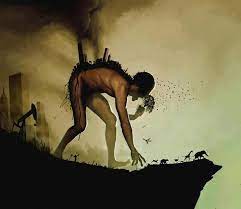
As those individuals aware of it will have observed, presumably with deep regret, the latest ‘International Day for Biological Diversity’passed on 22 May with the bulk of the human population continuing to act in ways that destroy Earth’s biosphere at an ever-accelerating rate.

Unaware that many authors continue to report the ongoing destructionof Earth’s biodiversity, which is under siege on a range of fronts by unchecked human destruction of Earth’s biosphere as well as particular assaults on Earth’s living creatures, responses to this ‘hidden’ path to human extinction continue to waver between non-existent and token.

Consequently, in such circumstances, the destruction of biodiversity might yet become the means by which Homo sapiens is consigned to the fossil record ‘beating’ nuclear war, the climate catastrophe and electromagnetic radiation as the fundamental driver of extinction.

Of course, these drivers are intimately related. Ongoing preparations for nuclear war (requiring the extraction of vast resources from the biosphere), the accelerating climate catastrophe and the ever-expanding electromagnetic contamination of the biosphere are all heavily implicated in driving the destruction of life on Earth and seriously addressing these issues is something only discussed in narrow, genuinely aware circles while official ‘concern’ and that of the human population generally continue to exhibit negligible engagement, perhaps ‘tut-tutting’ the latest news in the corporate media of the extinction of an iconic species. See For Whom the Bell TollsA Report on the State of Planet Earth at Year’s End 2020.

But given that 150-200 species of life on Earth (plants, birds, animals, fish, amphibians, insects, reptiles and microbes) become extinct daily, as noted in 2010 by Ahmed Djoghlaf, the secretary-general of the UN Convention on Biological Diversity who stated that ‘We are losing biodiversity at an unprecedented rate’, and with many biologists having noted that the species extinction rate is nearly 1,000 times the ‘natural’ or ‘background’ rate and ‘is greater than anything the world has experienced since the vanishing of the dinosaurs nearly 65m years ago’ – see ‘Protect nature for world economic security, warns UN biodiversity chief’ – only a delusional individual would argue that this issue is drawing the attention and profound action that is needed to halt this existential crisis.

And given that, back in 2010, the UN was arguing that the ‘economic case for global action to stop the destruction of the natural world is even more powerful than the argument for tackling climate change’ – see ‘UN says case for saving species “more powerful than climate change”’ – there is obviously no doubt that, officially and otherwise, the destruction of biodiversity has been neglected compared to the (admittedly also inadequate) attention given to the climate catastrophe.

So Homo sapiens moves quickly and efficiently to its own extinction, an inevitable consequence of the destruction of the web of life.

An important aspect of the destruction of biodiversity is what precedes the extinction of a species.

In their report compiled in 2017, Professors Gerardo Ceballos, Paul R. Ehrlich & Rodolfo Dirzo recorded that Earth continues to experience ‘a huge episode of population declines and extirpations, which will have negative cascading consequences on ecosystem functioning and services vital to sustaining civilization. We describe this as a “biological annihilation” to highlight the current magnitude of Earth’s ongoing sixth major extinction event.’ Moreover, local population extinctions ‘are orders of magnitude more frequent than species extinctions. Population extinctions, however, are a prelude to species extinctions, so Earth’s sixth mass extinction episode has proceeded further than most assume.’ See ‘Biological annihilation via the ongoing sixth mass extinction signaled by vertebrate population losses and declines’ and ‘Our Vanishing World: Wildlife’.

But, tragically, many additional species are now trapped in a feedback loop which will inevitably precipitate their extinction as well because of the way in which ‘co-extinctions’, ‘localized extinctions’ and ‘extinction cascades’ work once initiated and as has already occurred in almost all ecosystem contexts. See the (so far) six-part series ‘Our Vanishing World’. Have you seen a flock of birds of any size recently? A butterfly?

Why is this Happening?


The accelerating destruction of Earth’s biosphere is driven by one fundamental cause. Over-consumption by humans in industrialized countries. With nearly a billion people living in poverty and about 500 million indigenous peoples living or attempting to live subsistence lifestyles around the world, it is those populations in industrialized countries who are determined to consume more than they actually need and generally live unaware of their ecological impact who are destroying Earth’s biosphere.

Because whether consuming water, energy for household use, fossil fuels for vehicle or airline travel, paper, plastic, metals or meat, only a rare human is keeping track of, and consciously minimizing use of, these ‘end product’ resources which are extracted directly from, or manufactured with resources extracted from, Earth’s biosphere, with a byproduct of this production being a massive amount of waste material, much of it not able to be disposed of in any way that is remotely ecologically benign.

And because the extraction of resources from the biosphere to satisfy consumer demand fundamentally depends on state or private corporations making a profit from the extraction, corporations will exploit anywhere with negligible concern for the local environments destroyed.

To highlight the cost of our endlessly-expanding consumption, one only has to consider a few of the near ‘endless’ list of biosphere assaults adversely impacting the Earth and the species dependent on impacted ecosystems.

Did you know about the planned oil drilling in the staggeringly beautiful and, until now, pristine Okavango Delta in south-west Africa, and what this might mean for the region’s 18,000 elephants and other wildlife (not to mention the human population)? See ‘A Big Oil project in Africa threatens fragile Okavango region’.

Did you know about the ‘massive volumes of fracking waste’ being illegally dumped at Vaca Muerta in northern Patagonia in Argentina?Good for the biosphere and local wildlife do you think? See ‘Argentina’s Illegal Oil and Gas Waste Dumps Show “Dark Side” of Vaca Muerta Drilling, Says Criminal Complaint’.

And while there is a huge number of mines around the world inflicting massive damage on their immediate location – see ‘Environmental Nightmares Created by Open Pit Mines’ – mining is just one way to destroy the biosphere.

Rainforest destruction is another key driver of biosphere degradationin all parts of the world where rainforests are located, notably including the Amazon, Democratic Republic of the Congo, Indonesia and West Papua, and the range of assaults is breathtaking with logging, burning, land clearance to create cattle farms, palm oil and soybean plantations, dam building as well as mining and oil drilling just among the most damaging causes. See ‘Our Vanishing World: Rainforests’.

But, as hinted at above, the emission of ‘greenhouse gases’, notably carbon dioxide, methane and nitrous oxide is destroying the delicate composition of Earth’s atmosphere, to the detriment of the biosphere generally and with catastrophic implications for life on Earth. Despite largely successful efforts by the elite-controlled IPCC to delude people into believing that the global mean temperature has increased by only 1°C, in fact, since the pre-industrial era (prior to 1750)greenhouse gas (GHG) emissions have already caused the global temperature to rise by more than 2°C above this baseline (in February 2020). This occurred despite the Paris climate agreement in 2015 when politicians pledged to hold the global temperature rise to well below 2°C above the pre-industrial level and pledged to try to limit the temperature rise to 1.5°C above this level. See ‘2°C crossed’ and‘Human Extinction by 2026? A Last Ditch Strategy to Fight for Human Survival’.

And electromagnetic radiation is inflicting rapidly increasing damage to all forms of life with the deployment of 5G now in full swing. See ‘Deadly Rainbow: Will 5G Precipitate the Extinction of All Life on Earth?’

Of course, all forms of military violence – invariably done to gain control over biosphere resources – as well as the preparation for it, destroys vast areas of the natural environment (including the creatures that live in it) either deliberately or as ‘collateral damage’. See ‘Ten Reasons Why Militarism is Bad for the Environment’.

As can be readily observed, the destruction of biodiversity is a primary subset of the destruction of the biosphere. Every living organism needs habitat to survive. Every time we destroy part of the biosphere, we destroy the habitat of the organisms that live in it. But we also destroy life and biodiversity directly too. How much longer can the wolf, for example, hold on against the onslaught? See ‘Bill Allowing 90 Percent of Idaho’s Wolves to Be Killed Passes House and Senate’.

Humanity generally is so unconcerned about destruction of the biosphere and the biodiversity cost that goes with it, that we studiously ignore this cost, even when it impacts our closest relatives, human and otherwise. See West Africa’s chimpanzees are on the brink of extinction! and ‘Western Chimpanzee’.

And even the most iconic of species, such as the elephant, are not safe from the human onslaught. From 26 million elephants in 1800, the elephant population of Africa is down to 415,000, thanks to poaching for ivory, ‘trophy hunting’, destruction of habitat and other human causes. The International Union for the Conservation of Nature has now listed the African forest elephant as ‘critically endangered’ and the African savanna elephant as ‘endangered’. See ‘Disappearing Elephants’ and ‘Africa’s elephants now endangered by poaching, habitat loss’.

Of course, destruction of habitat takes an almost infinite variety of forms when it comes to Homo sapiens. The latest farming venture to threaten elephant habitat is just now being created. See ‘From poaching to avocados, Kenya’s elephants face new threat’.

Besides this, assaults on particular species are pushing many endangered species to the brink of extinction. Wildlife trafficking, for example, is worth up to $20 billion each year. Illegal wildlife products include jewelry, traditional medicine, clothing, furniture, and souvenirs, as well as some exotic pets, most of which are sold to unaware/unconcerned consumers in the West although China is heavily implicated too. And to mention elephants again in this context: every 15 minutes an elephant is killed for its tusks. See Stop Wildlife Trafficking.

But if we are not concerned about the iconic species, can you imagine the collective concern for those millions of creatures of which we have never even heard, let alone given a name? And yet, as the work of Professor Gerardo Ceballos and his colleagues cited above clearly suggests, there are many unknown or obscure species that are part of the ‘co-extinctions’, ‘localized extinctions’ and ‘extinction cascades’ that are driving the ‘biological annihilation’ that they have documented.

So What Can We Do?


Well, in theory, we can participate in official responses to this crisis. See ‘Previewing the UN Decade on Ecosystem Restoration’.

But, as history demonstrates, we would be unwise to rely on responses generated by the elite and promulgated through its agents. Such efforts are inevitably designed to subvert effective outcomes, which they do with unrelenting monotony to which the record of uninterrupted destruction readily testifies.

Nevertheless, there is a great deal that we can do, personally, that will make a difference.

As is always the case with threats to biodiversity, the fundamental response to this crisis involves producing and consuming less. A lot less. ‘A difficult ask’ you might say. And more difficult than you probably realize, given the fundamentally dysfunctional emotional state that drives human over-consumption in materialist societies in the first place. See ‘Love Denied: The Psychology of Materialism, Violence and War’.

But for those emotionally equipped for the challenge, you are welcome to join those who recognize the critical importance of reduced consumption and greater self-reliance by participating in The Flame Tree Project to Save Life on Earth which outlines a ‘step by step’ strategy for achieving these ends. In addition, you are welcome to consider signing the online pledge of The Peoples Charter to Create a Nonviolent World.

Of course, you can also campaign to do other things as well. Halting war and all military activity of any kind would save the biosphere enormous resources so effort put into that is worthwhile. If you would like to campaign, strategically, to halt war there is a list of strategic goals for doing so in Campaign Strategic Aims.

In fact, if you wish to focus on strategically resisting any of the four primary threats to human existence – nuclear war, the deployment of 5G, the collapse of biodiversity and/or the climate catastrophe – you can read about nonviolent strategy, including strategic goals to focus your campaigns, on that website too.

Equally fundamentally, if you would like to nurture children to become powerful individuals capable of acting strategically to prevent and respond to violence while able to critique society and elite propaganda, see ‘My Promise to Children’. A child who is emotionally whole does not need to use consumption as a substitute for giving up their unique identity as a survival strategy during childhood, as the ‘Love Denied’ article also explains.

As an aside, if you want a better fundamental understanding of how we reached this point, see Why Violence?Fearless Psychology and Fearful Psychology: Principles and Practice and ‘The Global Elite is Insane Revisited’.

And if the options above seem too complicated, consider committing to:

The Earth Pledge


Out of love for the Earth and all of its creatures, and my respect for their needs, from this day onwards I pledge that:

1. I will listen deeply to children. See ‘Nisteling: The Art of Deep Listening’.

2. I will not travel by plane
3. I will not travel by car
4. I will not eat meat and fish
5. I will only eat organically/biodynamically grown food

6. I will minimize the amount of fresh water I use, including by minimizing my ownership and use of electronic devices

7. I will not own or use a mobile (cell) phone
8. I will not buy rainforest timber
9. I will not buy or use single-use plastic, such as bags, bottles, containers, cups and straws

10. I will not use banks, superannuation (pension) funds or insurance companies that provide any service to corporations involved in fossil fuels, nuclear power and/or weapons

11. I will not accept employment from, or invest in, any organization that supports or participates in the exploitation of fellow human beings or profits from killing and/or destruction of the biosphere

12. I will not get news from the corporate media (mainstream newspapers, television, radio, Google, Facebook, Twitter…)

13. I will make the effort to learn a skill, such as food gardening or sewing, that makes me more self-reliant

14. I will gently encourage my family and friends to consider signing this pledge.

Conclusion


Halting the human rush to extinction through the destruction of biodiversity will require monumental effort. Raising awareness of this rapidly unfolding but still largely-hidden tragedy is, therefore, a high priority. But that is only the start. Enormous effort is required as well.

Of course, for those too terrified to contemplate the reality of ongoing destruction of Earth’s biodiversity and its implications for our own behaviour, denial or delusion are easy ‘psychological retreats’, particularly when our childhood survival largely depended on such tactics.

So it is going to take those who are powerful enough to deal with reality to make a stand.

We are on the cliff-edge of extinction. What will you do?

Biodata: Robert J. Burrowes has a lifetime commitment to understanding and ending human violence. He has done extensive research since 1966 in an effort to understand why human beings are violent and has been a nonviolent activist since 1981. He is the author of ‘Why Violence?’ His email address is flametree@riseup.net and his website is here.

Culture, Self and Law

By Darren Allen

Source: Off-Guardian

This is an extract from Self and Unself, Darren Allen’s new ‘philosophy of all and everything’. Some of the terms herein — consciousness, self, ego, etc — may appear somewhat mysterious or abstract as they are explained in earlier sections of the book.

Self produces manifest culture, and then that culture shapes self. First, self is externalised as an expression — some kind of act or presentation. The expression appears as an object, a thing in the world, which is related to other objects, which are then reappropriated by man back into the self.

A band releases an album, a building company constructs a block of flats, an advertising agency puts up hoardings around town, an individual recounts a few anecdotes. The songs, the dwellings, the signs and the stories become part of a world which then shapes those within that world.

If self is unselfish this process ultimately begins “beyond” culture, with consciousness, to which the reappropriated modifications are subject to some kind of evaluation — I can reject the bullshit music, the ugly council estate, the advertising lies and the witless jibber-jabber.

If, however, self is fundamentally egoic, consciousness is given no freedom to operate, and the caddis case is formed almost entirely from without, walling up inner quality, and with it, genuine individuality.

First self speaks, then the words get set in stone, then the stone speaks to the self, writing its words back into the human heart, which speaks again.[1] If there is freedom to speak, and to be heard, and to walk away, this dialogue (or dialectic) is fruitful and serves man.

But, just as if one person screws another down and forces words into her head it is no longer a conversation, so if society (culture plus self, or selves) fills its schools and lines its streets with messages that all say the same thing, with no way of escape, then we are no longer individuals participating in a society, but stackable storage units for whomever or whatever is filling us with the things we are forced to feel, eat, look at, think about and energetically engage with; in short, build our selves with.

Culture was once built from nature, and, more intimately, from the unselfish origin of that which nature and culture have in common. This is why pre-civilised man considered nature and culture to be identical. The more culture came to be built from itself, the less it served the essence of man, until it came to compel man to accept its objective validity or suffer the consequences. Not in an overt tyrannical sense, but in the unalterable fact of its existence.

You can think away culture or pretend it doesn’t matter — ignore, say, the rules of language or pretend that they are dispensable, but you will be punished, mocked, excluded, brought back into line or killed. Likewise, if your social self is at odds with your individual self, then all kinds of problems are on their way. This does not mean that I must be something other than my social self, but that I am continually compelled to harmonise the two, and if I can’t — if I cannot be in the world who I feel I really am—then I will suffer in the world, as everyone who is honest does.

Ego keeps this suffering at bay by endlessly affirming its social self. As that most unreal and egoic of sources, the average Teevee-American has it, ‘I am a cop, it’s what I do…’ ‘I am a mother, it’s what I do…’ Or, alternatively, ‘This is my town, these are my people’.

Such a ‘self’ is not something which is invented, it is there, ‘inside me’. I look inside and see that I am the cop or mother that society takes me to be (or, for the fake outsider, that I wish society to take me to be). And I have no desire to be anything else. Not that there is anything wrong with inhabiting a role, nor with identifying with a community, nor that there aren’t always elements of self that do not fit into what is required by the social world; rather that ego hides from itself in its social representation.

Man may be psychologically and spiritually deformed by his activity within the egoic group or institution, he may work in a mechanical manner, in mediated environments, in order to produce or manage things which have no recognisable human meaning, and he may be forced to conceal his horror and disgust behind an upbeat mask of emotional management, but if there is no truth beyond a self-constructed from the group, he will defend his deformity, and consequent duplicity and misery, as truth.

All criticisms of the group are taken to be criticisms of the self — ‘I am mortally offended by your prejudice’ — and all criticisms of the self are taken to be prejudice against the group — ‘It’s not because you are repulsed by my moral deformity, it’s because you are racist/homophobic/anti-white/anti-American etc’.

The seamless unity of self and society in the egoic mind explains man’s total blindness to systemic constraints, and to the fundamental paradigms of the system. They are one with his ego, which is why, today for example, man spends so much time thinking and talking about voting, about reforming teaching, about having fairer laws, about creating cleaner motorways and so on and so forth; but not a word on how disabling democracy is, or education, or law, or transport, or the encompassing system, which is as invisible to him as water is to a fish, or anger is to a van driver.

*

The social self and its inner component, the personality, are maintained through communication, through constant confirmation (either explicit or implied) of who I am to others. When there is nobody to validate my personality, it dies, which is why solitude is so necessary to people with character — who need to periodically let their personality wither away in winter so that spring life might grow—and so terrifying to people without character, who must exist in a constant stress of forced blooming for the world.

Likewise, if a critical avenue of personality-confirming communication is permanently disrupted—if a lover leaves, or a mother dies, or self is forced to live in another country, cut off from its culture—the whole world crumbles. The egoic self, forged through the shared reality created with a partner, a family or a society, is ripped out.

This is why people stay in abusive relations and in abusive societies. Leaving the objective world of the known is to be plunged into chaos, a fate worse than death for ego, which may even choose death in preference.

Loss of self-reinforcing dialogue is not just a threat to the individual self, but to the social body, which provides all kinds of ritualised means by which the disrupted self is expected to deal with its disarray and return soothed and placated to the ‘normal’ world. A spouse torn apart by the death of a partner is fine, we can accept and sympathise; but if the grief is too noisy or outstays its welcome, then the social world will take measures to exclude it, quarantine the infection as it were, and remove conspicuous misery from the scene, so that production and consumption can smoothly proceed.[2]

For the same reason, madness, bizarre dreams and visions, psychotropic intoxication, spiritual extremism and all other exits from the system—including literally leaving it to gad off into the forest—are to be bricked up, or, if that’s not possible, managed by society, which deals with the void by projecting a screen of rationalisations onto it.[3] Your visionary dream was a message from Satan, or a repressed desire, or a random brain signal, your glorious experience of the fundamental oneness of creation was a message from Allah, or a crazed illusion, or confirmation of your status as our Mystic Cham.

All of these validations are gratefully taken up by the ego, which cannot bear to be cut off, alone (or alone with unself), and prefers to masochistically submit itself to The Worldview — or, on behalf of that world, to sadistically control others — rather than have to face any kind of reality beyond the boundaries of the social known.

Just as society is threatened by loss of face and loss of reason, so it must also deal with the danger of men and women rebelling against their internalised role; finding, for example, that being a nice obedient little wife, or the upwardly-mobile manager of a car-rental firm, is something of a burden, and that they’d rather be members of a non-stop erotic cabaret or hunting-and-gathering in Botswana.

It’s fine for a man to masturbate to high-budget porn, or for a woman to spend a month on safari, but to actually do something about their dreams, particularly the genuinely wild ones, is out of the question, and again, if substitutes are not functioning, the machinery of social meaning must step in to make sure such desires are suppressed or channelled into something ‘productive’, or at least that the dreamer is reminded that if they are not, he can expect to pay an horrendously high price to realise them.

*

The most potent and pervasive threat to selfish society is not in this or that criticism, loss or disruption, but in consciousness itself; which is everywhere and at all times. Consciousness must therefore be continually suppressed, and man’s relation to it, to ever-present unselfish quality, continually managed.

This is largely done, on a social level, through laws, legitimations, taboos and totems. These are the rules of society — the ‘walls’ of cliched thought, feeling, sensation and activity — which range from everyday non-verbal norms of behaviour (we greet in such and such a way, we react to bad news in such and such a way), through more explicit linguistic formulations of what is right and proper (the shared ethics of society, encoded in its wisdom, its maxims, its proverbs and even its jokes), through the art, myths and folk tales of a culture (by which we learn what is appropriate or tasteful, and what is to be condemned), through the explicit legal codes of a civilisation or of its various institutions, up to, finally, the various sacred justifications or secular theories which explain, in the most abstract sense, why things are as they are.

Although all these legitimations are constantly in conflict, they work as a whole to order men and women’s responses to their own conscious impulses and the context they find themselves in. In a selfless society, these ‘orders’ are soft guidelines (or, if you prefer, flexible human laws) — useful and necessary, but fluid, and at the service of the individual.

In an egoic society, the individual must serve the laws, legitimations and taboos. If he breaks them — if he smiles when he should frown, does what the gods say never to do, questions evolution, utters the magical ‘n’ word or sends a magnet in the post — he’ll be punished.

Note that men and women must be continually reminded of these justifications and continually enjoined to affirm their commitment to them, just as communities of belief must be continually reinforced and protected. Human beings are never far away from their original nature, and easily forget what has been programmed into them from without.

This is why ritualised laws of defilement, containment of outsiders (physical or ideological), and, above all, walling off experiences of unreality (dream, madness, apostatic transcendence, death and love; even taking a shit puts one outside the bounds of history and religion and must be legitimately dealt with) play such an important, ongoing role in all ideological systems.

Today, in the West, continual reinforcement takes the form of constant affirmations of the goodness and rightness of a highly invasive, technocratic, global market-economy and of constant reminders that without the various ideological totems required to engage in it—tolerance, respect, pacifistic acceptance, keeping two meters apart from one’s fellows and keeping your trousers on in the supermarket—everything would fall apart and we’d all drown in a flood of anarcho-fascism, or die of a medieval lurgy, or be overwhelmed by the Beast.

If it looks like these reminders aren’t taking hold, then their intensity is stepped up and penalties for contravention escalate and intensify until you get your mind right.

Laws, legitimations, taboos and totems, being self-justifying and self-created, are entirely causal. The notion of law is coterminous with the notion of causality; a non-causal law is a contradiction in terms. In reality there are, ultimately, no laws in nature, in consciousness or in human affairs, because there is, ultimately, no causality in them; the world today was no more caused by the world yesterday than the morning was caused by the night before.

The laws we find in history (e.g. Hegel’s or Marx’s), or in nature (e.g. Aristotle’s or Newton’s), or in society (e.g. Confucius’ or Comte’s), or in consciousness (e.g. Leibniz’s or Freud’s), are products of self, and therefore only applicable to self; occasionally useful, as facts and causes are, but with zero qualitative truth.

The truth of an individual or society moving through ‘time’, like that of a tree, like the meaning of an act or the essence of reality, are invisible to causal consideration, which can only perceive a tumult of interrelated bits and pieces, slices and sections, and shrink-wrapped events, never the whole; which means it can never give an appropriate response to the whole (except by accident) which becomes impossible as soon as laws are set, and [directly or indirectly] enforced.

This is why people without direct experience of reality, isolated from it by money, power, fame, technology or drugs, rely on laws and legitimations, and give them the same existential status as experience. When it comes to right or wrong, for example, they cannot trust their experience, because they do not have experience, and so they cleave to factual-casual calculation.

Property is inviolable, therefore stealing is wrong; a man steals an apple, therefore he must be punished, no matter how wealthy the supermarket he steals from. Context — the history of the supermarket, the functioning of the market, the state of society — and consciousness — compassion for the man, empathic understanding of his life — cannot be allowed into consideration. To do so would disrupt one’s entire life.

The brutal inflexibility of the law-abider is sometimes seen as a ‘lack of imagination’, but imagination is part of the abstract schema that the law-maker appeals to, the series of ideas codified as The Law; it is wrong to lie, it is wrong to kill, it is wrong to steal.

When these ideas harden into eternal truths — when, in the management phase of civilisation, they are codified or written down, in holy texts or in statute books, or in the consciences of men and women — they serve, and can only serve, that which is incapable of abandoning facticity and causality, the inherently dishonest, selfish and violent ego. This is why you can’t trust a law-abider.

Self and Unself is available in the usual places, and on Darren Allen’s bookshop.

Notes:-

[1] Peter Berger and Thomas Luckman, The Social Construction of Reality.[back]

[2] Ernest Goffman, The Presentation of Self in Everyday Life.[back]

[3] Peter Berger, The Sacred Canopy.[back]

Zen In The Trenches

By Gary Z Mcee

Source: Waking Times

“You ask, ‘what is Zen?’ I answer, ‘Zen is that which makes you ask the question.’ Because the answer is where the question arises. The answer is the questioner himself.” ~Daisetz Suzuki

Zen is ultimately undefinable. It’s paradoxical. It’s a feeling; a meditation on opposites and interconnectedness intermittently. It’s a bridge between the unanswerable question and the unknowable answer. Even more cryptic: it’s No-mind meditating the mind into mindfulness.

No matter what Zen really is, the meditator attempting Zen is Zen. Or perhaps they are Zenning and Zen is actually a verb disguised as a noun—like God.

Either way, Zen practice is never more important than when we are in the trenches, down and out, at the bottom of the rollercoaster ride, experiencing a Dark Night of the Soul. In such a state, Zen is the great equalizer, an individuating leveling mechanism. An excuse to climb out of Hell and into Heaven. Or at least back to level ground.

Transforming shadows into sharpness:

“By accepting the inevitability of our shadow, we recognize that we are also what we are not. This humbling recognition restrains us from the madness of trying to eliminate those we hate or fear in the world. Self-mastery, maturity, and wisdom, are defined by our ability to hold the tension between opposites.” ~Louis G. Herman

Zen is the essence of holding the tension between opposites. It’s a proactive meditation on the paradoxical state of the human condition. It acts like a bridge between the unconscious shadow and the darkness made conscious.
When our shadow is hidden from us or repressed—either subconsciously or through willful ignorance—we feel dull, insecure, fragmented, confused, unaware, and less than whole. But when our darkness is made conscious, we fell whole, aware, open, and sharper in mind, body, and soul.

Zen teaches us how to reconcile our dark side. Deep in the trenches of our shadow, Zen plants a question mark seed made of light. Through daily cultivation and practice (attention, awareness, focus), the light brightens the darkness, and the shadow becomes a vital self-aware aspect of the overall condition. Light magnifies shadow out of repression and into self-actualization.

Transforming certainty into curiosity:

“I ask you: what are you? You don’t know; there is only ‘I don’t know.’ Always keep this don’t-know mind. When this don’t-know mind becomes clear, then you will understand. Keep don’t-know mind always and everywhere. This is the true practice of Zen.” ~Seung Sahn Sunim

The most deceptive of all “trenches” is being stuck in the box of certainty. Believing that one certainly knows is the ultimate delusion. Whereas thinking that one possibly knows, but probably doesn’t, is the ultimate escape from delusion. Flexibility and open-mindedness are key. Zen can help us with both.

Zen helps us get in touch with the primordial coordinates of the interconnected cosmos. It helps us recognize the probability spectrum. When Socrates said, “The only thing I know is that I know nothing,” he was speaking in probabilities. He recognized that his was a single perception dwarfed by an unfathomably large universe. He realized that what he thought he knew was incomparably less to what he didn’t know and wisely swallowed his pride.

Better to use Zen to keep us in flow. When we are fluid and dynamic in our thinking, we are less likely to be seduced by dogmatic belief. Zen keeps us questioning to the nth degree. It keeps is open to the vital transformations the universe goes through. Zen is the art of adapting to the ebbs and flows of constant change. Being aware of this deep flow is being curious. Curiosity is the wave of change crashing over the fragile structure of our certainty. We would be wise to ride that wave straight over and learn from the destruction. The debris of which holds gold tantamount to transformative ambrosia.

Transforming anxiety into artistry:

“Who among you can at the same time laugh and be exalted? He who climbs upon the highest mountains laughs at all the tragedies, real or imagined.” ~Nietzsche

Anxiety is like an open wound of the psyche. And when you are down in the tranches, it can be a crippling experience. When we transform anxiety into art, we are using the stress as fuel for the fire of our imagination. The anxiety becomes a kind of eu-stress, which can be quite cathartic. Tension becomes a bridge between ‘stress’ and ‘creative outlet,’ where anxious state meets flow state.

Whether it’s transforming wounds into wisdom, demons into diamonds, or setbacks into steppingstones, the cathartic release of worry and pain can become the active components of a beautiful work of art. Pain is transformed into paint, misery into music, psychosis into poetry. And with enough practice, a kind of existential masochism can arise from the spiritual and psychological plasticity—robustness becomes antifragility.

Insofar as this existential masochism can be applied to a life well-lived, a Zen-full humor arises where all tragedies are laughable aspects of the overall cosmic joke. Life itself becomes a work of art.

Transforming hypocrisy into humor:

“No one ever grows up. They may look grown up, but it’s a disguise. It’s just the clay of time. Men and women are still children deep in their hearts. They still would like to jump and play, but that heavy clay won’t let them.” ~Robert McCammon

Governing the precept that life is a cosmic joke, it stands to reason that we get better at laughing at the joke rather than crying over the spilled milk of being the butt-end of it. The humbling effect of Beginner’s Mind can help with this. It reminds us that we are all merely fallible creatures at the mercy of the cosmic joke. Anything else is mere hypocrisy. Especially the title of “grown up.”

The Zen of Beginner’s Mind is the art of tapping into that playful innocence which refuses to be serious but is always sincere. It counters the hypocrisy of the human condition with a sense of playfulness. From which a creative adaptation and improvisation arises. We are fallible creatures? So be it. We are hypocritical naked apes? Might as well have a sense of humor about it. It’s all laughable in the grand scheme of things? We might as well have a laugh.

Adopting a good sense of humor is the best tool we can utilize while in the tranches. It can get us through just about anything. And even if it doesn’t, at least we’re laughing. Our inner child teaches us how to laugh and play through the misery, rather than just be miserable.

Transforming Hell into Heaven:

“Morality doesn’t mean ‘follow divine commandments.’ It means ‘reduce suffering.’” ~Yuval Noah Harari

Even in the trenches, we have a choice to be healthy or not. Even in the gutter, we can either drown in our own tears or flip over, take a deep breath, and regard the stars their aesthetic splendor. Yes. Even beauty itself can be healing. And beauty combined with a good sense of humor can be transcendent… Skipping through Hell with bells on. Laughing into the abyss. Mocking all devils, demons, angels, and gods. Using it all as a sharpening stone.

That’s Zen in the trenches.

We either play the victim and wallow in self-pity, or we rise up with a ‘humor of the most high’ and dare to become healthier. In the alchemical transformation of the human condition, Hell is the forge folding the blade of the soul into a sharper instrument.

Our comfort zone just isn’t hot enough. Heaven is too soft. Purgatory is too comfortable. Hell is just right, as long as we don’t make the mistake of losing ourselves there and burning ourselves out. We must remember to kill the devil first, and then make our way back to the “tribe” to inform them that there’s nothing to be afraid of anymore.

Zen in the trenches is no walk in the park. It takes daring and flexibility. It takes moxie and mettle. It takes a good sense of humor despite a meaningless universe. It takes emotional alchemy and existential masochism to deal with the pain and suffering.

Practicing Zen in the trenches is whistling, “Always look on the bright side of life” while nailed to a cross (The Life of Brian). It’s creating meaning out of nothingness, building bridges out of bandages, birthing a Phoenix out of ashes. It’s laughing and playing and dancing despite the slings and arrows and in spite of the ever-tightening mortal coil. Indeed.

As Rabelais said, “For all your ills, I give you laughter.”

THE HARMONY OF NONCONFORMITY

By Jason Gregory

Source: Waking Times

In a linear world, the external order dictates an artificial way of life to the individual, creating a conformist society and forcing us to relinquish our power to a machine that is unnatural and devoid of life. This passive conformity can be traced back to the origins of the Vedic Hindu caste system and the feudal system under medieval Western Christianity. When a settled agrarian culture such as these is born, it tends to build towns, not only to protect people from outside influences but also to develop a mental framework based on rules and regulations.

The complexity of agrarian culture leads to a division of labour and a division of function. From this division, the ancient Hindus (the Vedic civilisation of Dravidians and Aryans) developed a caste system. The Hindu caste system is made up of the Brahmins (priesthood), Kshatriyas (nobility), Vaishyas (merchants and farmers), and the Shudras (labourers). A direct parallel to the Hindu caste system can be found in medieval Christian society, where we see the priesthood and the church, feudal lords and nobility, farmers and merchants of the commons, and the serfs.

Although we no longer have a caste system, this underlying pattern is still with us today. When we are born into this world, we come out of our mother’s womb (nature) and are taught to submit to the rules of society and culture according to our socioeconomic status. This is the crucifixion of the individual; it is the sacrifice we all make. According to the tyranny of the machine, this crucifixion is for the “common good” or “greater good.” But there is a stark difference between the Hindu and Christian societies of ancient times.

First of all, the function of the Vedic caste system was an act of surrender to Brahman (ultimate reality/godhead). Individuals would crucify their egos and their desires in favour of the lives they had been given by nature. This means they would not seek another path or to try and control their lives according to their interests. Instead, they would abide by the order of society, which helped them diminish their egos so that they could feel the presence of Brahman within themselves. This is dharma as social duty.

The second difference is that, once Hindus have fulfilled their social duties in this life, they are allowed to break away from caste and become renunciate sages in the forest, a practice and title known as vanaprastha in Sanskrit. (This possibility is loathed by Christian society because one is thought of as useless if one does not contribute to the social order.) This breakaway from caste is viewed as a return back to nature and could be thought of as a resurrection. A sage is not part of society and does not conform to its rules. Jesus was a sage in this mould. This is why he was not thought of as a particularly good member of society, and he was actually put to death (if we take the story of Jesus to be real).

Those who submit invariably lose their natural innocence. Conformity is the result of force. When individuals are forced by society and culture into life situations that are against their will, they give away their natural sovereignty in exchange for comfort and servitude and are psychologically reduced to sheep. We developed this sheeplike behaviour as a result of the belief that the morals and ethics forced upon us by society are avenues to success and freedom. This notion is absurd inasmuch as the success and freedom of our world are unnatural. These goals are gauged only by finances. But obviously this is not true success or freedom, as money is empty and void of meaning, and it provides no happiness other than that of acquisition. Happiness cannot be contained in anything that we need to force to happen.

As human life is forced into a sheeplike way of being, happiness is reduced to momentary stimulants of excitement. In such a life we can never express our natural divinity, li, because we are following the model of someone else’s idea of life. Yet conforming to anything other than one’s own innate world destroys us physically, mentally, and spiritually, as te, the virtue of Tao, cannot come through the organic pattern of the individual, li. Anxiety, depression and stress are so prevalent in this day and age partly because we are forced to live such lives. Wars and social unrest then reflect the individual’s anxiety.

Liberated individuals are in alignment with their own nature and with the Tao. They do not benefit the accepted social order and are regarded as useless in the eyes of institutional and organisational power. [Taoist sages] Lao-tzu and Chuang-tzu were treated this way because they could see the unnaturalness of an artificial society. The Buddha and Jesus of Nazareth were two other such sages who could see through the hypnotic veil. A liberated sage understands that anyone who continues to act out the unnatural patterns of conditioning is contributing to chaos and destruction, either consciously or unconsciously. One who is liberated, on the other hand, begins the yoking process until a crystal-clear perception of the Tao in reality can be experienced. In Richard Wilhelm’s translation of the I Ching, he states:

Not every man has an obligation to mingle in the affairs of the world. There are some who are developed to such a degree that they are justified in letting the world go its own way and in refusing to enter public life with a view of reforming it. But this does not imply a right to remain idle or to sit back and merely criticise. Such withdrawal is justified only when we strive to realise in ourselves the higher aims of mankind. For although the sage remains distant from the turmoil of daily life, he creates incomparable human values for the future. (The I Ching or Book of Changes)

Evidence for these “incomparable human values” can be found in the legacy that a sage leaves behind. Lao-tzu is a good example. It has been over 2,500 years since he lived, and yet his wisdom still reverberates within our consciousness today. This is the power of te.

The virtue of te is only available to those who do not seek power, control, or force. Governments, politics, banking, religions, and commerce, on the other hand, are constantly striving for control by forcing the population to their will. This poses a significant hurdle for humanity to overcome. What would it take to bring the individual and the collective back into harmony with the Tao?

The above is an exclusive extract from Jason Gregory’s book Effortless Living: Wu-Wei and the Spontaneous State of Natural Harmony. Gregory outlines the Taoist practice of wu-wei, revealing that when we release our ego and allow life to unfold as it will, we align ourselves more closely with our goals and cultivate skill and mastery along the way. The book is available from all good bookstores.

In our hurry to conquer nature and death, we have made a new religion of science

Schoolchildren in Chennai, India celebrating the 60th birthday of Bill Gates

By Jonathan Cook

Source: Jonathan Cook Blog

Back in the 1880s, the mathematician and theologian Edwin Abbott tried to help us better understand our world by describing a very different one he called Flatland.

Imagine a world that is not a sphere moving through space like our own planet, but more like a vast sheet of paper inhabited by conscious, flat geometric shapes. These shape-people can move forwards and backwards, and they can turn left and right. But they have no sense of up or down. The very idea of a tree, or a well, or a mountain makes no sense to them because they lack the concepts and experiences of height and depth. They cannot imagine, let alone describe, objects familiar to us.

In this two-dimensional world, the closest scientists can come to comprehending a third dimension are the baffling gaps in measurements that register on their most sophisticated equipment. They sense the shadows cast by a larger universe outside Flatland. The best brains infer that there must be more to the universe than can be observed but they have no way of knowing what it is they don’t know.

This sense of the the unknowable, the ineffable has been with humans since our earliest ancestors became self-conscious. They inhabited a world of immediate, cataclysmic events – storms, droughts, volcanoes and earthquakes – caused by forces they could not explain. But they also lived with a larger, permanent wonder at the mysteries of nature itself: the change from day to night, and the cycle of the seasons; the pin-pricks of light in the night sky, and their continual movement; the rising and falling of the seas; and the inevitability of life and death.

Perhaps not surprisingly, our ancestors tended to attribute common cause to these mysterious events, whether of the catastrophic or the cyclical variety, whether of chaos or order. They ascribed them to another world or dimension – to the spiritual realm, to the divine.

Paradox and mystery

Science has sought to shrink the realm of the inexplicable. We now understand – at least approximately – the laws of nature that govern the weather and catastrophic events like an earthquake. Telescopes and rocket-ships have also allowed us to probe deeper into the heavens to make a little more sense of the universe outside our tiny corner of it.

But the more we investigate the universe the more rigid appear the limits to our knowledge. Like the shape-people of Flatland, our ability to understand is constrained by the dimensions we can observe and experience: in our case, the three dimensions of space and the additional one of time. Influential “string theory” posits another six dimensions, though we would be unlikely to ever sense them in any more detail than the shadows almost-detected by the scientists of Flatland.

The deeper we peer into the big universe of the night sky and our cosmic past, and the deeper we peer into the small universe inside the atom and our personal past, the greater the sense of mystery and wonder.

At the sub-atomic level, the normal laws of physics break down. Quantum mechanics is a best-guess attempt to explain the mysteries of movement of the tiniest particles we can observe, which appear to be operating, at least in part, in a dimension we cannot observe directly.

And most cosmologists, looking outwards rather inwards, have long known that there are questions we are unlikely ever to answer: not least what exists outside our universe – or expressed another way, what existed before the Big Bang. For some time, dark matter and black holes have baffled the best minds. This month scientists conceded to the New York Times that there are forms of matter and energy unknown to science but which can be inferred because they disrupt the known laws of physics.

Inside and outside the atom, our world is full of paradox and mystery.

Conceit and humility

Despite our science-venerating culture, we have arrived at a similar moment to our forebears, who gazed at the night sky in awe. We have been forced to acknowledge the boundaries of knowledge.

There is a difference, however. Our ancestors feared the unknowable, and therefore preferred to show caution and humility in the face of what could not be understood. They treated the ineffable with respect and reverence. Our culture encourages precisely the opposite approach. We show only conceit and arrogance. We seek to defeat, ignore or trivialise that which we cannot explain or understand.

The greatest scientists do not make this mistake. As an avid viewer of science programmes like the BBC’s Horizon, I am always struck by the number of cosmologists who openly speak of their religious belief. Carl Sagan, the most famous cosmologist, never lost his sense of awestruck wonder as he examined the universe. Outside the lab, his was not the language of hard, cold, calculating science. He described the universe in the language of poetry. He understood the necessary limits of science. Rather than being threatened by the universe’s mysteries and paradoxes, he celebrated them.

When in 1990, for example, space probe Voyager 1 showed us for the first time our planet from 6 billion km away, Sagan did not mistake himself or his fellow NASA scientists for gods. He saw “a pale blue dot” and marvelled at a planet reduced to a “mote of dust suspended in a sunbeam”. Humility was his response to the vast scale of the universe, our fleeting place within it, and our struggle to grapple with “the great enveloping cosmic dark”.

Mind and matter

Sadly, Sagan’s approach is not the one that dominates the western tradition. All too often, we behave as if we are gods. Foolishly, we have made a religion of science. We have forgotten that in a world of unknowables, the application of science is necessarily tentative and ideological. It is a tool, one of many that we can use to understand our place in the universe, and one that is easily appropriated by the corrupt, by the vain, by those who seek power over others, by those who worship money.

Until relatively recently, science, philosophy and theology sought to investigate the same mysteries and answer the same existential questions. Through much of history, they were seen as complementary, not in competition. Abbott, remember, was a mathematician and theologian, and Flatland was his attempt to explain the nature of faith. Similarly, the man who has perhaps most shaped the paradigm within which much western science still operates was a French philosopher using the scientific methods of the time to prove the existence of God.

Today, Rene Descartes is best remembered for his famous – if rarely understood – dictum: “I think, therefore I am.” Four hundred years ago, he believed he could prove God’s existence through his argument that mind and matter are separate. Just as human bodies were distinct from souls, so God was separate and distinct from humans. Descartes believed knowledge was innate, and therefore our idea of a perfect being, of God, could only derive from something that was perfect and objectively real outside us.

Weak and self-serving as many of his arguments sound today, Descartes’ lasting ideological influence on western science was profound. Not least so-called Cartesian dualism – the treatment of mind and matter as separate realms – has encouraged and perpetuated a mechanistic view of the world around us.

We can briefly grasp how strong the continuing grip of his thinking is on us when we are confronted with more ancient cultures that have resisted the west’s extreme rationalist discourse – in part, we should note, because they were exposed to it in hostile, oppressive ways that served only to alienate them from the western canon.

Hearing a Native American or an Australian Aboriginal speak of the sacred significance of a river or a rock – or about their ancestors – is to become suddenly aware of how alien their thinking sounds to our “modern” ears. It is the moment when we are likely to respond in one of two ways: either to smirk internally at their childish ignorance, or to gulp at a wisdom that seems to fill a yawning emptiness in our own lives.

Science and power

Descartes’ legacy – a dualism that assumes separation between soul and body, mind and matter – has in many ways proved a poisonous one for western societies. An impoverished, mechanistic worldview treats both the planet and our bodies primarily as material objects: one a plaything for our greed, the other a canvas for our insecurities.

The British scientist James Lovelock who helped model conditions on Mars for NASA so it would have a better idea how to build the first probes to land there, is still ridiculed for the Gaia hypothesis he developed in the 1970s. He understood that our planet was best not viewed as a very large lump of rock with life-forms living on it, though distinct from it. Rather Earth was as a complete, endlessly complex, delicately balanced living entity. Over billions of years, life had grown more sophisticated, but each species, from the most primitive to the most advanced, was vital to the whole, maintaining a harmony that sustained the diversity.

Few listened to Lovelock. Our god-complex got the better of us. And now, as the bees and other insects disappear, everything he warned of decades ago seems far more urgent. Through our arrogance, we are destroying the conditions for advanced life. If we don’t stop soon, the planet will dispose of us and return to an earlier stage of its evolution. It will begin again, without us, as simple flora and microbes once again begin recreating gradually – measured in aeons – the conditions favourable to higher life forms.

But the abusive, mechanistic relationship we have with our planet is mirrored by the one we have with our bodies and our health. Dualism has encouraged us to think of our bodies as fleshy vehicles, which like the metal ones need regular outside intervention, from a service to a respray or an upgrade. The pandemic has only served to underscore these unwholesome tendencies.

In part, the medical establishment, like all establishments, has been corrupted by the desire for power and enrichment. Science is not some pristine discipline, free from real-world pressures. Scientists need funding for research, they have mortgages to pay, and they crave status and career advancement like everyone else.

Kamran Abbasi, executive editor of the British Medical Journal, wrote an editorial last November warning of British state corruption that had been unleashed on a grand scale by covid-19. But it was not just politicians responsible. Scientists and health experts had been implicated too: “The pandemic has revealed how the medical-political complex can be manipulated in an emergency.”     

He added: “The UK’s pandemic response relies too heavily on scientists and other government appointees with worrying competing interests, including shareholdings in companies that manufacture covid-19 diagnostic tests, treatments, and vaccines.”

Doctors and clerics

But in some ways Abbasi is too generous. Scientists haven’t only corrupted science by prioritising their personal, political and commercial interests. Science itself is shaped and swayed by the ideological assumptions of scientists and the wider societies to which they belong. For centuries, Descartes’ dualism has provided the lens through which scientists have often developed and justified medical treatments and procedures. Medicine has its fashions too, even if they tend to be longer-lived – and more dangerous – than the ones of the clothing industry.

In fact, there were self-interested reasons why Descartes’s dualism was so appealing to the scientific and medical community four centuries ago. His mind-matter division carved out a space for science free from clerical interference. Doctors could now claim an authority over our bodies separate from that claimed by the Church over our souls.

But the mechanistic view of health has been hard to shake off, even as scientific understanding – and exposure to non-western medical traditions – should have made it seem ever less credible. Cartesian dualism reigns to this day, seen in the supposedly strict separation of physical and mental health. To treat the mind and body as indivisible, as two sides of the same coin, is to risk being accused of quackery. “Holistic” medicine still struggles to be taken seriously.

Faced with a fear-inducing pandemic, the medical establishment has inevitably reverted even more strongly to type. The virus has been viewed through a single lens: as an invader seeking to overwhelm our defences, while we are seen as vulnerable patients in desperate need of an extra battalion of soldiers who can help us to fight it off. With this as the dominant framework, it has fallen to Big Pharma – the medical corporations with the greatest firepower – to ride to our rescue.

Vaccines are part of an emergency solution, of course. They will help save lives among the most vulnerable. But the reliance on vaccines, to the exclusion of everything else, is a sign that once again we are being lured back to viewing our bodies as machines. We are being told by the medical establishment we can ride out this war with some armour-plating from Pfizer, Moderna and AstraZeneca. We can all be Robocop in the battle against Covid-19.

But there are others ways to view health than as an expensive, resource-depleting technological battle against virus-warriors. Where is the focus on improving the ever-more nutrient-deficient, processed, pesticide-laden, and sugar and chemical-rich diets most of us consume? How do we address the plague of stress and anxiety we all endure in a competitive, digitally connected, no-rest world stripped of all spiritual meaning? What do we do about the cosseted lifestyles we prefer, where exertion is a lifestyle choice renamed as exercise rather than integral to our working day, and where regular exposure to sunshine, outside of a beach vacation, is all but impossible in our office-bound schedules?

Fear and quick-fixes

For much of human history, our chief concern was the fight for survival – against animals and other humans, against the elements, against natural disasters. Technological developments proved invaluable in making our lives safer and easier, whether it was flint axes and domesticated animals, wheels and combustion engines, medicines and mass communications. Our brains now seem hardwired to look to technological innovation to address even the smallest inconvenience, to allay even our wildest fears.

So, of course, we have invested our hopes, and sacrificed our economies, in finding a technological fix to the pandemic. But does this exclusive fixation on technology to solve the current health crisis not have a parallel with the similar, quick-fix technological remedies we keep seeking for the many ecological crises we have created?

Global warming? We can create an even whiter paint to reflect back the sun’s heat. Plastics in every corner of our oceans? We can build giant vacuum-cleaners that will suck it all out. Vanishing bee populations? We can invent pollinator drones to take their place. A dying planet? Jeff Bezos and Elon Musk will fly millions of us to space colonies.

Were we not so technology obsessed, were we not so greedy, were we not so terrified of insecurity and death, if we did not see our bodies and minds as separate, and humans as separate from everything else, we might pause to ponder whether our approach is not a little misguided.

Science and technology can be wonderful things. They can advance our knowledge of ourselves and the world we inhabit. But they need to be conducted with a sense of humility we increasingly seem incapable of. We are not conquerors of our bodies, or the planet, or the universe – and if we imagine we are, we will soon find out that the battle we are waging is one we can never hope to win.

Consent that’s manufactured by propaganda is not informed consent

By Caitlin Johnstone

Source: Intrepid Report

A March 9 Twitter post by Secretary of State Tony Blinken reads as follows: “We will never hesitate to use force when American lives and vital interests are at stake, but we will do so only when the objectives are clear and achievable, consistent with our values and laws, and with the American people’s informed consent – together with diplomacy.”

Like pretty much everything ever said by Blinken, and indeed by every US secretary of state, this is an absolute lie.

Firstly, US military force is never used to protect “American lives” in modern times, unless you count the lives of US troops and mercenaries in foreign lands they have no business occupying in the first place. The US military is never used to defend American lives against an invading enemy force; that simply does not happen in our current world order. It is only ever used to protect the agenda of unipolar planetary domination, which would be the “vital interests” which Blinken obliquely refers to above.

Secondly, Blinken’s claim that the Biden administration will never use military force without “the American people’s informed consent” has already been blatantly invalidated by Biden’s airstrikes on Syria last month. The American people never gave their consent to those airstrikes, informed or uninformed. A nation the US invaded (Syria) was bombed because troops are being attacked in a second nation the US invaded (Iraq) on the completely unproven claim that a third country against whom the US is currently waging economic warfare (Iran) supported those attacks. At no time were the people asked for their consent to this, and at no time was any attempt made to ensure that they were informed of the situation before it happened.

Thirdly, US military force is never, ever conducted with the American people’s informed consent. Literally never. Consent is always manufactured for US wars by lies and mass media propaganda, one hundred percent of the time, without exception. The bigger the military operation, the more egregious the deceit used to manufacture consent for it. Even in relatively “peaceful” times when the US is merely raining dozens of bombs and missiles per day on foreign soil, Americans are subject to a nonstop deluge of distorted and outright false narratives about their military and the nations it targets for destruction.

Consent that has been artificially manufactured by propaganda is not informed consent, any more than sex with someone who’s been dosed with rohypnol is consensual sex. US imperialism does not rely on informed consent, it relies on disinformed consent; consent for it is manufactured by disinformation. Informed consent plays no role whatsoever in the use of US military force, nor indeed in any other major aspect of the behavior of the US or its allies.

Every aspect of the US-centralized power alliance is propped up by a relentless deluge of mass-scale psyops. Imperialism, capitalism, electoral politics; consent for all its key pillars is constantly being manufactured by the plutocratic news media, by television, by movies. All of the most influential generators of modern mainstream thought and culture are heavily influenced by a plutocratic class which has a vested interest in keeping power out of the hands of the people.

This is the only thing keeping us from moving into a healthy new paradigm where we collaborate with each other toward a healthy world based on truth and beauty instead of competing with each other over who can create the most profitable pieces of future landfill. No hard obstacles are in place stopping us; our cages only exist between our ears. It is only because powerful people are manipulating our minds to their advantage that we have not already used the power of our numbers to create a healthy, harmonious and enjoyable earth.

It’s important to be aware of the fact that our consent has been manufactured for this mess, because it means we never gave them our informed consent, which means no existing power structures have any legitimacy at all. They have power because they stole our power from us, and it is our prerogative to take it back. We do not need to go through the political systems they have rigged to their advantage or the ideological spectrum of acceptable debate that they have confined mainstream discourse to. We can just take it.

This will only happen after we have freed ourselves in sufficient numbers from their mass-scale psychological manipulations, which will only happen after we have prioritized weakening public trust in their propaganda operations and waking the mainstream public up to the truth. Once a sufficient number of people have been awakened from their propaganda-induced slumber, we can reclaim our world from the sociopathic manipulators without firing a shot, just by standing up to our true size and flexing our giant muscles.

I sincerely believe this will happen, and that it will happen fairly soon. Then we will extract their rapey fingers from our minds and create something truly amazing together.

False Spirituality Is The Friend Of Corrupt Power. True Spirituality Is Its Enemy.

Everything 90's — Sinead O'Connor Rips A Picture Of The Pope On SNL...

By Caitlin Johnstone

Source: CaitlinJohnstone.com

“Leveraging Mindful Practices To Maximize Productivity”, reads a Forbes headline from last week.

“Using mindfulness to overcome financial stress”, reads another headline published a few days ago by Financy.

“The impact of mindfulness on businesses in the work from home era”, reads another by Business Review from last week.

Over the last few years we’ve seen a surge in the forceful mainstreaming of so-called mindfulness practices, a westernized iteration of various eastern meditative traditions emphasizing non-judgemental present-moment awareness which can, as a side effect, reduce stress levels. If you look at the headlines above, it’s not hard to see toward what end these practices are being promoted.

The way mindfulness is being so aggressively prescribed as a means to relieve the soul-crushing stress of meaningless labor under a meaningless system has been discussed at length in Ronald Purser’s 2019 book “McMindfulness“, which critiques the way “mindfulness has become a banal form of capitalist spirituality that mindlessly avoids social and political transformation, reinforcing the neoliberal status quo.” Are you experiencing financial stress from being ruthlessly exploited by your unfathomably wealthy employer? Mindfulness it away! Are you having trouble coping with the demands of empty gear-turning in an amoral corporate machine which benefits humanity in no discernible way? McMindfulness, baby!

The sticking point here is that mindfulness, like literally every other spiritual practice that has ever existed, can be used to psychologically compartmentalize away from certain aspects of reality. Bringing awareness to the present moment can indeed take mental energy away from stress-inducing impotent thought patterns, but it can also take attention away from real problems which should in fact be dealt with at some point: the fact that you are in an abusive marriage. The fact that you are in an abusive workplace. The fact that the working class is in an abusive relationship with the ruling class.

Hang out in spiritual circles long enough and you’ll realize that most of the people who frequent them are using spirituality to run away from themselves. Using spirituality as stress management instead of addressing the inherently stressful living situation they’ve found themselves in. Using spirituality to give themselves a few nice feelings here and there to escape from the unpleasant reality that all their close interpersonal relationships since birth have been with malignant narcissists. Using spirituality to give themselves a nice story about going to Heaven when they die to comfort themselves through the suffering caused by early childhood trauma.

This is false spirituality, and it comprises the overwhelming majority of what’s out there, whether you’re talking about personal spirituality, New Age/spiritual-but-not-religious spirituality, or organized religion. Probably ninety-nine percent of spirituality as it actually exists in our world is just glorified escapism. Nice stories, feel-good conceptual re-frames, practices to help you bliss out on the surface instead of addressing the deep sources of profound suffering underneath. Devices for reality avoidance, no different from drugs, overeating, compulsive sexual behavior, video games or Netflix binging.

False spirituality serves corrupt power. It always has: from the minute the local strongman discovered he can manipulate his subjects with fairy tales about invisible deities who only speak to him, to the Roman empire promoting a religion which promotes meekness, poverty, obedience and “render unto Caesar what is Caesar’s”, all the way to mindfulness practices being promoted at the World Economic Forum in Davos.

False spirituality serves corrupt power because it draws awareness away from a clear perception of reality, and therefore away from a clear perception of corrupt power. True spirituality does the exact opposite.

True spirituality means expanding consciousness of what’s true and real, both within and without. It means bringing consciousness to the subconscious dynamics within us which generate our suffering, rather than using feel-good spiritual practices or religious narratives to sedate ourselves through that suffering. It means becoming conscious of our true nature, of the way selfexperience and perception are really happening as opposed to how the mind tells us they are happening. It means bringing consciousness to the unconscious aspects of our lives, our community, our society, and our species. It means shining the light of truth on all the injustice and depravity the powerful work so hard to keep anyone from looking at.

True spirituality isn’t pretty. It isn’t cutesy. It isn’t comfortable for the ego. It means getting absolutely, uncompromisingly real with yourself and calling the truth out into the light, regardless of how ugly or embarrassing it might be to realize. It means getting absolutely, uncompromisingly real about the contradictions and sources of dissonance in your personal life, no matter how inconvenient or downright terrifying it can be when you have to eliminate them. It means getting absolutely, uncompromisingly real about what’s going on in the world, even if it means flushing your old worldview and the psychological comfort it gave you right down the toilet.

Corrupt power relies on keeping things hidden and endarkened. That’s why government secrecy is a thing. That’s why mass media propaganda is a thing. That’s why the persecution of Julian Assange is a thing. That’s why internet censorship is a thing. Corrupt power structures cannot thrive in the light, because if people could see clearly how badly they’re being robbed and exploited and by whom they would immediately use the their vast numbers to overhaul that system. Corrupt power and false spirituality have therefore always had a symbiotic relationship, while corrupt power and true spirituality have always been natural enemies.

For this reason, it’s unsurprising that so much of what passes for spirituality in our world today is false. No matter what the age and no matter where the location, those with the ability to dominate culture the most successfully have been those with the most power. Healthy impulses to shed the light of truth in all directions would at best receive no platform and at worst get people burned at the stake, while unhealthy power-serving belief systems would be widely promoted by the powerful.

This remains as true as ever today. Colonialism, capitalism, consumerism and imperialism have left us so disconnected from ourselves, from our roots, from the land we live on and from any sense of depth that the majority of us end up turning in desperation to power-serving belief systems, not realizing what they are. We let old power-serving religions give us our spirituality. We let the news man tell us what’s good and what’s true. We let Hollywood tell us what’s meaningful, what’s worth living for, what’s worth dying for.

And it never satisfies. It never can. Trying to fill that hole we’re trying to fill with what mainstream culture offers us is like trying to quench your thirst with seawater.

Only truth can satiate us. Only by shining the light of truth inwardly and bringing our endarkened aspects into consciousness can we extend our roots downward in the way our spirit craves. Only by shining the light of truth outward to the reality of our current circumstances in this world can our branches extend upward and let our spirit soar.

The one advantage true spirituality has going for it that it didn’t have in ages past, if you can call it an advantage, is the fact that we as a species appear to have trolled ourselves into an evolve-or-die predicament, leaving ourselves in check on the chessboard where the only way to escape the checkmate of extinction via climate collapse or nuclear war is to collectively awaken to reality.

Humanity will not survive if we don’t all start getting very, very real with ourselves very, very soon, both inwardly and outwardly. We survive by purging ourselves of inner falseness and outer falseness, thereby reaching the level of maturity needed to shift to a collaboration-based planetary civilization where we work in harmony with each other and with our ecosystem for the common good.

We will either make the jump or we will not. Whether we do or don’t will have a lot to do with how courageous we are; whether we are brave enough to desire the truth come what may, or whether we succumb to the inertia of fear and fail.

The good news is we can all help building momentum for that jump right now, by doing everything we can to expand human consciousness both inwardly within ourselves and outwardly in the world. Sing the truth loudly, wake up as many people as you can to as much truth as you can, and wake yourself up to as much truth as possible by bringing consciousness to your inner dynamics.

Shine bright, and shine in all directions, and we just might win this thing.

We Are Human, We Are Free – Building Worldwide Nonviolent Resistance to the Great Reset

By Anita McKone

In late 2020 Robert J. Burrowes and myself were asked by some Melbourne activists protesting against the lockdowns and Covid vaccinations to help them develop more effective strategy. Many of the protesters were new to activism, and those with an inclination towards following a nonviolent approach wanted education in this area.

In February, Robert and I ran two Introduction to Nonviolent Action workshops, and one Nonviolent Strategy weekend, and with the inspiration and input of this great group of participants, I have now put the basics of a worldwide nonviolent campaign strategy to defeat the Great Reset on a website. We have named this campaign We Are Human, We Are Free.

The website is designed as a resource that activists anywhere in the world can use to develop effective local nonviolent campaigns.

Here are some excerpts from the website:

We Are Human, We Are Free is a worldwide nonviolent resistance movement to free ourselves from Elite control and resist the forces of fear and dehumanisation.

Our aim is to build a mass civil resistance movement to undermine the power of the Global Elite to control us, and to regain the freedoms that make our lives worth living. Because we are human, we are free to make choices. The time has come to choose – are we on the side of love, life and freedom or fear, self-imprisonment and tyranny?…

What is happening in our world?

Do you have a gut feeling that there is something ‘wrong’ with the way this supposed pandemic is being presented, and with planetary wide lockdowns as a response? Are you being negatively impacted by lockdowns, or vaccines, in ways that make you feel the ‘cure’ is worse than the original ‘problem’? If what is going on doesn’t make sense to you, is there another, reasonable way to explain what is happening?…

The supposed pandemic and the planetary lockdown response are key tools in achieving the Global Elite’s aims – psychologically designed to dramatically increase people’s fear of the unknowable, and justify greater and greater loss of freedoms and human rights…

What is The Great Reset?

In brief, the Global Elite is in the process of establishing:

  • A Monopolised Corporate Dictatorship of the economy, including all natural, agricultural, human, technological and financial resources, destroying any attempt of ordinary people to achieve economic self-reliance through independent farming, small and medium sized business, organic food production or local trade. The full digitisation of money (the end of currency altogether), will leave people with no control over currencies they can use to trade in ways they see fit. The advent of the ‘fourth industrial revolution’ is expected to lead to at least one-third of jobs now performed by humans being replaced by software, robots, and smart machines by 2025, leaving at least 30% of people permanently unemployed. In a short video, the WEF predicts that by 2030, ‘You’ll own nothing, and you’ll be happy’.
  • A Medical Dictatorship by profit-driven pharmaceutical medicine and psychiatry for social control, that denies the true value of natural and holistic physical and mental health, disallows use of non-patented or previously patented medicines, and forces damaging and experimental medical treatments and procedures on people without informed consent. These include vaccines involving genetic engineering and nanotech which have the potential to fundamentally change the way we exist as independent biological entities.
  • National/State Government Dictatorships (intended to become a Global Government Dictatorship) controlled by elite ‘advice’ and interests, that destroy privacy through mass surveillance and restrict freedom of thought, speech, work, finances and movement.
  • A Monopolised Media Dictatorship that uses censorship and propaganda for social control.
  • A Technocratic Dictatorship run by pseudoscientific ‘experts’, involving the fourth industrial revolution (AI, satellites, robotics, drones and the Internet of Things); the surveillance, control and attempted ‘robotisation’ of our biological selves through nanotech implants and connection to AI through 5G technology; the control and destruction of the natural environment through technologies such as 5G and genetically modified crops; and the denigration of genuine scientific methods and principles, which are non-authoritarian by nature…

What can we do? Why choose nonviolent resistance?

We Are Human, We Are Free recognises that to defend our human needs and rights it is necessary to noncooperate with the forces of fear, and this involves many types of courageous and conscientious individual and collective action. While legal and political challenges within the system help raise awareness of the unhealthy nature of tyranny, we need to trust ourselves to make the final decisions about how to meet our own needs when existing political and legal systems are corrupted and fail. When we cannot defend ourselves according to legal or conventional political rules, we must step outside these rules and draw upon the more natural and fundamental powers of human solidarity, conscience and courage.

Some powerful acts of nonviolent noncooperation, such as boycotts, will remain legal and risk free. Increasingly, however, noncooperation will require civil disobedience, as the forces of fear attempt to reign us in ever more tightly. The Global Elite and their agents have already used arrests, fines, imprisonment, psychiatric committal, property seizure and direct violence against pro-freedom activists in different countries to try to intimidate us into giving up. They will continue to use violence against us. In these challenging circumstances, nonviolent processes and interactions provide the greatest degree of physical and psychological/emotional safety possible for activists and will help build the greatest number of participants in our growing movement…The Covid-19 Crisis: Defending Humanity Against the Elite Coup

Everyone is Welcome

Everyone is welcome to take action under the We Are Human, We Are Free banner if they agree with the three fundamental points that unify this movement:

  1. That whatever the level of illness occurring in the community, and whatever its causes, there is no genuine evidence of the existence of a contagious pandemic that is killing statistically significant numbers of people, and therefore no justification for any of the measures which are supposedly a response to this ‘crisis’.
  2. That the false pandemic is one tool being used by the Global Elite to achieve The Great Reset, which is designed to gain total control over the world’s natural resources and the entire human population. The various elements of The Great Reset must be collectively resisted if we are to gain back the freedoms that make our lives worth living.
  3. All participants in this movement are willing to abide by the code of nonviolent discipline detailed on We Are Human, We Are Free in their campaigns.

We hope to build an easily recognisable worldwide movement against Elite dictatorship, which will unite us as we enact the many locally organised nonviolent campaigns necessary to win back our freedom.

Many nonviolent actions and campaigns are already occurring – we invite local campaigns to consider adding the We Are Human, We Are Free banner to their existing identities as a worldwide unifying element in their campaign…

What Sort of Actions Will Make a Real Difference to the Situation?

Public protests where we show our discontent and connect with the many others who feel as we do are a first step in addressing the problem. But effectively undermining attempted global dictatorship requires more than this – we need to take actions of strategic significance that transfer power from the hands of the Elite to ordinary people…

Choose messaging that clearly asks ordinary people to noncooperate in specific ways. For example “Choose Natural Health. Say No to Experimental Vaccines”; “Provide No Excuse for Lockdowns. Don’t Get Tested”; “Don’t Buy Censorship. Boycott Facebook”; “Use Your Own Eyes and Ears. Turn off Your TV”; “Don’t Buy 5G Upgrades”; “Don’t Feed the Monsters. Boycott Amazon…

And here are a few examples from the website of 29 ‘Strategic Goals’ which will contribute to achieving our overall purpose of defeating the Global Elite’s attempted takeover:

(1) To cause people and groups all around the world to join the resistance strategy by wearing a global symbol of human solidarity.

Asking people and groups all around the world to wear an orange ribbon, wristband or armband showing their solidarity as part of this worldwide nonviolent movement is a key way to increase people’s courage to take action. Can you think of particular groups of people to whom you might make this suggestion, or ways in which you might spread this message to the general public?…

(8) To cause people and groups all around the world to conscientiously refuse to submit to vaccination, which is likely to include nanotechnology that will subvert your individual identity, freedom, dignity, volition and privacy; including through a ‘digital vaccine passport’ (possibly delivered via a microneedle platform using fluorescent microparticles called ‘quantum dots’, which can deliver vaccines and at the same time invisibly encode vaccination history directly in the skin).

How can we best encourage people not to receive Covid vaccinations (experimental injectables), regardless of whether or not they are made legally mandatory by your national government? Can you organise picketing or boycotts of businesses that are coercing their workers into having vaccinations as a condition of employment?

Can you ask all air traffic controllers, and pilots and drivers of air, land and water transport (including military transport), and construction machinery such as cranes, to refuse to take vaccinations on account of the potentially catastrophic dangers to the community if they have a negative reaction to these experimental injectables while working?

Can you organise nonviolent protests or interventions at any education, healthcare (such as nursing homes) or travel related sites that have been targeted as priority vaccination sites to convince the management not to go ahead?

Can you organise a strike by workers at your workplace or in your industry in support of your right to choose not to be used as part of a medical experiment?

Can you organise a strike or ‘refusal to act on vaccine related punishment’ by public servants if they are ordered to cut off people’s government benefits for not taking a vaccine?

Can you ask GPs to resist performing Covid vaccinations by stating they are already overworked and have no further time for this ‘health’ campaign? Can you ask GPs to take positive responsibility for the health of their patients by presenting those patients who ask to be vaccinated with information regarding the exact contents of the vaccine and data regarding the known negative effects of the vaccine, and the data that is still unavailable because of its experimental nature, so that patients can make a genuinely informed choice?

(9) To cause people and groups all around the world to organize or participate in a collective event that conscientiously resists the Covid lockdowns.

This could be, for example, a cultural, religious or sporting event, a nonviolent action for another cause, a community activity such as working to establish a community garden to increase local self-reliance, a celebration or a return to work.

This is all about showing its okay to live our normal lives. The more people involved in a mass ‘dispersed’ event, the less likely we are to be arrested or receive fines. If you are just organising locally, with a small number of people involved, police liaison is crucial for the best possible outcomes to occur. You must be prepared personally for the risk of arrest, and think about how you can make this process as dignified as possible to show your courage and commitment, and your willingness to engage with the police as individual human beings. Then, they may arrest you today, but decide that they don’t wish to do so tomorrow.

The 50,000 restaurants in Italy that opened in defiance of lockdown restrictions in January 2021 are a great example of a mass, dispersed action of noncompliance. Many religious services have been held in defiance of lockdowns. What cultural events matter most in your local community? Sport? Music? How about a ‘Football for Freedom’ match or a ‘Band Together for Freedom’ music event? You may be arrested before completing your event, but if you go with police with dignity, the absurdity of the police’s actions will be made all the more clear.

(10) To cause people and groups all around the world to organize or participate in events that conscientiously refuse to maintain social distance.

Are you a grandparent? Is it possible to organise ‘Grandparents for Freedom’ days, where grandparents visit their grandchildren against lockdown regulations, and take photos of themselves hugging and kissing their grandchildren to post online, or to print off and letterbox drop around their local community? This would work directly against the Elite narrative of having to ‘protect’ our older people by keeping them in isolation, showing that older people have courage and volition of their own.

To give people non-arrestable and arrestable options for showing their support for the campaign, public nonviolent actions could be organised where some of the group abides by social distancing and mask wearing (the masks could have a question mark drawn on them, or lips that appear to be speaking), and holds banners with clear messages encouraging acts of noncooperation, while others remove masks and hold hands or hug one another, accepting arrest in a dignified manner if the police decide to take that course. These actions will work best if you have done solid police liaison beforehand. To discourage use of water cannons and teargas to clear crowds, many smaller public actions could be organised around a city on a particular day, rather than one mass action in a centralised location.

(15) To cause people all around the world fined for breaking ‘pandemic’-related health laws or regulations (mask wearing, social distancing and lockdown restrictions, including curfews, local and wider travel restrictions, ‘non-essential’ work bans and business closures) to refuse to pay their fines and continue to conscientiously break these laws or regulations, accepting time in jail as a prisoner of conscience if necessary.

The legal system as it exists in any country does not have the resources to put large numbers of people through the court and prison system. If people refuse to pay fines, and do not deliver themselves up to the legal system voluntarily, it will take enormous resources to send police to locate and arrest all those with a warrant, put them in front of a magistrate, and then imprison them for a number of days, weeks or months in lieu of paying the fine. Already, in Victoria, Australia, for example, many unpaid fines have been withdrawn by the government, presumably for this reason, and the 50,000 restaurant owners in Italy who reopened against lockdown restrictions cannot possibly all be imprisoned for their actions.

It will be necessary to morally and practically support anyone who is targeted for prosecution as a ‘public example’ – if these people can be supported well through a prison experience, they can understand their important role in remaining courageous and patient for the benefit of the movement as a whole. The more of us who refuse to pay fines, the less chance there is of anyone being prosecuted, until the point where the authorities simply give up trying to enforce the laws or regulations.

(16) To cause the police to refuse to obey orders from the Global Elite and its agents to arrest, assault, torture and shoot nonviolent activists and the other citizens of your country.

There are already some great nonviolent initiatives happening with the police, which you may like to copy in your local area. Check out Police for Freedom, for example. Talking to police at stations in your area, to get to know them as individuals, and when you are planning actions, is vital to the success of this movement. We need the police, security personnel and military personnel on our side and need to give them every opportunity to see us as people they respect and want to stand with. Obviously when people have had very bad experiences with police and other security forces, this can make it difficult for them to feel confident or willing to do this. Choose people who do have confidence to liaise with security forces, and work out ways to support and provide extra protection for those who have been previously abused.

We hope that the We Are Human, We Are Free website will provide a user friendly resource for developing a worldwide nonviolent campaign against the Global Elite’s Great Reset, encouraging many acts of noncooperation from ordinary, empowered people. We look forward to your participation!

Much love to you all from Victoria, Australia.

Anita McKone has been a nonviolent activist, educator and researcher since 1993. She has been arrested and imprisoned on a number of occasions for her activism. She has written many articles on different aspects of nonviolent activism, psychology and philosophy. Her website is at Songs of Nonviolence.