So how should we “really” refer to these United States of America?

Print

By Dave Lefcourt

Source: OpEdNews.com

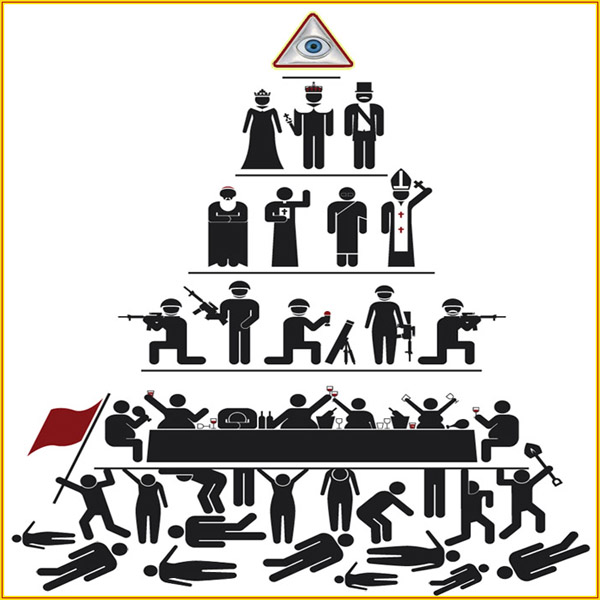
So how should we really refer to these United States of America? A banana republic? How about an oligarchic plutocracy? They both fit quite admirably with what we’ve become. Actually I prefer the more vernacular US of BS. Sure it’s crude, base, coarse and of course “politically incorrect” but take a close look at America.

In almost every area one can think of it’s pretty much the same. Truth and honesty is what we’re indoctrinated with, yet in reality we’re a country imbued with dishonesty and lying. Hell, even with little kids nowadays it’s the parents always yammering “good job” here and “good job” there. My god, leave the little tyke alone. He, she will get it together without the constant praising fearing without it he’ll somehow become a failure.

Think about it; from the way we conduct war to being held personally accountable, the “American Dream” to our “color blindness” on race, from “official” Washington to the “independent” MSM, and how it’s all dispensed to the people, it’s all the same BS.

We go to war to bring “freedom and democracy” to the people we invade and occupy. That’s how “dubya” Bush put it to the American people. We commit torture but call it “enhanced interrogation techniques”. We kill innocents in those wars but refer to it as “collateral damage”; come on.

This didn’t all begin with our latest wars against “terrorists”. In Viet Nam, it was the Viet Cong and the North Vietnamese Communists and every VC we killed were the “enemy” including women and children. “Winning” that war was calculated based on the number of “enemy” reported killed. Read Nick Turse’s, “Kill Anything That Moves” where “My Lai” wasn’t an aberration-as the Army said it was-but an everyday occurrence. Terrorists are just the latest manifestation of a contrived, mortal “enemy” we’re told we must fight.

Now everyone we kill are all called “terrorists”, insurgents, al Qaeda, Taliban, ISIS. But of course our killing with drones and missile strikes isn’t “terrorism” it’s what; winning the “hearts and minds”?

Go back further to our wars and “diplomacy” with our own indigenous people. It was all part of what we were taught in our schools called, “Manifest Destiny”. Well that was manifested with every treaty “official” Washington brokered with the true natives of this country being broken. The indigenous know it and now live with the circumstances that was forcibly thrust upon them. Plundering, confiscating the land and what’s now called genocide was really what it was about. You know, “from sea to shining sea”.

As far as who is held to account for their actions today, it’s mostly the poor, black or brown, those profiled, harassed, rousted and often killed but rarely are the police held accountable for their actions.

In the Ferguson police killing of Michael Brown, the grand jury exonerated officer Darren Wilson even though one of those testifying had earlier admitted to prosecutor Bob McCulloch to not being at the scene-which he later publicly stated she “clearly wasn’t present at the scene”- yet he let the panel hear her false testimony and they subsequently voted to acquit Wilson. As for McCulloch I believe he remains as the prosecutor in Ferguson.

We’re supposed to be “color blind” when it comes to race and ethnicity and enforcing the law, yet it’s not just Ferguson where the injustice is occurring it’s a country wide phenomenon. Our largest minorities are those disproportionately incarcerated. Justice? What justice? And for whom?

The “American Dream…a hoax. “Work hard, get an education, get a good job, get married and own a big house”. Maybe that’s true for a handful but the reality for most college students is debt for life. There’s over a $trillion in college student debt with outrageous interest rates tacked on. Too many are working as bartenders and wait staff. They can’t find jobs in their area of study as outsourcing of jobs has become endemic.

As “Americans” we embrace “capitalism” and despise “socialism”. Yet when the financial “masters of the universe” and the big banks brought the financial system to its knees with its fraudulent excesses in 2008, they were “bailed” out by the FED and the US Treasury-and unlike college students now get $billions in FED loans at near zero interest rates. It was government “socialism” that came to the rescue keeping the vultures afloat but sold as a “bailout” to the public. As far as “accountability” for the fraud they committed, other than a few millions in fines-and always with the stipulation they admit no wrongdoing as part of the settlement- that were miniscule and insignificant compared to the billions they made with their financial scheming, it was simply a financial bump in the road. And most significantly none went to jail. How’s that for equal justice under the law!

Our “defense” industry, Lockheed Martin, Boeing, Raytheon, General Dynamics, Northrop Grumman -the big five of the lot- are considered as “independent” corporations but they’re all pretty much owned by the Defense Department-formerly known as the “War Department” until changed after WWII-as the bulk of their earnings is from government spending called innocently as “fiscal” policy. Well that fiscal policy goes to the tune of a $trillion each year when all expenditures are considered i.e. armaments, over a 1000 military bases, wars and occupations, homeland security, NGO’s directly funded by the government, the NSA, CIA, independent contractors, NASA, the VA et al. All against “enemies” not really a threat but conjured up as so to the public to make them fearful so “official” Washington can justify the bloated, unnecessary expenditures.

Every other 1st world post industrialized country has public health insurance for all, in essence a single payer, Medicare type system run by the government. Accept for those 65 and older on Medicare in this country we now have “Obama” care, the Affordable Care Act system still leaves millions without health insurance. But it sure increased the “benefits” to the private health care behemoths, essentially a monopoly with no competition- whereby they divide the country into distinct areas so they don’t compete with each other, akin to the mafia, that is inefficient, has excessive overhead costs but sold as the best health system in the world while in actuality its 37th in the world in delivering health care. So to an imagined “good ole boy” who remarks, “We ain’t got no stinkin socialized medicine in this country. What are ya some kinda commie or somethin?” Ah, but I digress.

And lastly- there’s no way to elaborate on all the BS befouling America in such a short piece; just substitute your own; the crock is endless – there’s the corporate MSM. What may have been a time of an independent free press, naturally skeptical of government with investigative journalism unearthing official wrongdoing has descended into what can best be described as the “ministry of propaganda”, a compliant, complicit, enabling organ of the state.

It “informs” us alright but mostly with lies, distortions and misinformation rather than keeping the public informed with the truth as it really is, not some fictionalized version to keep it in good stead with “official” Washington.

But that corporate MSM fits in quite nicely with this pieces hypothesis, the US of BS.

And an increasingly dangerous one at that not only to others in the world but also for Americans.

But don’t tell that to most Americans, we’re still “the land of the free and the home of the brave” .

Yeah, BS to the very end.

About the Author:

Retired. The author of “DECEIT AND EXCESS IN AMERICA, HOW THE MONEYED INTERESTS HAVE STOLEN AMERICA AND HOW WE CAN GET IT BACK”, Authorhouse, 2009
Why Are So-Called Progressives Defending Special Ops Training?

jadehelm1

By Carol Miller

Source: Counterpunch

Anti-militarism activists are shaking their heads in amazement. We have been working for years to push back against the massive military expansion underway both in the US and around the world, fighting back one threatened community at a time. The national media has barely mentioned these efforts and local media chooses to mostly ignore the work.

Militarized violence has become the new normal in the USA. It barely matters whether these militarized forces are controlled by the Pentagon, or state governors, each in control of a national guard (state-based militia), state or local police chief, or even a county sheriff with their own militarized departments.

Yet, the largest war “game” ever undertaken by the Pentagon is now getting huge amounts of superficial media attention. The media is not focusing on the tremendous financial cost, the potential environmental consequences, or the unconstitutionality of the plan. The media of both the left and the right are using the plan as yet another convenient tool in enabling the divide and conquer strategy of the Pentagon.

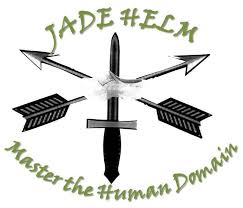
Jade Helm 15 and Texas have become the convenient punch lines of jokes and mocking by so-called progressives and the mainstream media without a single serious look at what the actual activity will do on the ground. Think about this; Viet Nam is the size of New Mexico. Iraq is smaller than Texas. Afghanistan is also smaller than Texas.

What war is being practiced for in an area comprised of seven of the largest states in the US including New Mexico and Texas – Russia? China? Africa? Europe? These are the questions the media should be asking. The public needs to know the endgame of all the proposed and ongoing war games.

The majority of people taking the Jade Helm 15 seriously are not conspiracy theorists, they are community volunteers and environmental attorneys that have been working for years to stop military expansion. Among the volunteers are retired people, school children, veterans, ranchers, peace activists, business people, and environmentalists. They are people who know and oppose intrusive, polluting, environmentally destructive, economically damaging military operations whether overhead, on the ground or in waterways.

Communities Organized Against Military Expansion

Across the US, communities are kept busy responding to endless Pentagon NEPA actions. NEPA is the National Environmental Policy Act, which supposedly protects or limits the environmental impacts of government activities. People are most familiar with the Environmental Impact Statement (EIS), which is the final stage of the lengthy NEPA process.

The group I work with is the Peaceful Skies Coalition, organized in 2010 to stop air force special ops from flying and practicing war at very low altitudes over most of northern New Mexico and southern Colorado. Over the past five years, the coalition has intervened in numerous Pentagon NEPA actions from Vermont to Alaska. We also stand in solidarity with the people around the world fighting US militarism; Okinawa, Guam, Jeju Island Korea and Sicily to name just a few.

A meeting of anti-militarization community leaders was held both online and in person in Taos, New Mexico in April. As community after community told their story we realized that the situation was identical no matter where in the US the military was expanding. Communities are organized to fight current Pentagon expansion plans. The Pentagon wants to expand the bootprint not only of its bases, but also to expand military activities across public lands; national forests, national parks and Bureau of Land Management (BLM). As a result of agreeing to shared values in April, the organizations are in the process of creating a national organization to strengthen the reach and voice of the anti-militarization movement.

Pentagon’s Planned Gulf of Alaska Ecocide is Also Not a Joke

While attention is focused Jade Helm 15 in the southwest US, barely a speck of attention is being paid to the real navy plan to begin live ammunition bombing and sonar war “games” in the Gulf of Alaska (GOA) in June. Without a miracle that intervenes to stop this project, the navy bombing will begin next month and be repeated every year for at least the next five years.

Public outcry, especially to the secretary of the navy and members of Congress, might help stop the planned bombings. (http://www.eyakpreservationcouncil.org/navy-training-facts/write-letter-navy-2/) The sample letter prepared by the Eyak Preservation Council states that “The coastline around the GOA is home to many coastal communities and Alaska Native people who rely on marine and freshwater resources… These exercises are planned during the most prolific breeding and migratory periods of the marine supported life in the region (salmon, whales, birds and more)… Commercial fishing is the largest private sector employer in Alaska, providing some 80,000 jobs as well as a healthy food source.”

The Eyak Preservation Council, which is fighting a lonely battle to stop the navy, describes the importance of salmon to their lives; “The life blood of our region – the basis for a culture, economy and community. The Copper River and Prince William Sound are spectacular watersheds that host a rich, plentiful, unique and roadless pristine ecosystem that supports one of the most sought after wild salmon runs in the world, known as the Copper River wild salmon. One of the last truly wild places on earth.”

The Gulf of Alaska fight is just one of the fights against the navy currently taking place all along the Pacific Rim including the West Coast of the US and Hawai’i. Community volunteers and a handful of attorneys versus the Pentagon, is a scenario repeated in one community after another.

Jade Helm 15 is Not a Joke

Jade Helm 15 is not a joke and must be taken seriously. Mock invasions, mock terrorist manhunts, shootouts, and roundups are not jokes. They are reminders that in the Global War On Terror (GWOT) being a US citizen doesn’t matter. Because in the eyes of the State, everyone is a suspect, everyone must stand up against war and war practice. The last shreds of democracy are at stake.

Carol Miller is a community organizer from Ojo Sarco, New Mexico (population 300) and an advocate for “geographic democracy,” the belief that the United States must guarantee equal rights and opportunities to participate in the national life, no matter where someone lives. She is an officer of the Peaceful Skies Coalition.


Why Mumia Must Live, and US imperialism Must Die: The Link Between Political Prisoners and the War on Terror

mumia

The so-called War on Terror and the national security state did not emerge full-blown from the rubble of 9/11. Both are products of previous waves of police repression, mainly targeting Black radicals. “The FBI’s counter insurgency war on the Black Panther Party chapters and leaders like Mumia established for local police departments a direct link to Washington’s war and surveillance arsenal.”

By Danny Haiphong

Source: Black Agenda Report

The fear of the Muslim/Arab terrorist rekindles the same fear in white America that the Black liberation movement ignited over four decades ago.”

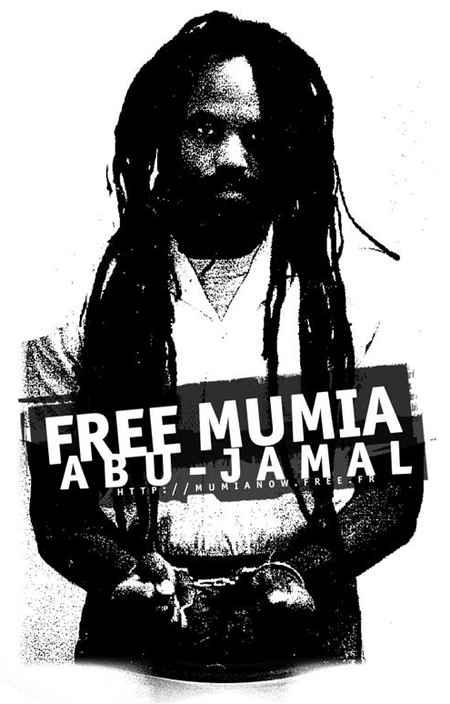
Political Prisoner and journalist Mumia Abu-Jamal has been subjected to over three decades of torture from the US prison gulag. His political imprisonment has placed his life in serious danger, this time not from state execution but instead from extra-legal medical neglect. The prison state has continuously failed in its efforts to murder Mumia through official means and has thus decided to refuse the former Black Panther adequate medical treatment for diabetes. Meanwhile, Boston residents of all classes await the verdict of whether the alleged “Boston bomber” Dzokhar Tsarnaev will receive the death penalty or life in prison. The event that faithful day remains shrouded in questions , but most of the city has accepted the dominant narrative put forth by the FBI and Boston Police Department. The War on Terror that produced the “Boston Bombing” and Mumia’s struggle against the prison state are intimately connected. For Mumia to live with freedom and dignity, the US imperial order behind the War on Terror must die.

Mumia Abu-Jamal’s existence as a political prisoner has been repressed by the establishment, while the War on Terror is a household name in the US. This is because the War on Terror serves the objectives of imperialism and Mumia does not. Mumia joined the Black Panther Party at fifteen and served as the Philadelphia Chapter’s Ministry of Information. He used his talents in journalism in service of Black people both in the BPP and after. This landed him on J. Edgar Hoover’s COINTEPRO list of Black liberation fighters to watch and suppress. In 1978, Mumia covered the Philadelphia police department’s siege on the MOVE Organization. His critical investigation of the Philly PD’s role in repressing MOVE led to his ouster from the journalism industry. In 1982, Mumia was framed for the murder of police officer Daniel Faulkner and sentenced to death.

He used his talents in journalism in service of Black people both in the BPP and after.”

The context of Mumia’s imprisonment is at the essence of US imperialism’s War on Terror, which could be better named its war of terror. In the film Manufacturing Guilt​ , Mumia’s frame-up is blatantly exposed through court documents and investigations. Yet, Mumia has lived much of his life in prison, mostly in solitary confinement. What explains this injustice and how does it relate to the current War on Terror? In Still Black, Still Strong, Dhoruba Bin-Wahad explains how the FBI’s counter insurgency war on the Black Panther Party chapters and leaders like Mumia established for local police departments a direct link to Washington’s war and surveillance arsenal. Washington’s war on Black liberation fighters precipitated the first SWAT team operation in 1969 and the FBI’s declaration that the Black Panther Party was the “greatest threat to the internal security” of the US. The war on Black freedom that jailed Mumia created the technical capacity for the War on Terror.

The recent bombing of the 2013 marathon, and 9/11 before that, created the conditions for a massive expansion of the surveillance state and police state throughout the US mainland. The hundreds of illegally detained prisoners at Guantanamo Bay, the increased surveillance of Muslims and Black people in the US, and the massive spy program instituted by the Patriot Act and similar legislation are daily reminders of US imperialism’s ever expanding repressive apparatus. Internationally, the US led War on Terror interventions have caused the loss of life of millions of people in the Middle East and Africa alongside the thousands more from US aerial drone strikes and proxy war. All of this has been justified as necessary to “counter” the so-called threat of “terrorism.”

The war on Black freedom that jailed Mumia created the technical capacity for the War on Terror.”

Mumia’s story, one shared by numerous US political prisoners sentenced to die in the cages of the prison state, contains in it the seeds that sprouted the rise of the massive War on Terror. Russell Maroon Shoatz, Oscar Lopez Rivera, Leonard Peltier and scores more faced trumped up charges from the state as part of US imperialism’s counter insurgency war on dissent generally and the Black liberation movement in particular. This war has been expanded to meet the needs of US imperialism, which in its current form has produced a potentially explosive situation domestically and globally. The sharpening contradictions of never-ending war and increasing poverty and privatization wouldn’t last long if the counter insurgency war on Mumia and the Panthers hadn’t provided the blueprints and technical support for the mass expansion of the War on Terror’s primary tools: war and surveillance state.

Mumia Abu-Jamal and the rest of the Empire’s political prisoners are caught in the cross hairs of US imperialism’s war of survival. Not only has the material basis of the counter insurgency war that murdered and imprisoned the Black liberation movement grown, but so too has the racist logic behind the repression. The War on Terror’s racist logic has permeated so deeply into the minds of the US public that the mere questioning of the agenda’s blatant deceit is subject to dismissal or defense by most people living in the US mainland. These conditions have left political prisoners with few fighters on the outside pressuring their release. The War on Terror has attempted to erase the memory of political prisoners by reframing the racist justifications for political imprisonment as common sense in what George Jackson called the “Amerikan mind.”

The War on Terror’s racist logic has permeated so deeply into the minds of the US public that the mere questioning of the agenda’s blatant deceit is subject to dismissal.”

So, even though the justification for each and every War on Terror intervention or policy since 2001 are dubious at best, the fear of the Muslim/Arab terrorist rekindles the same fear in white America that the Black liberation movement ignited over four decades ago. The Black Panther Party and their partners in struggle were deemed criminal in every way and many were falsely charged with the murder of police officers, the highest form of offense in the eyes of white America. The War on Terror built off this strategy by throwing the Muslim community into the racist war on the oppressed as a means to control the dissent of the entire population. That the US imperial machinery is complicit in, and a sponsor of, jihadist terror and proxy war matters as little as the innocence of political prisoners when it comes to preserving the Empire and criminalizing all resistance to its rule.

Mumia Abu-Jamal’s life needs to be saved by any means necessary, but fighting to free him based on his criminal case alone won’t develop the movement we need. One of the primary obstacles to building a concrete movement for the freedom of political prisoners is the privileging of innocence over a movement that links political prisoners to the repression of the imperial state. But Mumia’s innocence teaches us the real purpose of political imprisonment. The War on Terror is a consolidation of the forces that were built by imperialism to suppress the revolutionary ideas of Mumia Abu-Jamal. What we need is a reexamination of those ideas in the service of the freedom of all political prisoners. By studying the War on Terror and the repression of the Black Liberation movement from which it grew, it becomes increasingly clear that imperialism must die for Mumia to truly live.

Danny Haiphong is an organizer for Fight Imperialism Stand Together (FIST) in Boston. He is also a regular contributor to Black Agenda Report. Danny can be reached at wakeupriseup1990@gmail.com and FIST can be reached at bostonfist@gmail.com.

Game Over

Political_Studies_3798278

The Jargon of Game Theory

By

Source: Soul of the East

While suffering under the information barrage wrought by mass media, a question arises in one’s mind: exactly how many words are there in the media vocabulary? For, when it comes to treatment of serious subjects like the economy and politics, the words in use are reduced to surprisingly few, so that even purported media analysis or commentary comes to resemble a mantra or nursery rhyme. Furthermore, it is notable that this “linguistic drain” occurs precisely at the moment when “serious” matters come into focus, and in spite of all the loftiness of the talking heads – our designated hierophants and media oracles – we are bombarded with rather frivolous terminology. One can only be perplexed at why, for instance, economic and political agents are called players? Why does the philosophy professor speak about the strategy of Nietzsche’s arguments? What exactly does it mean to have a cultural strategy? On what grounds does the literally critic assume that James Joyce employed a narrative strategy?

Why are all those serious things spoken about as if they were some kind of game?

On the face of it, the answer is surprisingly easy to deduce. Game or game-play jargon originates in global epistemic dominance of thought models derived from mathematical game theory. Its various abstract and complex forms (so called ‘models’ or ‘modules’), as well as their global application to all aspects of life, build the spiritual framework of our time to a significant extent, although they are rarely discussed outside of academia. However, game theory is not merely a mathematician’s plaything. If we bear in mind that the world stage – with all those global players – is also the home to all sorts of people who are well aware that they are being played, but have no idea of true nature of those playing them, then it is clear that the fundamentals of game theory should be subjected to critical scrutiny. The task is all the more urgent – and all the easier – if we bear in mind that the peculiarity of game theory, in contrast to other mathematical models, lies in the fact that it is founded on all-encompassing and simultaneously incredibly simple – one could say simple as in ‘dim witted’ – explanation of man and the world in general.

Game theory is a metaphysical doctrine, i.e. its ambition is to encompass everything, both the nature of man and the nature of universe. And there is a one special rule to every game of metaphysics, namely this: when the abstract and esoteric professional language of science is put aside, the game is potentially understandable to all parties – both those who are playing and those who are being played. It is an unspoken rule, an ancient assumption of all world-view con-games: in order for half-truth to hold sway over everybody, it must be spoken in common language. So let us examine, aided by some elementary concepts, what game theory is exactly and what it means for someone who is not a player, only played.

At its core, though, game theory is an explanatory model of decision making. It defines its subject as rational activity whose purpose is an increase in well-being of the deliberating individual or collective. Any behavior seemingly pursuing different purpose is only a roundabout way to achieve this goal more rationally, or it is simply “irrational.” Tertium non datur. Obviously, we are dealing with, broadly speaking, a “liberal” definition of man, although it is in fact the legacy of Ancient Greek Sophists. Bearing in mind that an individual is always in the midst of other individuals and that in order to achieve its goals it must collaborate or come into conflict with them, society must be rationally modelled in order to minimize conflict. That old bogeyman of political philosophy, Thomas Hobbes, conceived such a thing as possible only through the absolute sovereignty of the State, for was convinced that all those self-centered atoms were more prone to play at some iteration of Total War than that of Sims.

Proponents of game theory try to evade this fairly consistent inference of universal war or use it to prove something else: atomized individuals do not strive toward all-out conflict but towards equilibrium. The term denotes a state of conflict turned latent, in the sense of permanent threat or warning, but having ceased to be destructive; it is, in a word, a rational conflict, a war that grew cold. Namely, rational behavior is primarily strategic, i.e. it endeavors to accomplish its objective despite possible resistance by anticipating the strategies of that resistance. The healthy society is the one in which unavoidable conflicts are being channeled into relative harmony, regulated by the rules of the game, because the players realized that relative equality is more expedient than playing an ‘all or nothing’ game. Hence, game theory has a notably militaristic nature, affirmed by its history: it flourished inside military think tanks during the first years of the Cold war, only to be later unleashed on civil societies throughout the West.

The Prisoner’s Dilemma

At this level, some peculiarities are also notable. The term ‘game’ is made distinct but is not clearly defined, i.e. it is obviously artificially narrowed. For instance: since when does the game have to be competitive? Moreover, it is usually understood as a leisure activity, an escape from labor and conflict. Game by its nature doesn’t require winners and losers. It can be – and it usually is – a completely self-sufficient activity. In that sense, dances, visual and linguistic creative activities, fine or liberal arts, are all forms of playing a game. Those are all activities that, deprived of any calculated purpose outside themselves, remain autonomous and, therefore, free. However, game theory, without further clarification, presumes that games are always forms of competition implying conflict, binary division on winners and losers, elements of chance and power relations, domination and submission. So game theory is concerned with power plays. This is best illustrated in that most famous of game theory modules, the “Prisoner’s Dilemma.”

The Prisoner’s Dilemma is an imagined situation that game theoreticians apply to reality, and it has many variations with according levels of complexity. It can be described, using the so-called static model, in the following way:

Two criminals are brought to a police station for questioning. They committed the crime, but if the police fail to get the confession from one or either of them, they’ll walk. They are put in separate rooms and isolated from one another. A confession is demanded from each one. A situation develops in which the rules of the game provide them with a limited number of possible strategies: each one could or could not confess. If both confess, their pay-off is equally small, but if only one confesses, his pay-off is small, but bigger than the pay-off of his accomplice. If neither confesses, the pay-off is equally big for both of them, yet so is the risk of losing everything. Two key factors are in play: the prisoners are completely isolated from one another – they only know the game’s rules and the pay-offs by which they model their respective strategies, and each one only wants to maximize his own pay-off. The game-theory endeavor to use this module to explain real-life situations and foresee the decisions to be made by opponents (for instance, by Soviets in the Cold-War era) or to offer the best course of deliberation to its users. In the dynamic model of The Prisoner’s Dilemma, the main difference is in access to information, because players are allowed to confer before they are isolated.

A striking feature of such models must be noted. More often than not, the agents of decision-making in game theory modules are described as criminals. Sometimes they are jewel thieves, sometimes it’s a fugitive escaping the posse, and one encyclopedia’s game theory module is illustrated by the act of tossing the incapacitated opponent into precipice. It is interesting that the author uses the pronoun he for the victim while the criminal in the dilemma is denoted as she, in strict obeisance to the rules of political correctness. Bearing in mind that victimhood, imaginary or not, proves to gain a rather abundant pay-off, it seems that even the game theoretician is faced with a Prisoner’s Dilemma.

The Game Myth

This feature leads us to key weak point of game theory, i.e. its flimsy definition of rationality. Namely, the “big players”, of whose moving and shaking the media hierophants inform us unceasingly, are implicitly denounced as criminal organizations, and not by the frustrated and confused public – the notion appears incorporated into the very definition of their enterprises. Every player seeks exclusively his own maximal gain, and that which is considered to be “one’s own,” therefore rationally desirable, seemingly private, comes dangerously close to being privative. Bearing in mind that such exclusive economic players are prone to merge with their playmates in politics – which is, after all, the elementary definition of fascism – one must reach the conclusion that in the foundations of seemingly supra-private bodies, be it corporations or governments, not only private but also privative interests are embedded, and that the very process of democracy can be seen as a means of accomplishing this.

In that sense, it is no wonder that what is now called liberalism is a form of strange metaphysics. Namely, it appeals to ‘human nature’ and ‘natural rights’, but has in fact always been infected with an urge for escapism, clearly visible in so-called “state of nature” and “social contract” theories, mythical stories about a historical event that never happened in a historical age that never was, which man escaped by a decision he never made. Game theory metaphysics transforms this myth and enriches it, but it certainly doesn’t dispel it. The myth is sold, against all reason and the wealth of human imagination, as the veritable image of truth, i.e. a valid world-view, the prism through which the entire contemporary landscape is transmitted before our eyes. However, this picture, no matter how coherent and self-sufficient, is in fact rather fragile.

The persuasive power of the myth is proportional to the verity of its images of truth, while the persuasive power of the lie stems from its appellation to weaknesses of thought – to an inertia delighted with the ease of passing flippant judgment. The mythology of the rational playground falls precisely into this second category, because it assumes the pretense of a necessary and all-applicable system, thereby subverting the transcendental, robbing it of its very possibility while replacing it with a simulacrum. However, in moments of crisis – etymologically equal to moments of judgment – its frailty is all the more obvious, and its ability to maintain the illusion ever more inadequate to the task. The notion of man as a ‘selfish information processor’ is in fact a careless distortion of the classical understanding of elementary human solidarity, founded on love of one’s own transferred to another, best explained in Aristotle’s Book VIII of Nicomachean Ethics, where it is defined as ‘friendship’ (filia) in the broadest sense. The progressive concentration of power in the hands of players, at the expense of those who are played is more likely to push the losing side into the irrational decision of giving up on selfishness, of declaring: “I will not play anymore.”

Ghosts in the Machine 

We face the following eventuality: the choice of irrational decision sheds more light on a crucial system error in the definition of man and game that this pseudo-metaphysics imposes on us. The term ‘irrational’ is never really defined in the framework of game theory. And rationality fared only slightly better, though at least it can serve as a foothold for via negativa deduction of what is not irrationality. For the game theoretician, irrational behavior is not behavior at all; it is a pseudo-behavior deprived of deliberation. Bearing in mind that game theory yields a considerable pay-off in microbiology, where genes are conceived as rational players in the game of survival of the fittest, we can’t even say that irrational players are making monkeys of themselves. So how, using this sophisticated net, does one catch this elusive mutant who won’t play games, strategize, steal, or bow to political religion?

Let’s define him. This “ghost in the machine” could be someone whose moral sentiment forces him to irrationally decline profitable professions or profitable occasions, such as employing his talents in mass propaganda or advertising. Furthermore, in order to achieve his objective, perhaps writing a novel penetrating the depths of human condition, for example, he irrationally decides to always be close to death, because only then he can really reach the heart of his subject, while at the same time he knows that the pay-off will probably come after he is long gone. Is there any conceivable rational agent who can assume that he rationally planned all this? Or are all those “whistleblowers” really rational players; people who rationally decided to confront corruption, and now enjoy the pay-off by being unemployed or jailed, crucified between responsibility towards their conscience and their families?

After all, were the lines you now read calibrated for a payoff? “Irrationality” is what you were seeking the entire time.

Game theory views the irrational as its own confinement; the razor wire lining the playground fence or an unforeseen eventuality breaking the rules of game-play, its strict order. Bearing in mind that we are talking about world order – and world-encircling razor wire – the deprecation of the irrational is absolute inasmuch as the myth of the rational is absolute. Endemic, logically indescribable specimens are reduced to occasional noise in communication channels between players. Yet those endemic specimens are in fact the majority of our respectably populated planet, and so the noise grows to permeate our societies. It even begins to obstruct the tranquility of academic think tanks, and we know that devising complex and abstract logical, not to mention mathematical, models demands focus, a certain withdrawal from the world in the isolation of one’s paneled office – that parody of the monk’s cloister. Could it be that the hum of the irrational is evolving into an unpredictable, unbearable roar of chaos whose source is too powerful for even the valiant forces of campus security to subdue?

Is it only rational to predict that a creature of grand scale is much too big for nets weaved from a flimsy conceptual framework, unfit for catching even butterflies? What happens when the net breaks? Because the enemy is irrational, and therefore unthinkable. It is the great Unknown, something equal to an extraterrestrial invasion. Can the controllers’ sorcery of half-truth, half-philosophy, half-culture, and half-living keep our eyes wide shut for much longer? Among the faceless and unprepossessing shall awaken the beast of the irrational, its inner abyss suspending man between the angelic and the infernal. Game over.

See all of Branko Malic’s writings on philosophy, culture, and deep politics at Kali Tribune.

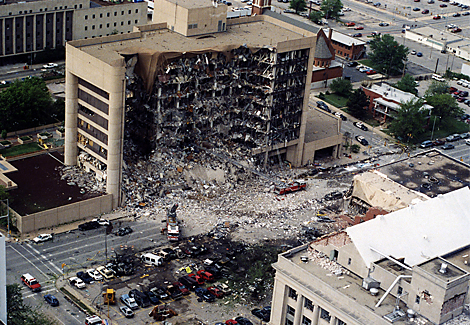
Twenty Years Later: Facts About the OKC Bombing That Go Unreported

mcveigh601

By Kevin Ryan

Source: Washington’s Blog

Next week will mark the 20th anniversary of the terrorist bombing of the Murrah Federal Building in Oklahoma City, which killed 168 people including 19 children. The mainstream media will undoubtedly focus its attention on Timothy McVeigh, who was put to death in June 2001 for his part in the crime. They might also mention Terry Nichols, who was convicted of helping McVeigh plan the bombing and is serving a life sentence without parole.

There will be less discussion about how the FBI spent years hunting for a man who witnesses say accompanied McVeigh on the day of the bombing. They called this accomplice John Doe #2 and theories about his identity range from an Iraqi named Hussain Al-Hussaini, to a German national described below, to a neo-nazi bank robber named Richard Guthrie. The Justice Department finally gave up its search and said it was all a mistake— that there was never any credible evidence of a John Doe #2 being involved.

That reversal demonstrates a pattern of cover-up by authorities and limited media coverage in the years since the crime. This week, accounts will not repeat early reports of secondary devices in the building, or reports of the involvement of unknown middle-eastern characters. There will also be little if any mention of the extensive independent investigation into the crime that was conducted by leading members of the OKC community. Here are seven more facts that will probably not see much coverage on the 20th anniversary.

  1. Attorney Jesse Trentadue began investigating the case after his brother Kenney was killed in prison, apparently having been tortured to death by the FBI in its search for John Doe #2. Trentadue’s investigation led to a federal judge nearly finding the FBI in contempt of court for tampering with a key witness. Trentadue now says, “There’s no doubt in my mind, and it’s proven beyond any doubt, that the FBI knew that the bombing was going to take place months before it happened, and they didn’t stop it.”
  1. Judge Clark Waddoups, who presided over the case brought by Jesse Trentadue, ruled in 2010 that CIA documents associated with the case must be held secret. These documents show that the CIA was involved in the OKC bombing investigation and the prosecution of McVeigh. This means that foreign parties were involved because the CIA is prohibited from interfering in purely domestic investigations.
  1. Andreas Strassmeir, a former German military officer, was suspected of being John Doe #2. Strassmeir became close friends with McVeigh and they were both associated with a neo-nazi organization located in Elohim City, OK. A retired U.S. intelligence official claimed that Strassmeir was “working for the German government and the FBI” while at Elohim City. Mainstream reports about the OKC bombing typically avoid reference to Strassmeir.
  1. Larry Potts was the FBI supervisor who was responsible for the tragedies at Ruby Ridge in 1992, and Waco in 1993. Potts was then given responsibility for investigating the OKC bombing. Terry Nichols claimed that McVeigh—who allegedly had been recruited as an undercover intelligence asset while in the Army—had been working under the supervision of Potts.
  1. Terry Yeakey, an officer of the OKC Police Department, was among the first to reach the scene and he was heralded as a hero for rescuing many victims. Yeakey was also an eyewitness to conversations and physical evidence that convinced him that there was a cover-up of the bombing by federal agents. Yeakey was committed to getting to the truth about what happened but a year after the bombing he was found dead off the side of a rural road. His death was ruled a suicide despite overwhelming evidence that he was murdered. Authorities reported that Yeakey, “slit his wrists and neck… then miraculously climbed over a barbed wire fence… walked over a mile’s distance, through a nearby field, and eventually shot himself in the side of the head at an unusual angle.” No weapon was found, no investigation was conducted, no fingerprints were taken, and no interviews were conducted. His family continues to fight for the truth about his death.
  1. Gene Corley, the engineer who was hired by the government to support its claims about the structural fire at the Branch Davidian complex in Waco, was brought in to investigate the destruction of the Murrah Building. Corley brought along three other engineers: Charles Thornton, Mete Sozen, and Paul Mlakar. Their investigation was conducted from half a block away—where they could not observe any of the damage directly—yet their conclusions supported the pre-existing official account. A few years later, within 72 hours of the 9/11 attacks, these same four men were on site leading the investigations at the Word Trade Center and the Pentagon.
  1. There are many other links between OKC and 9/11. For example, the alleged hijackers visited the OKC area many times and even stayed in the same motel that was frequented by McVeigh and Nichols. After both the OKC bombing and 9/11, building monitoring videos went missing, FBI harassment of witnesses was seen, and officials ignored evidence that did not support the political story. Additionally, numerous oddities link the OKC area to al Qaeda. In 2002, OKC resident Nick Berg was interrogated by the FBI for lending his laptop and internet password to alleged “20th hijacker” Zacarias Moussoui. Two years after this interrogation, Berg became world famous as a victim of beheading in Iraq. Investigators looking for clues about these connections will be particularly interested in two airports in OKC, the president of the University of Oklahoma, and the CIA leader who both monitored the alleged hijackers in Germany and was hired at the university just before 9/11.

On April 19, 2015, at the 20th anniversary of one of the worst terrorist attacks in history, citizens should be reminded that we don’t know what happened that day. We don’t know because officials have covered-up the crime for unknown reasons and most media sources will not challenge that cover-up.

When It Becomes Serious, First They Lie–When That Fails, They Arrest You

ost2

By Charles Hugh Smith

Source: Of Two Minds

When lying is no longer enough to gain compliance, then the organs of security are unleashed on dissent and resistance.

“When it becomes serious, you have to lie.” Jean-Claude Juncker simply gave voice to what the world’s leaders practice on a daily basis, because now it’s always serious.


And why is it now serious? Persuading tax donkeys and debt serfs that everything is going their way is now impossible without lies. Persuading the populace that the leadership is working on their behalf was jettisoned in the wake of the 2008 bailout of bankers and parasites.

Stripped of the artifice that they care about anything other than preserving the wealth of their cronies, global political leaders now rely on propaganda: narratives designed to manage expectations and perceptions, bolstered by carefully tailored official statistics.

Reliance on lies erodes legitimacy. As the rich get richer and the burdens on tax donkeys and debt serfs increase, the gulf between the official happy-story narrative and reality widens to the breaking point, and faith in the narrative and the leadership espousing it declines.

When 20% of the populace no longer believe the lies and begins questioning the state’s enforcement of the status quo, the government devotes its resources to punishing dissenters and resisters. Whistleblowers are charged with trumped-up crimes; those publicly refuting the status quo’s narrative of lies are harassed and discredited, and those who resist state enforcement of parasitic cronyism are set up, beaten, entrapped, investigated, interrogated and arrested once suitably Kafkaesque charges can be conjured up by the apparatchiks of enforcement.

Why 20%? It’s the Pareto Distribution (the 80/20 rule): the 20% of any populace that accepts a new trend, technology or narrative has an outsized influence over the other 80%.

Governments operate on the premise that propaganda and threats will always be enough to cow their populaces into compliance and bribes will induce complicity. When lies, bribes and threats no long work, the state unleashes its full pathological powers on dissent.

The last mass campaign of political suppression in the U.S. occurred in the late 1960s and early 1970s, when resistance to the war of choice in Vietnam reached mainstream proportions.

The U.S. government was accustomed to manipulating and managing the populace with very simple propaganda: Communism is our deadly enemy, we must fight it everywhere on the planet, etc. But when thousands of American service personnel started coming home in body bags from the latest “we must fight Communism everywhere because it’s dangerous to us” war in East Asia, this simplistic justification made no sense: what existential threat to the U.S. did a Communist Vietnam pose?

The U.S. has faced only two existential threats to its sovereignty since 1860: World War II (1941-45) and the potential for a nation-destroying nuclear war with the Soviet Union. The idea that the U.S. was existentially threatened by falling dominoes in East Asia was always ludicrous, and the U.S. status quo (the political leadership, the Deep State, private industry profiting from war, etc.) soon abandoned the absurd justification.

Vietnam was always more of a domestic-politics issue than a geopolitical one: the Democrats feared being perceived as being “weak on Communism” because that impacted the results of elections. Throwing treasure and American lives away in Vietnam was pure domestic politics from 1961-68 (once mired, Democrats feared being tagged as the party that “lost Vietnam”), and thereafter the treasure and lives were sacrificed on the equally contrived Nixon-Kissinger policy of avoiding losing geopolitical face with a withdrawal that amounted to surrender.

Though it is not well known, the Federal Bureau of Investigation (FBI) was ordered to devote essentially all its resources to suppressing dissent in these years. Teams assigned to organized crime were reassigned to track down draft resisters and other political malcontents. COINTELPRO was a vast program devoted to illegally entrapping, beating up and undermining any and all political resistance to the war and the government’s increasingly heavy-handed oppression of dissent.

For more on COINTELPRO, please read War at Home: Covert action against U.S. activists and what we can do about it.

Simply put: when lies no longer work, governments freak out and devote their resources not to eliminating wars of choice, cronyism and corruption but to suppressing dissent and resistance to those policies.

The U.S. government has always been free to pursue wars of choice with its professional military, with little risk of widespread political blowback. A variety of “splendid little wars” have been waged, generally for conquest or enforcement of hemispheric hegemony. The government’s success in rallying the nation during World War II instilled a false confidence that merely raising the flag of existential threat would be enough to eliminate dissent and elicit compliance in the masses.

Vietnam was the first time the American public went through the process of buying the usual “threat” justification for war, questioning the threat and eventually rejecting the state’s narrative. The government responded by lashing out at its own citizenry, engaging in a full spectrum of illegal and blatantly immoral actions designed not to right wrongs or fix broken policies, but to suppress dissent and resistance to destructive policies and broken systems.

The U.S. government is not unique in this; on the contrary, all governments, by their very nature as concentrations of coercive power, will pursue the same path. Rather than confess the government is operated by cronies, for cronies, the machinery of the state will increasingly be turned on its citizenry.

Rendering unto Caesar that which is Caesar’s is no longer enough; abiding by the laws of the land are no longer enough. What the state demands is not just compliance with its countless laws and regulations, but absolute obedience to its narratives and policies.


Anyone who withholds obedience is quickly deemed a traitor–not to the nation or its Constitution, but to the state itself, which is ultimately a collection of cronies and self-serving vested interests protecting their fiefdoms at the expense of the citizenry.

When lying is no longer enough to gain compliance, then the organs of security are unleashed on dissent and resistance. This process is well under way in nation-states around the world.

If I had to pick the two key operative dynamics of the next 20 years, I would choose:

1. The over-expansion and implosion of credit/debt bubbles.

2. The over-reach of the central state as it seeks to win the hearts and minds of its people by ruthlessly suppressing dissent.

The two dynamics are of course causally connected. Central states depend entirely on credit bubbles for their financial survival, and on enforcing increasingly untenable official narratives for their legitimacy.

Both are unraveling, and will continue to unravel, no matter how many state resources are thrown at the symptoms of political illegitimacy, rather than at the root causes of that illegitimacy.


Judith Miller’s Blame-Shifting Memoir

Judy Miller 409By Veteran Intelligence Professionals for Sanity

Source: Consortium News

U.S. intelligence veterans recall the real story of how New York Times reporter Judith Miller disgraced herself and her profession by helping to mislead Americans into the disastrous war in Iraq. They challenge the slick, self-aggrandizing rewrite of history in her new memoir.

MEMORANDUM FOR: Americans Malnourished on the Truth About Iraq

FROM: Veteran Intelligence Professionals for Sanity (VIPS)

SUBJECT: A New “Miller’s Tale” (with apologies to Geoffrey Chaucer)

On April 3, former New York Times journalist Judith Miller published an article in the Wall Street Journal entitled “The Iraq War and Stubborn Myths: Officials Didn’t Lie, and I Wasn’t Fed a Line.” If this sounds a bit defensive, Miller has tons to be defensive about.

In the article, Miller claims, “false narratives [about what she did as a New York Times reporter] deserve, at last, to be retired.” The article appears to be the initial salvo in a major attempt at self-rehabilitation and, coincidentally, comes just as her new book, The Story: A Reporter’s Journey, is to be published today.

In reviewing Miller’s book, her “mainstream media” friends are not likely to mention the stunning conclusion reached recently by the Nobel Prize-winning International Physicians for the Prevention of Nuclear War and other respected groups that the Iraq War, for which she was lead drum majorette, killed one million people. One might think that, in such circumstances – and with bedlam reigning in Iraq and the wider neighborhood – a decent respect for the opinions of mankind, so to speak, might prompt Miller to keep her head down for a while more.

In all candor, after more than a dozen years, we are tired of exposing the lies spread by Judith Miller and had thought we were finished. We have not seen her new book, but we cannot in good conscience leave her WSJ article without comment from those of us who have closely followed U.S. policy and actions in Iraq.

Miller’s Tale in the WSJ begins with a vintage Miller-style reductio ad absurdum: “I took America to war in Iraq. It was all me.” Since one of us, former UN inspector Scott Ritter, has historical experience and technical expertise that just won’t quit, we asked him to draft a few paragraphs keyed to Miller’s latest tale. He shared the following critique:

Miller’s Revisionist History

“Judith Miller did not take America to war in Iraq. Even a journalist with an ego the size of Ms. Miller’s cannot presume to usurp the war power authorities of the President of the United States, or even the now-dormant Constitutional prerogatives of Congress. What she is guilty of, however, is being a bad journalist.

“She can try to hide this fact by wrapping herself in a collective Pulitzer Prize, or citing past achievements like authoring best-selling books. But this is like former Secretary of State Colin Powell trying to remind people about his past as the National Security Advisor for President Reagan or Chairman of the Joint Chiefs of Staff under Presidents George H. W. Bush and Bill Clinton.

“At the end of the day Mr. Powell will be judged not on his previous achievements, but rather on his biggest failure – his appearance before the United Nations Security Council touting an illusory Iraqi weapons-of-mass-destruction threat as being worthy of war. In this same vein, Judith Miller will be judged by her authoring stories for the ‘newspaper of record’ that were questionably sourced and very often misleading. One needs only to examine Ms. Miller’s role while embedded in U.S. Army Mobile Exploitation Team Alpha, hunting for weapons of mass destruction during the 2003 invasion, for this point to be illustrated.

“Miller may not have singlehandedly taken America and the world to war, but she certainly played a pivotal role in building the public case for the attack on Iraq based upon shoddy reporting that even her editor at the New York Times has since discredited – including over reliance on a single-source of easy virtue and questionable credibility – Ahmed Chalabi of the Iraqi National Congress. The fact that she chose to keep this ‘source’ anonymous underscores the journalistic malfeasance at play in her reporting.

“Chalabi had been discredited by the State Department and CIA as a reliable source of information on Iraq long before Judith Miller started using him to underpin her front-page ‘scoops’ for the New York Times. She knew this, and yet chose to use him nonetheless, knowing that then Secretary of Defense Donald Rumsfeld was fully as eager to don the swindlers’ magic suit of clothes, as was the king in Hans Christian Anderson’s fairy tale. In Ms. Miller’s tale, the fairy-tale clothes came with a WMD label and no washing instructions.

“Ms. Miller’s self-described ‘newsworthy claims’ of pre-war weapons of mass destruction stories often were – as we now know (and many of us knew at the time) – handouts from the hawks in the Bush administration and fundamentally wrong.

“Like her early reporting on Iraq, Ms. Miller’s re-working of history to disguise her malfeasance/misfeasance as a reporter does not bear close scrutiny. Her errors of integrity are hers and hers alone, and will forever mar her reputation as a journalist, no matter how hard she tries to spin the facts and revise a history that is highly inconvenient to her. Of course, worst of all, her flaws were consequential – almost 4,500 U.S. troops and 1,000,000 Iraqis dead.”

Relying on the Mistakes of Others

In her WSJ article, Miller protests that “relying on the mistakes of others and errors of judgment are not the same as lying.” It is almost as though she is saying that if Ahmed Chalabi told her that, in Iraq, the sun rises in the west, and she duly reported it, that would not be “the same as lying.”

Miller appears to have worked out some kind of an accommodation with George W. Bush and others who planned and conducted what the post-World War II Nuremburg Tribunal called the “supreme international crime,” a war of aggression. She takes strong issue with what she calls “the enduring, pernicious accusation that the Bush administration fabricated WMD intelligence to take the country to war.”

Does she not know, even now, that there is abundant proof that this is exactly what took place? Has she not read the Downing Street Memorandum based on what CIA Director George Tenet told the head of British Intelligence at CIA headquarters on July 20, 2002; i. e., that “the intelligence and facts were being fixed around the policy” of making war for “regime change” in Iraq?

Does she not know, even at this late date, that the “intelligence” served up to “justify” attacking Iraq was NOT “mistaken,” but outright fraud, in which Bush had the full cooperation of Tenet and his deputy John McLaughlin? Is she unaware that the Assistant Secretary of State for Intelligence at the time, Carl Ford, has said, on the record, that Tenet and McLaughlin were “not just wrong, they lied … they should have been shot” for their lies about WMD? (See Hubris: The Inside Story of Spin, Scandal, and the Selling of the Iraq War by Michael Isikoff and David Corn.)

Blame Blix

Miller’s tale about Hans Blix in her WSJ article shows she has lost none of her edge for disingenuousness: “One could argue … that Hans Blix, the former chief of the international inspectors, bears some responsibility,” writes Miller. She cherry-picks what Blix said in January 2003 about “many proscribed weapons and items,” including 1,000 tons of chemical agent, were still “not accounted for.”

Yes, Blix said that on Jan. 27, 2003. But Blix also included this that same day in his written report to his UN superiors, something the New York Times, for some reason, did not include in its report:

“Iraq has on the whole cooperated rather well so far with UNMOVIC in this field. The most important point to make is that access has been provided to all sites we have wanted to inspect and with one exception it has been prompt. We have further had great help in building up the infrastructure of our office in Baghdad and the field office in Mosul. Arrangements and services for our plane and our helicopters have been good. The environment has been workable.

“Our inspections have included universities, military bases, presidential sites and private residences. Inspections have also taken place on Fridays, the Muslim day of rest, on Christmas day and New Years day. These inspections have been conducted in the same manner as all other inspections.” [See “Steve M.” writing (appropriately) for “Crooks and Liars” as he corrected the record.]

Yes, there was some resistance by Iraq up to that point. Blix said so. However, on Jan. 30, 2003, Blix made it abundantly clear, in an interview published in The New York Times, that nothing he’d seen at the time justified war. (The byline was Judith Miller and Julia Preston.)

The Miller-Preston report said: “Mr. Blix said he continued to endorse disarmament through peaceful means. ‘I think it would be terrible if this comes to an end by armed force, and I wish for this process of disarmament through the peaceful avenue of inspections,’ he said. …

“Mr. Blix took issue with what he said were Secretary of State Colin L. Powell’s claims that the inspectors had found that Iraqi officials were hiding and moving illicit materials within and outside of Iraq to prevent their discovery. He said that the inspectors had reported no such incidents. …

“He further disputed the Bush administration’s allegations that his inspection agency might have been penetrated by Iraqi agents, and that sensitive information might have been leaked to Baghdad, compromising the inspections. Finally, he said, he had seen no persuasive indications of Iraqi ties to Al Qaeda, which Mr. Bush also mentioned in his speech. ‘There are other states where there appear to be stronger links,’ such as Afghanistan, Mr. Blix said, noting that he had no intelligence reports on this issue.”

Although she co-authored that New York Times report of Jan. 30, 2003, Judith Miller remembers what seems convenient to remember. Her acumen at cherry picking may be an occupational hazard occasioned by spending too much time with Chalabi, Rumsfeld and other professional Pentagon pickers.

Moreover, Blix’s February 2003 report showed that, for the most part, Iraq was cooperating and the process was working well:

“Since we arrived in Iraq, we have conducted more than 400 inspections covering more than 300 sites. All inspections were performed without notice, and access was almost always provided promptly. In no case have we seen convincing evidence that the Iraqi side knew in advance that the inspectors were coming. …

“The inspections have taken place throughout Iraq at industrial sites, ammunition depots, research centres, universities, presidential sites, mobile laboratories, private houses, missile production facilities, military camps and agricultural sites. …

“In my 27 January update to the Council, I said that it seemed from our experience that Iraq had decided in principle to provide cooperation on process, most importantly prompt access to all sites and assistance to UNMOVIC in the establishment of the necessary infrastructure. This impression remains, and we note that access to sites has so far been without problems, including those that had never been declared or inspected, as well as to Presidential sites and private residences. …

“The presentation of intelligence information by the US Secretary of State suggested that Iraq had prepared for inspections by cleaning up sites and removing evidence of proscribed weapons programmes.

“I would like to comment only on one case, which we are familiar with, namely, the trucks identified by analysts as being for chemical decontamination at a munitions depot. This was a declared site, and it was certainly one of the sites Iraq would have expected us to inspect.

“We have noted that the two satellite images of the site were taken several weeks apart. The reported movement of munitions at the site could just as easily have been a routine activity as a movement of proscribed munitions in anticipation of imminent inspection.”

Blix made it clear that he needed more time, but the Bush administration had other plans. In other words, the war wasn’t Blix’s fault, as Judy Miller suggests. The fault lay elsewhere.

When Blix retired at the end of June 2004, he politely suggested to the “prestigious” Council on Foreign Relations in New York the possibility that Baghdad had actually destroyed its weapons of mass destruction after the first Gulf War in 1991 (as Saddam Hussein’s son-in-law, Hussein Kamel, who had been in charge of the WMD and rocket programs assured his debriefers when he defected in 1995). Blix then allowed himself an undiplomatic jibe:

“It is sort of fascinating that you can have 100 per cent certainty about weapons of mass destruction and zero certainty of about where they are.”

For the Steering Group, Veteran Intelligence Professionals for Sanity (VIPS)

William Binney, former Technical Director, National Security Agency (ret.)

Thomas Drake, former Senior Executive, NSA

Daniel Ellsberg, former State and Defense Department official, associate VIPS

Frank Grevil, former Maj., Army Intelligence, Denmark, associate VIPS

Katharine Gun, former analyst, GCHQ (the NSA equivalent in the UK), associate VIPS

Matthew Hoh, former Capt., USMC, Iraq & Foreign Service Officer, Afghanistan, associate VIPS

Brady Kiesling, former Political Counseler, U.S. Embassy, Athens, resigned in protest before the attack on Iraq, associate VIPS.

Karen Kwiatkowski, former Lt. Col., US Air Force (ret.), at Office of Secretary of Defense watching the manufacture of lies on Iraq, 2001-2003.

Annie Machon, former officer, MI5 (the CIA equivalent in the UK), associate VIPS

David MacMichael, former Capt., USMC & senior analyst, National Intelligence Council (ret.)

Ray McGovern, former Capt., Army Infantry/Intelligence & CIA presidential briefer (ret.)

Elizabeth Murray, former Deputy National Intelligence Officer for the Near East, National Intelligence Council (ret.)

Todd E. Pierce, Maj., former U.S. Army Judge Advocate (ret.)

Scott Ritter, former Maj., USMC, former UN Weapon Inspector, Iraq

Coleen Rowley, Division Council & Special Agent, FBI (ret.)

Greg Thielmann, former Office Director for Strategic, Proliferation, and Military Affairs in the State Department’s Bureau of Intelligence and Research

Peter Van Buren, former diplomat, Department of State, associate VIPS

Ann Wright, Col., US Army (ret.) & US diplomat (resigned in March, 2003 in opposition to the war on Iraq)

Mutiny of the Soul

The-Prison-of-the-Mind-by-Blacksmiley-via-ArtCorgi

By Charles Eisenstein

Source: Reality Sandwich

Depression, anxiety, and fatigue are an essential part of a process of metamorphosis that is unfolding on the planet today, and highly significant for the light they shed on the transition from an old world to a new.

When a growing fatigue or depression becomes serious, and we get a diagnosis of Epstein-Barr or Chronic Fatigue Syndrome or hypothyroid or low serotonin, we typically feel relief and alarm. Alarm: something is wrong with me. Relief: at least I know I’m not imagining things; now that I have a diagnosis, I can be cured, and life can go back to normal. But of course, a cure for these conditions is elusive.

The notion of a cure starts with the question, “What has gone wrong?” But there is another, radically different way of seeing fatigue and depression that starts by asking, “What is the body, in its perfect wisdom, responding to?” When would it be the wisest choice for someone to be unable to summon the energy to fully participate in life?

The answer is staring us in the face. When our soul-body is saying No to life, through fatigue or depression, the first thing to ask is, “Is life as I am living it the right life for me right now?” When the soul-body is saying No to participation in the world, the first thing to ask is, “Does the world as it is presented me merit my full participation?”

What if there is something so fundamentally wrong with the world, the lives, and the way of being offered us, that withdrawal is the only sane response? Withdrawal, followed by a reentry into a world, a life, and a way of being wholly different from the one left behind?

The unspoken goal of modern life seems to be to live as long and as comfortably as possible, to minimize risk and to maximize security. We see this priority in the educational system, which tries to train us to be “competitive” so that we can “make a living”. We see it in the medical system, where the goal of prolonging life trumps any consideration of whether, sometimes, the time has come to die. We see it in our economic system, which assumes that all people are motivated by “rational self-interest”, defined in terms of money, associated with security and survival. (And have you ever thought about the phrase “the cost of living”?) We are supposed to be practical, not idealistic; we are supposed to put work before play. Ask someone why she stays in a job she hates, and as often as not the answer is, “For the health insurance.” In other words, we stay in jobs that leave us feeling dead in order to gain the assurance of staying alive. When we choose health insurance over passion, we are choosing survival over life.

On a deep level, which I call the soul level, we want none of that. We recognize that we are here on earth to enact a sacred purpose, and that most of the jobs on offer are beneath our dignity as human beings. But we might be too afraid to leave our jobs, our planned-out lives, our health insurance, or whatever other security and comfort we have received in exchange for our divine gifts. Deep down, we recognize this security and comfort as slaves’ wages, and we yearn to be free.

So, the soul rebels. Afraid to make the conscious choice to step away from a slave’s life, we make the choice unconsciously instead. We can no longer muster the energy to go through the motions. We enact this withdrawal from life through a variety of means. We might summon the Epstein-Barr virus into our bodies, or mononucleosis, or some other vector of chronic fatigue. We might shut down our thyroid or adrenal glands. We might shut down our production of serotonin in the brain. Other people take a different route, incinerating the excess life energy in the fires of addiction. Either way, we are in some way refusing to participate. We are shying away from ignoble complicity in a world gone wrong. We are refusing to contribute our divine gifts to the aggrandizement of that world.

That is why the conventional approach of fixing the problem so that we can return to normal life will not work. It might work temporarily, but the body will find other ways to resist. Raise serotonin levels with SSRIs, and the brain will prune some receptor sites, thinking in its wisdom, “Hey, I’m not supposed to feel good about the life I am living right now.” In the end, there is always suicide, a common endpoint of the pharmaceutical regimes that seek to make us happy with something inimical to our very purpose and being. You can only force yourself to abide in wrongness so long. When the soul’s rebellion is suppressed too long, it can explode outward in bloody revolution. Significantly, all of the school shootings in the last decade have involved people on anti-depression medication. All of them! For a jaw-dropping glimpse of the results of the pharmaceutical regime of control, scroll down this compilation of suicide/homicide cases involving SSRIs. I am not using “jaw-dropping” as a figure of speech. My jaw literally dropped open.

Back in the 1970s, dissidents in the Soviet Union were often hospitalized in mental institutions and given drugs similar to the ones used to treat depression today. The reasoning was that you had to be insane to be unhappy in the Socialist Workers’ Utopia. When the people treating depression receive status and prestige from the very system that their patients are unhappy with, they are unlikely to affirm the basic validity of the patient’s withdrawal from life. “The system has to be sound — after all, it validates my professional status — therefore the problem must be with you.”

Unfortunately, “holistic” approaches are no different, as long as they deny the wisdom of the body’s rebellion. When they do seem to work, usually that is because they coincide with some other shift. When someone goes out and gets help, or makes a radical switch of modalities, it works as a ritual communication to the unconscious mind of a genuine life change. Rituals have the power to make conscious decisions real to the unconscious. They can be part of taking back one’s power.

I have met countless people of great compassion and sensitivity, people who would describe themselves as “conscious” or “spiritual”, who have battled with CFS, depression, thyroid deficiency, and so on. These are people who have come to a transition point in their lives where they become physically incapable of living the old life in the old world. That is because, in fact, the world presented to us as normal and acceptable is anything but. It is a monstrosity. Ours is a planet in pain. If you need me to convince you of that, if you are unaware of the destruction of forests, oceans, wetlands, cultures, soil, health, beauty, dignity, and spirit that underlies the System we live in, then I have nothing to say to you. I only am speaking to you if you do believe that there is something deeply wrong with the way we are living on this planet.

A related syndrome comprises various “attention deficit” and anxiety “disorders” (forgive me, I cannot write down these words without the ironic quotation marks) which reflect an unconscious knowledge that something is wrong around here. Anxiety, like all emotions, has a proper function. Suppose you left a pot on the stove and you know you forgot something, you just can’t remember what. You cannot rest at ease. Something is bothering you, something is wrong. Subliminally you smell smoke. You obsess: did I leave the water running? Did I forget to pay the mortgage? The anxiety keeps you awake and alert; it doesn’t let you rest; it keeps your mind churning, worrying. This is good. This is what saves your life. Eventually you realize — the house is on fire! — and anxiety turns into panic, and action.

So if you suffer from anxiety, maybe you don’t have a “disorder” at all — maybe the house is on fire. Anxiety is simply the emotion corresponding to “Something is dangerously wrong and I don’t know what it is.” That is only a disorder if there is in fact nothing dangerously wrong. “Nothing is wrong, just you” is the message that any therapy gives when it tries to fix you. I disagree with that message. The problem is not with you. You have very good reason to be anxious. Anxiety keeps part of your attention away from your tasks of polishing the silverware as the house burns down, of playing the violin as the Titanic sinks. Unfortunately, the wrongness you are tapping into might be beyond the cognizance of the psychiatrists who treat you, who then conclude that the problem must be your brain.

Similarly, Attention Deficit Disorder, ADHD, and my favorite, Oppositional Defiant Disorder (ODD) are only disorders if we believe that the things presented for our attention are worth paying attention to. We cannot admit, without calling into question the whole edifice of our school system, that it may be completely healthy for a ten-year-old boy to not sit still for six hours in a classroom learning about long division and Vasco de Gama. Perhaps the current generation of children, that some call the Indigos, simply have a lower tolerance for school’s agenda of conformity, obedience, external motivation, right-and-wrong answers, the quantification of performance, rules and bells, report cards and grades and your permanent record. So we try to enforce their attention with stimulants, and subdue their heroic intuitive rebellion against the spirit-wrecking machine.

As I write about the “wrongness” against which we all rebel, I can hear some readers asking, “What about the metaphysical principle that it’s ‘all good’?” Just relax, I am told, nothing is wrong, all is part of the divine plan. You only perceive it as wrong because of your limited human perspective. All of this is only here for our own development. War: it gives people wonderful opportunities to make heroic choices and burn off bad karma. Life is wonderful, Charles, why do you have to make it wrong?

I am sorry, but usually such reasoning is just a sop to the conscience. If it is all good, then that is only because we perceive and experience it as terribly wrong. The perception of iniquity moves us to right it.

Nonetheless, it would be ignorant and fruitless to pass judgment upon those who do not see anything wrong, who, oblivious to the facts of destruction, think everything is basically fine. There is a natural awakening process, in which first we proceed full speed ahead participating in the world, believing in it, seeking to contribute to the Ascent of Humanity. Eventually, we encounter something that is undeniably wrong, perhaps a flagrant injustice or a serious health problem or a tragedy near at hand. Our first response is to think this is an isolated problem, remediable with some effort, within a system that is basically sound. But when we try to fix it, we discover deeper and deeper levels of wrongness. The rot spreads; we see that no injustice, no horror can stand in isolation. We see that the disappeared dissidents in South America, the child laborers in Pakistan, the clearcut forests of the Amazon, are all intimately linked together in a grotesque tapestry that includes every aspect of modern life. We realize that the problems are too big to fix. We are called to live in an entirely different way, starting with our most fundamental values and priorities.

All of us go through this process, repeatedly, in various realms of our lives; all parts of the process are right and necessary. The phase of full participation is a growth phase in which we develop gifts that will be applied very differently later. The phase of trying to fix, to endure, to soldier on with a life that isn’t working is a maturation phase that develops qualities of patience and determination and strength. The phase of discovering the all-encompassing nature of the problem is usually a phase of despair, but it need not be. Properly, it is a phase of rest, of stillness, of withdrawal, of preparation for a push. The push is a birth-push. Crises in our lives converge and propel us into a new life, a new being that we hardly imagine could exist, except that we’d heard rumors of it, echoes, and maybe even caught a glimpse of it here and there, been granted through grace a brief preview.

If you are in the midst of this process, you need not suffer if you cooperate with it. I can offer you two things. First is self-trust. Trust your own urge to withdraw even when a million messages are telling you, “The world is fine, what’s wrong with you? Get with the program.” Trust your innate belief that you are here on earth for something magnificent, even when a thousand disappointments have told you you are ordinary. Trust your idealism, buried in your eternal child’s heart, that says that a far more beautiful world than this is possible. Trust your impatience that says “good enough” is not good enough. Do not label your noble refusal to participate as laziness and do not medicalize it as an illness. Your heroic body has merely made a few sacrifices to serve your growth.

The second thing I can offer you is a map. The journey I have described is not always linear, and you may find yourself from time to time revisiting earlier territory. When you find the right life, when you find the right expression of your gifts, you will receive an unmistakable signal. You will feel excited and alive. Many people have preceded you on this journey, and many more will follow in times to come. Because the old world is falling apart, and the crises that initiate the journey are converging upon us. Soon many people will follow the paths we have pioneered. Each journey is unique, but all share the same basic dynamics I have described. When you have passed through it, and understood the necessity and rightness of each of its phases, you will be prepared to midwife others through it as well. Your condition, all the years of it, has prepared you for this. It has prepared you to ease the passage of those who will follow. Everything you have gone through, every bit of the despair, has been necessary to forge you into a healer and a guide. The need is great. The time is coming soon.