3 Questions You’re Not Supposed to Ask About Life in a Sick Society

By Sigmund Fraud

Source: Waking Times

“It is no measure of health to be well adjusted to a profoundly sick society.” ~J. Krishnamurti

Society is directed by a never-ending mainstream narrative which is always evolving, and always reaching new dramatic peaks in sensationalism and hype. They fill your mind with topics they select, they keep your attention on these topics, and they invite and encourage you to argue amongst each other about these topics. In this way our collective attention is permanently commandeered, preventing us from diving too deeply into matters which have more than a superficial impact on day-today life.

Free-thinking is the ability and willingness to explore of ideas and areas of the mind which are yet undiscovered or are off-limits. It is a vanishing art that is deliberately being stamped out by a control system which demands conformity, acquiescence and obedience of body, mind, and spirit.

For your consideration, here are three questions you’re not supposed to ask about life in our profoundly sick society.

1. Who owns the money supply, and the world’s debt?

Pretty much the entire world is in financial debt, an insidious form of slavery which enables the exploitation of human beings and of all things in nature. It’s maddening when you think about it. The United States alone supposedly owes some $20 trillion, while the world at large owes a shocking $215 trillion?

But to whom, precisely?

Money is just a medium of exchange which facilitates transactions between people. In and of itself it has no intrinsic value as we could just as easily use sea shells instead of dollar bills and still be able to get things done. But today’s money is the property of private third-parties who rent it out to national governments, who then use the labor of their citizens as collateral against these loans. This is a highly refined form of slavery, which has already put future unborn generations of human beings in debt.

But who, exactly does the human race owe? Who are our debt-slave masters?

2. Who owns your body?

Ownership means having the explicit right to use, control and dispose of something in the manner of your choosing. The one thing you are born with that you take with you to your death is your own body, but do you own it? If not you, then who does own your body?

If this question were already settled in our society then there wouldn’t be ever-increasing pressure on those who choose to refuse vaccines. Children battling cancer and other serious illnesses wouldn’t be forced to take chemo and radiation under penalty of law and under threat of being taken from their parents. Water wouldn’t be fluoridated without our consent. Natural medicines wouldn’t be outlawed under threat of fines and prison time.

We are rapidly approaching a time when people will be required by law to take psychotropic medications as citizens were in Aldous Huxley’s dystopian classic, Brave New World.

Do you own your body, or does it belong to the state?


Love, Western Nihilism and Revolutionary Optimism


By Andre Vltchek

Source: Dissident Voice

How dreadfully depressing life has become in almost all of the Western cities! How awful and sad.

It is not that these cities are not rich; they are. Of course, things are deteriorating there, the infrastructure is crumbling and there are signs of social inequality, even misery, at every corner. But if compared to almost all other parts of the world, the wealth of the Western cities still appears to be shocking, almost grotesque.

The affluence does not guarantee contentment, happiness or optimism. Spend an entire day strolling through London or Paris, and pay close attention to people. You will repeatedly stumble over passive aggressive behavior, over frustration and desperate downcast glances, over omnipresent sadness.

In all those once great [imperialist] cities, what is missing is life. Euphoria, warmth, poetry and yes – love – are all in extremely short supply there.

Wherever you walk, all around, the buildings are monumental, and boutiques are overflowing with elegant merchandize. At night, bright lights shine brilliantly. Yet the faces of people are gray. Even when forming couples, even when in groups, human beings appear to be thoroughly atomized, like the sculptures of Giacometti.

Talk to people, and you’ll most likely encounter confusion, depression, and uncertainty. ‘Refined’ sarcasm, and sometimes a bogus urban politeness are like thin bandages that are trying to conceal the most horrifying anxieties and thoroughly unbearable loneliness of those ‘lost’ human souls.

Purposelessness is intertwined with passivity. In the West, it is increasingly hard to find someone that is truly committed: politically, intellectually or even emotionally. Big feelings are now seen as frightening; both men and women reject them. Grand gestures are increasingly looked down upon, or even ridiculed. Dreams are becoming tiny, shy and always ‘down to earth’, and even those are lately extremely well concealed. Even to daydream is seen as something ‘irrational’ and outdated.

*****

To a stranger who comes from afar, it appears to be a sad, unnatural, brutally restrained and, to a great extent, a pitiful world.

Tens of millions of adult men and women, some well educated, ‘do not know what to do with their lives’. They take courses or go ‘back to school’ in order to fill the void, and to ‘discover what they want to do’ with their lives. It is all self-serving, as there appear to be no greater aspirations. Most of the efforts begin and end with each particular individual.

Nobody sacrifices himself or herself for others, for society, for humanity, for the cause, or even for the ‘other half’, anymore. In fact, even the concept of the ‘other half’ is disappearing. Relationships are increasingly ‘distant’, each person searching for his or her ‘space’, demanding independence even in togetherness. There are no ‘two halves’; instead there are ‘two fully independent individuals’, co-existing in a relative proximity, sometimes physically touching, sometimes not, but mostly on their own.

In the Western capitals, the egocentricity, even total obsession with one’s personal needs, is brought to a surreal extreme.

Psychologically, it can only be described as a twisted and pathological world.

Surrounded by this bizarre pseudo reality, many otherwise healthy individuals eventually feel, or even become, mentally ill. Then, paradoxically, they embark on seeking ‘professional help’, so they can re-join the ranks of the ‘normal’, read ‘thoroughly subdued’ citizens. In most cases, instead of continuously rebelling, instead of waging personal wars against the state of things, the individuals who are still at least to some extent different, get so frightened by being in the minority that they give up, surrender voluntarily, and identify themselves as ‘abnormal’.

Short sparks of freedom experienced by those who are still capable of at least some imagination, of dreaming about a true and natural world, get rapidly extinguished.

Then, in a short instant, everything gets irreversibly lost. It may appear as some horror film, but it is not. It is the true reality of life in the West.

I cannot function in such an environment for more than a few days. If forced, I could last in London or Paris for two weeks at most, but only while operating on some ‘emergency mode’, unable to write, to create and to function ‘normally’. I cannot imagine ‘being in love’ in a place like that. I cannot imagine writing a revolutionary essay there. I cannot imagine laughing, loudly, happily, freely.

While briefly working in London, Paris or New York, the coldness, purposelessness, and chronic lack of passion and of all basic human emotions, is having a tremendously exhausting effect on me, derailing my creativity and drowning me in useless, pathetic existentialist dilemmas.

After one week there, I’m simply beginning to get influenced by that terrible environment: I’m starting to think about myself excessively, ‘listening to my feelings’, instead of considering the feelings of the others. My duties towards humanity get neglected. I put on hold everything that I otherwise consider essential. My revolutionary edge loses its sharpness. My optimism begins to evaporate. My determination to struggle for a better world begins to weaken.

This is when I know: it is time to run, to run away. Fast, very fast! It is time to pull myself from the stale emotional swamp, to slam the door behind the intellectual bordello, and to escape from the terrifying meaninglessness that is dotted with injured, even wasted lives.

I cannot fight for those people from within, only from outside. Our way of thinking and feeling do not match. When they get out and visit ‘my universe’, they bring with them resilient prejudices: they do not register what they see and hear, they stick to what they were indoctrinated with, for years and decades.

For me personally there are not many significant things that I can do in Western cities. Periodically I come to sign one or two book contracts, to open my films, or to speak briefly at some university, but I don’t see any point of doing much more. In the West, it is hard to find any meaningful struggle. Most struggles there are not internationalist; instead they are selfish, West-oriented in nature. Almost no true courage, no ability to love, no passion, and no rebellion remain. On closer examination, there is actually no life there; no life as we human beings used to perceive it, and as we still understand it in many other parts of the world.

*****

Nihilism rules. Was this mental state, this collective illness something that has been inflicted on purpose by the regime? I don’t know. I cannot yet answer this question. But it is essential to ask, and to try to understand.

Whatever it is, it is extremely effective – negatively effective but effective nevertheless.

Carl Gustav Jung, a renowned Swiss psychologist and psychiatrist, diagnosed Western culture as ‘pathological’, right after WWII. But instead of trying to comprehend its own abysmal condition, instead of trying to get better, even well, Western culture is actually made to expand, to rapidly spread to many other parts of the world, dangerously contaminating healthy societies and nations.

It has to be stopped. I say it because I do love this life, the life, which still exists outside the Western realm; I’m intoxicated with it, obsessed with it. I live it to the fullest, with great delight, enjoying every moment of it.

I know the world, from the ‘Southern Cone’ of South America, to Oceania, the Middle East, to the most god-forsaken corners of Africa and Asia. It is a truly tremendous world, full of beauty and diversity, and hope.

The more I see and know, the more I realize that I absolutely cannot exist without a struggle, without a good fight, without great passions and love, and without purpose; basically without all that the West is trying to reduce to nothing, to make irrelevant, obsolete and ridiculous.

My entire being is rebelling against the awful nihilism and dark pessimism that is being injected almost everywhere by Western culture. I’m violently allergic to it. I refuse to accept it. I refuse to succumb to it.

I see people, good people, talented people, wonderful people, getting contaminated, having their lives ruined. I see them abandoning great battles, abandoning their great loves. I see them choosing selfishness and their ‘space’ and ‘personal feelings’ over deep affection and inseparability, opting for meaningless careers over great adventures of epic battles for humanity and a better world.

Lives are being ruined one by one, and by millions, every moment and every day. Lives that could have been full of beauty, full of joy, of love, full of adventure, of creativity and uniqueness, of meaning and purpose, but instead are reduced to emptiness, to nothingness, in brief: to thorough meaninglessness. People living such lives are performing tasks and jobs by inertia, respecting without questioning all behavior patterns ordered by the regime, and obeying countless grotesque laws and regulations.

They cannot walk on their own feet anymore. They have been made fully submissive. It is over for them.

That is because the courage of the people in the West has been broken. It is because they have been reduced to a crowd of obedient subjects, submissive to the destructive and morally defunct Empire.

They have lost the ability to think for themselves. They have lost courage to feel.

As a result, because the West has such an enormous influence on the rest of the world, the entire humanity is in grave danger, is suffering, and is losing its natural bearing.

*****

In such a society, a person overflowing with passion, a person fully committed and true to his or her cause can never be taken seriously. It is because in a society like this, only deep nihilism and cynicism are accepted and respected.

In such a society, a revolution or a rebellion could hardly go beyond the pub or a living room couch.

A person, who is still capable of loving in such an emotionally constipating and twisted environment, is usually seen as a buffoon, even as a ‘suspicious and sinister element’. It is common for him or for her to be ridiculed and rejected.

Obedient and cowardly masses hate those who are different. They distrust people who stand tall and who are still capable of fighting, people who know perfectly well what their goals are, people who do and not just talk, and those who find it easy to throw their entire life, without the slightest hesitation, at the feet of a beloved person or an honorable cause.

Such individuals terrify and irritate those suave, submissive and shallow crowds in Western capitals. As a punishment, they get deserted and divorced, ostracized, socially exiled and demonized. Some end up getting attacked, even thoroughly destroyed.

The result is: there is no culture, anywhere on Earth, so banal and so obedient as that which is now regulating the West. Lately, nothing of revolutionary intellectual significance is flowing from Europe and North America, as there are hardly any detectable unorthodox ways of thinking or perceptions of the world there.

The dialogues and debates are flowing only through fully anticipated and well-regulated channels, and needless to say they fluctuate only marginally and through the fully ‘pre-approved’ frequencies.

*****

What is on the other side of the barricade?

I don’t want to glorify our revolutionary countries and movements.

I don’t even want to write that we are the “exact opposite” of that entire nightmare that has been created by the West. We are not. And we are far from being perfect.

But we are alive if not always well. We are standing, trying to advance this wonderful ‘project’ called humanity, attempting to save our planet from Western imperialism, its nihilist gloom, as well as absolute environmental disaster.

We are considering many different ways forward. We have never rejected socialism and Communism, and we are studying various moderate and controlled forms of capitalism. The advantages and disadvantages of the so-called ‘mixed economy’ are being discussed and evaluated.

We fight, but because we are much less brutal, orthodox and dogmatic than the West, we often lose, as we recently (and hopefully only temporarily) lost in Brazil and Argentina. We also win, again and again. As this essay goes to print, we are celebrating in Ecuador and El Salvador.

Unlike in the West, in such places like China, Russia and Latin America, our debates about the political and economic future are vibrant, even stormy. Our art is engaged, helping to search for the best humanist concepts. Our thinkers are alert, compassionate and innovative, and our songs and poems are great, full of passion and fire, overflowing with love and longing.

Our countries do not steal from anyone; they don’t overthrow governments in the opposite parts of the world, they do not undertake massive military invasions. What we have is ours; it is what we have created, produced and sown with our own hands. It is not always much, but we are proud of it, because no one had to die for it, and no one had to be enslaved.

Our hearts are purer. They are not always absolutely pure, but purer than those in the West are. We do not abandon those whom we love, even if they fall, get injured, or cannot walk any longer. Our women do not abandon their men, especially those who are in the middle of fighting for a better world. Our men do not abandon their women, even when they are in deep pain or despair. We know whom and what we love, and we know whom and what we hate: in this we rarely get ‘confused’.

We are much simpler than those living in the West. In many ways, we are also much deeper.

We respect hard work, especially work that helps to improve the lives of millions, not just our own lives, or the lives of our families.

We try to keep our promises. We don’t always succeed in keeping them, as we are only humans, but we are trying, and most of the times we are managing to.

Things are not always exactly like this, but often they are. And when “things are like this”, it means that there is at least some hope and optimism and often even great joy.

Optimism is essential for any progress. No revolution could succeed without tremendous enthusiasm, as no love could. No revolution and no love could be built on depression and defeatism.

Even in the middle of the ashes to which imperialism has reduced our world, a true revolutionary and a true poet can always at least find some hope. It will not be easy, not easy at all, but definitely not impossible. Nothing is ever lost in this life for as long as our hearts are beating.

*****

The state in which our world is right now is dreadful. It often feels that one more step in a wrong direction, another false turn, and everything will finally collapse, irreversibly. It is easy, extremely easy, to give up, to throw everything up into the air, and to land on a couch with a six-pack of beer, or to simply declare “there is nothing that can be done”, and then resume one’s meaningless life routine.

Western nihilism has already done its devastating work: it has landed tens of millions of thinking beings on their proverbial couches of defeatism. It has spread pessimism and gloom, and a general belief that things can never improve anymore. It has maneuvered people into refusing to ‘accept labels’, into rejecting progressive ideologies, and into a pathological distrust of any power. The “all politicians are the same” slogan could be translated clearly into: “We all know that our Western rulers are gangsters, but do not expect anything else from those in other parts of the world.” “All people are the same” reads: “The West has been plundering and murdering hundreds of millions, but don’t expect anything better from Asians, Latin Americans or Africans”.

This irrational, cynical negativism already domesticated in virtually all countries of the West, has successfully been exported to many colonies, even to such places as Afghanistan, where people have been suffering incessantly from crimes committed by the West.

Its goal is evident: to prevent people from taking action and to convince them that any rebellion is futile. Such attitudes are brutally choking all hopes.

In the meantime, collateral damage is mounting. Metastases of the passivity and nihilistic cancers which are being spread by the Western regime are already attacking even that very human ability to love, to commit to a person or to a cause, and to stand by one’s pledges and obligations.

In the West and in its colonies, courage has lost its entire luster. The Empire has managed to reverse the whole scale of human values, which was firmly and naturally in place on all the continents and in all cultures, for centuries and millennia. All of a sudden, submission and obedience have come to vogue.

It often feels that if the trend is not reversed soon, people will increasingly start to live like mice: constantly scared, neurotic, unreliable, depressed, passive, unable to identify true greatness, and unwilling to join those who are still pulling our world and humanity forward.

Billions of lives will get wasted. Billions of lives are already being wasted.

Some of us write about invasions, coups and dictatorships imposed by the Empire. However, almost nothing is being written about this tremendous and silent genocide that is breaking the human spirit and optimism, throwing entire nations into a dark depression and gloom. But it is taking place, even as these lines are being penned. It is happening everywhere, even in such places as London, Paris and New York, or more precisely, especially there.

In those unfortunate places, fear of great emotions has already been deeply rooted. Originality, courage and determination are now evoking fear. Great love, great gestures and unorthodox dreams are all observed with panic and mistrust.

But no progress, no evolution is possible without entirely unconventional ways of thinking, without the revolutionary spirit, without great sacrifices and discipline, without commitment, and without that most powerful and most daring set of emotions, which is called love.

The demagogues and propagandists of the Empire want us to believe that ‘something ended’; they want us to accept defeat.

Why should we? There is no defeat anywhere on the horizon.

There are only two separate realities, two universes, into which our world had been shattered into: one of Western nihilism, another of revolutionary optimism.

I have already described the nihilism, but what do I imagine when I dream about that better, different world?

Do I envision red flags and people forming closed ranks, charging against some lavish palaces and stock exchanges? Do I hear loud revolutionary songs blasted from loudspeakers?

I actually do not. What comes to my mind is essentially very quiet and natural, human and warm.

There is a park near the old train station in the city of Granada, Nicaragua. I visited it some time ago. There, several old trees are throwing fantastic shadows on the ground, providing a desirable shade. Into a few big metal columns are engraved the most beautiful poems ever written in this country, while in between those columns stand simple but solid park benches. I sat on one of them. Not far from me, a couple of ageing lovers was holding hands, reading cheek to cheek from an open book. They were so close that they appeared to be forming a simple and totally self-sufficient universe. Above them were the shining verses written by Ernesto Cardenal, one of my favorite Latin American poets.

I also recall two Cuban doctors, sitting on a very different bench, thousands of miles away, chatting and laughing next to two goodhearted and corpulent nurses, after performing a complex surgery in Kiribati, an island nation ‘lost’ in the middle of South Pacific.

I remember many things, but they are never monumental, only human. Because that is what revolution really is, I think: a couple of ageing peasants in a beautiful public park, both of them in love, holding hands, reading poetry to each other. Or two doctors travelling to the end of the world, just in order to save lives, far from the spotlight and fame.

And I always remember my dear friend, Eduardo Galeano, one of the greatest revolutionary writers of Latin America, telling me in Montevideo, about his eternal love for his wonderful lady called “Reality”.

Then I think: no, we cannot lose. We are not going to lose. The enemy is mighty and many people are weak and scared, but we will not allow the world to be converted into a mental asylum. We’ll fight for each and every person who has been affected, and drowned in gloom.

We’ll expose the abnormality and perversity of Western nihilism. We’ll fight it with our revolutionary enthusiasm and optimism, and we will use the greatest weapons, such as poetry and love.


Andre Vltchek is a philosopher, novelist, filmmaker and investigative journalist. He has covered wars and conflicts in dozens of countries. Three of his latest books are the revolutionary novel Aurora and two bestselling works of political non-fiction: Exposing Lies Of The Empire and Fighting Against Western Imperialism. View his other books here. Watch his Rwanda Gambit, a documentary about Rwanda and DRCongo. He continues to work around the world and can be reached through his website and Twitter. Read other articles by Andre.

Three Paths

By Erik Lindberg

Source: Resilience

To have lost the godlike conceit that we may do what we will, and not to have acquired a homely zest for doing what we can, shows a grandeur of temper which cannot be objected to in the abstract, for it denotes a mind that, though disappointed, foreswears compromise.  But, if congenial to philosophy, it is apt to be dangerous to the commonwealth.  –Thomas Hardy

We have the choice of three paths into the future.  But choice is probably not the right word, for historical change is, at its most orderly, the result of action and reaction and reaction to that.  The word paths may in the same way be too tidy, for we are more likely to go crashing into the thickets than to follow the marked and warn paths that inhabit our imagination.

But here, in this brief exercise, I’m thinking about moral and cognitive maps and the way we might direct our ideals.   Perhaps, then, I may be forgiven these simplifications.  I am not making predictions about how the future might actually unfold; rather, I’m imagining the directions towards which we might cast our highest aspirations.

1) The Arc of History Bends towards Progress

Path 1 might be called the Liberal[i] Choice.  It follows the idea that a just and secure global order requires basic equality among all humans and all nations.  But equality is only a half of it: as important as the ideal of equality to the Liberal vision is the way equality might be achieved—namely by way of economic growth and increased overall wealth, which (the Liberal half-assumes and half-hopes) will be spread more equitably in the coming decades, allowing the impoverished to increase their standard of living faster than the already-prosperous will.  The Liberal vision imagines that Western and industrialized standards of living might be spread across the globe so that all people might enjoy electricity, paved roads, internet connection, urban anonymity, and (almost as human right) relief from the most difficult aspects of manual labor or subsistence farming, with the opportunity to become educated and free from the limiting prejudices of traditional societies.  It sees mobility, individualism, and choice as the hallmarks of this just and equitable society[ii], and imagines humanity becoming more cosmopolitan, tolerant, and secular, while earning its daily bread through endeavors deemed creative according to middle class values.[iii]

Liberals sometimes appreciate the link between economic growth or growing overall prosperity, on the one hand, and a tolerant and cosmopolitan global order, on the other.  This link is more implied than discussed (though it is also sometimes difficult to find policy makers discussing anything but economic growth).   But Liberals are mistaken to assume, as they often do, that education, mobility, and secular tolerance (along with the embrace of “free markets” and the cultivation of an entrepreneurial spirit) have themselves created economic growth and growing prosperity, and are wrong to imagine (as they do in a vague and image-filled sort of way) that Africa, Asia, and South America might join the Euro-American prosperous middle class once they free themselves from the train of ancient and venerable prejudices[iv] that stunt their progress.  Western prosperity, after all, is not a pretty thing if you look into it too much.

Liberals are likewise mistaken to believe that tolerance or peacefulness is a simple state of mind, or that they might be projected effectively with bumper-stickers, protest signs, and earth-tone sweaters, or that a Clinton regime would have somehow been less bloody than a Trump one, or, cum Sanders, that our unparalleled levels of consumption (i.e. prosperity) does not in fact require a menacing global military presence in addition to the manipulations of a multi-billion dollar marketing industry.  Peace does not come from virtuous mental states; it is instead the product of a delicate sociological balance that is absent in many parts of the world and that is disappearing in traditionally Liberal nations—and often for reasons that Liberals are hard-pressed to explain except by declaring that we need more Liberalism and its states of mind, backed by vague and increasingly incoherent policy objectives.  The tepid enthusiasm for the center left (in the U.S. last autumn or in France today[v]) may be a symptom of its incoherent and increasingly implausible vision.

2.  Power Realism[vi]

As I write these words, geo-political analysts are envisioning Russia and the United States on the verge of a new cold war.  Perhaps.  Regardless of how heated it becomes, the nature of this new East-West opposition, especially when compared to the previous one, is well worth noting.  Not only has the past ideological divide mainly disappeared, we might instead be struck by the way these global rivals are coming to resemble each other.  Never mind the possible scandals and whatever is at their root, the arrival of Trump represents what might hyperbolically be called Russianization of the U.S.  Like Putin, after all, Trump does not operate according to a myth of emancipation, but only according to the pursuit of national power.  Trump may not share Putin’s understanding that the source of power lies in resources (but perhaps he does), but his actions and his economic assumptions seem to concur with this view, as does the operating outlook that statecraft should work to corner as many remaining resources as possible.[vii]

Meanwhile, the rise of Trump and Trumpism in the U.S., as well as similar movements and sentiments in Western Europe, should in fact be attributed to the failure of the Liberal path and the decline of global economic growth—the end of one version of the “delicate sociological balance,” and the only version most of us can imagine (that gap in imagination is why I write).  Long term stagnation and the end of expansive bourgeois hope have worked to weaponize the “me first” attitude: under a neo-Liberal world order, self-interest was supposed to lead to a rising tide, but Power Realists have little need for any such benevolent apologia.  Now harnessed by belligerent nationalists, this attitude of economic competition is more and more likely to accept wide-scale inequality and is instead concerned to be on the winning side of a winner-take-all competition over the world’s remaining resources and comparative advantages.[viii]

To put this last point in another way, relatively few people have, at least until very recently, been willing to openly and consciously embrace the me-first belief-system of Power Realism, absent any accompanying narrative of emancipation.  But most of the West’s middle-class has long wanted, expected, and demanded in a way that effectively “chooses” a path of Power Realism and the international bullying it requires–far sooner, at least, than it would veer towards a lowering of any such demand and expectations.

Dead Ends

Liberals and Power Realists equally see the dead-end that the opposing path leads to.  But both are equally blind to, or at least resignedly sanguine about, the dead-end that their own path leads to.  Liberals correctly understand that the widespread global inequality that Power Realists appear ready to tolerate will lead to permanent war and conflict and perpetual assaults on national security by those left behind.

Meanwhile, Power Realists seem to understand[ix]  or sense (though they don’t openly articulate it in public) that the Liberal vision of 3% economic growth into perpetuity is a farce and a fantasy, and that the whole world will never live like we in Europe or America do.[x]  Our way of life may in fact depend, in the end, on the walls and borders that Liberals decry on “moral” grounds.  Insularity and defensiveness may be the required dispensation, as we choose our way of life over global equality.  Power Realists also intuit that most Liberals can be turned into Power Realists under increasingly common economic conditions.  The mere loss of expansive prospects is enough to turn many an Obama supporter into a Trump supporter.   Minor economic decline, even the absence of economic expansion, was all that it took.  Except for those prepared to blaze a new trail into uninhabited ideological wilds, Path 1 usually leads to Path 2 with the onset of only moderate duress.  Liberals mistakenly believe that hate is a prime driver[xi] of inequality or discrimination, and that it might be purged from the heart with an enlightened dose of Liberal hope.  This may occasionally be true, but hate is more the symptom and might inflict itself on anyone who has suffered repeated humiliations or degradation—or even the mere loss of unquestioned privilege.

Our current political conflicts, both domestic and international, can therefore be largely attributed to our adherence to these two merging paths—especially if we take into account our destabilized climate and resulting droughts in places like Syria and Somalia, in addition to all the other ways nations and peoples jostle for power and advantage.  Climate chaos and the resulting political chaos will be the most notable legacy of Liberal growth and the Power Realism that has begun to cruelly manage it.[xii]

Political conflicts are almost always presented as a battle of ideals (as with the American choice of freedom over tyranny during WWII[xiii]) with the implied presumption that we might choose peace and equality as discrete policies or national values, unconnected from our economic and consumptive being- in-the-world.  According to this battle of ideals, then, one side sees the world divided between a coalition of enlightenment, empathy, tolerance, and inclusion, opposed to uninformed bigotry and short-sighted selfishness.  As a bumper sticker I saw the other day smugly put it, “I think, therefore I’m Liberal.”  The other side sees a line dividing steadfast, uncompromising faithfulness and resolve from naïve and undiscerning acceptance and compromise, a line between strength and weakness, between realism and soft-headed idealism.

But our current global change and conflicts are better understood with concepts drawn from sociology or anthropology than from self-reassuring talking-points.   A stable social order requires what we might refer to as consent or “buy in,” perhaps a lessening of the inevitable tension between civilization and its discontents into a stable détente.  During the short Pax Americana, this consent has been purchased with the promise of expanding prospects for all, fueled by an economy that devoured its own resource base in a way that renders its continuation impossible.  The Liberal order replaced social bonds with growing possibility,[xiv] and required for its maintenance the fulfilled promise that every year would provide more and that every generation could expect distinct material improvements. [xv] This order had no plan for material contraction or the onset of limits, other than to declare in the face of reality that there are no limits to growth.

This lack of a plan for stasis, let alone degrowth, might explain the demise of what so many Liberals believed to be the arc of history.  We maintain our acquisitive and competitive values and the primacy of individual liberty.  But in the absence of the growth and opportunity that purchased consent, trust horizons shrink and we see a turn towards group identity (as an alternative to participation in some imaginary global civilization) and begin an openly hostile scramble for remaining pockets of wealth and privilege (in the absence of the promise that everyone might have more forever).  Globalist buy-in has no dependable currency.

Picture global conflict not as the fight between liberals and conservatives, between the enlightened and the ignorant, between moderates and fundamentalists.  Picture, instead, penniless children with their noses pressed against the candy store window, while entitled brats stuff their pockets full of unearned loot.[xvi]  Forget ideals and instead imagine repeated humiliation, envy, and frustration, broken promises and abortive ideals.  It is not some obscure “ideology of hate” or an unexplained failure of moderate pro-Western policies according to which the explosive vest is strapped on.  Nor can we explain as simple sexism the way Donald Trump’s gropings (and so much else) were so widely forgiven.  Far stronger than we tend to accept is the desire for purpose and belonging, and the desperate (and sometimes violent) search for renewed social bonds when the limitless world of boundless and bondless expansion flounders on the shoals of a finite planet.  We once lived in a world when there was little disbelief in face of the comforting contradiction that we might all somehow “get ahead.”  Now it is clear that only a few can actually do so.  It is this realization that creates nationalism, Brexit, right wing populism, hatred of immigrants, or “America First.”

3. A Third Way

The Liberal Dream is dying because the planet was never infinite and our potential never limitless–not because some bad-guy ignoramuses somehow got the upper hand.  A social order could never be maintained for long by the promise of more every year, while the tide can only rise so high before it washes all good fortune away.  The most direct and facile, yet brutal and likely, antithesis of Liberal Growthism is personified by Trump, Putin, or Le Pen today, Hitler, Mussolini and Franco in years past,[xvii] and can only lead to war and repression.[xviii]  Such rulers are what arise at the onset of Liberalism’s decline.  But they offer no real solution, only a quick reordering of hope and expectation into anger and hate—an ordering nonetheless.  Intoxicated by the thrill of an arms race, Power Realists ignore the fact that the oppression and forceful repression of at least half the world’s population is unsustainable, and that the immiseration it spreads will eventually inflict us all.  Liberals know this and are aghast at the rise of these values.  But they, in turn, are all too ready to ignore the fact that Liberal hope requires unsustainable growth and insulate themselves from the realization that our global climate crisis was not caused by nationalism or the greed of someone else.  It was caused by this same growth, which continues to demand levels of goods and services that are bringing our ecological systems to the point of collapse.

There is of course a third choice—one that is simple yet mainly unthinkable.  It sees with heart stopping clarity the dead-end towards which the other two paths lead and has math, science, and even hard-headed economic analysis[xix] on its side, not to mention a pretty solid interpretation of most of the world’s major religions.  But it is a choice that few appear prepared to adopt, even entertain.  It accepts the view that a secure and stable global order must be a relatively egalitarian one—that, according to one idiom, all God’s children deserve a fair share of the Earth’s bounty.  It understands that the 5% of the global population that the United States accounts for cannot continue to use a quarter or a fifth of the world’s energy and natural resources while emitting a similar proportion of carbon dioxide.

And here is where this path parts ways from any of the views normally deemed fit for polite company: for it does not believe that the rest of the world should be brought to our level; that would be ecological suicide.  For if the whole world were to live like Americans we would need an additional four to six Earth’s to supply the required energy and natural resources, and to absorb our terrible waste.  A transition to wind and solar power does not substantially change this equation, nor do all the most far-flung efficiencies that anyone might realistically imagine.

The path according upon which humanity has a chance to find a just and sustainable world requires what is unthinkable yet mathematically impeachable and morally imperative: that we in America and Europe live more like African villagers, Indian subsistence farmers, and South American peasants.[xx]  They must become our models for the triumph of human dignity and justice, not to mention sustainability.  We, who have the appearance, at least, of a choice, must choose this sort of radical simplicity, embrace the hard work and the community interdependence, and abandon dreams that we might live without limits and be or do anything we can imagine (that godlike conceit was forged under the illusion that we have an infinite universe at our disposal[xxi]).

This will never happen you say.  It is unrealistic.  People will never give up privilege unless they have to.[xxii]  Congratulations: you have just chosen Path 2.  But true enough, I can’t disagree, this skepticism is probably warranted, especially if the limits of human aspiration are to be pragmatic and strategic, if you can’t hope beyond the current political parties and already established life-paths for middle class people.  For there is no clear path from where we are to a world of radically simple sustainability, except the one paved with cataclysmic violence and bloodshed, in which we will eventually be forcefully taken to our knees.[xxiii]

But we might still stand up and declare, “this is the right path, this is what I support, this is where I will throw my energy.”  There is no reason why we must continue to choose Path 1 or Path 2, or accept it–no reason why we must continue to pretend that our way of life or our side of the ideological divide (give or take a few ideological tweaks) is just and sustainable.  There is no reason why we should continue to give our consent to the maintenance of either growth or inequality.   Let us openly and loudly declare our commitment to our own eventual material poverty, and in this declaration find moral and spiritual wealth.  Let us begin to proclaim the unthinkable and think it every day.


[i] By Liberals I mean philosophical Liberals, which has generally included many who are considered political conservatives.  Ronald Reagan was as much a Liberal as Bernie Sanders.  Donald Trump, however, may not be a Liberal.

[ii] To borrow Chris Smaje’s term, Liberals are “solutionist” when it comes to freedom and choice, unable to see that there are in it advantages and disadvantages, payoffs and collateral damage.

[iii] Where apps are “creative” but managing erosion on a hardscrabble farm is not.

[iv] And accept that loan from the IMF along with the accompanying “restructuring” and “reforms.

[v] Does anyone really embrace the vision of a Clinton or a Macron?  Or is it just a safe alternative to the alternative?

[vi] I am not suggesting that “Power Realists” are across the board more “realistic.”

[vii]http://www.resilience.org/stories/2017-01-24/donald-trump-and-economic-growth-a-brief-interregnum-on-growthism/

[viii] http://www.resilience.org/stories/2017-01-24/donald-trump-and-economic-growth-a-brief-interregnum-on-growthism/

[ix] I’m completely not sure about this.  Power Realists may be as Growthist as neo-liberals and certainly trumpet the ideals of economic growth.  But their rise, I would assert without much qualification, has been made possible by the ending of growth and their policies are suited to the end of a Growthist order.

[x] It is with some weariness that I feel compelled to provide evidence for this conclusion.   Either the idea that the Earth can provide enough resources for the rest of the world to live like us, or the idea that exponential growth remains a viable plan for the future, on their own, belie any mathematical conclusions. But the Liberal vision requires both.  A true Liberal paradise would require that we maintain 3% or so economic growth in the industrialized world, while the “developing” world grows even faster to catch up.  The main reason that this can’t work is, simply, that growth is tantamount to mass genocide followed by mass suicide.  For despite ballyhooed efficiencies and alleged “decoupling” no one has figured out to create more stuff for more people without using more natural resources.  There is no way to lift a 400 ton passenger airplane off the ground with a small ecological footprint or provide everyone with one-hundred horsepower personal transportation without making the planet unlivable.  If everyone were to live like Americans, we would require about 6 times the current amount of things like rubber, oil, timber, concrete, and iron ore.  Meanwhile 3% economic growth—the amount most Liberal economists believe is necessary to maintain our delicate sociological balance—means that the size of the economy (and the amount of natural resources it requires) will double every 23 years.  That means in 56 years, the natural resource requirements would be quadruple the current level.  This is not a viable path into the future.  These resources simply don’t exist, and attempting to squeeze them out of our planet would make it unlivable.  Past and current attempts may already have.  No wonder so many pro-growth technophiles look to outer space as the solution to humanity’s alleged need for growth—which begs the very basic existential question of why so many humans see this as a better plan than the unthinkable one I suggest below.  I review some of the fundamental problems of economic growth in http://www.resilience.org/stories/2017-02-22/economic-growth-a-primer/

[xi] What Jacques Derrida would have referred to as a “transcendental signifier,” a thing-in-itself, something that just is, which, like “evil,” not only needs no further explanation, but in fact shuns it.

[xii] As Michael Klare has recently noted more people are on the brink of starvation now than at any time since WWII.  http://www.resilience.org/stories/2017-04-21/climate-change-genocide/

[xiii] This “choice” is far better described with that word, and with the notion of “ideals,” than anything we encounter today.  However, the clean narrative of good vs evil has nevertheless been simplified, with the relation of national interests to resources and empire being erased from the picture, or perhaps overshadowed by the atrocities.

[xiv] http://www.resilience.org/stories/2017-01-17/the-growthist-self-growthism-part-3/

[xv] http://www.resilience.org/stories/2016-01-11/a-geo-physis-of-freedom/

[xvi] And then picture these same entitled brats with their noses pressed up against another window on some other day.

[xvii] As the US Joint Forces Command concluded in 2010, “A severe energy crunch is inevitable without a massive expansion of production and refining capacity. While it is difficult to predict precisely what economic, political, and strategic effects such a shortfall might produce, it surely would reduce the prospects for growth in both the developing and developed worlds. Such an economic slowdown would exacerbate other unresolved tensions, push fragile and failing states further down the path toward collapse, and perhaps have serious economic impact on both China and India. At best, it would lead to periods of harsh economic adjustment. To what extent conservation measures, investments in alternative energy production, and efforts to expand petroleum production from tar sands and shale would mitigate such a period of adjustment is difficult to predict. One should not forget that the Great Depression spawned a number of totalitarian regimes that sought economic prosperity for their nations by ruthless conquest.”  https://fas.org/man/eprint/joe2010.pdf, p.22 (emphasis added).

[xviii] Someone like Reagan is of great historical interest, what with his attempt to create a synthesis of the two, reflected in his soaring rhetoric, but paid for with massive debt and the strategic use of populist hate.

[xix] I am not, of course, referring to most mainstream economic analysis.  Economics as a discipline has been charged mainly with the task of figuring out how to grow the economy regardless of the consequences or the possibility.  By “hard-headed” I am thinking of the few economists who have escaped this Growthist ideology and follow what Charles Hall and Kent Klitgaard refer to as “biophysical economics.”

[xx] This point has been made most poignantly by Chris Smaje.  If you haven’t been reading his work, start now.  It’s among the most interesting in the “deep sustainability” world.  I need to further note that this current essay was motivated by Chris’s “Article 51” where he writes: “I’ve been accused before of irresponsibly wishing to lower the standard of living in the wealthier countries to the level of common misery experienced by humankind in general in relation to my remarks on immigration. On reflection, I’m happy to embrace that accusation, if I’m allowed a few extra lines of defence. I embrace it because, well, what’s the alternative? Historically, capitalist ideology has justified itself with aqueous metaphors of downward trickling and upwardly rising tides that benefit all. It’s become clear that these are mirages. So the argument against a fair global spread of economic resources then boils down essentially to the devil take the hindmost. I can’t justify that to myself ethically, and in any case I think that road leads to a still deeper mire of global misery.”  http://www.resilience.org/stories/2017-03-28/article-51/

Smaje consistently condenses complicated issues into digestible form without sacrificing the complexity.  I’m trying to recondense some of his thoughts—or my take on them—into my own idiom and may be justly accused of adding little to what he has already said.

[xxi] It’s a nice sentiment, and it’s everywhere.  The prevailing “moral” of 90% of the movies currently made for 5 year olds is that they can be who or whatever they want, if they only follow their dreams and “be themselves.”  I get where this is coming from, and can glimpse the cost of abandoning this fiction.  But we need to start considering the fact that it just isn’t true, and certainly can’t be, at least as currently understood, for 6 or 7 or 8 billion people.  It might be possible, for a while, for half a billion or so.  And then they are likely to kick and scream and pout when the promise turns out to have been false.

[xxii] And the ecological limits of the world will never appear to us as a “have to,” even though they most certainly are.

[xxiii] There are of course brave pioneers who have beaten a track in this direction—ones like Jim Merkel.  But the problem of a whole-society or whole-system transition has yet to be solved.

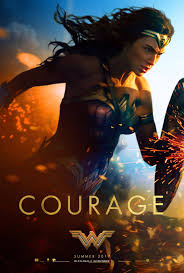
Wonder Woman Is a Hero Only The Military-Industrial Complex Could Create

By Jonathan Cooke

Source: TruePublica

For a while I have been pondering whether to write a review of the newly released Wonder Woman, to peel back the layers of comic-book fun to reveal below the film’s disturbing and not-so-covert political and militaristic messages.

There is usually a noisy crowd who deride any such review with shouts of “Lighten up, it’s only a movie!” – as though popular culture is neither popular nor culture, the soundtrack to our lives that slowly shapes our assumptions and our values, and does so at a level we rarely examine critically.

My argument is that this much-praised Gal Gadot vehicle – seemingly about a peace-loving superhero, Wonder Woman, from the DC Comics stable – is actually carefully purposed propaganda, designed to force-feed aggressive western military intervention, dressed up as humanitarianism, to unsuspecting audiences.

In short, this is straight-up propaganda for the military-industrial complex. It would have looked and sounded identical had it been scripted by a joint team from the Pentagon and the Israel Defense Forces.

My reticence to review the film has lifted after reading the latest investigations of Tom Secker and Matthew Alford into the manifold ways the U.S. military and security services interfere in Hollywood, based on a release of 4,000 pages of documents under Freedom of Information requests.

In their new book National Security Cinema, the pair argue that the Pentagon, CIA and National Security Agency have meddled in the production of at least 800 major Hollywood movies and 1,000 TV titles. That is likely to be only the tip of the iceberg, as they concede:

“It is impossible to know exactly how widespread this military censorship of entertainment is because many files are still being withheld.”

They write that their book “details how U.S. government involvement also includes script rewrites on some of the biggest and most popular films, including James Bond, the Transformers franchise, and movies from the Marvel and DC cinematic universes.”

The need for Pentagon toys

This isn’t just about minor adjustments, but wholesale collusion between film-makers and the military: “If there are characters, action or dialogue that the DoD [Department of Defense] don’t approve of then the film-maker has to make changes to accommodate the military’s demands. If they refuse then the Pentagon packs up its toys and goes home. To obtain full cooperation the producers have to sign contracts — Production Assistance Agreements — which lock them into using a military-approved version of the script.”

The fact that script-writers, producers and directors on these mega-budget pictures know their film may never make it into production if it does not get a thumbs-up from the Pentagon inevitably influences the choice of subjects, the political and military premises of selected films, and the story lines.

One movie, Countermeasures, was ditched after the military objected to a script that “included references to the Iran-Contra scandal … Similarly Fields of Fire and Top Gun 2 were never made because they couldn’t obtain military support, again due to politically controversial aspects of the scripts.”

One can imagine just how stringent the conditions imposed by the Pentagon must be, if it felt compelled to reject a movie like Top Gun 2, the sequel to the “flyboys with toys” killing fest that starred a young Tom Cruise.

The two authors add: “The documents also record the pro-active nature of the military’s operations in Hollywood and that they are finding ways to get involved during the earliest stages of development, ‘when characters and storylines are most easily shaped to the Army’s benefit’.”

Bad apples, not bad institutions

In addition, film-makers are pressured into changing scripts that suggest institutional or systemic problems in the U.S. security agencies.

The two authors observe that producer Jerry Bruckheimer has admitted that the script of the film Enemy of the State was changed under pressure from the NSA so that the wrongdoings at the heart of the film would be the responsibility of a single individual, not the agency itself.

“This idea of using cinema to pin the blame for problems on isolated rogue agents or bad apples, thus avoiding any notion of systemic, institutional or criminal responsibility, is right out of the CIA/DOD’s playbook,” they observe.

So not only are movies critical of U.S. and western politics and militarism almost certain to be off-limits for a big-budget production, but that void is certain to be filled by film proposals the studio is confident will win approval from the Pentagon, CIA and NSA.

And this is, of course, on top of the fact that the Hollywood money-men are themselves part of a larger globalized financial elite that depends on the proceeds of the homeland security industry, arms manufacturers and war profiteers. These financiers are certain to prefer funding films that support a neoliberal worldview at home and a neoconservative policy of warmongering abroad.

As Secker and Alford conclude: “In societies already eager to use our hard power overseas, the shaping of our popular culture to promote a pro-war mindset must be taken seriously.

Gal Gadot and the IDF

All of this is the context for deciphering the egregious propaganda in favor of western military violence, and the portrayal of peace-seeking as “appeasement”, that is Wonder Woman.

There has been plenty of guffawing at Middle East countries, including Lebanon, for seeking to ban Wonder Woman because it stars Gal Gadot, an Israeli beauty queen turned actress.

In fact, it is understandable that the Lebanese might object to a film heavily promoting Gadot as the world’s savior, given that she served in the Israeli army, one that brutally occupied parts of their country for two decades, until 2000, and continues to maintain a belligerent occupation of the Palestinians.

But there is also an undeniable irony to Gadot playing an Amazonian goddess who opposes the militarism of men, and cannot bear to see the suffering of children in war, when in real life she publicly cheered on the Israeli army’s massive bombardment in 2014 of the imprisoned population of Gaza, which led to the killing of some 500 Palestinian children there.

But more importantly, it is not just that Gadot, a former IDF soldier, is now the face of Wonder Woman; it is that the film’s superhero character too almost perfectly embodies the shared militaristic values of the IDF and the Pentagon. If there is one film whose script suggests it was jointly engineered by the Pentagon and Israeli army, it is Wonder Woman.

Hillary Clinton as Wonder Woman?

The film is set near the end of the First World War, a cataclysmic confrontation between two colonial powers, Britain and Germany, each trying to assert its dominance in Europe. The film-makers blur their focus sufficiently to gloss over the problem that there were no good guys in that “war to end all wars”. Instead in true Hollywood fashion, the First World War is presented simply as a prelude (or prequel) to the Second World War and the rise of the Nazis.

The Germans are murderous villains, while the British are the flawed – until Gadot shows them the error of their ways – defenders of humanity. In fact, the film prefers to cast the anti-German side as “Allies”, the humane members of the world community, represented by the U.S. – Chris Pine is the male lead and Gadot’s love interest – and a ragtag support group that includes a Scot, a native American, and a generic Arab, presumably symbolizing “moderate” Arab states like Saudi Arabia, Egypt and Jordan.

The British leadership is trying to find ways to make peace and bring the war to an end, but is stymied by an evil presence. A German super-general, Erich Ludendorff (Danny Huston), believes he can win the war decisively by developing a horrifying gas that will wipe out men, women and children, forcing the British to surrender on his terms. To demonstrate his power, he tests the gas on innocent villagers on the front lines in Belgium.

All of this might sound disconcertingly familiar to anyone who has been following the western media-scripted coverage that has for several years now been trying to promote more aggressive “humanitarian intervention” in Syria – and before that, in Libya and Iraq.

Is Ludendorff supposed to be Bashar Assad, the evil Syrian president who – as long as we discount the dissenting voices of some experts – has twice used the chemical weapon sarin against innocent civilians?

Are the British leaders, seeking a peace deal with the Germans, supposed to be those “appeasers” in the West who have stood in the way of “intervention” in Syria, blocking no-fly zones and bombing runs that could bring down the Syrian government?

And in an even more disturbing, if now outdated, parallel, given the film’s insistent identity politics, is Wonder Woman – the Amazonian who brings peace through overpowering military violence – a stand-in for Hillary Clinton? When the movie was in production, the filmmakers must have assumed it would be released as Clinton was enjoying her early months in office as the first female U.S. president.

The use of Wonder Woman to justify Clinton’s well-documented blood lust–the woman who laughed as “our rebels” murderously sodomized Libya’s Col Gaddafi, saying: “We came, we saw, he died” – would have proved timely had the U.S. election turned out differently.

War is Peace, Ignorance is Strength

Those who have not seen the film, and take it seriously as entertainment, may wish to skip this section, which includes a significant spoiler.

The source of man’s evil in Wonder Woman is the only surviving Greek god, Ares, who is hiding somewhere in the human world. Wonder Woman believes she can end all war and human suffering only if she can locate Ares and kill him – before he kills her.

No one in the human world, of course, believes Wonder Woman, and foolishly they dismiss her ideas as lunacy. And for a while Wonder Woman makes a terrible mistake in thinking the German Ludendorff (Saddam / Gaddafi / Assad) is Ares. It is late in the film that she discovers she has been on the wrong scent.

Humankind’s ultimate enemy is not Ludendorff, but the kindly Sir Patrick Morgan (David Thewlis), the British leader who has spent the entire film counseling for negotiations and peace with the Germans.

The ultimate evil, the wolves in sheep’s clothing, Wonder Woman finds, are  those among us who preach fraternity, compassion and turning the other cheek. They make possible the killing of the innocents.

Those who appear to care, those who seem to offer a route out of bloodshed and war – those who defeat the aims and threaten the profits of the military-industrial complex – are in truth nothing more than appeasers. Their efforts are certain, even intended, to lead to greater suffering.

Militarism, superior firepower, and an absolute belief in the justness of one’s cause, as Wonder Woman is reminded by her Amazonian tutors during her childhood Krav Maga training (Gadot was herself an Israeli army combat trainer) are the way to save mankind from the evildoers.

There is no time to delay, to stand back, to question or to negotiate. Wonder Woman is outraged by the dithering of the men around her. She wants to be at the front line as soon as possible, to kick ass.

“War is peace, freedom is slavery, ignorance is strength” – and all of it is good for business, the film Wonder Woman concludes in truly Orwellian fashion.

A veneer of identity politics

Of course, this story – like all effective propaganda – is supposed to work its magic at a subconscious level, where it cannot be interrogated by our reason and our critical faculties. But even so, a few critics – themselves enthusiastic liberal interventionists – seem to have intuited the movie’s message.

Perhaps not surprisingly, a reviewer with the clearest sense of how the film panders to the pro-war sentiments and identity politics of many liberals is the film critic of the conservative Washington Free Beacon.

Sonny Bunch applauds the way the film “highlights the need for the strong to intervene on behalf of the weak and the oppressed, and treats as villains quislings who sue for a peace that will bring only more destruction.

But he also understands how the film has been crafted to make its war-mongering more palatable to liberals. Wonder Woman, he writes, proves “you could slap an identity politics veneer on just about any neoconservative policy and progressives would lap it up. … Liberal interventionism is back, baby!”

Drooling from liberals

And sure enough, the community of largely liberal film reviewers has mostly drooled over Wonder Woman. Despite dire acting from Gadot, preposterous dialogue and a risible screenplay, the film has racked up an astounding 92 percent approval rating from critics on the review aggregator website Rotten Tomatoes.

Here is a brief selection of their assessments:

Dana Stevens, of Slate: “This is a movie about battling evil that pauses to ask what evil is and whether it’s necessary to understand its nature in order to defeat it.”

Mick LaSalle, of the San Francisco Chronicle: “What lingers … is the feeling of hope that the movie brings, that it someday might be possible for female rationality to defeat male brutality.”

Richard Brody, of the New Yorker: Wonder Woman is “an entry in the genre of wisdom literature that shares hard-won insights and long-pondered paradoxes of the past with a sincere intimacy.”

A. O. Scott, of the New York Times: “Her sacred duty is to bring peace to the world. Accomplishing it requires a lot of killing, but that’s always the superhero paradox. … Unlike most of her male counterparts, its heroine is not trying to exorcise inner demons or work out messiah issues. She wants to function freely in the world, to help out when needed and to be respected for her abilities. No wonder she encounters so much resistance.”

The paradoxes of power

Wonder Woman grapples with the paradoxes of military power every American interventionist and Israeli patriot understands. To save the “beautiful children”, she must sometimes rush to intervene and kill with extreme prejudice, even if the other side’s children are among those who are sacrificed.

Wonder Woman wants to “function freely”: she must enjoy the right to go wherever her interests take her. She cannot be shackled by borders in her quest for justice. She is there to “help out” others in trouble, even if she alone gets to decide who needs help and what counts as trouble. And she needs “respect”, and is prepared to force others to accord it to her, through her superior strength if need be.

She will face “much resistance” because others are jealous of her power and her freedoms. They are the evildoers, and they must and will be defeated.

Is it any surprise that in the Hollywood-Pentagon-IDF world of Wonder Woman, the values of a female superhero sound exactly like those of the military men who run the West’s wars?

Now roll on “Wonder Woman 2: Time to Intervene (Humanely)”.

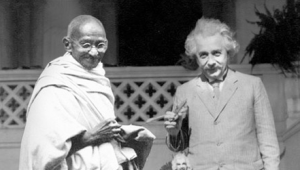
Why War? Building on the legacy of Einstein, Freud and Gandhi

By Robert J. Burrowes

In 1932, Sigmund Freud and Albert Einstein conducted a correspondence subsequently published under the title ‘Why War?’ See ‘Why War: Einstein and Freud’s Little-Known Correspondence on Violence, Peace, and Human Nature’. In many ways, this dialogue between two giants of the 20th century is symbolic of the effort made by many humans to understand that perplexing and incredibly damaging feature of human experience: the institution of war.

In a recent article, the founder of peace research, Professor Johan Galtung, reminded us of the legacy of Freud and Einstein in this regard and reflected on their dialogue, noting some shortcomings including their failure to ‘unpack conflict’. See ‘Freud-Einstein on Peace’.

Of course, Freud and Einstein weren’t the first to consider the question ‘Why War?’ and their dialogue was preceded by a long sequence of individuals and even some organizations, such as the Women’s International League for Peace and Freedom and War Resisters’ International, who sought to understand, prevent and/or halt particular wars, or even to understand and end the institution itself, as exemplified by the Kellogg-Briand Pact in 1928 outlawing war. Moreover, given the failure of earlier initiatives, many individuals and organizations since Freud and Einstein have set out to understand, prevent and/or halt wars and these efforts have taken divergent forms.

Notable among these, Mohandas K. Gandhi was concerned to develop a mode of action to deal with many manifestations of violence and he dramatically developed, and shared, an understanding of how to apply nonviolence, which he labeled satyagraha (holding firmly to the truth), in overcoming large-scale violence and exploitation. He successfully applied his strategic understanding of nonviolence to the Indian independence struggle against British colonial rule. But while Gandhi was happy to acknowledge his debt to those who had gone before, he was not shy in proclaiming the importance of finding new ways forward: ‘If we are to make progress, we must not repeat history but make new history. We must add to the inheritance left by our ancestors.’

My own journey to understand human violence was caused by the death of my two uncles, Bob and Tom, in World War II, ten years before I was born. My childhood in the 1950s and 1960s is dotted with memories of my uncles, stimulated through such events as attending memorial services at the Shrine of Remembrance where their war service was outlined. See ‘My Brothers’ on my father’s website.

But by the early 1960s, courtesy of newspaper articles and photos, I had become aware of exploitation and starvation in Africa and elsewhere, and as a young university student in the early 1970s I was reading literature about environmental destruction. It wasn’t just war that was problematic; violence took many other forms too.

‘Why are human beings violent?’ I kept asking. Because I thought that this question must have been answered somewhere, I kept reading, including the work of Freud and Karl Marx as an undergraduate, but also the thoughts of many other scholars, such as Frantz Fanon, as well as anarchists, feminists and those writing from other perspectives which offered explanations of violence, whether direct, structural or otherwise.

By the early 1980s I had started to read Gandhi and I had begun to understand nonviolence, as Gandhi practised and explained it, with a depth that seemed to elude the activists I knew and even the scholars in the field that I read.

Separately from this, I was starting to gain a sense that the human mind was not something that could be understood well by viewing it primarily as an organ of thinking and that much of the literature and certainly most of the practitioners in the field of psychology and related fields, especially psychiatry, had failed to understand the emotional depth and complexity of the human mind and the implications of this for dealing with conflict and violence. In this sense, it was clear to me, few had understood, let alone been able to develop, Freud’s legacy. This is because the fundamental problem is about feeling (and, in relation to violence, particularly suppressed fear and anger). Let me explain why.

Violence is something that is usually identified as physical: it involves actions like hitting, punching and using weapons such as a gun. This is one of the types of violence, and probably the one now most often lamented, that is inflicted on indigenous peoples, women and people of colour, among others.

Separately from this, Gandhi also identified exploitation as violence and Galtung elaborated this concept with his notion of ‘structural violence’. Other forms of violence have been identified and they take many forms such as financial violence, cultural violence and ecological violence. But violence can be more subtle than any of these and, hence, much less visible. I have given two of these forms of violence the labels ‘invisible violence’ and ‘utterly invisible violence’. Tragically, ‘invisible violence’ and ‘utterly invisible violence’ are inflicted on us mercilessly from the day we are born. And, as a result, we are all terrorized.

So what are ‘invisible’ and ‘utterly invisible’ violence?

In essence, ‘invisible’ violence is the ‘little things’ we do every day, partly because we are just ‘too busy’. For example, when we do not allow time to listen to, and value, a child’s thoughts and feelings, the child learns to not listen to themSelf thus destroying their internal communication system.

When we do not let a child say what they want (or ignore them when they do), the child develops communication and behavioural dysfunctionalities as they keep trying to meet their own needs (which, as a basic survival strategy, they are genetically programmed to do). When we blame, condemn, insult, mock, embarrass, shame, humiliate, taunt, goad, guilt-trip, deceive, lie to, bribe, blackmail, moralize with and/or judge a child, we both undermine their sense of Self-worth and teach them to blame, condemn, insult, mock, embarrass, shame, humiliate, taunt, goad, guilt-trip, deceive, lie, bribe, blackmail, moralize and/or judge.

The fundamental outcome of being bombarded throughout their childhood by this ‘invisible’ violence is that the child is utterly overwhelmed by feelings of fear, pain, anger and sadness (among many others). However, parents, teachers and other adults also actively interfere with the expression of these feelings and the behavioural responses that are naturally generated by them and it is this ‘utterly invisible’ violence that explains why the dysfunctional behavioural outcomes actually occur.

For example, by ignoring a child when they express their feelings, by comforting, reassuring or distracting a child when they express their feelings, by laughing at or ridiculing their feelings, by terrorizing a child into not expressing their feelings (e.g. by screaming at them when they cry or get angry), and/or by violently controlling a behaviour that is generated by their feelings (e.g. by hitting them, restraining them or locking them into a room), the child has no choice but to unconsciously suppress their awareness of these feelings.

However, once a child has been terrorized into suppressing their awareness of their feelings (rather than being allowed to have their feelings and to act on them) the child has also unconsciously suppressed their awareness of the reality that caused these feelings. This has many outcomes that are disastrous for the individual, for society and for nature because the individual will now easily suppress their awareness of the feelings that would tell them how to act most functionally in any given circumstance and they will progressively acquire a phenomenal variety of dysfunctional behaviours, including many that are violent towards themselves, others and/or the Earth.

Moreover, this emotional (or psychological) damage will lead to a unique combination of violent behaviours in each case. And some of these individuals will gravitate to working in one of the social roles that specifically requires, or justifies, the use of ‘legitimized violence’, such as the violence carried out by police, prosecuting lawyers, magistrates and judges, as well as that inflicted by the military. Others, of course, will operate outside the realm of legitimized violence and be labelled as ‘criminals’.

But, you might be wondering, what is the link between what happens in childhood and war?

The answer is simply that perpetrators of violence, and those who collaborate with them, are created during childhood. And these perpetrators and collaborators are all terrified, self-hating and powerless – for much greater detail of the precise psychological characteristics of perpetrators of violence and their collaborators, see ‘Why Violence?’  and ‘Fearless Psychology and Fearful Psychology: Principles and Practice’ – and they go on to perform all of the key roles in creating, maintaining, equipping, staffing and legitimizing the institutions of war and in conducting it.

If it weren’t for the violence to which we are all mercilessly subjected throughout childhood, there would be no interest in violence or war of any kind. If we were raised without violence, we would be naturally peaceful and cooperative, content to spend our time seeking to achieve our own unique evolutionary potential and to nurture the journey of others as well as life itself, rather than just become another cog in someone else’s military (or other bureaucratic or corporate) machine.

If any of the above resonates with you, then I invite you to make ‘My Promise to Children’.

In addition, if further reducing the violence in our world appeals to you, then you are also welcome to consider participating in ‘The Flame Tree Project to Save Life on Earth’,  signing the online pledge of ‘The People’s Charter to Create a Nonviolent World’ and/or considering using the strategic framework on one or the other of these two websites for your campaign to end violence or war in one context or another: Nonviolent Campaign Strategy and Nonviolent Defense/Liberation Strategy.

A child is not born to make war. But if you inflict enough violence on a child, and destroy their capacity to become their own unique and powerful self, they will be terrorised into perceiving violence and war as their society wants them to be perceived. And violence and war, and the institutions that maintain them, will flourish.

If we want to end war, we must halt the adult war against children as a priority.


Biodata: Robert J. Burrowes has a lifetime commitment to understanding
and ending human violence. He has done extensive research since 1966 in
an effort to understand why human beings are violent and has been a
nonviolent activist since 1981. He is the author of ‘Why Violence?
His email address is flametree@riseup.net
and his website is at http://robertjburrowes.wordpress.com


Robert J. Burrowes
P.O. Box 68
Daylesford
Victoria 3460
Australia
Email: flametree@riseup.net

Websites:
Nonviolence Charter
Flame Tree Project to Save Life on Earth
‘Why Violence?’
Nonviolent Campaign Strategy
Nonviolent Defense/Liberation Strategy
Anita: Songs of Nonviolence
Robert Burrowes
Global Nonviolence Network

THE MADNESS OF WAR

By Julian Rose

Source: Waking Times

It is essential to constantly remind ourselves, that war, apart from a very few exceptions, is a symptom of madness. Yet war is a disease which is largely taken for granted; considered ‘normal’ and unless it involves a large swathe of humanity, ignored. How did we allow ourselves to be trapped by such insanity?

In 2017, wars are as prevalent as ever. They are being manifest in the Middle East, in Africa, in South America, and in a lesser form, in almost all countries of the World. They are the result of a failure to recognize that killing another is actually killing one’s self. A failure to grasp that humanity is a collective made up of millions of individuals, all of whom share a common ancestry and, on a subconscious plain, a common aspiration and destiny.

There is no victory in war. War is an admission of defeat. When humans resort to mass killing of each other we see an expression of failure, never success. Not so long ago war was glorified and, for the victor, held up as an expression of supreme national pride. In fact, such an attitude was predominant in the species for thousands of years.

However two World Wars put an end to the hubris. The levels of destruction were so great and so many millions died brutal and ugly deaths, that a kind of ‘war weariness’ set-in amongst the survivors, and a new sense of the futility of it all became integrated into societies which had undergone the experience. The world looked like it might have learned its lesson; people had pounded each other, and the natural environment, into a sickening pulp, and there was no glorious aftermath. Just a sense of what ‘peace’ could actually mean.

There were, and are, still some who find war ‘exciting’, whose own lives are too dull and routine to find any thrill in the act of daily living. They look-on at wars in foreign territories as extensions of their own angst and frustrations. Such individuals find temporary comfort in watching others die.

This condition is more prevalent than many might realize; it is symptomatic of a world crushed by meaningless routine and managed by those lacking any manifest vision of something more deeply fulfilling to awaken starved imaginations.

Of course, a history of war will reveal that whole civilizations were born and dissolved via victory and defeat on the battlefield. It was believed that these blood baths were a price worth paying for the great accumulation of national wealth which followed them, if one was on the winning side. It is sobering to reflect that much of the fine architecture of old Europe is a result of plundered wealth.

War is made no less destructive by the fact that it can now be carried out by people sitting in air-conditioned ‘cockpits’ in Houston. People trained to kill ‘at a distance’. People whose chance of being themselves attacked by those they target, being pretty much nil. This type of killing is one step away from the ‘robotic soldier’, the envisioned battle field of the future and a direct of extension of the war games kids (and adults) play on their electronic gizmos.

But look, it’s still the same underlying disease. It’s still the fascination with the idea of somehow ‘coming out on top’ and having it over ‘an inferior’. It’s still reveling in destruction, on all planes of planetary life.

Children play war games. I used to play ‘Cowboys and Indians’. I was indoctrinated into ‘war thinking’ from a very early age. It was just after World War Two, and life in Britain was steeped in stories of heroism carried out by ‘our boys’ against the Nazis. Toy soldier armies ranged against each other across the sitting room floor as parents looked on with quiet acceptance. We soon graduated on to ‘cap guns’ and staged mock battles around the garden bushes and trees.

But nobody got killed in these ‘war games’ and the ground wasn’t turned into a sea of craters and toxic mud by our childhood antics. Other matters eventually attracted our curiosity and interest, and the guns and bows and arrows were dumped, unlikely to be seen again.

If mankind would only grow up, the same situation would repeat around the world. Adult individuals, blessed with a little responsibility and the slimmest glimmer of wisdom, would ‘move on’ to areas of interest that expressed an eagerness to support the planet, and not destroy it. A wish to explore new horizons of consciousness, and not to regress into thoughtless thuggery. A desire to meet and enjoy the company of other races and nationalities, and not to put a gun to their heads.

How can this madness have gone on so long? How can war still ‘be taken for granted’ in 2017?

Even those who argue vociferously for cutting back excessive CO2 emissions on the planet, don’t call for an end to war and ‘war games’ that are responsible for a large part of these emissions. They fail to realize that here is to be found the single largest transmission of toxic CO2 when set against any other global activity. I’m including a brief summary of the US position in 2013, just to illustrate the point:

“According to its own study, in 2013 the Pentagon consumed fuel equivalent to 90,000,000 barrels of crude oil. This amounts to 80% of the total fuel usage by the federal government. If burned as jet fuel it produces about 38,700,000 metric tons of CO2. And the Pentagon’s figures do not include carbon produced by the thousands of bombs dropped in 2013, or the fires that burned after the jets and drones departed. ” (Counter Punch).

Most environmentalists and climate change campaigners also ‘take war for granted’, it seems. It has been etched into our bones by an endless indoctrination process. A process whose symptoms can also be found in the way we are urged to be ‘aggressive’ and ‘competitive’ in order to make progress within the demands of the status quo. How much of what is called ‘education’ is about bringing out our creative potential instead of our aggressive potential? And how much is about cramming us with the means to ‘succeed’ in the mostly cut throat world of business and indeed, almost all professions?

We see the symptoms of aggression in daily life, and fail to question it. Is it any wonder that we fail to question war?

War is the most favored tool of the controlling powers. It supplies the coffers of the military industrial complex with an endless demand for production of weapons. The state then gets the pay-off and looks for another war to keep the cycle of death going. It is also a valuable diversionary tool for distracting the general public, while unpopular and controversial issues are pushed through the system, with only a few noticing.

Of course a great prize for warmongers in general, is anticipation of the breaking out of mother of all wars. And indeed, the ever looming threat of genocide never seems far off at the hands of those who play with power the way children play with their toy guns and swords, but without any of the child’s creativity. Today, in the USA in particular, megalomania has become wedded with a sort of Russian Roulette approach to who might present the next useful target for a bombing run or drone attack.

Witness how high the stakes get set in this fiendish game. Witness the Russian Federation and President Putin being ever further provoked by the West to take an aggressive step that could trigger a mega war scenario. The vicious taunting, without a shred of evidence to give it credence, is a mark of the madness which all too often grips those in power. Those who are determined to diminish all of life to a poisoned arrow of fabricated fear, which, if ever launched, would take all of humanity with it.

Let us be sure to keep a close eye on those whom we elect to administer our countries. The intoxication which comes with power is a very dangerous addiction, particularly when the play things at such people’s disposal are weapons of mass destruction. We need, more than ever, to be able to recognize the symptoms of megalomania and not confuse it with ‘strong leadership’. It is a major weakness in the delivery of what is called democracy, that so many people are still so easily fooled by those ‘standing for election’.

We are being pushed by ‘anti-life’ forces, some of whose origins are less than human, to see the planet and its people as expendable. To accept lies, deception and crude power-play as something akin to ‘normal’. To feel that it is not in our powers to bring deep change to a washed-out and degraded status quo. To believe that war is an ‘acceptable’ way of shifting around the totems of power.

It’s time we not only woke up, but got out of bed too. The hour is late, and this should add a significant degree of urgency to our endeavors. Mankind is blessed with deep powers of positive potential and these powers are far greater than the force which drives the war mongering anti-life minority. We are close to a tipping point in the growth of conscious awareness amongst caring human beings.

The key will be to channel this awareness into taking measures to regain control of our destinies.

To rid this world of those who hold its fate in their numb, insensitive hands. To act in unison and to defy all efforts to divide and conquer our growing sense of purpose and endeavor.

We can and we will, put an end to the madness of war. We must not wait for war to put an end to us.


Julian Rose is an early pioneer of UK Organic farming, a writer, actor, social entrepreneur and international activist. During the 1970’s he worked in experimental theatre as actor and assistant director, co-founding the The Institute for Creative Development, in Belgium, teaching holistic thinking and dramatic art. In the 1980’s he returned to the UK to take over the family farm and convert it to an organic system. His experience as a leader in reviving rural economies throughout the 1990’s, led him to be invited to join the advisory board of the South East of England Development Agency, and the Country Land Owners Association. He also served on the Oxfordshire Economic Partnership and was founder-chairman of The Association of Rural Businesses in Oxfordshire. In 2,000 he led an innovative project to revive regionally important market towns as centres of vibrant local activity and hubs for rejuvenated local food initiatives.

Julian is a prolific writer and broadcaster, his articles appear in a wide diversity of journals and on-line sites. Visit www.julianrose.info to find out about Julian’s highly diverse life and acclaimed books ‘Changing Course for Life’ and ‘In Defence of Life’.

Are We (Collectively) Depressed?

By Charles Hugh Smith

Source: Of Two Minds

We need to encourage honesty above optimism. Once we can speak honestly, there is a foundation for optimism.

Psychoanalysis teaches that one cause of depression is repressed anger.

The rising tide of collective anger is visible in many places: road rage, violent street clashes between groups seething for a fight, the destruction of friendships for holding the “incorrect” ideological views, and so on. I Think We Can Safely Say The American Culture War Has Been Taken As Far As It Can Go.

A coarsening of the entire social order is increasingly visible: The Age of Rudeness.

This raises a larger question: are we as a society becoming depressed as we repress our righteous anger and our sense of powerlessness as economic and social inequality rises?

Depression is a complex phenomenon, but it typically includes a loss of hope and vitality, absence of goals, the reinforcement of negative internal dialogs, and anhedonia, the loss of the joy of living (joie de vivre).

Depressive thoughts (and the emotions they generate) tend to be self-reinforcing, and this is why it’s so difficult to break out of depression once in its grip.

One part of the healing process is to expose the sources of anger that we are repressing. As psychiatrist Karen Horney explained in her 1950 masterwork, Neurosis and Human Growth: The Struggle Towards Self-Realization, anger at ourselves sometimes arises from our failure to live up to the many “shoulds” we’ve internalized, and the idealized track we’ve laid out for ourselves and our lives.

The recent article, The American Dream Is Killing Us does a good job of explaining how our failure to obtain the expected rewards of “doing all the right things” (getting a college degree, working hard, etc.) breeds resentment and despair.

Since we did the “right things,” the system “should” deliver the financial rewards and security we expected. This systemic failure to deliver the promised rewards is eroding social mobility and the social contract while generating frustration, anger, etc.

We are increasingly angry at the system, but we reserve some anger for ourselves, because the mass-media trumpets how well the economy is doing and how some people are doing extremely well. Naturally, we wonder, why them and not us? The failure is thus internalized.

One response to this sense that the system no longer works as advertised is to seek the relative comfort of echo chambers–places we can go to hear confirmation that this systemic stagnation is the opposing political party’s fault.

We don’t just self-sort ourselves into political “tribes” online–we congregate in increasingly segregated communities and states: The Simple Reason Why A Second American Civil War May Be Inevitable.

Americans are moving to communities that align more with their politics. Liberals are moving to liberal areas, and conservatives are moving to conservative communities. It’s been going on for decades. When Jimmy Carter was elected in 1976, 26.8% of Americans lived in landslide counties; that is counties where the president won or lost by 20% of the vote.

By 2004, 48.3% of the population lived in these counties. This trend continues to worsen. As Americans move to their preferred geographic bubbles, they face less exposure to opposing viewpoints, and their own opinions become more extreme. This trend is at the heart of why politics have become so polarizing in America.

We’re self-sorting at every level. Because of this, Americans are only going to grow more extreme in their beliefs, and see people on the other side of the political spectrum as more alien.”

Part of the American Exceptionalism we hear so much about is a can-do optimism: set your mind to it and everything is possible.

The failure to prosper as anticipated is generating a range of negative emotions that are “un-American”: complaining that you didn’t get a high-paying secure job despite having a college degree (or advanced degree) sounds like sour-grapes: the message is you didn’t work hard enough, you didn’t get the right diploma, etc.

It can’t be the system that’s failed, right? I discuss this in my book Why Our Status Quo Failed and Is Beyond Reform: the top 10% who are benefiting mightily dominate politics and the media, and their assumption is: the system is working great for me, so it must be working for everyone. That’s the implicit narrative parroted by status quo mouthpieces.

The inability to express our despair and anger generates depression. Some people will redouble their efforts, others will seek to lay the blame on “the other” (some external group) and others will give up. What few people will do is look at the sources of systemic injustice.

Perhaps we need a national dialog about declining expectations, rising inequality and the failure of the status quo that avoids the blame-game and the internalization trap (i.e. it’s your own fault you’re not well-off).

We need ways to express our resentment, anger, despair, etc. that are directed at the source, the complex system we inhabit, not “the other.” We need to encourage honesty above optimism. Once we can speak honestly, there is a foundation for optimism.