Is the Web Destroying the Cultural Economy?

Internet-devices-globe-world-connected

By Charles Hugh Smith

Source: Of Two Minds

Are we entering a cultural Dark Age, where the talented cannot earn a living creating culture?

Longtime correspondent G.F.B. recently sent me this 13-minute Interview with Andrew Keen. This is my first exposure to Keen, and his view that the democratization of the Web is great for politics but a disaster for what he calls the Cultural Economy— the relatively small but important slice of the economy that pays creators and artists to make culture: music, literature, art and serious journalism.

The title of Keen’s 2007 book encapsulates his dire perspective: The Cult of the Amateur: How blogs, MySpace, YouTube, and the rest of today’s user-generated media are destroying our economy, our culture, and our values.

(His 2012 book had a similar theme: Digital Vertigo: How Today’s Online Social Revolution Is Dividing, Diminishing, and Disorienting Us)

(Author Scott Timberg makes some of the same points in his new book Culture Crash: The Killing of the Creative Class (via Cheryl A.)

Keen touches on a great many ideas and themes in this brief interview, but his core point is this: by enabling everyone to express themselves on an essentially equal footing, the Web has undermined legitimate journalism and buried the talented few in an avalanche of mediocrity–in his words, talent is “lost in a sea of garbage.”

By eliminating the middleman who added value by sorting the wheat from the chaff–the film studio, the music labels, the publishers–the Web has created a cultural landscape where “soft, ordinary” content such as cute cat videos garner the most “likes” and clicks–the digital world’s metric for popularity and thus value in the marketplace.

Keen tossed off one of his most interesting ideas as an aside: that the break-up of community and the resulting loss of identity has generated a universal drive to establish an identity via self-expression: everybody feels they can compose a song, write a novel or make a movie.

Keen is at his most provocative (to the democratized ideal of the amateur making it big) when he declares the vast majority of people are talentless: talent is by definition scarce. We can’t all be equally talented, nor can anyone generate culturally valuable content without mastering their craft over thousands of hours of practice.

Keen unapologetically calls the previous arrangement an “industrial meritocracy.” He feels this hierarchical meritocracy is being destroyed and there is nothing to replace it.  This will result in a cultural Dark Age where the talented cannot earn a living creating culture. The only avenue left for creators of content that can be copied and distributed digitally (music, digital art, writing) is to find wealthy patrons to support their work.

One of G.F.B.’s points in our conversation was the Web’s “level playing field” is an artificial construct, much like the playing field in a stadium. But outside the stadium, the geography is anything but level.  Put other way, global corporations have great advantages in the supposedly “level playing field” of the Web.

Keen mentions that what will remain scarce in this tsunami of digital content is access to the artist, live performances and art that cannot be digitized, such as sculpture and paintings. As I have discussed in previous Musings, musicians who perform constantly can make a living in this environment, because their free music on the web builds an audience for their live performances.  But not every band performs enough to make a go of this model.

In Keen’s  view, it is now essentially impossible for bands, artists and writers to create a “brand” that will generate an income. Only those creators who entered the digital age with an established brand can leverage their recognition into an income.

As a completely marginal creator of content who never rose within the industrial meritocracy lauded by Keen, I  think Keen makes some excellent points but overstates his case for a cultural Dark Age.

As G.F.B. pointed out in our conversation on this topic, a new class of curators is arising within the Web, people who sift through the vast outpouring of content and select the best or most interesting (in their view). Those curators who succeed are adding value just as the industrial middlemen did in the pre-digital model. In some small way, I think Of Two Minds performs a bit of this curation.

It seems to me that the digital age requires every creator of content to not only be perseverant but to focus a great deal of time and energy on marketing their content–precisely what the industrial media and cultural industrial-model companies once did for their talent.

There is no longer enough money in creating content to pay an office full of people to issue press releases and arrange book tours.  In the publishing world, promotion is increasingly up to the authors; as Keen noted, only those authors with brands that were established in the pre-digital age can sell enough content to support industrial-type promotion.

We can bemoan this, or we can grasp the nettle and realize that  it is no longer enough to practice one’s craft for the fabled 10,000 hours–one must also invest another 10,000 hours in promoting and marketing one’s content/cultural creations.  That dual process (creation and marketing) is so arduous, so impoverishing, so demanding, only the driven few can sustain it long enough to claw their way through the mountains of mediocrity.

Making a living at cultural content was always brutally Darwinian; perhaps all that’s changed is the nature of the Darwinian selection process.

Saturday Matinee: Little Murders

little-murders-poster

“Little Murders” (1971) is a dark comedy based on a play written by Jules Feiffer and was the first feature film directed by Alan Arkin. The plot centers on vivacious interior designer Patsy who falls in love with photographer Alfred after saving him from a beating, despite (or because of) his physical and emotional passivity. The film’s comedic elements stem from Patty’s attempts to break Alfred out of his shell and their opposite approaches in dealing with the insanity of the world around them. Little Murders is memorable for its over-the-top nihilistic conclusion and great performances by Elliot Gould, Marcia Rodd, Alan Arkin and Donald Sutherland (as a hippy priest officiating one of cinema’s funniest wedding scenes).

Utopia: The Final Frontier

Spock_vulcan-salute

By Sadie Doyle

Source: The Baffler

Leonard Nimoy, who passed away this past Friday, was less an actor than an icon, an ever-present figure and a seemingly universal pop-culture touchstone. What struck me, upon hearing the news of his death, was that I’d somehow assumed he couldn’t die. It seemed as if Leonard Nimoy had always been there, in one form or another—as Spock, as himself on the best episodes of The Simpsons, as the man singing that ridiculously earworm-y theme song to the animated Hobbit movie—and I’d believed he always would be.

Not bad, for a guy whose biggest claim to fame was a TV show that was cancelled after three seasons. Despite his understandable discomfort with being identified solely with Star Trek (his first memoir was entitled I Am Not Spock, after all), it’s Spock, and Star Trek, that will be Leonard Nimoy’s most lasting legacy.

The role also explains much of the emotional hold he had on fans: he was the purest and clearest symbol of Star Trek’s utopian vision. Spock was an icon of perfectible human nature existing in a perfected world.

The Star Trek universe’s political vision is fun in part because it’s so massively impractical. The reasons I adored it as a child are the same reasons I find it so charming today. To start with, Star Trek is explicitly post-capitalist. No one worries about money; the characters seem to show up to work simply because they like being there. And the one alien species that does operate on a capitalist structure, the Ferengi, are villains. Yet the Federation is entirely devoid of the problems anti-capitalists face now: no one gets stuck with a crap job on the spaceship, because all of the “bad” jobs (factory labor, secretarial work, cleaning the Holodeck) are automated. No one has to worry that sharing resources will deprive them of things they want; in the Federation, everyone is comfortably middle-class, if not rich.

Needless to say, this is impossible. As ecofeminists like Vandana Shiva and Maria Mies have repeatedly affirmed, affluent, technologically enabled Western lifestyles simply can’t be universalized. (See, for instance, this excerpt from their book Ecofeminism (PDF). In the real world, at least, the Earth is a closed system. There’s only so much stuff we can use. Western ideas of “comfort” or affluence depend on Westerners using up vastly disproportionate amounts of that stuff, which depends on global capitalism, which depends on strategically impoverishing other countries and using them as a source of exploited labor. We can create a world where no one is poor, but never a world where everyone is rich; the Earth simply can’t produce enough to support that level of consumption.

But you know what solves the problem of the Earth as closed system? Spaceships, that’s what. In Star Trek, there is infinite Stuff, and whatever you don’t have, you just find on a new planet, or get from the replicator. Poverty and exploitation are things of the past, because their fundamental cause—competition for limited resources—simply doesn’t exist.

Star Trek’s perfect social reality is nothing next to its vision of perfect people. It’s not so much that Star Trek is dorky—although every character on those shows is deeply dorky—as that it lacks the necessary conditions for coolness to arise. There’s no counterculture; the culture is already perfect, so who’d want to counter it? There’s no youthful rebellion—even Wesley Crusher, the much-abhorred teenage pipsqueak of Star Trek: The Next Generation, hangs out mostly with his mom—because there’s nothing to rebel against.

If the Federation can seem humorless, it’s only because the keenest humor, as Freud reminds us, arises from hostility; in Star Trek, interpersonal hostility has been replaced with an all-encompassing sweetness, a sense that, although the characters on the Enterprise may chafe each other occasionally, they’re ultimately friends, making common cause in the best of all possible worlds.

Which brings us to Spock, and to Nimoy. Though Spock is half Vulcan—and, as such, treated to some of the show’s few explicit acknowledgements that racism might not just disappear, via McCoy’s frequent references to him as a “green-blooded goblin”—he was also Star Trek’s clearest statement of what a perfected human might be. His character is cleansed of hatred, fear, greed, and self-destructive impulses, just as the show’s universe is cleansed of oppression. He is a strict rationalist; the show, likewise, puts its faith in science to resolve all practical and emotional problems. If someone is getting on Spock’s nerves, he merely remarks that their actions are “highly illogical.” If something threatens his life, he’s more likely to call it “fascinating” than panic or run away.

Try to visualize Spock yelling at someone in rush-hour traffic. Visualize Spock in the midst of an acrimonious divorce, or picking a pointless fight with a friend after a rough day at work. You can’t. Those are the parts of human nature that are ugly and hard to manage, the parts that we don’t like, and that others don’t like about us. Spock has none of them.

Ridding ourselves of hostility and irrationality is just as impossible as everything else in Star Trek. Nimoy’s great gift as an actor was to make it seem plausible: With his seriousness, with his stillness, with the reserves of humor we could always sense glinting just under the surface (that eyebrow!), he made Spock a real person, and so gave our ideal selves form. That gift made him the most beloved character in one of our most beloved stories. And Star Trek granted him his own measure of immortality. Leonard Nimoy couldn’t stay with us forever. But Spock can.

Screen Shot 2015-02-28 at 7.51.46 PM

Celluloid and Simulation

23f2cec5

By Cary Hill

Source: Moviepilot

The medium is the message. This is merely to say that the personal and social consequences of any medium – that is, of any extension of ourselves – result from the new scale that is introduced into our affairs by each extension of ourselves, or by any new technology. — Marshall McLuhan

A friend recently remarked to me that it felt increasingly more like his childhood was being repackaged and sold back to him. We were discussing the recent rash of movies, toys, and TV shows based on things from our childhood: GI Joe, Transformers, etc. New Hollywood franchises (including merchandise) are being launched from shows we watched 30 years ago, targeting our generation and our children. Nostalgia is now big business.

So I wondered: If the majority of Hollywood’s efforts are being put to resurrecting original content from decades ago in an attempt to exploit nostalgia, what happens when all new films and toys are based on prior existing material? We’ve seen Hollywood not even balk at rebooting an existing franchise (Spiderman, Batman, Teenage Mutant Ninja Turtles, The Hulk), but with the lack of original content (OC) it could reach a theoretical point — or singularity — where there is no original content to recycle.

A reboot or remake is, at the bottom level, a copy. It may have different characters or actors, but the story remains the same. Marc Webb’s The Amazing Spider-Man was essentially the same story as Sam Raimi’s Spider-Man (yes, the villain was different but it was still his origin story). And Raimi’s film was based on Stan Lee’s comic. So Webb’s film is a copy of a copy. The upcoming sequel to Webb’s film creates an extension of the copy’s copy. Even if you claim Webb’s film adapts Lee’s comic directly, it still becomes a copy of Raimi’s film which adapted the same source.

Teenage Mutant Turtles is perhaps a better example. Originally a 1980s comic by Kevin Eastman and Peter Laird, it was adapted into a cartoon series (and toys) and then a feature film. It spawned two sequels then an animated remake in 2007, and finally a live (with heavy CGI) remake last year. This order of simulacra, is chronologically correct in my generation’s minds because we lived through it. Our memory can align which came first and trace the comic book origin back to 1984. But for our children’s generation, there is merely a group of copies to choose from with no memory attached.

So if our nostalgia is packaged and sold as a reimagining, reboot, reset, or remake, there has to be something from our childhood to appeal to us. There is that OC that remember being so new, so awesome, and so…unique. If there is a lack of original content and new franchises, studios are further pushed to recycle existing properties. Recycling begets recycling as all resources are consumed to merely recreate a film or property that already exists. And as there are less and less original films, the risks becomes even greater to take a chance on something novel.

This is, of course, theoretical. I’m sure readers are quick to point out “new” franchises like The Hunger Games that are doing well at the box office. After all, these Young Adult books have become a hot-ticket item, perfect fodder for Hollywood’s most cherished demographic: the teenager. These books (and films) aren’t that revolutionary in plot or story, and seem to share a lot of common themes among them. Regardless, they can play out as something “different” for the purposes of this article. However, given their box office take, one wouldn’t be too shocked to see them remade anyway.

In our theoretical, Simulacra and Simulation-esque (The Matrix, anyone?), Baudrillard vision of Hollywood, at some point the entire palate of films would consist of pre-existing material. The 80s and 90s childhoods repackaged and consumed by the same people (now adults) and their children of the 2000s and 2010s. So in the 2020s and 2030s, can nostalgia be repackaged if there’s no OC from the 2000s/2010s to resurrect? Or do you repackage the repackage?

Baudrillard’s 3rd stage of Simulacra:

The third stage masks the absence of a profound reality, where the simulacrum pretends to be a faithful copy, but it is a copy with no original. Signs and images claim to represent something real, but no representation is taking place and arbitrary images are merely suggested as things which they have no relationship to.

What makes this even more head-spinning is the fact that film is, by definition, simulacrum. Cinema is a representation of something else (a story, or screenplay), played out by actors pretending to be characters. In a decade or two or repackaging, you would have a copy of a copy of a copy of a simulacra. The result, according to Baudrillard’s book, is a decay of meaning through each additional simulacrum.

And maybe that’s just it. Baudrillard’s decay of meaning makes the reboot less effective — people don’t bother to see a fourth or fifth reboot of Teenage Mutant Turtles. At some point it just couldn’t be that different, right? So if the reboot carries no value, it makes it unmarketable by Hollywood to sell. Perhaps at this point all reboots are done away with and there is only original content. A child born in 2030 could have three or four versions of the same franchise to watch, and with so much selection why go to the theater to see that fifth version?

Then again, the “Greatest Story Ever Told,” the birth and death of Jesus Christ, remains a popular adaptation to make over and over since Griffith’s Intolerance (1916) . If Spider-Man and other superheroes are a post-modern, cinematic parallel to Christ, then perhaps their stories too will always be remade over and over.


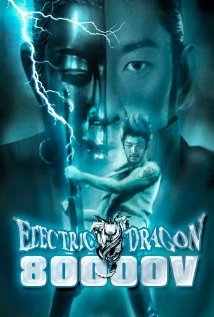
Saturday Matinee: Electric Dragon 80000 V

MV5BNDg2MDA3NTYyMl5BMl5BanBnXkFtZTcwMTc0OTIzMQ@@._V1_SY317_CR5,0,214,317_AL_


“Electrict Dragon 80,000 V” (2001) Is a hyperkinetic experimental film directed by Sogo Ishii, whose noise-punk band Mach 1.67 provided the soundtrack. Tadanobu Asano stars as Dragon Morrison, a reptile whisperer with the ability to channel electricity who confronts Thunderbolt Buddha, a TV repairman/vigilante with similar electric powers. Deciding there’s only room in the city for one electric powered superhero, they have an epic showdown on the rooftops of Tokyo. As Augustine Joyce, the YouTuber who uploaded the film accurately noted: “One of the most rocknroll movies of all times. Surreal, Bizarre and Unique… Seems this is a Cult Film.”

Jodorowsky’s new film ENDLESS POETRY (Poesía Sin Fin)

jodorowsky_endless_poetry_poster

By Satori Films

Source: Kickstarter

Alejandro Jodorowsky, father of the midnight movie, wants to exchange your money into Poetic Money to make his latest film.

About this project

I was trying not to prepare anything. I didn’t want to prepare what I was going to say to you. Why? Because I am searching for my inner truth, I want to know what will I say. In two more days I will be 86 years old… it’s a lot. Why, at 86 years of age, am I fighting to make a picture? Why? Nothing is that important for me. Is it so important for a person who can die one day to the other, to make a picture? Because when you are 86 years old, every morning you awake and you say “I am still alive”. You are happy to be alive but you are maybe at the end of something. Why make a picture? What is a picture? Some pictures are only fun and show. It’s necessary, because in the world we are all nervous about everything that’s happening, no? They even say we are destroying the planet. So we need to go, to see a picture, to forget ourselves. Perhaps this is necessary, but for me a picture is not that. For me a picture is for remembering your self, not for forgetting yourself. But what does it mean to remember your self? What can we remember? For me, movies are really an art. And what is art? It is the search for your inner beauty. That is art. I don’t want to make a picture in order to make money. But if money comes, I open the pocket in order to make more pictures. But that’s not the finality. It’s not the finality to being admired by others. It’s not the finality to lie and invent things you’ve never lived.

In order to say something you need to know the thing you’re speaking of. It needs to be an experience, what you show on the screen. What will I show in this picture? What are human beings, art, museums and movie theatres showing to us? Are we those anti-heroes? Those people who have no dignity? We are slaves? We are liars? Thieves? What are we now? I don’t want to show that kind of person. I don’t know how to make pictures of everyone fighting one another, to have money, to steal money Why ?! I don’t want to speak about “love” either; about this “love” that isn’t real, that’s a fairytale. Love is something great, incredible, “sublime”… I don’t know how you say “sublime” in English… The most beautiful thing. Marpa was a saint in Tibet and he said “ Life, everything, is an illusion”. One day his son died, his young son died and he was crying and crying and crying and the disciples asked Marpa “Why are you crying? Your son is an illusion.” “Yes, my son is an illusion. But he is the most beautiful illusion.” Movies are an illusion but need to be the most beautiful illusion. I know what it’s like to scream because one of your sons died. It’s terrible. It’s terrible And in that moment you ask yourself, “ Why am I doing art, movies? Why?!” and then you say I am making movies and art in order to heal my soul. I need to open! Open ! open ! myself, in order to fin myself. To remember what the human being is. The beautifulness of the human being. The beautifulness of you. I need to show how beautiful the human being is. Now.

In Chile, in the forties, I was 24 years old… it was a fantastic moment. The war was all over the planet, and in Chile : no war. Because we are far and separate of the world: no television, mountains, ocean, peace! It was so peaceful. It was beautiful. And then a miracle happened : Poetry came to the country. Great poets started to write marvelous, marvelous poems; two of them have the Nobel Prize, Pablo Neruda and Gabriela Mistral – our father and our mother.

And then, everything was poetry. We were living our adolescence in this situation: poetry everywhere. And we started to search for the “poetical act”. For how it was to live with beautifulness. How it was to live in the mind: free! In heart : in union with world. In the sex: in full creativity.

How to make poetical action in order to discover the beautifulness of Life. There it was. In that time, the poetry was there. The human being was there. We had love, we had artists, we discovered all kinds of art.

And that suddenly disappeared. When I was 24 I left this paradise, and went to Europe where the world is illusion or disillusion, you don’t know.

But now I want to show what a spiritual paradise is: a young person, searching for the beautifulness of poetry. That is all that I want. I want to express… how to say it in English?… How I am obliged to this past… because I knew how it was to live in poetry. I knew that. And I want to show the world that it’s possible. It’s possible to remember your self. It’s possible to open your mind. It’s possible to open your heart. It’s possible to open your creativity. To live with less, but to live well. Well. That is what I want. Poetry without end. Endless Poetry. That is what I will do.


ENDLESS POETRY(Poesía Sin Fin) Official site: http://www.poesiasinfin.com/

After a 23 yearlong absence, the director of cult classics El Topo (1969) and Holy Mountain (1973) made his comeback in film direction in 2013 with The Dance of Reality. The film was based on the first part of Alejandro Jodorowsky’s homonymous autobiographical book, depicting his childhood years in Tocopilla, Chile. His new film ENDLESS POETRY (Poesía Sin Fin) will be based on the latter half of the same book, depicting the author’s youth in lively Santiago de Chile.

Our world is suffering from a devastating absence of poetry. Naïvely we sometimes hope to reconnect with it through film. But the greed-riddled industry, having colonized this magnificent art form, has done everything to strip it of its poetic power. With this film, Jodorowsky directs his energy more than ever into creating a film that can serve as a vehicle for awaking consciousness. It is our duty to enable all efforts to fight the powers that insist on lowering cinema to just a product in a commercial market. This film will bring forth an example of film’s poetic power.

ENDLESS POETRY (Poesía Sin Fin) flashes back to those decisive years in Alejandro Jodorowsky’s youth; years that defined the principle that would reign over his entire life: Poetry. The director’s life has been a constant effort to expand his imagination and push back against his own limits in order to apprehend and harness the potential for liberation that lies within each and every one of us. His career has been an open invitation to follow him in his efforts.

ENDLESS POETRY (Poesía Sin Fin) will be carried out as an offering both to film and to the general audience, who are infinitely more profound, intelligent and sensitive than the Hollywood industry would like to admit.

ENDLESS POETRY (Poesía Sin Fin) explores the magic reality underlying our surrounding world. The film seeks to inspire and encourage us all to dare to find our true selves. It is an invitation to Life.

Synopsis

Leaving his childhood and his native Tocopilla behind, the adolescent Alejandro Jodorowsky follows his parents to Santiago de Chile. Between his lack of self-confidence and the family pressure he is under, Alejandro struggles to express his desires and find his own path. But the flourishing capital, filled with artists and poets offers the perfect setting for him to grow out of his cage. Thinking he’d fit in well, Alejandro’s cousin Ricardo takes the young boy to the home of Veronica and Carmen Cereceda, where puppeteers, dancers, sculptors and painters all live and create together. There, defying all of his old limitations, Alejandro takes the first step on his path to becoming a poet in the Chilean artistic epicenter of the 1940s. Alongside rising poets like Enrique Linh, Nicanor Parra and in the arms of his first love, Stella Diaz, Alejandro’s poetic destiny takes form and a new world unravels … changing his life forever.

Production Schedule and Budget

The film will be shot in Santiago de Chile from July to August 2015 for eight weeks. Its post-production such as editing, music tracks, visual effects and so forth will take place in Paris and Tokyo with completion slated for the end of February 2016. The total buget will be about three million dollars.

Why Kickstarter?

Alejandro Jodorowsky says; « The necessity for expression is more important than the type of film you want to make. I make a film when I have something I need to express. I don’t think about investors, industries or commercialisation. I just need to express myself.

In order to realize Jodorowsky’s new film production, we need the support of micro producers across the world who understand his vision of cinema.

Jodorowsky’s Poetic Money

Jodorowsky thinks that all money should be transformed into poetry. And so that is what he will do with this Kickstarter project. No matter what level you pledge at, Jodorowsky will exchange your pledge into his brand new Poetic Money (DINERO POÉTICO) and send it back to you. This money can’t be spent on any material goods — only on the poetry of the universe.

The exchange rate is 1US$=1DP.

(In the case of $10,000 or more pledge, it is 0.5US$=1DP)

There are 3 bill denominations: 1DP, 10DP and 100DP. Each bill has an original money-related poem written by Jodorowsky printed on it in Spanish. There are two versions of each DP bill, each version of the bill presenting a different poem. There are 6 kinds of bills in total.

Jodorowsky wants to fill the world with poetry. So when you pledge, please mumble a poem in your heart. If you have a twitter account, please tweet a poem with #EndlessPoetryMyPoem. Your poem will be on the official site of ENDLESS POETRY (Poesía Sin Fin).

Jodorowsky’s Poems About Money and Wealth

 <1 Dinero Poético>

1 dinero poético – A
Money is like the Buddha; you can’t obtain it unless you work for it. If you keep it from flowing, it disappears.

1 dinero poético – B
To those who use it to make the flower of the world blossom, money gives its light. Those who glorify themselves, mistaking wealth for the soul, money destroys.

<10 Dinero Poético>

10 dinero poético – A
In pursuance of wealth I throw a spear through the Goddess and bathe in her blood.

10 dinero poético – B
Just as gold does not cease to shine when clouds cover the sun, the soul, beneath flesh and bone, continues to glow with its own light.

<100 Dinero Poético>

100 dinero poético – A
There is no difference between money and consciousness.
There is no difference between consciousness and death.
There is no difference between death and wealth.

100 dinero poético – B
Money is like blood: it gives life if it flows.
Money is like the Christ: it blesses you if you share it.
Money is like a woman: it offers itself to you if you cherish it.

Read more and/or back the project at Jodorowsky’s Kickstarter Page.


Corporate Monopoly Themes in ROBOCOP

index

An interesting analysis of the corporate themes in Paul Verhoeven’s Robocop (note: original video was removed by author but will be available on Rob Ager films & articles volume 7 at his site. This shorter version is still up at the moment):

The creator of the video, Rob Ager, has a number of equally intriguing film dissections on his YouTube channel and website for other genre classics such as 2001: A Space Odyssey, A Clockwork Orange, The Shining, The Matrix, Starship Troopers and Alien.

Bonus Clip: Ager’s first impressions of Mad Max 4: Fury Road