

By Philip A. Farruggio
Source: World News Trust
You must see or revisit Norman Jewison’s 1975 film Rollerball, starring James Caan as superstar player Jonathan E.
In it, we see a world no longer made up of countries, but of corporations that control every bit of life for the people. There are no longer wars, just a complacent populace who “go along to get along.”
A very select few are chosen by the corporations to become executives, giving them elite status. It seems everyone loves the violent sport Rollerball, which is like our current NFL football on steroids.
Jonathan E. is their Michael Jordan or Lebron James superplayer who is revered worldwide, even by the fans of opposing teams. He has everything a man could wish to have: a fine sprawling ranch, with servants and horses, and gorgeous female companions chosen for him by the Energy corporation that rules Houston and the surrounding areas.
Yet, even someone as popular and valued as he must sacrifice, such as when the corporation took away his wife and gave her to an executive. There is a scene in the film, when the highest corporation board decides they want Jonathan E. to retire due to the fear that his popularity has become too great. A man like that becomes too influential, thus too dangerous to control.
They send his ex wife, whom he still pines for, to visit him at his ranch and get him to agree to retire without any complications. They go for a walk and he expresses reservations about doing this. He tells her of his newfound epiphany about their society.
He knows now that the corporations long ago offered them all the choice between freedom and comfort… and the masses chose the latter. Her brief answer becomes the gist of the whole film: “Comfort IS freedom.”
And that is what we have here in 21st Century Amerika for many of our fellow citizens. The “Good German” lives on.
To study Nazi Germany in the early 40s allows us to see how the German public, to a great degree, was either apathetic or voluntarily blind as to what their regime was doing. Kristallnact was not an event that went unseen or even unheard about by multitudes of German citizens.
When the Wehrmacht invaded Russia along with the SS death squads, word did leak out through many soldiers of what had transpired. Even the most heinous of all crimes committed by the Nazis, the death camps AKA Concentration Camps, was not totally kept from the populace as many revisionists have always alleged. When tons of human hair and millions of personal effects were shipped back to companies in Germany, surely word got out.
We can, and we should forgive, the many Germans who did care about the terrible wrongs of their government at that time. Why? Well, it was a police state and dissent was stomped out rather brutally. Not everyone can be as heroic as Sophie Scholl and her brother and friends, to risk being tortured and finally beheaded.
Yet, there is this terrible pain that gnaws at this writer. That being the pain of realizing how many out there just do NOT give a shit unless it is happening to one of their own!
The late and great New Orleans district attorney Jim Garrison, who Oliver Stone centered his fine film JFK on, understood so much more than many of his peers in the 1960s. Years after his defeat in the case against Clay Shaw and others for the assassination of JFK, Garrison wrote this:
“What worries me deeply is that we in America are in great danger of slowly evolving into a proto-fascist state. It will be a different kind of fascist state from the one of the Germans; theirs grew out of depression and promised bread and work, while ours is based on power and on the inability to put human goals and human conscience above the dictates of the state. It’s origins can be traced to the tremendous war machine we’ve built since 1945, the ‘Military Industrial Complex’ that Eisenhower vainly warned us against, which now dominates every aspect of our lives… In a very real and terrifying sense, our government IS the CIA and the Pentagon, with Congress reduced to a ‘debating society.'”
Cassius had said it most succinctly: “The fault dear Brutus is not in our stars but in our selves.”
(Philip A. Farruggio is son and grandson of Brooklyn, NYC longshoremen. He is a freelance columnist (found on Nation of Change Blog, Truthout.org, TheSleuthJournal.com, Worldnewstrust.com, The Intrepid Report, The Peoples Voice, Information Clearing house, Dandelion Salad, Activist Post, Dissident Voice and many other sites worldwide). Philip works as an environmental products sales rep and has been an activist leader since 2000. In 2010 he became a local spokesperson for the 25% Solution Movement to Save Our Cities by cutting military spending 25%. Philip can be reached at PAF1222@bellsouth.net)

“The Brother From Another Planet” (1984) is a thinly veiled sci-fi race allegory from writer/director/editor/actor John Sayles. Joe Morton plays “the Brother” a mute alien slave who crash lands near Harlem while trying to evade his alien oppressors. The Brother looks similar to a human black man but has three toes and telekinetic abilities. The aliens in pursuit are similar in appearance to white government agents (one of whom is played by John Sayles). Though dated and low budget, the film is recommended for its great lead performance from Joe Morton and an intelligently humorous script.

“Medianeras” (2011) depicts the quirky and serendipitous road to romance between Martin, an agoraphobic web designer, and Mariana, an aspiring architect who live in neighboring apartment buildings in Buenos Aires. Medianeras is the first feature film from writer/director Gustavo Taretto who creates a nice balance of quirkiness and realism in a story that has as much to say about the alienation and chaos of urban life as the humanistic potential of communications technology.
To view with English subtitles, click the “cc” button on the bottom left corner of the video window. Then click the “settings” button next to it, click “Spanish (automatic captions)”, click “translate captions”, scroll to “English” and click “ok”.
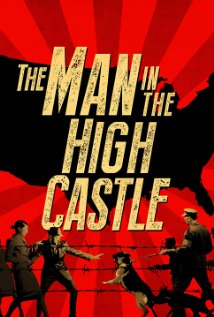
(Editor’s note: I recently viewed the pilot for the new “The Man in the High Castle” series and was disappointed for the same reasons mentioned in the article. For a PKD adaptation more faithful to the source material see Radio Free Albemuth.)
By Noah Berlatsky
Source: The Atlantic
Amazon’s new television adaptation The Man In the High Castle—part of the streaming service’s 2015 pilot season—opens in a conquered New York. The Nazis won World War II, and the American flag now bears a swastika. A few freedom fighters struggle on—we see one in particular brutally tortured and beaten to death—and the police are everywhere. Life in this alternate dystopia is a thing of fear and hardship, as in 1984, or The Handmaid’s Tale, or The Hunger Games. The familiar forces of freedom struggle against the familiar totalitarian forces of dystopia, epitomized, in the usual way, by a cruel, sadistic supervillain (here portrayed by Rufus Sewell as SS officer John Smith). If the Nazis had won the war, the TV series warns us, the world would have been much, much worse.
This message, as it happens, is a complete inversion of Philip K. Dick’s 1962 novel of the same name, on which the series is based. As such, it betrays the source material’s difficult and conflicted message in the interest of the banal genre default of plucky Americans fighting for freedom against the evil invaders; as Adi Robertson of The Verge suggests, it might as well be Red Dawn.
Superficially, perhaps, the novel isn’t all that different. Dick also imagines that the Nazis have won World War II, and the world under the Nazis is certainly horrible enough: The novel mentions several times that after their victory in the war, the Germans set about murdering everyone in Africa. Slavery has been reinstituted in the southern United States (an uncomfortable detail that isn’t mentioned in the pilot episode), and American Jews in Nazi-controlled areas have been systematically gassed. One of the Jewish main characters, Frank Frink (née Fink) is arrested on the Japanese-controlled west coast and scheduled for deportation to Germany. Meanwhile, in the TV series, Frink (Rupert Evans) only has a Jewish grandparent, which seems a bizarre alteration.
But while life in the novel’s alternate reality is certainly awful in many ways, it’s not exactly a dystopia, which is precisely why it’s so chilling. Dick’s book has little of the pulp melodrama of the TV pilot; there are no torture scenes, no supervillains, and not even a single scene set in the repressive Nazi-controlled region of the former U.S. Instead, the action occurs in the independent Mountain States or on the Japanese-controlled Pacific areas, and most of the characters go about their daily lives just as most of us do now. They have small problems and worries and cares, they adapt to quotidian injustices. But they do so without great urgency about the genocidal violence being inflicted on people on the other side of the world, continent, or neighborhood. The frightening thing isn’t the dystopia. It’s that the dystopia is so familiar it doesn’t really feel dystopian at all.
This is nowhere more clear than in the novel’s treatment of race. In the TV pilot, the bad guys are racists, and the good guys are not. Frank’s wife, Juliana Frink (Alexa Davalos), makes it clear that she opposes the racial laws that threaten her husband and that she harbors no racist feelings toward the Japanese conquerors. But in the book, things are a lot murkier. Juliana and Frank are estranged, and in her internal monologue she sneers at him for liking “Japs” and for being “ugly” with “large pores” and a “big nose.” Another character who doesn’t appear in the pilot, the salesman R. Childan, vacillates between obsequious paeans to Japanese racial superiority and resentful, vicious Orientalist stereotyping. Even Mr. Tagomi, the Japanese official who is the moral center of the book in most respects, lapses occasionally into racist invective—”white barbarian. Neanderthalyank. That subhuman …”— although he regrets it almost immediately.
It makes sense that a world in which the Axis won the war would be, in just about every way, more racist. But the uncomfortable question is, just how much more racist is it? Again, the Nazis seem to have created a protectorate of sorts in the southern U.S., the implication being that whites who supported Jim Crow there would find the Nazi racial doctrines quite congenial. And when Mr. Tagomi, in a quintessential Dickian moment, stumbles out of his alternate reality into the “real” 1962, his own racist preconceptions (as he orders whites around) are met in turn with the simmering racist antipathy of the world in which America won the war. (“Watch it, Tojo,” one man says to him.) The racism in Dick’s alternate universe isn’t alien. It’s homey.
The imagined and the real fit together in a number of other ways as well. One of Dick’s characters muses, for example, that the basic insanity of the Nazis is that “They want to be the agents, not the victims, of history. They identify with God’s power and believe they are godlike … Man has not eaten God; God has eaten man.” That’s a reasonable analysis of Nazi obsessions. But it’s also a reasonable analysis of American obsessions, as Carl Freedman points out in his book Critical Theory and Science Fiction. Dick, Freedman says, is linking “the quintessential Western will to domination with the horrors of genocidal Nazism.” And that Western will to domination is shown most clearly in the book through the Nazi plan to drop a bomb on the Japanese home islands. But in the real world the Nazis didn’t drop a bomb on the home islands. America did.
In the TV pilot, Juliana finds a banned newsreel called The Grasshopper Lies Heavy, which portrays a world in which the Allies won the war. The idea that this might be true fills her with an almost religious, tearful enthusiasm. In Dick’s version, The Grasshopper Lies Heavy is a book. Juliana discovers that that book is true—but her reaction is not exactly fervor. Instead, it’s a mixture of hope, bafflement, and a kind of displaced, distant fear. “Truth, she thought. As terrible as death.” That truth, or at least one possible truth suggested by Dick, is that there is no radical disjunction between his alternate history and our own. The TV show encourages us to congratulate ourselves on our horror at the Nazis, and our distance from them. But Dick’s novel suggests, disturbingly, that the defeat of the Nazis did not, in fact, truly transform the world. Their evil was not banished; it’s still here with us, a dystopia we can choose, and that many of us do choose, every day.
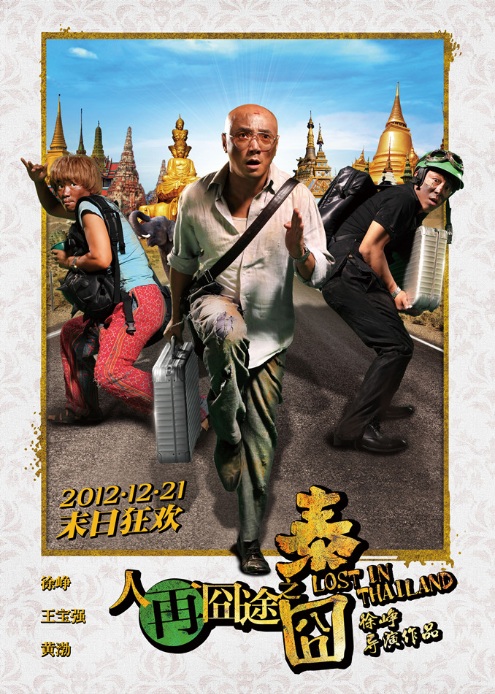 “Lost in Thailand” (2012) is arguably not a “cult film” since it’s one of the highest grossing films in China, though it might be considered one in the U.S. where it’s relatively obscure. The film was written, produced, and directed by Xu Zheng, who also starred in the film as Xu Lang, the inventor of a miraculous new energy source. In order to get added funding to develop his innovation he needs to get a signature from his company’s largest shareholder who happens to be in Thailand. Xu’s quest is made more difficult than expected due to the antics of Wang, a comically annoying character he meets on the flight to Thailand, and Gao, a rival scientist secretly tailing them.
INDIAN COUNTRY NEWS
"It is the duty of every man, as far as his ability extends, to detect and expose delusion and error"..Thomas Paine
Human in Algorithms
From the Roof Top
I See This
blog of the post capitalist transition.. Read or download the novel here + latest relevant posts
अध्ययन-अनुसन्धानको सार
 After the Crash