The Christmas Hope: A To-Do List for a Better World

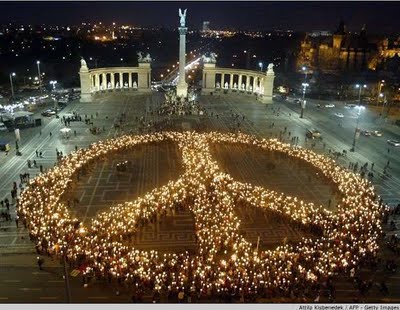
peacesign

By John W. Whitehead

Source: The Rutherford Institute

As a child, my Christmas wish list came right out of the Sears and Roebuck catalogue—toys, board games, bikes, action figures, etc. My parents, like so many in their day, belonged to the working-class poor, so while I never lacked for the necessities of life, many of the items on my wish list never came to be. Even so, I was no worse off for it.

I wish the same could be said of those still unfulfilled items on my adult Christmas wish list. Each year, I wish for the same things—an end to war, poverty, hunger, violence and disease—and each year, I find the world relatively unchanged. Millions continue to die every year, casualties of a world that places greater value on war machines and profit margins than human life.

I’ve seen enough of the world in my 68 years to know that wishing is not enough. We need to be doing. It’s not possible to solve all of the world’s problems right away. For most people, putting an end to world hunger, poverty, disease and the police state may seem too insurmountable a task to even tackle. But as I point out in my book A Government of Wolves: The Emerging American Police State, there are practical steps each of us can take to move things in the right direction. Here’s what I would suggest for a start:

Tone down the partisan rhetoric, the “us” vs. “them” mentality. Instead of wasting time and resources on political infighting, which gets us nowhere, it’s time Americans learned to work together to solve the problems before us. The best place to start is in your own communities, neighbor to neighbor.

Turn off the TV and tune into what’s happening in your family, in your community and your world. Whatever you do, reduce your intake of mindless television and entertainment news. The only reality programming worth taking notice of is the one playing in your home and community.

Show compassion to those in need, be kind to those around you, forgive those who have wronged you, and teach your children to do the same. As author Robert Heinlein observed, “A dying culture invariably exhibits personal rudeness. Bad manners. Lack of consideration for others in minor matters. A loss of politeness, of gentle manners, is more significant than is a riot…”

Talk less, listen more. Take less, and give more. If people spent less time dwelling on and attending to their own needs and more time trying to help and understand those around them, many of the problems we currently face could be eliminated.

Stop acting entitled and start being empowered. We have moved into the Age of Entitlement, where more and more people feel entitled to certain benefits without having to work for them. There’s nothing wrong with helping those less fortunate, but as my parents taught me, there’s a lot to be said for an honest day’s work.

Remember that all people are endowed with inalienable rights. America cannot continue to lambast terrorist groups for their contempt for human life and dignity when our own nation violates these same principles time and again.

Stop being a hater. How can we ever hope to curb the hatred and animosity that have spurred global terrorism over the past few decades if we can’t even forgive the human failings of those in our immediate circles?

Learn tolerance in the true sense of the word. True tolerance stems from a basic respect for one’s fellow man or woman. And it should be taught to children from the time they can understand right from wrong.

Value your family. The traditional family, such that it is, is already in great disrepair, torn apart by divorce, infidelity, over-scheduling, overwork, materialism, and an absence of spirituality. Yet without the family, the true building block of our nation, there can be no freedom.

Feed the hungry, shelter the homeless and comfort the lonely and brokenhearted. Volunteer at a soup kitchen. Take part in local food drives. Take a meal to a needy family. “Adopt” an elderly person at a nursing home. Support the creation of local homeless shelters in your community.

Give peace a chance.  The military industrial complex has a lot to gain financially so long as America continues to wage its wars at home and abroad, but you can be sure that the American people will lose everything unless we find some way to give peace a chance. We can start by bringing all of our men and women in uniform home.

Start your own teaspoon brigade.  You don’t have to solve all the world’s problems single-handedly, nor do you have to solve them overnight. Little by little, you’ll get there, but you have to start somewhere. It is up to each of us to do our part to make this a better world for all. As the legendary singer, songwriter and activist Pete Seeger once remarked to me:

I tell everybody a little parable about the “teaspoon brigades.” Imagine a big seesaw. One end of the seesaw is on the ground because it has a big basket half full of rocks in it. The other end of the seesaw is up in the air because it’s got a basket one-quarter full of sand. Some of us have teaspoons, and we are trying to fill it up. Most people are scoffing at us. They say, “People like you have been trying for thousands of years, but it is leaking out of that basket as fast as you are putting it in.” Our answer is that we are getting more people with teaspoons every day. And we believe that one of these days or years—who knows—that basket of sand is going to be so full that you are going to see that whole seesaw going zoop! in the other direction. Then people are going to say, “How did it happen so suddenly?” And we answer, “Us and our little teaspoons over thousands of years.”

This Mom Could Go To Jail For Saving Her Son With Cannabis Oil. This Needs To Stop

index

By Joe Martino

Source: Collective Evolution

A mother of a 15-year-old could be facing jail time for using cannabis oil to help her son with the side effects of his brain injury. Her son was finally seeing relief from daily migraines, muscle spasms and uncontrollable outbursts.

“I broke the law, but I did it to save my son,” Angela Brown said. She had traveled to Colorado to obtain the cannabis oil and brought it back to Minnesota where it is illegal. She administered the Cannabis oil safely to her son and the results were amazing.

Her Son’s Accident

Angela Brown’s son Trey was a healthy kid, but a baseball accident in 2011 led to a build-up of pressure inside of his head. He was hit with a line drive to the head causing bleeding in his brain. At first, doctors were not sure if he was going to survive. They chose to induce a medical coma. When Trey finally awoke, he didn’t appear to be the same kid according to his mother.

“I cry like every day before I go to bed, like my brain is about to blow up, cause there is so much pressure.” Trey said.

He began dealing with chronic pain, depression and difficult to control outbursts. His mother searched everywhere to try and help treat the effects of his injury. They went through 18 different medications and none of them worked. Trey’s mother felt that the effects of the medications even made her son suicidal.

Then they found cannabis oil and everything was starting to turn around.

Cannabis Oil

Cannabis oil has been making news and headlines for a couple years in ways we may not expect. Cancer and Alzheimer treatments, helping to reduce seizures and replacing potentially harmful medications for many people. Cannabis, although holding a negative stigma, can be seen as a natural miracle substance in a way. It may hold the power to treat and potentially cure a lot of people’s serious diseases.

In the case of Trey, cannabis oil helped to treat and bring quality of life back in a situation where all else was tried and didn’t work.

“It stopped the pain and stopped the muscle spasms,” Trey said. “It was helping me go to school until it then got taken away and then school was really hard again.”

“It was a miracle in a bottle.”Angela Brown

But It’s Illegal In Many Places

The miracle in a bottle didn’t last for Angela and her son. When Trey’s teacher asked how he was doing better in school suddenly, Angela mentioned the oil.

“Well, I gave him an oil that we’d gotten from Colorado, it’s derived from a marijuana plant. And then you could feel the tension in the room.”

It only took a week for the sheriff’s department to confiscate the oil. Later, county officials charged Angela with child endangerment which required child protection to get involved. If she is convicted of her charges she could face up to two years in jail and $6000 in fines.

“It’s asinine, I didn’t hurt my son; I was trying to prevent him from being hurt.”

CBS News, who attained the interview with the family, took the time to reach out to the county prosecutor, law enforcement and Trey’s school district. All declined any form of interview about the case.

The final killer in this story is that in May, Minnesota became the 22nd state to approve specific forms of medicinal marijuana. But the law doesn’t go into effect until 2015. So although this substance is already recognized as something that will become legal very soon, helping her son get better is still a crime.

Why Do We Deny Things That Work?

You might ask yourself why this type of thing could even happen. Are we really that disconnected as a society? Sure one could argue we don’t have the necessary data to state whether or not cannabis oil could have negative effects over time, but the crazy thing is we do have the data that states our medications we so often prescribe have nasty side effects, even after short periods of use. So why is one illegal and the other not? The easy answer is due to social conditioning and stigma.

The deeper answer could go into the realm of business, profit and control. It is often argued that many aspects of the medical system are set up to create life long patients versus properly treating and curing patients.

Although cannabis is finally becoming legal in more places across the world, there is still resistance when it comes to the potential treatment and curing ability the natural plant can have on many serious diseases.

With clinical trials finally on the go with brain cancer patients, the next year of study for cannabis oil could be monumental to the health of our world.

Monsanto Sues Maui for Direct Democracy, Launches New PR Campaign

maui monsanto protest

By Rebekah Wilce

Source: PR Watch

Residents of Maui County, Hawai’i voted on November 4 to ban the growing of genetically modified (GMO) crops on the islands of Maui, Lanai, and Molokai until scientific studies are conducted on their safety and benefits. Monsanto and Dow Chemical’s unit Mycogen Seeds have sued the county in federal court to stop the law passed by the people.

In Vermont, the Grocery Manufacturers Association (GMA, of which Monsanto and Dow were recently listed as members) has sued the state over its law requiring GMO labels. And Monsanto has a history of suing to prevent consumer labeling regarding its products. The company sued a number of dairies in the 1990s and 2000s for labeling milk free from recombinant bovine growth hormone (rBGH), which Monsanto developed and marketed as Posilac® (sold to Eli Lilly in 2008), the only commercially approved form. Vermont itself is no stranger to such suits. The International Dairy Foods Association sued Vermont for passing a law requiring labeling of milk containing rBGH (Monsanto wrote an amicus brief in support of the plaintiff, and GMA was a plaintiff-appellant) — and it won in federal court.

On the same day that Monsanto said it would challenge the decision of Maui’s citizens to regulate their own land and environment in court, the company also launched a new national advertising campaign as part of an effort to improve the image of the widely reviled company.

The glossy ads portray families of many cultures sitting down to eat gorgeous foods, invoking images more often seen in the pages of Saveur than in the hallways of one of the world’s largest chemical companies.

In addition to print ads in several national magazines and TV ads airing on national cable networks and several local stations in coastal cities, the campaign includes a slick new website launched in September, Discover.Monsanto.com.

The website invites questions from the public. The vast majority are skeptical, if not hostile. Others sound like they were written by Monsanto staff. Predictably, some of the hardest questions, like the one posed by Tim H., “In 2013, how much money has Monsanto spent on lobbyists in DC? What laws were these lobbyists attempting to create/amend and why?” are given short shrift.

Monsanto’s pretty TV ads target moms and millenials, according to the company’s corporate brand lead, Jessica Simmons. Monsanto has even hired a new “director of millenial engagement,” Vance Crowe, 32. He represented the company at a recent South by Southwest Eco conference in Austin, where revelations that Monsanto had paid for a panel of farmers to attend and present generated some excitement, as Tom Philpott reports in Mother Jones.

Crowe told NPR‘s “The Salt” blog, “[T]he challenge with something like SXSW Eco is that it doesn’t do anybody any good if people are so passionate that they’re yelling. The challenge is how can we enter the conversation so that people don’t feel like they have to yell to be heard?” Apparently, Crowe hopes to “enter the conversation” one party at a time. He enthusiastically describes how he and a gay colleague attended sessions on “sustainable fashion” and got invited to parties where they won fans and accolades.

Coincidentally, the front page of Discover.Monsanto.com contains, under “Here’s where we work,” a picture of corn crops being tended in Maui, with the text, “Hawaii’s unique climate allows for three to four growing seasons a year, reducing the time it takes us to develop new products. Our island roots go back more than 45 years.”

The marketing text may indicate the issue at the heart of Monsanto’s lawsuit against Maui. Those multiple growing seasons mean that “about 90 percent of all corn grown in the U.S. is genetically engineered and has been developed partially at Hawaii farms,” according to the Associated Press. Monsanto and the rest of the seed crop industry reap $146.3 million a year in sales from their activities in the state, according to a 2009 USDA report. Now Monsanto would have to substantially downsize its activity in Maui County in order to follow the new law, according to its lawsuit.

Monsanto’s new PR campaign seeks to make its brand approachable to the American consumer. Yet, with 92 percent of Americans demanding that GMO foods be labelled, according to a new Consumer Reports poll, Monsanto and its new millenial hires have their work cut out for them.

Consumer Reports recently put out a study on where GMOs are hiding in your food, including in packages labeled “natural.” You can access the report here.

Rebekah Wilce is a reporter and researcher who directs CMD’s Food Rights Network project.

Darren Wilson Wasn’t the First: A Short History of Killer Cops Let Off the Hook

michael-brown-darren-wilson

The U.S. has a long history of allowing police to walk free after vicious racist violence.

By Flint Taylor

Source: In These Times

The Ferguson grand jury’s decision not to indict Ferguson police officer Darren Wilson for the killing of African-American teenager Michael Brown is heartless but unsurprising. But it is important to place the case in context with the history of police violence investigations and prosecutions in high profile cases—and the systemic and racist police brutality that continues to plague the nation. In doing so, there are lessons for the movement for justice in the Michael Brown case, as well as for those who are engaged in the broader struggle against law enforcement violence.

What follows, then, is a brief history of similar high profile cases where public outrage compelled the justice system to confront acts of racially motivated police violence—with, to say the least, less than satisfactory results.

Chicago

Over the past 45 years, Chicago has been a prime example of official indifference and cover-up when it comes to prosecuting the police for wanton brutality and torture.

On December 4, 1969, Black Panther leaders Fred Hampton and Mark Clark were slain in a police raid that implicated the Cook County State’s Attorney and the FBI’s Cointelpro program. A public outcry led to a Federal Civil Rights investigation. Despite finding that the raiding police fired more than 90 shots to one by the Panthers, the Grand Jury in 1970 did not indict, but rather issued a report that equally blamed the police perpetrators and the Panther victims.

Outrage at this decision led to the appointment of a Special Prosecutor who, in the face of extreme official resistance, obtained an indictment against the police and the State’s Attorneys who planned and executed the raid—not for murder and attempted murder, but rather for obstruction of justice.

The case came to trial in front of a politically connected judge who dismissed the case without even requiring that the charged officials put on a defense. Again, the outrage, particularly in the African-American community was so extreme that the chief prosecutor, Edward V. Hanrahan, was voted out of office a week after the verdict was rendered in 1972.

The Jon Burge police torture scandal provides another stark example. Evidence that had been unearthed over the years demonstrated that a crew of predominately white Chicago police detectives, led by Jon Burge, tortured at least 120 African-American men from 1972 to 1991.

Cook County State’s Attorney Richard M. Daley was tendered powerful evidence of this torture as early as 1982, but did not investigate or prosecute Burge and his men. Daley’s office continued to use confessions tortured from the victims to send scores of them to prison—10 of whom went to death row, though they were later saved by a death penalty moratorium in 2000 and by a grant of clemency in 2003 by then-Governor George Ryan—during the next seven years.

In 1989, the local U.S. Attorneys’ office declined to prosecute, as did the Department of Justice in 1996 and Cook County State’s Attorney Richard Devine for the five years directly thereafter. In 2001, due to continuing public pressure, a politically connected Special Prosecutor was appointed to investigate the torture. But after a four year, $7 million investigation, he too refused to indict, instead issuing what is widely considered to be a whitewash report that absolved Daley, Devine, and numerous high Chicago police officials.
Finally, in 2008 the U.S. Attorney indicted Burge for perjury and obstruction of justice, and he was convicted in 2010, and sentenced to 4 ½ years in prison. However, the U.S. Attorney has subsequently declined to prosecute Burge’s confederates for similar offenses.

New Orleans

Chicago is by no means an isolated example of how difficult it is to obtain justice for wanton police violence through the judicial system. In New Orleans, a crew of white detectives responded to the killing of a white police officer in 1980 by terrorizing the black community of Algiers, killing four innocent people and torturing numerous others by “booking and bagging” them: beating suspects with telephone books and suffocating them with bags over their heads.

Seven officers were indicted by the Department of Justice for civil rights violations arising from the torture of one of the victims and three were convicted.  No officers were charged for the four killings or for the other acts of torture.

In 2005, in the wake of Hurricane Katrina, an NOPD officer fatally shot an unarmed black man named Henry Glover, then several of his fellow officers burned his body to cover-up their crime. NOPD officers also shot and killed two unarmed black men on the Danziger Bridge.

After state authorities botched their investigation, the Civil Rights Division of the Justice Department indicted the officers involved in the two cases and obtained convictions of some of the main police actors. However, the Court of Appeals for the Fifth Circuit overturned the verdict in the Glover case, and the trial judge, citing government misconduct, took the extraordinary step of granting the convicted officers a new trial in the Danziger case. 

New York

In 1997, an NYPD officer sexually assaulted a Haitian-American man named Abner Louima in a precinct station bathroom by shoving a broken broomstick up his rectum. Louima’s attacker was subsequently charged with federal civil rights violations, while three of his police accomplices were charged with covering up the crimes.

After Louima’s attacker pleaded guilty, his accomplices were convicted, but the Second Circuit Court of Appeals overturned their convictions on the grounds that the lawyers who represented the officers had a conflict of interest. After they were convicted a second time, the Appeals Court again overturned their convictions—this time on the basis that there was insufficient evidence of intent.

In 1999, four officers from the NYPD’s Street Crimes Unit fired 41 shots at Amadou Diallo, a Guinean immigrant who was reaching for his wallet, hitting him 19 times. The officers were indicted for second degree murder and the case was moved to upstate New York, where a jury acquitted the officers. 

In July of this year, NYPD officers arrested an African-American man named Eric Garner, allegedly for selling untaxed cigarettes. They put a prohibited chokehold on him, forced him to the ground face first with his hands behind his back, and shoved his face into the pavement, where he died a few minutes later of a heart attack. The deadly assault, which was captured on videotape, is now under investigation by a Special Grand Jury empaneled by the District Attorney’s Office.

Los Angeles

Among the most notorious cases was the brutal 1991 beating of Rodney King by five LAPD officers. A videotape captured most of the brutality and also showed several other officers standing by and doing nothing to stop the pummeling of a defenseless black man.

Four officers were charged at the state level with assault with a deadly weapon and use of excessive force. The trial was moved to a predominantly white suburban county, and three of the officers were acquitted of all charges, while the fourth was acquitted of assault with a deadly weapon and other lesser charges. But the jury failed to reach a verdict on his use of excessive force.

After an angry uprising in the Africa- American community of Los Angeles that left 53 dead and around 2,000 injured, the U.S. Justice Department indicted the four officers, and a federal jury convicted two of them, while acquitting the other two.

This past August, LAPD officers fatally shot an unarmed mentally ill African-American man named Ezell Ford, who witnesses said was shot in the back while lying on the ground. Despite massive protests, there has been no grand jury investigation to date, the autopsy report is yet to be released, and the LAPD has not completed its investigation.

Oakland

In Oakland, California in the late 1990s, a unit of police officers dubbed the “Rough Riders” systematically beat, framed and planted narcotics on African Americans whom they claimed were dealing drugs. Four of the “Riders” were indicted by the District Attorney’s Office, and the trial was moved to a suburban county. The ringleader fled the country, and was tried in absentia.

After a year-long trial before a bitterly divided jury on which there were no blacks, the officers were acquitted of eight charges, and the jury was hung on the remaining 27 counts. At the urging of then-Mayor Jerry Brown, the officers were not re-tried.

Also in Oakland, in the early morning hours of New Years Day, 2009, a BART officer shot and killed a young black man named Oscar Grant, who was lying face down, unarmed,  in a busy transit station. The shooting was videotaped, and led to militant protests in Oakland.

Another jury with no black members rejected the charge of murder and instead found the officer guilty of involuntary manslaughter. As a result, Oscar Grant’s killer spent less than a year behind bars. The Department of Justice subsequently opened a civil rights investigation, but no charges were brought.

Milwaukee

From 2007-2012 in Milwaukee, a unit of white police officers, spurred on by the Department’s CompStat program of aggressive policing, stopped and illegally body cavity searched more than 70 African-American men whom they claimed to be investigating for drug dealing. In conducting these searches, most commonly performed on the street, the searching officer reached inside the men’s underwear, and probed their anuses and genitals.

After this highly illegal practice came to light, the unit’s ringleader, Michael Vagnini, was indicted by the Milwaukee County District Attorney on numerous counts of sexual assault, illegal searches, and official misconduct, while three of the other unit officers were also charged for participating in two of the searches. The unit’s sergeant and several other members of the unit, all of whom were present for many of the searches, were not charged.

The charged officers were permitted to plead guilty to the lesser included offenses of official misconduct and illegal strip searches, with Vagnini receiving a 36-month sentence while the other three received sentences that totaled, collectively, less than a month in jail. By pleading guilty, they also received promises that they would not be charged with federal civil rights violations.

Pattern and Practice Investigations

These high profile cases represent only the tip of the iceberg when it comes to cases where racist police violence has not been subjected to equal justice under the law.

Recently, the Justice Department declined to prosecute Little Rock, Arkansas, officers who shot and killed Eugene Ellison, an elderly African American man who was walking out of his home with a cane in his hand, while there have been documented reports of unarmed black men recently being shot down by the police in Chicago; Houston; San Antonio; Beaver Creek, Ohio; and Sarasota, Florida.

In 1994, the United States Congress, recognizing that police misconduct and violence was systemic in many parts of the country, passed 42 U.S. Code Section 14141, which empowered the Justice Department to file suit against police departments alleging patterns and practices of unconstitutional conduct, and to obtain wide ranging court orders, consent decrees, and independent monitors in order to implement reforms to those practices.

Although understaffed, the Pattern and Practice Unit of the Justice Department has attacked systemic and discriminatory deficiencies in police hiring, supervision, and monitoring in numerous police departments over the past 20 years.  A particularly egregious act or series of acts of police violence often prompts the Unit to initiate an investigation, and its lawyers have obtained consent decrees or court orders in Cincinnati, Pittsburgh, Steubenville, Ohio, New Orleans, Puerto Rico, Oakland, and Miami.

Last month, lawyers handling the Little Rock cases requested that the DOJ do a pattern and investigation of the LRPD, and the Unit is reportedly now investigating the practices of the Ferguson Police Department. While these investigations are not a panacea, they offer a mechanism for exposing and reforming blatantly unconstitutional police practices, and have also demonstrated how pervasive the problem systemic police violence continues to be.

In light of this history, the pre-ordained failure of a biased local prosecutor to obtain an indictment against Darren Wilson should not surprise us. But the movement for justice for Michael Brown has brought widespread attention to the nationwide problem of systemic and racist police violence and highlighted the movement that has come together to battle against it.

Just two weeks ago, the Brown case, along with the Burge torture cases, was presented to the United Nations Committee Against Torture in Geneva. The movement should now turn its attention to the Department of Justice, demanding a federal civil rights indictment against Wilson a full scale pattern and practice investigation of the Ferguson Police Department, and, more broadly, an end to systemic and racist police violence.

As the history of the battle against racist police violence so pointedly teaches, the public outcry and agitation must continue not only in Ferguson but across the nation. Because as Frederick Douglas rightly stated many years ago, power concedes nothing without a demand.
Flint Taylor is one of the lawyers for the families of slain Black Panther leaders Fred Hampton and Mark Clark and together with his law partner Jeffrey Haas was trial counsel in the marathon 1976 civil trial. For more information on the Hampton/Clark case, the history of Black Panther Party, and the FBI’s Program to destroy it, visit peopleslawoffice.com.

 

Don’t forget Malala Yousafzai’s appeal to Obama: end the drone war

M_Id_429009_Malala_Yousafzai

By Zack Beauchamp

Source: Vox.com

On Friday morning, 17 year-old Pakistani activist Malala Yousafzai won the Nobel Peace Prize. Yousafzai’s prize is well-deserved: she’s been a prominent campaigner for girls’ education for years, and survived a Taliban assassination attempt for her efforts.

But women’s education isn’t Malala’s only cause. She’s also waged a prominent campaign on a topic Americans aren’t talking much about nowadays: the drone war in Pakistan.

In characteristically bold fashion, Yousafzai brought these concerns up in a meeting with President Obama back in October 2013 — one that had originally been held to celebrate her commitment to education.

“I thanked President Obama for the United States’ work in supporting education in Pakistan and Afghanistan and for Syrian refugees,” Yousafzai said in a statement after the meeting — before turning to drones. “I also expressed my concerns that drone attacks are fueling terrorism. Innocent victims are killed in these acts, and they lead to resentment among the Pakistani people. If we refocus efforts on education it will make a big impact.”

The White House statement on its meeting with Yousafzai left that bit out.

The US drone campaign in Pakistan peaked back in 2010, but that hardly justifies forgetting about it in 2014. We should remember it because we still have no idea if the targeted killings are actually reducing militant violence in Pakistan. We should remember it because it may not actually weaken al-Qaeda in the long run. And, most of all, we should remember it because it’s killed hundreds, if not thousands, of Pakistani civilians:

Screen_Shot_2014-10-10_at_11.02.13_AM.0

Drone war casualties, civilian and militant. (New America Foundation)

In other words: Yousafzai was pointing to exactly the right issues. We don’t know if drone strikes are weakening al-Qaeda, but we definitely know that they’re killing people — including innocents.

Nowadays, the American public is more focused on the US military campaign against ISIS than they are on the campaign in Pakistan. Part of that is that the ISIS war is newer and more intense. Another part is that, for the first half of 2014, the US wasn’t hitting any targets in Pakistan. In fact, Peter Bergen, an expert on the drone war at the New America Foundation, said that “the program [in Pakistan] appears to have ended.”

Yet on June 11, the US began bombing Pakistan again. According to New America data, there have been five strikes in October 2014 alone.

So as Yousafzai gets her deserved accolades for her peace work, it’s worth remembering her concerns about one of America’s quieter wars. That’s especially true as the US government is ramping up another air campaign against an jihadi group that’s expected to last for years.


Don’t Forget Why Marijuana Legalization Is Winning

index

By Maia Szalavitz

Source: Substance.com

When I first started writing about drugs in the mid-’80s—before I got into recovery in 1988—it was almost impossible to imagine an America where four states and DC have legalized recreational marijuana use, 58% of Florida midterm voters just cast their ballots in favor of legalizing medical use (the measure needed 60% to pass), and California passed a ballot initiative to lower drug and other nonviolent crime sentences. (Nineteen other states have legalized medical marijuana.)

The magnitude of the change is hard to understand without knowing a bit of recent history—and if we are going to continue to move toward rational drug policy, knowing where we’ve been and how it has changed is critical. I offer this perspective through the lens of my own experience covering the drug war for nearly 30 years.

My first national column was called, embarrassingly enough, “Piss Patrol.” I was assigned by High Times to write about corporate urine testing policies, starting around 1987, presumably as a service to stoned readers who were considering their employment options.

Over the next few years, the media would spill so much ink and airtime demonizing crack cocaine that by 1989, 64% of people polled by CBS News said that drugs were the country’s biggest problem—and Republicans and Democrats began tripping over one another to race to pass the harshest possible drug sentencing laws.

High Times itself was targeted by the DEA with frequent demands for its list of subscribers and raids on all of its biggest advertisers of growing supplies, nearly forcing the magazine to close.

Testifying before Congress, LAPD chief Daryl Gates said that casual drug users “ought to be taken out and shot,” and the DARE drug prevention program he founded saw nothing ominous in encouraging kids to turn their parents in to the police if they used drugs. Supreme Court Justice Thurgood Marshall warned in a prescient 1989 dissent in a urine testing case that “there is no drug exception to the Constitution,” although Congress and the rest of the legal establishment apparently begged to differ.

Even today, police can confiscate cash and property they suspect to be involved in drug crimes, without convicting the owners and with virtual impunity. The surveillance revelations about the NSA’s spying on American citizens include cases where that agency has shared information with the DEA that was gathered from phones and computers without a warrant. In fact, the DEA has an official policy of basically lying to defense attorneys—and sometimes even prosecutors and judges—about the source of this data.

Yet even before the rage to pass tough drug laws took off in the 1980s, law enforcement efforts like mandatory minimum sentences were known to be ineffective. The federal government had quietly overturned one set of mandatory drug sentences in the late ‘60s—since they had clearly failed to prevent the late ‘60s.

And New York City would never have been one of the capitals of crack if the 15-to-life “Rockefeller law” mandatory sentences for selling even powder cocaine, which had been in place here since the mid-‘70s, actually suppressed drug use.

As is clear from this brief summary, for most of my adult life, the idea of a rational drug policy seemed literally to be a pipe dream (a term, by the way, from opium dens). So how did we go, in just a few years, from seeing drug users as demon enemies in a war who must be locked up to having the drug czar drop the military language and even speak at last month’s National Harm Reduction Conference in Baltimore?

Many factors are clearly playing a role. Two of the most obvious are the sheer economic burden of having become the world’s most prolific jailer and the drop in violent crime that hasn’t been paralleled by a fall in addiction rates or a reduction in the availability of drugs like marijuana, heroin and cocaine. Some of the crime decrease may, of course, be linked to the 500% rise in the number of prisoners since 1980—but research shows that violent crime fell more in states that have lowered incarceration rates.

Other influences have also been important. One has been the increasing recognition—driven especially by Michelle Alexander’s 2011 bestseller The New Jim Crow—of the racist nature of the drug war. When you know this history of the drug laws it is very hard to justify supporting them.

Another factor is the rise of the Internet. Early adopters of the net tended to be hippies and libertarians: Steve Jobs famously said that his use of LSD was one of the most important experience of his life, for example, and pro-legalization views dominated online before the mainstream media began to realize the web was the future of its business.

This gave legalizers a loud voice—one that had been previously drowned out by a media that had so bought into the drug war that networks and newsmagazines thought nothing of taking government payments to place stories with the “correct” anti-drug slant in lieu of running paid anti-drug ads.

The Internet has also allowed critics—including me—to directly attack inaccurate coverage as it appeared, exposing readers to truthful information about drugs and drug users that was previously hard to find. It is much harder to start a panic when debunkers immediately offer alternative perspectives.

Three other important forces should also be mentioned. First, the Drug Policy Alliance—helped by large donations from billionaire George Soros—spurred activism and funded ballot initiative measures that brought marijuana policy reform out of the fringes and into the mainstream.

Second, the harm reduction movement spurred by the AIDS epidemic quietly racked up successes. As it became clear that needle exchange hadn’t resulted in a massive increase in IV drug use—but had helped halt the spread of HIV—resistance to measures like naloxone to reverse overdose was pre-empted.

In contrast to the fight over needle exchange, when conservative politicians, drug treatment providers and religious leaders actively opposed expansion and claimed, without data, that it would encourage drug use, it’s actually hard now to find anyone who will argue that drug users and their families should not have access to the OD antidote for fear that preventing the deaths of users “sends the wrong message.”

Third, recovery activists have played a role. While there are still reactionary forces like Patrick Kennedy, many people who have come out about their own recovery have made clear that the criminal justice approach has failed. By putting a real face on drug users—not a stereotyped image of a criminal—recovering people have begun to help fight against, rather than support, their own oppression.

Of course, historically, fights for drug law reform have often resulted in backlash—marijuana was almost legalized, for example, under President Jimmy Carter, but instead we got Ronald Reagan’s war on drugs. But the strength and variety of the forces working against that possibility—particularly the rapid access to accurate information—give me hope that we may finally be starting to get drug policy right.

Maia Szalavitz is one of the nation’s leading neuroscience and addiction journalists, and a columnist at Substance.com. She has contributed to Timethe New York TimesScientific American Mindthe Washington Post and many other publications. She has also published five books, including Help at Any Cost: How the Troubled-Teen Industry Cons Parents and Hurts Kids (Riverhead, 2006), and is currently finishing her sixth, Unbroken Brain, which examines why seeing addiction as a developmental or learning disorder can help us better understand, prevent and treat it. Her last column for Substance.com was about why it is time to reclaim the concept of “recovery” from the abstinence-only establishment.

Paolo Bacigalupi’s “The Doubt Factory”

17516ca2d2a275f5973e5f4b86d3fe4c

By Cory Doctorow

Source: BoingBoing.net

Paolo Bacigalupi is one of science fiction’s most versatile writers. From his justly lauded dystopian debut novel The Windup Girl to his environmental YA thriller Ship Breaker to his ha-ha-only-serious zombies-apocalypse-as-allegory-for-race-in-America Zombie Baseball Beatdown, he’s never been shy about switching modes and moods. All his books have a two things in common: technical brilliance and nuanced, important treatments of social issues. It’s a killer combination.

His latest novel, a YA thriller called The Doubt Factory, is right in the Bacigalupi pocket in that its storytelling is utterly different from anything else he’s published, deals with a vital social issue, and is a technical marvel of the form. Specifically, it’s a thriller about corporate distortion of communications whose third act is so tense, so taut, and so fantastically turned that I didn’t move a muscle except to turn the page for an hour while I read straight through about 150 pages’ worth of buildup and climax.

The Doubt Factory‘s protagonist is a girl called Alix who attends an elite prep school that is paid for through her father’s high-flying PR clients. As the book opens, Alix is bored in class, watching out the window, when she spies a young black man who exudes calmness and mastery. When the school’s authoritarian principal comes out to chase the intruder off the school lawn, the guy lays the principal out with one punch, eases him to the ground, and makes his way calmly off campus before the slow-moving rent-a-cops even know what’s going on.

This is Alix’s first encounter with “2.0,” a guerrilla protest group about which almost nothing is known, except that they appear to be attacking her dad’s clients. But as 2.0 grows more audacious in its actions at Alix’s school, it quickly becomes apparent that their real target is Alix’s family — and possibly Alix herself. Alix’s life becomes a benign jail of private bodyguards who shadow her every step, punctuated by ninja-like visits from the young black man, who has the ability to alter his appearance and slip right through even the tightest security cordons. And now, Alix is asking questions about her dad’s line of work — questions she’s never asked before.

In The Doubt Factory, Bacigalupi expertly tells the tale of how FUD-generating “communications consultants” have distorted our public discourse on behalf of their fantastically profitable clients, for whom a little delay in regulatory action is worth billions, and for whom the occasional class-action payout is just part of the cost of doing business, expertly calibrated and factored into the bottom line.

Bacigalupi also explores modern protest tactics, dramatizing an incisive critique of hacktivism and leaking and pointing to ways of stirring up trouble that might have a deeper and longer impact than what has gone before.

But as good as The Doubt Factory is as polemic, it’s even better as a novel. There is just so much nail-biting tension, so many unexpected turns and twists in the caper plots that run throughout the book, and it’s so well done, that it’s certain to find a large and appreciative audience. The combination of a book with a conscience and a set of serious adrenal glands is unlikely and extremely effective.