The Light Side of the Dark Night of the Soul

man_in_a_dark_forest_with_fog_by_macinivnw-d68mxhc

By Kim Hutchinson

Source:  In5d.com

The phenomenon known as the Dark Night of the Soul is something which many spiritual seekers experience on their journey to re-enlightenment. It can be a painful and frightening process, but it can also be liberating and empowering. It all depends on your perspective and your ability to remain detached.

Peeling the Onion

The word ‘night’ is misleading. This is a process, and thankfully so. I doubt you would want to experience the purification process all at once. My own Dark Night journey began in 1994 and culminated this year (2013). While that may seem like an inordinate amount of time, I didn’t go through the process continually, thank heavens, but rather in stages. The length and intensity of the process is determined by the degree of purification one requires.

Think of this as peeling an onion. Each layer you strip away brings tears to your eyes. You stop for a while in order to recover, and then you proceed to the next layer. Once you reach the core, you are at the heart of your angst. This is often the toughest part of the process which is why it comes last. You build up your strength and your ability to face your core issue(s). Your higher self will not let you access this core until you are ready.

The good news is you have already faced the worst. Nothing that you unearth during this process will ever be as bad as the original pain you experienced. You were strong enough to face it once, so you are more than capable of releasing it now. And, once it’s purified, it is gone for good.

Ego Death

Essentially, the Dark Night of the Soul is the death of the (malignant) ego. I say ‘malignant’ because the ego is not inherently bad or in need of extinguishing. The ego provides the soul with the illusion of separation so that we may explore creations that differ from the unified field of Love from which we originate.

The ego in its present form, however, is overly dominant. We live in an egocentric era. The Cult to Self is celebrated through our worship of celebrity, fame, fortune, superficial beauty and power. Narcissistic behaviours are often rewarded in this ego-driven climate. The external world is a projection result of the malignancy of our collective ego state.

Needless to say, the ego does not take kindly to the awakening and enlightenment process. It sees the spiritual awakening process as a threat to its very existence and, in many ways, it is right. As you begin to remember more about your spiritual origins, the allure of ego lessens. This eventually breaks ego’s hold over you, and the ego begins to shrink away.

From the ego’s perspective, this equates to death. It, therefore, isn’t going to surrender without a fight. The key is not to resist the ego. That being said, non-resistance is not easy. In fact, your ego will do everything in its power to cling to the old, but your higher self knows better.

Existential Crisis

As we awaken from the shadows of our dream life on Earth to the limitless, formless, eternal nature of the Soul, the form and thought-based illusions of our life begin to dissolve. The very foundation of one’s human existence crumbles, leading to an existential crisis of faith.

Symptoms Include:

  • Deep introspection and angst
  • Questioning the meaning and purpose of life
  • Feeling that life is meaningless
  • Isolation; feeling alone, cut off from others
  • Facing mortality
  • Feeling empty, devoid of joy

Your existential crisis can cut you off from others. The battle you’re fighting is internal. It’s akin to depression, except that it is spiritual rather than mental in nature. The ego is fighting for its life, and thus it resists the purification process.

Remember though, these symptoms stem from the ego’s perspective on life. The soul knows that everything has meaning, pleasure and beauty. Once you supplant your ego with your soul, life becomes vibrant again.

Purification by Fire

As your ego’s domain is dismantled, your external world will reflect this internal process. That which does not serve your highest good falls away. While this stage may seem destructive and painful, it is actually helping to break ego’s hold over you by forcing it to surrender everything it holds dear.

It’s like the old adage says: “Beware the man who has nothing left to lose”. That man is absolutely fearless. When you lose everything your ego values, its fear-based hold on you shatters.

Please note, I’m not advocating that you must lose everything. I’m just explaining what sometimes happens during the process. For instance, if you find yourself facing loss (i.e. divorce, job loss, and bankruptcy) know that this has helped to shatter your ego’s hold over you. The more dramatic the loss, the more rapid the purification process.

As you empty yourself of ego/fear, you create more room to house your soul’s love, light, wisdom, beauty and joy.

The Phoenix Rises

At this point, things may appear bleak and hopeless; but, to quote another old gem, “It’s always darkest before the dawn”. I liken this to sinking into the murky depths. You feel like you will never see the light of day again, and that all is lost. Then, suddenly, your feet touch ground and you are able to push off the bottom giving you the momentum propel you back into the light.

You’re almost through this learning curve, and when you emerge on the other side of the Dark Night, you will rediscover the joy and beauty of the world. You are the phoenix, being purified by fire. Once you have rid yourself of the ego fears, you will be ‘reborn’ or transformed as a freer, happier higher-vibrational version of you.

Sanity-Saving Solutions

  • Higher Perspective: Understand that darkness, fear and ego are all illusions. You’re a child of Love and Light. Your current experiences are simply a dream that your soul is having. It wants to better understand Love and Light but it cannot do so without contrast. Since the ego isn’t real, try changing its nature from a narcissistic dictator to a small, frightened child. Then, when it acts up, love and nurture it instead of fighting it or being controlled by it.
  • Non-Resistance: Do not resist the process. The greater the resistance, the more painful the symptoms. Remember, that which you resist persists. Don’t give your ego anything to push against. Just go with the flow. And remember, the ego is fighting for its life. Rather than seeking to destroy it, love it instead and teach it to trust your spirit to keep you safe. The ego can be retrained.
  • Non-Attachment: Release everything that no longer serves your higher good. No matter how scary it may seem, until you let go of the old ego-based elements in your life, nothing new and spiritually-uplifting can come in. Think of it as cleaning house. You’re ridding your vessel of darkness and density to make way for lightness.
  • Spiritual Guides: Enlist the help of the spirit realms. Call on your spirit guides; soul family; soul group; departed loved ones; the angels; ascended masters; animal totems; Mother Earth; Father Sun; the Creator/God/Goddess, and with whomever else you resonate. Be open to receiving help in all forms.
  • Kindred Support: Find like-minded souls with whom you can share your experiences. You are not alone. There are many others who are currently experiencing, or have recently gone through, the Dark Night of the Soul. Ask your spirit guides to help you find these people, or they you. Then, pay attention to the messages you receive intuitively. If a stranger stops to talk to you, s/he may be a kindred spirit.
  • TLC: You need extra love and gentle care right now. Be your own best friend. Talk gently and lovingly to yourself. Release obligations and commitments that are draining you. Set healthy boundaries with others. Treat yourself with kid gloves. Eat a healthy diet, drink plenty of pure water, sleep when you’re tired, and practice mindful exercise such as yoga, Tai Chi and Qigong. Energy medicine can also help alleviate the severity and duration of the symptoms. Above all, never forgot, you are a precious child of the divine.

Saturday Matinee: War Documentary Double Feature

large_fKiccFBjZwOKkmsDCQVVcuKgYbxhearts-and-minds

“Hearts and Minds” (1974) and “The Atomic Cafe” (1982) are two of the most chilling and persuasive anti-war documentaries ever made (at least for viewers who are not psychopaths). Though the editorial choices of both films clearly reflect an anti-war perspective, their messages are made more powerful by their lack of narration and abundance of archive footage, newsreels, and public statements from military and political officials. Both documentaries were years in the making with much time (nearly the entire time in the case of The Atomic Cafe) spent on research and editing, and the work clearly pays off by expanding the scope of the films to the political, cultural, and psychological factors behind wars. The filmmakers involved in Hearts and Minds and The Atomic Cafe, unlike most corporate news coverage of wars, both display great empathy in their inclusion of footage of “enemy” casualties of the war and “collateral damage” (ie. innocent victims caught in the crossfire). In the context of the current war-mongering from the Obama administration and corporate/government news media, Hearts and Minds and The Atomic Cafe are more relevant than ever and should be required viewing for everyone who values life.


War, Media Propaganda, and the Police State

looks-like-youve-had-a-bit-too-much-to-think-support-your-local-thought-police-dont-speak-out-or-question-closed-minds-stop-thought-crimes

By James F. Tracy

Source: Memory Hole

The following essay is intended to provide a brief overview of topics addressed in a discussion graciously recorded by Julie Vivier at the offices of the Center for Research on Globalization in Montreal Canada on August 5, 2014.-JFT

Modern propaganda techniques utilized by the corporate state to enforce anti-democratic and destructive policies routinely entail the manufacture and manipulation of news events to mold public opinion and, as Edward Bernays put it, “engineer consent” toward certain ends.

Such events include not only overt political appeals, but also acts of seemingly spontaneous terrorism and militarism that traumatize the body politic into ultimately accepting false narratives as political and historical realities.

Western states’ development and utilization of propaganda closely parallels the steady decay of political enfranchisement and engagement throughout the twentieth century. Upon securing a second term in 1916, the Democratic administration of Woodrow Wilson plunged the United States into the most violent and homicidal war in human history. Wilson, a former Princeton University academician  groomed for public office by Wall Street bankers, assembled a group of progressive-left journalists and publicists to “sell the war” to the American people.

George Creel, Walter Lippmann, Edward Bernays and Harold Lasswell all played influential roles in the newly-formed Committee on Public Information, and would go on to be major figures in political thought, public relations, and psychological warfare research.

The sales effort was unparalleled in its scale and sophistication. The CPI was not only able to officially censor news and information, but essentially manufacture these as well. Acting in the role of a multifaceted advertising agency, Creel’s operation “examined the different ways that information flowed to the population and flooded these channels with pro-war material.”

The Committee’s domestic organ was comprised of 19 subdivisions, each devoted to a specific type of propaganda, one of which was a Division of News that distributed over 6,000 press releases and acted as the chief avenue for war-related information. On an average week, more than 20,000 newspaper columns carried data provided through CPI propaganda. The Division of Syndicated Features enlisted the help of popular novelists, short story writers, and essayists. These mainstream American authors presented the official line in a readily accessible form reaching twelve million people every month. Similar endeavors existed for cinema, impromptu soapbox oratory (Four Minute Men), and outright advertising at home and abroad.[1]

With the experiences and observations of these war marketers variously recounted and developed throughout the 1920s (Lippmann, Public Opinion, The Phantom Public, Bernays, Propaganda, Crystallizing Public Opinion, Creel, How We Advertised America, Lasswell, Propaganda and the World War), alongside the influence of their elite colleagues and associates, the young publicists’ optimism concerning popular democracy guided by informed opinion was sobered with the realization that public sentiment was actually far more susceptible to persuasion than had been previously understood. The proposed solutions to guarantee something akin to democracy in an increasingly confusing world lay in “objective” journalism guided by organized intelligence (Lippmann) and propaganda, or what Edward Bernays termed “public relations.”

The argument laid out in Lippmann’s Public Opinion was partly motivated by the US Senate’s rejection of membership in the League of Nations. An adviser to the Wilson administration, a central figure behind intelligence gathering that informed postwar geopolitical dynamics laid out at the Paris Peace Conference, and an early member of the Council on Foreign Relations, Lippmann increasingly viewed popular democracy as plagued by a hopelessly ill-informed public opinion incapable of comprehending the growing complexities of modern society. Only experts could be entrusted with assessing, understanding, and acting on the knowledge accorded through their respective professions and fields.

Along these lines, journalism should mimic the then-fledgling social sciences by pursuing objectivity and deferring to the compartmentalized expertise of established authority figures. News and information could similarly be analyzed, edited, and coordinated to ensure accuracy by journalists exercising similar technocratic methods. Although Lippmann does not exactly specify what body would oversee such a process of “organized intelligence,” his postwar activities and ties provides a clue.

Edward Bernays’ advocacy for public opinion management is much more practical and overt. Whereas Lippmann suggests a regimented democracy via technocratic news and information processing, Bernays stresses a privileged elite’s overt manipulation of how the populace interprets reality itself. Such manipulation necessitates contrived associations, figures and events that appear authentic and spontaneous. “Any person or organization depends ultimately on public approval,” Bernays notes,

“and is therefore faced with the problem of engineering the public’s consent to a program or goal … We reject government authoritarianism or regimentation, but we are willing to be persuaded by the written or spoken word. The engineering of consent is the very essence of the democratic process, the freedom to persuade and suggest.[2]

Bernays demonstrates an affinity with Lippmann’s notion of elite expediency when pursuing prerogatives and decision-making the public at large cannot be entrusted to interpret. In such instances,

democratic leaders must play their part in leading the public through the engineering of consent to socially constructive goals and values. This role naturally imposes upon them the obligation to use educational processes, as well as other available techniques, to bring about as complete an understanding as possible.[3]

Written in the early 1950s, these observations become especially apt in the latter half of the twentieth century, where the US is typically a major aggressor in foreign (and eventually domestic) affairs. Yet what does Bernays mean by, for example, “educational processes”? An indication may be found by noting his central role in the promotion of tobacco use, municipal water fluoridation, and the overthrow of the democratically-elected Arbenz regime in Guatemala.[4]

With the advent of the national security state in 1947, secret programs emerge where the people are as a matter of course intentionally left unaware of the state’s true rationales and objectives.

Indeed, a wealth of contemporary historical examples suggest how the “engineering of consent” is wholly calculating and anti-democratic, and where the crises requiring such drastic and immediate public relations and military measures are themselves the result of the same leadership’s policies and actions. The US economic provocation of the Japanese attack on Pearl Harbor and the Tonkin Gulf incident precipitating US military occupation of Vietnam are obvious examples of such manufactured events.

Similar techniques are apparent in the major political assassinations of the 1960s, where to this day the public is prompted to partake in the false reality that Lee Harvey Oswald was the sole culprit in the murder of President John F. Kennedy, much as Sirhan Sirhan was responsible for the death of Senator Robert F. Kennedy.

In fact, in each instance overwhelming evidence points to Central Intelligence Agency involvement in orchestrating the assassinations while training and presenting Oswald and Sirhan as the would-be assassins.

The US government’s assassination of Dr. Martin Luther King Jr., probably the most influential African American public persona of the twentieth century, is not even open to debate, having been soundly proven in a court of law.[5] Yet as with the Kennedys, it is a genuine public relations achievement that much of the American population is oblivious to the deeper dynamics of these political slayings that are routinely overlooked or inaccurately recounted in public discourse.

Along these lines, in the historical context of Operation Gladio, the Oklahoma City Murrah Federal Building bombing, the events of September 11, 2001, the London 7/7/2005 bombings, and lesser episodes such as the “shoe” and “underwear” bombers, the engineering of consent has reached staggering new heights where state-orchestrated terrorism is used to mold public opinion toward acceptance of militarized policing operations, the continued erosion of civil liberties, and major sustained aggression against moderate Middle Eastern nations to cartelize scarce resources and politically reconfigure an entire region of the world.

Again, the public is essentially compelled to believe that political extremism of one form or another is the cause of each event, even in light of how the sophistication and scope of the Oklahoma City and 9/11 “attacks” suggest high-level forces at work. If one is to delve beneath the public relations narrative of each event, the recent Newtown massacre and Boston Marathon bombing likewise appear to have broader agendas where the public is again purposely misled.

Conventional journalists and academics are reluctant to publicly address such phenomena for fear of being called “conspiracy theorists.” In the case of academe this has severely curtailed serious and potentially crucial inquiry into such deep events and phenomena in lieu of what are often innocuous intellectual exchanges divorced from actually existing social and political realities that cry out for serious interrogation and critique.

The achievements of modern public relations are further evident in the Warren and 9/11 Commissions themselves, both of which have spun the fantastic myths of Allan Dulles and Peter Zelikow respectively, and that today maintain footholds in public discourse and consciousness.

Indeed, the “conspiracy theory” meme, a propaganda campaign waged by the CIA beginning in the mid-1960s to counter criticism of the Warren Commission report, is perhaps as little-known as Operation Mockingbird, the CIA program where hundreds of journalists and publishers actively devoted their services to spread Agency disinformation. The overall effect of these combined operations has been an immensely successful program continues to shape the contours of American political life and mediated reality.[6]

The present socio-political condition and suppression of popular democracy are triumphs of modern propaganda technique. So are they also manifest in the corporate state’s efforts to engineer public acquiescence toward such things as the colossal frauds of genetically modified organisms masquerading as “food,” toxic polypharmacy disguised as “medicine,” and the police state and “war on terror” seeking to preserve “national security.”

Notes

[1] Aaron Delwiche, “Propaganda: Wartime Propaganda: World War I, The Committee on Public Information,” accessed September 28, 2014 at http://www.propagandacritic.com/articles/ww1.cpi.html; George Creel, How We Advertised America, New York: Harper and Brothers, 1920. Available at http://archive.org/details/howweadvertameri00creerich

[2] Edward Bernays, Public Relations, Norman OK: University of Oklahoma Press, 1952, 159-160.

[3] Ibid. 160.

[4] “You can get practically any ideas accepted,” Bernays reflected on the campaign to fluoridate New York City’s water supply. “If doctors are in favor, the public is willing to accept it, because a doctor is an authority to most people, regardless of how much he knows, or doesn’t know … By the law of averages, you can usually find an individual in any field who will be willing to accept new ideas, and the new ideas then infiltrate the others who haven’t accepted it. Christopher Bryson, The Fluoride Deception, New York: Seven Stories Press, 2004, 159.

[5] William F. Pepper, An Act of State: The Execution of Martin Luther King, New York: Verso, 2003.

[6] James F. Tracy, “Conspiracy Theory: Foundations of a Weaponized Term,” Global Research, January 22, 2013.


BOSTON UPDATE: FBI War on Marathon Bombing Witnesses Continues

fbi-foils-fbi-plot

By James Henry

Source: WhoWhatWhy

The Boston Marathon bombing is much more important than has been acknowledged, principally because it is the major domestic national security event since 9-11 and has played a major role in expanding the power of the security state. For that reason, WhoWhatWhy is continuing to investigate troubling aspects of this story and the establishment media treatment of it. So even as it slips from the headlines, we will be exploring new elements of the story regularly as the trial of Dzhokhar Tsarnaev approaches. 

***

Since the Boston Marathon bombing a year and a half ago, the FBI appears to be intimidating, harassing, and silencing friends and acquaintances of the Tsarnaev brothers. Dzhokhar Tsarnaev’s lawyers have noticed it too—they’re having trouble getting anyone to talk to them, recent court papers reveal.

In what WhoWhatWhy previously described as the FBI’s “war on witnesses”, the Bureau seems to be employing a scorched earth strategy of destroying anything that might be of use to the “enemy.”

On August 29, Tsarnaev’s lawyers filed a motion requesting a continuance for more time to prepare their defense, noting the fact that they were given only half the median preparation time that federal courts have allowed over the past decade for defendants on trial for their lives. (The judge did grant a two-month delay while refusing the defense request to move the trial out of Boston.)

The lawyers cited “outpaced requirements” in building a proper defense for their client: (1) the international nature of the investigation—including language and geographic barriers, (2) the large amount of evidence that has to be scrutinized, and most tellingly, (3) the climate of intimidation and fear created by the FBI’s investigative efforts since the bombing. They write:

Domestic defense mitigation investigation has been conducted amid a growing atmosphere of anxiety and agitation generated by highly-publicized arrests, indictments, prosecutions, deportations (and, in one instance, the FBI killing) of members of Dzhokhar and Tamerlan Tsarnaev’s peer groups.

Most news reports brush over that last part. As if shooting to death an unarmed man involved in this case—as an FBI agent did to Tamerlan’s friend Ibragim Todashev—is not relevant to the difficulties the defense team has had in getting witnesses to talk to them. But even less extreme events are enough to silence potential witnesses, such as the mysterious closing of their bank accounts.

Prosecutors resisted this and an earlier attempt to have the trial delayed. The victims have a right to see justice done—swiftly, the thinking goes.

The victims and their families certainly deserve justice for this horrible atrocity. True justice should include a full accounting—something a hurried, one-sided investigation is not likely to produce. And of course Boston and the American public deserve, and need, the truth, whatever it may be.

Yet a close read of the motion document reveals FBI activities that seem more of an effort to conceal than to illuminate.

The FBI’s March to the Sea

Tsarnaev’s defense team makes reference to the most troubling—and most anxiety-producing—action by the FBI since the bombing: the shooting to death of Tamerlan’s friend, Todashev. (See our earlier story on the head-scratching circumstances surrounding that shooting, including the questionable history of the agent who pulled the trigger.)

Some of the FBI’s aggressive tactics described in the defense document look like outright intimidation. For instance, individuals “with lawful immigration status have been detained for hours and required to surrender their electronic devices upon re-entry to the United States.”

And take a look at this excerpt:

“The investigation has been further hampered by aggressive FBI follow-up tracking and questioning of potential witnesses, as well as by the unrelenting attention of the news media.”

It is one thing to be aggressively tracking and questioning individuals suspected of committing crimes, but to be doing this to presumably innocent witnesses reeks of intimidation. Witness intimidation is a tactic ordinarily associated with mafia or drug cartel defendants.

Notably, this “tracking” must have been brought to the attention of defense lawyers by witnesses themselves, indicating overt surveillance: “We’re watching you.”

Then, farther down in the document:

“These difficult circumstances are compounded by a continuing pattern of aggressive FBI re-interviewing of potential witnesses — on occasion within hours of an attempted contact by defense investigator [emphasis added].”

Within hours of an attempted contact by defense investigator? Is the defense team being watched too? (We reached out to Tsarnaev’s defense team hoping they could expand on that, but have not yet had a response.)

It wouldn’t be the first time the FBI was caught spying on defense lawyers in a high-profile terrorism case. Lawyers for accused 9/11 mastermind Khalid Shaikh Mohammed allege that the FBI has been surveilling  them.

Whether legal counsel are being watched directly or simply getting caught up in the surveillance of Tsarnaev’s acquaintances, the effect is the same: the feds know who is talking to whom, and when.

That’s a Nice Immigration Status You Got There…

Witnesses who are not U.S. citizens—which describes the majority of Tsarnaev’s friends, family, and many in the local Muslim community—are particularly vulnerable to law enforcement manipulation. The threat of deportation is a clear and present danger to these individuals, “regardless of whether criminal charges are ever brought or proven against them,” Tsarnaev’s lawyers wrote.

Indeed, a handful of people loosely connected to the Tsarnaevs have already been deported, or had deportation proceedings initiated against them, despite having nothing to do with the Boston Marathon bombing. These include:

–   Konstantin Morozov: friend of Tamerlan, arrested and jailed pending deportation reportedly after refusing to wear a wire for the FBI as the Bureau sought information on one of Tamerlan’s Chechen friends.

–   Tatiana Gruzdeva: girlfriend of Ibragim Todashev, deported after speaking with Boston Magazine about the circumstances surrounding her boyfriend’s death.

–   Ashurmamad Miraliev: friend of Ibragim Todashev, was reportedly denied a request for an attorney while interrogated by FBI for over six hours, and transferred to an immigration detention center where deportation proceedings were initiated.

–   Khusen Taramov: friend of Ibragim Todashev, denied reentry to the United States after visiting Chechnya, despite having a Green Card.

Why hasn’t Boston’s “liberal” media made more noise about this? Arguably, the most newsworthy portion of Tsarnaev’s motion for continuance—potential witness intimidation—has been glossed over or ignored in most mainstream media accounts.

The Florida chapter of the Council on American-Islamic Relations reached out to the media and the public to expose the intimidation and harassment of Todashev’s friends and associates—and got a fair amount press coverage by their local media. The same cannot be said for the Boston area press.

Have they, albeit indirectly, been intimidated, too? The Boston media has historically had a close relationship with law enforcement, and when it ever so slightly challenged the police, found its usual (and needed) sources shut down.

However, if ever there was a moment for the local press to do the right thing, this is surely it.

Beyond Palliative Care

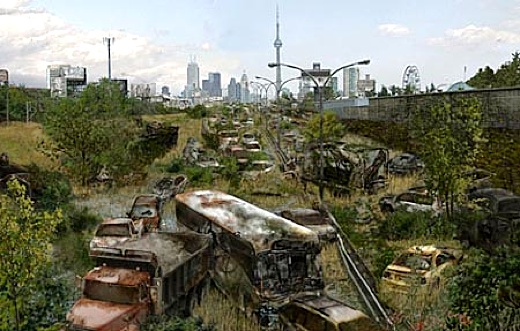
130517cntower

By arranjames

Source: Synthetic Zero

Not all that long ago the curators of this blog started talking about the possibility of the palliative care of the Earth. Recently dmf posted up a podcast dealing with the same topic. I haven’t listened to it yet so won’t be drawing on it in this post. I wanted to take a few minutes to experiment with the senses of the phrase “palliative care of the Earth”.

First of all, what is palliative care? Like all attempts at sense it is a contested battleground rife with bullet holes and no-man’s lands with various armies massed and pressing on it. One such army is the global institutional Roman legion that is the World Health Organisation. The WHO loves definitions. One could almost assume it employed nothing but glossophiliacs who spent their days and night writing endless variations on definitions who, in their frenzied madness, ended up trying to murder the words they were seeking to play midwife to. The WHO definition is long. And vague. You can read it here. Operationalising a little we can extract the fundamentals: palliative care seeks to make life as liveable as possible for the dying body and for the bodies who will mourn it.

The Earth as a system of ecosystems, an ecological metasystem, is considered as a body composed of bodies that play habitat and inhabitant, catalyst and anticatalyst, metabolism and metabolite, and so on, to one another [1]. Not all of these bodies are living but as with any machinic assemblage this Earth emerges as a necessarily heterogenetic improvisation (the imposition of unpredictability) that depends on both organic and machinic kinds [2]. A cyborg of a different order than Robocop the Earth is more akin to the Half-Faced Man, a machine that wants to be human. This isn’t to say the Earth wants to be human, or that it wants anything in any way we’d recognise as desire, although interspecies sexuality clearly indicates a queer promiscuity among nonhuman organisms, but that the Earth has assembled in such a way that the organic has come out of the inorganic. From a certain perspective: so what? It’s all just interlocking mechanism. Well, fine. But its dying is what.

But the Earth won’t die. Not yet. Far more likely- and if we stop being so anthropophobic- we’re talking about ourselves. It is us that is dying. It is the palliative care of the human that we should really consider. We open with a discussion of the dying Earth because it is this dying that is killing us: a vicarious species-suicide? These are dark thoughts that imply a loathing so great in our species that we’d take out everything else just to slit our own throats once and for all. But we’re not that grand, we’re all too limited, all too human still. Like smokers in the 1950s we didn’t know what we were doing, then we did and did nothing about it, then everyone said it was too late. We’re not quite sure of the periodicity. We don’t know if it is too late. What we do know is that we’ve had a mass terminal diagnosis and there is no consensus on the prognosis. What are we dying of then, if not some anthropathology [3]?

Does the species have a body? Or is the species also a hallucination? Hallucinations can die too- ask a “schizophrenic” on Clozapine. The WHO is an ensemble of equipment and technique in the same way Guattari once spoke of the unconscious. It is almost as if the WHO invented health (“a total state”) and must administer it. What is it that the WHO wants to say about palliative care? It has things to say about the reduction of suffering; the affirmation of life and death; it seeks neither the hastening nor the postponing of death; it looks to psychology and spirituality; produces support systems; is multidisciplinary; is life enhancing; it’s never too early to start.

How does this map onto humanity? We’re just scale in a sense, where “humanity” stands in for “person”. So it is the reduction of the suffering of species and the enhancement of its existence. This follows nicely from Lacanian ideas that we live both by the reality-principle and jouissance, by both aversion and hedonics. We’re also not talking about killing ourselves off, so no reproductions of Zapffe’s conclusion to ‘The Last Messiah’- we aren’t about to go forth to be fruitless and let the Earth be silent after us (as if it would be). I think it’s safe to say fuck Messiahs, especially last ones.

We’re also looking to the psychology and spirituality of humanity? Doesn’t this translate quite well to looking at the cognitive biases and metacognitive illusions and the affects and emotions in their normativity and pragmatics? Support systems like what? New technologies and alternative energy sources? Sure. But it can’t be limited to that- what if extinction is much closer than this than we think? Well think about it for a second. The process has already begun. And I’m not just talking about Tim Morton’s plutonium, or irreversible glacial melting, or any other particular doomsday protocol. If we’ve been paying attention to the three ecologies then we should have spotted multiple extinctions have been in process for a long time now. Systems of systems have been disintegrating within whatever it is- or was- that we called the human for decades. By 2050 or so even the strange hominid form will have been eradicated, recorded in images that no creature surviving us will care much about.

So palliative care is about easing our way into dying off. It is about quietly doing our best to assemble societies in which we can humanely coexist with wild being until our time’s really up. That was certainly my feeling two years ago when I wrote a post on extinction. Back in 2012 I declared that

Any post-nihilistic pragmatics will require that we operate consciously within catastrophic time and that we surrender the impossible task of removing precariousness from the human condition. These are the same project in fact, given that the former reveals to us the anthropocentrism of the latter…the benign revelation that precariousness is the condition of all things. IF this garners the accusation of privelging the perspective of extinction and heat death then this is a necessary part of the pragmatic ethics of a self-management of extinction. As I have said before, the task now is to think the ethics of palliative care for the species. The dream of species-being is realised at last.

Today I wonder at the sadness of that post. At the time I’d thought of it as realistic, hard-headed, unsentimental. All that. But ultimately, I think it was a depressive position. If 2050 is the time limit then maybe it is too late, and maybe we should be looking at harm-reduction and palliation. But for me this could lead us to a politics of the worst in which we try to stave off the ‘least of all possible evils’, a mode of thought that Eyal Weizman has convincingly shown to be at work in some of the worst atrocities in modern history. In trying to create the conditions of the least possible harm the scale of the species we might actually end up with a resigned sigh in the face of forces we might be able to do something about. As such, the only way to “self-manage our extinction” has to be truly palliative in that it doesn’t just avoid suffering but also seeks jouissance. In fact, I’d concretise the program into what David Roden has been talking about in terms of a speculative posthumanism in which posthuman beings that emerge out of the human bear as much intuitive relation to us as we do to our ancestral forebears. The jouissance of this is less Lacanian and more about a sweeping mutative recombinatory innovation in the normativity of posthumanity.

In fact the pessimist and transhumanist programs belong together when we view harm reduction without the depressive targeting system, when in fact we dare to accelerate palliative philosophy into a praxis of assisted dying. What is born from the uneven unity of these programs is what I’m (stupidly; deliriously; in a state of panic) calling transpessimism: the speculative conviction that humanity must become extinct by becoming something else.

—

[1] From wikipedia:

System of systems is a collection of task-oriented or dedicated systems that pool their resources and capabilities together to create a new, more complex system which offers more functionality and performance than simply the sum of the constituent systems. Currently, systems of systems is a critical research discipline for which frames of reference, thought processes, quantitative analysis, tools, and design methods are incomplete.[1] The methodology for defining, abstracting, modeling, and analyzing system of systems problems is typically referred to as system of systems engineering.

[2] I’ve stolen the term “heterogenetic improvisation” from David Malvinni’s study of Roma music: “heterogenic improvisation…the divided interval where improvisation orginates out of otherness while identifying with itself…grows out of a desire for a purely involved performance, a symbiosis of listener and sound, via an identification of the same with its unpredictable mutation” (p. 47-48).

[3] The term “anthropathology”, a neologism of the “anthro” pertaining to the human and “pathology” pertaining to disease, was coined in 2007 by a practicing counselor and counselling theorist, Colin Feltham, turned pessimist philosopher. Feltham defines the condition of anthropathology at length in his book treatment of the “condition”- as valid as most psychopathological categories- but also presents a condensed definition as follows:

‘the marked, universal tendency of human beings individually and collectively towards suffering deceptiveness, irrationality, destructiveness and dysfunction,including an extreme difficulty in perceiving and freeing ourselves from this state’ (What’s Wrong With Us? The anthropathology thesis. 2007. p.256).

The Commencement Controversy and the Real Mumia

n00000875-b

By Kevin Price

Source: TruthThroughStruggle

Three weeks ago I visited imprisoned journalist, Mumia Abu-Jamal, at SCI-Mahanoy in Pennsylvania. I’ve been visiting with Mumia, sometimes regularly, for the last decade. Despite the polarizing rhetoric from those who’ve fought for three decades for Mumia’s state sanctioned murder, the man I met is one of the kindest, funniest, and most intelligent people I’ve had the pleasure to know. The first time I visited with Mumia, on death row at SCI-Greene in 2004, the conversation was so engaging that the visit was halfway over before I realized his hands had been shackled the whole time. After years of organizing around his case I knew he was a brilliant thinker, but I was pleasantly surprised by his sense of humor and silliness.

I learned of Mumia’s case as a teenager in 1997, when my world was rocked by reading his gripping book documenting death row life, “Live From Death Row.” The same week I purchased his newly released collection of musings, essays, and poems, “Death Blossoms.” I stayed up all night reading it, inspired by the empathy and insight coming through the pages. At that point I was a freshmen in high school and had begun to get politicized by an active punk scene in Norfolk, VA. Mumia’s writing opened my eyes to worlds I had never even considered. I started organizing heavily for a new trial for Mumia as well as working on many other causes and movements. After over 15 years studying this case I know that his trial was a travesty of justice (as does Amnesty International and many international governing bodies) and I believe that he is innocent.

In person and in his writings Mumia rarely focuses on his own case, instead focusing on broad international struggles for justice. On our most recent visit we talked about books we’re reading, world events, and mutual friends. For a few years he’s been studying musical composition and when I told him that I didn’t know how to read music he spent an hour passionately explaining the basics to me. I learned a lot. These visits have been some of the most educational hours of my life. It’s easy, absorbed in conversation, to forget that we are in a prison. It’s hard to comprehend that this man was nearly put to death on two separate occasions and that the mere mention of his name will send many into a fit of rage. If they actually met Mumia they wouldn’t recognize him next to the violent cop-killer straw man the media built in his image. Mumia has been characterized by much of the mainstream media as an unrepentant murderer. When word got out that an audio recording by Mumia would be the commencement address at Goddard College this Sunday, Fox News and other media pundits manufactured a media controversy.

Over the years I’ve seen a lot of backlash by the Fraternal Order of Police and others who want Mumia dead. When Rage Against the Machine and the Beastie Boys organized a massive benefit show in his defense there was media uproar and pressure to shut down the show. When Mumia was made the first honorary citizen of Paris, France since Pablo Picasso, and Saint-Denis, France named a street after him, the US House of Representatives passed HR 1082 condemning Mumia and Saint-Denis, France. The hysteria over having Mumia as the commencement speaker at Goddard is just the most recent in a long series of similar media spectacles. This one hits a bit closer to home for me because I graduated from Goddard College in 2012 and have friends who will be graduating this Sunday. I love Goddard and am very protective of it. Conversations with Mumia were part of the catalyst for my enrolling in Goddard. He attended Goddard in the 70s and finished his degree there in 1995, knowing he might be executed before graduation.

It’s difficult to watch a person that you love and respect routinely slandered in the media. Goddard College and their graduating students have been condemned for their decision and attacked as well. I’m impressed with the way the school and the graduating students are defending their decision. There are a number of symbolic reasons it’s valuable to have Mumia speak at commencement. The United States is the largest jailer in the world history, with over 2,000,000 people in the prison system. Racism plays a key role in deciding who will be convicted and the sentence they will receive, and as a result black men are incarcerated at vastly disproportionate numbers. The lack of educational opportunities and diminishing job options are a huge factor in our sky rocketing rates of imprisonment. If we seek to change these conditions I can think of no better speaker than Mumia Abu-Jamal, an accomplished academic, and brilliant black man who is wrongfully convicted. With the rampant police murders of black people, notably Eric Garner and Mike Brown, it’s important to publicly assert that black lives matter and that the victims of police brutality and judicial misconduct must be defended.

These are wonderful symbolic reasons to celebrate the choice of Mumia as a commencement speaker. However, Mumia is not a symbol. He is a man who was wrongfully held in solitary confinement on death row for nearly 30 years and is now being wrongfully held in general population with no legal possibility for parole. He has children who have had children in the years he’s been away. He is a man with a brilliant mind and an unstoppable pen. Those who oppose him have been fighting for decades to silence his voice. Yet every week, often twice a week, Mumia continues work as a journalist, writing and recording audio commentaries over the prison phone calls. With so much at stake it only seems right that we listen.

_______________________________________________________________________________________________
To hear Mumia’s commentaries go to http://www.prisonradio.org

For more information on who Mumia is, his case and his writings go to http://www.freemumia.com

It’s Time for Some Anti-Science Fiction

nature-spaceships_00374723

Source: The Hipcrime Vocab

It’s Time for Some Anti-Science Fiction
Why must positive depictions of the future always be dependent upon some sort of new technology?

Neal Stephenson is a very successful and well-known science fiction writer. He’s also very upset that the pace of technological innovation has seemingly slowed down and we seem to be unable to come up with truly transformative  “big ideas” anymore. He believes this is the reason why we are so glum and pessimistic nowadays. Indeed, the science fiction genre, once identified with space exploration and utopias of post-scarcity and abundant leisure time, has come to be dominated by depictions of the future as a hellhole of extreme inequality, toxic environmental pollution, overcrowded cities, oppressive totalitarian governments, and overall political and social breakdown. Think of movies like The Hunger Games, Elysium, The Giver, and Snowpiercer.

This pessimism is destructive and corrosive, believes Stephenson. According to the BBC:

Acclaimed science-fiction writer Neal Stephenson saw this bleak trend in his own work, but didn’t give it much thought until he attended a conference on the future a couple years ago. At the time, Stephenson said that science fiction guides innovation because young readers later grow up to be scientists and engineers.

But fellow attendee Michael Crow, president of Arizona State University (ASU), “took a more sort of provocative stance, that science fiction actually needed to supply ideas that scientists and engineers could actually implement”, Stephenson says. “[He] basically told me that I needed to get off my duff and start writing science fiction in a more constructive and optimistic vein.”

“We want to create a more open, optimistic, ambitious and engaged conversation about the future,” project director Ed Finn says. According to his argument, negative visions of the future as perpetuated in pop culture are limiting people’s abilities to dream big or think outside the box. Science fiction, he says, should do more. “A good science fiction story can be very powerful,” Finn says. “It can inspire hundreds, thousands, millions of people to rally around something that they want to do.”

Basically, Stephenson wants to bring back the kind of science fiction that made us actually long for the future rather than dread it. Stephenson means to counter this techno-pessimism by inviting a number of well-known science fiction writers to come up with more positive, even utopian, visions of the future, where we once again come up with “big ideas” that inspire the scientists and engineers in their white labcoats. He apparently believes that it is the duty of science fiction authors to act as, in the words of one commentator, “the first draft of the future. ” Indeed, much of modern technology and space exploration was presaged by authors like H.G. Wells and Jules Verne. From the BBC article above, here are some of the positive future scenarios depicted in the book:

  •     Environmentalists fight to stop entrepreneurs from building the first extreme tourism destination hotel in Antarctica.
  •     People vie for citizenship on a near-zero-gravity moon of Mars, which has become a hub for innovation.
  •     Animal activists use drones to track elephant poachers.
  •     A crew crowd-funds a mission to the Moon to set up an autonomous 3D printing robot to create new building materials.
  •     A 20km tall tower spurs the US steel industry, sparks new methods of generating renewable energy and houses The First Bar in Space.

The whole idea behind Project Hieroglyph, as I understand it, is to depict more positive futures than the ones being depicted in current science fiction and media. That seems like a good idea. But my question is – why must these positive futures always involve more intensive application of technology? Why are we unable to envision a better future in any other way besides more technology, more machines, more inventions, more people, more economic growth, etc. Haven’t we already been down that road?

Or to put it another way, why must science fiction writers assume that more technological innovation will produce a better society when our modern society is the result of previous technological innovations, and is seen by many people as a dystopia (with many non-scientifically-minded people actually longing for a collapse of some sort)? Perhaps, to paraphrase former president Reagan, in the context of our current crisis, technology is not the solution to the problem, technology is the problem.

***

It’s worth pointing out that many of the increasingly dystopian elements of our present circumstances have been brought about by the application of technology.

Economists have pinpointed technology as a key driver of inequality thanks to the hollowing out of the middle class due to the automation of routine tasks that underpinned the  industrial/service economy leaving only high-end and low-end jobs remaining, as well as the “superstar effect” where a few well-paid superstars capture all the gains because technology allows them to everywhere at once. Fast supercomputers have allowed the rich to game the stock market casino where the average stock is now held for just fractions of a second, while global telecommunications has led to reassigning jobs anywhere in the world where the very cheapest workers can be found. America’s manufacturing  jobs are now done by Chinese workers and its service jobs by Indian workers half a world away even as the old Industrial heartland looks suspiciously like what is depicted in The Hunger Games. Rather than a world of abundant leisure, stressed out workers take their laptops to the beach, fearful of losing their jobs if they don’t, while millions have given up even looking for work anymore. A permanently underemployed underclass distracts itself with Netflix, smartphones and computer games, and takes expensive drugs promoted by pharmaceutical companies to deal with their depression.

Global supply chains, supertankers, the “warehouse and wheels,” and online shopping have hollowed out local main street economies and led to monopolies in every industry across the board. Small family farmers have been kicked off the land worldwide and replaced by gargantuan, fossil-fuel powered agricultural factories owned by agribusinesses churning out  bland processed food based around wheat, corn and soy causing soaring obesity rates worldwide and runaway population growth.

Banks have merged into just a handful of entities that are “too-big-to-fail” and send trillions around the world at the speed of light. Gains are privatized while loses and risk are socialized, and the public sphere is sold off to profiteers at fire sale prices. A small financial aristocracy controls the system and hamstrings the world with debt. Just eighty people control as much wealth as half of the planet’s population, and in the world’s biggest economy just three people gain as much income as half the workforce. There are now more prisoners in America than farmers.

A now global trans-national elite of owner-oligarchs criss-crosses the world in Gulfsteam jets and million-dollar yachts and  hides their money in offshore accounts beyond the reach of increasingly impotent national governments, while smaller local governments can’t keep potholes filled, streets plowed and streetlights on for ordinary citizens. Many of the world’s great cities have become “elite citadels” making it impossible for regular citizens to live there. This elite controls bond markets, funds political campaigns and owns and controls a monopolized media that normalizes this state of affairs using sophisticated propaganda tools enhanced by cutting-edge psychological research enabled by MRI scanners. The media is controlled by a small handful of corporations and panders to the lowest common demonstrator while keeping people in a constant state of fear and panic. Advertising preys on our insecurities and desire for status to make us buy more, enabled by abundant credit. The Internet, once the hope for a more democratic future, has ended up as shopping mall, entertainment delivery system and spying/tracking system rather than a force for democracy and revolution.

Security cameras peer at us from every streetcorner and store counter and shocking revelations about the power and reach of the national security state that are as fantastic as anything dreamed up by dystopian science fiction writers have become so commonplace that people hardly notice anymore. Anonymous people in gridded glass office towers read our every email, listen to our every phone call and track our every move using our cell phones. New technology promises “facial recognition” and “smart” technology promoted by corporations promises to track and permanently record literally every move you make.

Remote-control drones patrol the skies of global conflict zones and vaporize people half a world away without their pilots ever seeing their faces. High-tech fighter jets allow us to “cleanly” drop bombs without the messiness of a real war. Private mercenaries are a burgeoning industry and global arms sales continue to increase even in a stagnant global economy with arms companies often selling to both sides. By some accounts one in ten Americans is employed in some sort of “guard labor,” that is, keeping their fellow citizens in line. The number of failed states continues to increase in the Middle East and Africa and citizens in democracies are marching in the streets.

Not that there’s nothing for the national security state to fear after all – technology has enabled individual terrorists and non-state actors to produce devastating weapons capable of destroying economies and killing thousands as 9-11 demonstrated. A single “superempowered” individual can kill millions with a nuclear bomb the size of a suitcase or an engineered virus or other bioterrorism weapon. The latest concern is “cyberwarfare” which could destroy the technological infrastructure we are now utterly dependent upon and kill millions. “Non-state actors” can wreak as much havoc as armies thanks to modern technology, and there are a lot of disgruntled people out there.

And then there is the environmental devastation, of which climate change is the most overwhelming, but includes everything from burned down Amazonian rainforest, to polluted mangroves in Thailand, to collapased fish stocks, dissolving coral reefs and oceans full of jellyfish. Half the  world’s terrestrial biodiversity has been eliminated in the past fifty years and we’ve lost so much polar ice that earth’s gravity is measurably affected. In China, the world’s economic success story, the haze is so thick that people can’t see the tops of the skyscrapers they already have and there are “cancer villages.” The skies may be a bit clearer in America thanks to deindustrialization, but things like drought in the Southwest and increasinginly powerful hurricanes are reminders that no one is immune. Entire countries and major cities look to be submerged under rising oceans and the first climate refugees are already on the move from places like Africa and Southeast Asia leading to anti-immigrant backlash in developed countries.

This is not some future dystopia, by the way, this is where technology has us led right now. Today. Current headlines. Maybe the reason that dystopias are so popular is because that seems to be where technology had led us here in the first decade of the twenty-first century. I’m skeptical that Project Hieroglyph and it’s fostering of “big ideas” will do much to change that.

Thus my fundamental question is, given the above, why is it always assumed that the path to utopia goes through a widespread deployment of even more innovation and technology? Is it realistic to believe that colonies on Mars, drones, intelligent robots, skyscrapers and space elevators will solve any of this?

I’ve written before about the fact that the technology we already have in our possession today was expected to deliver a utopia by numerous writers and thinkers of the past. “The coming of the wireless era will make war impossible, because it will make war ridiculous,” declared Marconi in 1912. HG Wells, a committed socialist who lived during perhaps the greatest period of invention before or since (railroads, harnessing of electricity, radio communication, internal combustion engines, powered flight, antibiotics),  very frequently depicted utopian societies brought about through the applications of greater technology. Science fiction authors still seem to conceive utopias as being exclusively brought about by “technological progress.” But given hindsight, is that realistic anymore?

Maybe it’s time for some anti-science fiction.

***

The classic example of this is William Morris’ utopian novel News From Nowhere.

Morris was a key figure in the Arts and Crafts movement, which was a reaction to the factory-based mass production and subsequent deskilling of the workforce. People no longer collectively made the world of goods and buildings around them, rather they were now made by a small amount of people using deskilled, alienated labor in giant factories with the profits accruing to a tiny handful of capitalist owners. Morris wanted another way.

In Morris’ future London there are very little in the way of centralized institutions.  People work when they want to and do what they want to. Money is not used. Life is lived leisurely pace. Writing during the transformative changes of the Industrial Revolution, Morris’ London looks less like a World’s Fair and more like a lost bucolic pastoral London that had long since vanished under the smoke of factories. Technology plays a very small role yet people are much happier.

Morris’ work was written partially in response to a book entitled Looking Backward by Edward Bellamy, which was extraordinarily popular in the late nineteenth century, but almost forgotten today. Bellamy’s year 2000 utopia had the means of production brought under centralized control, with people serving time in an “industrial army” for twenty years and then retiring to a life of leisure and  material abundance brought about by production for use rather than capitalist profit.

Morris still felt that this subordinated workers to machines rather than depicting a society for the maximization of human well-being, including work. Here is Morris in a speech:

“Before I leave this matter of the surroundings of life, I wish to meet a possible objection. I have spoken of machinery being used freely for releasing people from the more mechanical and repulsive part of necessary labour; it is the allowing of machines to be our masters and not our servants that so injures the beauty of life nowadays. And, again, that leads me to my last claim, which is that the material surroundings of my life should be pleasant, generous, and beautiful; that I know is a large claim, but this I will say about it, that if it cannot be satisfied, if every civilised community cannot provide such surroundings for all its members, I do not want the world to go on.”

Morris’ book shows that utopias need not be high-tech. It also shows that real utopias are brought about by the underlying philosophy of a society and its corresponding social relations. It seems to me like Stephenson’s utopias are all predicated on the continuation of the philosophy and social relations of our current society – more growth, more technology, faster innovation, more debt, corporate control, trickle-down economics, private property, absentee ownership, anarchic markets, autonomous utility-maximizing consumers, etc. It is yoked to our ideas of “progress” as simply an application of more and faster technology.

By contrast, Morris’ utopia has the technological level we would  associate with a “dystopian” post collapse society, yet everyone seems a whole lot happier.

***

Now I don’t mean to suggest that any utopia should necessarily be a place where we have reverted to some sort pre-industrial level of technology. We don’t need to depict utopias as living like the Amish (although that would be an interesting avenue of exploration). I merely wish to point out that a future utopia need not be exclusively the domain of science fiction authors, and need not be predicated by some sort of new wonder technology or space exploration. For example, in an article entitled Is It Possible to Imagine Utopia Anymore? the author writes:

Recently, though, we may have finally hit Peak Dystopia…All of which suggests there might be an opening for a return to Utopian novels — if such a thing as “Utopian novels” actually existed anymore…In college, as part of a history class, I read Edward Bellamy’s Looking Backwards, a Utopian science-fiction novel published in 1888. The book — an enormous success in its time, nearly as big as Uncle Tom’s Cabin — is interesting now less as literature than as a historical document, and it’s certainly telling that, in the midst of the industrial revolution, a novel promising a future socialist landscape of increased equality and reduced labor so gripped the popular imagination. We might compare Bellamy’s book to current visions of Utopia if I could recall even a single Utopian novel or film from the past five years. Or ten years. Or 20. Wikipedia lists dozens of contemporary dystopian films and novels, yet the most recent entry in its rather sparse “List of Utopian Novels” is Island by Aldous Huxley, published in 1962*. The closest thing to a recent Utopian film I can think of is Spike Jonze’s Her, though that vision of the future — one in which human attachment to sentient computers might become something close to meaningful — hardly seems like a fate we should collectively strive for, but rather one we might all be resigned to placidly accept

Many serious contemporary authors have tackled dystopia: David Foster Wallace’s Infinite Jest, Gary Shteyngart’s Super Sad True Love Story, Cormac McCarthy’s The Road, and so on. But the closest thing we have to a contemporary Utopian novel is what we could call the retropia: books like Michael Chabon’s Telegraph Avenue (about a funky throwback Oakland record store) or Jonathan Lethem’s Fortress of Solitude (about 1970s Brooklyn) that fondly recall a bygone era, by way of illustrating what we’ve lost since —  “the lost glories of a vanished world,” as Chabon puts it. Lethem’s more recent Dissident Gardens is also concerned with utopia, but mostly in so far as it gently needles the revolutionaries of yesteryear.

Indeed, the closest things we have to utopias on TV today are shows like Mad Men which take place during the era when Star Trek was on TV rather than a utopia inspired by Star Trek itself. For many Americans, their version of utopia is not in the future but in the past – the 1950’s era of widespread prosperity, full employment, single-earner households, more leisure, guaranteed pensions, social mobility, inexpensive housing, wide open roads and spaces, and increasing living standards. As this article points out:

When I first heard about the project, my cynical heart responded skeptically. After all, much of the Golden Age science fiction Stephenson fondly remembers was written in an era when, for all its substantial problems, the U.S. enjoyed a greater degree of democratic consensus. Today, Congress can barely pass a budget, let alone agree on collective investments.

If someone asked me to depict a more positive future than the one we have, deploying more technology is just about the last thing I would do to bring it about. In fact, the future I would depict would almost certainly include less technology, or rather technology playing a smaller role in our lives. I would focus more on social relations that would make us be happy to be alive, where we eat good food, spend time doing what we want instead of what we’re forced to, and don’t have to be medicated just to make it through another day in our high-pressure classrooms and cubicles. I might even depict a future with no television inspired by Jerry Mander’s 1978 treatise Four Arguments for the Elimination of Television (hey, remember this is fiction after all!)

Rather it would depict different political, economic and social relations first, with new technology playing only a supporting, not a starring role. Organizing society around the needs of productive enterprise, growth and profits (and nothing else) is the reason, I believe, why we are feeling so depressed about the future that dystopias resonate more with a demoralized general public who rolls their collective eyes at the exhortations of science fiction writers with an agenda**. The problem of science fiction is it’s single-minded conflagration of technology with progress.

Personally my utopia would be something more like life on the Greek island of Ikaria*** according to this article from The New York Times (which reads an awful lot like News from Nowhere):

Seeking to learn more about the island’s reputation for long-lived residents, I called on Dr. Ilias Leriadis, one of Ikaria’s few physicians, in 2009. On an outdoor patio at his weekend house, he set a table with Kalamata olives, hummus, heavy Ikarian bread and wine. “People stay up late here,” Leriadis said. “We wake up late and always take naps. I don’t even open my office until 11 a.m. because no one comes before then.” He took a sip of his wine. “Have you noticed that no one wears a watch here? No clock is working correctly. When you invite someone to lunch, they might come at 10 a.m. or 6 p.m. We simply don’t care about the clock here.”

Pointing across the Aegean toward the neighboring island of Samos, he said: “Just 15 kilometers over there is a completely different world. There they are much more developed. There are high-rises and resorts and homes worth a million euros. In Samos, they care about money. Here, we don’t. For the many religious and cultural holidays, people pool their money and buy food and wine. If there is money left over, they give it to the poor. It’s not a ‘me’ place. It’s an ‘us’ place.”

Ikaria’s unusual past may explain its communal inclinations. The strong winds that buffet the island — mentioned in the “Iliad” — and the lack of natural harbors kept it outside the main shipping lanes for most of its history. This forced Ikaria to be self-sufficient. Then in the late 1940s, after the Greek Civil War, the government exiled thousands of Communists and radicals to the island. Nearly 40 percent of adults, many of them disillusioned with the high unemployment rate and the dwindling trickle of resources from Athens, still vote for the local Communist Party. About 75 percent of the population on Ikaria is under 65. The youngest adults, many of whom come home after college, often live in their parents’ home. They typically have to cobble together a living through small jobs and family support.

Leriadis also talked about local “mountain tea,” made from dried herbs endemic to the island, which is enjoyed as an end-of-the-day cocktail. He mentioned wild marjoram, sage (flaskomilia), a type of mint tea (fliskouni), rosemary and a drink made from boiling dandelion leaves and adding a little lemon. “People here think they’re drinking a comforting beverage, but they all double as medicine,” Leriadis said. Honey, too, is treated as a panacea. “They have types of honey here you won’t see anyplace else in the world,” he said. “They use it for everything from treating wounds to curing hangovers, or for treating influenza. Old people here will start their day with a spoonful of honey. They take it like medicine.”

Over the span of the next three days, I met some of Leriadis’s patients. In the area known as Raches, I met 20 people over 90 and one who claimed to be 104. I spoke to a 95-year-old man who still played the violin and a 98-year-old woman who ran a small hotel and played poker for money on the weekend.

On a trip the year before, I visited a slate-roofed house built into the slope at the top of a hill. I had come here after hearing of a couple who had been married for more than 75 years. Thanasis and Eirini Karimalis both came to the door, clapped their hands at the thrill of having a visitor and waved me in. They each stood maybe five feet tall. He wore a shapeless cotton shirt and a battered baseball cap, and she wore a housedress with her hair in a bun. Inside, there was a table, a medieval-looking fireplace heating a blackened pot, a nook of a closet that held one woolen suit coat, and fading black-and-white photographs of forebears on a soot-stained wall. The place was warm and cozy. “Sit down,” Eirini commanded. She hadn’t even asked my name or business but was already setting out teacups and a plate of cookies. Meanwhile, Thanasis scooted back and forth across the house with nervous energy, tidying up.

The couple were born in a nearby village, they told me. They married in their early 20s and raised five children on Thanasis’s pay as a lumberjack. Like that of almost all of Ikaria’s traditional folk, their daily routine unfolded much the way Leriadis had described it: Wake naturally, work in the garden, have a late lunch, take a nap. At sunset, they either visited neighbors or neighbors visited them. Their diet was also typical: a breakfast of goat’s milk, wine, sage tea or coffee, honey and bread. Lunch was almost always beans (lentils, garbanzos), potatoes, greens (fennel, dandelion or a spinachlike green called horta) and whatever seasonal vegetables their garden produced; dinner was bread and goat’s milk. At Christmas and Easter, they would slaughter the family pig and enjoy small portions of larded pork for the next several months.

During a tour of their property, Thanasis and Eirini introduced their pigs to me by name. Just after sunset, after we returned to their home to have some tea, another old couple walked in, carrying a glass amphora of homemade wine. The four nonagenarians cheek-kissed one another heartily and settled in around the table. They gossiped, drank wine and occasionally erupted into laughter.

No robot babysitters or mile-high skyscrapers required.

* No mention of Ernest Callenbach’s Ecotopia published in 1975?

** ASU is steeped in Department of Defense funding and DARPA (The Defense Research Projects Agency) was present at a conference about the book entitled “Can We Imagine Our Way to a Better Future?” held in Washington D.C. I’m guessing the event did not take place in the more run-down parts of the city. Cui Bono?

***Ironically, Icaria was used as the name of a utopian science fiction novel, Voyage to Icaria, and inspired an actual utopian community.