Quantum Strangeness & Becoming Oneself

By toomajj

Source: NOEMAYA

Our classical world is composed of mutually exclusive alternatives: Everything is either something or something else; it is a this or a that, though we may be unaware of these identities due to ignorance. A color is always either red or not red; two socks in a closed box are either a pair or not a pair whether we look inside or not. There is never a middle case in the classical world.

Quantum world, however, is quite different. Besides the two/many mutually exclusive alternatives everything in between too exists. A color is at once all colors until we pick one color by looking at it! A particle has no particular place until we force it to pick a place by measuring its place!

It turns out that mutually exclusive alternatives, our classical world, is only a small and often filtered portion of the underlying reality. Which reality we pick is determined by which reality we are inclined to pick, namely the reality that we desire.

The mutually exclusive alternatives of the classical world constitute a space of all possibilities existing at once, that is, a state of pure potentiality.

The logical principle that collapses in the quantum world is the principle of identity which says “Everything is itself.” Not anymore: Everything is both itself and not-itself until we make it into something that it is. In the quantum realm this new peculiarity is translated into the indistinguishability of identical particles. Quantum particles don’t have a history any more; they don’t have a memory or identity. They can at once choose to turn out at the other corner of the universe without being subject to Einstein’s principles of relativity. In fact, entanglement is a consequence of particles lacking fixed identities: No two electrons can be distinguished in principle.

Identity is a construct that we ourselves carry on our shoulders; it has no substantial reality; it is just like a name we are attached to. For us to be our ideal person we only need to be it; that is it. Actions don’t make people; it is people who make actions.

Data and census don’t determine people’s behavior; it is people who determine data and census.

You should not think twice about what you want to be, its chances, whether it is possible or not, or what the data or others say. You determine data and others by what and who you choose to be. Then choose to be your own idol and hero.

You are what you consider yourself to be.

Saturday Matinee: Superstar

superstarweb

Is banned art-film, ‘Superstar: The Karen Carpenter Story,’ the weirdest music movie ever made?

By Amber Frost

Source: Dangerous Minds

Director Todd Haynes is well-known for his arty, fictionalized depictions of music iconography. Velvet Goldmine was a glam rock epic, with characters modeled after Bowie and Iggy, while I’m Not There features seven different actors portraying “fictional” facets of Bob Dylan’s personality or mystique. Both films blur reality with stylized interpretations, but neither takes even a fraction of the liberties Haynes exercised with his 1987 grad school student film, Superstar: The Karen Carpenter Story.

The film opens up on Karen’s death, then flashes back to narrate her rise to fame. It’s a spasmodic format—switching between interviews with peripheral music industry people, random footage and fascinatingly elaborate mise-en-scène reenactments staged with Barbie dolls and melodramatic voice-overs. In reference to Karen’s anorexia, Haynes actually whittled down her Barbie effigy with a knife for later scenes, mimicking the progressive emaciation of her body. It’s a dark portrayal of a slow death, Karen and Barbie, both icons of American perfection, wasting away before our eyes.

Superstar: The Karen Carpenter Story is technically illegal to exhibit, although since the advent of YouTube, it’s a bit of a moot point (the upload embedded below was posted in 2012). Karen’s brother Richard sued Haynes for copyright infringement. MOMA has a copy but even they aren’t allowed to screen it. Even if Haynes hadn’t used Carpenters songs, there’s a good chance Richard Carpenter would’ve found basis for a lawsuit. Haynes portrays Karen as the victim of her narcissistic and tyrannical family, even suggesting Richard was closeted.

It’s difficult not to be sympathetic to Richard Carpenter who probably viewed the film as mere ghoulish, exploitative sensationalism. It’s a strangely invasive and voyeuristic piece of art, and the argument could be made that it’s totally unethical in its ambiguous, semi-biographical fiction. It’s also totally hypnotic, with a compelling narrative and a pioneering experimentalism that makes it one of the great cult classics.

The Birth of the Time-Motion Human

QuantimetricSelfSensingPrototypeMannApparatus

By Dale Lately

Source: The Baffler

In a darkened room, a woman lies watched by an infra-red camera as she sleeps. It monitors her breathing, her movements, the flicker of her eyelids. Some hours later it stings her with a painful electric shock. She wakes, tumbles out of bed and into the restroom, whereupon a chip installed in her toothbrush tracks her arm movements. She’s photographed, silently, every thirty seconds. As she sets off in the morning her location is logged and data is streamed on the steps she takes. Her pulse and calorie count are recorded and sent to unseen observers. She has a dog at her side. The dog’s data is logged as well.

Such a tableau would be the envy of any futuristic dictatorship. In fact, the devices outlined above are all available on the consumer market now, for voluntary use. The impetus towards tracking our lives with smartphones, apps and stats represents a massive growth area into which companies like Jawbone, MyFitnessPal, RunKeeper, Runtastic, MapMyRun, Foodzy, GymPact, and Fitocracy are flooding. Alongside the Nike+ Fuelband, there’s the popular Fitbit Flex, a wristband that counts the steps you take by day and the number of times you stir in your sleep. There are smart cups to track what you drink and wristbands programmed to give you electric shocks for not achieving your goals. There’s even a “Fitbit for your vagina” in the form of the KGoal Smart Kegel Trainer—a Kickstarter project designed to track kegels, exercises for women’s pelvic floor muscles to improve childbirth and continence, and for helping them to achieve a better “clench strength” via Bluetooth.

With all this biofeedback now available on our phones, the act of walking, living and breathing can—at least to the “datasexuals” who embrace it—be an ongoing project with limitless potential for improvement. But might such potential also lead to a kind of “Taylorism within”? Applying scientific management to twentieth century business created a workforce optimized for maximum efficiency. Likewise, life-tracking is encouraging us to internalize this dream by optimizing ourselves. Rather than a tool for liberation, we’re using the tech, in other words, to tune our lives for maximum “productivity.”

Perhaps none of this should seem surprising for a consumer society that drives on anxiety. If bad breath had to be invented as a disease mouthwash would help to cure a century ago, now the Quantified Self movement suggests we must live in permanent beta, to aim not just at maintaining ourselves but to become “better than well.” And so, Dave Allen’s Getting Things Done and websites like Lifehacker help to turn our lives into a series of sanctioned tasks and goals, where one must carry a “Surprise Journal” to find areas for self-improvement in one’s life, and sleep comes in the form of “power” naps. There’s the Lumo Back, a gizmo that monitors the tricky process of sitting in a chair, while the Narrative wearable camera snaps your life twice a minute. Time management lessons are now available for kids, while the iPotty seems to give toddlers the message that they shouldn’t take their eyes off a screen even when satisfying the most basic of human needs.

Silicon Valley, naturally, is more than happy to export the mantra of ongoing product optimization to our bodies: life-hacking fanatics talk of “upgrades” and “body hacks,” with often obsessive results. In a Financial Times article that marked a mainstream recognition of the movement, Tim Ferriss–author of The 4-Hour Body–claimed that he could teach people how to lose weight without exercising, work on two hours’ sleep, and have a fifteen-minute orgasm, while bio-hacker Dave Asprey was adamant that he’s made himself twenty years younger and forty IQ points smarter through life-tracking and smart pills (“I’ve rewired my brain,” he said). All of this task management can become a considerable task in itself, leading to the piling up of Catch 22 ironies—like the fact that developers are now working on smartphone apps to solve the problem of people spending too much time on their smartphones.

Luckily, some are questioning the use of intimate monitoring devices in our lives. The information asymmetry provided by the emergent “Internet of Things” may create a class of uninsurable people, while ”digital Taylorism”—the tracking and tagging of workers like cattle—has been roundly criticized as it has begun to emerge at companies like Amazon. What’s disquieting about the popularization of life-tracking is the voluntary desire to become “time-motion humans,” to subject ourselves to a self-imposed surveillance state. “Track everything. Track your entire day—wherever you go,” says the website for the LumoBack. “VESSYL AUTOMATICALLY KNOWS AND TRACKS EVERYTHING YOU DRINK,” the Vessyl “smart mug” warns us in stark capitals. And once we’ve volunteered for this intimate biological scrutiny, we’re keen to publicize the results—using tools like the Withings scale, which threatens to broadcast our weight gains to our Twitter followers as “encouragement.” Self-Improvement Macht Frei.

Since the invention of the forceps we’ve been introducing machinery into our bodies to improve our lives (the aforementioned KGoal is actually based on a biofeedback device from the 1940s by Dr. Arnold Kegel), and undoubtedly many of these trackers are helping to make people healthier. But life tracking also comes from a certain ideological background, one that denigrates macro-interventions in our lives (nationalized health care) in favor of individual micro-solutionism (becoming our own gym instructors and fitness trainers).

We’re living in an entrepreneurial model of humanity, a vision of human beings as start-ups, where unfitness or obesity are viewed as “bugs” to be fixed rather than as products of an economy based on long hours and precarious work. Daily exercise has always been an individual responsibility, but sharing our biofeedback via social media encourages people to compete like businesses, vying for better health scores with the personal data that makes us special. (Flex boasts that it reflects “your stats, not any average Joe’s.”) Here we can all be Superman—“Join over 141,000 other people who want to discover their inner superhero,” urges website Superheroyou—while, back in the complex, unquantifiable real world, we often struggle to maintain control over the most basic facts of our finances and job prospects.

The Quantified Self literature is full of such fantasizing. It all treats the body as a fun challenge, a puzzle to be solved. We see this in the current trend towards adding game-like features to the process of life tracking, which leads to some quite startlingly intimate results (“Spreadsheets,” an app that promises to gamify your sex life, has the user get on the bed and talk dirty to a computer). Even antenatal workouts aren’t immune: the KGoal promises gamification in forthcoming product updates for those who fancy comparing their pelvic thrust scores to those of their peers.

The friendly rivalry that has always been a part of amateur fitness starts to look less inspiring, and more controlling, when it’s built into the architecture of smartphones and social media. It’s more like a crowd-sourced version of what philosopher Michel Foucault termed “Biopower,” the control over our bodies wielded by states and their institutions. But in this version, it’s not the institutions; we control ourselves, and each other.

As more and more aspects of our lives are seen as legitimate targets for intrusion by technology, the gaze inevitably falls on the newly born. Start-ups like Sproutling, Owlet, and Mimo are springing up to replace old-fashioned baby monitors with comprehensive, round-the-clock surveillance (temperature, pulse, breathing, position, room ambience) as well as all the attendant data crunching. These infants may be the first humans to grow up entirely in the lens of machines, with the process of rearing having been refashioned as a high-tech, high-maintenance project, requiring endless inputs from both parent and child alike. They will be the first “time-motion babies”: faster, happier, more productive, in the words of Radiohead’s Ok Computer.

Will they really be happier, versed as they will be, since birth, in the techniques of maximizing their sleep, optimizing their nutrients, and tracking the number of steps they walk? It seems doubtful, but then, it’s impossible to really tell when we talk about happiness—even Silicon Valley hasn’t worked out how to put a number on that.


Dale Lately writes about culture and communications and has contributed to the Guardian, 3:AM Magazine, OpenDemocracy, Litro and Pop Matters. His regular musings can be found at @dalelately and www.dalelately.blogspot.com.

Franco Berardi on the Digital Colonization of Human Experience

rupertmurdock-digital-immigrant

By Franco Berardi

Source: Adbusters

The Spanish colonization of Mesoamerica was essentially a process of symbolic and cultural submission.

The “superiority” 
of the colonizers lay on the operational effectiveness of their technical production. The colonization destroyed the cultural environment in which indigenous communities had been living for centuries: the alphabetic technology, the power of the written word overwhelmed, jeopardized and finally superseded the indigenous cultures. The conquistadors re-coded the cultural universe of nowadays Mexico and Central America.

Before the arrival of the Spanish invaders Malinche (Malinalli in Nahuatl language, Marina for the Spaniards), the daughter
 of a noble Aztec family, was given away as 
a slave to passing traders after her father died and her mother remarried. By the time Cortés arrived, she had learned the Mayan dialects spoken in the Yucatan while still understanding Nahuatl, the language of the Aztecs. As a youth she was given as tribute again, this time to the invaders.

She became the lover of Cortés and accompanied him as interpreter. She translated the words exchanged by Cortés and Moctezuma, king of the Aztec population of Tenochtitlan, and she translated the conqueror’s words when he met crowds of indigenous persons. She translated for Nahuatl-speaking people the words of Christian conquerors and of Christian priests. The Christian message melted with pre-colonisation mythologies, and the modern Mexican culture emerged. She and Cortés had a child, Martín, the first Mexican. She betrayed her own people by linking with the invaders. By the moral point of view, however, she owed nothing to her own people who had sold her into slavery, and treated her as a servant. She betrayed the conquerors, too, though they did not realize it as such.

Malinche is the ultimate symbol of the end of a world, and also the symbol of the formation of a new semiotic and symbolic space. Only when you are able to see the collapse as the end of a world, can a new world be imagined. Only when you are free from hope (which is the worst enemy of intelligence) can you start seeing a new horizon of possibility. This is the lesson that Malinche is teaching us.

DEMOCRACY

On 31 October 2011, George Papandreou announced his government’s intentions to hold a referendum for the acceptance of the terms of a Eurozone bailout deal. He wanted the Greek people to decide if the diktat of the financial class that was strangling Greek society would be accepted or rejected. Overnight, the elected Prime Minister of Greece was obliged to resign. In the very place where it was invented and named twenty-five centuries ago, democracy was finally cancelled. It will never again come to life. Financial abstraction has swallowed the destiny of billions of people. European workers’ salaries have been halved in the last ten years and unemployment and precariousness are on the rise. Meanwhile, profits skyrocket.

WAR

The Eurasian continent is heading toward a proliferation of fragmentary conflict. At the same time, the infinite war launched by Cheney and Bush has paved the way to the establishment of the Caliphate. In Japan, the Prime Minister travels the world looking for allies against China. In India, a racist mass murderer (neoliberal of course) has been elected Prime Minister. In Europe, a Euro-Russian war is in the making at the Ukrainian border. In Ferguson, Missouri, another racialized killing reveals the American police state and the poverty industrial complex — two million homeless in the US and counting. In Gaza, Israel bombards the world’s largest open air prison and blames the victims, most of them children, for dying while the world looks on. In Northern Africa, Western powers prepare for the next season of Gaddafi blowback. In Liberia, Ebola fans the flames of civil and regional war, one bleeding eyeball at a time. In Mexico, a momentary silence shrouds the bloodiest drug war humanity has ever known, with cartels ranking among the wealthiest corporations.

While capitalism will continue to thrive thanks to massive slavery and eco-catastrophe, the next 20 years will be marked by the clash between financial abstraction and biofascism. A social, cognitive breakdown is estranging the masses from the body, so the decerebrated body is taking the form of aggression. Those who have been lost in the competition react under the banners of aggressive identification. We can even see fascism revived by the vengeful spirit of the dispossessed.

BIO-FINANCIAL POWER

Nation states are over, stripped by the global machine
 of finance, computation and all-pervading behavioral Big Data algorithms. Global corporations are replacing nation states as holders of power. We now embrace the first stages of the automation of mind, language and emotions … the architecture of bio-financial power. Power, in fact, is no longer political or military. It is based more and more on the penetration of techno-linguistic automatisms into the sphere of language. Soon, life will be based on the automation of cognitive activity. Who cares if the US military machine is running on empty because of Bush’s self-defeating strategy — it’s a remnant of geopolitical thinking now dead.

THE CIRCLE

Mediocre as it is, Dave Eggers’s novel 
The Circle is a metaphor for the relation between technology, communication, emotion and power. “The Circle” is the name of the most powerful corporation 
in the world, a sort of conglomerate of Google, Facebook, Paypal and YouTube. Three men lead the company: Stockton 
is a financial shark, Bayley is a utopian and Ty Gospodinov is the project’s hidden mastermind.

The main character of the book is Mae, a young woman hired by The Circle during “the Completion,” the final phase in the implementation of TrueYou, a program intended to enforce the recording of every instant of life for pervasive, ceaseless sharing. Mae becomes the corporation’s spokesperson, the face that appears every day on the infinite channels of The Circle’s television network — the ambassador of the new credo.

The Circle is all about the utter
 capture of human attention: ceaseless communication, mandatory friendliness and creation of a new neediness — the obsessive need to express and share. One may remark that Eggers is simply re-enacting Orwell more than 60 years after the publishing of 1984. That’s true, but in the final pages of the novel, Eggers goes further than Orwell, when Ty exposes the transhuman potency of the totalitarian nightmare.

In the last scene of the novel, the inventor and founder of The Circle manages to covertly meet Mae, the newbie seducing
 the global audience. He has lost control of his own creature, the project he originally conceived, and is deprived of all power in its unstoppable self–deployment.

“I did not intend any of this to happen. And it’s moving so fast. I didn’t picture a world where Circle membership was mandatory, where all government and all life was channeled through one network … there used to be the option of opting out. But now that’s over. Completion is the end. We are closing the circle around everyone. It’s a totalitarian nightmare.”

The automaton cannot be stopped, as even the creator himself becomes overpowered by his own invention: the circle of continuous attention, the circle of perfect transparence of everybody to everybody, the circle of total power and of total impotence.

PLEASURE, AFFECTION AND EMPATHY

At the beginning of the 21st century we are in a position that is similar to the position of Malinche: the conqueror is here, peaceful or aggressive, functionally superior, unattainable, incomprehensible. The bio-info automaton is taking shape from the connection between electronic machines, digital languages and minds formatted in such a way to comply with the code. The automaton’s flow of enunciation emanates a connective world that the conjunctive codes cannot interpret, a world that is symbolically incompatible with the social civilization that was the outcome of five centuries of Humanism, Enlightenment and Socialism.

The automaton is the reification of the networked cognitive activity of millions of semio-workers around the globe. Only if they become compatible with the code, the program, can semio-workers enter in the process of networking.

This implies the de-activation of old, subconsciously engrained, modes of communication and perception (compassion, empathy, solidarity, ambiguousness and irony), paving the way to the assimilation of the conscious organism with the digital automaton.

Will the general intellect be able to disentangle itself from the automaton? Can consciousness act on neural evolution? Will pleasure, affection, empathy find a way to re-emerge? Will we translate into human language the connective language of the automated meaning-making machine buzzing and buzzing in our heads?

These are questions that only 
Malinche can answer, opening to the incomprehensible other, betraying her people and reinventing language in order to express what can not be said.

—Franco “Bifo” Berardi is an Italian Marxist theorist and activist in the autonomist tradition. He writes about the condition of media, mental breakdown
 and information technology within post-industrial capitalism. His next book, Heroes, dedicated to the suicidal wave provoked by financial nihilism, will be out in the first months of 2015.

Social Schizophrenia, Social Depression: What does TV tell us about America?

wash_dees

By Charles Hugh Smith

Source: Dangerous Minds

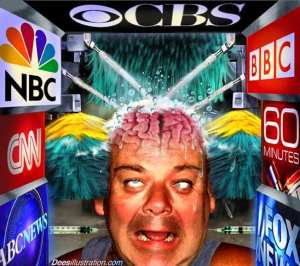
The difference between what we experience and what we’re told we experience creates a social schizophrenia that leads to self-destructive attitudes and behaviors.

What can popular television programs tell us about the zeitgeist (spirit of the age) of our culture and economy?

It’s an interesting question, as all mass media both responds to and shapes our interpretations and explanations of changing times. It’s also an important question, as mass media trends crystallize and express new ways of understanding our era.

Those who shape our interpretation of events also shape our responses.  This of course is the goal of propaganda: Shape the interpretation, and the response predictably follows.

As a corporate enterprise, mass media’s goal is to make money—the more the better—and that requires finding entertainment products that attract and engage large audiences.  The products that change popular culture are typically new enough to fulfill our innate attraction to novelty—but this isn’t enough. The product must express an interpretation of our time that was nascent but that had not yet found expression.

We can understand this complex process of crystallizing and giving expression to new contexts as one facet of the politics of experience.

The Politics of Experience

It is not coincidental that the phrase politics of experience was coined by a psychiatrist, R.D. Laing, for the phrase unpacks the way our internalized interpretation of experience can be shaped to create uniform beliefs about our society and economy that then lead to norms of behavior that support the political/economic status quo.

Here’s how Laing described the social ramifications in Chapter Four of his 1967 book, The Politics of Experience:

“All those people who seek to control the behavior of large numbers of other people work on the experiences of those other people. Once people can be induced to experience a situation in a similar way, they can be expected to behave in similar ways. Induce people all to want the same thing, hate the same things, feel the same threat, then their behavior is already captive – you have acquired your consumers or your cannon-fodder.”

For Laing, the politics of experience is not just about influencing social behavior – it has an individual, inner consequence as well:

“Our behavior is a function of our experience. We act according to the way we see things. If our experience is destroyed, our behavior will be destructive. If our experience is destroyed, we have lost our own selves.”

How the media shapes our interpretation affects not just our beliefs and responses, but our perceptions of self and our role in society. If the media’s interpretation no longer aligns with our experience, the conflict can generate self-destructive behaviors.

In other words, mass media interpretations can create a social schizophrenia that can lead to self-destructive attitudes and behaviors.

Social Analysis of TV

By its very nature as a mass shared experience, popular entertainment is fertile ground for social analysis.

Here’s a common example: what does a child learn about conflict resolution if he’s seen a thousand TV programs in which the “hero” is compelled to kill the “bad guy” in a showdown? What does that pattern suggest, not just about the structure of drama, but about the society that creates that drama?

Analyzing entertainment has been popular in America since the 1950s, if not earlier.  The film noir of the 1950s, for example, was widely deemed to express the angst of the Cold War era.  Others held that the rising prosperity of the 1950s enabled the populace to explore its darker demons—something the hardships and anxieties of the Depression did not encourage.

Many believe the Depression gave rise to screwball comedies and light-hearted entertainment featuring the casually wealthy precisely because these were escapist antidotes to the grinding realities of the era.

Even television shows that were denigrated as superficial in their own time (for example, Bewitched in the 1960s) can be seen as politically inert but subconsciously potent expressions of profound social changes: the “witch” in Bewitched is a powerful young female who is constantly implored by her conventional husband to conform to all the bland niceties of a suburban housewife, but she finds ways to rebel against these strictures.

Laing saw the potential conflict between what we experience and how we’re told to interpret that experience not just in social terms but in psychiatric terms: such splits open a gulf that can lead to a form of schizophrenia.

Diagnosing Our Disease with TV

What can we make of the popular TV series of the present era? What do they say, beneath the surface, about American society?

I contend that popular TV expresses three key aspects of U.S. society and economy that are at odds with the core idealized values espoused in civic classes and the media. The three idealized values are:

1.  America is a meritocracy—selections, admissions, etc., are based on the candidates’ merits

2.  Anyone can get ahead if they get an education and work hard

3.  America is the wealthiest nation on earth in terms of opportunity, fairness and capital

TV expresses three aspects that confound these idealized values:

1.  Life is a game in which the winner takes all

2.  The opportunity to “get ahead” via conventional means—getting educated, working hard, etc.—is a joke; only those who skirt conventions and the law get rich

3.  Life is a tortuous endurance course where those in charge demand the cruel and the impossible

Winner-Take-All Talent Shows

Let’s start with the genre that has been a dominant force in American TV since the 2000s: the winner-take-all talent show (reality and game shows).

The long-running Survivor series, for example, was a winner-take-all contest of physical prowess and political guile, while the many programs staging singing/dancing contests (American Idol, etc.) put entertainment skills to the competitive test.  A wide range of other entries stage competitions in cooking, entrepreneurship, losing weight, negotiating obstacle courses, and so on.

What interpretations of our experience do these highly competitive winner-take-all reality shows promote?

We could start with the fact that the stars (other than the hosts/judges) are apparently ordinary “every man/woman” Americans, i.e. people not unlike us.  Watching them, it is not too much of a stretch to imagine ourselves on stage, in the kitchen, etc., trying to impress the judges with our talents. It’s easy to identify with the contestants.

These shows enable us to vicariously experience the fantasy that we, too, could be on national TV and could win the accolades of the judges and fans and be the winner who takes it all.

This natural empathy with the temporarily famous with whom we can vicariously share the thrill of victory and the agony of defeat is clearly tapping a deep cultural desire to taste celebrity and the implied financial rewards of winning in an increasing winner-take-all society/economy.

Could the financial/political marginalization of the average citizen and the widening gulf between the typical household and those at the top of the fame/wealth pyramid have something to do with this fascination for winner-take-all competitions on the public stage?

Since there have been game shows on TV for decades, it could be argued that this proliferation of winner-take-all contests is nothing new. But this fails to account for the difference between a game show in which the correct answer is a fact and the subjective votes of judges, other players and the audience that count in winner-take-all contests.

I would argue that this recent explosion of competitions (“modern gladiator,” anyone?) is an expression of deeply held shared cultural values: we accept that ours is a highly competitive society, and that it is becoming even more so as the top “winners” skim the vast majority of the winnings (media visibility, wealth, adulation, social status. etc.), leaving a few morsels for the top 5% and nothing but crumbs for the bottom 95%.

But these TV programs also project the fantasy that our fight-to-the-figurative-death society is still a meritocracy—the best guy/gal wins, as judged by “experts” (or celebrities claiming expertise; the judges’ expertise is structured to be unassailable, just like all the other “experts” in our society).

But if we can’t win it all on merit, there is an alternative way to win: display superior political guile or greater popularity with the audience. (Interestingly, this echoes the coliseum audiences of the late Roman era, who also had some sway over who lived to fight another day on the choreographed battlefield below.)

Perhaps this helps explain our collective obsession with celebrity and the many measures of popularity available to everyone now—Instagram, Facebook likes, Twitter followers (for sale in lots of 10,000), Klout scores, and so on.

In other words, as success in the real world grows increasingly distant, vicariously competing and “winning it all” becomes very compelling. Rather than deal with the vast injustices of our system, we cling to the idealized norm that meritocracy matters, even as “winning” in real life is increasingly a game of cronyism, guile, gaming the system, misrepresenting the truth, etc.

And so we thrill to these play-acting displays of meritocracy in action, as it confirms our cultural value system that that despite the predations of Wall Street and Washington, merit still counts.

And when all else fails, we have a fallback source of identity and “winning”—our popularity. And if we don’t have enough of our own, then we can share vicariously in the popularity of TV show winners and celebrities who have reached the pinnacle.

This is the core message of an interesting and erudite half-hour talk on celebrity given by Games of Thrones actor Jack Gleeson:

“During a recent visit to the Oxford Union, Gleeson took the opportunity to dismantle the ‘religious hysteria’ of celebrity worship with an appropriately epic rant, breaking down the economic, psychological, and sociological catalysts for public reverence of celebrities and their negative impact on society as a whole.”

Gleeson draws upon a number of intellectual sources (Weber, Baudrillard, et al.) in his discussion of the contemporary culture of celebrity, and concludes that celebrity fills the void left when development of an authentic self is stunted.

The parallel with Laing’s “lost self” is striking.

In effect, when the opportunities for developing an authentic self have been reduced to popularity, public visibility and the status that flows from these forms of recognition, then the worship of celebrity and the aching desire for a moment in the spotlight become rational substitutes for a True Self.

As these wispy contingencies can never form an authentic selfhood, even those who do “win” the competition for celebrity are ultimately dissatisfied and disillusioned.

My conclusion: the popularity of competitive winner-take-all TV programs reflects the paucity of opportunities for selfhood and the substitution of celebrity worship for the difficult task of forging an independent identity in a society that marginalizes all but the top players.

If this isn’t a form of cultural schizophrenia, then what exactly is it? The claim that this is all just good clean fun is absurd, as is the claim that it’s perfectly healthy to sacrifice one’s identity in a competition for recognition that 99.9% of us are sure to lose.

It Is Important To Honor Those Who Made Others Die For Our Freedom

640Source: Clickhole

As America continues to fight battles both at home and abroad, I am reminded of those who have served our country in previous armed conflicts. Courageous individuals who answered the call and fought to protect the American way of life. Regardless of whether or not we agree with our nation’s military actions, we must always remember to honor those who made others die for our freedom.

I’m talking about the brave men and women in political office who have dedicated their lives to sending American soldiers to die in distant and brutal wars. Legislators and Defense Department officials, CIA directors and the president. No matter how ferocious the enemy, no matter how daunting the battlefield, these patriots are consistently willing to do whatever it takes to defend our nation, even if it means putting individuals other than themselves in harm’s way.

For this, we must honor them.

…these patriots are consistently willing to do whatever it takes to defend our nation…

These are the true American heroes. Senators and state representatives throughout history who battled fearlessly to send thousands of troops to fight in ground invasions. Presidents who bypassed congressional approval to authorize airstrikes in hostile regions. Even when the battle seemed distant and avoidable, these brave politicians were willing to make the ultimate sacrifice for their country: other people’s lives.

And it’s not just legislators and White House officials who deserve our reverence. We must also honor the military strategists, weapons manufacturers, and thousands of lobbyists who have committed themselves to ensuring others perish on the field of battle. These brave individuals who fought valiantly to make other people’s mothers, fathers, daughters, and sons give their lives for our nation’s safety.

No matter our political beliefs, we must look back, from time to time, and remember that the reason we can feel safe as Americans is because of the battles the men and women of our governing bodies forced people other than themselves to die fighting in.

We cannot forget that freedom has a price, and we cannot forget the people who made sure others paid that price.

Zombies are us: The walking dead in the American police state

zombies2_300x250

By John W. Whitehead

Source: Intrepid Report

Fear is a primitive impulse, brainless as hunger, and because the aim of horror fiction is the production of the deepest kinds of fears, the genre tends to reinforce some remarkably uncivilized ideas about self-protection. In the current crop of zombie stories, the prevailing value for the beleaguered survivors is a sort of siege mentality, a vigilance so constant and unremitting that it’s indistinguishable from the purest paranoia.—Terrence Rafferty, New York Times

Fear and paranoia have become hallmarks of the modern American experience, impacting how we as a nation view the world around us, how we as citizens view each other, and most of all how our government views us.

Nowhere is this epidemic of fear and paranoia more aptly mirrored than in the culture’s fascination with zombies, exacerbated by the hit television series The Walking Dead, in which a small group of Americans attempt to survive in a zombie-ridden, post-apocalyptic world where they’re not only fighting off flesh-eating ghouls but cannibalistic humans.

Zombies have experienced such a surge in popularity in recent years that you don’t have to look very far anymore to find them lurking around every corner: wreaking havoc in movie blockbusters such as World War Z, running for their lives in 5K charity races, battling corsets in Pride and Prejudice and Zombies, and even putting government agents through their paces in mock military drills arranged by the Dept. of Defense (DOD) and the Center for Disease Control (CDC).

We’ve been so hounded in recent years with dire warnings about terrorist attacks, Ebola pandemics, economic collapse, environmental disasters, and militarized police, it’s no wonder millions of Americans have turned to zombie fiction as a means of escapism and a way to “envision how we and our own would thrive if everything went to hell and we lost all our societal supports.” As Time magazine reporter James Poniewozik phrases it, the “apocalyptic drama lets us face the end of the world once a week and live.”

Writing for the New York Times, Terrence Rafferty notes:

In the case of zombie fiction, you have to wonder whether our 21st-century fascination with these hungry hordes has something to do with a general anxiety, particularly in the West, about the planet’s dwindling resources: a sense that there are too many people out there, with too many urgent needs, and that eventually these encroaching masses, dimly understood but somehow ominous in their collective appetites, will simply consume us. At this awful, pinched moment of history we look into the future and see a tsunami of want bearing down on us, darkening the sky. The zombie is clearly the right monster for this glum mood, but it’s a little disturbing to think that these nonhuman creatures, with their slack, gaping maws, might be serving as metaphors for actual people—undocumented immigrants, say, or the entire populations of developing nations—whose only offense, in most cases, is that their mouths and bellies demand to be filled.

Here’s the curious thing: while zombies may be the personification of our darkest fears, they embody the government’s paranoia about the citizenry as potential threats that need to be monitored, tracked, surveilled, sequestered, deterred, vanquished and rendered impotent. Why else would the government feel the need to monitor our communications, track our movements, criminalize our every action, treat us like suspects, and strip us of any means of defense while equipping its own personnel with an amazing arsenal of weapons?

For years now, the government has been carrying out military training drills with zombies as the enemy. In 2011, the DOD created a 31-page instruction manual for how to protect America from a terrorist attack carried out by zombie forces. In 2012, the CDC released a guide for surviving a zombie plague. That was followed by training drills for members of the military, police officers and first responders. As journalist Andrea Peyser reports:

Coinciding with Halloween 2012, a five-day national conference was put on by the HALO Corp. in San Diego for more than 1,000 first responders, military personnel and law enforcement types. It included workshops produced by a Hollywood-affiliated firm in . . . overcoming a zombie invasion. Actors were made up to look like flesh-chomping monsters. The Department of Homeland Security even paid the $1,000 entry fees for an unknown number of participants . . .

“Zombie disaster” drills were held in October 2012 and ’13 at California’s Sutter Roseville Medical Center. The exercises allowed medical center staff “to test response to a deadly infectious disease, a mass-casualty event, terrorism event and security procedures” . . .

[In October 2014], REI outdoor-gear stores in Soho and around the country are to hold free classes in zombie preparedness, which the stores have been providing for about three years.

The zombie exercises appear to be kitschy and fun—government agents running around trying to put down a zombie rebellion—but what if the zombies in the exercises are us, the citizenry, viewed by those in power as mindless, voracious, zombie hordes?

Consider this: the government started playing around with the idea of using zombies as stand-ins for enemy combatants in its training drills right around the time the Army War College issued its 2008 report, warning that an economic crisis in the U.S. could lead to massive civil unrest that would require the military to intervene and restore order.

That same year, it was revealed that the government had amassed more than 8 million names of Americans considered a threat to national security, to be used “by the military in the event of a national catastrophe, a suspension of the Constitution or the imposition of martial law.” The program’s name, Main Core, refers to the fact that it contains “copies of the ‘main core’ or essence of each item of intelligence information on Americans produced by the FBI and the other agencies of the U.S. intelligence community.”

Also in 2008, the Pentagon launched the Minerva Initiative, a $75 million military-driven research project focused on studying social behavior in order to determine how best to cope with mass civil disobedience or uprisings. The Minerva Initiative has funded projects such as “Who Does Not Become a Terrorist, and Why?” which “conflates peaceful activists with ‘supporters of political violence’ who are different from terrorists only in that they do not embark on ‘armed militancy’ themselves.”

In 2009, the Dept. of Homeland Security issued its reports on Right-wing and Left-wing Extremism, in which the terms “extremist” and “terrorist” were used interchangeably to describe citizens who were disgruntled or anti-government. Meanwhile, a government campaign was underway to spy on Americans’ mail, email and cell phone communications. Recent reports indicate that the U.S. Postal Service has handled more than 150,000 requests by federal and state law enforcement agencies to monitor Americans’ mail, in addition to photographing every piece of mail sent through the postal system.

Noticing a pattern yet? “We the people” or, more appropriately, “we the zombies” are the enemy.

So when presented with the Defense Department’s battle plan for defeating an army of the walking dead, you might find yourself giggling over the fact that a taxpayer-funded government bureaucrat actually took the time to research and write about vegetarian zombies, evil magic zombies, chicken zombies, space zombies, bio-engineered weaponized zombies, radiation zombies, symbiant-induced zombies, and pathogenic zombies.

However, I would suggest that you take at face value the DOD’s strategy, outlined in “CONOP 8888,” recognizing that, in an age of extreme government paranoia, what you’re really perusing is a training manual for the government in how to put down a citizen uprising or at least an uprising of individuals “infected” with dangerous ideas about freedom. Military strategists seized upon the zombie ruse as a way to avoid upsetting the public should the “fictional training scenario” be mistaken for a real plan. Of course, the tactics and difficulties involved are all too real, beginning with martial law.

As the DOD training manual states: “zombies [read: “activists”] are horribly dangerous to all human life and zombie infections have the potential to seriously undermine national security and economic activities that sustain our way of life. Therefore having a population that is not composed of zombies or at risk from their malign influence is vital to U.S. and Allied national interests.”

So how does the military plan to put down a zombie (a.k.a. disgruntled citizen) uprising?

The strategy manual outlines five phases necessary for a counter-offensive: shape, deter, seize initiative, dominate, stabilize and restore civil authority. Here are a few details:

Phase 0 (Shape): Conduct general zombie awareness training. Monitor increased threats (i.e., surveillance). Carry out military drills. Synchronize contingency plans between federal and state agencies. Anticipate and prepare for a breakdown in law and order.

Phase 1 (Deter): Recognize that zombies cannot be deterred or reasoned with. Carry out training drills to discourage other countries from developing or deploying attack zombies and publicly reinforce the government’s ability to combat a zombie threat. Initiate intelligence sharing between federal and state agencies. Assist the Dept. of Homeland Security in identifying or discouraging immigrants from areas where zombie-related diseases originate.

Phase 2 (Seize initiative): Recall all military personal to their duty stations. Fortify all military outposts. Deploy air and ground forces for at least 35 days. Carry out confidence-building measures with nuclear-armed peers such as Russia and China to ensure they do not misinterpret the government’s zombie countermeasures as preparations for war. Establish quarantine zones. Distribute explosion-resistant protective equipment. Place the military on red alert. Begin limited scale military operations to combat zombie threats. Carry out combat operations against zombie populations within the United States that were “previously” U.S. citizens.

Phase 3 (Dominate): Lock down all military bases for 30 days. Shelter all essential government personnel for at least 40 days. Equip all government agents with military protective gear. Issue orders for military to kill all non-human life on sight. Initiate bomber and missile strikes against targeted sources of zombie infection, including the infrastructure. Burn all zombie corpses. Deploy military to lock down the beaches and waterways.

Phase 4 (Stabilize): Send out recon teams to check for remaining threats and survey the status of basic services (water, power, sewage infrastructure, air, and lines of communication). Execute a counter-zombie ISR plan to ID holdout pockets of zombie resistance. Use all military resources to target any remaining regions of zombie holdouts and influence. Continue all actions from the Dominate phase.

Phase 5 (Restore civil authority): Deploy military personnel to assist any surviving civil authorities in disaster zones. Reconstitute combat capabilities at various military bases. Prepare to redeploy military forces to attack surviving zombie holdouts. Restore basic services in disaster areas.

Notice the similarities? Surveillance. Military drills. Awareness training. Militarized police forces. Martial law. What’s amazing is that the government is not being covert about any of this. As I point out in my book, A Government of Wolves: The Emerging American Police State, it’s all out in the open, for all to see, read and learn from.

If there is any lesson to be learned, it is simply this: whether the threat to national security comes in the form of actual terrorists, imaginary zombies or disgruntled American citizens infected with dangerous ideas about freedom, the government’s response to such threats remains the same: detect, deter and annihilate.

It’s time to wake up, America, before you end up with a bullet to the head—the only proven means of killing a zombie.

Constitutional attorney and author John W. Whitehead is founder and president of The Rutherford Institute. His new book “The Freedom Wars” (TRI Press) is available online at www.amazon.com. Whitehead can be contacted at johnw@rutherford.org. Information about The Rutherford Institute is available at www.rutherford.org.