America’s Future is Liberal Fascism Sporting a Smiley Shirt and Armed With a Syringe

The globalists responsible for engineering a medical tyranny across much of the Western world have something valuable to teach right-wing nationalists and would-be fascists, and that is you don’t sell your damaged product out of the barrel of a machine gun, but rather dripping from the end of a syringe that promises to end all pain and misery.

By Robert Bridge

Source: Covert Geopolitics

Patrick Henry, one of America’s more outspoken Founding Fathers, famously remarked “give me liberty or give me death” when the life of his nation was on the line. Today, America’s famous battle cry has been replaced by a masked and muffled gasp that advises, without hope of a second opinion, “give me lockdowns and keep me safe.” So terrified is the American public of catching a virus that comes with a 99 percent survival rate that they are willing to forego Thanksgiving, the great national holiday commemorating – with no loss of irony – their Pilgrim ancestors’ collective courage to overcome the wild, hostile conditions of their new land.

It must be said that no fascist party has ever been so adept when it came to sealing the collective fate of their people to a common enemy. That’s because the threat facing mankind today, or so we are told, is not some nefarious ideology, like communism, or even a terrorist organization that the masses can be rallied to fight. Rather, the threat is a microscopic contagion that is capable of invading every nook and cranny of our lives. Already the age of manly handshakes is over, replaced by an emasculated majority, while an entire generation of youth now looks at their fellow human beings as infernal germ factories.

And unlike a traditional enemy that can be seen, attacked and eventually defeated, the coronavirus – we have been oddly forewarned – will make landfall again and again, while regularly morphing with comic book abilities into an increasingly deadlier villain. In this landless battle, only the medical authorities are decorated as heroes, while the people, lacking the professional credentials, are forced to be passive and helpless onlookers, their freedom of movement severely constrained. More importantly, the forces of nationalism have become irrelevant; only a globalist, one-world-order response can defeat this pandemic.

There is very good reason to suspect, however, that either the science on all of this is half-baked, or we the people are being intentionally duped on a grand scale. In fact, it’s probably a little bit of both. First, relying on nothing more than empirical evidence, it does not seem unreasonable to suggest that there is no existential emergency confronting mankind. If there were, we would expect to see decomposing bodies piling up in the streets, like in the medieval times during the Black Plague. This would be especially the case among the homeless population, which is certainly not practicing social distancing etiquette as they pass around open containers on street corners.

Nor does there seem to be any massive queuing up at hospitals for emergency treatment. In fact, as early as April, New York Governor Andrew Cuomo told President Trump that the Navy hospital ship USNS Comfort deployed to New York City by the federal government to help fight the coronavirus outbreak was “no longer needed”. Cuomo said the need for the support vessel “didn’t reach the levels that had been projected.” And I am certainly not the only one who has noticed that Covid cases seem to fluctuate curiously with the political climate.

Plenty of hospital rooms. You’ve got that right! https://t.co/lg0Bb2Ai9j

— Richard citizen journalist (@DPotcner) October 28, 2020

Let’s not forget that the overwhelming majority of Covid ‘victims’ recover nicely at home, according to no less of an authority than Anthony Fauci. At the same time, many people who acquire the disease are asymptomatic and never even knew they were infected. Children, meanwhile, seem amazingly impervious to the virus. That is not to say that there has been no sign of a virus this winter season. Of course there has been, just like every year. But while Covid cases may be on the rise in some places, and invisible in others, the death rate from this illness remains low and tumbling, predominantly hitting elderly people already suffering from comorbidities.

There are other reasons to be suspicious that what we are dealing with is not a first-class medical emergency, but rather something much more sinister. Like maybe an excuse for rolling out a Western-made vaccine that carries a microchip implant with tracking technology? Such a claim will sound less fantastic when it is realized that it has already been developed.

It is no secret that just one month before Covid-19 made its dramatic landfall in the United States, purportedly from Wuhan, China, MIT researchers announced a new method for recording a patient’s vaccination history: storing the smartphone-readable data under the skin at the same time a vaccine is administered.

“By selectively loading microparticles into microneedles, the patches deliver a pattern in the skin that is invisible to the naked eye but can be scanned with a smartphone that has the infrared filter removed,” MIT News reported. “The patch can be customized to imprint different patterns that correspond to the type of vaccine delivered.”

Would it surprise anyone to know that the research was funded largely by the Bill and Melinda Gates Foundation, the same family venture that now provides the bulk of funding to the World Health Organization?

In a new interview, Bill Gates authoritatively states that mass public gatherings will not come back “at all” until we have mass vaccination. Who made him king of the world? https://t.co/siW7bZ9yGchttps://t.co/ivaCI8eAEl

— Alternative News (@NewsAlternative) April 4, 2020

Then, in September 2019, ID2020, a San Francisco-based biometric company that counts Microsoft as one of its founding members, announced a new project that involves the “exploration of multiple biometric identification technologies for infants” that is based on “infant immunization.”

We could continue here with a long list of other disturbing technologies that would effectively turn people into walking antennae for the rest of their lives, but the point is hopefully clear: although many people might be willing to accept a vaccine against Covid-19, they probably do not want the extra technological add-ons that people like Bill Gates, a man with zero medical qualifications, seem extremely anxious to include.

“The food supply chain is breaking,” Tyson Foods warns in a full page ad in NYT today pic.twitter.com/5cyusH6L9V

— Ana Swanson (@AnaSwanson) April 26, 2020

So what can Americans expect next? How about ‘Freedom Passes’ that Britons may need before they are able to return to some semblance of normalcy?

According to the Daily Mail, “Britons are set to be given Covid ‘freedom passes’ as long as they test negative for the virus twice in a week, it has been suggested…To earn the freedom pass, people will need to be tested regularly and, provided the results come back negative, they will then be given a letter, card or document they can show to people as they move around.”

And this is what they call a “return to normalcy.”

Personally, I call those plans the approach of fascism. And for those who doubt that it could not happen in America should heed the words of the late sagacious comedian George Carlin, who once quipped that “when fascism comes to America, it will not be in brown and black shirts. It will not be with jackboots. It will be Nike sneakers and smiley shirts.” Had Carlin been alive today to see the tremendous mess we’ve inherited, he would most likely have included a syringe in the neo-fascist’s toolkit.

Tears in Rain: ‘Blade Runner’ and Philip K. Dick’s Legacy in Film

Blade Runner, and the work of Philip K. Dick, continues to find its way into our cinemas and minds. How did the visions of a paranoid loner become the most relevant science fiction of our time?

By Sean Bell

Source: PopMatters

You are an unusual man, Mr. Asher,” the cop beside him said. “Crazy or not, whatever it is that has gone wrong with you, you are one of a kind.”– Philip K. Dick, Flow My Tears, The Policeman Said.
“I’ve seen things you people wouldn’t believe…”
— Roy Batty, Blade Runner.

Los Angeles, 2019. The script simply reads: “Ext. Hades – Dusk”. Chemical flame bursts into the perpetual, post-nuclear Los Angeles gloom from skyscraping smokestacks, rising out of an industrial landscape Hieronymus Bosch might have envisaged. Flying cars flit through the darkness like fireflies. The camera moves slowly over impossible architecture with the immensity and decaying grandeur of ancient Egypt; a phantasmagorical megalopolis strung with necklaces of neon. The music rises.

The last war is over and nobody won. The Earth is living on borrowed time. Science has destroyed all boundaries between the real and unreal except those we choose to impose. Policemen are murderers, androids are lovers, nobody can be trusted, and everybody dies. Welcome back to the world of Blade Runner. Every time we return, it becomes more recognisable. Perhaps we never left.

Santa Ana, 1981. By now, Philip K. Dick — author, religious visionary and possible schizophrenic, who once said “You would have to kill me and prop me up in the seat of my car with a smile painted on my face to get me to go near Hollywood” — has read and approved the shooting script for Blade Runner by Hampton Fancher and David Peoples, as well as viewed a test reel of the movie’s groundbreaking special effects. In an effusive letter to Jeff Walker, the man in charge of the film’s marketing. Dick makes his prophetic opinion clear.

“Let me sum it up this way,” he wrote. “Science fiction has slowly and ineluctably settled into a monotonous death: it has become inbred, derivative, stale. Suddenly you people come in, some of the greatest talents currently in existence, and now we have a new life, a new start. As for my own role in the BLADE RUNNER project, I can only say that I did not know that a work of mine or a set of ideas of mine could be escalated into such stunning dimensions. My life and creative work are justified and completed by BLADE RUNNER… It will prove invincible.” (‘Letter to Jeff Walker regarding Blade Runner on Philip K Dick.com)

Dick, with a writer’s knack, chose the right words. Blade Runner has survived everything that could be thrown at it, including its initial critical reception, successive unsatisfactory edits, and dilution by both the science fiction genre and the film industry, which would plagiarise its vision with varying degrees of shamelessness for the next three decades. Yet nothing has been able to replicate its unique synthesis of elements, melding equal parts noir, action, romance, cyberpunk, dystopia and a meditation on what it means to be human. Whether praised or disparaged, ignored or overexposed, it has seen off all critics and challengers. Blade Runner‘s invincibility endures.

Unfortunately, the inimitable artistic fortitude of Ridley Scott‘s best work also allowed Hollywood to practice its favourite hobby of missing the point. The novels (or rather, in the film industry netherworld, ‘properties’) of Philip K. Dick — a writer largely unappreciated in his own lifetime who, at his lowest, claimed he he could not afford the late fee for a library book and infamously sustained himself on horse meat from a local pet store — have become highly prized and sought-after by studios eager to import intelligent ideas, rather than go through the hassle of conceiving their own. In the (twisted) spirit of Dick’s short story “We Can Remember It For You Wholesale“, no need for originality, we can develop it for you wholesale.

Question the nature of identity with Colin Farrell’s Douglas Quaid /Hauser as he flees the futuristic gunfire in the remake of Len Wiseman’s Total Recall (2012, an adaptation of an adaptation, as it were). Consider the limitations of free will with Tom Cruise’s Chief John Anderton (a well-known fan of unstable science fiction writers) in Steven Spielberg’s Minority Report (2012) while wondering how short he really is. Watch Jon Woo’s Paycheck (2003) and wonder how much Ben Affleck is actually being paid to appear in this piece of shit.

The names change, but the formula remains the same. Each summer, there must be blockbusters, and to fill the gaps in between the explosions with the barest bones of a Phil Dick story is, to the studio mindset, to buy instant, ready-made philosophical depth and artistic worth. Just add CGI!

Improbably, with 11 films based on his work and more in the pipeline, Dick has become the most adapted science fiction author in cinema history… And I’m not sure that’s a good thing.

“It’s a film about whether or not you can have a meaningful relationship with your toaster.” — Harrison Ford on Blade Runner in an interview with The Washington Post, 11 September 1992

That Scott is a director second only to George Lucas in his determination to tinker with a bygone masterwork until it meets his ultimate, exacting satisfaction (at last count, there are seven different versions of Blade Runner floating around the ether, finally culminating in Scott’s so-called ‘final cut’ in 2007), when a startling new interpretation of the film appeared online this June to wild acclaim, he had nothing to do with it. Instead, it was the work of the artist Anders Ramsell, who painstakingly recreated every frame of the movie’s opening 13 minutes with 3,285 gorgeous, haunting, impressionistic watercolours.

Dick, with a writer’s knack, chose the right words. Blade Runner has survived everything that could be thrown at it, including its initial critical reception, successive unsatisfactory edits, and dilution by both the science fiction genre and the film industry, which would plagiarise its vision with varying degrees of shamelessness for the next three decades. Yet nothing has been able to replicate its unique synthesis of elements, melding equal parts noir, action, romance, cyberpunk, dystopia and a meditation on what it means to be human. Whether praised or disparaged, ignored or overexposed, it has seen off all critics and challengers. Blade Runner‘s invincibility endures.

Unfortunately, the inimitable artistic fortitude of Ridley Scott‘s best work also allowed Hollywood to practice its favourite hobby of missing the point. The novels (or rather, in the film industry netherworld, ‘properties’) of Philip K. Dick — a writer largely unappreciated in his own lifetime who, at his lowest, claimed he he could not afford the late fee for a library book and infamously sustained himself on horse meat from a local pet store — have become highly prized and sought-after by studios eager to import intelligent ideas, rather than go through the hassle of conceiving their own. In the (twisted) spirit of Dick’s short story “We Can Remember It For You Wholesale“, no need for originality, we can develop it for you wholesale.

Question the nature of identity with Colin Farrell’s Douglas Quaid /Hauser as he flees the futuristic gunfire in the remake of Len Wiseman’s Total Recall (2012, an adaptation of an adaptation, as it were). Consider the limitations of free will with Tom Cruise’s Chief John Anderton (a well-known fan of unstable science fiction writers) in Steven Spielberg’s Minority Report (2012) while wondering how short he really is. Watch Jon Woo’s Paycheck (2003) and wonder how much Ben Affleck is actually being paid to appear in this piece of shit.

The names change, but the formula remains the same. Each summer, there must be blockbusters, and to fill the gaps in between the explosions with the barest bones of a Phil Dick story is, to the studio mindset, to buy instant, ready-made philosophical depth and artistic worth. Just add CGI!

Improbably, with 11 films based on his work and more in the pipeline, Dick has become the most adapted science fiction author in cinema history… And I’m not sure that’s a good thing.

“It’s a film about whether or not you can have a meaningful relationship with your toaster.” — Harrison Ford on Blade Runner in an interview with The Washington Post, 11 September 1992

That Scott is a director second only to George Lucas in his determination to tinker with a bygone masterwork until it meets his ultimate, exacting satisfaction (at last count, there are seven different versions of Blade Runner floating around the ether, finally culminating in Scott’s so-called ‘final cut’ in 2007), when a startling new interpretation of the film appeared online this June to wild acclaim, he had nothing to do with it. Instead, it was the work of the artist Anders Ramsell, who painstakingly recreated every frame of the movie’s opening 13 minutes with 3,285 gorgeous, haunting, impressionistic watercolours.

The painting technique employed to create this effect is known as aquarelle, which also acts as a sly commentary on Blade Runner‘s repeatedly-rejiggered legacy: because of its transparency, with aquarelle nothing can be painted over — once a mistake has been made, it has to be lived with. But as I watched what Ramsell called his ‘paraphrase’ of the movie, the familiar scenes and faces and voices emerging from the flickering, sensuous wash of colour, it seemed all the more appropriate. Other than Derek Jarman’s Caravaggio, I can think of no other film that so looks like a painting without paint — a piece of art that evokes other art, and yet remains entirely itself.

This is all a long way of saying that Blade Runner is beautiful, in almost every way possible. This has, ridiculously, sometimes been described as being to its detriment: Roger Ebert, one of the film’s more famous naysayers, wrote in a contemporary review in the Chicago Sun-Times that “It looks fabulous… but it is thin in its human story,” (11 September 1992) an oddly myopic remark to make about a parable on the nature of humanity. True, Blade Runner has an embarrassment of style, but never at the expense of substance, much like the best examples of the Cinema du look movement, which was just emerging in French cinema at the time of Blade Runner‘s release. Indeed, in appearance and atmosphere, Blade Runner is so distinct that it changed the aesthetic of science fiction, and new subgenres have since been invented simply to describe it — ‘future noir’, coined by the critic and filmmaker Paul M. Sammon, being the most enduring.

To those who have yet to experience the film, I wonder what to say that has not been said elsewhere. Based on Philip K. Dick’s 1968 novel Do Androids Dream of Electric Sheep?, Blade Runner somehow manages to be simultaneously the truest adaptation of Dick’s work yet produced — in spirit, if not plot — and also the freest in its interpretation of the material.

The central premise remains in both book and film; Rick Deckard (Harrison Ford), halfway between policeman and bounty hunter, makes his living by tracking and killing androids that are almost entirely indistinguishable from humans, living amongst us under false identities. The supposed test for distinguishing real from unreal humans is that of empathy, but as Deckard methodically adds to his ‘artificial’ bodycount, he begins to question who is really the unemotional machine.

Blade Runner dumps much of the novel’s narrative furniture — Scott justified this to Dick by saying: “You know you’re so dense, mate, that by page 32, there’s about 17 storylines” — in a way that, in almost any other adaptation, would be considered sacrilege. Most noticeably, in the novel, Deckard is trapped in a barely functional marriage, while in the movie, Harrison Ford’s laconic protagonist is the classic bachelor gumshoe.

Also prominent in the book are ‘Mercerism’, the religion based around its followers’ empathy for a man whom others were throwing rocks at, and the ‘Mood Organ’, the household device which stimulates any mood the user wishes to experience, and which much of the population now depends on in order to face another bleak, post-apocalyptic day — two tragicomic creations typical of Dick, but too wry to fit with the Blade Runner‘s overall tone. Despite such changes, Dick’s reading of the screenplay convinced him that this film could express his ideas in a way he had not thought possible.

The production could hardly be called smooth. Even before its release, troubling rumours had begun circulating, and as Paul M Sammon wrote ,”by the time BR (Blade Runner) officially completed principle photography in July on 1981, the gossip has become more specific — BR‘s workload had been horrendous, its shooting conditions miserable, and its director, difficult. Moreover, the whispers went, BR’s moneymen were unhappy, its leading man had clashed with his director, and the crew had been near revolt.” Some of these stories were indeed true, but one should bear in mind that movie moneymen are nearly always unhappy, and Harrison Ford will always be the man who told George Lucas that “you can type this shit, but you sure as hell can’t say it.”

Paranoia Runs Through Blade Runner Like a Knife Edge

When Blade Runner was first released, the reviews ran from lukewarm to underwhelmed to baffled, a fact that many critics have been doing their best to forget in the intervening years, polishing the film’s legend in a frantic effort to make up for missing the boat first time round. Considered today, in our gleaming plastic future of bad credit and worse politics, where we are reliant not on humanised robots but dehumanising gadgets, and where much of the movie’s retro-futurism appears as quaint as it does prescient, what is left to say about Blade Runner?

Should I recite the plaudits that have become ritualistic? Should I point out the Roy Batty’s (Rutger Hauer) ‘tears in rain’ monologue is among the most moving and eloquent ever written or performed? Or that Vangelis revolutionised jazz, electronic music and film scoring simultaneously in one of the best soundtracks ever composed? Is it really necessary to highlight the acting of all involved; Harrison Ford as one of the best soulful detectives to grace noir of any kind, an understated and heartbreaking Sean Young (as Rachael), a dangerous but innocent Daryl Hannah (as Pris), or Rutger Hauer’s mixture of the psychotic and the Shakespearean? Do I need to praise the costumes, the set design, or the script which balances so many themes, so many hidden or implied meanings, with such grace and economy?

Well, yes. You want a criticism of Blade Runner? I would’ve liked more of Edward James Olmos’ Gaff. He’s cool. I also want Deckard’s coat.

But we need to be reminded of these things, every now and again, as each new generation discovers the film afresh, and especially when the next logical question becomes: how did Blade Runner get it so right, more so than any other adaptation of Dick’s work since? What did it understand that they did not? To try and answer that, we have to go back to the source.

“Phil acknowledged that his talk sometimes sounded like “religious nonsense & occult nonsense” — but somewhere in it all was the truth. And he would never find it. God himself had assured him of that.” — Lawrence Sutin, Divine Invasions: A Life of Philip K. Dick.

In 2000, at the one and only Disinfo Con — a friendly gathering of millennial deviants concerning all things ‘counterculture’ — Grant Morrison, a writer who could arguably be counted as one of Dick’s prodigious bastard literary offspring, opened his keynote speech marvelling at the fact he spent his youth reading Robert Anton Wilson and now, all these years later, “we’re standing here, we’re talking about this shit and it’s real.”

Fans of Philip K. Dick have been feeling like that since at least the ’70s, when the dark realities on the other side of the Drug Revolution and the true possibilities of an all-powerful Nixonian surveillance state were becoming painfully apparent. Then as now, we use Dick’s paranoia to express our own.

Dick once commented that, with the making of Blade Runner, what had once been a private world that only he inhabited was now open to all; they would live in its murky depths, just as he did every day. At first, one might think that a paranoid and delusional visionary — and I use the word in its most literal sense — would want nothing more than for others to see and experience what he does. But perhaps Dick didn’t want anyone in his world. Maybe he didn’t think his world should be suffered by anyone else.

The fantastic, tortured mind of Philip K. Dick has been discussed, analysed and treated like an object of supreme curiosity since his death in 1982 (a few months shy of Blade Runner‘s release) and before. He had eked out an impoverished existence writing science fiction since the ’50s, when it was less a genre than a ghetto, and could only make a living by producing at a furious pace which he fuelled with huge amounts of amphetamines, at one point producing 12 novels over the course of two years.

But Dick was ever a seeker of truth, which made him, strangely, something of an oddity in science fiction. Within these novels, beneath the aliens and spaceships, moon colonies and interstellar wars, was arguably the best satire being done in science fiction on American life outside of Kurt Vonnegut‘s oeuvre, the philosophical undertones and untrammelled, often gothic imagination of which called to mind Jorge Luis Borges more than Isaac Asimov. The uniting thread that runs through his work — and, eventually, his life — is the notion that reality, as we know it, is fundamentally untrustworthy.

As the ’60s wore on, Dick’s involvement with the drug culture increased, adding a psychedelic aspect to both his ever-evolving philosophy and his ever-present paranoia. In 1971, Dick experienced a defining moment: his home was broken into, his safe blown open, and many of his personal papers burglerized. He never discovered who was responsible, though he had many suspects — local drug addicts, Black Panthers, the police, the FBI, the Soviets, or any of these, pretending to be one of the others.

The effect it left on Dick was to give him proof, unexplained and terrifying, that his paranoia was somehow justified. There had been comfort in simply telling himself he was crazy. But after years of grappling with his mental health, someone, it seemed, truly was out to get him.

“I mean,” he told the Aquarian magazine in a 1974 interview, “it’s a very frightening thing when the head of a police department tells you that you better leave the county because you have enemies, and you don’t know who these enemies are or why you’ve incurred their wrath.”

When one is peripherally aware of one’s own tenuous psychological condition (which we must be, we tell ourselves, if we have any hope of overcoming it), the uninitiated cannot imagine the sheer anguish, the self-doubt, the fear that follows when you know you cannot trust your own mind, and you cannot trust anyone to help you. The luckiest paranoids are also egotists, or better yet, megalomaniacs; they face the lurking forces of imagined persecution with a defiant roar or a knowing smirk.

Dick, on the other hand, was a sensitive, fragile, frightened soul, as well as a possible undiagnosed schizophrenic. His subsequent religious experiences — a series of hallucinations in which a beam of pink light connected him with a “transcendentally rational mind” — may have been his brain’s attempt to soothe his paranoia, or merely the next stage of his mental instability. In either case, as always, it provided inspiration for another novel.

Critics and biographers often talk about Dick’s paranoia and delusions like they were shocking fashion statements or extreme political opinions — just another interesting aspect to the bizarro image of a literary titan. What they don’t say, although the evidence is all around us, is that Dick’s paranoia is ours, as well. Ours may not have such colourful outlets or dramatic results, but we shall always carry our paranoia with us. It cannot be blotted out. There will forever be dark fears lurking in the deeper pools of our mind about our untrustworthy friends, co-workers, policemen, criminals, the FBI, the CIA, the Communists, the aliens, or God himself… and beyond. Existence will always be open to question, forever taunting us with its uncertainty. We can’t trust reality, but we have to live there.

This paranoia runs through Blade Runner like a knife edge. You cannot trust others, or yourself. You cannot trust your memories, your past, or your future. The entire world may be against you, even if it doesn’t appear to be. Then again, you don’t have to like it.

The heroes and villains of Blade Runner do not like, or accept, the oppression of the paranoid worldview. Deckard fights a series of seemingly impossible battles, even against what he thought was true, and finds romance where it should be impossible. Roy Batty, the leader of the renegade replicants, fights against death itself, seeking to extend and outlive his designer-mandated expiration date. The inhuman fights to become human, so humans must prove their humanity. This is the message at Blade Runner‘s core, and it has never been replicated.

Near the end of Dick’s 1976 novel Radio Free Albemuth, the protagonist, an author surrogate for Dick who also writes pulp science fiction, is faced by a gloating representative of the government conspiracy that the writer has become entangled with, who coolly informs him they will continue to put out books under his name — lurid trash scattered with a few of the author’s trademark concepts to keep it recognisable for his fans, but encoded with non-too-subtle propaganda messages designed to keep its readers afraid and unenlightened.

At our most cynical, it’s sometimes difficult not to think of Hollywood the same way: trading on Dick’s name and style and core ideas, but discarding the message and the mind behind them.

Authors often have to face a string of misfires and misinterpretations before their work gets the cinematic treatment it deserves; Dick, on the other hand, got a masterpiece on the first go. And it remains ours to enjoy: Blade Runner, as Dick wrote, is invincible.

Maybe it’s finally time for Hollywood to leave the legacy of Philip K. Dick at the local bookstore, where it belongs.

“What matters to me is the writing, the act of manufacturing the novel, because while I am doing it, at that particular moment, I am in the world I am writing about. It is real to me, completely and utterly. Then, when I’m finished, and I have to stop, withdraw from that world forever — that destroys me… I promise myself: I will never write another novel. I will never again imagine people from whom I will eventually be cut off. I tell myself this… and, secretly and cautiously, I begin another book.” — Philip K. Dick, “Notes Made Late At Night By A Weary SF Writer”, 1968.

Here’s Why You Should Skip the Covid Vaccine

By Mike Whitney

Source: The Unz Review

“The world has bet the farm on vaccines as the solution to the pandemic, but the trials are not focused on answering the questions many might assume they are.”
Peter Doshi, associate editor of the British Medical Journal and assistant professor of pharmaceutical health services research at the University of Maryland School of Pharmacy

“The difference between genius and stupidity is that genius has its limits.”
Albert Einstein

The new Covid vaccines will make billions of dollars for the big pharmaceutical companies, but here’s what they won’t do:

  1. The vaccines will not cure Covid
  2. The vaccines will not prevent people from contracting Covid
  3. The vaccines will not prevent Covid-related hospitalizations
  4. The vaccines will not prevent Covid-caused deaths

Now, I know what you’re thinking. You’re thinking, “If the vaccine does not protect me from getting Covid (or dying from Covid), then why should I take it?”

And the answer is: “You shouldn’t. It makes no sense at all, especially in view of the fact that new vaccines pose considerable risks to one’s health and well-being.

“Risks,” you say? “No one said anything about risks. I thought this wonderful new Covid cure was entirely risk-free; just take the jab and– Presto– life goes back to normal.”

Wrong. There are risks, significant risks that the media and the medical establishment have papered-over with their ridiculous Happy Talk about “miracle” vaccines. But all of this is just public relations hype designed to hoodwink people into injecting themselves with a dubious substance that does NOT do what it’s supposed to do, and which DOES pose serious long-term risks to one’s health.

So, let’s dig a little deeper into this question of risks and see what are the experts saying. Check out this excerpt from an “Open Letter From: UK Medical Freedom Alliance To: The Joint Committee on Vaccination and Immunization… for COVID-19 in the UK.”:

“It is worrying that recent Parliamentary discussions seem to not attach proper weight to any concern about vaccine risks and the right to informed consent, while focusing solely on strategies to increase the uptake of vaccines in the general population.

Inadequate Assessment of the Public Health Risk from a Covid Vaccine

In a recent letter to the British Medical Journal (BMJ), physician Arvind Joshi warned against the disaster that could result from this misguided policy and outlined the serious risks involved to the public and other serious issues that are being taken if a Covid Vaccine is rushed out without thorough and adequate safety and efficacy testing:

“Adverse effects like Subacute Sclerosing Pan Encephalitis, Ascending Polyneuritis, Myopathies, Autoimmune Diseases, and rarer chance of triggering development of malignancies are most dreaded possibilities.“...“The rush for the Vaccines should not lead to disaster.” (Note: There is a more comprehensive list of potential ‘bad outcomes’ in the link to the article.)

Virus-vectored and genetically engineered vaccines could undergo recombination or hybridization with unpredictable outcomes.…Previous attempts to develop coronavirus and other vaccines e.g., RSV and dengue, have been hampered by the problem of ‘antibody dependent enhanced immunity’(ADEI), which has led to severe illness and deaths in the animals and human subjects involved in the trials28. This phenomenon only becomes apparent after vaccination, when the subject is exposed to wild virus at some point in the future. Worryingly, the Covid Vaccine trials have not been conducted in a way to exclude the possibility of this serious sequalae occurring months or years after vaccination...

Late onset adverse vaccine effects such as Subacute Sclerosing Pan Encephalitis (SSPE),Ascending Polyneuritis, Myopathies, Autoimmune Diseases, Infertility and Cancers cannot be ruled out with short duration trials.” (“Open Letter From: UK Medical Freedom Alliance To: The Joint Committee on Vaccination and Immunization… for COVID-19 in the UK.”)

It’s all very technical, but the truth is plain to see: There are serious risks associated with taking the Covid-19 vaccine. Most vaccine recipients will experience only minor aches and pains but some will undoubtedly get quite ill and permanently damage their health. No one really knows for sure because there have been no long-term trials. The Covid vaccine has been fast-tracked from Day 1. So, the question is: Do the benefits outweigh the risks. And, in this case, they clearly don’t. The chances of getting violently sick or dying from Covid are very slight, (IFR is 1 in 400) while the (potential) adverse effects from the vaccine are spelled out above. Why would anyone roll the dice on a vaccine that does not prevent one from contracting Covid, does not protect one from hospitalization, and will not prevent one from dying? That’s just not a good tradeoff. Here’s more from an article at Forbes:

“Prevention of infection must be a critical endpoint…(But) Prevention of infection is not a criterion for success for any of these vaccines. In fact, their endpoints all require confirmed infections and all those they will include in the analysis for success, the only difference being the severity of symptoms between the vaccinated and unvaccinated. Measuring differences amongst only those infected by SARS-CoV-2 underscores the implicit conclusion that the vaccines are not expected to prevent infection, only modify symptoms of those infected“…

“We all expect an effective vaccine to prevent serious illness if infected. Three of the vaccine protocols…do not require that their vaccine prevent serious disease only that they prevent moderate symptoms which may be as mild as cough, or headache.” (“Covid-19 Vaccine Protocols Reveal That Trials Are Designed To Succeed”Forbes)

Can you see what’s going on? “Prevention” is not even a primary objective. The standard for success in these trials is whether the vaccine mitigates Covid symptoms in people who test positive. But who cares about symptoms? What people care about is dying. That’s why people are so eager to get vaccinated, because they think it will eliminate the threat of dying.

This is a critical point, and one that is well worth mulling over.

Why?

Because it helps to illustrate how the vaccine campaign is built on a foundation of lies and deception. For example, when the drug companies boast that their product is “95% effective”, it does NOT mean that– if you get vaccinated– you will be immune to Covid. It doesn’t even mean that you won’t get violently ill and die. All it means is that the vaccine reduced the symptoms of some of the people in the trials who tested positive.

Did you know that?

Of course, you didn’t. You thought that if you took the vaccine, you’d be protected from Covid, because that is the logical assumption that anyone would make. Most people equate vaccines with immunity. The drug companies know that which is why they’re exploiting people’s ignorance and deliberately obfuscating the truth. They want people to continue to believe that vaccination is a protective shield that will save them from sickness and death. But it’s not. It’s a bunch of baloney.

Bottom line: Vaccine “effectiveness” is not measured in terms of “preventing infection”. It relates to the vaccine’s impact on symptoms. Here’s more from Forbes:

“One of the more immediate questions a trial needs to answer is whether a vaccine prevents infection. If someone takes this vaccine, are they far less likely to become infected with the virus? These trials all clearly focus on eliminating symptoms of Covid-19, and not infections themselves….

It appears that all the pharmaceutical companies assume that the vaccine will never prevent infection. Their criteria for approval is the difference in symptoms between an infected control group and an infected vaccine group. …

A greater concern for the millions of older people and those with preexisting conditions is whether these trials test the vaccine’s ability to prevent severe illness and death. Again, we find that severe illness and death are only secondary objectives in these trials. None list the prevention of death and hospitalization as a critically important barrier….

These protocols do not emphasize the most important ramifications of Covid-19 that people are most interested in preventing: overall infection, hospitalization, and death. It boggles the mind and defies common sense that the National Institute of Health, the Center for Disease Control, the National Institute of Allergy and Infectious Disease, and the rest would consider the approval of a vaccine that would be distributed to hundreds of millions on such slender threads of success.

It appears that these trials are intended to pass the lowest possible barrier of success.” (“Covid-19 Vaccine Protocols Reveal That Trials Are Designed To Succeed“, Forbes)

The author is right, isn’t he? If the vaccine doesn’t prevent infection, it’s not worth taking. Period. And yet, all these high-falutin organizations are on-board with this farce. It’s a disgrace. We’re not even talking about a “low bar” for success here. We’re talking about “no bar”. If people are concerned about symptoms, they’d be better off taking an aspirin and leaving it at that. There’s no need to inject themselves with some hybrid cocktail that no one has the slightest idea of what the long-term effects might be. That’s just reckless.

Like we said earlier, the real issues are being cleverly concealed by the people in charge who are hyping the “95% effective” nonsense to hoodwink people into cooperating. It’s blatantly dishonest.

And here’s something else to think over: What do we really know about these miraculous vaccines that are supposed to lead us out of our “public health crisis”?

Not much. We know that they’re being rushed to market. We know that they were delayed for political reasons. We know the science is being shaped by the politics. We know that vaccine development typically takes 10 years, and that “rushed” vaccine development takes 3 years, and that the upcoming batch of dubious vaccines will have taken roughly 8 months.

8 months!

Do you find that reassuring? Does that make you want to push your way to the front of the line on Vaccine Day? And are you surprised that a large sampling of medical professionals has decided they aren’t going to take the vaccine until it’s been out for at least a year??

And here’s another thing: The pharmaceutical giants don’t even know if their vaccines will stop transmission or not. I’m not kidding, they really don’t know. So– along with the fact that the vaccine will not provide immunity– it also will not stop the spread of the infection which means, the pandemic will continue.

Don’t you think the public is entitled to know this?

And let’s not forget that these so called “vaccines” don’t really fit the traditional definition of vaccine at all. The CDC defines a vaccine as: “A product that stimulates a person’s immune system to produce immunity to a specific disease, protecting the person from that disease.”

And the CDC defines “immunization” as:

“A process by which a person becomes protected against a disease through vaccination. This term is often used interchangeably with vaccination or inoculation.”

Well, we’ve already shown that the new vaccines do not necessarily provide immunity, so the question is whether they actually “stimulate a person’s immune system” or if the “vaccine” moniker was simply preserved as a promotional device to dupe the public? Here’s some background from an article at RT:

The type of vaccine being developed against Covid-19 has never been used before, outside of Ebola. Some people feel that they should not really be called vaccines, because they are completely different from anything that has gone before.

Up to now, vaccination has meant injecting a dead virus (or bacteria), or one that has been weakened and can only poorly replicate, or parts of the virus, or suchlike. Once inside the body, the immune system spots this ‘alien’ material, and creates a response against it, which will hopefully be remembered for years and years. The next time the dangerous virus appears, the body will use the immune memory of something very similar, to wipe out the virus (or bacteria) at high speed, giving it no chance to do damage

Now, we have a thing called a messenger RNA vaccine (mRNA). RNA is, effectively, a single strand of DNA – the double helix that sits within our cells and makes up our genetic code. Many viruses are made up of a single strand of RNA, surrounded by a protein sphere. They enter the cell, take over the replication systems, make thousands of copies of themselves, then exit the cell. Sometimes killing the cell as they do so, sometimes exiting more gently. Covid19 (Sars-Cov2) is an RNA virus.

Knowing this, rather than attempting to create a weakened virus, which can take years, or break the virus into bits, the v accine researchers decided to use Sars-Cov2’s RNA against itself. To do this, they isolated the section of RNA which codes for the ‘spike’ protein – which is the thing the virus uses as a ‘key’ to enter cells…

These spike proteins then leave the cell – somehow or other, this bit is unclear. The immune system comes across them, recognizes them as ‘alien’ and attacks. In doing so, antibodies are created, and the immune memory system kicks into action. If, later on, a Sars-Cov2 virus gets into the body, the immune system fires up and attacks the remembered spike protein. Hopefully killing the entire virus.” (“As a doctor, people ask me if it’s safe to take a new Covid vaccine“, RT)

It’s all very complicated and cutting-edge, but what’s clear is that “Messenger RNA” and “spike’ protein” are a far-cry from plain-old dead virus which has worked just fine for decades. It’s hard to understand why the drug companies decided to reinvent the wheel in trying to settle on an antidote for Covid. Even so, this new state-of-the-art technology does have its drawbacks as was pointed out in the letter by the researchers in the Medical Freedom Alliance. Here’s what they said:

“Several Covid Vaccines involve the use of a completely new technology -mRNA vaccination -whose large-scale use in healthy human subjects is unprecedented and long-term effects unknown. Exogenous mRNA is inherently immunostimulatory, and this feature of mRNA could be beneficial or detrimental. In addition, a study found evidence of molecular mimicry …

Virus-vectored and genetically engineered vaccines could undergo recombination or hybridisation with unpredictable outcomes….Previous attempts to develop coronavirus and other vaccines e.g., RSV and dengue, have been hampered by the problem of ‘antibody dependent enhanced immunity’(ADEI), which has led to severe illness and deaths in the animals and human subjects involved in the trials. This phenomenon only becomes apparent after vaccination, when the subject is exposed to wild virus at some point in the future. Worryingly, the Covid Vaccine trials have not been conducted in a way to exclude the possibility of this serious sequalae occurring months or years after vaccination.” (“Open Letter From: UK Medical Freedom Alliance To: The Joint Committee on Vaccination and Immunization… for COVID-19 in the UK.”)

The point is, the effects of injecting a hybrid concoction into one’s body could be quite serious. We just don’t know what the long-term effects will be, and we probably won’t know because the vaccine is going to be rushed into distribution before those trials can be conducted. This is not a sensible strategy for dealing with the virus. It is needlessly reckless and, perhaps, lethal. Here’s more from an article at the Jerusalem Post:

“There is a race to get the public vaccinated, so we are willing to take more risks,” Tal Brosh, head of the Infectious Disease Unit at Samson Assuta Ashdod Hospital, told The Jerusalem Post…..

“We will have a safety profile for only a certain number of months, so if there is a long-term effect after two years, we cannot know,” Brosh said, adding that we could wait two years to discover them, “but then we would have the coronavirus for two more years.”…

(Brosh) acknowledged that there are unique and unknown risks to messenger RNA vaccines, including local and systemic inflammatory responses that could lead to autoimmune conditions….. An article published by the National Center for Biotechnology Information, a division of the National Institutes of Health, said other risks include the bio-distribution and persistence of the induced immunogen expression; possible development of auto-reactive antibodies; and toxic effects of any non-native nucleotides and delivery system components…

(Michal) Linial ( a professor of biological chemistry at the Hebrew University of Jerusalem, ) expressed similar sentiments: “Classical vaccines were designed to take 10 years to develop. I don’t think the world can wait for a classical vaccine.”….But when asked if she would take the vaccine right away, she responded: “I won’t be taking it immediately – probably not for at least the coming year,” she told the Post. “We have to wait and see whether it really works.” (“Could mRNA COVID-19 vaccines be dangerous in the long-term?“, The Jerusalem Post)

Great, so the “professor of biological chemistry” isn’t going to take the vaccine, but it’s okay for ordinary people like you and me??

Give me a break. Professor Linial’s reluctance is a tacit admission that the vaccine is not safe. What else could it mean? Here’s more from the same article:

“In order to receive Food and Drug Administration approval, the companies will have to prove there are no immediate or short-term negative health effects from taking the vaccines. But when the world begins inoculating itself with these completely new and revolutionary vaccines, it will know virtually nothing about their long-term effects.” (The Jerusalem Post)

Well, that’s just dandy. We know the vaccines won’t prevent infection, hospitalization or death. We also know they are “are completely different from anything that has gone before”. We also know they won’t stop transmission, and that their long-term safety is very much in doubt. Even so, our leaders– who lie to us about virtually everything– want us to click our heels and submissively take “the jab” whether we want to or not.

In my opinion, the risks of vaccination far outweigh the benefits. I would rather trust my own auto-immune system (and the new treatments, medications and therapies) then be guinea pig in Big Pharma’s sinister lab experiment.

“Thanks, but no thanks”.

Biden Appointee Spread Russian Hacker Conspiracy

Neera Tanden, who President-elect Joe Biden nominated to serve as Director of the Office of Management and Budget, speaks at The Queen theater, Tuesday, Dec. 1, 2020, in Wilmington, Del. (AP Photo/Andrew Harnik)

How can Democrats oppose unhinged conspiracy theories while empowering its worst purveyors?

By Glenn Greenwald

Source: Scheerpost

The announcement that Joe Biden intends to nominate Neera Tanden as his Director of the Office of Management and Budget — a critical position overseeing U.S. economic and regulatory policy — triggered a wide range of mockery, indignation and disgust from both the left and the right. That should not be surprising: though a thoroughly mediocre and ordinary D.C. swamp creature from the perspective of both ideology and competence, Tanden’s uniquely unhinged, venomous, corrupt and pathologically dishonest conduct as a Clinton Family and DNC apparatchik and President of the corporatist-and-despot-funded Center for American Progress (CAP) has earned her a list of enemies far longer and more impressive than her accomplishments.

When news of her appointment broke, many of the journalists and activists she has spent years abusing, slandering, and lying about instantly stepped forward to compile just some of her worst political and behavioral lowlights. And some preliminary signs emerged that she might encounter difficulty in obtaining the Senate confirmation needed for her to assume this position. The Communications Director for GOP Senator John Cornyn of Texas announced that “Tanden stands zero chance of being confirmed” by the Senate.

Former Sanders campaign aide David Sirota hypothesized that “it is not a coincidence that they are putting Neera Tanden — the single biggest, most aggressive Bernie Sanders critic in the United States of America — specifically at OMB while Sanders is Senate Budget Committee ranking/chair.” Sirota’s statement suggests Biden’s nomination of Tanden was intended as yet more humiliation doled out to the Democratic-loyal Sanders left by cucking the Vermont Senator even further by forcing him to shepherd the confirmation of one of his most vicious and amoral attackers (who Sanders himself in 2019 vehemently denounced). But Sirota’s point also raises the prospect that Tanden’s nomination could even encounter trouble from that side of the aisle as well (given Sanders’ compliant and disciplined conduct over the last six months, it’s more likely we will see him roll out a literal red carpet for Tanden to walk on, gently toss red roses on it before she passes, and then serve her a glass of Chardonnay rather than meaningfully obstruct her confirmation).

The list of sociopathic and even monstrous acts from Tanden is too long to list comprehensively. She punched one of her own employees, a reporter for CAP’s now-abolished blog ThinkProgress, after he had the temerity to ask Hillary Clinton in 2008 about her support for the Iraq War (Tanden claimed she “merely” had “pushed,” not punched, her undeferential reporter). In 2011, as the Obama administration was participating in the NATO bombing of Libya, Tanden suggested in internal CAP discussions that the U.S. steal Libya’s oil as a way of reducing the U.S. deficit (a story I was able to report only because Tanden had abused and alienated so many of her employees that they worked together to leak her incriminating emails to me).

During her tenure as CAP’s President, Tanden accepted millions of dollars from the regime of the United Arab Emirates, which built Dubai and Abu Dhabi using slave labor, along with massive donations from Facebook, Google, Microsoft, J.P. Morgan, the Walton Family and Michael Bloomberg, while hiding the identity of some of her think tank’s largest donors. A huge chapter on the NYPD’s abusive policies toward Muslims under Mayor Michael Bloomberg was removed from a CAP report after Boomberg donated more than $1 million to Tanden’s organization, and he continued to donate even more after that courteous gesture.

She ordered the supposedly independent journalists of the ThinkProgress blog, including Muslim writers, to stop writing critically about Israel after key CAP donors, including Barney Frank’s sister Ann Lewis and long-time Clinton advisor Howard Wolfson, complained. She and Wolfson plotted in 2016 how to weaponize female journalists and people of color against Hillary’s critics as well to use their identity to stigmatize and thus stop undesirable coverage from The New York Times. In 2018, she outed a CAP employee at a staff-wide meeting who had filed an anonymous complaint of sexual harassment and retaliation against one of Tanden’s male allies. Secure with her UAE-and-corporate-funded large salary, she has long urged cuts to Social Security. The list goes on and on.

Edward Snowden On Big Tech Companies, Like Facebook, Censoring & Controlling Information

By Arjun Walia

Source: Collective Evolution

Glenn Greenwald is no stranger to censorship, he’s the journalist who worked with Edward Snowden (NSA mass surveillance whistleblower)  to put together his story and release it to the world while working for the Guardian. He eventually left the Guardian and co-founded his own media company, The Intercept, an organization that would be free from censorship and free to report on government corruption and wrong-doings of powerful people and corporations. He recently resigned from The Intercept as well due to the fact that they’ve now censored him, and is now completely independent. You can find his work here.Glenn Greenwald is no stranger to censorship, he’s the journalist who worked with Edward Snowden (NSA mass surveillance whistleblower)  to put together his story and release it to the world while working for the Guardian. He eventually left the Guardian and co-founded his own media company, The Intercept, an organization that would be free from censorship and free to report on government corruption and wrong-doings of powerful people and corporations. He recently resigned from The Intercept as well due to the fact that they’ve now censored him, and is now completely independent. You can find his work here.Glenn Greenwald is no stranger to censorship, he’s the journalist who worked with Edward Snowden (NSA mass surveillance whistleblower)  to put together his story and release it to the world while working for the Guardian. He eventually left the Guardian and co-founded his own media company, The Intercept, an organization that would be free from censorship and free to report on government corruption and wrong-doings of powerful people and corporations. He recently resigned from The Intercept as well due to the fact that they’ve now censored him, and is now completely independent. You can find his work here.

Anybody who reports on or sheds a bright light onto immoral and unethical actions taken by governments and the powerful corporations they work with has been subjected to extreme censorship. In the case of Edward Snowden, he’s been exiled, and Julian Assange of Wikileaks is currently clinging to his life for exposing war crimes and other unethical actions by multiple governments and corporations. There are many other examples. What does it say about our civilization when we prosecute those who expose harm, corruption, immoral/unethical actions by governments and war crimes?

Greenwald recently interviewed Snowden about internet censorship and the role big tech companies and governments are playing. Greenwald explains that in one of his earliest meetings with Snowden, he (Snowden) explained that he was driven in large part by the vital role the early internet played in his life, “one that was free of corporate and state control, that permitted anonymity and exploration free of monitoring, and, most of all, fostered unrestrained communication and dissemination of information by and among citizens of the world without corporate and state overlords regulating and controlling what they were saying.

This is what he and Snowden go into in the interview posted below. Prior to that I provide a brief summary of Snowden’s key thoughts.

Snowden starts off by mentioning government surveillance programs and the companies they contracted to do this work and compares them to modern day Big Tech giants censoring information on a wide range of topics. We see this today with elections/politics, to medical information dealing with coronavirus and vaccines, for example.

“In secret, these companies had all agreed to work with the U.S. Government far beyond what the law required of them, and that’s what we’re seeing with this new censorship push is really a new direction in the same dynamic. These companies are not obligated by the law to do almost any of what they’re actually doing but they’re going above and beyond, to, in many cases, to increase the depth of their relationship (with the government) and the government’s willingness to avoid trying to regulate them in the context of their desired activities, which is ultimately to dominate the conversation and information space of global society in different ways…They’re trying to make you change your behaviour… – Snowden

So basically, these Big Tech companies have become slaves, if you will, to the governments will, or at least powerful people situated in high places within the government. Snowden brings up the fact that many of these companies are hiring people from the CIA, who come from the Pentagon, who come from the NSA, who have top secret clearances…The government is a customer of all the major cloud service providers. They are also a major regulator of these companies, which gives these companies the incentive to do whatever they want.

This is quite clear if you look at Facebook, Google and Amazon employees. There are many who have come from very high positions within the Department of Defense.

In no case is this more clear than Amazon – Snowden

Amazon appointed Keith Alexander, director of the NSA under Barack Obama.

He was one of the senior architects of the mass surveillance program that courts have repeatedly now declared to be unlawful and unconstitutional….When you have this kind of incentive from a private industry to maintain the warmest possible relationship with the people in government, who not just buy from you but also have the possibility to end your business or change the way you do business…You now see this kind of soft corruption that happens in a constant way. – Snowden

Snowden goes on to explain how people get upset when government, especially the Trump government, tries to set the boundaries of what appropriate speech is by attempting to stop big tech censorship, he then says,

If you’re not comfortable letting the government determine the boundaries of appropriate political speech, why are you begging Mark Zuckerberg to do it?

I think the reality here is…it’s not really about freedom of speech, and it’s not really about protecting people from harm…I think what you see is the internet has become the de facto means of mass communication. That represents influence which represents power, and what we see is we see a whole number of different tribes basically squabbling to try to gain control over this instrument of power.

What we see is an increasing tendency to silence journalists who say things that are in the minority.

You can watch the full conversation between Greenwald and Snowden below, the conversation is about 40 minutes long.

Closing Comments: This kind of information almost begs the question, are we ready as a society to truly create and disseminate journalism that is honest, integral and bi-partisan? Why is it that these types of organizations fail or struggle? How do some media companies fail? Well, they no longer stay true to their mission. They fall to the pressure of politics and fall into ideology. How many other times did ideology change what media outlets reported? Yes, it’s almost impossible to have zero bias, but how close can we get to zero? How can we achieve this when media outlets who do not fit within the accepted framework and disseminate information that challenges the popular opinion are constantly being punished for simply putting out information?

As Snowden mentioned above, these Big Tech companies in collusion with governments are literally attempting to not only censor information, but change the behaviour of people as well, especially journalists. When you take away one’s business or livelihood as a result of non-compliance, you are in a way forcing them to comply and do/say things you they way you want them done/said. We’ve experienced massive amounts of censorship and demonetization here at Collective Evolution, but we haven’t changed as a results of it. We simply created CETV, a platform that helps support our work as a result of censorship.

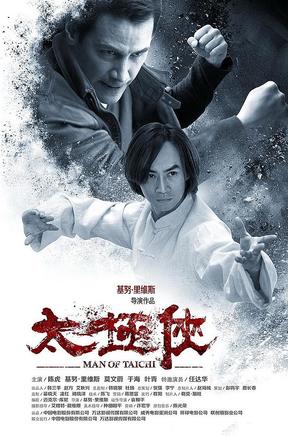
Saturday Matinee: Man of Tai Chi

By Sheila O’Malley

Source: RogerEbert.com

Keanu Reeves has a mixture of stilted awkwardness and gangly grace that is uniquely his own, and that makes him an often strange, disaffected presence. This can either work or not work. His line readings are sometimes baffling. But his simple sense of truth and touching trust in the material (whatever it may be) is one of the reasons his career has lasted so long. There isn’t a ton of ego in his work. It’s refreshing.

“Man of Tai Chi”, Reeves’ feature film directorial debut, has the same sometimes-awkward blend that Reeves brings to the table as an actor. The film is super serious (as befitting the martial arts genre, where everything is a matter of life or death), with moments of strange stilted dialogue (also par for the course) and scene after scene of thrilling physical combat, filmed with grace and certainty and no small amount of awe for the athletes involved.

Tiger Chen, a stuntman in the two “Matrix” sequels, plays the eponymous character, also named “Tiger Chen”. He is a devoted practitioner of the ancient art of tai chi, working with a master named Yang (Yu Hai) in a beautiful temple. For his day job, Tiger works as a delivery boy, driving packages around the city, and flirting with a receptionist at one of his regular stop-offs. He lives with his parents. He does not have ambition to “do anything” with tai chi, because the rules underlying his apprenticeship with Master Yang say that those who practice tai chi do not do so for money, glory, or even to win. But during a public competition, his undeniable skill brings him to the attention of a mysterious individual named Donaka Mark (Reeves). Donaka lives in a cold man-cave of a penthouse, furnished in black leather and chrome. He strolls around barefoot on shiny black marble floors, he speaks only in terse commands. He has a security detail working for him that would rival the NSA’s. He reaches out to Tiger, offering him a security job, when in reality it is a recruitment for a deadly underground fighting ring.Tiger is flown to an undisclosed location, put into an empty grey room with a mirror on one wall, as he waits to see what will happen. A female voice commands: “Fight”, and from out of nowhere an opponent grabs Tiger from behind. Tiger is then engaged in a fight for his life in that grey room with the big mirror, and it is an Alice-through-the-looking-glass moment which will bear fruit through the rest of the film: Like Alice, Tiger is catapulted from one strange experience to the next. The normal rules of regular life no longer apply.

Donaka, of course, is watching through that mirror. That first fight is a test. Tiger passes, but it is only the first of many. Donaka’s fight club is run like a cult, where essential information about the nature of the organization is withheld from the participants until they are too deeply embroiled to get out. Tiger finds himself back in that grey room again and again, fighting increasingly vicious and skilled opponents. To what purpose? What is it all for?

The money Donaka offers is substantial. When Master Yang’s temple is slated for demolition unless money can be raised for necessary repairs, Tiger caves. And so the sacred temple is now being financed by someone who has betrayed the underlying principles taught there, a terrible irony. Tiger Chen, a superb athlete (to watch him is to go slack-jawed in wonder and appreciation), is also a terrific actor, going believably from sweet open kid to cold lean killer with a haunted aspect. “Man of Tai Chi” takes place in a deeply moral universe where our choices have spiritual implications.

Tiger Chen, a stuntman in the two “Matrix” sequels, plays the eponymous character, also named “Tiger Chen”. He is a devoted practitioner of the ancient art of tai chi, working with a master named Yang (Yu Hai) in a beautiful temple. For his day job, Tiger works as a delivery boy, driving packages around the city, and flirting with a receptionist at one of his regular stop-offs. He lives with his parents. He does not have ambition to “do anything” with tai chi, because the rules underlying his apprenticeship with Master Yang say that those who practice tai chi do not do so for money, glory, or even to win. But during a public competition, his undeniable skill brings him to the attention of a mysterious individual named Donaka Mark (Reeves). Donaka lives in a cold man-cave of a penthouse, furnished in black leather and chrome. He strolls around barefoot on shiny black marble floors, he speaks only in terse commands. He has a security detail working for him that would rival the NSA’s. He reaches out to Tiger, offering him a security job, when in reality it is a recruitment for a deadly underground fighting ring.Tiger is flown to an undisclosed location, put into an empty grey room with a mirror on one wall, as he waits to see what will happen. A female voice commands: “Fight”, and from out of nowhere an opponent grabs Tiger from behind. Tiger is then engaged in a fight for his life in that grey room with the big mirror, and it is an Alice-through-the-looking-glass moment which will bear fruit through the rest of the film: Like Alice, Tiger is catapulted from one strange experience to the next. The normal rules of regular life no longer apply.Donaka, of course, is watching through that mirror. That first fight is a test. Tiger passes, but it is only the first of many. Donaka’s fight club is run like a cult, where essential information about the nature of the organization is withheld from the participants until they are too deeply embroiled to get out. Tiger finds himself back in that grey room again and again, fighting increasingly vicious and skilled opponents. To what purpose? What is it all for?

The money Donaka offers is substantial. When Master Yang’s temple is slated for demolition unless money can be raised for necessary repairs, Tiger caves. And so the sacred temple is now being financed by someone who has betrayed the underlying principles taught there, a terrible irony. Tiger Chen, a superb athlete (to watch him is to go slack-jawed in wonder and appreciation), is also a terrific actor, going believably from sweet open kid to cold lean killer with a haunted aspect. “Man of Tai Chi” takes place in a deeply moral universe where our choices have spiritual implications.

The fighting ring is illegal. The cops (one in particular) close in on Donaka, who remains elusive and omniscient. Donaka understands that tai chi is not the usual fare in the martial arts underground, and he gets off on the fact that Tiger has sold out. That’s the turn-on, the power trip. Reeves isn’t in the film all that much, and there are a couple of extremely stiff scenes of dialogue, but he does get a very impressive fight scene with Tiger near the end. This is Tiger Chen’s picture all the way. You watch him transform, and you watch his soul go dark.

CinematographercElliot Davis films the fight scenes with thrilling immediacy: lots of long takes, so you realize you are actually seeing these guys actually do this, as opposed to watching something pieced together later in the editing room. The camera circles and rises and pulls back, moving horizontally and vertically with the movements of each fight. The filming is intuitive and visceral. There’s one masterpiece of a scene that takes place in a hidden night club floating in the bowels of a cargo ship in Hong Kong harbor. The setting is surreal: the circular stage painted with psychedelic dizzying swirls and the circular tables surrounding said stage, not to mention the bored elegant silent crowd, is reminiscent of the midnight theatre scene in David Lynch’s “Mulholland Drive” or the freaky tiered nightclub in Josef von Sternberg’s “Shanghai Gesture”. Each fight gets more dangerous. The stakes rise. Death is the only possible outcome. Reeves approaches the genre with respect and passion. “Man of Tai Chi” is hugely entertaining.


How Israel deployed an intelligence deception to justify killing scientist Mohsen Fakhrizadeh

By Gareth Porter

Source: The Grayzone

Israel’s Mossad has spent years on a propaganda campaign aimed at convincing the world Iran possessed a nuclear weapons program – and legitimizing its assassinations of Iranian academics.

The Israeli assassination of Iranian defense official Mohsen Fakhrizadeh is being treated as a triumph of Israeli intelligence, with ubiquitous references in the New York Times and other major media outlets to the killing of “Iran’s top nuclear scientist”. In fact, Israel’s Mossad intelligence agency eliminated Fakhrizadeh, a defense official, despite the knowledge that its public depiction of him as the key architect of an Iranian nuclear weapons program was a deception.

For years, US media outlets have portrayed Fakhrizadeh as Iran’s equivalent to J. Robert Oppenheimer, marketing him to the public as the mastermind behind an Iranian version of the Manhattan Project. This image was developed primarily through a carefully constructed Israeli disinformation operation based on documents that displayed signs of fabrication.

Birth of a Mossad propaganda operation

The origin of the Mossad propaganda operation on Fakhrizadeh lies in the early 1990’s, when the US and Israel first developed suspicions of Iranian ambitions to develop a nuclear weapon. U.S., British, German and Israeli intelligence analysts had intercepted telexes from Sharif University about various “dual use” technologies — those that could be exploited in a nuclear program but also be applied for non-nuclear use.

Many of the telexes contained the number of an organization called Physics Research Center that operated under the watch of Iran’s Defense Ministry. The CIA and its allied intelligence agencies interpreted those intercepts as evidence that the Iranian military was running its own nuclear program, and thus that Iran was covertly seeking a nuclear weapons capability.

During the first term of the George W. Bush administration, the notorious militarist and Likud ally John Bolton took charge of Iran policy, prompting the CIA to issue an estimate concluding for the first time that Iran had initiated a nuclear weapons program. Israel’s Mossad apparently saw Washington’s new posture as a green light to set into motion a black propaganda campaign to dramatize and personalize the secret Iranian nuclear weapons program that was presumed to exist.

Between 2003 and 2004, Mossad produced a large cache of alleged Iranian documents depicting efforts to mate a nuclear weapon with Iran’s Shahab-3 missile and a bench system to convert uranium.

The Mossad files contained multiple tell-tale signs of forgery. For example, the reentry vehicle depicted in the drawings had already been abandoned by 2002 – before these drawings were supposedly created, according to the documents themselves – in favor of a design that looked entirely different and which was first shown in an August 2004 test. So whoever was responsible for the drawings was clearly unaware of the single most important Defense Ministry decision affecting the future of Iran’s missile deterrent.

The CIA never revealed who spirited the documents out of Iran or how. However, former senior German Foreign Office official Karsten Voigt explained to this reporter in 2013 that the German intelligence agency, the BND, had been furnished with the collection by an occasional source whom the intel chiefs considered less than credible.

And who was this source? According to Voigt, he belonged to the Mujahedeen e-Khalq (MEK), the exile Iranian cult which had fought for Saddam’s Iraqi forces against Iran during the eight-year war and by the early 1990s was passing information and propaganda that Mossad did not want to have attributed to itself.

Painting Fakrhizadeh as nuclear mastermind

Those Mossad documents identified Mohsen Fakhrizadeh as the manager of a supposedly top-secret Iranian project called the “AMAD Plan.” In reality, Fakhrizadeh was an Islamic Revolutionary Guard Corps officer and official in the Ministry of Defense Armed Forces Logistics (MODAFL), who also taught Physics at Imam Hussein University in Tehran.

To implicate him as a nuclear project mastermind, the collection of Mossad documents featured a directive supposedly signed by Fakhrizadeh. But since no one outside Iran had ever seen the previously obscure official’s signature, and given the lack of effort to show any official government markings on the documents, there was little to prevent Mossad from forging it.

In their 2012 history of Israel’s intelligence service, “Mossad: The Greatest Missions of the Israeli Secret Service”, Michael Bar-Zohar and Nisham Mishal pointed to Mossad as the culprit behind the appearance of the supposed Iranian nuclear documents. The writers recounted how Mossad gathered the personal information on Fakhrizadeh that was later released to the public through the MEK, including his passport number and his home telephone number.

“This abundance of detail and means of transmission,” Bar-Zohar and Mishal wrote, “leads one to believe that… ‘a certain secret service’ ever suspected by the West of pursuing its own agenda, painstakingly collected these facts and figures about the Iranian scientist and passed them on to the Iranian resistance [MEK].”

The documents also fingered Fakhrizadeh as the former head of the Physics Research Centre, thus deceptively linking him to the procurement efforts for “dual use” nuclear items in 1990-91 that were well known to CIA and other intelligence agencies. That accusation was reflected in the 2006 United Nations Security Council Resolution 1747 listing Iranian officials responsible for nuclear and missile proliferation in Iran. In the UN resolution, Fakhrizadeh was identified as a “[s]enior MODAFL scientist and former head of the Physics Research Centre (PHRC).”

But the Israeli identification of Fakhrizadeh as the head of the PHRC was proven to be a lie. Iran turned over extensive documentation to the IAEA in late 2004 or early 2005 on the PHRC and the procurement telexes, and the documents — which the IAEA did not challenge — showing that a professor at Sharif University of Technology in Tehran named Sayyed Abbas Shahmoradi-Zavari had headed the PHRC from its inception in 1989 until it closed in 1998.

Further, the documents provided to the IAEA revealed that the dual-use technology that Shahmoradi-Zavari helped the university procure through his PHRC connections was actually intended for the university faculty’s own teaching and research. In at least one case, the IAEA personnel found one “dual-use” item had been procured by the university.

These facts should have put an end to the Mossad-created myth of Fakrizadeh as the head of a vast underground nuclear weapons program. But the IAEA never revealed Shamoradi-Zavari’s name, and therefore avoided having to acknowledge that the documents the agency had embraced as genuine had misled the world about Fakhrizadeh.

It was not until 2012 that David Albright, the director of Washington-based Institute for Science and International Security, acknowledged that Shahmoradi-Zavari — not Fakhrizadeh — had been the head of the Physics Research Center – although he avoided admitting that the IAEA had relied on documents that turned out be false.

Revving up the propaganda 

The Mossad got busy again after the CIA’s November 2007 assessment that Iran had ceased work on nuclear weapons. Determined to neutralize the political impact of that finding, the Israelis apparently began work on a new batch of Iranian top secret documents. This time, however, the Israelis provided the documents directly to the IAEA in late 2009, as then-IAEA Director General Mohamed ElBaradei revealed in his memoirs.

The documents supposedly revealed Iranian defense ministry activities related to nuclear weapons after the cessation of such work that the CIA. One of those documents, leaked to the London Times in December 2009, purported to be a 2007 letter from Fakhrizadeh as the chairman of an organization presiding over nuclear weapons work. But as ElBaradei recalled, the IAEA’s technical experts “raised numerous questions about the documents’ authenticity….”

Even the CIA and some European intelligence analysts were skeptical about the authenticity of the Fakhrizadeh document. Although it had been circulating among the intelligence agencies for months, even the normally unquestioning New York Times reported that the CIA had not authenticated it.  Former CIA counterterrorism official Philip Giraldi, who had maintained contacts with active agency personnel, told this reporter CIA analysts regarded the document as a forgery.

A pattern of assassinations justified by disinformation

The killing of Fakhrizadeh was not the first time Mossad bumped off an Iranian it had baselessly accused of playing a leading role in a weapons program. In July 2011, someone working for Mossad — apparently an MEK member — gunned down a 35-year old engineering student named Darioush Rezaeinejad and wounded his wife in front of a kindergarten in Tehran.

The young man was targeted on the basis of nothing more than the research he had conducted on high-voltage switches and his publication of a scholarly paper about his scholarship. The abstract of the professional paper Rezaienejad had published made it clear that his work involved what is called “explosive pulsed power” involved in high-power lasers, high-power microwave sources and other commercial applications.

A few days after the assassination of Rezaienejad, however, an official of an unnamed “member state” provided Associated Press reporter George Jahn the abstract of Rezaienejad’s paper, successfully persuading Jahn that it “appeared to back” the claim that he had been “working on a key component in setting off the explosives needed to trigger a nuclear warhead.”

Then, in September 2011, the Israelis provided Jahn with an “intelligence summary” advancing the ludicrous claim that Rezaeinejad was not an electrical engineering specialist at all, but rather a “physicist” who had worked for the Ministry of Defense on various aspects of nuclear weapons.

The deployment of absurd assertions backed by paper-thin evidence to justify the cold-blooded murder of a young electrical engineer with no record of nuclear weapons involvement illuminated a Mossad modus operandi that has reappeared in the case of Fakhrizadeh: Israeli intelligence simply gins up a narrative centered around fictional ties to a nonexistent nuclear weapons program. It then watches as the Western press uncritically disseminates the propaganda to the public, establishing the political space for cold-blooded assassinations in broad daylight.