Saturday Matinee: Short Film Double Feature

untitled-drawing-12

An imaginary friend is forced to consider retirement when his creator/best friend starts to grow up.

images


The members of a fourth-grade class pull an innocent April Fool’s Day prank on their teacher that accidentally kills her. Fearing jail time, they set out to cover up the murder before their D.A.R.E. officer shows up for his weekly lesson.

Financial Predators and Parasites Want to Live, Regardless of the Cost

Bankers-and-Tick1

By Charles Hugh Smith

Source: Of Two Minds

Reform is impossible in a system optimized for centralized power and financial predators and parasites.

The problem with optimizing private gain by any means available is you also optimize financial predators and parasites. The problem with optimizing a system for centralized power (i.e. the federal government and Federal Reserve) is that you also optimize regulatory capture, influence-peddling and the unholy marriage of wealth and power.

Optimization is a key principle of all technologies. Though the political class claims perfection is possible (with just a few more regulations and laws, heh), engineers understand every system is a series of trade-offs. If you want to optimize one output, everything else in the system is rendered secondary.

The master narrative of the status quo is that maximizing private gain by any means available is good because to get rich is glorious: the goal of getting rich motivates entrepreneurs to do wonderful things that benefit humanity while they amass vast fortunes.

This is the happy propaganda story, and we all know the few outliers who are endlessly trotted out to “prove” its truth: Steve Jobs, the Larrys (Ellison and Page) Bill Gates, et al. Nice, but the handful who fulfill the propaganda version of optimizing private gain by any means available only succeeded because there were no powerful vested interests in their way.

What our system actually optimizes is the assembly of vested interests that buy protection of their racket from the state. These vested interests include wealthy individuals, corporations, cartels and public unions.

Want to earn a 1,000% return on your investment? It’s very difficult to do so by producing a good or service. By any measure, the easiest, lowest-risk way to earn a 1,000% return on your investment is to buy political protection with lobbying and campaign contributions.

What we’ve done is optimize financial predation and parasitism. We’ve created enormous incentives for too big to fail/jail banks, financiers manipulating dark pools and high-frequency trading that add nothing to the real economy, public unions guaranteeing their members unbeatable pensions and benefits while taxpayers foot the bill, politicos who enter office with ambition and few financial means who leave office with great wealth, cartels that buy protection from competition from the centralized state and corporations that rewrite the tax code in their favor with campaign contributions.

Now that we’ve created vast menageries of insatiably greedy financial predators and parasites, we’ve created monsters who want to live regardless of the cost to the nation. Parasites prefer not to kill their host, but their ability to fine-tune the process of sucking as much money out of the system as possible without bringing it down is not as well-developed as their greed.

The Global Financial Meltdown of 2008 proved this. The financial parasites and their parasitic partners in the halls of federal power were blind to the risks of collapse their insatiable greed were generating; they continued sucking the maximum private gain out of the system until the moment it collapsed in a heap.

Predators don’t worry about maintaining the flock of sheep or the schools of little fish. They will dive into the swirling school of frantic fish and consume every last one. Financial predators are the same: financial predators will sell a subprime auto loan to every last debt-serf in the flock, until the ecosystem of prey collapses and there are no marks left for their cons.

This is why our system is well and truly doomed: we have optimized the system for vast menageries of insatiably greedy financial predators and parasites, and now that they exist and have gained power, they want to live and prosper regardless of the cost to the decimated prey and the nation. By optimizing centralized power, we have optimized the protection of financial predators and parasites by the all-powerful central state and bank.

Reform is impossible in a system optimized for centralized power and financial predators and parasites. The predators and parasites will gorge themselves until the system collapses.


The true value of money

index

Economics needs a revolution.

By David Orrell

Source: Adbusters

This sentiment has been expressed by people from the physicist turned hedge-fund manager Jean-Philippe Bouchaud (in a 2008 paper), to the Bank of England’s Andrew Haldane (in a 2014 foreword for Manchester’s student-run Post-Crash Economics), to activist groups such as Kick It Over. So what would such a revolution look like?

Perhaps the archetypal model for a scientific revolution is the quantum revolution that shocked the world at the turn of the last century. In the space of a few short years, almost everything that was known about the nature of matter was overturned. The Newtonian view of the world as a predictable machine crumbled with it.

Except, that is, in economics – which continues to base its models on quasi-Newtonian economic laws.

A peculiar feature of orthodox economics is that money is treated as an inert medium of exchange, with no special properties of its own. As a result, money is largely excluded from macroeconomic models, which is one reason the financial crisis of 2007/8 was not predicted (it involved money). In many respects, when viewed through the lens of quantum physics, money behaves a lot like matter – and acknowledging that behavior promises to do to economics what quanta did for physics.

The main insight of quantum physics is that matter is composed of entities which behave in some ways as waves and in other ways as particles. This novel insight countered the Newtonian view that billiard ball-like atoms behaved independently of each other. A beam of light, for example, is an electromagnetic wave but it is also a stream of particles known as photons. At a quantum level, matter is fundamentally dualistic: neither the particle nor the wave description is complete by itself.

The same can be said of money, which turns out to have quantum properties of its own. Money is strange stuff, when you think about it – but because it has been around for millennia we rarely do. Consider for example a U.S. dollar bill. On the one hand it represents a number – in this case the number one. On the other hand it is a physical thing which can be possessed, exchanged and above all valued (even lusted after, if there are enough of them). It therefore lives partly in the abstract world of numbers and mathematics and partly in the real world of things, people and value.

The same is true of any money object that we use for payment. Here “object” could refer either to a physical object – such as a coin – or a virtual object, such as 1.2107 bitcoin (BTC) sent from a phone. What makes such objects special is that they have a fixed, defined value in currency units.

While seeing money objects as things with a fixed monetary value might appear trivial, it turns out to have complex and contradictory properties that feed into the economy as a whole. In particular, they combine two aspects, abstract number and real world value, which are as different as waves and particles.

For example numbers are subject to mathematical laws – such as compound interest – and can grow without limits, while in the real world natural processes tend to be subject to bounds. In 1850 an American lawyer did the math and calculated that five English pennies invested at 5 percent compound interest since 0 AD would have accumulated to 32 billion spheres of pure gold, each equal in size to the Earth. This is a useful exercise for anyone who thinks that gross domestic product (GDP) can grow forever.

Numbers can be negative, as in debts, but (as the English physicist-turned-economist Frederick Soddy pointed out) there is no such thing as a negative number of objects. You might be underwater on your mortgage but you can’t own a negative house. Throughout history the frightening ability of negative debt to grow without bounds has been responsible for forcing people into economic slavery.

Numbers are hard and precise, like the particle aspect of matter. Real-world concepts such as value are diffuse and fuzzy, like the wave aspect of matter. By combining these two aspects in a single package, money objects are our contribution to the quantum universe.

The dualistic nature of money explains its frequently paradoxical behavior. In the early 2000s, cheap credit in the United States meant that even low-income people could afford their own homes. Some cashed in and sold their houses at the top of the market. For them the money was real – they could go to the bank and withdraw dollar bills. But when the credit crunch kicked in most of the new money disappeared into the ether, as if it had never existed. Money seemed to be both real and unreal at the same time – a sensation familiar to anyone who has studied quantum physics.

Just as quantum physics overturned Newtonian physics, so a reexamination of money promises to disrupt economics. The reason that critics are calling for fundamental change is that neoclassical economics has failed to provide answers to problems such as wealth inequality, financial crises and environmental degradation – which is unsurprising if it treats money as nothing more than an inert, Newtonian medium of exchange. The tendency of money to clump and accumulate with a small group of creditors, or for financial markets to be inherently unstable, or for GDP growth to be valued over the environment, becomes clearer when we acknowledge the vital, active role of money and the tension and discrepancy between numbers and the real world that drives it.

Of course, one should not underestimate the resistance of economists to adopting new ideas, however the worldwide student movement calling for change is unlikely to go away. Economics is primed for a quantum revolution of its own.

— David Orrell is a mathematician and author. His latest book, Truth or Beauty: Science and The Quest for Order, explores the role of aesthetics in science. He is currently working on a book about money.

Politicians Exploit School Shooting While Ignoring Bombing Victims

Ron_Paul_0723

By Ron Paul

Source: Ron Paul Institute

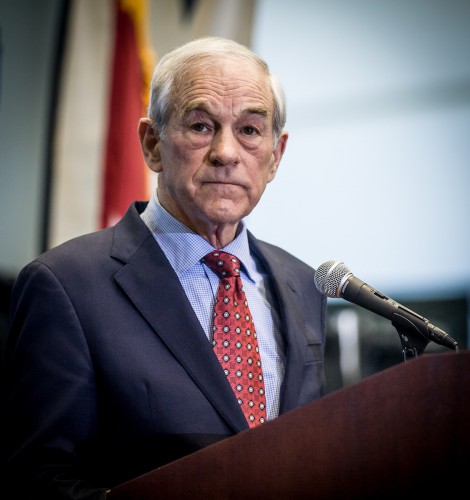
Following the recent Oregon school shooting, many politicians rushed to the microphones to call for new gun control laws. President Obama even called on gun control supporters to “politicize” the shooting, while some members of Congress worked to establish a special commission on gun violence.

The reaction to the shooting stands in stark contrast to the reaction to the US military’s bombing of an Afghanistan hospital run by the international humanitarian (and Nobel Peace Prize winning) group Doctors Without Borders.

Our Nobel Peace Prize winning president did apologize to his fellow Nobel laureate for the bombing. However, President Obama has not “politicized” this tragedy by using it to justify ending military involvement in Afghanistan. No one in Congress is pushing for a special commission to examine the human costs of US militarism, and the mainstream media has largely ignored Doctors Without Borders’ accusation that the bombing constitutes a war crime.

The reason for the different reactions to these two events is that politicians prefer to focus on events they can “politicize” to increase government power. In contrast, politicians ignore incidents that raise uncomfortable questions about US foreign policy.

If the political and media elites were really interested in preventing future mass shootings, they would repeal the federal “gun-free” schools law, for example. By letting shooters know that their intended victims are defenseless, the gun-free schools law turns schoolchildren into easy targets.

Even some who oppose gun control are using the shooting to justify expanding federal power instead of trying to repeal unconstitutional laws. Some opponents of new gun control laws say Congress should expand the federal role in identifying, tracking, and treating those with “mental health problems.” This ignores the fact that many shooters were using psychotropic drugs prescribed by a mental health professional when they committed the horrible acts. Furthermore, creating a system to identify and track anyone with a “mental health problem” could deny respect for individuals’ Second Amendment and other rights because they perhaps once sought counseling for depression while going through a divorce or coping with a loved one’s passing.

While our political and media elites are eager to debate how much liberty people must sacrifice for safety, they are desperate to avoid debating the morality of our foreign policy. To admit that the US military sometimes commits immoral acts is to admit that the US government is not an unalloyed force for good. Even many proponents of our recent wars support using the US military for “humanitarian” purposes. Thus they are as reluctant as the neoconservatives to question the fundamental goodness of US foreign policy.

Anyone who raises constitutional or moral objections to the US use of drones, bombs, indefinite detention, and torture risks being attacked as anti-American and soft on terrorism. The smear of “terrorist apologist” is also hurled at those who dare suggest that it is our interventionist foreign policy, not a hatred of freedom, that causes people in other countries to dislike the United States. Which is a more logical explanation for why someone would resent America — a family member killed in a drone attack launched by the US military or rage over our abundance of liberty?

The disparate reactions to the Oregon school shooting and the Afghanistan hospital bombing shows the political class is unwilling and unable to acknowledge that the US government cannot run the world, run our lives, or run the economy. Clearly, politicians will never stop expanding government and give us back our lost liberties unless and until the people demand it.

Why Hillary Won the Debate (Even though She Didn’t)

images

By Gary Leupp

Source: Dissident Voice

CNN and Facebook co-sponsored last week’s Democratic presidential frontrunners’ “debate.” After the event, CNN conducted a poll. “Who won the debate?” it asked. The result: 83% Bernie Sanders; 12% Hillary Clinton.

Facebook also took a poll. “Who do you think won?” Over 79% responded, “Bernie Sanders.”

The CNN editors’ take? “CLINTON’S CONFIDANT SWEEP.”

Slate conducted a poll. “Who won the presidential debate?” asked the magazine. 75% of respondents said Bernie Sanders; 18% gave it to Hillary Clinton.

“Hillary Clinton won,” reported Slate “senior writer” Josh Vorhees exuberantly. “She just needed to be solid in the debate. Instead, she was spectacular.”

Spectacular! with 18% of Slate’s own polling numbers. Go figure.

“Who do you think won?” asked Time Magazine. The response?  Bernie Sanders: 70%, Hillary Clinton 16%.

The Time headline:  “CLINTON IN CONTROL.”

Are you disgusted yet? This goes far beyond distortion, and far beyond the tampering with facts that characterized Soviet-style reporting in Izvestia and Pravda in the decade before the USSR collapsed. This is in-your-face rejection of empirical reality, to say nothing of an insult to the viewers polled. The entire mainstream news media is complicit.

Imagine if the “free” press—free to publish whatever its corporate editors want, including even the truth, at their discretion—had sought to spin this story differently.

“POLLS SHOW BIG WIN FOR SANDERS,” CNN might have proclaimed, between commercials.

“A great night for Sanders,” Slate might have announced.

“SANDERS TROUNCES CLINTON,” Time might have acknowledged.

But no, and this is par for the course. The TV cable news anchors took ages to concede that, well, yes, maybe Jed Bush—despite his solid RNC support and Wall Street’s firm endorsement—is not the inevitable GOP candidate. They’ve had to acknowledge that (for whatever reasons) Donald Trump’s actually striking a much deeper chord than warmonger Dubya’s little brother among likely voters.

But they’re stubbornly refusing to recognize some things they don’t want to see—things that don’t follow their script.

They don’t understand that people in their twenties who constitute the 75-year-old Sanders’ support base have no problem with “socialism” but rather have lots of problems with Wall Street. These “millenials” are even—horrors!—increasingly inclined to question the national god of capitalism itself. It has fewer positive connotations to them than it did for their parents who grew up during the Cold War and were subjected to its particular brainwashing agenda.

That’s the sort of brainwashing that allows Trump, a demagogue preying on the most abjectly ignorant to tell cheering crowds that he calls Sanders “a ‘socialist, slash, communist,’ okay? ‘Cause that’s what he is!”

‘Cause that’s what he is! Sanders is a communist. End of story. End of rational thought.

I myself am not a Sanders supporter. He’s nowhere nearly left enough for me. But then I’m not a supporter of the whole bogus, skewed, money-driven two-party electoral system itself, which seems designed to hoodwink people, channel their energies into itself, and then produce disillusionment soon after the election, as the elected official reneges on promises and proved to be anything other than a harbinger of “change.” The system is wired to then hoodwink people again, re-channel their energies (again back into itself), bouncing people back and forth between two hopelessly corrupt parties that are really two factions of a single corporate party.

The system tells us, “If you don’t vote, you have nothing to say” and reduces political involvement to endorsing one of its (safe) choices. It excludes from the debate stage even the discussion of needed radical change. The electoral process is designed to keep you out of the street (where history is really made) and lead you into a box, like a confessional booth or a porno video cubicle, a private space in which you’re touched by something greater than yourself and leave with a sense of gratification. You were a good citizen. You exercised your precious right to VOTE and did your part!

Casting that ballot in private is supposed to make you feel good about yourself, as a participant in the state. It’s supposed to make you think that, since you actually participated in the construction of the existing polity, when you talk about what it does, you can accept personal responsibility for its crimes.

For example, you might say: “We shouldn’t have invaded Iraq.” In doing so you implicitly include yourself—despite your disagreement—among those who actually did the vicious deed. I prefer to say, “Leave me out of that ‘we,’ since I had nothing to do with it. I fought against it, tooth and nail, attending every anti-war demonstration I could and railing against it to all who would listen.”

“Well, our government did it,” you might correct yourself. “We voted for it.” But I will reply I didn’t; I stayed at home on election day, 2000. It’s like I was invited to a party that day, and disliking all who’d be there, I politely declined to attend.

When you vote, you vote not so much for a person as for the system itself, validating it and the rules surrounding the procedure. Casting the ballot is the state’s highest ritual, the individual’s most intimate connection with the state. It makes you feel one with it. It’s rather like taking the Holy Communion at mass. You’re swallowing something, and making a statement of faith: I believe in this system!

This (corporate) system you vote for, every time you vote at all, commands the (corporate) media to such an extent that it can do what we see in the reportage cited above. It can turn reality on its head and get away with it, whether it’s shaping public opinion about Saddam’s weapons of mass destruction, a Russian invasion of Ukraine, U.S. successes against the Taliban in Afghanistan, Syrian “moderates” gaining against Assad, or victory in a farcical televised debate.

Whatever you think about Sanders, is it not outrageous that the mass media can obscure his plain victory in that exercise as a triumph for Hillary Clinton? Even a “spectacular” win? Isn’t it clear that she was pronounced the victor not because she actually won out over Sanders but because powerful people steering the “free” press needed her to do so?

As PR/disinformation master Karl Rove once put it (and this should be repeated as often as we repeat that wonderful quote from the imprisoned Goebbels at Nuremberg about using fear to build mass support for war): “We’re an empire now, and when we act, we create our own reality.”

It’s not a sentiment unique to Republicans. Recall how, during the 2012 Democratic national convention, the crowd clearly voted down the inclusion of a line supporting Jerusalem as the eternal, undivided capital of Israel in its platform. The change required a two-thirds majority of the vote, according to party rules. At least half the delegates voted against it.

Still, the convention chairman to the outrage of many present announced (after some hushed consultation) that the “Ayes” carried the day. So much for democracy at the “Democratic” Party’s convention.

The mainstream press, by and large, wants Hillary Clinton to be the Democratic nominee for president. Wall Street’s leading candidates are Jeb Bush and Clinton; both are beloved of big money and either one will do. Sanders (even though in office he would likely buckle to their will, the same way Greece’s “socialist” Alexis Tsipras buckled to the IMF and European Central Bank) is anathema to Wall Street. And the connections between Wall Street, the Washington power elite, and the press are—to use the Chinese expression—as close as lips and teeth.

Finance capital rules the world and will do so until the “millions and millions” Bernie keeps talking about find some way to effectively challenge it.

Thus Sanders could not win the debate, even though he did. And Hillary was destined to win the debate, even though she didn’t. Get it? And isn’t it great you have the right to vote for her?


Gary Leupp is a Professor of History at Tufts University, and author of numerous works on Japanese history. He can be reached at: gleupp@granite.tufts.edu. Read other articles by Gary.

The MH17 Big Lie: The Russians Did It

mh17-crash8-data

By Stephen Lendman

Source: Steve Lendman Blog

Downing MH17 was a classic false flag, the scheme likely cooked up in Washington, using its Kiev puppet regime to do its dirty work, then point fingers the wrong way.

The Russians DID NOT down MH17 – nor Donbass freedom fighters. No credible evidence suggests it. Only fools and liars believe it.

What could they possibly gain from downing a commercial airliner, unrelated to conflict on the ground, killing 298 passengers and crew members.

Washington and/or Kiev had motive and opportunity, gaining plenty by pointing fingers the wrong way, supported by the usual scoundrel media chorus, featuring Big Lies and innuendos.

The Dutch Safety Board (DSB) is a front for US imperial policy. Joint Investigation Team (JIT) countries include the Netherlands, Australia, Belgium and Ukraine – conspiratorially allied against Russia, Washington pulling the strings behind the scene.

DSB’s final report is out. It stopped short of naming perpetrators, suggested Russia and Donbass freedom fighters were responsible without saying so.

It claimed a (a no longer in use Soviet era) Russian-made Buk 9M38-series (surface-to-air) missile (used only by Ukraine, not Russia’s military) downed MH17 – refuting earlier reports based on high-resolution photos showing cockpit damage from likely 30 millimeter air-to-air cannon fire.

Eyewitnesses on the ground saw a Ukrainian warplane trailing MH17. Russian radar tracked a Ukrainian SU-25 jet fighter within three km of the fated aircraft.

An unsatisfactorily answered question is why Ukrainian air traffic control let MH17 overfly a war zone. Other commercial airliners avoided it for obvious reasons.

Did Kiev authorities deliberately put MH17 in harm’s way to down it and blame Russia and Donbass freedom fighters for their crime?

Did Washington and Ukrainian fascists jointly plan the incident? Further US and EU sanctions followed plus relentless, irresponsible Putin-bashing.

DSB’s September 9 preliminary report said MH17 “broke up in the air probably as the result of structural damage caused by a large number of high-energy objects that penetrated the aircraft from outside.”

Its final report claimed a missile was launched from an Eastern Ukraine 320 square km area without pinpointing the launch site.

Its chairman, Tjibbe Joustra, suggested it came from rebel-held territory without specifically saying so. He claimed “Flight MH17 crashed as a result of the detonation of a warhead outside the airplane against the left-hand side of the cockpit. This warhead fits the kind of missile that is installed in the BUK surface-to-air missile system.”

It was fired from “an area where the borders have fluctuated a lot, but it’s a territory where the pro-Russian rebels have laid down the law.”

A White House statement ludicrously called DSB’s report an “important milestone in the effort to hold accountable those responsible.”

A criminal investigation is underway. Dutch Prime Minister insultingly asked Russia for “complete cooperation.” The DSB ignored key Moscow supplied evidence.

Putin spokesman Dmitry Peskov stressed it, saying: “There are facts delivered by the Russian side that for unclear reasons are being apparently ignored.”

Moscow “repeatedly expressed its disappointment over the lack of proper level of cooperation and engagement of the Russian experts into the investigation.”

Russia’s Roasaviation deputy head Oleg Storchevoy accused the DSB of ignoring “comprehensive information” presented by Moscow, suggesting willful coverup – in a letter to the International Civil Aviation Association (ICAA).

Russian arms manufacturer Almaz-Antey presented its own findings, based on exhaustive study and sophisticated simulations of what likely happened, disputing DSB’s conclusions, saying MH17 wasn’t downed from rebel-held territory.

CEO Yan Novikov said an older, out-of-date Buk missile (last produced in 1986), no longer used by Russia, still used by Ukraine, downed MH17. DSB members ignored Almaz-Antey’s findings.

The incident occurred on July 17, 2014. The instant knee-jerk reaction from Washington, other Western capitals, and go-along media scoundrels (still unchanged) was “Russia did it” – despite no evidence suggesting it then or now.

A sampling of headlines following release of the DSB’s final report include the following:

New York Times: “Malaysia Airlines Flight 17 Most Likely Hit by Russian-Made Missile, Inquiry Says”

Washington Post: “The Latest: Ex-war crimes judge: Dutch report refutes Russia”

Wall Street Journal: “Dutch Investigators Say MH17 Was Downed by Russian-Made Missile”

Los Angeles Times: “Malaysia Airlines Flight 17: Report says Russian-made missile system downed jet”

Chicago Tribune: “Dutch Safety Board: Russian-made Buk missile downed MH17 in Ukraine”

BBC: “MH17 Ukraine disaster: Dutch Safety Board blames (Russian-made Buk) missile”

The disturbing innuendo from all these headlines implies Russian-made means Russian-launched.

It bears repeating what should be clear to everyone. Russia DID NOT down MH17 – nor Donbass freedom fighters. Kiev fascists, very likely complicit with Washington, were responsible, wanting Putin blamed for their crime.


Stephen Lendman lives in Chicago. He can be reached at lendmanstephen@sbcglobal.net.

His new book as editor and contributor is titled “Flashpoint in Ukraine: US Drive for Hegemony Risks WW III.”

http://www.claritypress.com/LendmanIII.html

Visit his blog site at sjlendman.blogspot.com.

Listen to cutting-edge discussions with distinguished guests on the Progressive Radio News Hour on the Progressive Radio Network.

Co-Creation and the Greater Reality

431233_10150711357695081_1179126980_n

By Rahkyt

Source: Sacred Space in Time

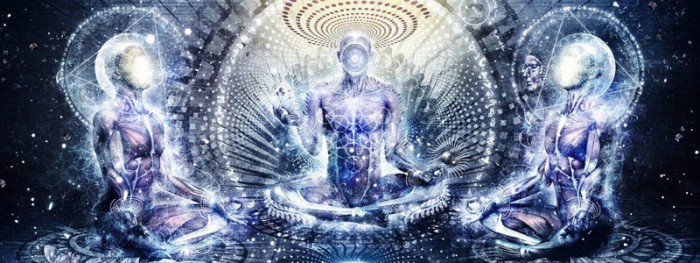
Life is a continuous process of creation and destruction. With every action and reaction, something new is birthed into being and something old undergoes the processes of destruction. From the thought processes we engage in during the course of the day, to the actions we take and reactions we make, we are creating and destroying our perception of reality. As a result, in each instance, we are truly remaking ourselves anew, in the only way that matters: the construction of our own, personal rendition of reality.

Memory serves the function of maintaining consistency. Without it, we become a new person in each instance. Memories ties us to the past and creates a stream of impressions which guide our present and future actions. We define ourselves by our memories and through them, we present a facade to the world comprised of impressions that may be factual or not, based upon our own emotional ties to events that have passed. The past itself, being dependent upon perception, is more illusory than real. Outside of mechanical means of perception, video and audio recordings, pictures, etcetera, our memories of the past are not at all reliable. Our emotional state of being at the moment of experience often determines how we perceive them and the mind fills in gaps with re-created scenes, making memory often more fantastical than reality-based.

When we hold on to stories of the past and use them to define our present we limit our options and outcomes. By stating to ourselves and others that we are this and that because we have experienced this or that we bind ourselves to the potentialities inherent in the probabilistic options arising from the present manifestation of effects caused by our experience of this and/or that. Logical determinism is the result. We see no other options available because our synaptic patterns of reality-formation dictate outcomes bounded by the past, when, in reality, there are no such boundaries truly in place. Only those we have placed upon ourselves.

We are thereby bound into preconditioned repetitions of past patterns from which there is seemingly no escape. Despair and depression result, limiting the outcomes of a life to a downward-spiraling reoccurrence pattern. Fear acts as the conditioning factor, pulling up past scenes of loathing that trap thought into conditioned pathways of expression. Again and again we dance the same dance, although the tune itself has changed. The ability to cognate at higher levels is a divine gift that allows us to shift those patterns out and to achieve a higher state of expression if we so choose to do so. We can change, no matter the thickness of our synaptic connections, the density of our neural nets, the pervasivity of fear-based patterns of call and response.

Removing these boundaries and experiencing the full gamut of experience is the challenge of a lifetime. Becoming open to the infinite expression of creative union with the ultimate requires the death of the past and the embrace of the present, thereby delimiting the possibilities of the future. It entails the conscious processing of future experience by the release of past experience resulting in the embrace of the Now experience. Each moment recreates itself anew, requiring new output in order to take full advantage of new input. While reality does seemingly proceed in cycles and we undergo certain types of experience again and again it is really a spiral and each new experience while appearing similar is a new iteration at a higher level of occurrence. Therefore, the same reaction is not always the best action.

Determining the difference between action and reaction takes a depth of understanding that must be based upon recognition of fundamental patterns inherent within our lived realities. A thorough recapitulation of our life experiences, whee every memory we can access has been ruminated upon and its lessons internalized and made accessible to conscious thought. Where our reactions become instead new actions based upon the present input which may be slightly different from past input in important and fundamental ways.

Life is purposeful and there are no accidents. Each perception, each interaction is meaningful and is connected to external realities in fundamental ways. Together, we co-create the Greater Reality and, despite the hype, we are all integrally connected at the base level of existence, beneath conscious perception and experience.  This web of continuous co-creation is beyond the conscious ability of most to perceive and yet, to be able to do so is not necessary. Trust in God, in the willful and deliberate manifestation of reality is required alongside the desire to act in harmonious resonation with the dictations of the Multiverse. This can be done by simply existing in the flow of creation and destruction, maintaining a perceptive ambivalence to societally-determined conceptions of value yet adhering to the internal sense of beingness within the continuous flow of change and evolution.

No matter how things seem, whether they are determined to be good or bad, all has purpose, all has reason. Accepting this truth of existence and working within one’s own flow of interaction at the personal and subjective level sends emanations of causality out into the greater creation, combining with the output of other souls to morph into stupendously complex manifestations that form the holographic context of the combined, material co-creation that we call the world.