Don’t Give Up on the Blessings of Freedom

By John W. Whitehead & Nisha Whitehead

Source: The Rutherford Institute

“All we are saying is give peace a chance.”—John Lennon

How do you give thanks for freedoms that are constantly being eroded?

How do you express gratitude for one’s safety when the perils posed by the American police state grow more treacherous by the day?

How do you come together as a nation in thanksgiving when the powers-that-be continue to polarize and divide us into warring factions?

Every year finds us struggling to reconcile our hope for a better, freer, more just world with the soul-sucking reality of a world in which greed, meanness and war continue to triumph.

Fifty years ago, John Lennon released “Imagine” and exhorted us to “Imagine all the people livin’ life in peace.” That same year, Lennon released “Happy Xmas (War Is Over)” as part of a major anti-war campaign. Lennon—a musical genius, anti-war activist, and a high-profile example of the lengths to which the Deep State will go to persecute those who dare to challenge its authority—made clear that the only way to achieve an end to hunger, violence, war, and tyranny is to want it badly enough and work towards it.

Fifty years later, we clearly don’t want those things badly enough.

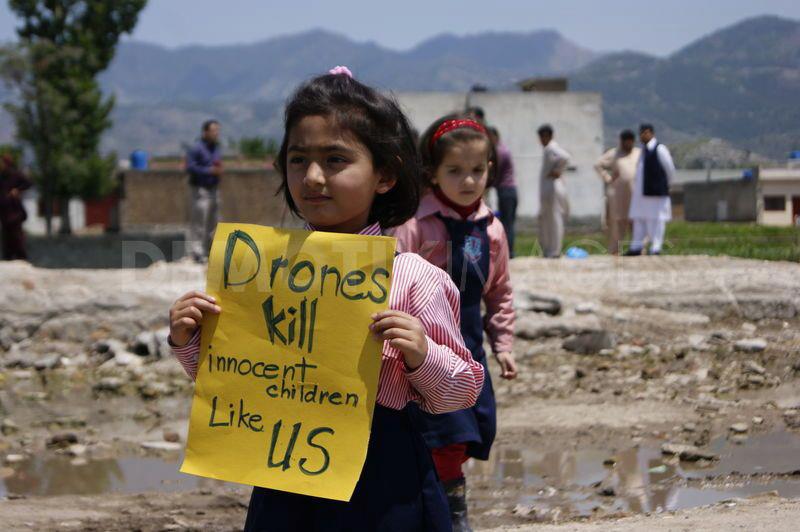
Peace remains out of reach. Activists and whistleblowers continue to be prosecuted for challenging the government’s authority. Militarism is on the rise, all the while the governmental war machine continues to wreak havoc on innocent lives.

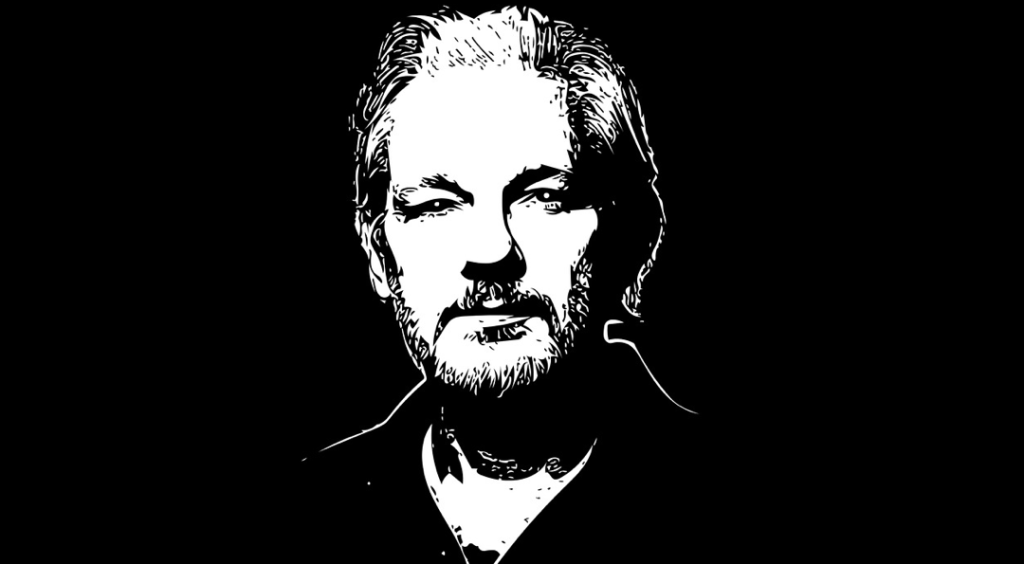
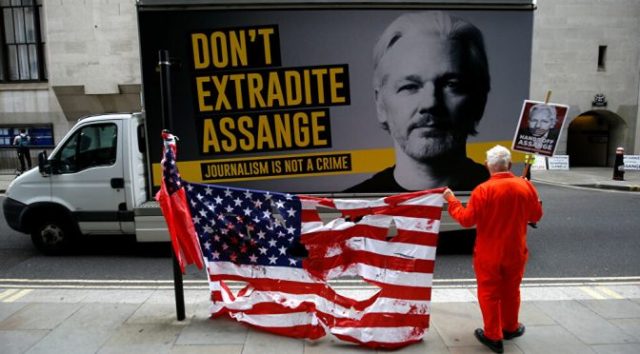
For those of us who joined with John Lennon to imagine a world of peace, it’s getting harder to reconcile that dream with the reality of the American police state. And those who do dare to speak up about government corruption (such as Julian Assange) are labeled dissidents, troublemakers, terrorists, lunatics, or mentally ill and tagged for surveillance, censorship or, worse, involuntary detention.

All the while, people still keep looking to the government to “fix” what’s wrong with this country. You’d think we’d have learned—after 20 years of heavy-handed government authoritarianism that started with the 9/11 attacks and has continued through to the present-day COVID-19 tyranny—that the only thing the government can be trusted to do is make things worse.

Now we find ourselves approaching that time of year when, as George Washington and Abraham Lincoln proclaimed, we’re supposed to give thanks as a nation and as individuals for our safety and our freedoms.

It’s not an easy undertaking.

Thinking good thoughts, being grateful, counting your blessings and adopting a glass-half-full mindset are fine and good, but that’s not enough. This world requires doers, men and women (and children) who will put those good thoughts into action.

Remember, evil prevails when good men and women do nothing.

Here’s what I suggest: this year, do yourselves a favor and turn off the talking heads, shut down the screen devices, tune out the politicians, take a deep breath, then do something to pay your blessings forward.

Refuse to remain silent. Take a stand. Speak up. Speak out. Recognize injustice. Don’t turn away from suffering.

Find something to be thankful for about the things and people in your community for which you might have the least tolerance or appreciation. Instead of just rattling off a list of things you’re thankful for that sound good, dig a little deeper and acknowledge the good in those you may have underappreciated or feared.

When it comes time to giving thanks for your good fortune, put your gratitude into action: pay your blessings forward with deeds that spread a little kindness, lighten someone’s burden, and brighten some dark corner.

Engage in acts of kindness. Smile more. Fight less. Build bridges. Refuse to let toxic politics define your relationships. Focus on the things that unite instead of that which divides.

Do your part to push back against the meanness of our culture with conscious compassion and humanity. Moods are contagious, the good and the bad. They can be passed from person to person. So can the actions associated with those moods, the good and the bad.

Be a hero, whether or not anyone ever notices.

Acts of benevolence, no matter how inconsequential they might seem, can spark a movement.

All it takes is one person to start a chain reaction.

For instance, a few years ago in Florida, a family of six—four adults and two young boys—were swept out to sea by a powerful rip current in Panama City Beach. There was no lifeguard on duty. The police were standing by, waiting for a rescue boat. And the few people who had tried to help ended up stranded, as well.

Those on shore grouped together and formed a human chain. What started with five volunteers grew to 15, then 80 people, some of whom couldn’t swim.

One by one, they linked hands and stretched as far as their chain would go. The strongest of the volunteers swam out beyond the chain and began passing the stranded victims of the rip current down the chain.

One by one, they rescued those in trouble and pulled each other in.

There’s a moral here for what needs to happen in this country if we only can band together and prevail against the riptides that threaten to overwhelm us.

As I make clear in my book Battlefield America: The War on the American People and in its fictional counterpart The Erik Blair Diaries, there may not be much we can do to avoid the dismal reality of the police state in the long term—not so long as the powers-that-be continue to call the shots and allow profit margins to take precedence over the needs of people—but in the short term, there are things we can all do right now to make this world (or at least our small corners of it) a little bit kinder, a lot less hostile and more just.

It’s never too late to start making things right in the world.

John Lennon tried to imagine a world in which we all lived in peace. He was a beautiful dreamer whose life ended with an assassin’s bullet on December 8, 1980.

Still, that doesn’t mean the dream has to die, too.

There’s something to be said for working to make that dream a reality. As Lennon reminded his listeners, “War is over, if you want it.”

The choice is ours, if we want it.

Drone warfare whistleblower sentenced to 45 months in prison for telling the American people the truth.

Drone warfare whistleblower sentenced to 45 months in prison for telling the American people the truth.

By Chris Hedges

Source: ScheerPost.com

Daniel Hale, a former intelligence analyst in the drone program for the Air Force who as a private contractor in 2013 leaked some 17 classified documents about drone strikes to the press, was sentenced today [7/27/21] to 45 months in prison.

The documents, published by The Intercept on October 15, 2015, exposed that between January 2012 and February 2013, US special operations airstrikes killed more than 200 people. Of those, only 35 were the intended targets. For one five-month period of the operation, according to the documents, nearly 90 percent of the people killed in airstrikes were not the intended targets. The civilian dead, usually innocent bystanders, were routinely classified as “enemies killed in action.”

The Justice Department coerced Hale, who was deployed to Afghanistan in 2012, on March 31 to plead guilty to one count of violating the Espionage Act, a law passed in 1917 designed to prosecute those who passed on state secrets to a hostile power, not those who expose to the public government lies and crimes. Hale admitted as part of the plea deal to “retention and transmission of national security information” and leaking 11 classified documents to a journalist. If he had refused the plea deal, he could have spent 50 years in prison. 

Hale, in a handwritten letter to Judge Liam O’Grady on July 18, explained why he leaked classified information, writing that the drone attacks and the war in Afghanistan “had little to do with preventing terror from coming into the United States and a lot more to do with protecting the profits of weapons manufacturers and so-called defense contractors.”

At the top of the ten-page letter Hale quoted US Navy Admiral Gene LaRocque, speaking to a reporter in 1995: “We now kill people without ever seeing them. Now you push a button thousands of miles away … Since it’s all done by remote control, there’s no remorse … and then we come home in triumph.”

“In my capacity as a signals intelligence analyst stationed at Bagram Airbase, I was made to track down the geographic location of handset cellphone devices believed to be in the possession of so-called enemy combatants,” Hale explained to the judge. “To accomplish this mission required access to a complex chain of globe-spanning satellites capable of maintaining an unbroken connection with remotely piloted aircraft, commonly referred to as drones. Once a steady connection is made and a targeted cell phone device is acquired, an imagery analyst in the U.S., in coordination with a drone pilot and camera operator, would take over using information I provided to surveil everything that occurred within the drone’s field of vision. This was done, most often, to document the day-to-day lives of suspected militants. Sometimes, under the right conditions, an attempt at capture would be made. Other times, a decision to strike and kill them where they stood would be weighed.”

He recalled the first time he witnessed a drone strike, a few days after he arrived in Afghanistan.

“Early that morning, before dawn, a group of men had gathered together in the mountain ranges of Patika province around a campfire carrying weapons and brewing tea,” he wrote. “That they carried weapons with them would not have been considered out of the ordinary in the place I grew up, much less within the virtually lawless tribal territories outside the control of the Afghan authorities. Except that among them was a suspected member of the Taliban, given away by the targeted cell phone device in his pocket. As for the remaining individuals, to be armed, of military age, and sitting in the presence of an alleged enemy combatant was enough evidence to place them under suspicion as well. Despite having peacefully assembled, posing no threat, the fate of the now tea drinking men had all but been fulfilled. I could only look on as I sat by and watched through a computer monitor when a sudden, terrifying flurry of hellfire missiles came crashing down, splattering, purple-colored crystal guts on the side of the morning mountain.”

This was his first experience with “scenes of graphic violence carried out from the cold comfort of a computer chair.” There would be many more.

“Not a day goes by that I don’t question the justification for my actions,” he wrote. “By the rules of engagement, it may have been permissible for me to have helped to kill those men — whose language I did not speak, customs I did not understand, and crimes I could not identify — in the gruesome manner that I did. Watch them die. But how could it be considered honorable of me to continuously have laid in wait for the next opportunity to kill unsuspecting persons, who, more often than not, are posing no danger to me or any other person at the time. Never mind honorable, how could it be that any thinking person continued to believe that it was necessary for the protection of the United States of America to be in Afghanistan and killing people, not one of whom present was responsible for the September 11th attacks on our nation. Notwithstanding, in 2012, a full year after the demise of Osama bin Laden in Pakistan, I was a part of killing misguided young men who were but mere children on the day of 9/11.” 

He and other service members were confronted with the privatization of war where “contract mercenaries outnumbered uniform wearing soldiers 2 to 1 and earned as much as 10 times their salary.”

“Meanwhile, it did not matter whether it was, as I had seen, an Afghan farmer blown in half, yet miraculously conscious and pointlessly trying to scoop his insides off the ground, or whether it was an American flag-draped coffin lowered into Arlington National Cemetery to the sound of a 21-gun salute,” he wrote. “Bang, bang, bang. Both served to justify the easy flow of capital at the cost of blood — theirs and ours. When I think about this, I am grief-stricken and ashamed of myself for the things I’ve done to support it.”

He described to the judge “the most harrowing day of my life” that took place a few months into his deployment “when a routine surveillance mission turned into disaster.” 

“For weeks we had been tracking the movements of a ring of car bomb manufacturers living around Jalalabad,” he wrote. “Car bombs directed at US bases had become an increasingly frequent and deadly problem that summer, so much effort was put into stopping them. It was a windy and clouded afternoon when one of the suspects had been discovered headed eastbound, driving at a high rate of speed. This alarmed my superiors who believe he might be attempting to escape across the border into Pakistan.”

Now, whenever I encounter an individual who thinks that drone warfare is justified and reliably keeps America safe, I remember that time and ask myself how could I possibly continue to believe that I am a good person, deserving of my life and the right to pursue happiness.

— Daniel Hale, of learning about children killed by indiscriminate US drone attacks he participated in.

“A drone strike was our only chance and already it began lining up to take the shot,” he continued. “But the less advanced predator drone found it difficult to see through clouds and compete against strong headwinds. The single payload MQ-1 failed to connect with its target, instead missing by a few meters. The vehicle, damaged, but still driveable, continued on ahead after narrowly avoiding destruction. Eventually, once the concern of another incoming missile subsided, the driver stopped, got out of the car, and checked himself as though he could not believe he was still alive. Out of the passenger side came a woman wearing an unmistakable burka. As astounding as it was to have just learned there had been a woman, possibly his wife, there with the man we intended to kill moments ago, I did not have the chance to see what happened next before the drone diverted its camera when she began frantically to pull out something from the back of the car.”

He learned a few days later from his commanding officer what next took place. 

“There indeed had been the suspect’s wife with him in the car,” he wrote. “And in the back were their two young daughters, ages 5 and 3 years old. A cadre of Afghan soldiers were sent to investigate where the car had stopped the following day. It was there they found them placed in the dumpster nearby. The eldest was found dead due to unspecified wounds caused by shrapnel that pierced her body. Her younger sister was alive but severely dehydrated. As my commanding officer relayed this information to us, she seemed to express disgust, not for the fact that we had errantly fired on a man and his family, having killed one of his daughters; but for the suspected bomb maker having ordered his wife to dump the bodies of their daughters in the trash, so that the two of them could more quickly escape across the border. Now, whenever I encounter an individual who thinks that drone warfare is justified and reliably keeps America safe, I remember that time and ask myself how could I possibly continue to believe that I am a good person, deserving of my life and the right to pursue happiness.”

“One year later, at a farewell gathering for those of us who would soon be leaving military service, I sat alone, transfixed by the television, while others reminisced together,” he continued. “On television was breaking news of the president giving his first public remarks about the policy surrounding the use of drone technology in warfare. His remarks were made to reassure the public of reports scrutinizing the death of civilians in drone strikes and the targeting of American citizens. The president said that a high standard of ‘near certainty’ needed to be met in order to ensure that no civilians were present. But from what I knew, of the instances where civilians plausibly could have been present, those killed were nearly always designated enemies killed in action unless proven otherwise. Nonetheless, I continued to heed his words as the president went on to explain how a drone could be used to eliminate someone who posed an ‘imminent threat’ to the United States. Using the analogy of taking out a sniper, with his sights set on an unassuming crowd of people, the president likened the use of drones to prevent a would-be terrorist from carrying out his evil plot. But, as I understood it to be, the unassuming crowd had been those who lived in fear and the terror of drones in their skies and the sniper in this scenario had been me. I came to believe that the policy of drone assassination was being used to mislead the public that it keeps us safe, and when I finally left the military, still processing what I’d been a part of, I began to speak out, believing my participation in the drone program to have been deeply wrong.”

Hale threw himself into anti-war activism when he left the military, speaking out about the indiscriminate killing of hundreds, perhaps thousands, of noncombatants, including children in drone strikes. He took part in a peace conference held in Washington, D.C. in November 2013. The Yemeni Fazil bin Ali Jaber spoke at the conference about the drone strike that killed his brother, Salem bin Ali Jaber, and their cousin Waleed. Waleed was a policeman. Salem was an Imam who was an outspoken critic of the armed attacks carried out by radical jihadists.

“One day in August 2012, local members of Al Qaeda traveling through Fazil’s village in a car spotted Salem in the shade, pulled up towards him, and beckoned him to come over and speak to them,” Hale wrote. “Not one to miss an opportunity to evangelize to the youth, Salem proceeded cautiously with Waleed by his side. Fazil and other villagers began looking on from afar. Farther still was an ever present reaper drone looking too.”

“As Fazil recounted what happened next, I felt myself transported back in time to where I had been on that day, 2012,” Hale told the judge. “Unbeknownst to Fazil and those of his village at the time was that they had not been the only watching Salem approach the jihadist in the car. From Afghanistan, I and everyone on duty paused their work to witness the carnage that was about to unfold. At the press of a button from thousands of miles away, two hellfire missiles screeched out of the sky, followed by two more. Showing no signs of remorse, I, and those around me, clapped and cheered triumphantly. In front of a speechless auditorium, Fazil wept.”

A week after the conference Hale was offered a job as a government contractor.  Desperate for money and steady employment, hoping to go to college, he took the job, which paid $ 80,000 a year.  But by then he was disgusted by the drone program.

“For a long time, I was uncomfortable with myself over the thought of taking advantage of my military background to land a cushy desk job,” he wrote. “During that time, I was still processing what I had been through, and I was starting to wonder if I was contributing again to the problem of money and war by accepting to return as a defense contractor. Worse was my growing apprehension that everyone around me was also taking part in a collective delusion and denial that was used to justify our exorbitant salaries, for comparatively easy labor. The thing I feared most at the time was the temptation not to question it.”

“Then it came to be that one day after work I stuck around to socialize with a pair of co-workers whose talented work I had come to greatly admire,” he wrote. “They made me feel welcomed, and I was happy to have earned their approval. But then, to my dismay, our brand-new friendship took an unexpectedly dark turn. They elected that we should take a moment and view together some archived footage of past drone strikes. Such bonding ceremonies around a computer to watch so-called “war porn” had not been new to me. I partook in them all the time while deployed to Afghanistan. But on that day, years after the fact, my new friends gaped and sneered, just as my old one’s had, at the sight of faceless men in the final moments of their lives. I sat by watching too; said nothing and felt my heart breaking into pieces.”

“Your Honor,” Hale wrote to the judge, “the truest truism that I’ve come to understand about the nature of war is that war is trauma. I believe that any person either called-upon or coerced to participate in war against their fellow man is promised to be exposed to some form of trauma. In that way, no soldier blessed to have returned home from war does so uninjured. The crux of PTSD is that it is a moral conundrum that afflicts invisible wounds on the psyche of a person made to burden the weight of experience after surviving a traumatic event. How PTSD manifests depends on the circumstances of the event. So how is the drone operator to process this? The victorious rifleman, unquestioningly remorseful, at least keeps his honor intact by having faced off against his enemy on the battlefield. The determined fighter pilot has the luxury of not having to witness the gruesome aftermath. But what possibly could I have done to cope with the undeniable cruelties that I perpetuated?”

“My conscience, once held at bay, came roaring back to life,” he wrote. “At first, I tried to ignore it. Wishing instead that someone, better placed than I, should come along to take this cup from me. But this too was folly. Left to decide whether to act, I only could do that which I ought to do before God and my own conscience. The answer came to me, that to stop the cycle of violence, I ought to sacrifice my own life and not that of another person. So, I contacted an investigative reporter, with whom I had had an established prior relationship, and told him that I had something the American people needed to know.”

Hale, who has admitted to being suicidal and depressed, said in the letter he, like many veterans, struggles with the crippling effects of post-traumatic stress disorder, aggravated by an impoverished and turbulent childhood.

“Depression is a constant,” he told the judge. “Though stress, particularly stress caused by war, can manifest itself at different times and in different ways. The tell-tale signs of a person afflicted by PTSD and depression can often be outwardly observed and are practically universally recognizable. Hard lines about the face and jaw. Eyes, once bright and wide, now deep-set, and fearful. And an inexplicably sudden loss of interest in things that used to spark joy. These are the noticeable changes in my demeanor marked by those who knew me before and after military service. To say that the period of my life spent serving in the United States Air Force had an impression on me would be an understatement. It is more accurate to say that it irreversibly transformed my identity as an American. Having forever altered the thread of my life’s story, weaved into the fabric of our nation’s history.”

The Assange Case Isn’t About National Security, It’s About Narrative Control

By Caitlin Johnstone

Source: CaitlinJohnstone.com

Julian Assange once said, “The overwhelming majority of information is classified to protect political security, not national security.”

As someone whose life’s work before his imprisonment was combing through documents of an often classified nature, he’d have been in a prime position to know. He’d have seen time and time again how a nation’s citizenry are not under the slightest threat from the secret information in the documents that had been leaked to him from around the world, but that it could damage the reputation of a politician or a government or its military.

As the persecution of the WikiLeaks founder continues to trudge on with the UK government’s granting the Biden administration permission to appeal a declined extradition request, claiming that it can safely imprison Assange without subjecting him to the draconian aspects of America’s prison system which caused the initial dismissal, it’s good to keep in mind that this is being done entirely for the purpose of controlling public access to information that is inconvenient for the powerful.

The prosecution of Julian Assange under the Espionage Act is being touted by the US government as a matter of national security; you can’t simply allow journalists to publish classified information about the things its military forces are doing in the nations they occupy, because that could endanger American lives.

Leaving aside the fact that the Pentagon already admitted years ago that it could not find a single instance of lives being lost due to the publications for which Assange is currently being prosecuted, this case is not and has never been about national security. This case has always been about narrative control.

The US government is not afraid that unauthorized publication of government secrets will lead to Americans being killed, it’s afraid it will lead to their knowing the truth. The powerful understand that narrative control is everything, and that an entire globe-spanning empire depends on keeping the masses from having a lucid perception of what’s really going on in the world. There is an unfathomable amount of power riding on their ability to continue doing this.

Assange isn’t in Belmarsh Prison for doing something wrong, but for doing something right. For trying to give the public information which will help them form a truth-based worldview so that they can make intelligent informed decisions about where they want to collectively steer society together. Because the oligarchic empire depends on the ability to manipulate the way people think, act and vote to benefit the powerful, this was like handing someone who’s being groomed by a sexual predator a guidebook of all of the psychological tactics that are being used.

This good deed could not go unpunished.

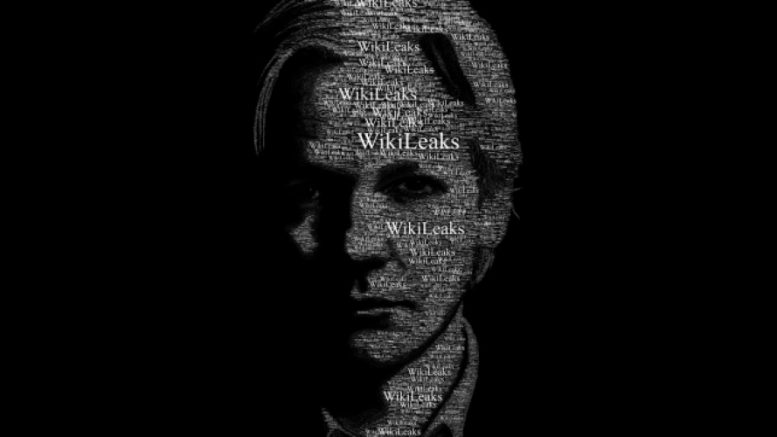
Nothing WikiLeaks published endangered the American people, it endangered a globe-spanning empire’s ability to control our understanding of what’s happening in the world. This was a most egregious offense as far as our rulers are concerned, and it could not be allowed to stand.

So an example is being made. In less polite times Assange would have been tortured and drawn and quartered in the town square while the king looked on sipping from a goblet of mead. In the days of polite liberal democracy our rulers must remain hidden, and they must publicly torture dissidents to death in the name of national security concerns.

Beneath all the spin and excuses, this is all being done to show everyone what happens to you if you reveal embarrassing truths about the most powerful people on earth. If you compromise their political security. It’s telling the world, “If you ever try to interfere in our control over the dominant narratives, this is what we will do to you.”

And, whether we fully understand what’s really happening or not, that’s the message that is being ingested here. Journalists who find themselves in a position to publish such things going forward will find themselves thinking thoughts about what happened to Julian Assange.

This is why it’s so important that they don’t win this case. We cannot allow ourselves to be cowed away from the truth in this way, or else we’re flying blind. We’re unable to obtain information which will help us steer society in a truth-based direction.

The Assange case receives so much attention not because of interest in one man’s fate, but because of interest in everyone’s fate. If humanity is ever to turn away from its self-destructive patterns and create a healthy world, it will necessarily need to do so guided by the light of truth and transparency. As long as the powerful are able to keep us confused and deluded using propaganda and government secrecy, such a world will never come into being.

Assange prosecution relied on false testimony from a diagnosed sociopath and convicted pedophile

By Caitlin Johnstone

Source: Intrepid Report

The Icelandic newspaper Stundin reports that a key witness in the US prosecution of Julian Assange has admitted in an interview with the outlet that he fabricated critical accusations in the indictment against the WikiLeaks founder.

“A major witness in the United States’ Department of Justice case against Julian Assange has admitted to fabricating key accusations in the indictment against the Wikileaks founder,” Stundin reports. “The witness, who has a documented history with sociopathy and has received several convictions for sexual abuse of minors and wide-ranging financial fraud, made the admission in a newly published interview in Stundin where he also confessed to having continued his crime spree whilst working with the Department of Justice and FBI and receiving a promise of immunity from prosecution.”

BREAKING: Lead witness in US case against Julian Assange admits to fabricating evidence against him in exchange for a deal with the FBI #Assange https://t.co/kZxsTi62q0

— WikiLeaks (@wikileaks) June 26, 2021

This major witness would be Iceland’s Sigurdur “Sigi” Thordarson, a paid FBI informant who after his short-lived association with WikiLeaks has been found guilty of sexually abusing nine boys as well as embezzlement, fraud, and theft in his home country. A court-appointed psychologist has found him to be a sociopath.

“The court found that Sigurður is by all definitions a sociopath, suffering from a severe anti-social personality disorder. However, the court found that he did know the difference between right and wrong and could not be considered insane and could therefore stand trial,” Iceland Magazine reported in 2015 during Thordarson’s child abuse case.

This was all public knowledge when the US government was building its case to extradite Julian Assange to America and try him under the Patriot Act for journalistic activity which exposed US war crimes, a prosecution for which Assange is still locked up in Belmarsh Prison pending Washington’s appeal of a UK court’s denial of the extradition request. And now we know for a fact that the odious person whose testimony formed the basis for much of that prosecution was lying.

“US officials presented an updated version of an indictment against him to a Magistrate court in London last summer,” Stundin says. “The veracity of the information contained therein is now directly contradicted by the main witness, whose testimony it is based on.”

What this means is that the US decided to add more accusations to its previous indictment because charging a journalist for standard journalistic practices was too weak on its own, and now this decision has bitten them in the ass.

The article’s authors explain that contrary to the claims in that indictment, “Thordarson now admits to Stundin that Assange never asked him to hack or access phone recordings of MPs” and “further admits the claim, that Assange had instructed or asked him to access computers in order to find any such recordings, is false.”

Judge Baraitser: “he also asked [Thordarson] to hack into computers to obtain information including audio recordings of phone conversations between high-ranking officials, including members of the Parliament, of the government of “NATO country 1”.”
This is false, says Thordarson https://t.co/oDXLARJuGK

— Kristinn Hrafnsson (@khrafnsson) June 26, 2021

Thordarson’s testimony was cited extensively by British Magistrate Vanessa Baraitser when she was providing her ruling on the extradition request which is currently under appeal, and it looks pretty silly now that we know it was bogus. Her ruling repeats the prosecution’s claim that Assange “asked Teenager to hack into computers to obtain information including audio recordings of phone conversations between high-ranking officials, including members of the Parliament,” but Thordarson has now recanted this claim.

While the judgement on the extradition request reads, “It is alleged that Mr. Assange and Teenager failed a joint attempt to decrypt a file stolen from a ‘NATO country 1′ [ code for Iceland] bank”, Thordarson told Stundin that “this actually refers to a well publicised event in which an encrypted file was leaked from an Icelandic bank and assumed to contain information about defaulted loans provided by the Icelandic Landsbanki,” and that “Nothing supports the claim that this file was even ‘stolen’ per se, as it was assumed to have been distributed by whistleblowers from inside the failed bank.”

While the ruling repeats the claim that Assange “used the unauthorized access given to him by a source, to access a government website of NATO country-1 used to track police vehicles,” Thordarson told Stundin that “Assange never asked for any such access.”

It should be. https://t.co/PhTi8PIKLJ

— Glenn Greenwald (@ggreenwald) June 26, 2021

These revelations are entirely damning.

“This is the end of the case against Julian Assange,” tweeted NSA whistleblower Edward Snowden, adding, “If Biden continues to seek the extradition of a publisher under an indictment poisoned top-to-bottom with false testimony admitted by its own star witness, the damage to the United States’ reputation on press freedom would last for a generation. It’s unavoidable.”

“Now it’s time to have an international inquiry on how Sweden, UK, US, Ecuador and Australia have handled the Julian Assange case. My FOIA provides evidence nothing is normal in this case,” tweeted investigative journalist Stefania Maurizi.

It just says so much that the most powerful government in the world, with all its essentially limitless resources, needed to build its case against Assange on false testimony from a diagnosed sociopath and convicted child molester. That’s how strong their case was against a journalist whose only “crime” was telling the truth about the powerful.

This after we learned that Assange and his lawyers were spied on by the CIA, that he is being tortured, that his seven-year de facto imprisonment prior to his two-year stay in Belmarsh was arbitrary detention and unjust from the very beginning, and that the pretext for keeping him there was itself fallacious.

This is a farce. The fact that this man remains behind bars is an outrage.

Western Outrage Over Belarus Force Landing Plane… How Dare You Copy Us!

(Photo by Wojtek RADWANSKI / AFP)

Washington runs its global air piracy with the full, silent complicity of European governments. If the Europeans expressed opposition to that global piracy then they might just have a bit of moral authority to comment on the Belarus incident.

By Finian Cunningham

Source: Strategic Culture Foundation

There were volcanic eruptions of outrage and condemnation from American and European states after Belarus forced a commercial airliner to land in order to arrest a wanted opposition activist.

Western media headlines were dominated with expressions of “shock” and fury over what was labeled a “hijacking”, “air piracy” and an “act of state terrorism”.

European leaders who were meeting at a summit on Monday called for renewed sanctions on Belarus. U.S. President Joe Biden is being urged to raise the air incident with Russian counterpart Vladimir Putin owing to Moscow’s friendly relations with Belarus, a former Soviet republic.

The Western reaction is hysterical and hypocritical. Admittedly, what took place in Belarusian airspace was irregular and possibly illegal. But the United States and European allies are in no position to sermonize about “hijacking” and “state terrorism”.

The Ryanair flight from Athens was heading for the Lithuanian capital Vilnius on Sunday. As it transited Belarusian airspace, the pilots were ordered by air traffic control to divert to Minsk. A suspected onboard bomb was cited. But that seems to have been a ploy. No device was found, and the plane departed from Minsk arriving in Vilnius six hours later.

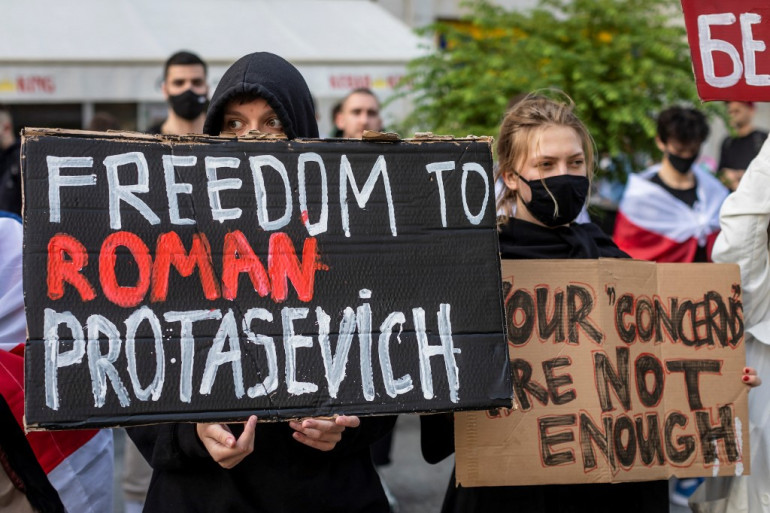
It was opposition activist Roman Protasevich whom the Belarusian authorities wanted. He was taken off the plane in Minsk and into detention along with a female companion. Protasevich (26) has been a key player in organizing anti-government protests in Belarus since a disputed election in August 2020 which saw President Alexander Lukashenko re-elected. The Belarusian authorities claim that their country is being subjected to a “color revolution” orchestrated by the United States and European allies.

Protasevich was living in exile in Lithuania and Poland before the street protests took off. He set up an opposition media channel that has fomented demonstrations and has been accused of spreading false information damaging the Belarusian authorities. The U.S. government-funded propaganda service Radio Free Europe is associated with the Belarusian protests and several of its figures are based in the Baltic states and Poland which Minsk accuses of foreign interference in its internal affairs.

Belarus had requested those European states to hand over exile opposition figures on the basis of international arrest warrants. The exiles like Protasevich have been charged with inciting violence and could face lengthy jail sentences.

The refusal by European states to respond to Belarusian arrest warrants was no doubt what prompted Minsk to take the controversial step of forcing the airliner to land.

What should be really shocking, however, is the blatant double standards being applied by Western states. Belarus is vilified as the “last dictatorship in Europe” and the airline incident is described as an “unprecedented” violation of international aviation.

How short is the memory of the Americans and Europeans. In July 2013, the private jet of Bolivian President Evo Morales was hijacked by European states on the orders of Washington. Morales was flying back from an energy conference in Russia when France, Italy, Spain and Portugal suddenly closed off their airspace. The Americans suspected that the NSA/CIA whistleblower Edward Snowden was onboard Morales’ plane. The pilot was forced to land in Vienna where Austrian security agents searched the jet. Of course, Snowden was not on it and Morales was eventually allowed to continue his journey after several hours’ delay.

South American nations condemned the act of “state terrorism” and the violation of Bolivia’s sovereignty. It was a flagrant act of banditry perpetrated by the United States and its European minions. Then French President Francois Hollande offered a pathetic apology subsequently.

Another breach of aviation regulations that was met with silence from Washington and Europe was the forced landing of a Belarusian airliner in October 2016 by Ukraine. The plane had taken off from Kiev but was ordered to return under threat of fighter jets being scrambled. Onboard was Armenian journalist Armen Martirosyan who worked for Russian media critical of the Kiev regime. The journalist was briefly detained in Kiev before being allowed to travel on to Minsk. Somehow the American and European backers of the Ukrainian regime did not find that incident worthy of “outrage” and headlines screaming with condemnation.

If we are genuinely interested in condemning air piracy then the European governments should be far more concerned by the systematic abuse of their airspace by the American CIA and its “extraordinary rendition” program. Countless “terrorist suspects” unlawfully kidnapped by American military forces operating illegally all over the world have been transited covertly through European airports on their way to Guantanamo Bay or some black site for torture.

Washington runs its global air piracy with the full, silent complicity of European governments. Now perhaps if the Europeans expressed opposition to that global piracy then they might just have a bit of moral authority to comment on the Belarus incident. But the Europeans are craven in their support for American aviation hijacking and violations. So their selective protestations are null and void.

Eyewitness to the Agony of Julian Assange

By Timothy Erik Strom and John Pilger

Source: CounterPunch

John Pilger has watched Julian Assange’s extradition trial from the public gallery at London’s Old Bailey. He spoke with Timothy Erik Ström of Arena, Australia:

Q:  Having watched Julian Assange’s trial firsthand, can you describe the prevailing atmosphere in the court?

The prevailing atmosphere has been shocking. I say that without hesitation; I have sat in many courts and seldom known such a corruption of due process; this is due revenge. Putting aside the ritual associated with ‘British justice’, at times it has been evocative of a Stalinist show trial. One difference is that in the show trials, the defendant stood in the court proper. In the Assange trial, the defendant was caged behind thick glass, and had to crawl on his knees to a slit in the glass, overseen by his guard, to make contact with his lawyers. His message, whispered barely audibly through face masks, WAS then passed by post-it the length of the court to where his barristers were arguing the case against his extradition to an American hellhole.

Consider this daily routine of Julian Assange, an Australian on trial for truth-telling journalism. He was woken at five o’clock in his cell at Belmarsh prison in the bleak southern sprawl of London. The first time I saw Julian in Belmarsh, having passed through half an hour of ‘security’ checks, including a dog’s snout in my rear, I found a painfully thin figure sitting alone wearing a yellow armband. He had lost more than 10 kilos in a matter of months; his arms had no muscle. His first words were: ‘I think I am losing my mind’.

I tried to assure him he wasn’t. His resilience and courage are formidable, but there is a limit. That was more than a year ago. In the past three weeks, in the pre-dawn, he was strip-searched, shackled, and prepared for transport to the Central Criminal Court, the Old Bailey, in a truck that his partner, Stella Moris, described as an upended coffin. It  had one small window; he had to stand precariously to look out. The truck and its guards were operated by Serco, one of many politically connected companies that run much of Boris Johnson’s Britain.

The journey to the Old Bailey took at least an hour and a half. That’s a minimum of three hours being jolted through snail-like traffic every day. He was led into his narrow cage at the back of the court, then look up, blinking, trying to make out faces in the public gallery through the reflection of the glass. He saw the courtly figure of his dad, John Shipton, and me, and our fists went up. Through the glass, he reached out to touch fingers with Stella, who is a lawyer and seated in the body of the court.

We were here for the ultimate of what the philosopher Guy Debord called The Society of the Spectacle: a man fighting for his life. Yet his crime is to have performed an epic public service: revealing that which we have a right to know: the lies of our governments and the crimes they commit in our name. His creation of WikiLeaks and its failsafe protection of sources revolutionised journalism, restoring it to the vision of its idealists. Edmund Burke’s notion of free journalism as a fourth estate is now a fifth estate that shines a light on those who diminish the very meaning of democracy with their criminal secrecy. That’s why his punishment is so extreme.

The sheer bias in the courts I have sat in this year and last year, with Julian in the dock, blight any notion of British justice. When thuggish police dragged him from his asylum in the Ecuadorean embassy—look closely at the photo and you’ll see he is clutching a Gore Vidal book; Assange has a political humour similar to Vidal’s—a judge gave him an outrageous 50-week sentence in a maximum-security prison for mere bail infringement.

For months, he was denied exercise and held in solitary confinement disguised as ‘heath care’. He once told me he strode the length of his cell, back and forth, back and forth, for his own half-marathon. In the next cell, the occupant screamed through the night. At first he was denied his reading glasses, left behind in the embassy brutality. He was denied the legal documents with which to prepare his case, and access to the prison library and the use of a basic laptop. Books sent to him by a friend, the journalist Charles Glass, himself a survivor of hostage-taking in Beirut, were returned. He could not call his American lawyers. He has been constantly medicated by the prison authorities. When I asked him what they were giving him, he couldn’t say. The governor of Belmarsh has been awarded the Order of the British Empire.

At the Old Bailey, one of the expert medical witnesses, Dr Kate Humphrey, a clinical neuropsychologist at Imperial College, London, described the damage: Julian’s intellect had gone from ‘in the superior, or more likely very superior range’ to ‘significantly below’ this optimal level, to the point where he was struggling to absorb information and ‘perform in the low average range’.

This is what the United Nations Special Rapporteur on Torture, Professor Nils Melzer, calls ‘psychological torture’, the result of a gang-like ‘mobbing’ by governments and their media shills. Some of the expert medical evidence is so shocking I have no intention of repeating it here. Suffice to say that Assange is diagnosed with autism and Asperger’s syndrome and, according to Professor Michael Kopelman, one of the world’s leading neuropsychiatrists, he suffers from ‘suicidal preoccupations’ and is likely to find a way to take his life if he is extradited to America.

James Lewis QC, America’s British prosecutor, spent the best part of his cross-examination of Professor Kopelman dismissing mental illness and its dangers as ‘malingering’. I have never heard in a modern setting such a primitive view of human frailty and vulnerability.

My own view is that if Assange is freed, he is likely to recover a substantial part of his life. He has a loving partner, devoted friends and allies and the innate strength of a principled political prisoner. He also has a wicked sense of humour.

But that is a long way off. The moments of collusion between the judge— a Gothic-looking magistrate called Vanessa Baraitser, about whom little is known—and the prosecution acting for the Trump regime have been brazen. Until the last few days, defence arguments have been routinely dismissed. The lead prosecutor, James Lewis QC, ex SAS and currently Chief Justice of the Falklands, by and large gets what he wants, notably up to four hours to denigrate expert witnesses, while the defence’s examination is guillotined at half an hour. I have no doubt, had there been a jury, his freedom would be assured.

The dissident artist Ai Weiwei came to join us one morning in the public gallery. He noted that in China the judge’s decision would already have been made. This caused some dark ironic amusement. My companion in the gallery, the astute diarist and former British ambassador Craig Murray wrote:

I fear that all over London a very hard rain is now falling on those who for a lifetime have worked within institutions of liberal democracy that at least broadly and usually used to operate within the governance of their own professed principles. It has been clear to me from Day 1 that I am watching a charade unfold. It is not in the least a shock to me that Baraitser does not think anything beyond the written opening arguments has any effect. I have again and again reported to you that, where rulings have to be made, she has brought them into court pre-written, before hearing the arguments before her.

I strongly expect the final decision was made in this case even before opening arguments were received.

The plan of the US Government throughout has been to limit the information available to the public and limit the effective access to a wider public of what information is available. Thus we have seen the extreme restrictions on both physical and video access. A complicit mainstream media has ensured those of us who know what is happening are very few in the wider population.

There are few records of the proceedings. They are: Craig Murray’s personal blog, Binoy Kampmark on CounterPunch, Joe Lauria’s live reporting on Consortium News and the World Socialist Website. American journalist Kevin Gosztola’s blog, Shadowproof, funded mostly by himself, has reported more of the trial than the major US press and TV, including CNN, combined.

In Australia, Assange’s homeland, the ‘coverage’ follows a familiar formula set overseas. The London correspondent of the Sydney Morning Herald, Latika Bourke, wrote this recently:

The court heard Assange became depressed during the seven years he spent in the Ecuadorian embassy where he sought political asylum to escape extradition to Sweden to answer rape and sexual assault charges.

There were no ‘rape and sexual assault charges’ in Sweden. Bourke’s lazy falsehood is not uncommon. If the Assange trial is the political trial of the century, as I believe it is, its outcome will not only seal the fate of a journalist for doing his job but intimidate the very principles of free journalism and free speech. The absence of serious mainstream reporting of the proceedings is, at the very least, self-destructive. Journalists should ask: who is next?

How shaming it all is. A decade ago, the Guardian exploited Assange’s work, claimed its profit and prizes as well as a lucrative Hollywood deal, then turned on him with venom. Throughout the Old Bailey trial, two names have been cited by the prosecution, the Guardian’s David Leigh, now retired as ‘investigations editor’ and Luke Harding, the Russiaphobe and author of a fictional Guardian ‘scoop’ that claimed Trump adviser Paul Manafort and a group of Russians visited Assange in the Ecuadorean embassy. This never happened, and the Guardian has yet to apologise. The Harding and Leigh book on Assange—written behind their subject’s back—disclosed a secret password to a WikiLeaks file that Assange had entrusted to Leigh during the Guardian’s ‘partnership’. Why the defence has not called this pair is difficult to understand.

Assange is quoted in their book declaring during a dinner at a London restaurant that he didn’t care if informants named in the leaks were harmed. Neither Harding nor Leigh was at the dinner. John Goetz, an investigations reporter with Der Spiegel, was at the dinner and testified that Assange said nothing of the kind. Incredibly, Judge Baraitser stopped Goetz actually saying this in court.

However, the defence has succeeded in demonstrating the extent to which Assange sought to protect and redact names in the files released by WikiLeaks and that no credible evidence existed of individuals harmed by the leaks. The great whistle-blower Daniel Ellsberg said that Assange had personally redacted 15,000 files. The renowned New Zealand investigative journalist Nicky Hager, who worked with Assange on the Afghanistan and Iraq war leaks, described how Assange took ‘extraordinary precautions in redacting names of informants’.

Q: What are the implications of this trial’s verdict for journalism more broadly—is it an omen of things to come?

The ‘Assange effect’ is already being felt across the world. If they displease the regime in Washington, investigative journalists are liable to prosecution under the 1917 US Espionage Act; the precedent is stark. It doesn’t matter where you are. For Washington, other people’s nationality and sovereignty rarely mattered; now it does not exist. Britain has effectively surrendered its jurisdiction to Trump’s corrupt Department of Justice. In Australia, a National Security Information Act promises Kafkaesque trials for transgressors. The Australian Broadcasting Corporation has been raided by police and journalists’ computers taken away. The government has given unprecedented powers to intelligence officials, making journalistic whistle-blowing almost impossible. Prime Minister Scott Morrison says Assange ‘must face the music’. The perfidious cruelty of his statement is reinforced by its banality.

‘Evil’, wrote Hannah Arendt, ‘comes from a failure to think. It defies thought for as soon as thought tries to engage itself with evil and examine the premises and principles from which it originates, it is frustrated because it finds nothing there. That is the banality of evil’.

Q: Having followed the story of WikiLeaks closely for a decade, how has this eyewitness experience shifted your understanding of what’s at stake with Assange’s trial?

I have long been a critic of journalism as an echo of unaccountable power and a champion of those who are beacons. So, for me, the arrival of WikiLeaks was exciting; I admired the way Assange regarded the public with respect, that he was prepared to share his work with the ‘mainstream’ but not join their collusive club. This, and naked jealousy, made him enemies among the overpaid and undertalented, insecure in their pretensions of independence and impartiality.

I admired the moral dimension to WikiLeaks. Assange was rarely asked about this, yet much of his remarkable energy comes from a powerful moral sense that governments and other vested interests should not operate behind walls of secrecy. He is a democrat. He explained this in one of our first interviews at my home in 2010.

What is at stake for the rest of us has long been at stake: freedom to call authority to account, freedom to challenge, to call out hypocrisy, to dissent. The difference today is that the world’s imperial power, the United States, has never been as unsure of its metastatic authority as it is today. Like a flailing rogue, it is spinning us towards a world war if we allow it. Little of this menace is reflected in the media.

WikiLeaks, on the other hand, has allowed us to glimpse a rampant imperial march through whole societies—think of the carnage in Iraq, Afghanistan, Libya, Syria, Yemen, to name a few, the dispossession of 37 million people and the deaths of 12 million men, women and children in the ‘war on terror’—most of it behind a façade of deception.

Julian Assange is a threat to these recurring horrors—that’s why he is being persecuted, why a court of law has become an instrument of oppression, why he ought to be our collective conscience: why we all should be the threat.

The judge’s decision will be known on the 4th of January.

THE ONLY OBSTACLE TO A HEALTHY WORLD IS GOVERNMENT SECRECY AND PROPAGANDA

By Caitlin Johnstone

Source: Waking Times

If people in power were no longer able to hide secrets and spin lies about what’s going on in the world, all of our major problems would come to an end. Because secretive and manipulative power structures are the source of all of our major problems.

If the public could see what’s actually happening in their world, they would immediately begin using the power of their numbers to overhaul our current system. This is why our current system pours so much energy into preventing the public from seeing what’s actually happening in their world.

If it weren’t for the constant campaign of obfuscation and manipulation of public perception via veils of government secrecy and propaganda, humanity would naturally find its way out of the power-driven tribulations it now faces, as surely as you’ll avoid obstacles and hazards in your path when you are walking with your eyes open. The only problem in this case is that our eyes have not been permitted to open.

It isn’t actually necessary to hold a bunch of hard, rigid ideas about exactly what kind of society we should have, what kind of political system we should have, what kind of economic system we should have. There’s nothing wrong with promoting ideas and having preferences of course, but really if you just gave humanity the ability to navigate through its own troubles by removing the blindfolds of propaganda and power opacity, it would organically create a healthy society, and realistically such a society probably won’t look a whole lot like our mental models.

You do have the option, then, of simply promoting the end of government/political/corporate/financial opacity and the end of establishment perception management. Wanting humanity to see with clear eyes so that it can make its own informed decisions about where to take itself is a complete political position, in and of itself. You don’t have to hold any other political preferences of any kind if you don’t want to.

The desire for an end to the obfuscations and manipulations of the powerful so that humanity can find its own way is the most anti-authoritarian position you can possibly take, because it also protects the world from your own authoritarian impulses.

I personally am very leftwardly inclined and believe that if humanity had its perception management blindfolds removed it would naturally create a world where we’re all truly equal and everyone is taken care of by the collective each according to their need, but what the hell do I know? Maybe if the blindfold is removed I’d be proven wrong. I respect human sovereignty enough to want to find out, free from my own political preferences. I should not be the one making such societal decisions, society as a whole should. I just want human perception to be freed up enough to make that call.

If you choose to make the end of perception management your foremost priority, that means you push for government transparency at every opportunity and support any movement to take away secret hiding places from the powerful.

It means opposing the way the powerful bolt shut all the doors on public scrutiny of their behavior, smear anyone who speculates about what they might be up to as a crazy conspiracy theorist, and imprisons anyone who leaks information about what they’re really doing to the people.

It means you support whistleblowers like Chelsea Manning and Edward Snowden who help shine light on the things power tries to keep hidden in the dark.

It means you support WikiLeaks and Julian Assange and any journalist who helps expose the secrets of the powerful.

It means you fight the empire’s propaganda machine at every opportunity to break public trust in its manipulations.

It means you support breaking up the monolithic mass media and giving everyone the equal ability to influence the dominant narratives.

It means opposing internet censorship, since Silicon Valley plutocrats propping up the establishment their kingdoms are built upon by censoring anti-establishment voices is another way of keeping people from being shown the truth about their world.

I personally would add that it means supporting the decriminalization of psychedelics, because seeing within ourselves is just as important as seeing what’s happening in our world and entheogens can facilitate this seeing, but maybe that’s just me.

Again, there’s no harm in engaging in politics and pushing for the changes you’d like to see in your world, and there can be many benefits to doing so. But as long as people are successfully prevented from seeing and understanding what’s really happening in their world by the obfuscation of information and by the manipulation of people’s perception of that information, the status quo will always remain in place.

So in my opinion this is the most sensible point upon which to converge our energy. I personally have no interest in controlling what humanity does, and desire only that people come to see freely enough to make their own decisions.

It’s absolutely insane that information which affects us all is kept hidden away from our clear vision by secrecy and propaganda. It’s even crazier that they shame us when we wonder what’s really going on and throw us in prison when we try to find out. We must liberate ourselves from this madness so we can create a healthy world together.

Why Freedom Is Ending

By Eric Zuesse

Source: The Duran

First, the force that is ending freedom will be identified and described; and, then, the force that they fear and hate the most (and are trying to destroy) will be identified and described.

THE FORCE THAT IS ENDING FREEDOM

The force that is ending freedom is empire.

Every empire is a dictatorship. No nation can be a democracy that’s either heading an empire, or a vassal-state of one. Obviously, in order to be a vassal-state within an empire, that nation is dictated-to by the nation of which it is a colony. However, even the domestic inhabitants of the colonizing nation cannot be free and living in a democracy, because their services are needed abroad in order to impose the occupying force upon the colony or vassal-nation. This is an important burden upon the ‘citizens’ or actually the subjects of the imperial nation. Furthermore, they need to finance, via their taxes, this occupying force abroad, to a sufficient extent so as to subdue any resistance by the residents in any colony.

Every empire is imposed, none is really voluntary. Conquest creates an empire, and the constant application of force maintains it. Every empire is a dictatorship, not only upon its foreign populations (which goes without saying, because otherwise there can’t be any empire), but upon its domestic ones too, upon its own subjects.

Any empire needs weapons-makers, who sell to the government and whose only markets are the imperial government and its vassal-nations or ‘allies’. By contrast, ‘enemy’ nations are ones that the imperial power has placed onto its priority-list of nations that are yet to become conquered.

There are two main reasons to conquer a nation:

One is in order to be enabled to extract, from the colony, oil, or gold, or some other valuable commodity.

The other is in order to control it so as to be enabled to use that land as a passageway for exporting, from a vassal-nation, to other nations, that vassal-nation’s products.

International trade is the basis for any empire, and the billionaires who own controlling blocs of stock in a nation’s international corporations are the actual rulers of it, the beneficiaries of empire, the recipients of the wealth that is being extracted from the colonies and from the domestic subjects. 

The idea of an empire is that the imperial nation’s rulers, its aristocracy, extract from the colonies their products, and they impose upon their domestic subjects the financial and military burdens of imposing their international dictatorship upon the foreign subjects.

Some authors say that there is a “Deep State” and that it consists of (some undefined elements within) the intelligence services, and of the military, and of the diplomatic corps, of any given dictatorship; but, actually, those employees of the State are merely employees, not the actual governing power, over that dictatorship.

The actual Deep State are always the aristocrats, themselves, the people who run the revolving door between ‘the private sector’ (the aristocracy’s corporations) and the government.

In former times, many of the aristocrats were themselves governing officials (the titled ‘nobility’), but this is no longer common. Nowadays, the aristocracy are the individuals who own controlling blocs of stock in international corporations (especially weapons-making firms such as Lockheed Martin and BAE, because the only markets for those corporations are the corporation’s own government and its vassal states or ‘allies’); and such individuals are usually the nation’s billionaires, and, perhaps, a few of the mere centi-millionaires. A small number, typically less than 100, of these extremely wealthy individuals, are the biggest donors to politicians, and to think tanks, and to other non-profits (these latter being also tax-write-offs to their donors, and so are tax-drains siphoning money away from the general public and paying the actual benefits, such as PR and increased control over the Government, to the billionaires) that are involved in the formation of the national government’s policies; and, of course, these billionaires also are owners of and/or advertisers in the propaganda-media, which sell the aristocracy’s core or most-essential viewpoints to the nation’s subjects, in order to persuade those voters to vote only for the aristocracy’s selected candidates, and not for any who oppose the aristocracy. These few, mainly but not exclusively billionaires, are the actual Deep State — the bosses over the dictatorship, the ultimate beneficiaries in any empire.

In order to maintain this system, of international dictatorship or empire, the most essential tool is deceit, of the electorate, by the aristocracy.   

The method of control is: the bought agents of the Deep State (including the major ‘news’-media, etc.) lie to the public about what their polices will be if they win, in order to be able to win power; and, then, once they have won power, they do the opposite, which is what they have always been paid by the Deep State (the aristocracy) to do. Thereby, elections aren’t “democratic” but instead ‘democratic’: they are mere formalities of democracy, without the substance of democracy, because there can be no democracy where truth is suppressed and lies are spread instead. All of the well-financed candidates for the top offices are actually the Deep State’s representatives, and virtually none are the representatives of the public, because the voters have been deceived, and were given (by the DNC and RNC) choices between two or more candidates, none of whom will represent the public, if and when elected. Individuals who want to represent the public instead of the aristocracy get drowned by the aristocracy’s campaign-money.

Here are some recent examples of this system — the imperial system, international dictatorship, in action — as shown by its results:

During Donald Trump’s Presidential campaign, he said, “The approach of fighting Assad and ISIS simultaneously was madness, and idiocy. They’re fighting each other and yet we’re fighting both of them. You know, we were fighting both of them. I think that our far bigger problem than Assad is ISIS, I’ve always felt that. Assad is, you know I’m not saying Assad is a good man, ’cause he’s not, but our far greater problem is not Assad, it’s ISIS. … I think, you can’t be fighting two people that are fighting each other, and fighting them together. You have to pick one or the other.” Assad is allied with Russia against the Sauds (who are the chief ally of the U.S. aristocracy), so the U.S. (in accord with a policy that George Herbert Walker Bush had initiated on 24 February 1990 and which has been carried out by all subsequent U.S. Presidents) was determined to overthrow Assad, but Trump said that he was strongly opposed to that policy.

Months before that, Trump had said“I think Assad is a bad guy, a very bad guy, all right? Lots of people killed. I think we are backing people we have no idea who they are. The rebels, we call them the rebels, the patriotic rebels. We have no idea. A lot of people think, Hugh, that they are ISIS. We have to do one thing at a time. We can’t be fighting ISIS and fighting Assad. Assad is fighting ISIS. He is fighting ISIS. Russia is fighting now ISIS. And Iran is fighting ISIS. We have to do one thing at a time. We can’t go — and I watched Lindsey Graham, he said, I have been here for 10 years fighting. Well, he will be there with that thinking for another 50 years. He won’t be able to solve the problem. We have to get rid of ISIS first. After we get rid of ISIS, we’ll start thinking about it. But we can’t be fighting Assad. And when you’re fighting Assad, you are fighting Russia, you’re fighting — you’re fighting a lot of different groups. But we can’t be fighting everybody at one time.”

In that same debate (15 December 2015) he also said: “In my opinion, we’ve spent $4 trillion trying to topple various people that frankly, if they were there and if we could’ve spent that $4 trillion in the United States to fix our roads, our bridges, and all of the other problems; our airports and all of the other problems we’ve had, we would’ve been a lot better off. I can tell you that right now. We have done a tremendous disservice, not only to Middle East, we’ve done a tremendous disservice to humanity. The people that have been killed, the people that have wiped away, and for what? It’s not like we had victory. It’s a mess. The Middle East is totally destabilized. A total and complete mess. I wish we had the $4 trillion or $5 trillion. I wish it were spent right here in the United States, on our schools, hospitals, roads, airports, and everything else that are all falling apart.”

Did he do that? No. Did he instead intensify what Obama had been trying to do in Syria — overthrow Assad — yes. As the U.S. President, after having won the 2016 Presidential campaign, has Trump followed through on his criticism there, against the super-hawk, neoconservative, Republican U.S. Senator Lindsey Graham? No. Did he instead encircle himself with precisely such super-hawks, such neoconservatives? Yes. Did he intensify the overthrow-Assad effort, as Graham and those others had advocated? Yes. Did America’s war against Syria succeed? Not yet. Did he constantly lie to the voters? Yes, without a doubt. Should that be grounds for impeaching him? A prior question to that one is actually: Would a President Mike Pence be any different or maybe even worse than Trump? If yes, then what would be achieved by removing Trump from office? Maybe it would actually make things a lot worse. But how likely would the U.S. Senate be to remove Trump from office if the House did impeach Trump? Two-thirds of the U.S. Senate would need to vote to remove the President in order for a President to be removed after being impeached by the House. A majority of U.S. Senators, 53 of them, were Republicans. If just 33 of them voted not to convict the President, then Trump wouldn’t be removed, and he wasn’t. In order to remove him, not only would all 47 of the Democrats and Independents have had to vote to convict, but 20 of the 53 Republicans would have needed to join them. That’s nearly 40% of the Republican Senators. How likely was that? Almost impossible. What would their voters who had elected them back home think of their having done such a thing? How likely would such Senators have then faced successful re-election challenges that would have removed those Senators from office? Would 20 of the 53 have been likely to take that personal risk? Why, then, were so many Democrats in the House pressing for Trump’s impeachment, since Trump’s being forced out of the White House this way was practically impossible and would only have installed a President Pence, even if it could have succeeded? Was that Democratic Party initiative anything else than insincere political theater, lying to their own gullible voters, Democratic Party voters, just being phonies who manipulated voters to vote for them, instead of who were actually serving them? Is that what democracy is, now: such insincere political theater? Is that “democracy”? America’s voters are trapped, by liars, so it’s instead mere ‘democracy’. It’s the new form of dictatorship. But it’s actually as ancient as is any empire. There’s nothing new about this — except for one thing: the U.S. regime is aiming to be the ultimate, the last, the final, empire, the ruler over the entire planet; so, it is trying especially hard, ‘to defend freedom, democracy and human rights throughout the world’, as Big Brother might say.

Trump’s Democratic predecessor, Barack Obama, was just as evil, and just as insincere, as Trump, but a far more skillful liar, who deceived his voters to think that he would fight corruptionwork to improve relations with Russia, provide a public option in his health-insurance plan, and otherwise work to reduce economic inequality, to improve the economic situation for disadvantaged Americans, and to prosecute banksters. He abandoned each one of those stated objectives as soon as he won against John McCain, on 4 November 2008, and then yet more when he defeated Mitt Romney in 2012. And aren’t some of those promises the same ones that candidate Trump had also advocated and then abandoned as soon as he too was s‘elected’?

THE THREAT TO THE EMPIRE

Empire always depends upon lies; it is always built upon lies; and, so, the biggest threat to it is the truth, and especially the champions of truth, who are the whistleblowers. The whistleblowers are up against two enemies: the aristocracy, and the aristocrats’ agents who censor-out truth and leave only lies which the aristocracy’s agents spread to the public. Censorship always serves liars, because it is imposed from above and serves the aristocracy, against the public. Every dictatorship needs censorship. No democracy does.

The heroic fighters for the freedom of everyone in the world are the whistleblowers, who report to the public the corruption and evil that they see perpetrated by their superiors, their bosses, and perpetrated by people who are on the public payroll or otherwise obtaining increased income by virtue of being selected by the government to become government contractors to serve an allegedly public function. All liars with power hate whistleblowers, and want to make special examples of any part of the press that publishes their truths, their facts, their stolen documents. These documents are stolen because that’s the only way for them to become public and thereby known to the voters so that the voters can vote on the basis of truths as in a democracy, instead of to be deceived as in a dictatorship. Even if the truth is stolen from the liars, instead of being kept private (“Confidential”) for them, are the whistleblowers doing wrong to steal the truth from the liars? Or, instead, are the whistleblowers heroes: are they the authentic guardians of democracy, and the precariously thin wall that separates democracy from dictatorship? They are the latter: they are the true heroes. Unfortunately, the vast majority of such heroes are also martyrs — martyrs for truth, against lies. Every dictatorship seeks to destroy its whistleblowers. That’s because any whistleblower constitutes a threat to The System — the system of aristocratic control.

In all of U.S. history, the two Presidents who pursued whistleblowers and their publishers the most relentlessly have been Trump and Obama. The public are fooled to think that this is being done for ‘national security’ reasons instead of to hide the government’s crimes and criminality. However, not a single one of the Democratic Party’s many U.S. Presidential candidates is bringing this issue, of the U.S. government’s many crimes and constant lying, forward as being the central thing that must be criminalized above all else, as constituting “treason.” None of them is proposing legislation saying that it is treason, against the public — against the nation. Against the public.

Every aristocracy tries to deceive its public, in order to control its public; and every aristocracy uses divide-and-rule in order to do this; but it’s not only to divide the public against each other (such as between Republicans versus Democrats, both of which are actually controlled by the aristocracy), but also to divide between nations, such as between ‘allies’ versus ‘enemies’ — even when a given ‘enemy’ (such as Iraq in 2003) has never threatened, far less invaded, the United States (or whatever the given imperial ‘us’ may happen to be), and thus clearly this was aggressive war, and an international war-crime, though unpunished as such, because it was done by the empire. The public need to fear and hate some ‘enemy’ which is the ‘other’ or ‘alien’, in order not  to fear and loathe the aristocracy itself — the actual source of (and winner from) the systemic exploitation, of the public, by the aristocracy. It’s distract, and divide, and rule.

The pinnacle of the U.S. regime’s totalitarianism is its ceaseless assault against Julian Assange, who is the über-whistleblower, the strongest protector for whistleblowers, the safest publisher for the evidence that they steal from their employers and from their employers’ government. He hides the identity of the whistleblowers, even at the risk of his own continued existence. Right now, the U.S. regime is raising to a fever-pitch and twisting beyond recognition not only U.S. laws but the U.S. Constitution, so as to impose its will against him. President Trump is supported in this effort by the corrupt U.S. Congress, to either end Assange’s life, or else lock him up for the rest of his heroic life in a dungeon having no communication with the world outside, until he does finally die, in isolation, punishment for his heroic last-ditch fight for the public’s freedom and for democracy — his fight, actually, against our 1984 regime. What Jesus of Nazareth was locally to the Roman regime in his region, Assange is to the U.S. regime throughout the world: an example to terrify anyone else who might come forth effectively to challenge the Emperor’s authority.

A key country in this operation is Ecuador, which is ruled by the dictator Lenin Moreno, who stole office by lying to the public and pretending to be a progressive who backed his democratically elected predecessor, Rafael Correa, but then as soon as he won power, he reversed Correa’s progressive initiatives, including, above all, his protection of Assange, who had sought refuge in the Ecuadoran Embassy in London.

On 11 April 2019, RT headlined “Who is Lenin Moreno and why did he hand Assange over to British police?” and reported that:

Following his 2017 election, Moreno quickly moved away from his election platform after taking office. He reversed several key pieces of legislation passed under his predecessor which targeted the wealthy and the banks. He also reversed a referendum decision on indefinite re-election while simultaneously blocking any potential for Correa to return.

He effectively purged many of Correa’s appointments to key positions in Ecuador’s judiciary and National Electoral Council via the CPCCS-T council which boasts supra-constitutional powers.

Moreno has also cozied up to the US, with whom Ecuador had a strained relationship under Correa. Following a visit from Vice President Mike Pence in June 2018, Ecuador bolstered its security cooperation with the US, including major arms deals, training exercises and intelligence sharing.

Following Assange’s arrest Correa, who granted Assange asylum in the first place, described Moreno as the “greatest traitor in Ecuadorian and Latin American history” saying he was guilty of a “crime that humanity will never forget.”

Despite his overwhelming power and influence, however, Moreno and his family are the subject of a sweeping corruption probe in the country, as he faces down accusations of money laundering in offshore accounts and shell companies in Panama, including the INA Investment Corp, which is owned by Moreno’s brother. 

Damning images, purportedly hacked from Moreno’s phone, have irreparably damaged both his attempts at establishing himself as an anti-corruption champion as well as his relationship with Assange, whom he accused of coordinating the hacking efforts.

On 14 April 2019, Denis Rogatyuk at The Gray Zone headlined “Sell Out: How Corruption, Voter Fraud and a Neoliberal Turn Led Ecuador’s Lenin to Give Up Assange

Desperate to ingratiate his government with Washington and distract the public from his mounting scandals, Ecuadorian President Lenin Moreno has sacrificed Julian Assange – and his country’s independence”, and he described some of the documentation for the accusations that Moreno is corrupt. 

On 12 April 2019, Zero Hedge headlined “Facebook Removes Page Of Ecuador’s Former President On Same Day As Assange’s Arrest”, and opened: “Facebook has unpublished the page of Ecuador’s former president, Rafael Correa, the social media giant confirmed on Thursday, claiming that the popular leftist leader violated the company’s security policies.”

On 16 April 2019, Jonathan Turley bannered “‘He Is Our Property’: The D.C. Establishment Awaits Assange With A Glee And Grudge”, and opened:

They will punish Assange for their sins

The key to prosecuting Assange has always been to punish him without again embarrassing the powerful figures made mockeries by his disclosures. That means to keep him from discussing how the U.S. government concealed alleged war crimes and huge civilian losses, the type of disclosures that were made in the famous Pentagon Papers case. He cannot discuss how Democratic and Republican members either were complicit or incompetent in their oversight. He cannot discuss how the public was lied to about the program.

A glimpse of that artificial scope was seen within minutes of the arrest. CNN brought on its national security analyst, James Clapper, former director of national intelligence. CNN never mentioned that Clapper was accused of perjury in denying the existence of the National Security Agency surveillance program and was personally implicated in the scandal that WikiLeaks triggered.

Clapper was asked directly before Congress, “Does the NSA collect any type of data at all on millions or hundreds of millions of Americans?”

Clapper responded, “No, sir. … Not wittingly.” Later, Clapper said his testimony was “the least untruthful” statement he could make.

That would still make it a lie, of course, but this is Washington and people like Clapper are untouchable. In the view of the establishment, Assange is the problem.

On 11 April 2019, the YouGov polling organization headlined “53% of Americans say Julian Assange should be extradited to America”.

On 13 April 2019, I headlined “What Public Opinion on Assange Tells Us About the US Government Direction”, and reported the only international poll that had ever been done of opinions about Assange. Its findings demonstrated that, out of the 23 nations which were surveyed, U.S. was the only one where the public were anti-Assange, and that the difference between the U.S. and all of the others was enormous and stark. The report opened:

The only extensive poll of public opinion regarding Julian Assange or Wikileaks was Reuters/Ipsos on 26 April 2011, “WikiLeaks’ Julian Assange is not a criminal: global poll”, and it sampled around a thousand individuals in each of 23 countries — a total of 18,829 respondents. The Reuters news-report was vague, and not linked to any detailed presentation of the poll-findings, but it did say that “U.S. respondents had a far more critical view” against Wikileaks than in any other country, and that the view by Americans was 69% “believing Assange should be charged and 61 percent opposing WikiLeaks’ mission.” Buried elsewhere on the Web was this detailed presentation of Ipsos’s findings in that poll. Here are what those findings were:

https://www.slideshare.net/mediapiac/julian-assange-and-wiki-leaks

Oppose Wikileaks:

61% U.S.

38% UK

33% Canada

32% Poland

32% Belgium

31% Saudi Arabia

30% Japan

30% France

27% Indonesia

26% Italy

25% Germany

24% Sweden

24% Australia

22% Hungary

22% Brazil

21% Turkey

21% S. Korea

16% Mexico

16% Argentina

15% Spain

15% Russia

15% India

12% S. Africa

Is the U.S. a democracy if the regime is so effective in gripping the minds of its public, as to make them hostile to the strongest fighter for their freedom and democracy?

On 13 April 2019, washingtonsblog headlined “4 Myths About Julian Assange DEBUNKED”, and here was one of them:

Myth #2: Assange Will Get a Fair Trial In the U.S.

14-year CIA officer John Kiriakou notes:

Assange has been charged in the Eastern District of Virginia — the so-called “Espionage Court.” That is just what many of us have feared. Remember, no national security defendant has ever been found not guilty in the Eastern District of Virginia. The Eastern District is also known as the “rocket docket” for the swiftness with which cases are heard and decided. Not ready to mount a defense? Need more time? Haven’t received all of your discovery? Tough luck. See you in court.

… I have long predicted that Assange would face Judge Leonie Brinkema were he to be charged in the Eastern District. Brinkema handled my case, as well as CIA whistleblower Jeffrey Sterling’s. She also has reserved the Ed Snowden case for herself. Brinkema is a hanging judge.

On 20 May 2019, former British Ambassador Craig Murray (who had quit so that he could blow the whistle) headlined “The Missing Step” and argued that the only chance that Assange now has is if Sweden refuses to extradite Assange to the U.S. in the event that Britain honors the Swedish request to extradite him to Sweden instead of to the U.S. (Sweden, however, subsequently dropped its charge against Assange, and so now only Donald Trump and Boris Johnson are keeping him imprisoned until he will die.)

How can it reasonably be denied that the U.S. is, in fact (though not nominally) a dictatorship? All of its allies are thus vassal-nations in its empire. This means acquiescence (if not joining) in some of the U.S. regime’s frequent foreign coups and invasions; and this means their assisting in the spread of the U.S. regime’s control beyond themselves, to include additional other countries. It reduces the freedom, and the democracy, throughout the world; it spreads the U.S. dictatorship internationally. That is what is evil about what in America is called “neoconservatism” and in other countries is called simply “imperialism.” Under American reign, it is now a spreading curse, a political plague, to peoples throughout the world. Even an American whistleblower about Ukraine who lives in the former Ukraine is being targeted by the U.S. regime.

This is how the freedom of everyone is severely threatened, by the U.S. empire — the most deceitful empire that the world has ever experienced. The martyrs to its lies are the canaries in its coal mine. They are the first to be eliminated.

Looking again at the top of that rank-ordered list of 23 countries, one sees the U.S. and eight of its main allies (or vassal-nations), in order: U.S., UK, Canada, Poland, Belgium, Saudi Arabia, Japan, France, Indonesia. These are countries whose subjects (‘citizens’) are already well-controlled by the empire. They already are vassals, and so these nations are ordained (accepted by America’s aristocracy) as being ‘allies’.

At the opposite end (as of 2011, when that poll was taken), starting with the most anti-U.S-regime, were: S. Africa, India, Russia, Spain, Argentina, Mexico, S. Korea, Turkey. These were countries where the subjects were not yet well-controlled by the empire, even though the current government in some of them is trying to change its subjects’ minds so that the country will accept U.S. rule. Wherever the subjects reject U.S. rule, there exists a strong possibility that the nation will become placed on the U.S. regime’s list of ‘enemies’ and be subjected to at least attempts at “regime-change.” Consequently, wherever the residents are the most opposed to U.S. rule, the likelihood of an American coup or invasion is real. The first step toward a coup or invasion is the imposition of sanctions against the nation. Any such nation that is already subject to them is therefore already in severe danger. Any such nation that refuses to cooperate with the U.S. regime’s existing sanctions — such as against trading with Russia, China, Iran, or Venezuela — is in danger of becoming itself a U.S.-sanctioned nation, and therefore officially an ‘enemy’ of today’s version of nazism (as Nuremberg defined it: imperialistic fascism).

And this is why freedom and democracy are ending.

Unless and until the U.S. regime itself becomes conquered — either domestically by a second successful American Revolution (this one to eliminate the domestic aristocracy instead of to eliminate a foreign one), or else by a World War III in which the U.S. regime becomes destroyed even worse than the opposing alliance will — the existing insatiable empire will continue to be on the war-path to impose its dictatorship to everyone on this planet.

The force that is ending freedom is empire, and it’s now being wielded by the U.S.A. Like all empires, it thrives on lies, and therefore its biggest enemies are whistleblowers.