Steiner and the Blood Demons

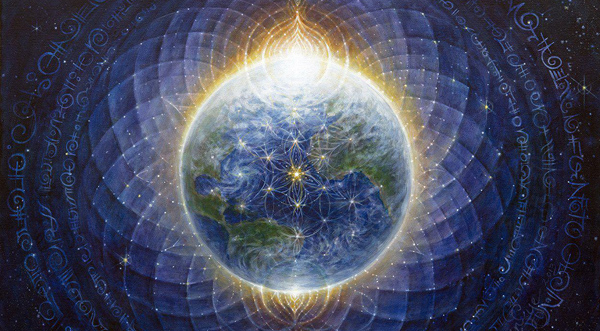
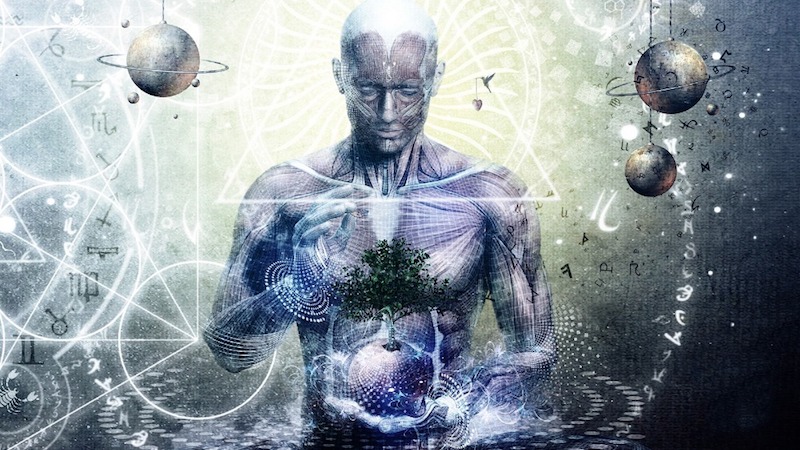
Blood Demons original title artwork by Michael Cox – see his art on Instagram here

By Jason Happenstall

Source: Beyond the Wasteland

Is the human race under spiritual attack? And did the esoteric philosopher and clairvoyant Rudolf Steiner warn about it over a century ago when he said a ‘vaccine’ would be the delivery system for the defeat of humanity?

For many, the overly-authoritarian response by governments worldwide to Covid-19 pointed to some deeper, more sinister, driving force. But it hasn’t just been the governments that seemed to be acting strange. Over the last two years we’ve witnessed people across a broad spectrum of society meekly submit to draconian attacks on their freedoms, many even fiercely defending the assault. In the same way, we’ve seen politicians and parties who once ran on platforms of personal freedom and economic autonomy almost overnight turn into overbearing control freaks, intent on micromanaging every aspect of our lives. How has this happened?

Recently, the term ‘mass formation psychosis’ has been on everybody’s lips. It’s defined as a psychological phenomenon whereby a mass of people voluntarily go through a process of deindividuation and a herd mentality forms. Due to their contagious nature, the thoughtforms affecting these deindividuated people, catalysed by the positive feedback loops of news programmes, social media and peer interaction, spread like wildfire throughout the population. In the past, this used to be called mob psychology, or more plainly, the madness of crowds.

Psychology: from Science to the Occult

Someone for whom the events of the past couple of years would not have been so surprising was the Austrian esoteric philosopher and mystic Rudolf Steiner, who died almost a century ago. Throughout the course of his life Steiner wrote numerous books and delivered thousands of lectures on his theories, contributing greatly to diverse spheres from architecture to education, and agriculture to beekeeping. His highly unique – and sometimes controversial – insights and methods led to the founding of the spiritual movement known as Anthroposophy, which emphasises the existence of a boundless potential for human beings.

Unlike some esoteric thinkers, Steiner saw the great importance of materialistic science, but argued that it was vital to see it as only a single aspect of reality which should ideally be combined with what he called ‘spiritual science’ – gained by mystical experience – in order to present the full picture. After all, breakthroughs often occur when scientists receive insights from beyond the material realm, as in the famous case of James Watson, credited with the discovery of the double helix shape of DNA which came to him in a dream featuring two intertwined serpents. Similarly, Dmitri Mendeleev, created the period table after a dream of “… a table where all the elements fell into place as required.” These cases go to show that not all scientific discoveries are the result of logical deduction and experimentation.

In fact, Steiner, who had been on the receiving end of mystical insights since childhood, honed his clairvoyant skills to such an extent that the information he received from non-conventional sources became more than the occasional flash of insight, His quest became the establishment of methods for obtaining objective extrasensory perception – a task he considered of paramount importance for he believed an epic battle was being fought in the spiritual realm that would have disastrous consequences for humankind unless it was addressed head-on.

Spirits of Darkness

His clearest warnings about the future fate of humanity came in a series of lectures delivered towards the end of his life in Dornach, Switzerland; these lectures are reproduced in the book The Fall of the Spirits of Darkness. Although Steiner’s detractors say his prose can be leaden, his lectures meandering, and his concepts difficult to grasp, he is remarkably clear and straightforward when it comes to the fate that awaits humanity if our obsession with scientific materialism is allowed to reign free without being pulled back into balance by the counterbalancing forces of spirituality.

This is most clearly illustrated in the final two lectures in the series – 13 and 14 – which are respectively titled The Fallen Spirits’ Influence in the World and Into the Future. Steiner posits that an unseen battle took place in the early 19th century which certain ‘spirits of darkness’ lost. These spirits were duly ejected from their heavenly realms and cast down into a more material plane of existence i.e. here. He is remarkably precise about when this occurred: autumn 1879.

These newly arrived spirits joined those who were already here – the ones that have been existing alongside and influencing humanity since the mythological times associated with the Fall. Given that it takes time for these malign spirits to work their way through human societies, it wasn’t until 1914 when their malign influence manifested in human society in the form of the First World War – a disastrous event the cause of which still puzzles secular historians.

Lucifer and Ahriman – the Leaders of the Pack

The spirits Ahriman and Lucifer have been hacking humanity for thousands of years, says Steiner, with Lucifer being the ‘light bringer’ intent on making us more spiritual and granting us more free will, and Ahriman doing the opposite and making us more materialistic and easier to control. In simplistic terms, Lucifer is an ascending influence, which Ahriman is a descending one.

Why should they want to do this? Well, we just don’t know – it’s difficult for our human minds to figure out what makes angels and demons tick. But whenever there’s one of those periodic battles in the spirit world, Steiner said, it tends to result in a new batch of reinforcements being thrown down into the material realm to join forces with those already here.

Steiner told us that Ahriman – a demon first identified by the Zoroastrians in ancient Persia – has the upper hand right now. He had a personal beef with Ahriman and had seen his face in vision – in fact he was still carving a likeness of it out of wood at the time of his death. Ahriman’s main aim seems to be to drag humankind into a purely materialistic state devoid of any form of spirituality, removing even the impulse to connect with our souls. The method of attack would be through science and technology, and by taking possession of the minds of powerful and influential people in order to push through this agenda. These controlled people could be scientists, politicians, religious leaders, or anyone with any influence. Thus, demonic forces would work through these people, and the people themselves, blinded by all-too-human failings such as greed or a lust for power, would lack the basic awareness to recognise what was occurring.

A New Religion for a New Age

The background to this power grab was the rise of atheism and the worship of science and progress. Now, we have a situation in which a purely materialist perspective is presented as the only explanation for all creation. Atheism has, for some, become a de facto religion, while the rich traditions of native spirituality have been side-lined and crushed under its heel. People, animals and in fact all life is regarded in the same cold manner; merely receptacles of proteins and genetic code that can be exploited. The endgame of this play is presented as a bleak, monochrome world expunged of spirit and light, where humans – their minds and spirits broken – are herded together and monitored like lab animals.

We can see how this scenario is being expedited. The CEOs of tech corporations are viewed almost as saints or Bodhisattvas, dangling the carrot of eternal life in the form of uploading the ‘data’ contained within our brains onto microchips. At the same time, politicians, corporate scientists, civil servants and economists are regarded as technocratic engineers tasked with ensuring the smooth functioning of the juggernaut of the material economy. Free will? The implicit assumption is that this will be unnecessary once the AI powered algorithms – which know us better than we do – reach escape velocity. At this stage, human life would have no intrinsic value, and the shells of our former selves would be occupied by the demonic army that Steiner warned us was waiting for its moment.

In the Blood

Some people say that Rudolf Steiner predicted a vaccine would appear which would be the delivery system for the final defeat of humankind. In light of the clandestine efforts made over the last two years to inject almost everybody on the planet with a gene editing treatment, his prescience seems remarkable – but how true is it? Amazingly, Steiner was remarkably clear (by his own standards) about the physical process by which this takeover would occur. He states in his final lecture in The Fall of the Spirits of Darkness that the spiritual world where entities such as angels, demons and archangels dwell is within the human blood. He meant this quite literally, saying:

“Both the Archangels and the Angels had their dwelling place in the blood, as it were. Truly, the blood is not something merely for chemists to analyse; it is also the dwelling place of entities from higher worlds.”

To that end, he speculated that the delivery mechanism will be in the form of a vaccine, injected directly into our bodies.

“Today [in 1917] bodies are vaccinated against one thing and another; in future, children will be vaccinated with a substance which it will certainly be possible to produce, and this will make them immune so that they do not develop foolish inclinations connected with spiritual life – ‘foolish’ here, of course, in the eyes of the materialists.”

This ‘vaccine’, he goes on to say, would block off any communication from the spirit world, meaning no messages or impulses would be able to get through from the ‘spirits of light’ whose aim is always to help humanity progress and fulfil our destiny. Positive impulses which were once transmitted to us would be permanently locked out by the vaccine, and instead the hapless victims would only be able to receive the impulses coming to them from disruptive sources, which we can imagine today might include the media, the education system and even established religion. There would be great confusion, he says, and Ahrimanic forces will turn people’s thoughts upside down and inside out. Everything that once was good and sensible will appear evil and crazy, while everything that was once considered insane and evil will be presented as sensible and good.

Squid Games: From Wetiko to The Matrix

Does this all sound implausible, the ramblings of a long-dead mystic? Many will no doubt say that it does, and that there are more earthly and plausible explanations for the psychic epidemic which has gripped the world. Perhaps Steiner was speaking metaphorically after all, some may reason. Nevertheless, the phenomenon to which Steiner alluded bears striking similarities to the Native American concept of the demonic force they call wetiko. The author Paul Levy has written extensively about this, defining it as “a contagious psychospiritual disease of the soul, a parasite of the mind that is currently being acted out en masse on the world stage via a collective psychosis of titanic proportions.”

Listening to a recent Legalise Freedom podcast entitled Covid-19: War on Humanity, Emma Farrell, a plant healer who uses shamanic techniques to access inner realms, made the observation that she and others in the same field had seen a veritable horde of spiritual parasitic entities attached to people over the last two years – as if a floodgate had been opened and they had poured through it. These entities, she says, come in all shapes and sizes but there are two very common and recognisable ones, one of which is squid-like. These squid-like beings, she says, attach themselves to unprotected people and harvest their spiritual energy by causing division and discord among us.

This struck me as interesting as we’ve seen this squid archetype move into human consciousness over the past few years, not least becoming apparent through popular culture. Many people have reported having dreams of octopus or squid-like creatures, and artists such as Peter Yankowski have painted pictures of these visions. Indeed, the villainous machines that control humans and harvest their energies in the Matrix movies look like robotic squids, while one of the top Netflix series of 2021 was Squid Game, a grim and violent survival thriller that posits human nature as intrinsically barbaric. What’s more, the resurgence in popularity of H.P. Lovecraft’s supernatural tales of horrors from the deep adds another tentacled layer to this rugose cake.

And let’s not forget when Goldman Sachs, one of the world’s largest investment banks, was memorable described by Rolling Stone journalist Matta Taibbi as a “great vampire squid wrapped around the face of humanity, relentlessly jamming its blood funnel into anything that smells like money.” The description is apt, after all, what is the purpose of an investment bank other than to turn every aspect of the sacred world into a monetised asset that can be traded, exploited and leveraged?

The Path Back to Sanity

Could this manifestation of a squid/octopus archetype into human consciousness be what Steiner was warning us about? Are there really spiritual entities within our blood that could account for billionaire technocrats’ obsession with injecting substances into us that are said to contain nanoparticles we know very little about? And how does this sit with the psychospiritual disease of wetiko outlined by Paul Levy, and the concept of ‘mass formation psychosis’ being talked about in the alternative media?

Perhaps the truth lies somewhere in the nexus of these concepts, with the implicit suggestion that we should not rest in our deep enquiry into the manner of the affliction that is currently so prevalent across the world. Only by doing so can we hope to find the necessary tools and weapons to fight back against it.

Or maybe the Ahrimanic demons that Steiner warned us about, the wetiko mind parasites Paul Levy writes of, and the tentacled entities that have squirmed into our collective consciousness via popular culture are all playing on the same team. If so, what does our team look like? And how do we win this game? Perhaps the fight is a necessary one at this juncture in human development, and that by defeating these ‘spirits of darkness’ we can progress to a higher level.

Whatever the case, referring back to the old adage alluded to earlier, people it’s said, might go mad in crowds, but the path back to sanity happens one person at a time.

Art and Dreaming: Realizing our Power to Co-Create Reality

By Ruth Gordon

Source: Reality Sandwich

“True creativity doesn’t just make things; it feeds what feeds life. In modern culture where people are no longer initiated, the spirit goes unfed. To be seen, the uninitiated create insane things, some destructive to life, to feel visible and powerful. These creations are touted as the real world. They are actually forms of untutored grief signaling a longing for the true reality of village togetherness.”

Martín Prechtel, Secrets of the Talking Jaguar, p.232

These words, from a book detailing Martín Prechtel’s initiation as a Mayan Shaman, accurately sum up our modern world. In the humanitarian, ecological, and political crises we are facing, we are witnessing the effects of a severe spiritual hunger.

We in the Western world are a deeply wounded culture; our Indigenous traditions long destroyed, our common land stolen by the rich and powerful, we often now desperately seek comfort by any means possible – over-consumption of food, of social media, of drugs and alcohol, of our natural resources.

This way of being is known among North American Indigenous people by the name of “wetiko,” or the “disease of the white man.” In the traditional Algonquin myth, the “wetiko” is a rapacious spirit who lives in the dark forest and possesses people, filling them with an insane compulsion to consume and destroy. This spirit makes monsters out of humans, filling them with an insatiable drive to devour everything that crosses their path.

Today, we see wetiko everywhere – in our cruel systems of governance that refuse sanctuary to refugees fleeing conflict, while at the same time escalating those very conflicts, mostly for the single purpose of the highest possible short-term profit, in the disintegration of human community through separating and atomizing social structures and the corresponding upsurge of loneliness and despair, and in the continued addiction to economic growth despite clear and repeated warnings that this kind of globalized industry is killing our planet.

Wetiko functions like a virus – it’s highly contagious and most of us are infected with it to some degree. It’s at the root of the human conflicts that often derail attempts to create alternative ways of life. It’s not enough to simply wish for a better world, it’s not even enough to work hard at creating one. We need to be ready to transform our entire mode of perception, to boil down our ways of thinking and being and reconstruct ourselves from scratch, with consciousness of the wetiko-ized habits we often fall into.

In Dispelling Wetiko: Breaking the Curse of Evil, Paul Levy writes:

“The evil that is incarnating in our world simultaneously beckons and potentially actualizes an expansion of consciousness, all depending on our recognition of what is being revealed. It is as if hidden in the darkness is a spark of light that has descended into its depths, and when recognized in the darkness, this light returns to its source.”

(Levy, 2013, p. 145)

Levy’s idea, that hidden in the poison of wetiko lies its own antidote, offers a healing reference for how to approach what Prechtel calls “untutored grief”: the fecund raw material that, if not used to grow something new, becomes destructive. However, when we are educated, or “initiated” into ways of transforming our grief, of understanding what the darkness in us wants to bring to light, we often find we have stumbled upon a store of incredible potentiality – an almost boundless source of energy and power that we can refocus towards healing, if we choose to do so. Our collective shadows are potential treasure, showing us wounds that need healing, the deep behavioral structures that create conflict, and pushing us to grow beyond our self-limiting patterns. We find the light by going through the dark, not by avoiding it. We can only unfold our full potential for love, beauty, and creativity by recognizing the life-force that’s bound up in our trauma. It’s releasing that closed-off and separated aspect of ourselves that will make us whole.

There’s an interesting symbolic parallel in the human compulsion to dig, mine and extract precious metal. If we instead dug into the fertile ground of our consciousness and our imagination rather than into the physical Earth, would we then finally be able to create a sustainable form of the “treasure” we long for – the “true reality of village togetherness,” so overcoming our addiction to exploiting the Earth?

Consciousness and Creativity: We are the Universe Observing Itself

In Quantum Revelation: A Radical Synthesis of Science and Spirituality, Paul Levy describes how the science of quantum mechanics, although yet to really inform our everyday mode of being, could be a gateway for us: enabling us to understand the dreamlike nature of the world, to reconnect with the divine and infinitely creative aspects of existence. The central insight of quantum mechanics is that quantum particles respond differently depending on whether we are observing them or not. They are waves when we do not observe them and become particles when we do. This implies that quantum matter somehow knows when it is being observed, and subsequently changes both its form and behavior. This points to an astounding idea: that the world we perceive not only perceives us, but also manifests itself depending on our very mode of perception. Or, to put it another way, that the world we encounter depends on how we dream it up. It seems as if there are infinite possibilities of reality. The one that is activated depends only on our capacity to envision it, on the expansiveness and daring of our imagination.

Levy goes even further, asserting that we are living in a world that consciously responds to our consciousness, that, in fact, has created us for the purpose of understanding itself:

“[T]hrough us, the universe questions itself and tries out various answers on itself in an effort parallel to our own to decipher its own being. In the process of observing and reflecting upon our universe we are actually changing the universe’s idea of itself.”

(Chapter 5, “Cosmogenesis,” 2018)

If Levy is right, we are part of a cosmos that is self-creating and self-understanding. It is as if, through consciousness, the universe is craning its neck around to look at itself. We are its eyes, and its senses.

If we want to escape the hold of wetiko, to transition to a way of life that serves all beings, we need to value the power of our own creativity, and to understand that we are always creating the reality we experience, whether we are aware of it or not. The more conscious we are of our creative power, the more we can use it to dream up a world we want to live in; to orchestrate our lives with the same skill and precision as a highly trained conductor.

For this, we need to build a network of communities, (as in Tamera’s Healing Biotopes Plan), where we can study the raw matter of our cultural grief, where we can learn to compost it, and use it to grow new life, where we can discover how to create the “village togetherness” we all long for. We need spaces where we can experiment with and test out our powers of dreaming, encountering, understanding and interacting with the dreamlike nature of reality. We need spaces where we can build the self-confidence and courage that a “life artist” needs. We need public forums where our “life-art” is seen and honored. And all this needs to happen in a large enough group of people for our actions to hold weight, gather momentum and give courage to others.

As Paul Levy writes:

“The universe is a collectively shared dream that is too seemingly dense and solidified for any one person’s change in perspective to transform, but when a critical mass of people get into alignment and consciously put together what I call our “sacred power of dreaming” (our innate power to dream the universe into materialization), we can, literally, change the (waking) dream we are having.”

(Levy, Chapter 5: “Self-Excited Circuit,” 2018)

This is why it is so vital to build communities of trust – we will not be able to change the reality we are currently experiencing alone. However, by cooperating with others we will find the power to co-create paradise on Earth: a reality in which war and violence will be completely unthinkable, where we honor and respect the Earth as the sacred life giver it is, where we are able to fully use the creative potential that lies coiled within each of us. The field-creating power of a group of people can both activate our imaginative potential and provide the vessel in which to create the life we long for.

Waking Up to the Dreamlike Nature of Reality

Paying attention to our powers of dreaming is a simple first step towards comprehending the dreamlike nature of reality, as even those of us who believe that we are “not artistic” still dream each and every night, effortlessly creating symbols and stories that resonate through and inform us, if we take the time to remember and listen to them.

In the Tzutujil culture that Prechtel describes, families gathered each morning to share their dreams, which they saw as being the other half of waking life – just as real, and just as important:

“To a shaman a dream is not a creation of the mind, psyche or soul. It is the remembered fragment of the experience of one’s natural spirit in the twin world, the dreamworld … Although the landscape of dreams may seem different than the landscape of the awake world, it is actually the balanced opposite, reversed version, where our souls live out our bodies’ lives reenacted as if in a complex kind of mirror. Like the two opposing wings of a butterfly, the dreamworld is one wing and the awake world is the other wing. The butterfly must have both wings connected at the Heart in order to fly and function. Neither wing – dreams or waking – contains all of life. Real life occurs as a result of the interaction between the two. The life is the butterfly’s heart, and both dreaming and awake life are necessary to keep the heart alive.”

(Secrets of the Talking Jaguar, pp. 169–170)

As Prechtel goes on to say, “dreams read life back to us like a storyteller” and as such, can be excellent and often uncanny guides in life. I’m sure all of us have had the experience of a dream that seems wiser than we are, a dream that gives an answer to a problem, or that seems to foretell future events.

I’ve experienced personally how dreams can come into creative play with waking life. I once had a powerful dream in which a man, who in my waking life I was on the brink of falling in love with, guided me as I climbed down a building. He was agile, he knew the structure well, as it was his parent’s house, and he helped me down, showing me where to put my hands and feet. After I had this dream, I felt a deep certainty that I could trust this man. I understood that his role in my life right now was to accompany and guide me so that I could move forward, leaving behind the old structures of thought and being that no longer served me (structures he knew well, that he’d also “climbed down from” before). In my waking life, I had very little basis for such a deep trust at that point. I’d known this man a few months. And yet the indication of this dream turned out to be true. It encouraged me to trust him as a guide, and in turn, this faith allowed him (perhaps even prompted him) to actually play out this role in my waking life.

Was this dream reality not only informing but actually creating waking life? I think so. By believing in the certainty this dream instilled in me, I was able to act with faith and courage, which then allowed trust and intimacy to develop in waking reality.

For me, this is an example of those twin butterfly wings of the dreamworld and the waking world meeting at the heart’s center. Both dreamworld and waking life kept my heart alive at that time, nourishing and feeding it. These dual realities prompted me to be an artist: to act on my desires and impulses, to paint the world as I wished it to be.

Consciously Shaping Reality

The consequence of accepting our own creative powers and the dreamlike logic of existence are that we can begin to consciously shape reality. This is a deep responsibility – not anything we can take lightly.

Wetiko disrupts our natural experience of unity with all life. But in truth, we are inextricably interrelated with all other living beings, in the same way that a whirlpool is both identifiably different and part of the river it forms in. This knowledge comes with an immense duty to everything else that exists.

Our every thought, our every action, has an effect on the whole, unavoidably altering everything else in some way, however subtle. We do not need to become megalomaniacs about this – we are no more and no less important than any other human, plant or animal being. But we must understand, if we are to overcome wetiko’s hold on us, that all life, and all activity, constantly shifts the pattern of the whole.

Once we realize this, our everyday lives become imbued with a new sense of purpose and responsibility. Knowing that what we think, say and do alters the whole, guiding a new form of reality into being in each and every moment, means considering carefully how we want to exist in this world. It’s much easier to believe that we are powerless; then we can escape any sense of responsibility. Victimhood is much more comfortable than agency. But if we want to realize the role human beings can play in global transformation, we must be willing to step into agency. We must understand that our inherent creative powers are a divine gift. We’ve been given the capacity to make drastic alterations to the world – in the natural environment, in human society, perhaps even to outer space. Now we must choose whether we want to use these gifts in service of life or continue using them against it—and so push ourselves off the brink of abyss.

Let’s choose to use the wetiko virus rampaging through our human system to actualize an expansion of consciousness, to shine a light deep into the roots of our “untutored grief,” and begin to dream into our potential as deeply creative beings with the ability to create the reality of togetherness that we all long for.

The Search for Meaning in Modern Life

By Kingsley L. Dennis

Source: Waking Times

Every good story about a search begins with a tale. So, here’s one; it’s a tale about a magician who gave a dinner for his neighbours.

There was once a Magician who built a house near a large and prosperous village. One day he invited all the people of the village to dinner. ‘Before we eat,’ he said, ‘we have some entertainments.’

Everyone was pleased, and the Magician provided a first-class conjuring show, with rabbits coming out of hats, flags appearing from nowhere, and one thing turning into another. The people were delighted. Then the Magician asked: ‘Would you like dinner now, or more entertainments?’

Everyone called for entertainments, for they had never seen anything like it before; at home there was food, but never such excitement as this. So, the Magician changed himself into a pigeon, then into a hawk, and finally into a dragon. The people went wild with excitement.

He asked them again, and they wanted more. And they got it. Then he asked them if they wanted to eat, and they said that they did. So the Magician made them feel that they were eating, diverting their attention with a number of tricks, through his magical powers.

The imaginary eating and entertainments went on all night. When it was dawn, some of the people said, ‘We must go to work.’ So the Magician made those people imagine that they went home, got ready for work, and actually did a day’s work

In short, whenever anyone said that he had to do something, the Magician made him think first that he was going to do it, then, that he had done it and finally that he had come back to the Magician’s house.

Finally, the Magician had woven such spells over the people of the village that they worked only for him while they thought that they were carrying on with their ordinary lives. Whenever they felt a little restless he made them think that they were back at dinner at his house, and this gave them pleasure and made them forget.

And what happened to the Magician and the people, in the end? Do you know, I cannot tell you, because he is still busily doing it, and the people are still largely under his spell.

Modern life is much like this tale – we live under a magician’s spell – and the magician is called Modernity. Modernity, especially as it emerged in western, industrialized cultures, created a system that put a spell on us. And this spell is principally promoted through our mainstream medias. Whether rationally, instinctively, or deep in our hearts, most of us know that something is not right about how human societies are managed. Human life is not yet in balance. And too many people still live in fear.

We are manipulated by our mainstream medias at unprecedented levels, and constantly fed with a controlled flow of information. This process is the old mind of humanity, still operating through control, censorship, and consumerism. In this way our contemporary societies are increasingly centered around emotion to a degree that allows people to be entertained as well as manipulated like never before. What we may be less aware of is that the human being is driven by an evolutionary energy that manifests through mental, emotional, and physical/sexual processes. This energy can be used to develop and drive us forward, or it can be hampered, blocked, and manipulated into slowing down our development. Mental, emotional, and physical/sexual energies are all necessary components of the social human being. If we take just a casual look at our mainstream media, entertainment, and social attractions/distractions we will readily see that these are the very areas which are targeted by the ‘culture of spectacle’ that is modern society.

Ancient religious-spiritual traditions have long talked about such ‘energy predators’ that are said to feed off from unstable human mental and emotional states. The early gnostic Christians referred to some of these as the Archons; various North American Indian tribes refer to Wetiko/Wendigo; Don Juan in the Carlos Castenada books refers to the Predators; and South American shamans have long talked of spirits that feed off from and fragment the vulnerable human inner state/soul.

We must wonder why it is that our modern cultures promote entertainments that manipulate and play upon excessively distorted images of mental and emotional anguish as well as exaggerated portrayals of sexuality. Furthermore, we are bombarded daily with images of death. In fact, a recent study into western media announced that the most repeated word in media is ‘death.’ Further, it revealed that in the first twelve years of a child’s life they would have been subjected to around 20,000 murders through television news and programs, films, online content, and video games. These forms of stimulation directly target a person’s mental, emotional, and physical states, which in turn hampers the operation of harmonious, developmental energies.

Modern life is increasingly a life addicted to high stimulation. Yet by its very nature it also creates anxiety. Many people are forced, or seduced, into lives that are continually stressful and busy. There is no room for the spaces, the intervals, of internal reflection. Yet similar to how music is not music without the intervals, so is life not a life without those internal spaces.

We spend our days trying to grasp at life, trying to understand it, often with ways that are not adequate. It is like trying to capture the ocean with a bucket. The ocean stands magnificently before us, and yet so many of us in modern societies are running around anxiously with empty buckets in our hands. We’ve been told that only full buckets are of any use – full buckets represent usefulness and progress.

Here is another story:

A man had two large pots, each hung on an end of a pole which he carried across his neck. One of the pots had a crack in it, and while the other pot was perfect and always delivered a full portion of water at the end of the long walk from the stream to his house, the cracked pot arrived only half full.

For a full two years this went on daily, with the man delivering only one and a half pots full of water to his house. Of course, the perfect pot was proud of its accomplishments, feeling accepted and appreciated. But the poor cracked pot was ashamed of its own imperfection, and miserable that it was able to accomplish only half of what it had been made to do. After two years of what it perceived to be a bitter failure, it spoke to the man one day by the stream.

“I am ashamed of myself, and I want to apologize to you.”

“Why?” asked the man. “What are you ashamed of?”

“I have been able, for these past two years, to deliver only half my load because this crack in my side causes water to leak out all the way back to your house. Because of my flaws, you have to do all of this work, and you don’t get full value from your efforts.” the pot said.

The man felt sorry for the old cracked pot, and in his compassion, he said, “As we return to my house, I want you to look at the beautiful flowers along the path. It will make you feel better.”

Indeed, as they went up the hill, the old cracked pot took notice of the sun warming the beautiful wild flowers on the side of the path, and this made it feel a little happier. But at the end of the path, it still felt bad because it had leaked out half its load, and so again the Pot apologized to the man for its failure.

The man said to the pot, “Did you notice that there were flowers only on your side of your path, but not on the other pot’s side? That’s because I have always known about your flaw, and I took advantage of it. I planted flower seeds on your side of the path, and every day while we walk back from the stream, you’ve been watering them. For two years I have been able to pick these beautiful flowers to take home to my wife. With you being just the way you are, you have given beauty and meaning to me every day.”

The way we are can give us beauty and meaning every day, and yet it seems we are living in a world of decreasing meaning. Our modern systems strive for perfection – for progress and efficiency – yet there is less and less happiness.

And the situation is worse in modern western cultures where so many people are seemingly dissatisfied even when they have acquired most things to keep them happy. Perhaps a society that provides superficial comfort produces conditions that do not develop people or cause them to turn an inward gaze or to question notions of their meaning and existence. It is important that other cultures do not follow this western model of superficial consumerism.

It is unfortunate that the meaning of life is often a meaningless question to so many people. Seeking the ‘unnamable’ might sound like madness to many people, and certainly there is little place for it in modern societies that prize themselves on progress. And yet a life that seeks meaning is its own adventure. The ‘unnamable’ does not need to be named – only recognized internally. The external world is not the only reality that exists for us.

The attitude of the modern-day person to the ‘world outside’ has largely been one of hostility – we have been conquering the external world for the most part of human history, instead of mastering our own inner nature. This hostile attitude ignores the reality that all life is interdependent and that our lives are a projection of our inner realities – that is, our fears, anxieties, and insecurities become projected into the world the same as our hopes, visions, and dreams. Whatever we project externally eventually becomes our sense of reality.

We all share a collective reality, despite our cultural differences. Although it alters depending upon where we were born and in which cultures we live, the methods each modern system uses are basically the same – we are provided with beliefs, cultural references, and norms and attitudes. The writer Doris Lessing referred to this as ‘The prisons we choose to live inside.’ And within these psychological prisons many people, as well as the institutions of the modern world, have rejected the wisdom of sages, mystics, philosophers, and even the voices of creative artists. They prefer instead the superficial trappings, entertainments, and technological distractions of the consumerist marketplace. Now, I wish to be clear here – I am not anti-technology. In fact, I am a great supporter of it; but not at the expense of the human vision. Despite the technological progress of the external world, there must always be a developed interior world to observe, reflect, and to question it. Without this, the exterior life is unleashed without values. Without an interior life to seek for significance, what gives meaning to our lives?

So, what is the ‘interior life’? There are no instruction sets for how to live a human life – and we live in a world where more and more people are at a loss to know either why they live or why they die. In life we must strive to examine the human condition.

Modernity has attempted to reinterpret the human condition – to see it as an external drive for progress – and this has resulted in a separation from our need to seek an essential inner self. This modern project has sought to divorce the human being from their imperative to find meaning in existence. The human project, if we wish to call it that, can never be ‘completed’ – it is an eternal quest to always be becoming. Here is a quote I would like to share:

‘When you have found yourself you can have knowledge. Until then you can only have opinions. Opinions are based on habit and what you conceive to be convenient to you. The study of the Interior Life requires self-encounter along the way. You have not met yourself yet. The only advantage of meeting others in the meantime is that one of them may present you to yourself. Before you do that, you will possibly imagine that you have met yourself many times. But the truth is that when you do meet yourself, you come into a permanent endowment and bequest of knowledge that is like no other experience on earth.’ ~TARIQAVI

What we are truly seeking for – and what the interior life can show us – is power over ourselves: not for power over others.

The world is in need of soulful healing, not power-seeking through corruption and manipulation. The world requires healed, integrated, and balanced people; for that which we lack in ourselves we shall always find lacking in the world outside. Also, there are many external forces in the world that are trying to make us live not according to our own sense but according to dominant social narratives. We are told that we must live according to certain social narratives that generally benefit those systems that have no interest in the human soul. And when we deny ourselves such essential nutrients we find that we have a discomfort within us. People are taking increasing amounts of antidepressants, or stimulants; as well as relaxants – we take drugs to bring us up and other drugs to take us down. We are open and vulnerable to the energies of discouragement. Here is a tale about the price of discouragement:

Once the word spread that the devil was pulling out of his business and was arranging to sell-off all his tools of the trade to the highest bidder. The night of the sale all the tools were arranged for the bidders to view. What a motley crew it was! There were sinister tools of hatred, jealousy, envy, malice, treachery, plus all the other elements of evil. Yet besides these there also was an instrument that seemed harmless, a wedge-shaped instrument that appeared worn out, shabby, and yet was priced so much higher than all others. Someone asked the devil what was the name of such a poor-looking instrument.

‘Discouragement,’ answered the Devil.

‘And why is the price so high for such a non-malicious sounding instrument? asked the bidder.

‘Because,’ spoke the Devil, ‘this instrument is more useful to me than any other. I can enter the consciousness of a human being when all other ways fail me and once inside through the discouragement of that person I can do whatever I please. The instrument is worn out because I use it almost everywhere and as very few people know about this I can continue to successfully achieve my goals.’

And as the price of discouragement was so very, very high even today it remains a tool in the property of the Devil.

The price of discouragement is a price too many people are paying – and it is a high price (as the devil knows!)

It is a common situation that we tell people at work we are happy when for much of the time we are not. We buy more and more items to feel happiness within ourselves or to buy happiness in others. People in modern cultures continue to accumulate goods and possessions whilst feeling empty within. Such consumerism empties our pockets and fails to fill our souls. And not only our physical lives become crowded with belongings but our psychological spaces too. We are crowded with those belongings that have accumulated as psychological attachments: the beliefs, ideologies, nationalisms, opinions, likes, dislikes, and all the rest. We are often cluttered in our minds by belonging to this and that and all the other things that we cling to or that cling to us. And this is where some of the disruptions are, and will continue to come from, because our belongings are now breaking apart. As our social, cultural, economic, and work lives go through change and transformation – as they are currently doing – then the clinging to old ‘belongings’ will only serve to cause greater confusion and disorientation. Already it seems as if we are living in a world that is displaying increasing outward signs of craziness and psychopathic tendencies. We must ensure that the world never has more critics than visionaries, or more complainers than positive doers. We must ensure that we do not lose sight of our frameworks for meaning.

Pre-modern societies, for example, lived within their own frameworks of meaning. Not all questions had their answers, yet mysteries and the mysterious at least had a home in which they could exist. We often live today within an atmosphere of meaningless questions and contradictory answers. The pursuit of meaning is being replaced by the pursuit of progress. Progress may alleviate some of our suffering and pains, yet it shall never compensate for the lack of fulfillment we feel inside, for this requires metaphysical or transcendental nourishment. Any notion of the spiritual, or the metaphysical, is often considered not essential to our daily life, and we are taught to dismiss it. Modernity’s task was thus seen as freeing us from the illusions of transcendence. And yet the desire, or the need, for some Absolute remains deep within us and can never be totally eradicated. Perhaps it is this contradiction that lies at the heart of our contemporary distress.

Modern life also tries to eradicate, or at least hide, all sense of enigma. Yet it is precisely these enigmas that make our lives rich in wonder and awe. To attempt to abolish them is an act of great ignorance and hubris. Unanswerable questions must be embraced and not rejected. Mystery and the mysterious must be allowed a space to thrive and enthrall us. It is this sense of mystery that keeps us curious, and curiosity is one of our driving, motivating forces.

Modern societies may well praise their sophisticated intellectual culture, yet it comes at the cost of having a deteriorated spiritual culture. That which belongs to the experience of the human soul is considered not only incommunicable, but rather dangerous to communicate. In the end, life’s mysteries are kept out of sight because they cannot be fully known and thus controlled. There is a spell upon us, and we are being distracted from the essential. Here is another tale:

A lion was captured and imprisoned in a reserve where, to his surprise, he found other lions that had been there for many years, some even their whole life having been born in captivity. The newcomer soon became familiar with the activities of the other lions, and observed how they were arranged in different groups.

One group was dedicated to socializing, another to show business, whilst yet another group was focused on preserving the customs, culture and history from the time the lions were free. There were church groups and others that had attracted the literary or artistic talent. There were also revolutionaries who devoted themselves to plot against their captors and against other revolutionary groups. Occasionally, a riot broke out and one group was removed or killed all the camp guards and so that they had to be replaced by another set of guards. However, the newcomer also noticed the presence of a lion that always seemed to be asleep. He did not belong to any group and was oblivious to them all. This lion appeared to arouse both admiration and hostility from the others. One day the newcomer approached this solitary lion and asked him which group he belonged to.

‘Do not join any group,’ said the lion. ‘Those poor ones deal with everything but the essential.’

‘And what is essential?’ asked the newcomer.

‘It is essential to study the nature of the fence’

A whole society can be distracted. There is a pertinent analogy here to how, in 256AD, the Persian army took Antioch from the Roman Empire. Many of the inhabitants were attending the roman theatre and were oblivious to the enemy archers who had climbed up behind them into the stands. The actors down below had seen the enemy archers and were desperately trying to warn them with hand signals…but the audience did not understand, thinking it part of the entertainment – until it was too late. They were amused up to the point of death. Perhaps we too, in the words of social critic Neil Postman, are ‘Amusing ourselves to Death.’

Understanding Our Place In The World

The only genuine freedom is to be found by turning within ourselves. The human being is naturally an imaginative and creative creature. Reality may be harsh and painful, yet it is also the realm of so much wonder and awe. We may live our lives playing in the mud, yet our minds can reach the stars. Our science can reach into the molecule as well as penetrate into the formation of the universe. Our mystics and sages can reach into the pulsating heart of the cosmos. The human being has an inner dimension that needs to be investigated and which, in turn, is timeless.

It is my view that the role of imagination – the interpenetration of the interior world – is crucial. It is what fuses together that which is above to that which is below. It is also a channel for intuition; and it is through intuition that we get closer to the essential. The inward gaze forever attempts to reveal the role of the human being, and what makes us human. It is about trying to understand our place in the world and our shifting views of the world. And right now, we find ourselves at a crucial point in human history.

Life on this planet is undergoing a great change. There is a revolution coming as people, especially the young people, develop their ways of communication, collaboration, and a new consciousness. We are seeing examples of empathy and compassion from young people around the world, as well as innovation, creativity, and inspired motivation. I have stated before that we are shifting into an epoch where new value sets will emerge as the dominant traits.

[1] And some of these values are already being expressed within our younger generations. I refer to these as the ‘C’ values of Connection – Communication – Collaboration – Consciousness – Compassion. Such changes will come into our lives, yet not overnight. It is not like flicking on a light switch. I expect it will be a process where much soul-searching and the questioning of our meanings and values will have to occur beforehand. However, it is not all about violence and thuggery, despite what our mainstream news may be showing us. There is a change emerging across the planet, and this change shall arise from within, through a new understanding of the human spirit, and of our place not only in our local cultures but also within a shared, planetary home. These are critical times of transition – and of momentous importance to us.It is important to recognize that we are undergoing a shift from localized cultures into a period of becoming planetary citizens. Nationalisms will need to become secondary, or put aside altogether, as we come closer together as a global species. And this significant transition is dissolving our securities, our belief systems, and our models of reality. Everything around us is beginning to shake – and so is the earth, literally. We can no longer remain within the old narratives. We are in need of new worldviews, both as individuals as well as within our communities and societies. What we now need is genuine and sincere far-reaching vision. And in our mainstream cultures we are also lacking hope and trust, especially in our socio-political systems. What is now essential is hope and trust in humanity, and in the richness and resilience of the human spirit. We are on the cusp of a different world coming into being, and at its centre shall be the human heart and soul. There can be no genuine, lasting future if it is based solely on the exterior life – it must be driven by the values that come from the interior of the human being.

To be prepared for the future world that is now emerging before us we must adapt our thinking and our consciousness to all possibilities. What we first need is a genuine change of mind:

God decided to come down to Earth for a quick look at how creation was coming along.

God approached Earth and happened to look at a big tree full of howling monkeys. As God looked down, one of the monkeys happened to look up and saw God.

The monkey became excited and started to shout: ‘I see God…..I see God!’

None of the other monkeys paid any attention. Some thought the monkey was crazy or perhaps just a religious fanatic. They went on about their daily lives of collecting food, taking care of their young, fighting with each other, etc., etc. Not getting any attention, our monkey decided to try to get attention from God, and said:

‘God, Almighty, You are the Beneficent, the Merciful, please help me!’

In an instant, the monkey was transformed into a man living in his own human community. Everything changed, except for one thing: the monkey’s mind. The monkey immediately realized that could be a problem.

‘Well, thank you God, but what about my mind?’

‘That,’ said God, ‘you will have to change yourself.’ 

As in this story, we have the human form. The next step is for us to assume the responsibility for the correct level of consciousness. It is as simple and as difficult as that.

We have to accept the responsibility for our own choices and actions; and also, how we choose to respond to events. Everything begins and ends with ourselves, and anything other than this is an excuse, no matter how plausible it may seem to us. As creative, imaginative beings we invent and innovate. At the same time, we are masters at inventing our own false stories and imaginings that self-deceive. In this regard we must choose carefully where we wish to put our attention, time, and efforts. After all, when we visit a beautiful garden do we choose to sit by the roses and savour their sweet smell, or to sit amidst the weeds that prick us? It is important to gift ourselves moments of joy, for joy is an infectious energy – and it shares easily too.

It is up to us to choose those moments, events, and circumstances to engrave upon our memories and heart. It is also about choosing what things to forget. Most of the things we encounter or accumulate we would be best to give up, or give away. We should only keep the few, thus ensuring the quality and integrity of those things we keep close to us. Here is another tale:

An Arabian legend tells of two friends who were travelling through the desert and at one point they fell into disagreement about the trip whereby one of the friends slaps the other across the face.

The friend who had been slapped said nothing, only wrote in the sand: ‘Today my best friend slapped me in the face.’

Both friends continued on their journey and eventually arrived at an oasis where there were baths to refresh themselves. The friend who had been slapped jumped into the large baths yet soon found himself starting to drown. The other friend immediately jumped in after him and saved him. After recovering the first man took a pen and wrote on a stone: ‘Today my best friend saved my life.’

Intrigued, the friend asked: ‘Why is it that after I hurt you, you wrote in the sand and now after saving you, you write on a stone?

Smiling, the other friend replied: ‘When a good friend offends us, we write in the sand where the wind of forgetfulness and forgiveness will be responsible for clearing it off; on the other hand, when something great happens to us, we burn it into stone in memory of the heart where no wind in the world can erase it.’

We build up and develop our own interior world by all the small things and moments we choose to engrave upon our heart, spirit, and soul. We can choose those things we wish to line our forward path with.

Choosing Our Path

We should not be afraid to talk about things of the spirit – to be present with spirit and to live with it in our everyday moments. As Bob Dylan says, those who are not busy being born are busy dying. We are representatives of the spirit, and so should seek to be present to this, without the urge for external showing-off. There is no need for acting weird or strange; to wear odd clothes or follow customs antagonistic to the culture in which we are living. We may think and feel differently, and have experiences that are beyond the accepted, normal ken. Yet to revert to odd external behavior only shows that we are unable to internalize and stabilize these experiences and energies. To all purposes, there is nothing wrong in appearing normal to the outside world. To engage with the spirit, we may have to first learn how to be still, without being bored. There are already enough active distractions in the world as it is – why add more?

It is a normal request to ask for ‘practical things.’ People want to find activities, acts, exercises, and rituals to help them along their own path of development. And the world offers many of these things, in varying degrees of genuineness, sincerity, and effectiveness. Yet sometimes being given an action to attend to belittles the process of the initial search. For me personally, I am unable to give specific remedies for the search for meaning, other than to say that a person must first experience what this longing, this need, feels like. We are catalysts for our own search for meaning, and each path is walked differently. To begin with, we must learn how to articulate this need. This will then begin the course of one’s life that will forever alter what comes after. We are compelled to trust our instincts, our intuition, and to take the appropriate response. We are not here in this life to live like ghosts amongst the phantasms of the world. We always have an internal choice, and this should not force us to surrender into the abyss of mass insanity. As the story goes,

There was once a wise and powerful king who ruled in a remote city of a far kingdom. And the king was feared for both his might and his love of wisdom. At the heart of the city was a well whose water was cool and crystalline, and all the inhabitants drank from this well, even the king and his courtiers, because there was no other well in the city. One night, while everyone was asleep, a witch entered the city and poured seven drops of a strange liquid into the well, and said:

‘From now on, anyone who drinks this water will go crazy.’

The next morning all the inhabitants drank the water from the well, except the king and his lord chamberlain, and very soon everyone went mad, as the witch had foretold. During that day, all people went through the narrow streets and public places whispering to each other:
‘The king is mad. Our king and his lord chamberlain have lost their reason. Naturally, we cannot be ruled by a mad king. We must dethrone him!’

That night, the king ordered a golden cup of water from the well to be brought to him. And when they brought the cup the king and his lord chamberlain drank heavily from it. Soon after that there was great rejoicing in that distant city of a far kingdom because the king and his lord chamberlain had regained their reason.

We must be fearless in committing to the inner path we have chosen, so long as we harm no other. The genuine inner path is a subtle one. At times it can seem as if nothing is happening – as if we are going nowhere. Perhaps the path itself is a search for no-place and no-where. And yet we can rest assured that the inner path is active in each moment, in all times. And the search for this can bring meaning to us as we engage with the modern world. Amidst the distractions and entertainments on offer it is possible to remain focused with our own internal meaningful enjoyment. And this inner joy brings with it its own sacred moments.

It will do us good to remember that life lies beyond reason, and is a sacred thing. And we should allow this sacred presence into our lives, with joy, respect, and even a little humour. After all, just a little bit of joy, respect, and humour can go a long, long way – and we have far to travel.


References:

[1] See The Phoenix Generation: A New Era of Connection, Compassion & Consciousness

Are We Humans Terminally Insane or Just Waking Up?

Brain waves

By Paul Levy

Source: Reality Sandwich

The following article was originally published on Awaken in the Dream


“The world today hangs by a thin thread, and that thread is the psyche of man.”
– C. G. Jung

How does anyone possibly express in words the state of collective madness that humanity has fallen into at this time in our history? As if in a hypnotic trance, our species is enacting a mass ritual suicide on a global scale, rushing as fast as we can towards our own self-destruction. We are destroying the biospheric life-support systems of the planet in so many different ways that it is as if we are determined to make this suicide attempt work—using a variety of methods as a perverse insurance policy, in case a couple of them don’t do the job. What modern-day humanity is confronted with, to quote the author and Trappist monk Thomas Merton, is “a crisis of sanity first of all.”

In trying to find a way to write about this state of affairs, I find myself going “off-planet,” imagining what it would look like if some enlightened aliens, in their travels throughout the universe, came upon our planet. Observing from a distance, they would naturally see all the various living beings who call planet earth home as related members of one larger organism—a single eco-system—who literally depend upon each other for survival. From this vantage point, I imagine, they would be utterly baffled at why human beings—the seemingly most intelligent species ever to appear on planet earth—are acting out their destructive impulses practically without restraint in every corner of the globe. Contemplating the state of humanity, I imagine these awakened beings wondering, “What in the world has gotten into them?”

I imagine these illumined aliens, in agreement with Merton, would quickly conclude that human beings had become afflicted with some sort of psychological illness, a disease of the mind and soul that has caused us to turn on ourselves in self-and-other destruction. Apparently in a “fallen state,” we have lost our way, become disoriented, and, in our confusion, become quite deranged. It is as if our collective madness is so overwhelming—and by now so familiar and so normalized—that most of us, its sufferers, have no idea how to even think about it, let alone how to deal with it. Not knowing what to do, many of us inwardly dissociate—which only exacerbates the collective madness—and in our fragmented and disempowered state go about our lives in a numbed-out, zombie-like trance, making the best of what seems to be a bad situation.

The question naturally arises: how would these enlightened beings conspire with us to help wake us up? We can only imagine. For our part, it seems essential that we ask questions such as: what is the nature of this madness, and how can it be consciously engaged so that humanity can get back on the right track?

Seen as an organism, there is a systemic psycho-spiritual disease that has infected the whole body politic of humanity. At present we are having an acute—and potentially deadly—inflammation of this illness. As with any disease, in order to cure the pathology that ails us we must come up with the right diagnosis. Under the present circumstances, it is a healthy response for us to have an appropriate level of alarm. If we aren’t “alarmed” at what is happening in our world, we are still sleeping.

Economy

It’s difficult to appreciate how our behavior might appear strange—let alone completely insane—to an impartial observer. But engaging in a “benign onlooker” thought experiment—in this case, through the imagined insights of enlightened aliens—affords us some much-needed perspective. Even from this vantage point, though, the collective madness that humanity is acting out is hard to fathom. It is truly as if the inmates are running the asylum.

The first thing these aliens might perceive is a single living organism in crisis. What makes life itself possible is that every cell and organ of a living organism plays a uniquely vital role to the life and health of the greater organism; each part works together as part of an integrated and interdependent whole system. Our planet and its biosphere is a seamlessly interconnected whole system that operates as a macro-organism, and yet its supposedly most intelligent species has set up a global system for managing its rich diversity of natural resources that would kill a living organism in no time if such a system were implemented within the individual bodies of any of its members. If the human body was organ-ized and operated in a similar way to the global economy—where certain parts of the system demand disproportionate and ever-increasing shares of the existing resources—the body would die in no time.

At the heart of this reality is the fact that the way the global economic system has been crafted primarily serves the interests of the very few. Machine-like, “the system” relentlessly, and increasingly, sucks, drains and redistributes wealth from the majority of the populace—who more and more become impoverished and practically enslaved—into the hands of the already unthinkably wealthy. The powers-that-be then use coercive power to not only deny people the means to make even a subsistence living, but even denies them the basic human right to life on massive scales. This system doesn’t just passively allow people to fall below the poverty line, it actively pushes them under, as if poor people are being intentionally “left behind.” The most powerful and successful financial institutions have taken on the form of parasitic enterprises that have attached themselves to governments and people around the world, upon which they shamelessly and ravenously engorge themselves. These illumined aliens, with their clairvoyant vision, would surely find it revealing that the ones who own the wealth are—like vampires—energetically “feeding” off of the ones who barely have enough to eat.

The evidence is overwhelming. The current global economic system has brought us to a point where an incredibly small minority of human beings own a grossly disproportionate percentage of the planet’s resources. According to recent figures, the 62 richest people on the planet have more wealth than the poorest half of the global population combined, and over time this imbalance is increasingly getting worse. This is globalization at work. Much of this rising inequality is a direct result of the fact that globalization is the process by which multinational corporations are taking over sovereign governments—of the 100 largest economies in the world, over half are corporations.

These challenging economic times we live in are simultaneously the times of the greatest profits in all of history for certain select corporate conglomerates. Those at the top of the economic pyramid then use this ever-increasing gap between the rich and the poor to further game the system—itself riddled with corruption—so as to protect their advantage even more. The United States government in particular, instead of being a “government of the people, by the people, for the people,” has instead become a plutocracy—a government “of the rich, by the rich, for the rich.” It should get our attention that such economic stratification into the have and have-nots historically plays a crucial role in the collapse of civilizations.

These aliens would recognize that earth’s current way of “doing business” is unsustainable. Instead of creating value and wealth for the good of all, the way business is done on planet earth is actually destroying the genuine wealth and health of the whole system, with people, communities and the environment considered to be nothing more than collateral damage—all for the benefit of a small minority. If humanity is viewed as a family, there is abuse of power being perpetrated within the family system for the simple reason that those in the positions of power can act with total impunity and, in a case of “moral insanity,” can—and do—literally get away with murder.

These benign aliens would find it revealing that such a large percentage of earth’s resources—including humanity’s intrinsic ingenuity—instead of being used to care for each other and enrich life, are being used to create more potent and deadly weapons of mass destruction. In other words, humanity’s divinely inspired genius is being channeled into ever-more efficient ways of murdering each other! We have become conditioned to accept this astonishing cruelty and destruction as normal. We spend trillions of dollars to sustain a state of endless war against God knows who, while at the same time innumerable of our fellow brothers and sisters are impoverished and dying of starvation every day. These spiritually awake beings would realize that the destruction that humanity is playing out in the world is an unmediated reflection of an imbalance deep within the collective human psyche.

From the meta-perspective of the enlightened aliens, the behind-the-scene financiers who on the surface are benefitting the most from this diabolical set-up are themselves merely puppets in the hands of some darker forces that are informing the whole enterprise. To use writer Matt Taibi’s infamous phrase, a “vampire squid” is running rampant and feasting on the living body of humanity. To quote eminent theologian David Ray Griffin, “It does seem that we are possessed by some demonic power that is leading us, trancelike, into self-destruction.” Similarly, the Bible points out that our fight is not against “flesh and blood” (i.e., human forces), bot rather, against “powers and principalities” (spiritual forces). These forces are not only acting themselves out in our world, but are simultaneously interfacing with and covertly operating through our own minds.

It is as if we have become possessed by a self-created Frankenstein monster that is running amok, wreaking untold havoc all over the planet. This Frankenstein monster has seemingly gained a quasi-life and autonomous will of its own, independent of its creator—us—who it holds in its thrall, as we are unable to escape from the out-of-control hell of our own making. In any case, it certainly seems as if there is a force that is hell-bent on stopping us—both individually and collectively as a species—from reaching our full creative potential.

We are at a severe “crisis” point in our world, which, medically speaking, always tells us that our sickness has reached a dangerous climax. Our species is suffering from what the great doctor of the soul C. G. Jung calls a “sickness of dissociation,” which is a state of fragmentation deep within the collective unconscious that has seemingly spilled outside of our skulls and is playing itself out en masse on the world stage. This primordial rupture, which is a form of trauma on a cosmic scale, has become the in-forming force behind human history itself, conditioning the experience of each individual, as well as our species as a whole. Seen as a whole person, it is as if the undivided wholeness of the universe has split into cosmic multiple sub-personalities who are dissociated from and seemingly separate from each other, desperately in need of recognizing their connection so as to come together and reintegrate. Our sickness of dissociation and the world crisis we are facing as a result can be seen, as Jung points out, as the labor pains of a new birth.

Wetiko

Author and environmental activist Derrick Jensen writes in his foreword to the classic book Columbus and Other Cannibals by Native American scholar Jack Forbes, that it is “the most important book ever written on one of the most important topics ever faced by human beings: why is the dominant culture so excruciatingly, relentlessly, insanely, genocidally, ecocidally, suicidally destructive?” Oftentimes, the most important point in finding a solution to a problem is asking the right question; Jensen’s question feels like the right question, a question literally demanding to be answered.

Forbes’ book beautifully elucidates the Native American idea of “wetiko psychosis,” which can be likened to a mind virus that has infected the human psyche.[1] Jung never tired of pointing out that the greatest danger which threatens humanity comes from the psyche. We are living with the very real possibility that millions—maybe even billions—of us can fall into our unconscious together, reinforcing each others’ madness in such a way that we become unwittingly complicit in our own self-destruction. An inner disease of the soul, wetiko flavors our perceptions by stealth and subterfuge so as to act itself out through us while simultaneously hiding itself from being seen. Being an illness that afflicts the psyche itself, wetiko—a term connoting the spirit of evil—is a psycho-spiritual disease of the soul, a disorder of consciousness existing deep within the collective unconscious of humanity that is playing out writ large on the world stage. Like a cannibal, those taken over by wetiko—also called “cannibal sickness”—consume the life force of others, both human and nonhuman, for private purpose or profit, and do so without giving back anything of real value from their own lives.

The idea of wetiko can be enormously helpful in creating a wider context that can assist us in getting a handle on the mass insanity that is playing out in our world today. Though using individuals as its instruments, wetiko—a “collective psychosis”—can’t replicate itself; it needs the unconscious masses for its genesis and proliferation on the world stage. Wetiko psychosis is highly contagious, spreading through the channel of our shared unconsciousness, rendering us oblivious to our own madness. This fluidly moving, nomadically wandering bug reciprocally reinforces and feeds off and into each of our unconscious blind spots, which is how it nonlocally propagates itself throughout the field. A psychic epidemic, wetiko is at the bottom, at the very root of the seemingly never-ending destruction we are wreaking upon ourselves, each other and the very biosphere we depend upon for our survival as a species.

Every wisdom tradition throughout history has been pointing at wetiko in its own unique way. The Gnostics (“the ones who know”), for example, were pointing at wetiko when they spoke of the “Archons,” who they thought of as “mind parasites” which had infiltrated the human mind. The Nag Hammadi text called The Apocryphon of John II describes these Archons, “They sought to overpower humanity in its psychological and perceptual functions…their triumph is in deception.” Wetiko/the Archons occlude us in such a way that our occlusion becomes self-perpetuating, the result being that we can’t even tell we are occluded. Wetiko bedazzles, bewitches, and bedevils consciousness so that we become blind to the underlying, assumed viewpoint through which we perceive, conjure up and give meaning to our experience of both the world and ourselves. An intrinsic challenge to our investigation of the wetiko virus, therefore, is that it is incarnating in and through the very psyche which itself is the means of our inquiry. In our encounter with wetiko, we find ourselves in a situation where we are confronted—practically face-to-face—with the unconscious.

As Jung has pointed out, when it is a question of mass psychosis, nothing but “new symbolic ideas,” i.e., novel, creative, redemptive, archetypal conceptions, brought up from the depths—which embrace, express and help to re-contextualize the emerging chaos and disorder—can save us from the impending catastrophe. This is to say that in light of our current world crisis, a new creative achievement has become a necessity. The concept of wetiko and all that it stands for is precisely such a “new symbolic idea.” What Plato calls “the eyes of the soul,” ideas have real power, as they are the means by which we see the world and creatively envision and give meaning to our lives.

Being a disease of the soul, we all potentially have wetiko, as it pervades and in-forms the underlying field of consciousness. Any one of us at any moment can fall into our unconscious and unwittingly become an instrument for the evil of wetiko to act itself out through us and incarnate in our world, which is a realization that cultivates humility while simultaneously serving as an inoculation against wetiko’s pernicious effects. If we see someone who seems to be taken over by wetiko and we think that they have the disease and we don’t, we have then fallen under the spell of the virus, as wetiko feeds on the inner, psychological process of shadow projection which underlies and informs our experience of separation, polarization and the paranoid fear—and terror—of “the other.”

Wetiko can be conceived of as a cancer of the psyche that slowly metastasizes, gradually subsuming all of the healthy parts of the psyche into itself to serve its sinister agenda. The personality then becomes one-sided, self-organizing an outer display of coherence around this pathogenic core, which masks the inner dysfunction, making it hard to recognize. In a psychic coup d’état, the wetiko bug can usurp and displace a person, who becomes its puppet and marionette. Like a parasite, the wetiko virus can take over and subvert the will of an animal more evolved than itself, enlisting that creature into serving its nefarious agenda. The psychological fact of being taken over by something “other” than ourselves finds expression in the belief in demons and their ability to possess humans, a belief found among all peoples from time immemorial.

Once the wetiko virus becomes sufficiently entrenched within the psyche, the prime directive coordinating a person’s behavior comes from the disease, as it is now the one in the driver’s seat. As it commandeers and colonizes the psyche—centralizing power and control in the process—wetiko eventually incorporates a seemingly autonomous regime within the greater body politic of the psyche. Once it gains a sufficient sovereignty, wetiko forms something like a totalitarian “shadow government” within the psyche which dictates to the ego. Being an archetypal, transpersonal and daemonic energy, wetiko can not only take over an individual, but also a group of people, a nation or even—potentially—an entire species.

Wetiko is especially unique, in that, though an inner disease of the soul, it is able to inform, give shape to and configure events in the outer world so as to synchronistically express—and reveal—itself. For example, as if the boundary has dissolved between the inner and the outer, the internal landscape of the wetikoized psyche is mirrored in the external world through the totalitarian-like “shadow government”—with its ever-increasing centralization of power and control—that has taken over our seeming democracy. Both within our psyche and in our alleged “democracy,” we are allowed our seeming freedom, but only so long as it doesn’t threaten the sovereignty and dominance of the “ruling” power (interestingly, the word “Archon,” a synonym for wetiko, means “ruler”).

Wetiko covertly works through the projective tendencies of the mind to distract us, keeping our attention directed outside of ourselves, thereby obstructing us from finding and utilizing the immense light of intrinsic awareness within, which would “kill” wetiko, rendering it impotent. The “Buddha” (which means one who has woken up to the dreamlike nature of reality) realized in his enlightenment that the solution to the human predicament could never be found externally, but had to be discovered within the very nature of one’s own mind. If we don’t realize that our current world crisis has its roots within, and is an expression of, the human psyche, we are doomed to unconsciously repeat it, continually re-creating endless destruction in more and more amplified form—as if we are having a recurring dream. Our nightmare will then be fated to continue with ever-alarming intensity until we receive its message.

Wetiko can easily trick and deceive us by materializing itself in, as, and through the medium of the outside world, which we then assume—as if entranced—is distinct from our psyche. Once the ever-increasing sociopolitical insanity plays itself out on the world stage, we have all the proof we need that the conflict is outside of ourselves. It then becomes nearly impossible to convince anyone that the source of the conflict is to be found within the psyche of every individual. The psyche has then become exteriorized, as an internal psychic conflict takes place by way of projection in the outside world in living (and dying) flesh and blood. The sponsor of the whole project(ion), the wetiko bug remains behind-the-scenes, invisible and unnoticed.

Wetiko subversively turns our “genius” for reality-creation against us in such a way that we literally become entranced by our God-given power to create our experience of both our world and ourselves so that it boomerangs against us, undermining our potential for individual and collective evolution. Strangely enough, people under the enchantment of wetiko become compulsively, even fanatically, attached to supporting a social or political agenda that oftentimes is diametrically opposed to serving their own best interests. This self-sabotaging behavior is an outer reflection of the inner state of being under the sway of —and unwittingly serving—the self-destructive wetiko parasite.

An aberration of the psyche, wetiko cannot be ultimately healed by merely bringing about external reforms (although such reforms are welcome and needed); it must be dealt with where it originates—within the human psyche of each individual. Wetiko can’t be “legislated” out of existence via political or social means, but can only be transformed within the individual, who, as Jung reminds us, is the real carrier of life.

To the extent we are unconsciously possessed by the spirit of wetiko, it is as if a psychic tapeworm or parasite has taken over our brain and tricked us, its host, into thinking we are feeding and empowering ourselves while we are actually nourishing the parasite. Wetiko is a virulent, psychic pathogen that insinuates thought-forms and beliefs into our mind which, when unconsciously enacted, feed it, and ultimately, like a fatal addiction, kill its host—us. Beyond informing our addictions, wetiko psychosis is itself the addictive process taking living form so as to take life.

Savaged by the ferocity of their unending hunger, people who are sufficiently infected by the wetiko virus, like the hungry ghosts of Buddhist cosmology, have become possessed by an insatiable craving that can never be filled. Not in possession of their true selves, they try to possess something outside of themselves to both escape from and fill the void within—the result is a futile and never-ending grasping. Attempting to secure a self that by its very nature is illusory and thus can never be secured, their appetites can never be quenched, just as an illusion can never be satisfied.

At the collective level, this perverse inner process is mirrored in the outer world by the consumer society in which we live, a culture that continually fans the flames of never-ending and mostly unnecessary desires, conditioning us to always want more. As if starving, we are in an endless feeding frenzy, trying to fill a bottomless spiritual void. In this regard, wetiko can be likened to a psychic eating disorder.

If the planet were seen as a single organism, and people seen as cells in the greater organism of the planet, it would be as if these cells had become cancerous or parasitic, and had turned on themselves, destroying the very organism of which they are a part. Wetiko can be compared to an autoimmune disease of the psyche that is getting collectively acted out, writ large on the world stage. In autoimmune deficiency syndrome, the immune system of the organism, in its attempt to protect itself against perceived attacks, attacks projected aspects of itself that falsely appear to be “other,” leading, ultimately, to its own self-destruction. Bewitched by its own projections—as if hypnotizing itself—the autoimmune system of the wetikoized psyche has fallen under its own self-created illusion and in its state of confusion and trauma, is tricked into creating the very problem it is trying to resolve. One glaring example of how this internal process is getting acted out in the external world: the way our nation is fighting terrorism is creating ever-more terrorists, as if in fighting a fire we are pouring fuel on it.

Once the wetiko virus takes root in our minds and incorporates itself in the world, it “manages our perception” by framing the terms of our inner and outer dialogue through determining the metaphors which dominate the accepted historical narrative, thus controlling the parameters of our conversation and debate. The consensually agreed-upon thought-forms and beliefs act as an intrinsic, built-in control system, defining the limits of what we imagine our possibilities are, as individuals, nations and a species. If we don’t consciously tap into and use the power of our creative imagination, others, particularly “the state,” will be more than happy to do so in our stead.

Just like vampires, full-blown wetikos have a thirst for the very thing they lack—the mystical essence of life—that is, the “blood” of our soul. Wetiko is a deceptive spirit that apes, mimes and imitates the real thing—called the Antimimon pneuma(literally, “counterfeiting spirit”) in the Apocryphon of John (Apoc. John III, 36:17). Impersonating us, if we identify with wetiko’s false version of ourselves, we have then identified with who we are not while simultaneously disconnecting from—and giving away—who we actually are. We then become a duplicate, a copy of ourselves, losing touch with the original.

Wetiko is an expert at imitation, but it has no creativity on its own. Once it “puts us on,” i.e., fooling us into buying into its version of who we are, it can then piggyback onto and plug into our intrinsic creativity, co-opting our creative imagination to serve its malevolent agenda. When we fall under wetiko’s spell, our life-force and God-given creativity become vampirically drained, as we are bled dry of what really counts.

This situation is a reflection of what happens when wetiko infects an organism (be it a person or species)—certain aspects within its bio-system become starved. In essence, when we are under the thrall of wetiko, the creative spirit within us, the very function which connects us to something beyond ourselves, becomes malnourished and impoverished. We then can’t even imagine things being any other way, let alone being able to actively imagine a way out of our dilemma. This points to the profound importance for each of us to intimately connect with the creative spirit living within us as a way of abolishing wetiko’s death sentence.

Many of the institutions in our world are embodiments of the formless wetiko virus taking on corporeal—and incorporated—form. The counterfeiting spirit of wetiko, a true imposter, imitates something but—in a process known as countermimicry—with the intention of making the copy, the fake version, serve a purpose counter to that of the original thing or idea. For example, the entity of the global economic system itself is a living symbol of wetiko disease “in business.” A “real” economy has to do with the production and distribution of goods and services—generating wealth in the process—while the virtual “bubble economy” that we living in is mainly an exercise in profiting from the manipulation of money—draining real wealth in the process. It is as if wetiko has managed to create a simulation of the real economy, replacing the real thing with a copycat version (what I call the “wetikonomy”) that has inverted its original purpose. This is a reflection in the outer world of the covert operations of wetiko within our minds.

Finding the Name

Our collective psychosis is invisible to us, manifesting itself both in the way we are looking at the world as well as the unspoken ways we have been conditioned—i.e., programmed—to not perceive. Wetiko has the power to induce—both individually and en masse—what writer Philip K. Dick calls a “negative hallucination,” i.e., instead of seeing what is not there, we cannot see what isthere. When we are afflicted with wetiko, we literally are unable to see what is right in front of our face. Wetiko is a form of psychic blindness that not only believes itself to be sighted, but believes it is more sighted than those who are actually clear-sighted. This looking away, this “conspiracy of denial” that is endemic to our culture is simultaneously both the cause and effect of wetiko.

Because wetiko is a psychic blindness, the cure for wetiko starts with seeing it—both seeing how it operates in the world and also tracking how it covertly operates within our own minds. In the medical model we describe the various pathogens that make us sick as cancers, bacilli, parasites, plagues, viruses, etc.. Due to the materialistic culture we live in, we are attached to the idea that for something to have “reality” it must be made of a material substance. The implication of this perspective is that if something is not physical it is not real, which disables our capacity to see wetiko. Though “immaterial,” wetiko is as real as we are.

We have to name something, however, before it can be seen, formally “discovered,” and brought into our shared collective cartography. To quote Jung, “For mankind it was always like a deliverance from a nightmare when the new name was found.” Mythologies and fairy tales the world over have been expressing this from time immemorial—finding the name of the offending demon takes away its power over us. This is why it is important to introduce the word “wetiko”—and the idea it represents—into our planetary dialogue.

Once we become more acquainted with the idea of wetiko and all that it entails, we can “spread the word”—creating a new meme in the process—thus conjuring up a living antigen to the heretofore unrecognized mind virus of wetiko. For nothing is more powerful than an idea whose time has come—wetiko is just such an idea, pregnant with new possibilities. Similar to how a vampire hates the light of day, however, the wetiko virus can’t stand to be illumined, for in seeing how wetiko covertly operates through our own consciousness or lack thereof, we not only take away its seeming autonomy and power over us, we empower ourselves.

Seeing the correlation between the inner and the outer—which is to say, seeing the dreamlike nature of reality—is the doorway through which we develop the requisite vision to see wetiko. In a dream, the inner psyche of the dreamer is expressed through, and is therefore not separate from, the outer forms of the dream. Similar to a dream at night, in the waking dream called life, events in the outer world symbolically—and synchronistically—express the inner psychological situation of the dreamer, which is all of us. We don’t have to try to create or fabricate this correlation between the inner and the outer; rather, we simply have to recognize it, for it is always already the case. Once we realize the dreamlike nature of our situation, we have started to develop the eyes to see wetiko, and hence, dispel its malevolent effects. We have then broken the seeming curse we have fallen under (please see my book Dispelling Wetiko: Breaking the Curse of Evil).

A Catalyst for Human Evolution

People taken over by wetiko—a word Jung never used, but in his writings he referred to the same idea by the phrase “totalitarian psychosis”—are often attracted to positions of power, where, as if compelled by forces beyond themselves, they can’t help but to create scorched earths as outer correlates to the inner ravaged landscape of their souls. Insanely enough, many of the people who are most taken over by wetiko are not in asylums, but are freely running around (and running) the world, oftentimes established in positions of great power to influence world events.

Fueled by the myopic vision that prioritizes the bottom line of corporate-driven profits above anything else, people motivated by the greed of the wetiko virus have little meta-awareness of the long-term and whole-system implications of their rapacious actions. All that the wetiko bug craves is to satisfy its narcissistic desires, experience orgasmic release, and glory in the seeming victory of short-term profits. Hiding behind the deceptive banner of “progress,” the Frankenstein monster of ever-enlarging empire, with its incessant, greed-driven need for endless growth, is like a runaway locomotive gaining speed, approaching the catastrophic event horizon of its inevitable crash. Meanwhile, this “progress” destroys people, families, communities and threatens our entire species, as we potentially trigger a “sixth mass-extinction event.”

At the heart of wetiko is our identification with and subsequent grasping onto an illusory “me,” a seemingly separate, independent self which doesn’t actually exist in the way we think it does. Clinging onto this false sense of self—a “lethal mirage” that becomes a self-perpetuating addictive process with a life of its own—our life-force then gets continually invested into protecting, defending and maintaining an illusion. Identifying with a self-constructed illusion whose originating conditions remain obscure is the stuff of which madness is made.

Reciprocally co-arising with the subjectively convincing and self-validating feeling of a separate “I” is the feeling of “mine,” the sense that this “I” can possess and own things. Modern humanity is, in Walt Whitman’s phrase, “demented with the mania of owning things.” We insanely devote so much of our time and energy—our precious human life—in trying to obtain material goods that we really don’t need and that bring no real benefit to us. Speaking of the white man, Chief Seattle said, “His appetite will devour the earth and leave behind only a desert.” Along similar lines, Sitting Bull said, “the love of possession is a disease with them.” This love of possessing things to fill a void that can never be filled is wetiko disease in a nutshell.

Wetiko is a collectively “dreamed up” phenomena in which we are all ultimately implicated. This means that—at least in theory if not in practice—we have the capacity to dream it differently. In other words, because we’ve created wetiko, we can “un-create” it. We don’t yet know how to do this, however, or we wouldn’t be continuing to create it in a way that is destroying us. Our unconscious process of dreaming up wetiko in all its full-blown destructiveness is the way we are teaching ourselves how to not destroy ourselves, which we evidently haven’t yet learned or we wouldn’t be destroying ourselves. The fact that we wouldn’t have realized how to not destroy ourselves without wetiko’s arrival on the scene is to say that the seeming curse of wetiko actually has a hidden blessing secretly encoded within it.

Wetiko is a quantum phenomenon, in that it contains superposed within it both the deepest darkest evil imaginable, while hidden within it is its own medicine. Encoded within wetiko’s pathology is not only its own cure but a precious gift, as it can—in true quantum style, “potentially”—introduce us to our own agency in calling forth our experience of both the world and ourselves. In other words, the wetiko epidemic is revealing to us our nature as empowered co-dreamers/creators of a universe that is more malleable, plastic and dreamlike than we have previously imagined.

Similar to how the unconscious compensates a one-sidedness in the psyche through the dreams it sends our way, the totalitarian psychosis/wetiko running rampant throughout the world today is the psyche’s way of revealing to us that we are forgetting the crucial role it plays in creating our experience. Marginalizing our own authorship and authority, we then dream up totalitarian forces to limit our freedom and create our experience for us. The “totalitarian psychosis” known as wetiko is, in Jung’s words, “forcing us to pay attention to the psyche and our abysmal unconsciousness of it. Never before has mankind as a whole experienced the numen of the psychological factor on so vast a scale.” Literally demanding that we pay attention to our own psyche, wetiko is thus the greatest catalyst for human evolution that our species has ever encountered.

Wetiko can literally destroy our species through wrenching poverty, endless war and catastrophic environmental destruction. Or, if confronted, named and understood, it can introduce us to the dreamlike nature of reality, which changes everything. Wetiko is a living revelation that only reveals its gifts to us, however, if we recognize what it is a reflection of within ourselves. How it manifests depends upon how we dream it. The choice is truly ours.

It is as if through the instrument of wetiko, a higher intelligence is revealing to us the wholeness of our totality through our darker side. This darkness is revealing light by contrast to itself. As we recognize that the evil we see playing out in the world is a reflection of our own darkness, we notice that, paradoxically, with our increase in consciousness the good and positive features within us come more to light too. As we more and more recognize the correlation between the outer world with what is going on deep within our soul, the enlightened aliens, who have been signaling to us the dreamlike nature of our situation by synchronistically arranging events in the world to reflect back what’s going on deep within us, hide behind the scenes, laughing.

Seeing Wetiko: On Capitalism, Mind Viruses, and Antidotes for a World in Transition

images

By Alnoor Ladha and Martin Kirk

Source: Reality Sandwich

It’s delicate confronting these priests of the golden bull
They preach from the pulpit of the bottom line
Their minds rustle with million dollar bills
You say Silver burns a hole in your pocket
And Gold burns a hole in your soul
Well, uranium burns a hole in forever
It just gets out of control.
– Buffy Sainte-Marie, “The Priests of the Golden Bull”1

What if we told you that humanity is being driven to the brink of extinction by an illness? That all the poverty, the climate devastation, the perpetual war, and consumption fetishism we see all around us have roots in a mass psychological infection? What if we went on to say that this infection is not just highly communicable but also self-replicating, according to the laws of cultural evolution, and that it remains so clandestine in our psyches that most hosts will, as a condition of their infected state, vehemently deny that they are infected? What if we then told you that this ‘mind virus’ can be described as a form of cannibalism. Yes, cannibalism. Not necessarily in the literal flesh-eating sense but rather the idea of consuming others—human and non-human—as a means of securing personal wealth and supremacy.

You may dismiss this line of thinking as New Age woo-woo or, worse, a lefty conspiracy theory. But this approach of viewing the transmission of ideas as a key determinant of the emergent reality is increasingly validated by various branches of science, including evolutionary theory, quantum physics, cognitive linguistics, and epigenetics.

The history of this infection is long, strange, and dark. But it leads to hope.

Viruses of the Mind

The New World fell not to a sword but to a meme.
~ Daniel Quinn2

One of the most well-accepted scientific theories that helps explain the power of idea-spreading is memetics.

Memes are to culture what genes are to biology: the base unit of evolution. The term was originally coined by the evolutionary biologist Richard Dawkins in his 1976 book, The Selfish Gene. Dawkins writes, “I think that a new kind of replicator has recently emerged . . . It is still drifting clumsily about in its primeval soup, but already it is achieving evolutionary change at a rate which leaves the old gene panting far behind.” He goes on, “Examples of memes are tunes, ideas, catch-phrases, clothes fashions, ways of making pots or of building arches. Just as genes propagate themselves in the gene pool by leaping from body to body via sperms or eggs, so memes propagate themselves in the meme pool by leaping from brain to brain, via a process which, in the broad sense, can be called imitation.”3

One of the high priests of rationalism, the scientific method, and atheism, is also the father of the meme of ‘memes.’ However, like all memes or ideas, there can be no ownership in a traditional sense, only the entanglement that quantum physics reminds us characterizes our intra-actions.4

Of course, similar notions of how ideas move between us have been around in Western traditions for centuries. Plato was the first to fully articulate this through his Theory of Forms, which argues that non-physical forms—i.e., Ideas—represent the perfect reality from which material reality is derived.

Modern articulations of the Theory of Forms can be seen in Pierre Teilhard de Chardin’s idea of the Noosphere (the sphere of human thought) and Carl Jung’s Collective Unconscious, where structures of the unconscious are shared among beings of the same species. For Jung, the idea of the marauding cannibal would first be an archetype that manifests in the material world through the actions of those who channel or embody it.

For those who prefer their science more empirical, the growing field of epigenetics provides some intellectual concrete. Epigenetics studies changes in organisms caused by modification of gene expression rather than any physical alteration of the gene itself. In other words, how traits vary from generation to generation is not solely a question of material biology but is partly determined by environmental and contextual factors that affected our ancestors.5

The Wetiko Virus

We did not think of the great open plains, the beautiful rolling hills, and the winding streams with tangled growth as “wild.” Only to the White man was nature a “wilderness” and only to him was the land infested by “wild” animals and “savage” people. To us it was tame. Earth was bountiful and we were surrounded with the blessings of the Great Mystery. Not until the hairy man from the east came and with brutal frenzy heaped injustices upon us and the families we loved was it “wild” for us.
~ Luther Standing Bear, Land of the Spotted Eagle6

Many spiritual traditions, including Buddhism, Sufism (the mystical branch of Islam), Taoism, Gnosticism, as well as many Indigenous cultures, have long understood the mind-based nature of creation. These worldviews have at their core a recognition of the power of thought-forms to determine the course of physical events.

Various First Nations traditions of North America have specific and long established lore relating to cannibalism and a term for the thought-form that causes it: wetiko. We believe understanding this offers a powerful way of understanding the deepest roots of our current global polycrisis.

Wetiko is an Algonquin word for a cannibalistic spirit that is driven by greed, excess, and selfish consumption (in Ojibwa it is windigo, wintiko in Powhatan). It deludes its host into believing that cannibalizing the life-force of others (others in the broad sense, including animals and other forms of Gaian life) is a logical and morally upright way to live.

Wetiko short-circuits the individual’s ability to see itself as an enmeshed and interdependent part of a balanced environment and raises the self-serving ego to supremacy. It is this false separation of self from nature that makes this cannibalism, rather than simple murder. It allows—indeed commands—the infected entity to consume far more than it needs in a blind, murderous daze of self-aggrandizement. Author Paul Levy, in an attempt to find language accessible for Western audiences, describes it as ‘malignant egophrenia’—the ego unchained from reason and limits, acting with the malevolent logic of the cancer cell. We will use the term wetiko as it is the original, and reminds us of the wisdom to be found in Indigenous cultures, for those who have the ears to hear.

Wetiko can describe both the infection and the body infected; a person can be infected by wetiko or, in cases where the infection is very advanced, can personify the disease: ‘a wetiko.’ This holds true for cultures and systems; all can be described as being wetiko if they routinely manifest these traits.

In his now classic book Columbus and Other Cannibals, Native American historian Jack D. Forbes describes how there was a commonly-held belief among many Indigenous communities that the European colonialists were so chronically and uniformly infected with wetiko that it must be a defining characteristic of the culture from which they came. Examining the history of these cultures, Forbes laments, “Tragically, the history of the world for the past 2,000 years is, in great part, the story of the epidemiology of the wetiko disease.”7

We would presumably all agree that behavior of the European colonialists in North America can be described as cannibalistic. Their drive for conquest and material accumulation was a violent act of consumption. The engine of the invading culture suckedin lives and resources of millions of others and turned them into wealth and power for themselves. The figures are still disputed, but it is safe to place the numbers killed in the tens of millions, certainly one of the most brutal genocides in history. And the impact on non-human life was equally vast. Moreover, it was all done with a moral certainty that all destruction was justified in the name of ‘progress’ and ‘civilization.’

This framing belies the extent of the wetiko infection in the invader culture. So blinded were they by self-referential ambition that they could not see other life as being as important as their own. They could not see past ideological blinders to the intrinsic value of life or the interdependent nature of all things, despite this being the dominant perspective of the Indigenous populations they encountered. Their ability to see and know in ways different from their own was, it seems, amputated.

This is not an anti-European rant. This is the description of a disease whose vector was determined by deep patterns of history, including those that empowered Europeans to drive ‘global exploration’ as certain technologies emerged.

The wetiko meme has almost certainly existed in individuals since the dawn of humanity. It is, after all, a sickness that lives through and is born from the human psyche. But the origin of wetiko cultures is more identifiable.

Memes can spread at the speed of thought but they usually require generations to change the core characteristics of cultures. What we can say is that the fingerprints of wetiko-like beliefs can be traced at least as far back as the Neolithic revolution, when humans in the Fertile Crescent first learned to dominate their environment by what author Daniel Quinn calls ‘totalitarian agriculture’ — i.e., settled agricultural practices that produce more food than is strictly needed for the population, and that see the destruction of any living entity that gets in the way of that (over-)production—be it other humans, ‘pests’ or landscaping—as not only legitimate but moral.

This early form of wetiko-logic received an amplifying power of indescribable magnitude with the arrival of Christianity. “Let us make mankind . . . rule over the fish in the sea and the birds in the sky, over the livestock and all the wild animals, and over all the creatures that move along the ground,” said an authority no less than God in Genesis 1:26. After 8,000 years of totalitarian agriculture spreading slowly across the region, it is perhaps not surprising that the logic finds voice in the holy texts that emerged there. Regardless, it was driven across Europe at the point of Roman swords in the two hundred years after Christ’s death. It is no coincidence that, in order for Christianity to become dominant, the existing pagan belief-system, with its understanding of humanity’s place within rather than above nature, had to be all but annihilated.8

The point is that the epidemiology of wetiko has left clear indicators of its lineage. And although it cannot be pathologized along geographic or racial lines, the cultural strain we know today certainly has many of its deepest roots in Europe. It was, after all, European projects—from the Enlightenment to the Industrial Revolution, to colonialism, imperialism, and slavery—that developed the technology that opened up the channels that facilitated the spread of wetiko culture all around the world. In this way, we are all heirs and inheritors of wetiko colonialism.

We are all host carriers of wetiko now.

Wetiko Capitalism: Removing the Veils of Context

I don’t know who discovered water, but I can tell you it wasn’t a fish.
~ Attributed to Marshall McLuhan

When Western anthropologists first started to study wetiko, they believed it to be only a disease of the individual and a literal form of flesh-eating cannibalism.9 On both counts, as discussed, their understanding was, if not wrong, certainly limited. They did, however, accurately isolate two traits that are relevant for thinking about cultures: (1) the initial act, even when driven by necessity, creates a residual, unnatural desire for more; and (2) the host carrier, which they called the ‘victim,’ ended up with an ‘icy heart’— i.e., their ability for empathy and compassion was amputated.

The reader can probably already sense from the two traits mentioned above the wetiko nature of modern capitalism. Its insatiable hunger for finite resources; its disregard for the pain of groups and cultures it consumes; its belief in consumption as savior; its overriding obsession with its own material growth; and its viral spread across the surface of the planet. It is wholly accurate to describe neoliberal capitalism as cannibalizing life on this planet. It is not the only truth—capitalism has also facilitated an explosion of human life and ingenuity—but when taken as a whole, capitalism is certainly eating through the life-force of this planet in service of its own growth.

Of course, capitalism is a human conception and so we can also say that we are phenomenal hosts of the wetiko mind virus. To understand what makes us such, it is useful to consider a couple of the traits that guide the evolution of human cultures.

We have decades of evidence from social science describing just what highly contextual beings we are. Almost all aspects of our behavior, including our moral judgments and limits, are significantly shaped in response to the cultural signifiers that surround us. The Good Samaritan studies, for example, show that even when people are primed with the idea of altruism, they will walk by others in need when they are in a rush or some other contextual variable changes.10 And the infamous Stanley Milgram experiments show how a large majority of people are capable of shocking another human to a point they know can cause death simply because an authority figure in a white lab coat insists they do so.11

We really are products of our environment, and so it should be taken as inevitable that those who live in a wetiko culture will manifest, to one degree or other, wetiko beliefs and behaviors.

Looking through the broader contextual lens, we must also account for the self-perpetuating nature of complex systems. Any living network that becomes sufficiently complex will become self-organizing, and from that point on will demonstrate an instinct to survive. In practical terms, this means that it will distribute its resources to support behavior that best mimics its own logic and ensures its survival.12

In other words, any system that is sufficiently infected by wetiko logic will reward cannibalistic behavior. Or, in Jack Forbes’ evocative language, “Those who squirm upwards [in a wetiko system] are, or become, wetiko, and they only perpetuate the system of corruption or oppression. Thus the communist leaders in the Soviet Union under Stalin were at least as vicious, deceitful and exploitative as their czarist predecessors. They obtained ‘power’ without changing their wetiko culture.”13

This ensures that the essential logic of cultures spreads down through generations as well as across them. And it explains why they self-organize resources to maintain a high degree of continuity in distributions of power, when those distributions efficiently serve their survival and growth. When this continuity is interrupted or broken, revolutions occur and the system is put under threat.

However, as the above quote suggests, the disruption must happen at the right level. Merely trading one wetiko for another at the top of an otherwise unchanged wetiko infrastructure (as in the case of Stalin replacing the czars or, more contemporarily, Obama replacing Bush) is largely pointless. At best, it might result in the softening of the cruelest edges of a wetiko machine. At worse, it does nothing except distract us from seeing the true infection.

The question, then, for anyone interested in excising the wetiko infection from a culture is, where is it? In one respect, because it is a psychic phenomenon that lives in potential in all of us, it is non-local. But this, though ultimately important to understand, is not the whole truth. It is also true that there is a conceptual place where the most powerful wetiko logic is held, and that, at least in theory, makes it vulnerable.

In the same way that a colony of bees will instinctively house its queen in the deepest chambers of the hive, so a complex adaptive system buries its most important operating logic furthest from the forces that can challenge them. This means two things: first, it means siting the logic in the deep rules that govern the whole. Not just this national economy or that, this government or that, but the mother system—the global operating system. And second, it means making these rules feel as intractable and inevitable as possible.

So what is this deep logic of the global operating system?

It comes in two parts. First, there is the ultimate purpose, which we might call the Prime Directive, which is to increase capital.

We often dress this up in a narrative that says capital generation is not the end but the means, the engine of progress. This makes the idea of dethroning it feel dangerous and even contrary to common sense. But the truth is, we have created a system that artificially treats money as sacred. At this point in capitalism’s history, life is controlled by, more than it controls, the forces of capital. The clue is really in the name. But if you need further proof, look no further than how we define and measure progress: GDP. More on that below.

Then, there is the logic for how we, the living components of this system, should behave, which we would summarize with the following epithet:

Selfishness is rational and rationality is everything; therefore selfishness is everything.14

This dictates that if we all prioritize ourselves and maximize our own material wealth, an invisible hand (ah, what a seductive meme!) will create an equilibrium state and life everywhere will be made better. We are pitted against each other in a form of distributed fascism where we cocoon ourselves in the immediate problems of our own circumstances and consume what we can. We then couch this behavior in the benign language of family matters, national interests, job creation, GDP growth, and other upstanding endeavors.

Put these two parts of the puzzle together and it’s easy to see why the banker who generates excess capital receives vast rewards and is labelled ‘productive’ and ‘successful,’ almost regardless of the damage s/he causes. Those who are less ‘successful’ at producing excess capital, meanwhile, are rewarded far less, regardless of the life-affirming good they may be doing. Nurses, mothers, teachers, journalists, activists, scientists—all receive far less reward because they are less efficient at obeying the Prime Directive and may even be countermanding the ‘self-interest’ operating principle. And as for those who are actually poor—well, they are effortlessly labelled not just as practical but also moral failures.

This infection is so far advanced that the system now requires exponential capital growth. The World Bank tells us that we have to grow the global economy by at least 3 percent per year to avoid recession.15 Let’s think about what this means. Global GDP in 2014 (the last full year of data) was roughly USD $78 trillion.16 We grew that pie by 2.4% in 2015, which resulted in the commodification and subsequent consumption of roughly another $2 trillion in human labor and natural resources. That’s roughly the size of the entire global economy in 1970. It took us from the dawn of civilization to 1970 to reach $2 trillion in global GDP, and now we need that just in the differential so the entire house of cards doesn’t crumble. In order to achieve this rate of growth year-on-year, we are destroying our planet, ensuring mass species extinction, and displacing millions of our brothers and sisters (who we commonly refer to as ‘poor people’) from around the world.

So when people tell us that the market knows best, or technology will save us, or philanthrocapitalism will redistribute opportunities (pace Bill Gates), we have to understand that all of these seemingly common sense truisms are embedded in a broader operating system, a wetikonomy, with all that that means. And the more they are presented as ‘unchangeable,’ the more often we’re told, ‘there is no alternative,’ the more we should question. There is actually a beautiful irony in the fact that, when we know what we’re up against, such statements are our signposts for where to look.

It is not that we are against markets, technology, or philanthropy — they can all be wonderful, in the right context—but we are against how they are being used as alibis to excuse the insanity of the wetiko paradigm that they are inseparable from. We are reminded of Jack Forbes’ heavy words; “It is not logical to allow the wetikos to carry out their evil acts and then to accept their assessment of the nature of human life. For after all, the wetiko possess a bias created by their own evil lives, by their own amoral or immoral behavior. And too, if I am correct, they were, and are, also insane.”17

Information Tribalism, starring Terence McKenna, Marshall McLuhan and Alan Watts.

Seeing Wetiko: Antidote Logic

Launch your meme boldly and see if it will replicate—just like genes replicate, and infect, and move into the organism of society. And, believing as I do, that society operates on a kind of biological economy, then I believe these memes are the key to societal evolution. But unless the memes are released to play the game, there is no progress.
~ Terence McKenna, Memes, Drugs and Community18

You might just be a black Bill Gates in the making.
~ Beyoncé, Formation19

A key lesson of meme theory is that when we are conscious of the memetic viruses we are less likely to adhere to them blindly. Conscious awareness is like sunlight through the cracks of a window.

Thus, one of the starting points for healing is the simple act of ‘seeing wetiko’ in ourselves, in others, and in our cultural infrastructure. And once we see, we can name, which is critical because words and language are a central battleground. To quote McKenna again:

The world is not made of quarks, electromagnetic wave packets, or the thoughts of God. The world is made of language.. Earth is a place where language has literally become alive. Language has invested matter; it is replicating and defining and building itself. And it is in us.20

His last line is critical for exploring our own agency in the replication of wetiko. We are all entangled in the unfolding of reality that is happening both to and through us. In place of traditional certainties and linear cause-and-effect logic, we can recast ourselves “as spontaneously responsive, moving, embodied living beings—within a reality of continuously intermingling, flowing lines or strands of unfolding, agential activity, in which nothing (no thing) exists in separation from anything else, a reality within which we are immersed both as participant agencies and to which we also owe significant aspects of our own natures.”21

If wetiko exists, it is because it exists within us. It is also entangled with the broader superstructure, relationships, and choice architecture that we are confronted with within a neoliberal system on the brink of collapse.

Forbes reminds us that we cannot ‘fight’ wetiko in any traditional sense: “One of the tragic characteristics of the wetiko psychosis is that it spreads partly by resistance to it. That is, those who try to fight wetiko sometimes, in order to survive, adopt wetiko values.

Thus, when they ‘win,’ they lose.”22 A lot of reform-based initiatives, from the sharing economy to micro-lending have succumbed to the co-optation and retaliation of wetiko capitalism.

However, once we are in the mode of seeing wetiko, we can hack the cultural systems that perpetuate its logic. It is not difficult to figure out where to start. Following the money usually leads us to the core pillars of wetiko machinery. Those of us that are within these structures, from the corporate media to philanthropy to banking to the UN, have access to the heart of the wetiko monster.

For those of us on the outside, we can organize our lives in radically new ways to undermine wetiko structures. The simple act of gifting undermines the neoliberal logic of commodification and extraction. Using alternative currencies undermines the debt–based money system. De-schooling and alternative education models can help decolonize and de-wetikoize the mind. Helping to create alternative communities outside the capitalist system supports the infrastructure for transition. And direct activism such as debt resistance can weaken the wetiko virus, if done with the right intention and state of consciousness.

By contracting new relationships with others, with Nature, and with ourselves, we can build a new complex of entanglements and thought-forms that are fused with post-wetiko, post-capitalist values.

We have to simultaneously go within ourselves and the deep recesses of our own psyches while changing the structure of the system around us. Holding a structural perspective and an unapologetic critique of modern capitalism—i.e., holding a constellational worldview that sees all oppression as connected—serves our ability to see the alternatives, and indeed, all of us, as intricately connected.

Plato believed that ideas are the ‘eyes of the soul.’ Now that the veils obscuring wetiko are starting to be lifted, let us give birth to, and become, living antigens, embracing the polyculture of ideas that are challenging the monoculture of wetiko capitalism. Let us be pollinators of new memetic hives built on altruism, empathy, inter-connectedness, reverence, communality, and solidarity, defying the subject-object dualities of Cartesian/Newtonian/Enlightenment logic. Let us reclaim our birth right as sovereign entities, free of deluded beliefs in market systems, invisible hands, righteous greed, chosen ones, branded paraphernalia, techno utopianism and even the self-salvation of the New Age. Let us dance with thought-forms through a deeper understanding of ethics, knowing, and being,23 and the intimate awareness that our individual minds and bodies are a part of the collective battleground for the soul of humanity, and indeed, life on this planet. And let us re-embrace the ancient futures of our Indigenous ancestors that represent the only continuous line of living in symbiosis with Mother Nature. The dissolution of wetiko will be as much about remembering as it will be about creation.

Endnotes

1 These are lyrics from a song entitled “The Priests of the Golden Bull” by the Na-
tive Canadian singer/songwriter Buffy Sainte-Marie from her 1992 album entitled Coincidence and Likely Stories. The authors believe this was their first encounter
with the memetic mind virus of wendigo (a version of wetiko). This will all make sense at the end of this article.
2 Quinn, D. Beyond civilization: Humanity’s next great adventure. Broadway Books (2008), p. 50.
3 Dawkins, R. The selfish gene. Oxford University Press (1990).
4 ‘Intra-action’ is a neologism created by Karan Barad and described in her book, Meeting the Universe Halfway (2007). Barad writes about intra-action, rather than interaction, to illustrate how entanglement precedes thingness. In other words, there are no things as such, just relationships—and these ongoing relational dynamics are co-responsible for how things emerge.
5 Recent research, for example, has shown how the grandchildren of Holocaust survivors have different stress hormone profiles than those from otherwise very similar circumstances but whose grandparents did not suffer through the Holocaust. Rodriguez, T. “Descendants of Holocaust survivors have altered stress hormones,” Scientific American (March 2015), accessed at: http://www.scientificamerican.com/article/descendants-of-holocaust-survivors-have-altered-stress-hormones/
6 Luther Standing Bear. Land of the spotted eagle. Bison Books (2006).
7 Forbes, Jack D. Columbus and other cannibals: The wetiko disease of exploitation, imperialism and terrorism. Seven Stories Press (2008), p.46.
8 See Not in His Image (2006) by John Lamb Lash for a comprehensive account of the systematic annihilation of paganism by the new Christian religion.
9 Cooper, J.M. “The Cree Witiko Psychosis” in Primitive Man, Vol. 6, No. 1 (Jan., 1933), pp. 20-24: The George Washington University Institute for Ethnographic Research.
10 Darley, J. M., and Batson, C.D. “From Jerusalem to Jericho: A study of situational and dispositional variables in Helping Behavior.” Journal of Personality and Social Psychology (1973), Vol. 27, Number 1, pp. 100-108.
11 See https://en.wikipedia.org/wiki/Milgram_experiment.
12 Capra F, Luisi P, A systems view of life: A unifying vision. Cambridge (2014), Chapter 8.
13 Forbes, Jack D. Columbus and other cannibals: The wetiko disease of exploitation, imperialism and terrorism. Seven Stories Press (2008), p.46.
14 A version of this argument was originally published on Occupy.com by the authors in a two-part essay entitled “Capitalism is Just a Story and Other Dangerous Thoughts.” See more at: http://www.occupy.com/article/capitalism-just-story-and-other-dangerous-thoughts-part-i#sthash.INKCFdNs.dpuf.
15 For example, see this forecast report by the World Bank: http://www.worldbank.org/content/dam/Worldbank/GEP/GEP2016a/Global-Economic-Prospects-January-2016-Global-Outlook.pdf
16 See http://databank.worldbank.org/data/download/GDP.pdf
17 Forbes, Jack D. Columbus and other cannibals: The wetiko disease of exploitation, imperialism and terrorism. Seven Stories Press (2008), p.37.
18 See https://www.youtube.com/watch?v=NO6-1sqQme0
19 These lyrics are from Beyoncé’s song “Formation,” which was originally debuted at the 2015 Super Bowl. For a critical analysis, see Dianca London’s article entitled Beyoncé’s capitalism, masquerading as radical change.
20 McKenna, T. The archaic revival: Speculations on psychedelic mushrooms, the Amazon, virtual reality, UFOs, evolution, shamanism, the rebirth of the goddess, and the end of history. Harper Collins (1992).
21 John Shotter, “Agential realism, social constructionism, and our living relations to our surroundings: Sensing similarities rather than seeing patterns’’ Theory and Psychology, 2014.
22 Forbes, Jack D. Columbus and other cannibals: The wetiko disease of exploitation, imperialism and terrorism. Seven Stories Press (2008), p.61.
23 Karan Barad talks about the confluence of ethics, knowing, and being as an ‘onto-ethico-politico-epistemology.’ Ontology refers to what is in the world. Epistemology is about how we know what is in the world. And ethics is how we should engage in the world. These are not separate, but emerge materially in an ongoing dynamic. The nature of reality and the nature of knowledge are entangled—not fixed or final or determinate— and thus cannot be divorced from power and what we find valuable or just.


6 The Enlightened Madness of Philip K. Dick: The Black Iron Prison and Wetiko

images

(Editor’s note: Today happens to mark the anniversary of the birth of Philip K. Dick on December 16, 1928.)

By Paul Levy

There is something terribly wrong in our world. The Native American people have a term—wetiko—that can really help us to contextualize and get more of a handle on the ever-unfolding catastrophe playing out all over our planet. As my research deepens, I am continually amazed that so many different spiritual wisdom traditions, as well as creative artists, are each in their own unique ways, pointing out wetiko. Wetiko—which can be likened to a virus of the mind—works through our unconscious blind spots, which is to say that it depends upon our unawareness of its covert operations within our own minds to keep itself in business. There is no one definitive model that fully delineates the elusive workings of wetiko disease, but when all of these unique articulations are seen together, a deeper picture begins to get in focus that can help us to see it. Seeing how wetiko works—both out in the world and within our own minds—is its worst nightmare, for once we see how it is playing us, its gig is up.

Recently, I have been delighted to learn that the science fiction author Philip K. Dick (henceforth PKD) was, in his own completely unique and “Philip K. Dickian” way describing wetiko—the psycho-spiritual disease that afflicts our species—to a T. Considered to be one of the pre-eminent sci-fi writers of his—or any—time, PKD had one of the most unique, creative, unusual and original minds I have ever come across. Way ahead of his time, he was a true visionary and seer, possibly even a prophet. To say that PKD had an unfettered imagination is an understatement of epic proportions—it is hard to imagine an imagination more unrestrained. Continually questioning everything, he was actually a very subtle thinker whose prime concern was the question “What is reality?”

Though mainly a writer of fiction, PKD didn’t consider himself a novelist, but rather, a “fictionalizing philosopher,” by which he meant that his stories—what have been called “his wacky cauldron of science fiction and metaphysics”[1]—were employed as the medium for him to formulate his perceptions. In other words, his fiction was the way he was trying to figure out what was going on in this crazy world of ours, as well as within his own mind. As the boundary dissolved between what was real and what wasn’t, he even wondered whether he had become a character in one of his own novels (in his own words, “I’m a protagonist from one of PKD’s books”). Through his writing, PKD tapped into the shamanic powers of language to shape, bend and alter consciousness, thereby changing our view and experience of reality itself.

From all accounts, it is clear that PKD’s life involved deep suffering; his process included bungled suicide attempts, self-described psychotic episodes, psychiatric hospitalizations and abuse of drugs (he was a “speed writer,” in that most of his writing was fueled by speed—amphetamines). We shouldn’t throw the baby out with the bathwater, however, and use these facts to invalidate his insights or dismiss the profundity of his work. Though much of what he wrote came out of whatever extreme state he was in at the moment, he was definitely (in my opinion) plugged into something profound. PKD was a true creative artist who, in wrestling with his demons, left us a testament that can help us illumine our own struggles.

In 1974 Dick had—at least from his point of view—an overwhelming mystical experience, which he spent the rest of his life trying to understand and integrate. He was thrown into a “crisis of revelation,” feeling an inner demand to understand what had been revealed to him. I love that he didn’t have a fixed point of view in his inquiry, but, depending on the day, wondered whether he had become, in his words, a saint or schizophrenic. He continually came up with new theories and viewpoints, depending upon who knows what. There is no psychiatric category yet devised that could do justice to the combination of genius and high weirdness that characterized PKD’s process. It is clear from his philosophical writings, letters and personal journal (his “Exegesis”) that whatever it was he experienced in 1974 radically changed his whole perception of the universe and his—and our—place in it.

PKD confesses in his letters that the world has always seemed “dreamlike” to him. To quote PKD, “The universe could turn into a dream because in point of fact our universe is a dream.”[2] We are asleep—in a dream state—and mistakenly think we are awake. PKD writes in his journal, “We are forgetful cosmocrators [i.e., rulers], trapped in a universe of our own making without our knowing it.”[3] It is as if we are living inside of a dreamlike universe, but in our state of amnesia we have forgotten that we are the dream’s creators—the dreamers of the dream—and hence, have become trapped inside of a world that is our own creation. As PKD points out, “one of the fundamental aspects of the ontological category of ignorance is ignorance of this very ignorance; he not only does not know, he does not know that he does not know.”[4] We ignore—and remain ignorant of—what PKD is pointing at to our own peril.

I imagine that if PKD were here today he would be most pleased to learn that his mind-blowing revelations were helping us to wrap our minds around the over-the-top craziness that is getting acted out in every corner of our world. Not only precisely mapping the covert operations of the destructive aspects of wetiko, PKD offers psycho-activating insights into how to deal with its insidious workings that are novel beyond belief, insights that can therefore add to the ever-growing corpus of studies on wetiko. Like a modern-day shaman, PKD descended into the darkness of the underworld of the unconscious and took on—and into himself—the existential madness that afflicts humanity, and in his creative articulations of his experience, is offering gifts for all the rest of us. For this we should be most grateful.

The Black Iron Prison

We are trapped in a dream of our own making. PKD writes, “We are in a kind of prison but do not know it.”[5] Becoming aware of our imprisonment, however, is the first, crucial step in becoming free of it. One of the main terms PKD coined to describe wetiko is the “Black Iron Prison” [henceforth BIP]. PKD writes, “The BIP is a vast complex life form (organism) which protects itself by inducing a negative hallucination of it.”[6] By negative hallucination, PKD means that instead of seeing what is not there, we cannot see whatis there. In PKD’s words, “The criminal virus controls by occluding (putting us in a sort of half sleep)…. The occlusion is self-perpetuating; it makes us unaware of it.”[7] Being self-perpetuating, this occlusion in our consciousness will not go away of its own accord; it acts as a feedback loop (in PKD’s words, “a positive feedback on itself”) that perpetually self-generates until we manage to break its spell. PKD writes, “the very occlusion itself prevents us from assessing, overcoming or ever being aware of the occlusion.”[8]

An intrinsic challenge to our investigation of wetiko/BIP is that it is incarnating in and through the very psyche which itself is the means of our inquiry. Speaking about the difficulty of seeing wetiko/BIP, PKD writes, “we alter it by perceiving it, since we are not outside it. As our views shift, it shifts. In a sense it is not there at all.”[9] Similar to how an image in a dream doesn’t exist separate from the mind of the dreamer, wetiko/BIP does not objectively exist, independent from the mind that is perceiving it. In our encounter with wetiko, we find ourselves in a situation where we are confronted—practically face-to-face—with the unconscious, both its light and darker halves.

There is another problem with seeing wetiko/BIP. Because it is invisible to most people, seeing it can be an isolating experience. When we see wetiko/BIP, we are, in PKD’s words, “seeing what is there—but no one else does, hence no semantic sign exists to depict the entity and therefore the organism cannot continue an empathic relationship with the members of his society. And this breakdown of empathy is double; they can’t empathize his ‘world,’ and he can’t theirs.”[10] This points to the important role language plays in human life—it is the cardinal instrument through which individual worldviews are linked so that a shared, agreed-upon, and for all intents and purposes common reality is constructed. Hence, creating language and finding the name—be it wetiko, the Black Iron Prison or whatever we call it—is crucial for getting a handle on this elusive mind-virus.

It is as if our species is suffering from a thought-disorder. PKD writes, “There is some kind of ubiquitous thinking dysfunction which goes unnoticed especially by the persons themselves, and this is the horrifying part of it: somehow the self-monitoring circuit in the person is fooled by the very dysfunction it is supposed to monitor.”[11] When we have fallen under the spell of the wetiko virus, we aren’t aware of our affliction; from our point of view we are normal, oftentimes never feeling more ourselves (while the exact opposite is actually true; i.e., we have been taken over by something alien to ourselves). Working through the projective tendencies of the mind, wetiko distracts us by exploiting our unconscious habitual tendency to see the source of our problems outside of ourselves.

Speaking of the BIP, PKD writes, “We are supposed to combat it phagocyte-wise, but the very valence of the (BIP) stasis warps us into micro-extensions of itself; this is precisely why it is so dangerous. This is the dread thing it does: extending its android thinking (uniformity) more and more extensively. It exerts a dreadful and subtle power, and more and more people fall into its field (power), by means of which it grows.”[12] “Android thinking,” i.e., robotic, machine-like group-thinking (with no creativity programmed in), is one of the qualities of a mind taken over by wetiko/BIP. Just as someone bit by a vampire becomes a vampire themselves, if we don’t see how wetiko/BIP works through our unconscious blind spots, it “warps us into micro-extensions of itself” such that we unwittingly become its purveyors, which is how it propagates itself in the field.

Masses are breeding grounds for this nefarious mind virus to flourish. Wetiko/BIP is not just something that afflicts individuals—it is a collective psychosis that can only work the full power of its black magic through groups of people. In his bookThe Divine Invasion, PKD has one of his characters say, “Sometimes I think this planet is under a spell…. We are asleep or in a trance.” Along similar lines, in hisExegesis, PKD writes, “We got entangled in enchantment, a gingerbread cottage that beguiled us into enslavement and ruin…we are not merely enslaved, we are trapped.”[13] As if living within a mythic or fairy tale-like reality, our species is under a bewitchment—a seeming curse—of massive proportions. Contemplating “the basic condition of life,” PKD writes that each one of us will “be required to violate your own identity…this is the curse at work, the curse that feeds on all life.”[14] This curse that feeds on life is another name for wetiko/BIP. Thankfully, in his writings PKD gives us clues regarding how to break out of this curse.

We can’t break out of the curse, however, without first shedding light on the nature of the darkness we have fallen into that is informing the curse. Giving a precise description of how wetiko/BIP works, PKD writes, “This is a sinister life form indeed. First it takes power over us, reducing us to slaves, and then it causes us to forget our former state, and be unable to see or to think straight, and not to know we can’t see or think straight, and finally it becomes invisible to us by reason of what it has done to us. We cannot even monitor our own deformity, our own impairment.”[15] A complex and seemingly malevolent life form, wetiko/BIP works through the cover of the unconscious, rendering itself invisible to our conscious awareness. It feeds off of and into our unawareness of it.

Further elaborating the BIP, PKD writes, “It can not only affect our percept systems directly but can alter our memories.”[16] We become convinced that our—i.e., “its”—memories are objectively real, therefore feeding into the self-limiting and self-defeating narrative the virus wants us to believe about ourselves. We then tell stories—both to others as well as ourselves—about who we are and what happened to us in the past to make us this way in a manner that reifies us into a solidified identity. In The Divine Invasion, PKD has a character say, “something causes us to see what it wants us to see and remember and think what it wants us to remember and think.” Are these the ravings of a paranoid madman, or insights of someone who is seeing through the illusion, snapping out of the spell and waking up?

PKD writes, “It is as if the immune system has failed to detect an invader, a pathogen (shades of William Burroughs: a criminal virus!). Yes, the human brain has been invaded, and once invaded, is occluded to the invasion and the damage resulting from the invasion; it has now become an instrument for the pathogen: it winds up serving as its slave, and thus the ‘heavy metal speck’ [i.e., the BIP] is replicated (spread through linear and lateral time, and through space).”[17] The mind invaded becomes an unwitting channel for the pathogen to further propagate and spread itself in and through the field.

To quote PKD, “We may not be what we seem even to ourselves.”[18] Wetiko/BIP is a shape-shifting bug; it cloaks itself in and assumes our form, impersonating us such that we then identify with its limited and impoverished version of who we are while we simultaneously dissociate from—and forget—who we actually are. Wetiko/BIP is in competition with us for a share of our own mind; it literally does everything it can to think in our place, sit in our seat and occupy—and possess—our very selves. Speaking of this very situation, PKD writes, “A usurper is on the throne.”[19]

Having no creativity on its own, once wetiko “puts us on,” i.e., fools us into buying into its version of who we are, it can then piggyback onto and plug into our intrinsic creativity, co-opting our creative imagination to serve its malevolent agenda. PKD writes, “Being without psyche of its own it slays the authentic psyches of those creatures locked into it, and replaces them with a spurious microform of its own dead psyche.”[20] Sometimes using the phrase the “Black Iron Prison Police State” (which is mirrored externally in the ever-increasing “police state” of the world), PKD also describes this state as one where the person so afflicted becomes “frozen” (as in trauma), in a “corpse-state” (i.e., spiritually dead).

Wetiko/BIP can be conceived of as a cancer of the psyche that slowly metastasizes, gradually subsuming all of the healthy parts of the psyche into itself to serve its sinister agenda. Speaking of the part of the psyche that has been captured by the BIP, PKD comments, “This section died. It became fossilized, and merely repeats itself. This is scary; it is like mental illness: ‘one day nothing new ever entered his mind—and the last thought just recirculated endlessly.’ Thus death rules here…The BIP is the form of this death, its embodiment—of what is wrong, here.”[21] Like a vampire, wetiko/BIP is—and turns us into—one of the undead; it is death taking on living human form so as to take life. Wetiko/BIP, like a virus, is “dead” matter, it is only in a living creature that viruses acquire a “quasi-life.” When we fall under wetiko’s spell, our life-force and God-given creativity become vampirically drained, as we are bled dry of what really counts.

Commenting on the BIP, PKD continues, “To see it is to see the ailment, the complex which warps all other thoughts to it.”[22] To see the BIP is to begin to heal it; there is no healing it without first seeing it. Once wetiko/BIP entrenches itself within a psyche, however, the personality then becomes one-sided, self-organizing an outer display of coherence around this pathogenic core, which masks the inner dysfunction, making it hard to recognize. In a psychic coup d’état, the wetiko bug can usurp and displace a person—or a group of people—who become its puppet and marionette. To quote PKD, “We’re a fucking goddam “Biosphere” ruled by an entity who—like a hypnotist—can make us not only quack like a duck on cue, but imagine, to boot, that we wanted (decided) to quack.”[23]

PKD comments that when “we begin to see what formerly was concealed to us, or from us, and the shock is great, since we have, all our lives, been trading (doing business) with evil.”[24] This is one of the reasons it is so hard to see wetiko/BIP—there is a counterincentive built into seeing it, as we have to be strong enough to bear the trauma of seeing our own collusion with darkness. If we choose to look away from how the BIP occludes us and become resistant to bringing awareness to the nature of our situation, we are then being unconsciously complicit in our own imprisonment. To quote PKD, “So there was a base collusion between us andthe BIP: it was a kind of pact!”[25] He conjectures, “we’re sources of psychic/psychological energy to it: we help power it.”[26]

As if we are in a double-bind with no exit, PKD points out that “the enslaved people cannot be rescued by departing the Empire [the BIP] because the Empire is worldwide.”[27] Existing within the collective unconscious itself, wetiko/BIP/Empire is ubiquitous; being nonlocal it can’t be located within the third-dimensional space-time matrix, and yet, there is no place where it is not. Its very root—as well as the medium through which it operates—is the psyche, which is somehow able to inform, extend itself and give shape to events in our world. To think that the ultimate source of the horrors that are playing out in our world is to be found somewhere other than within the human psyche is to be truly dis-oriented, i.e., looking in the wrong direction.

PKD writes, “The very doctrine of combating the ‘hostile world and its power’ has to a large extent been ossified by and put at the service of the Empire.”[28] In fighting the seeming demonic power of wetiko/BIP/Empire, we are playing its game and have already lost, as it feeds off of polarization. PKD warns that “the BIP warps every new effort at freedom into the mold of further tyranny.”[29] Even our thoughts regarding how to solve the BIP only “fuel” the seeming reality of the BIP. The Empire/BIP/wetiko will subvert every attempt at shedding light on its darkness in such a way as to feed the very darkness we are trying to illumine. And yet, if we don’t fight it, then we have no chance. What are we to do?

PKD opines, “The idea is to break the BIP’s power by revealing more and more about it.”[30] Just as a vampire loses its power in the light of day, wetiko/BIP has no power in the light of conscious awareness. To quote PKD, “The Empire is only a phantasm, lingering because we have gone to sleep.”[31] It is as if the Empire/BIP/wetiko is an after-image that we have mistaken for being real; PKD refers to it as a “deceitful corpse” that apes life. The idea is to shed light on darkness—what good is seeing the light if our vision doesn’t illumine the darkness? The Gnostic text The Gospel of Philip says, “So long as the root of wickedness is hidden, it is strong. But when it is recognized, it is dissolved. When it is revealed, it perishes…. It is powerful because we have not recognized it.” (II, 3, 83.5-30.)

Fake Fakes

Wetiko/BIP can be likened to an “anti-information” virus—not only does it block the reception of information, but it substitutes false information for the real thing. PKD writes, “the bombardment of pseudorealities begins to produce inauthentic humans very quickly [in his words ‘spurious humans’].”[32] PKD writes of the BIP, “it has grown vine-like into our information media; it is an information life form.”[33] It is an info life form (composed of and creating living dis-information) that lies to us—PKD compares this to the figure of Satan, who is “the liar.” Wetiko/BIP has co-opted the mainstream, corporatized media to be its propaganda organ, which becomes its instrument for creating—and delivering into our minds—fictitious realities. These institutions have, to quote PKD “an astonishing power: that of creating whole universes, universes of the mind. I ought to know. I do the same thing. It is my job to create universes.”[34]

PKD was intensely interested in what makes an authentic human being. He continues, “Fake realities will produce fake humans. Or, fake humans will produce fake realities and then sell them to other humans, turning them, eventually, into forgeries of themselves.”[35] An authentic human being, on the other hand, to quote PKD, “cannot be compelled to be what they are not.”[36] He elaborates, “The power of spurious realities battering at us today—these deliberately manufactured fakes never penetrate to the heart of true human beings.”[37]

Wetiko/BIP has no creativity on its own, but is a master of imitation—it apes, mimes and impersonates both our world and ourselves, such that, if we identify with its version of the way things are, we have then given ourselves away. Succinctly stating the problem, PKD writes, “The problem is that a mock creation has filtered in, which must be transubstantiated into the real.”[38] Our universe is a collectively shared dream or hallucination that appears real; in PKD’s words, “our reality is a cunning counterfeit, mutually shared.”[39] To imbue our world with an intrinsic, objective reality that exists separate from the mind that is observing it would be, in PKD’s words, “a dreadful intellectual error.”

Pointing directly at wetiko/BIP, PKD writes that “there is a vast life form here, that has invaded this world and is camouflaged.”[40] He marvels at how it camouflages itself; in PKD’s words, it “simulated normal objects and their processes so as to copy them and in such an artful way as to make himself [the BIP] invisible within them.”[41] Through its mimicry of real phenomenal objects, the BIP, in PKD’s words, “steadily, stealthily replaces them and mimics—assumes their form.”[42] Though PKD’s writings appear “out there,” and can easily sound crazy, paranoid and conspiratorial, it should be pointed out that what he is pointing at is exactly what an apocryphal text of the Bible is referring to when it speaks of a “counterfeiting spirit.”[43]

PKD has articulated wetiko’s/BIP’s counterfeiting ability—and how the universe responds—in a way that only he can. He has realized that the very ground of being itself—PKD refers to it by various names—Christ, God, the Savior, the Urgrund (a German term used by both Meister Eckhart and Jacob Boehme to describe ultimate reality)—is responding to wetiko/BIP in a very unique and revelatory way. As the BIP mimes reality so as to create a counterfeit of the real thing, the ground of reality, in PKD’s words, “counterfeits the counterfeit.” In PKD’s words, “So originally the bogus info mimicked the actual successfully enough to fool us, and now we have a situation in which the actual has returned in a form mimicking the bogus.”[44]

Wetiko/BIP has created an illusory, fake world, and the ground of being itself, in a radically new ontological category that PKD calls a “fake fake,” has imitated the imitation. Delighted by this new idea, PKD asks the question, “Is a fake fake more fake than just a fake, or null-fake?”[45] In other words, if a fake fake is not more fake than a fake, is it the real thing? PDK’s idea of a fake fake is cognate to the indeterminacy between originals and simulacra that is the hallmark of the world of virtual reality. To quote PKD, “A fake fake = something real. The demiurge [the false God in Gnosticism] unsuccessfully counterfeited the pleroma, and now God/the Savior is mimicking this counterfeit cosmos with a stealthily growingrealone.”[46] In other words, God/the ground of being is assimilating our seemingly counterfeit universe into and as itself.

Writing about the Savior, PKD writes that “it doesn’t want its adversary to know it’s here, so it must disguise (randomize) its presence, including by giving out self discrediting information; as if mimicking a hoax.”[47] Just like the BIP tricks us into identifying with its world, the true ground of being tricks the BIP by surreptitiously imitating and becoming it; i.e., taking it on (and into itself). It doesn’t want to let the BIP know it is doing this, which would defeat the purpose of its counter-ploy; the Savior does its mimicry on the sly. PKD comments, “The Urgrund does not advertise to the artifact [i.e., wetiko/BIP] that it is here.”[48] Just as the BIP works through our blind spots, the ground of being works through the BIP’s blind spots. PKD comments, “the artifact is as occluded as to the nature and existence of the Urgrund as we are to the artifact.”[49] Like an underground resistance movement, the Urgrund’s activities, in PKD’s words, “resemble the covert advance of a secret, determined revolution against a powerful tyranny.”[50]

Speaking of Christ as another reference for the ground of being, Dick writes, “Through him the properly functioning (living and growing) total brain replicated itself here in microform (seed-like) thereafter branching out farther and farther like a vine, a viable life form taking up residence within a dead, deranged and rigid one [BIP]. It is the nature of the rigid region to seek to detect and ensnare him, but his discorporate plasmatic nature ensures his escape from the intended imprisonment.”[51] In other words, the spirit can’t be pinned down; in PKD’s words, “He is everywhere and nowhere.”[52]

Describing this deeper process of how the ground of being potentially saves us—and itself—from wetiko/BIP, PKD comments, “a criminal entity [BIP] has been invaded by life giving cells [Christ, God, the Urgrund] which it can’t detect, and so it accepts them into itself, replacing the ‘iron’ ones.”[53] PKD is describing transubstantiation in the flesh. Speaking of the savior, PKD writes, “like a gas (plasma) he begins invisibly to expand and fill up the whole of BIP.”[54]

What I so appreciate about PKD’s vision is that he’s not just describing the life-destroying workings of wetiko/BIP, but he’s also articulating the other half of this process, which is the response from the living intelligence of the universe as a whole. To quote PKD, “The key to everything lies in understanding this mimicking living stuff.”[55] PKD equates this “form-mimicker” with the Deus Absconditus, the dark and hidden God. The idea is that God reveals Itself through its darker half.

This makes me think how the unconscious responds to a one-sided situation in our psychic lives by sending compensatory forms—like symbols in a dream—so as to bring us back into balance. To quote PKD, “If the universe is a brain the BIP is a rigid ossified complex, and Zebra [another of PKD’s names for the savior] is metabolic toxin (living info) designed to melt it out of existence by restoring elasticity to it, which means to cause it to cease recirculating the same thought over and over again.”[56]Seen psychologically, the BIP is a rigidified complex which has developed an autonomy and has gone rogue, seemingly having an independent life and a will of its own that is antithetical to and at odds with our own. In psychological-speak, until this “autonomous complex” (what indigenous people refer to as a “demon”) is dissolved and rejoins the wholeness of the psyche, “the organism,” to quote PKD, “is stuck in its cycle, in cybernetic terms; it won’t kick over—which fits with my idea that we are memory coils which won’t kick over and discharge their contents.”[57] We are like malfunctioning memory coils in a quasi-dream state; in PKD’s words, “we are an impaired section of the megamind.”[58]

These contemplations helped PKD to contextualize, and hopefully integrate his overwhelming spiritual experience of 1974. He writes that his experience is “an achievement by the Urgrund in reaching its objective of reflecting itself back to itself, using me as a point of reflection.”[59] In other words, PKD realized that we are all potentially reflecting mirrors for the divine ground of being to wake up to itself. This is to say that we play a crucial role in the deeper archetypal process of the Incarnation of the deity. PKD writes in his journal, “Perhaps the transformation of and in me in 3-74 [i.e., March, 1974] was when this mimicking ‘plasma’ reached me and replaced me—although I appeared outwardly the same (i.e., my essence changed—a new self replaced the old)…my ‘me’ was covertly replaced by a greater other ‘me’ I’d never seen or known before.”[60] This greater self that replaced PKD’s ego goes by many names: the greater personality, the Self, our true nature, Buddha nature and Christ, to name but a few.

PKD writes, “A human can evolve into Christ if Christ ignites his own self in the human and takes the human over[61]…it is at the moment of when the ultimate blow (of pain, murderous injury, humiliation and death) is struck, it is Christ who is there, replacing the victim and taking the blow himself. This is what happened to me in 3-74.”[62] He continues, “So flight from suffering inexorably involves a flight from life (reality)…. But the secret, mysterious opposite from this is a full facing of suffering—a non-flinching—that can lead to a magic alchemy: suddenly it is you/suddenly it is Christ/so you must equal (be) Christ.”[63] In psychological speak, the “genuine suffering” (to use Jung’s words) that PKD went through enabled him to withdraw his unconscious projections from an outward historical or metaphysical figure and wake up the Christ within himself. In other words, he was able to introject this sacred figure, i.e., realize that Christ (i.e., the Self) lived in him and was not an external figure separate and different from himself.[64]

Dreamlike Cosmology

According to PKD’s cosmology, it is as if God the creator has allowed himself to become captured, enslaved by and hostage to his own creation. PKD writes, “He, the living, is at the mercy of the mechanical. The servant has become the master, and the master the servant.”[65] PKD’s words have a particular ring of truth in this technological age of ours, where many people think that one of the greatest dangers that faces humanity is that AI (artificial intelligence) can potentially enslave its human creators. PKD continues, “But the artifact is teaching him, painfully, by degrees, over thousands of years, to remember—who he is and what he is. The servant-become-master is attempting to restore the master’s lost memories and hence his true identity.”[66]

PKD’s contemplations shed light on what might be the hidden purpose of the emergence of wetiko/BIP in our world. PKD comments, “The artifact enslaves us, but on the other hand it is attempting to teach us to throw off its enslavement.”[67] Wetiko/BIP tests us so as to make sure that we will make optimal use of our divine endowment. As PKD points out, the fundamental dialectic at work is liberation vs. enslavement. Here’s what I wrote in Dispelling Wetiko, “Wetiko literally demands that we step into our power and become resistant to its oppression such that we discover how to step out of bondage and become free, or else!”[68] In a sense wetiko/BIP is the guardian of the threshold of our evolution.

PKD has created a parable in which a fallen and amnesiac God has fallen prey to Its own creation and is in need of redemption. Lest we think that PKD’s cosmological imaginings are the ravings of a madman, it should be pointed out that his theories are fully resonant with those found in the profound wisdom traditions of alchemy, Gnosticism, Kabbalah and Christianity. Evoking “Christ as the salvator salvandus,” PKD writes of “the savior who must be saved and who is in a certain real sense identical with those he saves.”[69]

In PKD’s words, “The creator can afford to descend into his own creation. He can afford to shed his memories (of his identity) and his supernatural powers…. The creator deliberately plants clues in his irreal creation—clues which he cunningly knows in time (eventually) will restore his memory (anamnesis) of who he is…. So he has a fail-safe system built in. No chance he won’t eventually remember. Makes himself subject to spurious space, time and world (and death, pain, loss, decay, etc.), but has these disinhibiting clues or stimuli distributed deliberately strategically in time and space. So it is he himself who sends himself the letter which restores his memory (Legend of the Pearl). No fool he!”[70]

It is as if we, or more accurately, our true identity as the Self (which is whole and connected with the whole) plants alarm clocks in the waking dream—what PKD calls “a perturbation in the reality field”—that are set to go off at just the right time, acting as a catalyst to wake us up. In PKD’s words, “The megamind is attempting to stimulate us back to being in touch with itself.”[71] Once these clues—which can be conceived of as a higher dimension of our being signaling to us—are deciphered, we can discover, as PKD suggests, that we’ve composed them ourselves. What PKD calls “disinhibiting clues” (what he also calls “Logos triggering agents,” and what I call “lucidity stimulators”) are like keys that open up the lock encasing our minds so that we can remember who we are and our life’s mission, i.e., what we are here to do. PKD writes, “Zebra is trying to find—reach—us and make us aware of it—more primarily, it seeks to free us from the BIP, to break the BIP’s power over us.”[72]

Our classical, materialist mechanistic worldview is, as PKD rightfully points out, “shabby and cracking apart and fading away.”[73] PKD writes that there is a “universe lying behind ours, concealed within—yes, actually concealed within ours!”[74] The universe we see simultaneously conceals and reveals the universe lying behind ours. It is PKD’s opinion that in order to construct a new worldview to replace the one that is cracking apart, we need to see—to re-cognize—the universe concealed within ours. “The world is not merely counterfeit,” PKD writes, “there is more: it is counterfeit, but under it lies another world, and it is this other world, this Logos world, which filters or breaks through.”[75] He continues, “But in truth, in very truth, this is a shadow universe we see, a reflection in the mirror of another universe behind it, and that other universe can be reached by an individual directly, without the help of any priest.”[76] This other universe—a universe that we are not separate from and is not separate from our consciousness—doesn’t need an external mediator to be accessed, but can be reached through direct experience.

I call this other, higher-dimensional world that underlies and is concealed within ours (borrowing a term from physics) the “nonlocal field,” which is a field that contains, pervades and expresses itself through our third-dimensional world (while at the same time not being constrained by the third-dimensional laws of space and time). The nonlocal field connects us with everything. When the nonlocal field, or in PKD’s words, the “Logos world” breaks through consensus reality and reveals itself are when we experience synchronicities—what physicist F. David Peat calls “‘flaws’ in the fabric of reality.” Synchronistic phenomena are, in Peat’s words “momentary fissures that allow us a brief glimpse of the immense and unitary order underlying all of nature.”

Just like the BIP/artifact/Empire/wetiko will co-opt and subvert any of our attempts at illumining it to feed into and serve its nefarious agenda, God/Christ/Zebra/Urgrund/Savior will use the BIP/artifact/Empire/wetiko’s attempts at imprisonment to ultimately serve our freedom. Speaking of the artifact’s agenda of “enslavement, deception and spiritual death” PKD writes, “even this is utilized by the Urgrund, which utilizes everything, [this] is a sacred secret.”[77] PKD points out that one way of expressing the fundamental dialectic is information vs. anti-information (remember: wetiko is an anti-information virus). To quote PKD, “The Empire, which by suppressing information is therefore in a sense the anti-Christ, is put to work as half of the dialectic; Christ uses everything (as was revealed to me): in its very act of suppressing information, the Empire aids in the building of the soma of the Cosmic Christ (which the Empire does not realize).”[78] This is to say that the Cosmic Christ is, in essence, generated by its antithesis (the anti-Christ).

This brings to mind Goethe’s masterpiece Faust, in which Faust asks Mephistopheles (who represents the devil) who he is, and Mephistopheles replies that he is the “part of that force which would do evil, yet forever works the good.” It is a Kabbalistic idea that, though at cross purposes to the good at its core, evil is the very condition and foundation of the highest good’s very realization.

Bodhisattvic Madness

A collective psychosis, wetiko is a psycho-spiritual disease of the soul that pervades the collective unconscious of humanity. To quote PKD, “The only question is, which kind of madness will we choose?…. We are, then, all mad, but I, uniquely, choose to go mad while facing pain, not mad while denying pain.”[79]PKD is delineating two different ways of facing the pain of reality; in his writings he makes it clear that his (“non-flinching”) way of facing pain isn’t necessarily better, it just “hurts more.” PKD writes, “In a very real sense the pain we feel as living creatures is the pain of waking up…the pressure of this pain motivates us to seek an answer; which is to say, motivates us toward greater and greater consciousness.”[80] PKD is professing a point of view that can help us to recontextualize what seems to be meaningless suffering; one of the things that’s hardest for human beings to bear are experiences bereft of meaning. “The artifact,” PKD explains, speaking of and from his own experience, “by inflicting too much pain on me it had, in a certain real sense, awakened me.”[81]

In his novel Valis, PKD writes, “It is sometimes an appropriate response to reality to go insane.” PKD writes, “My insanity, facing an insane world, is, paradoxically, a facing of reality, and this is sane; I refuse to close my eyes and ears.”[82]Paradoxically, PKD’s form of insanity is the most sane response of all. PKD wonders, “Perhaps if you know you are insane you are not insane.”[83] He elaborates, “The distinction between sanity and insanity is narrower than a razor’s edge, sharper than a hound’s tooth, more agile than a mule deer. It is more elusive than the merest phantom. Perhaps it does not even exist; perhaps it is a phantom.”[84]

Never one to shy away from the tough questions, PKD asks, “So, then, in what sense am I insane? I am insane in that I continue to face the truth without the ability to come up with a workable answer…. I really do not know anything in terms of the solution; I can only state the problem. No other thinker has ever stated a problem and so miserably failed to solve it in human histories; human thought is, basically, problem-solving, not problem stating.”[85]

I personally don’t think PKD is giving himself enough credit. For in fact, it is clear in his writings that he did come up with a “workable answer,” one that is universal and is common to all wisdom traditions. PKD likened our existential situation to being in a maze, what he refers to as “one colossal and absolute Chinese finger trap.” The harder we try to get out, the more trapped we become; this is to say that we are not able to find our way out through ordinary means. Seemingly alive and sentient, the maze has a peculiar nature of shifting as we become aware of it. It isas if it is aware of—and responds to—our awareness of it.

One only escapes from the maze, to quote PKD, “when he decides voluntarily to return (to resubject himself to the power of the maze) for the sake of these others, still in it. That is, you can never leave alone, to leave you must elect to take the others out…the ultimate paradox of the maze, its quintessential ingenuity of construction, is that the only real way out is a voluntary way back in (into it and its power), which is the path of the bodhisattva.”[86] We would only voluntarily return to help others if we recognized that they are not separate from ourselves, which is to realize that we are all interdependent and interconnected—which is the very realization that simultaneously enlivens compassion and dissolves wetiko.

PKD writes, “when you think you are out of the maze—i.e., saved—you are in fact still in it.”[87] This brings to mind the insight that if we think we are free of wetiko and it is only “others” that are afflicted with it, this very perspective is, paradoxically, a symptom of having fallen under the spell of wetiko. To quote PKD, “If there is to be happiness it must come in a voluntary relinquishing of self in exchange for aware participation in the destiny of the total one.”[88]

In a very real sense, PKD did find the solution to humanity’s existential dilemma. He writes, “compassion’s highest power is the only power capable of solving the maze.”[89] As PKD points out, “The true measure of a man is not his intelligence or how high he rises in this freak establishment. No, the true measure of a man is this: how quickly can he respond to the needs of others and how much of himself he can give.”[90] In other words, the true measure of who we are is how much we are able to love.

PKD concludes, “If the final paradox of the maze is that the only way you can escape it is voluntarily to go back in (into it), then maybe we are here voluntarily; we came back in.”[91] In other words, perhaps we have chosen to incarnate at this very moment in time, i.e., our voluntary return to the maze has already happened (evidenced by the simple fact of our incarnation), which is to say that we have already solved the maze and simply have to recognize this fact. This is true anamnesis—a loss of forgetfulness—which is a remembering, a recollection of our dissociated members, as we re-member our rightful place as part of a greater whole, connected with all that is. “Anamnesis,” to quote PKD from a 1976 interview, “was the loss of amnesia. You remembered your origins, and they were from beyond the stars.”[92]

~

A pioneer in the field of spiritual emergence, Paul Levy is a wounded healer in private practice, assisting others who are also awakening to the dreamlike nature of reality. He is the author ofAwakened by Darkness: When Evil Becomes Your Father(Awaken in the Dream Publishing, 2015), Dispelling Wetiko: Breaking the Curse of Evil(North Atlantic Books, 2013) and The Madness of George W. Bush: A Reflection of Our Collective Psychosis (Authorhouse, 2006). He is the founder of the “Awakening in the Dream Community” in Portland, Oregon. An artist, he is deeply steeped in the work of C. G. Jung, and has been a Tibetan Buddhist practitioner for over thirty years. He is the coordinator for the Portland PadmaSambhava Buddhist Center. Please visit Paul’s websitewww.awakeninthedream.com. You can contact Paul at paul@awakeninthedream.com; he looks forward to your reflections.

[1] A phrase used by Richard Doyle to describe PKD’s writings, from the Afterword to PKD’s Exegesis, p. 899.

[2] Jackson, Pamela and Lethem, Jonathan, eds., The Exegesis of Philip K. Dick(New York: Houghton Mifflin Harcourt, 2011), p. 553.

[3] Ibid., 778.

[4] Herron, Don, The Selected Letters of Philip K. Dick: 1980-1982(Nevada City, California: Underwood Books, 2009), p. 267.

[5] Ibid., 96.

[6] Jackson, Pamela and Lethem, Jonathan, eds., The Exegesis of Philip K. Dick(New York: Houghton Mifflin Harcourt, 2011), p. 404.

[7] Ibid., 294.

[8] Ibid., 403.

[9] Ibid., 517.

[10] Sutin, Lawrence, ed., The Shifting Realities of Philip K. Dick: Selected Literary and Philosophical Writings (New York: Pantheon Books, 1995), p. 173.

[11] Herron, Don, The Selected Letters of Philip K. Dick: 1980-1982(Nevada City, California: Underwood Books, 2009), p. 146.

[12] Jackson, Pamela and Lethem, Jonathan, eds., The Exegesis of Philip K. Dick(New York: Houghton Mifflin Harcourt, 2011), p. 473.

[13] Sutin, Lawrence, ed., The Shifting Realities of Philip K. Dick: Selected Literary and Philosophical Writings (New York: Pantheon Books, 1995), p. 310.

[14] From Do Androids Dream of Electric Sheep?

[15] Jackson, Pamela and Lethem, Jonathan, eds., The Exegesis of Philip K. Dick(New York: Houghton Mifflin Harcourt, 2011), p. 405.

[16] Ibid., 357.

[17] Ibid., 405.

[18] Sutin, Lawrence, ed., The Shifting Realities of Philip K. Dick: Selected Literary and Philosophical Writings (New York: Pantheon Books, 1995), p. 310.

[19] Jackson, Pamela and Lethem, Jonathan, eds., The Exegesis of Philip K. Dick(New York: Houghton Mifflin Harcourt, 2011), p. 828.

[20] Ibid., 319.

[21] Ibid., 391.

[22] Ibid.

[23] Ibid., 291.

[24] Ibid., 178.

[25] Ibid., 402.

[26] Ibid., 328.

[27] Ibid., 608.

[28] Ibid., 473.

[29] Ibid., 346.

[30] Ibid., 323.

[31] Ibid., 414.

[32] Ibid., 263.

[33] Ibid., 596.

[34] Sutin, Lawrence, ed., The Shifting Realities of Philip K. Dick: Selected Literary and Philosophical Writings (New York: Pantheon Books, 1995), p. 262.

[35] Ibid., 263-4.

[36] Ibid., 279.

[37] Ibid.

[38] Jackson, Pamela and Lethem, Jonathan, eds., The Exegesis of Philip K. Dick(New York: Houghton Mifflin Harcourt, 2011), p. 554.

[39] Ibid., 289.

[40] Ibid., 596.

[41] Sutin, Lawrence, ed., The Shifting Realities of Philip K. Dick: Selected Literary and Philosophical Writings (New York: Pantheon Books, 1995), p. 251.

[42] Jackson, Pamela and Lethem, Jonathan, eds., The Exegesis of Philip K. Dick(New York: Houghton Mifflin Harcourt, 2011), p. 222.

[43] Referred to as the antimimon pneuma in the Apocryphon of John (Apoc. John III, 36:17),

[44] Jackson, Pamela and Lethem, Jonathan, eds., The Exegesis of Philip K. Dick(New York: Houghton Mifflin Harcourt, 2011), p. 327.

[45] Ibid., 419.

[46] Ibid., 277.

[47] Ibid., 316.

[48] Sutin, Lawrence, ed., The Shifting Realities of Philip K. Dick: Selected Literary and Philosophical Writings (New York: Pantheon Books, 1995), p. 308.

[49] Ibid., 285.

[50] Ibid., 309.

[51] Jackson, Pamela and Lethem, Jonathan, eds., The Exegesis of Philip K. Dick(New York: Houghton Mifflin Harcourt, 2011), p. 391.

[52] Sutin, Lawrence, ed., The Shifting Realities of Philip K. Dick: Selected Literary and Philosophical Writings (New York: Pantheon Books, 1995), p. 295.

[53] Jackson, Pamela and Lethem, Jonathan, eds., The Exegesis of Philip K. Dick(New York: Houghton Mifflin Harcourt, 2011), p. 332.

[54] Ibid., 315.

[55] Ibid., 222.

[56] Ibid., 332.

[57] Ibid., 414.

[58] Ibid., 278.

[59] Sutin, Lawrence, ed., The Shifting Realities of Philip K. Dick: Selected Literary and Philosophical Writings (New York: Pantheon Books, 1995), p. 296.

[60] Jackson, Pamela and Lethem, Jonathan, eds., The Exegesis of Philip K. Dick(New York: Houghton Mifflin Harcourt, 2011), p. 222.

[61] Ibid., 290.

[62] Ibid., 294.

[63] Ibid., 317.

[64] This brings to mind the quote from the Bible, “It is no longer I who live, but Christ who lives in me.” (Galatians: 2:20).

[65] Sutin, Lawrence, ed., The Shifting Realities of Philip K. Dick: Selected Literary and Philosophical Writings (New York: Pantheon Books, 1995), p. xxiii.

[66] Ibid., 294.

[67] Ibid., 291.

[68] Levy, Paul, Dispelling Wetiko: Breaking the Curse of Evil (Berkeley: North Atlantic Books, 2013), pp. 261-2.

[69] Herron, Don, The Selected Letters of Philip K. Dick: 1980-1982(Nevada City, California: Underwood Books, 2009), p. 79.

[70] Jackson, Pamela and Lethem, Jonathan, eds., The Exegesis of Philip K. Dick(New York: Houghton Mifflin Harcourt, 2011), p. 413.

[71] Ibid., 278.

[72] Ibid., 404.

[73] Ibid., 75.

[74] Ibid.

[75] Ibid., 272.

[76] Ibid., 76.

[77] Sutin, Lawrence, ed., The Shifting Realities of Philip K. Dick: Selected Literary and Philosophical Writings (New York: Pantheon Books, 1995), p. 289.

[78] Jackson, Pamela and Lethem, Jonathan, eds., The Exegesis of Philip K. Dick(New York: Houghton Mifflin Harcourt, 2011), p. 612.

[79] Ibid., 692.

[80] Sutin, Lawrence, ed., The Shifting Realities of Philip K. Dick: Selected Literary and Philosophical Writings (New York: Pantheon Books, 1995), pp. 309-310.

[81] Ibid., 296.

[82] Jackson, Pamela and Lethem, Jonathan, eds., The Exegesis of Philip K. Dick(New York: Houghton Mifflin Harcourt, 2011), p. 692.

[83] From The Man in the High Castle, https://www.goodreads.com/author/quotes/4764.Philip_K_Dick?page=4

[84] From Valis, https://www.goodreads.com/author/quotes/4764.Philip_K_Dick?page=2

[85] Jackson, Pamela and Lethem, Jonathan, eds., The Exegesis of Philip K. Dick(New York: Houghton Mifflin Harcourt, 2011), pp. 692-3.

[86] Ibid., 877-878.

[87] Ibid., 878.

[88] Ibid., 296.

[89] Ibid., 877.

[90] https://www.goodreads.com/author/quotes/4764.Philip_K_Dick?page=1

[91] Jackson, Pamela and Lethem, Jonathan, eds., The Exegesis of Philip K. Dick(New York: Houghton Mifflin Harcourt, 2011), pp. 878.

[92] DePrez, Daniel, An Interview with Philip K. Dick, Science Fiction Review, No. 19, Vol. 5, no. 3, August (1976).

This article was originally published on Paul’s website, Awaken in the Dream