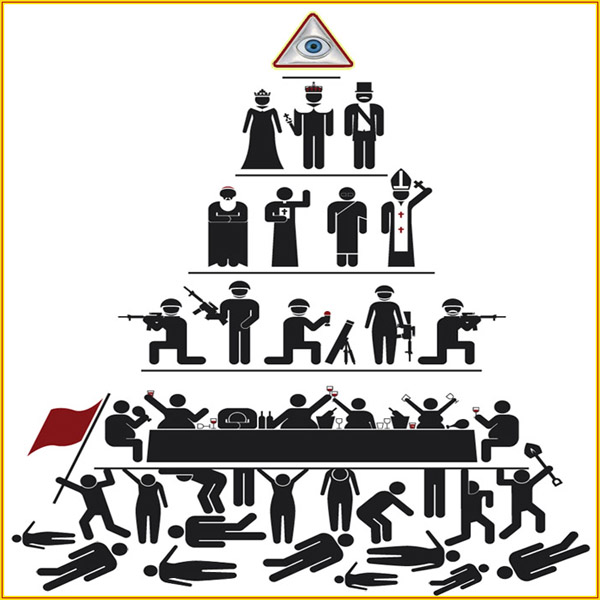
The Upheaval Dialogues: 2012 Reconsidered

2012_1

By Christopher Knowles

Source: The Secret Sun

Before my trip to New Hampshire I was working on a post arguing that the 2012 prophecies were not incorrect but simply premature. That 2012 seemed to mark a turning point of a sort, a distinct change in the worldwide weather, if you will. You can point to to 2012 and see a number of trends that have metastasized since then, in the geopolitical situation, but also in our politics, in the economy, in social relations.

A lot of this is cynical manipulation, a reaction to the legitimate threat once posed by the Occupy movement. We’re seeing a lot of gamesmanship at work, a lot of people being given the rope with which to hang themselves. That will become more apparent by this time next year. Politics at every level is all smoke and mirrors today- believe nothing you see.

But there’s something much deeper at work. We’re seeing mass die-offs of wildlife, particularly that of sealife, all over the world. Most troubling are the mass die-offs of bees, animals that our food supply is so dependent on. Whether through carbon emissions or through geoengineering, we’re also seeing dangerous levels of pollen on the increase and the attendant increase in respiratory illness.

And there have been attendant signs in the sky- the Sun seems to have gone quiet, perhaps presaging a long and difficult period of solar inactivity, one that could presage a mini-ice age. After years of mocking “believers,” scientists are once again recognizing that there are two giants beyond Pluto (one may be a brown dwarf)*.

What effect they might have on our planet is debatable (some claim they are the source of all the invaders we’ve come to worry so much about; asteroids, meteors, etc), there’s no shortage of “Nibiru” scare mongers on the Internet preaching apocalypse one minute, then selling “survival” trinkets and gimcracks in order to stave off your doom the next.

We’ve also seen strange signs on the earth- a rise in earthquake and volcanic activity (a major volcano could block out the Sun for many parts of the world, causing famine), an increase in gigantic sinkholes (massive hollowing out of the surface layer of the earth) and in the Pacific, violent typhoons. Hurricane season in the Atlantic has been relatively quiet since 2012’s Superstorm, but that might be the literal calm before the storm.

And of course, there is the endless drumbeat of war. There is the endless slaughter and massive displacement in the Middle East (with ancient Gnostic sects such as the Druze, Yazidi and Alawites targeted for genocide by Jihadists) and the growing tension in Eastern Europe. There’s also the uptick in terrorism in Europe (Charlie Hebdo, the attack in France today), although intolerable is not even a speck of the carnage people elsewhere in the world suffer on a daily basis, especially as struggles between Sunni and Shi’a Muslims escalate to global proportions. Syria, Yemen, Pakistan…the list of sectarian carnage is mind-numbing.

Toothless NATO protectorates like Sweden are easy targets for the Sino-Russian ascendancy, which is why the US is moving heavy artillery in the area. But the state of constant war is such that drone pilots are reporting record levels of stress and burn-out.

Poltical and social tensions have increased in this country, though in comparison to what’s going on in the rest of the world it seems like a footnote (certainly the endless political bickering on the ‘Net does). On a personal level, I’m seeing so many people I care about under serious stress. It’s as if the entire solar system is in convulsions, from the macrocosm to the microcosm.

As many of us warned about, the corporate Christianity of the 80s and 90s has sparked an enormous backlash, with many young people walking away from religion (and pretty much everything else) entirely. Church leaders are now realizing the error of their shotgun wedding to partisan politics, even as Christianity rises in ways once unimagined in Africa, Russia and China.

But the collapse of religious faith especially among vulnerable working class populations has left a huge void, one which pandemic drug abuse is filling.

A deep and abiding nihilism has gripped the entire world– not just the West– and all of the chaos and upheaval we are seeing now is a symptom of that. 

What is going to heal that?

Science is increasingly proving itself to be corrupt and compromised. Transhumanism (now just a fading dream, despite some of the hysteria you still see) won’t fill the void, virtual reality (which never has and probably never will live up to its hype) won’t fill the void, forcing the world in a Borghive will just make magnify the problem, just as the Internet can turn a quiet, Type B “nice guy” or “nice girl” into a raging, misanthropic troll.

So was 2012 the turning point? The beginning of a period of upheaval? Hollywood sells us the myth of overnight apocalypse (“The Day After Tomorrow”) but history teaches us that periods of upheaval are slow in getting started, so much so that they are hardly recognized as such until it’s too late.

History also teaches us that chaos has its own genius and often turns on the men who seek to unleash it for their own benefit. We’re not seeing true chaos on a worldwide scale yet, but the beast is straining at its leash, that’s for certain.

And you can also bet the farm that we’ll see what Jacques Vallee calls the “Control System” awake from its slumber. It already has, though that too has largely gone unnoticed. But not for much longer.

You will live in interesting times…

UPDATE: Speaking of which, are you watching what’s going on in the Chinese Stock Market?

UPDATE: The weaponization of space is proceeding apace, ostensibly to counter threats from China and Russia. There are strange linguistic undertones in the press release, however….


*The reason I don’t pay any attention to astronomers’ bold claims of distant solar systems is that they have no friggin’ idea what’s floating around in ours. Or they do and are lying about it. Either way.

Techno-Financial Capital & Genocide of the Poorest of the Poor

imagesBy Dr. James Petras

Source: Boiling Frogs Post

Total war from above and the outside breeds total war from the inside and below

Today, the ‘poorest of the poor’ are superfluous to empire and thus the policy of genocide. The current world war between the classes has become a war between exterminators and those who would fight to survive!

‘The war and its results have turned Yemen back a hundred years, due to the destruction of infrastructure . . . especially in the provinces of Oden, Dhalea and Taiz.’- Izzedine al-Asbali, Yemeni Human Rights Minister

‘Yemen is devastated. There are no roads, water or electricity. Nobody’s left but thieves.’- A resident of Sana (Yemen)

The Euro-American and Japanese ruling classes, as well as their collaborators in the Afro-Asian and Latin American countries, have accumulated vast profit. This has occurred through a complex stratified system re-concentrating the world’s wealth through: 1. The exploitation of labor in the First World (North America and Western Europe); 2. super-exploitation of labor in the Second World (China, ex-USSR); 3. dispossession of peasants, native communities and urban dwellers to grab resources, land and real estate in the Third World; and 4. wars of genocide against the poorest of the poor in the ‘Fourth World’. Besides all the forms of brutal exploitation and dispossession, which enrich the Euro-US ruling classes, by far the most sinister and threatening to humanity is the concerted worldwide effort to literally exterminate the poorest-of-the poor, the hundreds of millions of people no longer essential for the accumulation and concentration of imperial capital today.

This essay will begin by mapping the genocidal wars against ‘the wretched of the earth’, identifying the geography of genocide, the countries and subjects under attack, and the trajectory, which has been chosen and executed by the leaders of the Euro-American regimes.

Then we will examine the reason for genocide within the dynamics and forms of contemporary capitalism. In particular, we will develop the genocide hypothesis: that imperial genocide of the poorest of the poor is a deliberate policy to reduce the growing surplus labor, which is no longer needed or wanted for wealth accumulation but is increasingly feared as a potential political threat.

In the last section, we will discuss how the ‘wretched of the earth’ are responding to this policy of imperial genocide and what is to be done.

Mapping Genocide Against the Poorest of the Poor

It is no coincidence that the most violent assaults and invasions by the Euro-American powers have taken place against the poorest countries in each region of the world. In the Western hemisphere, the Euro-US regimes have repeatedly invaded the absolutely poorest country, Haiti, overthrowing the popularly elected Aristide government, decimating the population via a cholera epidemic spread by UN mercenary ‘peace-keepers’, killing tens of thousands of poor Haitians and rounding up thousands of protestors. The occupation continues. Honduras, the second poorest country in the region, experienced a US-backed coup d’état deposed their recently elected president and imposed a terrorist puppet regime, which regularly assassinates dissidents and landless rural workers. Peasants are dispossessed; the economy and society are in shambles with tens of thousands of Hondurans (especially children) fleeing the violence.

Today, the Euro-American powers actively support the absolutist regime of Saudi Arabia as it bombs and slaughters thousands of Yemeni civilians and resistance fighters. Yemen is the poorest country in the Gulf region.

In South Asia, the US invaded and occupied Afghanistan; its coalition of puppets and NATO allies have massacred and displaced millions of poor farmers and civilians. Afghanistan is the poorest of the poor countries in the region.

In Africa, the Euro-American powers and their local collaborators have invaded, bombed and occupied Somalia, Chad and Mali – among the poorest of sub-Sahara countries.

After the US-NATO campaign of destruction against Libya, 1.5 million sub-Saharan Africans and black citizens of Libya lost their stable employment and became the victims of ethnic slaughter. Their attempts to escape the violence and starvation by fleeing to Europe are blocked by the leading powers (the same powers that destroyed the Libyan economy and society). Those, who do not drown in their flight, are detained and returned to their devastated countries and early deaths.

In Western Europe, millions of Greeks, Spaniards and Portuguese, inhabiting the poorest countries in the region, have faced massive job losses, widespread impoverishment and spiraling suicides – all induced by austerity programs designed to pillage their economies and enrich their Euro-US creditors.

In the United States, 1.5 million black (mostly male) Americans, are ‘missing’ – products of early death, industrial-scale incarceration and police assassinations. American Indian communities are subject to depredations and early death from the policies of the Federal and State governments. Their lands have been handed over to mining (and now fracking) to serve the interests of the mining and agro-business elite. Throughout the US Latino agricultural workers are increasingly viewed as ‘expendable’ with technology and the effects of global climate change (such as the severe drought in California) depriving them of livelihood.

In the Levant, Palestinians, now the poorest of the poor and the most disenfranchised, face continued Israeli land grabs, pillage and violence in the West Bank and genocidal attacks in Gaza. Iraq and Syria have experienced millions of deaths and displacements, reducing previously prosperous, educated and sophisticated multi-ethnic populations into impoverished, uprooted and desperate people deliberately driven backwards to tribal loyalties.

Why Imperialism ‘Genocides the Poorest of the Poor’

With the exception of Iraq and Syria, all of the violated countries have been poor in resources and markets, and possess large unskilled labor. The people are targeted and savaged because they no longer serve as ‘labor reserves’ – they are now excess-surplus labor – in Nazi racial hygiene terminology, they have become ‘useless mouths to feed’. This has intensified as crisis engulfs the West and the least productive sectors of capitalism, finance, real estate and insurance (FIRE), have become the leading sectors of capital. ‘Cheap labor’ is less needed, least of all overseas labor from conflictual regions.

The ‘poorest of the poor’ countries under attack lack rich resources ripe for plunder; their populations do not exist among the priorities of the multi-national bankers – except when seen as ‘obstacles’. In the colonial past, sectors of these populations would have been recruited by imperial countries to submit, obey and serve as imperial mercenaries or coolie labor. They would have been transported and employed by empire for ‘dirty’, dangerous and poorly paid jobs in other colonized countries – like the millions of Indians scattered throughout the former British Empire. Today, such coolies have no value.

The genocidal nature of the wars against the ‘poorest of the poor’ is best demonstrated by the actual targets and primary victims of these wars: Millions of civilians, families, women, children and heads of households have suffered the worst. These ‘targets’ represent the most stable and essential elements responsible for family reproduction and security. The ‘poorest of the poor’ communities are being destroyed. Genocidal bombing has overwhelmingly targeted the essential factors for survival: cohesive households, communal settings, subsistence food growing regions and access to clean water. Therefore, it should come as no surprise that marriage ceremonies and traditional social gatherings have been ‘mistaken targets’ of missiles and drone strikes. Despite the denials from the White House, the geographic extent and nauseating number of such attacks demonstrate that according to the ‘genocide hypothesis’ there is ‘nowhere to hide’: The targeted populations will have no marriage celebrations, no social life, no increase in children among the poorest of the poor, no protection for the elders, no social fabric and no communal organizations – there will be no survival networks left for the superfluous of empire.

The ‘genocide hypothesis’ underlies the practice of ‘total war’. The practice includes massive attacks on non-military targets (‘Shock and Awe’) and the use of high tech weaponry to target collectives of the poorest of the poor – repeatedly, over long periods of time and wide geographic regions.

If, as the apologists of genocidal wars claim, the bombings of weddings and slaughter of school children are ‘collateral’ in the ‘Global War on Terror’ why are they happening everywhere in the fourth world and virtually everyday?

The genocide hypothesis best explains the data. Even the terminology and claims made by imperialist experts regarding their weapons systems support the genocide hypothesis. These weapons, we are told, are ‘intelligent, precise and highly accurate’ in targeting and destroying ‘the enemy’. By their own admission, then, the poorest of the poor have become ‘the enemy’, as imperial weapons makers support ‘intelligent’ genocide with ‘precision’.

When liberals and leftists criticize how imperial drone strikes kill civilians, instead of ‘armed terrorists’, they are missing the essential point of the policy. The prime purpose of the wars and the imperial weapons of mass destruction is to kill the largest number of the very poorest in the shortest time.

No member of the financial-high tech capitalist class has ever complained about the mass killing of the ‘poorest of the poor’ anywhere or at any time because the victims are, for the purpose of accumulating imperial profit and concentrating wealth superfluous. The poorest don’t figure into the formulae of profit and productivity; they don’t ‘make or take’ markets. On the other hand, their continued existence is a potential liability. They are aesthetically unappealing on the outskirts of luxury resorts. To the rich, they represent a desperate criminal element and they may pose a real or imagined ‘terrorist’ threat. For these reasons, the rich would ‘prefer’ that they would quietly cease to exist, or if the warlords have to dispose of them, the world will be a safer and more attractive place to accumulate wealth. ‘Let them kill each other, as they have done for millennia’, the empire piously opines and the bankers and their high tech allies can use their military and mercenaries without soiling their own hands. The elite ignore the mass immiseration while the militarists bomb ‘the problem’ out of existence.

Today genocide occurs in once vibrant living and working communities, not hidden in ‘concentration camps’. The secret ovens and gas chambers have been replaced by an ‘open range’ of incendiary weapons that end lives, burn neighborhoods and workshops, devastate livestock and crops. Those who survive the bombing are starved, enclosed, malnourished and inflicted with disease. Eminent doctors tell us that the misery is ‘self-inflicted’ and that the poorest of the poor are ignorant and lack healthy habits. Recurrent epidemics from HIV to cholera to Ebola are quintessential ‘4th world diseases’. Even though the Caribbean had not seen cholera for over a century, its introduction into Haiti via the bowels of imperial mercenary troops (UN peacekeepers from Nepal) was blamed on the Haitians’ lack of access to clean water! Not since the small pox blankets passed out by the US Army to freezing Native Americans in their concentration camps of the 19th century have we heard such apologists for genocide!

The truth about genocide is that all this is known, repeatedly documented and forgotten. White workers in the First World cannot even register these ‘facts’ under their own noses, let alone express any form of solidarity. Imperial genocide, committed by proactive militarists and ‘passive’ rich elites, are no secret even if they deny their complicity. The key word here is ‘mission’. ‘Mission Accomplished’ was the celebratory banner over the total destruction of Iraq. The warlords claim rewards for successfully completing ‘the mission’. Yemenis are dying under US-supplied Saudi bombs; Somalis are scattered in tens of thousands of tents to the four corners of the earth; Haitians continue to enjoy the ‘gift of cholera’ from UN ‘peacekeepers’ and rot in massive open air prison-slums – their leaders imprisoned or assassinated.

The Poorest of the Poor Respond

In the face of genocide and their irrelevance to the profit motive of modern high tech and finance capital, the poorest of the poor have chosen multiple responses: (1) Mass out-migration, preferable to the First World, where they won’t be bombed, raped or starved as they had been at ‘home’; (2) Internal migration to the cities, under the illusion of an ‘urban safe haven’ when in fact their concentration in slums makes it easier for the bombers; (3) return to the countryside and subsistence farming or the mountains and subsistence herding, but the missiles and drones relentlessly follow them; (4) mass flight to a neighboring country where the local gendarmes will ‘herd’ them into camps to rot and (5) finally resistance. Resistance takes various forms: There are spontaneous upheavals when the scope of abuse exceeds all endurance. This form involves attacking the local collaborators and gendarmes and authorities and sacking food warehouses. Such action burns briefly and dies (many times literally). Some choose to join armed resistance bands, including gangs of brigands, political ethno-religious rivals and terrorists who retaliate against authors of their genocide and its collaborators with their own version of justice and material and celestial rewards.

Total war from above and the outside breeds total war from the inside and below. The rebellion of the ‘wretched of the earth’ in the 21st century is far different from that portrayed by Franz Fanon in the middle of the last century. Fanon described a revolt against colonialism and neo-colonialism. Today the revolt is against deracination and genocide. During colonialism, the ‘wretched’ needed to be subdued to better exploit their labor and resources. Today, the ‘poorest of the poor’ are superfluous to empire and thus the policy of genocide. The current world war between the classes has become a war between exterminators and those who would fight to survive!

# # # #

Professor James Petras, Boiling Frogs Post contributing analyst, is the author of more than 62 books published in 29 languages, and over 600 articles in professional journals, including the American Sociological Review, British Journal of Sociology, Social Research, and Journal of Peasant Studies. He has a long history of commitment to social justice, working in particular with the Brazilian Landless Workers Movement for 11 years. He writes a monthly column for the Mexican newspaper, La Jornada, and previously, for the Spanish daily, El Mundo. Dr. Petras received his B.A. from Boston University and Ph.D. from the University of California at Berkeley. You can visit his website here.

Assassination as Policy in Washington and How It Failed: 1990-2015

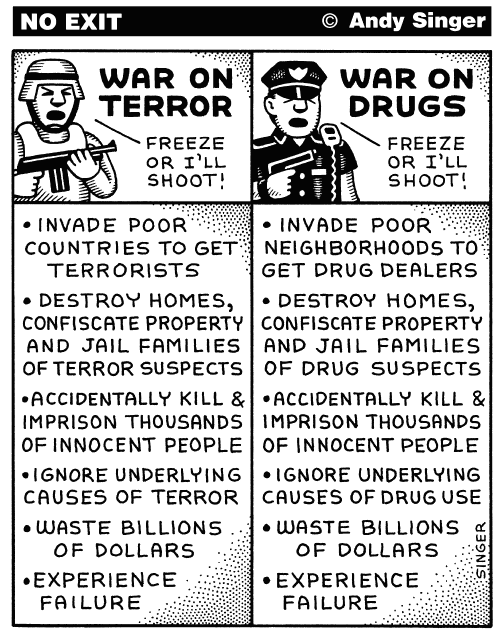
War on Drugs

By Andrew Cockburn

Source: Counterpunch

As the war on terror nears its 14th anniversary — a war we seem to be losing, given jihadist advances in Iraq, Syria, and Yemen — the U.S. sticks stolidly to its strategy of “high-value targeting,” our preferred euphemism for assassination.  Secretary of State John Kerry has proudly cited the elimination of “fifty percent” of the Islamic State’s “top commanders” as a recent indication of progress. Abu Bakr al-Baghdadi himself, “Caliph” of the Islamic State, was reportedly seriously wounded in a March airstrike and thereby removed from day-to-day control of the organization. In January, as the White House belatedly admitted, a strike targeting al-Qaeda leadership in Pakistan also managed to kill an American, Warren Weinstein, and his fellow hostage, Giovanni Lo Porto.

More recently in Yemen, even as al-Qaeda in the Arabian Peninsula took control of a key airport, an American drone strike killed Ibrahim Suleiman al-Rubaish, allegedly an important figure in the group’s hierarchy.  Meanwhile, the Saudi news channel al-Arabiya has featured a deck of cards bearing pictures of that country’s principal enemies in Yemen in emulation of the infamous cards issued by the U.S. military prior to the 2003 invasion of Iraq as an aid to targeting its leaders.  (Saddam Hussein was the ace of spades.)

Whatever the euphemism — the Israelis prefer to call it “focused prevention” — assassination has clearly been Washington’s favored strategy in the twenty-first century.   Methods of implementation, including drones, cruise missiles, and Special Operations forces hunter-killer teams, may vary, but the core notion that the path to success lies in directly attacking and taking out your enemy’s leadership has become deeply embedded.  As then-Secretary of State Hillary Clinton put it in 2010, “We believe that the use of intelligence-driven, precision-targeted operations against high-value insurgents and their networks is a key component” of U.S. strategy.

Analyses of this policy often refer, correctly, to the blood-drenched precedent of the CIA’s Vietnam-era Phoenix Program — at least 20,000 “neutralized.” But there was a more recent and far more direct, if less noted, source of inspiration for the contemporary American program of murder in the Greater Middle East and Africa, the “kingpin strategy” of Washington’s drug wars of the 1990s. As a former senior White House counterterrorism official confirmed to me in a 2013 interview, “The idea had its origins in the drug war.  So that precedent was already in the system as a shaper of our thinking.  We had a high degree of confidence in the utility of targeted killing. There was a strong sense that this was a tool to be used.”

Had that official known a little more about just how this feature of the drug wars actually played out, he might have had less confidence in the utility of his chosen instrument.  In fact, the strangest part of the story is that a strategy that failed utterly back then, achieving the very opposite of its intended goal, would later be applied full scale to the war on terror — with exactly the same results.

The Kingpin Strategy Arrives

At the beginning of the 1990s, the Drug Enforcement Administration (DEA) was the poor stepsister of federal law enforcement agencies.  Called into being by President Richard Nixon two decades earlier, it had languished in the shadow of more powerful siblings, notably the FBI.  But the future offered hope.  President George H.W. Bush had only recently re-launched the war on drugs first proclaimed by Nixon, and there were rich budgetary pickings in prospect.  Furthermore, in contrast to the shadowy drug trafficking groups of Nixon’s day, it was now possible to put a face, or faces, on the enemy.  The Colombian cocaine cartels were already infamous, their power and ruthless efficiency well covered in the media.

For Robert Bonner, a former prosecutor and federal judge appointed to head the DEA in 1990, the opportunity couldn’t have been clearer.  Although Nixon had nurtured fantasies of deploying his fledgling anti-drug force to assassinate traffickers, even soliciting anti-Castro Cuban leaders to provide the necessary killers, Bonner had something more systematic in mind.  He called it a “kingpin strategy,” whose aim would be the elimination either by death or capture of the “kingpins” dominating those cartels.

Implicit in the concept was the assumption that the United States faced a hierarchically structured threat that could be defeated by removing key leadership components.  In this, Bonner echoed a traditional U.S. Air Force doctrine: that any enemy system must contain “critical nodes,” the destruction of which would lead to the enemy’s collapse.

In a revealing address to a 2012 meeting of DEA veterans held to commemorate the 20th anniversary of the kingpin strategy’s inauguration, Bonner spoke of the corporate enemy they had confronted.  Major drug trafficking outfits, he said, “by any measure are large organizations. They operate by definition transnationally. They are vertically integrated in terms of production and distribution. They usually have, by the way, fairly smart albeit quite ruthless people at the top and they have a command and control structure. And they also have people with expertise that run certain essential functions of the organization such as logistics, sales and distribution, finances, and enforcement.”  It followed therefore that the removal of those smart people at the top, not to mention the experts in logistics, would render the cartel ineffective and so cut off the flow of narcotics to the United States.

Pursuit of the kingpins promised rich institutional rewards.  Aside from the overbearing presence of the FBI, Bonner had to contend with another carnivore in the Washington bureaucratic jungle eager to encroach on his agency’s territory. “DEA and CIA were butting heads,” recalled the former DEA chief in a 2013 interview. “There was real tension.” Artfully, he managed to negotiate peace with the powerful intelligence agency, “so now we had a very important ally. CIA could use DEA and vice versa.”

By this he meant that the senior agency could use the DEA’s legal powers for domestic operations to good advantage.  This burgeoning relationship brought additional potent allies. Not only was his agency now closer to the CIA, Bonner told me, but “through them, the NSA.” A new Special Operations Division created to work with these senior agencies was to oversee the assault on the kingpins, relying heavily on electronic intelligence.

This new direction would swiftly gain credibility after the successful elimination of the most famous cartel leader of all.  Pablo Escobar, the dominant figure of the Medellín cartel, was an object of obsessive interest to American law enforcement.  He had long evaded U.S.-assisted manhunts before negotiating an agreement with the Colombian government in 1991 under which he took up residence in a “prison” he himself had built in the hills above his home city. A year later, fearing that the government was going to welsh on its deal and turn him over to the Americans, Escobar walked out of that prison and went into hiding.

The subsequent search for the fugitive drug lord marked a turning point. The Cold War was over; Saddam Hussein was defeated in the first Gulf War in 1991; credible threats to the U.S. were scarce; and the danger of budget cuts was in the air. Now, however, the U.S. deployed the full panoply of surveillance technology originally developed to confront the Soviet foe against a single human target. The Air Force sent in an assortment of reconnaissance planes, including SR-71s, which were capable of flying at three times the speed of sound. The Navy sent its own spy planes; the CIA dispatched a helicopter drone.

At one point there were 17 of these surveillance aircraft simultaneously in the air over Medellín although, as it turned out, none of them were any help in tracking down Escobar.  Nor did the DEA make any crucial contribution. Instead, his deadly rivals from Cali, Colombia’s other major trafficking group, played the decisive role in the destruction of that drug lord’s power and support systems, combining well-funded intelligence with bloodthirsty ruthlessness.

His once all-powerful network of informers and bodyguards destroyed, Escobar was eventually located by homing in on his radio and gunned down as he fled across a rooftop on December 2, 1993.  Though the matter is open to debate, a former senior U.S. drug enforcement official assured me unequivocally that a sniper from the U.S. Army’s Special Operations Delta Force had fired the killing shot.

Following this triumph, the DEA turned its attention to the Cali cartel, pursuing it with every resource available: “We really developed the use of wiretaps,” Bonner told me.  Patience and the provision of enormous resources eventually yielded results. In June and July 1995, six of the seven heads of the Cali cartel were arrested, including the brothers Gilberto and Miguel Rodríguez-Orijuela, and the cartel’s cofounder, José “Chepe” Santacruz Londoño.  Although Londoño subsequently escaped from jail, he would in the end be hunted down and killed.  Continued U.S. pressure for the rest of the decade and beyond resulted in a steady flow of cartel bosses into prisons with life sentences or into coffins.

Cartel Heads Go Down and Drugs Go Up

The strategy, it appeared, had been an unqualified success.  “When Pablo Escobar was on the run, for all practical purposes, his organization started going down… ultimately it was destroyed.  And that’s the strategy we have called the kingpin strategy,” crowed Lee Brown, Bill Clinton’s “drug czar,” in 1994.

In public at least, no officials bothered to point out that if that strategy’s aim was to counter drug use among Americans, it had achieved precisely the opposite of its intended goal.  The giveaway to this failure lay in the on-the-street cost of cocaine in this country.  In those years, the DEA put enormous effort into monitoring its price, using undercover agents to make buys and then laboriously compiling and cross-referencing the amounts paid.

The drugs obtained by these surreptitious means, however, were of wildly varying purity, the cocaine itself often having been adulterated with some worthless substitute. That meant that the price of a gram of pure cocaine varied enormously, since a few bad deals of very low purity could cause wide swings in the average. Dealers tended to compensate for higher prices by reducing the purity of their product rather than charging more per gram. As a result, the agency’s price charts showed little movement and so gave no indication of what events were affecting the price and therefore the supply.

In 1994, however, a numbers-cruncher with the Institute for Defense Analysis, the Pentagon’s in-house think tank, began subjecting the data to more searching scrutiny. The analyst, a former Air Force fighter pilot named Rex Rivolo, had been tasked to take an independent look at the drug war at the request of Brian Sheridan, the hardheaded director of the Defense Department’s Office of Drug Control Policy who had developed a healthy disrespect for the DEA and its operations.

Having tartly informed DEA officials that their statistics were worthless, mere “random noise,” Rivolo set to work developing a statistical tool that would eliminate the effect of the swings in purity of the samples collected by the undercover agents. Once he had succeeded, some interesting conclusions began to emerge: the pursuit of the kingpins was most certainly having an effect on prices, and by extension supply, but not in the way advertised by the DEA. Far from impeding the flow of cocaine onto the street and up the nostrils of America, it was accelerating it. Eliminating kingpins actually increased supply.

It was a momentous revelation, running entirely counter to law enforcement cultural attitudes that reached back to the days of Eliot Ness’s war against bootleggers in the 1920s and that would become the basis for Washington’s twenty-first-century counterinsurgency wars. Such a verdict might have been reached intuitively, especially once the kingpin strategy in its most lethal form came to be applied to terrorists and insurgents, but on this rare occasion the conclusion was based on hard, undeniable data.

In the last month of 1993, for example, Pablo Escobar’s once massive cocaine smuggling organization was already in tatters and he was being hunted through the streets of Medellín. If the premise of the DEA strategy — that eliminating kingpins would cut drug supplies — had been correct, supply to the U.S. should by then have been disrupted.

In fact, the opposite occurred: in that period, the U.S. street price dropped from roughly $80 to $60 a gram because of a flood of new supplies coming into the U.S. market, and it would continue to drop after his death.  Similarly, when the top tier of the Cali cartel was swept up in mid-1995, cocaine prices, which had been rising sharply earlier that year, went into a precipitous decline that continued into 1996.

Confident that the price drop and the kingpin eliminations were linked, Rivolo went looking for an explanation and found it in an arcane economic theory he called monopolistic competition. “It hadn’t been heard of for years,” he explained. “It essentially says if you have two producers of something, there’s a certain price. If you double the number of producers, the price gets cut in half, because they share the market.

“So the question was,” he continued, “how many monopolies are there? We had three or four major monopolies, but if you split them into twenty and you believe in this monopolistic competition, you know the price is going to drop. And sure enough, through the nineties the price of cocaine was plummeting because competition was coming in and we were driving the competition. The best thing would have been to keep one cartel over which we had some control. If your goal is to lower consumption on the street, then that’s the mechanism. But if you’re a cop, then that’s not your goal. So we were constantly fighting the cop mentality in these provincial organizations like DEA.”

The Kingpin Strategy Joins the War on Terror

Deep in the jungles of southern Colombia, coca farmers didn’t need obscure economic theories to understand the consequences of the kingpin strategy. When the news arrived that Gilberto Rodríguez-Orijuela had been arrested, small traders in the remote settlement of Calamar erupted in cheers. “Thank the blessed virgin!” exclaimed one grandmother to a visiting American reporter.

“Wait till the United States figures out what it really means,” added another local resident. “Hell, maybe they’ll approve, since it’s really a victory for free enterprise. No more monopoly controlling the market and dictating what growers get paid. It’s just like when they shot Pablo Escobar: now money will flow to everybody.”

This assessment proved entirely correct. As the big cartels disappeared, the business reverted to smaller and even more ruthless groups that managed to maintain production and distribution quite satisfactorily, especially as they were closely linked either to Colombia’s Marxist FARC guerrillas or to the fascist anti-guerrilla paramilitary groups allied with the government and tacitly supported by the United States.

Much of Rivolo’s work on the subject remains classified. This is hardly surprising, given that it not only undercuts the official rationale for the kingpin strategy in the drug wars of the 1990s, but strikes a body blow at the doctrine of high-value targeting that so obsesses the Obama administration in its drone assassination campaigns across the Greater Middle East and parts of Africa today.

Rivolo was, in fact, able to monitor the application of the kingpin strategy in the following decade.  In 2007, he was assigned to a small but high-powered intelligence cell attached to the Baghdad headquarters of General Ray Odierno, who was, at the time, the operational U.S. commander in Iraq.  While there he made it his business to inquire into the ongoing targeting of “high-value individuals,” or HVIs.  Accordingly, he put together a list of 200 HVIs — local insurgent leaders — killed or captured between June and October 2007.  Then he looked to see what happened in their localities following their elimination.

The results, he discovered when he graphed them out, offered a simple, unequivocal message: the strategy was indeed making a difference, just not the one intended. It was, however, the very same message that the kingpin strategy had offered in the drug wars of the 1990s.  Hitting HVIs did not reduce attacks and save American lives; it increased them. Each killing quickly prompted mayhem. Within three kilometers of the target’s base of operation, attacks over the following 30 days shot up by 40%. Within a radius of five kilometers, a typical area of operations for an insurgent cell, they were still up 20%. Summarizing his findings for Odierno, Rivolo added an emphatic punch line: “Conclusion: HVI Strategy, our principal strategy in Iraq, is counter-productive and needs to be re-evaluated.”

As with the kingpin strategy, the causes of this apparently counter-intuitive result became obvious upon reflection.  Dead commanders were immediately replaced, and the newcomers were almost always younger and more aggressive than their predecessors, eager to “make their bones” and prove their worth.

Rivolo’s research and conclusions, though briefed at the highest levels, made no difference.  The kingpin strategy might have failed on the streets of American cities, but it had been a roaring success when it came to the prosperity of the DEA.  The agency budget, always the surest sign of an institution’s standing, soared by 240% during the 1990s, rising from $654 million in 1990 to over $1.5 billion a decade later.  In the same way, albeit on a vaster scale, high-value targeting failed in its stated goals in the Greater Middle East, where terror recruits grew and terror groups only multiplied under the shadow of the drone.  (The removal of al-Baghdadi from day-to-day control of the Islamic State, for instance, has apparently done nothing to retard its operations.)  The strategy has, however, been of inestimable benefit to a host of interested parties, ranging from drone manufacturers to the CIA counterterrorism officials who so signally failed to ward off 9/11 only to adopt assassination as their raison d’être.

No wonder the Saudis want to follow in our footsteps in Yemen. It’s a big world. Who’s next?

Andrew Cockburn is the Washington editor of Harper’s Magazine.  An Irishman, he has covered national security topics in this country for many years.  In addition to publishing numerous books, he co-produced the 1997 feature film The Peacemaker and the 2009 documentary on the financial crisis American Casino.  His latest book is Kill Chain: The Rise of the High-Tech Assassins (Henry Holt).


Terrorism, Violence, and the Culture of Madness

aa-American-Empire-statue-of-liberty-and-military

By Henry A. Giroux

Source: Counterpunch

The thought of security bears within it an essential risk. A state which has security as its sole task and source of legitimacy is a fragile organism; it can always be provoked by terrorism to become more terroristic.

— Giorgio Agamben

George Orwell’s nightmarish vision of a totalitarian society casts a dark shadow over the United States. The consequences can be seen clearly in the ongoing and ruthless assault on the social state, workers, unions, higher education, students, poor minorities and any vestige of the social contract. Free market policies, values, and practices with their emphasis on the privatization of public wealth, the elimination of social protections, and the deregulation of economic activity now shape practically every commanding political and economic institution in the United States. Public spheres that once offered at least the glimmer of progressive ideas, enlightened social policies, non-commodified values, and critical dialogue and exchange have been increasingly militarized—or replaced by private spaces and corporate settings whose ultimate fidelity is to increasing profit margins. Citizenship is now subsumed by the national security state and a cult of secrecy, organized and reinforced by the constant mobilization of fear and insecurity designed to produce a form of ethical tranquilization and a paralyzing level of social infantilism.

Chris Hedges crystalizes this premise in arguing that Americans now live in a society in which “violence is the habitual response by the state to every dilemma,” legitimizing war as a permanent feature of society and violence as the organizing principle of politics.[1] Under such circumstances, malevolent modes of rationality now impose the values of a militarized neoliberal regime on everyone, shattering viable modes of agency, solidarity, and hope. Amid the bleakness and despair, the discourses of militarism, danger and war now fuel a war on terrorism “that represents the negation of politics—since all interaction is reduced to a test of military strength war brings death and destruction, not only to the adversary but also to one’s side, and without distinguishing between guilty and innocent.”[2] Human barbarity is no longer invisible, hidden under the bureaucratic language of Orwellian doublespeak. Its conspicuousness, if not celebration, emerged in the new editions of American exceptionalism ushered in by the post 9/11 exacerbation of the war on terror.

In the aftermath of these monstrous acts of terrorism, there was a growing sense among politicians, the mainstream media, and conservative and liberal pundits that history as we knew it had been irrefutably ruptured. If politics seemed irrelevant before the attacks on the World Trade Center and the Pentagon, it now seemed both urgent and despairing. But history cannot be erased, and those traditional public spheres in which people could exchange ideas, debate, and shape the conditions that structured their everyday lives increasingly continued to appear to have little significance or political consequence. Already imperiled before the aftershocks of the terrorists’ attacks, democracy became even more fragile in the aftermath of 9/11. Almost fourteen years later, the historical rupture produced by the events of 9/11 has transformed a terrorist attack into a war on terror that mimics the very crimes it pledged to eliminate. The script is now familiar. Security trumped civil liberties as shared fears replaced any sense of shared responsibilities. Under Bush and Cheney, the government lied about the war in Iraq, created a torture state, violated civil liberties, and developed new antiterrorist laws, such as the USA PATRIOT ACT. It imposed a state of emergency that

justified a range of terrorist practices, including extraordinary rendition and state torture, which made it easier to undermine those basic civil liberties that protect individuals against invasive and potentially repressive government actions.[3]

Under the burgeoning of what James Risen has called the “homeland security-industrial complex,” state secrecy and organized corporate corruption filled the coffers of the defense industry along with the corporate owned security industries—especially those providing drones– who benefited the most from the war on terror.[4] This is not to suggest that security is not an important consideration for the United States. Clearly, any democracy needs to be able to defend itself, but it cannot serve, as it has, as a pretext for abandoning civil liberties, democratic values, and any semblance of justice, morality, and political responsibility. Nor can it serve as a pretext for American exceptionalism and its imperialist expansionist goals. The philosopher Giorgio Agamben has suggested rightly that under the so war on terrorism, the political landscape is changing and that “we are no longer citizens but detainees, distinguishable from the inmates of Guantanamo not by an indifference in legal status, but only by the fact that we have not yet had the misfortune to be incarcerated—or unexpectedly executed by a missile from an unmanned aircraft.”[5]

The war on terror morphed into a legitimation for state terrorism as was made clear under the willingness of the Obama administration to pardon the CIA torturers, create a “kill list”, expand the surveillance state, punish whistleblowers, and use drones to indiscriminately kill civilians—all in the name of fighting terrorists. Obama expanded the reach of the militarized state and along with Democratic and Republican Party extremists preached a notion of security rooted in personal fears rather than in a notion of social security that rallied against the deprivations and suffering produced by war, poverty, racism, and state terrorism. The war on terrorism extended the discourse, space, location, and time of war in ways that made it unbounded and ubiquitous making everyone a potential terrorists and the battlefield a domestic as well as foreign location, a foreign as well as a domestic policy issue. Obama has become the master of permanent war seeking to increase the bloated military budget—close to a trillion dollars–while “turning to lawless violence….translated into unrestrained violent interventions from Libya to Syria and back to Iraq,” including an attempt “to expand the war on ISIS in Syria and possibly send more heavy weapons to its client government in Ukraine.”[6] Fear became total and the imposition of punitive standards included not only the bombing, abduction, and torture of enemy combatants, but also the use of the police and federal troops for drug interdictions, the enforcement of zero tolerance standards in public schools, and the increasing criminalization of a range of social behaviors that extended from homelessness to violating dress codes in school.

Under the regime of neoliberalism with its war-like view of competition, its celebration of self-interest, and its disdain for democratic values and shared compassion for others, any notion of unity has been contaminated by the fog of misguided patriotism, a hatred of the other now privileged as an enemy combatant, and an insular retreat into mindless consumerism and the faux safety of gated communities. With the merging of militarism, the culture of surveillance, and a neoliberal culture of cruelty, solidarity and public trust have morphed into an endless display of violence and the ongoing militarization of visual culture and public space.[7]

The war on terror has come home as poor neighborhoods are transformed into war zones with the police resembling an occupying army. The most lethal expressions of racism have become commonplace as black men and boys such as Eric Garner and Tamir Rice are repeatedly beaten, and killed by the police.[8] As Jeffrey St. Clair has pointed out, one index of how state terrorism and lawlessness have become normalized is evident not only by the fact that the majority of Americans support torture, even though they know “it is totally ineffective as a means of intelligence gathering,” but also by the American public’s growing appetite for violence, whether it parades as entertainment or manifests itself in the growing demonization and incarceration of black and brown youth, adults, Muslims, immigrants, and others deemed as disposable.[9] It should come as no surprise that the one issue the top 2016 GOP presidential contenders agree on is that guns are the ultimate symbol of freedom in America, a “bellwether of individual liberty, a symbol of what big wants and shouldn’t have.”[10] Guns provide political theater for the new political extremists and are symptomatic less of some cockeyed defense of the second amendment than willingness to maximize the pleasure of violence and building a case for the use of deadly force both at home and abroad. As Rustom Bharacuha and Susan Sontag have argued in different contexts, “There is an echo of the pornographic in maximizing the pleasure of violence,”[11] one “that dissolves politics into pathology.”[12]

Notions of democracy increasingly appear to be giving way to the discourse of revenge, domestic security, stupidity, and war. The political reality that has emerged since the shattering crisis of 9/11 increasingly points to a set of narrow choices that are being largely set by the jingoistic right wing extremists, the defense department, conservative funded foundations, and fueled by the dominant media. War and violence now function as an aphrodisiac for a public inundated with commodities and awash in celebrity culture idiocy. This surrender to the pleasure of violence is made all the more easy by the civic illiteracy now sweeping the United States. Climate change deniers, anti-intellectuals, religious fundamentalists, and others who exhibit pride in displaying a kind of thoughtlessness exhibit a kind of political and theoretical helplessness, if not corruption, that opens the door to the wider public’s acceptance of foreign and domestic violence.

The current extremists dominating Congress are frothing at the mouth to go to war with Iran, bomb Syria into the twilight zone, and further extend the reach of the American empire through its over bloated war machine to any country that questions the use of American power. One glaring example can be found in the constant and under analyzed televised images and stories of homegrown terrorists threatening to blow up malls, schools, and any other conceivable space where the public gathers.

Other examples can be found in the militarized frothing and Islamophobia perpetrated by the Fox News Network, made concrete by the an almost fever pitched bellicosity that informs the majority of its commentaries and reactions to war on terror. Missing from the endless call for security, vengeance, and the use of state violence is the massive lawlessness produced by the United States government through targeted drone attacks on enemy combatants, the violation of civil liberties, and the almost unimaginable human suffering and hardship perpetrated through the American war machine in the Middle East, especially Iraq. Also missing is a history of lawlessness, imperialism, and torture that supported a host of authoritarian regimes propped up by the United States.

Capitalizing on the pent up emotions and needs of an angry and grieving public for revenge, fueled by an unchecked Islamophobia, almost any reportage of a terrorist attack throughout the globe, further amplifies the hyped-up language of war, patriotism, and retaliation.   Similarly, conservative talking-heads write numerous op-eds and appear on endless talk shows fanning the fires of “patriotism” by calling upon the United States to expand the war against any one of a number of Arab countries that are considered terrorist states. For example, John Bolton, writing an op-ed for the New York Times insists that all attempts by the Obama administration to negotiate an arms deal with Iran is a sign of weakness. For Bolton, the only way to deal with Iran is to launch an attack on their nuclear infrastructure. The title of his op-ed sums up the organizing idea of the article: “To Stop Iran’s Bomb, Bomb Iran.”[13]

In the current historical moment, the language of indiscriminate revenge and lawlessness seems to be winning the day. This is a discourse unconscious of its own dangerous refusal to acknowledge the important role that democratic values and social justice must play in a truly “unified” rationale response, so as to prevent the further killing of innocent people, regardless of their religion, culture, and place of occupancy in the world. Instead of viewing the current crisis as simply a new and more dangerous historical conjuncture that has nothing to learn from the past, it is crucial for the American public to begin to understand how the past might be useful in addressing what it means to live in a democracy at a time when democracy is not only viewed as an excess, but as a liability to the wishes and interests of the new extremists who now control the American government. The anti-democratic forces that define American history cannot be forgotten in the fog of political and cultural amnesia. State violence and terrorism have a long history in the United States, both in its foreign and domestic policies, and ignoring this dark period of history means that nothing will be learned from the legacy of a politics that has indulged authoritarian ideologies and embraced violence as a central measure of power, national identity, and patriotism.[14]

At stake here is the need to establish a vision of society and a global order that safeguards its most basic civil liberties and notions of human rights. Any struggle against terrorism must begin with the pledge on the part of the United States that it will work in conjunction with international organizations, especially the United Nations, a refusal to engage in any military operations that might target civilians, and that it will rethink those aspects of its foreign policy that have allied it with repressive nations in which democratic liberties and civilian lives are under siege. Crimes overlooked will be repeated and intensified just as public memory is rendered a liability in the face of the discourse of revenge, demonization, and extreme violence.

Many news commentators and journalists in the dominant press have taken up the events of September 11 within the context of World War II, invoking daily the symbols of revenge, retaliation, and war. Nostalgia is now used to justify and fuel a politics of in-security, fear, precarity, and demonization. The dominant media no longer functions in the interests of a democracy. Mainstream media supported Bush’s fabrications to justify the invasion of Iraq and never apologized for such despicable actions. It has rarely supported the heroic actions of whistleblowers such as Edward Snowden, Chelsea Manning, Thomas Drake, John Kiriakou, Jeffrey Sterling, and others.[15]

Mainstream media has largely remained mute about the pardoning of those who tortured as a matter of state policy. Against an endless onslaught of images of jets bombing countries extending from Syria and Iraq to Afghanistan and Gaza, amply supplied by the Defense Department, the dominant media connects the war abroad with the domestic struggle at home by presenting numerous stories about the endless ways in which potential terrorists might use nuclear weapons, poison the food supply, or unleash biochemical agents on the American population. The increased fear and insecurity created by such stories simultaneously serve to legitimatize a host of anti-democratic practices at home-including “a concerted attack on civil liberties, freedom of expression, and freedom of the press,”[16] and a growing sentiment on the part of the American public that people who suggest that terrorism is, in part, caused by American foreign policy should not be allowed “to teach in the public schools, work in the government, and even make a speech at a college.”[17]

This legacy of suppression has a long history in the United States, and it has returned with a vengeance in academia, especially for those academics, such as Norman Finkelstein and Steven G. Salaita, who have condemned America’s policies in the Middle East and the government’s support of the Israeli government’s policies towards Palestinians. Language itself has become militarized fed by an onslaught of extreme violence that now floods Hollywood films and the violence that dominates American television. Hollywood blockbusters such asAmerican Sniper glorify war crimes and produce demonizing views of Islam.[18] Television programs such as Spartacus, The Following,Hannibal, True Detective, Justified, and Top of the Lake intensify the pleasure quotient for viewing extreme and graphic violence to an almost unimaginable degree. Graphic violence appears to provide one of the few outlets for Americans to express what has come to resemble what could be construed as a spiritual release. Extreme violence, including the sanctioning of state torture, may be one of the few practices left that allows the American people to feel alive, to mark what it means to be close to the register of death in a way that reminds them of the ability to feel within a culture that deadens every possibility of life. Under such circumstances, the reality of violence is infantilized, transformed into forms of entertainment that produce and legitimate a carnival of cruelty. The privatization of violence does more than maximize the pleasure quotient and heighten macho ebullience, it also gives violence a fascist edge by depoliticizing a culture in which the reality of violence takes on the form of state terrorism. Authoritarianism in this context becomes hysterical because it turns politics and neoliberalism “into a criminal system and keeps working towards the expansion of the realm of pure violence, where its advancement can proceed unhindered.”[19]

The extreme visibility of violence in American culture represents a willful pedagogy of carnage and gore designed to normalize its presence in American society and to legitimate its practice and presence as a matter of common sense. Moreover, war making and the militarization of public discourse and public space also serve as an uncritical homage to a form of hyper-masculinity that operates from the assumption that violence is not only the most important practice for mediating most problems, but that it is also central to identity formation itself. Agency is now militarized and almost completely removed from any notion of civic values. We get a glimpse of this form of violent hyper-masculinity not only in the highly publicized brutality against women dished out by professional football players, but also in the endless stories of sexual abuse and violence now taking place in frat houses across America, many in some of the most prestigious colleges and universities. Violence has become the DNA of war making in the United States, escalating under Bush and Obama into a kind of war fever that embraces a death drive. As Robert J. Lifton points out,

Warmaking can quickly become associated with “war fever,” the mobilization of public excitement to the point of a collective experience with transcendence. War then becomes heroic, even mythic, a task that must be carried out for the defense of one’s nation, to sustain its special historical destiny and the immortality of its people. ..War fever tends always to be sporadic and subject to disillusionment. Its underside is death anxiety, in this case related less to combat than to fears of new terrorist attacks at home or against Americans abroad–and later to growing casualties in occupied Iraq.[20]

The war on terror is the new normal. Its adoration and intensification of violence, militarization, and state terrorism reach into every aspect of American life. Americans complain over the economic deficit but say little about the democracy and moral deficit now providing the foundation for the new authoritarianism. A police presence in our major cities showcases the visible parameters of the authoritarian state. For example, with a police force of 34,000 New York City resembles an armed camp with a force that as Thom Hartman points out is “bigger—that the active militaries of Austria, Bulgaria, Chad, the Czech Republic, Hungary, Kenya,” and a number of other countries.[21] At the same time, the Pentagon has given billions of dollars’ worth of military equipment to local police forces all over America. Is it any wonder, that minorities of color fear the police more than the gangs and criminals that haunt their neighborhoods? Militarism is one of the breeding grounds of violence in the United States and is visible in the ubiquitous gun culture, the modeling of schools after prisons, the exploding incarceration state, the paramilitarization of local police forces, the burgeoning military budget, and the ongoing attacks on protesters, dissidents, black and brown youth, and women.

Under the war on terrorism, moral panic and a culture of fear have not only redefined public space as the “sinister abode of danger, death and infection” and fueled the collective rush to “patriotism on the cheap”, it has also buttressed a “fear economy” and refigured the meaning of politics itself.[22] Defined as “the complex of military and security firms rushing to exploit the national nervous breakdown,”[23] the fear economy promises big financial gains for both the defense department, and the anti-terrorist-security sectors, primed to terror-proof everything from trash cans and water systems to shopping malls and public restrooms. The war on terrorism has been transformed into a new market, a consumer goods for the hysterical war mongers and their acolytes in the media while making politics and extension of war. Fear is no longer an attitude as much as it is a culture that functions as “the enemy of reason [while distorting] emotions and perceptions, and often leads to poor decisions.”[24] But the culture of fear does more than undermine critical judgment and suppress dissent, as Don Hazen points out, it also: “breeds more violence, mental illness and trauma, social disintegration, job failure, loss of workers’ rights, and much more. Pervasive fear ultimately paves the way for an accelerating authoritarian society with increased police power, legally codified oppression, invasion of privacy, social controls, social anxiety and PTSD.”[25]

Fear and repression reproduce rather than address the most fundamental anti-democratic elements of terrorism. Instead of mobilizing fear, people need to recognize that the threat of terrorism cannot be understood apart from the crisis of democracy itself. The greatest struggle faced by the American public is not terrorism, but a struggle on behalf of justice, freedom, and democracy for all of the citizens of the globe. This is not going to take place, as President Obama’s policies will tragically affirm, by shutting down democracy, eliminating its most cherished rights and freedoms, and deriding communities of dissent. Engaging terrorism demands more than rage and anger, revenge and retaliation. American society is broken, corrupted by the financial elite, and addicted to violence and a culture of permanent war.

The commanding institutions of American life have lost their sense of public mission, just as leadership at all levels of government is being stripped of any viable democratic vision. The United States is now governed by an economic and social orthodoxy informed by the dictates of religious and political extremists. Reform efforts that include the established political parties have resulted in nothing but regression, a form of accommodation that serves to normalized the new authoritarianism and its war on terrorism. Politics has to be thought anew and must be informed by powerful vision matched by durable organizations that include young people, unions, workers, diverse social movements, artists, and others. In part, this means reawakening the radical imagination so as to address the intensifying crisis of history and agency, and engage the ethical grammars of human suffering. To fight the neoliberal counter-revolution, workers, young people, unions, artists, intellectuals, and social movements need to create new public spaces along with a new language for enabling the American public to relate the self to public life, social responsibility, and the demands of global citizenship.

The left in the United States is too fractured and needs to develop a more comprehensive understanding of politics, oppression, and struggles as well as a discourse that arises to the level of ethical assessment and accountability. Against the new authoritarianism, progressives of all stripes need an inspiring and energizing politics that embraces coalition building, rejects the notion that capitalism equals democracy, and challenges the stolid vocabulary of embodied incapacity stripped of any sense of risk, hope, and possibility. If the struggle against the war on terrorism, militarization, and neoliberalization is to have any chance of success, it is crucial for a loyal and dedicated left to embrace a commitment to understanding the educative nature of politics, economic and social justice, and the need to build a sustainable political formation outside of the established parties.[26]

The United States is in a new historical conjuncture and as difficult as it is to admit, it is a conjuncture that shares more with the legacies of totalitarianism than with America’s often misguided understanding of democracy. Under the merging of the surveillance state, warfare state, and the harsh regime of neoliberalism, we are witnessing the death of the old system of social welfare supports and the emergence of a new society marked by the heavy hand of the national security state, the depoliticization of the American public, extreme inequities in wealth, power, income, and a new politics and mode of governance now firmly controlled by the major corporations, banks, and financial elite. This is a politics in which there is no room for democracy, and no room for reformism. The time has come to name the current historical moment as representative of the “dark times” Hannah Arendt warned us against and to begin to rethink politics anew through social movements in which the promise of a radical democracy can be reimagined in the midst of determined and systemic collective struggles. The war on terrorism has morphed into a new form of authoritarianism and its real enemy is no longer limited to potential terrorists, but includes democracy itself.

Henry A. Giroux currently holds the McMaster University Chair for Scholarship in the Public Interest in the English and Cultural Studies Department and a Distinguished Visiting Professorship at Ryerson University. His most recent books are America’s Education Deficit and the War on Youth (Monthly Review Press, 2013) and Neoliberalism’s War on Higher Education (Haymarket Press, 2014). His web site is www.henryagiroux.com.

Notes. 

[1] Chris Hedges, “America’s ‘Death Instinct’ Spreads Misery Across the World,” AlterNet, (September 30, 2014). Online:

http://www.alternet.org/world/americas-death-instinct-spreads-misery-across-world

[2] Tzvetan Todorov, Torture and the War on Terror, Translated by Gila Walker with photographs by Ryan Lobo, (Chicago, IL: Seagull Books, 2009), pp. 2-3.

[3] See, for instance, Mark Danner, Torture and Truth: America, Abu Ghraib, and the War on Terror (New York: New York Review of Books, 2004); Jane Mayer, The Dark Side: The Inside Story of How the War on Terror Turned into a War on American Ideals (New York: Doubleday, 2008); and Phillipe Sands, Torture Team (London: Penguin, 2009). On the torture of children, see Michael Haas, George W. Bush, War Criminal?: The Bush Administration’s Liability for 269 War Crimes(Westport: Praeger, 2009). Also, see Henry A. Giroux, Hearts of Darkness: Torturing Children in the War on Terror (Boulder: Paradigm, 2010).

[4] James Risen, Pay at Any Price (New York: Houghton Mifflin Harcourt, 2014).

[5] Agamben cited in Malcolm Bull, “States don’t Really Mind Their Citizens Dying: They Just don’t Like anyone Else to Kill Them,” London Review of Books (December 16, 20054), p. 3.

[6] Ajamu Baraka, “Obama’s Legacy: Permanent War and Liberal Accommodation,” Counterpunch (February 18, 2015). Online:http://www.counterpunch.org/2015/02/18/obamas-legacy-permanent-war-and-liberal-accommodation/

[7]Glenn Greenwald, No Place to Hide: Edward Snowden, the NSA, and the U.S. Surveillance State (New York: Metropolitan, 2014) and Nick Turse , The Complex: How the Military Invades Our Everyday Lives(New York: Metropolitan, 2009).

[8] Henry A. Giroux, “State Terrorism and Racist Violence in the Age of Disposability: From Emmett Till to Eric Garner – Expanded Version,”Truthout (December 2014). Online: http://truth-out.org/opinion/item/27832-state-terrorism-and-racist-violence-in-the-age-of-disposability-from-emmett-till-to-eric-garner

[9] Jeffrey St. Clair, “When Torturers Walk,” Counterpunch (March 20-22, 2015), Online: http://www.counterpunch.org/2015/03/20/when-torturers-walk/

[10] David A. Fahrenthold, ““In the hunt to be the 2016 GOP pick, top contenders agree on 1 thing: Guns,” The Washington Post (March 28, 2015). Online: http://www.washingtonpost.com/politics/republican-presidential-hopefuls-sticking-to-their-guns/2015/03/28/b2ef4a1c-d3c4-11e4-8fce-3941fc548f1c_story.html

[11] Rustom Bharacuha, “Around Adohya: Aberrations, Enigmas, and Moments of Violence,” Third Text (Autumn 1993), p. 45.

[12] Sontag cited in in Carol Becker, “The Art of Testimony,” Sculpture(March 1997), p. 28

[13] John R. Bolton, “To Stop Iran’s Bomb, Bomb Iran,” New York Times (March 26, 2015). Online:http://www.nytimes.com/2015/03/26/opinion/to-stop-irans-bomb-bomb-iran.html?_r=0

[14]  There are many valuable sources that document this history. Some exemplary texts include: A.J. Langguth, Hidden Terrors: The Truth About U.S. Police Operations in Latin America (New York: Pantheon Books, 1979); Gordon Thomas, Journey Into Madness: The True Story of Secret CIA Mind Control and Medical Abuse (New York: Bantam, 1989); Danner, Torture and Truth; Jennifer K. Harbury, Truth, Torture, and the American Way: The History and Consequences of U.S. Involvement in Torture (Boston: Beacon Press, 2005); Alfred McCoy, A Question of Torture: CIA Interrogation, from the Cold War to the War on Terror (New York: Metropolitan Books, 2006).

[15] Jamie Tarabay, “Obama and leakers: Who are the eight charged under the Espionage Act?” Aljazeerra (December 5, 3013). Online:http://america.aljazeera.com/articles/2013/12/5/obama-and-leakerswhoaretheeightchargedunderespionageact.html

[16] Eric Alterman, “Patriot Games,” The Nation (October 29, 2001), p. 10.

[17] Cited in the National Public Radio/Kaiser Family foundation/Kennedy School of Government Civil Liberties Poll. Available on line at wsiwyg:5http://www.npr.org/news…civillibertiespll/011130.poll.html (November 30, 2001), p. 3

[18] See, Henry A. Giroux, “Celluloid Heroism and Manufactured Stupidity in the Age of Empire,” Counterpunch (February 12, 2015). Online: http://www.counterpunch.org/2015/02/12/celluloid-heroism-and-manufactured-stupidity-in-the-age-of-empire/

[19] Franco Bifo Berardi, Precarious Rhapsody (New York, Autonomedia, 2009), p. 52

[20] Robert Jay Lifton, “American Apocalypse,” The Nation (December 22, 2003), pp. 12, 14.

[21] Tom Engelhardt, “Walking Back the American Twenty-First Century,” TomDispatch (February 17, 2015). Online: http://www.tomdispatch.com/dialogs/print/?id=175957

[22] Mike Davis, “The Flames of New York,” New Left Review 12 (November/December 2001), p. 44

[23] Ibid. Mike Davis, “The Flames of New York,” Ibid., p. 45.

[24] Don Hazen, “Fear Dominates Politics, Media and Human Existence in America—and it is Getting Worse,” Alternet (March 1, 2015). Online:http://www.alternet.org/fear-america/fear-dominates-politics-media-and-human-existence-america-and-its-getting-worse

[25]. Ibid.

[26]. See, for instance, Adolph Reed Jr., “Nothing Left,” Harper’s Magazine (March 2014), pp. 28-36; Stanley Aronowitz, “Democrats in Disarray: This Donkey Can’t Save Our Asses,” The Indypendent, Issue #202. (December 16, 2014) Online:

https://www.indypendent.org/2014/12/16/democrats-disarray-donkey-can%E2%80%99t-save-our-asses

So how should we “really” refer to these United States of America?

Print

By Dave Lefcourt

Source: OpEdNews.com

So how should we really refer to these United States of America? A banana republic? How about an oligarchic plutocracy? They both fit quite admirably with what we’ve become. Actually I prefer the more vernacular US of BS. Sure it’s crude, base, coarse and of course “politically incorrect” but take a close look at America.

In almost every area one can think of it’s pretty much the same. Truth and honesty is what we’re indoctrinated with, yet in reality we’re a country imbued with dishonesty and lying. Hell, even with little kids nowadays it’s the parents always yammering “good job” here and “good job” there. My god, leave the little tyke alone. He, she will get it together without the constant praising fearing without it he’ll somehow become a failure.

Think about it; from the way we conduct war to being held personally accountable, the “American Dream” to our “color blindness” on race, from “official” Washington to the “independent” MSM, and how it’s all dispensed to the people, it’s all the same BS.

We go to war to bring “freedom and democracy” to the people we invade and occupy. That’s how “dubya” Bush put it to the American people. We commit torture but call it “enhanced interrogation techniques”. We kill innocents in those wars but refer to it as “collateral damage”; come on.

This didn’t all begin with our latest wars against “terrorists”. In Viet Nam, it was the Viet Cong and the North Vietnamese Communists and every VC we killed were the “enemy” including women and children. “Winning” that war was calculated based on the number of “enemy” reported killed. Read Nick Turse’s, “Kill Anything That Moves” where “My Lai” wasn’t an aberration-as the Army said it was-but an everyday occurrence. Terrorists are just the latest manifestation of a contrived, mortal “enemy” we’re told we must fight.

Now everyone we kill are all called “terrorists”, insurgents, al Qaeda, Taliban, ISIS. But of course our killing with drones and missile strikes isn’t “terrorism” it’s what; winning the “hearts and minds”?

Go back further to our wars and “diplomacy” with our own indigenous people. It was all part of what we were taught in our schools called, “Manifest Destiny”. Well that was manifested with every treaty “official” Washington brokered with the true natives of this country being broken. The indigenous know it and now live with the circumstances that was forcibly thrust upon them. Plundering, confiscating the land and what’s now called genocide was really what it was about. You know, “from sea to shining sea”.

As far as who is held to account for their actions today, it’s mostly the poor, black or brown, those profiled, harassed, rousted and often killed but rarely are the police held accountable for their actions.

In the Ferguson police killing of Michael Brown, the grand jury exonerated officer Darren Wilson even though one of those testifying had earlier admitted to prosecutor Bob McCulloch to not being at the scene-which he later publicly stated she “clearly wasn’t present at the scene”- yet he let the panel hear her false testimony and they subsequently voted to acquit Wilson. As for McCulloch I believe he remains as the prosecutor in Ferguson.

We’re supposed to be “color blind” when it comes to race and ethnicity and enforcing the law, yet it’s not just Ferguson where the injustice is occurring it’s a country wide phenomenon. Our largest minorities are those disproportionately incarcerated. Justice? What justice? And for whom?

The “American Dream…a hoax. “Work hard, get an education, get a good job, get married and own a big house”. Maybe that’s true for a handful but the reality for most college students is debt for life. There’s over a $trillion in college student debt with outrageous interest rates tacked on. Too many are working as bartenders and wait staff. They can’t find jobs in their area of study as outsourcing of jobs has become endemic.

As “Americans” we embrace “capitalism” and despise “socialism”. Yet when the financial “masters of the universe” and the big banks brought the financial system to its knees with its fraudulent excesses in 2008, they were “bailed” out by the FED and the US Treasury-and unlike college students now get $billions in FED loans at near zero interest rates. It was government “socialism” that came to the rescue keeping the vultures afloat but sold as a “bailout” to the public. As far as “accountability” for the fraud they committed, other than a few millions in fines-and always with the stipulation they admit no wrongdoing as part of the settlement- that were miniscule and insignificant compared to the billions they made with their financial scheming, it was simply a financial bump in the road. And most significantly none went to jail. How’s that for equal justice under the law!

Our “defense” industry, Lockheed Martin, Boeing, Raytheon, General Dynamics, Northrop Grumman -the big five of the lot- are considered as “independent” corporations but they’re all pretty much owned by the Defense Department-formerly known as the “War Department” until changed after WWII-as the bulk of their earnings is from government spending called innocently as “fiscal” policy. Well that fiscal policy goes to the tune of a $trillion each year when all expenditures are considered i.e. armaments, over a 1000 military bases, wars and occupations, homeland security, NGO’s directly funded by the government, the NSA, CIA, independent contractors, NASA, the VA et al. All against “enemies” not really a threat but conjured up as so to the public to make them fearful so “official” Washington can justify the bloated, unnecessary expenditures.

Every other 1st world post industrialized country has public health insurance for all, in essence a single payer, Medicare type system run by the government. Accept for those 65 and older on Medicare in this country we now have “Obama” care, the Affordable Care Act system still leaves millions without health insurance. But it sure increased the “benefits” to the private health care behemoths, essentially a monopoly with no competition- whereby they divide the country into distinct areas so they don’t compete with each other, akin to the mafia, that is inefficient, has excessive overhead costs but sold as the best health system in the world while in actuality its 37th in the world in delivering health care. So to an imagined “good ole boy” who remarks, “We ain’t got no stinkin socialized medicine in this country. What are ya some kinda commie or somethin?” Ah, but I digress.

And lastly- there’s no way to elaborate on all the BS befouling America in such a short piece; just substitute your own; the crock is endless – there’s the corporate MSM. What may have been a time of an independent free press, naturally skeptical of government with investigative journalism unearthing official wrongdoing has descended into what can best be described as the “ministry of propaganda”, a compliant, complicit, enabling organ of the state.

It “informs” us alright but mostly with lies, distortions and misinformation rather than keeping the public informed with the truth as it really is, not some fictionalized version to keep it in good stead with “official” Washington.

But that corporate MSM fits in quite nicely with this pieces hypothesis, the US of BS.

And an increasingly dangerous one at that not only to others in the world but also for Americans.

But don’t tell that to most Americans, we’re still “the land of the free and the home of the brave” .

Yeah, BS to the very end.

About the Author:

Retired. The author of “DECEIT AND EXCESS IN AMERICA, HOW THE MONEYED INTERESTS HAVE STOLEN AMERICA AND HOW WE CAN GET IT BACK”, Authorhouse, 2009

When It Becomes Serious, First They Lie–When That Fails, They Arrest You

ost2

By Charles Hugh Smith

Source: Of Two Minds

When lying is no longer enough to gain compliance, then the organs of security are unleashed on dissent and resistance.

“When it becomes serious, you have to lie.” Jean-Claude Juncker simply gave voice to what the world’s leaders practice on a daily basis, because now it’s always serious.


And why is it now serious? Persuading tax donkeys and debt serfs that everything is going their way is now impossible without lies. Persuading the populace that the leadership is working on their behalf was jettisoned in the wake of the 2008 bailout of bankers and parasites.

Stripped of the artifice that they care about anything other than preserving the wealth of their cronies, global political leaders now rely on propaganda: narratives designed to manage expectations and perceptions, bolstered by carefully tailored official statistics.

Reliance on lies erodes legitimacy. As the rich get richer and the burdens on tax donkeys and debt serfs increase, the gulf between the official happy-story narrative and reality widens to the breaking point, and faith in the narrative and the leadership espousing it declines.

When 20% of the populace no longer believe the lies and begins questioning the state’s enforcement of the status quo, the government devotes its resources to punishing dissenters and resisters. Whistleblowers are charged with trumped-up crimes; those publicly refuting the status quo’s narrative of lies are harassed and discredited, and those who resist state enforcement of parasitic cronyism are set up, beaten, entrapped, investigated, interrogated and arrested once suitably Kafkaesque charges can be conjured up by the apparatchiks of enforcement.

Why 20%? It’s the Pareto Distribution (the 80/20 rule): the 20% of any populace that accepts a new trend, technology or narrative has an outsized influence over the other 80%.

Governments operate on the premise that propaganda and threats will always be enough to cow their populaces into compliance and bribes will induce complicity. When lies, bribes and threats no long work, the state unleashes its full pathological powers on dissent.

The last mass campaign of political suppression in the U.S. occurred in the late 1960s and early 1970s, when resistance to the war of choice in Vietnam reached mainstream proportions.

The U.S. government was accustomed to manipulating and managing the populace with very simple propaganda: Communism is our deadly enemy, we must fight it everywhere on the planet, etc. But when thousands of American service personnel started coming home in body bags from the latest “we must fight Communism everywhere because it’s dangerous to us” war in East Asia, this simplistic justification made no sense: what existential threat to the U.S. did a Communist Vietnam pose?

The U.S. has faced only two existential threats to its sovereignty since 1860: World War II (1941-45) and the potential for a nation-destroying nuclear war with the Soviet Union. The idea that the U.S. was existentially threatened by falling dominoes in East Asia was always ludicrous, and the U.S. status quo (the political leadership, the Deep State, private industry profiting from war, etc.) soon abandoned the absurd justification.

Vietnam was always more of a domestic-politics issue than a geopolitical one: the Democrats feared being perceived as being “weak on Communism” because that impacted the results of elections. Throwing treasure and American lives away in Vietnam was pure domestic politics from 1961-68 (once mired, Democrats feared being tagged as the party that “lost Vietnam”), and thereafter the treasure and lives were sacrificed on the equally contrived Nixon-Kissinger policy of avoiding losing geopolitical face with a withdrawal that amounted to surrender.

Though it is not well known, the Federal Bureau of Investigation (FBI) was ordered to devote essentially all its resources to suppressing dissent in these years. Teams assigned to organized crime were reassigned to track down draft resisters and other political malcontents. COINTELPRO was a vast program devoted to illegally entrapping, beating up and undermining any and all political resistance to the war and the government’s increasingly heavy-handed oppression of dissent.

For more on COINTELPRO, please read War at Home: Covert action against U.S. activists and what we can do about it.

Simply put: when lies no longer work, governments freak out and devote their resources not to eliminating wars of choice, cronyism and corruption but to suppressing dissent and resistance to those policies.

The U.S. government has always been free to pursue wars of choice with its professional military, with little risk of widespread political blowback. A variety of “splendid little wars” have been waged, generally for conquest or enforcement of hemispheric hegemony. The government’s success in rallying the nation during World War II instilled a false confidence that merely raising the flag of existential threat would be enough to eliminate dissent and elicit compliance in the masses.

Vietnam was the first time the American public went through the process of buying the usual “threat” justification for war, questioning the threat and eventually rejecting the state’s narrative. The government responded by lashing out at its own citizenry, engaging in a full spectrum of illegal and blatantly immoral actions designed not to right wrongs or fix broken policies, but to suppress dissent and resistance to destructive policies and broken systems.

The U.S. government is not unique in this; on the contrary, all governments, by their very nature as concentrations of coercive power, will pursue the same path. Rather than confess the government is operated by cronies, for cronies, the machinery of the state will increasingly be turned on its citizenry.

Rendering unto Caesar that which is Caesar’s is no longer enough; abiding by the laws of the land are no longer enough. What the state demands is not just compliance with its countless laws and regulations, but absolute obedience to its narratives and policies.


Anyone who withholds obedience is quickly deemed a traitor–not to the nation or its Constitution, but to the state itself, which is ultimately a collection of cronies and self-serving vested interests protecting their fiefdoms at the expense of the citizenry.

When lying is no longer enough to gain compliance, then the organs of security are unleashed on dissent and resistance. This process is well under way in nation-states around the world.

If I had to pick the two key operative dynamics of the next 20 years, I would choose:

1. The over-expansion and implosion of credit/debt bubbles.

2. The over-reach of the central state as it seeks to win the hearts and minds of its people by ruthlessly suppressing dissent.

The two dynamics are of course causally connected. Central states depend entirely on credit bubbles for their financial survival, and on enforcing increasingly untenable official narratives for their legitimacy.

Both are unraveling, and will continue to unravel, no matter how many state resources are thrown at the symptoms of political illegitimacy, rather than at the root causes of that illegitimacy.


It Is Important To Honor Those Who Made Others Die For Our Freedom

640Source: Clickhole

As America continues to fight battles both at home and abroad, I am reminded of those who have served our country in previous armed conflicts. Courageous individuals who answered the call and fought to protect the American way of life. Regardless of whether or not we agree with our nation’s military actions, we must always remember to honor those who made others die for our freedom.

I’m talking about the brave men and women in political office who have dedicated their lives to sending American soldiers to die in distant and brutal wars. Legislators and Defense Department officials, CIA directors and the president. No matter how ferocious the enemy, no matter how daunting the battlefield, these patriots are consistently willing to do whatever it takes to defend our nation, even if it means putting individuals other than themselves in harm’s way.

For this, we must honor them.

…these patriots are consistently willing to do whatever it takes to defend our nation…

These are the true American heroes. Senators and state representatives throughout history who battled fearlessly to send thousands of troops to fight in ground invasions. Presidents who bypassed congressional approval to authorize airstrikes in hostile regions. Even when the battle seemed distant and avoidable, these brave politicians were willing to make the ultimate sacrifice for their country: other people’s lives.

And it’s not just legislators and White House officials who deserve our reverence. We must also honor the military strategists, weapons manufacturers, and thousands of lobbyists who have committed themselves to ensuring others perish on the field of battle. These brave individuals who fought valiantly to make other people’s mothers, fathers, daughters, and sons give their lives for our nation’s safety.

No matter our political beliefs, we must look back, from time to time, and remember that the reason we can feel safe as Americans is because of the battles the men and women of our governing bodies forced people other than themselves to die fighting in.

We cannot forget that freedom has a price, and we cannot forget the people who made sure others paid that price.