
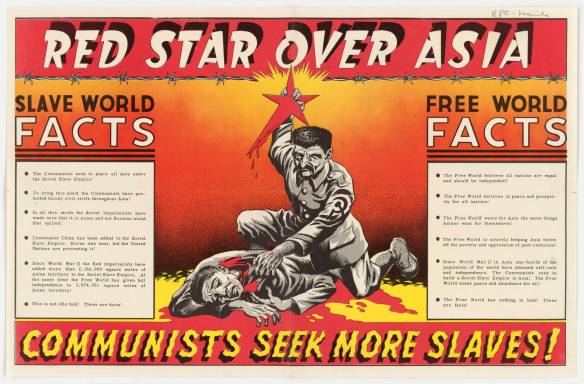
Spies, Lies and War Propaganda: The Making of Another Conspiracy Theory

By Timothy Alexander Guzman

Source: Silent Crow News

What is insane is how Western governments and the mainstream media (MSM) is that they can tell you that they have the proof that their enemies committed an act of war, or how they interfere in the affairs of other countries but cannot release the evidence due to national security issues or they just outright know in their gut instincts that their enemies did whatever it is that they did, and then they expect us to believe them. While we in the alternative media can show you mountains of evidence including government documents, photos, quotes from world leaders, reports and analysis from respected journalists and researchers from all over the world who represent the facts, yet we are called conspiracy theorists by the same Western governments and the MSM.

Russia is now accused of poisoning another former Russian spy, this time it’s Sergei Skripal (the late Alexander Litvinenko was the last victim) and his daughter Yulia who was living in the Salisbury section of the UK with a military-grade nerve agent produced by..drum roll, please… Russia! How convenient, especially during a time when the U.S. and its allies accuse the Syrian government of launching chemical attacks on civilians, but in reality (which has been proven time and time again) it was the US-backed terrorists or who they call the “rebel forces” who launched the chemical attacks. It’s amazing how Western governments and the MSM constantly link their adversaries to Weapons of Mass Destruction (WMDs). For example, The New York Times published an article on February 27th titled ‘U.N. Links North Korea to Syria’s Chemical Weapons Program’ suggesting that North Korea shipped supplies to Syria to produce chemical weapons due to an investigation by United Nations:

North Korea has been shipping supplies to the Syrian government that could be used in the production of chemical weapons, United Nations experts contend.

The evidence of a North Korean connection comes as the United States and other countries have accused the Syrian government of using chemical weapons on civilians, including recent attacks on civilians in the Damascus suburb of eastern Ghouta using what appears to have been chlorine gas.

The supplies from North Korea include acid-resistant tiles, valves and thermometers, according to a report by United Nations investigators. North Korean missile technicians have also been spotted working at known chemical weapons and missile facilities inside Syria, according to the report, which was written by a panel of experts who looked at North Korea’s compliance with United Nations sanctions

O.K. So now North Korea is shipping supplies to help the Syrian government of Bashar al-Assad to produce chemical weapons? What is interesting about the accusation is that The New York Times reviewed the report, but would not release it themselves. The authors and other members of the UN security council would also not comment on the report:

The possible chemical weapons components were part of at least 40 previously unreported shipments by North Korea to Syria between 2012 and 2017 of prohibited ballistic missile parts and materials that could be used for both military and civilian purposes, according to the report, which has not been publicly released but which was reviewed by The New York Times.

Neither the report’s authors nor members of the United Nations Security Council who have seen it would comment, and neither would the United States’ mission to the international agency. It is unclear when, or even whether, the report will be released

Of course they are not even sure if they would release the report to the public because it would most likely be criticized by the alternative media who would view it as a propaganda plot to demonize Kim Jung-Un. We can call The New York Times article for what it really is, and that is fake news. North Korea would not get involved in a Middle East conflict because it would not be in their interest, politically or economically. It would give the US and South Korean governments more reasons to threaten North Korea with a military strike if something like that was true, but it’s not. Kim Jung -Un does not have a relationship with ISIS and other terrorist groups who have been launching chemical attacks throughout Syria since the start of the conflict, the U.S. and its allies do. So it’s ludicrous accusation.

On March 12th, British Prime Minister Theresa May spoke at the House of Commons about the Skripal incident in Salisbury, UK:

It is now clear that Mr Skripal and his daughter were poisoned with a military-grade nerve agent of a type developed by Russia. This is part of a group of nerve agents known as ‘Novichok’.

Based on the positive identification of this chemical agent by world-leading experts at the Defence Science and Technology Laboratory at Porton Down; our knowledge that Russia has previously produced this agent and would still be capable of doing so; Russia’s record of conducting state-sponsored assassinations; and our assessment that Russia views some defectors as legitimate targets for assassinations; the Government has concluded that it is highly likely that Russia was responsible for the act against Sergei and Yulia Skripal

The case of Sergei Skripal is becoming another farfetched conspiracy theory just like the Alexander Litvinenko case. If you remember Alexander Litvinenko who allegedly drank a cup tea at a business meeting with two other Russians (who were charged with his murder) which contained a fatal dose of Polonium-210. The editorial director of Antiwar.com, Justin Raimondo wrote an article on the assassination of Alexander Litvinenko titled ‘The Craziest Conspiracy Theory of Them All: The British government’s report on the death of Alexander Litvinenko reads like a bad thriller’:

To those of us who grew up during the cold war years, it’s just like old times again: Russian plots to subvert the West and poison our precious bodily fluids are apparently everywhere. Speaking of poisoning plots: the latest Russkie conspiracy – and the most imaginative by far – was the alleged assassination by poisoning of Alexander Litvinenko , a former agent of the Russian intelligence services who fled to the West to become a professional anti-Russian propagandist and conspiracy theorist with a talent for the improbable. According to his fantastic worldview, the many terrorist attacks that have occurred in Russia have all been committed by … Vladimir Putin. Aside from championing the Chechen Islamo-terrorists who actually committed these crimes, Litvinenko’s stock-in-trade was an elaborate conspiracy theory in which he regularly accused Putin of blowing up Russian apartment buildings and murdering schoolchildren and then diverting attention from his own nefarious plots by blaming those lovable Chechens. Not very believable – unless one is predisposed to believe anything, so long as it casts discredit on those satanic Russians.

The conspiracy theory promulgated by the British government – and now memorialized in this official report – surpasses anything the deceased fantasist might have come up with. According to the Brits, Litvinenko was poisoned on British soil whilst imbibing a cup of tea spiked with a massive dose of radioactive polonium-210 – and, since Russia is a prime source of this rare substance, and since the Russians were supposedly out to get Litvinenko, the FSB – successor to the KGB – is named as the “probable” culprit.

Looking at the report, one has to conclude that they don’t make propaganda the way they used to: the certitude of, say, a J. Edgar Hoover or a Robert Welch has given way to the tepid ambiguity of Lord Robert Owen, the author of this report, whose verdict of “probably” merely underscores the paucity of what passes for evidence in this case

Raimondo made his case with a common-sense approach to the conspiracy theory:

To begin with, if the Russians wanted to off Litvinenko, why would they poison him with a substance that left a radioactive trail traceable from Germany to Heathrow airport – and, in the process, contaminating scores of hotel rooms, offices, planes, restaurants, and homes? Why not just put a bullet through his head? It makes no sense.

But then conspiracy theories don’t have to make sense: they just have to take certain assumptions all the way to their implausible conclusions. If one starts with the premise that Putin and the Russians are a Satanic force capable of anything, and incompetent to boot, then it’s all perfectly “logical” – in the Bizarro World, at any rate.

The idea that Litvinenko was a dangerous opponent of the Russian government who had to be killed because he posed a credible threat to the existence of the regime is laughable: practically no one inside Russia knew anything about him, and as for his crackpot “truther” theories about how Putin was behind every terrorist attack ever carried out within Russia’s borders – to assert that they had any credence outside of the Western media echo chamber is a joke. So there was no real motive for the FSB to assassinate him, just as there is none for the FBI to go after David Ray Griffin

To assassinate Litvinenko with a dose of radioactive polonium-210 in his cup of tea is an incredibly ridiculous allegation by both the British and American establishment. Another anti-Putin crusader is the Hudson Institute’s own senior fellow, David Satter who wrote ‘The Russian State of Murder Under Putin’ in 2016 and said:

It is now imperative not only for the West but for the future of Russia that the Litvinenko inquiry set a precedent for the objective international review of the cases of political terrorism in Russia. These include the bloody sieges at Moscow’s Dubrovka theater in 2002 and at a school in Beslan in 2004, the assassinations of journalists and opposition leaders and, above all, the deadly 1999 apartment bombings that helped bring Mr. Putin to power.

In the Litvinenko case, the alleged assassins, Andrei Lugovoi and Dmitry Kovtun, were accused by the British inquiry of slipping polonium-210 into Litvinenko’s tea. A radioactive trail was left all over London. Traces of polonium were found in Mr. Lugovoi’s hotel room, at a sushi restaurant where Litvinenko dined with the two men, and on the seat occupied by Mr. Lugovoi on a British Airlines flight from Moscow to London

Satter’s view concerning Putin’s killing machine apparatus that uses chemical weapons to silence its opposition is pure nonsense. There are many ways to murder an individual if they really wanted to, so why would they use ‘Novichok’ a nerve agent that can be traced back to Russia? Novichok was produced in the former Soviet Union and then in Russia until 1993.

So who would benefit from such an attack? Putin himself? not really, it would somehow benefit the Anglo-American establishment by continuing the demonization of the Russian government. Sergei Skripal, was a former Russian military intelligence colonel who was found guilty of passing state secrets to the U.K. and was sentenced to 13 years in prison back in 2006. If Putin really wanted Skripal dead, he would have had him executed while in custody. The Western powers including the U.S., the U.K., Germany and France want to maintain their “International Order” as Prime Minister May had mentioned in a statement she gave last Monday:

“The UK does not stand alone in confronting Russian aggression. In the last 24 hours I have spoken to President (Donald) Trump, Chancellor (Angela) Merkel and President (Emmanuel) Macron. We have agreed to cooperate closely in responding to this barbaric act and to co-ordinate our efforts to stand up for the rules based international order which Russia seeks to undermine”

So Who Could Have Possibly Poisoned Sergei Skripal and his Daughter?

On March 4th, 2018 Sergei Skripal and his daughter Yulia were found unconscious on a public bench by a shopping centre in Salisbury by a doctor and nurse who happened to be passing by (what are the chances that happening?). It was soon discovered by a medical staff at the Salisbury District Hospital that Sergei Skripal and his daughter were poisoned with a nerve agent. They both remain in critical condition. Three police officers investigating the scene were also hospitalized. The poison discovered on the Skripal family was apparently ‘Novichok.’ According to a New York Times report titled ‘In Poisoning of Sergei Skripal, Russian Ex-Spy, U.K. Sees Cold War Echoes’ basically says Russia is the culprit:

With its echoes of stranger-than-fiction plots from the Cold War and earlier episodes from the Putin era, the case threatens to worsen the already tense relations between the West and a Russian government that has annexed Crimea, destabilized eastern Ukraine and propped up the government of Bashar al-Assad in Syria, all while being accused of disrupting elections and sowing discord within Western democracies.

“This is a form of soft war that Russia is now waging against the West,” said Tom Tugendhat, chairman of the Foreign Affairs Committee in the British Parliament. British officials have accused the Kremlin of only one assassination on British soil in recent years, but the Russian government has been suspected of being behind numerous other mysterious deaths in Britain and elsewhere.

In Mr. Litvinenko’s case, the weapon is believed to have been a poisoned teapot later found to contain polonium 210, a radioactive isotope; his death was slow and agonizing

Russia along with several other nations are not following the globalist’s blueprint because they want their sovereignty respected and therefore it is seen by the West as a threat to its World Order. If the Russian agents did poison Sergei Skripal (which is obviously, a false accusation) with a deadly military-grade nerve agent that can spread throughout the Salisbury community and traced back to Russia, then they must be the most idiotic and most incompetent intelligence agency on planet earth. There is no evidence of the Russian government being involved in Mr. Skripal’s poisoning, in fact, it sounds like a false-flag attack by using Mr. Skripal to blame Russia. Any of the Western intelligence agencies including MI6 or the CIA could have obtained the nerve agent or something close to it in order to poison Skripal. It is also most likely that we would never find out who actually committed the crimes against Skripal and Litvinenko, but according to the West, its Russia. The Alexander Litvinenko story told by the British government and the MSM (in this case, BBC News) is like a bad thriller and so does the Sergei Skripal case. Both cases will most likely make it to the big screen in the future since many of films produced by Hollywood is based on propaganda against America’s enemies including Russia (many Hollywood films, especially since the Cold War usually portray Russia as the enemy) and recently, North Korea made it to the big screen with the 2013 film, ‘Olympus Has Fallen’ about a North Korean terrorist organization who takes over the White House (yes, another really bad thriller). Rest assured, the Sergey Skripal case as well as the murder of Alexander Litvinenko will most likely make its way to the big screen someday.

The UK government along with its Western partners are spreading far-fetched conspiracy theories, but the MSM will cover their lies and deceit and tell you that it is the alternative media who needs to be censored because we are the ones who are spreading conspiracy theories and fake news. The American and the British governments accused Saddam Hussein of having “weapons of mass destruction” which as we all know, was not only a lie, but a lie that destroyed Iraq. Sooner or later, the facts of the Sergei Skripal case will show the world who are the liars and the conspiracy theorists really are, and once again, the Anglo-American establishment and its MSM representatives would lose even more credibility. In my opinion, they lost all of their credibility a very long time ago.
Freedom Rider: Vladimir Putin and war propaganda

By Margaret Kimberley

Source: Intrepid Report

Vladimir Putin is blamed for everything that goes awry in Europe and the United States. In the United Kingdom his country was even blamed for bad weather as tabloid headlines screamed about icy Russian winds. The Brexit vote and Donald Trump’s Electoral College victory are said to be the result of Putin’s interference, even though the machinations of American oligarch Robert Mercer are most responsible for both outcomes.

When high level vitriol is shared by the corporate media and the American political duopoly and then repeated ad nauseum it is clear that the target will be subjected to more than mere slander. Such an attack carried out against a foreign leader is proof that the United States is ready for war by other means if not outright military conflict.

Russia has been a target ever since the fall of the Soviet Union in 1991. In its weakened state it was a victim of its own rapacious oligarch class and aside from having a nuclear arsenal was no match for its former rival. Bill Clinton openly dispatched operatives to meddle in the 1996 election and ensured that Boris Yeltsin kept the country ripe for plunder.

But in a supreme irony of history Yeltsin chose Vladimir Putin to succeed him. He took on the worst of the thieves and in so doing made himself an enemy of forces who hoped to pull his country apart. But he was not antagonistic to the United States. Libya might have been saved if Russia had used its United Nations Security Council veto against the no fly zone resolution in 2011. Only when the United States installed a fascist, anti-Russian government in Ukraine did Putin get the message that America should not be accommodated.

Putin stopped going along to get along but the American appetite for conquest is unstoppable. Syria is the place where Russia drew a line in the sand—and successfully, too. But the United States and NATO won’t admit defeat and continue the suffering of the Syrian people.

Now the drama surrounding the poisoning of former Russian spy Sergie Skripal in the U.K. has ensnared the Russian government. It is far-fetched to think that in the midst of an election campaign and the upcoming world soccer cup in Russia that Putin would decide to attack a former double agent he had allowed to go free eight years ago.

Prime Minister Theresa May is like her American counterparts: a liar and a violator of international law. The Organization for the Prohibition of Chemical Weapons (OPCW) has a process for nations to request information from one another and they are given 10 days to do so. Instead, May demanded that Russia prove the unprovable, that it wasn’t responsible, and that it do so in 24 hours. She declared that Russia was “likely” responsible and expelled 23 Russian diplomats from the country.

Labour party opposition leader Jeremy Corbyn was little better. He did say that the government should actually wait for proof of Russian involvement in Skripal’s poisoning but he also indulged in an anti-Russian screed as he vented against authoritarianism, oligarchs and human rights abuses. Saudi crown prince Mohammed bin Salman had just received a warm welcome in London from May, the royal family and the press. No one said a word about his genocide against the people of Yemen. But facts won’t get in the way of blatant war propaganda.

Putin has created a kind of madness on both sides of the ocean as politicians look for ever more bizarre ways to engage in Russophobia which is intended to damage his nation. Donald Trump’s appointment of Rex Tillerson as secretary of state was said to be influenced by Putin. Of course, everyone conveniently forgot that trope and now Tillerson’s dismissal is said to have been carried out on Putin’s orders.

Putin is even accused of being a racist. The Christopher Steele dossier, a creation of the Democratic Party and the ill-fated Hillary Clinton campaign, alleges that some on Putin’s staff used the “N-word ” in reference to Barack Obama. Any assertions in this dubious document are impossible to prove and it is unlikely that Steele’s second hand Russian sources reached into the Kremlin inner circle. This particular assertion comes from Michael Isikoff, a Steele partner in crime who dutifully leaked information which led to the granting of a FISA warrant and the Mueller investigation of Trump.

The creation of an all purpose villain is meant to cover up Democratic Party electoral failures, end the Trump presidency, and of course make the case for the American exceptionalism and interventions. Regime change, proxy wars, and imperial conquest are all very much a part of the anti-Putin hysteria.

But the Russophobes are playing a very dangerous game. The story of the poisoned man does not take place in a vacuum. While the public are distracted by a tall tale of Putin killing any Russian whoever died outside of that country, the very dangerous Syrian war continues. Lies about the Russian government should be taken very seriously. They are war propaganda and they are meant to get public support for military action against Russia and its allies.

The Skripal story is so murky that it will be difficult to ever determine culpability. But years of lies have had the desired effect. The public will believe anything about Putin and the Russian government no matter how ridiculous the charge. The American media are finally forced to report on the story of Robert Mercer’s Cambridge Analytica and the role it played in getting Trump an Electoral College victory. But the implications of a right-wing oligarch tipping the scales in our so-called democracy are ignored. Instead the New York Times reported on the Russian ancestry of a Cambridge Analytica staffer in a desperate effort to continue the dangerous charade.

Fifteen years ago this same government proclaimed that Iraq was the great danger and used the charge to make the case for war. Little has changed since. America excels at warfare and that is always preceded by propaganda.

In announcing new weapon developments Putin declared that mutually assured destruction (MAD) is not a thing of the past. If the U.S. and its allies were sane this would be a positive development. But they are not sane and every move and every charge brings the world closer to the precipice. The United States, not Russia, poses the greatest threat to peace and life on the planet. That must never be forgotten.


Margaret Kimberley’s Freedom Rider column appears weekly in BAR, and is widely reprinted elsewhere. She maintains a frequently updated blog as well as at freedomrider.blogspot.com. Ms. Kimberley lives in New York City, and can be reached via e-Mail at Margaret.Kimberley(at)BlackAgendaReport.com.

If You Come to a Fork in the Road, Take It

By James Howard Kunstler

Source: Kunstler.com

Various readers, fans, blog commenters, Facebook trolls, and auditors twanged on me all last week about my continuing interest in the RussiaRussiaRussia hysteria, though there is no particular consensus of complaint among them — except for a general “shut up, already” motif. For the record, I’m far more interested in the hysteria itself than the Russia-meddled-in the-election case, which I consider to be hardly any case at all beyond 13 Russian Facebook trolls.

The hysteria, on the other hand, ought to be a matter of grave concern, because it appears more and more to have been engineered by America’s own intel community, its handmaidens in the Dept of Justice, and the twilight’s last gleamings of the Obama White House, and now it has shoved this country in the direction of war at a time when civilian authority over the US military looks sketchy at best. This country faces manifold other problems that are certain to reduce the national standard of living and disrupt the operations of an excessively complex and dishonest economy, and the last thing America needs is a national war-dance over trumped-up grievances with Russia.

The RussiaRussiaRussia narrative has unspooled since Christmas and is blowing back badly through the FBI, now with the firing (for cause) of Deputy Director Andrew McCabe hours short of his official retirement (and inches from the golden ring of his pension). He was axed on the recommendation of his own colleagues in the FBI’s Office of Professional Responsibility, and they may have been influenced by the as-yet-unreleased report of the FBI Inspector General, Michael Horowitz, due out shortly.

The record of misbehavior and “collusion” between the highest ranks of the FBI, the Democratic Party, the Clinton campaign, several top political law firms, and a shady cast of international blackmail peddlars is a six-lane Beltway-scale evidence trail compared to the muddy mule track of Trump “collusion” with Russia. It will be amazing if a big wad of criminal cases are not dealt out of it, even as The New York Times sticks its fingers in its ears and goes, “La-la-la-la-la….”

It now appears that Mr. McCabe’s statements post-firing tend to incriminate his former boss, FBI Director James Comey — who is about to embark, embarrassingly perhaps, on a tour for his self-exculpating book, A Higher Loyalty: Truth, Lies, and Leadership.

A great aura of sanctimony surrounds the FBI these days. Even the news pundits seem to have forgotten the long, twisted reign of J. Edgar Hoover (1924 – 1972), a dangerous rogue who excelled at political blackmail. And why, these days, would any sane American take pronouncements from the CIA and NSA at face value? What seems to have gone on in the RussiaRussiaRussia matter is that various parts of the executive branch in the last months under Mr. Obama gave each other tacit permission, wink-wink, to do anything necessary to stuff HRC into the White House and, failing that, to derail her opponent, the Golden Golem of Greatness.

The obvious lesson in all this huggermugger is that the ends don’t justify the means. I suspect there are basically two routes through this mess. One is that the misdeeds of FBI officers, Department of Justice lawyers, and Intel agency executives get adjudicated by normal means, namely, grand juries and courts. That would have the salutary effect of cleansing government agencies and shoring up what’s left of their credibility at a time when faith in institutions hangs in the balance.

The second route would be for the authorities to ignore any formal response to an evermore self-evident trail of crimes, and to allow all that political energy to be funneled into manufactured hysteria and eventually a phony provocation of war with Russia. Personally, I’d rather see the US government clean house than blow up the world over an engineered hallucination.

The most perilous time in world history got worse

By Stephen Lendman

Source: Intrepid Report

Events ongoing should terrify everyone—things likely heading for greater war than already.

Most Americans, Brits, and others in NATO countries are unaware of the danger posed by hardline Western extremists in charge of policymaking—notably in Washington, London and Israel, the Jewish state an alliance Mediterranean Dialogue member.

Businessman Trump was co-opted to be a warrior president—neocon generals in charge of geopolitical policies, their agenda hardened by Mike Pompeo replacing Rex Tillerson at State, along with torturer-in-chief Gina Haspel appointed new CIA director.

An unholy alliance of US extremist policymakers allied with likeminded ones in partner countries risks war winds reaching gale force, a terrifying prospect if confrontation with Russia, Iran or North Korea occurs—the possibility increased by recent events.

Earlier this week, US Defense Secretary Mattis and UN envoy Haley threatened Russia and Damascus.

Russia vowed to retaliate against US attacks on Syrian forces in East Ghouta or elsewhere endangering its personnel in the country.

Anti-Russia hysteria in Britain over the Sergey Skripal poisoning affair, most certainly Moscow had nothing to do with, soured bilateral relations more than already.

In response to British PM Theresa May demanding swift Russian answers to questions posed about the incident, Russian Foreign Ministry spokeswoman (speaking for her government) replied sharply saying, “One does not give 24 hours notice to a nuclear power,” adding the “Skripal poisoning was not an incident but a colossal international provocation,” addin, not a “single international legal mechanism [exists] to probe the Skripal case.”

Russia’s embassy in London said “Moscow will not respond to London’s ultimatum until it receives samples of the chemical substance to which the UK investigators are referring.”

“Britain must comply with the Chemical Weapons Convention which stipulates joint investigation into the incident, for which Moscow is ready.”

“Without that, there can be no sense in any statements from London. The incident appears to be yet another crooked attempt by the UK authorities to discredit Russia.”

“Any threat to take ‘punitive’ measures against Russia will meet with a response. The British side should be aware of that.”

“Not only is Russia groundlessly and provocatively accused of the Salisbury incident, but apparently, plans are being developed in the UK to strike Russia with cyber weapons.”

“Judging by the statements of the prime minister, such a decision can be taken at tomorrow’s meeting of the National Security Council.”

Given the gravity of the situation, the above comments by Russian diplomats were uncharacteristically strong.

Sergey Lavrov warned Washington that “[i]f a new [US] strike . . . takes place [against Syrian forces], the consequences will be very serious,” adding, “I simply don’t have any normal terms left to describe all this.”

What’s coming remains to be seen. Hostile rhetoric from US and UK officials, along with hawkish extremists Pompeo in charge at State and Haspel appointed new CIA chief likely signal more war, not less.

What’s ongoing assures no possibility of improving dismal bilateral relations with Russia, China, Iran and other sovereign independent countries.

Talks with North Korea could either be scuttled or confrontational if they take place.

Given very disturbing ongoing events, the perilous state of world conditions reached a new low.

Be scared about what may follow—be very scared!


Stephen Lendman lives in Chicago. He can be reached at lendmanstephen@sbcglobal.net. His new book as editor and contributor is titled “Flashpoint in Ukraine: How the US Drive for Hegemony Risks WW III.” Listen to cutting-edge discussions with distinguished guests on the Progressive Radio News Hour on the Progressive Radio Network.

America’s Enemies, Who’s On the List?

Prospects and Perspectives

By Prof. James Petras

Source: Global Research

For almost 2 decades, the US pursued a list of ‘enemy countries’ to confront, attack, weaken and overthrow. 

This imperial quest to overthrow ‘enemy countries’ operated at various levels of intensity, depending on two considerations:  the level of priority and the degree of vulnerability for a ‘regime change’ operation.

The criteria for determining an ‘enemy country’ and its place on the list of priority targets in the US quest for greater global dominance, as well as its vulnerability to a ‘successfully’ regime change will be the focus of this essay.

We will conclude by discussing the realistic perspectives of future imperial options.

Prioritizing US Adversaries

Imperial strategists consider military, economic and political criteria in identifying high priority adversaries.

The following are high on the US ‘enemy list’:

1) Russia, because of its military power, is a nuclear counterweight to US global domination.  It has a huge, well-equipped armed force with a European, Asian and Middle East presence.  Its global oil and gas resources shield it from US economic blackmail and its growing geo-political alliances limit US expansion.

2) China, because of its global economic power and the growing scope of its trade, investment and technological networks.  China’s growing defensive military capability, particularly with regard to protecting its interests in the South China Sea serve to counter US domination in Asia.

3) North Korea, because of its nuclear and ballistic missile capability, its fierce independent foreign policies and its strategic geo-political location, is seen as a threat to the US military bases in Asia and Washington’s regional allies and proxies.

4) Venezuela, because of its oil resources and socio-political policies, challenge the US centered neo-liberal model in Latin America.

5) Iran, because of its oil resources, political independence and geo-political alliances in the Middle East, challenge US, Israeli and Saudi Arabia domination of the region and present an independent alternative.

6) Syria, because of its strategic position in the Middle East, its secular nationalist ruling party and its alliances with Iran, Palestine, Iraq and Russia, is a counterweight to US-Israeli plans to balkanize the Middle East into warring ethno-tribal states.

US  Middle-level Adversaries :

1)  Cuba, because of its independent foreign policies and its alternative socio-economic system stands in contrast to the US-centered neo-liberal regimes in the Caribbean, Central and South America.

2) Lebanon, because of its strategic location on the Mediterranean and the coalition government’s power sharing arrangement with the political party, Hezbollah, which is increasingly influential in Lebanese civil society in part because of its militia’s proven capacity to protect Lebanese national sovereignty by expelling the invading Israeli army and helping to defeat the ISIS/al Queda mercenaries in neighboring Syria.

3) Yemen, because of its independent, nationalist Houthi-led movement opposed to the Saudi-imposed puppet government as well as its relations with Iran.

Low Level Adversaries

1) Bolivia, because of its independent foreign policy, support for the Chavista government in Venezuela and advocacy of a mixed economy;  mining wealth and  defense of indigenous people’s territorial claims.

2) Nicaragua, because of its independent foreign policy and criticism of US aggression toward Cuba and Venezuela.

US hostility to high priority adversaries is expressed through economic sanctions military encirclement, provocations and intense propaganda wars toward North Korea, Russia, Venezuela, Iran and Syria.

Because of China’s powerful global market linkages, the US has applied few sanctions.  Instead, the US relies on military encirclement, separatist provocations and intense hostile propaganda when dealing with China.

Priority Adversaries, Low Vulnerability and Unreal Expectations

With the exception of Venezuela, Washington’s ‘high priority targets’ have limited strategic vulnerabilities. Venezuela is the most vulnerable because of its high dependence on oil revenues with its major refineries located in the US, and its high levels of indebtedness, verging on default.   In addition, there are the domestic opposition groups, all acting as US clients and Caracas’ growing isolation within Latin America due to orchestrated hostility by important US clients, Argentina, Brazil, Colombia and Mexico.

Iran is far less vulnerable: It is a strong strategic regional military power linked to neighboring countries and similar religious-nationalist movements.  Despite its dependence on oil exports, Iran has developed alternative markets, like China, free from US blackmail and is relatively safe from US or EU initiated creditor attacks.

North Korea, despite the crippling economic sanctions imposed on its regime and civilian population, has ‘the bomb’ as a deterrent to a US military attack and has shown no reluctance to defend itself.  Unlike Venezuela, neither Iran nor North Korea face significant internal attacks from US-funded or armed domestic opposition.

Russia has full military capacity – nuclear weapons, ICBM and a huge, well-trained armed force – to deter any direct US military threat.  Moscow is politically vulnerable to US-backed propaganda, opposition political parties and Western-funded NGO’s.  Russian oligarch-billionaires, linked to London and Wall Street, exercise some pressure against independent economic initiatives.

To a limited degree, US sanctions exploited Russia’s earlier dependence on Western markets, butsince the imposition of draconian sanctions by the Obama regime, Moscow has effectively counteredWashington’s offensive by diversifying its markets to Asia and strengthening domestic self-reliance in its agriculture, industry and high technology.

China has a world-class economy and is on course to become the world’s economic leader.  Feeble threats to ‘sanction’ China have merely exposed Washington’s weakness rather intimidating Beijing.  China has countered US military provocations and threats by expanding its economic market power, increasing its strategic military capacity and shedding dependence on the dollar.

Washington’s high priority targets are not vulnerable to frontal attack: They retain or are increasing their domestic cohesion and economic networks, while upgrading their military capacity to impose completely unacceptable costs on the US for any direct assault.

As a result, the US leaders are forced to rely on incremental, peripheral and proxy attacks with limited results against its high priority adversaries.

Washington will tighten sanctions on North Korea and Venezuela, with dubious prospects of success in the former and a possible pyrrhic victory in the case of Caracas. Iran and Russia can easily overcome proxy interventions.  US allies, like Saudi Arabia and Israel, can badger, propagandize and rail the Persians, but their fears that an out-and-out war against Iran, could quickly destroy Riyadh and Tel Aviv forces them to work in tandem to induce the corrupt US political establishment to push for war over the objections of a war-weary US military and population. Saudi and Israelis can bomb and starve the populations of Yemen and Gaza, which lack any capacity to reply in kind, but Teheran is another matter.

The politicians and propagandists in Washington can blather about Russia’s interference in the US’s corrupt electoral theater and scuttle moves to improve diplomatic ties, but they cannot counter Russia’s growing influence in the Middle East and its expanding trade with Asia, especially China.

In summary, at the global level, the US ‘priority’ targets are unattainable and invulnerable.  In the midst of the on-going inter-elite dogfight within the US, it may be too much to hope for the emergence of any rational policymakers in Washington who could rethink strategic priorities and calibrate policies of mutual accommodation to fit in with global realities.

Medium and Low Priorities, Vulnerabilities and Expectations

Washington can intervene and perhaps inflict severe damage on middle and low priority countries.  However, there are several drawbacks to a full-scale attack.

Yemen, Cuba, Lebanon, Bolivia and Syria are not nations capable of shaping global political and economic alignments.  The most the US can secure in these vulnerable countries are destructive regime changes with massive loss of life, infrastructure and millions of desperate refugees . . . but at great political cost, with prolonged instability and with severe economic losses.

Yemen

The US can push for a total Saudi Royal victory over the starving, cholera-stricken people of Yemen.  But who benefits?  Saudi Arabia is in the midst of a palace upheaval and has no ability to exercise hegemony, despite hundreds of billions of  dollars of US/NATO arms, trainers and bases.  Colonial occupations are costly and yield few, if any, economic benefits, especially from a poor, geographically isolated devastated nation like Yemen.

Cuba

Cuba has a powerful highly professional military backed by a million-member militia.  They are capable of prolonged resistance and can count on international support.  A US invasion of Cuba would require a prolonged occupation and heavy losses.  Decades of economic sanctions haven’t worked and their re-imposition by Trump have not affected the key tourist growth sectors.

President Trump’s ‘symbolic hostility’ does not cut any ice with the major US agro-business groups, which saw Cuba as a market. Over half of the so-called ‘overseas Cubans’ now oppose direct US intervention.

US-funded NGOs can provide some marginal propaganda points but they cannot reverse popular support for Cuba’s mixed ‘socialized’ economy, its excellent public education and health care and its independent foreign policy.

Lebanon

A joint US-Saudi economic blockade and Israeli bombs can destabilize Lebanon.  However, a full-scale prolonged Israeli invasion will cost Jewish lives and foment domestic unrest.  Hezbollah has missiles to counter Israeli bombs.  The Saudi economic blockade will radicalize Lebanese nationalists, especially among the Shia and the Christian populations.  The Washington’s ‘invasion’ of Libya, which did not lose a single US soldier, demonstrates that destructive invasions result in long-term, continent-wide chaos.

A US-Israeli-Saudi war would totally destroy Lebanon but it will destabilize the region and exacerbate conflicts in neighboring countries – Syria, Iran and possibly Iraq.  And Europe will be flooded with millions more desperate refugees.

Syria

The US-Saudi proxy war in Syria suffered serious defeats and the loss of political assets.  Russia gained influence, bases and allies.  Syria retained its sovereignty and forged a battle-hardened national armed force.  Washington can sanction Syria, grab some bases in a few phony ‘Kurdish enclaves’ but it will not advance beyond a stalemate and will be widely viewed as an occupying invader.

Syria is vulnerable and continues to be a middle-range target on the US enemy list but it offers few prospects of advancing US imperial power, beyond some limited ties with an unstable Kurd enclave, susceptible to internecine warfare, and risking major Turkish retaliation.

Bolivia and Nicaragua

Bolivia and Nicaragua are minor irritants on the US enemy list. US regional policymakers recognize that neither country exercises global or even regional power.  Moreover, both regimes rejected radical politics in practice and co-exist with powerful and influential local oligarchs and international MNC’s linked to the US.

Their foreign policy critiques, which are mostly for domestic consumption, are neutralized by the near total US influence in the OAS and the major neo-liberal regimes in Latin America.  It appears that the US will accommodate these marginalized rhetorical adversaries rather than risk provoking any revival of radical nationalist or socialist mass movements erupting in La Paz or Managua.

Conclusion

A brief examination of Washington’s ‘list of enemies’ reveals that the limited chances of success even among vulnerable targets.  Clearly, in this evolving world power configuration, US money and markets will not alter the power equation.

US allies, like Saudi Arabia, spend enormous amounts of money attacking a devastated nation, but they destroy markets while losing wars.  Powerful adversaries, like China, Russia and Iran, are not vulnerable and offer the Pentagon few prospects of military conquest in the foreseeable future.

Sanctions, or economic wars have failed to subdue adversaries in North Korea, Russia, Cuba and Iran.  The ‘enemy list’ has cost the US prestige, money and markets – a very peculiar imperialist balance sheet.  Russia now exceeds the US in wheat production and exports.  Gone are the days when US agro-exports dominated world trade including trade with Moscow.

Enemy lists are easy to compose, but effective policies are difficult to implement against rivals with dynamic economies and powerful military preparedness.

The US would regain some of its credibility if it operated within the contexts of global realities and pursued a win-win agenda instead of remaining a consistent loser in a zero-sum game.

Rational leaders could negotiate reciprocal trade agreements with China, which would develop high tech, finance and agro-commercial ties with manufacturers and services.  Rational leaders could develop joint Middle East economic and peace agreements, recognizing the reality of a Russian-Iranian-Lebanese Hezbollah and Syrian alliance.

As it stands, Washington’s ‘enemy list’ continues to be composed and imposed by its own irrational leaders, pro-Israel maniacs and Russophobes in the Democratic Party – with no acknowledgement of current realities.

For Americans, the list of domestic enemies is long and well known, what we lack is a civilian political leadership to replace these serial mis-leaders.

On Track for Extinction: Can Humanity Survive?

By Robert J. Burrowes

Anyone reading the scientific literature (or the progressive news outlets that truthfully report this literature) knows that homo sapiens sapiens is on the fast track to extinction, most likely some time between 2025 and 2040.

For a taste of the evidence in this regard focusing on the climate, see ‘Climate Collapse and Near Term Human Extinction’, ‘What They Won’t Tell You About Climate Catastrophe’, ‘Release of Arctic Methane “May Be Apocalyptic,” Study Warns’ and ‘7,000 underground [methane] gas bubbles poised to “explode” in Arctic’.

Unfortunately, of course, the climate is not the only imminent threat to human survival. With an insane leadership in the White House in the United States – see ‘Resisting Donald Trump’s Violence Strategically’ – we are faced with the prospect of nuclear war. And even if the climate and nuclear threats to our survival are removed, there is still a substantial range of environmental threats – including rainforest destruction, the ongoing dumping of Fukushima radiation into the Pacific Ocean, extensive contamination from military violence… – that need to be addressed too, given the synergistic impacts of these multiple and interrelated threats.

Can these extinction-threatening problems be effectively addressed?

Well the reality is that most (but not all) of them can be tackled effectively if we are courageous enough to make powerful personal and organizational decisions and then implement them. But we are not even close to doing that yet. And time is obviously running out fast.

Given the evidence, scientific and otherwise, documenting the cause and nature of many of these problems and what is required to fix them, why aren’t these strategies to address the problems implemented?

At the political and economic level, it is usually explained structurally – for example, as an outcome of capitalism, patriarchy and/or the states-system – or, more simply, as an outcome of the powerful vested interests that control governments and the corporate imperative to make profits despite exacerbating the current perilous state of the Earth’s biosphere and its many exploited populations (human and otherwise) by doing so.

But the reality is that these political and economic explanations mask the deeper psychological drivers that generate and maintain these dysfunctional structures and behaviours.

Let me explain why and how this happens using the climate catastrophe to illustrate the process.

While scientific concern about the increase in carbon dioxide in the Earth’s atmosphere had been raised more than a century ago – see ‘The Discovery of Global Warming’ – it wasn’t until the 1980s that this concern started to gain significant traction in public awareness. And despite ongoing agitation by some scientists as well as climate and environment groups, corporate-funded climate deniers were able to stall widespread recognition of, and the start of serious official action on, the climate catastrophe for more than two more decades.

However, as the truth of the climate catastrophe was finally being accepted by most people and the climate deniers were finally forced into full-scale retreat on the issue of whether or not the climate catastrophe was, in fact, so serious that it threatened human extinction, the climate deniers implemented their back-up strategy: they used their corporate media to persuade people that action wasn’t necessary ‘until the end of the [21st] century’ and to exaggerate the argument about the ‘acceptable’ increase above the pre-industrial norm – 2 degrees? 3 degrees? 1.5 degrees? – to obscure the truth that 0.5 degrees was, in fact, the climate science consensus back in 2007.

But, you might ask: ‘Why would anyone prefer to ignore the evidence, given the extinction-threatening nature of this problem?’

Or, to put the question more fully: ‘Why would anyone – whether an “ordinary” worker, academic, lawyer, doctor, businessperson, corporate executive, government leader or anyone else – prefer to live in delusion and believe the mainstream narrative about “the end of the century” (or 1.5 degrees) rather than simply consider the evidence and respond powerfully to it?’

And what is so unattractive about the truth that so many people run from it rather than embrace it?

Obviously, these questions go to the heart of the human (psychological) condition so let me explain why most humans now live in a delusional state whether in relation to the climate, environment issues generally, the ongoing wars and other military violence, the highly exploitative global economy or anything else.

People do not choose to live in delusion nor do they choose their delusion consciously. A delusion is generated by a person’s unconscious mind; that is, the part of their own mind of which the individual is normally unaware. So why does a person’s unconscious mind generate a delusion? What is the purpose of it?

A person’s unconscious mind generates a delusion when the individual is simply too terrified to contemplate and grapple with reality. Instead, the person unconsciously generates a delusion and then lives in accord with that delusion for the (obvious) reason that the delusion does not frighten them.

This unconscious delusional state is the fundamental outcome of the socialization, which I call ‘terrorization’, of the typical child during their childhood.

Endlessly and violently coerced (by a variety of threatened and actual punishments) to obey the will of parents, teachers and religious figures in denial of their own self-will, while simultaneously denied the opportunity to feel the fear, anger, sadness and other feelings that this violence causes, the child has no choice but to suppress their awareness of how they feel and the reality that caused these feelings. As a result, this leaves virtually all children feeling terrified, full of self-hatred and powerless. For brief explanations of how this happens, see ‘Understanding Self-Hatred in World Affairs’ and ‘Why Are Most Human Beings So Powerless?’

However, and this point is important, each of these feelings is extraordinarily unpleasant to feel consciously and the child never gets the listening they need to focus on feeling them. See ‘Nisteling: The Art of Deep Listening’.

As a result, these feelings are suppressed below conscious awareness and this fear, self-hatred and powerlessness become the primary but unconscious psychological drivers of their behaviour and, significantly, results in them participating mindlessly in the widespread ‘socially acceptable’ delusions generated by elites and endlessly promulgated through elite channels such as education systems, the corporate media and entertainment industries.

Hence, as a result of being terrorized during childhood, delusion is the most common state of human individuals, irrespective of their role in society. For a full explanation of why this happens, see ‘Why Violence?’ and ‘Fearless Psychology and Fearful Psychology: Principles and Practice’.

And, as one part of their delusional state, most people must engage in the denial of reality whenever reality (unconsciously) frightens them (or threatens to bring their unconscious self-hatred or powerlessness into their awareness). See ‘The Psychology of Denial’. This, of course, means that they are frightened to take action in response to reality but also deny it is even necessary.

So what can we do about all of this? Well, as always, I would tackle the problem at various levels.

If you are one of those rare people who prefers to research the evidence and to act intelligently and powerfully in response to the truth that emerges from this evidence, I encourage you to do so. One option you have if you find the evidence of near-term human extinction compelling in light of the lacklustre official responses so far, is to join those participating in ‘The Flame Tree Project to Save Life on Earth’.

Obviously, tokenism on your part – such as rejecting plastic bags or collecting rubbish from public places – is not enough in the face of the profound changes needed.

Of course, if you are self-aware enough to know that you are inclined to avoid unpleasant realities and to take the action that this requires, then perhaps you could tackle this problem at its source by ‘Putting Feelings First’.

If you want intelligent, compassionate and powerful children who do not grow up living in delusion and denial, consider making ‘My Promise to Children’.

If you want to campaign on the climate, war, rainforest destruction or any other issue that brings us closer to extinction, consider developing a comprehensive nonviolent strategy to do so. See Nonviolent Campaign Strategy.

And if you want to participate in the worldwide effort to end violence in all of its manifestations, you are welcome to consider signing the online pledge of ‘The People’s Charter to Create a Nonviolent World’.

In summary, the primary threat faced by humanity is not the synergistic multitude of complex social, political, economic and technological forces that are precipitating our rush to extinction.

The fundamental threat to our survival is our psychological incapacity (particularly because of our fear, self-hatred and powerlessness) to perceive reality and respond powerfully to it by formulating and implementing appropriate social, political, economic and technological measures that address our multifaceted crisis systematically.

Unless we include addressing this dysfunctional individual and collective psychological state in our strategy to avert human extinction, we will ultimately fail and extinction will indeed be our fate.


Biodata: Robert J. Burrowes has a lifetime commitment to understanding and ending human violence. He has done extensive research since 1966 in an effort to understand why human beings are violent and has been a nonviolent activist since 1981. He is the author of ‘Why Violence?’ His email address is flametree@riseup.net and his website is here.

Robert J. Burrowes
P.O. Box 68
Daylesford, Victoria 3460
Australia

Email: flametree@riseup.net

Websites:
Nonviolence Charter
Flame Tree Project to Save Life on Earth
‘Why Violence?’
Feelings First
Nonviolent Campaign Strategy
Nonviolent Defense/Liberation Strategy
Anita: Songs of Nonviolence
Robert Burrowes
Global Nonviolence Network

The Military Industrial Complex Strikes Again: War Spending Will Bankrupt America

By John W. Whitehead

Source: The Rutherford Institute

Why throw money at defense when everything is falling down around us? Do we need to spend more money on our military (about $600 billion this year) than the next seven countries combined? Do we need 1.4 million active military personnel and 850,000 reserves when the enemy at the moment — ISIS — numbers in the low tens of thousands? If so, it seems there’s something radically wrong with our strategy. Should 55% of the federal government’s discretionary spending go to the military and only 3% to transportation when the toll in American lives is far greater from failing infrastructure than from terrorism? Does California need nearly as many active military bases (31, according to militarybases.com) as it has UC and state university campuses (33)? And does the state need more active duty military personnel (168,000, according to Governing magazine) than public elementary school teachers (139,000)?”— Steve Lopez, Los Angeles Times

Mark my words, America’s war spending will bankrupt the nation.

For that matter, America’s war spending has already bankrupted the nation to the tune of more than $20 trillion dollars.

Now the Trump Administration is pushing for a $4.4 trillion budget for fiscal year 2019 that would add $7 trillion to the already unsustainable federal deficit in order to sustain America’s military empire abroad and dramatically expand the police state here at home. Trump also wants American taxpayers to cover the cost of building that infamous border wall.

Truly, Trump may turn out to be, as policy analyst Stan Collender warned, “the biggest deficit- and debt-increasing president of all time.”

For those in need of a quick reminder: “A budget deficit is the difference between what the federal government spends and what it takes in. The national debt, also known as the public debt, is the result of the federal government borrowing money to cover years and years of budget deficits.”

Right now, the U.S. government is operating in the negative on every front: it’s spending far more than what it makes (and takes from the American taxpayers) and it is borrowing heavily (from foreign governments and Social Security) to keep the government operating and keep funding its endless wars abroad.

This is how military empires fall and fail: by spreading themselves too thin and spending themselves to death.

It happened in Rome. It’s happening again.

Not content to merely police the globe, in recent decades, America has gradually transformed its homeland into a battlefield with militarized police and weapons better suited to a war zone.

Since taking office, President Trump—much like his predecessors—has marched in lockstep with the military. Now Trump wants $716 billion to expand America’s military empire abroad and billions more to hire cops, build more prisons and wage more profit-driven war-on-drugs/war-on-terrorism/war-on-crime programs that eat away at the Fourth Amendment while failing to make the country any safer.

Even the funds requested for infrastructure will do little to shore up the nation’s crumbling roads, bridges, railways, highways, power grids and dams.

No matter how your break it down, this is not a budget aimed at perfecting the Union, establishing justice, insuring domestic tranquility, providing for the common defense, promoting general welfare, or securing the blessings of liberty for the American people.

No, this is a budget aimed at pandering to the powerful money interests (military, corporate and security) that run the Deep State and hold the government in its clutches.

So much for Trump’s campaign promises to balance the budget and drain the swamps of corruption.

The glaring economic truth is that at the end of the day, it’s the military industrial complex—and not the sick, the elderly or the poor—that is pushing America towards bankruptcy.

As investigative journalist Uri Friedman puts it, for more than 15 years now, the United States has been fighting terrorism with a credit card, “essentially bankrolling the wars with debt, in the form of purchases of U.S. Treasury bonds by U.S.-based entities like pension funds and state and local governments, and by countries like China and Japan.”

The illicit merger of the armaments industry and the Pentagon that President Dwight D. Eisenhower warned us against more than 50 years ago has come to represent perhaps the greatest threat to the nation’s fragile infrastructure today.

Having been co-opted by greedy defense contractors, corrupt politicians and incompetent government officials, America’s expanding military empire is bleeding the country dry at a rate of more than $15 billion a month (or $20 million an hour)—and that’s just what the government spends on foreign wars.

That does not include the cost of maintaining and staffing the 1000-plus U.S. military bases spread around the globe.

Incredibly, although the U.S. constitutes only 5% of the world’s population, America boasts almost 50% of the world’s total military expenditure,  spending more on the military than the next 19 biggest spending nations combined.

In fact, the Pentagon spends more on war than all 50 states combined spend on health, education, welfare, and safety.

War is not cheap.

Although the federal government obscures so much about its defense spending that accurate figures are difficult to procure, we do know that since 2001, the U.S. government has spent more than $1.8 trillion in the wars in Afghanistan and Iraq (that’s $8.3 million per hour).

That doesn’t include wars and military exercises waged around the globe, which are expected to push the total bill upwards of $12 trillion by 2053.

Mind you, these ongoing wars—riddled by corruption, graft and bumbling incompetence—have done little to keep the country safe while enriching the military industrial complex—and private defense contractors—at taxpayer expense.

Just recently, for example, a leading accounting firm concluded that one of the Pentagon’s largest agencies “can’t account for hundreds of millions of dollars’ worth of spending.”

Just consider the fact that it costs American taxpayers $2.1 million per year for each soldier deployed in Afghanistan.

Imagine what you could do with that money if it were spent on domestic needs here at home.

Unfortunately, that’s not going to happen anytime soon, not as long as the money interests in Washington keep calling the shots and profiting from the spoils of war.

War has become a huge money-making venture, and America, with its vast military empire, is one of its best buyers and sellers. Not only does the U.S. have the largest defense budget, it also ranks highest as the world’s largest arms exporter.

The American military-industrial complex has erected an empire unsurpassed in history in its breadth and scope, one dedicated to conducting perpetual warfare throughout the earth.

For example, while erecting a security surveillance state in the U.S., the military-industrial complex has perpetuated a worldwide military empire with American troops stationed in 177 countries (over 70% of the countries worldwide).

In the process, billions have been spent erecting luxury military installations throughout the world.

For example, the U.S. Embassy built in Iraq, dubbed “Fortress Baghdad,” covers 104 acres and boasts a “city within a city” that includes six apartment buildings, a Marine barracks, swimming pool, shops and 15-foot-thick walls. Camp Anaconda in Iraq, like many U.S. military bases scattered across the globe, was structured to resemble a mini-city with pools, fast food restaurants, miniature golf courses and movie theaters.

While most Americans can scarcely afford the cost of heating and cooling their own homes, the American government spends $20 billion annually just to provide air conditioning for military installations in Iraq and Afghanistan.

In essence, what we’re doing is “we’re air conditioning the desert over there in Afghanistan, Iraq, and other places,” noted retired brigadier general Steven Anderson, a former chief logistician for Gen. David Petraeus in Iraq.

Think about that for a minute.

There’s a good reason why “bloated,” “corrupt” and “inefficient” are among the words most commonly applied to the government, especially the Department of Defense and its contractors.

For instance, a study by the Government Accountability Office found that $70 billion worth of cost overruns by the Pentagon were caused by management failures. To put that in perspective, that equates to one and a half times the State Department’s entire $47 billion annual budget.

Fraud is rampant.

A government audit, for example, found that defense contractor Boeing has been massively overcharging taxpayers for mundane parts, resulting in tens of millions of dollars in overspending. As the report noted, the American taxpayer paid:

$71 for a metal pin that should cost just 4 cents; $644.75 for a small gear smaller than a dime that sells for $12.51: more than a 5,100 percent increase in price. $1,678.61 for another tiny part, also smaller than a dime, that could have been bought within DoD for $7.71: a 21,000 percent increase. $71.01 for a straight, thin metal pin that DoD had on hand, unused by the tens of thousands, for 4 cents: an increase of over 177,000 percent.

Price gouging has become an accepted form of corruption within the American military empire.

And if you think gas prices at home can get high, just consider what the American taxpayer is being forced to shell out overseas: once all the expenses of delivering gas to troops in the field are factored in, we’re paying between $18-30 per gallon for gas in Iraq and Afghanistan.

Incredibly, despite reports of corruption, abuse and waste, the mega-corporations behind much of this ineptitude and corruption continue to be awarded military contracts worth billions of dollars.

The rationale may keep changing for why American military forces are in Afghanistan, Iraq and elsewhere, but the one that remains constant is that those who run the government are feeding the appetite of the military industrial complex.

What began in 2001 as part of an alleged effort to root out al Qaeda has turned into a goldmine for the military industrial complex and its army of private contractors.

Just consider: the Pentagon in 2008 spent more money every five seconds in Iraq than the average American earned in a year.

Yet Congress and the White House want taxpayers to accept that the only way to reduce the nation’s ballooning deficit is by cutting “entitlement” programs such as Social Security and Medicare?

As Martin Luther King Jr. recognized, under a military empire, war and its profiteering will always take precedence over the people’s basic human needs.

Simply put, we cannot afford to maintain our over-extended military empire.

Money is the new 800-pound gorilla,” remarked a senior administration official involved in Afghanistan. “It shifts the debate from ‘Is the strategy working?’ to ‘Can we afford this?’ And when you view it that way, the scope of the mission that we have now is far, far less defensible.”

Or as one commentator noted, “Foreclosing the future of our country should not be confused with defending it.”

Inevitably, military empires collapse.

As Cullen Murphy, author of Are We Rome? and editor-at-large of Vanity Fair writes:

A millennium hence America will be hard to recognize. It may not exist as a nation-state in the form it does now—or even exist at all. Will the transitions ahead be gradual and peaceful or abrupt and catastrophic? Will our descendants be living productive lives in a society better than the one we inhabit now? Whatever happens, will valuable aspects of America’s legacy weave through the fabric of civilizations to come? Will historians someday have reason to ask, Did America really fall?

The problem we wrestle with is none other than a distorted American empire, complete with mega-corporations, security-industrial complexes and a burgeoning military. And it has its sights set on absolute domination.

Eventually, however, all military empires fail.

At the height of its power, even the mighty Roman Empire could not stare down a collapsing economy and a burgeoning military. Prolonged periods of war and false economic prosperity largely led to its demise. As historian Chalmers Johnson predicts:

The fate of previous democratic empires suggests that such a conflict is unsustainable and will be resolved in one of two ways. Rome attempted to keep its empire and lost its democracy. Britain chose to remain democratic and in the process let go its empire. Intentionally or not, the people of the United States already are well embarked upon the course of non-democratic empire.

I would suggest that what we have is a confluence of factors and influences that go beyond mere comparisons to Rome.

It is a union of Orwell’s 1984 with its shadowy, totalitarian government—i.e., fascism, the union of government and corporate powers—and a total surveillance state with a military empire extended throughout the world.

As we have seen with the militarizing of the police, the growth of and reliance on militarism as the solution for our problems both domestically and abroad affects the basic principles upon which American society should operate.

We must keep in mind that a military empire will be ruled not by lofty ideals of equality and justice but by the power of the sword. Those in the military are primarily trained to conduct warfare, not preserve the peace.

Here’s the kicker, though: if the American empire falls and the American economy collapses—and with it the last vestiges of our constitutional republic—it will be the government and its trillion-dollar war budgets that are to blame.

Of course, the government has already anticipated this breakdown.

That’s why the government has transformed America into a war zone, turned the nation into a surveillance state, and labelled “we the people” as enemy combatants.

For years now, the government has worked with the military to prepare for widespread civil unrest brought about by “economic collapse, loss of functioning political and legal order, purposeful domestic resistance or insurgency, pervasive public health emergencies, and catastrophic natural and human disasters.”

Having spent more than half a century exporting war to foreign lands, profiting from war, and creating a national economy seemingly dependent on the spoils of war, the war hawks long ago turned their profit-driven appetites on us, bringing home the spoils of war—the military tanks, grenade launchers, Kevlar helmets, assault rifles, gas masks, ammunition, battering rams, night vision binoculars, etc.—and handing them over to local police, thereby turning America into a battlefield.

As I make clear in my book Battlefield America: The War on the American People, this is how the police state wins and “we the people” lose.

More than 50 years ago, President Dwight Eisenhower warned us not to let the profit-driven war machine endanger our liberties or democratic processes.

We failed to heed his warning.

As Eisenhower recognized in a speech given to the American Society of Newspaper Editors, on Apr. 16, 1953, the consequences of allowing the military-industrial complex to wage war, exhaust our resources and dictate our national priorities are beyond grave:

“Every gun that is made, every warship launched, every rocket fired signifies, in the final sense, a theft from those who hunger and are not fed, those who are cold and are not clothed. This world in arms is not spending money alone. It is spending the sweat of its laborers, the genius of its scientists, the hopes of its children. The cost of one modern heavy bomber is this: a modern brick school in more than 30 cities. It is two electric power plants, each serving a town of 60,000 population. It is two fine, fully equipped hospitals. It is some fifty miles of concrete pavement. We pay for a single fighter plane with a half million bushels of wheat. We pay for a single destroyer with new homes that could have housed more than 8,000 people… This is not a way of life at all, in any true sense. Under the cloud of threatening war, it is humanity hanging from a cross of iron.”

Thirteen Russians and a Ham Sandwich

By Charles Hugh Smith

Source: Kunstler.com

Remember that one from 1996? Funny, that was the American mainstream media bragging, after the fact, about our own meddling in another nation’s election.

WASHINGTON — A team of American political strategists who helped [California] Gov. Pete Wilson with his abortive presidential bid earlier this year said this week that they served as Russian President Boris N. Yeltsin’s secret campaign weapon in his comeback win over a Communist challenge.

—The Los Angeles Times, July 9, 1996

The beauty in Robert Mueller’s indictment of thirteen Russian Facebook trolls is that they’ll never face trial, so Mr. Mueller will never have to prove his case. In the new misrule of law made popular by the #Me Too movement, accusations suffice to convict the target of an investigation. Kind of sounds like going medieval to me, but that’s how we roll now in the Land of the Free.

Readers know, of course, that I’m not a Trump supporter, that I regard him as a national embarrassment, but I’m much more disturbed by the mindless hysteria ginned up Washington’s permanent bureaucracy in collusion with half a dozen major newspapers and cable news networks, who have run a psy-ops campaign to shove the country into a war mentality.

The New York Times published a doozy of a lead story on Saturday, the day after the indictments were announced. The headline said: Trump’s Conspicuous Silence Leaves a Struggle Against Russia Without a Leader. Dean Baquet and his editorial board are apparently seeking an American Napoleon who will mount a white horse and take our legions into Moscow to teach these rascals a lesson — or something like that.

I’m surely not the only one to notice how this hysteria is designed to distract the public attention from the documented misconduct among FBI, CIA, NSA, State Department officials and the leaders of the #Resistance itself: the Democratic National Committee, its nominee in the 2016 election, HRC, and Barack Obama’s White House inner circle. You would think that at least some of this mischief would have come to Robert Mueller’s attention, since the paper trail of evidence is as broad and cluttered as the DC Beltway itself. It actually looks like the greatest act of bureaucratic ass-covering inn US history.

Of course, Deputy Attorney General Rod Rosenstein was quick to qualify the announced indictments by saying that Russian trolling on Facebook had no effect on the 2016 election, and that the Trump campaign was not implicated in it. Maybe the indictments were just a table-setter for something more potent to come out of Mueller’s office. But what if it’s not. What if this is all he has to show for a year and a half of the most scrupulous delving into this “narrative?”

Meanwhile, the damage done among America’s former thinking class essentially leaves this polity like the Scarecrow in The Wizard of Oz: without a brain. I doubt they will be satisfied by Mueller’s indictment of the thirteen Russian trolls. Rather, it may tempt them to even more violent hysterics and greater acts of lawlessness. The only thing that will stop this nonsense is Big Trouble in the financial system — which the news media and most of the public are ignoring at their peril. It is coming at us good and hard and it will feel like a two-by-four to nation’s skull when it gets here.