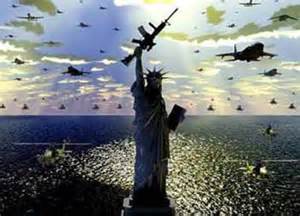
When the Butterfly Flaps Its Wings

credit: Twitter/@caroleenarn

By James Howard Kunstler

Source: Kunstler.com

It remains to be seen what the impact will be from Mother Nature putting the nation’s fourth largest city out-of-business. And for how long? It’s possible that Houston will never entirely recover from Hurricane Harvey. The event may exceed the physical damage that Hurricane Katrina did to New Orleans. It may bankrupt large insurance companies and dramatically raise the risk of doing business anywhere along the Gulf and Atlantic coasts of the USA — or at least erase the perceived guarantee that losses are recoverable. It may even turn out to be the black swan that reveals the hyper-fragility of a US-driven financial system.

Houston also happens to be the center of the US oil industry. Offices can be moved elsewhere, of course, but not so easily the nine major oil refineries that sprawl between Buffalo Bayou over to Beaumont, Port Arthur, and then Lake Charles, Louisiana. Harvey is inching back out to the Gulf where it will inhale more energy over the warm ocean waters and then return inland in the direction of those refineries.

The economic damage could be epic. Much of the supply for the Colonial Pipeline system emanates from the region around Houston, running through Atlanta and clear up to Philadelphia and New York. There could be lines at the gas stations along the eastern seaboard in early September.

The event is converging with the US government running out of money this fall without new authority to borrow more by congress voting to raise the US debt ceiling. Perhaps the emergency of Hurricane Harvey and its costly aftermath will bludgeon congress into quickly raising the debt ceiling. If that doesn’t happen, and the debt ceiling is not raised, the federal government might have to pretend that it can pay for emergency assistance to Texas and Louisiana. That pretense can only go so far before government contractors balk and maybe even walk.

Ordinarily, failure to raise the debt ceiling would lead to a government shut-down, including hurricane recovery operations, unless the president invoked some kind of emergency powers. That would be decisive action, but it could also be the beginning of something that looks like a full-out dictatorship. Powers assumed are often not surrendered when the original emergency is over. And what would the president use for money if a substantial enough number of congresspersons and senators are prompted by their distaste for Mr. Trump to drag out the process of financially re-liquefying the government? (And nevermind even passing a budget.)

Meanwhile, two other major sources of aggravation are waiting off-stage: one is North Korea. Why wouldn’t Kim Jong-un use the opportunity of political disarray in the US to create more headaches for a distracted US government? Never let a crisis go to waste. Another potential irritant is the return of students to American college campuses. Imagine how the campus Antifa forces would react to Mr. Trump assuming emergency powers. It’s easy to foresee an acceleration of violence between the extreme Left and the Extreme right during what is shaping up to look like a major crisis in governing. If the campus Left had any tactical brains, they’d stop marching around in black uniforms and instead organize a mass renunciation of college loan debt.

Behind all this political strife will be wobbling financial markets. The message from the debt ceiling stalemate to the bond market would be that the US can no longer be relied on to pay its debts. Interest rates on US Treasury paper would have to go up as the long-lost concept of risk returned to the bond scene. People and institutions will not be induced to hold bonds unless the yield is recalibrated to the actual risk. Of course, in the mysterious world of bonds (i.e. securitized debt), the price of bonds goes down as interest rates rise. Meaning a lot of current holders of bonds would be hammered if they tried to sell. Rates rising would also spell big trouble for corporations and governments who have to make regular interest payments to bond-holders. A rate rise to as little as 3 percent on US Treasury bonds could spin the country into comprehensive bankruptcy.

How might stock markets and currency markets react to the scenario above? To me it would look like a drop of at least 1000 points on the S & P. The US dollar might actually rise initially as a whole lot of debt is renounced — which makes money actually disappear — but then you have the Federal Reserve waiting on another flank to roll out their own emergency response: Quantitative Easing No. 4, flooding the system with new “money” that has all the appearance and none of the mojo of value, tanking the dollar anew. As a wise correspondent of mine wrote a while back: “financialization is nothing more than money with its value removed.” (Graham Reinders.)

A lot can happen when a faraway butterfly flaps its wings and sets a slight current of air in motion.

Do Psychopaths Run the World?

what-people-think-psychopaths-are-streetdemocracy

By Nick Parkins

Source: Waking Times

“Our society is run by insane people for insane objectives. I think we’re being run by maniacs for maniacal ends and I think I’m liable to be put away as insane for expressing that. That’s what’s insane about it.” ~John Lennon (1940-1980), English singer and songwriter

Lennon and others externalise the apparent paranoia that wells up inside us. “The world has gone mad!” More often than not we partition this voice off, content to view the world as others prescribe it. But who are these others, and what do they want?

The term psychopath is often criminally misjudged, thanks largely to unhelpful portrayals of sick, twisted and violent psycho-character types in the popular media. This has led, by way of public ignorance, to the common belief that the psychopath has no function, role or place in open society. A swift offload that allows us, the apparent sane majority, to circumvent our worst fears.

Any notion that the psychopath is incapable of functioning in open society is, according to M.E. Thomas1 – a self-confessed sociopath – flawed. The question is not the capacity to function, but rather what capacity or form that function takes. As Thomas says, psychopaths and sociopaths share an intertwined clinical history; both can function, they just do so differently. And though we are left to muse on what mask that function may take, in many social situations they excel.

Competition Wins Out

Jean-Baptiste de Lamarck was a French biologist who advocated a theory of evolution widely rebuked in establishment circles. Lamarck’s major work was published in the same year Charles Darwin was born – who would go on to supplant Lamarck’s theory 50 years later. In Lamarck’s world cooperation prevailed over Darwinian competition as the driving mechanism of evolution.

According to authors G. Greenberg and M.M. Haraway,2 it was Darwin’s view that served to reflect and sustain a Victorian society tied to free market, capitalist and imperial values. His model supported a dog-eat-dog, life is hard, code of practice; the scientific valediction of the natural world as played out on a brutal, cold and insensitive landscape. Arguably the perfect environment for the aspiring modern day psychopath, and a prevailing view that the poet Tennyson described as nature, red in tooth and claw.

Snakes & Ladders

Although diagnosing definitive psychopathy in individuals remains somewhat of a grey area, attempts have been made to categorise psychological traits that set psychopathic personalities apart. Most prominent is the diagnostic check-list devised by renowned Canadian psychologist Robert Hare that is used to determine a categorical diagnosis of clinical psychopathy, or at best a category score.

According to Hare’s list, psychopaths display superficial charm, unbridled ego, and pathological lying and cold, calculated cunning to entrance their prey. They are often impulsive and irresponsible, and exhibit an absence of empathy and remorseless lack of guilt. These and other attributes, such as criminal versatility and a marked capacity to manipulate, deceive and control, mark them out as dangerous. These are traits that enable psychopaths to move into high-ranking positions of power and influence.

“We know much less about corporate psychopathy and its implications,” explains New York psychologist Paul Babiak, “in large part because of the difficulty in obtaining the active cooperation of business organisations for our research.”3 A dilemma that Hare disclosed to Jon Ronson, author of The Psychopath Test. “Prisoners are easy,” states Hare. “They like meeting researchers. It breaks up the monotony of their day. But CEOs, politicians…”4 According to Hare, these sharks are a different kettle of fish.

A rare study on psychopathy in the workplace conducted by Babiak, Neumann and Hare5 suggests that 1 in 25, or 4 per cent, of corporate executives display significant personality traits typical of psychopathy – an incidence four times that estimated in the general population. The study supports the claim that psychopaths can and in fact do achieve high ranking corporate status. We are left to speculate, but Hare concedes Wall Street may harbour 1 in 10 attracted to lucrative watering holes that are poorly regulated.6Factor this in and it’s not hard to see how the very lifeblood and identity of corporations and financial institutions can often run cold.

Arguably most startling, the study indicates that despite being classed as substandard managers, team players and attracting poor performance appraisals, executives that met the clinical threshold of psychopath were valued by their immediate superiors as creative and innovative, as good communicators and strategic thinkers.

In short, they may not always fly under the radar. Despite the blips, it is clear to American psychiatrist Hervey Cleckley7 that psychopaths possess the communication, persuasion and interpersonal skills to override any negative impacts on their career. A finding supported by the Babiak study: “some companies viewed psychopathic executives as having leadership potential, despite negative performance reviews and low ratings on leadership and management by subordinates.”8 According to the authors, this shows a proficiency to manipulate decision makers, a point made by psychologist Dennis Doren who observed in institutions the psychopath’s unerring ability to seek out and foster relationships with those of highest authority and demonstrate tremendous skill at influencing them.9

In many instances the chameleon-like ability of the psychopath to mimic its surroundings by reading and influencing colleagues through the art of deception, be it through self promotion or subtle persuasion, allows the snake charmer to hide his true skin and pass unchecked through social customs. Studies suggest psychopathy, in body or by proxy, can entrench itself at the top, but is this phenomenon relatively isolated, or has this scenario over the course of human history always prevailed?

As Above, So Below

As vice president and director of Governance Studies at the Brookings Institution, Darrell West analyses business and law school curricula, specifically, according to West “because business and law schools train the leaders of tomorrow.”10 In the course of his research West reviews course syllabi and conducts interviews with faculty members. He has also surveyed data on business and law school student perceptions. What he found was troubling.

“The social responsibility of business is to increase its profits,” states West, taking his lead from the title of a 1970 New York Times magazine article written by the highly-influential American economist and statistician, Milton Friedman. The article was unequivocal: according to Friedman, maximising shareholder value was a company’s sole responsibility.11

“Many schools do not require stand alone courses that provide broad conceptions on the purpose of the corporation in society,” says West. Of those that do, “many focus on the purpose of the corporation, with emphasis on how to maximise shareholder value, especially in law schools.”12 Instruction therefore is key, notes West, and will colour a student’s view of the world. In fact, West concludes, “business school surveys show that after completing school, students are more likely to see shareholder value as the most important goal of the corporation.”13

It was not that Friedman was a prophet. In hindsight, according to West, he helped shape the outlook of numerous business leaders, academics, and thought-leaders that ultimately served to affect America’s modern sense of purpose of the corporation. An inherent identity that helps shape the way business and law school students view their, often times, lack of responsibility to society even today.

In the real world, inevitable coldly-calculated equations play out on the one side to maximise profit and on the other to minimise loss. And like most mathematical equations they make little or no sense to the layman.

“Can you buy what you already own?” This was the equation facing all concerned when Canadian-based Nautilus Minerals Inc. purchased the licence in 2011 from the “Independent State of Papua New Guinea” (PNG) to mine deep-sea vent fields in sovereign waters off the country’s coastline. The answer, morally, of course, is no.

According to Sir Julias Chan, current Governor of New Ireland province in PNG, ethics are an intangible commodity, and unlike cold hard currency rarely stack up. “First, the state cedes exploration and production rights to foreign companies for next to nothing,” says Chan. In the case of PNG 10,000 kina, equivalent to US$4,000. “For this pittance, the foreign developer gets full control of all the wealth that can be taken from the ground.”14

“The next step is for the state to seek equity in the project, usually 30 percent in a mining project and 22.5 per cent in an oil or gas project,” explains Chan. “The state has ‘given away’ the entire resource to a foreign company, and now returns to buy what was already legally its own property, for a 30 percent interest in the project.” To PNG this meant 300 million kina, or US$118 million. “And, to do so, the state usually takes out a commercial loan rate that puts the country further into debt at high interest.”15 Today a common event whereby the state acts to castrate itself and its people to high finance.

Joel Bakan is a professor of law at the University of British Columbia, Canada. While those that run corporations are for the most part, good, moral people, says Bakan, the duty of the corporate executive is to the corporation’s business interests first and foremost. “The money they manage is not theirs,” explains Bakan. “They can no sooner use it to heal the sick… or buy a villa in Tuscany.” In the corporate world, good people are encouraged to behave badly. In fact, the sum of corporate parts are “singularly self interested and unable to feel genuine concern for others in any context. The corporation, like the psychopathic personality it resembles, is programmed to exploit others for profit.”16

Under such terms it is not difficult to envisage how a system can soon come to value and mimic its most deviant parts. Equally, how the parts over time can come to be shaped by the whole.

It’s Behind You

According to philosopher and author Aaron James, while the psychopath feigns moral action as a tool to manipulate others, the arsehole could well be a butt of equal contention. Unlike the prototypical psychopath, says James, the arsehole “traffics in and is moved by moral justification,” which leads to an “entrenched sense of special entitlement.”17

The perfect example, according to James, is Apple founder Steve Jobs who saw his sole obligation to society as implicitly tied to producing the products his consumers desired. James notes what Jobs’s best friend, Jony Ive, once told Business Insider: “when he’s frustrated… his way to achieve catharsis is to hurt somebody. And I think he feels he has a liberty and license to do that,” said Ive. “The normal rules of social engagement, he feels, don’t apply to him.”18

Worryingly, James says, “the arsehole’s reasoning is shaped by the moral justification his surrounding culture makes available to him.”19 For instance, according to Hare, many white-collar criminals are psychopaths. “They flourish because the characteristics that define the disorder are actually valued,” asserts Hare. “When they get caught, what happens? A slap on the wrist, a six-month ban from trading, [oh] and don’t give us the $100 million back.”20

Accordingly, not only does corporate culture control net arsehole production, but the quality of butt-heads produced. And, depending on the culture, says James, “an arsehole can be better or worse behaved than a psychopath.”21 A consoling thought.

Arguably it is no more comforting to know that the psychopath you had fingered all along is really an arsehole nurtured by a system that is, by way of inherent nature, socially deviant. If the reasoning of a typical arsehole is moved by moral justification, taken from his surrounding environment, then the ability of a psychopathic culture and/or system to shape its own governing class is implied.

They Gave Us Their Mind

The enduring strength of psychopathy lies in its ability to manipulate how others perceive it. But the innate ability of the psychopath or the system to shape our perceptions is not, in itself, entirely the reserve of the clinical psychopath.

We all play our part in the masquerade. Many of us partake in cosmetic enhancements and props that support our ego’s waltz through this porcelain world. Whatever the score, the Hare check-list has a number picked out for us all. In its pursuit of ultimate control, this is the greatest achievement of psychopathy; after all, what better way to predict by response a person or group, than to give them your mind?

The competitor’s urge to win at all cost is certainly pervasive. So, too, the trend of irresponsibility, most evident in the compensation culture that has crept into the social mindset, thanks to laws that restrict a person’s capacity to develop by way of ethics and moral concepts of right and wrong. How can you take responsibility for thoughts and concepts that are not your own? In the broad, rules and regulations teach us to hand over our power, a transaction that re-enforces itself in society according to Thomas. She says that given the choice between having power and giving it up to a ‘trusted’ entity, people often choose to give it up rather than take the responsibility that comes with it.22

In its apparent, endless quest to reinvent society in its own image, psychopathy perhaps has more than one expression. Recent research into social media habits throws up disturbing correlations between heavy Facebook use and socially aggressive narcissism. In one study users that scored highly on a Narcissistic Personality Inventory questionnaire, reports Damien Pearse, “had more friends on Facebook, tagged themselves more often and updated their news-feeds more regularly.” The research, the report states, “comes amid mounting evidence that young people are becoming increasingly narcissistic, and obsessed with self-image and shallow friendships.”23

In the same breath the media have ‘jokingly’ jumped on those abstaining from Facebook as highly suspicious and suspect – they could have something to hide. Facebook use is, of course, prevalent and ‘normal’.

An infinite number of media streams exist that entice us to see our reflection, drawing us into powerful undercurrents, and buffeting us from one bank to the next. We surface only to take breath, disorientated and confused, disconnected from our natural cues. But perhaps that’s the idea. Certainly it is the innate need to control and the power to wield it, at whatever cost, and without care, that fractures the pathological mind from the rest of us.

The God Complex

“Those who rise to power in the corporatocracy, are control freaks, addicted to the buzz of power over other human beings.” ~Bruce Levine, social critic & psychologist

In a competitive world there will always be those who actively seek out, justify or embrace traits of psychopathy as a route to success. For a surgeon, a cold detachment and cool head has its place. But glorifying the psychopath is a perilous path to tread. According to psychologist Linda Mealey, competition only serves to increase the use of antisocial and Machiavellian strategies and counteracts any increase in pro-social behaviour after success.

Spiralling societal separation, and re-enforcing detachment, sets a dangerous precedent, what James refers to as a sense of “entitlement born of cosmic grandiosity.”24 He cites oil baron John D. Rockefeller who viewed his wealth not in some Wild West American capitalist context that gave him free rein, but unapologetically, by divine right: “God gave me my money,”25 said Rockefeller.

This sense of divine entitlement, being chosen, as apart from society, has deeply disturbing parallels to contemporary wealth.

Jeff Greene is a multi-billionaire property investor and entrepreneur, and owns reportedly America’s most expensive home. Greene, who made his fortune betting on sub-prime mortgages, says Americans need to have “less things”: “America’s lifestyle expectations are far too high and need to be adjusted, so we have less things and a smaller, better existence,” lectured the 60-year old, who lets out the $195 million palatial estate in Beverly Hills to royal families and international dignitaries for hundreds of thousands of dollars a month.26

At its heart, assuming it had one, departments within the system, be they political, corporate or financial, select by lineage this mind; one willing to create, support and maintain it. “Figures such as J.P. Morgan, Randolph Hearst, and Mayer Rothschild,” argues author Stefan Verstappen, “are professional psychopaths that reach the pinnacle of the financial stage where they cause no less misery and destruction as their political counterparts.”27

As a result, examples of psychopathic conduct in high office are commonplace. Robert Kirkconnell is a decorated US Air Force combat veteran of 27 years, and an outspoken critic of the US government MK-ULTRA program that conducted a battery of callous psychological or ‘mind control’ tests on its own citizens. In American Heart of Darkness, Kirkconnell charges the presidential Rockefeller Commission, set up to investigate the CIA’s activities, which he says funded the program. Kirkconnell no longer sees his home as a constitutional republic, but as a pathocracy run by psychopaths.

Contagious Psychopathic Worldviews?

“I had to win at all costs, sometimes allowing the costs to flow unchecked, just to see the volume of my power.” ~M.E. Thomas

“Power is all I have ever really cared about in my life,” states Thomas. “Physical power, the power of being desired or admired, destructive power, knowledge, invisible influence. I like people enough that I want to touch them, mould them, ruin them,” says Thomas. “I want to exercise my power.”28 It’s nothing personal. It’s dietary. The idea of ruining people, she says, is simply delicious.

Thomas is not unique. The psychopath invariably plays with its food. In the process actively seeking to visit misfortune or suffering on others. Thomas regards herself as a white tiger – a beautiful and exotic pet but inherently dangerous. And whilst in her own words she considers herself tamed, inside she continues to grapple with a primal urge to destroy.

This mindset is not lost on society. In fact, it is a worldview captured succinctly in Michael Ellner’s personal state of the world address: “Just look at us,” he asks. “Everything is backwards, everything is upside down. Doctors destroy health, lawyers destroy justice, psychiatrists destroy minds, scientists destroy truth, major media destroys information, religions destroy spirituality and governments destroy freedom.” You can see his point. But to what extent does this world talked of by Ellner stem solely from blind pursuit of power and profit?

Is there a hidden systemic malevolence that creates fear and uncertainty; the chaos to warrant this chase? Is the malevolent mist, that evil intent we ascribe to heinous acts and misdeeds, illusory, an epiphenomena, a by-product of the psychopath brain? Or is it real, autonomous, and guiding the program? And does this distinction matter? Does it help us interpret, say, the rise in chronic illness, its origins and how the healing profession has become, as critics claim, a public relations buzz-term; managing symptoms for profit?

The world of Kirkconnell swings into focus. Are we all victims of systemic programming; of disorientation; an imbalance the predator incites in us to maintain and enforce its position and status?

Like a god, so much of what psychopathy is and does hides in plain sight. The psychopath appeals to its prey’s sense of empathy and faith in humanity. He is the blank slate onto which people project their hopes and ideals.

This realisation must dawn if we are to expose systemic psychopathy and confront wildly sinister possibilities, not least the darker identities and underlying motives upon which it is based.

Darwin Dorr is the director of research into psychopathology at Wichita State University, Kansas. “The majority of paedophiles are psychopathic,” says Dorr, “or at least manifest to a significant degree the psychological characteristics of psychopathy.”29

Such ties that bind power to its perversions are historic, endemic and persist to this day. Investigations surrounding an elite Sydney paedophile ring are only the tip of a cold and callous iceberg that threatens to sink a titanic raft of untruths. In the UK, the reputation of once respected DJ, television presenter, and establishment confidante, Jimmy Savile, sank when his penchant for children, dead bodies, and satanic rituals and foreplay was disclosed to a shocked population.

Questions are now being asked outside UK Home Office circles and its curious taste for celebrity trash cans. All of a sudden the term psychopath seems no longer sufficient. Are such people, the system they represent, and the entities they mimic and worship, beyond a check-list? Certainly UK and wider establishment attempts to stymie the truth only serve to disclose further the covert means and amoral control by which psychopathy operates as an integral part of the system.


Nick Parkins has a master’s degree in philosophy of the mind and likes to live outside the box. To read his work, or if you have a strange or unexplained experience you would like him to cover visit www.nickparkins.co.uk.

The above article appeared in New Dawn 152 (Sept-Oct 2015).

If you appreciate this article, please consider a digital subscription to New Dawn.

Footnotes

  1. M.E. Thomas, Confessions of a Sociopath: A Life Spent Hiding In Plain Sight, Crown Publishing Group, 2013
  2. G. Greenberg, M.M. Haraway, Comparative Psychology: A Handbook, Garland Reference Library of Social Science, Routledge, 1998
  3. P. Babiak, C.S. Neumann, R.D. Hare, “Corporate psychopathy: Talking the walk,” Behavioural Sciences and the Law, at http://web.natur.cuni.cz/~houdek3/papers/Babiak et al 2010.pdf
  4. J. Ronson, The Psychopath Test: A Journey Through the Madness Industry, Picador, 2011
  5. P. Babiak, C.S. Neumann, R.D. Hare, op. cit.
  6. R. Hare, www.hare.org/comments/comment2.html
  7. H.M. Cleckley, The Mask of Sanity: An Attempt to Clarify Some Issues About the So Called Psychopathic Personality, Mosby, 1976
  8. P. Babiak, C.S. Neumann, R.D. Hare, op. cit.
  9. B.J. Board, K. Fritzon, “Disordered personalities at work,” Psychology, Crime and Law, Vol. 11(1), 17-32, with reference to D. Doren, Understanding and Treating the Psychopath, Wile, 1987
  10. D. West, “The purpose of the corporation in business and law school curricula,” Governance Studies at Brookings, www.brookings.edu/~/media/research/files/papers/2011/7/19 corporation west/0719_corporation_west.pdf
  11. M. Friedman, “The Social Responsibility of Business is to Increase its Profits,” New York Times Magazine, 13 September 1970
  12. D. West, op. cit.
  13. D. West, op. cit.
  14. “PNG Leadership has been poor steward of resources,” The National, 20 April 2011, www.roland-seib.de/05/Seib-Pressespiegel-1.5.11.pdf
  15. Ibid.
  16. J. Bakan, The Corporation: The Pathological Pursuit of Profit and Power, Free Press, 2004
  17. A. James, “Ass-holes: a theory,” Nicholas Brealey Publishing, 2013
  18. D. Love, “16 Examples of Steve Jobs being a jerk,” Business Insider, 25 October 2011, www.businessinsider.com/steve-jobs-jerk-2011-10
  19. A. James, op. cit.
  20. R. Hercz, “Psychopaths among us,” www.hare.org/links/saturday.html
  21. A. James, op. cit.
  22. M.E. Thomas, op. cit.
  23. D. Pearse, “Facebook’s dark side: study finds link to socially aggressive narcissism,” The Guardian, 17 March 2012, www.theguardian.com/technology/2012/mar/17/facebook-dark-side-study-aggressive-narcissism
  24. A. James, op. cit.
  25. www.bartleby.com/73/1207.html
  26. J. Christie, “Multi-billionaire who gave a lecture about American’s ‘needing to have less things and live a smaller existence’ owns a staggering FIVE mansions…”, Daily Mail, 24 January 2015
  27. S. Verstappen, Defense Against the Psychopath: A Brief Introduction to Human Predators, Woodbridge Press, 2011
  28. M.E. Thomas, op. cit.
  29. D. Dorr, “The pedophile as psychopath,” 1998, in T. Millon, E. Simonsen, & M. Birket-Smith (Eds.), Psychopathy: Antisocial, Violent, and Criminal Behavior, 304-320, Guilford Press
  30. P. Gilbert, “An introduction to the theory and practice of compassion-focused therapy and compassionate mind training for shame based difficulties,” The Compassionate Mind Foundation, www.compassionatemind.co.uk/downloads/training_materials/1.Workbook_2010.pdf
  31. P. Gilbert, op. cit.

Stop Pretending the Rich Care About You

meryl-streep-poses-with-the-iron-lady-billboard-pic-getty-567547143

By Dr. Bones

Source: The Conjure House

One of the terrible things about being a lone bastion of bomb-throwing, fire-starting, up-against-the-wall-fascist-killing type of Anarchism is you have to mingle and jive with the enemy. Like a Seminole off the reservation and walking into the Hard Rock Casino for the first time your nerves and mind are almost assaulted by the sheer idiocy of what we call modern living. I speak of course of the fake empathy held by rich “left” liberals and their kin.

Take for instance the Meryl Streep acceptance speech, widely being lauded as…well, nobody really seems to say what it is besides some rich lady getting up on stage and talking about somebody she doesn’t like. Everywhere I look online the words “heroic” are being used, how the speech was “everything.”

Why?

Because some Hollywood actress who supported a widely acknowledged War Criminal feels salty that her personal team of bourgeoisie didn’t win an election? Because she “bravely” stood up at a catered event in a dress that cost more than you or I make in a month to tell other rich people how “persecuted” they were?

I heard the speech, actually sat down and watched it. No where is she saying that the United States is some fascist superpower, that we’ve fucked up the world and Donald Trump is set to make it even worse; she’s merely upset it’s not bombing the ever-living shit out of Syria with silk gloves on.

These people are not your goddamn comrades, they are not far away intellectuals that only need to read “the bread book” to figure out where they’ve gone wrong. These are the same people who RALLIED around a woman that called Black children “super-predators” for godsake!

These creatures, these slimy denizens of far off nooks and crannies filled with champagne and $100,000 fundraisers are absolutely wedded to the same system that produced Donald Trump in the first place. They are not looking to rock the boat, they are not feeling sorry for foreign-born people and outsiders when they declare anything not on TV as “fake news” from spooky ole’ Russia and casually muse how many megatons it might take to wipe Moscow off the fucking map.

How about that speech to a bunch of bankers where Hillary makes clear her support for a no-fly zone over Syria would end up turning its people into hamburger meat?

“They’re getting more sophisticated thanks to Russian imports. To have a no-fly zone you have to take out all of the air defense, many of which are located in populated areas.  So our missiles, even if they are standoff missiles so we’re not putting our pilots at risk—you’re going to kill a lot of Syrians.”

Where was the concern for foreign lives then?

Hollywood “care” for the most “at risk” is merely an act, a feigned empathy that is designed to make you forget that when push comes to shove they will make sure their money in tax-free offshore accounts stays safe rather than fund homeless shelters or soup kitchens.

They are as deceitful and treacherous as their cousins on the Right are stupid and violent. They are the Athenian merchants hailing their own empire while criticizing the growth of Sparta.

“Disrespect invites disrespect. Violence incites violence,” says Meryl, clutching her pearls amid other American aristocrats whose lives depend on the ongoing exploitation of millions. I looked twice to see if the fucking Romanovs or Marie Antoinette had possessed the woman but alas, she was spirit free. She is so out of touch she seems bewildered that anybody might disagree or even dislike the esteemed patricians she’s speaking to.

From where exactly does Meryl think the rage of the Red States comes from, their desire for change at any cost? Could it be the strip-mining of American manufacturing?

“The story changed dramatically in 2000. Since then, the U.S. has shed 5 million manufacturing jobs, a fact opponents of free trade mention often…

Since the 1960s, manufacturing has always paid substantially more than the minimum wage. Even today, the manufacturing jobs that remain average $20.17 an hour. That’s nearly three times the federal minimum wage.”

The fall in American standards of living?

“Today the average worker makes $8.50/hour — more than 57% less than in 1970. And since the average wage directly determines the standard of living of our society, we can see that the average standard of living in the U.S. has plummeted by over 57% over a span of 40 years.”

The obscene growth in CEO profits while Millennials earn less than their parents did?

“U.S. CEOs of major companies earned 20 times more than a typical worker in 1965; this ratio grew to 29.9-to-1 in 1978 and 58.7-to-1 by 1989, and then it surged in the 1990s to hit 376.1-to-1 by the end of the 1990s recovery in 2000. The fall in the stock market after 2000 reduced CEO stock-related pay (e.g., options) and caused CEO compensation to tumble until 2002 and 2003. CEO compensation recovered to a level of 345.3 times worker pay by 2007, almost back to its 2000 level. The financial crisis in 2008 and accompanying stock market decline reduced CEO compensation after 2007–2008, as discussed above, and the CEO-to-worker compensation ratio fell in tandem. By 2014, the stock market had recouped all of the value it lost following the financial crisis. Similarly, CEO compensation had grown from its 2009 low, and the CEO-to-worker compensation ratio in 2014 had recovered to 303.4-to-1, a rise of 107.6 since 2009.

“Single young people are getting poorer compared to the average population even those with dependent children, with stagnating disposable income and onerous living costs pressing down on prosperity.

New data accessed by the Guardian reveals that singletons aged 25 to 29 in eight rich countries – the US, UK, Australia, Canada, Spain, Italy, France and Germany – have become poorer over the last 20 years compared with the average population, and unattached young adults are finding it harder than ever to set up on their own.”

All facts conveniently left out of Meryl’s hard-hitting critique. The Left abandoned the working class for 50 years in favor of upper-middle class kids in college who spent more time dying their hair than reading Marx or even Stirner. NAFTA, a hellish neo-liberal agreement that looted Mexico to fatten the profits of American corporations, was drawn up not by some scary Republican tyrant but the “cool” Democrat and blowjob-aficionado Bill Clinton.

“During NAFTA, Mexico has had the slowest rate of economic growth than [with] any other previous economic strategy since the 1930s. From 1994 to 2013, Mexico’s gross domestic product per capita has grown at a paltry rate of 0.89 percent per year.” Additionally, “During NAFTA, Mexico’s economy grew much slower than almost every Latin American country. So to say that NAFTA has benefited the Mexican economy is also a myth. It has boosted trade and investment, but this has not translated into meaningful growth that generates jobs. One of the problems that NAFTA has generated is basically an exporting economy for transnational corporations, not for the Mexican industry per se.”

It turns out that not only did NAFTA, “flood Mexico with imported corn and cheap grains from the United States,” but “it also destroyed Mexico’s own industries,” according to Perez-Rocha.”

Where THE FUCK was Hollywood for that? For Libya? For Fast and Furious? For literally any of the ongoing despicable behavior this godforsaken Imperium has exported to millions of innocent human beings across the globe for the last eight fucking years?

Meryl Streep, and the millions of well-to-do liberals like her, want to live in a world where every McDonald’s is turned into a Panera, where every Wal-Mart blossoms into a Target. Sure you still work there, and you have no organizing rights and your pay is shitty, BUT at least your owners give money to gay charities and recycle!

Hooray ethical consumption! Never mind the suicide nets around those factories, did you know for every shirt you buy we’ll give $5 to help feed silverback gorillas? I mean, we don’t know how it works, and we can’t really say HOW we feed them but…but you can feel good about the shirt!

These people are only allies in the sense that they discredit our other enemies. Anybody that wants to shit on Donald Trump has my blessing but to pretend that they actually desire anything close to an increase in economic quality is a farce.

They are merely rich people that don’t want to feel guilty about being rich.

Don’t worry Meryl, as the US economy continues to take a shit and standards of living race to the bottom, more and more of us will be more than happy to help you overcome your feelings of guilt.

By seizing and redistributing the excesses that vex you so.


Gonzo journalism at no cost is my gift to you. Want to help keep me from starving to death or buy me a beer? Do me a favor and make a donation of any size and I’ll promise not to haunt you when I die.

Neoliberalism and The Globalization of War: America’s Hegemonic Project

aa-American-Empire-statue-of-liberty-and-military

By Prof Michel Chossudovsky

Source: GlobalResearch.ca

The world is at a dangerous crossroads.  The United States and its allies have launched a military adventure which threatens the future of humanity. Major military and covert intelligence operations are being undertaken simultaneously in the Middle East, Eastern Europe, sub-Saharan Africa, Central Asia and the Far East. The US-NATO military agenda combines both major theater operations as well as covert actions geared towards destabilizing sovereign states.

America’s hegemonic project is to destabilize and destroy countries through acts of war, covert operations in support of terrorist organizations, regime change and economic warfare. The latter includes the imposition of deadly macro-economic reforms on indebted countries as well the manipulation of financial markets, the engineered  collapse of national currencies, the privatization of State property, the imposition of economic sanctions, the triggering of inflation and black markets.

The economic dimensions of  this military agenda must be clearly understood. War and Globalization are intimately related. These military and intelligence operations are implemented alongside a process of economic and political destabilization targeting specific countries in all major regions of World.

Neoliberalism is an integral part of this foreign policy agenda. It constitutes an all encompassing mechanism of  economic destabilization. Since the 1997 Asian crisis, the IMF-World Bank structural adjustment program (SAP) has evolved towards a broader framework which consists in ultimately undermining national governments’ ability to formulate and implement national economic and social policies.

In turn, the demise of national sovereignty was also facilitated by the instatement of the World Trade Organization (WTO) in 1995, evolving towards the global trading agreements (TTIP and TPP) which (if adopted) would essentially transfer state policy entirely into the hands of corporations. In recent years, neoliberalism has extend its grip from the so-called developing countries to the developed countries of both Eastern and Western Europe. Bankruptcy programs have been set in motion. Island, Portugal, Greece, Ireland, etc, have been the target of  sweeping austerity measures coupled with the privatization of key sectors of the national economy.

The global economic crisis is intimately related to America’s hegemonic agenda. In the US and the EU, a  spiralling defense budget backlashes on the civilian sectors of economic activity. “War is Good for Business”: the powerful financial groups which routinely manipulate stock markets, currency and commodity markets, are also promoting the continuation and escalation of the Middle East war. A worldwide process of impoverishment is an integral part of the New World Order agenda.

Beyond the Globalization of Poverty 

Historically, impoverishment of large sectors of the World population has been engineered through the imposition of IMF-style macro-economic reforms. Yet, in the course of the last 15 years, a new destructive phase has been set in motion. The World has moved beyond the “globalization of poverty”: countries are transformed in open territories,

State institutions collapse, schools and hospitals are closed down, the legal system disintegrates, borders are redefined, broad sectors of economic activity including agriculture and manufacturing are precipitated into bankruptcy,  all of which ultimately leads to a process of social collapse, exclusion and destruction of human life including the outbreak of famines, the displacement of entire populations (refugee crisis).

This “second stage” goes beyond the process of impoverishment instigated in the early 1980s by creditors and international financial institutions. In this regard, mass poverty resulting from macro-economic reform sets the stage of  a process of outright destruction of human life.

In turn, under conditions of widespread unemployment, the costs of labor in developing countries has plummeted. The driving force of the global economy is luxury consumption and the weapons industry.

The New World Order

Broadly speaking, the main corporate actors of the New World Order are

• Wall Street and the Western banking conglomerates including its offshore money laundering facilities, tax havens, hedge funds and secret accounts,

• the Military Industrial Complex regrouping major “defense contractors”, security and mercenary companies, intelligence outfits, on contract to the Pentagon;

• the Anglo-American Oil and Energy Giants,

• The Biotech Conglomerates, which increasingly control agriculture and the food chain;

• Big Pharma,

• The Communication Giants  and Media conglomerates, which constitute the propaganda arm of the New World Order.

There is of course overlap, between Big Pharma and the Weapons industry, the oil conglomerates and Wall Street, etc.

These various corporate entities interact with government bodies, international financial institutions, US intelligence.  The state structure has evolved towards what Peter Dale Scott calls the “Deep State”, integrated by covert intelligence bodies, think tanks, secret councils and consultative bodies, where important New World Order decisions are ultimately reached on behalf of powerful corporate interests.

In turn, intelligence operatives increasingly permeate the United Nations including its specialized agencies, nongovernmental organizations, trade unions, political parties.

What this means is that the executive and legislature constitute a smokescreen, a mechanism for providing political legitimacy to decisions taken by the corporate establishment behind closed doors.

Media Propaganda

The corporate  media, which constitutes the propaganda arm of the New World Order, has a long history whereby intelligence ops oversee the news chain. In turn, the corporate media serves the useful purpose of obfuscating war crimes, of presenting a humanitarian narrative which upholds the legitimacy of politicians in high office.

Acts of war and economic destabilization are granted legitimacy. War is presented as a peace-keeping undertaking.

Both the global economy as well as the political fabric of Western capitalism have become criminalized. The judicial apparatus at a national level as well the various international human rights tribunals and criminal courts serve the useful function of upholding the legitimacy of US-NATO led wars and human rights violations.

Destabilizing Competing Poles of Capitalist Development

There are of course significant divisions and capitalist rivalry within the corporate establishment. In the post Cold War era, the US hegemonic project consists in destabilizing competing poles of capitalist development including China, Russia and Iran as well as countries such as India, Brazil and Argentina.

In recent developments, the US has also exerted pressure on the capitalist structures of the member states of the European Union. Washington exerts influence in the election of heads of State including Germany and France, which are increasingly aligned with Washington.

The monetary dimensions are crucial. The international financial system established under Bretton Woods prevails. The global financial apparatus is dollarized. The powers of money creation are used as a mechanism to appropriate real economy assets. Speculative financial trade has become an instrument of enrichment at the expense of the real economy. Excess corporate profits and multibillion dollar speculative earnings (deposited in tax free corporate charities) are also recycled towards the corporate control of politicians, civil society organizations, not to mention scientists and intellectuals. It’s called corruption, co-optation, fraud.

Latin America: The Transition towards a “Democratic Dictatorship”

In Latin America, the military dictatorships of the 1960s and 1970s have in large part been replaced by US proxy regimes, i.e. a democratic dictatorship has been installed which ensures continuity. At the same time the ruling elites in Latin America have remoulded. They have become increasingly integrated into the logic of global capitalism, requiring an acceptance of the US hegemonic project.

Macro-economic reform has been conducive to the impoverishment of  the entire Latin america region.

In the course of the last 40 years, impoverishment has been triggered by hyperinflation, starting with the 1973 military coup in Chile and the devastating reforms of the 1980s and early 1990s.

The implementation of these deadly economic reforms including sweeping privatization, trade deregulation, etc. is coordinated in liaison with US intelligence ops, including the “Dirty war” and Operation Condor, the Contra insurrection in Nicaragua, etc.

The development of a new and privileged elite integrated into the structures of Western investment and consumerism has emerged. Regime change has been launched against a number of Latin American countries.

Any attempt to introduce reforms which departs from the neoliberal consensus is the object of “dirty tricks” including acts of infiltration, smear campaigns, political assassinations, interference in national elections and covert operations to foment social divisions. This process inevitably requires corruption and cooptation at the highest levels of government as well as within the corporate and financial establishment. In some countries of the region it hinges on the criminalization of the state, the legitimacy of money laundering and the protection of the drug trade.


The above text is an English summary of Prof. Michel Chossudovsky’s Presentation, National Autonomous University of Nicaragua, May 17, 2016. This presentation took place following the granting of a Doctor Honoris Causa in Humanities to Professor Chossudovsky by the National Autonomous University of Nicaragua (UNAN)

Deep State America Why U.S. Policies Serve No National Interests

deep_state_2_0

By Philip Giraldi

Source: Information Clearing House

On September 9th the Washington Post featured a front page article describing how the Defense Department had used warplanes to attack targets and kill suspected militants in six countries over the Labor Day weekend. The article was celebratory, citing Pentagon officials who boasted of the ability to engage “multiple targets” anywhere in the world in what has become a “permanent war.” The article did not mention that the United States is not currently at war with any of the six target countries and made no attempt to make a case that the men and women who were killed actually threatened the U.S. or American citizens.

Actual American interests in fighting a war without limits and without an end were not described. They never are. Indeed, in the U.S. and elsewhere many citizens often wonder how certain government policies like the Washington’s war on terror can persist in spite of widespread popular opposition or clear perceptions that they are either ineffective or even harmful. This persistence of policies regarding which there is no debate is sometimes attributed to a “deep sThe phrase “deep state” originated in and was often applied to Turkey, in Turkish “Derin Devlet,” where the nation’s security services and governing elite traditionally pursued the same chauvinistic and inward-looking agenda both domestically and in foreign affairs no matter who was prime minister.

In countries where a deep state dominates, real democracy and rule of law are inevitably the first victims. A deep state like Turkey’s is traditionally organized around a center of official and publicly accepted power, which means it often includes senior government officials, the police and intelligence services as well as the military. For the police and intelligence agencies the propensity to operate in secret is a sine qua non for the deep state as it provides cover for the maintenance of relationships that under other circumstances would be considered suspect or even illegal.

It has been claimed that deep state activities in Turkey are frequently conducted through connivance with politicians who are able to provide cover for the activity, with corporate interests and sometimes even with criminal groups, which can operate across borders and help in the mundane tasks of political corruption to include money laundering. This connection of political power with the ability to operate under the radar and generate considerable cash flows are characteristic of deep state.

As all governments for sometimes good reasons engage in concealment of their more questionable activities or even resort to out and out deception, one must ask how the deep state differs. While an elected government might sometimes engage in activity that is legally or morally questionable there are normally some checks and balances in place to limit resort to such activity as well as periodic elections to repudiate what is done. For players in the deep state, there are no accountability and no legal limits and everything is based on self-interest justified through assertion of patriotism and the national interest if they are ever challenged.

Every country has a deep state of some kind even if it goes by another name. “The Establishment” or “old boys’ network” was widely recognized in twentieth century Britain. “Establishment” has often also been used in the United States, describing a community of shared values and interests that has evolved post-Second World War from the Washington-New York axis of senior government officials and financial services executives. They together constitute a group that claims to know what is “best” for the country and act accordingly, no matter who sits in the White House. They generally operate in the shadows but occasionally surface and become public, as when 50 foreign so-called policy experts or former senior officials write letters staking out political positions, as has been occurring recently. The “experts” are currently weighing in to both support and fund the campaign of Hillary Clinton, who, they believe, shares their views and priorities.

The deep state principle should sound familiar to Americans who have been following political developments over the past twenty years. For the deep state to be effective it must be intimately associated with the development or pre-existence of a national security state. There must also be a perception that the nation is in peril, justifying extraordinary measures undertaken by self-described patriots to preserve life and property of the citizenry. Those measures are generically conservative in nature, intended to protect the status quo with the implication that change is dangerous.

Those requirements certainly prevail in post 9/11 America and also feed the other essential component of the deep state, that the control should work secretly or at least under the radar. Consider for a moment how Washington operates. There is gridlock in Congress and the legislature opposes nearly everything that the White House supports. Nevertheless, certain things happen seemingly without any discussion, including the bipartisan, unconstitutional and extremely dangerous assumption of increased executive authority by the White House.

As the Post article demonstrates, there is also widespread acceptance by our country’s elites of the fiction that America is threatened and that Washington has a right to intervene preemptively anywhere in the world at any time. Unpopular and unconstitutional wars continue in Afghanistan, Syria and Iraq while the American president routinely claims the meaningless title “leader of the free world” even as he threatens countries that do not adhere to norms dictated by Washington. In the case of Russia, some American leaders actually believe a potentially nuclear war can be won and should be considered while at least one general has taken steps to bring about such a conflict.

Meanwhile both targeted citizens and often innocent foreigners who fit profiles are assassinated by drones without any legal process or framework. Lying to start a war as well as the war crimes committed by U.S. troops and contractors on far flung battlefields including torture and rendition are rarely investigated and punishment of any kind is so rare as to be remarkable when it does occur.

Here at home banks are bailed out and corporate interests are protected by law. Huge multi-year defense contracts are approved for ships and planes that are both vulnerable and money pits. The public is routinely surveilled, citizens are imprisoned without being charged or are tried by military tribunals, the government increasingly cites state secrets privilege to conceal its actions and whistleblowers are punished with prison. America the warlike predatory capitalist operating with little interference or input from the citizenry might be considered a virtual definition of deep state.

Some observers believe that the deep state is driven by the “Washington Consensus,” a subset of the “American exceptionalism” meme. It is plausible to consider it a 1950s creation, the end product of the “military industrial complex” that Dwight Eisenhower warned about, but some believe its infrastructure was actually put in place through the passage of the Federal Reserve Act prior to the First World War. Several years after signing the bill, Woodrow Wilson reportedly lamented “We have come to be one of the worst ruled, one of the most completely controlled and dominated governments in the civilized world, no longer a government by conviction and the vote of the majority, but a government by the opinion and duress of a small group of dominant men.”

As I have noted, America’s deep state is something of a hybrid creature that operates along a New York to Washington axis. Where the Turks sometimes engage in unambiguous criminal activity like drug trafficking to fund themselves the Washington elite instead turns to the banksters, lobbyists and defense contractors, operating much more in the open and, ostensibly, legally. U.S. style deep state includes all the obvious parties, both public and private, who benefit from the status quo to include key players in the police and intelligence agencies, the military, the treasury and justice departments and in the judiciary. It is structured to materially reward those who play along with the charade and the glue to accomplish that comes ultimately from Wall Street. “Financial services” might well be considered the epicenter of the entire process. Even though government is needed to implement desired policies, the banksters comprise the truly essential element, capable of providing genuine rewards for compliance. As corporate interests increasingly own the media, little dissent comes from the Fourth Estate as the process plays out while many of the proliferating Washington think tanks that provide deep state “intellectual” credibility are similarly funded by defense contractors.

The cross fertilization that is essential to make the system work takes place through the famous revolving door whereby senior government officials enter the private sector at a high level. In some cases the door revolves a number of times, with officials leaving government before returning in an even more elevated position. This has been characteristic of the rise of the so-called neoconservatives. Along the way, those select individuals are protected, promoted and groomed for bigger things. The senior government officials, ex-generals, and high level intelligence operatives who participate find themselves with multi-million dollar homes for their retirement years, cushioned by a tidy pile of investments.

The deep state in American is completely corrupt because it exists to sell out the public interest and it includes both major political parties as well as government officials. Politicians like the Clintons who leave the White House “broke” and accumulate more than $100 million in a few years exemplify how it rewards its friends while a bloated Pentagon churns out hundreds of unneeded flag officers who receive munificent pensions and benefits for the rest of their lives. And no one is punished, ever. Disgraced former general and CIA Director David Petraeus is now a partner at the KKR private equity firm even though he knows nothing about financial services. More recently, former Acting CIA Director Michael Morell, who supports Hillary and is publicly advocating assassinating Russians and Iranians, has become a Senior Counselor at Clinton-linked Beacon Global Strategies. Both Petraeus and Morell are being rewarded for their loyalty to the system.

What makes the deep state so successful? It wins no matter who is in power by creating bipartisan supported money pits within the system. Unending wars and simmering though hard to define threats together invite more spending on national security and make for good business. Monetizing the completely unnecessary and hideously expensive global war on terror benefits the senior government officials, beltway industries and financial services that feed off it. Because it is essential to keep the money flowing, the deep state persists in promoting policies that otherwise make no sense, to include the unwinnable wars currently enjoying marquee status in Iraq/Syria and Afghanistan. The deep state knows that a fearmongered public will buy its product and does not even have to make much of an effort to sell it.

The United States of America is not exactly deep state Turkey but to be sure any democracy can be subverted by particular interests hiding behind the mask of patriotism buttressed by phony international threats. Ordinary Americans frequently ask why politicians and government officials appear to be so obtuse, rarely recognizing what is actually occurring in the country. That is partly due to the fact that the political class lives in a bubble of its own creation but it might also be because many of America’s leaders actually accept and benefit from the fact that there is an unelected, un-appointed and unaccountable presence within the system that actually manages what is taking place from behind the scenes. That would be the American deep state.

[This article is a lightly edited version of a paper presented at the Ron Paul Institute’s conference on peace and prosperity held on September 10, 2016 in Dulles, Virginia]

How Does Corporate Media Manufacture False Narratives?

aa-corporate-media-very-good-poster

By Nauman Sadiq

Source: RINF

What bothers me is not that we are unable to find the solution to our problems, what bothers me more is the fact that neoliberals are so utterly unaware of the real structural issues that their attempts to sort out the tangential issues will further exacerbate the main issues. Religious extremism, militancy and terrorism are not the cause but the effect of poverty, backwardness and disenfranchisement.

Empirically speaking, if we take all the other aggravating factors out: like poverty, backwardness, illiteracy, social injustice, disenfranchisement, conflict, instability, deliberate training and arming of certain militant groups by the regional and global players, and more importantly grievances against the duplicitous Western foreign policy, I don’t think that Islamic State, al-Qaeda and the likes would get the abundant supply of foot soldiers that they are getting now in the troubled regions of Middle East, North Africa and South Asia.

Moreover, I do concede that the rallying cry of “Jihad in the way of God” might have been one reason for the abundant supply of foot soldiers to the jihadists’ cause, but on an emotional level it is the self-serving and hypocritical Western interventionist policy in the energy-rich Middle East that adds fuel to the fire. When Muslims all over the Islamic countries see that their brothers-in-faith are dying in Palestine, Syria, Iraq, Libya, Yemen and Afghanistan, on an emotional level they feel outraged and seek vengeance and justice.

This emotional outrage, in my opinion, is a far more potent factor than the sterile rational argument of God’s supposed command to fight holy wars against the infidels. If we take all the other contributing factors, that I have mentioned in the second paragraph out of the equation, I don’t think that Muslims are some “exceptional” variety of human beings who are hell-bent on killing the heretics all over the world.

Notwithstanding, it’s very easy to distinguish between the victims of structural injustices and the beneficiaries of the existing neocolonial economic order all over the world. But instead of using words that can be interpreted subjectively I’ll let the figures do the talking. Pakistan’s total GDP is only $270 billion and with a population of 200 million it amounts to a per capita income of only $1400. While the US’ GDP is $18 trillion and per capita income is in excess of $50,000. Similarly the per capita income of most countries in the Western Europe is also around $40,000. That’s a difference of 40 to 50 TIMES between the incomes of Third World countries and the beneficiaries of neocolonialism, i.e. the Western powers.

Only the defense budget of the Pentagon is $600 billion, which is three times the size of Pakistan’s total GDP. A single multi-national corporation based in the Wall Street and other financial districts of the Western world owns assets in excess of $200 billion which is more than the total GDP of many developing economies. Examples of such business conglomerates are: Investment banks – JP Morgan, Goldman Sachs, Barclays, HSBC, BNP Paribas; Oil majors – Exxon Mobil, Chevron, BP, RDS, Total, Vitol; Manufacturers – Apple, Microsoft and Google.

On top of that, semi-legit wealth from all over the world flows into the Western commercial and investment banks: last year there was a report that the Russian oligarchs have deposited $800 billion in the Western banks, while the Chinese entrepreneurs have deposited $1.5 trillion in the Western financial institutions.

Moreover, in April this year the Saudi finance minister threatened that the Saudi kingdom would sell up to $750 billion in Treasury securities and other assets if Congress passed a bill that would allow the Saudi government to be held responsible for any role in the September 11, 2001 terror attacks. And $750 billion is only the Saudi investment in the US, if we add up Saudi investment in Western Europe, and the investments of UAE, Kuwait and Qatar in the Western economies, the sum total would amount to trillions of dollars of Gulf’s investment in the US and Western Europe.

The first and foremost priority of the Western powers is to save their Corporate Empire, and especially their financial institutions, from collapsing; everything else like eliminating terrorism, promoting democracy and “responsibility to protect” are merely arranged side shows to justify their interventionist foreign policy, especially in the energy-rich Middle East.

Additionally, the irony is that the neoliberal dupes of the mainstream media justify and validate the unfair practices of the neocolonial powers and hold the victims of structural injustices responsible for their misfortunes. If a Third World’s laborer has been forced to live on less than $5 a day and a corporate executive sits in the Wall Street on top of $18 trillion business empire, neoliberals are okay with this travesty.

However, we need to understand that how does a neoliberal mindset is structured? As we know that mass education programs and mass media engender mass ideologies. We like to believe that we are free to think, but we aren’t. Our narratives aren’t really “our” narratives. These narratives of injustice and inequality have been constructed for the public consumption by the corporate media, which is nothing more than the mouthpiece of the Western political establishments and the business interests.

Media is our eyes and ears through which we get all the inputs and it is also our brain through which we interpret raw data. If media keeps mum over some vital structural injustices and blows out of proportion some isolated incidents of injustice and violence, we are likely to forget all about the former and focus all of our energies on the tangential issues which the media portrays as the “real” ones.

Monopoly capitalism and the global neocolonial economic order are the real issues while Islamic radicalism and terrorism are the secondary issues and itself an adverse reaction to the former. That’s how the mainstream media constructs artificial narratives and dupes its audience into believing the absurd: during the Cold War it created the “Red Scare” and told us that communism is an existential threat to the free world and the Western way of life. We bought this narrative.

Then the West and its Saudi and Pakistani collaborators financed, trained and armed the Afghan so-called “freedom fighters” and used them as their proxies against the Soviets. After the collapse of the Soviet Union they declared the former “freedom fighters” to be terrorists and another existential threat to the “free world” and the Western way of life. We again bought this narrative.

And finally, during the Libyan and Syrian proxy wars the former terrorists once again became freedom fighters – albeit in a more nuanced manner, this time around the corporate media sells them as “moderate rebels.” And the lobotomized neoliberal audience of the mainstream media is once again willing to buy this narrative, how ironic?


Nauman Sadiq is an Islamabad-based attorney, columnist and geopolitical analyst focused on the politics of Af-Pak and MENA regions, neocolonialism and Petroimperialism.

Washington moves to silence WikiLeaks

germanywikileaks-12d90

By Bill Van Auken

Source: WSWS.org

The cutting off of Internet access for Julian Assange, the founder of WikiLeaks, is one more ugly episode in a US presidential election campaign that has plumbed the depths of political degradation.

Effectively imprisoned in the Ecuadorian embassy in London for over four years, Assange now is faced with a further limitation on his contact with the outside world.

On Tuesday, the Foreign Ministry of Ecuador confirmed WikiLeaks’ charge that Ecuador itself had ordered the severing of Assange’s Internet connection under pressure from the US government. In a statement, the ministry said that WikiLeaks had “published a wealth of documents impacting on the US election campaign,” adding that the government of Ecuador “respects the principle of non-intervention in the internal affairs of other states” and “does not interfere in external electoral processes.” On that grounds, the statement claimed, the Ecuadorian government decided to “restrict access” to the communications network at its London embassy.

This statement from the bourgeois government of Ecuadorian President Rafael Correa is a study in hypocrisy and cowardice. By abetting the US government’s suppression of WikiLeaks, Quito has intervened in the US elections on the side of the ruling establishment and against the rights of the American people. If Correa expects that his professed sensitivity toward the “principle of non-intervention” will be reciprocated, he should recall the fate of Honduran President Manuel Zelaya, who was toppled in a coup orchestrated by then-Secretary of State Hillary Clinton in 2009.

WikiLeaks cited reports that Secretary of State John Kerry had demanded that the government of Ecuador carry out the action “on the sidelines of the negotiations” surrounding the abortive Colombian peace accord last month in Bogota. The US government intervened to prevent any further exposures that could damage the campaign of Clinton, who has emerged as the clear favorite of the US military and intelligence complex as well as the Wall Street banks.

Whether the State Department was the only entity placing pressure on Ecuador on behalf of the Clinton campaign, or whether Wall Street also intervened directly, is unclear. The timing of the Internet cutoff, in the immediate aftermath of the release of Clinton’s Goldman Sachs speeches, may be more than coincidental.

In the spring of 2014, the government of Ecuador agreed to transfer more than half of its gold reserves to Goldman Sachs Group Inc. for three years, in an attempt to raise cash to cover a growing deficit brought on by the collapse in oil prices. It reportedly sent 466,000 ounces of gold to Goldman Sachs, worth about $580 million at the time, in return for “high security” financial instruments and an anticipated profit on its investment. It is hardly a stretch of the imagination to believe that such a relationship would give Goldman Sachs considerable leverage in relation to the Ecuadorian government.

In any case, it is evident that the US ruling establishment is growing increasingly desperate to stanch the flow of previously secret emails and documents that are exposing the real character not only of Clinton, but of capitalist politics as a whole. While WikiLeaks has released over 17,000 emails from the account of Clinton campaign manager and top establishment Democrat John Podesta, it is believed that there are more than 33,000 still to come.

The transcripts of Clinton’s speeches to Goldman Sachs and other top banks and employers’ groups, for which she was paid on average $200,000 per appearance, are the most incriminating. They expose the workings of the oligarchy that rules America and the thinking and actions of a politician prepared to do anything to advance the interests of this ruling stratum, while simultaneously accruing ever greater riches and power for herself.

While on the campaign trail, Clinton has postured as a “progressive,” determined to hold Wall Street’s feet to the fire. But in her speeches to Goldman Sachs, she made clear her unconditional defense of the banks and financial houses. Under conditions of popular outrage against the bankers and their role in dragging millions into crisis in the financial meltdown of 2008, Clinton gave speeches praising the Wall Street financiers and insisting that they were best equipped to regulate themselves. She apologized to them for supporting the toothless Dodd-Frank financial regulatory law, saying that it had to be enacted for “political reasons.”

In front of her Wall Street audiences, Clinton made clear she had no inhibitions about ordering mass slaughter abroad. While telling her public audiences that she supports a “no-fly zone” in Syria as a humanitarian measure to save lives, she confidentially acknowledged to her Goldman Sachs audience that such an action is “going to kill a lot of Syrians” and become “an American and NATO involvement where you take a lot of civilians.” In the same speech she declared her willingness to bomb Iran.

The emails have laid bare the nexus of corrupt connections between the State Department, the Clinton Foundation, her various campaigns and her network of financial and corporate donors, which together constitute a quasi-criminal influence-peddling enterprise that could best be described as “Clinton, Inc.”

The revelations contained in the WikiLeaks material have been ignored or downplayed by the corporate media, which instead has focused unrelentingly on the charges of sexual misconduct leveled against Clinton’s Republican rival, Donald Trump.

The Clinton camp itself has sought to deflect any questions regarding what the candidate said in her speeches or the corrupt operations of her campaign by claiming, with no evidence whatsoever, that the material released by WikiLeaks had been hacked by the Russian government and therefore cannot be trusted.

This line of argumentation serves not only to divert attention from the WikiLeaks material, but also to further the Clinton campaign’s neo-McCarthyite claims of Kremlin intervention on behalf of Trump and advance a propaganda campaign aimed at preparing popular opinion for a direct military confrontation with Russia.

There is an air of desperation in the attempt to quash the WikiLeaks material. CNN news anchor Chris Cuomo, an open supporter of Clinton, went so far as to lie to his audience, claiming it was illegal for them to access the emails and insisting they could obtain any information on them only through the filter of the corporate media.

Well before the release of documents related to the Democratic Party, the determination of ruling circles to suppress WikiLeaks had found repeated and violent expression. State Department officials have come forward with a report that in 2010, in the midst of WikiLeaks’ mass release of State Department cables exposing US imperialist operations around the world, Clinton, then secretary of state, asked subordinates, “Can’t we just drone this guy?” She recently said she could not remember the remark, but if she made it, it was a joke.

During the same period, however, Clinton supporter and longtime Democratic campaign operative Bob Beckel declared in a television interview in relation to Assange: “A dead man can’t leak stuff. This guy’s a traitor, he’s treasonous, and he has broken every law of the United States… there’s only one way to do it: illegally shoot the son of a bitch.”

To this point, the American ruling class has limited itself to judicial frame-ups and character assassination, counting on the help of its servants within both the media and the pseudo-left, large sections of which have either joined the witch-hunt against Assange or downplayed his victimization.

The principal vehicle for this campaign of persecution had been fabricated allegations of sexual misconduct pursued by Swedish authorities acting in league with the US and British governments. Earlier this year, the UN’s Working Group on Arbitrary Detention issued findings that Assange had been “deprived of his liberty in an arbitrary manner,” meaning the body had reached the conclusion that the Swedish case constituted a politically motivated frame-up.

In the midst of the current attempt to silence Assange, an even more bizarre and filthy frame-up has been concocted, attempting to smear the WikiLeaks founder with charges of taking Russian money as well as pedophilia.

At the center of these allegations is a little known online dating service, Toddandclare.com, which first attempted to lure Assange into a supposed deal to film an ad for the site, for which he supposedly would be paid $1 million, to be provided by the Russian government. When WikiLeaks rejected this preposterous provocation, the same site claimed that Assange had been charged with inappropriate contact through the site with an eight-year-old Canadian child visiting the Bahamas. This accusation was then invoked in an attempt to pressure the UN to drop its demand for an end to the persecution of Assange.

Even a cursory investigation makes clear that these allegations constitute a grotesque fabrication. Bahamian police have stated that there are no charges or any case whatsoever against Assange. The dating service has no business address, working phone number or corporate presence anywhere in the US, having all the earmarks of a dummy company created by US intelligence for the purpose of hounding Assange.

The use of such tactics is a measure of how terrified the US ruling class has become in the face of growing mass hostility to both major political parties and their two abhorrent candidates. Their fear is that the relentless exposure of the inner workings of a government of the rich, by the rich and for the rich is robbing the existing political setup of what little legitimacy it had left within the population, and creating the conditions for a political radicalization within the working class and social upheavals, whoever is elected on November 8.


Related Article:

Real Reason Trump’s Being Treated Like He’s Crazy for Refusing to Accept Election Results by Rob Kall

The Lid is Off

tumblr_lsjs8cqofc1qanyg8

By Charles Eisenstein

Source: CharlesEisenstein.net

It is getting harder to keep a secret these days. The collective shadow of our society, once safely relegated to the dark basement of the unmentionable, is now exposed to daylight, forcing us to face our contradictions. I’ll offer three examples: Donald Trump’s leaked recordings, Hillary Clinton’s emails and Wall Street speeches, and the endless procession of videos of police brutality.

Once upon a time, “locker room talk” like Donald Trump’s lewd and degrading remarks leaked to the media would have stayed safely sequestered from public view. Misogynistic locker room banter existed, as it were, in an alternate universe. What was said on the golf course or the barroom didn’t register as part of a man’s public reputation; in those places, men were free to say things that would be unforgivable in public. The coexistence of these two realms was seldom questioned. As a high school and college athlete, I remember hearing the kinds of things Trump has said, and they were quite unremarkable in that context. A boy could say the most brutish, repellent things in the locker room without damage to his reputation outside it. Respectable society would never find out. Likewise, when reporters and politicians mingled outside the public performances of their roles, an unwritten understanding kept their conversations safely off the record. I imagine Donald Trump feeling a sense of betrayal at the revelation of his remarks, as if a boy reported to another boy’s girlfriend what he said about her in the locker room.

I think this division into two realms extended to internal, psychological divisions in the individuals making the degrading boasts and comments about women. In polite company, they became people who did not harbor such thoughts. The locker room alter-ego was safely contained in a different psychic compartment. I can imagine a Donald Trump being sincerely – sincerely! – scandalized to hear in polite company the very things he himself said in the safety of the mens’-only field of misogyny. I can imagine him condemning what was said in all earnestness, with zero awareness of hypocrisy.

So it is that rape culture is allowed to persist. It needs a shadow zone. The locker room conversations that objectify and degrade women and contribute to rape culture need a “locker room” in which to happen, a wall of separation between it and the larger realm of general social acceptability.

This wall of separation is breaking down, thanks in large part to the ubiquity of recording technology and the impossibility of stopping the distribution of the recordings on the Internet. Contradictions, whether personal or social, that could once remain hidden are coming unstoppably to light. It is getting harder to uphold a divided self.

As with sex, so with money. Hillary Clinton is having a hard time maintaining a wall of separation between her public posture of economic populism and her decades-long ministration to the needs of Wall Street. In former times a politician’s speeches to elite insiders would exist in an inviolably separate realm from his or her public image. In inside circles of power, the politician would be free to express himself directly. No concealment of his allegiances was necessary, because no one outside the political and corporate elite was listening. So of course, Hillary Clinton was loathe to release the transcripts of her speeches to Wall Street banks. Those speeches were the equivalent of locker room talk, which is supposed to stay in the locker room. Here, though, the context is financial domination rather than sexual domination.

Something similar applies to Clinton’s infamous deleted emails. There is nothing new about the contrast between the public presentation of governance and its ugly inner workings. The exercise of political power has never been pretty. The backroom deals, the threats and coercion, the buying of favors… all the nastiness that the email scandal hints at is characteristic of politics as we know it. The difference today is that it can no longer be confined to the back room. In other words, it is getting harder to maintain the appearance of democracy in a reality of oligopoly.

It is perhaps necessary that Clinton and Trump are both such extreme expressions of the suppressed shadow of our culture, presenting itself in unambiguous form for clearing. Liberal pundits have repeatedly observed that the bigoted sentiments Donald Trump expresses are merely the undisguised version of what Republicans have been saying in code for a long time. The hidden erupts into view. Clinton, meanwhile, is no ordinary establishment politician; she is the very epitome of the establishment, embodying its insincerity, lack of imagination, normalized corruption, and narrow technocratic commitment to preserving the status quo.

This is not meant as a personal criticism. My purpose here is not to condemn Hillary or the Donald; it is to illuminate the dissolving of the insulating compartments that allow contradictions and hypocrisy to exist. Probably in person, each of them is a complex individual like you and me, a mixture of beauty and pain, playing the roles laid out for them. I imagine that in their most private moments neither fully identifies with those roles nor believes in the game into which they have been thrust, any more than you or I believe in it. The elites usually precede the people into cynicism. In any event, our current moment of social evolution is calling each of them, in their public roles, to be an avatar of a cultural shadow archetype, presented to us in extreme form so that it cannot be ignored.

Clinton and Trump are a product of their conditions, playing the “game of thrones” according to the secret rules of the insiders, in a system that has long allowed, encouraged, and in some ways nearly required hypocrisy. That system is coming to an end. We are entering by fits and starts an era of transparency in which, we may someday hope, secret rules and hypocrisy will have no purchase.

Another arena with a longstanding division between sanitized public presentation and gritty reality is law enforcement. As with misogyny and political corruption, there is nothing new about police brutality and nothing new about its disproportionate application to brown-skinned people. For a long time though, it was sequestered in the realm of the unmentionable, relegated to the left-wing margins of political discourse or the statistics of academic papers. No longer. The advent of ubiquitous cell phone video cameras and other video surveillance has lifted the lid off the dark political unconscious and exposed its contents to light.

Here again, this exposure is making the two contradictory functions of the police – serving and protecting, and bullying and abusing – impossible to maintain simultaneously. It is only possible if the latter function is well hidden in the shadows.

I could go on to make similar points about drone strikes, refugee camps, clearcuts, and all the other injury and injustice that technology and social media are bringing into view. For a long time, propriety and ideology have buffered normalcy from the ugly inner workings of its maintenance. For example, the ideology of development has buffered us from the horrors of Third World sweatshops, strip mines, dispossession of land, and so forth. Lurid caricatures of violent criminals hides the grinding injustice of the legal system. The triumphal narrative of exploration and progress obscures the genocide of indigenous cultures. These various buffers, which allow contradictions to stand, have been necessary to operate a civilization built on exploitation and ecocide. Open up any social institution – politics, finance, business, education, medicine, academia, and even philanthropy – and you will find within it the same ugly machinations of power.

Today these buffers are disintegrating, despite the best efforts of established power to maintain secrecy, prosecute whistle-blowers, and control information. We might thank technology for bringing the dark underbelly of our system to light, but I think something larger is afoot. The trend toward transparency that is happening on the systems level is also happening in our personal relationships and within ourselves. Invisible inconsistencies, hiding, pretense, and self-deception show themselves as the light of attention turns inward. The tools of self-examination are proliferating on every level, from the personal to the collective. Herein is a link between the political developments I’ve described and the world of self-help, spirituality, or consciousness. At its best, these comprise ways of shedding light onto our internal contradictions and blockages in order to create a kind of inner transparency. On the interpersonal level too, a lot of work around partnership and community also aims for transparency, for example to expose hidden resentments, repressed desires, and unconscious conflicts. Illuminating the contradictions between the story and the actuality of a relationship brings the possibility of healing.

When previously hidden contradictions rise to consciousness and collide, the result is first denial and rage, followed by cognitive dissonance and the breakdown of normalcy. We see that happening today in the public sphere. That process can be disorienting, even paralyzing, as familiar orienting certitudes turn false. Who are we as a people? What is reliable? What is possible? What is real? We aren’t what we thought we were, and it isn’t what we thought it was. This confusion is a good thing. It is a sign of liberation from the old story that confined us. The exposure and clearing of hidden contradictions brings us to a higher degree of integrity, and frees up prodigious amounts of energy that had been consumed in the maintenance of illusions. What will our society be capable of, when we are no longer wallowing in pretense?