
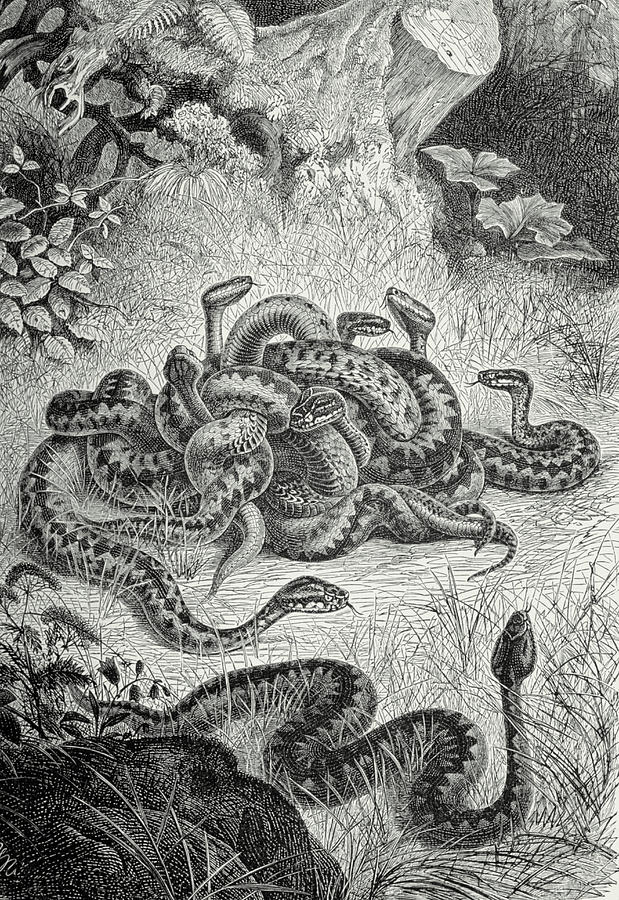
Generation of Vipers: The Original Sin and Continuous Crimes of America’s Involvement in Afghanistan

By Chris Floyd

Source: Empire Burlesque

O generation of vipers, how can ye, being evil, speak good things? – Matthew 12:34

I.
People need to understand something about Afghanistan, and the debacle we’re witnessing there. America’s involvement in Afghanistan didn’t begin in 2001, after the 9/11 attacks. It began in the last years of the Carter Administration, when he and his advisor Zbigniew Brzezinski set out to “give the Soviets their own Vietnam.” They did this by funding and arming an international cohort of violent fundamentalist extremists and training them in terror tactics. (Osama bin Laden was one of those who joined this jihad army supported by the US, Saudia Arabia and Pakistan.)

At that time, there was a modern, secular regime in Afghanistan. It wasn’t a paradise. It was ridden by internal factionalism, sometimes violent. It was supported by the Soviet Union. It was beset by fundamentalist extremists. It had repressive features. But it was a secular regime. Women were emancipated; many held high positions. Children, including girls, were educated. Science was honored and promoted. Religion was tolerated, albeit uneasily.

Carter and Brzezinski decided to empower the extremist militias attacking the regime, hoping to induce so much chaos that the Soviets would intervene militarily to help their client state. Again, as Brzezinski himself put it, they wanted to give the USSR “its own Vietnam.”

Think about this for a moment. What Carter and Brzezinski wanted was to subject the Afghan people to the years of suffering and death that the Vietnamese had experienced. They WANTED Afghanistan to suffer this fate, and they ACTED to make sure it happened. And it did. If you like, it was one of the great successes of US foreign policy in the post-war period. They deliberately plunged Afghanistan into blood-soaked chaos; and the Soviets – after fierce debate in the Politburo – did send in troops to try to stabilize the country. What followed was year after year after year of horror and death. Again, please note: this was the stated INTENTION of US policy: mass death, terrorism and suffering.

When Carter lost in 1980, Reagan took up his policy in Afghanistan and magnified it. More arms and money to religious extremists. More terrorist training, with CIA manuals. The US even produced textbooks for Afghan children lauding fundamentalist extremism and jihad terror. (All of this was reported in the Washington Post and other mainstream outlets.) Reagan invited the precursors of the Taliban to the White House, where he called them the “moral equivalent of our Founding Fathers” and “freedom fighters.” These men were dedicated to undoing the emancipation of women, destroying all vestiges of secular society and imposing the most harsh and hidebound fundamentalist strictures imaginable.

These were the people who were armed, trained, funded, lauded and supported by the United States government for years on end. The Taliban would not exist if not for these long-running, bipartisan policies of the United States.

II.
At last, the Soviets were bled dry, as Carter and Reagan intended, and pulled out of Afghanistan, leaving ruin and chaos behind. There followed years of civil war between atrocious warlords who tortured and looted the Afghan people. The Taliban arose from the midst of the extremists backed by the United States. They managed to take over the country in the early 1990s. They were then supported by the United States once again. Taliban members came to Texas seeking business deals under then-Governor George W. Bush. They sent representatives to Washington, meeting mostly with Republican leaders. When Bush was president, he hooked up with the Taliban in drug eradication efforts.

As noted, Osama bin Laden had been part of the US-backed extremist jihad against the secular regime. However, when the US stationed troops in his homeland of Saudi Arabia during the first Iraq War, he and other fundamentalists regarded this as a profanation of the holy land and vowed to drive American troops from Saudi Arabia. This was the main purpose behind al-Qaeda’s terror attacks, which culminated on 9/11: an attack carried out almost entirely by Saudi nationals, with no involvement of the Taliban or any Afghan citizens.

Bin Laden, a hero of the extremists’ triumph over the USSR, was by now back in Afghanistan. After the 9/11 attacks – which the US itself has said occurred without any foreknowledge by the Taliban – the Taliban offered several times to turn Bin Laden over to international justice in some accredited forum. Bush adamantly refused to even entertain the offer, and launched a full-scale military invasion and occupation of Afghanistan.

As is well known, just after the attack, the Bush Administration launched a frantic, extraordinary effort to spirit many top Saudi figures out of the United States. It could be noted here that the Bush family had long-standing business ties with the Saudis, including the Bin Laden family. (Indeed, Osama bin Laden’s father died in a plane crash in Texas while doing business there.)

In any case, the war was on. Although bin Laden and his forces were seemingly trapped in their mountain fortress early on, somehow they managed to escape to Pakistan, where bin Laden lived untroubled for many years.

By 2002, the Taliban regime had fallen. But the “nation-building” efforts of the United States very soon took a backseat to the goal that Dick Cheney and Donald Rumsfeld (and Jeb Bush, among others) had publicly announced before Dubya’s election: war on Iraq. A Cheney-Rumsfeld group called “Project for the New American Century” laid out its plans before the 2000 election, calling for massive new military expenditures, extensive new military operations overseas and war on Iraq. The PNAC document clearly stated that they realized it would be very difficult to achieve this wholesale militarization of US society and policy, unless – their words, in 2000 – the American people were “catalyzed” by a “new Pearl Harbor.”

In 2003, massive military resources and political attention were shifted from Afghanistan to the real war that Bush, Cheney and Rumsfeld wanted: Iraq. It would be tedious to recite all the deceptions they practiced to perpetrate their deliberate, knowing lie about “Iraqi WMDs” or the collusion of Democrats like Biden in furthering the war fever. The war came and we all know what happened. Hundreds of thousands of innocent people died, the whole region became destablized, thousands became radicalized by the death and torture visited upon their lands, and vast, almost incomprehensible levels of corruption attended every aspect of the long, bloody American occupation.

Meanwhile, the “backwater” of Afghanistan became little more than a long exercise in war profiteering. The “government” installed by the Americans looted the country on an almost incomprehensible scale. American and Afghan officials colluded with the Taliban to ship drugs and money out of the country. At one point, US and NATO officials were actually paying the Taliban to allow shipments of supplies through their checkpoints. Bombings went on, drone strikes went on, civilians were slaughtered by both the occupiers and the Taliban: a long, pointless hell that so radicalized the populace that in the end, as we saw this week, there was no longer any resistance to the Taliban and the order they promised – however harsh and brutal it will be.

The “Afghanistan Papers” of official US documents leaked a few years ago showed that the top US military and political officials had no idea what they were doing in Afghanistan. There was no real mission, no focus, no goal; it was essentially just a perpetual motion machine of death, suffering, procurement, profiteering and corruption. The Taliban had long since regained control of most of the country. The Afghans, which down through the centuries had defeated Alexander the Great, the British Empire and the Soviet Union has now defeated the United States as well.

III.
But again we must go back to the beginning of the current situation. It started when the United States and its allies created an army of Islamic extremists in order to impose years of Vietnam-style hell on the Afghan people – as part of the “Great Game” of geopolitics, which uses innocent lives, and whole nations, as dispensable pieces on a chessboard. Jimmy Carter and Ronald Reagan WANTED to create vast, hellish civil war in Afghanistan to ensnare the Soviets; that was their stated goal, and they spent vast amounts of US taxpayer to money to make it happen. They WANTED thousands of people to die in horrific conditions – Afghan civilians, Soviet conscripts, anyone, they didn’t care – as long as the Soviets “got their own Vietnam.” To me, this is a monstrous crime of near-demonic proportions: to deliberately work to create such an outcome. But they did work at it. And they succeeded.

Later, George W. Bush decided to throw the lives of US soldiers into the mix by invading a country that nothing to do with the 9/11 attacks, as he well knew. Obama, with the eternal anxiety of Democrats not to look “weak” in the eyes of the morally depraved “foreign policy establishment,” then launched a pointless “surge” in Afghanistan that killed many more thousands of people (including US and allied soldiers). Again, as the “Afghanistan Papers” showed, all this was done with no real plan or aim, and with rampant corruption at every turn.

After this, the US largely stepped back from direct actions on the ground, and let the Afghan army do the dying, while the US concentrated on bombing and droning. Yet still the war went on, year after year, as tens of thousands were radicalized by their suffering and joined or supported the Taliban, which controlled most of the country outside the major cities. Finally Trump decided to cut a hasty and ill-thought out deal with the Taliban that ensured they would take over the country the moment the Americans pulled out – which immediately leeched away any remaining support for the corrupt and inept American-installed government. (Of course, if that government had promised to build a big Trump hotel in Baghdad, he probably would’ve sent in 30 divisions to keep it in power until he got his loot.)

This was the deal Biden inherited. But instead of treating it as what it really was – the inevitable handover of Afghanistan to the only local force capable of forming a government – Biden pretended that the Potemkin state installed by the Americans could somehow survive after the American withdrawal … at least long enough to save some face. Instead of spending six months in a negotiated, orderly transfer of power, the US simply kept up the 20-year farce for a time then bugged out, literally in the dead of night, in most cases without even telling the Afghan forces what was happening.

The Afghan forces knew the jig was up last year when Trump freed the co-founder of the Taliban, who then duly appeared with Mike Pompeo for a cozy photo-op. The Afghan soldiers knew it was only a matter of time before the Taliban was in power again. So when the Americans bugged out, the Afghan army began negotiating with the Taliban to avoid needless destruction and bloodshed. Thus city after city was surrendered without a pointless fight: a grim but humane course taken by Afghan soldiers in these dire circumstances.

But Joe Biden, seeking to avoid blame for his vastly inept mishandling of the inevitable takeover by the Taliban, is now blaming the Afghan people themselves, and the Afghan military forces in particular, for not wanting to “fight for their country.” This is a moral obscenity. Although he, like Trump, was absolutely correct in saying that the woebegone US occupation of Afghanistan had to end, he would not acknowledge the truth of how we got to this point, or why the Taliban even exists in the first place: because of deliberate US policy choices going back more than 40 years, all the way to the “original sin” by Carter and Brzezinski of empowering a global network of religious extremists that has given rise to the Taliban, al Qaeda, ISIS and others.

In none of these policies – from Carter, Reagan, Bush I, Clinton, Bush II, Obama, Trump and Biden – has concern for the lives and welfare of the Afghan people played the slightest part. The good Southern Baptist Jimmy Carter WANTED to create hell on earth like Vietnam in Afghanistan. He WANTED thousands upon thousands of innocent people to die, so that the Soviet Union could be “bled dry” in a geopolitical game. I know it’s hard to get one’s head around this, that this gentle, soft-spoken old man, who lives frugally, built houses for the poor and fought for free elections in other countrie ,etc., made the deliberate choice to inflict unimaginable grief, pain and suffering on multitudes of innocent people. But he did. This is what actually happened in our history.

Ronald Reagan extended this policy (which he also practiced in Central America, aiding the mass slaughter of tens of thousands of innocent people by the repressive regimes he supported and armed.) George W. Bush then plunged American forces directly into the fray, stupidly, callously and corruptly replicating “Russia’s own Vietnam” of endless warfare against an extremist insurgency, while tens of thousands innocent civilians died at the hands of all the forces involved.

Now this 40-year chapter of American involvement has come to an end. But unless we actually know how we got here – and the absolutely fundamental role the US has played in these decades of death, destruction and radicalization – we will simply be waiting for the next monstrous, long-running atrocity to arise, with the same horseshit rationalizations (“Liberty! Freedom! Emancipation!”) that our leaders – all of them, every one – have used to cover up their deliberate policies of mass murder, war profiteering and corruption.
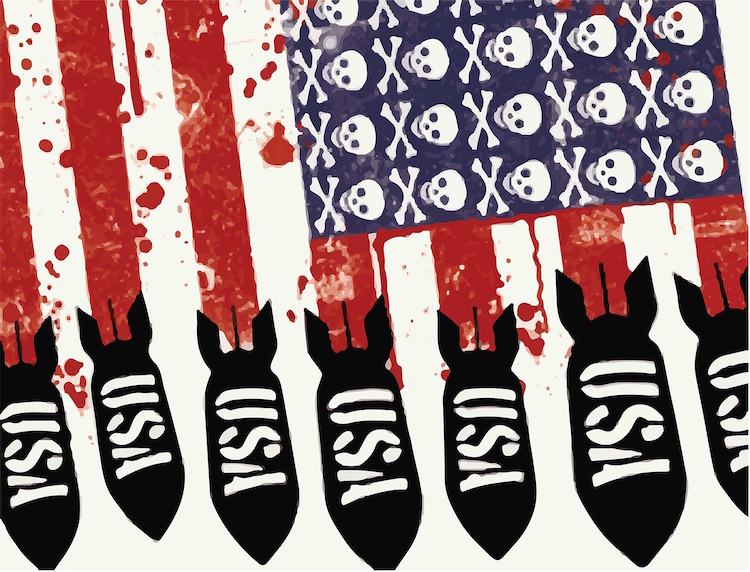
It’s really very simple

By Dmitry Orlov

Source: Club Orlov

There are times when a loud cry of “The emperor has no clothes!” can be most copacetic. And so, let me point out something quite simple, yet very important.

The old world order, to which we became accustomed over the course of the 1990s and the 2000s, its crises and its problems detailed in numerous authoritative publications on both sides of the Atlantic—it is no more. It is not out sick and it is not on vacation. It is deceased. It has passed on, gone to meet its maker, bought the farm, kicked the bucket and joined the choir invisible. It is an ex-world order.

If we rewind back to the early 1980s, we can easily remember how the USSR was still running half of Europe and exerting major influence on a sizable chunk of the world. World socialist revolution was still sputtering along, with pro-Soviet regimes coming in to power here and there in different parts of the globe, the chorus of their leaders’ official pronouncements sounding more or less in unison. The leaders made their pilgrimages to Moscow as if it were Mecca, and they sent their promising young people there to learn how to do things the Soviet way. Soviet technology continued to make impressive advances: in the mid-1980s the Soviets launched into orbit a miracle of technology—the space station Mir, while Vega space probes were being dispatched to study Venus.

But alongside all of this business-as-usual the rules and principles according which the “red” half of the globe operated were already in an advanced state of decay, and a completely different system was starting to emerge both at the center and along the periphery. Seven years later the USSR collapsed and the world order was transformed, but many people simply couldn’t believe in the reality of this change. In the early 1990s many political scientists were self-assuredly claiming that what is happening is the realization of a clever Kremlin plan to modernize the Soviet system and that, after a quick rebranding, it will again start taking over the world. People like to talk about what they think they can understand, never mind whether it still exists.

And what do we see today? The realm that self-identifies itself as “The West” is still claiming to be leading economically, technologically, and to be dominant militarily, but it has suffered a moral defeat, and, strictly as a consequence of this moral defeat, a profound ideological defeat as well.

It’s simple.

1. How can they talk of the inviolability of private property while confiscating the savings of depositors in Cypriot banks?

2. How can they talk of safeguarding the territorial integrity of countries while destroying, in turn, Yugoslavia, Iraq, Libya, Syria and Ukraine?

3. How can they talk of free enterprise and then sign contracts to build ships but refuse to deliver them because of pressure from Washington, as happened with Mistral ships which Russia ordered from France?

4. How can they talk of democracy and then use naked threats against the premier of Greece—the birthplace of European democracy—forcing him to ignore the unprofitable results of the Greek national referendum?

5. How can they talk about fighting racism while in the US they are constantly shooting mass quantities of unarmed Negros, all the while forbidding people to call them Negros.

6. How can they accuse the Serbs of genocide while refusing to acknowledge what they did to supposedly “independent” Kosovo, which has been turned into a European criminal enclave specializing in the production and distribution of narcotics?

7. How can they claim to oppose extremism and terrorism while training, arming and financing ISIS and the Ukrainian Neo-nazis?

8. How can they talk about justice while the US maintains the largest prison population in the history of the world and has executed many people subsequently discovered to have been innocent?

9. How can they talk about freedom of religion after the US federal government exterminated the Branch Davidians in Waco, Texas, and then imprisoned the survivors, even though the government’s allegations against the sect have subsequently been proven to be false?

10. How can they accuse others of corruption after the colossal financial embarrassment of 2008, in the run-up to which obvious financial bubbles that were ready to bust were assigned the highest ratings?

What has happened is the worst thing that could have possibly happened: in full view of the entire world, “Western values” have been demonstrated to be null and void.

If you think that these are just some specific examples of difficulties or mistakes that could potentially be overcome in some dim and foggy future, then you are wrong: this is all of the “Western values” worth mentioning, and they have all been invalidated by observation. Note the past tense: they already have been invalidated. Are there any “Western values” left intact? Oh yes, just one: the rights of sexual minorities. But it is not possible to maintain Western civilization on the strength of gay marriage alone.

Is it any wonder then that the rest of the world is trying to put as much distance between itself and the morally bankrupt “West” as it possibly can, as quickly as it can? China is working on developing its own model, Russia is striving for self-sufficiency and independence from Western imports and finance, and even Latin America, once considered the backyard of the US, is increasingly going its own separate way.

The ranks of the fools who are still buying the West’s story are shrinking, while the ranks of the rebels are growing. There is the truth-teller Edward Snowden, who was forced to flee to Moscow to avoid persecution back home. There are European parliamentarians who recently broke ranks and visited Crimea. There are French and German military men who are volunteering to defend Eastern Ukraine against Western attack. There are the many European businessmen who came to the Economics Forum in St. Petersburg to sign trade deals with Russia, never mind what their politicians think of that.

On the other side, the rapidly emerging new world order was recently on display in Ufa, capital of the majority-Moslem Republic of Bashkortostan in Southern Urals, Russian Federation. Leaders of more than half the world’s population came there to sign deals, integrate their economies, and coordinate security arrangements. India and Pakistan set their differences aside and walked in through the door at the same time; Iran is next. “The West” was not represented there.

Now that all Western values (other than the rights of sexual minorities) have been shown to be cynical exercises in hypocrisy, there is no path back. You see, it is a matter of reputation, and a reputation is something that one can lose exactly once. There is a path forward, but it is very frightening. There is the loss of control: Western institutions can no longer control the situation throughout much of the world, including, in due course, on their own territory. There is the abandonment of the Western narrative: Western pontificators, pundits and “thought leaders” will find that their talking points have been snatched away and will be reduced to either babbling apologetically or lapsing into embarrassed silence. Finally, there is the loss of identity: it is not possible, for the non-delusional, to identify with something (“The West”) that no longer exists.

But the most frightening thing of all is this: behind a morally bankrupt civilization there are morally bankrupt people—lots and lots of them. Their own children, who will be forced to make their way in the world—however it turns out to be—will be as disrespectful of them as they were of their own vaunted civilizational values.

What We Threw Away

By Patrick Armstrong

Source: Strategic Culture Foundation

Forty years ago I was quite impressed by the books of Jean François Revel in which he argued that The West was pretty much doomed because it was messy and indecisive. On the other hand, the communist world was decisive, centrally controlled, had a goal in mind and was patient and cunning in achieving that goal (the communisation of the planet, of course). They pushed on all fronts, where the West woke up and pulled itself together enough to push back, the communists recoiled, but the advance continued elsewhere. And so, bit by bit, the world became redder. These were, as I recall, the principal arguments of The Totalitarian Temptation (1977) and How Democracies Perish (1983). And there were plenty of other people bemoaning the fact that the inchoate Western democracies were frittering away valuable time.

And then, suddenly, the Warsaw Pact and the USSR fall apart and essentially took communism into the grave with them. The West was left standing. Still argumentative, inchoate, indecisive and all the rest of it but – and this is my point – still existing when the other was dead. And come to think of it, we’d outlasted that other stainless-steel perfection of centrally directed will and power, Nazi Germany. And there had been plenty of people in the 1930s who thought that, between communism and nazism, the West was doomed. This set me to thinking that Revel and the others had missed something in their analysis.

We outlived them. We survived, they didn’t. And that what I wondered about – there must be something in the West’s way of doing things that led to survival and something in the nazi or communist systems that led to death. I thought some more and the analogy that occurred to me is that there are many kinds of trees. Big ones, little ones, in-between sized ones. Some live in the wet, others in the dry, others half drowned by the sea and so on. There is in fact, a tree, or several trees, for almost any conceivable environmental condition. And therefore, there will always be trees. Why? Because instead of one Perfect Tree, there is a multitude of different trees. And of fishes, beetles, birds and so on. Nature is pluralistic: many many solutions for every imaginable situation and the ability to change to meet new challenges. Arnold Toynbee called this “challenge and response”; a society responds to a challenge: a good response and it survives to meet the next challenge, a bad response and it fades away.

Could this be the clue? Nazism and communism had One Big Answer for every question. That answer worked for a time until it met some questions it couldn’t answer and down it went. To grossly oversimplify things: the nazis loved force and they went to war with everybody, but you can’t win against everybody else, although you may do well for a while; a hammer and a sickle do not really mentally equip you for life in the later twentieth century; “a road to a blind alley” as Putin called it. Grossly simplified to be sure. If you prefer, ideological societies can only function inside the ontological assumptions of that ideology. But no ideology is any more than a small subset of boundless reality.

So what do we (or, sadly I have to ask, did we) have in the West? I think the three fundamental freedoms in the West are free speech, free politics and free enterprise. Looking at these through the lens of pluralism, they are pluralism of thought, pluralism of power and pluralism of action. Remember that the question I was trying to answer was why did the West survive? I wasn’t asking who’s better, more ideal, more moral; just why is one still around and the other two not? To me the answer was the same thing that allows us to be certain there will still be trees and beetles around in the future – pluralism: lots of different trees and beetles.

Take free speech or pluralism of thought. Everybody’s different, everybody has different ideas, insights, points of view. Let’s assume that, for some issue, mine is the winning idea today. But tomorrow you may have a better solution for the problem that appears tomorrow. If I suppressed you (“no man no problem”, as Stalin used to say) or otherwise prohibited your irrelevant (today) but relevant (tomorrow) idea, we would be in trouble tomorrow and less likely to survive until the next day. So, since we don’t know what tomorrow’s problems are, it’s best to let everybody think his thoughts because who can say whose ideas will be winners tomorrow? The same argument can be made for the other two pluralisms/freedoms. And so, by practising pluralism of thought, power and action, a society improves its chances of survival. That’s all: survival. But that was the question I asked myself in the first place.

So, to my mind, that was the great secret that communism’s fall had revealed – social or national survivability is best assured by pluralism of thought, power and action. So, in all humility, we should have understood that and proclaimed it. And, of course, the essence of pluralism is that you are free to be, and should be, yourself. All nations should be themselves: Russians should be Russian, Hungarians Hungarian and so on. Who can say who will have the next good idea? Who is so wise that he can direct his neighbour’s life? That to me was what should have been done and, had that been the message the West had preached, I think we’d all be better off today.

What instead? We had the fatuous proclaiming of “values”: we had ’em and they didn’t. All over the West stuffed shirts got up in parliaments to boast of “our values”. How we got them no one knew. Did God hand them out to some people but not to others? Russians, too lazy or shiftless or something, having missed the ceremony? Had they mysteriously grown in some national soil over long time? A relict of ancient Saxon customs that only their descendants could inherit? The product of centuries of learning? And what is a “value” anyway? A practical guide to action or a virtue that you either have or don’t? Was it something innate or something learned? Could they get these values? Could they be taught? But, whatever, we had ’em and they didn’t; we were virtuous, they weren’t. And there was another tiresome thing about this, especially when, as it often was, the values were given the adjective “European”. Franco, Hitler, Marx, Engels, Mussolini, Robespierre, Napoleon, Quisling and all the rest of them were Europeans. Every single one of them based his ideas and political views on sources deeply rooted in European thought and experience. And, for certain, had it not been for the Soviets and the Anglosphere, the “European values” Eurocrats and their flunkeys would have been boasting about today would have involved a lot more leather, jackboots and stiff-armed salutes. The whole enterprise resembled something from the movie Idiocracy: “Brawndo has what plants crave because plants crave what Brawndo has“. It was weirdly fascinating to watch.

Our “values” and our “virtue” entitled us to rule the world. We were licensed to do just about anything because we had “what plants crave”. And so triumphalist arrogance and complacent ignorance combined with the West’s monopoly of exportable brutal power. And so it went. An unexamined conceit, frighteningly widespread, became the justification, and cover, for less noble actions.

But some responses to challenges are not so successful and we must ask what has become of our boasted “values” today? Well, we’re still free to speak our minds. Not of course if it’s hate speech or fake news; who could defend that? And not, certainly, to offend anyone’s safe space. And you’d probably better not say anything in Russian. Political freedom? Not entirely gone I suppose, in those little corners not already bought up by lobbyists. And it would certainly be wrong to question anything said or done by “those brave men and women who put their life on the line for our safety”. Free enterprise of course still flourishes. In whatever tiny spaces a few gigantic and well-connected corporations have not yet got to.

Altogether, we can’t be very happy with the state of pluralism in the West. And if I’m correct that pluralism is the key to survival, how much longer do we have?

So who did win the Cold War in the end?

Depicting Perpetual Crimes committed by Corporate Culture and its Mainstream Media

index-1-229x300

Russian Novels Combating Global Capitalist Nightmare

By Andre Vltchek

Source: Dissident Voice

Imagine Moscow being taken over by some international corporate cartel. By a monster which has its own factories and office buildings, security services, private prisons, re-education (‘training’) centers, and its obedient mass media outlets. Imagine that it also has detailed databases on almost everyone who really matters in the capital.

Imagine that human lives suddenly don’t matter. People are only expected to produce and consume; they become fully disposable.

Imagine that the once greatly educated Russia with its legendary artists and philosophers is gradually getting reduced to an unimaginably primitive level. Suddenly, there is US pop trash flying about everywhere, and the greatest entertainment for the masses comes from watching countless television ‘reality shows’, including those that graphically depict, candidly, how both men and women are shitting and pissing in the capital’s public toilets.

That’s what you get when reading a witty, provocative and thoroughly outrageous novel by Sergei Minaev, called R.A.B.; 521 pages of it!

In all his novels, including Soulless, The Telki, Media Sapiens and R.A.B., Minaev masterfully depicts the perpetual crimes committed by corporate culture and its mainstream media. Brutally and candidly he describes an apocalyptic society constructed on the soulless, merciless and murderous principles of the modern Western-style capitalist system.

In such a world, nothing is sacred anymore. The ‘elites’ are having great fun hunting on the outskirts of the city, not for some animals, but for homeless people living in abandoned pipelines (R.A.B.). A US mainstream television news channel, together with its local counterpart, manage to trigger a military conflict between Georgia and Russia, after hiring several combat helicopters and retired soldiers, killing real people, just in order to increase their ratings. And several terrorist attacks in Moscow are being paid for and staged by other big media conglomerates (Media Sapiens).

Minaev is not crying; he is definitely far from being a ‘bleeding heart’. He is tough and cynical. His characters are mostly ruthless super-yuppies from Moscow, go-getters, living a fast life, taking drugs, partying in luxury clubs, having sex literally with everything that moves (Soulless).

But they get burned, destroyed, brought to near suicide.

They have no ideology, no political views. They laugh at, they insult everything and everybody, but deep inside they are actually suffering from a horrible void, from emptiness. In those rare moments of honesty, they admit to each other and to themselves, that they are actually still longing for at least ‘something pure and decent’, uncorrupted by the global market-fundamentalist regime and its ‘values’ and ‘culture’.

*****

In R.A.B. Minaev goes much further. His yuppies (paradoxically, the mid and upper-level managers) start a rebellion against the system. They go on strike, march through the streets, and build barricades. They begin demanding social justice. They burn down their own offices.

They do it after their Russian toy-producing company (and other companies all over the city) gets swallowed by a US-based multi-national corporation, which immediately begins dismantling all social benefits, while injecting uncertainty and fear into the workplace. A multi-national also opens a horrid toy factory on the outskirts of Moscow, which then employs desperate immigrants from the Central Asian republics.

The privately-owned mass media outlets first confront the protesters, and then follow up with pro-corporate propaganda and in the end the corporate security services and the army. Many people disappear. Others are locked up in the offices and secret prisons of the corporations, and tortured. Those who survive become ‘unemployable’, their names permanently on the blacklist.

But what does Minaev really call for? Is it a true revolution?

Yes and no. He does not believe that in the countries that have been conquered by market fundamentalism and by unbridled consumerism, a ‘real revolution’ is possible. He does not think that the people there have any ideals or any zeal left. At the same time, at least some of his characters are clearly unwilling to surrender.

It is chilling to read R.A.B. while at the same time those ‘rebellions’ in Greece, France, Spain and the U.K. are taking place.

One of the main characters of R.A.B. confronts the demonstrators: It is not a revolution! You are all parts of the system. You just want a better deal for yourself. Through this rebellion, you are actually negotiating with the cartel of the corporations. If you get what you are asking for, you’ll happily remain where you are and carry on as if nothing happened.

*****

Then Minaev does exactly what no Western writer would dare to do. He begins to argue that to destroy the system, there has to be an armed struggle. Otherwise no real change could ever be achieved.

The suppressed rebellion of the yuppies eventually triggers much a wider movement, and soon there are real battles raging in several provincial capitals.

The end of the novel is open. The main character of R.A.B. is destroyed. He loses the love of his life (in desperation she commits suicide); he has no job, no money and no place to go. But he is still alive. Russia is still alive. It is obvious that no matter what, it will never accept this monstrous system that was forced on it by the West.

*****

It all may sound like an insane fantasy, but. in fact, what Minaev writes about is not too far from the nightmares that Russia was descending into right after Gorbachev allowed the country (USSR) to fall apart, and then Yeltsin introduced unbridled privatization and gave unprecedented concessions to foreign corporations. During that period, Russia went through something that could be easily described as a social genocide. Life expectancy dropped to the levels of war-torn countries in Africa. Lawlessness ruled. All ideals were ridiculed and spat at. A big number of Russian intellectuals were bought and organized by the West into countless NGO’s. The lowest grade of Western pop and entertainment torpedoed Russian culture. During those dark days, the West finally succeeded in bringing Russia to its knees.

Not even two decades later, a new Russia is once again proud, strong and confident.

It rose to its feet, it began successfully producing again, and it underwent a tremendous and positive social transformation.

Just one week ago I returned from the Russian Far East, from the cities of Vladivostok, Khabarovsk and Petropavlovsk Kamchatski. Wherever I went, I witnessed new and impressive infrastructure. I encountered a confident, hard working nation, which was working hard to restore at least some of the socialist structures and benefits that it used to enjoy in the past.

The new, present-day Russia is much closer to China; much more impressed by the Chinese system, than by what it was forced to adopt in the past; during the “pro-Western era” which is now generally considered to be synonymous to a national disaster.

Russian writers played an important role in describing the horrors of the Gorbachev/Yeltsin years, and of the brutal global economic, political and ‘cultural’ regime injected by the West to all the corners of the Planet. From an outrageous Eduard Limonov’s novel It’s Me, Eddie to Minaev’s R.A.B., Russian literature has been daring, insulting, direct and brutally honest.

While Limonov and Minaev sell millions of copies of their books at home, their work is virtually unknown in the West. I found no English translations when searching on Amazon.com, and elsewhere.

In his New York-based Eddie, Limonov is calling openly for terrorist acts against the Western regime, while some of Minaev’s characters also believe in an armed struggle, although of a more conventional type.

Nothing is spared. When the US toy-producing corporation demands a special tax from its employees in Russia, for “helping out those poor children in the Third World”, the main character of R.A.B. thinks: “well, they can now use that money to buy coffins for children they employ and kill in Indonesia or Thailand”. When the tax goes slightly up, he comments: “now they will have enough funds to dig at least a few mass graves”.

All this is simply too outrageous for Western readers. Or more precisely, the ‘book business’ most likely ‘thinks’ that it is.

The fact remains that despite what is constantly repeated by Western propaganda, those who read Russian can clearly see and appreciate that Russian literature is actually much more free, daring and rebellious than its counterpart in the West.

When several Russian bestselling novelists are calling openly for combat against the global regime (the same regime which is, until now, at least partially, controlling the economy of their country), one has no choice but to be impressed by the level of freedom in the country which allows such work to be published and then promoted.

But in the West, you would never know all this, unless you spoke Russian. It is because in the West (and in its ‘client’ states and colonies) you are being extremely well ‘protected’ from such uncomfortable (and the regime would even say ‘dangerous’) thoughts!


André Vltchek is a novelist, filmmaker, and investigative journalist. He has covered wars and conflicts in dozens of countries. His latest book is Exposing Lies of the Empire.