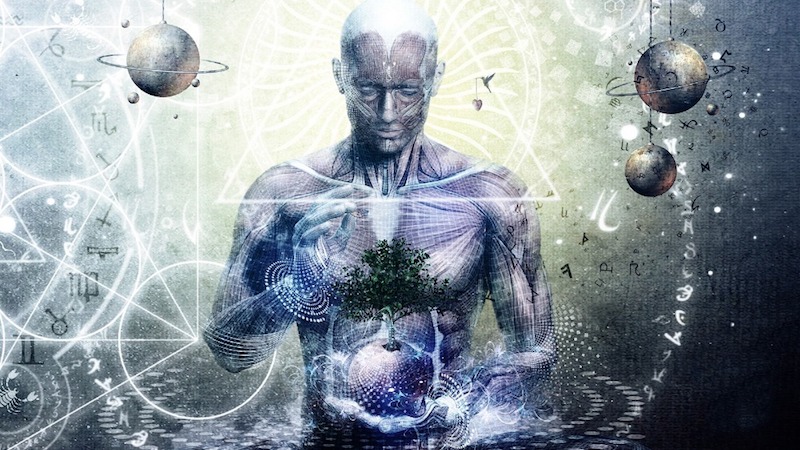
THE ELEVENTH HOUR

By Kingsley L. Dennis

Source: Waking Times

In the Age of Materialism, it is said that people have their orientation outwards and towards the boundary that separates humanity from the lower orders – the animals and plants – rather than the inner orientation towards Source. And it is within the great depth of materialism that represents the final stage of a grand cycle where the world reaches its ‘extremity of separation’ in a period of remoteness from the sacred impulse.

Unknowing and blind to this, the materialist believes they experience no loss because progress has given humanity much more than it ever had, and that material progress shall be their salvation. At such a time, it symbolizes that humankind has reached a limit of distance (an extremity) from its essential nature – from its centre – and thus from its sacred home. And the modern person – especially the product of westernized modernism – has gone so far from their essential nature that they have ceased to think of it or question its existence, and even fabricate and invent a pseudo-truth for its material reality.

Many now see these times of deep materialism as representing the ‘eleventh hour’ for humanity; as a decisive moment before a dramatic turn of events in its trajectory. Others, like myself, have referred to these times as representing humanity’s ‘dark night of the soul.’ I wrote the following passage over a decade ago:

We have now entered the crisis window, the transition phase – that heroic journey into the underworld – where we will be forced to experience a shamanic initiatory experience, perhaps a near-death experience, before we can emerge as an adolescent species with a new, more mature mind. Until we reach that stage, however, we will have to struggle with the death throes of the old mind, as old systems cling to power and global infrastructures attempt to remain in control of a world in transition…the ‘dark passage’ that we are now venturing into. This is part of our collective rites of passage: it will shake us, reshuffle and reorientate a great deal of life on the planet; and it will also, hopefully, catalyze and prepare us for a psychophysical transformation. The reorientation required – both psychological and physical – may be far from linear…as we wrestle with the cloak of the old world system that clings onto a modus operandi, refusing to let go without a fight. Despite our glorious, gleaming, polished achievements that the world displays with pride, our current systems (social, cultural, political and economic) are remarkably anachronistic, cunningly deceptive, opaque, and in dire need of renovation. Yet in order to sweep out the brushwood we may be forced to endure a metaphorical, and literal, dark night of the soul. The next 20 years cannot be the same as the last 20 years. Change is upon us rapidly, even if we are not aware of its pace.[1]

We were not aware of the pace as I wrote those words; and many are no more aware now even though that pace has dramatically quickened. At each cyclical renewal we are faced with prophecies of the ‘End Time’ that also throw up images and imaginations of the world apocalypse. Yet such an apocalypse is not a fatality but a revelation – a revealing. It marks the disintegration of one narrated cycle and the emergence of new mythological voices as heralding a departure from the dying throes of an aeon of time. At such a moment, the aftermath of an apocalypse/revealing lies a great expanse where reality itself requires a re-stitching together and reimagining. A new operation of worlding comes into being. There is a change of guard of the architypes: the social-status figures of leaders, politicians, and bankers are replaced by the metaphysician, the mystic, and the prophet.[2]

It is said that the nearness of an end of an era brings with it a sense of otherworldliness. It is at such threshold moments where the veil thins to allow a penetration, a mergence, of energies from various sources, physical and metaphysical. Dimensions start to crossover and intervene; boundaries begin to dissolve.  It is then that the illusion of ordinary, consensus reality is fast breaking down; this very same illusion that shielded many people from infra-psychic incursions. According to philosopher Rene Guenon, the extremity of materialistic beliefs and practices leads to a ‘solidification of the world,’ and it is this solidification that causes ‘fissures’ to open up through which ‘infra-psychic’ forces enter. In other words, humanity is invaded by the specters of its own psyche.

The reality of unknown psychic powers, and their influences, from beyond our world has always been part of human knowledge – only that now it comes out from its occult shell and more into visibility. The dissolution of the physical world, its fragmentation, chaos, and disarray, catalyzes the psychic manifestations that represent the phase of the dissolution of the present cycle. The dissolution of the present cycle of materialism only begets a necessary re-creation of the world. The hardening and extremity of corruption of our physical world must also lead to a degree of psychological fracturing if a new psycho-physical environment is to unfold. That is, unless there are cracks within the highly conditioned collective psychosphere of humanity, how can the light get it?

Every human soul is infused with a sense, a knowing, of the Transcendent – a filament or spark of Source – of the Alpha and Omega of all existence. Ignorance of it only exists on this physical, earthly plane, and obscured by the degraded forces of deep materialism. The inner faculty which recognizes this is often referred to as the Heart, and is the human being’s highest faculty – although it lies dormant or slumbering within most people. This is an incorruptible, inviolable element within the human – a ‘supramental organ of knowledge’ – that is beyond mind or intellect.

The sense of the transcendent implies an inner urge, longing, or pull to transcend the limitations of this plane of reality. These urges are the signs of the times – the moment of the eleventh hour. The contact with Source energy is available (gives) to those who are aware of it: ‘For unto every one that hath shall be given, and he shall have abundance: but from him that hath not shall be taken away even that which he hath.’ (Matthew 25:29). It is at the eleventh hour, from a dissolution to a new beginning, that we understand also the phrase: ‘and the last shall be first.’

What is the soul if not a better version of ourselves?

By John Cottingham

Source: aeon

What is the point of gaining the whole world if you lose your soul? Today, far fewer people are likely to catch the scriptural echoes of this question than would have been the case 50 years ago. But the question retains its urgency. We might not quite know what we mean by the soul any more, but intuitively we grasp what is meant by the loss in question – the kind of moral disorientation and collapse where what is true and good slips from sight, and we find we have wasted our lives on some specious gain that is ultimately worthless.

It used to be thought that science and technology would gain us the world. But it now looks as though they are allowing us to destroy it. The fault lies not with scientific knowledge itself, which is among humanity’s finest achievements, but with our greed and short-sightedness in exploiting that knowledge. There’s a real danger we might end up with the worst of all possible scenarios – we’ve lost the world, and lost our souls as well.

But what is the soul? The modern scientific impulse is to dispense with supposedly occult or ‘spooky’ notions such as souls and spirits, and to understand ourselves instead as wholly and completely part of the natural world, existing and operating through the same physical, chemical and biological processes that we find anywhere else in the environment.

We need not deny the value of the scientific perspective. But there are many aspects of human experience that cannot adequately be captured in the impersonal, quantitatively based terminology of scientific enquiry. The concept of the soul might not be part of the language of science; but we immediately recognise and respond to what is meant in poetry, novels and ordinary speech, when the term ‘soul’ is used in that it alerts us to certain powerful and transformative experiences that give meaning to our lives. Such experiences include the joy that arises from loving another human being, or the exaltation when we surrender to the beauty of a great artistic or musical work, or, as in William Wordsworth’s poem ‘Tintern Abbey’ (1798), the ‘serene and blessed mood’ where we feel at one with the natural world around us.

Such precious experiences depend on certain characteristic human sensibilities that we would not wish to lose at any price. In using the term ‘soul’ to refer to them, we don’t have to think of ourselves as ghostly immaterial substances. We can think of ‘soul’ as referring, instead, to a set of attributes ­­– of cognition, feeling and reflective awareness – that might depend on the biological processes that underpin them, and yet enable us to enter a world of meaning and value that transcends our biological nature.

Entering this world requires distinctively human qualities of thought and rationality. But we’re not abstract intellects, detached from the physical world, contemplating it and manipulating it from a distance. To realise what makes us most fully human, we need to pay attention to the richness and depth of the emotional responses that connect us to the world. Bringing our emotional lives into harmony with our rationally chosen goals and projects is a vital part of the healing and integration of the human soul.

In his richly evocative book The Hungry Soul (1994), the American author Leon Kass argues that all our human activities, even seemingly mundane ones, such as gathering around a table to eat, can play their part in the overall ‘perfecting of our nature’. In the more recent book Places of the Soul (3rd ed, 2014), the ecologically minded architect Christopher Day speaks of the need for humans to live, and to design and build their dwellings, in ways that harmonise with the shapes and rhythms of the natural world, providing nourishment for our deepest needs and longings.

The language of ‘soul’ found here and in many other contexts, ancient and modern, speaks ultimately of the human longing for transcendence. The object of this yearning is not well-captured in the abstract language of theological doctrine or philosophical theory. It is best approached through praxis, or how that theory is enacted. Traditional spiritual practices – the often simple acts of devotion and commitment found in rites of passage marking the birth or death of a loved one, say, or such rituals as the giving and receiving of rings – provide a powerful vehicle for the expression of such longings. Part of their power and resonance is that they operate on many levels, reaching deeper layers of moral, emotional and spiritual response than can be accessed by the intellect alone.

The search for ways to express the longing for a deeper meaning in our lives seems to be an ineradicable part of our nature, whether we identify as religious believers or not. If we were content to structure our lives wholly within a fixed and unquestioned set of parameters, we would cease to be truly human. There is something within us that is always reaching forward, that refuses to rest content with the utilitarian routines of our daily existence, and yearns for something not yet achieved that will bring healing and completion.

Not least, the idea of the soul is bound up with our search for identity or selfhood. The French philosopher René Descartes, writing in 1637, spoke of ‘this me, that is to say the soul by which I am what I am’. He went on to argue that this soul is something entirely nonphysical, but there are now very few people, given our modern knowledge of the brain and its workings, who would wish to follow him here. But even if we reject Descartes’s immaterialist account of the soul, each of us retains a strong sense of ‘this me’, this self that makes me what I am. We are all engaged in the task of trying to understand the ‘soul’ in this sense.

But this core self that we seek to understand, and whose growth and maturity we seek to foster in ourselves and encourage in others, is not a static or closed phenomenon. Each of us is on a journey, to grow and to learn, and to reach towards the best that we can become. So the terminology of ‘soul’ is not just descriptive, but is what philosophers sometimes call ‘normative’: using the language of ‘soul’ alerts us not just to the way we happen to be at present, but to the better selves we have it in our power to become.

To say we have a soul is partly to say that we humans, despite all our flaws, are fundamentally oriented towards the good. We yearn to rise above the waste and futility that can so easily drag us down and, in the transformative human experiences and practices we call ‘spiritual’, we glimpse something of transcendent value and importance that draws us forward. In responding to this call, we aim to realise our true selves, the selves we were meant to be. This is what the search for the soul amounts to; and it is here, if there is a meaning to human life, that such meaning must be sought.

Magic Never Died: The Sacred is Still Alive

By Kingsley L. Dennis

Source: Reality Sandwich

God is alive, magic is afoot
God is afoot, magic is alive
Alive is afoot, magic never died
Leonard Cohen


The sense of the sacred does not require any image of the gods. There will be no more gothic cathedrals built to exalt humankind to the heavens; no more prophets to lead humankind to the divine; and no more Holy Grails to entice humankind upon the Quest – we now have the sacred suffusing us en masse, manifesting as both the tangible and intangible. Our cultures are being finely renewed from the inside-out by a subtle vibration that has come to us through a myriad of emanations in different forms. Look at the conversations we are having today with each other; look at how many creative projects around the world are being instigated and led by young people. The generations before us were not discussing transcendence or the technologies of the soul so openly and publicly. Our era has brought the inner world out into the open world and into focus. The sacred is not a concept but an experiential understanding, of life beyond our limited selves – of transcendence and immersion simultaneously. Only two or three generations before us there was no inner world to explore publicly. Before the rise of the psychological sciences there was no cultural language to explore the subconscious. The inner landscape of the human being was quietly explored and navigated by the mystics, seers, adepts, shamans, and initiates that kept their traditions away from the masses – away from persecution.

For millennia the sacred arts were defiled, harassed, and discriminated against. The magical arts also fell into this tarnished category. And yet magic and alchemy are found worldwide, in all traditional cultures, in remarkably similar manifestations. Spiritual realization has never been a mass pursuit; usually pursued by those few individuals often classed as outsiders. And so the presence of the sacred in our societies has always been unperceived, operating unseen and under the radar. It has always been present and operating, only not in ways suspected by humankind. Magic too has always been present in its various guises – magic is afoot, magic is alive, magic never died. Magic, in its original form, is that which concentrates and radiates the mind; it is a deep penetrating force-field of compassion and communion. Our reality-matrix is composed of energy; everything within it is a form of energy in various states. Those states can be modified, like the fine tuning of an instrument to create a more harmonious sound. The wisdom traditions, the perennial philosophy, speak of how a human being, by their own spiritual ascent, is able to also animate and raise up the world around them. The emanation of the sacred energies furthers the spiritual realization within material reality.

Most of what is today labeled as supernatural is but the residue of the sacred which is inherent in humankind and the world, no matter how we ignore or discard it. Unbeknown to us we recreate this sense of the sacred through our pursuits and pastimes. Magic may shock the profane, yet it has existed as a core experience long before we had any sense of what it actually was. As historian and scholar Arthur Versluis notes,

The reason that magic is not in good standing in the West is that it is based upon the fundamental unity of man and cosmos and so is in conflict with the inherent dualism of the modern outlook. But magic will be in existence long after the modern era has disappeared: it cannot be otherwise, for magic is the physical expression of the eternal, inner, spiritual transmutation. 1

When it comes to the ‘eternal, inner, spiritual transmutation’ there are no absolute laws, just the continual unfolding. As human beings we each interact with the world differently because we perceive the world differently. In interacting differently we each contribute to creating a different world. The sacred reality understands that we exist as part of a participatory cosmos. It is this sacredness without a name that infuses the human condition. To be a human being is to be inherently imbued with a spiritual force that animates us in ways we are largely unaware of. And yet through this animated force we see the world around us – it cultivates our worldview, our values, and is the source of our quest for meaning. And a civilization’s worldview is its most precious possession.

Everything proceeds from this primary perception – a collective gaze of wonder…or of limitation.  The basic, fundamental understanding is that we cannot observe the world without changing it. And the presence of the sacred is so crucial in our lives that without it our human status itself is in question. The sacred order of the past existed at a time when the world was different, when its needs were different. At each moment we articulate the human condition in the context of our times. The sacred energies, the spiritual impulses, are a medium – and a means – through which we come to learn of and express the human condition. And these expressions are in response to a shifting and unfolding understanding of the cosmos and of our reality-matrix. Before the emergence of structured religions the human condition articulated itself in ‘pre-religious forms’ of spirituality. Whatever the times, the sacred impulse attempts to be known. For great periods the sacred impulse was almost invisible within human societies, as we struggled with the raw energies of brute materiality ‘red in tooth and claw,’ and cloaked in mechanical rationalism. Yet now the sacred impulse is raising its head again in new cultural forms, expressions, and mediums.

Magic has a role in helping to give shape and substance to our meanings. Magic teaches us that the way forward, the way to heal the rift in our reality-matrix, is by the uniting of the spiritual and the profane, the celestial and the mundane. In our reality, each day lived is an expression of the spiritual and the sacred existing through us, invisible as a silent breath. And yet the magic never died; magic is still alive, magic is afoot (to paraphrase Leonard Cohen). For us now, ‘the greatest danger to us shall arise, not because of “magic,” but rather if true magic, true transmutation, should disappear.’2 The world is becoming an exciting, magical, and mysterious domain once again. And within this domain technology is likewise moving from its position as a brute, mechanistic hardware to a fluid, almost seamless, magical part of our augmented reality. The world is reviving its sense of being a Misterium Tremendes, a sacred place to dwell in. To live as part of the sacred is about living that which comes through us – as beacons we must pass it on as well as lighting up the way for each traveler upon the path. The truth is a spiritualizing force that actualizes through us. The sacred impulse is also the creative and dynamic force of transcendence. And yet it must be a sacred energy for our times. It must be alive and relevant, otherwise it becomes another relic to be idolized and venerated rather than lived. The sense of the sacred is of a living work.

Our physical global body – our systems and structures – are responding to this need by shifting from top-down structures to decentralized networks. As this unfolds we need to meet this transformation by changing the ways we think; by altering the ways we do things; by allowing consciousness and the sacred energies to flow into the world – to flow through us. That is, to manifest the qualities, attitudes, and our presence in the world that will most effectively receive, hold, and transmit this consciousness. This responsibility is also a part of our living work right now. The days of working in seclusion are over – the new sacred energy does not support monasticism. The sacred strives to connect fluidly between our inner and outer worlds; it is not a monastic endeavor but exists within the active avenues and marketplaces of life. High castles, priestly enclaves, guru sanctuaries, etc, are edifices of the past where a different energy was contained. The sacred revival of today is a nurturing, feminine energy that comes alive through people. The sacred revival stands as comfortable with the spandex superhero mutants on our screens as it does with the appreciative touch, the supportive word, the reassuring glance that we each can weave into our lives. This is the sacred impulse for our times – that which is a part of the living substance that comes through us. It is a living soul that holds within it the species body. As Meister Eckhart said – ‘The soul is not in the body; the body is in the soul.’

The sacred is already affecting us, infecting our thinking patterns and consciousness whether we are aware of it or not. Our perspectives on the world and the cosmos have been changing dramatically over recent years. Most of us who have thought deeply about life and the cosmos have come to the realization that we do not exist as part of a dead universe. Even our sciences, our telescopes, have begun to point their attention toward intelligent life in the cosmos. We are unfolding – slowly metamorphosing out of our cocoon of cosmic quarantine. The human being too is forced to transcend beyond the conditioned cocoon we sleep within – to continually transcend every station we reach. A part of our transformation is the recognition that the human being is a sacred particle in a sacred universe.

Enchantment has been humanity’s natural state for aeons. The innate state of humanity is to feel integral to all life. This continuity has only been disrupted for a number of centuries, whereas our state of enchantment has been with us for millennia. It is time we return to that enchantment, and to a re-connection with a source of meaning. Those streams of significance, those waters of wisdom, have always been with us. It only depended upon whether we wished to get our feet wet or not. As the poet Rainer Maria Rilke says, ‘we are the bees of the invisible’ and our task as individuals is for each of us to be a channel for the transmutation of the familiar things of this world into the transcendent. The sacred impulse works through the planet, the living species, and also each individual. As we come together, increasingly so through the medium of our technologies, we each can bring a spark into the burning flame of the living workof our transmutation. As Sri Aurobindo understood, our sacred revival (what he considered as a spiritual age) must ‘be preceded by the appearance of an increasing number of individuals who are no longer satisfied with the normal intellectual, vital and physical existence of man, but perceive that a greater evolution is the real goal of humanity and attempt to effect it in themselves, to lead others to it and to make it the recognised goal of the race.’3 The antithesis of the sacred revival, those whom attempt the reverse of leading others toward transition, seek their power in the sorcery of psychological control and manipulation, also now on a mass scale. Yet the call of the sacred impulse beats within each one of us – yet for some it is louder than others.

The sacred presence is a reflection of the individual soul as well as the world soul. The integral communion of the soul is between the inner world of the individual (the individual soul), and the physical world outside of us. It is a synthesis which gives us meaning. If we do not renew our task daily – reflect upon the soul – we do an injustice to ourselves. And yet this is no easy task. No other relationship can be achieved that is higher than the one you have with the sacred essence within yourself. Life must have meaning for us before we can bring authentic meaning into the lives of others. Maybe Pierre Teilhard de Chardin said it best when he said that sacred human becoming is not only ‘open to a few of the privileged nor to one chosen people to the exclusion of all others’ but rather is ‘in a direction in which all together can join and find completion in a spiritual regeneration of the earth.’4

Our ancestors were aware that they lived in a sacred cosmos, where the physical world existed in communion with the unseen dimension which ensouled and sanctified it. There was no rigid line drawn between what was the inner world and what was external reality, because both domains were in correspondence. The individual human soul was a part of the greater sacred reality. And just as the sacred is an instrument of the human, so the human is an instrument of the sacred. The sacred worldview is one that accepts not only the metaphysical but also the magical and the mysterious – the magnificent wonder in everything and all. As the Greek Orphic Mysteries of 2,500 years ago spoke: ‘I am a child of earth and starry heaven, but my race is of heaven alone.’


References

1 Versluis, Arthur (1986) The Philosophy of Magic. London, Arkana, p129

2 Versluis, Arthur (1986) The Philosophy of Magic. London, Arkana, p125

3 Aurobindo, Sri (1999/1950) The Human Cycle: The Psychology of Social Development. Twin Lakes, WI, Lotus Light Publications, p263

4 Cited in Davis, Erik (1998) Techgnosis: myth, magic and mysticism in the age of information. New York, Three Rivers Press, p317


Adapted from Kingsley L. Dennis’s forthcoming book, The Sacred Revival: Magic, Mind & Meaning in a Technological Age, to be published October 24th, 2017.
Enlightenment and Cosmic Citizenship: The Divine in mundane life

By rahkyt

Source: Sacred Space in Time

What is Enlightenment?

Is it practical spirituality? Personal, soul-oriented growth and evolution?

Could these formats be experiences? Are those who claim such experiences in a constant state of otherworldly sensate immersion within worlds beyond the ken of most?

All the time? In every moment of every day?

If you peruse the teachings of the universal sages such as Jesus or Buddha, or any of the modern gurus like Adyashanti, Mooji, Amma or Tolle, you find a denial of this continuous state of experiential immersal within Mystery.

Rather, they say that life is comprised of the moments we each live and that transcendence of that moment is in experiential fullness. Of being Present in each moment of the Now, rather than being lost in contemplations of the past and future. And that this perceptual quality is cultivated consciously over time and practice, alongside a certain element of Grace and divine bestowal.

Until the point at which the Now becomes perceptually continuous. And the body, a steady-state, resonant conduit of the Divine in every lived expression.

There are many who aspire to such Nowness who preach and crow their accomplishments to the world, seeking fame and fortune. This path is inimical to the real expression of enlightenment because it is indicative of covetousness and narcissistic self-aggrandizement.

And yet, true teachers and experiencers are also compelled to share their knowing and to seek to open doorways for those yet mired within the swirling sandstorm of Maya manifest.

How does one tell the difference? How do you know when someone has had real, transcendental experiences and have internalized the wisdom gained therein?

Many have experienced alternative perceptual realities by way of plant teachers, artificial drugs and real and synthetic brain chemicals such as DMT. These experiences are valid but also prone to misinterpretation and overestimation of their importance in the context of spiritual enlightenment. Because you’ve seen the world shift during an acid or shroom trip does not mean you have then become Enlightened, in other words.

Experiencing things the mind and soul are not ready for is also dangerous. Those who seek to raise kundalini who have not done the soul work necessary at each chakra to raise their level of consciousness can achieve higher spiritual experiences, but can also do long-lasting psychic, mental and even physical damage to themselves. If serious enough, this damage can last a lifetime or longer.

The sidhis – or powers – such as telepathy, bilocation, telekinesis and astral travel are tools with very specific psychic requirements that can be accessed with practice by some, not all. Most yogis and gurus warn against their specific cultivation as doing so is indicative of growth yet to achieve along the road to spiritual wisdom.

Sidhis occur spontaneously amongst those who travel the Pathless Path seeking the highest expression of Cosmic Citizenship. To express them carelessly or selfishly is to cultivate negative karma and to step sideways along the path. Which is the reason why true teachers do no such thing.

Empaths can tell when they are in the presence of true sages, gurus, teachers. They can just feel the auric emanations of love, compassion and expansiveness. The words of such individuals speak to empathic souls, whisper intimations of innerstanding to their deepest levels of conscious beingness.

The expression of these teachers are consciously cultivated to align with that of their chosen audiences. They can be, therefore, crass or saintly, inscrutable or vivacious, sensual or austere. One thing they all share in common is a lack of adherence to societal norms and taboos as these are primarily human laws and mores and not divine in origin.

Enlightenment does not look like what most people think it looks like. When you have been to the Mountaintop, experienced Kenshō, have been a student in Shambhala, have visited Nirvana, that boundless, infinite and eternal space of beingness within the very heart of love and consciousness manifest, you are not supposed to stay there. That looks like death to the physical body.

You must return.

To life. To the world. To the Marketplace of human involvement. And seek the enlightenment of ALL sentient beings.

By any means necessary.

The Enlightened are, at heart, trickster spirits. Irreverent and undefined. Willing to appear any way to achieve the end of breaking down personal and societal boundaries to reveal aspects of the ineffable to those mired in the mundane minutia of the daily grind.

You never know who you’re talking to.

Especially if you’re not paying close attention because you are caught up in yourself. But you don’t encounter the Enlightened within the span of a lifetime unless you are, in some form or fashion, ready to grow and evolve past the limitations of the unexamined life. Ready to take the next step in your own personal, spiritual evolution.

So pay attention. Let the synchronicities lead you. Meditate. Cultivate the Now.

By doing so, you might discover that your crazy sister or brother, cousin, friend or acquaintance might be something other than you thought.

And wouldn’t that be something?