The State of Our Nation No One’s Talking About: Tyranny Is Rising as Freedom Falls

By John & Nisha Whitehead

Source: The Rutherford Institute

“Never has our future been more unpredictable, never have we depended so much on political forces that cannot be trusted to follow the rules of common sense and self-interest—forces that look like sheer insanity, if judged by the standards of other centuries.”—Hannah Arendt, The Origins of Totalitarianism

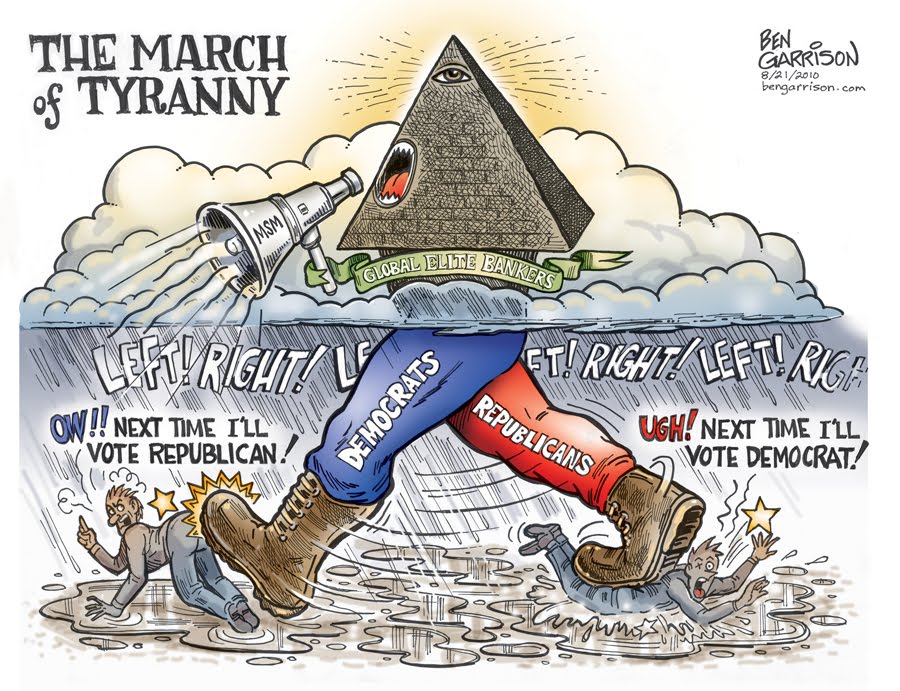
Day by day, tyranny is rising as freedom falls.

The U.S. military is being used to patrol subway stations and police the U.S.-Mexico border, supposedly in the name of national security.

The financial sector is being used to carry out broad surveillance of Americans’ private financial data, while the entertainment sector is being tapped to inform on video game enthusiasts with a penchant for violent, potentially extremist content, all in an alleged effort to uncover individuals subscribing to anti-government sentiments

Public and private venues are being equipped with sophisticated surveillance technologies, including biometric and facial recognition software, to track Americans wherever they go and whatever they do. Space satellites with powerful overhead surveillance cameras will render privacy null and void.

This is the state of our nation that no is talking about—not the politicians, not the courts, and not Congress: the government’s power grabs are growing bolder, while the rights of the citizenry continue to be trampled underfoot.

Hitler is hiding in the shadows, while the citizenry—the only ones powerful enough to stem the authoritarian tide that threatens to lay siege to our constitutional republic—remain easily distracted and conveniently diverted by political theatrics and news cycles that change every few days.

This sorry truth has persisted no matter which party has controlled Congress or the White House.  

These are dangerous times.

Yet while the presidential candidates talk at length about the dangers posed by the opposition party, the U.S. government still poses the gravest threat to our freedoms and way of life.

Police shootings of unarmed individuals, invasive surveillance, roadside blood draws, roadside strip searches, SWAT team raids gone awry, the military industrial complex’s costly wars, pork barrel spending, pre-crime laws, civil asset forfeiture, fusion centers, militarization, armed drones, smart policing carried out by AI robots, courts that march in lockstep with the police state, schools that function as indoctrination centers, bureaucrats that keep the Deep State in power: these are just a few of the ways in which the police state continues to flex its muscles in a show of force intended to intimidate anyone still clinging to the antiquated notion that the government answers to “we the people.”

Consider for yourself the state of our nation:

Americans have little protection against police abuse. The police and other government agents have been generally empowered to probe, poke, pinch, taser, search, seize, strip and generally manhandle anyone they see fit in almost any circumstance, all with the general blessing of the courts. It is no longer unusual to hear about incidents in which police shoot unarmed individuals first and ask questions later. What is increasingly common, however, is the news that the officers involved in these incidents get off with little more than a slap on the hands.

Americans are little more than pocketbooks to fund the police state. If there is any absolute maxim by which the federal government seems to operate, it is that the American taxpayer always gets ripped off. This is true, whether you’re talking about taxpayers being forced to fund high-priced weaponry that will be used against us, endless wars that do little for our safety or our freedoms, or bloated government agencies with their secret budgets, covert agendas and clandestine activities.

Americans are no longer innocent until proven guilty. We once operated under the assumption that you were innocent until proven guilty. Due in large part to rapid advances in technology and a heightened surveillance culture, the burden of proof has been shifted so that the right to be considered innocent until proven guilty has been usurped by a new norm in which all citizens are suspects. Indeed, the government—in cahoots with the corporate state—has erected the ultimate suspect society. In such an environment, we are all potentially guilty of some wrongdoing or other.

Americans no longer have a right to self-defense. While the courts continue to disagree over the exact nature of the rights protected by the Second Amendment, the government itself has made its position extremely clear. When it comes to gun rights in particular, and the rights of the citizenry overall, the U.S. government has adopted a “do what I say, not what I do” mindset. Nowhere is this double standard more evident than in the government’s attempts to arm itself to the teeth, all the while viewing as suspect anyone who dares to legally own a gun, let alone use one in self-defense. Indeed, while it still technically remains legal to own a firearm in America, possessing one can now get you pulled over, searched, arrested, subjected to all manner of surveillance, treated as a suspect without ever having committed a crime, shot at, and killed.

Americans no longer have a right to private property. If government agents can invade your home, break down your doors, kill your dog, damage your furnishings and terrorize your family, your property is no longer private and secure—it belongs to the government. Likewise, if government officials can fine and arrest you for growing vegetables in your front yard, praying with friends in your living room, installing solar panels on your roof, and raising chickens in your backyard, you’re no longer the owner of your property.

Americans no longer have a say about what their children are exposed to in school. Incredibly, the government continues to insist that parents essentially forfeit their rights when they send their children to a public school. This growing tension over whether young people, especially those in the public schools, are essentially wards of the state, to do with as government officials deem appropriate, in defiance of the children’s constitutional rights and those of their parents, is at the heart of almost every debate over educational programming, school discipline, and the extent to which parents have any say over their children’s wellbeing in and out of school.

Americans are powerless in the face of militarized police forces. With local police agencies acquiring military-grade weaponry, training and equipment better suited for the battlefield, Americans are finding their once-peaceful communities transformed into military outposts patrolled by a standing military army.

Americans no longer have a right to bodily integrity. The debate over bodily integrity covers broad territory, ranging from abortion and euthanasia to forced blood draws, biometric surveillance and basic healthcare. Forced vaccinations, forced cavity searches, forced colonoscopies, forced blood draws, forced breath-alcohol tests, forced DNA extractions, forced eye scans, forced inclusion in biometric databases: these are just a few ways in which Americans continue to be reminded that we have no control over what happens to our bodies during an encounter with government officials.

Americans no longer have a right to the expectation of privacy. Despite the staggering number of revelations about government spying on Americans’ phone calls, Facebook posts, Twitter tweets, Google searches, emails, bookstore and grocery purchases, bank statements, commuter toll records, etc., Congress, the president and the courts have done little to nothing to counteract these abuses. Instead, they seem determined to accustom us to life in this electronic concentration camp.

Americans no longer have a representative government. We have moved beyond the era of representative government and entered the age of authoritarianism, where all citizens are suspects, security trumps freedom, and so-called elected officials represent the interests of the corporate power elite. This topsy-turvy travesty of law and government has become America’s new normal.

Americans can no longer rely on the courts to mete out justice. The U.S. Supreme Court was intended to be an institution established to intervene and protect the people against the government and its agents when they overstep their bounds. Yet through their deference to police power, preference for security over freedom, and evisceration of our most basic rights for the sake of order and expediency, the justices of the Supreme Court have become the architects of the American police state in which we now live, while the lower courts have appointed themselves courts of order, concerned primarily with advancing the government’s agenda, no matter how unjust or illegal.

I haven’t even touched on the corporate state, the military industrial complex, SWAT team raids, invasive surveillance technology, zero tolerance policies in the schools, overcriminalization, or privatized prisons, to name just a few, but what I have touched on should be enough to show that the landscape of our freedoms has already changed dramatically from what it once was and will no doubt continue to deteriorate unless Americans can find a way to wrest back control of their government and reclaim their freedoms.

This steady slide towards tyranny, meted out by militarized local and federal police and legalistic bureaucrats, has been carried forward by each successive president over the past seventy-plus years regardless of their political affiliation.

The more things change, the more they stay the same.

We are walking a dangerous path right now.

Having allowed the government to expand and exceed our reach, we find ourselves on the losing end of a tug-of-war over control of our country and our lives. And for as long as we let them, government officials will continue to trample on our rights, always justifying their actions as being for the good of the people.

Yet the government can only go as far as “we the people” allow. Therein lies the problem.

The pickle we find ourselves in speaks volumes about the nature of the government beast we have been saddled with and how it views the rights and sovereignty of “we the people.”

Now you don’t hear a lot about sovereignty anymore. Sovereignty is a dusty, antiquated term that harkens back to an age when kings and emperors ruled with absolute power over a populace that had no rights. Americans turned the idea of sovereignty on its head when they declared their independence from Great Britain and rejected the absolute authority of King George III. In doing so, Americans claimed for themselves the right to self-government and established themselves as the ultimate authority and power.

In other words, in America, “we the people”— sovereign citizens—call the shots.

So when the government acts, it is supposed to do so at our bidding and on our behalf, because we are the rulers.

That’s not exactly how it turned out, though, is it?

In the 200-plus years since we boldly embarked on this experiment in self-government, we have been steadily losing ground to the government’s brazen power grabs, foisted upon us in the so-called name of national security.

We have relinquished control over the most intimate aspects of our lives to government officials who, while they may occupy seats of authority, are neither wiser, smarter, more in tune with our needs, more knowledgeable about our problems, nor more aware of what is really in our best interests.

The government has knocked us off our rightful throne. It has usurped our rightful authority. It has staged the ultimate coup. Its agents no longer even pretend that they answer to “we the people.”

Worst of all, “we the people” have become desensitized to this constant undermining of our freedoms.

How do we reconcile the Founders’ vision of the government as an entity whose only purpose is to serve the people with the police state’s insistence that the government is the supreme authority, that its power trumps that of the people themselves, and that it may exercise that power in any way it sees fit (that includes government agents crashing through doors, mass arrests, ethnic cleansing, racial profiling, indefinite detentions without due process, and internment camps)?

They cannot be reconciled. They are polar opposites.

We are fast approaching a moment of reckoning where we will be forced to choose between the vision of what America was intended to be (a model for self-governance where power is vested in the people) and the reality of what it has become (a police state where power is vested in the government).

We are repeating the mistakes of history—namely, allowing a totalitarian state to reign over us.

Former concentration camp inmate Hannah Arendt warned against this when she wrote:

“No matter what the specifically national tradition or the particular spiritual source of its ideology, totalitarian government always transformed classes into masses, supplanted the party system, not by one-party dictatorships, but by mass movement, shifted the center of power from the army to the police, and established a foreign policy openly directed toward world domination.”

So where does that leave us?

Aldous Huxley predicted that eventually the government would find a way of “making people love their servitude, and producing dictatorship without tears, so to speak, producing a kind of painless concentration camp for entire societies, so that people will in fact have their liberties taken away from them, but will rather enjoy it, because they will be distracted from any desire to rebel by propaganda or brainwashing, or brainwashing enhanced by pharmacological methods. And this seems to be the final revolution.”

The answer? Get un-brainwashed, as I make clear in my book Battlefield America: The War on the American People and in its fictional counterpart The Erik Blair Diaries,

Stop allowing yourself to be distracted and diverted.

Learn your rights.

Stand up for the founding principles.

Make your voice and your vote count for more than just political posturing.

Never cease to vociferously protest the erosion of your freedoms at the local and national level.

Most of all, do these things today.
2024 Is the New 1984: Big Brother and the Rise of the Security Industrial Complex

By John & Nisha Whitehead

Source: The Rutherford Institute

“Big Brother is Watching You.”―George Orwell, 1984

2024 is the new 1984.

Forty years past the time that George Orwell envisioned the stomping boot of Big Brother, the police state is about to pass off the baton to the surveillance state.

Fueled by a melding of government and corporate power—the rise of the security industrial complex—this watershed moment sounds a death knell for our privacy rights.

An unofficial fourth branch of government, the Surveillance State came into being without any electoral mandate or constitutional referendum, and yet it possesses superpowers, above and beyond those of any other government agency save the military.

It operates beyond the reach of the president, Congress and the courts, and it marches in lockstep with the corporate elite who really call the shots in Washington, DC.

This is the new face of tyranny in America: all-knowing, all-seeing and all-powerful.

Tread cautiously.

Empowered by advances in surveillance technology and emboldened by rapidly expanding public-private partnerships between law enforcement, the Intelligence Community, and the private sector, the Surveillance State is making the fictional world of 1984, Orwell’s dystopian nightmare, our looming reality.

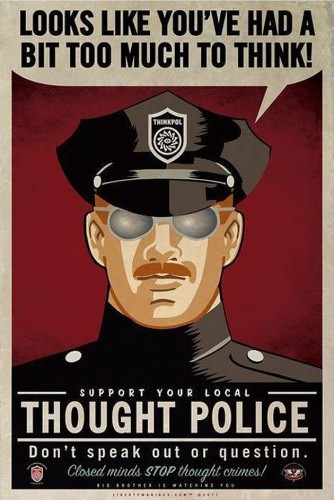
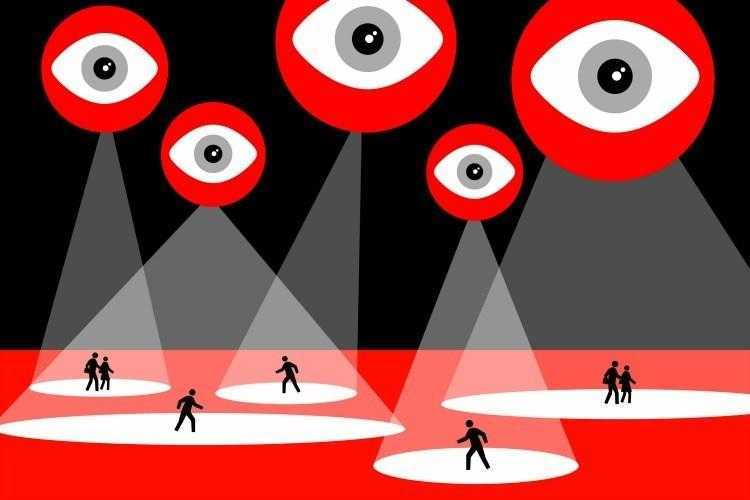
1984 portrays a global society of total control in which people are not allowed to have thoughts that in any way disagree with the corporate state. There is no personal freedom, and advanced technology has become the driving force behind a surveillance-driven society. Snitches and cameras are everywhere. People are subject to the Thought Police, who deal with anyone guilty of thought crimes. The government, or “Party,” is headed by Big Brother who appears on posters everywhere with the words: “Big Brother is watching you.”

Indeed, in our present age of ubiquitous surveillance, there are no private lives.

Everything is increasingly public.

What we are witnessing, in the so-called name of security and efficiency, is the creation of a new class system comprised of the watched (average Americans such as you and me) and the watchers (government bureaucrats, technicians and private corporations).

We now find ourselves in the unenviable position of being monitored, managed and controlled by our technology, which answers not to us but to our government and corporate rulers.

This is the fact-is-stranger-than-fiction lesson that is being pounded into us on a daily basis.

In this way, 1984, which depicted the ominous rise of ubiquitous technology, fascism and totalitarianism, has become an operation manual for the omnipresent, modern-day surveillance state.

There are roughly one billion surveillance cameras worldwide and that number continues to grow, thanks to their wholehearted adoption by governments (especially law enforcement and military agencies), businesses, and individual consumers.

Surveillance cameras mounted on utility poles, traffic lights, businesses, and homes. Ring doorbells. GPS devices. Dash cameras. Drones. Store security cameras. Geofencing and geotracking. FitBits. Alexa. Internet-connected devices. 

Stingray devices, facial recognition technology, body cameras, automated license plate readers, gunshot detection, predictive policing software, AI-enhanced video analytics, real-time crime centers, fusion centers: all of these technologies and surveillance programs rely on public-private partnerships that together create a sticky spiderweb from which there is no escape.

With every new surveillance device we welcome into our lives, the government gains yet another toehold into our private worlds.

As the cost of these technologies becomes more affordable for the average consumer, an effort underwritten by the tech industry and encouraged by law enforcement agencies and local governing boards, which in turn benefit from access to surveillance they don’t need to include in their budgets, big cities, small towns, urban, suburban and rural communities alike are adding themselves to the surveillance state’s interconnected grid.

What this adds up to for government agencies (that is, FBI, NSA, DHS agents, etc., as well as local police) is a surveillance map that allows them to track someone’s movements over time and space, hopscotching from doorbell camera feeds and business security cameras to public cameras on utility poles, license plate readers, traffic cameras, drones, etc.

It has all but eliminated the notion of privacy enshrined in the  Fourth Amendment and radically re-drawn the line of demarcation between our public and private selves.

The police state has become particularly adept at sidestepping the Fourth Amendment, empowered by advances in surveillance technology and emboldened by rapidly expanding public-private partnerships between law enforcement, the Intelligence Community, and the private sector.

Over the past 50-plus years, surveillance has brought about a series of revolutions in how governments govern and populations are policed to the detriment of us all. Cybersecurity expert Adam Scott Wandt has identified three such revolutions.

The first surveillance revolution came about as a result of government video cameras being installed in public areas. There were a reported 51 million surveillance cameras blanketing the United States in 2022. It’s estimated that Americans are caught on camera an average of 238 times every week (160 times per week while driving; 40 times per week at work; 24 times per week while out running errands and shopping; and 14 times per week through various other channels and activities). That doesn’t even touch on the coverage by surveillance drones, which remain a relatively covert part of police spying operations.

The second revolution occurred when law enforcement agencies started forging public-private partnerships with commercial establishments like banks and drug stores and parking lots in order to gain access to their live surveillance feeds. The use of automatic license plate readers (manufactured and distributed by the likes of Flock Safety), once deployed exclusively by police and now spreading to home owners associations and gated communities, extends the reach of the surveillance state that much further afield. It’s a win-win for police budgets and local legislatures when they can persuade businesses and residential communities to shoulder the costs of the equipment and share the footage, and they can conscript the citizenry to spy on each other through crowdsourced surveillance.

The third revolution was ushered in with the growing popularity of doorbell cameras such as Ring, Amazon’s video surveillance doorbell, and Google’s Nest Cam.

Amazon has been particularly aggressive in its pursuit of a relationship with police, enlisting them in its marketing efforts, and going so far as to hosting parties for police, providing free Ring doorbells and deep discounts, sharing “active camera” maps of Ring owners, allowing access to the Law Enforcement Neighborhood Portal, which enables police to directly contact owners for access to their footage, and coaching police on how to obtain footage without a warrant.

Ring currently partners with upwards of 2,161 law enforcement agencies and 455 fire departments, and that number grows exponentially every year. As Vice reports, “Ring has also heavily pursued city discount programs and private alliances with neighborhood watch groups. When cities provide free or discounted Ring cameras, they sometimes create camera registries, and police sometimes order people to aim Ring cameras at their neighbors, or only give cameras to people surveilled by neighborhood watches.”

In November 2022, San Francisco police gained access to the live footage of privately owned internet cameras as opposed to merely being able to access recorded footage. No longer do police even have to request permission of homeowners for such access: increasingly, corporations have given police access to footage as part of their so-called criminal investigations with or without court orders.

The fourth revolutionary shift may well be the use of facial recognition software and artificial intelligence-powered programs that can track people by their biometrics, clothing, behavior and car, thereby synthesizing the many strands of surveillance video footage into one cohesive narrative, which privacy advocates refer to as 360 degree surveillance.

While the guarantee of safety afforded by these surveillance nerve centers remains dubious, at best, there is no disguising their contribution in effecting a sea change towards outright authoritarianism.

For instance, as an in-depth investigative report by the Associated Press concludes, the very same mass surveillance technologies that were supposedly so necessary to fight the spread of COVID-19 are now being used to stifle dissent, persecute activists, harass marginalized communities, and link people’s health information to other surveillance and law enforcement tools.

As the AP reports, federal officials have also been looking into how to add “‘identifiable patient data,’ such as mental health, substance use and behavioral health information from group homes, shelters, jails, detox facilities and schools,” to its surveillance toolkit.

These cameras—and the public-private eyes peering at us through them—are re-engineering a society structured around the aesthetic of fear and, in the process, empowering “people to not just watch their neighborhood, but to organize as watchers,” creating not just digital neighborhood watches but digital gated communities.

Finally, there is a repressive, suppressive effect to surveillance that not only acts as a potentially small deterrent on crime but serves to monitor and chill lawful First Amendment activity.

As Matthew Feeney warns in the New York Times, “In the past, Communists, civil rights leaders, feminists, Quakers, folk singers, war protesters and others have been on the receiving end of law enforcement surveillance. No one knows who the next target will be.

No one knows, but it’s a pretty good bet that the surveillance state will be keeping a close watch on anyone seen as a threat to the government’s chokehold on power.

After all, as I make clear in my book Battlefield America: The War on the American People and in its fictional counterpart The Erik Blair Diaries, the Surveillance State never sleeps.

Criminality in the White House: The Rise of the Political Psychopath

By John & Nisha Whitehead

Source: The Rutherford Institute

“When the President does it, that means that it is not illegal.”—Richard Nixon

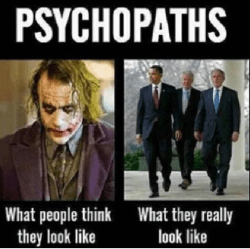
Many years ago, a newspaper headline asked the question: “What’s the difference between a politician and a psychopath?

The answer, then and now, remains the same: None.

There is no difference between psychopaths and politicians.

Nor is there much of a difference between the havoc wreaked on innocent lives by uncaring, unfeeling, selfish, irresponsible, parasitic criminals and elected officials who lie to their constituents, trade political favors for campaign contributions, turn a blind eye to the wishes of the electorate, cheat taxpayers out of hard-earned dollars, favor the corporate elite, entrench the military industrial complex, and spare little thought for the impact their thoughtless actions and hastily passed legislation might have on defenseless citizens.

Psychopaths and politicians both have a tendency to be selfish, callous, remorseless users of others, irresponsible, pathological liars, glib, con artists, lacking in remorse and shallow.

Charismatic politicians, like criminal psychopaths, exhibit a failure to accept responsibility for their actions, have a high sense of self-worth, are chronically unstable, have socially deviant lifestyles, need constant stimulation, have parasitic lifestyles and possess unrealistic goals.

It doesn’t matter whether you’re talking about Democrats or Republicans.

Political psychopaths are all largely cut from the same pathological cloth, brimming with seemingly easy charm and boasting calculating minds. Such leaders eventually create pathocracies: totalitarian societies bent on power, control, and destruction of both freedom in general and those who exercise their freedoms.

Once psychopaths gain power, the result is usually some form of totalitarian government or a pathocracy. “At that point, the government operates against the interests of its own people except for favoring certain groups,” author James G. Long notes. “We are currently witnessing deliberate polarizations of American citizens, illegal actions, and massive and needless acquisition of debt. This is typical of psychopathic systems, and very similar things happened in the Soviet Union as it overextended and collapsed.”

In other words, electing a psychopath to public office is tantamount to national hara-kiri, the ritualized act of self-annihilation, self-destruction and suicide. It signals the demise of democratic government and lays the groundwork for a totalitarian regime that is legalistic, militaristic, inflexible, intolerant and inhuman.

Incredibly, despite clear evidence of the damage that has already been inflicted on our nation and its citizens by a psychopathic government, voters continue to elect psychopaths to positions of power and influence.

Indeed, a study from Southern Methodist University found that Washington, DC—our nation’s capital and the seat of power for our so-called representatives—ranks highest on the list of regions that are populated by psychopaths.

According to investigative journalist Zack Beauchamp, “In 2012, a group of psychologists evaluated every President from Washington to Bush II using ‘psychopathy trait estimates derived from personality data completed by historical experts on each president.’ They found that presidents tended to have the psychopath’s characteristic fearlessness and low anxiety levels — traits that appear to help Presidents, but also might cause them to make reckless decisions that hurt other people’s lives.”

The willingness to prioritize power above all else, including the welfare of their fellow human beings, ruthlessness, callousness and an utter lack of conscience are among the defining traits of the sociopath.

When our own government no longer sees us as human beings with dignity and worth but as things to be manipulated, maneuvered, mined for data, manhandled by police, conned into believing it has our best interests at heart, mistreated, jailed if we dare step out of line, and then punished unjustly without remorse—all the while refusing to own up to its failings—we are no longer operating under a constitutional republic.

Instead, what we are experiencing is a pathocracy: tyranny at the hands of a psychopathic government, which “operates against the interests of its own people except for favoring certain groups.”

Worse, psychopathology is not confined to those in high positions of government. It can spread like a virus among the populace. As an academic study into pathocracy concluded, “[T]yranny does not flourish because perpetuators are helpless and ignorant of their actions. It flourishes because they actively identify with those who promote vicious acts as virtuous.”

People don’t simply line up and salute. It is through one’s own personal identification with a given leader, party or social order that they become agents of good or evil.

Much depends on how leaders “cultivate a sense of identification with their followers,” says Professor Alex Haslam. “I mean one pretty obvious thing is that leaders talk about ‘we’ rather than ‘I,’ and actually what leadership is about is cultivating this sense of shared identity about ‘we-ness’ and then getting people to want to act in terms of that ‘we-ness,’ to promote our collective interests. . . . [We] is the single word that has increased in the inaugural addresses over the last century . . . and the other one is ‘America.’”

The goal of the modern corporate state is obvious: to promote, cultivate, and embed a sense of shared identification among its citizens. To this end, “we the people” have become “we the police state.”

We are fast becoming slaves in thrall to a faceless, nameless, bureaucratic totalitarian government machine that relentlessly erodes our freedoms through countless laws, statutes, and prohibitions.

Any resistance to such regimes depends on the strength of opinions in the minds of those who choose to fight back. What this means is that we the citizenry must be very careful that we are not manipulated into marching in lockstep with an oppressive regime.

Writing for ThinkProgress, Beauchamp suggests that “one of the best cures to bad leaders may very well be political democracy.”

But what does this really mean in practical terms?

It means holding politicians accountable for their actions and the actions of their staff using every available means at our disposal: through investigative journalism (what used to be referred to as the Fourth Estate) that enlightens and informs, through whistleblower complaints that expose corruption, through lawsuits that challenge misconduct, and through protests and mass political action that remind the powers-that-be that “we the people” are the ones that call the shots.

Remember, education precedes action. Citizens need to the do the hard work of educating themselves about what the government is doing and how to hold it accountable. Don’t allow yourselves to exist exclusively in an echo chamber that is restricted to views with which you agree. Expose yourself to multiple media sources, independent and mainstream, and think for yourself.

For that matter, no matter what your political leanings might be, don’t allow your partisan bias to trump the principles that serve as the basis for our constitutional republic. As Beauchamp notes, “A system that actually holds people accountable to the broader conscience of society may be one of the best ways to keep conscienceless people in check.”

That said, if we allow the ballot box to become our only means of pushing back against the police state, the battle is already lost.

Resistance will require a citizenry willing to be active at the local level.

Yet if you wait to act until the SWAT team is crashing through your door, until your name is placed on a terror watch list, until you are reported for such outlawed activities as collecting rainwater or letting your children play outside unsupervised, then it will be too late.

This much I know: we are not faceless numbers.

We are not cogs in the machine.

As I make clear in my book Battlefield America: The War on the American People and in its fictional counterpart The Erik Blair Diaries, we are not slaves.

We are human beings, and for the moment, we have the opportunity to remain free—that is, if we tirelessly advocate for our rights and resist at every turn attempts by the government to place us in chains.

The Founders understood that our freedoms do not flow from the government. They were not given to us only to be taken away by the will of the State. They are inherently ours. In the same way, the government’s appointed purpose is not to threaten or undermine our freedoms, but to safeguard them.

Until we can get back to this way of thinking, until we can remind our fellow Americans what it really means to be free, and until we can stand firm in the face of threats to our freedoms, we will continue to be treated like slaves in thrall to a bureaucratic police state run by political psychopaths.

From Press Room Raids to Indictments, Anything Goes When the Government Piles On

By John & Nisha Whitehead

Source: The Rutherford Institute

“When players are piled on top of each other after a mad scramble for a loose ball, it’s a free-for-all. There are no rules. Anything goes. That’s because there’s nobody in the pile to monitor what’s going on.”—Mike Thomas, sports editor

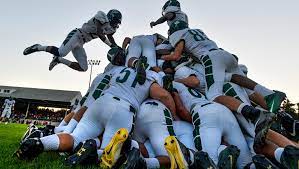
What is playing out before our eyes right now should be familiar to any fan of football: it’s called the pile on, a brutal, frenzied, desperate play to seize control and gain power while crushing the opposition.

In this particular analogy, “we the people” are trapped at the bottom of that pile, buried under a mountain of bread-and-circus distractions, economic worries, environmental disasters, power plays, power grabs, police raidsindictments and circus politics.

The Maui wildfires. The Trump indictments. Hunter Biden’s legal troubles. The looming 2024 presidential election. The Ukraine-Russia conflict.

In the midst of this pile on of woes, worries and semi-manufactured crises falling with sledgehammer-like frequency, monopolizing the media narrative and eclipsing all other news, it’s difficult to stay focused on what’s really going on, and yet something is brewing.

Pay attention.

Caught up in the partisan boxing match that is politics today, it’s easy to lose sight of what’s real.

The indictments against Trump, the investigation of Hunter Biden, and the chatter of the political classes aren’t real; they are more sound and fury, signifying nothing in the end.

As Aldous Huxley observed in Brave New World Revisited:

“Non-stop distractions of the most fascinating nature are deliberately used as instruments of policy, for the purpose of preventing people from paying too much attention to the realities of the social and political situation… Only the vigilant can maintain their liberties, and only those who are constantly and intelligently on the spot can hope to govern themselves effectively by democratic procedures.”

So what is real?

What’s real is the $5,000 fine and five-year jail sentence that could be levied against anyone found driving an illegal immigrant in their car in the state of Florida.

What’s real are the hi-tech policing tools such as robotic dogs equipped with all manner of weaponry and surveillance technology that are rewriting the ground rules when it comes to privacy and security.

What’s real is the North Carolina pastor who was fined $60,000 for ministering to the homeless on church property without a permit.

What’s real is the revelation that Boston officials created and sent police a watch list of the mayor’s most vocal critics, not unlike the government’s own growing databases for anti-government dissidents.

What’s real is what happened in Marion, Kansas, on Fri., Aug. 11, 2023, when police raided the office of the Marion County Record, blowing past the constitutional safeguards intended to safeguard the freedom of the press.

Are you starting to get the picture yet?

The manufactured media spectacles, piled on one after another, have a very real purpose, which is to distract us from the government’s constant encroachments on our freedoms.

In the larger scheme of things, these individual incidents—the police raid of a small-town newspaper, a state ban on who gets to be inside your car, an outrageous fine for feeding the destitute, a politician’s use of an enemies list to silence critics—might easily go unremarked, yet they are all part of the police state’s tendency to pile on: pile on the distractions, pile on the retribution, pile on the show of force in order to completely eviscerate anything that even remotely resembles opposition.

The police state has embarked on a ruthless, take-no-prisoners, all-out assault on anyone who even questions its authority, let alone challenges its chokehold on power.

“We the people”—the proverbial nails to the police state’s heavy-handed tactics—will be hammered into compliance, intimidated into subservience, and terrorized into silence.

It doesn’t matter which party dominates in Congress or the White House: all of us are in danger from these fear-inducing, mind-altering, soul-destroying, smash-your-face-in tactics.

In this way, anarchy is being loosed upon the nation.

Day after day, the government’s crimes against the citizenry grow more egregious, more treacherous and more tragic. And day after day, the prison walls holding the American people captive become ever more inescapable.

The upcoming election and its aftermath will undoubtedly keep the citizenry divided and at each other’s throats, so busy fighting each other that they never manage to present a unified front against tyranny in any form.

Yet the winner has already been decided.

As American satirist H.L. Mencken predicted almost a century ago:

“All the odds are on the man who is, intrinsically, the most devious and mediocre — the man who can most adeptly disperse the notion that his mind is a virtual vacuum. The Presidency tends, year by year, to go to such men. As democracy is perfected, the office of president represents, more and more closely, the inner soul of the people. On some great and glorious day the plain folks of the land will reach their heart’s desire at last and the White House will be adorned by a downright moron.”

In other words, as I make clear in my book Battlefield America: The War on the American People and in its fictional counterpart The Erik Blair Diaries, nothing will change.

You cannot have a republican form of government—nor a democratic one, for that matter—when the government views itself as superior to the citizenry, when it no longer operates for the benefit of the people, when the people are no longer able to peacefully reform their government, when government officials cease to act like public servants, when elected officials no longer represent the will of the people, when the government routinely violates the rights of the people and perpetrates more violence against the citizenry than the criminal class, when government spending is unaccountable and unaccounted for, when the judiciary act as courts of order rather than justice, and when the government is no longer bound by the laws of the Constitution.

Technocensorship: The Government’s War on So-Called Dangerous Ideas

By John & Nisha Whitehead

Source: The Rutherford Institute

“There is more than one way to burn a book. And the world is full of people running about with lit matches.”—Ray Bradbury

What we are witnessing is the modern-day equivalent of book burning which involves doing away with dangerous ideas—legitimate or not—and the people who espouse them. Seventy years after Ray Bradbury’s novel Fahrenheit 451 depicted a fictional world in which books are burned in order to suppress dissenting ideas, while televised entertainment is used to anesthetize the populace and render them easily pacified, distracted and controlled, we find ourselves navigating an eerily similar reality.

Welcome to the age of technocensorship.

On paper—under the First Amendment, at least—we are technically free to speak.

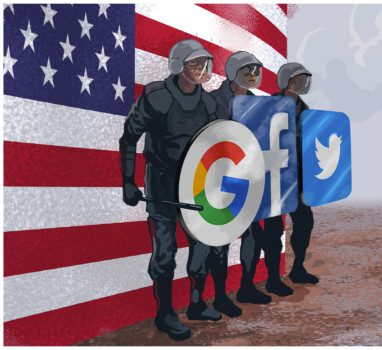
In reality, however, we are now only as free to speak as a government official—or corporate entities such as Facebook, Google or YouTube—may allow.

Case in point: internal documents released by the House Judiciary Select Subcommittee on Weaponization of the Federal Government confirmed what we have long suspected: that the government has been working in tandem with social media companies to censor speech.

By “censor,” we’re referring to concerted efforts by the government to muzzle, silence and altogether eradicate any speech that runs afoul of the government’s own approved narrative.

This is political correctness taken to its most chilling and oppressive extreme.

The revelations that Facebook worked in concert with the Biden administration to censor content related to COVID-19, including humorous jokes, credible information and so-called disinformation, followed on the heels of a ruling by a federal court in Louisiana that prohibits executive branch officials from communicating with social media companies about controversial content in their online forums.

Likening the government’s heavy-handed attempts to pressure social media companies to suppress content critical of COVID vaccines or the election to “an almost dystopian scenario,” Judge Terry Doughty warned that “the United States Government seems to have assumed a role similar to an Orwellian ‘Ministry of Truth.’

This is the very definition of technofascism.

Clothed in tyrannical self-righteousness, technofascism is powered by technological behemoths (both corporate and governmental) working in tandem to achieve a common goal.

The government is not protecting us from “dangerous” disinformation campaigns. It is laying the groundwork to insulate us from “dangerous” ideas that might cause us to think for ourselves and, in so doing, challenge the power elite’s stranglehold over our lives.

Thus far, the tech giants have been able to sidestep the First Amendment by virtue of their non-governmental status, but it’s a dubious distinction at best when they are marching in lockstep with the government’s dictates.

As Philip Hamburger and Jenin Younes write for The Wall Street Journal: “The First Amendment prohibits the government from ‘abridging the freedom of speech.’ Supreme Court doctrine makes clear that government can’t constitutionally evade the amendment by working through private companies.”

Nothing good can come from allowing the government to sidestep the Constitution.

The steady, pervasive censorship creep that is being inflicted on us by corporate tech giants with the blessing of the powers-that-be threatens to bring about a restructuring of reality straight out of Orwell’s 1984, where the Ministry of Truth polices speech and ensures that facts conform to whatever version of reality the government propagandists embrace.

Orwell intended 1984 as a warning. Instead, it is being used as a dystopian instruction manual for socially engineering a populace that is compliant, conformist and obedient to Big Brother.

This is the slippery slope that leads to the end of free speech as we once knew it.

In a world increasingly automated and filtered through the lens of artificial intelligence, we are finding ourselves at the mercy of inflexible algorithms that dictate the boundaries of our liberties.

Once artificial intelligence becomes a fully integrated part of the government bureaucracy, there will be little recourse: we will all be subject to the intransigent judgments of techno-rulers.

This is how it starts.

First, the censors went after so-called extremists spouting so-called “hate speech.”

Then they went after so-called extremists spouting so-called “disinformation” about stolen elections, the Holocaust, and Hunter Biden.

By the time so-called extremists found themselves in the crosshairs for spouting so-called “misinformation” about the COVID-19 pandemic and vaccines, the censors had developed a system and strategy for silencing the nonconformists.

Eventually, depending on how the government and its corporate allies define what constitutes “extremism, “we the people” might all be considered guilty of some thought crime or other.

Whatever we tolerate now—whatever we turn a blind eye to—whatever we rationalize when it is inflicted on others, whether in the name of securing racial justice or defending democracy or combatting fascism, will eventually come back to imprison us, one and all.

Watch and learn.

We should all be alarmed when any individual or group—prominent or not—is censored, silenced and made to disappear from Facebook, Twitter, YouTube and Instagram for voicing ideas that are deemed politically incorrect, hateful, dangerous or conspiratorial.

Given what we know about the government’s tendency to define its own reality and attach its own labels to behavior and speech that challenges its authority, this should be cause for alarm across the entire political spectrum.

Here’s the point: you don’t have to like or agree with anyone who has been muzzled or made to disappear online because of their views, but to ignore the long-term ramifications of such censorship is dangerously naïve, because whatever powers you allow the government and its corporate operatives to claim now will eventually be used against you by tyrants of your own making.

As Glenn Greenwald writes for The Intercept:

The glaring fallacy that always lies at the heart of pro-censorship sentiments is the gullible, delusional belief that censorship powers will be deployed only to suppress views one dislikes, but never one’s own views… Facebook is not some benevolent, kind, compassionate parent or a subversive, radical actor who is going to police our discourse in order to protect the weak and marginalized or serve as a noble check on mischief by the powerful. They are almost always going to do exactly the opposite: protect the powerful from those who seek to undermine elite institutions and reject their orthodoxies. Tech giants, like all corporations, are required by law to have one overriding objective: maximizing shareholder value. They are always going to use their power to appease those they perceive wield the greatest political and economic power.

Be warned: it’s a slippery slope from censoring so-called illegitimate ideas to silencing truth.

Eventually, as George Orwell predicted, telling the truth will become a revolutionary act.

If the government can control speech, it can control thought and, in turn, it can control the minds of the citizenry.

It’s happening already.

With every passing day, we’re being moved further down the road towards a totalitarian society characterized by government censorship, violence, corruption, hypocrisy and intolerance, all packaged for our supposed benefit in the Orwellian doublespeak of national security, tolerance and so-called “government speech.”

Little by little, Americans are being conditioned to accept routine incursions on their freedoms.

This is how oppression becomes systemic, what is referred to as creeping normality, or a death by a thousand cuts.

It’s a concept invoked by Pulitzer Prize-winning scientist Jared Diamond to describe how major changes, if implemented slowly in small stages over time, can be accepted as normal without the shock and resistance that might greet a sudden upheaval.

Diamond’s concerns related to Easter Island’s now-vanished civilization and the societal decline and environmental degradation that contributed to it, but it’s a powerful analogy for the steady erosion of our freedoms and decline of our country right under our noses.

As Diamond explains, “In just a few centuries, the people of Easter Island wiped out their forest, drove their plants and animals to extinction, and saw their complex society spiral into chaos and cannibalism… Why didn’t they look around, realize what they were doing, and stop before it was too late? What were they thinking when they cut down the last palm tree?”

His answer: “I suspect that the disaster happened not with a bang but with a whimper.”

Much like America’s own colonists, Easter Island’s early colonists discovered a new world—“a pristine paradise”—teeming with life. Yet almost 2000 years after its first settlers arrived, Easter Island was reduced to a barren graveyard by a populace so focused on their immediate needs that they failed to preserve paradise for future generations.

The same could be said of the America today: it, too, is being reduced to a barren graveyard by a populace so focused on their immediate needs that they are failing to preserve freedom for future generations.

In Easter Island’s case, as Diamond speculates:

The forest…vanished slowly, over decades. Perhaps war interrupted the moving teams; perhaps by the time the carvers had finished their work, the last rope snapped. In the meantime, any islander who tried to warn about the dangers of progressive deforestation would have been overridden by vested interests of carvers, bureaucrats, and chiefs, whose jobs depended on continued deforestation… The changes in forest cover from year to year would have been hard to detect… Only older people, recollecting their childhoods decades earlier, could have recognized a difference. Gradually trees became fewer, smaller, and less important. By the time the last fruit-bearing adult palm tree was cut, palms had long since ceased to be of economic significance. That left only smaller and smaller palm saplings to clear each year, along with other bushes and treelets. No one would have noticed the felling of the last small palm.

Sound painfully familiar yet?

We’ve already torn down the rich forest of liberties established by our founders. It has vanished slowly, over the decades. The erosion of our freedoms has happened so incrementally, no one seems to have noticed. Only the older generations, remembering what true freedom was like, recognize the difference. Gradually, the freedoms enjoyed by the citizenry have become fewer, smaller and less important. By the time the last freedom falls, no one will know the difference.

This is how tyranny rises and freedom falls: with a thousand cuts, each one justified or ignored or shrugged over as inconsequential enough by itself to bother, but they add up.

Each cut, each attempt to undermine our freedoms, each loss of some critical right—to think freely, to assemble, to speak without fear of being shamed or censored, to raise our children as we see fit, to worship or not worship as our conscience dictates, to eat what we want and love who we want, to live as we want—they add up to an immeasurable failure on the part of each and every one of us to stop the descent down that slippery slope.

As I make clear in my book Battlefield America: The War on the American People and in its fictional counterpart The Erik Blair Diaries, we are on that downward slope now.

Traitor to the Constitution: The U.S. Government Is the Real Criminal

By John & Nisha Whitehead

Source: The Rutherford Institute

“The most dangerous man to any government is the man who is able to think things out for himself, without regard to the prevailing superstitions and taboos. Almost inevitably he comes to the conclusion that the government he lives under is dishonest, insane and intolerable.”—H.L. Mencken

And so it continues.

This entire fiasco—indicting Donald Trump for allegedly violating both the Espionage Act and obstructing justice by improperly handling classified records—is merely the latest in a never-ending series of distractions, distortions, and political theater aimed at diverting the public’s attention from the sinister advances of the American Deep State.

Don’t allow yourselves to be distracted, diverted or mesmerized by the cheap theater tricks.

This indictment spectacle is Shakespearean in its scope: full of sound and fury, signifying nothing.

Nothing is the key word here.

Despite the wall-to-wall media coverage, this is all just smoke and mirrors.

Mark my words: the government is as corrupt and self-serving as ever, dominated by two political factions that pretend to be at odds with each other all the while moving in lockstep to maintain the status quo.

If you really want to talk about who’s guilty of treason, set your sights higher: indict the government for overstepping its authority, abusing its power, disregarding the rule of law, and betraying the American people.

When we refer to the “rule of law,” that’s constitutional shorthand for the idea that everyone is treated the same under the law, everyone is held equally accountable to abiding by the law, and no one is given a free pass based on their politics, their connections, their wealth, their status or any other bright line test used to confer special treatment on the elite.

When the government and its agents no longer respect the rule of law—the Constitution—or believe that it applies to them, then the very contract on which this relationship is based becomes invalid.

This abuse of power has been going on for so long that it has become the norm, the Constitution be damned.

There are hundreds—make that thousands—of government bureaucrats who are getting away with murder (in many cases, literally) simply because the legislatures, courts and the citizenry can’t be bothered to make them play by the rules of the Constitution.

Unless something changes in the way we deal with these ongoing, egregious abuses of power, the predators of the police state will continue to wreak havoc on our freedoms, our communities, and our lives.

For too long now, the American people have played politics with their principles and turned a blind eye to all manner of wrongdoing when it was politically expedient, allowing the government to wreak havoc with their freedoms and act in violation of the rule of law.

“We the people” are paying the price for it now.

We are paying the price every day that we allow the government to continue to wage its war on the American People, a war that is being fought on many fronts: with bullets and tasers, with surveillance cameras and license readers, with intimidation and propaganda, with court rulings and legislation, with the collusion of every bureaucrat who dances to the tune of corporate handouts while on the government’s payroll, and most effectively of all, with the complicity of the American people, who continue to allow themselves to be easily manipulated by their politics, distracted by their pastimes, and acclimated to a world in which government corruption is the norm.

It’s the nature of the beast: power corrupts.

Worse, as 19th-century historian Lord Acton concluded, absolute power corrupts absolutely.

We’ve been losing our freedoms so incrementally for so long—sold to us in the name of national security and global peace, maintained by way of martial law disguised as law and order, and enforced by a standing army of militarized police and a political elite determined to maintain their powers at all costs—that it’s hard to pinpoint exactly when it all started going downhill, but we’re certainly on that downward trajectory now, and things are moving fast.

The republic has fallen.

The Deep State’s plot to take over America has succeeded.

The American system of representative government has been overthrown by a profit-driven, militaristic, corporate oligarchy bent on total control and global domination through the imposition of martial law here at home and by fomenting wars abroad.

Even now, we are being pushed and prodded towards a civil war, not because the American people are so divided but because that’s how corrupt governments control a populace (i.e., divide and conquer).

These are dangerous times.

These are indeed dangerous times but not because of violent crime or terrorism or illegal immigration.

No, the real danger that we face comes from none other than the U.S. government and the powers it has granted to its standing armies to rob, steal, cheat, harass, detain, brutalize, terrorize, torture and kill American citizens with immunity.

The danger “we the people” face comes from masked invaders on the government payroll who crash through our doors in the dark of night, shoot our dogs, and terrorize our families.

This danger comes from militarized henchmen on the government payroll who demand absolute obedience, instill abject fear, and shoot first and ask questions later.

This danger comes from greedy, power-hungry bureaucrats on the government payroll who have little to no understanding of their constitutional limits.

This danger comes from greedy politicians and corporations for whom profit trumps principle.

Consider, if you will, all of the dastardly, devious, diabolical, dangerous, debilitating, deceitful, dehumanizing, demonic, depraved, dishonorable, disillusioning, discriminatory, dictatorial schemes inflicted on “we the people” by a bureaucratic, totalitarian regime that has long since ceased to be “a government of the people, by the people and for the people.”

  • Americans have no protection against police abuse.
  • Americans are little more than pocketbooks to fund the police state.
  • Americans are no longer innocent until proven guilty.
  • Americans no longer have a right to private property.
  • Americans no longer have a say about what their children are exposed to in school.
  • Americans are powerless in the face of militarized police.
  • Americans no longer have a right to bodily integrity.
  • Americans no longer have a right to the expectation of privacy.
  • Americans can no longer rely on the courts to mete out justice.
  • Americans no longer have a representative government.

I haven’t even touched on the corporate state, the military industrial complex, SWAT team raids, invasive surveillance technology, zero tolerance policies in the schools, overcriminalization, or privatized prisons, to name just a few, but what I have touched on should be enough to show that the landscape of our freedoms has already changed dramatically from what it once was and will no doubt continue to deteriorate unless Americans can find a way to wrest back control of their government and reclaim their freedoms.

Indictments, impeachments and elections will not save us.

History may show that from this point forward, we will have left behind any semblance of constitutional government and entered into a totalitarian state where all citizens are suspects and security trumps freedom.

Even with its constantly shifting terrain, this topsy-turvy travesty of law and government has become America’s new normal.

From Clinton to Bush, then Obama to Trump and now Biden, it’s as if we’re caught in a time loop, forced to re-live the same thing over and over again: the same assaults on our freedoms, the same disregard for the rule of law, the same subservience to the Deep State, and the same corrupt, self-serving government that exists only to amass power, enrich its shareholders and ensure its continued domination.

There can be no denying that the world is indeed a dangerous place, but it’s the government that poses the gravest threat to our freedoms and way of life, and no amount of politicking, parsing or pandering will change that.

It is easy to be diverted, distracted and amused by political circuses and entertainment spectacles.

What is far more difficult to face up to is the reality of life in America, where “we the people” are at a distinct disadvantage in the face of the government elite’s power grabs, greed and firepower.

The Constitution doesn’t stand a chance against a federalized, globalized standing army protected by legislative, judicial and executive branches that are all on the same side.

As I make clear in my book Battlefield America: The War on the American People and in its fictional counterpart The Erik Blair Diaries, no matter what political views they subscribe to: suffice it to say, they are not on our side or the side of freedom.

That is the real betrayal.

Conspirators for the Constitution: When Anti-Government Speech Becomes Sedition

By John & Nisha Whitehead

Source: The Rutherford Institute

“In a time of deceit telling the truth is a revolutionary act.”— George Orwell

Let’s be clear about one thing: seditious conspiracy isn’t a real crime to anyone but the U.S. government.

To be convicted of seditious conspiracy, the charge levied against Stewart Rhodes who was sentenced to 18 years in prison for being the driving force behind the January 6 Capitol riots, one doesn’t have to engage in violence against the government, vandalize government property, or even trespass on property that the government has declared off-limits to the general public.

To be convicted of seditious conspiracy, one need only foment a revolution.

This is not about whether Rhodes deserves such a hefty sentence.

This is about the long-term ramifications of empowering the government to wage war on individuals whose political ideas and expression challenge the government’s power, reveal the government’s corruption, expose the government’s lies, and encourage the citizenry to push back against the government’s many injustices.

This is about criminalizing political expression in thoughts, words and deeds.

This is about how the government has used the events of Jan. 6 in order to justify further power grabs and acquire more authoritarian emergency powers.    

This was never about so-called threats to democracy.

In fact, the history of this nation is populated by individuals whose rhetoric was aimed at fomenting civil unrest and revolution.

Indeed, by the government’s own definition, America’s founders were seditious conspirators based on the heavily charged rhetoric they used to birth the nation.

Thomas Jefferson, Thomas Paine, Marquis De Lafayette, and John Adams would certainly have been charged for suggesting that Americans should not only take up arms but be prepared to protect their liberties and defend themselves against the government should it violate their rights.

“What country can preserve its liberties if their rulers are not warned from time to time that their people preserve the spirit of resistance. Let them take arms,” declared Jefferson. He also concluded that “the tree of liberty must be refreshed from time to time with the blood of patriots and tyrants.”

“It is the duty of the patriot to protect his country from its government,” insisted Paine.

“When the government violates the people’s rights,” Lafayette warned, “insurrection is, for the people and for each portion of the people, the most sacred of the rights and the most indispensable of duties.”

Adams cautioned, “A settled plan to deprive the people of all the benefits, blessings and ends of the contract, to subvert the fundamentals of the constitution, to deprive them of all share in making and executing laws, will justify a revolution.”

Had America’s founders feared revolutionary words and ideas, there would have been no First Amendment, which protects the right to political expression, even if that expression is anti-government.

No matter what one’s political persuasion might be, every American has a First Amendment right to protest government programs or policies with which they might disagree.

The right to disagree with and speak out against the government is the quintessential freedom.

Every individual has a right to speak truth to power—and foment change—using every nonviolent means available.

Unfortunately, the government is increasingly losing its tolerance for anyone whose political views could be perceived as critical or “anti-government.”

All of us are in danger.

In recent years, the government has used the phrase “domestic terrorist” interchangeably with “anti-government,” “extremist” and “terrorist” to describe anyone who might fall somewhere on a very broad spectrum of viewpoints that could be considered “dangerous.”

The ramifications are so far-reaching as to render almost every American with an opinion about the government or who knows someone with an opinion about the government an extremist in word, deed, thought or by association.

You see, the government doesn’t care if you or someone you know has a legitimate grievance. It doesn’t care if your criticisms are well-founded. And it certainly doesn’t care if you have a First Amendment right to speak truth to power.

What the government cares about is whether what you’re thinking or speaking or sharing or consuming as information has the potential to challenge its stranglehold on power.

Why else would the FBI, CIA, NSA and other government agencies be investing in corporate surveillance technologies that can mine constitutionally protected speech on social media platforms such as Facebook, Twitter and Instagram?

Why else would the Biden Administration be likening those who share “false or misleading narratives and conspiracy theories, and other forms of mis- dis- and mal-information” to terrorists?

Why else would the government be waging war against those who engage in thought crimes?

Get ready for the next phase of the government’s war on thought crimes and truth-tellers.

For years now, the government has used all of the weapons in its vast arsenal—surveillance, threat assessments, fusion centers, pre-crime programs, hate crime laws, militarized police, lockdowns, martial law, etc.—to target potential enemies of the state based on their ideologies, behaviors, affiliations and other characteristics that might be deemed suspicious or dangerous.

For instance, if you believe in and exercise your rights under the Constitution (namely, your right to speak freely, worship freely, associate with like-minded individuals who share your political views, criticize the government, own a weapon, demand a warrant before being questioned or searched, or any other activity viewed as potentially anti-government, racist, bigoted, anarchic or sovereign), you could be at the top of the government’s terrorism watch list.

Moreover, as a New York Times editorial warns, you may be an anti-government extremist (a.k.a. domestic terrorist) in the eyes of the police if you are afraid that the government is plotting to confiscate your firearms, if you believe the economy is about to collapse and the government will soon declare martial law, or if you display an unusual number of political and/or ideological bumper stickers on your car.

According to one FBI report, you might also be classified as a domestic terrorism threat if you espouse conspiracy theories, especially if you “attempt to explain events or circumstances as the result of a group of actors working in secret to benefit themselves at the expense of others” and are “usually at odds with official or prevailing explanations of events.”

In other words, if you dare to subscribe to any views that are contrary to the government’s, you may well be suspected of being a domestic terrorist and treated accordingly.

There’s a whole spectrum of behaviors ranging from thought crimes and hate speech to whistleblowing that qualifies for persecution (and prosecution) by the Deep State.

Simply liking or sharing this article on Facebook, retweeting it on Twitter, or merely reading it or any other articles related to government wrongdoing, surveillance, police misconduct or civil liberties might be enough to get you categorized as a particular kind of person with particular kinds of interests that reflect a particular kind of mindset that might just lead you to engage in a particular kinds of activities and, therefore, puts you in the crosshairs of a government investigation as a potential troublemaker a.k.a. domestic extremist.

Chances are, as the Washington Post reports, you have already been assigned a color-coded threat score—green, yellow or red—so police are forewarned about your potential inclination to be a troublemaker depending on whether you’ve had a career in the military, posted a comment perceived as threatening on Facebook, suffer from a particular medical condition, or know someone who knows someone who might have committed a crime.

In other words, you might already be flagged as potentially anti-government in a government database somewhere—Main Core, for example—that identifies and tracks individuals who aren’t inclined to march in lockstep to the police state’s dictates.

As The Intercept reported, the FBI, CIA, NSA and other government agencies have increasingly invested in corporate surveillance technologies that can mine constitutionally protected speech on social media platforms such as Facebook, Twitter and Instagram in order to identify potential extremists and predict who might engage in future acts of anti-government behavior.

Where many Americans go wrong is in naively assuming that you have to be doing something illegal or harmful in order to be flagged and targeted for some form of intervention or detention.

In fact, all you need to do these days to end up on a government watch list or be subjected to heightened scrutiny is use certain trigger words (like cloud, pork and pirates), surf the internet, communicate using a cell phone, limp or stutterdrive a car, stay at a hotel, attend a political rally, express yourself on social mediaappear mentally ill, serve in the militarydisagree with a law enforcement officialcall in sick to work, purchase materials at a hardware store, take flying or boating lessons, appear suspicious, appear confused or nervous, fidget or whistle or smell bad, be seen in public waving a toy gun or anything remotely resembling a gun (such as a water nozzle or a remote control or a walking cane), stare at a police officer, question government authority, or appear to be pro-gun or pro-freedom.

And then at the other end of the spectrum there are those such as Julian Assange and Chelsea Manning, for example, who blow the whistle on government misconduct that is within the public’s right to know.

In true Orwellian fashion, the government would have us believe that it is Assange and Manning who are the real criminals for daring to expose the war machine’s seedy underbelly.

Since his April 2019 arrest, Assange has been locked up in a maximum-security British prison—in solitary confinement for up to 23 hours a day—pending extradition to the U.S., where if convicted, he could be sentenced to 175 years in prison.

This is how the police state deals with those who challenge its chokehold on power.

This is also why the government fears a citizenry that thinks for itself: because a citizenry that thinks for itself is a citizenry that is informed, engaged and prepared to hold the government accountable to abiding by the rule of law, which translates to government transparency and accountability.

After all, we’re citizens, not subjects.

For those who don’t fully understand the distinction between the two and why transparency is so vital to a healthy constitutional government, Manning explains it well:

When freedom of information and transparency are stifled, then bad decisions are often made and heartbreaking tragedies occur – too often on a breathtaking scale that can leave societies wondering: how did this happen? … I believe that when the public lacks even the most fundamental access to what its governments and militaries are doing in their names, then they cease to be involved in the act of citizenship. There is a bright distinction between citizens, who have rights and privileges protected by the state, and subjects, who are under the complete control and authority of the state.

This is why the First Amendment is so critical. It gives the citizenry the right to speak freely, protest peacefully, expose government wrongdoing, and criticize the government without fear of arrest, isolation or any of the other punishments that have been meted out to whistleblowers such as Edwards Snowden, Assange and Manning.

The challenge is holding the government accountable to obeying the law.

A little over 50 years ago, the U.S. Supreme Court ruled 6-3 in United States v. Washington Post Co. to block the Nixon Administration’s attempts to use claims of national security to prevent The Washington Post and The New York Times from publishing secret Pentagon papers on how America went to war in Vietnam.

As Justice William O. Douglas remarked on the ruling, “The press was protected so that it could bare the secrets of government and inform the people. Only a free and unrestrained press can effectively expose deception in government. And paramount among the responsibilities of a free press is the duty to prevent any part of the government from deceiving the people and sending them off to distant lands to die of foreign fevers and foreign shot and shell.”

Fast forward to the present day, and we’re witnessing yet another showdown, this time between Assange and the Deep State, which pits the people’s right to know about government misconduct against the might of the military industrial complex.

Yet this isn’t merely about whether whistleblowers and journalists are part of a protected class under the Constitution. It’s a debate over how long “we the people” will remain a protected class under the Constitution.

Following the current trajectory, it won’t be long before anyone who believes in holding the government accountable is labeled an “extremist,” relegated to an underclass that doesn’t fit in, watched all the time, and rounded up when the government deems it necessary.

We’re almost at that point now.

Eventually, as I point out in my book Battlefield America: The War on the American People and in its fictional counterpart The Erik Blair Diaries, we will all be seditious conspirators in the eyes of the government.

We would do better to be conspirators for the Constitution starting right now.

Why Orwell matters

His defence of freedom flies in the face of all that is woke and regressive today.

George Orwell aka Eric Blair (25 June 1903 – 21 January 1950)

By Bruno Waterfield

Source: Spike Online

Most people think that George Orwell was writing about, and against, totalitarianism – especially when they encounter him through the prism of his great dystopian novel, Nineteen Eighty-Four.

This view of Orwell is not wrong, but it can miss something. For Orwell was concerned above all about the particular threat posed by totalitarianism to words and language. He was concerned about the threat it posed to our ability to think and speak freely and truthfully. About the threat it posed to our freedom.

He saw, clearly and vividly, that to lose control of words is to lose control of meaning. That is what frightened him about the totalitarianism of Nazi Germany and Stalinist Russia – these regimes wanted to control the very linguistic substance of thought itself.

And that is why Orwell continues to speak to us so powerfully today. Because words, language and meaning are under threat once more.

Totalitarianism in Orwell’s time

The totalitarian regimes of Nazi Germany and Stalin’s Soviet Union represented something new and frightening for Orwell. Authoritarian dictatorships, in which power was wielded unaccountably and arbitrarily, had existed before, of course. But what made the totalitarian regimes of the 20th century different was the extent to which they demanded every individual’s complete subservience to the state. They sought to abolish the very basis of individual freedom and autonomy. They wanted to use dictatorial powers to socially engineer the human soul itself, changing and shaping how people think and behave.

Totalitarian regimes set about breaking up clubs, trade unions and other voluntary associations. They were effectively dismantling those areas of social and political life in which people were able to freely and spontaneously associate. The spaces, that is, in which local and national culture develops free of the state and officialdom. These cultural spaces were always tremendously important to Orwell. As he put it in his 1941 essay, ‘England Your England’: ‘All the culture that is most truly native centres round things which even when they are communal are not official – the pub, the football match, the back garden, the fireside and the “nice cup of tea”.’

Totalitarianism may have reached its horrifying zenith in Nazi Germany and Stalin’s USSR. But Orwell was worried about its effect in the West, too. He was concerned about the Sovietisation of Europe through the increasingly prominent and powerful Stalinist Communist Parties. He was also worried about what he saw as Britain’s leftwing ‘Europeanised intelligentsia’, which, like the Communist Parties of Western Europe, seemed to worship state power, particularly in the supranational form of the USSR. And he was concerned above all about the emergence of the totalitarian mindset, and the attempt to re-engineer the deep structures of mind and feeling that lie at the heart of autonomy and liberty.

Orwell could see this mindset flourishing among Britain’s intellectual elite, from the eugenics and top-down socialism of Fabians, like Sidney and Beatrice Webb and HG Wells, to the broader technocratic impulses of the intelligentsia in general. They wanted to remake people ‘for their own good’, or for the benefit of the race or state power. They therefore saw it as desirable to force people to conform to certain prescribed behaviours and attitudes. This threatened the everyday freedom of people who wanted, as Orwell put it, ‘the liberty to have a home of your own, to do what you like in your spare time, to choose your own amusements instead of having them chosen for you from above’.

In the aftermath of the Second World War, this new intellectual elite started to gain ascendancy. It was effectively a clerisy – a cultural and ruling elite defined by its academic achievements. It had been forged through higher education and academia rather than through traditional forms of privilege and wealth, such as public schools.

Orwell was naturally predisposed against this emergent clerisy. He may have attended Eton, but that’s where Orwell’s education stopped. He was not part of the clerisy’s world. He was not an academic writer, nor did he position himself as such. On the contrary, he saw himself as a popular writer, addressing a broad, non-university-educated audience.

Moreover, Orwell’s antipathy towards this new elite type was long-standing. He had bristled against the rigidity and pomposity of imperial officialdom as a minor colonial police official in Burma between 1922 and 1927. And he had always battled against the top-down socialist great and good, and much of academia, too, who were often very much hand in glove with the Stalinised left.

The hostility was mutual. Indeed, it accounts for the disdain that many academics and their fellow travellers continue to display towards Orwell today.

The importance of words

Nowadays we are all too familiar with this university-educated ruling caste, and its desire to control words and meaning. Just think, for example, of the way in which our cultural and educational elites have turned ‘fascism’ from a historically specific phenomenon into a pejorative that has lost all meaning, to be used to describe anything from Brexit to Boris Johnson’s Tory government – a process Orwell saw beginning with the Stalinist practice of calling Spanish democratic revolutionaries ‘Trotsky-fascists’ (which he documented in Homage to Catalonia (1938)).

Or think of the way in which our cultural and educational elites have transformed the very meanings of the words ‘man’ and ‘woman’, divesting them of any connection to biological reality. Orwell would not have been surprised by this development. In Nineteen Eighty-Four, he shows how the totalitarian state and its intellectuals will try to suppress real facts, and even natural laws, if they diverge from their worldview. Through exerting power over ideas, they seek to shape reality. ‘Power is in tearing human minds to pieces and putting them together in new shapes of your own choosing’, says O’Brien, the sinister party intellectual. ‘We control matter because we control the mind. Reality is inside the skull… You must get rid of these 19th-century ideas about the laws of nature.’

In Nineteen Eighty-Four, the totalitarian regime tries to subject history to similar manipulation. As anti-hero Winston Smith tells his lover, Julia:

‘Every record has been destroyed or falsified, every book has been rewritten, every picture has been repainted, every statue and street and building has been renamed, every date has been altered. And that process is continuing day by day and minute by minute. History has stopped. Nothing exists except an endless present in which the Party is always right.’

As Orwell wrote elsewhere, ‘the historian believes that the past cannot be altered and that a correct knowledge of history is valuable as a matter of course. From the totalitarian point of view history is something to be created rather than learned.’

This totalitarian approach to history is dominant today, from the New York Times’ 1619 Project to statue-toppling. History is something to be erased or conjured up or reshaped as a moral lesson for today. It is used to demonstrate the rectitude of the contemporary establishment.

But it is language that is central to Orwell’s analysis of this form of intellectual manipulation and thought-control. Take ‘Ingsoc’, the philosophy that the regime follows and enforces through the linguistic system of Newspeak. Newspeak is more than mere censorship. It is an attempt to make certain ideas – freedom, autonomy and so on – actually unthinkable or impossible. It is an attempt to eliminate the very possibility of dissent (or ‘thoughtcrime’).

As Syme, who is working on a Newspeak dictionary, tells Winston Smith:

‘The whole aim… is to narrow the range of thought. In the end we shall make thoughtcrime literally impossible, because there will be no words in which to express it. Every year fewer and fewer words, and the range of consciousness always a little smaller… Has it ever occurred to you, Winston, that by the year 2050, at the very latest, not a single human being will be alive who could understand such a conversation as we are having now?’

The parallels between Orwell’s nightmarish vision of totalitarianism and the totalitarian mindset of today, in which language is policed and controlled, should not be overstated. In the dystopia of Nineteen Eighty-Four, the project of eliminating freedom and dissent, as in Nazi Germany or Stalinist Russia, was backed up by a brutal, murderous secret police. There is little of that in our societies today – people are not forcibly silenced or disappeared.

However, they are cancelled, pushed out of their jobs, and sometimes even arrested by the police for what amounts to thoughtcrime. And many more people simply self-censor out of fear of saying the ‘wrong’ thing. Orwell’s concern that words could be erased or their meaning altered, and thought controlled, is not being realised in an openly dictatorial manner. No, it’s being achieved through a creeping cultural and intellectual conformism.

The intellectual turn against freedom

But then that was always Orwell’s worry – that intellectuals giving up on freedom would allow a Big Brother Britain to flourish. As he saw it in The Prevention of Literature (1946), the biggest danger to freedom of speech and thought came not from the threat of dictatorship (which was receding by then) but from intellectuals giving up on freedom, or worse, seeing it as an obstacle to the realisation of their worldview.

Interestingly, his concerns about an intellectual betrayal of freedom were reinforced by a 1944 meeting of the anti-censorship organisation, English PEN. Attending an event to mark the 300th anniversary of Milton’s Areopagitica, Milton’s famous 1644 speech making the case for the ‘Liberty of Unlicenc’d Printing’, Orwell noted that many of the left-wing intellectuals present were unwilling to criticise Soviet Russia or wartime censorship. Indeed, they had become profoundly indifferent or hostile to the question of political liberty and press freedom.

‘In England, the immediate enemies of truthfulness, and hence of freedom of thought, are the press lords, the film magnates, and the bureaucrats’, Orwell wrote, ‘but that on a long view the weakening of the desire for liberty among the intellectuals themselves is the most serious symptom of all’.

Orwell was concerned by the increasing popularity among influential left-wing intellectuals of ‘the much more tenable and dangerous proposition that freedom is undesirable and that intellectual honesty is a form of anti-social selfishness’. The exercise of freedom of speech and thought, the willingness to speak truth to power, was even then becoming seen as something to be frowned upon, a selfish, even elitist act.

An individual speaking freely and honestly, wrote Orwell, is ‘accused of either wanting to shut himself up in an ivory tower, or of making an exhibitionist display of his own personality, or of resisting the inevitable current of history in an attempt to cling to unjustified privilege’.

These are insights which have stood the test of time. Just think of the imprecations against those who challenge the consensus. They are dismissed as ‘contrarians’ and accused of selfishly upsetting people.

And worst of all, think of the way free speech is damned as the right of the privileged. This is possibly one of the greatest lies of our age. Free speech does not support privilege. We all have the capacity to speak, write, think and argue. We might not, as individuals or small groups, have the platforms of a press baron or the BBC. But it is only through our freedom to speak freely that we can challenge those with greater power.

Orwell’s legacy

Orwell is everywhere today. He is taught in schools and his ideas and phrases are part of our common culture. But his value and importance to us lies in his defence of freedom, especially the freedom to speak and write.

His outstanding 1946 essay, ‘Politics and the English Language’, can actually be read as a freedom manual. It is a guide on how to use words and language to fight back.

Of course, it is attacked today as an expression of privilege and of bigotry. Author and commentator Will Self cited ‘Politics and the English Language’ in a 2014 BBC Radio 4 show as proof that Orwell was an ‘authoritarian elitist’. He said: ‘Reading Orwell at his most lucid you can have the distinct impression he’s saying these things, in precisely this way, because he knows that you – and you alone – are exactly the sort of person who’s sufficiently intelligent to comprehend the very essence of what he’s trying to communicate. It’s this the mediocrity-loving English masses respond to – the talented dog-whistler calling them to chow down on a big bowl of conformity.’

Lionel Trilling, another writer and thinker, made a similar point to Self, but in a far more insightful, enlightening way. ‘[Orwell] liberates us’, he wrote in 1952:

‘He tells us that we can understand our political and social life merely by looking around us, he frees us from the need for the inside dope. He implies that our job is not to be intellectual, certainly not to be intellectual in this fashion or that, but merely to be intelligent according to our lights – he restores the old sense of the democracy of the mind, releasing us from the belief that the mind can work only in a technical, professional way and that it must work competitively. He has the effect of making us believe that we may become full members of the society of thinking men. That is why he is a figure for us.’

Orwell should be a figure for us, too – in our battle to restore the democracy of the mind and resist the totalitarian mindset of today. But this will require having the courage of our convictions and our words, as he so often did himself. As he put it in The Prevention of Literature, ‘To write in plain vigorous language one has to think fearlessly’. That Orwell did precisely that was a testament to his belief in the public just as much as his belief in himself. He sets an example and a challenge to us all.