Win-Win vs Lose-Lose: The Time Has Come for the World to Choose

By Matthew Ehret

Source: Strategic Culture Foundation

It is a tragedy of our age that society has been locked in a zero-sum operating system for so long that many people living in the west cannot even imagine a world order designed in any other way… even if that zero sum system can ultimately do nothing but kill everyone holding onto it.

Is this statement too cynical?

It is a provable fact that if one chooses to organize their society around the concept that all players of a “great game” must exist in a finite world of tension as all zero-sum systems presume, then we find ourselves in a relatively deterministic trajectory to hell.

You see, this world of tension which game masters require in today’s world are generated by increasing rates of scarcity (food, fuel, resources, space, etc). As this scarcity increases due to population increases tied to heavy doses of arson, it naturally follows that war, famine, and other conflict will rise across all categories of divisions (ethnic, religious, linguistic, gender, racial etc). Showcasing this ugly misanthropic philosophy during a December 21, 1981 People Magazine Interview, Prince Philip described the necessity of reducing the world population stating:

“We’re in for a major disaster if it isn’t curbed-not just for the natural world, but for the human world. The more people there are, the more resources they’ll consume, the more pollution they’ll create, the more fighting they will do. We have no option. If it isn’t controlled voluntarily, it will be controlled involuntarily by an increase in disease, starvation, and war.”

When such a system is imposed upon a world possessing atomic weapons, as occurred in the wake of FDR’s death and the sabotage of the great president’s anti-colonial vision, the predictably increased rates of conflict, starvation and ignorance can only spill over into a global war if nuclear superpowers chose to disobey the limits and “norms” of this game at any time.

Perhaps some utopian theoreticians sitting in their ivory towers at Oxford, Cambridge or the many Randian think tanks peppering foreign policy landscape believed that this game could be won if only all nation states relinquished their sovereignty to a global government… but that hasn’t really happened, has it?

Instead of the relinquishing of sovereignty, the past decade has seen a vast rise of nationalism across all corners of the earth which have been given new life by the rise of China’s Belt and Road Initiative and broader multipolar alliance. While these impulses have taken on many shapes and forms, they are united in the common belief that nation states must not become a thing of the past but rather must become determining forces of the world’s economic and political destinies.

The Case of the Bi-Polar USA

Unfortunately, within the USA itself where nationalism has seen an explosive rise in popularity under President Trump, the old uni-polar geopolitical paradigm has continued to hold tight under such neocon carryovers as Mike Pompeo, Defense Secretary Esper, CIA director Gina Haspel and the large caste of Deep State characters still operating among the highest positions of influence on both sides of the aisle.

While I genuinely believe that Trump would much rather work with both Russia, China and other nations of the multipolar alliance in lieu of blowing up the world, these aforementioned neocons think otherwise evidenced by Pompeo’s October 6 speech in Japan. In this speech, Pompeo attempted to rally other Pacific nations to an anti-Chinese security complex known as the Quad (USA, Australia, Japan and India). With his typically self-righteous tone, Pompeo stated that “this is not a rivalry between the United States and China. This is for the soul of the world”. Earlier Pompeo stated “If the free world doesn’t change Communist China, Communist China will change us.”

Pompeo’s efforts to break China’s neighbours away from the Belt and Road Initiative have accelerated relentlessly in recent months, with territorial tensions between China and Japan, Vietnam, South Korea, Malaysia, Taiwan, Indonesia, Philippines, Indonesia and Brunei being used by the USA to enflame conflict whenever possible. It is no secret that the USA has many financial and military tentacles stretching deep into all of those Pacific nations listed.

Where resistance to this anti-China tension is found, CIA-funded “democracy movements” have been used as in the current case of Thailand, or outright threats and sanctions as in the case of Cambodia where over 24 Chinese companies have been sanctioned for the crime of building infrastructure in a nation which the USA wishes to control.

Pompeo’s delusional efforts to consolidate a Pacific Military bloc among the QUAD states floundered fairly quickly as no joint military agreement was generated creating no foundation upon which a larger alliance could be built.

China’s Foreign Minister Wang Yi accurately called out this regressive agenda on October 13 saying:

“In essence [the Indo-Pacific Strategy] aims to build a so-called Indo-Pacific NATO underpinned by the quadrilateral mechanism involving the United States, Japan, India and Australia. What it pursues is to trumpet the Cold War mentality and to stir up confrontation among different groups and blocs and to stoke geopolitical competition. What it maintains is the dominance and hegemonic system of the United States. In this sense, this strategy is itself an underlying security risk. If it is forced forward it will wind back the clock of history.”

China Responds with Class

China’s response to this pompous threat to peace was classy to say the least with Wang Yi teaming up with Yang Jiechi (Director of China’s Central Foreign Affairs Commission) who jointly embarked on simultaneous foreign tours that demonstrated the superior world view of “right-makes-might” diplomacy. Where Wang Yi focused his efforts on Southeast Asia with visits to the Philippines, Indonesia, Cambodia, Malaysia, Laos, Thailand and Singapore, Yang Jiechi embarked on a four-legged tour of Sri Lanka, the UAE, Algeria and Serbia.

While COVID assistance was a unifying theme throughout all meetings, concrete economic development driven by the Belt and Road Initiative was relentlessly advanced by both diplomats. In all bilateral agreements reached over this past week, opportunities for cooperation and development were created with a focus on diminishing the points of tension which geopolticians require in order for their perverse “game” to function.

In Malaysia, the $10 billion, 640 Km East Coast Rail link was advanced that will be completed with China’s financial and technical help by 2026 providing a key gateway in the BRI, as well as two major industrial parks that will service high tech products to China and beyond over the coming decades.

After meeting with Wang Yi on October 9, Indonesia’s Special Presidential Envoy announced that “Indonesia is willing to sign cooperation documents on the Belt and Road Initiative and Global Maritime Fulcrum at an early date, enlarge its cooperation with China on trade and investment, actively put in place currency swap arrangements and settlements in local currency, step up the joint efforts in human resources and disaster mitigation, and learn from China’s fight against poverty.”

In Cambodia, a major Free Trade Agreement was begun which will end tariffs on hundreds of products and create new markets for both nations. On the BRI, the New International Land-Sea Trade corridor and Lancang-Mekong Cooperation plans were advanced.

In the Philippines, Wang Yi and Foreign Minister Locsin discussed Duterte’s synergistic Build Build Build program which reflects the sort of long term infrastructure orientation characteristic of the BRI which are both complete breaks with the decades-long practices of usurious IMF loans which have created development bottlenecks across the entire developing sector.

In Thailand Wang Yi met with the Thai Prime Minister where the two accelerated the building of the 252 km Bangkok-Korat high speed rail line which will then connect to Laos and thence to China’s Kunmin Province providing a vital artery for the New Silk Road.

In the past few years, the USA has been able to do little to counter China’s lucrative offers while at best offering cash under the rubric of the Lower Mekong Initiative established under the Hillary-Obama administration in preparation for the Asia Pivot encirclement of China that was unleashed in 2012. This was done as part of a desperate effort to keep China’s neighbors loyal to the USA and was meant to re-enforce Obama’s Trans-Pacific Partnership which Trump thankfully destroyed during his first minutes in office.

Yang Jiechi’s Four-Legged Tour

In Sri Lanka, a $90 million grant was offered by China which will be devoted to medical resources, water supplies and education and which the Chinese embassy website stated “will contribute to the well being of Sri Lankans in a post-COVID era”. Another $989 million loan was delivered for the completion of a massive expressway stretching from Central Sri Lanka’s tea growing district to the Port of Hambanota. While this port is repeatedly used by detractors of the BRI like Pompeo as proof of the “Chinese debt trap”, recent studies have proven otherwise.

In the UAE, the Chinese delegation released a press release after meeting with Prince Zayed al-Nahyan stating: “Under the strategic guidance of President Xi and the Abu Dhabi crown prince, China will enrich the connotation of its comprehensive strategic partnership with UAE, cement the political trust and support, promote alignment of development strategies, and advance high-quality joint construction of the Belt and Road.”

In Algeria, Yang offered China’s full support for the New Economic Revival Plan which parallels the Philippines’ Build Build Build strategy by focusing on long term industrial growth rather than IMF-demands for privatization and austerity that have kept North Africa and other nations backward for years.

Finally in Serbia which is a vital component of the BRI, the Chinese delegation gave its full support to the Belgrade-Budapest railway, and other long term investments centered on transport, energy and soft infrastructure, including the expansion of the Chinese-owned Smederevo Steel Plant which employs over 12 000 Serbians and which was saved from bankruptcy by China in 2016. By the end of the trip, Prime Minister Brnabic announced: “Serbia strongly supports China both bilaterally and multilaterally, including President Xi Jinping’s Access and Roads Initiative and the 17+1 Cooperation Mechanism, in the context of which most of Serbia’s infrastructure and strategy projects will be realized”
The Spirit of Win-Win Must Not Be Sabotaged

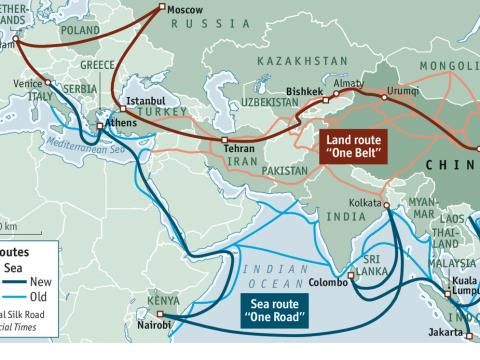
Overall, the spirit of the growing New Silk Road is fast moving from a simple east-south trade route towards a global program stretching across all of Africa, to the Middle East, to the High Arctic and Latin America. While this program is driven by a longer view of the past and future than most westerners realize, it is quickly becoming evident that it is the only game in town with a future worth living in.

While China has committed to the enlightened idea that human society is more than a “sum of parts”, the Cold Warriors of the west have chosen to hold onto obsolete notions of human nature that suppose we live in a world of “each vs. all”. These obsolete notions are premised on the bestial idea that our species is destined to do little more than fight for diminishing returns of scraps in a closed -system struggle for survival where only a small technocratic elite of game masters calling themselves “alphas” control the levers of production and consumption from above.

Thus far, President Trump has distinguished himself from other dark age war hawks in his administration by promoting a foreign policy outlook centered on economic development. This has been seen in his recent victories in achieving economic normalization between Serbia and Kosovo, and endorsing the Alaska-Canada railway last month. With the elections just around the corner and the war hawks flying in full force, it is clear that these piecemeal projects, though sane and welcomed are still not nearly enough to break the USA away from its course of war with China and towards a new age of win-win cooperation required for the ultimate survival of our species.

Protecting Information Space from Facebook’s Tyranny

By Gunnar Olson

Source: Land Destroyer

The recent attack aimed at New Eastern Outlook (NEO) and several of its authors once again exposes the infinite hypocrisy of US and European interests including across their media and among their supposed human rights advocates.

It also exposes the severe threat that exists to the national security of nations around the globe who lack control over platforms including social media used by their citizens to exchange information.

This lack of control over a nation’s information space is quickly becoming as dangerous as being unable to control and protect a nation’s physical space/territory.

Facebook’s Tyranny  

NEO and at least one of its contributors had their Facebook and Twitter accounts deleted and were accused of “coordinated inauthentic behavior,” according to Facebook’s “newsroom.”

Their statement reads:

In the past week, we removed multiple Pages, Groups and accounts that were involved in coordinated inauthentic behavior on Facebook and Instagram.

It also reads:

We removed 12 Facebook accounts and 10 Facebook Pages for engaging in coordinated inauthentic behavior that originated in Thailand and focused primarily on Thailand and the US. The people behind this small network used fake accounts to create fictitious personas and run Pages, increase engagement, disseminate content, and also to drive people to off-platform blogs posing as news outlets. They also frequently shared divisive narratives and comments on topics including Thai politics, geopolitical issues like US-China relations, protests in Hong Kong, and criticism of democracy activists in Thailand. Although the people behind this activity attempted to conceal their identities, our review found that some of this activity was linked to an individual based in Thailand associated with New Eastern Outlook, a Russian government-funded journal based in Moscow.

In this single statement, Facebook reveals about itself that it, and it alone, decides what is and isn’t a “news outlet.”

Apparently the blogs the deleted Facebook pages linked to were “not” news outlets, though no criteria was provided by Facebook nor any evidence presented that these links did not meet whatever criteria Facebook used.

While Facebook claims that it did not delete the accounts based on their content, they contradicted themselves by clearly referring to the content in their statement as “divisive narratives and comments” which clearly challenged narratives and comments established by Western media organizations.

The statement first accuses the pages of “coordinated inauthentic behavior,” but then admits they were only able to link the pages to a single individual in Thailand. How does a single person “coordinate” with themselves? Again, Facebook doesn’t explain.

Finally, Facebook reveals that any association at all with Russia is apparently grounds for deletion despite nothing of the sort being included in their terms of service nor any specific explanation of this apparent policy made in their statement. New Eastern Outlook is indeed a Russian journal.

Other governments, especially the United States, fund journals and media platforms not only in the United States, but around the globe. Facebook and Twitter, for example, have not deleted the accounts of the virtual army of such journals and platforms funded by the US government funded and directed via the National Endowment for Democracy (NED).

NED-funded operations often operate well outside of the United States, while NEO is based in Russia’s capital, Moscow. NED-funded operations often don’t disclose their funding or affiliations.

Ironically, the accounts Facebook deleted in Thailand were proficient at exposing this funding to the public.

The bottom line here is that Facebook is a massive social media platform. It is also clearly very abusive, maintaining strict but arbitrary control over content on its networks, detached even from their own stated terms of service. It is a form of control that ultimately and clearly works in favor of special interests in Washington and against anyone Washington declares a villain.

Facebook would be bad enough as just a massive US social media platform, but the real problem arises considering its global reach.

Looking at Information Space as we do Physical Space 

A nation’s information space is a lot like its physical space (or territory). The people of a nation operate in it, conduct commerce, exchange information, report news, and carry out a growing number of other economically, socially and politically important activities there. It is not entirely unlike a nation’s physical space where people conduct these same sort of activities.

A nation’s physical space would never be surrendered to a foreign government or corporation to control and decide who can and cannot use it and how it is used. But this is precisely what many nations around the globe have done regarding their information space.

Facebook is essentially that; a foreign corporation controlling a nation’s information space rather than its physical space. Facebook does this in many nations around the globe, deciding who can and cannot use that information space and how that information space is used.

A US corporation just decided that a Thailand-based writer associated with a political journal in Moscow is not allowed to operate in Thailand’s information space. It made that decision for Thailand. It admits in its statement that it worked, not with the Thai government or Thai law enforcement, but with “local civil society organizations,” almost certainly referring to US NED and corporate foundation-funded organizations like Human Rights Watch. Again, this is a clear violation of Thailand’s sovereignty, however minor this particular case may have been.

If it is not a legal violation of Thai sovereignty and an intrusion into their internal affairs impacting people living within their borders, it was certainly a violation and intrusion in principle.

Protecting Information Space

Nations like China and Russia understand the importance of information space.

Both nations also understand the critical importance of protecting it. Both nations have created and ensured the monopoly of their own versions of Facebook as well as other social media platforms. They also have their own versions of “Google” as well as platforms hosting blogs, videos, e-commerce and other essential services that make up a nation’s modern information space.

There is room for debate regarding how this control over Chinese and Russian information space is managed by their respective governments, but it is a debate the people of China and Russia are able to have, however restrictive it may or may not be, with people, organizations, corporations and governments within their own country, not with an untouchable Silicon Valley CEO thousands of miles away.

China and Russia created these alternatives and exercises control over their information space almost as vigorously as they defend their physical territory, understanding that their sovereignty depends as much on keeping foreign influence from dominating that space as it does keeping invading forces from crossing their border.

Smaller nations like Thailand, the subject of Facebook’s most recent “removal” campaign would benefit greatly from creating their own alternatives to Facebook, alternatives created, administered, and serving their interests rather than Silicon Valley’s or Washington’s.

Thais, for instance, cannot have any meaningful debate regarding Facebook’s policies, terms of service or their apparently arbitrary decision made independently of both since ultimately Facebook is a foreign corporation that does not answer to either the Thai people or the Thai government.

For China and Russia, both nations adept at exporting arms to smaller nations affording them the ability to defend their physical territory, an opportunity exists to export the means for these smaller nations to likewise defend their information space.

By aiding these nations in pushing out abusive monopolies like Facebook, Beijing and Moscow will also benefit by watering down US control over global information space and the news and points of view US tech corporations “allow,” and providing more space for the sort criticism and scrutiny NEO and its authors were engaged in right before Facebook removed them.

Starving and Bombed Children of Yemen Seek Entrapment in Flooded Thai Cave

By Robert J. Burrowes

While the world watched and waited with bated breath for the outcome of the substantial global effort – involving over 100 cave divers from various countries, 1,000 members of the Thai Army and 10,000 others in various roles – to rescue a team of 12 young football players and their coach, who were trapped inside a flooded cave in Thailand for 17 days, 850,000 children were killed by human adults in other parts of the world, many of them simply starved to death in Yemen or other parts of Africa, Asia and Central/South America.

But other children were killed in ritual sacrifice, many children were killed after being sexually trafficked, raped and tortured, many were killed in wars (including in Yemen), many were killed while living under military occupation, many died as child soldiers or while working as slave laborers, and vast numbers of other children suffered violence in a myriad other forms ranging from violence (including sexual violation) inflicted in the family home to lives of poverty, homelessness and misery in wealthy industrialized countries or as refugees fleeing conflict zones. See ‘Humanity’s “Dirty Little Secret”: Starving, Enslaving, Raping, Torturing and Killing our Children’.

Why did the world’s corporate media highlight the flooded Thai cave story so graphically and why do so many ordinary people respond with such interest – meaning genuine emotional engagement – in this story? But not the others just mentioned?

And what does this tell us about human psychology and geopolitics?

Needless to say, a great deal.

During the Thai cave drama, major corporate media outlets, such as the Washington Post and the BBC, were routinely releasing ‘breaking news’ updates on the status of the rescue effort. At high points in the drama, reports on this issue were overshadowing major political and other stories of the day. At the same time, there were no ‘breaking news’ stories on any of the many myriad forms of violence against children, which were (and are still) killing 50,000 children each day.

So why the corporate media interest in this essentially local (Thai) story about a group of 12 children trapped in a cave? And why did it attract so much support, including foreign cave divers, engineers and medics as well as technology billionaire Elon Musk, who flew in to investigate rescue options and assist with the rescue effort. They and their equivalents are certainly not flying in to rescue children in a vast number of other contexts, including where the provision of simple, nourishing meals and clean water would do wonders.

Well, in essence, the story was a great one for the corporate media, simply because it reported on something of little consequence to those not immediately impacted and enabled the media to garner attention for itself and other (western) ‘heroes’ drawn into the story while engaging in its usual practice of distracting us from what really matters. And it was an easy story to sell simply because the media could use a wide range of safe emotional triggers to draw people into the dramatized story without simultaneously raising difficult questions about the (appalling) state of the world and responsibility for it.

In simple language: like sports events and other forms of entertainment, the cave rescue provided a safely contained time and space for people to feel emotionally engaged in (this case) a real-life drama (with feelings like fear and relief allowed an outlet) while carefully reinforcing their unconscious feeling of powerlessness to do anything about it and their acceptance of this. This is why it was so important that expert rescue efforts were highlighted: the key media message was that ‘there is nothing you can do’.

Of course, in this context, this was largely true. The problem is that the corporate media coverage wasn’t aimed at this context. It was aimed at all those other contexts which it wasn’t even discussing, let alone highlighting: the vast range of issues – including the many ongoing wars and endless military violence, the threat of nuclear war, the climate catastrophe and innumerable threats to our biosphere posed by such activities as rainforest destruction, the refugee crisis, military occupations, as well as the ongoing violence against children in so many contexts as touched on above – that need a great deal of our attention but for which the elite uses its corporate media to distract us and reinforce our sense of powerlessness.

Another aspect of the story was the way in which it highlighted the ‘accidental’ nature of the incident: no one was really responsible, even the hapless coach who was just trying to give his young players an interesting excursion and whom, according to reports, none of the parents blamed.

By focusing on the logistical details of the story (the distance into the cave, the narrowness of certain passages, rescue possibilities, equipment, the threat of monsoon rains…), without attributing blame, the media could reinforce its endless message that ‘no-one’ is responsible for the state of the world. Hence, no individual and no organization is responsible for doing anything either. Again, this message is designed to deepen a sense of powerlessness and to make people disinclined to act: to make them powerless observers rather than active participants in their own fate.

As an aside, of course, it should be noted that in those contexts where it serves elite interests to attribute blame, it certainly does so. Hence, elites might contrive to blame Muslims, Russians, Palestinians or the other latest target (depending on the context) for some problem. However, in these contexts, the story of ‘blame’ is framed to ensure that elites have maximum opportunity to act as they wish (often militarily) while (again) engendering a sense of powerlessness among the rest of us.

The tragedy of the Thai cave incident is that one man died and many boys spent 17 days in a situation in which they were no doubt terrified and suffering genuine physical privation. But elite media cynically used the event to distract us from vitally important issues, including ongoing grotesque violence against children in a large number of contexts, and to reinforce ‘The Delusion “I Am Not Responsible”’.

In short, while the 12 boys and their coach were rescued after 17 days trapped in a flooded cave in Thailand which required a sophisticated and expensive international effort, during the same period around the world, 850,000 children were killed by human adults. Even in Thailand during this 17-day period, apart from those children violated and killed as a result of sex trafficking and other violence, 119 children drowned (at the rate of seven each day). See ‘Swim Safe: Preventing Child Drowning’. Obviously, these children were ignored because there was no profit in reporting their plight and helping to mobilize an international effort to save them.

So what can we do?

Well, for a start, we can boycott the corporate media and certainly not spend any money on it. What little truth it contains is usually of even less value (and probably gets barely beyond a good sports report). Instead, invest any money you previously spent on the corporate media by supporting progressive news outlets. They might not have reported events in relation to the Thai cave rescue but they do report on the ongoing violence inflicted on children in more grotesque circumstances such as the war in Yemen. They will also report and analyze important global events from a truthful and life-enhancing perspective and will often offer strategies for your engaged involvement.

If you want to understand why most people are suckered by the corporate media, whose primary function is to distract and disempower us, you will get a clear sense from reading how adults distract and disempower children in the name of ‘socialization’. See ‘Why Violence?’ and ‘Fearless Psychology and Fearful Psychology: Principles and Practice’.

If you want to nurture children to be powerful agents of change who will have no trouble resisting attempts (whether by the corporate media or any other elite agent) to distract and disempower them, you are welcome to consider making ‘My Promise to Children’.

If you are easily conned yourself, you will vastly enhance your capacity to discriminate and focus on what matters by ‘Putting Feelings First’ which will, among other things, restore your conscience, intuition and ‘truth register’, vital mental functions suppressed in most people.

You are also welcome to consider participating in ‘The Flame Tree Project to Save Life on Earth’ which maps out a fifteen-year strategy for creating a peaceful, just and sustainable world community so that all children (and everyone else) has an ecologically viable planet on which to live.

And for the vast range of other manifestations of violence against children touched on above, you might consider using Gandhian nonviolent strategy in any context of particular concern to you. See Nonviolent Campaign Strategy or Nonviolent Defense/Liberation Strategy.

You might also consider signing the online pledge of ‘The People’s Charter to Create a Nonviolent World’ which explicitly identifies the role of the corporate media, among many other elite agencies, in promoting violence.

Am I pleased that the 12 children and their coach in Thailand were rescued? Of course I am. I just wish that an equivalent effort was being made to rescue each of the 50,000 children we will kill today, tomorrow, the next day and the day after that….


Biodata: Robert J. Burrowes has a lifetime commitment to understanding and ending human violence. He has done extensive research since 1966 in an effort to understand why human beings are violent and has been a nonviolent activist since 1981. He is the author of ‘Why Violence?’ His email address is flametree@riseup.net and his website is here.

Robert J. Burrowes
P.O. Box 68
Daylesford, Victoria 3460
Australia

Email: flametree@riseup.net

Websites:
Nonviolence Charter
Flame Tree Project to Save Life on Earth
‘Why Violence?’
Feelings First
Nonviolent Campaign Strategy
Nonviolent Defense/Liberation Strategy
Anita: Songs of Nonviolence
Robert Burrowes
Global Nonviolence Network

Thailand: Who are the Anti-Regime Protesters?

THAILAND-P__c891587_131127_467

By Tony Cartalucci for Land Destroyer Report

December 3, 2013
– After clashes with police in Bangkok and the taking of several government buildings, anti-regime protesters prepared for the next phase of their resistance – the protracted encampment of key governmental centers. Thousands of protesters are now permanently entrenched in an area winding for nearly a mile through the capital city. They have built up a city within a city at three main locations that are linked by the constant stream of protesters coming and going to and from the protest sites.


Image: It appears that the anti-regime protesters know exactly who they are dealing with. While it is easier in speeches and sound bites to describe Thaksin Shinawatra and his hereditary dictatorship as the central source of Thailand’s problems, it is well understood amongst protesters that a vast network of foreign-funded NGOs are propping up the Shinawatra regime. Freedom House, for instance, lists as a trustee Kenneth Adelman, who concurrently served as Thaksin’s lobbyist. Pro-regime news website Prachatai, is directly funded by US State Department NGOs such as the National Endowment for Democracy (NED)

….


But who are these protesters and what do they want? Are they, as the Western media portrays them, anti-democratic elitists who refuse to to concede power to awakened rural masses? Or are they dangerously informed, socially and politically aware groups that are actively opposing the designs of foreign corporate-financiers and the proxy regime they have put into power in Thailand?

Who are Thailand’s Anti-Regime Protesters?

Walking from one end of the protest to the other can become an all day affair. The sites are spaced out slightly, but occupy long stretches of road turned into permanent encampments complete with food, water, medical services, bathrooms, shower stalls, exhibition booths and support points, media centers, stages, and hawker stalls. There are thousands of permanently encamped protesters and thousands more who come and go – even at low points in the day.

The extensive infrastructure of these protest sites resemble a fair or an exhibition. While a single theme has brought them together, a large number of diverse groups have marshaled their resources to build the sprawling encampments. There of course is the main camp and stage set up by a group of political parties including the main opposition party, the Democrats, the People’s Democratic Reform Committee, and the Network of Students and People for Reform of Thailand.

The “Yellow Shirt”  People’s Alliance for Democracy (PAD) also maintains a camp, as does Santi Asoke, a group that practices the Thai-equivalent of organic farming, homesteading, and grassroots community development. 


Images: Labor unions have a strong showing in the anti-regime camps. While the Shinawatra regime has hijacked the color red for his mobs as well as the socialist rhetoric that goes with it, real labor unions flying the color red actually engage in the protection of workers’ rights. 
….


There are throughout the camps, smaller student groups from across Bangkok, and a large number of labor unions. Some of the bigger unions include those working for state enterprises, THAI Airways, and the country’s nationalized telecom company, CAT.

And despite the most vitriolic and perhaps even racist accusations leveled against the protesters is that they represent ethnic Chinese-Thais. While there certainly are a lot of Thais of Chinese descent at the rallies, mainly because they have called Bangkok their home for generations, still the vast majority of the protesters are ethnic Thais and include people drawn to the capital to find better lives from Thaksin Shinawatra’s northeast political stronghold.

What Do They Want? 

We are told by the Western media that this is a “people’s coup,” an attempt to overthrow democracy. In reality, and entirely unlike Thaksin’s red shirts who simplistically demand “democracy,”  the anti-regime protesters have a list of cogent demands.

1. No Amnesty – This refers to an amnesty bill designed by and for Thaksin Shinawatra to absolve himself of a decade of plundering, lying, and mass murder. While the government eventually backed off, it was only because massive street protests were mobilized. When the Constitution Court declared the bill unconstitutional, the ruling regime announced that it no longer recognized the authority of the court – even while using constitutionality to condemn the protests. Even though it is considered “dead,” Thaksin’s entire future depends on it eventually passing. Protesters feel the only way to truly kill this bill, is to remove entirely the regime attempting such an absurd abuse of power.

2. Rollback Article 190 – Article 190 of the Thai constitution requires that all treaties be approved by the parliament before they can be signed. In 2004, this mechanism had prevented Thaksin Shinawatra from unilaterally passing a US-Thai free trade agreement, and was one of many attempted circumventions of the law that led to his ouster in 2006. His nepotist-appointed sister Yingluck Shinawatra, has now managed to amend it making it possible for her to unilateral approve treaties (specifically unpopular FTA’s). Protesters would like to see this reversed.

3. The Re-Nationalization of Thailand’s Oil – Thailand’s oil giant, PTT, was privatized and sold off  to foreign multinationals under Thaksin Shinawatra in late 2001. Tremendous wealth has been siphoned out of Thailand and sent overseas, particularly to Chevron, one of the many sponsors on the US-ASEAN Business Council that directly supports the Shinawatra regime.

 
Image: Another issue protesters have is with the changing of article 190 which allows the regime to now unilaterally sign treaties without the parliament’s approval. This will be used specifically to pass through a series of extremely unpopular free trade agreements with the regime’s Western sponsors. 
….
 
4. Keep Thailand Anti-GMO, Anti-IP – The current Thai establishment resisting the regime has been stalwartly defending against GMO and “intellectual property” (IP) laws pushed on them by the United States, the UK, and the EU. In fact, one of the main points of attack by Thaksin Shinawatra’s Washington lobbyists, was attacking the military council that ousted Thaksin for ignoring US pharmaceutical patents while producing cheaper drugs for poor patients. Regarding GMO, Monsanto has been desperately trying to overrun Thailand’s food security but to no avail. Would it surprise readers to know that the US-ASEAN Business Council directly supporting Thaksin Shinawatra and his political machine also includes Monsanto?

It becomes abundantly clear why corporate media houses like the BBC, Reuters, AP, AFP, CNN, MSNBC, and Australia’s ABC have attacked the protesters as “anti-democratic,” “elitist,” and “violent.” They represent for them a population they cannot trick, manipulate, and have their way with. They would like to see it marginalized and removed from Thailand’s political landscape so they can grind Thailand into the ground like so many other nations across the developing world. Thailand’s anti-regime protesters are making their stand – those that support true freedom and progress should stand with them.

Drone camera footage of the protests: