The Richest Sociopath in the World

By John Rachel

Source: Dissident Voice

Obviously the above pie chart is a put-on. It is well-documented that working conditions for most employees of Amazon are  abysmaldehumanizing, bordering on abuse we normally associate with slavery.

Moreover, the median employee’s salary under Jeff Bezos’ imperial lordship is $28,446. No one working as a regular there has paid off their credit cards and is driving to work in a Mercedes. 

Jeff Bezos is referred to as The Richest Man in the World and his personal fortune, while growing by $191,000 each minute, is currently estimated at $168 billion.

So …

$28,446 vs. $168,000,000,000? While I can acknowledge the simple math, I find the contrast of such numbers on a gut level difficult to grasp.

To get a handle on such inequality, let’s try approaching it from different angles.

One way to put the disparity into perspective is to recognize it takes Bezos just under 9 seconds to earn what Amazon’s median worker does in an entire year.

Another is to recognize that for a worker to go through Jeff Bezos’ current personal fortune — and, of course, it continues mounting at accelerating levels as I write this — at his/her current median annual income of $28,446 per year, WOULD TAKE 5,905,927 YEARS! That’s close to 6 million years!

For Jeff Bezos himself to go through his current $168 billion, assuming his earnings stopped dead this very moment — which as you and I know they won’t — SPENDING $1,000,000 A DAY, would take NEARLY 460 years. Yes, even spending $1 million a day, in the year 2475 he’d still have plenty of cash, tens of million of dollars mad money. We can feel confident that he wouldn’t be foraging through the dumpster behind 7-11. 

Now, further consider that while the $28,446 median salary is above the national poverty line for a single individual if that person is the sole breadwinner for a family of four, it is marginally above it, which is why many Amazon employees must rely on government assistance to keep from starving.

As well as calculation, I did some speculation — a simple exercise in imagination.

Apparently Bezos’ wealth generating machine is raking it in so fast, he’s currently making $11.5 million per hour … every hour … 24 hours a day … seven days a week. $11,500,000 per hour! 

So here’s what I was picturing in my mind’s eye … 

If for 40 hours of the 168 hours in a week, Bezos were willing to scrape by on a mere $5,840,000 per hour, he could give every one of his 566,000 Amazon employees a $10 per hour raise. Of course, the remaining 128 hours in each week, Bezos could continue earning his normal $11.5 million per hour, not having to share any of it with the pathetic slobs who work for him.

Rhetorical question: Does Jeff Bezos have any concept of what that $10 per hour increase would mean to his employees? 

I’m not going to even suggest here I’m offering this for Bezos to entertain. There are so many advantages to him both as a putative member of the human race and the employer of over a half million workers — advantages that are so OBVIOUS — if they haven’t occurred to him up until now, then his brain functions in ways beyond my understanding. For one thing, he could point to his new fig leaf of “generosity” and ask people to stop calling him a selfish prick. Second, Amazon employees I’m sure would respond to his largesse with greater company loyalty and increased tolerance for his onerous working conditions. He’d still be the richest SOB on the block and could mock the pauperish Bill Gates and Warren Buffett as pitiable wannabees.

Consider …

The most poorly paid Amazon employee now makes $12 per hour. The $10 per hour raise I proposed would boost those $12 per hour workers right up there with Costco employees, who make an average of $21 per hour. And with the across-the-board $10 per hour increase, Bezos’ higher paid employees would be earning among the finest wages in the world provided by a major corporation. 

And by golly, there’s a plus side to the plus side …

Bezos’s bold and gracious gesture would result in a public relations coup of cosmic proportions! Amazon would no longer be demonized — well, not quite as much — by us bleeding-heart lefties as a capitalistic scourge and one-way ticket to Hell for the future of mankind, even if its environmental record is appalling and its business model generally the stuff of steroid-laced neo-feudalism.

Granted, Bezos would have to do some belt-tightening. He’d have to watch his pennies but could probably manage it, eh? Maybe he could skip a couple meals and do some of his own weeding at his estate. After all, after lavishing the $10 per hour raise on all of his employees, he’d only be pulling in $1,705,600,000 per week. I know I know! Like me you’re probably getting all teary-eyed for the poor guy.

Let me get to the extremely anti-climactic conclusion of this lament qua analysis.

Since nothing will change until the system itself changes, meaning the one in place now that creates, incentivizes, and lionizes the obscenely wealthy — reference current holder of the Office of President of the United States of America — I can only recommend this …

We have been labeling Jeff Bezos as ‘The Richest Man in the World’. Yet, quite honestly I don’t personally know any human, man or woman, who behaves like this gluttonous chunk of self-indulgent meat. It actually makes me nauseous to think we’re members of the same species.

Thus, from now on let’s use the correct terminology. Let’s call Jeff Bezos what he really is: the Richest Sociopath in the World.

We could probably order bumper stickers to help correct the record … from Amazon, of course.

How To Recognize When Your Society Is Suffering A Dramatic Decline


By Brandon Smith

Source: Alt-Market.com

When historians and analysts look at the factors surrounding the collapse of a society, they often focus on the larger events and indicators — the moments of infamy. However, I think it’s important to consider the reality that large scale societal decline is built upon a mixture of elements, prominent as well as small. Collapse is a process, not a singular event. It happens over time, not overnight. It is a spectrum of moments and terrible choices, set in motion in most cases by people in positions of power, but helped along by useful idiots among the masses. The decline of a nation or civilization requires the complicity of a host of saboteurs.

So, instead of focusing on the top down approach, which is rather common, let’s start from the foundations of our culture to better understand why there is clear and definable destabilization.

Declining Moral Compass

There is always a conflict between personal gain and personal conscience — this is the nature of being human. But in a stable society, these two things tend to balance out. Not so during societal decline, as personal gain (and even personal comfort and gratification) tends to greatly outweigh the checks and balances of moral principles.

People often mistake the term “morality” to be a religious creation, but this is not what I am necessarily referring to. The concepts of “good” and “evil” are archetypal — that is to say they are psychologically inherent in most human beings from the moment of birth. This is not a matter of faith, but a matter of fact, observed by those in the field of psychology and anthropology over the course of a century of study.  How we relate to these concepts can be affected by our environment and upbringing, but for the most part, our moral compass is psychologically ingrained. It is up to us to either follow it or not follow it.

Watching how people handle this choice is a bit of hobby of mine, and I do take notes. You can learn a lot about the state of your environment by observing what people around you tend to do when faced with the conflict of personal gain versus personal conscience. It is saddening to admit that even though I live in rural America, where you are more likely to find self-reliance and cultural stability, I can still see a faltering nation bleeding through.

I have seen supposedly good people act dishonestly in business agreements. I have seen local institutions scam hardworking citizens. I have seen a court system rife with bias and a “good old boy” attitude of favoritism. I have seen local companies pretend to be benevolent contributors to the community while at the same time running constant frauds and rackets. I have even seen a few people within the liberty movement itself put the movement at risk with their own avarice, gluttony, narcissism and sociopathy.

Again, it is important to make a note of such people and institutions, for as the system continues its downward spiral it is these people that will present the greatest threat to the innocent.

As Carl Jung notes in his book The Undiscovered Self, there is always a contingent of latent sociopaths and psychopaths within any culture; usually about 10% of the population. In normal times, they, at least most of them, are forced into moral acclimation by the rest of the populace. But in times of decline, they seem to leak out of the woodwork like a slimy fungus. During heightened collapse, they no longer have to pretend to be upstanding and they show their true colors.

Most dangerous is when latent sociopaths or full blown sociopaths assume roles of leadership or power during the worst of times. With everyone distracted by their own plight, these people can become a cancer, infecting everything with their narcissistic pursuits and causing destruction in their wake.

Disinterest In Rewarding Conscience

During wider cultural collapse, it can become “fashionable” to see acts of principle as something to be scoffed at or ridiculed or to even see them as threats to the status quo. The concept of “going along to get along” takes precedence over doing what is right even when it is hard; this attitude is not relegated to the less honest people within society.

As a system collapses, a fog of apathy can result. Good people can become passive, scrambling to their individual corner of the world and hoping evil times will simply pass them by. The phrase “I just want to put all this behind me” is spoken regularly; but as we ignore the trespasses of terrible men and women, we also enable them. How? Because by doing nothing we allow them to continue their criminality, and we subject future persons and generations to victimization.

When doing the right thing is treated as laughable or “crazy” by what seems like a majority in the midst of widespread corruption, you are truly in the middle of a great decline.

In Christian circles, the idea of “the remnant” is sometimes spoken of. In Christian terms, this usually represents a minority of true believers surviving a tumultuous and immoral era. I see “the remnant” not so much as a contingent of Christians alone, but as a contingent of people that continue to maintain their principles and conscience when faced with unprecedented adversity. In the worst of times, these people remain stalwart, even if they are ridiculed for it.

Disinterest In Independent Effort

It is said that in this world there are two kinds of people — leaders and followers.  I’m not so sure about that, but I can see why this philosophy is promoted; it helps evil people in power stay in power by encouraging passive acceptance.

I would say that there are in fact two kinds of people in this world — people who want to control others and the people that just want to be left alone. In life sometimes we are both leaders and followers; we just have to be sure that when we lead we lead by example and not by force, and when we follow, we follow someone worth a damn.

In any case, passivity is not a solution to determining our roles in society. In most situations, independent action is required by every person to make the world a better place. Yet, in an era of systemic crisis, it is usually independent effort that is the first thing to go out the window. Millions upon millions of people wait around for someone, anyone, to tell them what they should be doing and how they should be doing it. In this way, society finds itself in stasis, frozen in a position of inaction.  Poisonous collectivism wins through mass aggression, but also through mass passivity.

In fact, when individualists do take action they can be admonished for it during times of societal breakdown, even if their actions have the potential to solve a problem. The idea that one man or woman (or a small group of people) could do anything about anything is sneered at as “fantasy” or “delusion.”  But mass movements of citizens working towards a practical goal are rare, and even more rare is when these movements are not controlled or manipulated to benefit the established order. It is not mass movements that change the world for the better, but individual people and small organizations of the dedicated, acting without permission and without administration.

It is these individuals and small groups that, over time and through relentless effort, inspire a majority to do what is necessary and right. It is these people that inspire others to finally take leadership in their own lives.

Individual Self-Isolation

I write often on the plight of the individual and individual rights within society, and I continue to see the factor of the individual as the most important element in any culture. A culture based on protecting and nurturing individualism and voluntarism is the only culture, in my view, that will ever be successful at avoiding full spectrum collapse. That said, the downside to overt individualism is the danger of self isolation. That is to say, when true individuals only concern themselves with their personal circumstances and ignore the circumstances of the rest of the world, they eventually set themselves up to be crushed by that world.

Organization on a voluntary basis is not only healthy but vital in the longevity of a society. The more people turn in on themselves and only care about their own general conditions, the easier it is for evil people to do evil things unnoticed. Also, self isolation in the wake of collapse sets individuals up for failure, as no one is capable of surviving without at least some help from a wider pool of knowledge and talents.

In a system based on corruption, the establishment will encourage self isolation as a means to control the populace. Or, they will offer a false choice, between self isolation versus mindless collectivism. The truth is there is always a middle ground. Voluntary organization and individualism are not mutually exclusive. I call this the “difference between community and collectivism.” A community does not supplant the individual, while a collective requires the complete erasure of individual pursuits and thought.

If you find yourself surrounded by people who refuse any organization, even practical and voluntary organization in the face of instability, then your society may be in the latter stages of a collapse.

Disaster Denial

Even as a crisis or collapse unfolds, if a society actually reels or reacts to it and takes note of the problem, there is hope for that society. If, however, that society willfully ignores the danger and denies it exists when presented with overwhelming evidence, then that society will likely suffer complete disintegration and will probably have to start all over from scratch — hopefully with a set of principles and ideals based on conscience and honor.

The strength of a culture can be measured by its willingness to self reflect. Its survival can be determined by its willingness to accept its flaws when they arise and its willingness to repair the damage done. Self-aware societies are difficult to corrupt or control. Only in denial can people be easily manipulated and enslaved.

If you cannot accept the reality of the abyss, you cannot move to avoid it or prepare yourself to survive the fall. I see this issue as perhaps the single most important element in the fight to save the portions of our society worth saving. Educating people on the blatant facts behind our own national decline can dissolve the wall of denial, and perhaps we will find when disaster strikes that there are far more awake and aware individuals ready to act than we originally thought.

Do Psychopaths Run the World?

what-people-think-psychopaths-are-streetdemocracy

By Nick Parkins

Source: Waking Times

“Our society is run by insane people for insane objectives. I think we’re being run by maniacs for maniacal ends and I think I’m liable to be put away as insane for expressing that. That’s what’s insane about it.” ~John Lennon (1940-1980), English singer and songwriter

Lennon and others externalise the apparent paranoia that wells up inside us. “The world has gone mad!” More often than not we partition this voice off, content to view the world as others prescribe it. But who are these others, and what do they want?

The term psychopath is often criminally misjudged, thanks largely to unhelpful portrayals of sick, twisted and violent psycho-character types in the popular media. This has led, by way of public ignorance, to the common belief that the psychopath has no function, role or place in open society. A swift offload that allows us, the apparent sane majority, to circumvent our worst fears.

Any notion that the psychopath is incapable of functioning in open society is, according to M.E. Thomas1 – a self-confessed sociopath – flawed. The question is not the capacity to function, but rather what capacity or form that function takes. As Thomas says, psychopaths and sociopaths share an intertwined clinical history; both can function, they just do so differently. And though we are left to muse on what mask that function may take, in many social situations they excel.

Competition Wins Out

Jean-Baptiste de Lamarck was a French biologist who advocated a theory of evolution widely rebuked in establishment circles. Lamarck’s major work was published in the same year Charles Darwin was born – who would go on to supplant Lamarck’s theory 50 years later. In Lamarck’s world cooperation prevailed over Darwinian competition as the driving mechanism of evolution.

According to authors G. Greenberg and M.M. Haraway,2 it was Darwin’s view that served to reflect and sustain a Victorian society tied to free market, capitalist and imperial values. His model supported a dog-eat-dog, life is hard, code of practice; the scientific valediction of the natural world as played out on a brutal, cold and insensitive landscape. Arguably the perfect environment for the aspiring modern day psychopath, and a prevailing view that the poet Tennyson described as nature, red in tooth and claw.

Snakes & Ladders

Although diagnosing definitive psychopathy in individuals remains somewhat of a grey area, attempts have been made to categorise psychological traits that set psychopathic personalities apart. Most prominent is the diagnostic check-list devised by renowned Canadian psychologist Robert Hare that is used to determine a categorical diagnosis of clinical psychopathy, or at best a category score.

According to Hare’s list, psychopaths display superficial charm, unbridled ego, and pathological lying and cold, calculated cunning to entrance their prey. They are often impulsive and irresponsible, and exhibit an absence of empathy and remorseless lack of guilt. These and other attributes, such as criminal versatility and a marked capacity to manipulate, deceive and control, mark them out as dangerous. These are traits that enable psychopaths to move into high-ranking positions of power and influence.

“We know much less about corporate psychopathy and its implications,” explains New York psychologist Paul Babiak, “in large part because of the difficulty in obtaining the active cooperation of business organisations for our research.”3 A dilemma that Hare disclosed to Jon Ronson, author of The Psychopath Test. “Prisoners are easy,” states Hare. “They like meeting researchers. It breaks up the monotony of their day. But CEOs, politicians…”4 According to Hare, these sharks are a different kettle of fish.

A rare study on psychopathy in the workplace conducted by Babiak, Neumann and Hare5 suggests that 1 in 25, or 4 per cent, of corporate executives display significant personality traits typical of psychopathy – an incidence four times that estimated in the general population. The study supports the claim that psychopaths can and in fact do achieve high ranking corporate status. We are left to speculate, but Hare concedes Wall Street may harbour 1 in 10 attracted to lucrative watering holes that are poorly regulated.6Factor this in and it’s not hard to see how the very lifeblood and identity of corporations and financial institutions can often run cold.

Arguably most startling, the study indicates that despite being classed as substandard managers, team players and attracting poor performance appraisals, executives that met the clinical threshold of psychopath were valued by their immediate superiors as creative and innovative, as good communicators and strategic thinkers.

In short, they may not always fly under the radar. Despite the blips, it is clear to American psychiatrist Hervey Cleckley7 that psychopaths possess the communication, persuasion and interpersonal skills to override any negative impacts on their career. A finding supported by the Babiak study: “some companies viewed psychopathic executives as having leadership potential, despite negative performance reviews and low ratings on leadership and management by subordinates.”8 According to the authors, this shows a proficiency to manipulate decision makers, a point made by psychologist Dennis Doren who observed in institutions the psychopath’s unerring ability to seek out and foster relationships with those of highest authority and demonstrate tremendous skill at influencing them.9

In many instances the chameleon-like ability of the psychopath to mimic its surroundings by reading and influencing colleagues through the art of deception, be it through self promotion or subtle persuasion, allows the snake charmer to hide his true skin and pass unchecked through social customs. Studies suggest psychopathy, in body or by proxy, can entrench itself at the top, but is this phenomenon relatively isolated, or has this scenario over the course of human history always prevailed?

As Above, So Below

As vice president and director of Governance Studies at the Brookings Institution, Darrell West analyses business and law school curricula, specifically, according to West “because business and law schools train the leaders of tomorrow.”10 In the course of his research West reviews course syllabi and conducts interviews with faculty members. He has also surveyed data on business and law school student perceptions. What he found was troubling.

“The social responsibility of business is to increase its profits,” states West, taking his lead from the title of a 1970 New York Times magazine article written by the highly-influential American economist and statistician, Milton Friedman. The article was unequivocal: according to Friedman, maximising shareholder value was a company’s sole responsibility.11

“Many schools do not require stand alone courses that provide broad conceptions on the purpose of the corporation in society,” says West. Of those that do, “many focus on the purpose of the corporation, with emphasis on how to maximise shareholder value, especially in law schools.”12 Instruction therefore is key, notes West, and will colour a student’s view of the world. In fact, West concludes, “business school surveys show that after completing school, students are more likely to see shareholder value as the most important goal of the corporation.”13

It was not that Friedman was a prophet. In hindsight, according to West, he helped shape the outlook of numerous business leaders, academics, and thought-leaders that ultimately served to affect America’s modern sense of purpose of the corporation. An inherent identity that helps shape the way business and law school students view their, often times, lack of responsibility to society even today.

In the real world, inevitable coldly-calculated equations play out on the one side to maximise profit and on the other to minimise loss. And like most mathematical equations they make little or no sense to the layman.

“Can you buy what you already own?” This was the equation facing all concerned when Canadian-based Nautilus Minerals Inc. purchased the licence in 2011 from the “Independent State of Papua New Guinea” (PNG) to mine deep-sea vent fields in sovereign waters off the country’s coastline. The answer, morally, of course, is no.

According to Sir Julias Chan, current Governor of New Ireland province in PNG, ethics are an intangible commodity, and unlike cold hard currency rarely stack up. “First, the state cedes exploration and production rights to foreign companies for next to nothing,” says Chan. In the case of PNG 10,000 kina, equivalent to US$4,000. “For this pittance, the foreign developer gets full control of all the wealth that can be taken from the ground.”14

“The next step is for the state to seek equity in the project, usually 30 percent in a mining project and 22.5 per cent in an oil or gas project,” explains Chan. “The state has ‘given away’ the entire resource to a foreign company, and now returns to buy what was already legally its own property, for a 30 percent interest in the project.” To PNG this meant 300 million kina, or US$118 million. “And, to do so, the state usually takes out a commercial loan rate that puts the country further into debt at high interest.”15 Today a common event whereby the state acts to castrate itself and its people to high finance.

Joel Bakan is a professor of law at the University of British Columbia, Canada. While those that run corporations are for the most part, good, moral people, says Bakan, the duty of the corporate executive is to the corporation’s business interests first and foremost. “The money they manage is not theirs,” explains Bakan. “They can no sooner use it to heal the sick… or buy a villa in Tuscany.” In the corporate world, good people are encouraged to behave badly. In fact, the sum of corporate parts are “singularly self interested and unable to feel genuine concern for others in any context. The corporation, like the psychopathic personality it resembles, is programmed to exploit others for profit.”16

Under such terms it is not difficult to envisage how a system can soon come to value and mimic its most deviant parts. Equally, how the parts over time can come to be shaped by the whole.

It’s Behind You

According to philosopher and author Aaron James, while the psychopath feigns moral action as a tool to manipulate others, the arsehole could well be a butt of equal contention. Unlike the prototypical psychopath, says James, the arsehole “traffics in and is moved by moral justification,” which leads to an “entrenched sense of special entitlement.”17

The perfect example, according to James, is Apple founder Steve Jobs who saw his sole obligation to society as implicitly tied to producing the products his consumers desired. James notes what Jobs’s best friend, Jony Ive, once told Business Insider: “when he’s frustrated… his way to achieve catharsis is to hurt somebody. And I think he feels he has a liberty and license to do that,” said Ive. “The normal rules of social engagement, he feels, don’t apply to him.”18

Worryingly, James says, “the arsehole’s reasoning is shaped by the moral justification his surrounding culture makes available to him.”19 For instance, according to Hare, many white-collar criminals are psychopaths. “They flourish because the characteristics that define the disorder are actually valued,” asserts Hare. “When they get caught, what happens? A slap on the wrist, a six-month ban from trading, [oh] and don’t give us the $100 million back.”20

Accordingly, not only does corporate culture control net arsehole production, but the quality of butt-heads produced. And, depending on the culture, says James, “an arsehole can be better or worse behaved than a psychopath.”21 A consoling thought.

Arguably it is no more comforting to know that the psychopath you had fingered all along is really an arsehole nurtured by a system that is, by way of inherent nature, socially deviant. If the reasoning of a typical arsehole is moved by moral justification, taken from his surrounding environment, then the ability of a psychopathic culture and/or system to shape its own governing class is implied.

They Gave Us Their Mind

The enduring strength of psychopathy lies in its ability to manipulate how others perceive it. But the innate ability of the psychopath or the system to shape our perceptions is not, in itself, entirely the reserve of the clinical psychopath.

We all play our part in the masquerade. Many of us partake in cosmetic enhancements and props that support our ego’s waltz through this porcelain world. Whatever the score, the Hare check-list has a number picked out for us all. In its pursuit of ultimate control, this is the greatest achievement of psychopathy; after all, what better way to predict by response a person or group, than to give them your mind?

The competitor’s urge to win at all cost is certainly pervasive. So, too, the trend of irresponsibility, most evident in the compensation culture that has crept into the social mindset, thanks to laws that restrict a person’s capacity to develop by way of ethics and moral concepts of right and wrong. How can you take responsibility for thoughts and concepts that are not your own? In the broad, rules and regulations teach us to hand over our power, a transaction that re-enforces itself in society according to Thomas. She says that given the choice between having power and giving it up to a ‘trusted’ entity, people often choose to give it up rather than take the responsibility that comes with it.22

In its apparent, endless quest to reinvent society in its own image, psychopathy perhaps has more than one expression. Recent research into social media habits throws up disturbing correlations between heavy Facebook use and socially aggressive narcissism. In one study users that scored highly on a Narcissistic Personality Inventory questionnaire, reports Damien Pearse, “had more friends on Facebook, tagged themselves more often and updated their news-feeds more regularly.” The research, the report states, “comes amid mounting evidence that young people are becoming increasingly narcissistic, and obsessed with self-image and shallow friendships.”23

In the same breath the media have ‘jokingly’ jumped on those abstaining from Facebook as highly suspicious and suspect – they could have something to hide. Facebook use is, of course, prevalent and ‘normal’.

An infinite number of media streams exist that entice us to see our reflection, drawing us into powerful undercurrents, and buffeting us from one bank to the next. We surface only to take breath, disorientated and confused, disconnected from our natural cues. But perhaps that’s the idea. Certainly it is the innate need to control and the power to wield it, at whatever cost, and without care, that fractures the pathological mind from the rest of us.

The God Complex

“Those who rise to power in the corporatocracy, are control freaks, addicted to the buzz of power over other human beings.” ~Bruce Levine, social critic & psychologist

In a competitive world there will always be those who actively seek out, justify or embrace traits of psychopathy as a route to success. For a surgeon, a cold detachment and cool head has its place. But glorifying the psychopath is a perilous path to tread. According to psychologist Linda Mealey, competition only serves to increase the use of antisocial and Machiavellian strategies and counteracts any increase in pro-social behaviour after success.

Spiralling societal separation, and re-enforcing detachment, sets a dangerous precedent, what James refers to as a sense of “entitlement born of cosmic grandiosity.”24 He cites oil baron John D. Rockefeller who viewed his wealth not in some Wild West American capitalist context that gave him free rein, but unapologetically, by divine right: “God gave me my money,”25 said Rockefeller.

This sense of divine entitlement, being chosen, as apart from society, has deeply disturbing parallels to contemporary wealth.

Jeff Greene is a multi-billionaire property investor and entrepreneur, and owns reportedly America’s most expensive home. Greene, who made his fortune betting on sub-prime mortgages, says Americans need to have “less things”: “America’s lifestyle expectations are far too high and need to be adjusted, so we have less things and a smaller, better existence,” lectured the 60-year old, who lets out the $195 million palatial estate in Beverly Hills to royal families and international dignitaries for hundreds of thousands of dollars a month.26

At its heart, assuming it had one, departments within the system, be they political, corporate or financial, select by lineage this mind; one willing to create, support and maintain it. “Figures such as J.P. Morgan, Randolph Hearst, and Mayer Rothschild,” argues author Stefan Verstappen, “are professional psychopaths that reach the pinnacle of the financial stage where they cause no less misery and destruction as their political counterparts.”27

As a result, examples of psychopathic conduct in high office are commonplace. Robert Kirkconnell is a decorated US Air Force combat veteran of 27 years, and an outspoken critic of the US government MK-ULTRA program that conducted a battery of callous psychological or ‘mind control’ tests on its own citizens. In American Heart of Darkness, Kirkconnell charges the presidential Rockefeller Commission, set up to investigate the CIA’s activities, which he says funded the program. Kirkconnell no longer sees his home as a constitutional republic, but as a pathocracy run by psychopaths.

Contagious Psychopathic Worldviews?

“I had to win at all costs, sometimes allowing the costs to flow unchecked, just to see the volume of my power.” ~M.E. Thomas

“Power is all I have ever really cared about in my life,” states Thomas. “Physical power, the power of being desired or admired, destructive power, knowledge, invisible influence. I like people enough that I want to touch them, mould them, ruin them,” says Thomas. “I want to exercise my power.”28 It’s nothing personal. It’s dietary. The idea of ruining people, she says, is simply delicious.

Thomas is not unique. The psychopath invariably plays with its food. In the process actively seeking to visit misfortune or suffering on others. Thomas regards herself as a white tiger – a beautiful and exotic pet but inherently dangerous. And whilst in her own words she considers herself tamed, inside she continues to grapple with a primal urge to destroy.

This mindset is not lost on society. In fact, it is a worldview captured succinctly in Michael Ellner’s personal state of the world address: “Just look at us,” he asks. “Everything is backwards, everything is upside down. Doctors destroy health, lawyers destroy justice, psychiatrists destroy minds, scientists destroy truth, major media destroys information, religions destroy spirituality and governments destroy freedom.” You can see his point. But to what extent does this world talked of by Ellner stem solely from blind pursuit of power and profit?

Is there a hidden systemic malevolence that creates fear and uncertainty; the chaos to warrant this chase? Is the malevolent mist, that evil intent we ascribe to heinous acts and misdeeds, illusory, an epiphenomena, a by-product of the psychopath brain? Or is it real, autonomous, and guiding the program? And does this distinction matter? Does it help us interpret, say, the rise in chronic illness, its origins and how the healing profession has become, as critics claim, a public relations buzz-term; managing symptoms for profit?

The world of Kirkconnell swings into focus. Are we all victims of systemic programming; of disorientation; an imbalance the predator incites in us to maintain and enforce its position and status?

Like a god, so much of what psychopathy is and does hides in plain sight. The psychopath appeals to its prey’s sense of empathy and faith in humanity. He is the blank slate onto which people project their hopes and ideals.

This realisation must dawn if we are to expose systemic psychopathy and confront wildly sinister possibilities, not least the darker identities and underlying motives upon which it is based.

Darwin Dorr is the director of research into psychopathology at Wichita State University, Kansas. “The majority of paedophiles are psychopathic,” says Dorr, “or at least manifest to a significant degree the psychological characteristics of psychopathy.”29

Such ties that bind power to its perversions are historic, endemic and persist to this day. Investigations surrounding an elite Sydney paedophile ring are only the tip of a cold and callous iceberg that threatens to sink a titanic raft of untruths. In the UK, the reputation of once respected DJ, television presenter, and establishment confidante, Jimmy Savile, sank when his penchant for children, dead bodies, and satanic rituals and foreplay was disclosed to a shocked population.

Questions are now being asked outside UK Home Office circles and its curious taste for celebrity trash cans. All of a sudden the term psychopath seems no longer sufficient. Are such people, the system they represent, and the entities they mimic and worship, beyond a check-list? Certainly UK and wider establishment attempts to stymie the truth only serve to disclose further the covert means and amoral control by which psychopathy operates as an integral part of the system.


Nick Parkins has a master’s degree in philosophy of the mind and likes to live outside the box. To read his work, or if you have a strange or unexplained experience you would like him to cover visit www.nickparkins.co.uk.

The above article appeared in New Dawn 152 (Sept-Oct 2015).

If you appreciate this article, please consider a digital subscription to New Dawn.

Footnotes

  1. M.E. Thomas, Confessions of a Sociopath: A Life Spent Hiding In Plain Sight, Crown Publishing Group, 2013
  2. G. Greenberg, M.M. Haraway, Comparative Psychology: A Handbook, Garland Reference Library of Social Science, Routledge, 1998
  3. P. Babiak, C.S. Neumann, R.D. Hare, “Corporate psychopathy: Talking the walk,” Behavioural Sciences and the Law, at http://web.natur.cuni.cz/~houdek3/papers/Babiak et al 2010.pdf
  4. J. Ronson, The Psychopath Test: A Journey Through the Madness Industry, Picador, 2011
  5. P. Babiak, C.S. Neumann, R.D. Hare, op. cit.
  6. R. Hare, www.hare.org/comments/comment2.html
  7. H.M. Cleckley, The Mask of Sanity: An Attempt to Clarify Some Issues About the So Called Psychopathic Personality, Mosby, 1976
  8. P. Babiak, C.S. Neumann, R.D. Hare, op. cit.
  9. B.J. Board, K. Fritzon, “Disordered personalities at work,” Psychology, Crime and Law, Vol. 11(1), 17-32, with reference to D. Doren, Understanding and Treating the Psychopath, Wile, 1987
  10. D. West, “The purpose of the corporation in business and law school curricula,” Governance Studies at Brookings, www.brookings.edu/~/media/research/files/papers/2011/7/19 corporation west/0719_corporation_west.pdf
  11. M. Friedman, “The Social Responsibility of Business is to Increase its Profits,” New York Times Magazine, 13 September 1970
  12. D. West, op. cit.
  13. D. West, op. cit.
  14. “PNG Leadership has been poor steward of resources,” The National, 20 April 2011, www.roland-seib.de/05/Seib-Pressespiegel-1.5.11.pdf
  15. Ibid.
  16. J. Bakan, The Corporation: The Pathological Pursuit of Profit and Power, Free Press, 2004
  17. A. James, “Ass-holes: a theory,” Nicholas Brealey Publishing, 2013
  18. D. Love, “16 Examples of Steve Jobs being a jerk,” Business Insider, 25 October 2011, www.businessinsider.com/steve-jobs-jerk-2011-10
  19. A. James, op. cit.
  20. R. Hercz, “Psychopaths among us,” www.hare.org/links/saturday.html
  21. A. James, op. cit.
  22. M.E. Thomas, op. cit.
  23. D. Pearse, “Facebook’s dark side: study finds link to socially aggressive narcissism,” The Guardian, 17 March 2012, www.theguardian.com/technology/2012/mar/17/facebook-dark-side-study-aggressive-narcissism
  24. A. James, op. cit.
  25. www.bartleby.com/73/1207.html
  26. J. Christie, “Multi-billionaire who gave a lecture about American’s ‘needing to have less things and live a smaller existence’ owns a staggering FIVE mansions…”, Daily Mail, 24 January 2015
  27. S. Verstappen, Defense Against the Psychopath: A Brief Introduction to Human Predators, Woodbridge Press, 2011
  28. M.E. Thomas, op. cit.
  29. D. Dorr, “The pedophile as psychopath,” 1998, in T. Millon, E. Simonsen, & M. Birket-Smith (Eds.), Psychopathy: Antisocial, Violent, and Criminal Behavior, 304-320, Guilford Press
  30. P. Gilbert, “An introduction to the theory and practice of compassion-focused therapy and compassionate mind training for shame based difficulties,” The Compassionate Mind Foundation, www.compassionatemind.co.uk/downloads/training_materials/1.Workbook_2010.pdf
  31. P. Gilbert, op. cit.

Why Are There So Many Psychopaths in Positions of Power?

what-people-think-psychopaths-are-streetdemocracy

By Anna LeMind

Source: Waking Times

A 2010 study that examined a sample of 203 individuals from different companies’ management development programs revealed something interesting. It was found that about 3% of business managers scored in the psychopath range while the incidence of psychopathy in the general population is approximately 1%. So why are there so many psychopaths in senior management positions?

The Study

A more recent study, published in 2014 in the Journal of Forensic Psychiatry and Psychology, shed new light on the behavior of psychopaths, which could explain this phenomenon.

During an experiment, a group of people were given a standard test of psychopathy. At the same time, the participants were shown a series of picture aimed to test their levels of empathy. For this purpose, the researchers measured their galvanic skin response to examine their emotional reaction to the shown pictures.

The research showed that psychopaths with average or high levels of intelligence were able to control their galvanic skin response. As a result of this, their responses appeared normal. At the same time, psychopaths with low IQ exhibited abnormal test results, which are typical for individuals with psychopathic tendencies.

What the Results Mean

Psychopaths are great manipulators, and this research provides new evidence for that. The results of the study suggest that psychopaths with high IQs are able to hide their true identity, faking their emotional responses and probably personality traits as well. As a result, they often show a different picture of themselves and trick others into believing this is their real self.

Carolyn Bate, the first author of the study, said:

“The ones who are at the top of businesses are often charming and intelligent, but with emotional deficits, as opposed to psychopaths who are quite erratic and tend to commit gruesome crimes and are often caught and imprisoned.”

She also thinks that psychopaths in positions of power could be far more than 3%, because if people are aware they are psychopathic they can also lie – they are quite manipulative and lack empathy.”

These findings are quite interesting to consider and could apply to other spheres except for the business world. I’m sure that if psychologists had the opportunity to study those in positions of political power, the figure would go beyond 3%. Being manipulative and able to fake one’s emotions is a quality that certainly helps one become a successful politician. Not even to mention that in order to reach the highest levels of political power, some lack of empathy and conscience is a must.

Dr. Paul Babiak writes in his book, Snakes in Suits: When Psychopaths Go to Work:

They are masters of impression management; their insight into the psyche of others combined with a superficial – but convincing – verbal fluency allows them to change their situation skillfully as it suits the situation and their game plan.”

Doesn’t this sound like most of our politicians? They are just playing their game, tricking people into believing that their concerns about the world and society are sincere. They pretend to care while in reality, they only want more power and money. And we don’t even need a study to know this for sure.

Democracy Is Dead

democracydictatormini_pic

Source: News Junkie Post

From the west to the east, and the south to the north of our global horizon, it is the same tableau: the horrendous killing fields of disaster capitalism where its cohorts of 18-wheelers, heavy road machinery and police patrol cars roam the landscape continuously and are turning us and the better principles of our humanity into countless road kills. Hell on Earth is to be our common fate, and we might have already reached a point of no return. The corporate hyenas and political vultures that generally constitute the global elite are joyfully feeding on the carcasses of justice and morality; rationality and empathy; common sense and the notion of public good; sound governance without corruption and equality before the law; and last but not least, freedom and fair governance through democracy.

Comparing this small group of depraved elite sociopaths, with not a trace of compassion or even consciousness to the scavengers of the natural world, is actually unfair to vultures and hyenas. Scavengers in nature have an important function in the ecosystem for their role of recycling waste. On the other hand, the few thousand rulers of global corporate imperialism are parasites weakening our common life force. If vultures are the useful garbage collectors of the natural world, the corrupt rulers of globalization are tics and leeches gorging on our blood. The British exit vote from the European Union, known as Brexit, has to be understood in the context of rejection of globalization. The global corporate world order has only worked for its masters but certainly not for the vast majority of the people, who are becoming the serfs of a new feudalism.

Calling the vote in favor of Brexit xenophobic doesn’t address the issues at stake. Cheap labor coming from Eastern Europe has served the interests of corporations and the rich very well, but it has had a negative impact on the welfare of British-born workers. This problem is general across the EU. The purpose of the EU was never to be a capitalist paradise where a free circulation of people, money, goods, and services would cater to the needs of multinational corporations, and where people ultimately would be uprooted to become the slaves of the so-called free market. The EU project was not centered on economic considerations but instead on cultural and social-value notions. It was a way out of the nightmare eras of World War I and World War II for founding members France and Germany. The formation of the EU was about a resolute rejection of war to embrace lasting peace. Other countries might follow the British people in their intention of leaving supra-national entities such as the EU. Paradoxically, the United Kingdom itself might disintegrate with the independence of Scotland, Wales, and Northern Ireland.

Globalists of all stripes are calling this nationalist revival narrow-minded and obscurantist. Their leading argument is that global problems such as climate change, overpopulation, and poverty require institutions with global authority. But what they should keep in mind is that those various supra-national institutions or entities, which started with stated good intentions, such as the United Nations, the World Bank, and the International Monetary Fund (IMF), not only have failed to solve any global problems but have, by their corrupt nature made them worse. In the case of the supra-national North Atlantic Treaty Organization (NATO), there is no pretense of being a do-gooder. The armed fist of the Orwellian empire is in the business of globalization of war with decisions made in Washington, DC.  In Orwellian times, many supra-national organizations behave like corporations under humanitarian pretenses, when they are in fact parasitic organisms depleting our strength. Meanwhile, no one represents We The People at all. In the world of humanitarianism for profit, public servants have vanished and been replaced by corrupt incompetent groups operating like crime families.

All members of the fake left advocate that the system must be changed progressively from within and that a collapse would be mainly a disaster for the poor and weak. This notion is as valid as to claim that a building destroyed by an earthquake is in need of some fresh window dressing. Regardless of the global elite’s arrogance, a systemic collapse is on its way and will exponentially take hold of the planet within two or three decades. The super-rich will eventually have nowhere to run or hide, and no private armies to protect them from the wrath of nature. Forcefully resisting the brand of globalization imposed on us by the thugs and slave drivers of disaster capitalism is a moral obligation all world citizens should embrace. When people in power live in the castle of their own lies, it is time to dismantle the fortress. When governance has lost all moral ground and reason, it is time to call for a revolution.

If, as human beings, we could understand that We The People should be all of us, regardless of geographic location, then perhaps the concept of globalization would serve a purpose and be beneficial. No workers in Europe and the United States should tolerate that people in places like Haiti, Vietnam, Bangladesh, and Honduras be paid slave wages; otherwise, down the line they will either lose their jobs or be exploited by the same corporations. Under the globalization of the plantation owners, the people are living in chains. Once upon a time, words like freedom, liberty, and democracy had meaning. They have largely been gutted out and are just empty shells, ghosts in a play of smoke and mirrors animated by the sinister masters of ceremony of the universal rat race. A first necessary step to take would be for all people still able to exercise free will and critical thinking to understand that what government and political representation has become is precisely the opposite of democracy. Voting under these kinds of circumstances is as delusional as giving substance to the figments of our own imaginations. When democracy is dead, it is time to boycott elections.


Gilbert Mercier is the author of The Orwellian Empire.

Lifting the Veil of Psychopathic Intrusion in Everyday Life

what-people-think-psychopaths-are-streetdemocracy

By Nozomi Hayase

Source: Dissident Voice

In recent years, the conception of the psychopath has gained a new upsurge of interest. Popular culture’s sensational image of Hannibal Lecter in the movie Silence of the Lambs and notorious killers like Ted Bundy have long cultivated public fascination. Now, awareness is spreading beyond these portrayals of outlandish criminals. More people are beginning to recognize the existence of socialized psychopaths who are not so outwardly violent.

Psychopaths walk among us, quietly blending into society. They could be corporate CEOs who exploit their workers, politicians who lie to get elected or Don Juan-like womanizers who inspire love to play with others hearts. Roughly 1-2 % of individuals in overall society are estimated to have been affected by this pervasive personality disorder (Neumann & Hare, 2008), yet some suggest these numbers are conservative and that many go unnoticed (Kantor, 2006).

The difficulty of accurately identifying psychopaths partly lies in a significant ambiguity among mental health professionals. Psychopathy expert, Robert D. Hare (1996) described the pivotal shift that occurred in 1980 with the publication of the third edition of the American Psychiatric Association’s Diagnostic and Statistical Manual of Mental Disorders (DSM-3), concerning the diagnosis of psychopathy. He noted how in this standard classification of mental disorder that has become the clinician’s bible, psychopathy was renamed antisocial personality disorder (ASPD), and defined by “persistent violations of social norms, including lying, stealing, truancy, inconsistent work behavior and traffic arrests” (para. 5).

Hare (1996) explained how this change was made based on the reasoning that affective and interpersonal traits that play a primary role in understanding psychopathy were difficult to measure. As a result, this diagnostic criteria of ASPD that mainly refer to criminal and outwardly observable antisocial behaviors, stripped off personality traits that are critical factors inherent in psychopathy. The trend of omitting the traits unique to this pathology has not been overturned to this day in the latest version of diagnostic manual DSM-5.

Along with this blurring of diagnosis, the very nucleus of this psychiatric disorder seems to have contributed to creating this lack of clarity. In his seminal work The Mask of Sanity, first published in 1941, psychiatrist Hervey M. Cleckley articulated how, among other personality traits such as their superficial charm, emotional poverty and egocentricity, the essential characteristic of psychopathy lies in its deceitful nature; hiding their lack of internal structure in a façade of normalcy.

Without knowing what to look for, even for professionals it is extremely hard to detect the psychopathic individual. This is made even more difficult when the very characteristics involve deception. All this has unleashed this dangerous population with few restraints, bringing great risk to the public. Their ability to fake and hide makes their exploitation invisible to the public eye. Oftentimes, people do not recognize abuse in a relationship until much of the damage is done. There are even cases where those who suffered harm do not realize they are victims.

Now, with the Internet and social media, a new level of education is happening. Through YouTube channels and online forums, those who experienced significant pain inflicted by these deranged individuals are coming together to gain validation that is desperately needed, yet often lacking in formal therapy. They are spouses, friends and co-workers, whose life had been ruined financially, mentally or emotionally. Those who had close encounters with these unknown members of society have seen the true face of psychopathy. With this sharing of first hand experience and witnesses outside lab experiments, the mystery of psychopathy is slowly being unveiled.

Hollowness as Elusive Core

In Without Conscience, Hare (1993) describes a psychopath as “a self-centered, callous, and remorseless person profoundly lacking in empathy and the ability to form warm emotional relationships with others, a person who functions without the restraints of conscience” (p. 2). The elusive core of this pathology is an absence of empathy. This sets those affected apart from the rest. People equipped with the ability to put themselves into another’s shoes often take this attribute for granted and don’t recognize the crucial role this seemingly innate aspect of human nature plays in forming a sense of one’s own self.

Humans are social beings. We exist in relation and develop identity through making connections with others at an emotional level. For instance, mother’s validation and proper attuning to her baby’s needs is crucial for infants to cultivate their sense of reality.

Psychopaths do not bond in the same way most people do and have not secured healthy attachment to caregivers. Because of this lack of attachment, argued by Hare (1993) as being a symptom of psychopathy, they cannot develop their identity based upon concrete reality.

Empathy unlocks the door into the world of a larger humanity, allowing one to experience higher emotions of joy, love and compassion. As the foundation of their identity is divorced from an empathic ground, psychopaths are emotionally held down in a “pre-socialized world”, lacking the full range of emotions (Meloy, 1988).

There is nothing inside to hold their identity together. As described in a T.S. Eliot’s poem, they are “hollow men… stuffed men -leaning together, headpiece filled with straw” (1934/1951, p. 56). Out of this vacuousness at the center of their personality, a head grows with an intelligence that is cunning and clever and primarily serves narrow selfish interests.

The being personified in this entity is enslaved by an internal void. They are a nobody and are driven to fill an insatiable hunger at any cost. Hare (1993) describes how they are “social predators who charm, manipulate, and ruthlessly plow their way through life, leaving a broad trail of broken hearts, shattered expectations, and empty wallets” (p. xi). Like going out on a hunt, they trespass people’s boundaries, dragging those who enter their proximity into their dark hole of nothingness. Anyone can become a target and once trapped, they are often sucked dry if not completely destroyed.

Idealization, Prelude to Seduction

The psychopath’s predation follows certain destructive relationship patterns that they repeat throughout their life. Regardless of differences in background, the victims all share similar cycles of abuse. Claudia Moscovici (2010) on her blog Psychopathyawareness describes these patterns in three stages; idealization, devaluation and then discard.

The first stage of a psychopathic relationship is idealization. This is a powerful and seductive period when psychopaths allure their potential victims. With superficial charm, this cunning and manipulative population enchants their targets. They put their new love interest on a pedestal, saying whatever the person wants to hear, transfixing whoever has become the unfortunate prey. It could be a whirlwind romance or promising partnership. Showered with flattery and adulation, targets often feel they are finally getting the appreciation they deserve in life.

In Snakes in Suits: When Psychopaths Go to Work, Hare and leading organizational psychologist Paul Babiak (2006) described this period as an assessment phase, where psychopaths examine their targets’ value and utility. They outlined the four main messages that psychopaths convey to their targets to create an instant connection, which they call the “psychopathic bond”. These are: 1) “I like who you are”; 2) “I am just like you”; 3) “Your secrets are safe with me”; 4) “I am the perfect friend, lover, partner for you” (p. 74-78).

If you are chosen, you will be adored and made to feel special. In their idealizing gaze, you are a center of the universe and can do no wrong. This newly acquainted friend or lover taps into fears, insecurity and deep wishes and morphs themselves into becoming anything their victim wants them to be.

Their seemingly caring gestures appear very genuine and many mistake this as empathy. Later, targets would reflect back on that exciting beginning and feel that they had been fooled. Hare describes how, unlike other mental disorders, psychopaths are rational and that “their behavior is the result of choice, freely exercised” (1993, p. 22). Although it is true that some of the deviants are calculative and indeed plot all the way through, at the same time, as Hare suggests, it is often done more instinctively and is not necessarily planned out. Their love-bombing during this phase rather appears to be an effect of their pathology, caused by impaired emotional processing.

Narcissistic Mirror and Erosion of Identity

So, why do they idealize? The idealization is a part of their pathological makeup. Psychopaths are truly outsiders. Without being a part of the world informed by empathy, they live in isolation and develop a sense of self that is divergent from the majority of society. Researchers point to the psychopath as having a “narcissistic and grossly inflated view of their self-worth and importance” (Hare, 1993 p. 38), a “grandiose self-structure” and a “psychopathology of narcissism” (Meloy, 2001, p. 11).

Although psychopathy is different from the other severe personality dysfunction recognized in the psychiatric community as Narcissistic Personality Disorder (NPD), its core of empathy deficit encompasses some of the features exhibited by NPD. Like those who suffer from excessive narcissism, they are trapped in mirrors of self-absorption and can’t recognize others as having their own autonomous thoughts and feelings. Through not being grounded in a consensual reality, they lack objectivity in their assessment of their own selves. For them, reality is constructed not based on who they really are, but who they want and believe themselves to be.

Being cut off from emotional reality, they are dead inside and can’t harvest their own energy. So they become parasites and feed off others’ emotional reactions. When they idealize their partners, they are unconsciously wanting to establish a connection to a source of creativity, that which gives emotional sustenance. Through weaving a fantasy and duping the other into their web of deception, they extract the life forces of the victim.

For psychopaths, relationship is the stage on which they enact their grandiose fantasy. Others are seen as an extension of themselves, as props that can be used. Anyone who comes their way is screened for their ability to perform a role that serves their plot. Their chosen targets become an object of desire and are pursued with great passion. With beam-like attention, they turn the spotlight on the victims. Through mirroring the victims’ positive qualities, predators disarm their prey and bring them under the luminary light of their narcissistic mirror. In this, the victim’s identity is eroded, yet with constant flattery and attention, they feel pumped up and elated.

This internal casting process can be seen as the psychopath launching a parallel persona upon their targets’ identity and then using it as a mask to create a rapport with their target. Yet, this mirroring is not consciously carried out. It is an automatic reflex that happens when they see something they want in others. Also, in some cases, in others’ positive attributes, these self-absorbed individuals see an idealized image of themselves. Like the Greek myth of Narcissus who falls in love with his own reflection in the water and then pines away, this is the effect of psychopaths seeing themselves in another’s reflection that is created by victims favorably responding to idealization and then trying to claim that image for themselves.

This mirroring starts to fade after the psychopaths successfully attach themselves to their hosts and is then replaced with mind games. Without being able to feel genuine emotions, the psychopath from a young age studied human behavior and learned how to effectively create a favorable response. They will slowly start to use this acquired skill of clever manipulation to keep their victims inside their delusional bubble and maintain control.

Devaluation and the Broken Mirror

What comes next is devaluation, marked as a betrayal with broken promises. This is when psychopaths who had always seen their partners in a positive light will begin to criticize and withdraw their attention. They slowly tear down the pedestal they once put victims up on and engage in subtle ridicule and condescension. Confused, the targets often internalize these criticisms and start becoming convinced that they are not as perfect as the psychopaths initially made them feel and that they have faults just like everyone else.

So, why does this devaluation happen? Many who have been taken for a ride wonder why this person who once seemed to love them so much, changes all of sudden. After psychopaths absorb their targets’ good traits, they cannot truly make them their own. There is nothing that can fill their bottomless pit and soon the void starts to grow again. When the initial thrill and excitement of a new target wears off, they get bored. This is the point where those who have been taken in by the charm start to see the mask slipping.

While victims begin to have a glimpse of the hollow man behind the mask of the manufactured persona, in the eyes of the psychopath, the victim ceases to be the perfect mirror that reflects back their delusions of grandeur. This happens because those who were made to be reflections in their mirror are living human beings. When victims start to act autonomously, as every human being is meant to do, these malignantly narcissistic individuals experience their self-image fluctuating and their mirror of absorption beginning to shatter.

In a sense, psychopaths are like bullets that have been fired by a gun they themselves barely understand. Distortion in the mirror that occurs during this devaluation process is experienced by them as an attack on their very existence. When they start to realize their idealized partner is fallible, they experience injury and believe that what pulled the trigger is coming from outside them. The love of life that they once declared quickly becomes malformed or damaged goods and the victim can even be seen as an object of hatred and contempt. The idealized self-image projected onto their partners now disappears from the mirror and they have to look for it elsewhere. Thus, rinse and repeat. They start chasing a new object of ‘affection’ and begin the idealization phase all over again.

Discarded

Little does the victim know, but the person they had fallen for is now gone. The psychopath has already abandoned their masks. At this point, if the target remains useful to them, they would be kept around, but otherwise, the psychopath moves on, as if the previous victim never existed. The duration of each stage leading up to the final discard depends on how fast the targets catch on to their ploy or whether they cease to be useful.

After being cast aside, the victims might feel they were handled dishonestly. They realize that their partners were fraudulent and that what they thought was love or true friendship was an illusion. Those who were wronged ask themselves if their partners really cared about them at all. When the psychopath’s mask is finally blown off and one begins to glimpse the monster behind that mask, one is flooded with questions that may never be answered.

It is important not to forget that these are ‘hollow men’. They suffer from shallow emotions and don’t have the same capacity for feeling as most people do. Hare (1993) describes their apparent lack of emotional depth, noting how they “seem to know the dictionary meanings of words but fail to comprehend or appreciate their emotional value or significance” (p. 128). They are “like a color-blind person who sees the world in shades of gray but who has learned to function in a colored world” (p. 129). Without having vital emotional understanding, they mimic experiences they can’t really understand through simulating emotions and parroting words that others use.

Without this understanding, those with empathy assume the other has a similar orientation and they fill in the blanks by projecting good attributes and interpreting words of those who lack feeling for others according to how they themselves use language. As the relationship unfolds beyond the initial stage, the differences eventually begin to emerge and the shallow consciousness behind the beautiful words starts to unravel.

As they are not tied to others by empathy, psychopaths have little connection to their own history and are uprooted from the shared narrative of humanity. They live in the present moment and are driven by immediate needs and instinctual desires. Just like the hollowness of their soul, their words are empty, rarely matching actions. They promise eternal devotion and love to describe their transient and fleeting desires of the here and now. For them there is no future; there is no past. There is nothing lasting that deeply connects them with other human fellows. They try on one personality and then drop it when it becomes inconvenient and move on to the next as needed.

The Anesthetized Heart

Who are these empty souls, masquerading as friends, lovers and good Samaritans, whose self-gratifying deeds in the end always leave their victims bewildered? The beast inside this small minority of society seizes everything that moves. They conquer the other, turning constantly evolving images of their targets into frozen snapshots of abstraction, which they then possess. In extreme cases, this is seen in the example of serial killers cutting up victims’ dead bodies and sleeping with them. Although the degree might be different, this deadening force that works within is the same. Psychopaths try to wipe out victims’ identity, so to make them a clean slate that can more perfectly mirror their grandiose self. Through lies and re-framing events, they attack their target’s memory, making them doubt their own sense of self. What awaits one toward the end of the relationship, if one does not disentangle themselves in time, can even be a total annihilation of the self.

The horror displayed by psychopathy and this moral bankruptcy often provokes an image of evil. In People of the Lie: The Hope for Healing Human Evil, psychiatrist and author Scott Peck (1983) defined evil as a reversal of the word ‘live’, and portrayed it as something that crushes life. They have what psychologist James Hillman (1992) characterized as an “anesthetized heart, the heart that has no reaction to what it faces, thereby turning the variegated sensuous face of the world into monotony, sameness, oneness” (p. 64).

Empathy is the foundation of conscience. It is to think with the heart and to feel with others. As the psychopath is delinked from the heart; from that which ties all living beings together, they are in a kind of darkness, where the light of conscience cannot reach. They lack insight about the situations they are in. They can intellectually understand what they are doing, but they cannot be fully conscious of their own actions and their devastating effects.

This state of numbness blinds them to the beast within that is devouring their victims. It makes them become deaf to the cries of those who are slowly dying. After the initial honeymoon phase, when their partners don’t defer to the psychopath’s version of reality and question this pretend world, they rush out and punish the victims. When victims strike back, psychopaths often fail to see how those abused are trying to defend themselves and instead twist reality. They deflect, misconstrue conversations to fit a narrative where they are constantly aggrieved and injured, making the victims look like the perpetrators.

No amount of love is enough for them. In the effort to communicate with these disordered individuals, words bounce back off their hardened hearts and become echos that the psychopath cannot hear. They rationalize and make one feel what they can’t feel about themselves, transmitting these emotions like poison. Victims are called too sensitive, crazy or imagining things and are further dragged into the predator’s one-sided reality.

Recovery and Path Back to the Self

How can those who are captured in a toxic web escape this snare and stop the bleeding that has been feeding this beast? These hungry carnivores sink their claws into their prey through the innate human trait of empathy and exploit our trusting nature. Most people relate to others in dialogue, giving a space for another’s perspective to enter in the interaction. Psychopaths on the other hand, not abiding by empathy, live in solipsism and operate in a monologue. While victims are trying to understand their perspective, these emotional vampires move quickly to direct the narrative, giving no chance for their targets to participate in the unfolding story as a co-creator. Through being nitpicky and accusative, they make victims back off from asserting their needs and make them walk on eggshells.

In relationship with these deadly individuals, what remains unconscious, both the dark and bright parts of oneself become vulnerable for manipulation. During idealization, the psychopath, like a puppeteer, attaches invisible heartstrings to their targets. They promise to fill a void, play on one’s vanity, mirroring back desires and enamoring victims with their own reflected beauty. Victims would not know until much later how this idealization was conditioning them to act in a certain way. What happens is a transfer of authority, where without realizing it, victims slowly begin to seek for approval from this pretend friend or partner.

When the devaluation phase sets in, if victims begin to become aware of what is happening and try to fortify their boundaries, they are often so deep in the fantasy and the fog of confusion becomes so thick that they cannot even see the path from which they came. They often suppress their emotions and take the blame in confrontational situations, so as not to ruin this idealized image.

Master manipulators know their prey, their insecurities and desires and know very well which buttons to push to get what they want. Chosen targets become like rats in a maze that leads to a shadow of one’s former self. As long as one performs according to the master’s plot, they will be rewarded, yet when one derails from their story, they are punished. Many desperately try to mend the broken mirror that once reflected their idealized self and focus on fixing what they have been brainwashed to believe as their ‘issues’.

For those who have been abducted into psychopaths’ illusory world, the path back to the self lies within. Recovery from the terror of the anesthetized heart calls for fully reclaiming one’s own empathy. This first requires one to have empathy for oneself; to claim all that was disowned within. Through accepting one’s own emotions without judgment no matter what they are, one can make a more conscious relationship with them and recognize how these emotions have been used as a tool for control. One can then break this hypnotic spell and take back the power to define one’s own reality.

Larger Social Implications

The relationship with a psychopath is like nothing experienced before. Until it is lived on a personal level, it is difficult to understand the depth of its destruction. This is a kind of psychological warfare being quietly waged upon victims. Psychopaths build up their targets and then knock them down under the rug. In the aftermath, victims may come to realize that they have been in a battle for their own life and that what is at stake is something even larger. This psychopathic invasion into one’s life is an infiltration of our deeper humanity. So, what is the agenda behind this dark force and where is it taking us?

Those with imperiled empathy are haunted by an eternal emptiness. They are thirsty, yet they can’t drink from the water of life. All they see are frozen images on the surface. This internal vacuum can turn into a monstrous desire for power that boils below consciousness. Philosopher Friedrich Nietzsche (1920) once signified this force when he urged his readers to make themselves “superior to humanity in power, in loftiness of soul, —contempt” (p. 38). This fighter for human freedom revealed to us the fall of human nature in his call for the will to power. He asked:

What is good? —Whatever augments the feeling of power, the will to power, power itself, in man. What is evil? —Whatever that springs from weakness. What is happiness? —The feeling that power increases—that resistance is overcome. (p. 42-43)

In praise of independence, psychopaths condemn human emotions such as attachment and jealousy as weakness and deny attributes like compassion and cooperation. They hijack and pull the development of the individual into becoming a reflection of their dry and deserted soul.

The encounter with psychopaths brings forth the fundamental question of evil; how can humanity confront what has become so terrifying in the world? Austrian philosopher Rudolf Steiner (1943/1977) once elucidated how the role of evil is to educate us to freedom and love:

Love would be impossible for man and freedom would be impossible for man without the possibility of sailing down into the abyss. A man unable of his own free decision to choose good or evil, would be a being only led on a leading string to a good which must be attained of necessity and who had no power to choose the good of his own fully purified will, by the love which springs from freedom. (p. 206)

We are born into the cradle of nature and unconsciously carried by affects and desires that stem from deep obligation to one another. Governed by this internal law of empathy, emotions that arise from a communal ground such as the sense of guilt or shame or simply feelings for the other, naturally regulate self-interests and restrain actions in consideration of others’ needs.

Unless we are ripped away from this protective world of empathy, how will we become aware of it and understand its true value? Psychopaths make us fight against ourselves. Their assault on empathy awakens us to the force that denies and breaks the bond of brotherhood. It gives us an opportunity to find the strength within to resist this will to power. By being pushed to the edge, we are asked to uphold out of free will all that makes us human.

When one fights this battle consciously, one can see this ‘evil’ for what it truly is. Hare (1993) shared a view held by some investigators that “behind Cleckley’s ‘mask of sanity’ lies not insanity but a young child of nine or ten” (p. 169). Like poet Rainer Maria Rilke’s myth of dragons being transformed into princesses at the last moment, perhaps these frightening members of society are a part of our own humanity that is “waiting to see us just once being beautiful and courageous” (1992, P. 85).

When we find courage to turn to what has become so dark, we find ourselves anew in those who are forgotten or condemned –within the shadows of man. We become survivors and begin to understand the true meaning of this battle.

One day, a stranger knocked at the door and opened our eyes to a side of humanity that we didn’t know existed. Darkness had a gift. It let us see the light that shines from within. With this light, mankind may find its true path toward evolution, becoming a species that can truly love. This is our salvation, where lies the potential for redemption of ourselves and the world.


Nozomi Hayase, Ph.D., is a writer who has been covering issues of freedom of speech, transparency, and decentralized movements. Her work is featured in many publications. Find her on twitter @nozomimagine Read other articles by Nozomi.

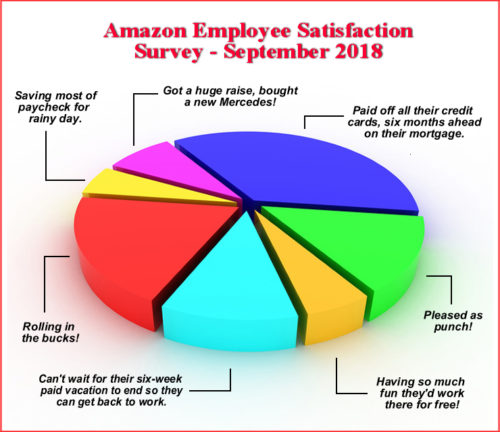
Inside the Psyche of the 1%

na50_3514938_1_px_470_

Don Fitz, editor of Synthesis/Regeneration, recently wrote an illuminating overview of what current scientific studies can tell us about psychopaths in positions of power. In the following passage he examines why the psychiatric establishment has focused less on “successful psychopathy” than on other anti-social personality disorders:

The concept of “successful psychopath” is not new. An early text described “complex psychopaths” who were very intelligent and included unscrupulous politicians and businessmen. [6] By the 1970s it was more widely recognized that “this category includes some successful businessmen, politicians, administrators.” [7] In other words, the unsuccessful psychopath might go to jail for swindling dozens of people with home improvement scams while successful psychopaths might swindle millions with bank deals, get bailed out by friends in government, and never spend a day in jail.

Perhaps the most fascinating aspect of the medicalization of the disorder is how the psychiatric establishment departed from science in order to grant partial exemption from being characterized as psychopaths to the wealthy. According to the Diagnostic and Statistical Manual of the American Psychiatric Association, in order to receive a diagnosis of “anti-social personality disorder” (i.e., psychopathy) a person must exhibit at least 3 of 7 listed behavior patterns. These include “arrest,” “physical fights or assaults,” and “failure to sustain consistent work behavior.” [8] This means that those who can pay off cops (or never have charges pressed against them due to their social status), or pay someone else to commit violence on their behalf, or own companies instead of having to work for a living are all less likely to receive an official label of “psychopath.”

An increasing number of psychologists are becoming aware that traditional research was limited by the bias of only looking at people in jail. One wrote that subjects in psychopathy research “were usually institutionalized at the time of testing, and consequently our research may not accurately capture the internal structure and dynamics of the successful antisocial or psychopathic individual.” [9]

Support for the concept of successful and unsuccessful psychopaths is provided by the discovery that the “Psychopathic Personality Disorder” syndrome actually has two factors. [10] Statistical analyses have revealed an “emotional detachment” factor, which includes superficial charm and skill at manipulating others, as well as an “anti-social behavior” factor, which includes poor impulse control and the tendency to engage in activities that are illegal.

Multiple studies have confirmed that run-of-the-mill psychopaths (often studied while in jail) score particularly high on anti-social behavior while successful psychopaths score higher on emotional detachment factors. For example, Babiak [11] looked at “industrial psychopaths” and found that they scored higher on “emotional” factors than “deviant life style” factors. Functioning smoothly in the corporate world, they had a “charming façade” that allowed them to easily manipulate others.

In a study of “disordered personalities at work” other researchers [12] were able to give personality tests to business managers and chief executives. They contrasted their personality scores to psychiatric patients and “mentally disordered offenders.” Compared to the mental patients, the corporate executives showed greater “emotional” components of personality disorder and less “acting out” (such as aggressiveness).

There were no clear-cut differences between “psychopaths” and “normals.”
The authors concluded that “participants drawn from the non-clinical population [i.e., business managers] had scores that merged indiscernibly with clinical distributions.” There were no clear-cut differences between “psychopaths” and “normals.” The most likely explanation of psychopathy is that, like any other personality dimension, it has a bell-shaped curve: a few people have almost none of the characteristics, most people have some characteristics of psychopathy, and a few people have a lot. The most visible outlets for people high on psychopathy scales are petty con artists and corporate conniving. Operating in different worlds, their psychopathy expresses itself in different ways.

Now that it is clear that a streak of psychopathy runs through the 1%, it would be worthwhile to go back to those who espouse that “there is no ethic which requires we treat him [the psychopath] as we treat other adults” and ask if that would apply to corporate psychopaths as well. Will editors of scholarly volumes seek out articles heaping abuse on the 1% with the same vigor with which they find articles despising prison inmates? Will academics proclaim that “public health needs” dictate that we suspend civil liberties of corporate executives even if they “have not been convicted of any crime?” Will professors compare the “needed treatment” of the 1% to the “necessary slaughter” of animals?

Since academics know very well where funding for their research comes from, my guess is that they will be a wee bit less harsh on the corporate class than the jailed burglar who provides no grant money. We can be confident that the Tea Party will not be proposing that, if corporate psychopaths who blast the tops off of mountains wreak a thousand times the havoc of petty thieves who steal copper wire from air conditioners, then their punishments should be 1000 times as great.

Yet, it is important not to overstate the evidence and suggest that every capitalist is a psychopath. Not all corporate executives score high on scales of psychopathy. This is likely because many actually believe their ideology of greed makes for a better world.

Fitz also offers plausible explanations for various studies indicating that, on average, test subjects of a higher income have lower levels of empathy while test subjects of a lower income have higher levels of empathy:

Compassion reflects the opposite of psychopathy. When those with wealth and power plan to strangle social security, they never say they intend to hurt people, but rather they want to help them stand on their own. When corporations drive native people from forests, they tell us it is part of their grand scheme to stop climate change. Are we to believe that they are just as compassionate as everyone else…but that they reveal their compassion in their own way? There is now good evidence that there are, in fact, class differences in levels of compassion.

Social class could be linked to compassion more than to any other emotion.
By definition, the rich and powerful have more material resources and spend more of their time telling others what to do. Those with fewer material resources get told what to do. As a result, the rich value independence and autonomy while those with less money think of themselves as more interdependent with others. [13] In other words, the rich prize the image of the “rugged individual” while the rest of us focus on what group we belong to.

How do people explain the extremely unequal distribution of wealth? Those with more money attribute it to “dispositional” causes—they believe that people get rich because their personality leads them to work harder and get what they deserve. Those with less money more often attribute inequality to “external” factors—people’s wealth is due largely to events beyond their control, such as being born into a rich family or having good breaks in life. [14]

People with fewer financial resources live in more threatening environments, whether from potential violence, being unable to pay medical bills, or fearing the possibility of being evicted from their homes. This means that social classes differ in the way that they view the world from an early age. Children from less financially secure homes respond to descriptions of threatening and ambiguous social scenarios with higher blood pressure and heart rate. [15] Adults with lower incomes are also more reactive to emotional situations than are those with more money.

This means that people with fewer financial resources are more attentive to others’ emotions. Since low income people are more sensitive to emotional signals, they might pay more attention to the needs of others and show more altruism in response to suffering.

This was the thinking behind research linking higher income to less compassion. In one study people either watched a neutral video or one depicting a child suffering from cancer. People with lower income had more change in their heart rate and reported feeling more compassion. But they did not rate other emotions as higher. Social class could be linked to compassion more than to any other emotion. [16]

In another study, people reported their emotions toward a partner when the two of them went through a hypothetical job interview. Lower income people perceived more distress in their partners and expressed more compassion toward them. Again, they did not report more intense feelings of other emotions. Nor did participants show more compassion toward people with the same income level as their own. [17]

Like most psychological research, these findings are limited by their use of university students. This makes it hard to conclude that their findings apply to those not in school. Of course, it is quite possible that effects would be even stronger in situations that are far more intense than the somewhat mild experiences that occur in psychological laboratories. A greater problem is interpreting psychological findings as showing absolute differences between groups rather than shades of grey.

It would not be accurate to claim that research proves that the 1% have no compassion while all of the 99% do. But it strongly implies that the 1% feel less compassion, whether watching a videotape of suffering or participating in a live social interaction. Also, lab studies are consistent with findings that people with fewer financial resources give a higher proportion of what they do have to charity. In economic game research, they give more to others. [18]

The greatest reason is the huge jump in happiness as people move out of poverty …
This line of research confirms that (1) people with fewer financial resources identify with a larger “in-group;” (2) “attention to and recognition of suffering is a prerequisite step before compassion can take place;” and (3) “moral emotion is not randomly distributed across social classes…” [19] Compassion toward the suffering of others is less likely among the 1%.

He follows this with a recap of studies indicating how once the accumulation of wealth and material possessions get people above poverty level, it generally doesn’t correlate to increased levels of happiness. There tends to be a “tolerance” effect for happiness derived from wealth while social connection and altruism are more important for sustained happiness for most non-psychopaths. In his conclusion, Fitz argues that for corporate psychopaths, obtaining wealth and power is an addiction with harmful consequences for everyone and the entire planet, and it’s a societal problem requiring nothing less than a cultural transformation to solve:

The 1% could easily find compassion getting in their way as their actions affect an increasing number of lives. Gaining enough wealth to move out of poverty makes a significant difference in the life satisfaction of a person who has little. Gaining the same amount of wealth has no effect on the happiness of the very rich. They must grab the wealth of many impoverished people in order to have a perceptible increase in happiness. As for a drug addict, the rush from an increase in material possessions of those who already have more than enough is merely a temporary fix.

Soon they will have to prevent even more from rising out of poverty if they are to get another short-term happiness rush. Whether the rush is from the actual possessions or the power that they manifest, it still won’t be enough. They must increase the rate of wealth accumulation that they push through their veins. If those with spectacular quantities of obscene wealth are to get their next high, they cannot merely snort enough happiness objects to prevent masses of people from rising out of poverty—they have to manipulate markets to grind an ever-increasing number into poverty.

The petty psychopath and the grand corporate psychopath seek happiness through the act of obtaining material possessions as much as having them. A major difference between them is that the grand psychopath has the ability to cause so much harm. Even more important, the amount of harm that corporate psychopaths cause grows at an exponential rate. Their financial schemes are no longer millions or billions, but now trillions. Not content to drive individual farmers off their land, they design trade deals that force entire countries to plow under the ability to feed their own people and replace it with cash crops to feed animals or produce biofuels.

Finding that the pollution of small communities generates insufficient funds, they blow off the tops of mountain ranges for coal, raze boreal forests for tar sands, attack aquatic ecosystems with deep sea drilling, and contaminate massive natural water systems by mining gold or fracking for gas. While the petty psychopath may become proficient enough to become a godfather, the grand psychopath is driven not merely to planetary destruction but to a frenetic increase in the rate of destruction at precisely the moment when the tipping point of climate change is most haunting. A natural question might seem to follow: Would getting rid of the current batch of corporate psychopaths benefit the world greatly? Actually, no. It would do no good whatsoever because what psychologists call the “reward contingencies” of the corporate world would still exist. The fact that capitalism prizes accumulation of wealth by the few at the expense of the many would mean that, even if the worst corporate criminals disappeared, they would soon be replaced by marketplace clones.

Progressives should avoid using the same “categorical” model so adored by right wing theorists for its utility in hating the poor. A much better explanation for psychopathy among the 1% is that the corporate drive to put profits before all else encourages norms of manipulating people without compassion. The more readily corporate leaders succumb to this mind set, the more likely they will be to climb the ladder. As the corporate mentality dominates society, it reproduces its attitudes and expectations of behavior throughout every organization, institution and individual it touches.

In challenging what the market does to our souls, Alan Nasser said it so well:

A certain kind of society tends to produce a certain kind of person. More precisely, it discourages the development of certain human capacities and fosters the development of others. Aristotle, Rousseau, Marx and Dewey were the philosophers who were most illuminating on this. They argued that the postures required by successful functioning in a market economy tend to insinuate themselves into those areas of social intercourse which take place outside of the realm of the market proper. The result, they claimed, was that the arena for potentially altruistic and sympathetic behavior shrinks over time as society is gradually transformed into a huge marketplace. [35]As mentioned, there are differences in compassion and types of psychopathy between high and low income people. But the differences are not large. Perhaps, even in the corporate board room, many feel the old norms of group loyalty. It is also possible that differences are small, not because of the unwillingness of corporate executives to be ultra-manipulative, but because capitalism pushes everyone toward a “use people” mode.

Thus, building a new society involves going beyond equalizing material wealth. It means changing the core nature of interpersonal relationships. This requires vastly reducing the emphasis on material possessions. Relationships of people to people can never flourish as long as relationships of people to objects reign supreme.

As long as society continues to be deeply divided between those who tell others what to do and those who get told, it will not be possible to establish the emotional sharing that is the basis of widespread altruism. If the 1% are to develop the same level of understanding of others that the 99% has, they will need to walk in their shoes. If they continue to be the ones who live their lives telling others what to do while the rest of us continue being told what to do, they will not develop levels of compassion typical of the 99%.

This means that in office jobs, they should be able to share the joys of typing letters rather than ordering others to type for them. If we decide mining is necessary, those who are now the 1% should get to know that work life. In work at home, they should not be excluded from washing toilets but should participate in the same human activities as the rest of society. Creating a world of universal compassion requires a world of shared experiences.

Read the full article here: http://www.greens.org/s-r/60/60-06.html