

Source: CrimethInc.
Have you noticed—exhortations to indulge yourself are always followed by suggestions? Adherents of doctrines seek footholds to claim territory within you, salesmen grasp for handles to jerk you around . . . from new-age prophets to advertisers, from pornographers to radicals, everyone exhorts you to “pursue your desires,” but the question remains: which ones? The “real” ones? Who decides which those are?
This just makes it clear what’s going on: a war for your soul on every front. And those much talked-about desires are all constructed, anyway—they change, they’re dependent on external factors, culture, the whole context and history of our society. We “like” fast food because we have to hurry back to work, because processed supermarket food doesn’t taste much better, because the nuclear family—for those who still have even that—is too small and stressed to sustain much festivity in cooking and eating. We “have to” check our email because the dissolution of community has taken our friends and kindred far away, because our bosses would rather not have to talk to us, because “time-saving” technology has claimed the hours once used to write letters—and killed all the passenger pigeons, besides. We “want” to go to work because in this society no one looks out for those who don’t, because it’s hard to imagine more pleasurable ways to spend our time when everything around us is designed for commerce and consumption. Every craving we feel, every conception we form, is framed in the language of the civilization that creates us.
Does this mean we would want differently in a different world? Yes, but not because we would be free to feel our “natural” desires—no such things exist. Beyond the life you live, you have no “true” self—you are precisely what you do and think and feel. That’s the real tragedy about the life of the man who spends it talking on his cell phone and attending business seminars and fidgeting with the remote control: it’s not that he denies himself his dreams, necessarily, but that he makes them answer to reality rather than attempting the opposite. The accountant regarded with such pity by runaway teenage lovers may in fact be “happy”—but it is a different happiness than the one they experience on the lam.
If our desires are constructs, if we are indeed the products of our environment, then our freedom is measured by how much control of these environments we have. It’s nonsense to say a woman is free to feel however she wants about her body when she grows up surrounded by diet advertisements and posters of anorexic models. It’s nonsense to say a man is free when everything he needs to do to get food, shelter, success, and companionship is already established by his society, and all that remains is for him to choose between established options (bureaucrat or technician? bourgeois or bohemian? Democrat or Republican?). We must make our freedom by cutting holes in the fabric of this reality, by forging new realities which will, in turn, fashion us. Putting yourself in new situations constantly is the only way to ensure that you make your decisions unencumbered by the inertia of habit, custom, law, or prejudice—and it is up to you to create these situations. Freedom only exists in the moment of revolution.
And those moments are not as rare as you think. Change, revolutionary change, is going on constantly and everywhere—and everyone plays a part in it, consciously or not. “To be radical is simply to keep abreast of reality,” in the words of the old expatriate. The question is simply whether you take responsibility for your part in the ongoing transformation of the cosmos, acting deliberately and with a sense of your own power—or frame your actions as reactions, participating in unfolding events accidentally, randomly, involuntarily, as if you were purely a victim of circumstance.
If, as idealists like us insist, we can indeed create whatever world we want, then perhaps it’s true that we can adapt to any world, too. But the former is infinitely preferable. Choosing to spend your life in reaction and adaptation, hurrying to catch up to whatever is already happening, means being perpetually at the mercy of everything. That’s no way to go about pursuing your desires, whichever ones you choose.
So forget about whether “the” revolution will ever happen—the best reason to be a revolutionary is simply that it is a better way to live. It offers you a chance to lead a life that matters, gives you a relationship to injustice so you don’t have to deny your own grief and outrage, keeps you conscious of the give and take always going on between individual and institution, self and community, one and all. No institution can offer you freedom—but you can experience it in challenging and reinventing institutions. When school children make up their own words to the songs they are taught, when people show up by the tens of thousands to interfere with a closed-door meeting of expert economists discussing their lives, that’s what they’re up to: rediscovering that self-determination, like power, belongs only to the ones who exercise it.
Shout it over the rooftops: Culture can belong to us. We can make our own music, mythology, science, technology, tradition, psychology, literature, history, ethics, political power. Until we do, we’re stuck buying mass-produced movies and compact discs made by corporate mercenaries, sitting faceless and immobilized at arena rock performances and sports events, struggling with other people’s inventions and programs and theories that make less sense to us than sorcery did to our ancestors, shamefacedly accepting the judgments of priests and agony columnists and radio talk show hosts, berating ourselves for not living up to the standards set by college entrance exams and glamour magazines, listening to parents and counselors and psychiatrists and managers tell us we are the ones with the problems, buying our whole lives from the same specialists and entrepreneurs we sell them to—and gnashing our teeth in secret fury as they cut down the last trees and heroes with the cash and authority we give them. These things aren’t inevitable, inescapable tragedies—they’re consequences of the passivity to which we have relegated ourselves. In the checkout lines of supermarkets, on the dialing and receiving ends of 900 numbers, in the locker rooms before gym classes and cafeteria shifts, we long to be protagonists in our own epics, masters of our own fate.
If we are to transform ourselves, we must transform the world—but to begin reconstructing the world, we must reconstruct ourselves. Today all of us are occupied territory. Our appetites and attitudes and roles have all been molded by this world that turns us against ourselves and each other. How can we take and share control of our lives, and neither fear nor falter, when we’ve spent those lives being conditioned to do the opposite?
Whatever you do, don’t blame yourself for the fragments of the old order that remain within you. You can’t sever yourself from the chain of cause and effect that produced you—not with any amount of willpower. The trick is to find ways to indulge your programming that simultaneously subvert it—that create, in the process of satisfying those desires, conditions which foster new ones. If you need to follow leaders, find leaders who will depose themselves from the thrones in your head; if you need to “lead” others, find equals who will help you dethrone yourself; if you have to fight against others, find wars you can wage for everyone’s benefit. When it comes to dodging the imperatives of your conditioning, you’ll find that indulge and undermine is a far more effective program than the old heritage of “renounce and struggle” passed down from a humorless Christianity.
To return, finally, to the original question—yes, we too are making suggestions about which desires you pursue. We would be scoundrels to deny that! But we would be scoundrels not to make these suggestions, not to extol freedom and self-determination in a world that discourages them. Exhorting others to “think for themselves” is ironic—but today, refusing to oppose the propaganda of the missionaries and entrepreneurs and politicians simply means abandoning our society and species to their control. There’s no purity in silence. And liberty does not simply exist in the absence of control—it is something we have to make together. Taking responsibility for our part in the ongoing metamorphoses of the world means not being afraid to take part in the making of our society, influencing and being influenced as we do.
We make suggestions, we spread this propaganda of desire, because we hope by doing so to indulge our own programmed passion for propaganda in a way that undermines an order that discourages all of us from playing with our passions—and so to enter a world of total liberty and diversity, where propaganda and power struggles alike are obsolete. See you on the other side.
Related Video:

By Jonathan Crow
Source: Open Culture
The beginning of the 1972 documentary Future Shock, directed by Alex Grasshof, shows Orson Welles, bearded and chomping on a cigar, standing on an airport people mover. He turns to the camera and delivers a monologue in his trademark silken baritone. “In the course of my work, which has taken me to just about every corner of the globe, I see many aspects of a phenomenon which I’m just beginning to understand. Our modern technologies have changed the degree of sophistication beyond our wildest dreams. But this technology has exacted a pretty heavy price. We live in an age of anxiety and time of stress. And with all our sophistication, we are in fact the victims of our own technological strengths –- we are the victims of shock… a future shock.”
The documentary itself is wonderfully dated. From its bizarre opening montage; to its soundtrack, which lurches from early electronic music to jazz funk; to some endearing video special effects, which, for whatever reason, mostly centers around Orson Welles’s head, the film feels thoroughly rooted in the Nixon administration. Yet many of the ideas discussed in the movie are, if anything, more relevant now than in the 1970s. Watch it above.
The term “future shock” was invented in Alvin Toffler’s hugely bestselling book of the same name to describe the constant, bewildering barrage of new technologies and all the resulting societal changes those technologies bring about. Anyone who has struggled to comprehend a new, baffling and supposedly essential social media platform, anyone who has been driven to paralysis over the number of choices on Netflix, anyone who found their livelihood decimated because of a hot new app knows what “future shock” is.
Toffler (along with his wife and uncredited co-writer Heidi Toffler) argued that we are in the midst of a massive structural change from an industrial society to a post-industrial one – a society that boggles the mind with an overload of information and an overload of consumer choices. “Change,” as they wrote, “is the only constant.”
Along the way, the Tofflers managed to predict the collapse of America’s manufacturing sector, along with things like Prozac, temp jobs, the internet and the meteoric rise and fall of insta-celebs (Alex from Target, we hardly knew you.) Other predictions – underwater cities, paper clothes and being able to choose your own skin color – haven’t yet come to pass. Still, they had a surprisingly good track record considering these predictions were written over four decades ago.
The video ends with a plea from not Welles, but Toffler himself, who is seen addressing college students.
If we can recognize that industrialism is not the only possible form of technological society, if we can begin to think more imaginatively about the future, then we can prevent future shock and we can use technology itself to build a decent, democratic and humane society. […] We can no longer allow technology just to come roaring down at us. We must begin to say “No” to certain kinds of technology and begin to control technological change, because we have now reached the point at which technology is so powerful and so rapid that it may destroy us, unless we control it. But what is the most important is we simply do not accept everything; that we begin to make critical decisions about what kind of world we want and what kind of technology we want.
Related Content:
Isaac Asimov Predicts in 1964 What the World Will Look Like Today — in 2014
Arthur C. Clarke Predicts the Future in 1964 … And Kind of Nails It
Walter Cronkite Imagines the Home of the 21st Century … Back in 1967
Marshall McLuhan Announces That The World is a Global Village
Jonathan Crow is a Los Angeles-based writer and filmmaker whose work has appeared in Yahoo!, The Hollywood Reporter, and other publications. You can follow him at @jonccrow. And check out his blog Veeptopus, featuring lots of pictures of badgers and even more pictures of vice presidents with octopuses on their heads. The Veeptopus store is here.

By Colin Jenkins
Source: The Hampton Institute
Anarchy is synonymous with chaos and disorder. It is a term that stands in direct contrast to the archetype of society we have become accustomed to: hierarchical, highly-structured, and authoritative. Because of this, it carries negative connotations. Merriam-Webster, the consensus source of meaning within the dominant paradigm, defines anarchy as: a situation of confusion and wild behavior in which the people in a country, group, organization, etc., are not controlled by rules or laws; or, a state of disorder due to absence or non-recognition of authority. The implications made in these definitions are clear – any absence of authority, structure, or control most surely amounts to confusion, wild behavior, and disorder. In other words, human beings are incapable of controlling themselves, maintaining order, and living peacefully amongst one another. So we are to believe.
Far removed from the general presentation of anarchy is anarchism, a political philosophy rich in intellectual and theoretical tradition. Again turning to Merriam-Webster, we are told that anarchism is: a political theory holding all forms of governmental authority to be unnecessary and undesirable and advocating a society based on voluntary cooperation and free association of individuals and groups. Even from within the dominant paradigm, we see a wide range of divergence between anarchism, which is presented strictly as an idea, and anarchy, which is presented as the real and absolute consequence (though hypothetical) of transforming this idea to praxis. Juxtaposing these terms, injecting historical perspective to their meaning, and realizing the differences between their usage within the modern lexicon and their philosophical substance should be a worthy endeavor, especially for anyone who feels that future attempts at shaping a more just society will be fueled by ideas, both from the past and present.
While comparing and contrasting the various ways in which anarchy is deployed, we recognize three arenas: 1) Popular culture, which embraces and markets the association of chaos, wild behavior, and disorder; 2) Corporate politics, which uses the term as a pejorative, mostly to describe dominant right-wing platforms like the Tea Party and USAmerican libertarian movement; and 3) In activist and theoretical circles, where anarchism is understood as an authentic and legitimate political philosophy with roots firmly placed in the Enlightenment.
Pop Anarchy and Nihilism: Rebels without a Cause
The anti-authoritarian tendencies of anarchism are understandably attractive in a world that is overwhelmingly authoritative, intensely conformist, and socially restrictive. The conservative nature of American culture, which is notorious for repressing attitudes and beliefs that form outside of the dominant “white, Judeo-Christian” standard, begs for the existence of a thriving subculture that is based on rebellion, if only as an avenue of personal liberation and expression. The 1955 James Dean movie, Rebel without a Cause, offered a first glimpse into this nihilistic backlash against the deadening and soulless culture of conformity as it showcased the contradictory and often confusing nature of adolescence in white, middle-class suburbia.
On the heels of Dean was a baby-boomer revolution fueled by radical inquiry, hippie culture, bohemian lifestyles, and a “British Invasion.” For the better part of a decade, the counterculture movement in the US that came to be known quite simply as “the ’60s” boasted a wide array of meaningful causes, addressing everything from poverty to institutional racism and segregation to war. However, this brief period of revolutionary cause dissipated into a new and distinctly different counterculture through the 1970s and 80s, taking on a rebellious yet counterrevolutionary identity. In contrast to the existentialist nature of the 60s, which sought answers through philosophical exploration, the collective angst that developed in subsequent decades sought individual freedom through nihilism, self-destruction, and chronic apathy. Not giving a shit about detrimental traditions transformed into not giving a shit about anything. In turn, acts of defiance morphed from politically conscious and strategic opposition to oppressive structures to spiteful and self-destructive nothingness.
The revolutionary uprising of the 1960s, which had been stomped out by government suppression and maligned as an “excess of democracy,” was effectively replaced by a reactionary insurrection bankrupt of any constructive analysis or productive goal. This nothingness was embraced by a significant counterculture that developed alongside the punk rock music scene, which flirted with anarchist politics before descending into an egoistic and narrow identity based in privilege. What followed was a brand of “pop anarchy” devoid any meaning beyond contrived images. Acts of rebellion were central, but a cause was neither constructed nor needed. The anarchist and revolutionary symbolism that screamed for meaning was reduced to shallow marketing schemes as remnants of legitimate angst were redirected into childish rants against parents, teachers, “the man,” and “the system” – terms that often carried little meaning for those who used them. The exclusivity that developed made political organizing virtually impossible, and had an alienating effect on many. “Looking at the fact that most people who rear their heads at anarchist ‘movement’ events are roughly between 16-30 years old, with background influences of ‘punk’ or other ‘alternative’ persuasions,” explains one former anarchist from the punk scene, “it is easy to understand why such ‘movements’ tend to alienate most people than interest them.” A major problem that was exposed was demographics. “Punk primarily appealed to middle-class, straight white boys, who, thought they were ‘too smart’ for the rock music pushed by the corporations, still wanted to ‘rock out.’ It is also a culture that was associated with alienating oneself from the rest of society, often times in order to rebel against one’s privileged background or parents.” Because of this, “we have to admit that it was (and still is) exclusive.”
By contrasting US punk culture of this time with its British counterpart, one could see the development of a counterculture that lacked revolutionary meaning or class context. As Neil Eriksen explains:
“The distinctions between US and British punk rock are based solidly on differences in the audience. In the US the counter-cultural character of punk is evident in the primary emphasis on style of dress and posturing. ‘Middle class’ youth can copy the style of the British punks and are afforded the economic and ideological space to make it a whole lifestyle, similar to the way the hippies dropped out, turned on and tuned in. It is primarily those who do not have to work for a living who can afford the outrageous blue, green and orange punk hair styles and gold safety pins. The working class generally cannot choose to go to work with orange hair. In England punk is much more complex, especially given the history of other sub-cultures such as the Mods, Rockers and Skinheads. British punks find in their sub-cultural expressions of music and attitudes, as well as styles, more of an organic indication of their experiences as under- or unemployed youth. In the US, punk has few organic working class roots, and it thus functions as a broad counter-cultural milieu that does not indict the system for lack of jobs, but tends toward nihilism and mindlessness.”
The counterculture described above was a favorable, and almost inevitable, result of both appropriation from above and cooptation at the hands of capitalist profit. Revolutionary politics, in its authentic form, is not a profitable commodity. Instead, the radical roots of anarchist philosophy, which are briefly described in the definition of “anarchism” provided by Merriam-Webster, serve as a threat to any society that possesses extreme divisions of power and wealth. The United States – with its hierarchical governmental structure, no-holds-barred corporate landscape, and extreme divisions between the wealthy and everyone else (20% of the population owns 90% of the wealth) is no exception. For this reason, anarchism has (historically) been appropriated by the dominant culture (which is shaped by this 20%), diluted to anarchy, and served to the masses in the form of entertainment. This process has led to “gradual appearances in mainstream culture over the course of several years, at times far removed from its political origin (described by Situationists as ” recuperation“). These appearances typically connected it with anarchy and were intended as sensationalist marketing ploys, playing off the mainstream association of anarchy with chaos.”
The most recent form of this appropriation has come in the popular television series, Sons of Anarchy, which depicts a California biker gang inundated with drama, drug abuse, senseless murders, gun-running, and gang activity. Despite glimpses and a few mentions of the fictional founder’s manifesto, which included some scattered words by genuine anarchists like Emma Goldman and Pierre Joseph Proudhon, the show clearly chooses chaos and senseless, self-serving crime as its theme. The pinnacle of this appropriation, and ignorance of the rich history of philosophical anarchism, concludes with reviews that refer to one of the show’s main characters, a ruthless, murderous, and power-hungry leader by the name of Clay Morrow, as a ” true anarchist.”
Liberal Enablers and the Right’s Appropriation of Libertarianism
In the midst of the US government shutdown in October of 2013, Senate Majority Leader Harry Reid took to the Senate floor to criticize the move. “We have a situation where we have a good day with the anarchists,” Reid said. “Why? Because the government is closed.” Reid’s comment was meant as a jab to the Republican Party, which was largely responsible for allowing the shutdown to take place, purely as a political ploy. A few days later, Democratic Senator Elizabeth Warren referred to “anarchist tirades” and “thinly veiled calls for anarchy in Washington” coming from Tea Party members in the House as the impetus for the shutdown. Warren even went as far as equating anarchists with “pessimists and ideologues whose motto is, ‘I’ve got mine, the rest of you are on your own,’ while ironically tying in neoliberal deregulation that “tolerates dangerous drugs, unsafe meat, dirty air, or toxic mortgages,” as an “anarchists’ dream.”
“Anarchy” has maintained its status as a pejorative in the modern American liberal lexicon, but not by choice. Borrowing from the nihilism of pop anarchy, it embraces misconceptions, ignores historical roots, and guts the term of genuine meaning. Considering that such rhetoric is coming from folks who have advanced degrees in political science, careers as political pundits, and a working knowledge of history, it can only be explained as calculated fear-mongering. The fact of the matter is that the Republican Party is just as “statist” as the Democratic Party, if only in different ways. And while the approach of political sects like the Tea Party and USAmerican “libertarian” movements present a less-statist platform than their counterparts from within the establishment, their philosophical make-ups (if you can even call them that) include a blatant disregard for the public at-large, an underlying racism that is dangerously oppressive, a love affair with capitalism, a childish refusal to recognize needs outside of privileged interests, a fanatical support for gun rights, and a narrow-minded obsession with protecting private property and personal wealth – beliefs that are more in line with the self-absorbed, reactionary nature of fascism than with the revolutionary, “cooperative individualism” of anarchism. Ultimately, the Tea Party, much like the USAmerican “libertarian” movement, is focused on one goal: protecting an embedded array of privilege and maintaining the status quo; and the means to their end (at least, theoretically) is the coercive power structure of the market, as opposed to that of the state. If and only when the market hierarchy is threatened by, say, a popular uprising, a workers strike, or a movement for civil rights, this brand of “libertarian” views the state – in the form of domestic police and military forces – as a necessary component. In other words, these so-called “anarchists” are really nothing of the sort. Instead, they are more than willing to use state power to uphold historically-based inequities related to wealth accumulation, racism, and class division.
If the cheap political jabs used by liberals were packed with historical context, they could be closer to the truth. However, this would defeat the purpose. Parts of the right-wing have, in fact, appropriated and twisted anarchist philosophy, mostly through a concerted effort to adopt an ahistorical version of “libertarianism.” In his “anarcho-capitalist” manifesto, Betrayal of the American Right, Murray Rothbard explained this intent:
“One gratifying aspect of our rise to some prominence is that, for the first time in my memory, we, ‘our side,’ had captured a crucial word from the enemy. Other words, such as ‘liberal,’ had been originally identified with laissez-faire libertarians, but had been captured by left-wing statists, forcing us in the 1940s to call ourselves rather feebly ‘true’ or ‘classical’ liberals. ‘Libertarians,’ in contrast, had long been simply a polite word for left-wing anarchist; that is for anti-private property anarchists, either of the communist or syndicalist variety. But now we had taken it over, and more properly from the view of etymology; since we were proponents of individual liberty and therefore of the individual’s right to his property.”
Of course, like all others who claim this contradictory title of anarcho-capitalist, Rothbard either failed to recognize “how property results in similar social relations and restrictions in liberty as the state,” or simply believed that “liberty” was synonymous with feudalistic ideals. As one anarchist (of the authentic variety) writer laments, the thought process of this faux-anarchism is that a “capitalist or landlord restricting the freedom of their wage-workers and tenants” is ok, but any such restrictions from “the state” is not. “It’s an oddity that in the United States, the main current of libertarian thought has been twisted and inverted into a kind of monstrous stepchild,” explains Nathan Schneider. “Rather than seeking an end to all forms of oppression, our libertarians want to do away with only the government kind, leaving the rest of us vulnerable to the forces of corporate greed, racial discrimination, and environmental destruction.”
Since the Democratic Party’s use of the term borrows from the simplistic, nihilistic version of “pop anarchy,” rather than the complex, philosophical version of anarchism, it becomes useful within the modern political arena. The true right-wing appropriation of anarchism as noted by Rothbard, which is fabricated in its own right, becomes buried under the fear-mongering and falsely implied association by the likes of Reid and Warren. Historically, this same type of fear-mongering has allowed for fascist scapegoating (Reichstag Fire), capitalist scapegoating (Haymarket Affair), and unlawful state executions ( Sacco and Vanzetti), all designed to exploit widespread ignorance regarding anarchist beliefs and prevent authentic libertarian movements from spreading through the populace. “The figure of the anarchist has long dominated our national imagination,” explains Heather Gautney. “It’s a word that conjures up the lawless, the nihilistic and even the violent. It’s the image Senators Reid and Warren invoked in their talking points against the Republicans.” It’s also an image devoid any real meaning. By removing its substance and demonizing its association, the establishment wins.
Anarcho-Punk, Underground Hip Hop, and Conscious Chaos: Rebels with a Cause
While “pop anarchy” took over much of the American punk scene in the ’70s and ’80s, it was only part of the story. Punk culture still served what Henry Rollins once succinctly described as “the perfect expression of postmodern angst in a decadent society,” creating an outlet for rebellious urges seeping from the dominant culture. It also served as a catalyst for pockets of revolutionary politics. When done right, it was the perfect combination of expression and meaning. The hard, edgy, and chaotic sounds spilling from the music represented a form of liberation that was desperately needed, while the lyrics roared against the establishment and aimed at deadening conformity and the music industry’s increasingly corporatized and cookie-cutter production value. The UK provided an example of this perfection when it birthed anarcho-punk.
“From the numerous situationist slogans that graced the lyrics of early punk bands, to the proliferation of anarcho-punk bands such as Crass and Conflict in the early eighties, punk rock as a subculture has had a unique history of having a strong relationship with explicitly anarchist and anti-capitalist political content over the years,” explains an anonymous Colours of Resistance blogger . “Many anarchists today, including myself, are by-products of punk rock, where most become politicized from being exposed to angry, passionate lyrics of anarcho-punk bands, “do-it-yourself” zines, and countless other sources of information that are circulated within the underground punk distribution networks. Some are introduced to punk through the introduction to the anarchist social circles. Regardless of which comes first, the correlation between the punk scene and the anarchist scene is hard to miss, especially at most anarchist gatherings and conferences.”
Within the anarcho-punk movement, “the possibilities for advances in popular culture in the dissolution of capitalist hegemony and in building working class hegemony” began to surface. “The fact that punk rock validated political themes in popular music once again,” Eriksen suggests, “opened the field” for the left libertarian movements. As an example, punk initiatives like “Rock Against Racism were able to sponsor Carnivals with the Anti-Nazi League drawing thousands of people and many popular bands to rally against racism and fascism” and “openly socialist bands like the Gang of Four were taken seriously by mainstream rock critics and record companies, and thereby were able to reach a broad audience with progressive entertainment.”
Punk ideologies that arose from this era touched on concepts like anti-establishment, equality, freedom, anti-authoritarianism, individualism, direct action, free thought, and non-conformity – many ideas that are synonymous with historical-anarchist thought. This social consciousness naturally led to activism, and specifically, acts of direct action, protests, boycotts, and squatting. These elements represented authentic anarchist philosophy and served as a counter to nihilistic and empty “pop anarchy,” while politicizing many.
Another form of “rebellion with a cause” came from American hip-hop and rap. The rise of hip-hop in the US paralleled that of the punk scene, and shared many of the same revolutionary tendencies. While not explicitly anarchist, hip-hop took on an identity that mirrored authentic anarchist philosophy. Its anti-authoritarian nature was far from nihilistic, but rather survivalist; born in response to centuries of racial subjugation, economic strangulation, and violent oppression at the hands of domestic police forces. Hip-hop’s birthplace, the Bronx (NYC), characterized its development. “Heavily influenced by the economically and socially oppressed ghettoes, along with the echoes of the last generation’s movements for liberation and the street gangs that filled in the void they left,” Derek Ide tells us, “the South Bronx provided the perfect matrix in which marginalized youth could find a way to articulate the story of their own lives and the world around them. In this historically unique context, a culture would be created through an organic explosion of the pent-up, creative energies of America’s forgotten youth. It was a culture that would reach every corner of the world in only a couple decades..”
In the end, hip-hop and gangsta rap provided endless displays of socially-conscious and revolutionary tracks throughout the ’80s and ’90s, and combined with the punk scene to construct a form of “conscious chaos” that provided valuable social and cultural analyses as well as revolutionary goals that sought to establish a more just world. These counter-cultural movements represented an important about-turn from the contrived nihilism and “pop anarchy” that had surfaced in response to the “excess of democracy” in the ’60s, and displayed elements that echoed authentic anarchism, as a revolutionary libertarian philosophy.
Authentic Anarchism and Its Philosophical Roots
The roots of Anarchism, as a school of thought, are firmly placed in the Age of Enlightenment and, specifically, within two major themes stemming from that period: liberalism and socialism. In a sea of definitions, one of the most concise and encompassing is offered by Lucien van der Walt and Michael Schmidt in their 2009 book, “Black Flame: The Revolutionary Class Politics of Anarchism and Syndicalism.” In it, they describe anarchism as “a revolutionary and libertarian socialist doctrine” that “advocates individual freedom through a free society” and “aims to create a democratic, egalitarian, and stateless socialist order through an international and internationalist social revolution, abolishing capitalism, landlordism, and the state.” [1]
Anarchism’s roots in the Enlightenment are undeniable. From Jean-Jacques Rousseau’s “Discourse on Inequality” to Wilhelm von Humboldt’s “The Limits of State Action,” the libertarian strain born of this time served as the precursor to the anarchist thinkers of the 19th and 20th centuries. Their similarities are found in a philosophical examination of social inequities like personal wealth, private property, political power, and all forms of authority established within human societies – elements that are heavily scrutinized by anarchists. However, despite these roots, Schmidt and van der Walt tell us that anarchism should be considered “a relatively recent phenomenon” that emerged specifically “from the 1860s onward within the context of the modern working-class and socialist movement, within the womb of the First International.” [2] For this reason, anarchism can most aptly be described as “socialism from below.” In fact, the demarcation between enlightenment philosophy and anarchist thought is generally found in their distinct reactions to hierarchies created by systems of monarchy, feudalism, and theocracy (enlightenment) and hierarchies created by the exploitative nature of capitalism and the modern liberal, democratic state (anarchism).
The development and separation of anarchism from the Enlightenment was made clear by prominent anarchist thinkers at and around the turn of the 20 th century. In the years following the Paris Commune, Russian revolutionary anarchist, Mikhail Bakunin, expressed his disgust with the idea of a “purely formal liberty conceded, measured out and regulated by the State, an eternal lie which in reality represents nothing more than the privilege of some founded on the slavery of the rest,” and “the shabby and fictitious liberty extolled by the School of J-J Rousseau and the other schools of bourgeois liberalism, which considers the would-be rights of all men, represented by the State which limits the rights of each – an idea that leads inevitably to the reduction of the rights of each to zero.”[3] A few decades later, in a critique of liberalism, Peter Kropotkin denounced the aim of all so-called “superior civilizations,” which was “not to permit all members of the community to develop in a normal way,” but rather “to permit certain, better-endowed individuals fully to develop, even at the cost of the happiness and the very existence of the mass of mankind.” This separation had much to do with the newly developed social constraints stemming from capitalism. As Noam Chomsky explains, “It is true that classical libertarian thought is opposed to state intervention in social life, as a consequence of deeper assumptions about the human need for liberty, diversity, and free association…” however, “on the same assumptions, capitalist relations of production, wage labor, competitiveness, and the ideology of ‘possessive individualism’ all must be regarded as fundamentally antihuman” as well. For this reason, he suggests, “libertarian socialism is properly regarded as the inheritor of the liberal ideals of the Enlightenment,” while it also embraces its own identity through the inclusion of a class analysis and critique of the coercive structures stemming from the capitalist hierarchy.[4]
The socialist nature of anarchism represents a fundamental current in both its thought and process, yet is often overlooked by many who claim to be anarchists, especially in the United States. This misunderstanding is caused by both pro-market (and even pro-capitalist) “libertarian” movements that are ahistorical and seemingly blind to the authoritative structures of modern, industrial capitalism, as well as by the abovementioned “pop anarchy” phenomenon and “liberal enabling” that falsely limit anarchism to a vague and unsophisticated “anti-government” stance. Superficial dualities that have captured consensus thought, most notably that of “collectivism vs. individualism,” are also largely responsible for this misinterpretation. Because of this, the virtual disappearance of class analysis from modern libertarian thought in the United States not only represents a significant departure from nearly two centuries of libertarianism, but also neglects to address a highly-authoritative and hierarchical private structure that has long surpassed its governmental counterpart. Schmidt and van der Walt explain the importance of rejecting “pop anarchy” stereotypes and maintaining this class analysis within anarchist thought:
“For anarchists, individual freedom is the highest good, and individuality is valuable in itself, but such freedom can only be achieved within and through a new type of society. Contending that a class system prevents the full development of individuality, anarchists advocate class struggle from below to create a better world. In this ideal new order, individual freedom will be harmonised with communal obligations through cooperation, democratic decision-making, and social and economic equality. Anarchism rejects the state as a centralised structure of domination and an instrument of class rule, not simply because it constrains the individual or because anarchists dislike regulations. On the contrary, anarchists believe rights arise from the fulfilment of obligations to society and that there is a place for a certain amount of legitimate coercive power, if derived from collective and democratic decision making.
The practice of defining anarchism simply as hostility to the state has a further consequence: that a range of quite different and often contradictory ideas and movements get conflated. By defining anarchism more narrowly, however, we are able to bring its key ideas into a sharper focus, lay the basis for our examination of the main debates in the broad anarchist tradition in subsequent chapters, and see what ideas are relevant to current struggles against neoliberalism.”[5]
When considering and rejecting both public and private forms of restriction, the most fundamental element of authentic anarchism clearly becomes cooperation. This theme was thoroughly established by Kropotkin in his 1902 classic, Mutual Aid: A Factor of Evolution, in which he pointed to “the practice of mutual aid, which we can retrace to the earliest beginnings of evolution, we thus find the positive and undoubted origin of our ethical conceptions; and we can affirm that in the ethical progress of man, mutual support not mutual struggle – has had the leading part. In its wide extension, even at the present time, we also see the best guarantee of a still loftier evolution of our race.” This theme was echoed by Rudolf Rocker in his 1938 treatise on Anarcho-Syndicalism. Said Rocker, “Anarchism is a definite intellectual current in the life of our time, whose adherents advocate the abolition of economic monopolies and of all political and social coercive institutions within society” while calling on “a free association of all productive forces based upon cooperative labor” to replace “the present capitalistic economic order.”[6]
Why Does this Matter?
The importance of Anarchist theory lies in its critique of hierarchies and the uneven distribution of power emanating from such. This makes this school of thought an important component as we move forward in attempting to address the pervasive ills of society, whether coming from the state or corporate structures that tower over us. The mere questioning of these “authorities” is crucial in itself. As Chomsky tells us:
“… any structure of hierarchy and authority carries a heavy burden of justification, whether it involves personal relations or a large social order. If it cannot bear that burden – sometimes it can – then it is illegitimate and should be dismantled. When honestly posed and squarely faced, that challenge can rarely be sustained. Genuine libertarians have their work cut out for them.” <[7]
While many socialist-oriented strains incorporate this same analysis, some do not. Essentially, regarding the formation of class-consciousness, anarchist theory of all varieties (syndicalism, mutualism, communism, etc.) act as ideal compliments to historically strong currents of Marxism, Leninism, Maoism, and Trotskyism, and should be included within all such theoretical considerations. When transforming theory to praxis, anarchism’s inclusion of worker collectivization in the form of labor or trade unions prove valuable in this regard. In his treatise on Syndicalism, Rocker made a compelling argument for the usefulness of this brand of anarchism as a component to working-class emancipation. For the Anarcho-Syndicalists,” says Rocker, “the trade union is by no means a mere transitory phenomenon bound up with the duration of capitalist society, it is the germ of the socialist economy of the future, the elementary school of socialism in general.” He continues, “Every new social structure makes organs for itself in the body of the old organism. Without this preliminary, any social evolution is unthinkable. Even revolutions can only develop and mature the germs which already exist and have made their way into the consciousness of men (and presumably, women); they cannot themselves create these germs or generate new worlds out of nothing.” [8]
Putting this philosophy into action is still of utmost importance. Creating a brand that is palatable and accessible to the working-class majority, without sacrificing its revolutionary tone and message, is also crucial. In his 2013 book, “Translating Anarchy: The Anarchism of Occupy Wall Street,” Mark Bray stresses the importance of deploying a practical anarchism which avoids the esoteric idealism that so many genuine and well-intentioned anarchists get bogged down in. This pragmatic approach is perhaps most important when attempting to relay information via short interviews and sound bites. Bray points to three specific lessons he learned while interacting with mainstream media during his time at Zuccotti Park:
“First, I learned the value of presenting my revolutionary ideas in an accessible format. How I dress, the words I choose, and how I articulate them affect how I am received, so if my primary goal is to convince people of what I am saying, then it’s often useful to shed my “inessential weirdness.” Second, I realized the usefulness of letting tangible examples sketch the outline of my ideas without encumbering them with explicit ideological baggage. Finally, I concluded that the importance that Americans place on the electoral system dictates that any systematic critique should start with the corporate nature of both parties. Like it or not, that’s where most people are at in terms of their political framework, so if you skip past the candidates to alternative institutions, for example, without convincing them of the bankrupt nature of the electoral system, you’ll lose them.” [9]
Essentially, anarchism is what democracy is supposed to be – self-governance. In this sense, anyone even remotely involved in the Occupy movement had the privilege, likely for the first time in their lives, to truly witness democracy (anarchism) in action. “This is not the first time a movement based on fundamentally anarchist principles – direct action, direct democracy, a rejection of existing political institutions and attempt to create alternative ones – has cropped up in the US,” explains David Graeber. “The civil rights movement (at least, its more radical branches), the anti-nuclear movement, the global justice movement … all took similar directions.” And, in a country where a large majority of citizens have given up on and/or no longer believe in their representatives, a little democracy may be exactly what we need, even if it’s not what our white, wealthy, slave-owning “founding fathers” wanted. “Most (of the founding fathers) defined ‘democracy’ as collective self-governance by popular assemblies, and as such, they were dead set against it, arguing it would be prejudicial against the interests of minorities (the particular minority that was had in mind here being the rich),” Graeber tells us. “They only came to redefine their own republic – modeled not on Athens, but on Rome – as a ‘democracy’ because ordinary Americans seemed to like the word so much.”
In our inevitable and necessary escape from the faux democracy of America’s colonists and founders, anarchist thought will undoubtedly play a role. It is, after all, the only school of thought that can be described as authentic, class-based libertarianism. Its foundation is the reasonable expectation that all structures of dominance, authority, and hierarchy must justify themselves; and, if they cannot, they must be dismantled.
This covers ALL coercive institutions – not only governments, the state, police, and military, but also cultural phenomena like patriarchy, racism, and white supremacy, and most importantly, economic systems like capitalism. Unlike modern forms of “libertarianism” in the US, which ignore racist structures and the historical formations behind them, and falsely view the labor-capital relationship inherent in capitalism as a “choice,” authentic Anarchism correctly views such elements as coercive and forced; and seeks to dismantle them in order to move forward with constructing a society based on free association, where all human beings have a healthy degree of control over their lives, families, and communities.
Contrary to consensus thought (propaganda), such as those rooted in “rugged individualism” and “American exceptionalism,” there is a collective and cooperative nature to true liberty. We simply cannot gain control over our lives until we learn to respect the lives of all others. This is the essence of community. And we cannot begin to do this until we deconstruct illegitimate hierarchies of wealth and power, which have been constructed through illegal and immoral means over the course of centuries. Recognizing these structures and realizing that they are NOT legitimate, and therefore do not deserve to exist, is the first step in this process. Embracing contributions from this school of thought is crucial in this regard.
Fundamentally, Anarchism is a working-class ideology. Occupy Wall Street was largely influenced by it. Workers’ co-ops are largely influenced by it. Any action that attempts to establish free association within society can learn much from it. Its foundational requirement of organic human cooperation and peaceful co-existence has been tried and tested throughout history – from hunter-gatherer societies across the world to Native American communities to the Paris Commune to revolutionary Catalonia to Chiapas. It provides a philosophical foundation – not a rigid blueprint – that allows for limitless potential in attempting to solve our problems, collectively, while trying to carve out a meaningful human experience for everyone. It may not provide all answers, or even most, but its foundation is worthy of building from, or at least considering. Its true value is found in its inclusion of historical formations as well as its role as a catalyst for new ideas and action – something we desperately need, moving forward.
Notes
[1] Schmidt, Michael & van der Walt, Lucien. Black Flame: The Revolutionary Class Politics of Anarchism and Syndicalism. AK Press, 2009, p. 33
[2] Schmidt & van der Walt, p. 34
[3] Guerin, Daniel. “Anarchism: From Theory to Practice.” Monthly Review Press, 1970. Taken from the Preface by Noam Chomsky.
[4] Chomsky on Anarchism , selected and edited by Barry Pateman. AK Press: 2005, p. 122-123
[5] Schmidt and van der Walt, p. 33
[6] Rudolf Rocker, Anarcho-Syndicalism: Theory and Practice, 6th edition. AK Press, 2004. P. 1
[7] Chomsky on Anarchism , p. 192.
[8] Rocker, P. 59.
[9] Mark Bray, Translating Anarchy: The Anarchism of Occupy Wall Street. Zero Books, 2013.

By Kingsley L. Dennis
Source: Reality Sandwich
For many of us we have been brought up within a social structure that demands we become a ‘productive member’ of our society; thus much emphasis is placed upon developing individual skills so that we can compete with each other for social betterment. Inherent in this is a residual fear that if we open ourselves too much to others we may lose our ‘competitive edge’ and defined sense of individuality. Much of mainstream media (aka propaganda) has exploited the mythological images, collective stereotypes, and subconscious signifiers that play on our collective vulnerabilities and social fears. Knowledge has more or less trickled down to the average person through heavily filtered channels, and most often has been doctored, amended, and/or edited. The end result has been not knowledge but consensus information, or ‘allowed’ information. It has served the elite power structure well that people in general have not awoken to the understanding that humanity possesses incredible capacity and inherent resources for creative expansion and evolutionary development.
Added to this is the fact that Western science, which has asserted itself as the dominant hegemony since the Renaissance, has been at pains to stress that matter is primary and that consciousness is a secondary by-product from our mental activity. The modern worldview which denies the primacy of consciousness is fostering forms of human alienation, both psychological and social. It is a great paradox that modern science, itself a result of human consciousness, has produced a view of the cosmos which has no room for consciousness. Yet human beings are in need of meaning and significance in their lives as much as they are in need of air to breathe and food to eat. This struggle over the conscious mind(s) of humanity, which has been going on in various forms for aeons, is coming to a crux in our present generation. We are in a transition period which sees the expanding awareness and connectivity between individuals worldwide clashing against the increasing authoritarian technocratic ‘surveillance machine.’ The result is that we have now collectively arrived at a critical moment in our evolution of human civilization. Yet any society or civilization which makes the material world its sole pursuit and object of concern cannot but devolve in the long run. It is now necessary to see our future potentials, not the daily news. As Professor Needleman so aptly remarked:
The esoteric is the heart of civilization. And should the outward forms of a human civilization become totally unable to contain and adapt the energies of great spiritual teachings, then that civilization has ceased to serve its function in the universe.[1]
It is therefore imperative that we begin to break-away from non-developmental social conditioning; this includes being conscious of the type of media impacts we are open to. Furthermore, during moments of cultural and social disorder/disequilibrium the human mind often works with an energy and intensity not manifested when social patterns are stable and monotone. At such dynamic periods there can be the realization that no individual is isolated; that each person is interwoven into a vibrant network and web of psychological, emotional, and spiritual interrelations. Such realizations can be heightened during periods, such as now, when it appears that human consciousness is moving through a time of critical transition.
Our self-awareness over the nature of human consciousness has been increasing greatly over the last several decades. The latest findings in the new sciences (especially quantum and neuroscience), in consciousness studies, in the popularity for inner and self-development, etc, all indicate a new awareness emerging within our collective consciousness. That is, energetic change will come through our social and cultural forms, and not by avoiding them. Developmental change on a large scale can occur by creating conscious change from within our daily lives and within our social systems, and not outside of them. By just walking on this planet, holding the focus and intention, we create incredible energy – energy that is shared. We are creating change by just being alive. That is why being without fear is so important. We need not create a black and white film in our heads when in reality we are creating colour. We can make use of the tools that are already available to us, and within us.
There is an exponentially increasing mass of individuals worldwide who are now awakening to the connected empowerment of empathic consciousness. Recent de-stabilizing social events, such as in our financial and political spheres, have drawn people’s focus to the dysfunction of many of the systems that we once gave our trust to. Even the focus on religious extremism in the media has drawn people’s attention not only to the deficit of spiritual values in our major religions but also to how religion is being used as a tool for furthering social, political, and emotional control. This trance-like grip on our collective consciousness is now being stripped away as people awaken to the knowing that there is so much more to our lives than that of a materialistic and consumer-based lifestyle. Yet don’t become frustrated if things don’t happen tomorrow, but trust that changes and shifts are happening over time. The necessity of inner knowing, intuition, self-trust, and integrity, is now critical. And let us remember that humans are biased for compassion and empathy. The awakening of our empathic mind is our natural inheritance.
The Awakening of a Planetary Consciousness
The accelerating changes occurring across our planet right now will have no alternative but to force a mind-change on a global and individual level. We are coming together as a global species like never before; despite what we have been shown and told by the mainstream media. We need to view this in both the immediate and the bigger picture. Due to our relatively short human life span we rarely reflect beyond a generation or two in front of us. We have evolved as a species that reacts to immediate concerns. This served us well in the past when we had survival needs in a restricted world of limited horizons. Yet now we need a perspective that is global at the very least – and even possibly beyond!
If we now look at the bigger picture we will see that a different type of consciousness has been emerging over the past 150 years. That is, since the dawn of the Second Industrial Revolution. The new technologies of the Second Industrial Revolution – the telephone, radar, cinema, automobile and airplane – called for a new reorientation of human perspective. A new perception of the dimensions of space and time began to birth a psychological consciousness – one that wanted to look beyond the borders and horizons of the physical frontier. The 3rd Industrial Revolution, if we wish to call it that, will be a convergence of digital communications combined with a young generation that is more globally aware. This has the potential to catalyze upon this planet a rising empathic, integral consciousness. Also, our global communications will encourage new relations in our extended connectivity. That is, increased multiple relations are likely to stimulate a connected, collaborative consciousness; rather than stepping back into an older consciousness of conflict and control. A planetary citizenry is likely to emerge that will exhibit greater empathy, and which will create a different planetary society within perhaps two generations. Humanity already contains the seeds of these momentous potentials.
Many social changes within the upcoming years will emerge from the creative engagement and innovation of individuals and collectives worldwide – a shift catalyzed within the hearts, spirit, and minds of the people. Externally we may seem like a vast, distant, and separate collection of individuals yet in truth the human family is an intimate, closely entwined species comprised of various cultures. Many of the younger generation now are waking up to this fact. Youngsters the world over are growing up accustomed to having networks of hundreds, perhaps even thousands, of friends across the planet; sharing intimacy and empathizing easily with an international social group of like-minded souls. This younger generation is manifesting, whether conscious of it or not, a non-local level of human relationships. This expanded connectivity is impacting and affecting a change in our psychology and consciousness. We are now being impelled to live in ways that enable all other people to live as well. We are also being compelled to live in ways that respect the lives of others and that respect the right to the economic and cultural development of all people; and to pursue personal fulfilment in harmony with the integrity of nature. These traits may constitute what I refer to as an integral-ecological consciousness: a person acting and behaving as both an individual and as a part of the greater connected whole. Such multiple relations form a more varied, rich and complex life; they also provide a more diverse range of impacts and opportunities to develop the self. As well as providing challenges for developing new skills and learning, our diverse networks can form new friendships and add extra meaning to our lives.
Many young people today are comfortable in expressing themselves with strangers; they explore and express their inner thoughts, feelings, emotions and ideas with hundreds of unknown persons online, from various cultural backgrounds. More and more daily interactions are empathic as we react and share news, stories, and emotional impacts from sources around the world. Empathy is one of the core values by which we create and sustain social life. Exposure to impacts outside of our own local and restrictive environments helps us to learn tolerance, and to live with experiences that are richer and more complex, full of ambiguities, and multiple perspectives. It is a mode of connecting that allows diverse people worldwide to construct a new form of planetary social capital. We have the resources to co-create a planetary human society where once again the focus is on social benefit rather than profit. We can see many examples of this today, such as in online collaborative tools and in the proliferation of local and global projects. The online global community is a model for the new paradigm that illustrates how sharing can work above the individual motive for profit. The values and ethics of communal sharing might seem odd or out-of-place to the old capitalist-consumerist mindset, yet these are the very values that will be on the rise within the coming generations.
The spectacular rise in global communication technologies (Internet and mobile phones especially) reflects a new form of participatory consciousness, especially among younger people. This new model is a distributed one; in other words, it connects people through networks rather than through hierarchical structures. It also represents a more feminine energy that seeks to nurture relationships, and to collaborate, rather than compete and conquer. It is this emerging feminine energy that underlies the rise in global empathy. Furthermore, since people are connecting amongst themselves in multiple relations it impels them to have an active engagement. For those individuals brought-up within the older generation of communication technologies (radio, television, fixed phones), the interaction was either two-way or, for the most part, one way. In this era people were passive receivers, targeted by information they could not engage with. This has now shifted so that the receiver of the communication can be both the user and the producer. Individuals today are shifting from being consumers to prosumers.
We have learnt to democratize our engagement and to activate choice through online social networks, phone messaging, video channels (e.g. You-Tube), and various other broadcast mediums. The younger generation is waking up quickly and learning how to set-up inexpensive, or free, radio sites (podcasts), home websites, newsletters, and are managing their own forms of self-expression. This new model is changing our thinking and behavior patterns. We are now getting used to dealing with multiple connections rather than single ones; and to becoming immersed in diverse relations and not just one-on-one dialogues. We are also being exposed to a myriad of viewpoints, beliefs, identities, and experiences. Within these new arrangements we are being asked to respond and engage with the outside world not in fear or with anxiety but with healthy, creative, and positive energies.
The Arrival of 3 Billion New Minds
We are going to witness a young generation expressing their desire for human betterment through intensified action for social, political, and ecological change. More and more young people are growing up experiencing social relations that transcend space and time, as well as cultures, national boundaries, and local ideologies. This may account for the increasing numbers of young people in developed nations becoming involved in community and social projects and NGOs; such as taking a year out to help in another culture abroad, to learn, experience, and to offer assistance. Volunteering among the young, despite what appears to be the contrary, is on the increase. Young people are even putting themselves into dangerous situations – in conflict zones – to stand up for values of peace, justice, equality, and human rights. Across the world young minds are demanding fair and equal access for all peoples to engage in open communication and free speech. And it appears that many more creative minds will be joining the global conversation as our current generation(s) increasingly ‘wake up.’
In 2012 the planetary population was around 7 billion and the number of registered internet users was 33%, a rise of over 500% from the previous decade. By 2020 world population is set to be 7.8 billion and internet users worldwide is estimated to be 66% – that’s a little under 3 billion new people plugging into the global conversation. In other words, nearly 3 billion new minds will be tapping into the information flows – and that’s many millions of new creative problem solvers, innovators, and visionaries. What is more, the majority of these new minds will be coming online from Asia, the Middle East, and what we refer to as the developing countries. These will be mostly young minds; and minds with necessities, with the urge for social betterment. Can we imagine the collective potential of these creative new minds; many of them thinking outside of the box, and outside of the old patterns?
It is significant that in times of relative social stability, human consciousness plays a lesser role in the behavior of society. However, when a society reaches the limits of its stability then social-cultural systems are sensitive and responsive to even the smallest fluctuations in the consciousness of its citizens. In such times, changes in values, belief sets, perceptions, etc, hold great sway over the future direction of the social situation. Human consciousness becomes a significant stimulus and catalyst for change during these times of social instability (see the history of social revolutions). That is why it is imperative humanity be collectively focused upon positive development and betterment rather than to be coerced, or conditioned, into a fear-based security that resists change. We should not underestimate the capacity for the human mind to adapt and evolve according to social and environmental impacts and influences.
Our modern sense of self-awareness has clearly evolved to root us in our social world: a world of extended relations and social networks. Humanity, it can be said, has been biologically hard-wired to tap into extended social connections and human communication networks. We are also hard-wired to adapt physically in response to experience – new neural processes in our brains can come into being with intentional effort, awareness, and different patterns of concentration. This capacity to create new neural connections, and thus new mental skill sets through experience, has been termed neuroplasticity. The human brain of today has to respond to the incredible amount of energy and information that is flowing through our environments and embedded in our cultural experiences. Thus, how we focus our attention and awareness greatly shapes the structure of our brains. Further, the ability to grow new neural connections is available throughout our lives and not only in our young formative years. This knowledge encourages us to nurture our mindfulness, our self-awareness, and our empathic relations with others. Neuroplasticity also encourages us to be more reflective over our human networks, and to develop those social skills that underlie empathy and compassion. These new ‘wired connections’ are exactly what are becoming activated as individuals increasingly ‘wake up’ to what is happening within our communities, our societies, and upon the planet. Such distributed connections breach cultural and national borders and force us to self-reflect on our identity, values and ethics.
The opportunity is here for change and betterment like never before in our recent history. This means that the responsibility is also here; and these two factors may never be present again at exactly the right moment when they are so badly needed. What the human species may now be witnessing during these years is the rise of intuition, empathy, greater connectivity to the world and to people, and a sense of ‘knowing’ what changes need to be made. Furthermore, within each person is a growing sense of the greater cosmic whole: the realization that humanity exists and evolves within a universe of great intelligence and meaning. This serves to impart within humanity a more profound spiritual impulse. As a new global empathic mind emerges, people worldwide will grow up with new expressions of mindfulness that are more caring, relational, and compassionate. The 21st century is likely to be the era that births and nurtures such an evolving consciousness.
Many of the younger people across the world do not accept the social conditioning of anger, fear, and insecurity of their past generations. They want to reach out for change and betterment. Around the world there are examples of young people rejecting the conflict mentality of their elder generations. In conflict zones especially, where young minds are conditioned into unconditional hatred of fixed enemies, there is a backlash against this old programming. Younger people are reaching out across artificial borders to engage with the so-called ‘enemy’ and to start a new dialogue of peace and reconciliation. Such minds realize that the conflict mentality has no future, and will be left behind if it cannot accept change. Whereas many of those from the older mindset thought that a future meant putting up borders, and viewing the ‘others’ with suspicious eyes; many of today’s young minds see differently. We can see this in youth movements worldwide as there is change emerging in the mindset of young people everywhere. This is especially so in Middle Eastern territories where restrictive regimes are now encountering rising youthful demographics who are not accepting the old mentalities and old ways. A lot of the young people today want the same thing – peace, justice, equality, freedom, etc. There is a new spring in the step of young, tech-savvy, energetic minds that are by-passing the old models. In these years ahead – at least for the next two decades – we will increasingly see the signs of the changing of the old guard (the dinosaurs!). And this time they will not be replaced by those with the same consciousness. With generational change we will see the gradual transition to an era of individuals who think differently, feel differently, connect differently, and who will want to work toward a different world.
Yet we also need to acknowledge that this transition may not be a smooth one – the shifting of one mindset to another rarely is. We have seen this play out many times; think of the scientific revolution as one example. The reaction of the status quo has always been to strengthen its ruling apparatus. In the case of today, this means increased physical and digital surveillance; increased militarization of the state; and violations of individual privacy. And the first wave response from people is generally to fight back – head on. I contest, however, that this form of response also constitutes the old mind. The newer consciousness does not seek conflict. Rather, it seeks to create ways around the current blockages. Or, in the words of Buckminster Fuller – “You never change things by fighting the existing reality. To change something, build a new model that makes the existing model obsolete.” Over time, the old models will fight their way into obsolescence. Those who express the ‘newer mind’ must be patient, positive, and incredibly creative.
In summary, a new narrative is emerging, one where each person is integral to the larger picture; the journey of each one of us being a part of the journey as a whole. This new story informs us that the possibilities are open for humanity to engage in consciously creating its way forward – with harmony, balance and respect to all. This new narrative is part of humanity’s evolving empathic mind and which compels us to seek greater connectivity and meaning in our lives. This most recent human story is one where we create the story of the future.
[1] Jacob Needleman, New Religions (New York: E P Dutton, 1977)
Kingsley L. Dennis, author of The Phoenix Generation: A New Era of Connection, Compassion, and Consciousness

By Zen Gardner
Source: ZenGardner.com
Life is a struggle. How much more then is the spiritual life, the fight to remain conscious in an illusory world where deviant forces vie for control more than caring, battering your very body and soul day in and day out on top of your struggle to survive. Oh, we’re going peacefully downstream in the conscious dimensions. There we learn to let go and follow the flow of the Universe and synchronicity. But in this physical, lower density world, we’re fighting directly upstream.
In addition, we’re living in a time of increasingly turbulent waters. Our kayaks hit all kinds of eddies and crosscurrents, never mind the rocks and rapids we have to navigate–all while idiots, enemies and doubters, prodded on by the propaganda whores, are screaming obscenities from the shore and trying to hit us with anything they can get their hands on! But alas, grasshoppers—we have powers they know not of!
We’re in a warfare, any way you look at it. Only it’s not a warfare of hate, but of love. It’s not a warfare of physical violence, but a spiritual one of intention and a Truth directed life. The inherent cause and effect of Universal consciousness is the dissolution of the ways born of ignorance and darkness by means of the all powerful exposing and enlightening weapons of Light, Love and Truth.
The medieval matrix, no matter how fancy and hi-tech it has become, is dissolving and losing its grip. We need to actively help it on its way to oblivion, identifying its lies and blatant agenda for control and subjugation.
Don’t forget, non-compliance is a decisive action, not inaction. Inaction is going with the current of the matrix.
There is no sitting still. We’re all doing one or the other. Complying, or rejecting and countering their flow.
That’s the choice. That’s the battle.
Similar to the poetic beauty of martial arts, the Truth warrior uses his weapons skillfully and with great discretion. While many argue we need evil for good to exist and all that esoterica, we happen to be living in a time of great imbalance.
Do you enjoy having lords of darkness rule over you and yours, exercising more death dealing, spirit quelling control over humanity by the day?
I didn’t think so. Will it collapse under its own weight? In many ways it has to. Will it do it all by itself? We have to play our parts. As long as we’re here we’re integral to the Great Design and clearly need to do our part.
All I know is that what I am finding out and tuning in to calls me to participate, as so many are experiencing. It’s as real as the sun and water hitting a seedling and the organism responding. If it’s not evident to you that our planet and civilization are under attack I do wonder how you got to this article. It couldn’t be any clearer. That’s why they direct the angst people are feeling, the knowing that something is wrong, towards fabricated “outside” enemies to divert attention from the real perpetrators and agenda. Hence the daily “scare” headlines, whatever they are.
Similar to how religion co-opts, steers and contains the human soul’s hunger for the spiritual, the Controllers arouse, channel and misdirect humanity’s sense that it is being attacked and they literally harness what they themselves have aroused, using it for their own parasitic, vampiric purposes.
Cattle prods and sheep dogs driving humanity into the slaughterhouse, mentally, spiritually and physically.
Sorry, not on our watch. It’s long been time to sound the alarm and awaken as many as we possibly can. The spiritual, mental and physical arousal has way more effect than we can begin to imagine. Only your mind and low level system programming diminish its importance.
Trust your heart.
The old “tell a big enough lie” ploy is at work here. Their biggest tool is to say there is no “they”. There are no dark forces according to mainstream understanding in this dumbed down world. In fact, we’re told the “they” are the good guys looking out for us. It reminds me of the adage that the biggest lie Satan ever told is that he doesn’t exist. Pretty clever these demons. Just laugh at them.
Yet their all usurping lie remains:
There is no negative, destructive, usurping parasitic force in the Universe other than far away safely distanced religious concepts. Most feel humanity just has other controlling humans to worry about. The powers that be are here to simply save us from each other then becomes the most believable option, and into the cattle chute they go.
After all, that’s the mantra of the anti-conspiracy camp. ” THEY? Are you crazy? You really think there’s some ‘secret cabal’ running things from behind the scenes? How insane are you? If that were the case we’d be hearing all about it in the mainstream media! No way they could hide something that big!”
Same old, same old.
A very dark time right now indeed. All the recent pandemic scares, terrorism stagings, and economic and phony political rattlings attest to it. And if those fade they’ll create some new ones.
If you feel the call to participate more it’s consciousness calling, any way you slice it. Take your place on the great mandala and all that, but there’s a bulldozer headed for your house. Are you just gonna sit there?
No doubt you’ve given all of this serious thought. And I know many of you have activated and it’s absolutely beautiful. I’m proud to be associated with so many amazing, loving committed people. I think we just need to be adaptive and prepared for more. The winds are picking up and the battlefield is becoming more fluid, more challenging and more demanding.
And for those on the sidelines: It’s time to choose your course of action – or let it choose you.
I’m not gonna tell anyone what to do. If people don’t learn to choose for themselves, consciousness is not at work and back to the old paradigms we go. But do something. Get the boat in motion or the rudder can’t take effect. Find and take your calling seriously and step it up. We all have to.
Meditate, intend, pray, affirm, that’s great…but act! Change your life, change the etheric world around you by your loving actions and intentions. Try new consciousness technologies while changing your lifestyle. And perhaps move to a smarter and safer location away from this obvious steamroller coming at many of you. Why just sit there?
Meanwhile write, talk, show up, contribute, speak to groups, attend gatherings of active and motivated individuals or just get honest with your loved ones. Find the opening and jump in. The rest will follow. Time is too short to do otherwise.
Contribute we must. Hopefully with our whole lives. It’s all we have for all we’re worth.
It’s not a time to get frantic by any means, but take this as a loving alert, something I know many of you are also feeling. Our old views of just weeks and months ago are shifting and will continue to do so. It’s subtle, but it’s profoundly real. We have to step it up and yield to what consciousness is calling each of us to do and let go of the baggage holding us back.
A purely inspired and motivated heart will always find the way.
Again and again.
Much love,
Zen
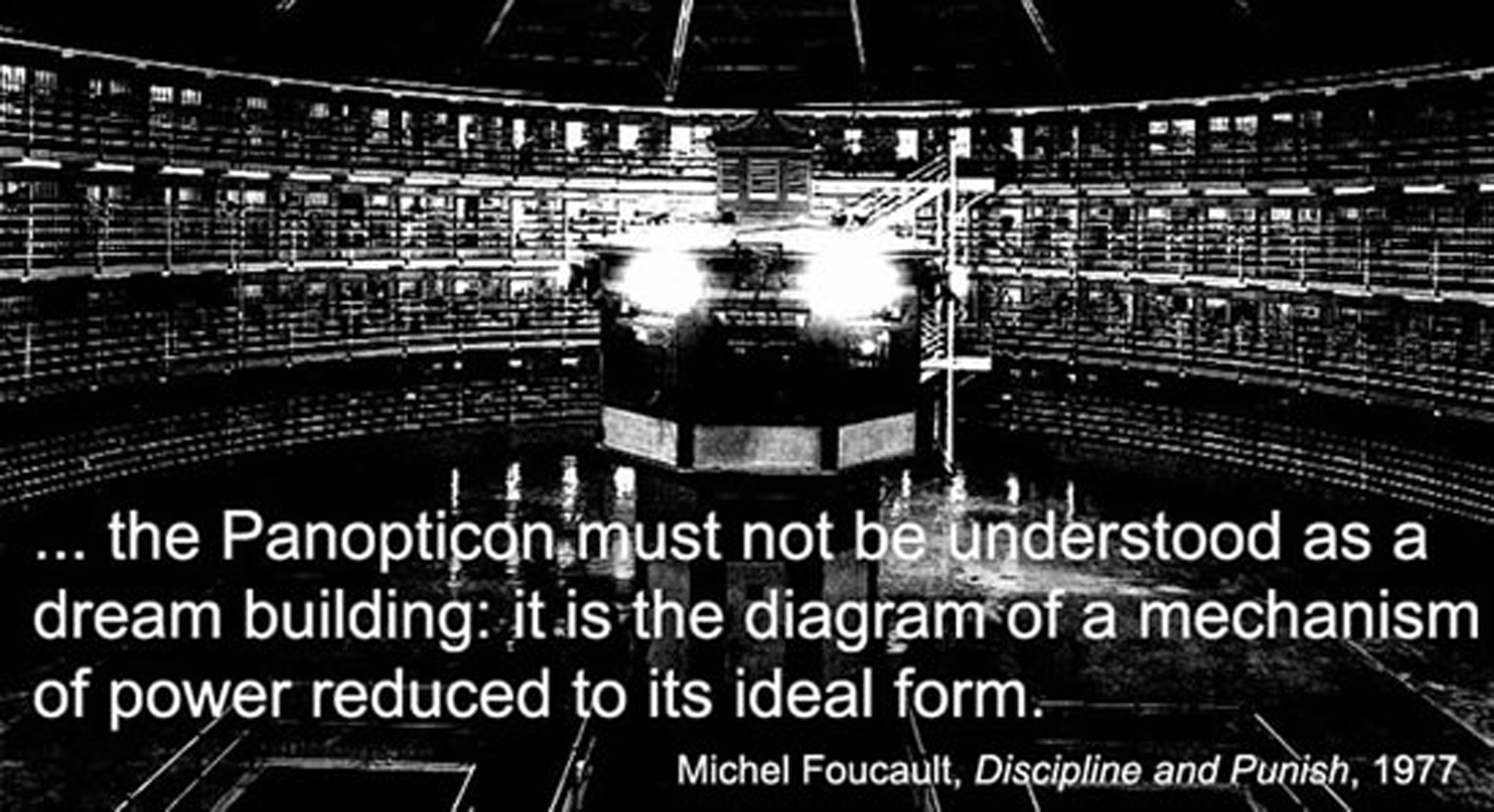
By Douglas Haddow
Source: Adbusters
“So tell me, why did you leave your last job?” he asks.
The first thing I remember about the internet was the noise. That screeching howl of static blips signifying that you were, at last, online. I first heard it in the summer of ’93. We were huddled around my friend’s brand new Macintosh, palms sweaty, one of us on lookout for his mom, the others transfixed as our Webcrawler search bore fruit. An image came chugging down, inch by inch. You could hear the modem wince as it loaded, and like a hammer banging out raw pixels from the darkness beyond the screen, a grainy, low-res jpeg came into view. It was a woman and a horse.
Since then, I’ve had a complicated relationship with the internet. We all have. The noise is gone now, and its reach has grown from a network of isolated weirdos into a silent and invisible membrane that connects everything we do and say.
“I needed a bigger challenge,” I say. This is a lie.
The brewpub we’re in has freshly painted white walls and a polished concrete floor, 20 ft ceilings and dangling lightbulbs. It could double as a minimalist porn set, or perhaps a rendition chamber. Concrete is easy to clean. The table we’re at is long and communal. Whenever someone’s smartphone vibrates we all feel it through the wood, and we’re feeling it every second minute — a look of misery slicing across my face when I realize it’s not mine.
“Tell me about your ideal process,” the guy sitting down the table from us says. My eyes strain sideways. He looks to be about thirty; we all do. Like a young Jeff Bezos, his skin is the color of fresh milk. He’s dressed like a Stasi agent trying to blend in at a disco. Textbook Zuckercore: a collared blue-green plaid shirt unbuttoned with a subdued grey-on-grey graphic tee, blue jeans and sneakers. Functional sneakers. Tech sneakers. This is a tech bar. Frequented by tech people who do tech things. The park down the street is now a tech park. That’s where the tech types gather to broadcast their whimsy and play inclusive non-sports like Quidditch, which, I’m told, is something actual people actually do. It’s a nerd paradise where the only problems that exist are the ones that you’re inspired to solve. And I want in on it, because I want to believe.
“I’m a big fan of social,” I blurt out as an aside. He replies with a calm and ministerial nod. Nobody says “social media” anymore, it’s just “social” now.
My atoms are sitting here drinking a beer, being interviewed for a position at a firm that specializes in online brand management systems. Which is a euphemism for a human centipede of marketers selling marketing to marketers for marketing. The firm is worth a billion dollars. You’ve never heard of it. It’s the type of place where they force you to play ping-pong if you come in looking depressed. Meet the new boss, same as the old boss, except this one is very concerned that you see him as a positive force in the universe.
I’m here, bringing the cold beer to my dry lips and bobbing my head in my best impersonation of someone who doesn’t feel ill when he hears the words “key metrics,” “familiarity,” “control groups” and “variant groups.” It’s the dawn of the new creative economy, and I can dig it. I’m here, but I’m also spread across the internet in a series of containers. I’m in Facebook, I’m in Instagram, I’m in Google, I’m in Twitter and a thousand other places I never knew existed. Depending how my body is disposed of, it will either become dirt or atmosphere. But the digital atoms will live forever, or at least until civilization is incinerated by whatever means we choose to off ourselves.
“What about this position interests you?” he asks.
When the TechCrunchers preach the gospel of disruption, it’s from an industrial perspective that sees life on Earth as a series of business models to be upended. Disrupt or die is the motto, but they never mention the disruptees — the travel agents, the cab drivers, the bellhops. The journalists. The meat in the box before the box is crushed by the anvil of innovation.
“People have ideas about things but it’s a bunch of things. Sign up flow for example, high level things, but sometimes I think — let’s table this for now and put together some idea maps. I feel so empowered because we’re aligned,” someone else says. I look around but can’t trace the source.
It’s hard to focus on his questions when all the conversations occurring parallel to ours combine in a cacophony of sameness, as if we’re all Tedtalking a mantra of ancient buzzwords: Engagement. Intuitive. Connection. User base. Revolutionary. It’s like coke talk gone sour, not words that are meant to say things, but stale semiotics that signify you belong. This is the the new language of business. This is where Wall Street goes to find itself.
“I traded in my suit for khakis and sunglasses,” one of them says. But he’s wearing neither. “That’s the best decision you’ve ever made bro,” his colleague replies.
These are the most boring people on the planet. And it’s their world now, we’re just supplying the data for it. The game is simple: dump venture capital into a concept, get the eyeballs, take the data and profit. But the implications of this crude scheme are profound. Beyond all the hype, something weird is happening.
I can’t eat without instagramming my food. I can’t shit without playing Candy Crush. I can’t even remember who half the people are on my Facebook feed, but I’ll still mindlessly scroll through their tedious status updates and wince at their tacky wedding photos. Out of these aimless swipes, clicks and likes, a new world is being born. A world where everything we do, no matter how inane, is tracked, recorded, sorted and analyzed. Yahoo CEO Marissa Mayer has said the whole process is “like watching the planet develop a nervous system.” And through this system, every human action has become a potential source of profit for our data lords, a signal for them to identify and exploit.
“We are about to enter a world that is half digital and half physical, and without properly noticing, we’ve become half bits and half atoms. These bits are now an integral part of our identity, and we don’t own them,” says Hannes Grassegger.
Grassegger is a German economics journalist who was raised in front of his mom’s Macintosh, and later, on a Commodore 64 he got for his sixth birthday. He recently wrote “Das Kapital bin ich” (I am Capital), a book that has been criticized by the European left for being too capitalist, and by the right for being the communist manifesto of the digital era. In it he tries to answer a deceptively simple question: if our data is the oil of the 21st century, then why aren’t we all sheikhs?
“We’ve all been sharing. But the smart ones have been collecting — and they’ve packed us into their clouds,” he says. “Privacy. Transparency. Surveillance. Security gap. I don’t want to hear about it. These are sloppy downplayings of a radical new condition: We don’t own ourselves any more. We are digital serfs.”
Like Grassegger, and like everybody else, I was lured into this radical new condition with the feel-good promises of connection, friendship and self-expression. Apps, sites and services that allowed us to share what we loved, and do what we wanted. For Grassegger, these platforms were merely fresh lots ready to be ploughed, and in turn they kept the harvest: our feelings, thoughts, experiences and emotions, encoded in letters and numbers. Now they’re putting it all to work, exploiting these assets with algorithms and sentiment analysis, and our virtual souls are toiling even while we sleep.
His solution to this dilemma is practical and pragmatic, siding with a lesser evil of establishing a personalized free data market, which would allow us to exploit our information before others do it for us, arguing that “We must carry into the new space those rights and freedoms we eked out in the physical world centuries ago. The ownership over ourselves and the freedom to employ this property for our own benefit. Only this will help us leave behind our self-imposed digital immaturity.”
“KRRAAAAASHH!”
A waitress lets a pint glass slip from her hand and shatter on the floor, but no one bothers to look over; they’re too engaged. Then I notice something eerie about the vibe in this place. There’s no sneering, no sarcasm, and no self-deprecation. Everyone is just sort of floating along in an earnest tranquility. As if each anecdote about “that cool loft I found on Airbnb” contained some deep spiritual significance beyond my grasp.
My interrogator goes for a piss and I load up Facebook in the interim, hoping to find a shard of inspiration in my feed that will provide a topical talking point. Instead I find a listicle. A curiosity gap headline. An ad. A solicitation. Another ad. Another listicle. Oh dear, someone has lost their phone. And finally, an ad in the form of a listicle. Or is it a listicle in the form of an ad?
We were told to surf the web, but in the end, the web serf’d us. Yet there’s a worse fate than digital serfdom, as Snowden’s ongoing NSA revelations suggest. This isn’t simply about the commodification of all human kinesis, it’s the psychological colonialism that makes the commodification possible.
The nature of this bad trip was hinted at in June when we learned that Facebook manipulated the emotional states of nearly 700,000 of its users. Half of those chosen for the study were fed positivity, the others, despair. “The results show emotional contagion,” the Facebook scientists told us, meaning that they had discovered that alternating between positive and negative stimulus does indeed affect our behaviour. Or perhaps rediscovered. There’s a precedent for this. We’ve been here before.
Burrhus Frederic Skinner, known simply as B.F. to his BFFs, is best known as the psychologist with the painfully large forehead who tried to convince the world that free will was an illusion. But he wasn’t always so dire. He was once a young man with hopes and dreams who wrote poems and sonnets and wanted to become a stream-of-consciousness novelist like his idol, Marcel Proust. He failed miserably and it led him to conclude that he wasn’t capable of writing anything of interest because he had nothing to say. Frustrated and bitter, he resolved that literature was irrelevant and it should be destroyed, and that psychology was the true art form of the 20th century. So he went to Harvard and developed the concept of operant conditioning by putting a rat in a cage and manipulating its behaviour by alternating positive and negative stimulus. Now we’re the rats in the cage, only we don’t know where the cage ends and where it begins.
“What’s your five year vision for social?” he asks.
There’s a right way and a wrong way to answer this question. The wrong way is to be critical and cast scepticism on the internet’s role in our lives. For instance, you could draw a parallel between Facebook’s probing of emotional contagion and the Pentagon’s ongoing research into how to quash dissent and manage social unrest. Or you could mention how the Internet of Things will inevitably consolidate corporate power over our personal liberty unless we implement strict regulations on what part of ourselves can and cannot be quantified. But if you did that, you’d upset the prevailing good vibes and come off like a sickly paranoiac in desperate need of some likes.
The right way is to turn off, buy in and cash out. Reinforce the grand narrative and talk about how social is going to bring people together, not just online, but in the real world. How it will augment our interactions and make us more open. How in five years you’ll be able to meet your true love through an algorithm that correlates your iTunes activity to your medical history and how that algorithm will be worth a billion fucking dollars. And it’s through that magical cloud of squandered human potential that Skinner emerges once again and starts poking his finger into your brain.
After establishing himself as a household name, Skinner was finally able to live out his dream of writing a novel. That novel was Walden Two, a story about a utopian commune where people live a creative and harmonious life in accordance to the principles of radical behaviourism. In contrast to 1984 and Brave New World, it was meant to be a positive portrayal of a technologically-enabled utopian ideal. In it he writes, “The majority of people don’t want to plan. They want to be free of the responsibility of planning. What they ask for is merely some assurance that they will be decently provided for. The rest is a day-to-day enjoyment of life.”
In the late 60s, Walden Two directly inspired a series of attempts to create real world versions of the fictional community it described. These were just a few of the thousands of communes that were being established across America at that time. Some thrived, but the majority fell apart within a couple short years. They failed for a number of reasons: latrines overflowed, the tofu supply ran out, the livestock starved to death and so forth. But what many of them had in common was a cascading systems failure of their foundational hypothesis — that social change could be achieved through self-transformation and the problems of power could be solved simply by ignoring them. There was always a Machiavellian in the transformational mist, though, and a refusal to acknowledge outright how power creates invisible structures that undermine the potential for cooperative action ultimately led to their implosion. It’s in this stale pub, with its complimentary WiFi and overpriced organic popcorn, that those invisible power structures continue to thrive.
“There has to be incentive. There has to be. You can’t force people to use it,” a woman in the corner mutters. She’s among a cluster of people who for some reason are all carrying the same cheap, ugly backpack. Her hand gestures become more aggressive as the conversation progresses and she looks to be caught in a moment midway between panic and ecstasy. Her expression would make the perfect emoji for the inertia of our time. It looks sort of like this: (&’Z)
“Our notions of digital utopianism are deeply rooted in a communal wing of American counter-culture from the 1960s. That group of people have had an enormous impact on how we do technology. Many of the leading figures in technology come from that wing, Steve Jobs would be one,” says Fred Turner, a communications professor at Stanford University who researches and writes about how counterculture and technology interact.
“Their ideas of what a person is and what a community should be has suffused our idealized understanding of what a virtual community can be and what a digital citizen should be. That group believed that what you had to do to save the world was to build communities of consciousness — places where you would step outside mainstream America and turn away from politics and democracy, turn away from the state, and turn instead to people like yourself and to sharing your feelings, your ideas and your information, as a way of making a new world.”
There’s a fault line that runs underneath the recycling bins of America’s abandoned hippy communes all the way to my cracked iPhone 5 screen. And if there is one man who epitomizes the breadth of this fault, it’s Stewart Brand.
In 1968, Brand published the Whole Earth Catalog, an internet before the internet that provided a directory of products for sustainable, alternative and creative lifestyles, and helped connect those who pursued them. When the Whole Earth Catalog went out of business in 1971, Brand threw a “demise party” wherein the audience got to choose who would receive the magazine’s remaining twenty grand. They chose to give it to Fred Moore, an activist moonlighting as a dishwasher, who would go on to found the Homebrew Computer Club — the birthplace of Apple and the PC. In the 80s Brand launched The Whole Earth ’Lectronic Link, one of the world’s first virtual communities. Following its success, he started the Global Business Network — a think tank to shape the future of the world. They’ve worked on “navigating social uncertainty” with corporations like Shell Oil & AT&T, among others. In 2000, GBN was bought by Monitor Group, a consultancy firm that made headlines in 2011 by earning millions of dollars from the Libyan Government to manage and enhance the global profile of Muammar Gaddafi.
Brand’s most enduring legacy will likely come from coining the phrase “information wants to be free,” which serves as the business model for the Actually Existing Internet and the Big Data dream.
Looking around the brewpub, listening to the chatter, and staring into the bright blue eyes of my would-be employer, you can almost hear the words of Google CEO Eric Schmidt echo against the minimalist decor: “We know where you are. We know where you’ve been. We can more or less guess what you’re thinking about.”
In San Francisco, my fellow disruptees have taken to the streets and kicked off a proper bricks & bottle backlash against this sort of dictator-grade hubris that has come to define the Internet of Kings. Crude graffiti reading “DIE TECHIE SCUM” is scrawled on the sidewalk next to Googlebus blockades. TECH = DEATH signs are held up at protests. Tires are slashed, windows are smashed and #techhatecrimes is a hashtag that is being passed around Silicon Valley without a hint of irony.
Just down the street from where I’m sitting, a more passive form of protest has manifested in the form of a new café that promises an escape from the incessant blips and bleeps of the internet and its accoutrements.The tables there are also long and communal, but they’re wrapped inside an aluminum metal mesh designed to interrupt and restrain wireless signals and WiFi.
We are not going to escape this crisis by putting ourselves in a cage. There is no opt-out anymore. You can draw the blinds, deadlock your door, smash your smartphone, and only carry cash, but you’ll still get caught up in their all-seeing algorithmic gaze. They’ve datafied your car, your city and even your snail mail. This is not a conspiracy, it’s the status quo, and we’ve been too busy displacing our anxiety into their tidy little containers to realize what’s going on.
“Do you have any questions for me?” he finally asks, abruptly. My beer is empty, I’m thirsty for another, and the interview hasn’t gone well. I’ve failed to put on a brave face and the only questions that I have concern how much money I’m going to make. Will it be enough to pay for my escalating rent now that the datarazzi have moved into the neighborhood? Or will I have to drive an Über in my spare time to make ends meet?
The internet is a failed utopia. And we’re all trapped inside of it. But I’m not willing to give up on it yet. It’s where I first discovered punk rock and anarchism. Where I learned about the I Ching and Albert Camus while downloading “Holiday in Cambodia” at 15kbps. It’s where I first perved out on the photos of a girl I would eventually fall in love with. It’s home to me, you and everybody we know.
No, the appropriate question to ask is: “What is the purpose of my life?”
I’ve seen the best minds of my generation sucked dry by the economics of the infinite scroll. Amidst the innovation fatigue inherent to a world with more phones than people, we’ve experienced a spectacular failure of the imagination and turned the internet, likely the only thing between us and a very dark future, into little more than a glorified counting machine.
Am I data, or am I human? The truth is somewhere in between. Next time you click I AGREE on some purposefully confusing terms and conditions form, pause for a moment to interrogate the power that lies behind the code. The dream of the internet may have proven difficult to maintain, but the solution is not to dream less, but to dream harder.

By Edward Curtin
Source: OpEdNews.com
What is the explanation for the brainwashing of so many Americans when it involves the nefarious, unspeakable deeds of their government? Why are so many so easily duped time and again? Why is there such a vast ignorance of the truth behind national and international affairs?
I would suggest that the answer lies not just with the specific issues themselves and the lies and propaganda used to befuddle the American people, but with the cultural and social background that frames Americans’ thinking. The latter serves to cut to the root people’s belief in their own power to think freely and clearly about the former. Invade people’s minds over many years with an ongoing series of interconnected memes, occupy their minds with alleged facts that induce a frenzied depression, and then fooling them on specific issues — e.g. Ukraine, Iraq, Syria, etc. – becomes much easier.
I am a sociology professor, and my students always laugh when during a discussion of memory, social and personal, I ask them about their forgetties (the actual word is forgetteries, but the shorter rhyme gets more laughs). They think I’m joking. Maybe you do, too. I’m not. But when I suggest that if they “possess” the faculty to remember, then they must “possess” the faculty to forget, they are astonished. You can’t forget, they reply, you just don’t remember; you can’t retrieve the memories that are stored in your brain. In other words, there are no forgottens, just temporarily unavailable memories. From there we are onto a discussion of retrieving (I think of dogs), processing (their word for thinking and mine for making American cheese), and all the computer lingo that has been the surround of their lives. Like fish in water, the mechanistic computer memes have been their environment since birth. They are shocked at the suggestion that there might be more outside the cultural water, and that they could go there.
And they have a lot of company.
This may sound flippant, but it’s crucial for understanding why so many Americans can’t comprehend and pay attention to the ways their minds are scrambled and confused about life and death issues, how their country has fallen victim to the military-industrial-intelligence apparatus that operates deep in the shadows, and oftentimes right in the open.
If we examine the social and cultural context of the last twenty-five years, we can see a number of issues that have dominated Americans’ “thinking.” These issues have been promulgated and repeated ad infinitum by the corporate media, professional classes, and schools at all levels. We have been swimming in these issues for years. I suggest the following five are key: the inability to concentrate or pay attention (ADD/ADHD), memory/forgetting (dementia, Alzheimer’s, technological memory devices), people’s lack of time and constant busyness (a recent email I received from a publisher read: “crazy-busy? use our power-point decks”), drugs legal or illegal as problems or solutions (over 4 billion prescriptions written in the U.S.A. yearly), and technology as our savior.
Together with shopping and the weather, these five topics have been the stuff of endless conversations and media chatter over the years.
When people are questioned about major issues of war and peace; political assassinations, such as those of JFK, MLK, or RFK; the alleged war on terror; the downing of Malaysian airlines; the overthrow of elected governments in the Ukraine or Egypt; the events of 9/11; government spying; economic robbery by the elites — the list is long, it’s common for people to echo the government/corporate media, or, if pressed, to say, I don’t know, I can’t remember, no one knows for sure, it’s impossible to know, we’ll never know, etc.. The confused responses are replete with an unacknowledged despair at ever arriving at clear and certain conclusions, not to say being able to do anything about them. On many issues they bounce between the twin absurdities of Democratic and Republican talking points, thinking they are being perceptive.
Why?
If we set aside the substantive issues, and examine the aforementioned cultural memes, the answers are not hard to find. Here most people speak as if they are certain. “Of course there isn’t a forgettery.” “Depression is caused by a chemical imbalance.” “Memories are all stored in the brain.” “I really am so busy all the time.” “Facts are just opinions.” Americans have internalized the ethos presented to them by the elites. At the core of this is the propaganda of scientific materialism and biological determinism that we are not free but are victims of our genes, neurotransmitters, brain/computers and chemicals, technology, etc. Having lost our minds and fixated on our brains, we have been taught to be determined to be determined, not free. And whether consciously or unconsciously, most have obliged. The linkages between memory, attention, distraction, drugs, technology all point to the brain and the obsessive cultural discussion of brain matters. We have been told interminably that our lives revolve around our brains (our bodies) and that the answers to our problems lie with more brain research, drugs, genetic testing, etc. It is not coincidental that the U. S. government declared the 1990s the decade of brain research, followed up with 2000-2010 as the decade of the behavior project, and our present decade being devoted to mapping the brain and artificial intelligence, organized by the Office of Science and Technology Project and the Defense Advanced Research Projects Agency. How convenient! George H. W. Bush, Clinton, George W. Bush, Obama — what a difference! But this is science and the welfare of the world.
For years we have been fed philosophical presuppositions smuggled in as fact. It’s an old trick, ever young. Tell people over and over and over again that life is in essence a mindless material/biological trap and over time they will believe it. Of course there are unspoken exceptions — those who are the masters of this con-game, the few, the elite, those who make and reinforce the case. And even some of them are too ignorant to comprehend their questionable presuppositions. They hoist themselves by their own petards while cashing in at the bank.
My students can’t forget because they don’t believe in it. But they can’t remember either. They don’t know why. So, like the older generation, they fall into the careless habit of inaccuracy, to turn Oscar Wilde on his head. They have downloaded their memories, uploaded their trifles, and been tranquilized by trivia.
As the great American sociologist C. Wright Mills wrote over fifty years ago, “Nowadays people often feel that their private lives are a series of traps.” That is truer today than then. A sense of entrapment and determinism pervades our culture. And it extends to public issues as well. We are told either to accept official explanations for public events or be dismissed as crazies.
I would suggest that for people to break through to a true understanding of the important public events of our time, they must also come to understand the false memes of their culture, the way they have been mindwashed to believe that at the most rudimentary level they are not free.
Maybe the first best step toward free thought and out of the propaganda trap would to accept that you “possess” a forgettery . Listen to the American philosopher Paul Simon sing, “When I think back to all the crap I learned in high school, it’s a wonder I can think at all.” Use your forgettery and forget the crap. Make haste slowly to question everything. Remember that the corporate media works hand in glove with the ruling elites on two levels of propaganda — cultural and political, and it is necessary to understand how they are intertwined. Freedom is indivisible.
That’s worth remembering.
INDIAN COUNTRY NEWS
"It is the duty of every man, as far as his ability extends, to detect and expose delusion and error"..Thomas Paine
Human in Algorithms
From the Roof Top
I See This
blog of the post capitalist transition.. Read or download the novel here + latest relevant posts
अध्ययन-अनुसन्धानको सार
 After the Crash