Generation of Vipers: The Original Sin and Continuous Crimes of America’s Involvement in Afghanistan

By Chris Floyd

Source: Empire Burlesque

O generation of vipers, how can ye, being evil, speak good things? – Matthew 12:34

I.
People need to understand something about Afghanistan, and the debacle we’re witnessing there. America’s involvement in Afghanistan didn’t begin in 2001, after the 9/11 attacks. It began in the last years of the Carter Administration, when he and his advisor Zbigniew Brzezinski set out to “give the Soviets their own Vietnam.” They did this by funding and arming an international cohort of violent fundamentalist extremists and training them in terror tactics. (Osama bin Laden was one of those who joined this jihad army supported by the US, Saudia Arabia and Pakistan.)

At that time, there was a modern, secular regime in Afghanistan. It wasn’t a paradise. It was ridden by internal factionalism, sometimes violent. It was supported by the Soviet Union. It was beset by fundamentalist extremists. It had repressive features. But it was a secular regime. Women were emancipated; many held high positions. Children, including girls, were educated. Science was honored and promoted. Religion was tolerated, albeit uneasily.

Carter and Brzezinski decided to empower the extremist militias attacking the regime, hoping to induce so much chaos that the Soviets would intervene militarily to help their client state. Again, as Brzezinski himself put it, they wanted to give the USSR “its own Vietnam.”

Think about this for a moment. What Carter and Brzezinski wanted was to subject the Afghan people to the years of suffering and death that the Vietnamese had experienced. They WANTED Afghanistan to suffer this fate, and they ACTED to make sure it happened. And it did. If you like, it was one of the great successes of US foreign policy in the post-war period. They deliberately plunged Afghanistan into blood-soaked chaos; and the Soviets – after fierce debate in the Politburo – did send in troops to try to stabilize the country. What followed was year after year after year of horror and death. Again, please note: this was the stated INTENTION of US policy: mass death, terrorism and suffering.

When Carter lost in 1980, Reagan took up his policy in Afghanistan and magnified it. More arms and money to religious extremists. More terrorist training, with CIA manuals. The US even produced textbooks for Afghan children lauding fundamentalist extremism and jihad terror. (All of this was reported in the Washington Post and other mainstream outlets.) Reagan invited the precursors of the Taliban to the White House, where he called them the “moral equivalent of our Founding Fathers” and “freedom fighters.” These men were dedicated to undoing the emancipation of women, destroying all vestiges of secular society and imposing the most harsh and hidebound fundamentalist strictures imaginable.

These were the people who were armed, trained, funded, lauded and supported by the United States government for years on end. The Taliban would not exist if not for these long-running, bipartisan policies of the United States.

II.
At last, the Soviets were bled dry, as Carter and Reagan intended, and pulled out of Afghanistan, leaving ruin and chaos behind. There followed years of civil war between atrocious warlords who tortured and looted the Afghan people. The Taliban arose from the midst of the extremists backed by the United States. They managed to take over the country in the early 1990s. They were then supported by the United States once again. Taliban members came to Texas seeking business deals under then-Governor George W. Bush. They sent representatives to Washington, meeting mostly with Republican leaders. When Bush was president, he hooked up with the Taliban in drug eradication efforts.

As noted, Osama bin Laden had been part of the US-backed extremist jihad against the secular regime. However, when the US stationed troops in his homeland of Saudi Arabia during the first Iraq War, he and other fundamentalists regarded this as a profanation of the holy land and vowed to drive American troops from Saudi Arabia. This was the main purpose behind al-Qaeda’s terror attacks, which culminated on 9/11: an attack carried out almost entirely by Saudi nationals, with no involvement of the Taliban or any Afghan citizens.

Bin Laden, a hero of the extremists’ triumph over the USSR, was by now back in Afghanistan. After the 9/11 attacks – which the US itself has said occurred without any foreknowledge by the Taliban – the Taliban offered several times to turn Bin Laden over to international justice in some accredited forum. Bush adamantly refused to even entertain the offer, and launched a full-scale military invasion and occupation of Afghanistan.

As is well known, just after the attack, the Bush Administration launched a frantic, extraordinary effort to spirit many top Saudi figures out of the United States. It could be noted here that the Bush family had long-standing business ties with the Saudis, including the Bin Laden family. (Indeed, Osama bin Laden’s father died in a plane crash in Texas while doing business there.)

In any case, the war was on. Although bin Laden and his forces were seemingly trapped in their mountain fortress early on, somehow they managed to escape to Pakistan, where bin Laden lived untroubled for many years.

By 2002, the Taliban regime had fallen. But the “nation-building” efforts of the United States very soon took a backseat to the goal that Dick Cheney and Donald Rumsfeld (and Jeb Bush, among others) had publicly announced before Dubya’s election: war on Iraq. A Cheney-Rumsfeld group called “Project for the New American Century” laid out its plans before the 2000 election, calling for massive new military expenditures, extensive new military operations overseas and war on Iraq. The PNAC document clearly stated that they realized it would be very difficult to achieve this wholesale militarization of US society and policy, unless – their words, in 2000 – the American people were “catalyzed” by a “new Pearl Harbor.”

In 2003, massive military resources and political attention were shifted from Afghanistan to the real war that Bush, Cheney and Rumsfeld wanted: Iraq. It would be tedious to recite all the deceptions they practiced to perpetrate their deliberate, knowing lie about “Iraqi WMDs” or the collusion of Democrats like Biden in furthering the war fever. The war came and we all know what happened. Hundreds of thousands of innocent people died, the whole region became destablized, thousands became radicalized by the death and torture visited upon their lands, and vast, almost incomprehensible levels of corruption attended every aspect of the long, bloody American occupation.

Meanwhile, the “backwater” of Afghanistan became little more than a long exercise in war profiteering. The “government” installed by the Americans looted the country on an almost incomprehensible scale. American and Afghan officials colluded with the Taliban to ship drugs and money out of the country. At one point, US and NATO officials were actually paying the Taliban to allow shipments of supplies through their checkpoints. Bombings went on, drone strikes went on, civilians were slaughtered by both the occupiers and the Taliban: a long, pointless hell that so radicalized the populace that in the end, as we saw this week, there was no longer any resistance to the Taliban and the order they promised – however harsh and brutal it will be.

The “Afghanistan Papers” of official US documents leaked a few years ago showed that the top US military and political officials had no idea what they were doing in Afghanistan. There was no real mission, no focus, no goal; it was essentially just a perpetual motion machine of death, suffering, procurement, profiteering and corruption. The Taliban had long since regained control of most of the country. The Afghans, which down through the centuries had defeated Alexander the Great, the British Empire and the Soviet Union has now defeated the United States as well.

III.
But again we must go back to the beginning of the current situation. It started when the United States and its allies created an army of Islamic extremists in order to impose years of Vietnam-style hell on the Afghan people – as part of the “Great Game” of geopolitics, which uses innocent lives, and whole nations, as dispensable pieces on a chessboard. Jimmy Carter and Ronald Reagan WANTED to create vast, hellish civil war in Afghanistan to ensnare the Soviets; that was their stated goal, and they spent vast amounts of US taxpayer to money to make it happen. They WANTED thousands of people to die in horrific conditions – Afghan civilians, Soviet conscripts, anyone, they didn’t care – as long as the Soviets “got their own Vietnam.” To me, this is a monstrous crime of near-demonic proportions: to deliberately work to create such an outcome. But they did work at it. And they succeeded.

Later, George W. Bush decided to throw the lives of US soldiers into the mix by invading a country that nothing to do with the 9/11 attacks, as he well knew. Obama, with the eternal anxiety of Democrats not to look “weak” in the eyes of the morally depraved “foreign policy establishment,” then launched a pointless “surge” in Afghanistan that killed many more thousands of people (including US and allied soldiers). Again, as the “Afghanistan Papers” showed, all this was done with no real plan or aim, and with rampant corruption at every turn.

After this, the US largely stepped back from direct actions on the ground, and let the Afghan army do the dying, while the US concentrated on bombing and droning. Yet still the war went on, year after year, as tens of thousands were radicalized by their suffering and joined or supported the Taliban, which controlled most of the country outside the major cities. Finally Trump decided to cut a hasty and ill-thought out deal with the Taliban that ensured they would take over the country the moment the Americans pulled out – which immediately leeched away any remaining support for the corrupt and inept American-installed government. (Of course, if that government had promised to build a big Trump hotel in Baghdad, he probably would’ve sent in 30 divisions to keep it in power until he got his loot.)

This was the deal Biden inherited. But instead of treating it as what it really was – the inevitable handover of Afghanistan to the only local force capable of forming a government – Biden pretended that the Potemkin state installed by the Americans could somehow survive after the American withdrawal … at least long enough to save some face. Instead of spending six months in a negotiated, orderly transfer of power, the US simply kept up the 20-year farce for a time then bugged out, literally in the dead of night, in most cases without even telling the Afghan forces what was happening.

The Afghan forces knew the jig was up last year when Trump freed the co-founder of the Taliban, who then duly appeared with Mike Pompeo for a cozy photo-op. The Afghan soldiers knew it was only a matter of time before the Taliban was in power again. So when the Americans bugged out, the Afghan army began negotiating with the Taliban to avoid needless destruction and bloodshed. Thus city after city was surrendered without a pointless fight: a grim but humane course taken by Afghan soldiers in these dire circumstances.

But Joe Biden, seeking to avoid blame for his vastly inept mishandling of the inevitable takeover by the Taliban, is now blaming the Afghan people themselves, and the Afghan military forces in particular, for not wanting to “fight for their country.” This is a moral obscenity. Although he, like Trump, was absolutely correct in saying that the woebegone US occupation of Afghanistan had to end, he would not acknowledge the truth of how we got to this point, or why the Taliban even exists in the first place: because of deliberate US policy choices going back more than 40 years, all the way to the “original sin” by Carter and Brzezinski of empowering a global network of religious extremists that has given rise to the Taliban, al Qaeda, ISIS and others.

In none of these policies – from Carter, Reagan, Bush I, Clinton, Bush II, Obama, Trump and Biden – has concern for the lives and welfare of the Afghan people played the slightest part. The good Southern Baptist Jimmy Carter WANTED to create hell on earth like Vietnam in Afghanistan. He WANTED thousands upon thousands of innocent people to die, so that the Soviet Union could be “bled dry” in a geopolitical game. I know it’s hard to get one’s head around this, that this gentle, soft-spoken old man, who lives frugally, built houses for the poor and fought for free elections in other countrie ,etc., made the deliberate choice to inflict unimaginable grief, pain and suffering on multitudes of innocent people. But he did. This is what actually happened in our history.

Ronald Reagan extended this policy (which he also practiced in Central America, aiding the mass slaughter of tens of thousands of innocent people by the repressive regimes he supported and armed.) George W. Bush then plunged American forces directly into the fray, stupidly, callously and corruptly replicating “Russia’s own Vietnam” of endless warfare against an extremist insurgency, while tens of thousands innocent civilians died at the hands of all the forces involved.

Now this 40-year chapter of American involvement has come to an end. But unless we actually know how we got here – and the absolutely fundamental role the US has played in these decades of death, destruction and radicalization – we will simply be waiting for the next monstrous, long-running atrocity to arise, with the same horseshit rationalizations (“Liberty! Freedom! Emancipation!”) that our leaders – all of them, every one – have used to cover up their deliberate policies of mass murder, war profiteering and corruption.
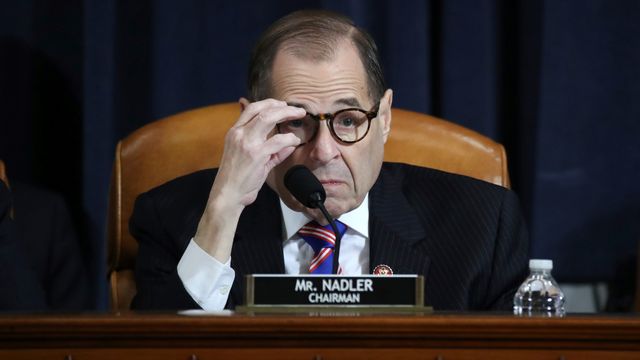
Impeachment hearing opens with Democratic Party blast against Russia

By Patrick Martin

Source: WSWS.org

The House Judiciary Committee opened its first formal hearing on the impeachment of President Trump Wednesday with a statement by committee chairman Jerrold Nadler that confirmed the right-wing character of the Democratic campaign.

Nadler openly declared that the effort to impeach Trump for withholding military aid from Ukraine was a continuation of the investigation by Special Counsel Robert Mueller into alleged Russian interference in the 2016 elections in support of Trump.

He first recounted Trump’s withholding of military aid to browbeat Ukraine into opening an investigation into Hunter Biden, the son of former Vice President Joe Biden, an action that Trump hoped would benefit him in the 2020 election. Nadler then said, “Of course, this is not the first time that President Trump has engaged in this pattern of conduct.”

He continued: “In 2016, the Russian government engaged in a sweeping and systematic campaign of interference in our elections. In the words of Special Counsel Robert Mueller, ‘the Russian government perceived it would benefit from a Trump presidency and worked to secure that outcome.’ The President welcomed that interference.”

In invoking the bogus claims of massive Russian intervention in the 2016 elections—and raising the even less credible suggestion that Ukraine’s actions could play a major role in the 2020 elections—Nadler revealed the essential falsehood that underlies the entire Democratic impeachment campaign over Ukraine.

The United States is not the victim of global efforts to subvert its electoral processes. The reality is just the opposite. The US government is the most active and aggressive saboteur and manipulator of democratic processes all over the world, routinely intervening to ensure that pro-American regimes are placed in power. Its intelligence agencies regularly organize political overturns, up to and including bloody military coups, in those cases where the people of a targeted country vote the “wrong” way, from the perspective of Washington.

Ukraine is one of the most prominent recent examples of this, as the CIA and State Department backed a right-wing coup against the elected president, Viktor Yanukovych, viewed as too sympathetic to Moscow. US agencies financed and mobilized ultra-right and neo-Nazi forces who spearheaded the uprising that drove Yanukovych into exile in 2014. Since then, the US and its NATO allies have been preparing feverishly for a war with Russia in which Ukraine would serve as a key battlefront, even though such a conflict would bring with it the danger of nuclear conflict.

The Judiciary Committee’s opening hearing took testimony from a panel of four law school professors on the legal and constitutional requirements for a legitimate impeachment proceeding. This was an effort to mimic the initial hearings that began impeachment proceedings against Richard Nixon in 1973-74 and Bill Clinton in 1998-99.

The three professors chosen by the Democratic majority all testified that Trump’s actions constituted impeachable offenses. Each cited historical instances to demonstrate that those who drafted the US Constitution were deeply concerned about the possibility of foreign intervention into US elections, particularly as it related to the election of the president, the chief executive of the new government.

Citing these 230-year-old concerns of a small and newly independent country, in a world dominated by powerful foreign empires, only underscores the contradiction with today’s power realities. The United States is the most powerful imperialist nation. It is Ukraine that has been the target of a two-decades-long campaign of subversion and manipulation by Washington, aimed at transforming the country into a base of operations directed against Russia.

As several witnesses in the previous round of hearings held by the House Intelligence Committee asserted—and as reiterated in the Democrats’ 300-page impeachment report released Tuesday—the United States’ client regime in Kiev is already engaged in a “hot war” with Russian-backed forces in eastern Ukraine.

The campaign to transform Ukraine into a US subject state and military staging ground against Russia, on which the CIA, State Department and Pentagon have expended more than $10 billion, was threatened by Trump’s withholding of military aid. It was this action that sparked the retaliatory “whistleblower” complaint by a CIA officer formerly assigned to the White House, which then became the pretext for the launching of the impeachment inquiry.

Again and again, throughout the eight-hour hearing, Democratic members of the Judiciary Committee returned to the theme of alleged Russian intervention in the 2016 US elections and the ongoing US military-diplomatic operations directed against Moscow.

Eric Swalwell of California, for example, declared, “We’re here because of this photo,” while having a photograph displayed on a huge television screen showing President Volodymyr Zelensky dressed in combat gear in eastern Ukraine, where he stood on the “front line against Russia.” Swalwell added that the US was aiding Zelensky to fight Russia “so that we don’t have to fight them here,” as though Russian soldiers were about to parachute onto the streets of Washington DC.

The anti-Russian hysteria was combined with claims that Trump’s conduct in relation to Ukraine bore comparison to Watergate. One of the legal witnesses, Noah Feldman of Harvard University Law School, flatly stated, “Richard Nixon sent burglars to break into the headquarters of the Democratic National Committee. This president just made a direct phone call to the president of a foreign country asking for his intervention in our election.”

Another witness, Michael Gerhardt of the University of North Carolina Law School, went even further, declaring in his opening statement that Trump’s conduct was far worse than Nixon’s in Watergate—because Nixon used American operatives against his political rivals, while Trump resorted to foreign ones.

These comparisons collapse as soon as one considers the stark difference between the current political crisis and the situation that led to Nixon’s resignation in Watergate, as well as the crisis that shook the Reagan administration in the Iran-Contra affair of the 1980s. In both these cases, the president engaged in criminal conduct in order to pursue unpopular and illegal wars—in Nixon’s case, the wars in Vietnam, Cambodia and Laos; in Reagan’s case, the “contra” war against Nicaragua.

It was the massive popular opposition to these imperialist wars that led the president in each case to resort to criminal actions. Nixon approved the formation of the “plumbers” unit of ex-CIA agents to spy on his political opponents and collect information by illegal methods, including, ultimately, the burglarizing of the Democratic National Committee offices in the Watergate complex.

Reagan authorized his National Security Council, with Lt. Col. Oliver North taking the lead, to organize the sale of weapons to Iran to obtain funds that could be routed to the “contra” forces engaged in CIA-backed terrorist attacks in Nicaragua, in direct violation of the Boland Amendment, which prohibited such aid.

In the case of Ukraine, it is not Trump but his Democratic opponents who are demanding a more aggressive pursuit of illegal and militaristic foreign policy objectives, including the arming of the regime set up in the Ukraine by the CIA-backed “Maidan Revolution” of 2014. In this, the Democrats are acting as political attorneys for the CIA, Pentagon and State Department, as was made clear in the parade of national-security officials who defied Trump’s orders and testified before the House Intelligence Committee.

This embrace of the CIA-backed overthrow of an elected government in Ukraine makes nonsense of the Democrats’ claims that their concern in bringing charges against Trump is to defend democracy in America.

There would be no lack of grounds for a legitimate political indictment of Trump on charges of anti-democratic criminal actions: the forced separation of parents and children by his border Gestapo, the illegal diversion of congressionally appropriated funds to build the border wall, the “Muslim ban” on travelers from targeted countries, or Trump’s incessant appeals to racist and fascist forces.

The Democrats choose not to raise these issues because their invocations of democracy are entirely false and hypocritical. Trump’s drive towards fascism cannot and will not be fought by appealing to the CIA and State Department. These are merely two different roads to the same end: the establishment of an authoritarian regime in America.

The hypocrisy of the Democrats is demonstrated in the choice of the witness who led off the impeachment hearing. Professor Noah Feldman is not just a Harvard Law School professor. He has a long and noxious record as an apologist for American imperialist intervention, most notably serving in 2003 as a political adviser to the Iraqi Governing Council, the provisional administration set up after the US invasion.

After helping the Bush administration set up its puppet regime in Iraq at the onset of an imperialist war that has cost the lives of more than a million people and set in train a series of catastrophes in the Middle East, Feldman is hardly in a position to posture as an expert on the defense of democratic rights and constitutional processes.

Similarly, Pamela Karlan from Stanford University Law School, the second legal expert to testify, served in the Obama administration’s Department of Justice in 2014-2015, at a time when this agency was spearheading the attack on Edward Snowden and Julian Assange for exposing US war crimes and mass surveillance, and when Chelsea Manning was serving a 35-year prison term for her leaks of classified information detailing these crimes.

Saturday Matinee: Whoops Apocalypse

“Whoops Apocalypse” (1982) is a six-part television sitcom by Andrew Marshall and David Renwick, made by London Weekend Television for ITV. The series details the chaotic and increasingly unstable geopolitical situation leading up to the Apocalypse. The chain of events are precipitated by naive and highly unpopular Republican U.S. President Johnny Cyclops (Barry Morse) who is unwisely advised by an insane right-wing fundamentalist security advisor, called The Deacon, who claims to have a direct hotline to God (the writers claimed not to know at the time that Alexander Haig, Reagan’s first Secretary of State, was known among White House staff as The Vicar).

America is exceptional — in all the wrong ways

By Maj. Danny Sjursen

Source: Axis of Logic

I was born and raised in an America far more Orwellian than many now remember. Matters have gone so far off the rails since 9/11 that few seem to recall the madness of the 1980s. The U.S. had a celebrity actor for president, who railed about America’s ostensibly existential adversary—the Soviet “evil empire.” Back then, Ronald Reagan nearly started a nuclear war during the all-too-real Able Archer war game. He also secretly sold missiles to Iran, and then laundered the windfall to the Contras’ Central American hit squads, resulting in some 100,000 dead.

Looking back from 2019, at least as the contemporary media tell it, those were the good old days. Heck, even Barack Obama—faux liberal that he was—proudly and publicly admired Reagan. Oh, and one of Reagan’s favorite campaign slogans: “Make America Great Again.”

Today, matters seem to be coming farcically full circle, what with Elliott Abrams—convicted in the aforementioned Iran-Contra scandal—being appointed special envoy to Venezuela, and Uncle Sam again bullying a Latin American country. Welcome to America’s own grisly ’80s foreign affairs theme party! Which all got me thinking, again, about the whole notion of American exceptionalism. Only a country that truly, deeply believes in its own special mission could repeat the hideous policies of the 1980s and hardly notice.

Perhaps one expects this absurd messianism from the likes of The Donald, but the real proof is that America’s supposed progressives—like Obama—also obediently pray at the temple of exceptionalism. “Orwellian” is the only word for a nation whose leaders and commentariat were absolutely aghast when candidate Obama was seen without (gasp!) an American flag pin on his lapel. Even more disturbing was how quickly he folded and dutifully adorned his mandatory flair. This sort of nonsense is dangerous, folks: It’s hypernationalism—the very philosophy that brought us World War I.

So it was this week, while sitting on a plane reading my oh-so-bourgeois Economist, and getting infuriated about seeing Elliott Abrams’ war-criminal face, that my thoughts again turned to good old American exceptionalism. My opinions on the topic have waxed and waned over the course of a career spent waging illegal war. First, as a young cadet at West Point, I bought it hook, line and sinker; then, as an Iraq War vet and dissenter, I rejected the entire notion. Only now, observing the world as it is, have I begun to think that America really is exceptional after all—only in all the wrong ways.

Humor me, please, while I run through a brief laundry list of the ways the US of A is wildly and disconcertingly different from all the other “big-boy countries” in the developed world. Let’s start with domestic policy:

  • The U.S. has been the site of exponentially more mass shootings than any other nation. And unlike in New Zealand—where officials took immediate steps to tighten gun control in the wake of its recent tragedy—American politicians won’t do a thing about it. We also own more guns per capita than any other country in the world. In second place is Yemen.
  • The U.S. is essentially alone in the Western world in not guaranteeing health care as a basic human right. It spends much more cash, yet achieves worse health outcomes than its near-peer countries.
  • America is home to some of the starkest income inequality on the globe—right up there with Turkey and South Africa.
  • The U.S. keeps migrant kids in cages at the border, or did until recently. Even more exceptional is that Washington is largely responsible for the very unrest in Central America that generates the refugees, all while American conservatives proudly wear their “Christianity” as badge of honor—but wasn’t Jesus a refugee child? Maybe I read the wrong Bible.
  • America is alone among 41 Western nations in not guaranteeing paid family leave. How’s that for “family values?”
  • As for representative democracy, only the U.S. has an Electoral College. This fun 18th-century gimmick ensures that here in America—in 40 percent of its elections since 2000—the presidential candidate with fewer votes actually won. Furthermore, our peculiar system ensures that a rural Wyoming resident has—proportionally—several times more representative power in Washington than someone who lives in California.
  • Similarly, America counts several non-state “territories”—think Guam, Samoa, Puerto Rico—that don’t even get to vote for the president that it can legally send  to war. But hey, why should we grant them statehood? It’s not as though some of them have higher military enlistment rates than any U.S. state … oh, wait.
  • The U.S. is essentially solo in defining corporations as “people,” and thanks to the Citizens United Supreme Court ruling, has lifted limits on money in politics. Buying elections is officially as American as apple pie.
  • The USA locks up its own people at the highest rate in the world and is nearly alone among developed nations in maintaining the death penalty. Last year, the U.S. was the only country in the Americas to conduct executions and the only Western democracy to do so. But our friends the Saudis still execute folks, so it’s got to be OK. Dostoyevsky famously claimed that “the degree of civilization in a society can be judged by entering its prisons.” How are we doing there?

Then there’s the foreign policy of the great American empire:

  • The U.S. spends exponentially more on military defense than anyone else, and more than the next seven competitors (most of which are allies) combined.
  • America’s bloated military is all by itself in dotting the globe with hundreds of foreign military bases—by some estimates more than any country or empire in world history. As for our two biggest rivals,  Russia has 21 (mostly close to home); China has maybe three.
  • Benevolent, peaceful, freedom-loving America is also the world’s top arms dealer—even selling death-dealing weapons to famous human rights abusers.
  • After Syria signed on, the U.S. became the last nation on earth not party to the Paris Climate Accord. Heck, the occupant of the Oval Office doesn’t even believe in man-made climate change.
  • Then there’s the discomfiting fact that the U.S.—along with Russia—won’t even make a “no-first-use” pledge regarding nuclear weapons. And that’s reality, not “Dr. Strangelove.”
  • The U.S. was first and, until recently, alone in flying its drone fleet through sovereign national airspace and executing “terrorists” from the sky at will. I wonder how Washington will respond when other countries cite that American precedent and do the same?
  • Only the U.S. Navy patrols all the world’s oceans in force and expects to maintain superiority everywhere. And only the U.S. boasts near total control of the goings-on in two whole continents—unflinchingly asserting that North and South America fall in its “sphere of influence.” Crimea abuts Russia and the people speak Russian—still, the U.S. denies Moscow any sphere of influence there or anywhere else. Ah, consistency.

Of course there is so, so much more, but let’s end our tour of American “exceptionalism” there in the interest of time.

What’s so staggeringly unique about the United States is ultimately this: It stands alone among historical hegemons in denying the very existence of its empire. This, truly, is something new. Kids in 19th-century Great Britain knew they had an empire—they even colored their colonies red on school maps. Not so here in the land of the free and the home of the brave. No, Washington seems to believe its own lie—and has its people convinced—that the U.S. is no empire at all, but rather a benevolent “democratic” gentle giant.

American colonies were founded from the outset as mini-empires wrested from the natives. Next, the nascent U.S. grew up enough to take what was left of the continent from the Mexicans. Since then, Washington has been trolling the world’s oceans and spreading the gospel of its own hyper-late-stage capitalism and bullying others in order to get its way. Sure, there are countries where worse human-rights abusers and worse authoritarian regimes are in power. But do we really want to be competing for last place? Especially if we’re supposedly so exceptional and indispensable?

Me, I’m sick of patriotism, of exceptionalism, of nationalism. I’ve seen where all those ideologies inevitably lead: to aggressive war, military occupations and, ultimately, dead children. So count me as over hegemony—it’s so 20th-century, anyway—and bring on the inevitable decline of U.S. pretense and power. Britain had to give up most of an empire to gain a social safety net. That was the humane thing to do.

It’s back to the future with Venezuelan ‘Contras,’ the neocons, and the CIA

By Wayne Madsen

Source: Intrepid Report

Donald Trump displayed his full neocon colors on February 18 during a speech at Florida International University in Miami. With convicted Iran-contra felon Elliott Abrams now acting as his “special envoy” in charge of overthrowing the Venezuelan government of President Nicolas Maduro, Trump urged Venezuelan military officers to rise up in a coup d’état and oust Maduro, who Trump called a “Cuban puppet.”

Trump’s call for a coup in Venezuela is ironic when his most loyal supporter in the U.S. Senate, Lindsey Graham (R-SC), claimed that senior Justice Department officials who were discussing legally invoking the 25th Amendment to remove Trump from office in early 2017 were trying to stage a “coup” against Trump. Coups are unconstitutional in any form, while the removal of a president under the 25th Amendment is following the U.S. Constitution to the letter.

As protesters, who carried signs with “No U.S. Coup in Venezuela” and “Hands Off Venezuela,” staged a demonstration on campus and Trump rattled sabers against Venezuela in his speech on the Modesto A. Maidique Campus, covert U.S. operators were busy at Florida airports shipping arms to Venezuelan paramilitary units in Colombia.

At the same time as Trump was threatening Venezuela with a coup, the Haitian government of President Jovenel Moise and Prime Minister Jean-Henry Céant—one of a half dozen remaining allies of the Maduro government in the Western Hemisphere—was faced with an attempted U.S.-led insurrection in his impoverished nation. It is no coincidence that Moise, who was financially buoyed with $2 billion in fuel subsidies and other financial assistance from Venezuela’s state-run PetroCaribe Fund, has faced protests in his country that appear to have been prompted by U.S. “regime change” operatives. Planted in the Haitian media were reports that the Venezuelan fuel assistance funds had been pocketed by Moise and members of his government. That prompted violent protests on the streets of Port-au-Prince, Cap Haïtien, Jeremie, Gonaïves, and Jacmel that have been raging since February 7. More suspicious is that the U.S. State Department ordered all non-essential personnel out of the country following the outbreak of the protests.

On February 17, Haitian police arrested a group of eight heavily-armed men traveling in two cars in the capital of Port-au-Prince. Among the group were five Americans and a Russian, Serbian, and Haitian. The Russian and Serbian may hold permanent residency status in the United States. The Haitian newspaper Le Nouvelliste reported that police discovered in the foreigners’ cars automatic rifles, 45-caliber and Glock pistols, a large amount of ammunition, drones, and satellite phones. Also found in the vehicles were a telescope, backpacks, bullet-proof vests, and various documents, including a list of names of Haitian citizens. The vehicles bore no license plates and the suspects’ passports had no Haitian visa entry stamps. The passports did show extensive travel to other countries prior to being in Haiti. Five Haitian license plates were found in the vehicles.

When arrested by police, the eight men refused to provide identification, insisting that they were on some sort of “government mission.” They did not identify the “government” for whom they were working but insisted that they did not have to talk to the police. One of the arresting police officers said one of those arrested told him, “Our boss would call your boss.” After the eight men were arrested, another vehicle pulled up with a man, who spoke French to the police. He was also arrested. There are unconfirmed reports that the eight men arrested had earlier masqueraded as Haitian National Police officers.

The U.S. corporate media has largely refrained from identifying the arrested Americans and the others. WMR is not bound by protocols with the U.S.

Intelligence Community. The men arrested in Port-au-Prince are:

  • Kent Leland KROEKER, born February 14, 1967, USA partner and chief operating officer of Kroeker Partners, a private security firm. Kroeker is a Marine Corps officer veteran who flew missions in Iraq and Afghanistan
  • Christopher Mark McKINLEY, born September 26, 1969, USA
  • Danilo BAJAVIC, Serbian national, born Belgrade, born May 19, 1982, visa stamp for Karasovici, Croatia, dated July 21, 2017
  • Vlade JANKOVIC, Russian national, born October 9, 1978, Russia
  • Talon R. BURTON, U.S. national, born April 9, 1967, USA
  • Christopher M. OSMAN, U.S. national
  • Dustin Daniel PORTE, U.S. national, born February 12, 1976, USA
  • Michael ESTERA, Haitian national, born October 28, 1980, Haiti

In addition to Kroeker, all of the arrested Americans have U.S. military backgrounds. Estera may be a foreign national employee of the U.S. embassy in Port-au-Prince. It is also noteworthy that Blackwater founder Erik Prince, under investigation for conspiring with Russian, Saudi, and Emirati officials on behalf of the 2016 Trump presidential campaign, employs Serbian and Russian ex-military members in his Reflex Responses (R2) mercenary firm, based in Abu Dhabi. Prince’s sister, Betsy DeVos, is education secretary in the Trump administration.

Haitian police chief Michel-Ange Gedeon told reporters that the men would be charged with violation of weapons laws and criminal conspiracy. The U.S. State Department had no comment on whether the arrested Americans had received U.S. consular assistance, to which they are entitled. The Central Directorate of the Judicial Police (DCPJ) is in charge of the investigation of the foreigners.

The 1980s Contra wars of the Ronald Reagan administration were known for the heavy involvement of U.S. mercenaries, who operated in Central America with a “wink and a nod” from the Central Intelligence Agency and a covert coordination team in the basement of the White House, as well as the Pentagon, and State Department. The mercenaries received their orders from National Security Adviser John Poindexter, Marine Lieutenant Colonel Oliver North, and Elliott Abrams, now Trump’s regime change coordinator for Venezuela. As the Reagan team attempted to overthrow the Sandinista government of Nicaragua, they were also waging a brutal death squad campaign against leftists in El Salvador and Guatemala. In a repetition of history, the Trump administration has authorized a covert campaign to destabilize the government of Nicaragua, while assisting right-wing governments in Guatemala and Honduras to assassinate leftist journalists, activists, and indigenous leaders. Just as during the 1980s, El Salvador is due to become a staging post for a pro-U.S. rightist government under president-elect Nayib Bukele. Bukele replaces the administration led by the leftist Farabundo Marti National Liberation Front (FMLN), which was targeted by the Reagan administration during the 1980s with death squads and paramilitary teams.

At the same time the U.S. mercenaries were arrested in Haiti, Venezuelan authorities seized a Boeing 767 jet, operated by 21Air LLC, said to have been carrying arms to U.S.-backed rebels in Venezuela. The Boeing 767 took off on February 3 from Miami, the same city where Trump, championed by right-wing Cuban-Americans and exiled oligarchs from Venezuela, vowed to overthrow Maduro and “socialism” throughout the hemisphere.

The Boeing’s cargo was seized by Venezuelan authorities at Valencia airport. Included in the secret cargo manifest were 9 assault weapons, including AR-15 rifles, a Micro Draco semi-automatic pistol, and a Colt 7.62 rifle with telescopic sights, in addition to 118 ammunition cartridges and military radio antennas. 21Air LLC’s chairman is Adolfo Moreno, who, according to McClatchy News, is linked to Gemini Air Cargo, an airline involved with the CIA’s “extraordinary rendition” program during the George W. Bush administration and identified as such in a report made by the Council of Europe. The Boeing seized by Venezuela has been busy the last few months, making runs from Miami International Airport to Valencia and Caracas, Venezuela, and Bogota and Medellin, Colombia. 21Air claimed to McClatchy that the Boeing 767 had been chartered by another firm called GPS-Air. 21Air operates a sister firm, 21Cargo, formerly called Solar Cargo C.A.

Moreno is listed in Florida corporation records as also owning South Eastern Aviation LLC of Doral, Florida, Conaire LLC of Miramar, Florida, JW Aviation LLC of Doral; Apple Aviation LLC of Doral; Reliable Transport Logistics LLC of Hialeah, Florida; Freighter 23801 LLC of Hialeah, Freighter 23803 of Doral; Direct Warehouse LLC of Doral; Dynamic Travel LLC of Doral; Enduring Ventures LLC of Miami; and Florida Franchise Development LLC of Miramar. Florida Franchise Development was incorporated by Moreno in 2001 as a subsidiary of Gemini Air Cargo. That firm, along with Airline Management Group, incorporated in 1987, and Gemini Cargo Logistics Inc., the latter a subsidiary of Gemini Air Cargo, all had the same business address of 1750 NW 66th Ave., Miami. According to McClatchy, that address is currently used by Avianca, the Colombian national air carrier. When Trump called for the overthrow of the Venezuelan government, he did so in the midst of dozens of CIA front companies that specialize in carrying out coups, murder, and mayhem.

21Air LLC was incorporated in 2014 and is based in Greensboro, North Carolina, but operates out of Miami International Airport. North Carolina was the location of other CIA proprietary airline front companies involved in the agency’s kidnapping program. These included Air Serv International; Aero Contractors Limited, operating out of Johnston County Regional Airport and the Kinston Regional Jetport; Assembly Pointe Aviation, Inc.; and Water Above Mountain Holdings, LLC of Burlington, North Carolina.

Prior to January, when Maduro was sworn in for a second presidential term, the Boeing 767 had been traveling between Miami, Philadelphia, and other continental U.S. cities.

The smuggling of U.S. weapons to Venezuelan rebels has evoked memories of Elliott Abrams’s antics during the Iran-Contra scandal in the 1980s. CIA contract airlines, including Southern Air Transport, were busy illegally flying U.S. weapons to Honduras and, via air drop, over Nicaragua, for use by the U.S.-backed Nicaraguan Contra guerrillas. One thing about neocons like Abrams and Trump National Security Adviser John Bolton is that they rarely divert from their standard playbooks. Neocons, not being very bright to begin with, find it difficult to “think outside the box,” therefore they repeat the same failed policies and maneuvering over and over again. And that is the clinical diagnosis of insanity.


Wayne Madsen is a Washington, DC-based investigative journalist and nationally-distributed columnist. He is the editor and publisher of the Wayne Madsen Report (subscription required).

THE MONOPOLIZATION OF AMERICA: The biggest economic problem you’re hearing almost nothing about

By Robert Reich

Source: Nation of Change

Not long ago I visited some farmers in Missouri whose profits are disappearing. Why? Monsanto alone owns the key genetic traits to more than 90 percent of the soybeans planted by farmers in the United States, and 80 percent of the corn. Which means Monsanto can charge farmers much higher prices.

Farmers are getting squeezed from the other side, too, because the food processors they sell their produce to are also consolidating into mega companies that have so much market power they can cut the prices they pay to farmers.

This doesn’t mean lower food prices to you. It means more profits to the monopolists.

Monopolies all around

America used to have antitrust laws that stopped corporations from monopolizing markets, and often broke up the biggest culprits. No longer. It’s a hidden upward redistribution of money and power from the majority of Americans to corporate executives and wealthy shareholders.

You may think you have lots of choices, but take a closer look:

1. The four largest food companies control 82 percent of beef packing, 85 percent of soybean processing, 63 percent of pork packing, and 53 percent of chicken processing.

2. There are many brands of toothpaste, but 70 percent of all of it comes from just two companies.

3. You may think you have your choice of sunglasses, but they’re almost all from one company: Luxottica – which also owns nearly all the eyeglass retail outlets.

4. Practically every plastic hanger in America is now made by one company, Mainetti.

5. What brand of cat food should you buy? Looks like lots of brands but behind them are basically just two companies.

6. What about your pharmaceuticals? Yes, you can get low-cost generic versions. But drug companies are in effect paying the makers of generic drugs to delay cheaper versions. Such “pay for delay” agreements are illegal in other advanced economies, but antitrust enforcement hasn’t laid a finger on them in America. They cost you and me an estimated $3.5 billion a year.

7. You think your health insurance will cover the costs? Health insurers are consolidating, too. Which is one reason your health insurance premiums, copayments, and deductibles are soaring.

8. You think you have a lot of options for booking discount airline tickets and hotels online? Think again. You have only two. Expedia merged with Orbitz, so that’s one company. And then there’s Priceline.

9. How about your cable and Internet service? Basically just four companies (and two of them just announced they’re going to merge).

Why the monopolization of America is a huge problem

The problem with all this consolidation into a handful of giant firms is they don’t have to compete. Which means they can – and do – jack up your prices.

Such consolidation keeps down wages. Workers with less choice of whom to work for have a harder time getting a raise. When local labor markets are dominated by one major big box retailer, or one grocery chain, for example, those firms essentially set wage rates for the area.

These massive corporations also have a lot of political clout. That’s one reason they’re consolidating: Power.

Antitrust laws were supposed to stop what’s been going on. But today, they’re almost a dead letter. This hurts you.

We’ve forgotten history

The first antitrust law came in 1890 when Senator John Sherman responded to public anger about the economic and political power of the huge railroad, steel, telegraph, and oil cartels – then called “trusts” – that were essentially running America.

A handful of corporate chieftains known as “robber barons” presided over all this – collecting great riches at the expense of workers who toiled long hours often in dangerous conditions for little pay. Corporations gouged consumers and corrupted politics.

Then in 1901, progressive reformer Teddy Roosevelt became president. By this time, the American public was demanding action.

In his first message to Congress in December 1901, only two months after assuming the presidency, Roosevelt warned, “There is a widespread conviction in the minds of the American people that the great corporations known as the trusts are in certain of their features and tendencies hurtful to the general welfare.”

Roosevelt used the Sherman Antitrust Act to go after the Northern Securities Company, a giant railroad trust run by J. P. Morgan, the nation’s most powerful businessman. The U.S. Supreme Court backed Roosevelt and ordered the company dismantled.

In 1911, John D. Rockefeller’s Standard Oil Trust was broken up, too. But in its decision, the Supreme Court effectively altered the Sherman Act, saying that monopolistic restraints of trade were objectionable if they were “unreasonable” – and that determination was to be made by the courts. What was an unreasonable restraint of trade?

In the presidential election of 1912, Roosevelt, running again for president but this time as a third party candidate, said he would allow some concentration of industries where there were economic efficiencies due to large scale. He’d then he’d have experts regulate these large corporations for the public benefit.

Woodrow Wilson, who ended up winning the election, and his adviser Louis Brandeis, took a different view. They didn’t think regulation would work, and thought all monopolies should be broken up.

For the next 65 years, both views dominated. We had strong antitrust enforcement along with regulations that held big corporations in check.

Most big mergers were prohibited. Even large size was thought to be a problem. In 1945, in the case of United States v. Alcoa (1945), the Supreme Court ruled that even though Alcoa hadn’t pursued a monopoly, it had become one by becoming so large that it was guilty of violating the Sherman Act.

What happened to antitrust?

All this changed in the 1980s, after Robert Bork – who, incidentally, I studied antitrust law with at Yale Law School, and then worked for when he became Solicitor General under President Ford – wrote an influential book called The Antitrust Paradox, which argued that the sole purpose of the Sherman Act is consumer welfare.

Bork argued that mergers and large size almost always create efficiencies that bring down prices, and therefore should be legal. Bork’s ideas were consistent with the conservative Chicago School of Economics, and found a ready audience in the Reagan White House.

Bork was wrong. But since then, even under Democratic administrations, antitrust has all but disappeared.

The monopolization of high tech

We’re seeing declining competition even in cutting-edge, high-tech industries.

In the new economy, information and ideas are the most valuable forms of property. This is where the money is.

We haven’t seen concentration on this scale ever before.

Google and Facebook are now the first stops for many Americans seeking news. Meanwhile, Amazon is now the first stop for more than a half of American consumers seeking to buy anything. Talk about power.

Contrary to the conventional view of an American economy bubbling with innovative small companies, the reality is quite different. The rate at which new businesses have formed in the United States has slowed markedly since the late 1970s.

Big Tech’s sweeping patents, standard platforms, fleets of lawyers to litigate against potential rivals, and armies of lobbyists have created formidable barriers to new entrants. Google’s search engine is so dominant, “Google” has become a verb.

The European Union filed formal antitrust charges against Google, accusing it of forcing search engine users into its own shopping platforms. And last June, it fined Google a record $2.7 billion.

But not in America.

It’s time to revive antitrust

Economic and political power cannot be separated because dominant corporations gain political influence over how markets are organized, maintained, and enforced – which enlarges their economic power further.

One of the original goals of the antitrust laws was to prevent this.

Big Tech – along with the drug, insurance, agriculture, and financial giants – is coming to dominate both our economy and our politics.

There’s only one answer: It is time to revive antitrust.

Gaius Publius: Defining Neoliberalism

By Yves Smith

Source: Naked Capitalism

For years I’ve been using the term “neoliberalism” (or sometimes neo-liberalism*) and I’m always uncomfortable, since it sounds so academic. So I usually add one-phrase definitions and move on. For example, this from a recent piece on Puerto Rico:

If neoliberalism is the belief that the proper role of government is to enrich the rich — in Democratic circles they call it “wealth creation” to hide the recipients; Republicans are much more blatant — then the “shock doctrine” is its action plan.

That’s sounds pretty blunt, but it’s a true statement, even among academics. See this great interview (start at about 6:15) with Professor Philip Miroski of the University of Notre Dame on how modern neoliberals have come to see the role of government in society. It’s weedy but excellent.

I want to offer our readers a better description of neoliberalism though, yet not get into too many weeds. So consider these excerpts from a longer Guardian essay by the British writer George Monbiot. (My thanks to Naked Capitalism commenter nonclassical for the link and the idea for this piece.)

Neoliberalism — The Invisible Water the West Is Swimming In

We’ll start with Monbiot’s brief intro, just to set the scope of the problem:

Imagine if the people of the Soviet Union had never heard of communism. The ideology that dominates our lives has, for most of us, no name. Mention it in conversation and you’ll be rewarded with a shrug. Even if your listeners have heard the term before, they will struggle to define it. Neoliberalism: do you know what it is?

Ask people to define “neoliberalism,” even if they’ve heard of it, and almost no one can. Yet the comparison of our governing ideology to that of the Soviet Union’s is a good one — like “communism,” or the Soviet Union’s version of it, neoliberalism defines and controls almost everything our government does, no matter which party is in office.

The Birth of Neoliberalism

What is neoliberalism and where did it come from? Monbiot writes:

The term neoliberalism was coined at a meeting in Paris in 1938. Among the delegates were two men who came to define the ideology, Ludwig von Mises and Friedrich Hayek. Both exiles from Austria, they saw social democracy, exemplified by Franklin Roosevelt’s New Deal and the gradual development of Britain’s welfare state, as manifestations of a collectivism that occupied the same spectrum as nazism and communism.

Neoliberalism is an explicit reaction to Franklin Roosevelt and the welfare state, which by a quirk of history was called “liberalism” at the time, even though, in the nineteenth century, “liberalism” had roughly the same meaning that “neoliberalism” has today. In other words, “FDR liberalism” is in many ways the opposite of classical “liberalism,” which meant “liberty (freedom) from government,” and a quirk of history has confused these terms.

Back to Monbiot and Hayek:

In The Road to Serfdom, published in 1944, Hayek argued that government planning, by crushing individualism, would lead inexorably to totalitarian control. Like Mises’s book Bureaucracy, The Road to Serfdom was widely read. It came to the attention of some very wealthy people, who saw in the philosophy an opportunity to free themselves from regulation and tax. When, in 1947, Hayek founded the first organisation that would spread the doctrine of neoliberalism – the Mont Pelerin Society – it was supported financially by millionaires and their foundations.

With their help, he began to create what Daniel Stedman Jones describes in Masters of the Universe as “a kind of neoliberal international” [a term modeled on “the Communist International]: a transatlantic network of academics, businessmen, journalists and activists. The movement’s rich backers funded a series of thinktanks which would refine and promote the ideology. Among them were the American Enterprise Institute, the Heritage Foundation, the Cato Institute, the Institute of Economic Affairs, the Centre for Policy Studies and the Adam Smith Institute. They also financed academic positions and departments, particularly at the universities of Chicago and Virginia.

As it evolved, neoliberalism became more strident. Hayek’s view that governments should regulate competition to prevent monopolies from forming gave way – among American apostles such as Milton Friedman – to the belief that monopoly power could be seen as a reward for efficiency.

Note the mention of Milton Friedman above. Neoliberalism is a bipartisan ideology, not just a Clintonist-Obamist one.

Democrats, Republicans and Neoliberalism

As Monbiot explains, for a while neoliberalism “lost its name” and was more or less a fringe ideology in a world still dominated by the ideas of John Maynard Keynes and Keynesian economics. When neoliberalism later came back strong in the Republican Party, it wasn’t called “neoliberalism” but “Milton Friedman free market conservativism,” or something similar.

Only when Bill Clinton and his Democratic Party allies adopted it in the 1980s did the term “neoliberal” re-emerge in public discourse.

[I]n the 1970s, when Keynesian policies began to fall apart and economic crises struck on both sides of the Atlantic, neoliberal ideas began to enter the mainstream. As Friedman remarked, “when the time came that you had to change … there was an alternative ready there to be picked up”. With the help of sympathetic journalists and political advisers, elements of neoliberalism, especially its prescriptions for monetary policy, were adopted by Jimmy Carter’s administration in the US and Jim Callaghan’s government in Britain.

After Margaret Thatcher and Ronald Reagan took power, the rest of the package soon followed: massive tax cuts for the rich, the crushing of trade unions, deregulation, privatisation, outsourcing and competition in public services. Through the IMF, the World Bank, the Maastricht treaty and the World Trade Organisation, neoliberal policies were imposed – often without democratic consent – on much of the world. Most remarkable was its adoption among parties that once belonged to the left: Labour and the Democrats, for example. [emphasis added]

Note the role of Jimmy Carter and start of deregulation in the late 1970s. For that reason, many consider Jimmy Carter to be the “proto-neoliberal,” both for the nation and the Democratic Party.

Neoliberalism — “Just Deserts” for Predators and Prey

What makes “neoliberalism” or “free market conservatism” such a radical — and destructive — ideology? It reduces all human activity to economic competition. It creates and glorifies, in other words, a world of predators and prey, a world like the one we live in as today:

Neoliberalism sees competition as the defining characteristic of human relations. It redefines citizens as consumers, whose democratic choices are best exercised by buying and selling, a process that rewards merit and punishes inefficiency. It maintains that “the market” delivers benefits that could never be achieved by planning.

In a world where competition is right and good, a world in which the “market” is the defining metaphor for human activity, all social ties are broken, the individual is an atom left to survive as an individual only, the strongest relentlessly consume the weakest — and that’s as it should be. (It’s easy to imagine how the apex predators of our social order would be attracted to this, and insist on it with force.

Thus the bipartisan world we live in today. Under a neoliberal regime, everyone gets what they deserve. Big fish deserve their meal. Little fish deserve their death. And government sets the table for the feast.

The Role of Government in a Neoliberal World

Since for neoliberals, the “market” is the source of all that is good in human interaction, non-interference in “the market” is rule one for government.

Over time that has changed, however, as winners have grown more successful and their control of government more absolute. The proper role of government in today’s neoliberal regime is not merely to allow the market to operate for the benefit of wealth-holders; it’s to make sure the market operates for the benefit of wealth-holders.

In other words, the role of government is to intervene in the market on behalf of wealth-holders, or, as I put it more colloquially, to proactively enrich the rich. The interview with Professor Mirowski, as I noted above, makes that same point, but from an academic standpoint.

From this it should be also clear that until we free ourselves of rule by neoliberals and the pain and misery they create, we’ll always be victims to the predatory giants — the very very wealthy and the corporations they use as power-extenders — those, in other words, who want merely to own everything else in the world.

This means we need to free ourselves from neoliberals in both parties, not just the ones in current seats of power. But that idea seems to have been excised from most discussions these days. Fair warning though. If the Age of Trump ends with the Restoration of Mainstream Democrats, we’ll have won almost nothing at all.

____________

* I sometimes spell “neo-liberalism” with the hyphen to suggest the following connection: Neo-liberalism is “new liberalism,” and has the same relationship to FDR liberalism as New Labour has to Labour — the two are exactly opposite.

The Other Side of the Post’s Katharine Graham

By Norman Solomon

Source: Consortium News

Movie critics are already hailing “The Post,” directed by Steven Spielberg and starring Meryl Streep as Washington Post publisher Katharine Graham. Millions of people will see the film in early winter. But the real-life political story of Graham and her newspaper is not a narrative that’s headed to the multiplexes.

“The Post” comes 20 years after Graham’s autobiography Personal History appeared and won enormous praise. Read as a memoir, the book is a poignant account of Graham’s long quest to overcome sexism, learn the newspaper business and gain self-esteem. Read as media history, however, it is deceptive.

“I don’t believe that whom I was or wasn’t friends with interfered with our reporting at any of our publications,” Graham wrote. However, Robert Parry — who was a Washington correspondent for Newsweek during the last three years of the 1980s — has shed some light on the shadows of Graham’s reassuring prose. Contrary to the claims in her book, Parry said he witnessed “self-censorship because of the coziness between Post-Newsweek executives and senior national security figures.”

Among Parry’s examples: “On one occasion in 1987, I was told that my story about the CIA funneling anti-Sandinista money through Nicaragua’s Catholic Church had been watered down because the story needed to be run past Mrs. Graham, and Henry Kissinger was her house guest that weekend. Apparently, there was fear among the top editors that the story as written might cause some consternation.” (The 1996 memoir of former CIA Director Robert Gates confirmed that Parry had the story right all along.)

Graham’s book exudes affection for Kissinger as well as Robert McNamara and other luminaries of various administrations who remained her close friends until she died in 2001. To Graham, men like McNamara and Kissinger — the main war architects for Presidents Lyndon Johnson and Richard Nixon — were wonderful human beings.

In sharp contrast, Graham devoted dozens of righteous pages to vilifying Post press operators who went on strike in 1975. She stressed the damage done to printing equipment as the walkout began and “the unforgivable acts of violence throughout the strike.” It is a profound commentary on her outlook that thuggish deeds by a few of the strikers were “unforgivable” — but men like McNamara and Kissinger were lovable after they oversaw horrendous slaughter in Southeast Asia.

Graham’s autobiography portrays union stalwarts as mostly ruffians or dupes. “Only a handful of [Newspaper Guild] members had gone out for reasons I respected,” she told readers. “One was John Hanrahan, a good reporter and a nice man who came from a longtime labor family and simply couldn’t cross a picket line. He never did come back. Living your beliefs is a rare virtue and greatly to be admired.”

But for Hanrahan (whose Republican parents actually never belonged to a union) the admiration was far from mutual. As he put it, “The Washington Post under Katharine Graham pioneered the union-busting ‘replacement worker’ strategy that Ronald Reagan subsequently used against the air-traffic controllers and that corporate America — in the Caterpillar, Bridgestone/Firestone and other strikes — used to throw thousands of workers out of their jobs in the 1980s and the ’90s.”

The Washington Post deserves credit for publishing sections of the Pentagon Papers immediately after a federal court injunction in mid-June 1971 stopped the New York Times from continuing to print excerpts from the secret document. That’s the high point of the Washington Post’s record in relation to the Vietnam War. The newspaper strongly supported the war for many years.

Yet Graham’s book avoids any semblance of introspection about the Vietnam War and the human costs of the Post’s support for it. Her book recounts that she huddled with a writer in line to take charge of the editorial page in August 1966: “We agreed that the Post ought to work its way out of the very supportive editorial position it had taken, but we couldn’t be precipitous; we had to move away gradually from where we had been.” Vast carnage resulted from such unwillingness to be “precipitous.”

Although widely touted as a feminist parable, Graham’s Pulitzer Prize-winning autobiography is notably bereft of solidarity for women without affluence or white skin. They barely seemed to exist in her range of vision; painful realities of class and racial biases were dim, faraway specks. Overall the 625-page book gives short shrift to the unrich and unfamous, whose lives are peripheral to the drama played out by the wealthy publisher’s dazzling peers. The name of Martin Luther King Jr. does not appear in her star-studded, history-drenched book.

Katharine Graham’s decision to publish the Pentagon Papers was indeed laudable, helping to expose lies that had greased the wheels of the war machinery with such horrific consequences in Vietnam. But the Washington Post was instrumental in avidly promoting the lies that made the Vietnam War possible in the first place. No amount of rave reviews or Oscar nominations for “The Post” will change that awful truth.


Norman Solomon is the coordinator of the online activist group RootsAction.org and the executive director of the Institute for Public Accuracy. He is the author of a dozen books including “War Made Easy: How Presidents and Pundits Keep Spinning Us to Death.”