Would you let a five-year-old smoke a joint? I certainly hope not. Yet that would probably be less harmful than loading kids up on pharmaceuticals.
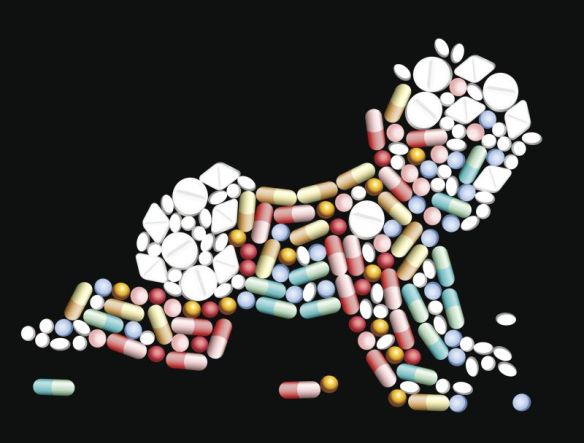
Currently, over a million American children UNDER SIX YEARS OLD are taking psychiatric drugs. Babies are literally being doped up by the pharmaceutical industry. Over 274,000 babies UNDER ONE-YEAR-OLD are given drugs, mostly for anxiety.
Anxiety drugs for babies. Have they tried motherly love? Or is that just an old fashioned, outdated concept?
You know, I like to mention society’s similarity to Orwell’s 1984. And surely the growing police state, war on drugs, and endless military campaigns–where the enemy seems to change daily–are reminiscent of the fictional dictatorship of Big Brother.
But it seems the powers that be are working tirelessly to blend together the dystopia of 1984, with that of Aldous Huxley’s Brave New World.
In that dystopia, there is no police state or war. Society has been perfectly designed by scientists, inspired by Ford’s assembly line. Babies are grown in the lab, cloned to all look alike, depending on their class. Parents are an embarrassing relic of the past. How silly to think a child needs family when they have the state!
The lower castes are deprived of oxygen as embryos to stunt their mental development. In America, they use fluoride in the drinking water instead.
In Brave New World, children listen to 24-hour propaganda in their cribs. Betas hear:
Alpha children wear grey. They work much harder than we do, because they’re so frightfully clever. I’m really awfully glad I’m a Beta, because I don’t work so hard. And then we are much better than the Gammas and Deltas. Gammas are stupid. They all wear green, and Delta children wear khaki. Oh no, I don’t want to play with Delta children. And Epsilons are still worse.
White pride, black pride, gay pride, national pride. Pride is not meant for accidents of birth. You should be proud of accomplishments and achievements, not genetics and geography. Perhaps someone has been whispering in these radicalized children’s ears.
And how jealous the Department of Education must be of the incubators of Brave New World! They have to sometimes wait years to indoctrinate children. But at least the government gets to drug them up at a young age! And if the TV is left on, most of the programming is done for them.
Of course, the adults are drugged up in Brave New World as well, just like in America. If anyone feels the least bit anxious, nervous, sad–or any other troublesome emotion–they get “soma.” It’s the perfect mix of drugs with only pleasant feelings and no ill side effects.
The 50 million plus Americans on psychiatric medication sometimes kill themselves, or go mad and kill others. I guess the government is still working out the kinks. Or it’s just another creative blending of 1984 and Brave New World. In the former, the proles must be properly terrified.
And there is one more thing I can remember from Brave New World that strikes eerily similar to modern America.
At what age does the public education system start teaching sex ed? Kindergarteners in some states receive “age appropriate”–according to the government–sexual education. Some studies suggest teen pregnancies rise in areas where sex ed is taught at younger ages.
How young is too young for a sex change? Kids can now choose between 43 genders, or make up a new one! It’s like Mr. Potato head, but with their own bodies. And they will be given corresponding drugs to enhance the “natural” changes.
In the classrooms of Brave New World:
“We had Elementary Sex for the first forty minutes,” she answered. “But now it’s switched over to Elementary Class Consciousness.”
The Director walked slowly down the long line of cots. Rosy and relaxed with sleep, eighty little boys and girls lay softly breathing…
He let out the amazing truth. For a very long period before the time of Our Ford, and even for some generations afterwards, erotic play between children had been regarded as abnormal (there was a roar of laughter); and not only abnormal, actually immoral (no!): and had therefore been rigorously suppressed.
Drugging the population, programming citizens with propaganda, sexualizing children, creating class divisions.
These dystopian novels were meant to be warnings, not instruction manuals.
I just finished watching the much-acclaimed series “Narcos” on Netflix. What a fantastic program. And what an excellent depiction of the futility and corruption of the war on drugs.
The series is a true-life account of Pablo Escobar, a Colombian drug lord who headed up the Medellin drug cartel, a black-market drug group that smuggled hundreds of tons of cocaine into the United States in the 1970s and 1980s. Smuggling an estimated 80 percent of the cocaine into the United States, Escobar became known as called the “King of Cocaine,” attaining in the process a net worth of $30 billion by the early 1990s. According to Wikipedia, Escobar was the wealthiest criminal in history.
Amidst much acclaim and publicity, the U.S. government and the Colombian government, working together, targeted Escobar with arrest or killing. Escobar retaliated by effectively declaring war on the government, a war that consisted of assassinations and bombings. Every time the DEA (which was operating in Colombia, along with the U.S. military and the CIA) and Colombian officials tightened the noose on Escobar’s operation, Escobar responded with bullets and bombs, killing a multitude of government officials and private citizens.
The logic of the drug-war crackdown was clear: By eradicating Escobar, officials thought they would be eradicating 80 percent of the cocaine being shipped into the United States. So, all the death and destruction resulting from the crackdown on Escobar was considered worth it in the long run.
But that’s not what happened. The more they tightened the noose around Escobar, the more his cocaine competitors—that is, the ones who were supplying the 20 percent, expanded their operations, gaining them a larger market share. Among the principal beneficiaries of the crackdown on Escobar was the Cali Cartel, which, not surprisingly, became the next big target of the U.S. and Colombian drug warriors, with similar results—the more they cracked down on the Cali Cartel, the more their competitors stepped into the breach and gained a larger market share.
In 1993, they finally caught up to Escobar and killed him in a shootout. You can imagine how U.S. and Colombian officials trumpeted that drug-war victory. Another “milestone” in the war on drugs, the term they have used for decades whenever they kill or capture some big drug lord.
But of course it was all to no avail. Even though they killed Escobar and ultimately smashed the Medellin and Cali cartels, amidst great fanfare and publicity, other suppliers quickly took their places and continued providing cocaine users in the United States with their drug.
In other words, all those people who lost their lives in the drug war on Escobar died for nothing. Absolutely nothing.
There is something else to consider: what the drug war against Escobar did to law-enforcement agents, both American and Colombian. It corrupted them to the core. Frustrated over all the death and destruction that Escobar was wreaking across the country and over their inability to apprehend him, officials began employing brutal and illegal tactics in return, such as torturing prisoners for information and then murdering them so that they couldn’t talk about what the officials had done to them.
Of course, there was also widespread bribery that was taking place within the Colombian police. In fact, that was one of the reasons they had such a hard time catching up to Escobar—his informants within the police and Colombian military would alert him to whatever was going on.
The pathetic thing about all this death, destruction, mayhem, and corruption is that there was a much simpler way to have put Escobar, the Cali Cartel, and all the other black-market drug suppliers out of business, a way that would not have involved assassinations, bombings, torture, and corruption. All that the U.S. and Colombian governments had to do was legalize drugs.
If they had done that, Escobar and the rest of the black-market suppliers would have been put out of business instantaneously. That’s because of the difference between legal markets and black markets.
In legal markets, suppliers compete against each other by providing better goods and services to their customers. Think CVS, Walgreen, and other pharmacies. Notice that they are not out bombing and assassinating each other and other people.
It’s totally different in black or illegal markets. Competitors in these markets deal with each other through violent turf wars that involve murder, kidnapping, bombing, and mayhem. While people like Escobar are able to thrive in a black market, they inevitably go out of business in a legal market because they lack the skills that are necessary in legal markets.
A good example of this phenomenon is alcohol. We don’t see alcohol dealers killing each other to get a larger share of the market. That’s because booze is legal.
But it wasn’t that way when booze was illegal. During Prohibition, there were people like Al Capone involved in the sale and distribution of alcohol, along with killing, mayhem, and corruption.
This same principle, of course, applies today. Notwithstanding all the hoopla to which all of us are subjected when the feds or state drug warriors make a drug bust, the result is no different than it was 20–30 years ago with Escobar. The minute they make the bust, the supplier is replaced by someone else.
There is only one way to eradicate drug lords and illicit drug dealers, along with all the death, destruction, and corruption that comes with them: End the war on drugs by legalizing drugs.
Jacob G. Hornberger is founder and president of The Future of Freedom Foundation.
Natural disasters like Hurricane Harvey are greatly exacerbated by America’s neglected infrastructure nationwide – a deplorable situation unaddressed by Republicans and undemocratic Democrats alike for decades.
Poor maintenance, aging pipe networks installed up to a century ago, and lack of proper drainage facilities in flood-prone cities like Houston, New Orleans, and Chicago’s downtown Loop, along with poor communities in these and other cities left especially vulnerable, make disasters like Katrina and Harvey far worse than otherwise if proper protections were in place.
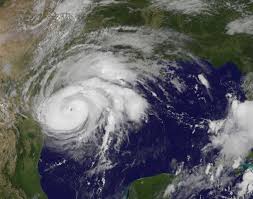
They’re not nationwide. America’s neglected infrastructure bears much of the blame for Houston’s epic disaster – worsening as rain keeps falling, making landfall a second time west of Cameron, LA, heavy rain hitting the state’s coastal areas.
The National Weather Service issued a flash flood emergency, its severest flood alert. Millions of Texas and Louisiana residents vulnerable. Rainfall in Houston already exceeds 50 inches.
By Tuesday afternoon, an estimated 444 square miles were flooded, an area six times the size of Washington, DC. Shocking, and things keep worsening as rain keeps falling – lightly in Houston, not torrentially like earlier, but floodwaters are still rising.
According to Rice University Environmental Engineering Professor Phil Bedient, “Houston is the most flood-prone city in the United States. No one is even a close second – not even New Orleans, because at least they have pumps there.”
Rice University Environmental Law Professor Jim Blackburn said Houston’s system is designed to drain only up to 12 or 13 inches of rain per 24-hour period. It’s “so obsolete it’s just unbelievable,” he stressed.
Houston’s Harris County has the nation’s least-regulated drainage policy, according to Bedient. Reservoirs overflowed. Water pressing against 70-year-old dams was released, worsening downstream flooding.
Houston’s storm drain and pipe system is minimal compared to other cities. Overdevelopment eliminating green space exacerbated what’s ongoing.
Chairman of Residents Against Flooding Ed Browne said area politicians bend to the will of developers. Whatever they want they get.
According to Bedient, the way Houston is governed created “a perfect mix for the perfect storm. And that’s why we flood so often” – though never before like now.
The calamity is hugely aggravated by damaged oil refineries and fuel facilities along the Texas Gulf coast – releasing millions of pounds of toxic chemicals into the air and water, creating a serious health hazard for area residents.
Releases include carcinogenic benzene and nitrogen oxide. Texas environment director Luke Metzger warned that “(i)t’s adding to the cancer risk to the community and well as respiratory problems.”
Area refineries and plants account for about 25% of America’s refining capacity, over 40% of its ethylene production, and more than half of its jet fuel.
The Gulf Coast is home to around half of the nation’s chemical manufacturing facilities. Hazardous gases were emitted during plant shutdowns.
The effects on human health won’t be known for some time. Exposure to toxins causes cancer and other diseases.
It’s just a matter of how many local residents will be harmed – besides damage or loss of homes and personal possessions.
A 1636 Dutch print depicts a tender domestic scene: a father in his nightdress walks to and fro, soothing a wakeful baby while mom gets some well-deserved sleep. The accompanying verse is equally sweet, assuring us that God, like this kindly father, will comfort us when we become gripped with anxiety and cry out in the night.
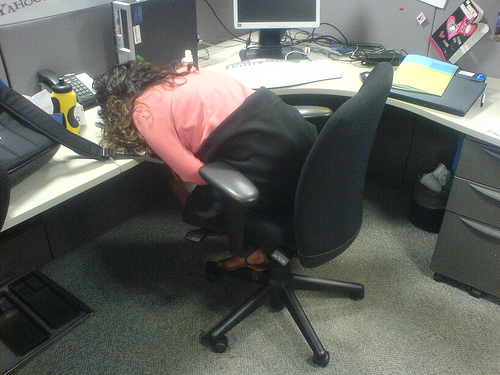
But when we wake today, heart pounding at the recollection that we have a big presentation in six hours, many of us might find a last-minute cancellation more conducive to recovering sleep than the idea of a loving God who cradles and sings to us. Adding to our anxiety is the knowledge that the loss of every minute is setting us back. There seems hardly to be sleep enough to go around, much less to share with our loved ones. We know the stats: most Americans sleep a paltry 6.8 hours per night, less than the recommended eight hours. The litany of sleep deprivation consequences is also familiar: obesity, depression, anxiety, loss of libido, and heart disease, among others.
We also instinctively understand that we have a stake in each other’s sleep. In addition to immediate hazards, like overtired drivers taking the wheel or bleary-eyed colleagues gumming up our beautiful spreadsheets, we know that widespread depression and worn-out immune systems affect society broadly, and over the long term. And yet we often understand our sleep in terms of pure individual choice.
For that reason, wilful sleep deprivation remains a cultural ideal. This you-snooze-you-lose mindset was recently captured by internet-marketplace Fiverr’s advertisement poster, which, alarm-like, blared “SLEEP DEPRIVATION IS YOUR DRUG OF CHOICE . . . YOU MIGHT BE A DOER.” After all, what is the condition of sleep, if not an absence of motivation to chase the $5 gigs the company peddles? In this same vein, a 2012 Business Insider slideshow fawned over “19 Successful People Who Barely Sleep.” Marissa Mayer, Yahoo! CEO, got pride of place as slide number one. Slide number three was Donald Trump.
An equally individualistic pro-sleep discourse does exist, primarily in click-bait articles nestled within chum boxes, which limply scold us for watching Netflix in bed. Entering this soporific terrain, sleep-evangelist Arianna Huffington urges readers of her book, The Sleep Revolution, to sleep more, prescribing rituals to maximize its quality, including pre-bedtime soaks with Epsom salts, and counting one’s blessings.
As with our wakefulness, our slumber too is motivated and shaped by anxiety. Those who do protect their eight hours often do so because it helps them perform better at work. It’s no wonder that Huffington, a boss, approves of this motivation for sleep, writing, “It would actually be better for business if employees called in tired, got a little more sleep, and then came in a bit late, rather than call in sick a few days later or, worse, show up sick, dragging themselves through the day while infecting others.”
It may appear that as a society we have conflicting sleep ideals, but really, we’re not so much of two minds as we are fumbling around, trying to work out the role that sleep plays in a prosperous life. We want to get sleep right because we know that doing so is essential to thriving individually—indeed, Thrive is the name Huffington chose for her wellness company—but we fret over the quantity, preparatory rites, and timing of our sleep because sleep lies at the juncture between the private and the social, the biological, and the cultural.
Sleep is intensely private: where, when, with (and without) whom, and how we dress and prepare for sleep are intimate and emotional decisions. But sleep is also social: we modify our behavior and expectations on the assumption that those beyond our immediate domiciles—neighbors, colleagues both local and time zones away—are slumbering at certain hours. And although sleep is private, we do want social reassurance that we are sleeping the right way and look down upon those who choose other arrangements. Just mosey over to the comment section of any website discussing infant sleep, and you’ll find accusations of “baby torture,” and remarks like, “You may think you are fine, but no. You did hurt your baby.” Just as eating habits often come with a moral or ethical motivations that imply—or outright state—the absence of such morals and ethics of those who eat differently, sleep helps constitute our identity, something we generally like to have affirmed.
Enter the market. There are seemingly endless ways to buy yourself some sleep—books like Huffington’s, herbal teas, white noise machines, Ambien, melatonin, ear plugs tucked into earplug cases, therapy. And if you want to put sleep off—stimulants from espresso to cocaine, late night TV, alarms, gyms that open at 5 am.
Contrary to Huffington’s claim to revolutionary momentousness, it seems someone’s always been around to sell sleep optimization. Historian Sasha Handley writes in her book Sleep in Early Modern England that in the seventeenth and eighteenth centuriesthe panoply of goods deemed ideal for proper sleep by Brits counted breathable bed linens, thermometers to help maintain ideal room temperatures, bedclothes including nightcaps and nightcap liners, even ventilators. “No other daily activity was so heavily governed by principles of good health,” Handley writes, “nor consumed as much time, money, and labour as did sleep.” Yesterday’s silver-gilt ventilator has today become a whole range of electronic devices to track your sleep and analyze which components of your psyche and environment need correction.
We may scream at each other over the “correct” way to sleep, but the truth is that where we come down on these questions—and, indeed, whether we even have a choice at all—is largely a matter of our financial resources and anxieties. As with parenting, there are multitudinous dictums competing over how to do sleep right, but few resources to actually achieve our cultural ideals. For well-to-do families, whether to co-sleep with babies may be a considered choice. No such luck for households that cannot afford a bassinet or crib. Coffee-fuelled all-nighters are technically a choice, but usually one coerced by negative economic consequences for missing a deadline. And what can Huffington say to readers who don’t have a bathtub or even a private bedroom from which to banish their phone?
As more and more people drop prescription drugs for medical cannabis, reports like this explain why Big Pharma is scrambling to keep prohibition in place. It also explains why the DEA has such close ties to the pharmaceutical industry.
The question of why cannabis remains illegal becomes more unavoidable by the day, as scientific evidence mounts for its medicinal powers and states continue to decriminalize the plant. The legal drugs of alcohol and nicotine kill hundreds of thousands every year and have little to no medical value – but the ingestion of cannabis kills no one, and heals many.
The war on drugs itself is an utter failure by the metrics it was supposed to address – drug availability, drug prices and drug use. With the absence of any rational basis for prohibition, it begs the question of what actually sustains it.
We know the State profits immensely from the drug war, acquiring wealth and power by arbitrarily naming certain substances “illicit.” In the modern-day corporatocracy, certain industries profit as well, most notably prisons and various entities involved in State oppression.
In the area of cannabis, perhaps the biggest beneficiary to prohibition is the pharmaceutical industry. Big Pharma tried and mostly failed to defeat the groundswell movement of cannabis legalization in many states. But it seems to have a friend in the federal Drug Enforcement Administration (DEA), which against all reason decided to keep cannabis a Schedule 1 Controlled Substance.
Big Pharma admitted that legal cannabis poses a threat to its profit, and that reality is underscored in a new analysis from New Frontier Data. If medical cannabis were adopted in all 50 states, it would siphon about $4.5 billion a year from the pharma industry.
“New Frontier Data identified nine conditions in particular to assess the impact of the legalization of cannabis would have on prescription drug use.
Among those, spending on treatments for chronic pain and post-traumatic stress disorder (PTSD) represented about 60% of the total. Overall in 2016, it was estimated that patients spent nearly $14.3 billion and $10.6 billion, respectively, to treat chronic pain and PTSD. The costs to treat sleep disorders, anxiety, epilepsy, nerve pain, chemotherapy-induced nausea and vomiting (CINV), Tourette syndrome, and glaucoma collectively accounted for the other 40% dedicated toward treatments.
There is significant savings to be realized in the health care system both to consumers and the U.S. government. It is estimated that cannabis and related products can replace between $4.4 billion and $4.9 billion of current annual spending on those existing treatments.”
In a press release, New Frontier CEO Aguirre De Carcer said, “Looking at these numbers, it would appear that medical cannabis would be a drop in the bucket when it comes to impacting the total pharmaceutical industry. However, when you start to break down the numbers by specific sectors of the industry, like chronic pain or symptoms associated with chemotherapy, which are very lucrative markets for pharmaceutical companies, you will certainly see cannabis have a major impact.”
They referenced a July 2016 study which found that, on average, about 11 percent of patients in legal weed states are successfully replacing prescription drugs with medical cannabis. This, along with other studies, prompted New Frontier Data to look further into the dynamic of medical cannabis and pharmaceutical drugs.
A National Academies of Science study identified nine specific conditions where medical cannabis can have a beneficial role – including chronic pain and post-traumatic stress disorder (PTSD) – which were used by New Frontier Data for their analysis. Another report showed that taxpayers could save $1.1 billion on Medicaid prescriptions annually if medical cannabis were legalized nationwide.
“Any opportunity for alternatives that could result in reduced pharmaceutical drug use might present a compelling point of discussion from a public policy standpoint,” said John Kagia, executive vice president of industry analytics at New Frontier.
The problem is, public policy is largely controlled by interests that have no desire to reduce profits by reducing prescription drug consumption, and have no desire to relinquish power by decriminalizing a medicinal plant that harms no one.
Judging by DEA chief Chuck Rosenberg, his agency will continue taking the lead in government’s war on people. Only a few days ago Rosenberg reminded us of the staggering, willful ignorance that guides the drug war, stating, “Marijuana is not medicine.”
Long-time Corbett Reporteers might recall my 2015 video, “Celebrate! McDonald’s is Dying!” where I detailed the many, many woes the fast “food” giant was dealing with at the time, including:
The first quarterly loss in the firm’s 38 years as a publicly traded company ($343.8 million).
Since then, McCancer’s has been undergoing a sweeping “restructuring” that has seen many layers of lipstick slapped on their factory-farmed pig. This restructuring includes not only cosmetic changes (“All-day breakfasts and new value menus for everyone!”) but behind-the-scenes efforts to trim $500 million from the company’s operating expenses, including buyouts and layoffs at company headquarters and the re-franchising of 4,000 corporate “restaurants.”
The global giant’s influential PR machine has used sleight-of-hand and other tricks to make this restructuring look like a smash success. They used their cheerleaders at the Wall Street Journal to hype “stronger-than-expected” profit and sales figures and their boosters at US News & World Report to hype some highly-selective earnings comparisons suggesting that this “turnaround” is, to use the WSJ’s phrase, “sustainable.”
But one doesn’t have to scratch too hard to reveal the rusty reality beneath this PR paint job.
McPinkslime’s might have “beat expectations” for sales and profits, but beating diminished expectations is hardly a sign of booming business. Just look at the nuts and bolts of the Q3 2016 earnings report: Year-on-year revenue is down 2.9% and net income is down 2.6%. And keep in mind, those numbers are in comparison to the already-terrible 2015 figures.
The story is fascinating enough in its own right, what with McDonteats throwing in the corporate towel on the largest and fastest-growing consumer market in the world. But the devil is, as always, in the details. Who is purchasing the majority stake in the company’s mainland operations? None other than The Carlyle Group and CITIC Group.
The Carlyle Group’s name will likely ring a bell as one of the largest swamp pits “private equity firms” in the world, and one with its fingers in many a pie, including, of course, 9/11.
CITIC Group, meanwhile, will be familiar to The Corbett Report faithful as a key player in “China and the New World Order,” a Chinese state-owned investment company that helped serve as the Rockefeller-Kissinger nexus between the Deng Xiaoping-era “capitalist roaders” and their western finance oligarch recolonizers.
That these two cesspools are converging on the giant turd of American fast food is fitting enough. The McDonaldization of China is proceeding apace, and the usual crew are there to profit from it.
On the depressing front, there is a simple reason for the across-the-board slowdown in fast food sales in recent years (despite the predictable attempts to overcomplicate the problem in clickbait-y listicle format). For once, the Wall Street Journal gets it right: It’s the economy, stupid. What greater rebuke to the easily-disprovable economic “recovery” nonsense of the Obama years could be possible than pointing out the simple fact that people are too worried about their economic future to splurge on a $5 value meal?
But on a positive note, we can take McFatfood’s woes as a sign that, try as they might with their considerable propaganda resources, the corporate chieftains can’t put their egg McMuffin back together again. People are fed up with fast food. And although some, concerned with cost, are turning to eating at home as the cheaper option, others are more concerned with what’s in their food, where it’s sourced from, how it’s being prepared and who is being paid for it. Who wants instant, nutritionless, food-like substitute rolled up in plastic and slapped down on a tray by surly, overworked servers (or, increasingly, robots) anyway?
For those interested in how they can take part in the real food revolution that will render the McFastfood economy obsolete, may I humbly offer this podcast on guerrilla gardening? Bon appétit!
We are told that the “War on Drugs” is being waged, on our behalf, by our governments and their armed bureaucracies and police forces, to save us from ourselves. “Potential for abuse and harm” are supposed to be the criteria by which the use of drugs is suppressed—the greater a drug’s potential for abuse and harm, the greater and more vigorous the degree of suppression, and the more draconian the penalties applied against its users.
In line with this scheme drugs are typically ranked into a hierarchy: Schedules I, II, and III in the US, Classes A, B, and C in the UK, and so on and so forth all around the world. Thus, to be arrested for possession of a Schedule I or Class A drug results in heavier penalties than possession of a Schedule III or Class C drug. Generally if a drug is deemed to have some currently accepted medical use it is likely to be placed in a lower schedule than if it has none, notwithstanding the fact that it may have potential for abuse or harm. In the absence of any recognized therapeutic effects, drugs that are highly addictive, such as heroin or crack cocaine, or drugs that are profoundly psychotropic, including hallucinogens such as LSD, psilocybin, or DMT, are almost universally placed in the highest schedules and their use attracts the heaviest penalties.
The notable exceptions to this system of ranking according to perceived “harms” are, of course, alcohol and tobacco, both highly addictive and harmful drugs—far more so than cannabis or psilocybin, for example—but yet socially accepted on the grounds of long customary use and thus not placed in any schedule at all.
The Failed War
When we look at the history of the “War on Drugs” over approximately the last 40 years, it must be asked whether the criminalization of the use of any of the prohibited substances has in any way been effective in terms of the stated goals that this “war” was supposedly mounted to achieve. Specifically, has there been a marked reduction in the use of illegal drugs over the past 40 years—as one would expect with billions of dollars of taxpayers’ money having been spent over such a long period on their suppression—and has there been a reduction in the harms that these drugs supposedly cause to the individual and to society?
It is unnecessary here to set down screeds of statistics, facts, and figures readily available from published sources to assert that in terms of its own stated objectives the “War on Drugs” has been an abject failure and a shameful and scandalous waste of public money. Indeed, it is well known, and not disputed, that the very societies that attempt most vigorously to suppress various drugs, and in which users are subject to the most stringent penalties, have seen a vast and continuous increase in the per capita consumption of these drugs. This is tacitly admitted by the vast armed bureaucracies set up to persecute drug users in our societies, which every year demand more and more public money to fund their suppressive activities; if the suppression were working, one would expect their budgets to go down, not up.
Inventory of Harm
Such matters are only the beginning of the long inventory of harm caused by the “War on Drugs.”
Western industrial societies, and all those cultures around the globe that increasingly seek to emulate them, teach us to venerate above all else the alert, problem-solving state of consciousness that is particularly appropriate to the conduct of science, business, war, and logical inquiry, and to such activities as driving cars, operating machinery, performing surgery, doing accounts, drawing up plans, accumulating wealth, etc., etc., etc. But there are many other states of consciousness that the amazing and mysterious human brain is capable of embracing, and it appears to be a natural human urge, as deep-rooted as our urges for food, sex, and nurturing relationships, to seek out and explore such “altered states of consciousness.” A surprisingly wide range of methods and techniques (from breathing exercises, to meditation, to fasting, to hypnosis, to rhythmic music, to extended periods of vigorous dancing, etc.) is available to help us to achieve this goal, but there is no doubt that the consumption of those plants and substances called “drugs” in our societies is amongst the most effective and efficient means available to mankind to explore these profoundly altered states of consciousness.
The result is that people naturally seek out drugs and the temporary alterations in consciousness that they produce. Not all people in every society will do this, perhaps not even a majority, but certainly a very substantial minority—for example the 2 million Britons who are known to take illegal drugs each month3 or those 20 million people in the US who have been arrested for marijuana possession since 1965. And these of course are only the tip of the iceberg of the much larger population of American marijuana users, running into many more tens of millions, who have, by luck or care, not yet fallen foul of the law and are thus not reflected in the arrest statistics.
Needless to say, it is of course exactly the same urge to alter consciousness that also impels even larger numbers of people to use legal (and often extremely harmful) drugs such as alcohol and tobacco—which, though they may not alter consciousness as dramatically as, say, LSD, are nevertheless undoubtedly used and sought out for the limited alterations of consciousness that they do produce.
For the hundreds of millions of people around the world whose need to experience altered states is not and cannot be satisfied by drunken oblivion or the stimulant effects of tobacco, it is therefore completely natural to turn to “drugs”—and, since the “War on Drugs” means that there is no legal source of supply of these substances, the inevitable result is that those who wish to use them must resort to illegal sources of supply.
Herein lies great and enduring harm. For it is obvious, and we may all see the effects everywhere, that the criminalization of drug use has empowered and enriched a vast and truly horrible global criminal underworld by guaranteeing that it is the only source of supply of these drugs. We have, in effect, delivered our youth—the sector within our societies that most strongly feels the need to experience altered states of consciousness— into the hands of the very worst mobsters and sleazeballs on the planet. To buy drugs our sons and daughters have no choice but to approach and associate with violent and greedy criminals. And because the proceeds from illegal drug sales are so enormous, we are all caught up in the inevitable consequences of turf wars and murders amongst the gangs and cartels competing in this blackest of black markets.
Instead the powers that be continue to pursue the same harsh and cruel policies that they have been wedded to from the outset, ever seeking to strengthen and reinforce them rather than to replace them with something better. Indeed the only “change” that the large, armed bureaucracies that enforce these policies has ever sought since the “War on Drugs” began has, year on year, been to demand even more money, even more arms, and even more draconian legislative powers to break into homes, to confiscate property, and to deprive otherwise law-abiding citizens of liberty and wreck their lives. In the process we have seen our once free and upstanding societies— which used to respect individual choice and freedom of conscience above all else—slide remorselessly down the slippery slope that leads to the police state. And all this is being done in our name, with our money, by our own governments, to “save us from ourselves”!
Freedom of Consciousness
What is Western civilization all about? What are its greatest achievements and highest aspirations?
It’s my guess that most people’s replies to these questions would touch—before all the other splendid achievements of science, literature, technology, and the economy—on the nurture and growth of freedom.
Individual freedom.
Including, but not limited to freedom from the unruly power of monarchs, freedom from the unwarranted intrusions of the state and its agents into our personal lives, freedom from the tyranny of the Church and its Inquisition, freedom from hunger and want, freedom from slavery and servitude, freedom of conscience, freedom of religion, freedom of thought and speech, freedom of assembly, freedom to elect our own leaders, freedom to be homosexual—and so on and so forth.
The list of freedoms we enjoy today that were not enjoyed by our ancestors is indeed a long and impressive one. It is therefore exceedingly strange that Western civilization in the twenty- first century enjoys no real freedom of consciousness.
There can be no more intimate and elemental part of the individual than his or her own consciousness. At the deepest level, our consciousness is what we are—to the extent that if we are not sovereign over our own consciousness then we cannot in any meaningful sense be sovereign over anything else either. So it has to be highly significant that, far from encouraging freedom of consciousness, our societies in fact violently deny our right to sovereignty in this intensely personal area, and have effectively outlawed all states of consciousness other than those on a very narrowly defined and officially approved list. The “War on Drugs” has thus unexpectedly succeeded in engineering a stark reversal of the true direction of Western history by empowering faceless bureaucratic authorities to send armed agents to break into our homes, arrest us, throw us into prison, and deprive us of our income and reputation simply because we wish to explore the sometimes radical, though always temporary, alterations in our own consciousness that drugs facilitate.
The reason the anti-marijuana campaigns have failed is that millions of users know from their own direct, long-term experience that marijuana does not do them any great harm and (with reference to the most recent anti-marijuana propaganda) most definitely does not drive them mad.
Other than being against arbitrary rules that the state has imposed on us, personal drug use by adults is not a “crime” in any true moral or ethical sense and usually takes place in the privacy of our own homes, where it cannot possibly do any harm to others. For some it is a simple lifestyle choice. For others, particularly where the hallucinogens such as LSD, psilocybin, and DMT are concerned, it is a means to make contact with alternate realms and parallel dimensions, and perhaps even with the divine. For some, drugs are an aid to creativity and focussed mental effort. For others they are a means to tune out for a while from everyday cares and worries. But in all cases it seems probable that the drive to alter consciousness, from which all drug use stems, has deep genetic roots.
Other adult lifestyle choices with deep genetic roots also used to be violently persecuted by our societies.
A notable example is homosexuality, once punishable by death or long periods of imprisonment, which is now entirely legal between consenting adults—and fully recognized as being none of the state’s business—in all Western cultures. (Although approximately thirteen US states have “anti-sodomy” laws outlawing homosexuality, these statutes have rarely been enforced in recent years, and in 2003 the US Supreme Court invalidated those laws.) The legalization of homosexuality lifted a huge burden of human misery, secretiveness, paranoia, and genuine fear from our societies, and at the same time not a single one of the homophobic lobby’s fire-and-brimstone predictions about the end of Western civilization came true.
Likewise, it was not so long ago that natural seers, mediums, and healers who felt the calling to become “witches” were burned at the stake for “crimes” that we now look back on as harmless eccentricities at worst.
At the deepest level, our consciousness is what we are—to the extent that if we are not sovereign over our own consciousness then we cannot in any meaningful sense be sovereign over anything else either.
Perhaps it will be the same with drugs? Perhaps in a century or two, if we have not destroyed human civilization by then, our descendants will look back with disgust on the barbaric laws of our time that punished a minority so harshly (with imprisonment, financial ruin, and worse) for responsibly, quietly, and in the privacy of their own homes seeking alterations in their own consciousness through the use of drugs. Perhaps we will even end up looking back on the persecution of drug users with the same sense of shame and horror that we now view the persecution of gays and lesbians, the burning of “witches,” and the imposition of slavery on others.
Meanwhile it’s no accident that the “War on Drugs” has been accompanied by an unprecedented expansion of governmental power into the previously inviolable inner sanctum of individual consciousness. On the contrary, it seems to me that the state’s urge to power has all along been the real reason for this “war”—not an honest desire on the part of the authorities to rescue society and the individual from the harms caused by drugs, but the thin of a wedge intended to legitimize increasing bureaucratic control and intervention in almost every other area of our lives as well.
This is the way freedom is hijacked—not all at once, out in the open, but stealthily, little by little, behind closed doors, and with our own agreement. How will we be able to resist when so many of us have already willingly handed over the keys to our own consciousness to the state and accepted without protest that it is OK to be told what we may and may not do, what we may and may not explore, even what we may and may not experience, with this most precious, sapient, unique, and individual part of ourselves?
If we are willing to accept that then we can be persuaded to accept anything.
Perhaps they believe that their underground survival bunkers with bullet-resistant doors and geothermal power and anti-chemical air filters and infrared surveillance devices and pepper spray detonators will sustain them for two or three generations.
Perhaps they feel immune from the killings in the streets, for they rarely venture into the streets anymore. They don’t care about the great masses of ordinary people, nor do they think they need us.
Or do they? There are a number of ways that the super-rich, because of their greed and lack of empathy for others, may be hastening their own demise, while taking the rest of us with them.
1. Pandemic (Because of Their Disdain for Global Health)
“A year ago the world was in a panic over Ebola. Now it’s Zika at the gate. When will it end?” –Public health expert Dr. Ali Khan.
It could end with a global pandemic that spreads with the speed of the 1918 Spanish Flu, but with a virulence that kills over half of us, rich and poor alike. Vanderbilt University’s Dr. William Schaffner warned us a decade ago, “You’ve got to really invest vast resources right now to protect us from a pandemic.” Added infectious disease specialist Dr. Stephen Baum, “There’s nobody making vaccines anymore because the profitability is low and the liability is high.”
The flu is just one of our worries. It has been estimated that less than 10 percent of the budget for health research is spent on diseases that cause 90 percent of the world’s illnesses. According to a study in The Lancet, of the 336 new drugs developed in the first decade of this century, only four of them were for diseases impacting third-world peoples. World Health Organization director Margaret Chan lamented the long decades of disregard for the African-centered effects of the Ebola virus: “Ebola has historically been confined to poor African nations. The R&D incentive is virtually non-existent. A profit-driven industry does not invest in products for markets that cannot pay.”
The super-rich had better make sure their anti-chemical air filters are also anti-viral.
2. Terrorism (Because of Global Inequality)
In The Spirit Level, Richard Wilkinson and Kate Pickett document some of the most frightening effects of inequality: higher levels of crime and violence, impacting all classes of people.
Inequality is worst at the global level, and the victims of global greed are getting more violent. The World Protests report concluded that the most recent decade represents one of the most agitated periods in modern history — comparable to pre-Civil-War days, World War 1, and the Civil Rights era. According to expert Scott Atran, terrorism primarily appeals to young men who are bored and underemployed; for them, “jihad is an egalitarian, equal-opportunity employer.”
The terrorism of the future could easily take the form of the viral killers mentioned above. As Dr. Khan notes, “A deadly microbe like smallpox — to which we no longer have immunity — can be easily recreated in a rogue laboratory.”
3. Drought (Because of Their Denial of Environmental Destruction)
National Geographic’s 2012 Greendex Survey reveals a remarkable human response to environmental damage: “[Those] demonstrating the least sustainable behavior as consumers, are least likely to feel guilty about the implications of their choices for the environment.” Citizens of Mexico, Brazil, China, and India tend to be most concerned about climate change, pollution, and species loss, while American, French, and British consumers are more concerned about the state of the economy and the cost of energy and fuel.
Even worse than denial is the outright suppression of climate-saving technologies, as, for example, by the American Legislative Exchange Council (ALEC), which wants to charge the “freeriders” who install solar panels on their roofs.
The result of this environmental contempt, according to a Columbia University study, is the prospect of “drought beyond the sub-tropics and into the Northern Hemisphere mid-latitudes, regions of globally important agricultural production.”
The super-rich can while away the hours in their underground bunkers watching videos of the good old days when the earth was cool.
4. Atrophy (Because of the Debt-Induced Collapse of Innovation)
A Small Business Administration studyfound that only 2% of the Millennial Generation are entrepreneurs (self-employed or business owners), compared to 6.7% of Baby Boomers and 5.4% in Generation X. According to the Kauffman Foundation, 20- to 34-year-olds made up over a third of all new business startups in 1997, but less than a quarter of them today. The super-rich have manipulated the financial system to the point that would-be entrepreneurs, many of them young and deeply in debt, are unable or unwilling to take chances on new startups.
Yet on a global scale youth entrepreneurship is on the rise. America is exceptional in its entrepreneurial decline.
5. Decay (Because of Their Disregard for Our Crumbling Infrastructure)
The corporate elite may face further business collapse if they continue to ignore the breakdown in our nation’s infrastructure. The American Society of Civil Engineers estimates that every American household is losing $3,400 per year in disposable income due to infrastructure deficiencies.
The tens of billions of dollars already being paid for additional transportation and storage costs may not kill the capitalists, but the losses to China and other fast-developing nations will surely deflate their stock prices and their egos.
How the Super-Rich Could Help Themselves
Amidst all the talk of unity and prayer and peace, a solution exists: job opportunities and affordable housing. The super-rich could prolong life for all of us, including themselves, if they recognized the need to support a strong society. If not, they’ll be ensconced in their bunkers with their children at their sides, with nowhere to go and nothing to do.






 After the Crash