The Role of Dystopian Fiction in a Dystopian World

images

By Luther Blissett and J. F. Sebastian of Arkesoul

A few years ago, Neal Stephenson wrote a widely-shared article called Innovation Starvation for the World Policy Institute. He began the piece lamenting our inability to fulfill the hopes and dreams of mid-20th century mainstream American society. Looking back at the majority of sci-fi visions of the era, it’s clear many thought we’d be living in a utopian golden age and exploring other planets by now. In reality, the speed of technological innovation has seemingly declined compared to the first half of the 20th century which saw the creation of cars, airplanes, electronic computers, etc. Stephenson also mentions the Deepwater Horizon oil spill and Fukushima disasters as examples of how we’ve collectively lost our ability to “execute on the big stuff”.

Stephenson’s explanation for this predicament is two-fold; outdated bureaucratic structures which discourage risk-taking and innovation, and the failure of cultural creatives to provide “big visions” which dispute the notion that we have all the technology we’ll ever need. While there’s much to be said about archaic, inefficient (and corrupt) bureaucracies, there’s also a compelling argument invoked over the cultural importance of storytelling and art and how best to utilize it. One of the solutions offered by Stephenson, in this regard, is Project Hieroglyph which he describes as “an effort to produce an anthology of new SF that will be in some ways a conscious throwback to the practical techno-optimism of the Golden Age.”

While Project Hieroglyph may be a noble endeavor, one could argue that it’s based on a flawed premise. The role of science fiction has never been just about supplying grand visions for a better future, but to make sense of the present. There seems to be an assumption that the optimistic Golden Age had a causal relationship with a perceived technological golden age when it may have simply been a reflection of it— just as dystopian sci-fi reflects and strongly resonates with the world today. Stephenson may be correct in his view that much SF today is written in a “generally darker, more skeptical and ambiguous tone”, but this more nuanced perspective does not necessarily signify the belief that “we have all the technology we’ll ever need”. Rather, it reflects decades of collective experience and knowledge of unforeseen and cumulative effects of technologies. Nor does such fiction focus only on destructive effects of technology, as large a component of the narrative it may be simply because it makes for better drama and the subtext is often intended as a critique rather than celebration. For example, the archetypal hacker protagonists of technocratic cyberpunk dystopias employ technology for more positive ends (though some question whether good SF, as in speculative fiction, needs to involve new technology at all).

A particularly positive function for dystopian sci-fi is its use as rhetorical shorthand. It’s increasingly common in public discourse on major issues of the day to invoke dystopian references. Disastrous social effects of peak oil or post-collapse are often characterized as Mad Max scenarios. Various negative aspects of genetic modification and pharmaceutical development conjure Brave New World. Anxiety over out-of-control AI and resultant devaluing of human life brings to mind films as varied as Blade Runner, The Matrix and Terminator films. The expanding police/surveillance state is reminiscent of 1984 and numerous classics which have followed in its footsteps including V for Vendetta and Brazil. General fears of duplicitous, psychopathic power elites and social manipulation have elevated They Live from relatively obscure b-movie to cult classic. The entry of the term “zombie apocalypse” into the popular lexicon may in part stem from fear (and uncomfortable recognition) of images of viral social disintegration and martial law-enforced containment efforts depicted throughout various media. The burgeoning omnipotence of multinational corporations and hackers in Mr. Robot may have been the stuff of cyberpunk dystopias such as Neuromancer and Max Headroom 30 years ago, yet, it still has much to contribute to the public discourse as contemporary drama. Such visions may not prevent (or have not prevented) the scenarios they warn us of but have provided a vocabulary and framework for understanding such problems, and who’s to say how much worse it could be had such cautionary memes never existed?

The prophetic nature of storytelling, inasmuch as it derives from the minds of authors, artists and commentators that coexist with tensions and contexts particular to their epochs, resonate with the oughts, ifs, and whats inherent to our daily lives. As it were, the cautionary element of narrative is a natural product of the human mind, and the premium of what involves sharing our mental reserves to the world. To creatively dwelve and concoct problems and solutions from experience, is an axiom analogous to that of the categorical imperative—purely, and in abstract terms of what rationality involves. Yet, often times, we find material that is in favor of cultural malaise; of all things pathological in our society, such as censorship, conformity, bureaucracy, authoritarianism, militarism, and capital marketing; things which underpin issues that, if left untouched, can engulf the real brilliance of our spirit.

Stephenson fails to see this point. SF, as any form of intelligent culture, denounces and opposes systems of oppression, and even shows us the how, when, and why—the frameworks, the makings of apparent utopias into dystopias. Dystopian storytelling can serve the efforts of downtrodden creators with utopian ideals as effectively as utopian stories can reframe a societal trajectory led by beneficiaries of real world dystopia (though it may be experienced as utopia for a privileged few). SF does not only conjure visions of better futures. They lend us vocabularies and syntaxes to understand, and impede the fallenness of a confused, and ever increasingly isolated humanity. They are languages that pervade our interiorities, and that allow the exterior to change.

At the core, SF is prophecy through reasoned extrapolation and artistic intuition. This is what SF stands for when properly aligned with the subjectivities of the oppressed, and not with the voices of oppression: true testaments of a space and a time; visions of the future that carefully partake in not committing the mistakes of the past; and tools for our personal and collective flourishing.

Marrying robots, killing with drones, and making empty selfies

by Edward Curtin

Source: Intrepid Report

Today everything has become a spectacle, including writing. My title probably caught your eye, as it was intended. But now I would like to tell you a personal story about a man whose brilliant work foreshadowed and dissected the issues of my title before it existed. In this he was prophetic, and it is why his work is so important. He always insisted that true artists were able to uncover society’s conflicts before they emerged consciously. Though a psychologist by profession, he was in this sense an artist as well.

His name, Rollo May, has disappeared from public discourse in this era of biological psychology and psychiatry. This great American thinker and writer was the man who introduced existential psychology to the United States. And though he died twenty-one years ago, his prescient voice begs to be heard in our current conditions.

From his first important book in 1950—The Meaning of Anxiety—he examined key underlying issues that have plagued this country ever since: the worship of technology as a death cult; the loss of a genuine sense of self; sex obsessions leading to lovelessness and impotence; and violence yoked to a lack of compassion.

In book after book, he reiterated one of his central themes: that full passionate life is only possible when one refuses to block off from consciousness the frightful emotions of anxiety, guilt, and despair. In this, his life’s work ran against the grain of the emerging zeitgeist of happy pills, mood stabilizers, and the happiness industry. “After despair,” he wrote, “the one thing left is possibility.” For possibility (Latin, posse, to be able) means power, and true power only comes to those who dare to be weak and freely embrace their personal destinies and the truth of their political and cultural conditions. I think it is not an exaggeration to say that we are presently living in an era of despair, and to embrace that reality is a hard but necessary pill to swallow. May is a wonderful guide.

While topical, in many ways his message is timeless as well. But I would like to tell you about some things I learned from him years ago that speak to our current condition. And it seems fitting that I should begin these thoughts on a day when a prominent, mainstream website has published an article arguing that humans should be able to marry robots and the day of those blissful conjugal ties is in our not too distant future. So I will proceed with those lovely words ringing in my mind: “I now pronounce you robot and wife.”

It was during the closing years of the Cold War when he and I sat down for a long conversation about his thought. Cold War rhetoric and nuclear saber rattling dominated the news and a strong anti-nuclear movement was astir. I had been deeply impressed with May’s paradoxical thinking ever since I had read his award-winning Love and Will in 1969, a year in which I had been forced out of a college teaching position for “heretical” thinking and opposition to the Vietnam war. In his work, which was not openly political, I nevertheless found a voice of deep wisdom and prophetic power. He seemed to be unearthing hidden springs of the madness sweeping the country, and in so doing also addressing the future, and, of course, me. I was feeling particularly vulnerable, yet paradoxically intensely strong, as I had recently declared myself a conscientious objector from war and the Marine Corps. It was a time like today when death and destruction were in the air, and, as Yeats puts it: “Things fall apart; the center cannot hold/Mere anarchy is loosed upon the world/The blood-dimmed tide is loosed, and everywhere/The ceremony of innocence is drowned/The best lack all conviction, while the worst/Are full of passionate intensity.”

The first thing I noticed about May the day we met was that he seemed painfully vulnerable, as though he had so opened himself to existence that the slightest breeze could blow him away. Yet when he began talking I sensed a fierceness, as well, as I recalled a favorite quote of his from Beethoven: “I will seize fate by the throat.”

So I asked him, “In reading your works one of the things that strikes me is the vitality you draw from an awareness of death. Most people would call this morbid and depressing, and yet it seems to bring you joy. I wonder how this began for you?”

“Well,” he answered without hesitation but in his ruminative way, “I’ve had some long bouts with killing illnesses. I had tuberculosis for five or six years. I had malaria fever when I was in Greece. And I’ve had several other bouts with death. If most people would call the consciousness of death depressive, I think they are the ones who have the—what I would call—masochistic or neurotic viewpoint. All through human history mortality has been faced directly and out of it, and this especially true for the ancient Greeks, they got the sense of the value of life from the fact that we are mortal. Now our age is afraid of death and we repress it and we think the only wise thing is to think about living, which strikes me as itself very sick. It’s because we’ve wedded ourselves to technology, and technology is really a study of death. You say ‘vitality.’ You can’t speak of technology as having vitality. Vitality is the human beings contribution and he ought to use technology to make his life richer. But we have become identified with it.”

Presto! Back to the present/future! As if on cue, a refutation of May’s dismissal of machines having life walks in my door. I see the mailman deliver our mail, so I get up and fetch it. An invitation has arrived for a public lecture at the college where I teach—a lecture by the futurist Ray Kurzweil, the man of “Singularity” fame, the prognosticator of the day he says is coming when artificial intelligence will surpass human intelligence and human biology will disappear into the machine. Ray has a plan to never die, so he takes 130 plus supplements a day to keep himself alive until he is able to upload his consciousness onto a hard drive and become one with the machine for a happy immortality as bits of information. Sounds like a great hereafter. And Ray has a backup plan in case the pills don’t do the trick and keep him going until he impregnates the machine; he’ll be fresh frozen at the Alcor Life Extension Foundation where he expects to be defrosted like a frozen burrito in no more than fifty years.

May said to me, “I’m very much against the quantitative views of human life. You could live exceptionally as Pascal did and die in your middle forties. As Kierkegaard did also. The length of life I don’t think is relevant. The idea that we are going to prolong life for two hundred years seems to me to be the most misplaced goal in the whole technological, crazy scheme.”

It looks like Rollo had a point: the worship of technology as a death cult. He could see it then, and today it is carrying us to our doom unless we change course. “More and more,” he wrote, “the question is being asked whether society as a whole is psychotic, and the pause after the question is a sign that the answer could be yes as well as no.” There was, he then felt, a fear of psychosis on a very broad scale, and at the heart of this fear is a loss of faith in the reality of the self, as well as a widespread feeling that one can never be sure anything is real. This sense of unreality has increased exponentially since then, and the issue of self-identity has become a hall of mirrors in our reality-media funhouse. “As in a Kafka novel, everything is waiting for us, but we ourselves do not appear.” But what does appear today, as then, but in a slightly different guise, and grows larger and larger as people’s faith in themselves grows smaller and smaller and their sense of impotence increases, is the possibility of nuclear warfare and world destruction—a new cold war started by the United States by encircling Russia and setting Ukraine ablaze. The ultimate technological death cult is, of course, nuclear weapons .

May made the connections. Like the great sociologist C. Wright Mills, he knew that our destinies are personal and social, and to deny one is to deny the other. By being existential he meant understanding the individual, not as an atomized self, but as a person-in-the world. Mills called it the sociological imagination; May preferred the term paradoxical. But they were on the same page. One’s sense of self—self-identity—is rooted social and historical conditions.

Starting with Man’s Search for Himself in the 1950s and continuing until his death in 1994, May repeatedly explored the reasons why there was an increasing loss of a genuine sense of self resulting in widespread identity confusion and a growing apathy linked to a lack of compassion. He clearly described the anxiety and loneliness that ate at so many people who “not only do not know what they want; they often do not have any clear idea of what they feel.” Feeling only empty and bored and lacking a real sense of self, they conform to hollow cultural values and mores while consuming the goods and services that a consumer culture offers to fill them up. Consuming, they are consumed. This powerless dependency, rooted in a lack of self-identity and the need to be liked, leads to painful anxiety, despair, and powerlessness resulting in acquiescence to social ills. This is today’s selfie/media culture in a nutshell, what Christopher Lasch once called the culture of narcissism.

I obviously couldn’t ask him when we talked, but I can imagine his response to today’s trends of people marrying robots, selfie photos, Facebook, avatars and second lives in cyberspace, the growth of pornography, sex with machines, the sexual saturation of culture, electronic warfare, drone killings, etc.—a bemused laugh and a comment suggesting the tragedy of it all. In Love and Will he wrote that “the contemporary paradoxes in sex and love have one thing in common, namely the banalization of sex and love. By anesthetizing feeling in order to perform better, by employing sex as a tool to prove prowess and identity, by using sensuality to hide sensitivity, we have emasculated sex and left it vapid and empty. The banalization of sex is well-aided and abetted by our mass communication. . . . They oversimplify love and sex, treating the topic like a combination and learning to play tennis and buying life insurance. In this process, we have robbed sex of its power by sidestepping eros (the creative life force); and we have ended by dehumanizing both.” He predicted that this technical approach to sex would lead to sex obsessions, lovelessness, and increased sexual impotence. And here we are—Viagra, big butts, enhanced this and enhanced that—all in the service of sexual satisfaction produced by the cult of technique and devoid of passion.

“Shooting” yourself with a phone camera, sex with a robot or a machine, and killing with drones—this is life today. We have become separated from our humanity by our machines. We worship our images and in so doing can’t grasp the death and destruction caused by our drones and foreign wars. Others don’t exist in this solipsistic culture. May saw it coming and explained why. He saw that violence was yoked to a lack of compassion and that this lack of compassion (to suffer with others) was connected to our flight from death and emotions we consider negative. He saw this form of thinking as an effort to control life that was self-defeating and could only lead to more violence.

“Paradoxical thinking,” he told me, “seems to me to be the only kind that gets to the root of human existence. I don’t think analytical thinking does. It leaves out too much. You remember Heraclitus. I think he’s quite right that we always think in terms of positive/negative. We think like electricity, thus both the negative and positive pole and the oscillation back and forth, and human thinking is a play with opposites.”

Since he has written so much about the breakdown of our traditional myths and symbols, I asked him if there was any one word or symbol that he thought encompassed the body of his work.

After a long pause, he said, “No, I think that’s impossible for any person who writes to say. I think you could say it much better than I could because we’re so much in it. All I know is that I think paradoxically.” And without pause or any word from me, he continued. “Well, if you wanted to push me, I would say that what I think is the basic, well, the basic symbol of my life, I would say that it is compassion. That’s what matters most to me. I grew up in a rather difficult family, quite difficult. I did not have a good childhood. I was quite lonely as a child. And I did suffer a good deal.”

Out of this childhood pain, he learned early to be a therapist for his family, and felt that these experiences gave him an acute sensitivity to others’ feelings. In his memoir Paulus, about his friend, Paul Tillich, the great Protestant theologian, he wrote words that could equally apply to himself: “Someone has to mediate, to make a connection through his own life between opposites.” For out of his wounds, May has created a powerful body of writings, and out of a torn self, a paradox of wholeness.

For us today, in the era of apathy, depression, and indifference to the suffering and deaths of “others” everywhere, May’s work begs to be resurrected. He urges us to care again, and to let our care and compassion lead us to act to stop the violence that we are taught to ignore. Don’t look away, I can hear him say, face fully all dimensions of the human experience, the negative and positive; remember that despair and joy are linked to the possibility of freedom; reject the cult of death that hides within technological obsessiveness; and remember that love brings the intimation of our mortality but also our greatest joys and passions.

And if he were still sitting across from me—and you—today, he’d probably also say with a grin, “Above all, don’t marry a robot.”

Edward Curtin is a sociologist and writer who teaches at Massachusetts College of Liberal Arts and has published widely.

Why Empathy Matters

0f73e837b760c553edaf501f804317bb

By Zen Gardner

Source: ZenGardner.com

It’s not easy to stay sensitive in such a cruel, desensitized world but it’s imperative we do. That’s the beauty of empathic souls; they have open and loving hearts, even if it hurts, which is why each of us needs to generate and receive so much love and encouragement.

Loving empathy is its own reward, even if we’re not showered directly with supporting human love as much as we’d prefer. The spiritual is supreme. Connection to Source is our unfailing infinite supply line of everything we need. But I agree, it’s sure nice when that consciousness is manifest in another human being and can be shared between us.

That’s the nature of true interpersonal love, and we need to shower it upon each other.

Empathize or Cauterize

I feel strongly that if we don’t allow ourselves to have broken hearts for the lost and suffering we’re virtually useless consciousness and a betrayal to Source. True heartfelt empathy heals and strengthens ourselves and those around us as we go through this voyage. Letting these sincere emotions course through us, whether it be sharing the pain of battered and betrayed victims of all sorts, including animals, or the sadness of the passing of a dear friend, they’re good for us and are a wonderful opportunity to draw closer to Source.

Using these deep experiences as an energy carrier signal to piggy back other issues on our hearts and minds into the great bosom of Love is a real key. When channeled consciously from the heart, these experiences lead to much greater intuitive understandings, strength of spirit, and that deep, deep peace that passes understanding.

Those who cannot move with these fully awake empathic spiritual impulses in effect have become cauterized. The media works hard at this, bashing the collective head with desensitizing, violent images and mind crushing propaganda constantly. That’s why they do it. Not just to promote their programs, but to shut down our conscious awareness, the all-empowering Source of love and light.

That’s what they fear the most. That we will awaken and tap into our magnificence.

Counteracting the War Against Love

This is fundamentally what this current hijack attempt is all about. Extinguishing love. Love is soft, love is kind. But it is also extremely powerful. Love is a form of creation at work. It contradicts everything we’re witnessing in today’s media driven control structure.

Express your love every chance you get. Others are starved for it just as you are. Give and it will return, but don’t do it with that motive. It just happens naturally, because that is the co-creative nature of love. So many are starved for a word of encouragement, a kind gesture, a thank you or word of appreciation. The downdraft of ugliness is so strong right now we need to support each other in any way we can.

Make yourself vulnerable. It’s the most protected space there is. Put a little love in your heart – and let it out!

Our Warfare Is Spiritual

The forces of darkness cannot overcome the Light, as hard as they may try. Any success they may seem to have at harnessing humanity for their own ends is so very temporary. While we are infinite spiritual beings, they are temporal, parasitic forces.

Keep that in mind, no matter how things may appear at times.

Let’s fully manifest and get this era done away with by letting Universe work fully through us. It happens one heart at a time, but each of us has to keep doing what we’re each meant to do and be.

Stay soft and loving, yet strong and resolved. Our weapons are spiritual – don’t let them entice you into their arena of mind games and ignorant lower vibrational reactionism. Stay where you are strong, yet engage them nonetheless. On your terms.

Thank all of you who give so much. Please know how loved and appreciated you are by so, so many.

Let it flow – we’re just getting started!

Love always, Zen

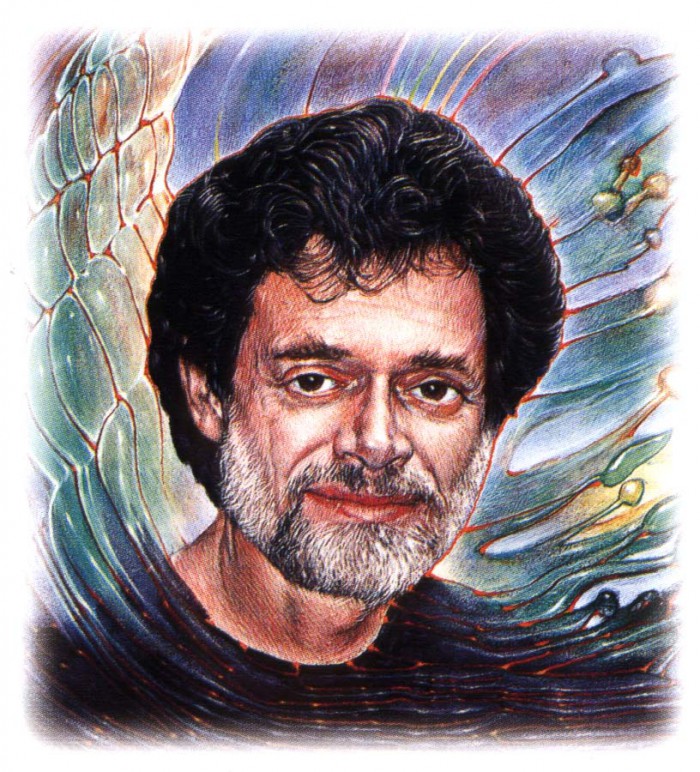
Terence McKenna’s Disillusioned Perspective on Mass-Consumerist Culture

Editor’s note: Since Terence McKenna’s passing on April 3 2000, his ideas have only grown in relevance and popularity largely because of their prescience and resonance to growing segments of internet culture. In commemoration of the 70th anniversary of his birthday we’re sharing this article which reflects an important yet often neglected aspect of McKenna’s worldview.

By Jordan Bates

Source: Refine the Mind

“We have to create culture, don’t watch TV, don’t read magazines, don’t even listen to NPR. Create your own roadshow.”

Terence McKenna is one of those cult-famous, societal-fringe figures of whom the majority of people have never heard. He’s also someone whose views probably have a polarizing effect on anyone who encounters them. At the very least, though, Terence was an exceptionally original thinker, and those who explore a fraction of his work will note his erudition and incredible ability to articulate his thoughts.

McKenna was an American philosopher and ethnobotanist who passed away in the year 2000. He was known for possessing expertise on a broad range of subjects including history, biology, geology, botany, and ecology. He toured and lectured extensively on everything from language and science to shamanism and extraterrestrials, developing a sizable and enthusiastic following.

His controversial status is in large part due to his vocal advocacy of  mind-altering substances. McKenna was a well-known psychonaut–one who explores consciousness through the ingestion of psychedelic hallucinogens–and a staunch proponent of the use of naturally occurring psychoactive compounds.

Obviously this latter aspect of McKenna’s legacy is an immediate turn-off to many. For a major sector of the population, the colossal stigma surrounding psychedelic substances is sufficient reason to lambaste the views of a well-known user. I, however, am not so quick to dismiss such a person, especially one as lucid, compelling, internally consistent, and dedicated to free inquiry as Terence McKenna.

McKenna’s Views on Mass-Consumerist Culture

I’ve delved into hours of McKenna’s lectures, and I am particularly interested in his ideas on culture. When McKenna speaks of culture, he seems to refer primarily to modern, mass-consumerist culture, so keep that in mind.

McKenna held a rather unfriendly position toward culture that can be summed up succinctly by one of his most famous quotations: “Culture is not your friend.” McKenna saw modern culture as a sort of engine detached from the interests of the individual and serving the manipulative, power-focused agendas of various institutions and wealthy individuals.

The following short video contains a portion of one of his lectures in which he addresses culture. I encourage you to watch it now (I will transcribe and elaborate on its central ideas below):

What Civilization is and What it Could be

McKenna certainly had a way of poetically articulating his ideas, and the video opens with what I feel is one of Terence’s most memorable metaphors:

“What civilization is is 6 billion people trying to make themselves happy by standing on each other’s shoulders and kicking each other’s teeth in. It’s not a pleasant situation. And yet you can stand back and look at this planet and see that we have the money, the power, the medical understanding, the scientific know-how, the love, and the community to produce a kind of human paradise.”

With this statement McKenna addresses the hyper-competitive environment that is symptomatic of the modern capitalistic socioeconomic paradigm. Our culture has a tendency to glorify competition, and many would argue that competition drives innovation and “progress” (a slippery word). I doubt McKenna would argue that competition has not been essential to the invention of our modern world, but he seems to step back and ask, “Yes, but when will it be enough?”

McKenna suggests that we’ve reached a stage of technological advancement and knowledge that would allow us to “produce a kind of human paradise.” This declaration sounds vague and idealistic, but based upon what I know of McKenna, I assume that by “human paradise” he envisioned something like a drastic change in the work paradigm, an elimination of poverty and starvation, a great reduction in disease and illness-related death, the end of war, and a much more palpable sense of a world community.

“Culture is Not Your Friend”

These items might sound far-fetched, but McKenna is not the first to suggest that such a situation is possible with our modern technology. R. Buckminster Fuller comes to mind as another prominent thinker who held similar views. After making this statement, McKenna elaborates on what he believes prevents us from attaining this state of affairs–namely, a lack of significant resistance to the poor leadership, dehumanizing values, and damaging cultural “control icons” that he perceives in the world. He states:

“Culture is not your friend. Culture is for other peoples’ convenience and the convenience of various institutions, churches, companies, tax collection schemes, what have you. It is not your friend. It insults you. It disempowers you. It uses and abuses you. None of us are well-treated by culture.”

[…]

But the culture is a perversion. It fetishizes objects. It creates consumer mania. It preaches endless forms of false happiness, endless forms of false understanding in the form of squirrelly religions and silly cults. It invites people to diminish themselves and dehumanize themselves by behaving like machines.”

Modern World as Dystopia?

McKenna holds that modern culture is centered around the agendas of those who are almost certainly not you. He believes that culture diminishes and dehumanizes the vast majority of the population by inviting them to unreflectively reinforce its models.

McKenna seems to suggest that instead of focusing on creating the type of world that is possible, we are caught up in a game of culture–a robotic pursuit of fetishized objects and false visions of a proverbial light at the end of the tunnel.

To some, this view may seem rather grim and dystopian. I don’t see it that way. I see it as a warning that remains pertinent in 2013 [and 2015]. The culture McKenna refers to does exist, and its effects are far-reaching and potentially insidious. However, I know that there are many, many people who are aware of this cultural game and do not conform to its status quo, who resolve to try to choose their own way of life and who see through the glitzy media-images.

Simply by being among this latter group of people, I think we’re doing the work that McKenna believed needed to be done–the work of resisting the damaging and dehumanizing aspects of modern consumerist culture. The mere realization that we are culturally conditioned to behave in certain ways is a sufficient catalyst to begin assuming a more active and reflective role in deciding how to live and act.

I see nothing wrong with being a cultural participant, but it should be our goal to develop a deeper awareness of the ideals our culture would have us pursue. When we understand the culture’s vision for our lives, we can continue to exist within our given society while challenging its flaws in subtle ways. We can deliberately express ourselves in forms that disrupt its norms, and we can consciously choose which aspects of it are worth partaking in. In this way, we become active constituents of culture, shifting and re-imagining its values, contributing to the gradual creation of a culture that we can call our “friend”.

McKenna Suggests We Must Create Culture

McKenna was certainly a vocal critic of mass culture, but to his credit, he was also quite vocal about offering alternatives. He believed strongly in the importance and utility of art, the primacy of felt experience, and the need to create our own values and alternative spaces for expression.

I’ll leave you with one last quote from another of Terence’s lectures that is especially poignant here. He was a frank and opinionated speaker, to be sure, but don’t let his style put you off. Terence was also always quick to check his own views and make light of his position. He didn’t want to insult people–he just wanted us to ask questions. This message from beyond the grave is valuable to each of us; ponder it with an open mind:

“We have to create culture, don’t watch TV, don’t read magazines, don’t even listen to NPR. Create your own roadshow. The nexus of space and time where you are now is the most immediate sector of your universe, and if you’re worrying about Michael Jackson or Bill Clinton or somebody else, then you are disempowered, you’re giving it all away to icons, icons which are maintained by an electronic media so that you want to dress like X or have lips like Y. This is shit-brained, this kind of thinking. That is all cultural diversion, and what is real is you and your friends and your associations, your highs, your orgasms, your hopes, your plans, your fears. And we are told ‘no’, we’re unimportant, we’re peripheral. ‘Get a degree, get a job, get a this, get a that.’ And then you’re a player, you don’t want to even play in that game. You want to reclaim your mind and get it out of the hands of the cultural engineers who want to turn you into a half-baked moron consuming all this trash that’s being manufactured out of the bones of a dying world.”
― Terence McKenna

Indulge . . . & Undermine

Crimethinc._boat_logo

Source: CrimethInc.

Have you noticed—exhortations to indulge yourself are always followed by suggestions? Adherents of doctrines seek footholds to claim territory within you, salesmen grasp for handles to jerk you around . . . from new-age prophets to advertisers, from pornographers to radicals, everyone exhorts you to “pursue your desires,” but the question remains: which ones? The “real” ones? Who decides which those are?

This just makes it clear what’s going on: a war for your soul on every front. And those much talked-about desires are all constructed, anyway—they change, they’re dependent on external factors, culture, the whole context and history of our society. We “like” fast food because we have to hurry back to work, because processed supermarket food doesn’t taste much better, because the nuclear family—for those who still have even that—is too small and stressed to sustain much festivity in cooking and eating. We “have to” check our email because the dissolution of community has taken our friends and kindred far away, because our bosses would rather not have to talk to us, because “time-saving” technology has claimed the hours once used to write letters—and killed all the passenger pigeons, besides. We “want” to go to work because in this society no one looks out for those who don’t, because it’s hard to imagine more pleasurable ways to spend our time when everything around us is designed for commerce and consumption. Every craving we feel, every conception we form, is framed in the language of the civilization that creates us.

Does this mean we would want differently in a different world? Yes, but not because we would be free to feel our “natural” desires—no such things exist. Beyond the life you live, you have no “true” self—you are precisely what you do and think and feel. That’s the real tragedy about the life of the man who spends it talking on his cell phone and attending business seminars and fidgeting with the remote control: it’s not that he denies himself his dreams, necessarily, but that he makes them answer to reality rather than attempting the opposite. The accountant regarded with such pity by runaway teenage lovers may in fact be “happy”—but it is a different happiness than the one they experience on the lam.

If our desires are constructs, if we are indeed the products of our environment, then our freedom is measured by how much control of these environments we have. It’s nonsense to say a woman is free to feel however she wants about her body when she grows up surrounded by diet advertisements and posters of anorexic models. It’s nonsense to say a man is free when everything he needs to do to get food, shelter, success, and companionship is already established by his society, and all that remains is for him to choose between established options (bureaucrat or technician? bourgeois or bohemian? Democrat or Republican?). We must make our freedom by cutting holes in the fabric of this reality, by forging new realities which will, in turn, fashion us. Putting yourself in new situations constantly is the only way to ensure that you make your decisions unencumbered by the inertia of habit, custom, law, or prejudice—and it is up to you to create these situations. Freedom only exists in the moment of revolution.

And those moments are not as rare as you think. Change, revolutionary change, is going on constantly and everywhere—and everyone plays a part in it, consciously or not. “To be radical is simply to keep abreast of reality,” in the words of the old expatriate. The question is simply whether you take responsibility for your part in the ongoing transformation of the cosmos, acting deliberately and with a sense of your own power—or frame your actions as reactions, participating in unfolding events accidentally, randomly, involuntarily, as if you were purely a victim of circumstance.

If, as idealists like us insist, we can indeed create whatever world we want, then perhaps it’s true that we can adapt to any world, too. But the former is infinitely preferable. Choosing to spend your life in reaction and adaptation, hurrying to catch up to whatever is already happening, means being perpetually at the mercy of everything. That’s no way to go about pursuing your desires, whichever ones you choose.

So forget about whether “the” revolution will ever happen—the best reason to be a revolutionary is simply that it is a better way to live. It offers you a chance to lead a life that matters, gives you a relationship to injustice so you don’t have to deny your own grief and outrage, keeps you conscious of the give and take always going on between individual and institution, self and community, one and all. No institution can offer you freedom—but you can experience it in challenging and reinventing institutions. When school children make up their own words to the songs they are taught, when people show up by the tens of thousands to interfere with a closed-door meeting of expert economists discussing their lives, that’s what they’re up to: rediscovering that self-determination, like power, belongs only to the ones who exercise it.


Shout it over the rooftops: Culture can belong to us. We can make our own music, mythology, science, technology, tradition, psychology, literature, history, ethics, political power. Until we do, we’re stuck buying mass-produced movies and compact discs made by corporate mercenaries, sitting faceless and immobilized at arena rock performances and sports events, struggling with other people’s inventions and programs and theories that make less sense to us than sorcery did to our ancestors, shamefacedly accepting the judgments of priests and agony columnists and radio talk show hosts, berating ourselves for not living up to the standards set by college entrance exams and glamour magazines, listening to parents and counselors and psychiatrists and managers tell us we are the ones with the problems, buying our whole lives from the same specialists and entrepreneurs we sell them to—and gnashing our teeth in secret fury as they cut down the last trees and heroes with the cash and authority we give them. These things aren’t inevitable, inescapable tragedies—they’re consequences of the passivity to which we have relegated ourselves. In the checkout lines of supermarkets, on the dialing and receiving ends of 900 numbers, in the locker rooms before gym classes and cafeteria shifts, we long to be protagonists in our own epics, masters of our own fate.

If we are to transform ourselves, we must transform the world—but to begin reconstructing the world, we must reconstruct ourselves. Today all of us are occupied territory. Our appetites and attitudes and roles have all been molded by this world that turns us against ourselves and each other. How can we take and share control of our lives, and neither fear nor falter, when we’ve spent those lives being conditioned to do the opposite?

Whatever you do, don’t blame yourself for the fragments of the old order that remain within you. You can’t sever yourself from the chain of cause and effect that produced you—not with any amount of willpower. The trick is to find ways to indulge your programming that simultaneously subvert it—that create, in the process of satisfying those desires, conditions which foster new ones. If you need to follow leaders, find leaders who will depose themselves from the thrones in your head; if you need to “lead” others, find equals who will help you dethrone yourself; if you have to fight against others, find wars you can wage for everyone’s benefit. When it comes to dodging the imperatives of your conditioning, you’ll find that indulge and undermine is a far more effective program than the old heritage of “renounce and struggle” passed down from a humorless Christianity.

To return, finally, to the original question—yes, we too are making suggestions about which desires you pursue. We would be scoundrels to deny that! But we would be scoundrels not to make these suggestions, not to extol freedom and self-determination in a world that discourages them. Exhorting others to “think for themselves” is ironic—but today, refusing to oppose the propaganda of the missionaries and entrepreneurs and politicians simply means abandoning our society and species to their control. There’s no purity in silence. And liberty does not simply exist in the absence of control—it is something we have to make together. Taking responsibility for our part in the ongoing metamorphoses of the world means not being afraid to take part in the making of our society, influencing and being influenced as we do.

We make suggestions, we spread this propaganda of desire, because we hope by doing so to indulge our own programmed passion for propaganda in a way that undermines an order that discourages all of us from playing with our passions—and so to enter a world of total liberty and diversity, where propaganda and power struggles alike are obsolete. See you on the other side.

Related Video:

Wu Wei, Flow States and the Art of Being a Lazy Fuck

hammock

By Mr. Furious

Source: Disinformation

“…It is when we act freely, for the sake of the action itself rather than for ulterior motives, that we learn to become more than what we were.”

“The psychic entropy peculiar to the human condition involves seeing more to do than one can actually accomplish and feeling able to accomplish more than what conditions allow.”

― Mihaly Csikszentmihalyi, Flow: The Psychology of Optimal Experience

I visibly waffled on several occasions when attempting to begin this article. Literally. I sat down on the couch with my laptop, ready to begin the process of typing this stupid, god-forsaken thing, and I physically shuddered. Each time. And, each time, Missus Furious would gaze at me cock-eyed and ask what the fuck my problem was.

“Nothing,” I’d mumble. “Nothing at all.”

“Ok?” She’d say, skeptically. “But why do you keep doing that?”

“Doing what?”

“Having seizures or whatever it is you’re doing over there. Are you alright?”

“I don’t know what you’re talking about.”

“YOU KEEP SHAKING.”

At that point I just shrugged and shook my head as if she were crazy.

This is what it’s like living with someone as mercilessly moronic as myself.

Anyhow, I did have several episodes of trembling. For a couple of reasons.

• • •

One: The thought of having to type Mihaly Csikszentmihaly’s name a half-dozen or so times made me ill. This sounds like such a minor inconvenience that I must be making it up. But I’m not. You’re reading the work of the type of person who, when trying to watch Rey Mysterio highlights on youtube and an ad pops up, and the button in the corner of the ad says “you can skip this ad in 13 seconds,” I usually just close up the entire browser, get off the computer and go make peanut butter sandwiches or something, instead of waiting the 13 seconds.

Two: There are enough subtleties and nuances to both Csikszentmihalyi’s ideas and my own arguments, that I’m worried a fair number of potential readers are going to miss them. And, as a writer, I feel that if people misunderstand and/or don’t fully comprehend what is going on, it’s my fault, not the reader’s. So I spend an inordinate and irrational amount of time in the midsts of a neurotic episode because I’m convinced I’m not a good enough writer (or thinker) to make some of my ideas clear.

Regardless of how I feel—and regardless of my concerns—here I am. And since I’ve already buried the lede this far, let me just come out and tell you what my thesis is for the rest of the article: that so-called “flow” states are much more easily accessed—and most commonly experienced—when one is being a lazy fuck.

• • •

First off, even though Csikszentmihalyi’s concept of Flow is one of the most popular and discussed ideas produced by psychology in the past 50 years or so, not everybody’s familiar with it. So we have to at least touch on what Flow is. Csikszentmihalyi himself describes the experience of flow as consisting of 6 components, which are:

  1. Intense and focused concentration on the present moment
  2. Merging of action and awareness
  3. A loss of reflective self-consciousness
  4. A sense of personal control or agency over the situation or activity
  5. A distortion of temporal experience, one’s subjective experience of time is altered
  6. Experience of the activity as intrinsically rewarding, also referred to as autotelic experience

All of which sounds incredibly reasonable and probably accurate. My issue is really with how Csikszentmihalyi argues we induce flow states, mostly because Csikszentmihalyi spends a good portion of the his book on the topic—inconceivably entitled Flow: The Psychology of Optimal Experiencediscussing his belief that Flow experiences must be stimulated by activities that provide just the right amount of challenge, i.e. not challenging to the point of making one frustrated, but not so devoid of challenge that one finds the activity boring.

Again, this assertion sounds rather reasonable. And it is. But Csikszentmihalyi then expounds on that idea to insist that one cannot be in a passive or lazy mind if one hopes to initiate states of Flow.

He states:

Contrary to what we usually believe, moments like these, the best moments in our lives, are not the passive, receptive, relaxing times—although such experiences can also be enjoyable, if we have worked hard to attain them. The best moments usually occur when a person’s body or mind is stretched to its limits in a voluntary effort to accomplish something difficult and worthwhile.” (emphasis mine)

He gives, as support to this idea, the example of a European woman who is a scholar and business magnate. She constantly travels, owns a number of homes around the world, is ceaselessly attending business meetings or conferences or concerts. She is so busy and opposed to leisure time that she expects her chauffeur to attend the local art museums in whatever town she finds herself in and give her a run-down of sorts on how the art museum was. To me she sounds insufferable and her life sounds exhausting. The importance of discussing this concept of Flow, as even Csikszentmihalyi admits, is that Flow states are supposed to make us happy. The inability to sit still and enjoy life for being life doesn’t sound like happiness to me. It sounds like distraction.

Either way, the philosopher and author Ed Slingerland agrees. In his book, Trying Not to Try, he takes the concept of Flow and expands and—in my opinion—improves on Csikszentmihalyi’s ideas. Slingerland makes the connection between Flow states and the Chinese philosophical concept of Wu Wei. Wu Wei is typically translated (with numerous, but less influential, exceptions) as “non-action,” “non-doing,” or “actionless action.” There is not really an English equivalent. Anyhow, Slingerland makes a rather convincing argument that Flow states are essentially states of Wu Wei.

This is important, because—even though I disagree with a number of assertions in Slingerland’s book—Slingerland is able to recognize that it’s not effort that is necessary to initiate episodes of Flow, it is a lack of effort that activates such states. Hence the title his book, Trying Not to Try.

Slingerland, though, still has his own aversion to coming out and saying that it’s a certain kind of laziness that induces Flow/Wu Wei states. Most writers who attempt to expound on the concept of Wu Wei exhibit this bizarre anxiety.

• • •

I’ve already written a bit about the virtues of laziness, and I want to emphasize that there’s a big difference between boredom and laziness, two concepts which I think a lot of people conflate. I also want to reiterate a major point from that initial essay of mine, which is: that a healthy laziness (as opposed to an unhealthy laziness, which does exist) is merely the spontaneous act of doing whatever seems most enjoyable to a person at a given moment. For example, a few people I know insist that I’m not lazy because I work 50-plus hours each week and yet I still find time to write and work-out and such things. But I genuinely enjoy writing and exercise. And typically when I am engaging in such activities, I am doing so at times when they’re so enjoyable that they are not taking much actual effort to complete. My 50 hours of work each week are really the only parts of my life that take any kind of effort — well, that and when my wife puts me to work doing some kind of tedious work around the house (for me, although many people like DIY projects). The opposite of laziness is “working hard.” But I think work only becomes hard when we’re not interested in doing it. I have to work hard at work because there are literally thousands of other things I’d rather spend my life doing.

This is my definition of laziness: the doing of things that are enjoyable at times when they are enjoyable. There were times when I was in school that writing was not enjoyable and was full of effort. Even in my series of essays for Disinfo, I believe a keen (or maybe not so keen in some instances) eye can spot those essays that weren’t all that enjoyable to write. They’re full of real effort. I’m the rare writer who believes that one should only write when inspired, and the fact that so many writers force themselves to write is why I find so many novels so unreadable.

All of which is sort of besides the point. The main idea here is that a healthy laziness is being spontaneous and doing enjoyable things at times when they are enjoyable. Sometimes activities we find to be enjoyable aren’t going to be enjoyable (for any of a myriad of reasons) and we shouldn’t do those usually enjoyable things at those times.

If we follow this advice, I believe we will find ourselves to be more often in states of Flow/Wu Wei. I know this is true for me when I write when I feel like writing, when I work-out when I feel like working out, when I socialize when I feel like socializing. I have Flow/Wu Wei watering my garden in cool summer evenings. I have felt it drinking green tea under a full moon while sitting on a rocking chair in my backyard. I have felt it on long walks after work with Missus Furious. I have even felt it lying on the couch and staring at the ceiling while daydreaming about being interviewed by Charlie Rose or about being able to eventually, one day, do a one-armed pull-up. And so on.

Most of those activities don’t meet Csikszentmihalyi’s requirement that flow states must present some kind of challenge, nor did I have to work hard to attain any of those states, contrary to his assertions. Believe me, for example, when I say that it literally takes no effort to imagine one’s self explaining pretentiously to Charlie Rose why one’s novel about drunk college kids puking on each other is really an analog for certain aspects of Taoist philosophy.

What those activities did meet, though, were my requirements: activities should be done when they feel enjoyable to do so.

• • •

Both Csikszentmihalyi and Slingerland recognized that Flow/Wu Wei states are instigated when we are doing things for their own sake. When we sew because we like the act of sewing, not because we’re all that interested in making a beautiful dress. When we cook because we enjoy the process of cooking, not because we’re all that interested in the resulting meal. When we play basketball not because we really want to win, but because playing basketball is fun.

The results of such activities may be rewarding too. Creating a beautiful dress, eating a tasty meal, and winning a basketball game certainly feel good. But there’s a difference, say, between Michael Jordan, who played basketball to feed his own ego, and a person who plays basketball because the activity of playing basketball is enjoyable in and of itself, regardless of outcome. Primarily, Michael Jordan’s efforts were effortful, whereas the other person’s was actually an act of spontaneity, or laziness, as I define it. And if you need proof that one form of playing basketball is superior to the other, all you need to do is look at Jordan or, say, Kobe Bryant, and observe how happy or fulfilled those two are, despite their numerous championships and accomplishments in the sport of basketball.

What Slingerland and Csikszentmihalyi neglect, though, is that the only way to do something for its own sake is to not give a shit about it, at least in the traditional ways we give a shit about things. What I’m talking about is being apathetic about results. If we don’t care about winning the basketball game, then our attention is focused only the joys of playing the game itself. If we’re not concerned about results, then we can focus on the joys of the process, which is where we can be lazy and in which we make ourselves available to Flow/Wu-Wei.

Note: It is inherent in the word “Flow” that a process is occurring. A river cannot flow, for example, once it has reached its end result of entering the ocean or of having been dried up. One can flow making a hamburger or eating a hamburger, but one cannot flow when the hamburger is simply sitting on the plate after the process of having been made, or when it is done being consumed. One can flow playing a game of basketball, but not when one has finished playing and has “won” or “lost” the game. One can flow when sewing a dress, but not when the dress is completed. If this is true for sewing and cooking and playing basketball, how much truer is it for the act (the process) of living life itself?

For if we work too hard, place too much effort in a search for results, instead of simply living life for life’s sake, we close ourselves off from opportunities for experiencing Flow/Wu Wei. And when we spend our lives struggling, striving, working, being effortful for some sort of ultimately meaningless result, we miss all that is enjoyable and worth experiencing… except when we’re in the mood to be effortful.

I’ll end this thing with a long-ish quote from Chuang Tzu via Slingerland that sums all of this up–even though Slingerland doesn’t seem to realize the depth and profundity of just what Chuang Tzu was saying, for Slingerland doesn’t quite recognize the connection between “spontaneity” and “laziness.”

Per Chuang Tzu:

When people are asleep, their spirits wander off; when they are awake, their bodies are like an open door, so that everything they touch becomes an entanglement. Day after day they use their minds to stir up trouble; they become boastful, sneaky, secretive. They are consumed with anxiety over trivial matters but remain arrogantly oblivious to the things truly worth fearing. Their words fly from their mouths like crossbow bolts, so sure are they that they know right from wrong. They cling to their positions as though they had sworn an oath, so sure are they of victory. Their gradual decline is like autumn fading into winter—this is how they dwindle day by day. They drown in what they do—you cannot make them turn back. They begin to suffocate, as though sealed up in a box—this is how they decline into senility. And as their minds approach death, nothing can cause them to turn back toward the light.

– See more at: http://disinfo.com/2015/05/wu-wei-flow-states-art-lazy-fuck/#sthash.g96cFrtS.dpuf

Transcending The Soul Hackers

b35473427060a784b1d55d5d1d20e917

By Daniel Spaulding

Source: 21st Century Wire

With the closing of another year marked by media hysteria, the narrative that the crazed hermit North Korean regime orchestrated the hacking of the Japanese-owned Hollywood company Sony, thereby assaulting our precious freedom to crank out cultural subversion, has quickly begun to fall apart.

From the beginning the story never held neither consistency nor any forensic evidence. Yet the notion that ruthless Korean dictator Kim Jong Un wants to keep them from the movies, the modern substitute for the West’s emptying churches, has sent cable news consumers into a panic.

Elusive North Korean hackers have joined ISIS, Ebola, and a resurgent Russia on the ever- lengthening list of threats that government and media tell us we must fear. As it stands now, with the script quickly breaking down, the media and government (really two tentacles of the same power structure) are bound to quickly divert attention elsewhere; a new national security villain will be constructed and dangled in front of the attention-deficit public.

Meanwhile in France, several young radical Muslims have been attacking their host society, attempting to murder French police officers and Christmas shoppers. As has become standard fare in our era of political correctness, the French government quickly sought to dismiss the cosplay jihadists as having nothing to do with terrorism, casting them instead as a random assortment of mentally ill individuals senselessly lashing out. Similar ISIS-inspired escapades by marginal, ressentiment-driven characters have transpired in recent months, not only in France, but also in Canada, the United States, and Australia. Government authorities in these nations were equally quick to dismiss such attacks by self-styled holy warriors as aberrations that should not be seen as part of some wider pattern, lest the West’s entire secular multicultural project come under deeper scrutiny.

It is in this environment that the 20th century German philosopher Josef Pieper observed that while modern man is “looking out for the powers of corruption in a mistaken direction,” the lords of the technocracy “establish their rule before his eyes.” Modern man is diverted down a multitude of false paths toward dead ends, but he remains all too often oblivious to what is happening right under his very nose. His ignorance, often willful, lends strength to those who would seek even more power to control and manipulate him.

So while the public is held in a state of anxiety over North Korea and other manufactured phantoms, media reports have surfaced (and not for the first time) revealing that US police departments are utilizing their position in the new security architecture to scan and monitor social media and other online activities. In his endless benevolence, Big Brother is peering over your shoulder in order to develop a color-coded “threat rating.” Hence, as the 20th century science fiction writer Philip K. Dick foresaw, the age of “pre-crime” is upon us. As is normative in our times, the blatant power grabs of the surveillance state go mostly unnoticed and unprotested by the masses.

There is a serious disconnect between what the elite tell us we must fear and the “threats” they themselves utilize. While do-it-yourself jihadists (often themselves manipulated by domestic intelligence agencies) and other manifestations of underclass violence are brushed aside, those who dare openly express their dissatisfaction with the policies of our beloved rulers risk finding themselves listed as threats by the surveillance state. Leviathan grows ever larger and more pervasive in the name of security, only to use its power not against actual threats, but those it claims to protect. The Swiss philosopher Éric Werner provides some illumination here:

The current function of the police is not to fight insecurity. It is, which is quite different, to control and monitor people. Not just some people, as claimed by authorities (offenders, criminals, terrorists, etc.), but all of them. Even if the whole country turned into a no-go zone, the surveillance society would keep functioning… We do not develop the surveillance society in the fight against insecurity; rather, insecurity is used as an excuse to justify the surveillance society.

He further notes that the ruling politicians and bureaucrats’ real fear “is not insecurity, but rather potential retaliations against insecurity.”

We must ask what that oft-used buzzword “freedom” actually means in the modern West. For many, the ability to stream an inverted universe of pornography, or order off of Pizza Hut’s “subconscious menu” from their iPads – is enough assurance that they are still free, but the ever-expanding Leviathan state and the spread of vapid consumerism should give us all more than a moment’s pause. If freedom is reducible to a dazzling array of consumer options and self-gratification, why is that worth dying for? We must strive toward being higher than the perpetually consuming, soulless homo economicus.

In order to resist and confront the forces arrayed against him and to achieve a higher freedom, man must begin with repentance and spiritual reformation. His soul must be cleansed of sloth and apathy, as well as the other enslaving vices that leave him open to fear, manipulation, and despair; or as Ernst Jünger put it, one “must be free in order to become free.” The German adventurer further said that for the spiritually free man, “this world filled with oppression and oppressive agents,” will only “serve to make his freedom visible in all its splendor.”

The great Russian thinker Nicolas Berdyaev, who himself openly defied the murderous Bolsheviks who overran his homeland, taught that the “victory over slavery is a spiritual act,” and that “social and spiritual liberation ought to go hand in hand.” Repentance and spiritual resistance are the first, and most important, steps in confronting the powers of our age.

Author Daniel Spaulding earned a BA in English literature from Bridgewater State University. He currently works and lives in Seoul, South Korea. He enjoys reading philosophy, history, politics, and science fiction. 


What’s Wrong With TED Talks?

2009-02-04-DSC05656

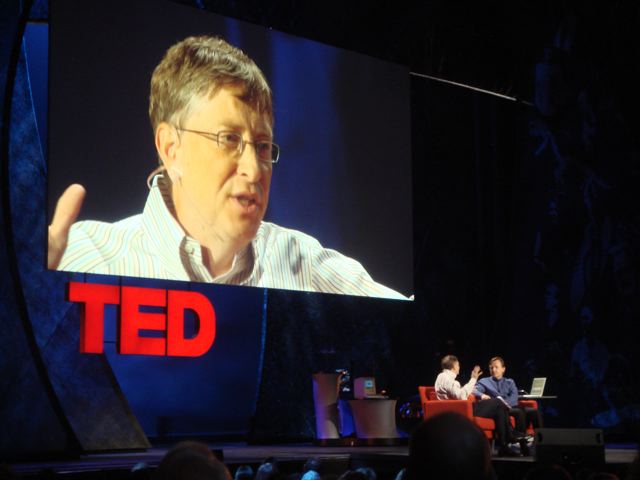
Though it was released late last year, I just recently found this provocative speech from Benjamin Bratton which addresses problems of the TED talks format ironically delivered as a TED talk (hat tip to 21st Century Wire).

Many of the issues brought up by Bratton have previously been addressed through satire in various Onion Talks.

Despite its problems, in defense of TED it is to their credit that they allowed a forum for an anti-TED presentation. There have also been a few thought provoking TED talks that I felt did not fall into the trap of over-simplification and yet conveyed ideas elegantly and efficiently. Unfortunately, some of those have been censored for ideological reasons, including this must-see talk by Nick Hanauer about economic inequality: