Genocide walrus John Bolton outright admitted to planning foreign coups with the US government in conversation with CNN’s Jake Tapper on Wednesday. That’s coups, plural.
While arguing that the Capitol riot on January 6th of last year was not an attempted coup but rather just Trump stumbling around trying to look after his own interests, Bolton hastened to pull authority on the matter when Tapper suggested that he might not be correct about how coups work.
“I disagree with that,” Bolton said. “As somebody who has helped plan coups d’etat — not here, but, you know, other places — it takes a lot of work, and that’s not what [Trump] did.”
Places. Plural.
Tapper just let Bolton’s remark slide like he didn’t just admit to something extraordinarily fiendish, but did eventually follow up with a request that the former National Security Advisor elaborate.
“I do want to ask a follow up,” Tapper said. “When we were talking about what is capable, or what you need to do to be able to plan a coup, and you cited your expertise having planned coups.”
“I’m not going to get into the specifics,” replied Bolton with a chuckle.
“Successful coups?” Tapper asked.
“Well, I wrote about Venezuela in the book,” Bolton answered. “And it turned out not to be successful – not that we had all that much to do with it, but I saw what it took for an opposition to try and overturn an illegally elected president, and they failed. The notion that Donald Trump was half as competent as the Venezuelan opposition is laughable.”
“I feel like there’s other stuff you’re not telling me, though,” Tapper responded.
“I’m sure there is,” Bolton said, grinning like he just finished boiling a puppy.
Tapper pursued the matter no further, because he is a propagandist first and a journalist second, and he would be acutely aware that Bolton was saying things that you are not supposed to admit to on television.
Bolton’s sole admission to coup plotting runs counter to his comments about the US government’s failed attempt to oust President Nicolas Maduro while he was facilitating that bizarre operation under the Trump administration, telling reporters in 2019 that the empire’s Venezuela shenanigans were “clearly not a coup.”
Thread🧵
Facebook has hired DOZENS of ex-CIA + other govt agents to run its content moderation, security + trust & safety operations, meaning they affect what the world sees in their FB feeds.
In other examples of the US empire just rearing its ugly head right out in broad daylight, an excellent new report by Alan MacLeod with Mintpress News shows that Facebook/Instagram parent company Meta has been hiring dozens of people who previously worked in the US intelligence cartel to help regulate what content gets seen on the social media giant’s platforms. Some were hired from straight out of the CIA or had (officially) left the agency very recently.
The CIA used to infiltrate the media. Now the CIA is the media. This trend of openly hiring US intelligence veterans to help teach the public what thoughts to think about the world began a few years ago in the legacy media, and now we’re seeing it in the new media as well.
This is part of a broader trend in which many of the ugly things the US empire used to do in secret it now does openly with the aid of propaganda spin. In addition to attempting coups right out in the open as we saw in Venezuela and just giving intelligence insiders positions of influence within both new and old media institutions, you’ve got things like the US government-funded National Endowment for Democracy (NED), which according to its own founding officials was set up to do overtly what the CIA used to do covertly.
We see NED’s fingerprints all over pretty much any situation where the western power alliance needs to manage public perception about a CIA-targeted government, from Ukraine to Russia to Hong Kong to Xinjiang, to the imperial propaganda firm known as Bellingcat. Rather than manipulate world narratives and foment discontent from behind the veil of hidden identities and cutouts as in CIA tactics of old, NED just manipulates them openly by pouring funds into narrative management operations which benefit the empire while framing it as promoting democracy and human rights.
What the empire has found is that you don’t need to hide as much from public visibility as long as you can manipulate what people think they’re seeing. If the public is sufficiently propagandized and consent has been adequately manufactured, you can get away with just proclaiming some random guy the president of a foreign country and seeing if you can manipulate the rest of the world into playing along with you.
If your narrative control is strong enough, you can even keep the empire running smoothly when information gets out into the open that you’d rather stay hidden. Very often these days major stories about imperial malfeasance will come out that simply have no impact, either because the mainstream news media unite to ignore them or because they spin those revelations as coming from someone bad or not containing important information.
People tend to overrate the power of the US war machine and underrate the power of the US propaganda machine. While the US military finds itself losing a war to the Taliban, the awesome power of its propaganda engine has people marching in perfect alignment with the will of the oligarchic empire.
When I was in an abusive relationship, the more ground down and submitted I became the more my abuser would flaunt his abusiveness in the plain light of day. Toward the end he was just outright admitting he was a sociopath and a manipulator and openly telling me he was going to do monstrous things to me before he did them, because he was that confident that he had me wrapped around his finger.
Luckily, he was wrong. And hopefully the empire is wrong as it makes this same calculation with all of us.
Venezuelan President Nicolas Maduro and other Bolivarian officials in Caracas.
The aim of the first diplomatic contact between both nations since the Trump regime closed the US Caracas embassy in 2019, officially broke with Venezuela’s legitimate government, and illegally designed Juan Guido as president flopped.
More on this below.
Hegemon USA has been a mortal enemy of Bolivarian social democracy since Hugo Chavez took office as president in February 1999, following his December 1998 election — a near-generation ago.
Count the ways.
1. The aborted two-day April 2002 attempt to oust Chavez. Failure to get Venezuelan military support and popular resistance foiled it.
2. The 2002 – 03 general strike and oil management lockout, causing severe economic disruption and billions of dollars in losses.
3. The August 2004 national recall referendum, Hugo Chavez winning overwhelmingly with a 59% majority, thwarting the US-orchestrated attempt to remove him.
4. US sanctions war on Venezuela, begun by the Bush/Cheney regime in 2006 — for so-called non-cooperation in combatting international terrorism that hegemon USA fosters.
War on the Bolivarian Republic by other means continued under the Obama/Biden regime.
Greatly escalated by Trump regime hardliners, high-level Venezuelan officials and the country’s enterprises were targeted.
US policy tried to block Venezuelan access to financial markets, as well as maximally reduce its oil exports.
Annually since 2006, the State Department falsely accused Venezuela of not “cooperating fully with US anti-terrorism efforts” – pursuant to Section 40A of the Arms Export Control Act (22 USC 2781).
5. In 2005, the Bush/Cheney regime falsely accused the Bolivarian Republic of non-cooperation against narco-trafficking that the US actively supports worldwide, notably the CIA.
Annually since then, Washington falsely claimed Venezuela hadn’t fulfilled its obligations under international narcotics agreements.
6. In 2008, the Bush/Cheney regime imposed asset freezes and prohibitions on financial transactions, targeting designated Venezuelan nationals and enterprises.
7. The Obama/Biden regime killed Hugo Chavez.
US dark forces poisoned or infected him with deadly cancer causing substances, a coup by other means, eliminating him — while Chavismo has remained resilient.
8. The Obama/Biden regime’s March 2015 executive order falsely declared Venezuela to be an “unusual and extraordinary threat to the national security and foreign policy of the US.”
At the time, a fake ‘national emergency’ was declared to “confront” a nonexistent threat.
9. Violent made-in-the-USA street protests staged to destabilize the country with regime change in mind were responsible for scores of deaths and hundreds of injuries.
10. The August 2017 CIA-orchestrated terrorist attack on Fort Paramacay in Carabobo state was another foiled coup attempt.
11. The August 2018 attack on Maduro by drones armed with C-4 explosives attempted to kill him.
12. Trump regime hardliners waged war on Venezuela by other means, including propaganda, economic, financial, and electricity war, along with other attacks on the country’s infrastructure.
The aim was to inflict maximum harm on ordinary Venezuelans, falsely believing they’d blame Maduro for US criminal actions.
Chavez knew that the US marked him for elimination. Fidel Castro warned him to be wary and careful.
Maduro is targeted in similar fashion. He and other senior Venezuelan officials remain vulnerable to removal by coup d’etat or assassination.
It’s just a matter of time before another regime change attempt occurs — to replace Venezuelan social democracy with US-controlled fascist tyranny.
Biden regime officials showing up in Caracas last weekend made unacceptable demands.
Reportedly they unacceptably called for a new presidential election.
There’s none scheduled until 2024 for a six-year term beginning on January 10, 2025.
In 2018, Maduro won another six-year term overwhelmingly by a two-thirds majority.
His main adversary, Chavista turncoat Henri Falcon, fared much poorer than predicted with around 21% of the vote.
Other unacceptable Biden regime demands reportedly included the following:
Greater US/Western foreign private investment in Venezuela — mainly for maximum control of the country’s vast oil reserves, the world’s largest, including its heavy oil.
Maduro splitting from Russia by siding with the US-dominated West against Vladimir Putin’s demilitarization and deNazification of Ukraine.
In return, Biden regime official offered hollow promises to be breached at hegemon USA’s discretion.
Maduro and Vice President Delcy Rodriguez demanded sanctions relief and return of confiscated Venezuelan assets, mainly oil related.
For most of the past 23 years, US regimes waged war on Venezuela by other means — because of its independence and democratic governance the way it should be.
Venezuelans have the real thing — in stark contrast to fantasy versions throughout the West.
Russia is a valued Venezuelan ally.
According to Russia’s Foreign Ministry, Vladimir Putin and Maduro spoke by phone last week.
Venezuela’s leader expressed “firm support” for the Russian Federation.
Condemning US-dominated NATO’s destabilization activities, Maduro stressed his intention to maintain political and economic relations with Russia.
In the Soviet Union, everybody was aware that the media was controlled by the state. But in a corporate state like the U.S., a veneer of independence is still maintained, although trust in the media has been plummeting for years.
The Washington Post’s glaring conflicts of interest have of late once again been the subject of scrutiny online, thanks to a new article denouncing a supposed attempt to “soak” billionaires in taxes. Written by star columnist Megan McArdle — who previously argued that Walmart’s wages are too high, that there is nothing wrong with Google’s monopoly, and that the Grenfell Fire was a price worth paying for cheaper buildings — the article claimed that Americans have such class envy that the government would “destroy [billionaires’] fortunes so that the rest of us don’t have to look at them.” Notably, the Post chose to illustrate it with a picture of its owner, Jeff Bezos, making it seem as if it was directly defending his power and wealth, something they have been accusedof onmorethanoneoccasion.
There was considerable speculation online as to whether Bezos himself wrote the piece, so blatantly in his interest it was. Unfortunately, this sort of speculation has raged ever since the Amazon CEO bought the newspaper in 2013 for $250 million.
Being owned by the world’s richest individual does not mean that TheWashington Post and its employees are rolling in dough themselves. Far from it: Bezos’ revolution at the newspaper, which has led to both increased pageviews and company value, has been largely based on simply squeezing workers harder than before. In an interview with the Columbia Journalism Review, management acknowledged that Post reporters are pushed to produce almost four times as many stories as their peers at The New York Times. Furthermore, the Post writes and rewrites the same story but from slightly different angles and with different headlines in order to generate more clicks, and thus more revenue. Thanks to new technology, reporters’ every keystroke is monitored and they are under constant pressure from management not to fall behind. The technique of constant surveillance is not unlike what hyper-exploited Amazon warehouse workers who wear GPS devices or Fitbit watches have to endure.
Bezos is currently worth a shade under $200 billion, with his wealth nearly doubling since the beginning of the coronavirus pandemic in 2020. With such a fortune to protect, the obvious solution is to acquire media outlets to control the narrative in the face of rising public disenchantment with rampaging inequality. Omar Ocampo, a researcher for the Program on Inequality and the Common Good at the Institute for Policy Studies, said that this is a common tactic among the super wealthy. “Billionaire ownership of major news outlets is but another tool the billionaire class deploys for the purpose of wealth defense. It gives them the power to set the terms of the agenda and influence public opinion in their favor,” Ocampo told MintPress.
But Bezos is far from the only senior figure with questionable connections. The company’s CEO, Frederick Ryan, was a senior member of the Reagan White House, rising to become the 40th president’s assistant and later the chairman of the Ronald Reagan Presidential Foundation. He later became CEO of Politico. In the Post’s announcement of the hiring move, they themselves noted that among Ryan’s biggest achievements at their rival outlet was “helping the news organization win a lucrative advertising deal with Goldman Sachs and host presidential debates before the 2008 and 2012 Republican primaries.”
Another neoconservative in a key position is Editorial Page Editor Fred Hiatt. Under Hiatt’s tenure, anti-establishment columnists like Dan Froomkin were let go and warmongers like the late Charles Krauthammer, Paul Wolfowitz, and David Ignatius moved in. “After being so wrong on such a huge story as the invasion of Iraq, hawkish ideologue Fred Hiatt should have been terminated as editorial page editor,” Jeff Cohen, former Professor of Journalism at Ithaca College and founder of media watchdog group Fairness and Accuracy in Reporting, told MintPress, adding:
In a decent media system, someone who has been so inaccurate on so many issues as Hiatt would not be in a powerful media position two decades later. Powerful voices in U.S. media often argue that society should be a ‘meritocracy’ — with advancement based on ability or achievement. Hiatt proves that the U.S. corporate media system is just the opposite — a ‘kakistocracy’ — where the unqualified and unprincipled rise to the top.”
Other highly questionable hires include Jerusalem correspondent Ruth Eglash, who spent seven years putting out content that was often indistinguishable from Israeli government propaganda. At the time of her hire, activists highlighted the conflicts of interest she had, given her husband’s job as a PR rep for the country. In November 2020, Eglash quit the Post to become chief of communications for the Israeli ambassador to the United States and United Nations. “My experiences as a journalist have afforded me a great instinct of how to better tell Israel’s unique story,” she said, adding “a strong U.S.-Israel relationship and showcasing Israel’s successes to the world has [sic] always been a passion of mine.”
At the center of the news cosmos
The Washington Post is among the most powerful, influential, and widely-read media outlets in the United States. Its position as the dominant newspaper in the nation’s capital reinforces its place as a thought-leading, agenda-setting publication. Whatever appears in the Post will likely be in the rest of the nation’s media, so authoritative is its reputation.
There are no more important pages than its editorial section, where its board comes together to lay out the collective wisdom of its most senior journalists and editors. Through its editorial page, the senior staff lay out the newspaper’s line to others and broadcast what they see as the correct position on the most pressing issues of the day. Hence, editorials are essentially instructions to their well-heeled and influential readers in D.C. and around the country on what to think about any given subject.
This is particularly troublesome as, despite the fact the newspaper presents itself as a defender of liberty and a champion of the people (its tagline is “Democracy Dies in Darkness”), the editorial board has represented the interests of the powerful over ordinary Americans on issue after issue. The following editorials are examples of this in action.
Could we be any more pro-war?
The Post’s editorial board has generally been extremely supportive of whatever conflicts the U.S. has started, and has consistently warned against ending the violence. In a 2015 editorial entitled “Drone strikes are bad; no drone strikes would be worse,” it balked at the idea of stopping the highly controversial bombing campaigns throughout the Middle East and North Africa. By that time, President Barack Obama was bombing seven countries simultaneously. Nevertheless, the Post argued that drones had successfully defeated Al-Qaeda and that the use of drone strikes “shouldn’t be up for review.”
In recent times, the rising newspaper of record has also been a driver of increased hostilities with China, describing Beijing’s military’s moves in the South China Sea as “provocations” against the U.S., spreadingrumors about the COVID-19 virus’s origin, and demanding American companies like Apple “resist China’s tyranny” and begin to relocate their production facilities elsewhere to punish the Chinese government.
On Latin America too, the editorial board has proven to be extremely hawkish. It immediately endorsed a U.S.-backed far-right coup in Bolivia in 2019, insisting that “there could be little doubt who was ultimately responsible for the chaos: newly resigned President Evo Morales.” The Post condemned him for refusing to “cooperate” with “Bolivia’s more responsible leaders,” who were organizing his overthrow, and chastised him for using the word “coup” for what was going on. Morales, they concluded, was a victim of his own “insatiable appetite for power” and his inability to “accept that a majority of Bolivians wanted him to leave office.”
In 2002, the paper also supported a coup against Hugo Chavez, falsely claiming the Venezuelan president had ordered the shooting of thousands of demonstrators and absurdly asserting that “there’s been no suggestion that the United States had anything to do with [it].
The WaPo editorial board’s less than subtle take on drone warfare
In more recent times, it has demanded more action to unseat Chavez’s successor, Nicolas Maduro, including supporting U.S. sanctions that have now killed over 100,000 people, according to a United Nations rapporteur. The Post’s justification in 2017 was that Maduro was on the verge of carrying out his own “coup,” “abolish[ing] the opposition-controlled legislature, cancel[ing] future elections and establish[ing] a regime resembling that of Cuba’s” — none of which has happened. In its efforts to oust the democratically-elected leader, the Post even aligned itself with Donald Trump and endorsed far-right coup leader Juan Guaidó as “Venezuela’s legitimate president,” a position some polls have suggested as little as 3% of Venezuelans hold.
The editorial board has expressed its desire to see regime change in leftist-controlled Nicaragua, too. President Daniel Ortega, it claims, is “taking a sledgehammer” to opposition against him, while it also demands that the U.S., which has done nothing but offer “mild verbal opposition” to his rule, do more. What happened to the U.S. of the 1980s, “which spent so much money and political capital to promote democracy in Nicaragua?” they ask sadly.
In reality, of course, the U.S. is currently trying to strangle Nicaragua’s economy through sanctions. And in the 1980s, Washington’s “democracy promotion” agenda included the funding, training and arming of fascist death squads who wrought havoc across Central America, killing hundreds of thousands in genocides from which the area may never recover. The architects of the violence were found guilty in U.S. courts, while the Reagan administration was tried and convicted by the International Court of Justice on 15 counts that amount to international terrorism. That the Post’s editorial board remembers that history as “promoting democracy” is particularly worrisome.
Fake news, fake newspapers
The Washington Post was the key supporter of fake news detection system “PropOrNot,” which was almostimmediatelyexposed as a fake operation itself, forcing the newspaper to publicly distance itself from its own reporting. Yet it was the Post itself that perpetuated the most notorious and damaging fake news story of the 21st century: the Iraqi weapons of mass destruction hoax and Saddam Hussein’s fictional links to al-Qaeda.
In a highly influential editorial entitled “Irrefutable” the Post wrote that, after watching Secretary of State Colin Powell’s speech at the United Nations, “it is hard to imagine how anyone could doubt that Iraq possesses weapons of mass destruction… And [Powell] offered a powerful new case that Saddam Hussein’s regime is cooperating with a branch of the al-Qaeda organization that is trying to acquire chemical weapons and stage attacks in Europe.”
“No page was more crucial in propelling the disastrous U.S. invasion of Iraq than the Post‘s editorial page — which beat the drums for war in a couple dozen editorials in the six months leading up to the invasion,” Cohen told MintPress, adding:
The Post’s op-ed page was almost as cartoonishly wrong on Iraq, offering little dissent or corrective to the editorial page’s jingoism — especially in that pivotal media moment following Colin Powell’s error-filled U.N. speech. While the editorial page offered up its ‘Irrefutable’ verdict, the op-ed page’s liberal voice offered an embarrassing column, headlined ‘I’m Persuaded’.”
The Post played a major role in manufacturing consent for the deadliest war since Vietnam, publishing 27 editorials in support of an invasion. As with PropOrNot, it backtracked long after the dust had settled, apologizing for its role in amping the public up to accept that war. Yet to this day it continues to push for others.
Surveillance state champion
Despite telling its readers that “Democracy Dies in Darkness,” The Washington Post certainly has a negative opinion about those individuals who work to shine a light on illegal government activities. In 2016, its editorial board demanded “no pardon for Edward Snowden,” condemning his backers like filmmaker Oliver Stone and expressing outrage that Snowden had revealed that the U.S. was spying on Russia and carrying out cyberattacks against China. In its long denunciation, it insisted that the NSA’s massive surveillance operation against the American public resulted in “no specific harm, actual or attempted.” As such, the editorial board made history by becoming the first newspaper ever to call for the imprisonment of its own source, on whose back and information it won a Pulitzer Prize.
If Snowden was not worthy of defending, then it is no surprise that the Post’s editorial team expressed their delight when Julian Assange was dragged out of the Ecuadorian Embassy in London, declaring it a “victory for the rule of law.” “Julian Assange is not a free-press hero. And he is long overdue for personal accountability,” they wrote, spreading baseless conspiracy theories that the Australian publisher worked with Russia to hack American democracy.
The Ecuadorian government of Rafael Correa, which offered asylum to the Western dissidents, also came under fire. In 2013, the Post (falsely) labeled Correa an “autocrat” and “the hemisphere’s preeminent anti-U.S. demagogue.” They also directly threatened him, writing that, “If Mr. Correa welcomes Mr. Snowden, there will be an easy way to demonstrate that Yanqui-baiting has its price.”
Of course, the Post is now intimately linked with the national security state after Amazon signed a number of deals to provide intelligence and computing services to several three-letter agencies. In 2020, the Bezos-owned Amazon Web Services signed a new deal with the CIA worth tens of billions of dollars.
The editorial board has also gone up to bat for Immigration and Customs Enforcement (ICE) multiple times, insisting that it is “the wrong target for outrage,” presenting the agency as key in the battle against art theft and nuclear proliferation. “Abolishing ICE is not a serious policy proposal,” the board wrote in 2018, despite the fact that the U.S. survived without the agency perfectly well until its creation in 2003.
Attacking any pro-people policy
The Washington Post has aggressively attempted to beat back any new political movements challenging the establishment. Chief among them has been the one around Bernie Sanders, for whom the newspaper has reserved a special ire. In 2016, it famously ran 16 negative stories on Sanders in the space of 16 hours and has used its fact-checking page to relentlessly undermine him, sometimes to bizarre effect.
“Bernie Sanders keeps saying his average donation is $27, but his own numbers contradict that,” read the headline of one article, which detailed how his average donation was actually $27.89, not $27. It also gave his statement that six men (one of whom is Bezos) hold as much wealth as the bottom half of the world’s population “three Pinocchios” — the designation just below the most egregious lie. This was because, they argued, billionaires’ wealth is tied up in stocks, not money itself, and most people own essentially nothing. Why this disproved his assertion they did not explain. Going undisclosed is that both Bezos and the Post’s chief fact-checker Glen Kessler, who is the scion of a fossil fuel baron, would stand to lose a fortune if Sanders were elected.
In 2020, the Post was no less hostile to Sanders, publishing an editorial headlined “We should pay more attention to the Democrats who pay attention to reality,” which stated that “Mr. Sanders promises unlimited free stuff to everyone; other candidates propose smarter, more targeted approaches.”
The Post’s higher-ups have been careful to oppose virtually every piece of progressive or pro-people policy proposals. Chief among them has been healthcare. The United States is alone in the developed world in not offering some kind of universal healthcare to its population. Its privatized system is multiple times more expensive than that of comparable countries and has the worst outcomes in the West. Yet the board has consistently scare-mongered its readers, claiming “Single-payer health care would have an astonishingly high price tag,” and attacking Medicare-For-All proponents running for office. “Why go to the trouble of running for president to promote ideas that can’t work?” it asked rhetorically, before going on to insist that moving towards a healthcare system like that of Canada, Japan or Western Europe does not meet a “baseline degree of factual plausibility.”
On education, it has been just as regressive. “There are consequences to making college free,” it warned readers. Chief among these would be that private universities would make less money, which, apparently should be a major concern. “Forgiving student loans the wrong way will only worsen inequality,” ran the headline of another editorial, in which the board pretended to be ultra-left elite-hating radicals, arguing that we should not make college free because Ivy League graduates would benefit the most (around one-third of the Post’s editorial team attended an Ivy League school). It also feigned a far-left position on charter schools, pretending that essentially privatizing schools and handing them over to businesses to run would solve racial inequality in America, and that anyone who opposed them (like teachers’ unions) was no progressive.
Perhaps the most blatant conflict of interest the Post has displayed is in their committed opposition to a wealth tax. “Elizabeth Warren wants a ‘wealth tax.’ It might backfire,” they wrote, making a series of bizarre and illogical arguments against the plan, such as immigrants will stop wanting to come to the U.S. if such a tax is imposed (the threshold for paying a wealth tax is $50 million). Five months later, the board reaffirmed their position: “A wealth tax isn’t the best way to tax the rich,” they wrote, claiming that rich people “can afford the best accountants and lawyers,” and so taxing them is presumably impossible.
Of course, the Post’s owner, Jeff Bezos, has every reason to go all out to prevent a wealth tax gaining traction. A CNBCstudy calculated that Bezos would be forced to pay $5.7 billion annually if Warren’s tax plans came to fruition.
The Post has also taken a firm stand against serious regulation of monopolies, decrying a supposed “antitrust onslaught” against Google, spearheaded by simplistic “break-them-up” rhetoric from dishonest actors. In 2016, it also lambasted Sanders for his “oversimplified,” “crowd-pleasing” demagoguery on Wall Street regulation, insisting that there has actually been widespread reform of the financial sector since 2008, making another crash unlikely.
Unsurprisingly for an outlet owned by a poverty-wage employer, the Post has also consistently opposed a national $15 minimum wage. In March, it categorically stated that “[a] $15 minimum wage won’t happen” and Democrats should stop trying to make it happen. Instead, they advised, they should “practice the art of the possible.” This, the board explained, meant falling in line behind Arkansas arch-Republican Senator Tom Cotton to support his proposals for a creeping state-by-state rise to $10.
On the climate, too, the Post has pushed extremely regressive positions, opposing a Green New Deal outright and suggesting the atmosphere be turned into a giant free market where polluters can trade credits and speculate. “The left’s opposition to a carbon tax shows there’s something deeply wrong with the left,” they wrote. They also endorsed the highly controversial process of fracking. Seeing as the Post’s editorial board is littered with former employees of the notorious climate-change denyingWall Street Journal, its stance is perhaps not surprising.
On COVID, the Post has consistentlyopposedteachers’ unions calls to keep schools closed, as well as standing against $2,000 checks. A universal payout is a “bad idea” they stated, but one “whose time has come because of politics, not economics.” So committed was the editorial team’s opposition to the idea of helping the poor that it presented Republican Majority Leader Mitch McConnell as a voice of sanity in Washington.
This does not mean that the Post was against direct payments to all people. In fact, all Post employees received a $2,021 bonus from management in January as a gesture of appreciation for their work during the pandemic. Two grand for me, not for thee.
Junk-food news
The point of a fourth estate is that it is supposed to shine a light on the powerful and hold them to account. But when corporate media are largely owned and sponsored by the super wealthy themselves, the claim that this is what they do is increasingly hard to maintain. In the Soviet Union, everybody was aware that the media was controlled by the state. But in a corporate state like the U.S., a veneer of independence is still maintained, although trust in the media has been plummeting for years.
While The Washington Post presents itself as an adversarial publication standing up to power, the fact that its senior staff constantly comes to such a hardline neoliberal elitist consensus on so many issues shows how little ideological diversity there is among its staff. Democracy dies at The Washington Post editorial board.
Seeking Truth in a Country of Lies is a selection of essays. They reveal what stirs author Ed Curtin’s heart, his mind, and his path toward clarity. With each chapter he passionately reflects on the state of his country and what matters most to him. It is a compelling read.
The epigraph at the beginning of Seeking Truth in a Country of Lies, “In a dark time, the eye begins to see,” comes from Theodore Roethke’s poem “In A Dark Time”. Here the poet describes a state of disorientation and dislocation of identity. Roethke asserts this is essential to achieve clarity, insight and wisdom. In a dark time, one discovers the fragmented and broken state of things. With this fitting epigraph, Ed Curtin proceeds to alert his readers to the fragmented and broken state of things in America, and the task of its citizenry to begin to see more clearly.
The topics Curtin, a former professor at the Massachusetts College of Liberal Arts, takes up are not original to him. But they are marked with his own articulate original stamp. One aspect of his novel contribution is that Curtin steps beyond standard frameworks of political analyses.
Three themes have permeated his attention from a young age: truth, death and freedom. He cites an excerpt from an interview with the poet Kenneth Rexroth who told journalist Lawrence Lipton in 1959:
Since all society is organized in the interest of exploiting classes and since if men knew this they would cease to work and society would fall apart, it has always been necessary, at least since the urban revolutions, for societies to be governed ideologically by a system of fraud.
Rexroth referred to this system of fraud as the “social lie.” And in Seeking Truth in a Country of Lies, Curtin takes on the task of describing the roots of the fraud, and its more recent manifestations. He also takes time to point out, despite the burdens society grapples with in an age of deceit, that beauty, art, love, and whimsy are among the qualities that persist as signs of grace.
In his essay “Inside America’s Doll House: A Vast Tapestry Of Lies” Curtin cites Jim Garrison, the District Attorney of New Orleans who in 1969 brought to trial a case naming persons connected to the assassination of President John F. Kennedy. Garrison attempted to show that the assassination of JFK was the work of the CIA and Allen Dulles.
However, Garrison was routinely described as a lunatic by CIA-connected media spokespersons. It was Garrison’s conclusion that American citizens passively consumed television news that was laced with propaganda. Such propaganda was manufactured to preclude Americans from “understanding…what is really happening….”
Garrison warned that Americans were living “in a doll’s house.” Building on the hard lessons Jim Garrison learned from the trial in 1969, Ed Curtin observes:
In the doll’s house into which America gradually has been converted, a great many of our basic assumptions are totally illusory.
His book was also released in winter 2020, some 57 years after JFK’s assassination.
Curtin notes that in 2009:
[President] Obama backed the 2009 coup d’état in Honduras that has resulted in so many deaths at the hands of U.S. trained killers, and now [followers of Trump complain about] all these ‘non-white’ people fleeing to the U.S. to escape a hell created by the U.S…
After 2009. it was learned that U.S. officers at the Center for Hemispheric Defense Studies trained members of the Honduran military to oust democratically elected President Manuel Zelaya. In 2009 and the years following Honduras has had one of the highest rates of murder in the world. These have been driven by death squads connected to the Honduran military. But this coup mattered little to both President’s Obama and Trump, while Hondurans have paid the price in murder, increased debt and poverty.
Examples of what Curtin raises continue since his book was published in late 2020. For Venezuelans it matters little whether a Republican or a Democrat is president in the USA. Under Donald Trump there was a failed attempt in May 2020 to kidnap Venezuelan President Nicolas Maduro. And on the first day of his presidency, Joe Biden signed an executive order declaring the United States recognizes Venezuelan opposition leader Juan Guaidó as the nations’ President. This despite Maduro winning over 67% of the popular vote in 2018; That the second candidate in the election results was Henri Falcón who won 21%; And Juan Guaidó wasn’t even a candidate in 2018. Imagine if Venezuela protested the result of the 2020 United States election, and recognized Mitt Romney as president (who ran in 2012 but didn’t run in 2020).
With Biden there is a change of tone from Trump, but many American foreign policies remain the same. Former President Jimmy Carter said of Venezuela’s 2012 elections when Hugo Chavez was re-elected:
…of the 92 elections that we’ve [Carter Centre Foundation in Atlanta] monitored, I would say the election process in Venezuela is the best in the world.
But that story that doesn’t conform with the media’s narrative. So, it goes down the memory hole.
Curtin notes that while average Americans have not constructed the doll’s house they live in, they are complicit. It is average Americans who have accepted “decades of fabricated reality for so-called peace of mind.” A consequence of accepting illusory narratives is that people are not really free.
In order to cope with a plausible lie, consumers of the news play dumb. And Curtin notes most Americans…
want to be nice (Latin, nescire, not to know, to be ignorant) and to be liked.
As they become a people of the lie, repeating the lies they are fed, a memetic desire arises in society. And the repetition of these lies fuels violence and scapegoating. The doll’s house that Americans (and many citizens of other countries who consume the news uncritically) live in, are reinforced by contracts they have made with the world. This is in order to enhance their social standing, financial status, professional advancement and maintain familial harmony. That kind of peace of mind and contentment require individuals not to venture out far from the doll house, in case they encounter truths they find hard to handle.
Curtin notes that the Central Intelligence Agency began to use the term “conspiracy theory” in a memo on April 1, 1967. This was to discredit assassination theories about other plausible actors in the death of the slain president on November 22, 1963. And he notes that it just so happens that the term “9/11” was first used on September 12, 2001, by future New York Times editor Bill Keller to designate the language for how to refer to the day of the attacks. By using a term synonymous with dialing an emergency number in the United States, the term became fused with feelings of “anxiety, depression, panic and confusion.”
It is useful to note that at the time of the attacks on September 11, 2001, the emergency number in Saudi Arabia was 999. In Afghanistan the emergency numbers were 102, 112 and 119. The numbers in Yemen were 191 and 194. The emergency numbers in the United Arab Emirates were 112, 998 and 999. The emergency number in Libya was 1515. The number in Kuwait was 112. The numbers in Iraq were 104, 115 and 122. In Syria emergency numbers were 110, 112 and 113. In Lebanon the numbers variously were 112, 140, 175 and 999. The emergency numbers in Egypt were 122, 123 and 180. Across continental Europe the emergency number to call on September 11, 2001, was 112. The emergency numbers in Iran were 110, 112, 115 and 125.
Curiously, 911 was a number to dial an emergency uniquely in the United States, Canada, Mexico (as well as 065, 066 and 068), and South America. 911 was not an emergency number in the states where Arabs were alleged to have plotted to attack the Pentagon and the World Trade Center.
In some future scenario – were it to ever happen – might rogue American terrorists fly planes into skyscrapers in Tehran, Iran? And in such a scenario, might such terrorists plot an attack on a January 10th, 12th or 15th of a given year, fusing the day of the atrocity with the abbreviation for a date synonymous with one of the numbers Iranians dialed in case of an emergency?
an endless national emergency became wedded to an endless war on terror aimed at preventing Hitler-like terrorists from obliterating us with nuclear weapons that could create another ground zero or holocaust. It is a term that pushes all the right buttons evoking unending social fear and anxiety. It is language as sorcery; it is propaganda at its best.
Because Curtin suspects that the repetition of the term “9/11” is embedded in an advanced form of mind-control, he refuses to use the term in relation to the attacks. Instead, he uses the phrase “the attacks of September 11, 2001.” Whatever vocabulary we use to refer to the attacks, Curtin advises that we find one that can unbind us from the mesmerizing impact of its official shorthand repeated endlessly, subliminally evoking confusion, depression and panic in its hearers.
As our post-modern society has evolved, the task of creating propaganda is more complex. And so, the complexity of society drives a majority to want ready-made frameworks for understanding their reality coherently. Curtin shows that…
people want to be provided with myths to direct them to the ‘truth,’ but that so-called truth has been preconceived within the overarching myth provided by propaganda.
Nonetheless, the propaganda is efficient enough to allow most people to deduce that they’ve reached their conclusions of their own free will. Most people will assume that they’ve been provided with a suitable range of information about the key points of a given topic in order to decide what is trustworthy. However, the same consumers of the news will regard as inconceivable that the narrative they’ve been led to accept contains cherry-picked news that omits perspectives that are off-message. Surely, wouldn’t any dissenting voices that are worth knowing about would be given a hearing on the six o’clock news?
The way the CIA took over America in the 1960s is the story of our time, and too few recognize this. We can’t fix a problem we can’t even acknowledge exists.
To support his assessment, Curtin points to numerous examples in different chapters across his book. This includes a chapter on “The Message From Dallas, JFK and The Unspeakable,” where he summarizes JFK author James W. Douglass’ layer-by-layer excavation of a CIA-backed assassination of a president who had turned from war-making toward peace-making.
In another chapter titled “What Are We Working For ‘At Eternity’s Gate’,” Curtin writes about the rat-race. He recalls a summer job as a clerk in a General Motors office in Manhattan. The “bait” was the salary, and so his youth was spent that summer confined to a boring job.
As I read Curtin’s description, I thought about some of the jobs I had: working a night shift as a hotel security guard, a cleaner at a private golf club, and working at a vehicle repair shop for the Ministry of Forests for the Province of British Columbia. The latter I spent a summer affixing forestry vehicle identification serial numbers on the side of government trucks.
The author mentions a film about the life of Vincent Van Gogh, titled At Eternity’s Gate, which offers a vision of new possibilities for what it means to work, to be alive. For Van Gogh it was the “act of painting” that was “the stroke of genius.” And so, for the impoverished painter it was not the completion of paintings that was important, but immersing himself in painting. This was the key to life.
In this essay, Curtin invites the reader to contemplate what it means to live and to ask ourselves why we work. He tells us:
For Vincent the answer was simple: reality. But reality is not given to us and is far from simple; we must create it in acts that penetrate the screens and clichés that wall us off from it.
One of the screens that Curtin had to penetrate was a slogan he was taught as a United States Marine:
My rifle is my life.
Curtin saw through the slogan, recognizing that being human meant to be a lover of life and being committed to waging peace.
In yet another essay, “The Sexual Passion of Winston Smith”, Curtin details the commodification of society, where everything can be bought and sold. As he speaks about the body’s commodification, Curtin reminds us that part of the body – “the tongue is a bell, tolling out its [language’s] meaning.” It is finally the tongue that helps us in speech to “tell the truth that propagandists try to deny.”
In his book, the author offers suggestions for pointing a way forward that can help us search for truth in a landscape of falsehoods. One of these is poetry. He points out that citizens in Chile, Ireland and Russia know their national poets and can quote their works “by heart.” But in America poets and poetry are ignored. A new generation is too busy checking Facebook, Twitter or Instagram. But Curtin argues:
Poetry is the search for truth. It marries outer to inner.
The best of what poetry can offer helps a society…
address questions of value and ultimate concern…of truth and lies.
He contrasts these with…
screen and selfie culture [where] these matters are irrelevant.
In addition to truth and lies, Curtin points to myriad oddities that dot the landscape of America’s cultural past. Many of the rock n’ roll bands in the mid-sixties were viewed as part of a countercultural/anti-war protest movement against the establishment. There are books like one by Alex Constantine, The Covert War Against Rock, that document operations by the CIA and FBI to discredit and disrupt the lives of pop-rock stars identified as subversive. Jimi Hendrix, John Lennon and others had extensive intelligence files on them. Constantine cites a leaked intelligence memorandum discussed in testimony before the Church Committee on April 26, 1976.
Regarding certain recording artists, the FBI wrote to its agents:
Show them as scurrilous and depraved. Call attention to their habits and living conditions, explore every possible embarrassment. Send in women and sex, break up marriages. Have members arrested on marijuana charges….Send articles to newspapers showing their depravity. Use narcotics and free sex to entrap. Use misinformation to confuse and disrupt….Provoke target groups into rivalries that may result in death.
But was another arm of the intelligence community simultaneously grooming anti-establishment recording artists? In Seeking Truth in a Country of Lies Curtin notes that Buffalo Springfield performed in concert, along with the Beach Boys, at the United States Military Academy at West Point, in Orange County, New York, on November 25, 1967.
Curtin points out that this is “a very odd venue for a ‘dissident’ rock group.” Their Top Ten hit in the spring of ’67 – “For What It’s Worth” – invited radio listeners to consider, though it wasn’t “exactly clear” what was “happening,” to “stop,” and “look” at what was “going down.”
How did members of Buffalo Springfield feel about performing at the military academy when there were “battle lines being drawn?” And what an odd thing for cadets at West Point to be listening to lyrics that warn:
step out of line, the man come and take you away.
Citing David McGowan’s Weird Scenes Inside the Canyon, Curtin notes that “Papa” John Philips of the Mamas and the Papas attended the US Naval Academy at Annapolis, Maryland, and that his dad was a Marine Corps Captain:
John’s wife had worked at the Pentagon and her father was involved in covert intelligence in Vietnam.
The Doors Jim Morrison, a neighbor and friend of Philips, was the son of U.S. Navy Admiral George Morrison who was the commander of American Naval ships during the Gulf of Tonkin incident that accelerated the Vietnam War.
Frank Zappa’s father happened to be a chemical warfare specialist.
Curtin notes others like David Crosby and Stephen Stills were also from military family backgrounds. And many of these young musicians all converged at Laurel Canyon:
Although they were draft age, none of them [were] drafted as they played music, dropped acid, and created the folk-rock movement…
Were these musicians’ part of intelligence community operations, as much as the agents who were harassing them? Or as David McGowan asks, was…
the entire youth culture of the 1960s…created not as a grass-roots challenge to the status quo, but as a cynical exercise in discrediting and marginalizing the budding anti-war movement and creating a fake opposition that could be easily controlled and led astray…?
With each chapter, Ed Curtin takes us into different rooms in the doll’s house, and helps us connect the dots. His stories and reflections, in an age of “fake news”, are essential reading.
In the quest for truth, readers of Seeking Truth in a Country of Lies will be advised to take the road less travelled. This road requires we quiet our minds, and welcome silence. It is a road less travelled where each must ask: what can I do to help transform our terrible, corrupt, beautiful world longing to be more human, just and peaceful?
Curtin does not intend for us as readers to simply finish his book unfazed. He hopes his chapters might rouse us to find ways to resist in this age of permanent war and oligarchy, in a world still longing for peace and justice.
“American leadership still matters. The reality is the world simply does not organize itself,” Secretary of State Antony Blinken proclaimed at his confirmation hearing. “When we are not engaged, when we are not leading, then one of two things is likely to happen. Either some other country tries to take our place but not in a way that is likely to advance our interests and values, or maybe, just as bad, no one does and then you have chaos.”
Much like President Joe Biden, Blinken is a neoliberal Democrat who believes in the doctrine of “Manifest Destiny.” He thinks if the United States does not impose its will and shape the world then there will be no law and order. He cannot fathom how countries could survive on their own. At least, that is how he argues for greater American intervention in global regions.
Blinken was confirmed as secretary of state in a vote on January 26. Not a single Democrat in the Senate voted against Blinken.
He is a longtime ally of Biden, and during Biden’s first term as vice president, he was his national security adviser.
During President Barack Obama’s second term, Blinken was deputy secretary of state. He was also a part of President Bill Clinton’s National Security Council from 1994 to 2001.
Making Venezuela’s ‘Regime Enablers’ Finally Feel The Pain Of Sanctions
Blinken’s predecessor Mike Pompeo, a right-wing Christian reconstructionist, was involved in President Donald Trump administration’s failed regime change operation against Nicolas Maduro’s government in Venezuela. Yet, despite its failure, Blinken told Republican Senator Marco Rubio he thought the Biden administration should keep recognizing Juan Guaido as the one and only true “leader.”
“We need an effective policy that can restore democracy to Venezuela, free and fair elections,” Blinken declared. He even embraced sanctions, despite the fact that they have hampered the country’s ability to respond to the COVID-19 pandemic and resulted in the deaths of tens of thousands of Venezuelans.
“Maybe we need to look at how we more effectively target the sanctions that we have so that regime enablers finally feel the pain of those sanctions,” Blinken added.
However, a report [PDF] from the Congressional Research Service (CRS) dated January 22, 2021, indicates the sanctions by both the Obama and Trump administrations were targeted pretty well and imposed to inflict “pain” against 113 Venezuelans and 13 entities.
…President Maduro, his wife, Cecilia Flores, and son, Nicolás Maduro Guerra; Executive Vice President Delcy Rodriguez; Diosdado Cabello (Socialist party president); eight supreme court judges; the leaders of Venezuela’s army, national guard, and national police; governors; the director of the central bank; and the foreign minister…
Trump imposed sanctions to prohibit Venezuela from participating in U.S. financial markets and block the government’s ability to issue digital currency. Treasury Department officials prohibited corporations from purchasing Venezuelan debt. Venezuela’s state oil company, PdVSA, was aggressively targeted for seeking to evade U.S. sanctions and Venezuela’s central bank was sanctioned too.
Blinken Defends Being Wrong On War In Libya
Obama flouted the War Powers Act and launched a war in Libya against Muammar Gaddafi’s regime without the approval of Congress. It created a power vacuum filled by extremist militia groups and transformed the country into a failed state. Migrants are captured and sold in what the United Nations has referred to as “open slave markets.”
Despite the catastrophe sparked by war, Blinken defended his support for a regime change war. “I think it’s been written about. I — I was the president-elect’s national security adviser at the time. And he did not agree with that course of action.”
Biden was opposed to war in Libya. “My question was, okay, tell me what happens? [Gaddafi’s] gone. What happens? Doesn’t the country disintegrate? What happens then? Doesn’t it become a place where it becomes a petri dish for the growth of extremism? Tell me. Tell me what we’re gonna do.”
Rather than concede President Biden was right and he was wrong, Blinken signaled to Senate Republicans that he would be their hawk when Biden was too dovish.
Blinken bafflingly blamed Gaddafi, who was summarily executed, for what happened in Libya after his death.
“We didn’t fully appreciate the fact that one of the things Gaddafi had done over the years was to make sure that there was no possible rival to his power. And as a result, there was no effective bureaucracy, no effective administration in Libya with which to work when he was gone,” Blinken argued.
The Bothsidesism Of Blinken’s View Toward War In Yemen
Sarah Lazare recalled for In These Times the horrors unleashed on the people of Yemen, as a result of the Obama administration’s support for Saudi Arabia’s war against the Houthis.
“The coalition bombed a center for the blind, a funeral, a wedding, a factory and countless homes and residential areas, and blockaded Yemen’s ports, cutting off vital food and medical shipments — all while the Obama-Biden administration was in power,” Lazare wrote.
“Indeed, the Obama White House was so complicit in war crimes in Yemen in that its own State Department internally warned key U.S. military personnel could be subject to war crimes prosecution, according to a Reuters investigation published in October 2016. By July 2015, a United Nations official was already warning that Yemen was on the verge of a famine, a premonition that horrifically came true.”
One of Pompeo’s final actions was to sanction Houthis, which caused a disruption to aid groups delivering humanitarian assistance. Biden froze the sanctions for one month the same day the Senate confirmed Blinken.
Asked about the intense humanitarian crisis in Yemen, Blinken drew a false equivalency between the actions of the Houthis and the Saudis.
“We need to be clear-eyed about the Houthis. They overthrew a government in Yemen. They engaged in a path of aggression through the country. They directed aggression toward Saudi Arabia,” Blinken contended. “They’ve committed atrocities and human rights abuses and that is a fact. What’s also a fact though is that the Saudi-led campaign in Yemen to push back against
the Houthi aggression has contributed to what is, by most accounts, the worst humanitarian situation that we face anywhere in the world.”
The Houthis were part of the Arab Spring uprising in Yemen against the corrupt government of Ali Abdullah Saleh. State Department officials generally backed these rebellions against autocratic rulers.
According to a 2017 post from Bruce Riedel of the Brookings Institution, “American intelligence officials said that Iran was actually trying to discourage the Houthis from seizing Sanaa and openly toppling Hadi. Iran preferred a less radical course, but the Houthi leadership was drunk with success. Moreover, Undersecretary of Defense Michael Vickers said on the record in January that Washington had a productive informal intelligence relationship with the Houthis against al-Qaida. He suggested that the cooperation could continue.”
The Obama administration, which included Blinken, did not want to jeopardize a 70-year-plus alliance with Saudi Arabia and backed the monarchy’s intervention.
‘Very Much’ Supporting U.S. Arms Shipments To Ukraine
Blinken expressed his support for arming Ukrainian groups a total of three times. He even reminded Republican Senator Ron Johnson he had the opportunity in 2018 to write an op-ed for the New York Times promoting what senators euphemistically describe as “lethal defensive assistance.”
He told Republican Senator Rob Portman, “I very much support the continued provision to Ukraine of lethal defensive assistance and, and indeed, of the training program as well.”
“To the extent that across a couple of administrations, we’ve been able to effectively train and as well as assist in different ways the Ukrainians, that has made a material difference in their ability to withstand the aggression they’ve been on the receiving end of from Russia,” Blinken asserted.
It is difficult to gauge whether the policy has been effective or helped Ukrainians withstand battles with pro-Russian separatist groups. There is not a whole lot of reporting.
But Lieutenant General Ben Hodges, who was the commander of the U.S. Army in Europe, stated in 2015, “If the U.S. policy changed to provide, say, Javelins, for example, that would probably lead to increased lethality on the battlefield for the Ukrainians. It would not change the situation strategically in a positive way, because the Russians would double down. They would dramatically increase more violence, more death, more destruction.”
“The conflict in Ukraine’s mostly Russian-speaking industrial east, called Donbass, erupted in April 2014, weeks after Russia’s annexation of the Crimean Peninsula,” according to the Associated Press. “More than 14,000 people have been killed in fighting between Ukrainian forces and Russia-backed separatists.”
Professor Stephen Cohen called attention to the role of neo-Nazi forces in Ukraine. The overthrow of Viktor Yanukovych was a “violent coup” led by fascist conspirators opposed to Russia. They conducted exterminations of ethnic Russians. The Azov Battalion, part of Kiev’s armed forces, is pro-Nazi and was banned from receiving U.S. military aid, but it almost certainly obtained weapons shipped by the Trump administration from the black market.
“We are left then not with Putin’s responsibility for the resurgence of fascism in a major European country but with America’s shame, and possible indelible stain, on its historical reputation for tolerating it, even if only through silence,” Cohen concluded.
US Return To Iran Nuclear Deal Not Happening Soon
It was the United States under Trump that ditched the Iran nuclear deal, not Iran. Still, it is the Biden’s administration position that Iran should first “comply” with U.S. demands before the U.S. rejoins the deal.
“If Iran returns to compliance with the JCPOA [nuclear deal], we would do the same thing and then use that as a platform working with our allies and partners to build longer and stronger agreements — also capture some of the other issues that need to be dealt with, with regard to missiles, with regard to Iran’s activities and destabilizing activities in the region,” Blinken said.
“There is a lot that Iran will need to do to come back into compliance. We would then have to evaluate whether it actually [did] so. So, I don’t think that’s anything that’s happening tomorrow or the next day.”
Meanwhile, as CBS News described in November, Iran has endured a “harrowing, sanctions-fueled coronavirus catastrophe.”
Doctors experience shortages of every supply necessary for fighting the pandemic. “U.S.-led sanctions have choked off Iran’s access to foreign-made chemicals and equipment.”
Iran has begged Biden to lift sanctions that prevent Iran from accessing COVID-19 vaccines.
***
Melodramatically, Senator Marco Rubio feverishly asked Blinken has any doubt that the Chinese Communist Party’s goal is to be the “world’s predominant political, geopolitical, military, and economic power and for the United States to decline in relation.”
“I do not,” Blinken replied.
“You have no doubt?” Rubio chimed.
“I have no doubt,” Blinken restated.
From Obama to Trump, U.S. empire has prepared its forces for what it calls “great power competition” between China and Russia. It fears China will take the place of the U.S., leading to one of Blinken’s nightmare futures.
Much of the public is wary over military interventions in the Middle East. The threat of terrorism is no longer enough to justify expenditures toward an ever-gargantuan military-industrial complex. Countering China, however, is an easier sell.
“Forcing men, women, and children into concentration camps, trying to, in effect, reeducate them to be adherents to the ideology of the Chinese Communist Party, all of that speaks to an effort to commit genocide,” Blinken remarked.
Human rights abuses under Biden will increasingly be weaponized to defend policies and operations that ramp up tensions with China. Whether descriptions of China’s acts are accurate or not, the point will be to silence anyone who questions whether the violations are enough to warrant increased conflict. (Of course, how dare anyone raise the matter of U.S. deportation camps and their horrors or America’s mass incarceration of 1–2 million people to point out any sort of hypocrisy.)
After the House of Representatives voted to arm so-called rebel groups in Syria in 2014, MSNBC’s Joe Scarborough asked Blinken about concerns that arms “could end up in wrong hands.” Blinken brushed aside concerns and maintained the U.S. would vet and give arms to “the right people.”
In March 2016, the Los Angeles Times reported “CIA-armed units and Pentagon-armed [militias had] repeatedly shot at each other while maneuvering through contested territory on the northern outskirts of Aleppo” in Syria.
Blinken may not be rapture ready like his predecessor, Mike Pompeo. He may be more willing to wave the LGBTQIA+ rainbow flag when arming proxy forces or backing regime change operations. However, they are both devout believers in American exceptionalism.
He views Biden as a president who will put the “globe back on its axis” after Trump. He will spend his time at the State Department working to “restore democracy” and “renew” America’s “leadership” in the world. Which means Blinken will continue the many callous, cold, and calculating traditions of U.S. imperialism, promote hubris over humility, and commit himself to cloaking ignoble acts in the rhetoric of human rights.
Election Interference, Regime Change and a Possible Humanitarian Intervention is on Washington’s Agenda
US President Joseph Biden, a relic from Washington’s old political establishment will continue the same imperialist policies in Latin America as did his predecessors including that of Donald Trump. There is a clear indication that Washington’s hostilities towards Venezuela’s President Nicolas Maduro will continue under a Biden administration. The day before Biden’s inauguration, Reuters’ had published a report on what we can expect from the new administration when it comes to Venezuela, ‘Biden will recognize Guaido as Venezuela’s leader, top diplomat says.’ which means that Washington will continue to support the opposition leader, Juan Guaido as Venezuela’s “legitimate” president. According to the report, Anthony Blinken said “U.S. President-elect Joe Biden’s administration will continue to recognize Venezuelan opposition leader Juan Guaido as the South American country’s president.” Not only Washington would recognize a political figure who was selected by Washington, it would continue to use targeted sanctions on the Latin American country coinciding with humanitarian aid:
Blinken told members of the U.S. Senate that Biden would seek to “more effectively target” sanctions on the country, which aim to oust President Nicolas Maduro – who retains control of the country. Blinken said the new administration would look at more humanitarian assistance to the country
US hostilities towards Venezuela did not start with Trump, there were tensions between Washington and Caracas with the Obama and Bush regimes. An article from the Associated Press (AP) in 2015 ‘Venezuela’s President Accuses Vice President Biden of Plotting to Overthrow Him’ said that Washington had imposed “new visa restrictions on Venezuelan officials and their families.” The former White House Communications Director under Obama, Jen Psaki who is now on Biden’s team as the White House Press Secretary said that “the U.S. was showing clearly that human rights violators and their families “are not welcome in the United States.” Washington’s actions earned condemnation from Maduro who said that “he would write a letter to Obama over what he called an attempt to violate Venezuela’s national sovereignty” and that Washington’s long-time policies which are basically strong-arm tactics used on Venezuela and its close allies in the region will lead to failure “U.S. policy toward Venezuela has been kidnapped by “irresponsible, imperial forces that are putting the United States on a dead-end.” Maduro’s response towards Washington’s sanctions at the time was on a televised national address which he criticized Obama’s Vice-President, Joe Biden:
In a televised address over the weekend, Maduro claimed that Biden sought to foment the overthrow of his socialist government during a Caribbean energy summit Biden hosted last month in Washington. According to Maduro, Biden told Caribbean heads of state that the Venezuelan government’s days were numbered and it was time they abandon their support. “What Vice President Jose Biden did is unspeakable,” Maduro said
And of course, Washington dismissed Maduro’s claims as “ludicrous.” With Joe Biden in charge, expect more of the same bi-partisanship actions including more sanctions, regime change operations and even the possibility of an assassination attempt on Maduro’s life. With a number of war hawks appointed under this new administration including humanitarian interventionist, Samantha Power who will lead the United States Agency for InternationalDevelopment (USAID) tweeted “What’s happening in Venezuela is flying under the radar in the US, but it is incredibly serious” shows what direction Washington will move towards. “In the past week, the opposition banned from competing in April presidential elections, UNICEF warns of child malnutrition crisis, IMF predicts 13,000% inflation in 2018” meaning that Power will push for a humanitarian intervention in some form or another.Power has supported military interventions in Syria and was a cheerleader for the war in Afghanistan and Libya. There will be bi-partisan support from both the democrats and republicans for regime change in Venezuela. But a war against Venezuela under Biden is also quite possible since they have the world’s largest oil reserves on the planet. Tensions between Washington and Caracas will only escalate in the upcoming months.
Nicaragua will be also on Washington’s radar as they are scheduled to have Presidential elections in November. Expect some sort of election interference to oust long-time enemy of Washington, Nicaraguan President, Daniel Ortega. In a September 5th tweet, Biden said “Nicaraguan asylum seekers fleeing oppression deserve to have their cases heard. Instead, they’re being deported back into the tyrannical grip of Daniel Ortega without a chance to pursue their claims. President Trump’s cruelty truly knows no bounds.” Venezuela and Nicaragua will experience hostilities from the Biden team, a continuation of policies from previous US regimes is assured.
Obama’s 2009 Coup in Honduras is a Warning to Anti-Imperialists in Latin America
Joe Biden’s history with Latin America as vice-President to Obama should be considered a warning sign of things to come. As soon as Obama was selected for office, they went to work on their backyard with a shovel in hand and set their sights on the small nation of Honduras. Before, the US approved the coup against its Democratic leader, Manuel Zelaya because he wanted to rewrite the constitution. Zelaya administered an opinion poll for a referendum so that a constitutional assembly can legally reform the constitution that would allow Honduran citizens to have a legitimate voice in the political process. Honduran officials, members of the Supreme Court and even members of his own party who are under Washington’s control declared Zelaya’s plans as unconstitutional. Officials from the Obama regime including Hillary Clinton who was the Secretary of State at the time, all agreed Zelaya had to be removed from power. Zelaya was also too friendly with Washington’s enemies in the region including Bolivia, Ecuador, Nicaragua and Venezuela. Zelaya had also helped people in need as he raised the hourly minimum-wage, funded scholarships for students, authorized the distribution of milk and basic food necessities for children and even helped distribute energy-saving light bulbs among others for the Honduran people. Washington also considered Zelaya a threat to its interests concerning the Central American Free Trade Agreement (CAFTA) and its US troops stationed at the Palmerola military base if Zelaya decided to cancel the CAFTA deal or stop US troops from entering Honduras. For decades, Washington has trained soldiers and officers in the Honduran military through the former U.S. Army School of the Americas (SOA) which is now called the Western Hemisphere Institute for Security Cooperation (WHINSEC).
On June 28th, 2009, with permission from the Supreme Court of Honduras issued an order for the military to arrest and detain President Zelaya who was taken to the Hernan Acosta Mejia Air Base located in Tegucigalpa, Honduras and was exiled to Costa Rica. The aftermath of the coup resulted in Honduras becoming one of the most dangerous countries on the planet with one of the highest murder-rates in Central America. Roberto Micheletti became the interim-president following the coup. Under his leadership, the Honduras government became a repressive force that lead to an increase of Hondurans deciding to immigrate to the US. Human rights groups and activists lives were threatened. In 2016, one of the death threats became a reality for a well-known Indigenous rights and environmental activist by the name of Bertha Caceres who was assassinated in her home. Caceres was known for preventing one of the world’s largest corporations that builds dams from completing the Agua Zarca Dam at the Río Gualcarque. Life in Honduras became worst after Washington’s intervention to oust a democratically elected leader who wanted to make things a little better for his people which constitutes a criminal act under Washington’s political establishment.
What Does An Imperialist Power Under Joseph Biden Mean for Latin America?
The gloves will come off. Joe Biden wants to get the job done for the Military-Industrial Complex. The Biden regime will be more aggressive and dangerous to left-wing Latin American leaders who have disobeyed Washington’s political establishment. That’s why they are all on the hit-list to be removed from power so that Washington’s preferred candidates can regain control to benefit their corporate and military interests that has plunged Latin America into a cycle of civil wars, debt and poverty since the end of the Spanish-American war. Biden and the Democrats will try to prove to the Republicans who can be more “tough” on Latin American leaders and others around the world who defy Washington’s policies. Biden’s presidency might prove that his administration will be more hawkish than the Republicans on Venezuela and the rest of Latin America’s anti-imperialist governments.
Despite its failings at home, the United States intervenes in countries across multiple continents seeking to control their governments and resources.
This week, we look at the US’ latest efforts in Nicaragua, Venezuela, and Bolivia to undermine their independence and force them to serve the interests of the US government and transnational corporations.
In all three countries, the US has displayed a lack of understanding of the people and their support for their revolutionary processes, and as a result, is failing. As US empire fades, so might the Monroe Doctrine come to an end.
Sandanista- FSLN rally in Nicaragua
Nicaragua: USAID Multi-Year Destabilization Plan Exposed
A US Agency for International Development (USAID) document revealed by reporter William Grigsby describes covert plans to overthrow the democratically-elected Nicaraguan government in the next two years. USAID seeks to hire mercenaries “to take charge of the plan . . . to disrupt public order and carry out other [violent] actions before, during, and/or after the 2021 elections.”
USAID is creating Responsive Assistance In Nicaragua (RAIN), allotting $540,000 in grants to remove the Sandinista government in what it calls “Nicaragua’s transition to democracy.” Daniel Ortega won the 2016 election with 72 percent of the vote in what election observers from the Organization of American States (OAS), a US tool, described as taking “place in a calm, smooth and pacific manner, with no large incidents.”
Brian Willson, who has opposed US efforts to dominate Nicaragua since the 1980s Contra war, concludes the US realizes Ortega will win the 2021 election. In fact, this week, a poll showed support for Ortega’s party, FSLN, at 50% and for the opposition at 10%. One of USAID plans, as they tried in Venezuela in 2018, is for the opposition to boycott the election since they know they will lose, then call it illegitimate and create a political and economic crisis.
The real goal is not a democracy but domination so US transnational corporations can profit from the second poorest country in the hemisphere by putting in place a neoliberal economy to privatize public services, cut social services, and purge all traces of the Sandinistas. USAID also plans to “reestablish” the police and military to enforce their rule. Another goal is to stop Nicaragua from being the “threat of a good example” for its economic growth, reduction of inequality, poverty, illiteracy and crime.
John Perry writes about “US interference in Nicaragua, going back at least as far as William Walker’s assault on its capital and usurpation of the presidency in 1856.” Since the 1979 Sandinista Revolution, the US has sought to take back control of Nicaragua.
USAID and its National Endowment for Democracy (NED) have been funding the opposition. NED financed 54 projects from 2014-17 to lay the groundwork for a 2018 coup attempt, which also involved USAID. Wiston Lopez writes the US has provided “more than 31 million dollars between the end of 2017 and May 1, 2020.” When the attempted coup in 2018 failed, the US also put in place illegal unilateral coercive measures, known as economic sanctions, supported by both Democrats and Republicans, to try to weaken the country.
The USAID’s RAIN program outlines the usual regime change steps; e.g., remake the police and military as enforcers of the new neoliberal order, move “quickly to dismantle parallel institutions”; i.e., the Sandinista Front, the Sandinista Youth, and other grassroots institutions, and implement “transitional justice measures”; i.e., the prosecution of current government officials and movement leaders.
A new area of attack is a disinformation campaign against Nicaragua’s handling of COVID-19. The opposition misrepresents the government’s response and puts forward false death statistics in an attempt to create chaos. As Wiston López points out, “Since March the US-directed opposition has focused 95% of their actions on attempting to discredit Nicaragua’s prevention, contention, and Covid treatment. However, this only had some success in the international media and is now backfiring since Nicaragua is the country with one of the lowest mortality rates in the continent.”
The US media fails to report on the success of Nicaragua in combating the virus using a community-based health system. Nicaragua has been building its health system for the last 12 years and took rapid action to prepare for the virus. Nicaragua did not impose a lock down because it is a poor country where 80 percent of people are in the informal economy and 40 percent live in rural areas. People must work in order to eat.
Stephen Sefton puts the failure of the United States so far in context. At its root, the US does not understand the people of Nicaragua, their history of fighting US domination, and their ability to overcome right-wing puppets. It also misunderstands what the Sandinista government is doing to better the lives of the people in every sector of the economy. Sefton concludes, “The US government has failed notoriously to meet the needs of its own people during the current pandemic but can still find money to try and destroy a small country whose success makes US social, economic and environmental policy look arbitrary, negligent and criminal.”
Nicolas Maduro kicks out Donald Trump (Photo by Ben Norton
Venezuela: Bipartisan Failed Regime Change
Ever since the 1998 election of Hugo Chavez, successive US administrations have tried and failed to dominate Venezuela. The bipartisan nature of this policy was on display on August 4, when Elliot Abrams, the notorious coup-monger for multiple presidents, testified in Congress. Not a single Senator criticized the attempt to illegally overthrow a democratically-elected government.
Abrams was criticized by both Democrats and Republicans for his inability to remove President Maduro from power. Senator Chris Murphy (D-CT) was most open about the coup attempt describing it as “a case study in diplomatic malpractice” and claiming Trump botched a winning play in a comedy of errors that strengthened Maduro. After the hearing, Murphy posted a series of Tweets admitting the coup and how it could have been done better.
A clip from Murphy’s embarrassing comments was shared widely including by the Venezuelan Vice President Delcy Rodríguez and Foreign Minister Jorge Arreaza. When Vijay Prashad asked Arreaza his reaction, he described the US openly admitting crimes and said the “confessions” of Murphy, Gen. John Kelly, John Bolton, and Elliot Abrams “are priceless evidence for the complaint we raised at the International Criminal Court.”
Elliot Abrams announced the US will be starting a media war against Venezuela. The reality is the US has been conducting a media war against Venezuela for more than 20 years.
Venezuela is moving ahead with elections for the National Assembly on December 6, 2020. Unlike 2018, more parties are agreeing to participate including the larger Democratic Action and Justice First parties, as well as a new Communist Party alliance and the hard-right Popular Will party, which was US puppet Juan Guaidó’s former party. There will be 105 political parties contesting for 277 National Assembly seats, 110 more than the current term. Venezuela uses a combination of majority winners and proportional representation. Venezuela also requires half the candidates to be female, and they use electronic voting confirmed by paper ballots with a public citizen audit on Election Day.
Juan Guaidó and others allied with the United States said they would boycott the election. Guaidó cannot risk running because he is likely to be defeated. The US is encouraging a boycott and then will claim the election was not legitimate as it did in the last presidential election. After December, Guaidó will not hold any elected office making his fraudulent claim to the presidency even weaker.
Bolivians protest the postponement of the election
Bolivia: US Dictator Fears Democratic Vote
On November 12 2019, a US-backed coup in Bolivia removed President Evo Morales who had just won re-election. The self-proclaimed President Jeanine Añez, a right-wing Christian, leads a de facto government involved in massacres, persecution and imprisonment of political leaders. It is destroying the social and economic model and achievements of the Movement Towards Socialism (MAS Party) led by Morales.
Many have called this a lithium coup because the element is plentiful in Bolivia and critical for batteries. This was made evident when Elon Musk, the head of Tesla, said on Twitter “We will coup whoever we want! Deal with it.” Tesla would benefit from cheap and plentiful lithium for electric car batteries.
The people of Bolivia are struggling to restore democracy. The fraudulent report by the OAS led to a three-week conflict between right-wing Bolivians protesting alleged fraud and pro-government, mostly indigenous, demonstrators defending Morales. The military and police sided with the right-wing coup. The coup government threatened legislators and their families while repressing the people. There were racist attacks against the majority Indigenous population and the Wiphala, the indigenous flag, was burned in the streets. When she took power, Áñez, surrounded by right-wing legislators, held up a large leather bible and declared, “The Bible has returned to the palace.”
The US recognized the coup government, similar to its recognition of the failed coup leader, Juan Guaidó in Venezuela. Añez claimed she’d be transitory until the next election, but at the direction of the US, she is putting in place deep roots and has delayed elections.
The repression has galvanized the MAS party, as well as peasant unions and grassroots organizations who continue their struggle to restore Bolivian democracy. The pressure led to elections being scheduled. Initially, Áñez said she would not run but reversed herself and is now a candidate while she is trying to outlaw the MAS party and its candidates.
Elections were scheduled for May 3, but have been postponed twice allegedly due to the pandemic, but really because this is an ongoing coup.
It is true that the COVID-19 pandemic is hitting Bolivia hard with horror stories about people unable to get medical treatment. Immediately after the coup, the Añez government expelled the Cuban doctors. The coup-government is unable to manage the health system. Corruption is rampant in the purchase of medical equipment. The health ministry has had three ministers during the crisis. The situation is dire with overcrowded hospitals, lack of basic supplies, and corpses in the streets and in their homes with nowhere to be buried.
The coup-government is using the virus to try to delay elections because polls show the MAS candidate, Luis Arce, is far ahead and likely to win in the first round of elections with Áñez coming in a distant third. Áñez has sought to prosecute Arce to keep him from running, so far unsuccessfully. On July 6, the Attorney General of Bolivia charged Evo Morales with terrorism and financing of terrorism from exile and is seeking preventive detention.
Since mid-July, thousands of Bolivians have been protesting the postponement of elections. They are holding sustained protests throughout the country and blocking many roads. Indigenous and peasant groups, agricultural groups, along with women and unions are joining together calling for elections. Morales, Arce, and the MAS Party have denounced the delay.
The United States is trying to make Latin America its backyard forever. We know about the hard resistance of the peoples of Cuba, Venezuela, Nicaragua. The struggle of our peoples is very important. The United States wants to divide us in order to plunder our natural resources. The peoples no longer accept domination and plunder. The United States is in decline, and yet it lashes out.
The US is weakening as a global power and its failures in Latin America are both a symptom of this and are causing further decline. The US’ violations of international law are obvious and are being challenged. But the US is an empire and it will not give up the Monroe Doctrine easily.
As citizens of Empire, we have a particular responsibility to demand the US stop its sanctions and illegal interference in Latin America and elsewhere around the world. In this time of multiple global crises, we must demand the US become a cooperative member of the world community and work peacefully to address the pandemic, recession and climate crisis.
Structures to do this exist to help with this such as the global ceasefire and the Paris Climate agreement. And on the anniversary of the US bombing of Hiroshima and Nagasaki, Japan, we must add the Nuclear Ban Treaty as another effort the US must join.
The corporate media are steadfast partners with the United States government and faithfully follow the party line on foreign policy issues.
“The networks and the newspapers can seldom be believed.”
Corporate media always let us know who is in with the in-crowd and who is on the outs with the United States government. They don’t do so with any transparency, but by promoting some stories and disappearing others. They give great attention to events that they believe are advancing U.S. interests. The invisibility treatment goes to those who tell inconvenient truths and defy American dictates.
Protests in Hong Kong against the Chinese government and in Moscow against the Russian government are covered extensively. But only those who know where to look are aware that the #NoMoreTrump campaign in Venezuela drew thousands of people into the streets of Caracas. Likewise only the most discerning are aware that Haitians are part of the Venezuela story. Their corrupt leadership stole millions of dollars that the pre-sanctions Venezuela government set aside for the benefit of the Haitian people. Thousands of Haitians expressed their anger in the only way they can, with sustained mass demonstrations.
“Only those who know where to look are aware that the #NoMoreTrump campaign in Venezuela drew thousands of people into the streets of Caracas.”
The bias isn’t confined to the global south. The yellow vest protests continue throughout France after nearly one year with no sign of letting up, but media coverage has diminished. Of course, even in this instance there is a pecking order. The yellow vests get some attention but African immigrants protesting their plight in France receive hardly any.
The corporate media are steadfast partners with the United States government and faithfully follow the party line on foreign policy issues. They may provide hours of coverage to protests in Hong Kong but won’t mention that the organizers meet with State Department officials. They don’t bother to tell the history of Hong Kong and how it was stolen by the British during the Opium Wars. Hong Kong is part of China and it is up to that government to make decisions about its future. It is indeed suspicious when “pro democracy” demonstrators wave the American flag and the Union Jack.
“The yellow vest protests continue throughout France after nearly one year with no sign of letting up.”
The story of the Moscow protests is similar. Alexei Navalny is once again the leader. He is supported by Mikhail Khodorkovsky, a former oligarch now living in exile after Vladimir Putin imprisoned him for 10 years. Khodorkovsky uses his remaining wealth to further many anti-government actions. This easily verified fact is seldom mentioned when American media tell the story.
The reporting about these manipulated protests is blatant in its disregard for the truth. Yellow vest protesters have been shot in the eyes by police bullets and hundreds have been injured. The Moscow police release most arrested protesters within a day, and unlike in France no one has lost an eye.
The yellow vests put Emanuel Macron on the ropes and he is unlikely to be re-elected. The depth of anger directed at the neo-liberal schemes which tear at the French safety net is clear and his political viability is in doubt. But the Moscow protests orchestrated by a media savvy movement are of far less significance. There is no indication that they have moved beyond a core group of Vladimir Putin opponents or that they reflect the ideology of the nation at large.
“It is indeed suspicious when “pro democracy” demonstrators wave the American flag and the Union Jack.”
Russians were very angry when Putin proposed raising the retirement age, a quite logical response to neo-liberal mischief. But there is no indication that the inability of his opponents to get on the ballot for Moscow municipal elections is a cause for concern among the masses of people.
In Hong Kong the hand of the United States government and its NGOs is obvious. Following the money shows who is leading the less than spontaneous demonstrations. In Moscow the new neo-liberals want to replace the old ones and do so at the urging of people who would attack Russian sovereignty vis a vis the United States.
China and Russia are full of contradictions that cause confusion among the uninformed. Neither country is democratic in the way that Americans understand but, then again, their country isn’t either. The important point is that they are viewed as enemies by a nation which isn’t satisfied unless all others are allies, lap dogs or utterly destroyed.
Every act condoned by the U.S. is a sign of desperation, including threats to physically blockade Venezuela, or goading subservient allies like the U.K. to seize Iranian oil tankers, and now to making it appear that those labeled adversaries are endangered by street protests. The tanker has now sailed on after Iran proved that it wouldn’t be intimidated and can play the same game. Nicolas Maduro is still the president of Venezuela and all the attempts of the U.S. and the cheer leading of friends in media won’t change that fact.
“The task is to oppose U.S. interventions and to defend the rights of all people to practice self-determination.”
Trump administration “maximum pressure” has led to China buying Venezuela’s oil and Iran leaving the nuclear power agreement that allies wanted to preserve. American foreign policy victories exist only as propaganda. The ship, like the seized Iranian oil tanker, has sailed and they are left with lies spread by a compliant media. As always, beware when the designation of friends and foes come from the networks and the newspapers. They can seldom be believed.
One need not like or dislike targeted foreign leaders in order to understand what is happening. The hegemon is in trouble and has picked a foolish trade fight with China which has been no more successful than any other policy decision. The task is to oppose U.S. interventions and to defend the rights of all people to practice self-determination. Supporting faux democracy movements will not lead to justice. Every effort to disrupt the world order just leads to more defeats for the U.S. and that is the best outcome of all.
Margaret Kimberley’s Freedom Rider column appears weekly in BAR, and is widely reprinted elsewhere. She maintains a frequently updated blog as well at http://freedomrider.blogspot.com . Ms. Kimberley lives in New York City, and can be reached via e-Mail at Margaret.Kimberley(at)BlackAgendaReport.com.



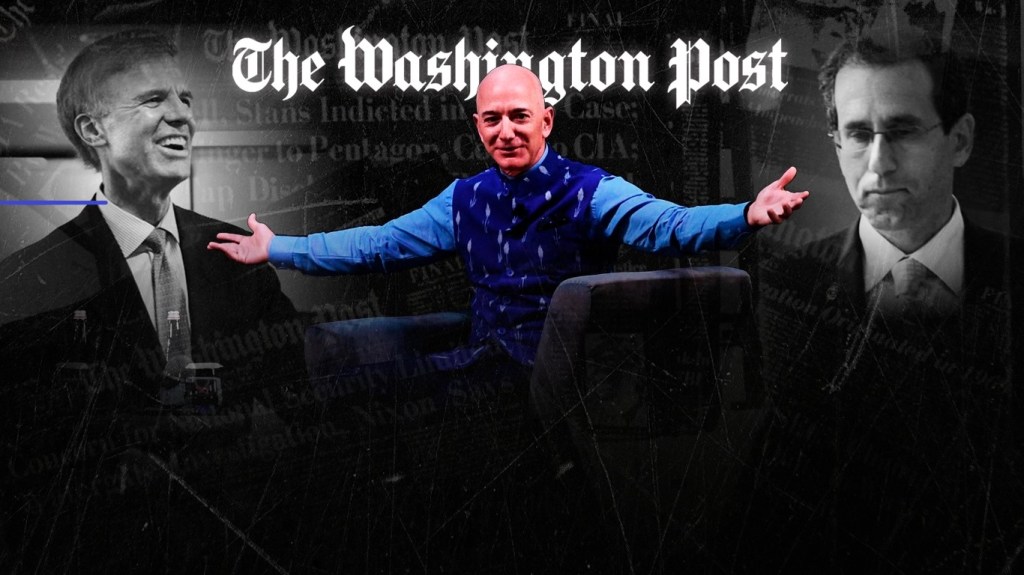
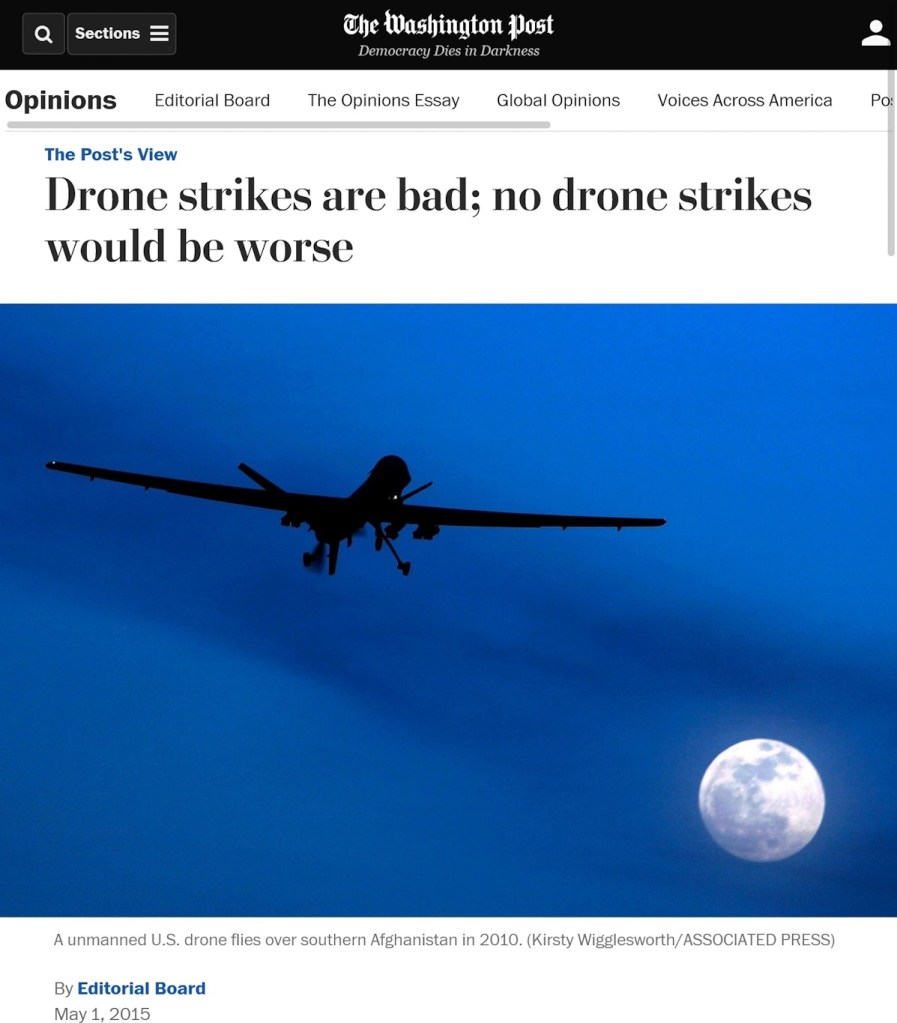
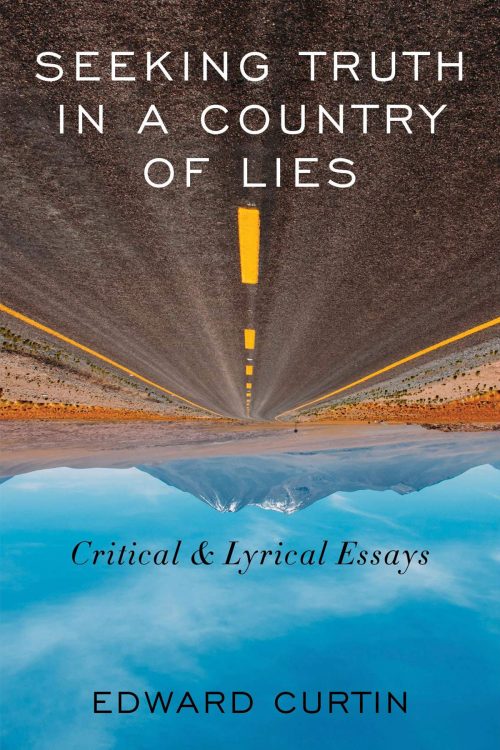
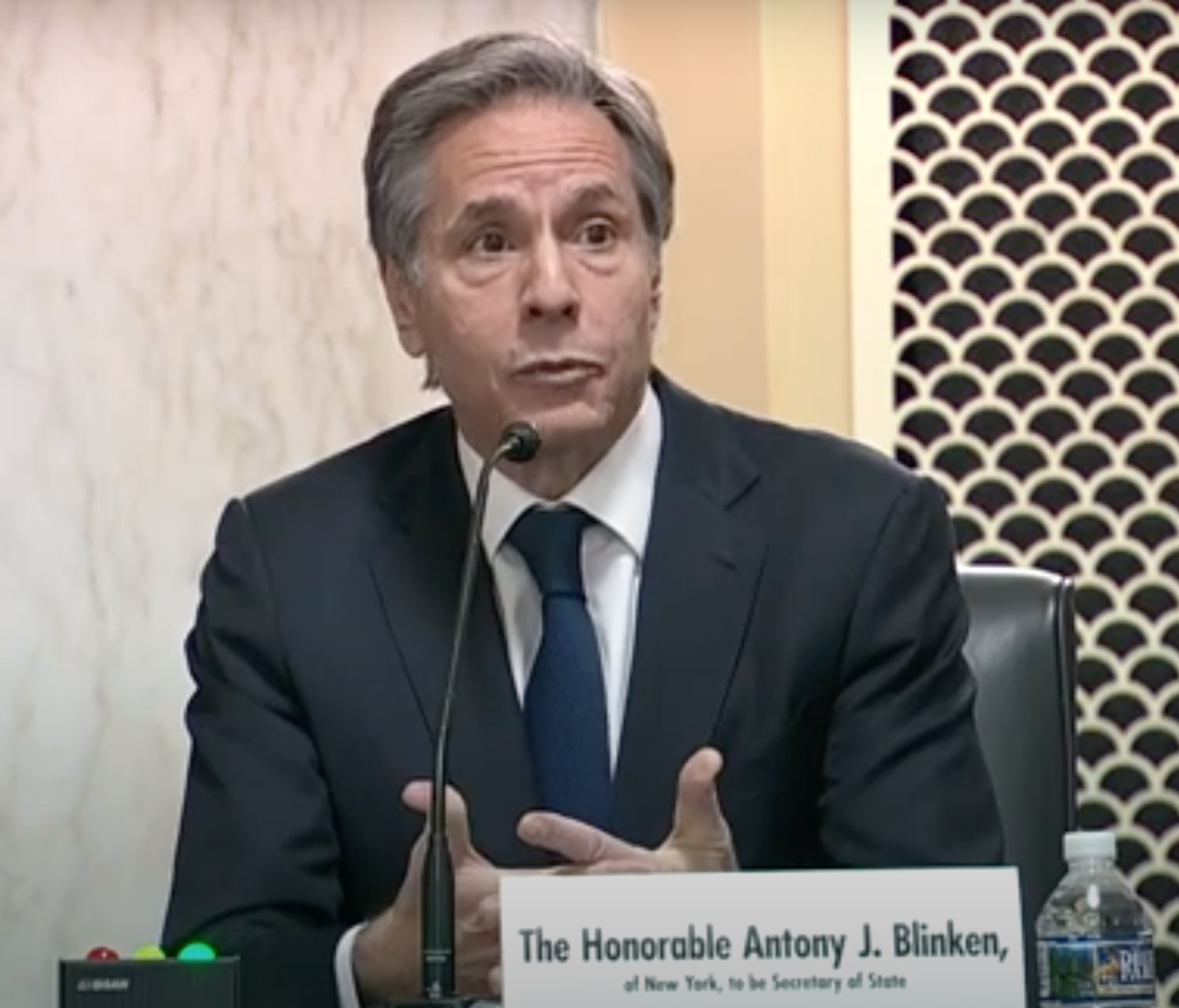
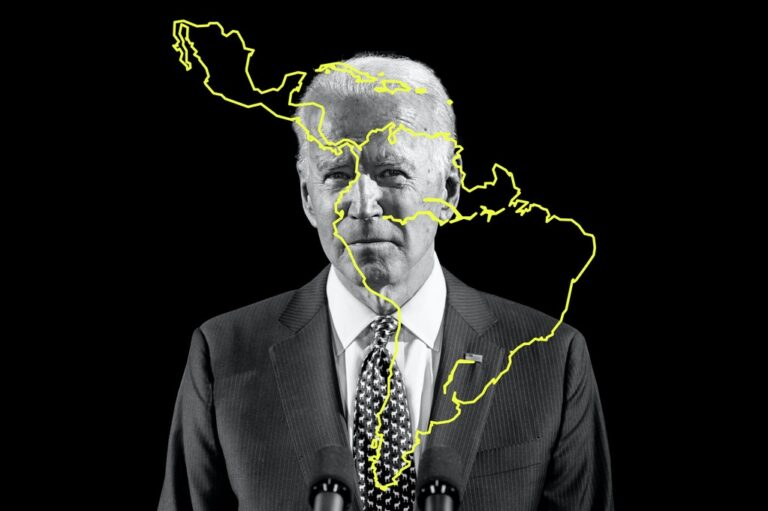
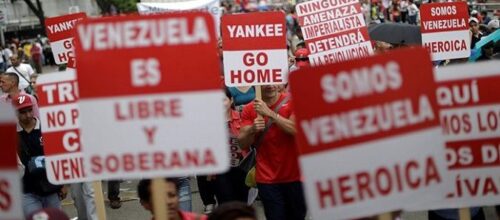
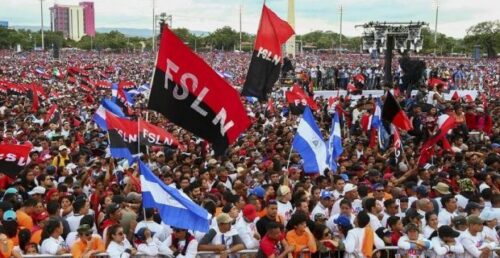
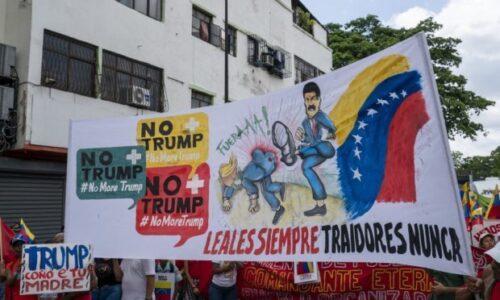
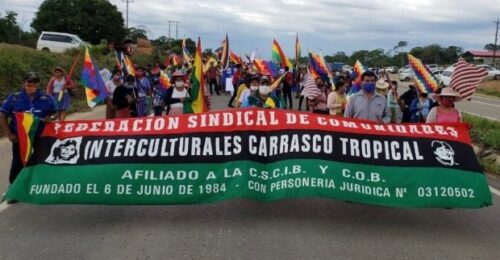
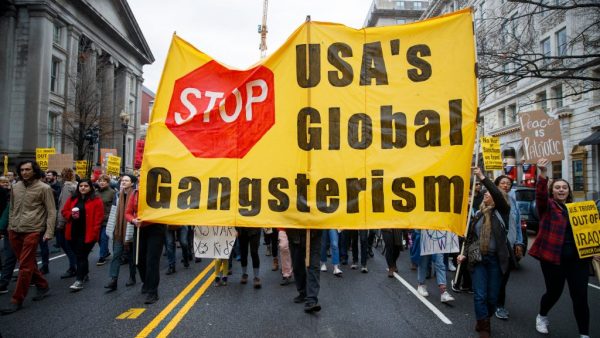
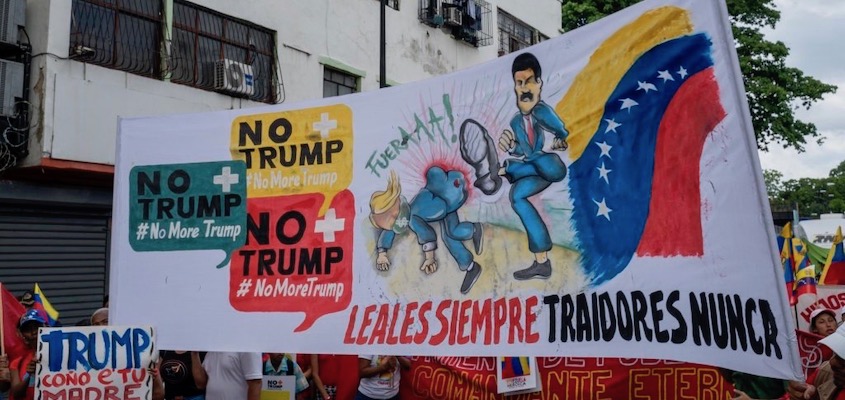
 After the Crash